
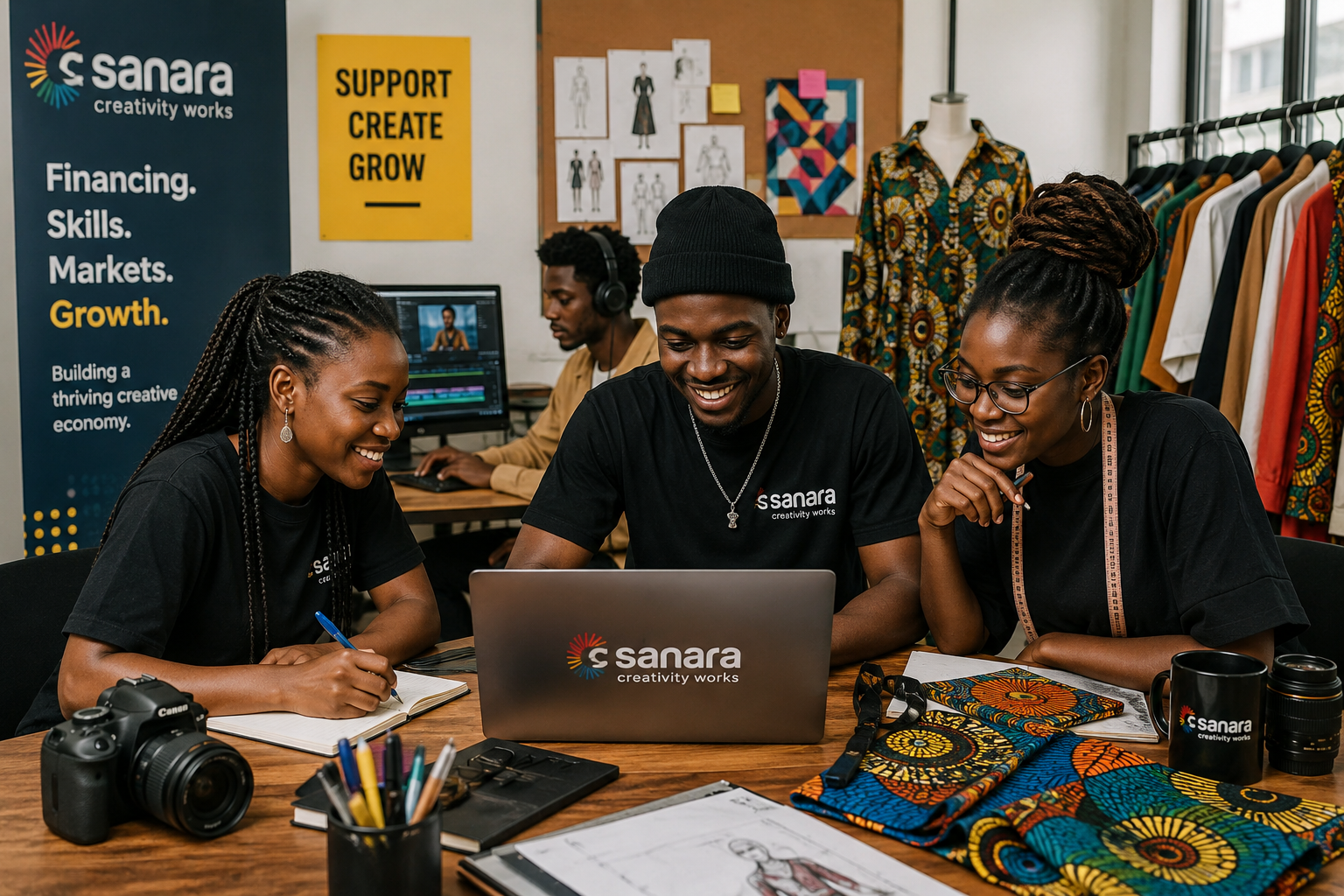
Sanara has deployed more than $9.3 million (KES 1.2 billion) in commercial financing and grants to Kenya’s creative economy, while demand for its Ota loan facilities has climbed to approximately KES 4 billion, signaling strong appetite for financing among creative entrepreneurs and exposing a substantial funding gap in the sector.
The initiative has emerged as one of the country’s major efforts to expand capital access for creative businesses, combining financing with enterprise development, technical skills training and market access support.
So far, Sanara has expanded access to finance for more than 330 creative enterprises, equipped over 20,000 young creatives with business and technical skills, and supported more than 3,000 startups across Nairobi, Mombasa, Nakuru, Kisumu, Kakamega and Turkana counties.
The KES 4 billion demand for Ota loans, more than three times the amount already deployed through the initiative, highlights significant unmet demand for financing among creative businesses seeking to scale operations and strengthen commercial growth.
Supported by the Mastercard Foundation and implemented by HEVA Fund, SNDBX Ubuntu, Baraza Media Lab and GoDown Arts Centre, Sanara is increasingly being positioned as a model for demonstrating how financing and enterprise support can work together to strengthen Kenya’s creative economy.
“The creative economy is increasingly proving to be an investable sector,” said Tabitha Masese, Program Manager at HEVA Fund, during the Sanara Creative Economy Learning Forum in Nairobi. “When entrepreneurs have access to financing, business development support, technical skills and markets, they build resilient enterprises capable of creating jobs and contributing to economic growth.”
Sanara’s financing portfolio has also reflected a focus on inclusive growth. Nearly 63% of financed enterprises are women-led, while approximately 30% of beneficiaries are first-time borrowers, expanding access to formal financing for entrepreneurs who have historically faced barriers to traditional lending.
Program leaders say evidence emerging from Sanara indicates that financing becomes more effective when combined with technical skills and business development services, enabling enterprises to improve governance structures, strengthen commercial viability and increase readiness for future investment.
Beyond enterprise financing, the initiative is supporting broader ecosystem development through policy engagement and creative infrastructure mapping in selected counties aimed at strengthening long-term competitiveness and creating conditions for greater private sector investment.
Targeted interventions have also expanded opportunities for underserved groups, including refugees and persons with disabilities. Through the Ota Pepea Access to Market initiative, refugee creatives from Turkana have showcased products in Nairobi, gained access to new buyers and reached wider markets.
Kenya’s creative economy contributes more than 5% of the country’s gross domestic product and remains one of the country’s fastest-growing sectors. Participants at the Sanara Creative Economy Learning Forum called for stronger collaboration between government, investors, financial institutions and development partners to increase investment and strengthen the sector’s contribution to employment, innovation and economic growth.

 in financing and grants to Kenya’s creatives, demand for its Ota loan facilities is KES 4B)