

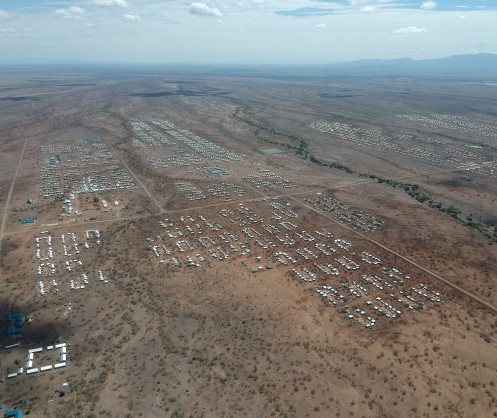
The International Labour Organization (ILO), in partnership with Power Learn Project Africa, Microsoft and the Turkana County Government, has launched a digital skills programme targeting 1,700 young people from refugee and host communities in Turkana and Garissa counties.
The initiative, supported by the Government of the Netherlands through the PROSPECTS Partnership, aims to equip participants with market-ready digital skills, globally recognised Microsoft certifications and pathways into employment, entrepreneurship and remote work.
The 25-week blended learning programme will be delivered by Power Learn Project through a network of local digital hubs, community-based organisations, refugee-led organisations and local implementation partners. Up to 1,000 Microsoft certification vouchers will also be provided, allowing learners to earn credentials in areas aligned with growing labour market demand.
The programme comes as Kenya’s digital economy continues to expand, with projections indicating it could contribute $5.1 billion to the country’s GDP by 2028. However, employers continue to report shortages of job-ready digital talent, while youth unemployment remains high despite more than one million young people entering the labour market annually.
Caroline Khamati Mugalla, Director of the ILO Country Office for Tanzania, Burundi, Kenya, Rwanda and Uganda, said digital transformation is reshaping labour markets faster than many vulnerable communities can adapt.
“For young people in refugee-hosting communities, the risk is not simply being left behind—it is being excluded from opportunities that are increasingly defining economic participation across every sector,” she said.
“The ILO is committed to ensuring that technological change advances decent work, rights at work and inclusive labour market participation.”
The curriculum will be offered through two learning tracks. An intermediate programme will focus on foundational digital and workplace skills, while an advanced track will cover cloud computing, artificial intelligence and data analytics, preparing learners for Microsoft certification pathways.
Winnie Karanu, AI Skills Director at Microsoft Elevate, said the partnership seeks to bridge the gap between training and employment.
“Digital skills are the foundation for inclusive growth, but access remains uneven, particularly in underserved communities,” she said.
“By connecting learners to globally recognised certification and real pathways into employment, we are helping ensure more people can participate meaningfully in Kenya’s digital economy.”
Power Learn Project said the programme aligns with its mission of expanding access to technology careers for underserved youth across Africa.
“Talent is equally distributed, but opportunity is not,” said Mumbi Ndung’u, Co-Founder and Executive Director of Power Learn Project Africa.
“This partnership allows us to bring digital opportunity closer to refugee and host community youth who have too often been excluded from the systems that shape the future of work.”
Beyond technical training, graduates will receive career readiness support, employer connections and entrepreneurship guidance designed to help them transition into jobs, remote work opportunities and other income-generating activities.
The programme also supports Kenya’s broader goals of advancing digital transformation, promoting youth employment, strengthening refugee inclusion and fostering equitable regional development.
The initiative is being implemented under the PROSPECTS Partnership, a multi-year programme funded by the Government of the Netherlands that brings together the ILO, UNICEF, UNHCR, IFC and the World Bank to improve education, skills development, economic inclusion and social protection for forcibly displaced people and their host communities.