

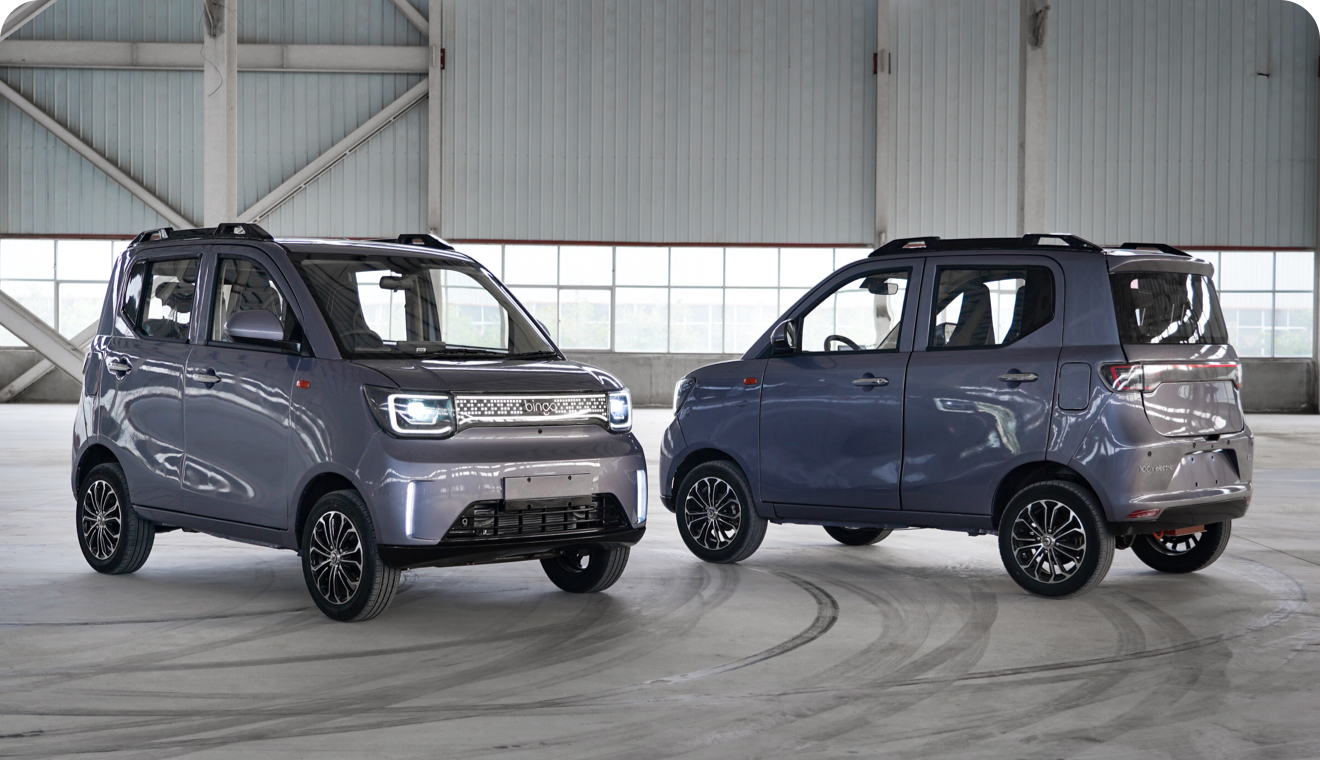
California-based electric vehicle startup Bingo Technologies has entered Kenya with a $12,000 electric car designed for ride-hailing drivers, taxi operators and last-mile delivery companies, as competition grows to electrify Africa’s urban transport sector.
The company has launched the Bingo E2, a compact four-seat electric vehicle built specifically for commercial use in high-density cities. Unlike conventional electric vehicles that depend entirely on charging stations, the Bingo E2 combines a fixed battery pack with removable battery modules that can be swapped to reduce downtime for commercial drivers.
Bingo is targeting one of the biggest costs facing transport operators in Kenya: daily fuel expenses. By replacing petrol-powered vehicles with electric alternatives, the company aims to help drivers lower operating costs while keeping vehicles on the road for longer periods.
Battery Swapping Model
The Bingo E2 is classified as an L7e heavy quadricycle and measures about three metres in length. The vehicle is designed for urban environments, with 250 mm of ground clearance and up to 745 litres of cargo capacity when the rear seats are folded.
Its main technology feature is a dual-battery system.
The vehicle comes with a 31 kWh lithium iron phosphate (LFP) fixed battery that provides a claimed range of about 310 kilometres. A secondary 13 kWh semi-solid NCM battery system consists of four removable modules that add an estimated 130 kilometres to 150 kilometres of additional range.
With both battery systems combined, Bingo says the E2 can deliver up to 440 kilometres to 500 kilometres of range depending on operating conditions and local configuration.
The company says depleted battery modules can be replaced at swapping stations in about two minutes, allowing commercial drivers to continue working instead of waiting for lengthy charging sessions.
Kenya Entry Strategy
Kenya has become one of Africa’s most attractive markets for electric mobility, supported by growing demand for cleaner transport, renewable electricity generation and government incentives aimed at encouraging EV adoption.
The country has seen increasing investment across electric buses, motorcycles, charging infrastructure and vehicle assembly as companies look for opportunities in a market dominated by commercial transport.
Bingo’s approach focuses on commercial fleets rather than private vehicle owners.
The company is initially targeting ride-hailing drivers, taxi operators and delivery businesses, where high vehicle utilisation means fuel savings and reduced downtime can directly affect daily earnings.
Local Assembly Plans
Bingo plans a phased rollout in Kenya, beginning with imported vehicles before moving towards local assembly.
The company will initially deploy between 10 and 20 trial vehicles to test fleet operations, validate performance data through its Cloud Fleet OS platform and establish relationships with local operators.
Local assembly is expected to begin later in 2026, with the company targeting an initial production run of about 100 units before expanding capacity for East and Southern African markets.
The move would position Bingo alongside other companies seeking to develop local electric vehicle manufacturing capabilities in Kenya.
Financing Electric Mobility
The Bingo E2 will enter the Kenyan market at approximately $12,000, positioning it against the used petrol vehicles commonly used by commercial drivers.
To make adoption easier, the company plans to introduce financing models including lease-to-own programmes and battery-as-a-service options.
The battery-as-a-service model separates battery costs from the vehicle purchase, reducing the upfront price for customers while allowing the company to manage battery ownership and replacement.
Bingo says the model can reduce daily operating expenses by up to 90% compared with traditional internal combustion engine vehicles, although actual savings will depend on factors including electricity costs, mileage, financing terms and battery subscription fees.
Growing EV Competition
Bingo enters Kenya’s electric mobility market as competition intensifies among companies developing solutions for Africa’s transport sector.
Companies including BasiGo, Roam and ARC Ride have focused on electric buses and motorcycles, while battery-swapping companies such as Spiro have expanded swapping models for two-wheelers.
Bingo is among the companies attempting to extend battery swapping into four-wheel commercial vehicles, a segment that presents both a larger opportunity and greater infrastructure challenges.
Infrastructure Will Determine Scale
The company’s success will depend on more than selling vehicles. Building a reliable battery-swapping network, securing financing partners and convincing drivers that EVs can deliver better economics than conventional cars will determine whether the model can scale.
Battery swapping has gained traction in markets such as China, but replicating the model in Africa will require investment in infrastructure, fleet partnerships and customer adoption.
For Bingo, Kenya represents a launchpad into a wider regional market. If the company can prove that battery-swapping electric vehicles can improve commercial transport economics, Nairobi could become a key testing ground for the future of urban mobility in Africa.