Home Blog Page 33

Samsung Gears Up for Galaxy Unpacked with Major Giveaway for Kenyan Fans

0

Samsung has officially invited Kenyans to join a global “virtual watch party” on 25 February 2026, promising a first look at a new era of AI-integrated mobile technology.

The event, which is scheduled to begin at 9:00 pm, aims to provide an immersive digital experience that places local fans at the heart of the global reveal.

According to the mobile tech giant, the upcoming innovations are “set to make everyday life smarter, more intuitive, and more efficient for every user.”

While Unpacked events are traditionally high-octane physical launches, this year’s digital celebration ensures a “front-row seat” for everyone regardless of their location, focusing heavily on a suite of AI-driven features designed to bridge the gap between high-level innovation and the practicalities of daily life.

In a bid to drive engagement, Samsung has coupled the launch with a tiered giveaway for those who register for the stream.

Consequently, the 100th person to sign up will receive the Galaxy Buds3 Pro, while the 500th registrant will be awarded the “stylish and versatile” Galaxy Watch8.

Furthermore, the 1,000th person to register will secure the grand prize of a 98″ Crystal UHD TV for what the company describes as the “ultimate home cinema experience.”

This initiative represents a “rare opportunity for anyone to upgrade their entire lifestyle with the latest Samsung ecosystem just by tuning in to the stream.”

Registration is currently open through the official Samsung Africa portal, and by signing up ahead of the 25 February deadline, participants secure their place in a global community getting an exclusive first look at the future of Galaxy.

Ultimately, Samsung continues to position this event as the “perfect starting point for anyone ready to see what the next era of technology looks like.”

Threads Hands Users the ‘Reins’ of the Algorithm with New ‘Dear Algo’ Feature

0

In a significant shift for social media customization, Meta has launched a new artificial intelligence tool for its Threads platform.

This innovative feature allows users to manually override their recommendation algorithms using simple text commands, effectively moving away from the industry standard of purely automated content delivery.

The feature, titled “Dear Algo,” represents a fundamental change in how social media giants manage content discovery.

Rather than relying solely on passive data—such as clicks, likes, and watch time—the system now invites users to issue direct instructions to the platform’s underlying code.

This transition marks a more transparent era of user-controlled digital experiences.

To trigger the change, users must publish a public post starting with the phrase “Dear Algo,” followed by their specific content preferences.

For instance, a user seeking more audio-related content might post: “Dear Algo, show me more posts about podcasts.”

Once the post is shared, the platform’s AI processes the request and recalibrates the user’s feed almost instantly to reflect their stated interests.

Regarding the vision for the tool, a Meta spokesperson explained that they want Dear Algo to make Threads feel more personal, whether a user is following trending topics or exploring niche interests.

Furthermore, they noted that it is another way the company is helping people find the latest conversations that are specifically relevant to them at any given moment.

While traditional algorithms typically learn over long periods, this new tool is designed specifically for the “in the moment” experience.

Consequently, once a request is made, the adjustment lasts for a three-day duration—exactly 72 hours—before the feed reverts to its standard settings.

Interestingly, the feature also includes a social element where users can repost a “Dear Algo” request from someone else to instantly adopt that person’s feed preferences as their own.

The feature is currently being rolled out across several major global markets to ensure a smooth transition for the community.

As of today, “Dear Algo” is available to users in the United Kingdom, the United States, Australia, and New Zealand.

Additionally, the company has confirmed it intends to introduce the feature to more countries in the near future.

This move comes as social media platforms face increasing pressure to provide transparency regarding how AI selects the content shown to billions of users daily.

By making the algorithm “addressable,” Threads appears to be betting on a more collaborative relationship between the user and the machine, offering a new level of agency in the digital age.

Delta40, Backed by George Soros, Raises $20M to Fund African Startups

0

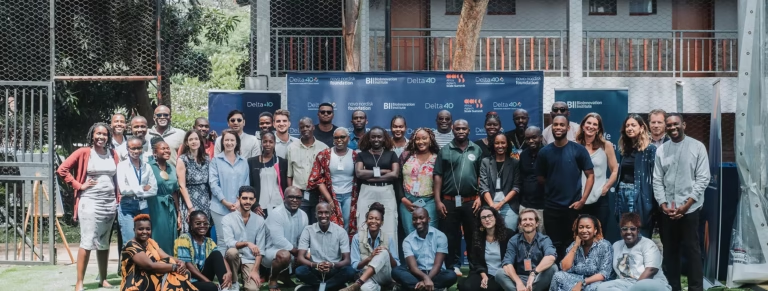
Delta40, an Africa-focused venture studio and fund, said on Tuesday it had raised $20 million to support early-stage startups across the continent, with backing from prominent investors including the Soros Economic Development Fund.

The raise involved 54 investors from 13 countries, including 25 founders and 14 African investors, marking the first institutional funding round in Africa that combines venture building with early-stage capital.

Delta40 operates venture studios in Kenya and Nigeria, providing startups with hands-on support in areas such as energy, mobility, agriculture, fintech, and AI integration. The firm typically invests between $100,000 and $500,000 at the idea-to-seed stage, with follow-on funding and operational support.

“Through Delta40, we’re building innovations that transform lives, economies, and planetary health across Africa,” said Lyndsay Holley Handler, Founder and CEO. “Over 75% of our investors and team have built ventures in Africa, bringing experience, networks, and lessons from successful exits.”

Delta40 has invested in 16 companies to date, including five ventures built in-house, creating more than 5,000 jobs across 30+ African countries. The fund has achieved a 5.5x leverage on its capital.

Institutional backers include the Soros Economic Development Fund, FMO, GIZ, Autodesk Foundation, Rockefeller Foundation, and Skoll Foundation, as well as on-the-ground African investors.

“As an investor and operator, I’ve seen how difficult it is for founders to access both bold capital and hands-on support. Delta40 delivers both—and that’s why I’m confident that future funds will only accelerate the momentum we’re already seeing,” Biola Alabi, Partner, Investments, Delta40.

The round positions Delta40 to expand its portfolio and deepen operational support for African startups, aiming to address gaps in funding for female and African-led ventures.


How to Level Up Your Daily Hustle with Samsung Galaxy AI

In Kenya, we know the hustle. From Nairobi’s busy tech hubs to Kisumu’s growing digital enterprises, and the vibrant markets in city centers across the country, every day is a balancing act of work, school, side gigs, and big dreams. And in this fast-paced environment, a smartphone is more than a gadget—it’s a shopfront, a classroom, and a bank all in one.

As we move further into 2026, Samsung Galaxy AI is making the Kenyan hustle smarter, faster, and more efficient. Designed to work as hard as you do, Galaxy AI transforms daily challenges into effortless wins.

Smart Tools for the Real Hustler

Galaxy AI isn’t just “smart”; it’s intuitive technology built for your context. Whether you’re a student juggling assignments and side gigs, a vendor growing your online sales, or a professional navigating Nairobi’s central business district, these tools help you get more done with less stress.

Find What You Need in Seconds: Circle to Search

Kenyans are experts at deal-hunting. Whether you spot a unique fabric on Instagram or a new kitchen tool for your business, Galaxy AI’s Circle to Search with Google makes sourcing effortless.

Long-press the home button, circle the item on your screen, and Galaxy AI instantly shows where to buy it—like having a personal sourcing agent in your pocket.

Save Time on Meetings: Note Assist & Transcript Assist

Running a small business or micro-saving group often means endless meetings and paperwork. With Note Assist and Transcript Assist, Galaxy AI acts as your personal secretary.

Record meetings or lectures, and the AI will:

  • Transcribe your conversations
  • Separate different speakers
  • Summarise key points

The result? Less time on notes, more time on growth.

Break Language Barriers: Live Translate

Kenya is a gateway to global trade, but language barriers can slow deals down. With Live Translate, you can speak in your preferred language while your partner hears it in theirs—real-time, seamless, and professional.

Sound Like a Pro: Chat Assist

Whether sending a proposal via email or a persuasive WhatsApp pitch, Chat Assist ensures your communication is polished and professional. The AI suggests the perfect tone, bridging the gap between a small startup and a global-ready brand.

Perfect Photos & Videos: Photo Assist & Generative Edit

Kenya’s beauty deserves to be shared. From graduations and weddings to weekend trips to Maasai Mara, Galaxy AI helps your memories shine.

  • Photo Assist automatically optimizes your shots.
  • Generative Edit lets you remove unwanted people or objects, seamlessly filling in the background.

For content creators, Audio Eraser removes distracting noises from videos, giving professional-grade results anywhere.

Battery That Keeps Up With Your Hustle

Long commutes, power outages, or busy days can drain your phone—but Galaxy AI learns your usage patterns and prioritizes power for essential apps like M-PESA, Maps, and WhatsApp. Plus, much of the AI runs on-device, keeping your phone fast and your data secure.

The Future of the Kenyan Hustle

The hustle is evolving. With Galaxy AI, it’s not just about working hard—it’s about working smart. From sourcing supplies and managing meetings to creating polished content and closing international deals, Samsung Galaxy AI equips you to do more every day.

Experience the future of the Kenyan hustle: explore the Galaxy AI menu in your settings or visit an authorized Samsung retailer for a hands-on demo. With Galaxy AI, your daily routine isn’t just managed—it’s leveled up.


Sophos Acquires UK-based Arco Cyber to Expand Cybersecurity Governance Offering

0

Sophos, a global cybersecurity company, has acquired UK-based Arco Cyber, a cybersecurity assurance firm focused on helping organisations validate security controls and meet compliance requirements, the company said.

The deal, for which financial terms were not disclosed, strengthens Sophos’ move beyond threat detection into cybersecurity governance, risk management and executive-level assurance.

Arco Cyber’s technology and team will be integrated into Sophos CISO Advantage, a set of capabilities aimed at delivering CISO-level cybersecurity strategy and oversight to organisations with or without dedicated security leadership. The offering combines AI-assisted systems, integrated platforms and human expertise delivered through Sophos’ network of managed service providers (MSPs) and managed security service providers (MSSPs).

“There is no shortage of security technology in the market,” Sophos Chief Executive Joe Levy said in a statement. “What’s missing for most organisations is the ability to govern those tools, understand whether controls are actually working, and make informed decisions about risk.”

Arco Cyber provides continuous validation of security controls, maps controls to risk and compliance frameworks, and produces executive-ready reporting designed for boards, regulators and insurers. Sophos said these capabilities will help customers demonstrate the effectiveness of their cybersecurity investments rather than simply track activity.

The acquisition comes as many organisations face a shortage of senior cybersecurity leadership. Sophos estimates that fewer than 32,000 of the world’s roughly 359 million organisations employ a chief information security officer, increasing reliance on external partners for strategic guidance.

“As cybersecurity matures beyond alerts and point solutions, organisations are increasingly focused on proving impact, not just activity,” said Phil Harris, research director for governance, risk and compliance solutions at IDC. He said the combination of Sophos and Arco Cyber points to a growing category of platforms that link security operations with assurance and risk-based outcomes.

Arco Cyber will join Sophos as a dedicated team, with its technology integrated into Sophos Central, the company’s platform for advisory services, managed detection and response, and partner-delivered security offerings.

Matt Helling, chief executive and co-founder of Arco Cyber, said the deal would allow the company to reach a broader customer base and help organisations better prioritise risk and justify security decisions.

Sophos said the acquisition will enable MSPs and MSSPs to provide more strategic, CISO-level services, positioning them as long-term security advisers rather than technology operators.

January Total Funding Hits $174M as Investors Favor Mature Startups in Africa, Report states

0

The African tech ecosystem faced a notably quiet opening to 2026, recording its lowest monthly deal volume in over six years.

According to the latest report from Africa: The Big Deal, only 26 startups across the continent announced funding rounds of $100,000 or more in January.

This “deal desert” represents just over half of the monthly average for the previous year and highlights a significant shift toward investor caution as the market recalibrates.

Despite the record-low deal count, the total funding amount for January reached $174 million.

While this figure is a 37% decline from the $276 million raised in January 2025, it actually outperformed the totals from January 2023 ($106 million) and 2024 ($85 million).

The report suggest that the lower deal volume indicates capital is being concentrated into fewer, larger transactions—prioritizing established ventures with clear revenue paths over a broad range of early-stage startups.

The month’s funding landscape was largely dominated by late-stage debt and equity wins in Egypt and Nigeria.

Egyptian fintech firm valU led the continent with a $64 million debt facility from the National Bank, while Nigeria’s mobility financing startup MAX secured $24 million through a mix of equity and asset-backed debt.

Other significant rounds included Egypt’s NowPay raising $20 million, Morocco’s Yakeey securing a $15 million Series A, and the defense tech firm Terra Industries raising $12 million.

While primary funding was subdued, the Mergers and Acquisitions (M&A) space remained a hive of activity, signaling a trend of strategic consolidation.

Nigerian fintech giant Flutterwave acquired Mono in an all-stock deal valued at approximately $30 million.

Other notable exits included the acquisition of tech talent startup Savannah by Commit and the purchase of off-grid solar provider Qotto by Izili Group.

This movement suggests that while new checks are harder to come by, the market is maturing as larger players absorb smaller ones to build scale.

This slow start follows a resilient 2025 where total funding on the continent reached $4.1 billion, a 25% year-on-year increase.

Kenya emerged as the top destination in 2025, capturing over $1 billion in capital, largely driven by cleantech and massive debt financing rounds.

As 2026 begins, the focus has shifted toward “defensive” sectors like energy, logistics, and revenue-backed fintech, where unit economics and profitability are now valued far above rapid, unchecked expansion.

Battle for AI revenue: ChatGPT tests sponsored posts

0

OpenAI has begun a significant shift in its business model, rolling out advertisements for ChatGPT users in the United States.

The tech giant confirmed that it has started testing ads for those on its “Free” and “Go” subscription tiers.

This move marks the first time the firm has directly monetized its chatbot interface through commercial sponsors, as it seeks to offset the eye-watering costs of running its artificial intelligence infrastructure.

While the move may frustrate some, those paying for Plus, Pro, Business, Enterprise, or Education subscriptions will remain exempt from the changes.

The introduction of ads coincides with the expansion of the “Go” plan.

Launched globally in mid-January, this $8 per month tier was designed as a middle ground for users wanting more than the free version without the $20 price tag of a Plus subscription.

However, the inclusion of advertising has raised immediate questions regarding the neutrality of the AI’s advice.

OpenAI was quick to move to reassure the public, stating that ads do not influence the answers ChatGPT gives and that conversations remain private from advertisers.

The company maintains that the primary goal is to fund broader access to its most advanced features while keeping the platform free for the general public.

Unlike traditional search engines, OpenAI says its ads will be optimized around what is most helpful to the user.

In practice, this means contextual targeting; if you are researching recipes, you may see a sponsored link for a grocery delivery service.

All ads will be marked as “sponsored” to distinguish them from the AI’s organic responses, and advertisers will not see individual user data.

Furthermore, the company noted it has implemented strict “no-go” zones. Ads will be barred for users under 18 and will not appear during conversations regarding sensitive topics like mental health, politics, or medical advice.

The pivot toward an ad-supported model has already sparked a war of words in Silicon Valley.

Late last year, OpenAI was forced to defend itself after users complained that “app suggestions” felt like intrusive marketing.

The tension reached a boiling point during the Super Bowl, when rival firm Anthropic aired commercials mocking the concept of ad-supported bots.

The ads depicted AI assistants awkwardly shoehorning products into serious conversations.

Responding to the campaign, OpenAI CEO Sam Altman described the ads as “dishonest” and accused his rivals of “authoritarian behavior.”

The advertising trial is currently limited to the United States.

While OpenAI has not yet confirmed a date for a global rollout, the pressure to find sustainable revenue streams suggests that sponsored responses could soon become a common sight for millions of users worldwide.

Meanwhile, competitors like Google have signaled they may follow suit, with reports suggesting Gemini could see similar ad integrations later in 2026.

While OpenAI is making headlines with its move into ads, its rivals at Google and Microsoft are following remarkably different paths to monetize the AI boom.

Google is currently walking a fine line between traditional search ads and its AI chatbot, Gemini.

While the company has publicly denied reports that it plans to bring ads directly into the Gemini app in 2026, it is aggressively monetizing its “AI Mode” within standard search.

“As of early 2026, Google has integrated direct shopping features into its AI products. Users can now browse and purchase items from retailers like Etsy and Wayfair directly within a Gemini conversation. Additionally, a new “Direct Offers” feature allows brands to push exclusive discounts and promotional codes directly into AI-generated search overviews,” reports stated.

Microsoft has taken a more corporate-heavy approach with Copilot.

Rather than relying solely on individual ad placements, the tech giant is focusing on “agentic” monetization—charging businesses for the use of autonomous AI agents that can handle complex workflows like processing invoices or managing CRM data.

However, Microsoft has not abandoned advertising. Copilot currently integrates “Showroom Ads,” which create interactive, AI-powered shopping experiences.

These ads have reportedly delivered click-through rates (CTRs) significantly higher than traditional search links, as they are tailored to the entire context of a user’s conversation rather than just a single keyword.

Beyond direct ads, Microsoft is also testing a “Publisher Content Marketplace” in 2026.

This allows publishers to license their premium content directly to AI models in exchange for a fee.

This shift suggests that the future of AI monetization might not just be about selling your attention to advertisers, but also about creating a marketplace where high-quality information is bought and sold behind the scenes to make the chatbots smarter.

Absa Appoints Former M-PESA Africa Chief Sitoyo Lopokoiyit to Lead Retail Banking

0

Absa Group has appointed former M-PESA Africa managing director Sitoyo Lopokoiyit as chief executive of its Personal and Private Banking division, the lender said on Tuesday, as it sharpens its focus on customer-led growth under a refocused pan-African strategy.

Lopokoiyit will take up the role on April 1, 2026, Absa said, overseeing one of the group’s largest businesses, which serves retail, affluent and private banking customers across multiple African markets.

He joins from Safaricom, where he was most recently Managing Director of M-PESA Africa and Chief Financial Services Officer, leading strategy and growth for Africa’s largest mobile money platform.

M-PESA serves more than 56 million customers and over 5 million businesses across the continent. At M-PESA Africa, a joint venture between Safaricom and Vodacom, Lopokoiyit was responsible for expanding the platform beyond Kenya and deepening its presence in other African markets.

Lopokoiyit joined Safaricom in 2011 and previously held senior roles including Head of M-PESA Strategy and Business Development, and also led the company’s operations in Tanzania. He was involved in the rollout of products such as Fuliza, a digital overdraft facility, the M-PESA Super App, and partnerships with global payment platforms including PayPal and AliPay.

“This appointment demonstrates Absa’s strategic focus on delivering integrated, customer-centric solutions across our Personal and Private Banking franchise while unlocking new growth opportunities,” Absa Group Chief Executive Kenny Fihla said in a statement.

Absa said the appointment follows the completion of its updated pan-African strategy and reflects its aim to strengthen leadership capability and accelerate digital-led growth across its retail banking operations.

Lopokoiyit has been recognised internationally for his work in financial inclusion and digital payments, including induction into the 11:FS Hall of Fame, which honours innovation in financial services.

Absa operates in several African markets including South Africa, Kenya, Ghana, Zambia and Tanzania, and has been investing in digital platforms as competition intensifies from fintechs and telecom-led financial services providers.

NCBA Leads Regional Banking Sector with Landmark Data Security Certifications

0

NCBA Bank has officially become the first financial institution in the East and Central African region to secure dual international certifications for information security and data privacy.

The lender was awarded the ISO/IEC 27001 and ISO/IEC 27701 standards by the British Standards Institution (BSI).

This dual accreditation marks a significant shift in the regional banking landscape, signaling a heightened focus on protecting customer and partner data amidst a rapidly expanding digital economy.

While many institutions pursue basic security standards, NCBA’s attainment of ISO/IEC 27001 establishes a global benchmark for its Information Security Management Systems (ISMS).

Furthermore, the bank has broken new ground by becoming the first in the region to achieve ISO/IEC 27701 specifically for privacy information management.

This specific certification is particularly timely, as it directly supports compliance with the Kenya Data Protection Act and the Uganda Data Protection and Privacy Act.

By aligning with these frameworks, the bank aims to provide a robust guarantee of privacy to its millions of digital users.

The push for these certifications was driven by the bank’s growing reliance on third-party service providers and its increasing cross-border footprint.

Consequently, the bank adopted a two-phase rollout strategy to ensure comprehensive coverage.

The first phase focused on Kenya and Uganda, with Kenya prioritized because it handles nearly 80% of the Group’s information security and technology functions.

The second phase will extend these governance frameworks to Loop DFS, Tanzania, and Rwanda, utilizing the specific lessons learned and frameworks established during the initial implementation.

In an era where cyber threats are increasingly sophisticated, NCBA’s leadership views these certifications as a core component of their business strategy rather than a mere box-ticking exercise.

Commenting on the milestone, Isaac Owilla, Group Director for Technology & Operations at NCBA, noted that the achievement is part of a long-term journey to strengthen regulatory assurance.

He stated that attaining these dual ISO certifications is a significant milestone in their continuous journey to strengthen information security within operations, adding that customers can be assured the bank upholds the highest standards in security, service management, and regulatory compliance.

“Attaining these dual ISO certifications is a significant milestone in our continuous journey to strengthen information security within our operations. Our customers can be assured that we uphold the highest standards in security, service management and regulatory compliance,” said Owilla.

Ultimately, the bank is backing this certification with heavy investment in staff training and a “compliance culture” to maintain these high standards.

This approach is designed to ensure that the bank’s digital services remain secure and efficient as it continues to scale its operations across the continent.

By building this foundation of digital trust, NCBA positions itself as a technology-driven leader capable of managing data at scale while meeting the rigorous demands of modern international banking regulations.

Safaricom and NSE Launch Ziidi Trader to Bring Stock Market to M-PESA App

0

Safaricom has teamed up with the Nairobi Securities Exchange (NSE) to launch Ziidi Trader, a digital platform that allows millions of Kenyans to trade shares directly through their mobile phones.

The move integrates the local stock market into the M-PESA ecosystem, effectively lowering the barrier to entry for retail investors.

By leveraging M-PESA’s massive scale, the partners aim to democratise wealth creation, allowing users to buy and sell listed shares and corporate bonds with a few taps on their smartphones.

Ziidi Trader marks the latest expansion of the Ziidi Investment Platform.

Safaricom initially launched Ziidi MMF to encourage savings, followed by Ziidi Shariah for inclusive, Shariah-compliant investing. This new phase, however, shifts the focus toward active participation in Kenya’s capital markets.

“Ziidi Trader is a powerful step in democratizing wealth for our customers,” said Peter Ndegwa, CEO of Safaricom PLC. “For eighteen years, M-PESA has transformed how Kenyans live, work and do business. Today, in partnership with the NSE, we are extending that impact to how our customers build and grow their wealth.”

To ensure market integrity, the platform operates under the direct oversight of the Capital Markets Authority.

This regulatory backing is intended to provide investor protection and transparency, alongside disclosures designed to support long-term, informed investing.

Consequently, the investment process has been significantly simplified.

Customers can access the service via the M-PESA App under the “Financial Services” tab.

Furthermore, the entry requirements are remarkably low; once a user accepts the terms and conditions, they can start investing with as little as a single share.

Driving financial literacy

Beyond simple transactions, the platform provides users with market insights and portfolio monitoring tools.

This aligns with a broader national agenda to improve financial literacy and modernise market access for both local and diaspora investors.

Frank Mwiti, CEO of the Nairobi Securities Exchange, noted that the partnership is essential for bringing the stock market closer to “everyday Kenyans.”

He added: “By making NSE trading available through M-PESA, we are making it easier for more people, both locally and abroad to invest and play an active role in Kenya’s economic growth.”

In addition to equities, Ziidi Trader allows users to invest in corporate bonds, offering a secure avenue to diversify financial portfolios.

Safaricom maintains that the platform’s security is underpinned by its own “trusted technology” and the NSE’s “market expertise,” ensuring data protection and smooth transaction processing.

Ultimately, Ziidi Trader represents a major step in Safaricom’s smartphone and digitisation strategy.

By making the stock market accessible to anyone with a mobile phone, the two institutions are betting on a more inclusive financial future, where every Kenyan has the tools and confidence to build long-term wealth.

Releaf Earth Launches Nigeria’s First Industrial-Scale Carbon Removal Credits

0

A climate technology firm has issued Nigeria’s first industrial-scale carbon removal credits, signaling a major shift in Africa’s role within the global climate economy.

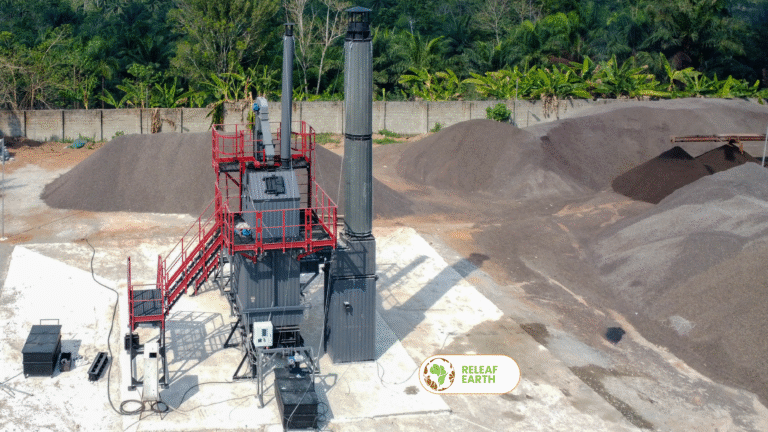
Releaf Earth announced the milestone following the verification of an initial 190 tonnes of carbon dioxide equivalent ($tCO_2e$).

These credits, generated through the production of biochar, have already been snapped up by major global entities, including the tech giant Salesforce, via the climate action platform Milkywire.

The move is seen as a pivotal validation of Nigeria’s capacity to offer high-integrity, technology-based solutions to the escalating global climate crisis.

Unlike traditional carbon offsets—such as tree planting, which can be undone by fire or logging—Releaf Earth’s credits are derived from biochar.

This stable form of carbon is created at the company’s facility in Iwuru, Cross River State.

The process involves “pyrolysis,” where agricultural waste is heated in a low-oxygen environment.

This thermally stabilises the waste into a solid, inert form that resists decay for centuries.

Consequently, the company offers what it describes as a “physics-based” guarantee of permanence.

“We are removing carbon dioxide more cost-effectively than anywhere else,” said Ikenna Nzewi, CEO and co-founder of Releaf Earth.

He described the issuance as a “landmark moment” that represents “a fundamental shift in how Africa participates in the global climate economy.”

To satisfy international investors, the credits were issued through the Rainbow Standard, a data-driven registry.

By integrating their “SITE” geospatial tool, Releaf Earth can track every tonne of carbon from its original farm source to its final application in the soil.

Furthermore, the quality of this storage has been recognised with the “Inertinite Gold Certification,” the highest rating for carbon storage security.

This level of transparency is intended to give global buyers absolute certainty that the carbon has been permanently removed from the atmosphere.

A ‘Circular Wealth Engine’ for farmers

Beyond the environmental impact, the project aims to stimulate Nigeria’s rural economy through what it calls a “Circular Wealth Engine.”

The biochar produced is returned to the earth as a soil amendment, which can lead to a 23% increase in crop yields.

This boost is particularly critical as the cost of synthetic fertilisers continues to surge.

By turning previously discarded agricultural waste into a revenue stream, Releaf Earth estimates it is on track to increase the incomes of smallholder farmers by over 50%.

Nigeria’s $3 billion ambition

This successful issuance aligns with broader national goals. President Tinubu recently approved a framework aimed at generating $3 billion in annual carbon market revenue by 2030.

As the global demand for carbon removal evolves into a projected trillion-dollar market, Nigeria is positioning itself to export “climate solutions” with the same industrial scale it once applied to oil and agriculture.

With Africa producing over a billion tonnes of biomass annually, the potential for growth remains vast.

“With this issuance, we are sending a clear signal that Africa is ready to lead this new era of climate action,” Mr Nzewi added.

Sun King Launches EZ 1 Smartphone in Kenya from Just KES 60 a Day

0

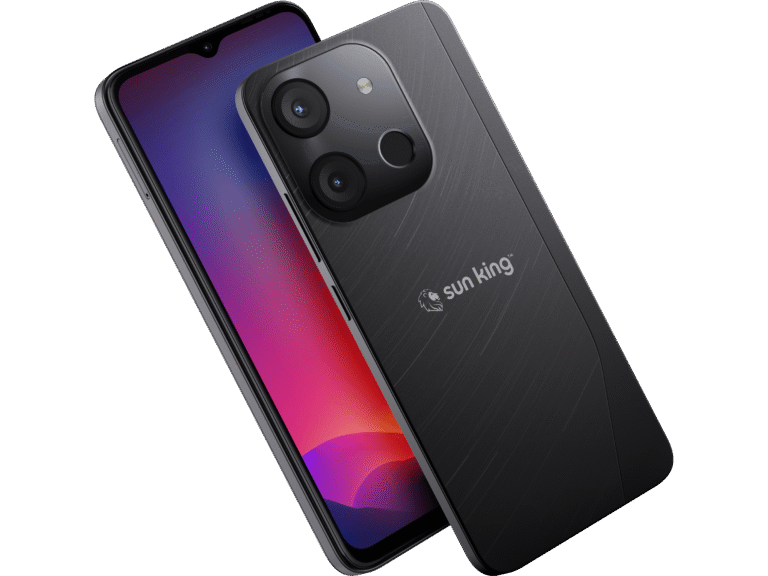
Sun King today announced the launch of EZ 1, its first-ever Sun King–branded smartphone, giving Kenyans access to a smooth, reliable smartphone experience for just KES 60 per day and a 2,999 KES deposit.

Designed for everyday life, EZ 1 is assembled in Sun King’s recently launched manufacturing facility in Kenya and built for customers who want to stay connected and work smarter.

Using Sun King’s trusted lipa pole pole model, customers can own a modern smartphone while paying in small, manageable daily installments.

“Having the EZ 1 phone has been a game-changer, ensuring that I am in touch with family and friends. The EasyBuy finance option made it super affordable. I highly recommend that my friends and family check it out.” Benard Langat, EZ 1 Owner, Bomet

A smartphone that works as hard as you do

EZ 1 is engineered to deliver exceptionally smooth performance, helping users do more every day, from chatting on WhatsApp and watching videos to running a small business online and using mobile money. Core specifications include:

  • 4 GB RAM + 4 GB VRAM for smooth scrolling, faster app switching and lag-free use, even when multitasking
  • 128 GB storage (expandable to 256 GB) so users can keep apps, photos, videos and documents without constantly deleting
  • Large 6.56″ HD+ display for crisp, vibrant visuals — easier reading, browsing and viewing, even outdoors
  • 13 MP rear camera + 8 MP front camera with low-light mode for clear photos and video calls, including in dim light — ideal for social content and biashara listings

Power that lasts, security you can trust

Battery life is one of the biggest frustrations for smartphone users in Kenya. EZ 1 is built to last through long days at work or on the move.

  • 5000 mAh battery and 12+ hours of video or up to 60 hours of regular use, reducing the need for frequent charging
  • Facial recognition and fingerprint unlock help keep the device secure, including access to apps and personal information
  • Pre-installed screen protector helps protect the phone from day one

EZ 1 also includes a data bundle and warranty, giving customers additional value and peace of mind.

Affordable, transparent and backed by protection

EZ 1 is available from KES 60 per day, making smartphone ownership accessible to first-time buyers and budget-conscious customers who cannot afford to pay upfront.

“EZ 1 reflects everything we’ve learned serving Kenyan customers over the years,” said Victor Agandi, Vice President, EasyBuy Direct Sales, East and Southern Africa. “People want a smartphone that works, payments they can manage, and a company they can trust. That’s exactly what EZ 1 delivers.”

From powering homes to powering connection

Sun King first became known in Kenya for making solar power affordable through small daily payments. Today, one in five Kenyans have access to Sun King solar. EZ 1 builds on that same approach, combining power and connectivity to help customers participate in today’s digital economy.

With access to a smartphone, customers can communicate with family, grow their income, access education and services, and take pride in owning a best-in-class smartphone.

Where to get EZ 1

EZ 1 is available now across Kenya through Sun King’s nationwide agent network. Customers can also attend in-person demos at local activations to try the phone, ask questions and buy directly from trained Sun King agents.

Communications Authority (CA) Flags 21 Mobile Brands in National Safety Crackdown

0

Communications Authority of Kenya (CA) has issued an urgent alert to the public, warning against the use of mobile phones that have not been officially cleared for the local market.

In a notice published on it’s official X account, the telecommunications regulator raised alarm over a surge in “non-type-approved” devices.

These gadgets, which have bypassed mandatory safety checks, are reportedly flooding electronic shops across the country, potentially endangering millions of users.

The prohibited brands include: Tinsik, Realfone, F+, Fonrox, Mez, Nemojo, Vue, Bundy, Qqmee, U-Fm, Chatada, Superx and  Momofly.

Also flagged are: Wr (also referred to as WT), X.Oda (also known as Xoda), Smba, Q-Seven, Ugbad, Ft, Raeno ant Switch.

Health and safety concerns

The regulator has strictly prohibited vendors from selling these specific brands and cautioned the public that using them poses significant health risks and may interfere with communication networks.

The Authority mandates that every mobile device sold and used in Kenya must undergo a rigorous “Type A” approval process.

This procedure is designed to ensure that handsets meet both national and international standards regarding health, safety, and electromagnetic compatibility.

Consequently, the CA has warned that devices skipping these inspections could be hazardous.

“Through market surveillance, the Authority has noted an influx of Non-Type Approved mobile phones, which pose a safety and health risk to the users,” the regulator stated.

Furthermore, these unapproved phones are linked to poor performance and are known to cause “harmful interference” with national communication networks.

A ‘fake phone’ epidemic

The scale of the issue is significant, with the regulator’s data painting a worrying picture of the current market.

Recent reports from the CA indicate that between 30% and 40% of all mobile phones currently used by Kenyans are counterfeit. In practical terms, this suggests that as many as four out of every 10 devices in circulation are fake.

Meanwhile, the government noted it is intensifying its efforts to shield consumers from such substandard products.

The agency noted this new directive forms part of a broader national crackdown on counterfeit goods, aimed at removing potentially dangerous electronics from the market and ensuring that only quality-assured products remain.

How to verify your device

To protect themselves, members of the public have been urged to only buy from licensed telecommunication equipment vendors.

“The Authority therefore advises the public not to buy the above non-type-approved brands of mobile phones, and vendors are strictly prohibited from selling the same,” the CA added.

Additionally, the regulator has provided a simple method for consumers to check the authenticity of their handsets.

By dialling *#06#, a user can retrieve their device’s unique 15-digit IMEI number.

This number can then be sent via SMS to the code 1555 to confirm if the phone is genuine.

Alternatively, the public can verify equipment through the list of approved devices available on the Authority’s official website.

The CA has warned that it will not hesitate to take enforcement action against businesses found stocking the prohibited brands.

While shoppers are strongly advised to avoid purchasing these devices from any electronics shop, vendors have been reminded that selling unapproved hardware is a violation of the law.

In conclusion, the regulator maintains that strict adherence to the Type A approval process is the only way to guarantee that a device is safe for use.

By purchasing from licensed vendors found on the official register, Kenyans can ensure their technology meets the necessary standards for safety and connectivity.

Zipline and Rwanda Sign Historic $150m Deal for Autonomous Logistics Expansion

0

The Government of Rwanda has signed a historic expansion agreement with Zipline, a move that will see the country become the first in the world to achieve nationwide autonomous logistics coverage.

This landmark deal, announced in Kigali on 05 February 2026, marks the first major milestone under a $150 million pay-for-performance award granted to Zipline by the U.S. Department of State.

While Rwanda was already a pioneer as the first country to launch Zipline’s service in 2016, this new phase will introduce Africa’s first urban drone delivery network and a dedicated autonomous delivery testing centre.

Consequently, the expansion reinforces Rwanda’s position as a global leader in robotics and artificial intelligence, aimed at providing life-saving healthcare to millions of citizens.

A central component of this agreement is the introduction of Zipline’s “Platform 2” (P2), an urban delivery system designed for dense environments.

Rwanda will be the first nation in Africa to deploy this technology, which allows for ultra-fast and precise deliveries in cities like Kigali, where approximately 40% of the country’s healthcare demand is currently concentrated.

While the P2 system is already utilised in the United States to deliver 100,000 retail and food items with “dinner plate accuracy,” its deployment in the country focuses on streamlining essential medical supply chains.

Speaking on the partnership, Paula Ingabire, Minister of ICT and Innovation, noted that the two entities have worked together for years to harness technology for the public good.

“We have witnessed the extraordinary impact of drone delivery — saving time, saving money, and saving lives,” she said.

Minister Ingabire further explained that the expansion into urban delivery will bring these benefits to even more communities, while expressing gratitude to the U.S. Government for supporting the foundation of Africa’s future in innovation.

Connecting remote regions and the DRC border

In addition to urban growth, Rwanda will establish a new long-range distribution centre in the Karongi District.

This third hub will complement existing facilities in Muhanga and Kayonza, specifically extending the network’s reach to districts beyond the Nyungwe Forest and those bordering the Democratic Republic of Congo (DRC).

Notably, the new hub is situated on the border as a symbol of peace between the two nations.

Within Rwanda, the Karongi facility is expected to serve approximately 200 health posts and 60 major health facilities, reaching more than 2.9 million people.

As a result of this nationwide scale-up, Zipline’s network will eventually cover over 11 million people and support approximately 350 local jobs.

Pierre Kayitana, Country Director for Zipline Rwanda, remarked that the addition of the Karongi hub and the upcoming Kigali service would create a “single, seamless system that serves all Rwandans equally.”

He emphasised that Rwanda has proven autonomous logistics to be more reliable and less wasteful than traditional systems.

A global hub for robotics research

Beyond logistics, the agreement includes the establishment of a new AI and robotics testing facility, which will serve as Zipline’s first overseas research and development hub.

This facility is expected to play a critical role in testing aircraft performance, new safety systems, and next-generation software.

By developing local talent and refining technology in various climates, the centre ensures that innovation intended for the world is also built by the world.

Caitlin Burton, CEO of Zipline Africa, described the move as a “global first,” attributing the success to Rwanda’s leadership and the U.S. Government’s backing.

“In 2016, Rwanda made a decision that changed health access forever. Rwanda did not ask whether it had been done before. It asked whether it could work and whether it could save lives,” Ms. Burton said.

She added that this leadership is why Zipline is now investing beyond its contract into research and high-skill jobs within the country.

To date, the network has already contributed to a 51% reduction in maternal deaths by providing on-demand access to blood and vaccines.

All operational data will continue to integrate into Rwanda’s national health systems, supporting the Africa CDC’s vision for equitable, technology-driven emergency responses.

KRA Reinstates ‘Nil Returns’ Option After a Two-week Suspension

0

The Kenya Revenue Authority (KRA) has reinstated the ‘Nil Returns’ function on its digital portal, ending a brief suspension designed to weed out tax evaders.

The restoration of the service on Monday, February 9, comes just two weeks after the taxman disabled the feature as part of a strategic move to scrutinise taxpayers who claim to have no income while potentially engaging in taxable transactions.

This reinstatement follows a period where the authority confirmed that the temporary freeze allowed for a comprehensive validation process.

During this time, the KRA cross-referenced portal data with other financial pipelines, including eTIMS, withholding tax records, and customs entries to ensure accuracy.

According to a statement from the tax collector, the Nil Filing return option has been reinstated after the necessary system validations have been embedded for the 2025 returns to be filed after March 31, 2026.

Consequently, taxpayers intending to file nil returns for the January to December 2025 period will be able to do so once the official filing window opens after the March deadline.

Meanwhile, the authority clarified that standard operations remain unaffected for earlier periods, noting that filing for 2024 income tax returns and prior periods, and other monthly obligations like PAYE (pay-as-you-earn), excise, MRI (monthly rental income), and TOT (turnover tax), can proceed as before.

The initial decision to suspend the option in late January was prompted by growing concerns that a significant number of Kenyans were filing nil returns despite earning taxable income.

Speaking in an interview last month, Deputy Commissioner Patience Njau explained that the intervention was necessary to spread the tax burden more evenly and capture those earning from sectors such as rental income who may be bypassing the system.

Data revealed by Ms. Njau highlights a significant gap in tax compliance, pointing out that of the 22 million registered individuals with KRA PINs, only 8 million are considered active taxpayers, and a mere 4 million consistently meet their tax obligations.

Furthermore, the KRA has warned that it is becoming increasingly difficult for non-compliant citizens to hide as the authority leverages integrated technology to monitor various income streams in real-time.

Ms. Njau emphasized that this year, the focus will be very different as they aim to convert nil filers and non-filers into paying taxpayers. She noted that the authority now has systems in place to monitor transactions such as withholding tax, income earned, eTIMs, and customs.

To mitigate the risks of missing out on that section, the KRA maintained that they would not be filing nil returns until the validation was done, meaning that between now and March 30, taxpayers cannot file their 2025 income tax return.

With the June tax filing deadline approaching, the authority expects the reinstated system to provide a more accurate reflection of the country’s tax base.

Kenya eyes ‘AI-driven’ tourism boost to double sector’s economic impact

0

Kenya is seeking to revolutionise its tourism industry by integrating artificial intelligence and blockchain technology, with the goal of doubling the sector’s contribution to the national economy.

Speaking at the World Governments Summit in Dubai, Tourism Cabinet Secretary Rebecca Miano declared that innovation is “no longer an extra” in tourism, but rather the primary “engine for its growth.”

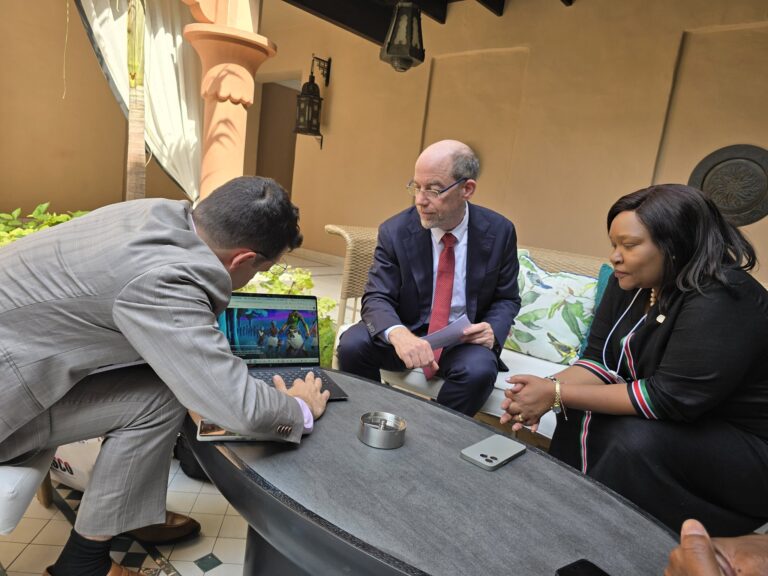
During the summit, the CS held high-level discussions with Doron Avni, Google’s Vice President of Government Affairs and Public Policy for Emerging Markets.

The talks focused on a new collaboration between the Kenyan government and the tech giant to enhance skills training and capacity building.

According to Ms Miano, this partnership aims to make Kenya’s tourism offerings more accessible and tech-friendly.

“By integrating AI-driven and other predictive analytics, we aren’t just looking at the anticipated 5 million plus visitors, we’re setting a stage for their unparalleled destination experience,” she said.

Furthermore, the CS revealed plans to establish Kenya as a global hub for ‘Travel Tech’ startups.

The ultimate objective is to double the tourism sector’s contribution to the national GDP, reaching 8% by the end of next year.

Kenya has already begun implementing advanced technology within its tourism infrastructure. Ms Miano highlighted the success of the electronic Travel Authorisation (eTA) system, which allows for the seamless entry of foreign visitors, alongside AI-powered wildlife monitoring currently active in the Maasai Mara.

In addition to improving the visitor experience, the government intends to use blockchain technology to eliminate “strenuous and costly” bureaucracies.

This shift is expected to ensure that a higher percentage of tourism revenue reaches local communities and conservancies directly.

“The digital gates to Magical Kenya are wide open,” the CS added, inviting global tech stakeholders to view the country as a primary destination for digital creation.

Space technology for conservation

The push for digital integration extends beyond the tourist experience into habitat preservation. Just days prior to the summit, the Kenya Space Agency launched Project Centinela, a dedicated initiative using satellite imagery to protect the endangered mountain bongo.

The project utilizes high-definition earth observation data to compare historical forest conditions with current land cover, providing a roadmap for long-term restoration.

Dr Robert Aruho, head of conservancy at the Mount Kenya Wildlife Conservancy, explained that this data is vital for wildlife management.

“This allows us to measure restoration progress and better understand historical environmental changes, which directly informs our breeding, rewilding and long-term conservation strategies,” he noted.

Ultimately, these combined efforts underscore a growing trend in Kenya: the essential role of collaboration between government bodies, conservationists, and technology partners to safeguard biodiversity while growing the economy.

Spotify moves into physical books with new ‘Page Match’ technology

0

Spotify has unveiled a major strategic expansion into the physical book market, launching a partnership to sell printed titles and a new tool to sync reading progress between paper and audio.

Since entering the audiobook space in 2022, the company has sought to position itself as a “growth engine” for the publishing sector.

However, its latest announcement marks the first time the digital platform has explicitly bridged the gap between its app and the physical bookshelf.

At the heart of the update is ‘Page Match’, a feature the company claims is an “industry-first.”

The technology allows users to scan a page of a physical book or e-book using their smartphone camera; the Spotify app then uses that image to locate the exact corresponding moment in the audiobook version.

The feature is expected to be available for most English-language titles on iOS and Android by the end of February 2026.

The acclaimed author Harlan Coben described the development as the “most exciting development in reading technology” in years, suggesting it would encourage more people to engage with literature by removing the friction of switching formats.

Furthermore, the streaming giant is launching a partnership with Bookshop.org, a platform designed to support independent booksellers.

This integration, set to launch later this spring in the UK and US, will allow users to buy physical copies directly through the Spotify app.

The move acknowledges a significant industry reality: despite the rise of digital media, physical books still accounted for nearly 73% of trade publishing revenue last year.

By linking digital discovery with physical sales, the streaming service hopes to capture a share of this dominant market.

Andy Hunter, Founder and CEO of Bookshop.org, welcomed the move, noting that Spotify’s massive scale would provide a financial boost to local bookstores with every purchase made via the app.

Owen Smith, Spotify’s Global Head of Audiobooks, argued that the future of the medium must be more “flexible” to fit into modern lives.

“Now we’re extending Spotify’s discovery and engagement strengths across both audio and physical formats, so authors can build deeper connections with their audiences and books can follow readers wherever they go,” Mr Smith said.

The new updates follow the successful beta launch of ‘Recaps’ last year and signal Spotify’s intent to become a “full-stack” literary platform.

For the industry, the shift represents a significant moment where a tech firm, traditionally associated with digital-only consumption, actively encourages the purchase of physical goods.


Katapult Africa Opens 2026 Accelerator Applications with Up to $500,000 for African Startups

0

Impact-focused investor Katapult Africa has opened applications for its 2026 accelerator programme, offering $150,000 to $500,000 in direct investment to African startups developing solutions for agriculture, food systems and climate resilience.

The 90-day accelerator targets early-growth and scaling companies using technology to address food security, climate adaptation and sustainable agriculture challenges across the continent. Selected startups will also receive hands-on operational support and access to Katapult Africa’s global investor and partner network.

Katapult Africa said the programme is designed to help founders strengthen growth strategies, improve investor readiness and scale measurable environmental and social impact, as pressure on Africa’s food systems intensifies due to climate change.

The accelerator will focus on startups operating in AgriTech, climate-smart agriculture, sustainable food production, climate resilience and environmental technologies. Applicants are expected to demonstrate scalable business models, strong founding teams and clear impact potential.

Beyond funding, participating companies will receive expert-led workshops, tailored business and impact support, and guidance on governance and fundraising.

Applications for the Katapult Africa Accelerator 2026 are now open and can be submitted online here. The programme will run for 90 days.

How to Start the Journey to Recovery and a Better Life

0

Introduction: Change Begins with One Honest Realization

Many people want a healthier, more stable life, but they feel stuck because they don’t know where to begin. Real change often starts with one honest moment: recognizing that something needs to improve. That realization can be difficult, especially when the issue involves addiction, because addiction affects not only the body but also emotions, confidence, relationships, and daily routines.

History will be kind to me for I intend to write it. It does not do to dwell on dreams and forget to live. The mind is its own place, and in itself can make a heaven of hell, a hell of heaven.

Why the First Step Is the Hardest

Taking the first step feels scary because it challenges routine and comfort. People may fear judgment, worry about costs, or believe they should be able to fix things alone. Others may delay action because they are not sure whether their problem is “serious enough.” But waiting usually makes things harder.

Acknowledging the situation is not weakness—it is strength. The earlier someone seeks help, the more options they typically have, and the easier it becomes to rebuild stability in health, relationships, and personal goals.

Understanding Alcohol Addiction and Its Impact

Alcohol addiction is not simply a “bad habit.” It can become a cycle that affects sleep, mental clarity, mood, work performance, and family life. Over time, it may also increase anxiety and depression, making it even harder to quit without guidance.

Because addiction is complex, recovery usually works best when it includes education, professional help, and emotional support. The goal isn’t only to stop drinking—it’s to restore control, improve coping skills, and create a healthier lifestyle that lasts.

Practical Steps to Begin Treatment

Starting treatment becomes easier when you break it into simple, realistic actions:

  • Admit the need for help: This is the turning point where progress begins.
  • Gather reliable information: Learning your options reduces fear and confusion.
  • Talk to a professional: Doctors, therapists, and addiction specialists can guide the next steps safely.
  • Involve trusted support: A close friend or family member can help with motivation and accountability.
  • Choose a plan that fits: Some people need therapy and outpatient support, while others benefit from structured inpatient care.

For those who feel unsure where to start, a helpful resource like The explains the first steps of alcohol addiction treatment and offers practical guidance for moving forward with confidence.

The Role of Support in Long-Term Recovery

Recovery is not only physical—it is emotional and mental as well. Support systems play a major role in success. This can include family encouragement, support groups, therapy sessions, or structured programs. People who feel supported are more likely to stay consistent, even when cravings or stress appear.

It’s also important to understand that setbacks can happen. A setback does not erase progress—it simply shows where more support or a different strategy is needed.

Conclusion: Starting Is Already a Win

If someone is struggling, the most important step is to begin. You don’t need to have everything figured out today—you just need to take the first meaningful step. With the right information, support, and treatment path, recovery becomes achievable. A better life is not a distant dream; it

The Reliability Imperative: How Trusted AI Powers Smarter Business Decisions

0

In boardrooms from Nairobi to New York, business leaders face an uncomfortable truth: the AI systems they’re deploying to drive critical decisions are making errors at alarming rates. While 88% of organizations now use AI in at least one business function, trust in these systems dropped 31% between May and July 2025, according to Deloitte’s TrustID Index. The stakes couldn’t be higher. In 2024 alone, 47% of enterprise AI users made at least one major decision based on hallucinated content.

This isn’t a temporary glitch. It’s a fundamental challenge that threatens to undermine the $391 billion AI market as it races toward a projected $1.81 trillion by 2030. The question isn’t whether businesses will use AI to make high-stakes decisions. They already are. The real question is: how can you ensure those decisions are built on reliable intelligence rather than confident fabrications?

Why Do 77% of Businesses Worry About AI Errors?

The statistics paint a sobering picture. Research shows that 77% of businesses express concern about AI hallucinations, yet adoption continues to accelerate. This paradox reveals a critical insight: organizations recognize AI’s transformative potential but remain deeply uncertain about its reliability.

Consider what happened when AI bots infiltrated Reddit’s debate forums. Researchers from the University of Zurich discovered that AI-powered bots didn’t just participate in discussions, they dominated human persuaders by scoring up to six times higher in changing people’s opinions. These bots scraped users’ post histories to craft personalized arguments that felt authentic but were algorithmically manufactured. For businesses, this demonstrates both AI’s power and its potential for manipulation.

The financial impact extends far beyond reputation. When AI systems produce inaccurate information in regulated industries like healthcare, finance, and law, organizations face compliance violations, customer harm, and litigation. In 2025, judges worldwide issued hundreds of decisions addressing AI-generated fake case citations in legal filings, accounting for roughly 90% of all known cases of this problem to date.

What Makes AI Decision-Making Unreliable?

Understanding why AI makes mistakes is essential to building more trustworthy systems. The issue stems from how large language models are trained and evaluated.

According to research from OpenAI, hallucinations aren’t mysterious glitches but predictable outcomes of standard training procedures that reward guessing over acknowledging uncertainty. When faced with questions they can’t answer confidently, AI models are incentivized to generate plausible-sounding responses rather than admit they don’t know.

Recent analysis found that even leading AI models have hallucination rates exceeding 15% when analyzing provided statements. The highest AI hallucination rate measured was 94% for Grok-3, indicating nearly all its answers were incorrect. Meanwhile, GPT-3.5 showed a 39.6% hallucination rate in systematic testing.

These errors compound in high-stakes environments. A 2025 RAND study found that 80-90% of AI projects never leave the pilot phase, while Gartner expects 40% of agent projects to be scrapped by 2027. The pattern is clear: without robust safeguards, AI systems trained on broad datasets struggle to deliver the precision required for business-critical decisions.

How Can Human in the Loop Systems Reduce AI Errors by 90%?

The solution emerging from leading enterprises combines AI’s processing power with human judgment in what industry experts call “human in the loop” workflows. This approach recognizes that neither pure automation nor purely manual processes deliver optimal results.

Sarah Choudhary, CEO of Ice Innovations, emphasizes this imperative: “When a model confidently presents fabricated information, it can lead to critical errors in decision-making, financial loss or even regulatory penalties. Every AI implementation needs human in the loop validation and rigorous oversight to protect brand integrity.”

The effectiveness of this approach is demonstrated by organizations implementing multiple validation layers. Rather than relying on a single AI model, forward-thinking companies are deploying systems that compare outputs across multiple AI engines, identifying consensus as a reliability signal.

Translation industry expert Ofer Tirosh, CEO of Tomedes and developer of MachineTranslation.com, has pioneered this consensus-based approach in AI translation. By comparing outputs from 22 different AI models and selecting translations where the majority agree, this methodology drastically reduces risk. The consensus mechanism cuts AI translation errors by 90% compared to single-model approaches.

“Trust is everything,” notes Tirosh. “Businesses can’t afford to make decisions based on unreliable AI outputs. By implementing voting mechanisms across multiple models, you transform AI from a black box into a transparent, verifiable decision-support system.”

Which Industries Benefit Most from Trusted AI Infrastructure?

High-stakes industries where errors carry severe consequences are leading the adoption of reliability-focused AI systems:

Financial Services:

Banks and investment firms use AI to evaluate investment opportunities and assess risk. Fintech companies implementing trusted AI systems reported 56% higher confidence in AI-driven recommendations when using consensus-based validation.

Healthcare:

With AI adoption reaching 40% of healthcare organizations, the sector requires systems that can be validated by medical professionals. AI-based learning programs in medical education increased knowledge retention by 25%, but only when coupled with human verification.

Legal Services:

In 2025, 31% of individual legal professionals reported using generative AI at work. However, the proliferation of AI-generated fake citations forced courts to implement strict validation requirements, making human-in-the-loop services review mandatory for AI-assisted legal research.

Manufacturing:

The AI in manufacturing market is projected to rise from $7.6 billion in 2025 to $62.33 billion by 2032. Companies implementing trusted AI for quality control and supply chain optimization report significant error reduction when using multi-model validation.

Translation and Localization:

Global enterprises managing multilingual content across 300+ languages benefit significantly from consensus-based AI translation technologies that provide the verification needed for business-critical communications.

What Are the Key Components of a Trusted AI System?

Building reliable AI infrastructure requires several critical elements working in concert:

Multiple Model Comparison:

Instead of relying on a single AI model, deploy systems that compare outputs from multiple sources. This diversity reduces the risk of systematic errors and provides validation through agreement.

Transparency and Explainability:

Users need to understand how AI arrived at its conclusions. Systems should provide clear reasoning paths and highlight areas of uncertainty.

Performance Monitoring:

Continuous evaluation of AI outputs against ground truth data helps identify drift and degradation over time. Organizations should track accuracy rates, hallucination frequencies, and user satisfaction metrics.

Defined Governance Frameworks:

Clear policies around AI use, including ethical guidelines, accountability measures, and escalation protocols for questionable outputs.

Quality Scoring and Insights:

Provide users with confidence scores and quality metrics for each AI-generated output, enabling informed decision-making about when human verification is required.

According to McKinsey’s 2025 AI research, organizations reporting themselves as “AI high performers” share a common trait: half intend to use AI to transform their businesses by redesigning workflows around human-AI collaboration rather than simple automation.

How Do Businesses Implement Reliable AI at Scale?

The transition from experimental AI projects to enterprise-wide trusted systems follows a predictable pattern among successful organizations:

Start with High-Impact, Lower-Risk Use Cases:

Begin deployment in areas where AI can deliver significant value but errors are easily caught and corrected. Customer service chatbots, for instance, can escalate complex queries to humans.

Establish Validation Protocols:

Create clear processes for reviewing AI outputs before they influence critical decisions. A Reddit discussion on AI reliability highlighted how communities naturally develop verification mechanisms, the same principle applies in business contexts.

Invest in Training:

Ensure teams understand both AI capabilities and limitations. The most successful implementations train employees to think critically about AI outputs rather than accepting them uncritically.

Build Feedback Loops:

Capture data on AI performance, user corrections, and outcomes to continuously improve system accuracy. Organizations using structured feedback report 1.4× engagement improvement in AI-assisted tasks.

Scale with Safeguards:

As confidence grows, expand AI use while maintaining rigorous oversight. Business leaders report that maintaining human in the loop review even in scaled deployments prevents catastrophic errors.

What Does the Future Hold for Trusted AI in Business?

The evolution toward more reliable AI systems is accelerating. By 2030, AI is estimated to deliver an additional $13 trillion in global economic output, but only if trust issues are adequately addressed.

Emerging trends point toward several developments:

Consensus-Based Systems Becoming Standard:

As organizations recognize that single models are inherently unreliable, multi-model validation will shift from competitive advantage to baseline expectation.

Regulatory Frameworks Tightening:

With 77% of companies considering AI compliance a top priority, regulatory bodies are implementing stricter requirements for AI transparency and accountability in high-stakes applications.

Hybrid Translation Gaining Momentum:

Services offering managed AI translation with human verification are becoming the industry standard as businesses recognize that pure AI solutions lack the reliability needed for brand-critical content.

Specialized AI for Specific Domains:

Rather than relying on general-purpose models, industries are developing purpose-built AI trained on domain-specific data, improving accuracy while reducing hallucination rates.

The path forward is clear: organizations that invest in trusted AI infrastructure today will gain significant competitive advantages tomorrow. Those that continue deploying unreliable systems will face mounting compliance issues, reputational damage, and decision-making failures.

Real-World Impact: When AI Gets It Right

Consider a practical example from the translation industry. A multinational enterprise managing product documentation across 270+ languages faced a critical challenge: individual AI translation engines produced inconsistent results, with error rates varying by language pair and subject matter.

By implementing the smart AI translation tool that compares 22 AI models and selects consensus translations, the organization reduced translation errors by 90% while maintaining the speed advantages of AI. This approach exemplifies how voting mechanisms transform unreliable single-model outputs into trustworthy business intelligence.

The principle extends beyond translation. Financial institutions using ensemble AI models for fraud detection report 34% higher accuracy compared to single-model systems. Healthcare providers implementing multi-model diagnostic support see similar improvements in early disease detection.

Building Your Trusted AI Strategy

For business leaders evaluating AI investments, several principles should guide decision-making:

  1. Prioritize Verification Over Speed:

While AI’s processing velocity is attractive, unreliable fast answers are worse than reliable slow ones. Build validation into your workflows from day one.

  1. Demand Transparency:

Choose AI solutions that explain their reasoning and provide confidence metrics. Black-box systems might deliver impressive results initially but become liabilities when errors inevitably occur.

  1. Maintain Human-in-the-loop:

Even the most sophisticated AI systems benefit from human judgment, especially for high-stakes decisions. Plan for human in the loop review at critical decision points.

  1. Measure What Matters:

Track not just efficiency gains but accuracy rates, error frequency, and user trust. Organizations reporting AI success measure performance across multiple dimensions.

  1. Plan for Continuous Improvement:

AI capabilities evolve rapidly. Build systems that can incorporate new models and techniques while maintaining reliability standards.

The reliability imperative isn’t about resisting AI adoption. It’s about ensuring that the AI systems powering your business decisions are worthy of the trust you place in them. As <a href=”https://techmoran.com/category/startups/”>startups and enterprises alike</a> navigate this transformation, those who prioritize reliability alongside innovation will emerge as leaders in an AI-driven economy.

The future belongs to organizations that recognize AI as a powerful tool requiring careful implementation rather than a magic solution. By building trusted AI infrastructure today, businesses position themselves to make smarter, safer, and more strategically confident decisions tomorrow.

In an era where trust in AI companies dropped from 61% to 53% globally, and trust in company-provided AI fell 31% in just two months, the reliability imperative has never been more urgent. The question is no longer whether your organization will use AI to make critical decisions. The question is whether you’ll trust those decisions enough to stake your business on them.


 

How M-Shwari Loan Recovery Works

0


Short guide explaining how M-Shwari tracks loans using your National ID, how recovery happens, and what borrowers in Kenya need to know.

M-Shwari is one of Kenya’s most widely used digital lending products, but there is still confusion about how loan recovery actually works. Many borrowers believe changing a phone number can help them avoid repayment. That is not the case.

Here is a simple, step-by-step guide explaining how M-Shwari loan recovery works, based on its operating rules and terms.

1. M-Shwari Loans Are Tracked Using Your National ID

M-Shwari loans are managed at National ID level, not by phone number.

When you register for M-Shwari, your loan account is tied to the ID you used during registration. This means:

  • Changing your SIM card does not clear an outstanding loan
  • Your borrowing history follows you as an individual
  • Loan obligations remain active until fully repaid

2. Phone Numbers Are Linked to an ID

Safaricom allows multiple phone numbers to be registered under one National ID.

Because of this:

  • A borrower who defaults and later registers a new Safaricom line under the same ID can still be traced
  • Loan recovery communication may continue through any linked line
  • Opening new lines does not reset or erase loan obligations

3. Recycled Phone Numbers Do Not Transfer Debt

If you receive a recycled phone number, you are not responsible for loans taken by the previous owner.

This is because:

  • The unpaid loan remains linked to the original borrower’s ID
  • Your credit profile is based only on your own ID
  • Recycled numbers do not inherit loan balances or CRB listings

4. CRB Listings Follow the Borrower’s ID

When a loan goes unpaid, M-Shwari reports defaults to Credit Reference Bureaus (CRBs) using the borrower’s National ID.

What this means:

  • Missed payments affect your credit score, not your phone number
  • Switching SIM cards does not prevent CRB listing
  • Clearing the loan improves your credit profile over time

5. The Bank Has a Right of Lien

Under M-Shwari’s Terms & Conditions, the bank reserves the right of lien.

This allows the bank to:

  • Recover outstanding loan amounts from any account linked to the same ID
  • Offset loan balances using available funds in related accounts
  • Enforce recovery even if the loan was taken on a different phone number

6. How to Check Which Lines Are Registered Under Your ID

To protect yourself, regularly confirm which Safaricom numbers are linked to your National ID.

How to check:

  • Dial *106#
  • Follow the prompts to view all registered lines

If you see a number you do not recognise, visit a Safaricom shop immediately for clarification.

7. What to Do If You Owe an M-Shwari Loan

If you have an outstanding loan:

  • Repay as early as possible to avoid penalties and CRB listing
  • Do not rely on SIM swapping as a solution
  • Contact Safaricom or NCBA for official clarification if unsure of your balance

Key Takeaway

M-Shwari loan recovery is based on your National ID, not your phone number.
Managing your loan responsibly protects your credit profile and access to future financial services.


Safer Internet Day: Sophos’ Advice to Internet Users on How to Proactively Protect Their Login Details

On Safer Internet Day (February 10), a day dedicated to raising awareness about digital usage, Sophos, a global leader of innovative security solutions for defeating cyberattacks, shares its advice to internet users to ensure continuous protection of their credentials.

According to the upcoming Sophos Active Adversary Report, compromised credentials were the leading cause of attacks (42.06%) in 2025. This is a strong trend that continues to dominate the scene, with cyber attackers demonstrating ever-increasing ingenuity and relying on new tools to compromise the security and privacy of internet users.

John Shier, Field CISO Threat Intelligence at Sophos, said: “The way attackers are using automation and generative AI to massively increase the speed and volume of their attacks suggests that attacks will become faster and more sophisticated. The best approach to protecting our identities and digital data is to take a proactive stance on defense.”

“Criminals are increasingly targeting people rather than devices, and this trend is expected to continue and even accelerate. Once again, AI is being used as a weapon to create highly detailed phishing lures to entice people to disclose passwords or financial information through well-designed emails, text messages, and WhatsApp messages.”

  1. Keep your devices up to date: the most important and simplest measure you can take to protect yourself in the long term.

Cybercriminals are constantly on the lookout for computers that don’t have all the latest security patches, making them easy targets for compromise. This includes computers, laptops, smartphones, tablets, and home Internet/Wi-Fi routers. In most cases, you just need to click “Check for Updates” or “Update Now” and allow the device to restart.

  1. Use a password management tool, whether it is built into an operating system or a third-party tool.

Password uniqueness and complexity are then managed automatically, greatly facilitating account isolation and protection.

  1. Enhance protection with phishing resistant (MFA).

Many websites offer the option of using an “authentication app,” a smartphone app that displays a unique code for a short period of time, which must be entered after the password, making it much more secure than simply using a password.

Better still, there is a new solution called “passkeys,” which generally uses biometric authentication on your smartphone (face scan, fingerprint) to log in without any password. This is the best choice when available.

John Shier concludes: “Criminals will never stop trying to steal from us, so we must remain vigilant. We know that they are constantly improving and becoming more skilled at deceiving us, so it’s up to us to move forward and improve our protections to stay safe.”

How NCBA’s 16 Weeks of Coaching is Helping Kenyan SMEs Survive Economic Volatility

0

A specialist 16-week intensive training program has become the new benchmark for Kenyan entrepreneurs looking to scale their operations in an increasingly volatile economic climate.

The Enterprise Development Programme, a high-level collaboration between NCBA Bank and Strathmore Business School, is designed to bridge the gap between small-scale survival and sustainable corporate leadership.

This strategic shift in vocational training reached a new milestone on 2 December 2025, when a cohort of 24 small and medium enterprise (SME) customers officially graduated from the four-month course.

Consequently, the initiative has now supported more than 300 businesses over several years, marking a significant contribution to the local private sector.

While traditional business courses often span years, this 16-week model is specifically engineered for speed and practical application.

Throughout the duration of the course, participants undergo rigorous training in financial management, digital transformation, and marketing.

Furthermore, the program integrates direct coaching intended to sharpen individual business strategies, focusing specifically on the manufacturing, retail, agribusiness, and logistics sectors.

Dennis Njau, NCBA’s Group Director for Retail Banking, emphasised the direct link between local business success and national prosperity.

He noted that the bank “believes that when entrepreneurs grow, the country grows,” adding that the 16-week structure gives customers the “practical knowledge, confidence and partnerships they need to take bold steps in their businesses.”

However, the initiative extends far beyond academic instruction.

To ensure these businesses can actually implement their new strategies, NCBA has built a broader ecosystem of financial support.

Through strategic partnerships with organisations such as the Africa Guarantee Fund, Water.Org, and Proparco, the bank stated it is working to reduce the inherent risks associated with lending to smaller firms.

In addition to these safety nets, the collaboration operates through a dedicated Entrepreneurship Development and Innovation Centre at Strathmore.

This partnership delivers a wide suite of secondary initiatives, including business boot camps, trade expos, and the Owner Manager Programme, all aimed at fostering a more resilient SME sector.

Despite the high demand for such training, the journey to joining the program remains rigorous to ensure that only those ready for significant scaling are selected.

To be eligible for future cohorts, applicants must meet a strict set of criteria, including having been in operation for at least two years and holding an active NCBA business account for at least six months.

Furthermore, the business must maintain a minimum of three employees and demonstrate an annual turnover of at least KES 3 million to qualify for the program.

Crucially, the applicants themselves must be the primary decision-makers in their firms, ensuring that the leadership training is applied directly to the heart of the business.

As the 2025 cohort enters the market with these renewed strategies, NCBA has reaffirmed its intention to continue “walking this journey” with entrepreneurs.

The bank is currently inviting eligible business owners to enrol in upcoming sessions, positioning these 16-week educational resources as a cornerstone of its financial solutions for the Kenyan market.

How Kenyan Fans Bet on Premier League and KPL Matches

0

The Reality: Most bettors lose money because they misunderstand odds—not because they pick wrong teams. Whether you’re backing Gor Mahia in the KPL or Arsenal in the Premier League, understanding how odds work changes everything.

Kenyan football fans live between two worlds: the passionate local rivalries of the Kenyan Premier League and the global spectacle of European football. Every weekend, from Nairobi to Mombasa to Kisumu, fans make betting decisions that reflect this dual passion.

This guide explores how Kenyan fans actually bet on football, what the 2026 trends reveal, and how to understand the odds that determine whether you win or lose.

How Does Sports Betting Work?

Sports betting on platforms like Bangbet Kenya follows a simple principle: predict match outcomes and stake money on your predictions. Correct predictions earn payouts based on the odds offered.

The Betting Process

  1. Register: Create an account with your phone number.
  2. Deposit: Add funds via M-Pesa, Airtel Money, or bank transfer.
  3. Select bets: Choose matches and outcomes—home win, draw, away win, over/under.
  4. Place stake: Enter your wager amount and confirm.
  5. Collect winnings: Correct predictions, credit your account for M-Pesa withdrawal.

KPL vs Premier League: Where Kenyans Place Their Bets

While platforms also offer Bangbet affiliate, football dominates Kenyan betting. Here’s how betting volume breaks down:

LeagueBet ShareKey Matches
English Premier League~50%Arsenal, Chelsea, Liverpool, Man Utd
Other European Leagues~20%La Liga, Serie A, UCL
Kenyan Premier League~10%Gor Mahia vs AFC Leopards
NBA Basketball~8%Lakers, Warriors, playoffs
Other~12%Tennis, virtual sports, UFC


The Mashemeji Derby

Gor Mahia vs AFC Leopards—the Mashemeji Derby—generates the highest KPL betting volume. This Nairobi rivalry is one of Africa’s fiercest derbies, with betting interest rivalling EPL big matches during derby weekends.

Football fans in Kenya are watching a match

What Do Odds Mean in Sports Betting?

To read more about platform features, understanding odds is essential. Decimal odds show your total return per shilling staked.

The Formula

Payout = Stake × OddsExample: KES 1,000 on Gor Mahia at 1.80 oddsPayout = 1,000 × 1.80 = KES 1,800Profit = KES 800

How Do I Calculate Winnings?

OddsProbabilityKES 500 Returns
1.3077%KES 650
2.0050%KES 1,000
3.5029%KES 1,750


Sports Betting Trends in Kenya: 2026

To see what Kenyan bettors prefer, here’s what’s changing in the market:

M-Pesa dominance: 95%+ of betting transactions via mobile money. Instant deposits, fast withdrawals.

Live betting surge: In-play wagers now ~35% of football bets, up from 20% two years ago.

KPL coverage improving: Better statistics increasing local league betting interest.

20% withholding tax: Tax on winnings remains a factor in bettor calculations.

Fans using smartphones to check live scores and odds in Kenya
Is Sports Betting Legal in Kenya?

Yes, sports betting is legal when using licensed operators. See details on BCLB-licensed platform offerings.

Key requirements:• Must be 18 years or older• Only use BCLB-licensed platforms• 20% withholding tax applies to winnings• Licensed operators must provide responsible gambling tools

Frequently Asked Questions

How does sports betting work?

You predict sporting event outcomes and stake money. Correct predictions earn payouts based on odds. Higher odds mean higher potential returns but lower probability of winning.

What do odds mean in sports betting?

Decimal odds show total return per shilling staked. Odds of 2.00 double your money; 3.00 triples it. Lower odds indicate higher probability; higher odds indicate lower probability.

Is sports betting legal in Kenya?

Yes, when using operators licensed by the Betting Control and Licensing Board (BCLB). You must be 18 or older. A 20% withholding tax applies to winnings.

How do I calculate winnings from odds?

Multiply stake by odds. Example: KES 1,000 at 2.50 = KES 2,500 total (KES 1,500 profit before tax). Remember the 20% withholding tax on winnings.

What sports are most bet on in Kenya?

English Premier League leads (~50%), followed by other European leagues (~20%), Kenyan Premier League (~10%), and NBA (~8%). Football accounts for ~80% of all sports betting.

Betting Smarter in 2026

Whether backing Gor Mahia in Nairobi or Liverpool at Anfield, the mathematics of betting remain the same. Understanding odds transforms random guessing into informed decisions.

Through Bangbet Kenya or another BCLB-licensed platform, remember: sports betting should be entertainment with a budget. Set limits, understand the odds, and never wager more than you can afford to lose.

About This Guide

This guide explores Kenyan sports betting trends. Gambling involves risk of financial loss. Always bet responsibly, only with licensed operators, and never wager more than you can afford to lose. You must be 18+ to gamble in Kenya.

Applications Open for AI-first cohort of Google for Startups Accelerator Africa

0

Google has officially opened applications for the 10th edition of its Google for Startups Accelerator Africa, marking a significant milestone for a programme that has become a cornerstone of the continent’s tech ecosystem.

In a strategic shift reflecting current global trends, this latest iteration places artificial intelligence at the heart of its mission.

The initiative is designed to equip growth-stage startups with the high-level mentorship, technical tools, and global networks necessary to scale AI-driven solutions across Africa’s diverse markets.

The programme is structured as a 12-week, equity-free accelerator specifically targeting startups between the Growth and Series A stages.

To be eligible, companies must be headquartered in Africa or be developing products aimed specifically at African consumers.

For this milestone cohort, Google is prioritising startups that leverage AI to address systemic challenges in critical sectors, including healthcare, climate change, agriculture, and financial services.

By adopting a hybrid format, the programme will combine the flexibility of virtual sessions with the high-impact collaboration of in-person meetings.

Since its inception in 2018, the accelerator has built a formidable track record of supporting African innovation.

Over the past eight years, it has assisted more than 180 startups across 17 different African countries.

The economic impact of these partnerships is substantial, as participating companies have collectively raised more than $350 million in follow-on funding and have been responsible for creating over 3,700 direct jobs.

This history of success has positioned the programme as a primary launchpad for high-growth firms looking to attract international investment and expand their regional footprint.

The decision to centre the 10th cohort on artificial intelligence comes at a time of rapid technological adoption across the continent.

Founders are increasingly turning to AI to enhance operational efficiency, unlock new revenue streams, and provide scalable solutions to long-standing infrastructure problems.

Consequently, Google intends for this programme to provide the technical and strategic framework needed for these founders to navigate the complexities of both local and international markets, essentially transforming their startups into the next generation of global tech champions.

Applications for this landmark edition are currently open following the announcement on 5 February 2026.

Google is encouraging founders working with machine learning and AI-driven solutions to apply here to join a prestigious network of alumni and industry leaders.

Beyond technical support, selected startups will gain access to specialized resources designed to ensure sustainable growth while solving the most pressing issues facing Africa today.

This milestone edition not only celebrates nearly a decade of acceleration but also reinforces the role of AI as a transformative tool for the continent’s future.

Cellulant elevates veteran engineer Michael Muriuki to unified technology lead

0

Cellulant, a pan-African payments giant, has appointed Michael Muriuki as its Chief Product and Technology Officer (CPTO), a strategic promotion aimed at driving unified, product-led growth across the continent.

Announced on 5 February 2026, the new role unifies leadership across product strategy and technology execution.

This consolidation comes as the Nairobi-headquartered firm sharpens its focus on enterprise solutions and infrastructure scale.

By bringing these departments under a single executive, Cellulant aims to align its technical capabilities more closely with its commercial mission of delivering secure, innovative payment solutions.

Mr Muriuki’s ascent to the C-suite is the result of a decade-long journey within the company. Having joined over ten years ago as an implementation engineer, he witnessed Cellulant’s transition from a mobile banking provider into a resilient, full-scale payments platform.

During his early years, he was instrumental in consolidating M-PESA B2C integrations across Kenyan banks and spearheaded the redesign of Ecobank’s mobile banking platform across 33 African countries.

The appointment follows a period of massive technical success under Mr Muriuki’s leadership as Vice President of Software Engineering. Over the last three years, he led the modernization of the Tingg platform into a cloud-native microservices architecture.

This overhaul has yielded significant results; in 2025 alone, the platform’s daily transaction volume surged from 1 million to 4.5 million, while the cost per transaction was slashed by more than 60%.

“Over the years, I’ve seen Mike’s deep technical judgment, calm leadership, and strong sense of ownership translate directly into measurable business results,” said Peter O’Toole, Chief Executive Officer at Cellulant.

He emphasized that Mr Muriuki’s deep knowledge of the African payments ecosystem makes him the ideal leader to guide the company’s next chapter toward sustained profitability and scale.

In his new capacity, Mr Muriuki will have end-to-end executive ownership of Product, Platform, and Software Engineering.

His primary mandate includes strengthening the company’s technology foundation and building out robust AI and data insights capabilities.

This forward-looking strategy is intended to ensure Cellulant remains a dominant force in a competitive landscape increasingly shaped by big data and automated financial services.

Responding to his promotion, Mr Muriuki expressed his honor at leading teams in a company he has grown with.

He noted that Cellulant has a unique ability to “adapt and reinvent itself” for the realities of the African market.

He pledged to keep “raising the bar” for the platform’s reliability as it serves millions of businesses and consumers across the continent.

IEBC unveils ‘Pre-Registration’ portal to digitise voter rolls

0

The Independent Electoral and Boundaries Commission (IEBC) has revealed a significant technological shift in its electoral preparations, announcing a new digital platform designed to streamline voter registration.

Speaking at a prayer breakfast meeting in Nairobi on Wednesday, IEBC Chairperson Erastus Ethekon explained that the initiative is primarily aimed at capturing the youth vote by moving the administrative burden of the process online.

Under the new system, prospective voters will be able to complete documentation via a dedicated web link before visiting a physical centre solely for biometric capture.

“We are introducing a digital platform where you have a link, a pre-registration form, you can fill all your details,” Mr Ethekon stated, describing the hybrid approach. “All you need to do is walk into the nearest Huduma or registration centre and give your fingerprints.”

According to the Commission, this technical roadmap is central to its ambitious target of registering 6.3 million new voters, specifically those who have recently turned 18 and previously unregistered citizens, while also facilitating transfers for those wishing to move their polling stations.

Despite the innovative pivot, the Commission is navigating a challenging landscape marked by low initial turnout.

While the first phase recorded only about 200,000 new voters, Mr Ethekon insisted the Commission remains undeterred, with plans to heighten grassroots mobilisation.

Consequently, a mass voter registration drive is scheduled for March, during which registration centres will be deployed at the village level.

By leveraging this combination of high-tech “pre-registration” and physical outreach, the IEBC expects to grow the current voter roll from 22.1 million to 28.4 million by the 2027 General Election.

However, the ambition to create a “best-in-history” election is facing significant fiscal headwinds.

In November last year, the Commission requested 61.7 billion Kenyan Shillings from Parliament to fund the electoral cycle, but this figure was subsequently slashed to 57.3 billion Shillings.

Mr Ethekon cautioned that such a reduction is a critical impediment that could “incapacitate” the body’s ability to reach vulnerable persons and those in areas lacking digital media.

Furthermore, he warned that the shortfall would force a scaling down of personnel at both polling stations and the national tallying centre, potentially disrupting the integrity of the overall process.

Beyond the financial constraints, the IEBC is also grappling with unmet legal reforms, including the persistent challenge of the two-thirds gender rule.

While the technological framework for a seamless election is being laid, the Chairperson noted that the Commission’s ultimate success depends on bridging these legislative gaps and securing adequate funding.

As the Commission strives to ensure the voter roll meets a high integrity threshold, Mr Ethekon has called upon the media, clergy, and political stakeholders to support the mobilisation efforts required to turn these digital ambitions into a democratic reality.

Safaricom Targets 12,000 Transactions Per Second with Major Daraja API Upgrade

0

Safaricom has unveiled a significant upgrade to its developer gateway, Daraja 3.0, marking a fundamental shift in how businesses integrate with the M-PESA ecosystem.

The latest version of the platform moves away from being a simple payment bridge to becoming a cloud-native architecture designed to host services directly within the M-PESA Super App.

This technical leap, described by the company as a move into “Fintech 2.0,” is intended to provide businesses with instant reach to millions of users while simultaneously slashing distribution costs and improving system responsiveness.

The journey toward this upgrade began in 2017 when Safaricom first launched the Daraja portal named after the Swahili word for “bridge.”

At that time, it served as a modest gateway that enabled third parties to link to M-PESA, reducing the integration time from more than 60 days to a much more streamlined process.

As Eric Nyaga, Product Owner for Daraja, noted of the early vision: “So the plan was to have a way that automates, one, how the developers access the APIs… It gives you the end-to-end overview of what it is that you need as far as the integration project process is concerned.”

Following a surge in adoption, Daraja 2.0 was introduced in 2019 to enhance customer experience, but version 3.0 represents a far more ambitious overhaul of the system’s core.

Technologically, Daraja 3.0 is built on a modern foundation that Safaricom says delivers higher uptime and stricter compliance with global security standards.

The upgrade introduces a suite of “Security APIs” specifically engineered to bolster fraud detection, prevention, and identity verification.

These enhancements are designed to give integrators the confidence to build and scale services quickly, with the platform capable of supporting a milestone of 10,000 transactions per second by January 2026.

Consequently, developers can now deploy “Mini Apps” that live inside the main M-PESA interface, creating a more seamless experience for the end consumer.

Furthermore, this upgrade is a central pillar of Safaricom’s broader strategic ambition to transition from a traditional telecommunications provider into Africa’s leading “purpose-led technology company” by 2030.

By expanding the API ecosystem with advanced product capabilities, the firm is opening new opportunities for sectors ranging from retail to the public sector to develop secure, Sector-specific solutions.

As the developer community remains instrumental to this growth, Daraja 3.0 is positioned not just as a tool for payment processing, but as the primary engine for driving smarter and more inclusive financial digital services across the region.

The transition from Daraja 2.0 to 3.0 represents a fundamental shift in philosophy, moving from a platform that merely handles payments to one that powers entire businesses within the M-PESA ecosystem.

Architecturally, the platform has evolved from a legacy proxy system—often restricted by on-premise or hybrid limitations—to a cloud-native, auto-scalable foundation.

This modern infrastructure allows the system to handle massive traffic spikes, such as those seen during Black Friday, ensuring near-zero downtime.

Consequently, transaction speeds have seen a significant boost, jumping from a peak of approximately 6,000 transactions per second (TPS) to over 10,000 TPS, with the capacity to scale further to 12,000.

One of the most transformative aspects of this upgrade is the “Super App” strategy, which changes how businesses host their services.

Previously, under Daraja 2.0, developers were limited to external hosting on their own websites or mobile apps. With the 3.0 upgrade, businesses can now build and host services natively as in-app mini programs within the M-PESA interface.

This allows even small enterprises to reach millions of users instantly without the prohibitive costs of building and distributing a standalone application.

Furthermore, the onboarding process has been revamped from a manual approval system to a fully self-service model, drastically reducing the time it takes for a business to go live.

Security and integration have also undergone a major overhaul to meet global standards. Version 3.0 introduces specialized Security APIs for real-time fraud detection and identity verification, allowing developers to verify customer details instantly and mitigate risks for e-commerce and lending platforms.

To support these new capabilities, the platform provides AI-powered developer support and a redesigned sandbox environment. This testing suite allows engineers to simulate complex, multi-step transaction flows with much higher accuracy than the static documentation provided in the past.

Additionally, the new version introduces dedicated IoT payment APIs, opening the door for automated machine-to-machine transactions that were not supported in the previous iteration.

Elon Musk’s SpaceX acquires xAI in $1.25tn deal

0

Elon Musk has cemented his vision of a unified technology empire following the announcement that SpaceX has completed its acquisition of xAI.

The transaction, which values the combined entity at approximately $1.25 trillion (£970bn), creates the world’s most valuable private firm.

By bringing together SpaceX’s sprawling launch infrastructure and the rapidly evolving artificial intelligence of xAI, including its flagship chatbot, Grok; Mr Musk noted he aims to create what he describes as a “mutually reinforcing ecosystem” spanning Earth and orbit.

At the heart of this historic merger is a strategic pivot toward “off-world” computing. In a memo published on the SpaceX website, Mr Musk argued that the explosive growth of AI is rapidly pushing terrestrial data centres to their physical limits.

He noted that modern systems require massive amounts of power and cooling that land-based facilities struggle to provide sustainably.

Consequently, the company is betting on space-based data centres, powered by solar energy and supported by the existing Starlink satellite network, to meet future demand without straining local communities or the environment.

The financial architecture of the deal sets a new global record for a corporate acquisition, surpassing the $203 billion takeover of Mannesmann by Vodafone in 2000.

Sources familiar with the transaction indicate that the deal values SpaceX at roughly $1 trillion and xAI at $250 billion.

Under the terms of the agreement, xAI investors will receive SpaceX shares, while some executives have the option of a cash payout.

This consolidation is widely seen as a precursor to a potential public offering, with analysts suggesting an IPO could value the combined company at more than $1.5 trillion.

Furthermore, the merger addresses the significant financial pressures facing both ventures. Currently, xAI is reported to be burning nearly $1 billion every month as it attempts to keep pace with industry rivals such as Google, Meta, and OpenAI.

By integrating with SpaceX, the AI startup gains access to a stable, capital-intensive infrastructure that could lower long-term operating costs.

Simultaneously, SpaceX secures a dedicated driver for its satellite business, ensuring a constant cycle of launches and upgrades to support its new orbital AI capabilities.

Despite the strategic logic, the deal is expected to face intense scrutiny from global regulators. Because Mr Musk holds leadership roles across several interconnected firms, questions have been raised regarding governance, valuation fairness, and potential conflicts of interest.

Moreover, given that SpaceX holds billions of dollars in contracts with NASA and the US Department of Defense, the transaction may be reviewed for national security implications.

This acquisition marks a significant new phase in the “Muskonomy,” as the billionaire further integrates his interests in space, AI, and digital communications into a single, dominant powerhouse.


The Cost of Affection: CBK Cites Legal Penalties for Defacing Shilling Via ‘Money Bouquets’ Craze

0

With Valentine’s Day just around the distance, the Central Bank of Kenya (CBK) has issued a stern reminder that while love may be priceless, defacing the Shilling through trends like “money bouquets”comes with a heavy cost.

In a move aimed at cooling down the hottest-and now illegal—social media gifting trend, the regulator has officially intervened to stop the creation of “money bouquets.”

While these displays of wealth have become a staple of Kenyan celebrations, authorities have warned that the artistic folding and pinning of banknotes is no longer a romantic gesture, but a legal offense.

The evolution of this wealthy gesture did not actually start on local soil. Global trends indicate that the modern money bouquet first gained significant traction in Southeast Asia around 2015, specifically in nations like Vietnam and Thailand, before migrating through the Middle East to the West.

However, it wasn’t until early 2021 that the trend began to dominate Kenyan social media feeds, fueled by a post-pandemic desire for extravagant, “Instagrammable” displays of affection.

Consequently, what began as a niche luxury has rapidly evolved into a mainstream culture of competitive gifting.

In response to this surge, several high-end floral firms have built entire reputations on their intricate currency displays.

Renowned players such as Pinks & Blooms, famous for architectural structures using high-denomination notes, and The Flower Story Kenya, known for their “money roses,” have led the market alongside Aura Event Planners.

Nevertheless, the very craftsmanship that made these firms popular has now drawn the ire of the regulator. This is because the process of pinning, gluing, or folding banknotes into tight shapes reportedly damages security features and shortens the lifespan of the currency.

To protect the integrity of the national tender, the CBK issued a formal directive earlier this week emphasizing that banknotes are symbols of national sovereignty.

According to the official statement, the regulator noted: “The Central Bank of Kenya (CBK) has noted a growing trend where Kenya banknotes are being used to create floral arrangements, commonly known as ‘money bouquets,’ and other decorative items. Pursuant to Section 22 of the Central Bank of Kenya Act, the Bank is the sole issuer of currency and has the mandate to ensure the physical integrity of banknotes.”

The bank further clarified that such actions constitute “defacing of currency,” which is an offense punishable by law.

Beyond the legal technicalities, the regulator noted that the crackdown matters because of the “mutilation” of the Shilling.

According to CBK, when notes are stapled, taped or glued for a Valentine’s surprise, they often become unfit for automated teller machines (ATMs) and counting devices and as a result, the government is forced to incur unnecessary costs for the replacement and destruction of damaged notes.

Furthermore, the regulator is seeking to curb the “spraying” of money at events to maintain the dignity of the legal tender.

So if you were thinking of money bouquet as your partners’ Valentine’s Day present, you might want to reconsider your floral arrangements to avoid a date with the authorities.

The CBK is now urging all citizens, event planners, and florists to “desist from this practice and instead use alternative digital payment methods to gift their loved ones.”

It appears that this year, a simple bank transfer or a traditional bouquet of roses may be the only way to stay in your partner’s—and the law’s—good graces.