back to top
Sunday, April 12, 2026
spot_imgspot_imgspot_imgspot_img
Home Blog Page 26

Safaricom Cuts Fibre Prices By 25% To Take on Starlink

0

Safaricom has announced a 25% discount on all new fibre connections for businesses for the next two months.

The discount, aimed at taking on Starlink, is targeting businesses in fibre-ready buildings in a move to help them take advantage of its services under the Grow with Safaricom package.

In a direct response to Starlink’s increasing footprint in Kenya, Safaricom also recently upgraded its fibre internet packages—offering faster speeds at no extra cost. The updated plans include:

  • 10 Mbps → 15 Mbps for KES 3,000
  • 20 Mbps → 30 Mbps
  • 40 Mbps → 80 Mbps
  • 100 Mbps → 500 Mbps for KES 12,500
  • New 1 Gbps plan for KES 20,000

These move from Safaricom is expected as Starlink recently unveiled its Nairobi ground station which significantly reduced latency—dropping from 120–150 ms to as low as 30 ms—and improved upload speeds and resumed sign-ups after a seven-month freeze due to capacity constraints.

Starlink’s Kenyan subscriber base dropped by about 11%, from over 19,000 in Q4 2024 to approximately 17,000 by March 2025. This marked its first user decline locally, coinciding with strong growth from rivals like Safaricom’s 5G services.

Starlink introduced a more affordable “Mini Kit” (approx. KES 27,000) and a monthly plan around $30.87 (~KES 5,000), making its offerings more accessible to cost-conscious users.

Safaricom’s aggressive enhancement of its fibre and 5G services—without raising prices—demonstrates its commitment to delivering value and defending market share. Meanwhile, Starlink continues focusing on coverage and technical improvements, especially in underserved and remote areas.

With these price cut, Safaricom is able to bring together higher speeds, bundled services, and sign up more users taking Starlink out of cities to remote coverage and rapidly improving performance.

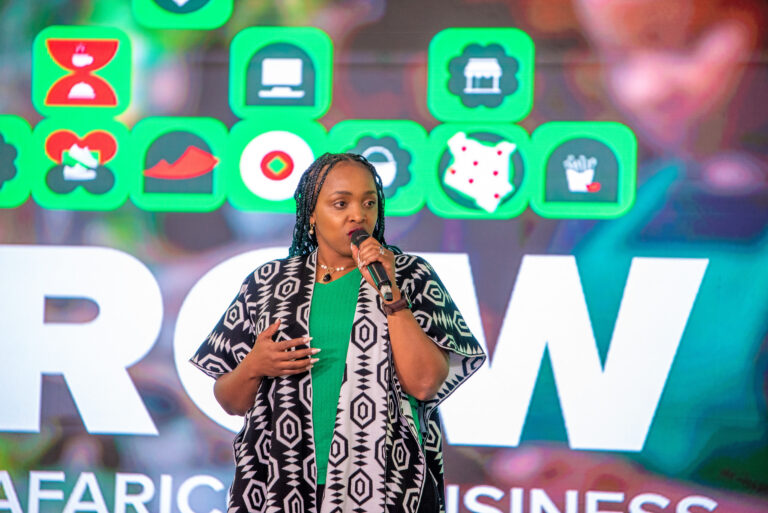
“Our commitment at Safaricom Business is to power business growth through products and solutions that matter to entrepreneurs. This offer on fibre to the business will ensure MSMEs have access to the fastest, most reliable internet that matches their ambitions,” said Frankline Okata, Ag. Chief Enterprise Business Officer, Safaricom PLC.

The Grow with Safaricom Business Forum held under the theme ‘Fuelling Financial Growth Through Innovation’ brought together a diverse range of entrepreneurs from Nairobi’s vibrant SME sector, all united by a shared ambition to grow, innovate, and overcome the unique challenges faced by small businesses in a rapidly changing economic landscape.

The Grow with Safaricom Business forums have positively impacted on thousands of entrepreneurs across the country through physical and virtual forums.

Data by the Kenya National Bureau of Statistics show that more than 70% of small businesses fail within the first three years, largely due to cash flow or market issues.

“These challenges present an opportunity for collaboration and growth. We have introduced business credit solutions that leverage transaction history and real-time business performance to offer practical, accessible, and flexible credit solutions tailored to the needs of entrepreneurs,” Okata said.

9mobile Rebrands as T2, Ushering in a Bold New Era for Nigerian Telecoms

0

9mobile Nigeria’s fourth-largest telecom operator has rebranded to T2, signaling a fresh chapter of innovation, resilience, and customer-focused transformation.

The rebrand marks a major step in the company’s four-phase recovery roadmap—Stabilisation, Modernisation, Transformation, and Growth—following its 2023 acquisition by Lighthouse Telecoms, led by Nigerian investor Thomas Etuh.

“This is not just a logo change; it’s a total evolution of who we are and how we deliver value,” said Obafemi Banigbe, CEO of T2. “We’re building a brand ready to thrive in the digital economy.”

Since the acquisition, T2 has revitalised its leadership, signed a landmark infrastructure-sharing agreement with MTN Nigeria—the first of its scale in the country—and expanded network reach nationwide.

The transformation comes after years of challenges that saw subscriber numbers fall from over 22 million to 2.44 million by June 2025. T2 aims to reverse this trend with a renewed focus on Speed, Smart Living, Digital Lifestyle, and Trust.

“Today marks a new beginning,” said Chairman Thomas Etuh. “We are rising together again—reclaiming all lost grounds.”

The rebrand introduces a vibrant orange colour palette, symbolising energy and innovation, and aligns with Nigeria’s mobile-first digital future.

Government officials, including Dr. Bosun Tijani, Minister of Communications, Innovation and Digital Economy, and Barr. Bimbola Salu-Hundeyin, representing the Lagos State Governor, commended the move, urging T2 to back the new look with service excellence and innovation.

The rollout will be phased to ensure continuity for current subscribers, while introducing new products and enhanced customer experiences.

Chowdeck Raises $9 Million Series A Funding For Expansion across Nigeria and Ghana

0

Chowdeck, Nigeria’s on-demand delivery platform, has raised $9 million in Series A funding to expand into more cities across Nigeria and Ghana.

The firm will also use the funds to launch a quick commerce strategy that will boost the speed and efficiency of its grocery and local markets delivery services.

The Series A equity round was led by Novastar Ventures, with participation from Y Combinator, AAIC Investment, Rebel Fund, GFR Fund, Kaleo, HoaQ and others.

According to Femi Aluko, CEO and co-founder of Chowdeck, “we’re thrilled about this round as it brings us closer to our vision of becoming Africa’s number one super app, transforming how millions of Africans access food, groceries and essentials every day. This funding will supercharge our growth plans, enabling us to expand into more cities, reduce delivery times, scale our grocery footprint, and attract the best talent to drive innovation and customer satisfaction.”

These investors bring deep expertise across different sectors, global networks, and operational insight that will support Chowdeck to scale sustainably and navigate Africa’s unique logistics and business environment.

The new funding will enable faster, more reliable delivery of food, groceries and medicine. The quick commerce strategy – supported by dark stores and hyperlocal logistics will further enhance delivery speed, improve depth of coverage, and accelerate expansion into additional cities across Nigeria and Ghana that are not yet served.

Since launching in October 2021, Chowdeck has emerged as the leading technology solutions provider for food and hospitality businesses in Africa. From logistics and inventory management to payments and performance tools, Chowdeck helps its partners streamline operations and meet rising customer expectations. With over 1.5 million customers and more than 20,000 riders across 11 cities, its tech-enabled logistics network enables businesses to deliver orders in an average of 30 minutes, while offering customers a seamless platform to access meals, groceries, and everyday essentials. In 2024, the value of meals delivered via the Chowdeck platform grew more than sixfold compared to the previous year. The company has already exceeded last year’s total and is firmly on track for another record-breaking year in 2025.

Chowdeck’s growth in Nigeria and Ghana has been driven by its hyperlocal execution, fast and reliable logistics, as well as strong vendor partnerships that position it as a growth partner rather than just a delivery app. Its recent acquisition of Mira, providers of modern point-of-sale (POS) solutions tailored for the food and hospitality industry, also enables it to leverage Mira’s exceptional product development capabilities to ideate and deliver new technology solutions to support growth and improve customer experience. Backed by a focused leadership team and rising customer demand for quick, digital-first services, Chowdeck is scaling rapidly by combining operational excellence with deep local insight.

Brian Waswani Odhiambo, Partner at Novastar Ventures, said: “Chowdeck is building the future of logistics for African cities by creating a platform that benefits consumers, vendors and riders alike. With deep local insight, a sustainability-first approach and impressive execution, Chowdeck is redefining last-mile delivery on the continent. We’re very excited to partner with Chowdeck in this next phase of growth as it scales its offering and helps create a more inclusive, sustainable and efficient urban economy.”


Samsung Wins DARPA’s AI Cyber Challenge with AI Tools that Identify Software Vulnerabilities

0

Team Samsung has taken first place in the finals of the U.S. government-sponsored AI Cyber Challenge (AIxCC), the world’s largest artificial intelligence security competition. The event, organized by the Defense Advanced Research Projects Agency (DARPA), was held on August 8 at DEF CON 33 in Las Vegas.

DARPA created AIxCC to accelerate development of automated security tools that can detect and patch software flaws without human intervention. The challenge carried a total prize pool of $22.5 million.

AIxCC began in 2023 with 42 teams from universities, research labs, and global tech companies. Seven teams advanced to this year’s finals. Samsung competed as Team Atlanta, led by Samsung Research’s Device eXperience (DX) Division, alongside experts from the Georgia Institute of Technology, Korea Advanced Institute of Science and Technology (KAIST), and Pohang University of Science and Technology (POSTECH). During the semifinals, Team Atlanta stood out as the only group to identify an unintended vulnerability — one not deliberately planted by organizers — further demonstrating technical expertise.

In the finals, teams were evaluated on their ability to analyze source code, detect vulnerabilities, and apply patches using AI-driven tools alone. Samsung’s system earned top marks for precision and sophistication, securing first place and a $4 million prize.

“Samsung Electronics was able to achieve meaningful results by demonstrating its AI-based security technology capabilities at a global security technology competition,” said Taesoo Kim, Vice President of Samsung Research and lead of Team Atlanta. “We will continue to expand collaboration with global security experts to further advance Samsung Electronics’ security technology proficiency.”

Building on the win, Samsung plans to integrate AI-driven security into its next-generation products and services. The company says it aims to develop autonomous solutions that can continuously identify and mitigate vulnerabilities, strengthening long-term digital security.


Teraco Boosts JB4 Hyperscale Data Centre to 50MW

0
Teraco, an interconnection hub and vendor-neutral data centre provider,  has completed its JB4 Bredell Campus data centre expansion located in Ekurhuleni, east of Johannesburg, South Africa.
The 30MW addition expands JB4 to being the largest standalone data centre built in Africa, servicing 50MW of critical IT power load.
According to Jan Hnizdo, Teraco CEO, “Teraco is dedicated to expanding its capacity across key hubs, ensuring our clients have the flexibility to scale and fully leverage digital transformation across the region. We continue to make significant investments in ICT infrastructure and have established Africa’s largest data centre platform. We are proud to offer open-access interconnection and deliver world-class data centre solutions to all our clients.”
This new phase at JB4 comprises six data halls, incorporates numerous new design enhancements and, in another African first, each hall supports 5MW of allocated critical IT power load. The new data halls are fully liquid-to-liquid cooling enabled, allowing clients to deploy high-density, air-cooled cloud deployments and direct-to-chip cooling for denser AI workloads.
JB4 has been designed with sustainability at its core, incorporating a state-of-the-art closed-loop chilled water system that provides free air cooling, coupled with AI enabled technology to configure data hall cooling in real time, based on IT load and load dispersion.
The JB4 expansion, built to stringent global hyperscale specifications, contributes significantly to the South African and sub-Saharan African data centre footprint. This follows the recent completion of Teraco’s new hyperscale JB5 Isando facility, which adds another 30MW of critical IT power load to Teraco’s Isando Campus in Ekurhuleni.
The JB4 facility is located in the heart of Ekurhuleni’s Aerotropolis giving access to a wide choice of network service providers, regional IXPs, content delivery networks, cloud service provider on-ramps, and peering at the eighth largest internet exchange in the world, NAPAfrica.
Teraco’s growing data centre platform stands at 189MW of critical power load which includes the Isando Campus (JB1/JB3/JB5: 70MW), Bredell Campus (JB2/JB4: 64MW), Cape Town Campus (CT1/CT2: 53MW), and Durban (DB1: 2MW).
The JB4 is the largest standalone data centre built in Africa with 80 000m2 of building structure, serviced by 80MW of utility power supply, providing 50MW of critical IT power load
JB4 features environmentally conscious designs including a zero-water closed loop cooling system and specialised monitoring technology to improve energy efficiency.
The total facility comprises 14 data halls, making up 17 000m2 and is the first data centre in Africa to provide 5MW of critical IT load within a single data hall.

Wuilt Raises $2M to Democratize E-Commerce in MENA

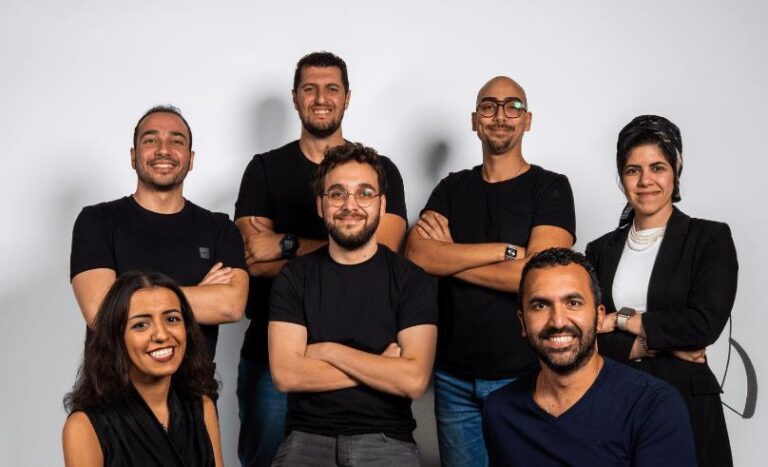
Wuilt, the MENA region’s all-in-one e-commerce enablement platform, has raised $2 million to democratize e-commerce in Egypt and across the MENA region.

The round includes follow-on investment from Flat6Labs and MTF VC and participation from Mubadala-backed Hub71, JIMCO (Abdul Latif Jameel’s VC arm), Purity Tech, and a strong network of strategic angel investors.

Founded in 2019 by Ahmed Rostom and Mahmoud Metwaly, Wuilt aims to make e-commerce accessible for everyone in the region, and from Cairo to Abu Dhabi, Wuilt is empowering merchants to succeed online.

In April 2025, Wuilt made a bold and disruptive pivot—launching its platform 100% for free in Egypt. This wasn’t just a pricing change; it was a complete transformation of Wuilt’s business model. By removing all subscription fees, Wuilt sacrificed hundreds of thousands of dollars in annual recurring revenue to focus on what truly matters: merchant growth.

In just a few months, over 20,000 merchants joined the platform, launching stores, managing products, shipping with local couriers, and accepting payments—without paying a single subscription fee. This move reflects Wuilt’s core belief that democratizing e-commerce means removing barriers, not building them. With this model, Wuilt’s growth has no ceiling—it scales directly with the success of its merchants.

Wuilt’s model breaks from traditional platforms. By offering the core e-commerce product for free and monetizing through value-added services like Wuilt Shipments, Wuilt Pay, and Wuilt Wallet, the company grows by helping its merchants grow.

Wuilt is preparing to launch its 100% free e-commerce in the UAE in Q4 2025, followed by GCC countries and Turkey in Q1 2026. The goal: to become the infrastructure powering small businesses and social sellers across emerging markets.

With the funding, Wuilt aims to launch a suite of AI-powered features expected to transform how merchants manage their daily operations. These tools are designed to remove complexity, save time, and unlock new levels of productivity—making it easier than ever for anyone to run and grow a successful online business.

Flend, Egypt’s Digital SME Financing Platform Raises $3M

Flend, Egypt’s digital SME financing platform has raised US$3 million in its seed round through a combination of equity and debt financing.

The funding round was led by Egypt Ventures and joined by Camel Ventures, Sukna Ventures, Plus VC, Banque Misr, and a number of regional family offices including El Sewedy and Baalbaki, among other corporate stakeholders. MSMEDA and several local banking institutions led the debt round.

According to Ahmed Zaki, Co-Founder and CEO, “We’re grateful to have the backing of investors who share our vision. This funding enables us to meet SMEs where they are—integrated into the digital platforms they already use—delivering fast, fair, and flexible financing.”

Flend, established to address the systemic challenges that prevent Egyptian SMEs from accessing timely and reliable financing, has, in half a year, reduced approval times by 95%, digitized the entire loan process, and partnered with over 20 embedded platforms across logistics, digital payments, e-commerce, and marketplaces. The firm aims to deploy EGP 1 billion in SME financing within its first year.”

Aimed at streamlining capital access for SMEs, replacing outdated processes with real-time data and digital workflows. Flend will use the capital to scale it’s embedded lending model through strategic partnerships with SME-focused platforms, expanding the team, and investing in its proprietary technology.

Flend is targeting Egypt’s US$50 billion SME credit gap, focusing on short-term working capital solutions by issuing digital loans legally via e-signatures and online contracts—an essential step forward for Egypt’s fintech ecosystem.

Abdelrahman Mansour, CEO of Egypt Ventures, stated: “Flend is building a critical bridge for SMEs that struggle to access capital. Their model has the potential to unlock widespread economic growth by leveraging digital tools at scale.

Flend’s embedded model allows for direct integration into SME ecosystems and supply chains, cutting acquisition costs and enhancing credit assessment through real-time operational data. The company is actively channeling funds to critical sectors such as healthcare distribution, agriculture and food, manufacturing, retail, and export—reinforcing national development priorities and economic inclusion.

“Flend is solving a real and urgent challenge for SMEs—embedding finance into the platforms where business already happens,” said Hasan Haider, Managing Partner at Plus VC. “The model is scalable, the impact is significant, and the team has the expertise to execute.”

Flat6Labs Launches F6 Group & F6 Ventures, a VC & Seed-Stage Investment Firm

0

Flat6Labs, MENA’s most recognised startup accelerator platform, has launched F6 Group, an entity integrating venture capital and entrepreneurial support and F6 Ventures, a launched seed-stage investment firm.

At the core of this transformation is F6 Ventures, the Group’s dedicated venture capital arm, which manages six funds with over $90 million in assets under management and has a track record of 300+ companies invested in by the Partners.

Co-Founded by Dina el-Shenoufy and Ramez El-Serafy, the firm leverages F6 Group’s extensive regional presence and legacy of empowering entrepreneurial talent, through the long-standing work of Flat6Labs.

“F6 Ventures marks a new era in our journey, bringing focused capital and sharper execution to support the region’s boldest founders.” said Dina el-Shenoufy, Co-Founder and General Partner at F6 Ventures. “We are extending our commitment to early-stage startups to help them scale from idea to impact.”

Together, they represent a bold evolution of the company’s 14-year journey, bringing sharper focus, expanded reach, and deeper capabilities to support founders and ecosystems across the Middle East and Africa.

Focused on seed and early-stage investments across the Middle East and Africa, F6 Ventures is positioned to become a market leader in seed-stage investing across emerging ecosystems, as it addresses a pressing funding gap at the most critical phase of startup development: the pre-seed and seed stages.

Backed by the extensive regional footprint and entrepreneurial legacy of F6 Group and headquartered in Cairo, with offices in Riyadh, Abu Dhabi, Amman Tunis, and Nairobi, F6 Ventures is also led by the regional partners, namely Eyad Albayouk, Ryaan Sharif, Rasha Manna, Walid Triki, and Christine Namara. Together, this seasoned leadership team brings decades of experience in venture capital, entrepreneurship, and market development across the Middle East and Africa.

“Over more than a decade, we’ve empowered thousands of founders and helped bold ideas grow into market-leading startups. I’m excited to begin this new chapter with F6 Ventures helping founders scale faster and drive the next wave of innovation,” said Ramez El-Serafy, Co-Founder and General Partner at F6 Ventures.

Meanwhile, maintaining the regionally renowned brand name, and with the leadership of newly appointed CEO, Yehia Houry, Flat6Labs sharpens its focus on founder support, innovation, and ecosystem growth across emerging markets. Building on more than 14 years of proven impact, it remains the region’s leading platform for world-class startup programmes and ecosystem-building initiatives, deepening its mission to empower entrepreneurs and drive regional innovation.

Both entities operate under the unified structure of F6 Group, led by Dina el-Shenoufy as CEO and Hany Al Sonbaty, Founder and Chairman, ensuring a unified strategy that combines venture capital and entrepreneurial support programmes to advance innovation across emerging markets.

Looking ahead, F6 Ventures plans to launch multiple new regional funds across Africa, the GCC, and the Levant, with a goal of expanding its AUMs to $200 million and investing in over 200 companies within the next five years.

F6 Group brings together venture capital and founder support under one platform, purpose-built to serve startups across emerging markets. By aligning investment and programmatic expertise, F6 Group delivers unmatched access to capital, programmes, and expertise – turning visionary founders into market leaders.

Visa Africa Fintech Accelerator Opens Applications for 5th Cohort

0

Visa, a global leader in digital payments, announced that applications are open for the fifth cohort (Cohort 5) of its Visa Africa Fintech Accelerator.

The 12-week intensive program is designed to help startups fast-track their growth and impact, is inviting fintechs with a minimum viable product (MVP) or a market-ready solution based in Africa to apply before August 15.

Visa also announced 22 participating startups for the fourth cohort (Cohort 4) of its program, spanning 12 countries. These startups aim is to tackle challenges in Africa’s fintech sector and promote financial inclusion and digital growth.

The Visa Africa Fintech Accelerator offers Africa-focused startups mentorship, tailored training, networking, and access to funding and resources, helping them advance in the fintech sector. This initiative is part of Visa’s continued commitment to advancing Africa’s digital economy, and the company’s pledge of $1 billion by 2027 to transform the payments ecosystem.

Since its inception in 2023, the Visa Africa Fintech Accelerator program has accelerated 64 fintechs across three cohorts, with an estimated cumulative portfolio value of $1.1 billion. In the first three cohorts, participation has spanned 17 countries with operational footprint in 31. Nearly two-thirds (62%) of the startups included women on their leadership teams. Collectively, these fintechs have added more than $3 million in revenue during the course of the training, and alumni have subsequently raised more than $55 million following completion of the program.

The virtual Accelerator program will conclude with an in-person Demo Day, where startups will have the opportunity to pitch their innovations to key ecosystem players, funding partners, angel investors, and venture capitalists.

Startups shortlisted for Cohort 4 of the Visa Africa Fintech Accelerator are:

  • BigDot.ai (Zimbabwe): BigDot is helping SMEs use less cash through digital transformation, seamless checkouts, and blockchain-powered financial inclusion.
  • ChatCash (Zimbabwe): ChatCash enables African SMEs to sell and get paid through popular messaging apps using AI-powered, multilingual tools. The platform integrates payments, customer engagement, and business resources.
  • Credify Africa (Uganda): Credify is bridging the trade finance gap for African importers by providing seamless access to capital, logistics, and cross-border payments.
  • Flend (Egypt): Flend is a digital NBFI for SME finance, providing tech-enabled, data-driven solutions to close the financing gap for underserved businesses in North Africa.
  • Hsabati (Morocco): Hsabati is a platform that helps businesses manage operations, enabling data collection and ecosystem scoring to facilitate financing through partner banks.
  • IPT Africa (Mauritius): IPT Africa provides cross-border payments solutions, including payroll processing, real-time FX pricing, and same-day bulk payments.
  • Lemonade Payments (Kenya): Lemonade’s white-label digital payments solution empowers businesses with secure, blockchain-powered wallets, without compromising user data.
  • Maishapay (Democratic Republic of Congo): Maishapay is an all-in-one B2B financial platform offering payroll solutions, digital payments, and POS terminals to help streamline transactions.
  • MNZL (Egypt): MNZL is expanding access to credit through a digital platform for asset-backed financing by tapping into consumers home and car equity.
  • Motito (Ghana): Motito is an asset financing marketplace that provides alternative payment options for customers to purchase essential assets.
  • Muda (Kenya): Muda is a digital asset exchange and OTC platform focused on cross-border payments and stablecoin liquidity solutions for African businesses and fintech’s.
  • mystocks.africa (Botswana): Mystocks.africa simplifies investing across African stock markets by providing a unified platform for trading all African stocks.
  • OKO Finance Ltd (Ivory Coast): OKO distributes automated climate insurance, allowing farms to boost their climate resilience and banks to de-risk their investment in agricultural projects.
  • PressPayNg (Nigeria): PressPayNg is an education-focused fintech platform that provides banking, financing, savings, and insurance solutions to help parents, guardians, youths, and students fund education.
  • Sevi (Kenya): Sevi streamlines B2B payments within non-digital value chains. This optimizes efficiency in credit, payments and reconciliation for the supplier, and access to stock and stock financing for small retailers.
  • Shiga Digital Inc (Nigeria): Shiga Digital provides simplified access to decentralized financial solutions for the African market with a purpose-built Defi account.
  • ShopOkoa (Kenya): ShopOkoa provides AI-driven credit and payment solutions to small- and micro-enterprises in Africa. It operates as a membership-based system combining daily savings, revenue-based financing, and automated cashflow tracking.
  • Startbutton (Nigeria): Startbutton is a merchant of record helping businesses expand across Africa by paying and receiving local currency payments from their customers in a tax efficient and compliant manner, and without the need to setup local offices.
  • Twiva (Kenya): Twiva is a social commerce platform where businesses market and resell their products and services through social media influencers.
  • Vittas (Nigeria): Vittas empowers healthcare providers with access to tailored financing, digital tools, and payment solutions, enabling them to improve patient care.
  • Woliz (Morocco): Woliz is a fintech ecosystem transforming nano-stores into digital hubs with loyalty rewards, payments, and AI-driven operations.
  • Zazu (South Africa): Zazu is a neobank for African small and medium-sized businesses, providing digital business accounts, expense management, invoicing, and bookkeeping tools in one platform.

Liquid Launches Business Internet Access for SA Businesses

0

Liquid Intelligent Technologies, a business of Cassava Technologies, has launched its Business Internet Access (BIA) service in South Africa.

BIA is a next-generation connectivity solution engineered to provide cost-effective internet access without the cost and complexity of Dedicated Internet Access (DIA) services.

According to Ziaad Suleman, Chief Executive Officer of Cassava Technologies in South Africa and Botswana, “Connectivity is no longer a luxury for businesses that require reliable, high-speed internet to maintain uninterrupted operations. With the launch of BIA through our connectivity business, Liquid Intelligent Technologies, we’re ensuring that we support South African companies of all sizes to ensure the continuous growth of our economy.”

BIA allows firms to have access to an exclusive, dedicated internet line, ensuring consistent speed for critical operations. This is reinforced by a Service Level Agreement (SLA) and a 24-hour-a-day, seven-day-a-week, 365-day-a-year helpdesk, which minimises expensive downtime and ensures business continuity and peace of mind. Included in the SLA is up to 99% uptime, ensuring minimal disruption to critical operations.

Recognising the critical importance of cyber security for businesses, every BIA connection includes Distributed Denial of Service (DDoS) visibility reporting as a standard feature. This proactive feature provides insights into potential DDoS threats targeting networks, empowering businesses to make informed cyber security decisions and proactively strengthen their defences against future attacks.

Powered by Liquid’s wholly owned and managed network, the launch of BIA as an offering specifically aimed at supporting businesses, and even SMEs on their growth journeys, reflects the organisation’s purpose of empowering businesses to thrive through digital solutions. This cost-effective offering delivers enterprise-grade performance, reliability, and support, reinforcing the company’s position as a leading provider of technology services in South Africa, offering scalable, high-performance tools tailored to business realities.

Smoother Calls, Fewer Glitches: How VoIP Monitoring Tackles Latency, Jitter, and Unexpected Downtime

0


Call disruptions aren’t just a nuisance—they’re a signal that something deeper is going wrong. Latency, jitter, and downtimes may sound like technical jargon, but for any business relying on VoIP to communicate internally or with customers, these issues are very real, and very costly.

So what’s the fix? It starts with visibility. More specifically, with smart, proactive VoIP monitoring that catches small problems before they snowball into major ones. Let’s look at how the right monitoring strategy can help your team stay connected without interruption.

Understanding the Enemies of Call Quality

Before diving into how monitoring helps, it’s worth quickly unpacking the three villains of VoIP communication:

  • Latency: The time it takes for a voice packet to travel from the speaker to the listener. A little delay? Fine. A noticeable lag? Not so much.
  • Jitter: Variability in packet delivery. When packets arrive out of order or inconsistently, voices can sound robotic or clipped.
  • Downtime: Complete service unavailability—calls drop, systems stall, and everyone’s left in silence (and frustration).

These problems are often symptoms of larger issues like network congestion, poor routing, or hardware limitations. That’s where a voip monitor earns its keep.

Proactive Detection Over Passive Waiting

The worst time to find out you have a call quality issue is when a client’s already on the line. A strong VoIP monitoring setup flips that script by constantly scanning the network, identifying small degradations before they impact users.

This proactive model works by tracking metrics like jitter buffer utilization, packet loss, round-trip time, and MOS (Mean Opinion Score). If any of these numbers start trending the wrong way, the system flags it—giving your IT team a head start on resolution.

Tracing Problems to the Source

A dropped call is a visible symptom. But is it a problem with the user’s ISP? The corporate firewall? A faulty SIP trunk? Without visibility, it’s all guesswork.

VoIP monitoring tools help by providing end-to-end call path analysis. They trace the journey of voice packets hop-by-hop, identifying where along the route delays, drops, or congestion are occurring. This level of granularity lets network engineers go from “something’s broken” to “this switch is overloaded” in seconds—not hours.

Keeping Remote Teams Connected

Remote and hybrid work setups have added layers of complexity to voice communication. A user on a café’s public Wi-Fi will experience VoIP differently than someone hardwired into an office LAN. That variability means monitoring can’t stop at the server level—it needs to extend all the way to endpoints.

Some VoIP monitoring solutions now offer client-side diagnostics or remote agent modules that track call quality from wherever the user is. This insight is especially valuable for support teams trying to diagnose problems for employees working from home or on the road.

Avoiding the Domino Effect of Downtime

Downtime doesn’t always come announced. Sometimes, it’s a slow build—a router starts dropping packets intermittently, a configuration change introduces a routing loop, or a provider has a regional issue. One degraded call turns into ten. Then a whole team loses audio.

Continuous monitoring reduces the chances of this domino effect by spotting early warning signs. Dashboards can display real-time performance heatmaps across offices or geographies, making it easier to catch and quarantine issues before they escalate.

Optimizing for Peak Performance

VoIP monitoring isn’t just about fixing what’s broken. It also helps improve what’s working. Historical data can show when call quality dips most frequently—maybe during bandwidth-heavy events like software updates or backups. With that insight, IT teams can make informed decisions about traffic shaping, call routing, or hardware upgrades.

Some platforms also offer simulated testing (synthetic calls), which replicate user behavior to evaluate how the network handles peak load conditions. It’s a way to stress-test your infrastructure without using real customers as guinea pigs.

Integrating with Broader IT Monitoring Tools

VoIP doesn’t live in a vacuum. It’s affected by switches, firewalls, internet providers, and cloud apps. That’s why modern voip monitor systems often integrate with broader network monitoring or observability platforms.

By unifying voice data with other network telemetry, teams get a holistic view—understanding not just what’s wrong, but how voice performance ties into broader IT health. It’s the difference between a patchwork of point tools and a true command center.

Final Thoughts

There’s a quiet confidence that comes from knowing your calls are going to connect clearly, every time. That confidence doesn’t come from luck—it’s built on monitoring, diagnostics, and the ability to act fast when something starts to slip.

Latency, jitter, and downtime may be technical issues on the surface, but the impact they have—missed opportunities, customer frustration, wasted time—is deeply human. By investing in the right VoIP monitoring tools and practices, businesses aren’t just protecting call quality—they’re protecting relationships, reputations, and revenue.


Taiwan Launches ‘Go Healthy with Taiwan 2025’ Campaign in Kenya to Boost Regional Wellness Innovation

Kenya has launched a new regional initiative in East Africa aimed at tackling wellness challenges in Eastern Africa through technology and cross-border collaboration.

Dubbed “Go Healthy with Taiwan 2025,” the campaign invites East African institutions, startups, and SMEs to submit proposals on how to apply Taiwanese health tech solutions to local needs in fitness, cycling, and smart healthcare.

Led by Taiwan’s International Trade Administration (TITA) and organised by the Taiwan External Trade Development Council (TAITRA), the initiative marks a growing effort by Taiwan to promote its health innovation capabilities abroad, while fostering community-driven solutions in partner countries.

Three winning proposals will each receive a US$30,000 prize, while the top six teams will be flown to Taiwan for a “Go Healthy Tour”, a curated, behind-the-scenes experience of Taiwan’s health tech ecosystem. The tour includes site visits, product demos, and networking opportunities with leading Taiwanese companies.

“The ‘Go Healthy with Taiwan’ initiative reflects our shared commitment to advancing health and wellness in East Africa through innovation, collaboration, and quality. By bringing together Taiwan’s world-class health technologies and local expertise, we aim to create solutions that not only meet today’s needs but also inspire a healthier future for communities across the region.” said Michael Lin,   Director, Taiwan Trade Centre, Nairobi.

Taiwan is a global leader in several areas relevant to the campaign’s focus:

  1. Fitness & Sports Technology: Taiwanese innovations in this sector range from AI-enabled training systems to connected workout equipment, designed to enhance personal and population-wide wellness.
  2. Cycling: As a global manufacturing hub for high-performance bicycles and a leader in urban cycling infrastructure, Taiwan promotes cycling as a sustainable and health-positive mode of transport.
  3. Smart Healthcare: Taiwan’s Medtech sector is known for its advanced diagnostic platforms, telemedicine capabilities, and wearable technologies. An example includes Acer’s wearable health monitors, which have already been adopted by leading hospitals worldwide, demonstrating Taiwan’s capacity to reshape healthcare delivery and preventive care models.

Participation is made simple via the SurveyCake platform, designed for ease of submission. Detailed guidelines and case examples—such as Acer’s wearable health monitors already adopted by leading hospitals worldwide—are available on the official campaign website to support proposal development.

Proposal Deadline: August 14, 2025

Campaign Website: https://go-healthy.growthpad.co.ke

Angel Fair Africa in 2025

0

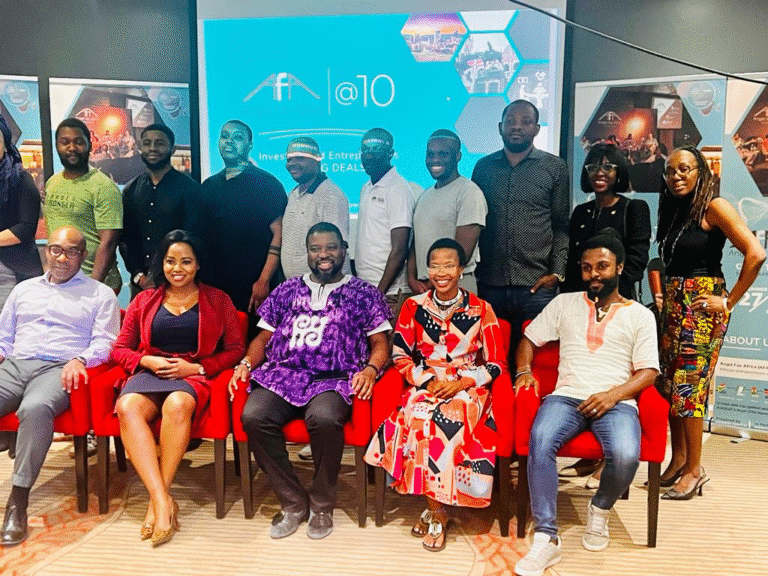
Since its well-publicized inception in 2013, Angel Fair Africa (AFA) has been hosting a successful yearly event that brings selected entrepreneurs to pitch to a room of curated investors with the intent of doing deals.

The event has resulted in about $10M of deals, which attracted other investments and generated 10X the original deals over its eleven years of existence. It boasts of a unique formula that matches entrepreneurs with investors in a 1:2 or 1:3 and in some cases 1:5 ratio – this sometimes results in the investors banding together into groups or syndicates to invest. AFA has created communities of entrepreneurs and investors in South Africa, Nigeria, Ghana, Kenya, Cote d’Ivoire, Tanzania, Mozambique where it has been held.

The event has helped create local angel investment groups and cross pollinated some of these groups in the different countries. It has also resulted in non-financial deals like mentorship, partnership, sales and cross border trade.

The success of AFA 2024, hosted in Nairobi, Kenya, caught the attention of the Graca Machel Trust (GMT), which reached out to Chanzo Capital (CC) to partner for this year’s edition.

GMT is sponsoring a gender lens investment fund under the auspices of Afrishela with a focus on catalyzing early-stage investment into women led and owned businesses across the continent. Afrishela’s second objective is to create communities of engagement to crowd in more capital through syndicates that can co-invest with the fund as well as be potential limited partners.

These objectives resonated with that of AFA, so a natural partnership emerged between GMT and CC in the spirit of the African maxim “if you want to go far, go together”, to curate two gender focused events as precursors to this year’s annual event.

On 25th March 2025, the first event “AFA@12 Launch” took place at ONESPACE in the Two Rivers International Finance and Innovation Center (TRIFIC) in Nairobi, Kenya bringing together a selected group of six founders to pitch to a room of forty-two investors and twelve ecosystem players under the theme “Mobilizing local capital to fuel Africa’s future”.

On 19th June 2025, the second half day event “AFA@12 Roadshow” was hold at 22OnSloane in Johannesburg, South Africa bringing together another selected group of seven founders to pitch to a room of forty-five investors and fourteen ecosystem players under the theme “Catalytic Angel Capital for Inclusive Growth”.

Kenya and South Africa were hosting AFA for the third time respectively, creating the perfect launchpad that has catapulted the event to its first destination outside the continent. On 19th September 2025, the twelve edition of the annual AFA (AFA@12) will be held in New York City (NYC), United States of America (USA) during the United Nations General Assembly (UNGA) week. Google who made a billion-dollar investment commitment to the continent during covid, will be hosting the event at their offices on 9th Avenue bringing together founders from the continent to meet investors to do deals in a cordial environment. Over the eleven years of the events existence, participation from investors in the US have grown multiple folds whiles engagement with the African diaspora in the US has become significant

However, there are investors and potential investors in African ventures that have not made it to the continent yet, so this presents as opportunity for them to experience the event. Secondly, the event is growing into a global brand synonymous with Shark Tank from the US and Dragons Den from the UK even though the format is different.

Arc Angel Esther Dyson is the keynote for AFA@12, under the theme “Building and Investing in Africa”. Esther is a leading angel investor in the US, Europe and to some extent Africa and one of the pioneers of the New York angel investor community. According to Esther, “for 25 years (1982-2007) I wrote (and mostly owned) an emerging info-tech industry newsletter called Release 1.0, watching the emergence of the PC, the venture capital industry, artificial intelligence and the Internet.

As a journalist, I avoided conflicts of interest by not investing. But because I had learned Russian as well as French, I started traveling to Russia in 1989 and started a second newsletter, Rel-EAST, about the East European tech scene. That was a labor of love, with no business model, free to anyone interested. But I realized that just as start-ups would talk to journalists, so would they talk to anyone remotely interested in investing – LOL. A subscriber and friend of mine – Lee Keet of Vanguard Atlantic – asked me: “You keep telling people to invest in Eastern Europe; why don’t you do so yourself?  What if I gave you a million dollars?” “Oh, I can’t,” I replied. “I’m a journa….How much did you say?!” I ended up shutting down Rel-EAST and starting a small fund called EDventure Ventures, making five software investments in Eastern Europe.

Through many transformations, my small share in our leading pick, Scala Business Software, has transformed into a $6-million-ish public stake in EPAM Solutions. That gave me a taste for the direct involvement and guidance that direct, early investing offers, and when I sold my company EDventure (including Release 1.0) to CNET in 2005 and left in 2007, I turned to investing in US and other startups.”

Esther has also accumulated her own small portfolio of African startups, including Angaza (Angaza.com, solar panels), Nomanini (Nomanini.com, a financial platform for small retailers), Ilara Health (IlaraHealth.com, formerly lending to health clinics and now also a franchiser), Oradian (Oradian.com, a cloud platform for small financial companies), Rasello (Rasello.com, formerly SMS marketing and now mostly health data collection and analysis), Swvl (Swvl.com, transit as a service), and Trella.app  (logistics/trucking). Her keynote fireside chat would details some of these and her recent efforts like Wellville and Term Limits – a book that comes out in 2026.


Suplyd, Egypt’s Restaurant Platform Raises $2M to Expand Across Egypt

0

Suplyd, the Cairo-based digital procurement platform for restaurants, has raised $2 million in a pre-Series A funding round to expand across the country.

The investment was led by 4DX Ventures, Camel Ventures, and Plus VC, with participation from Seedstars and existing investors.

This round will support the company’s mission to build a comprehensive infrastructure for restaurant operations and expand into untapped areas across Egypt.

According to Gohar Said, Founder and CEO of Suplyd, Over the past four years, we’ve built Suplyd into a critical part of Egypt’s restaurant ecosystem. That progress comes with greater responsibility, and even greater ambition. What started as a bold idea is now powering thousands of restaurants every day. We’ve faced challenges, adapted to change, and earned the trust of our customers, partners, and investors. We didn’t just witness the industry’s digital transformation. We helped lead it. And we’re just getting started. There’s so much more to build, and we’re here for the long haul.”

Founded in 2022, Suplyd provides procurement solutions for small and medium-sized restaurants, addressing long-standing inefficiencies in Egypt’s $10 billion HORECA supply chain. By directly connecting restaurants with suppliers and streamlining procurement workflows, Suplyd is tackling the challenges of supply chain fragmentation, unreliable deliveries, and a lack of transparency.

Since its $1.6 million pre-seed round in 2022, Suplyd has grown nearly 20x in terms of restaurants served and the value of goods delivered. Today, the company serves over 5,000 restaurant customers and continues to roll out new operational tools and services aimed at simplifying backend operations for restaurant owners.

Suplyd will use the new capital to enhance its platform beyond procurement, accelerate the development of new service verticals, and expand its reach within Egypt. With one of the highest tech adoption rates among B2B supply chain players in the region, the company is well-positioned to unlock new efficiencies with minimal friction.

“At 4DX Ventures, we’re proud to have been one of the earliest backers of Suplyd, a company tackling the massive inefficiencies in Egypt’s $10B+ HORECA supply chain,” said Peter Orth, Partner at 4DX Ventures. “Suplyd’s digital procurement platform serves the long tail of restaurants that are often overlooked. Their early traction, strong supplier relationships, and diversified revenue streams reinforced our conviction. Powered by sector veterans, we believe Suplyd is well-positioned to become a category-defining player within the region.”

Commenting on the fundraising announcement, Hasan Haider, Founder and Managing Partner at Plus VC said: “At +VC, we are committed to backing visionary founders across MENA who are building scalable infrastructure for the future. We are excited to continue supporting Gohar and the team as they push boundaries, scale their impact, and drive innovation across the region.”

Suplyd offers a reliable, end-to-end digital solution that simplifies restaurant supply procurement. By replacing fragmented daily orders with a single, streamlined platform, operators gain access to hundreds of quality products, real-time analytics, and valuable procurement insights. With a fully digital trail, Suplyd helps reduce waste, cut costs, and improve supply chain predictability—making it the go-to one-stop shop for F&B operators across Egypt.

Mataa, a Libyan E-commerce Platform, Raises Seed Round

0

Mataa, a Libya-based e-commerce platform, announced the closing of its first Seed investment round, backed by a group of Libyan business angels. The funding marks a significant milestone in the startup’s journey to enhance digital commerce in Libya and the broader North African region.

Speaking on the occasion, Mataa’s Founder and CEO Ibrahim Shuwehdi stated that the funds will be used to strengthen operational capacity, particularly in first-mile and last-mile logistics, expand its central warehouse, and onboard new suppliers and product categories. The company also plans to recruit experienced regional talent in the e-commerce sector to support long-term growth.

Mataa will now double down on its marketplace model, enabling Libyan merchants to reach over 6 million internet users nationwide. The platform also supports Facebook-based sellers by allowing seamless product integration, which can boost conversions and reduce paid advertising expenses.

Shuwehdi emphasised that investor confidence in the founding team and Libya’s central geographic location—at the heart of a 275 million-person, $830 billion-gross North African market—were key factors in attracting this round.

The company views this round not just as a financial boost but as a signal to the wider ecosystem to encourage more venture investment in Libyan startups and SMEs.

Mataa was founded in 2022 by Ibrahim Shuwehdi to allow users to shop with an express delivery option. The firm is using the funding to build out its operational capabilities, including first- and last-mile logistics, warehouse expansion, and onboarding more suppliers and product categories.

CEO Weekends: Mastercard’s $106 Million Bet on African Startups Ends in Courtroom Collapse

0
  • The Mastercard Foundation is locked in a $4.6 million legal dispute with 54 Collective.
  • Founders Factory Africa was a regional outpost of the U.K.-based Founders Factory
  • The pan-African organization rebranded as 54 Collective

What began as one of Africa’s most ambitious startup funding partnerships has unraveled into a courtroom fight over missing audits, backdated transactions, and allegations of misappropriated charitable funds.

The Mastercard Foundation, one of Africa’s largest philanthropic investors, is locked in a $4.6 million legal dispute with 54 Collective, a venture builder formerly known as Founders Factory Africa. At stake is not just money—but the credibility of impact capital on the continent.

An Ambitious Partnership Built to Scale African Startups

In 2018, Johannesburg-based Africa Founders Ventures (AFV) launched as Founders Factory Africa, a regional outpost of the U.K.-based Founders Factory. Its mission: support early-stage African startups through venture building, seed capital, and technical support. By 2021, it had attracted marquee backers such as Standard Bank, Netcare, and Johnson & Johnson.

But the real windfall came in 2022, when the Mastercard Foundation signed on as lead funder, committing more than $106 million over several years. By late 2023, the partnership had created more than 17,500 jobs and supported over 40 startups across 10+ countries.

In a bold move to assert a pan-African identity, the organization rebranded as 54 Collective, a nod to the continent’s 54 countries. That rebrand, however, would ignite a chain reaction that exposed deep governance flaws—and ultimately brought the house down.

The Rebrand That Sparked the Breakdown

According to court documents, in August 2024, Mastercard’s legal team raised concerns that the “54 Collective” rebrand had been executed without approval and may have used restricted grant funds—charitable money intended for nonprofit purposes—to build a brand that also served affiliated for-profit entities like Founders Factory Africa (FFA) and Utopia Capital.

An estimated $689,931 had been spent on the rebrand—paid for from the same grant pool designed to support entrepreneurs across Africa.

The Foundation demanded repayment. At first, AFV’s leadership appeared to comply. But within days, it reversed course, arguing repayment could constitute “reckless trading” under South African law, and began pushing back against Mastercard’s narrative.

“The Mastercard Foundation’s grant was not terminated due to breach,” said Bongani Sithole, CEO of 54 Collective, in a July statement. “Our programs were effective, and the decision to rebrand was aligned with our broader mission.”

The Audit That Changed Everything

In response to the rebrand dispute, Mastercard commissioned Deloitte to conduct a forensic review of AFV’s financials. With read-only access to its Xero accounting system, auditors uncovered troubling patterns:

  • Over 2,000 backdated journal entries logged just before the audit
  • No audited financial statements for FY2023 or FY2024, despite millions in disbursed grants
  • A $4.59 million transfer from AFV (the nonprofit grant recipient) to FFA (its for-profit affiliate), without adequate justification or approval

Mastercard Foundation halted all funding in January 2025, citing governance breakdowns and misuse of restricted funds. The funding freeze left the organization in free fall.

Collapse and Courtroom Battles

By February 2025, 54 Collective began shutting down operations. More than 40 employees across Nairobi, Lagos, and Johannesburg were laid off. Programs like the Gen F accelerator and the Entrepreneur Academy—which had become a lifeline for African early-stage startups—were discontinued.

In March, AFV filed for business rescue, a South African legal protection similar to Chapter 11 bankruptcy. But Mastercard argued the filing was a stalling tactic to protect assets, not a genuine effort to restructure.

South African courts agreed.

In a ruling issued July 22, Justice Johann Gautschi described the rescue plan as a “blatant disregard for the law.” He ordered the provisional liquidation of AFV and froze its accounts at Standard Bank, Investec, and Nedbank.

“There was no real prospect of rescue,” wrote Gautschi. “This was an attempt to frustrate creditors and the court process.”

A final liquidation hearing is set for August 11.

A Costly Void in the Startup Ecosystem

The fallout from 54 Collective’s collapse has rippled across the African startup ecosystem. While the $40 million VC fund it launched, UAF1, continues to operate under separate governance, many founders lost access to mentorship, grants, and operational support they had counted on.

“This isn’t just a funding issue—it’s an ecosystem loss,” said Nomfundo Mbele, an innovation policy analyst in Cape Town. “54 Collective filled a gap that few others had the infrastructure or risk appetite to tackle.”

Some startups are now scrambling to find new partners. Others face survival threats.

At the same time, the scandal has ignited debate over how philanthropic capital is managed—particularly in hybrid structures that mix nonprofit missions with for-profit ambitions.

The Governance Challenge of Blended Finance

The 54 Collective model was built on a dual-track strategy: a nonprofit arm (AFV) receiving grants, and a for-profit entity (FFA) executing commercial investments. On paper, it was a promising approach to balancing impact and scalability.

But the overlapping boards, shared branding, and fluid movement of funds between the two created compliance vulnerabilities. Deloitte’s audit found that 54 Collective often failed to distinguish between the nonprofit and for-profit operations in practice, despite legal and accounting obligations to do so.

Legal experts say it’s a cautionary tale.

“This case highlights a fundamental risk in blended finance,” said Tendai Mwangi, a Nairobi-based corporate attorney. “Without airtight firewalls and transparent governance, even well-intentioned structures can collapse under scrutiny.”

Mastercard Foundation Responds

For its part, the Mastercard Foundation has filed for arbitration in Ontario, Canada, seeking to recover funds and clarify the limits of responsibility in grant-financed ventures. While the Foundation has not publicly accused AFV of fraud, its filings assert that charitable funds were used in ways that violated the terms of their agreement.

In an emailed statement, the Foundation emphasized that its mission to support African youth and entrepreneurs “remains unchanged,” and that it is reviewing its grant monitoring systems.

What Comes Next

As the final liquidation hearing approaches, more details may emerge about how one of the most well-funded startup accelerators on the continent unraveled in less than a year.

What’s clear already is that trust has been shaken—between donors and grantees, between nonprofits and their affiliates, and across an ecosystem that often runs on optimism and lean oversight.

“Africa needs more bold capital,” said Mbele. “But bold doesn’t mean blind.”

Timeline: Rise and Fall of 54 Collective

Year Event
2018 Founders Factory Africa launched with support from Standard Bank and others
2022 Mastercard Foundation commits over $106 million in grant funding
Mid-2023 Organization rebrands as 54 Collective
Aug 2024 Mastercard flags unauthorized rebrand, requests repayment
Dec 2024 Deloitte audit reveals irregularities, fund transfers
Jan 2025 Mastercard halts funding
Feb 2025 Operations shut down, layoffs begin
Mar–May 2025 Business rescue filing rejected by courts
Jul 2025 South African High Court orders provisional liquidation
Aug 11, 2025 Final liquidation hearing scheduled


Bolt’s Family Profile Feature Allows Users to Book for 9 People 

0

Bolt ride-hailing platform is introducing a new Family Profile feature that allows one person to manage and pay for rides for up to nine other people, all from a single Bolt account.

The Family Profile is designed to make ride-hailing more practical for families and support networks as data by Bolt shows 2–6% of Bolt rides are currently ordered on someone’s behalf. The new feature reduces manual coordination and sharing of trip details.

According to Dimmy Kanyankole, General Manager Kenya and Tanzania at Bolt: “The launch of the Family Profile feature marks a significant step in empowering our customers to provide safe, seamless, and convenient transportation for their loved ones. By combining control, transparency, and flexibility in one feature, we’re proud to bring greater value and peace of mind to households across Kenya.”

The new feature allows customers to invite others to join their profile, set monthly spending limits, and receive live trip notifications. Members can request rides independently if they use the app, while the account holder retains oversight.

Family accounts do not change Bolt’s core policies around rider eligibility. Each member added to a Family Profile must have their own Bolt account and meet the platform’s minimum age requirement of 18. This means the feature cannot be used to book rides for unaccompanied minors. These age restrictions are in place for legal and safety reasons and ensure that all riders using the feature remain subject to Bolt’s existing terms and conditions.

The feature is especially helpful for parents, caregivers, or anyone supporting older relatives who may not use smartphones or ride-hailing apps regularly. Data shows that ride-hail usage is growing fastest among older adults, but practical barriers, like app complexity or payment requirements, still limit adoption. Family Profile helps close that gap by letting one person handle ride management and payments for others, even if they don’t use the Bolt app themselves.

In addition to greater flexibility, Family Profile offers account holders enhanced financial control and peace of mind. They can monitor ride activity per member, receive real-time alerts when trips start or end, and take immediate action if needed, for example, checking a ride’s live location or contacting the rider or driver in the event of an unexpected route or stop.

The launch of Family Profile complements Bolt’s ongoing investment in building a world-class ride-hailing platform. Bolt engineers continue to improve the app’s routing, mapping, and usability to meet the evolving expectations of riders and drivers. Family Profile joins a growing set of features aimed at building trust and enhancing platform safety.

Existing safety tools available in the app include trip verification codes, live location sharing, emergency assistance, and ride monitoring by Bolt’s dedicated Safety Team.

Logistics Marketplace Launches to Connect Logistics Health Supply Chains

0

The Logistics Marketplace, a platform designed to strengthen health and humanitarian supply chains in Africa and underserved markets, has officially launched.

Conceived by Supply Chain Private Sector Engagement Advisor at The Global Fund Scott Dubin, and powered by Logixity, the Logistics Marketplace brings governments, global health partners, humanitarian response organizations, international and UN organizations, manufacturers and distributors – to find, assess, and engage logistics providers.

According to its founder Scott Dubin,“In too many low- and middle-income countries, it’s not a lack of infrastructure that slows the movement of life-saving health and humanitarian products, it’s the difficulty of finding the right logistics partners. The Logistics Marketplace is designed to solve that problem. By giving buyers real-time visibility into the range of providers operating in a country, and giving providers a platform to showcase their capabilities, we’re reducing friction, increasing competition, and ultimately helping supply chains run smarter and faster.”

The SaaS platform aims to address long-standing inefficiencies in health and humanitarian supply chains by connecting buyers and logistics providers, streamlining procurement processes, and bringing transparency to fragmented logistics markets.

The platform will help buyers to discover logistics providers, post logistics tenders, and manage logistics sourcing in one place. Eligible organizations: governments, global health partners, humanitarian response organizations,  manufacturers, wholesalers & distributors, and others.

For providers, the platform helps them to showcase their services, respond to tenders, and grow your business.

Logistics Marketplace helps one stand out and compete, especially in health and humanitarian supply chains. Eligible organizations: transporters (road, air, rail, water), warehouse providers, cold chain specialists, and others offering specialized  logistics services.

The platform is also building a section for hybrid users to seek, manage, and offer logistics services. Organizations can submit tenders and bid on them, partner with providers, or promote your own services. Eligible organizations: freight forwarders, 3PL and 4PL providers, and technical assistance providers.

Logistics Marketplace integrates key functionalities such as provider discovery, streamlined logistics procurement, and a provider marketplace offering providers transparent access to open tenders.

Lantos Pin, Health Supply Chain Expert said: “The Logistics Marketplace is exactly the kind of solution health supply chains have needed for years, saving time and money to identify and engage providers. The platform introduces a truly logistics-native, globally accessible solution that simply hasn’t existed before. It uniquely combines the strengths of commercial SaaS with the mission of enabling smarter, faster, and more transparent logistics in health supply networks – a much-needed step to solving these systemic challenges at scale.”

As health and humanitarian systems face mounting demands to do more, the Logistics Marketplace emerges both as a tool and a critical infrastructure for the future of health  and humanitarian product delivery. Buyers, providers, and hybrid users can immediately access the platform via www.logisticsmarketplace.health.

Canal+ Deal Positions MultiChoice to Become a Global Media Power

0

As Canal+ moves closer to completing its takeover of MultiChoice Group Ltd., industry analysts say the South African broadcaster is no longer just a regional media player—it is now poised to become a global entertainment brand with African content and audiences at its core.

The ZAR125-per-share offer, approved by South Africa’s Competition Tribunal last week, clears the path for the French pay-TV operator to integrate MultiChoice’s sprawling African operations into a consolidated media and streaming powerhouse. The implications reach beyond the continent: this deal could set the stage for Africa’s first truly global media company.

A Pan-African Platform Ready to Scale

With operations in over 50 African countries and more than 22 million subscribers, MultiChoice has long been the dominant force in African pay-TV, delivering sports, general entertainment, and news through its flagship brands DStv, Showmax, and SuperSport.

Yet its reach has remained largely regional—until now.

The merger with Canal+, a subsidiary of Vivendi SE, opens new international channels for distribution, content partnerships, and streaming innovation.

“We are building a global entertainment company with Africa at its heart,” said Maxime Saada, CEO of Canal+. “The combined group will benefit from enhanced scale and the ability to serve global audiences more effectively.”

What Canal+ Brings to the Group

The acquisition is more than financial—it’s transformational. Canal+ brings strategic assets that significantly enhance MultiChoice’s competitiveness on the global stage:

  • Global Market Access: Operating in over 40 countries, Canal+ offers an established footprint in Europe, the Middle East, and Francophone Africa. This network gives MultiChoice a ready-made platform for cross-border expansion.
  • Premium Content and Licensing: Canal+ maintains exclusive distribution deals with HBO, StudioCanal, and major studios. It brings a vast international content library that will enrich MultiChoice’s offering across platforms.
  • Streaming Technology and Infrastructure: Canal+ has deep experience in building hybrid broadcast-streaming platforms. Its infrastructure and user experience capabilities will accelerate the evolution of Showmax, positioning it to better compete with Netflix and Amazon.
  • Financial Strength: Backed by Vivendi SE, Canal+ offers the capital and strategic flexibility needed to scale investments in original content, platform growth, and subscriber acquisition.
  • Production Capabilities: Through StudioCanal, one of Europe’s largest production studios, the group can support high-end African-European co-productions with global export potential.
  • Cultural and Linguistic Synergy: Canal+ strengthens MultiChoice’s reach in French-speaking Africa and brings multilingual expertise that is vital to success in fragmented regional markets.
  • “Canal+ is not just acquiring MultiChoice—it’s elevating it,” said Nomfundo Mbele, a media analyst based in Cape Town. “This is a rare chance for an African media brand to scale globally without losing its cultural roots.”

Global Streaming Ambitions

At the center of MultiChoice’s international strategy is Showmax, the streaming platform relaunched in 2024 using NBCUniversal’s Peacock technology. With the support of Canal+, Showmax is positioned to expand beyond the continent, targeting:

  • African diaspora audiences in the U.K., U.S., and Europe
  • Francophone markets aligned with Canal+’s traditional strongholds
  • Emerging digital markets in the Middle East and Southeast Asia

Canal+’s backing will allow Showmax to improve personalization, expand its multilingual catalog, and refine its mobile-first strategy—especially important in bandwidth-constrained regions.

Local Compliance, Global Strategy

While the parent company expands globally, South African law requires that the local broadcasting license holder—MultiChoice (Pty) Ltd—be majority-owned by Historically Disadvantaged Persons (HDPs). A regulatory-compliant carve-out structure has been approved, ensuring that the group maintains full legal standing while separating domestic operations from international control.

What’s Next

The transaction is expected to close by October 8, 2025, with integration steps and restructuring of South African operations already underway.

Industry observers say the merger will not only bolster MultiChoice’s commercial potential but could catalyze broader global investment into African media and creative industries.

“We may be witnessing the birth of Africa’s first global entertainment superbrand,” said Mbele. “It’s a powerful moment—not just for media, but for the continent’s place in the global economy.”


Meta’s Acquisition of Egypt’s PlayAI Signals a New Era for Africa’s AI Startups

0

Meta Platforms Inc. has acquired PlayAI, a Cairo-founded artificial intelligence startup specializing in expressive voice generation, in a deal that underscores Silicon Valley’s growing interest in Africa’s emerging deep-tech talent.

While financial terms of the acquisition were not disclosed, Meta confirmed that PlayAI’s full team—including co-founders Mahmoud Felfel and Hammad Syed—will join the company’s AI division under the leadership of Johan Schalkwyk, a pioneer in voice AI.

The deal follows Meta’s recent $14.3 billion acquisition of data infrastructure company Scale AI, reflecting an accelerated push to enhance its generative AI capabilities across products such as Meta AI, Ray-Ban smart glasses, and AI-powered avatars.

Founded in 2022, PlayAI gained early traction for developing conversational voice models that mimic emotional tone and multilingual speech. The startup’s flagship products include Play Dialog, a multi-turn expressive voice model, and Play 3.0 Mini, a lightweight text-to-speech system designed for real-time applications. PlayAI had raised approximately $21 million in seed funding from investors including Y Combinator, 500 Global, Kindred Ventures, and Race Capital.

“This acquisition is a validation of what’s possible from the African tech ecosystem,” said Hammad Syed, co-founder of PlayAI. “We set out to solve complex voice interaction problems with a global mindset, but from a Cairo base. Meta saw the same potential.”

Africa’s AI Ecosystem Attracts Global Attention

PlayAI’s acquisition marks a broader shift in the perception of Africa’s technology scene—particularly in artificial intelligence. Once seen as a frontier market for basic connectivity and fintech adoption, the continent is now producing AI ventures capable of solving highly complex problems at a global scale.

Meta’s interest in PlayAI is not isolated. Several African-founded AI companies have secured global clients, investors, or exits in recent years:

  • InstaDeep (Tunisia/UK) was acquired by BioNTech for up to $680 million in 2023. The company builds decision-making systems using reinforcement learning, with clients in biotech, logistics, and energy.
  • DataProphet (South Africa) provides AI solutions to industrial manufacturers and counts BMW i Ventures among its investors. Its predictive analytics tools are deployed in facilities across Europe and Asia.
  • Zindi (Pan-Africa), a data science competition platform, has attracted over 60,000 data scientists and worked with organizations such as UNICEF, Microsoft, and Nvidia.
  • Aerobotics (South Africa) combines AI and aerial imaging to optimize farming operations, with a presence in the U.S., Australia, and Latin America.
  • Synapse Analytics (Egypt) builds enterprise-grade data infrastructure and MLOps tools, with clients across the Middle East and Europe.

Global VCs Follow the Trend

Global investors are taking note. Y Combinator, known for seeding companies like Stripe and Airbnb, has increased its support of African AI and software startups in recent cohorts. Others, including Sequoia Capital and a16z, have either directly invested or partnered with regional funds to gain exposure to Africa’s nascent AI sector.

According to Africa: The Big Deal, a venture capital intelligence platform, funding into African AI and deep tech grew more than 5x between 2021 and 2024, with Egypt, South Africa, Nigeria, and Tunisia emerging as regional hubs.

Meta’s Strategic Expansion

Meta’s interest in voice-first AI reflects a broader trend in big tech: transforming text-based interactions into more natural, human-sounding interfaces. With smart glasses, mobile assistants, and social media platforms converging into immersive experiences, expressive voice synthesis has become a core competitive advantage.

PlayAI’s models are expected to help Meta advance its own offerings in Meta AI, AI Characters, and real-time audio generation tools for creators and businesses. The company is also rumored to be experimenting with AI-native virtual companions, where voice interaction plays a critical role.

“The integration of PlayAI’s technology into Meta’s AI roadmap supports more emotionally intelligent voice experiences,” said a Meta spokesperson.

A Turning Point for Africa’s Founders?

The acquisition may also serve as a pivotal moment for African founders. Unlike many past exits, which often centered on e-commerce or fintech, PlayAI operates in a highly technical field, signaling that African companies can compete in frontier technology sectors such as machine learning, synthetic biology, and quantum computing.

Looking Ahead

Meta’s acquisition of PlayAI may be remembered as more than a strategic talent move—it could become a symbol of Africa’s arrival on the global AI stage. For founders across the continent, it offers a message that’s both clear and motivating:

World-class innovation can be born in Africa. And the world is ready to buy in.

Decentralized Income Tool Cr3dentials Raises $25,000 from Kaleo Ventures

0
According to co-founder Elo Mukoro, the firm had struggled to raise additional funding after it got a $40,000 seed round from Microtraction.
“We were really focused on the product, and we built this cool first version of Cr3dentials. But the problem was that there was really no one to use it, and it’s like, ‘If there’s no one to use it, then we can’t give you any more money,” he told Mariblock.
With the new capital raise, Mukoro says the firm aims to fix a distribution gap to help distribute the firm’s product which have been ready but not in use. At the momenet, Cr3dentials has pilot programs with five different companies lined up.
Kaleo Venture’s seed will help solidify the pilot programs and generating revenue for Cr3dentials hence helping it raise more funding for expansion.
“Once we actually get these pilots started,” he said, “which is going to be happening very soon and we now have income or actual real revenue, then it’ll be even easier, and we can start going for even bigger checks.”
Cr3dentials allows third-party employers and financial institutions to verify the income information of applicants without compromising the individual’s privacy.
The protocol uses zero-knowledge proofs (ZKPs) to verify that a person’s income information is authentic, without revealing the actual details. The platform then captures this information and shares it with the third party, ensuring that the user’s private data are not compromised.
ZKP is a privacy-enhancement method allowing third party info sharing cryptographically. Built on zero-knowledge transport layer security (zkTLS), Cr3dentials a variation of ZKP that enables the cryptographical verification of data flowing web browsers and website servers.

Cr3dentials help individuals share verified proof of their revenue on digital platforms with various sources securely with no need of sharing their login data.

Instead, the user grants access to Cr3dentials, which secures their login details with ZKP technology and, in turn, shares their income information with any third party the user grants access to.

Firms can integrate Cr3dentials’ application program interfaces (APIs) to streamline the collection and authentication of information from several users.

Staying Ahead of the Build: Spotting Scheduling Blind Spots and Smoothing Project Transitions

0

Residential construction projects are rarely straightforward. With so many moving parts—from supplier deliveries to trade coordination—scheduling is less about setting a date and more about staying ahead of potential clashes. And while most builders work off some kind of job timeline, there are common blind spots that can easily cause delays, cost blowouts, or unnecessary stress.

Improving handovers between stages and using alerts to flag clashes early can make a significant difference. Let’s take a look at where things often go wrong and how a few adjustments can make your schedule work harder for you.

What Gets Missed in a Typical Build Schedule

Even well-organised schedules can overlook certain details. One of the biggest culprits? Overlapping tasks that technically fit on paper but fall apart in reality.

Take finishing trades, for example. You might have painting and cabinetry set to start the same week. But unless one area is fully painted before the cabinetry crew arrives, things slow down. These kinds of timing conflicts—where tasks are stacked too closely—can trigger a domino effect, throwing out the rest of the job.

Then there are external factors that builders often assume will fall into place: weather, inspections, or delayed deliveries. While you can’t control these entirely, they need to be factored in with realistic buffers. Otherwise, you risk scrambling to adjust the schedule under pressure.

Another common blind spot is around handovers—especially between trades who don’t always communicate directly. If the plumber isn’t looped in about when the walls will be sheeted, they might miss their window, delaying the next phase.

Handover Gaps: Where Projects Lose Momentum

Every project has handover points—those transitions between stages where one crew finishes and another begins. These are often where momentum is lost.

Why? Because the handover doesn’t just involve physical work; it involves clear communication. The next trade needs to know what’s been done, what’s ready, and what’s still pending. If that information isn’t passed on properly, you end up with phone calls, site visits and lost time figuring things out.

Improving handovers means having a consistent process. It could be a short checklist, a photo log, or a quick site report that’s shared with the incoming trade. It doesn’t have to be formal, just reliable.

Even a simple update like “tiling completed in ensuite; vanity install ready Thursday” keeps everyone informed and allows for smoother transitions. It also gives trades confidence that they’re walking into a site that’s actually ready—reducing the chance of no-shows or rescheduling.

How Alerts and Automation Help Catch Problems Early

No one expects builders to have eyes on every detail of a dozen active jobs. That’s where digital tools can step in to provide oversight without adding to your workload.

Modern scheduling tools now include alerts—notifications that pop up when two tasks might clash, when a job falls behind, or when a critical date is approaching. These prompts can seem small, but they allow you to act early rather than react late.

Say you’ve got bricklaying and window delivery scheduled for the same week. An alert might highlight the conflict, giving you a chance to shift the timeline or confirm sequencing with your team.

You can also set reminders for lead times—like ordering trusses or booking inspections—so they don’t fall through the cracks. These kinds of built-in nudges are especially helpful when you’re managing multiple sites and don’t have time to scan every task list daily.

Using a construction scheduling tool can centralise these alerts and give you a clearer view of your active jobs. It’s not about replacing your knowledge—it’s about giving that knowledge a better system to work through.

From Reactive to Proactive Scheduling

Shifting from reactive to proactive scheduling doesn’t happen overnight. But small improvements can have a big impact.

Start by reviewing past jobs and asking: where did things slow down? What transitions didn’t go as planned? Which delays could’ve been avoided with better communication?

Then, look for simple ways to close those gaps. Whether it’s through better templates, weekly team updates, or digital alerts, the goal is the same—to keep jobs flowing and reduce surprises.

And when you do catch a clash early or complete a handover smoothly, take a moment to notice it. That’s the kind of efficiency that builds stronger projects and less stressful workdays.

Because while scheduling will always involve some moving targets, having the right systems—and habits—around it makes it far easier to stay ahead, rather than catching up.


Ozow Launches Payshap Request to Unlock Real-time Payments for Merchants

Ozow, the South African payments processing platform, has launched PayShap Request, a real-time payment feature for merchants.

Ozow has already enabled PayShap Request for its first merchant, with more merchants being activated daily.

This significant milestone not only positions Ozow as taking the lead in enabling PayShap Request in a live environment but also underscores its staunch support for the South African Reserve Bank’s (SARB) vision for payments modernisation and financial inclusion within the country.

The Ozow experience caters for those who have a ShapID registered at their bank while those who don’t, can use their account number to complete the payment. No app, card, or login required.

Since its introduction, the PayShap ecosystem has already processed over R100 billion across 136 million transactions, with more than 4.5 million ShapIDs registered. As demand for instant, secure digital payments grow, Ozow’s launch of PayShap Request ensures that merchants can immediately tap into this fast-expanding network, without requiring customers to pre-register a ShapID.

Recent insights from the SARB underscore the need for greater collaboration and modernisation across South Africa’s payments ecosystem. Ozow’s implementation of PayShap Request is a direct response to these calls, offering a fast, secure, and user-centric solution that supports the PEM’s goals.

The introduction of PayShap Request by Ozow aligns with current trends in the South African fintech and payments landscape, which emphasise instant payments, enhanced security, and broader financial accessibility.

The SARB’s Rapid Payments Programme (RPP), of which PayShap Request is a principal component, aims to transform the national payments ecosystem by driving digital adoption and ensuring more inclusive financial services for all South Africans.

This launch is a crucial step towards the goals that the SARB has outlined regarding modernising the payments ecosystem in South Africa, particularly in the context of recent discussions around cash and the Payments Ecosystem Modernisation (PEM).

“We are incredibly proud to be at the forefront of enabling PayShap Request for South African merchants,” said Rachel Cowan, Interim CEO of Ozow.

“This launch truly demonstrates our commitment to innovation and our dedication to providing businesses with the most efficient and user-friendly payment solutions. By being among the first to bring PayShap Request to a live environment, we are not only offering a significant competitive edge to our merchants but also helping deliver on the SARB’s mandate for a modern, inclusive payments future,” said Cowan.

Ozow’s first-to-market advantage and alignment with SARB’s vision.

While other players in the market may have indicated their intentions regarding PayShap Request, Ozow has taken the decisive step of enabling it in a live environment.

This implementation directly supports the SARB’s broader mandate to modernise South Africa’s payments ecosystem and drive digital adoption, with PayShap being a central enabler of accessibility and inclusion.

Ozow’s commitment to these values is embedded in its strategic approach, reflecting the collaborative efforts required by various parties within this space. Through these collaborative efforts, Ozow has launched a digital payment product that leverages the PayShap rails and Ozow’s technology and user experience to deliver an intuitive, user-friendly payment experience. 

Enhanced customer experience and accessibility

A key differentiator of Ozow’s PayShap Request offering is its unparalleled customer convenience. Customers are not required to have a pre-registered ShapID to complete a payment.

If a customer has not registered a ShapID (a registered phone number linked to their bank account), they can simply use their bank account number to transact, significantly reducing friction and improving accessibility for a wider range of consumers.

Customers simply select PayShap at checkout, choose their bank, enter their phone number or account number, and follow the prompts to authenticate the payment in their banking app.

This feature is particularly crucial in a market focused on bringing more individuals into the digital economy and aligns with the SARB’s drive for greater financial inclusion.

Ecosystem collaboration for seamless rollout.

The successful rollout of PayShap Request is a result of collaborative efforts between Ozow and key ecosystem players. This collaboration has been instrumental in enabling the solution and ensuring a smooth and secure launch, reinforcing the collective commitment to advancing South Africa’s payment infrastructure.

PayShap is powered by BankservAfrica and supported by South Africa’s banks under the Rapid Payments Programme, ensuring continued scale, enhanced security, and stability.

Ozow’s history of successful collaborations (including its work with Absa Pay to co-develop a seamless bank API) highlights the company’s ability to deliver best-in-class digital experiences. This partnership has since become a blueprint now accessible to all PSPs, reinforcing Ozow’s role as a leader in ecosystem innovation and user-centric design.

Key benefits for merchants and consumers:

  • Instant payments: Merchants can get paid in real-time, significantly improving cash flow and speeding up service delivery.
  • Customer convenience: Customers can make instant payments using just their mobile number or bank account number.
  • Access to new customers: With over 4.5 million ShapIDs registered, PayShap opens access to digitally hesitant and risk-averse consumers, expanding the potential customer base for merchants.
  • Secure and irrevocable: Every PayShap payment is authenticated directly via the customer’s banking app, with built-in fraud prevention mechanisms, ensuring secure and irrevocable transactions.
  • Direct refunds: Merchants can easily process refunds directly into a customer’s bank account.
  • No extra setup required: Merchants already integrated with Ozow can enable PayShap Request with no additional development needed, ensuring a seamless transition and immediate benefits.

“Account-to-account payments have been central to Ozow’s model from the start, and with PayShap enabling deeper integration between banks and fintechs, we’re one step closer to a more interoperable payment ecosystem,” said Cowan


Galaxy Z Fold7 Sets U.S. Preorder Record as Foldables Gain Momentum

Samsung reported that the Galaxy Z Fold7 has received the highest number of preorders for any Z Fold device in the U.S. to date. The company said total preorders for the Galaxy Z Fold7 and Galaxy Z Flip7 rose more than 25% compared to the previous generation, signaling growing demand for foldable smartphones.

The launch follows the global availability of the seventh-generation Z series on July 25. Samsung said sales in the first week have continued to outpace last year’s devices, with Galaxy Z Fold7 tracking nearly 50% ahead of its predecessor.

Carrier partners saw a nearly 60% year-over-year increase in preorders across both models, according to Samsung. The company also noted strong in-store engagement, citing consumer interest in thinner designs, camera upgrades, and durability improvements.

“Foldables have reached an inflection point as they are becoming a mainstream choice for users,” said Drew Blackard, Senior Vice President of Mobile Product Management at Samsung Electronics America. “Now on our seventh generation, we’ve addressed consumer feedback year after year and have arrived at the kind of experience you can’t get on any other device.”

Color preferences have also shifted. Samsung said the Blue Shadow version accounted for nearly half of Z Fold7 preorders, while Coral Red made up 25% of Z Flip7 preorders.

Both devices include AI features first introduced at Galaxy Unpacked in July. Samsung highlighted tools such as the Now Bar and Gemini Live, which offer productivity and conversational AI capabilities tailored to foldable form factors.

The Galaxy Z Fold7, Galaxy Z Flip7, and Galaxy Z Flip7 FE are now available for purchase through Samsung.com, Samsung Experience Stores, carriers, and major retailers across the U.S.


HAVAÍC Raises $25 Million of its $50M Fund 3 For African Startups

0

HAVAÍC has secured $25 million of its $50 million African Innovation Fund 3 from financial services group Sanlam Multi-Manager, Fireball Capital and the SA SME Fund.

This is the second close of the African Innovation Fund 3 adding up to $50 million and marking Sanlam Multi-Manager’s first allocations to South Africa’s VC industry.

According to Ian Lessem, Managing Partner at HAVAÍC, “Welcoming Sanlam Multi-Manager into our Fund 3, along with added commitments from the SA SME Fund and Fireball Capital, is a testament to our track record for not only delivering leading returns by supporting African-born businesses, but also creating meaningful social and economic change through our investments. Together, we can continue supporting our continent’s dynamic tech entrepreneurs and grow African VC to new heights.”

Launched in August 2024, The African Innovation Fund 3 is earmarking 15 investments in early-stage, high-growth, and impactful post-revenue investments born in Africa with regional and global growth potential. The second close coincides with the fund’s latest investments into SAPay and a follow-on investment into Sportable.  

Acting as a lead investor in the fintech’s first external funding round, HAVAÍC backed SAPay with a US$1 million investment in July as part of a larger funding round, a second US$1 million follow-on investment in Sportable, investments in Pan-African payments platform NjiaPay and livestock trading platform SwiftVEE.

In a statement, Sanan Pillay, Head of Private Markets at Sanlam Multi-Manager, “Our due diligence showed that HAVAÍC has an extensive track record of successfully investing in the local tech space. They are also very capable of supporting businesses to scale and internationalise their operations – this is key to succeeding in the tech sector.”

Today’s announcement of Fund 3 comes on the back of two landmark transactions from HAVAÍC’s fully deployed Fund 1 and Fund 2. 

Most recently, the VC’s portfolio company RapidDeploy was acquired by US-listed Motorola Solutions, marking one of the largest tech exits in South Africa’s history.  

In addition to the RapidDeploy exit, the hearX Group merged with Eargo to form LXE Hearing in April and raised US$100 million in fresh capital.

“HAVAÍC has leveraged its deep industry expertise, extensive network, and disciplined investment strategy to build a standout portfolio of high-potential start-ups. Their professional approach to fund management and attentiveness to investors offers reassurance that our needs will be met,” added Claudia Manning, Principal at the SA SME Fund.

Nigeria’s Treepz Launches in Canada

Treepz, Nigeria’s corporate travel startup, has officially launched in Canada, with the University of Toronto’s sponsored African Impact Initiative as its first client partnership.

Treepz also has the full support from the Mayor of Brampton, Patrick Brown, and organisations like the World Trade Center’s TAP program by Black Entrepreneurship Alliance, and the Brampton Entrepreneurs program.

According to Treepz’s CEO, Onyeka Akumah, “The launch of Treepz Canada is a strong positive statement of intent for not just our company but how we represent all African startups. We can truly build globally acceptable and reputable brands right from the streets of Lagos… It’s still day one, and we have approached this launch like the first day we launched on the 16th of September, 2019, with humility, hunger, and drive to get more done for our customers.”

From its humble beginnings in Nigeria, Treepz now operates in 25 cities across 5 countries — including Nigeria, Ghana, Kenya, Uganda, and now, Canada with a total of over 6 million customers served to date.

In 2021, Treepz went through the Techstars Toronto accelerator, where it met with the City of Brampton team at the time, and its CEO, Onyeka Akumah, met virtually with Mayor Patrick Brown to discuss a future where the company would expand to Canada. Since then, Treepz has gone on to attract several investors and venture capitalists from Canada to support its growth in other markets, including its expansion to Ghana, Uganda, and Kenya two years ago.

With more than 16.5 million Canadians commuting to work every day, according to Statistique Canada, while 38.7 million traveled out of Canada for holidays in 2024 alone, this fueled Treepz’s interest to enter into the North American market, starting first with Canada. The company has now received more support from several organisations in Canada to not just establish its Global Headquarters in Ontario Province of the country but also commence operations.

“Treepz has brilliant founders. Six million users in its first five years across multiple countries? It’s purely impressive. Corporate mobility is part of the global logistics conversation, and they are at the heart of it. If you can handle traffic in Lagos, you can handle it anywhere in the world. Treepz, welcome to Brampton. Welcome home,” said Mayor Patrick Brown.

To commence operations, Treepz announced a 2-year partnership with the African Impact Initiative, supported by the University of Toronto at its launch of Treepz Canada.

This partnership will see Treepz provide corporate travel solutions to this group, who will be traveling to 4 African countries every year from more than countries globally, including Canada. Treepz will provide all flights, accommodation, experience, and its trademark ground transportation service across South Africa, Kenya, Ghana, and Rwanda.

Treepz chose to launch its Canada operations at the City Hall in Brampton, and Mayor Patrick Brown warmly welcomed its founders, members of the board of directors at Treepz, and team members. He expressed his full support and excitement for what this launch means to him and Bram

Western Union, Zoona and Chipper Cash Launch International Money Transfer Services

0

Western Union, Zoona and Chipper Cash have launched international money transfer services in the Chipper Cash app to enable customers in Zambia to send and receive money globally, based on their convenience and needs.

Zoona, acquired by Chipper Cash in 2022, supports 5 million customers across Africa with Chipper Cash. Today’s move adds Western Union’s global coverage of over 200 countries and 175 years of expertise in international money movement to their platform in the Chipper Cash app.

“Zambia’s digitally savvy population of over 20 million is driving a remarkable shift toward mobile-first financial solutions,” said Mohamed Touhami el Ouazzani, Western Union’s Regional Vice President of Africa. “Integrating our international money transfer services in the Chipper Cash app means customers can transfer funds across our global network – reliably and with ease. I am delighted then that, together, we are expanding the possibilities for Zambians to connect, transact and thrive in the global economy.”

The Chipper Cash app is available for download on both Android and iOS smartphones. To initiate a Western Union transaction, customers can use funds stored in their Chipper Cash wallet. The wallet can be conveniently topped up at multiple cash and digital payment touchpoints, including retailers, mobile network operators, banks and ATMs.

“At Zoona, we’ve witnessed firsthand the incredible evolution of Zambia’s financial landscape—from the early days of cash-based transactions and agent networks to a thriving ecosystem of mobile and digital payments,” said Brett Magrath, CEO at Zoona and CPO at Chipper Cash. “This partnership marks the next chapter in that journey. With smartphone adoption on the rise, there’s an increasing appetite for digital financial services that move beyond USSD to deliver richer, app-based experiences. This partnership extends the reach of Zambia’s vibrant fintech ecosystem—connecting more users to global financial services through a seamless digital experience.”

The collaboration builds on Western Union’s well-established physical presence in Zambia that caters to diverse and fast-evolving customer needs. The move also supports Western Union’s, Zoona’s and Chipper Cash’s shared mission to make financial services accessible to all consumers in Zambia – regardless of their banking status.

NTT DATA and Mistral AI Partner to Secure Private AI for Enterprises

0

NTT DATA, a leader in digital business and tech services, and Mistral AI, a generative AI (GenAI) firm,will jointly sell and deploy safe and private enterprise-grade AI solutions that are able to foster strategic autonomy for clients.

The companies will combine NTT DATA’s comprehensive GenAI and IT services portfolio, global delivery capabilities, industry expertise and trusted client relationships with Mistral AI’s solutions and advanced generative AI models, which are recognized for their efficiency, performance and enterprise empowerment.

Initial focus areas include:


  • Sustainable and Secure AI Co-Development: The companies will develop sustainable and highly secure private AI solutions for organizations in regulated sectors such as financial services, insurance, defense and public sector. The companies will provide end-to-end solutions from infrastructure to business processes powered by AI applications for clients operating on private clouds.


  • AI-Driven Innovation for IT Infrastructure & Customer Experience: The companies will pioneer the integration of Mistral AI technologies into NTT DATA’s customer experience platforms, beginning with agentic AI call center solutions in Europe and Asia Pacific. Joint projects could include co-development of LLMs for specific languages, which will further AI innovation tailored to local markets and specialized needs.


  • Go-To-Market Expansion: NTT DATA and Mistral AI will jointly develop and execute regional go-to-market strategies tailored to the unique dynamics of countries including France, Luxembourg, Spain, Singapore and Australia. End-to-end AI services will range from use-case development and customization to implementation, support, and managed services. Dedicated sales teams will be assigned to address key client needs and priorities.


To drive innovation and implementation excellence, NTT DATA will establish a Mistral AI Center of Excellence staffed with subject matter experts and dedicated resources. In addition, Mistral AI will launch a technical enablement and certification program for NTT DATA personnel.


“Collaborating with Mistral AI to bring trustworthy, impactful AI to market aligns with NTT DATA’s mission to accelerate client success and positively impact society through responsible innovation,” said Abhijit Dubey, CEO and Chief AI Officer*, NTT DATA, Inc. “By joining forces with Mistral AI, we will harness the power of high-performing AI models combined with NTT DATA’s comprehensive AI capabilities, including our Smart AI AgentTM Ecosystem. In doing so, we can assure secure, scalable and sustainable deployments for enterprises across the globe.”


“By collaborating with a global leader in digital transformation like NTT DATA, we will bring our next-generation AI solutions into real-world business applications, with a strong focus on organizations that need the highest standards of data privacy in their AI journey,” said Arthur Mensch, CEO, Mistral AI.


In one of the first joint projects, Dennemeyer, a leading full-service global provider for intellectual property (IP) management, has chosen Mistral AI and NTT DATA to develop an AI-driven application for advanced patent searches and analyses, bringing the technical layers to securely run AI workloads.”Dennemeyer continues to be a driving force in the digital transformation of the IP industry; a key aspect of this is strong partnerships with organizations like Mistral AI and NTT DATA, who bring a deep technical understanding of AI and its integration into business processes,” said Brochmann Laurent, Global Chief Digital Officer, Dennemeyer.


In another early effort, NTT DATA Luxembourg and Mistral AI will co-develop a sovereign platform in Luxembourg for clients in the regulated financial services and insurance industries.

“This collaboration offers a landmark opportunity to accelerate the adoption of AI across the financial and insurance markets in Luxembourg and beyond,” said Olivier Posty, Head of France and Luxembourg, NTT DATA. “Together, we’re creating a full-stack platform that is ready to host critical financial applications.”

Yango Group Expands into Africa With Côte d’Ivoire Office

0

Yango Group, a Dubai-based tech company operating in over 30 countries, has opened a new African regional office in Abidjan to coordinate its growing operations across the continent.

With around 200 employees already on the ground, the company plans to scale its local capabilities in the coming year.

Yango first launched in Côte d’Ivoire in 2018, making Africa its starting point. Since then, the company has expanded into 16 countries across the continent, building a diverse portfolio of digital services. With Abidjan now serving as its continental headquarters, Yango Group is deepening its regional presence and accelerating innovation tailored to local realities.

“This new regional office in Abidjan is a new chapter in our journey across Africa. Our strategy is to build digital ecosystems that empower countries from within — using global technologies, but always rooted in local realities,” said Daniil Shuleyko, CEO of Yango Group.  “Africa was where our journey started — and today, we are investing in the future by making Abidjan home to our largest office in Africa — and the center of our strategy for the continent.”

Building digital ecosystems across Africa

Yango Group’s strategy is centered on building inclusive, locally adapted digital ecosystems that go far beyond individual services. By combining its global technologies with a hyperlocal approach, the company aims to support the continent’s digital transformation.

Across Africa, Yango already offers a broad portfolio of services — from ride-hailing and food delivery to navigation, e-commerce, and digital payments — all integrated into a single Super App. These services help unlock economic opportunity for drivers, couriers, small businesses, and users alike.

As Yango Group expands, it plans to scale this model to new countries, creating platforms that reflect local needs and strengthen entire value chains. Yango also plans to roll out more tailored solutions for businesses across the region, helping them grow and scale through technology.

Yango Fellowship to be extended to pan-African level

As part of its long-term strategy to support digital transformation in Africa and beyond, Yango is scaling up its investment in local talent — a key enabler of sustainable tech adoption and innovation across the continent. The company is now taking the next step by expanding the Yango Fellowship to a pan-African level, aiming to equip hundreds of thousands of young talents with future-oriented digital skills across its African markets. Already active in Côte d’Ivoire, the program will establish Abidjan as its regional coordination and training center for the continent.

“Our mission goes beyond providing digital services,” said Daniil Shuleyko. “By investing in talent and skills, especially among young people, we’re helping build the foundation for long-term innovation and self-sustaining digital ecosystems across Africa. With programs like the Yango Fellowship, we want to empower the next generation of African tech leaders.”

Samsung Details Galaxy Z Fold7 Camera Capabilities, Featuring 200MP Sensor and Enhanced AI Tools

Samsung has introduced its most advanced camera system yet in a foldable device, equipping the Galaxy Z Fold7 with a 200-megapixel main sensor, AI-assisted editing features, and upgraded low-light video performance.

The 200MP wide-angle camera, previously used in the Galaxy S25 Ultra, is the highest-resolution sensor in the Z Fold series. According to Samsung, it delivers 44% brighter images and four times more detail than the Galaxy Z Fold6, with improved shutter speed up to seven times faster. The camera also maintains image sharpness at 2x digital zoom, preserving detail during cropping and reframing.

The device also adds autofocus to its 12MP ultra-wide lens, enabling macro photography and close-up shots. Samsung said a dual-depth calibration system helps automatically manage focus between lenses, offering clearer results without requiring manual adjustments.

The Z Fold7’s front-facing camera features a 100-degree field of view for wide group selfies. Samsung said the upgraded front camera delivers 25% wider shots and 2.5 times higher clarity over the previous model, with new software to reduce distortion and improve facial rendering at the edges of the frame.

Low-light performance has also been upgraded. Samsung’s AI-powered ProVisual Engine now supports advanced noise reduction using spatio-temporal filters, improving video quality by analyzing pixel patterns across multiple frames. The device also supports 10-bit HDR video recording with Hybrid Log Gamma (HLG) and LOG format compatibility, giving creators more flexibility during post-production. Video files can be color-graded using Samsung’s built-in look-up tables (LUTs) and compressed using the 10-bit HEVC codec.

Samsung has also enhanced in-device editing. Galaxy Z Fold7 includes Generative Edit, now updated with an improved AI model that reduces mis-generation rates by 18 times compared to Galaxy Z Fold6. The tool supports object removal, angle adjustment, and background fills. Additional AI features such as Suggest Erase and Portrait Studio provide real-time content recommendations and portrait refinements.

The company said the Z Fold7’s larger foldable display also supports side-by-side editing, enabling users to compare original and edited content in real time.

The Galaxy Z Fold7 is now available for purchase through Samsung.com, Samsung Experience Stores, and major U.S. carriers and retailers.