Apple has introduced a new App Store subscription option that could reshape how users pay for digital services: monthly subscriptions with a 12-month commitment period.
The update gives developers a fresh way to offer more affordable entry pricing while still securing long-term revenue stability across Apple’s ecosystem.
A new hybrid subscription approach
Under the new model, users pay monthly but commit to a full 12-month subscription cycle. They are allowed to cancel at any time, but the subscription remains active until all committed payments are completed.
This effectively introduces a flexible installment-style subscription system, blending affordability with predictable billing.
More transparency for users
Apple says it is adding clearer visibility into subscription commitments inside users’ Apple accounts. Subscribers will now be able to see:
Payments completed so far
Remaining payments in the 12-month cycle
Upcoming renewal details
To reduce surprise charges, Apple will also send email notifications and optional push alerts before renewal dates.
Developer rollout via App Store Connect
Developers can now configure the new subscription type through App Store Connect and test it using Xcode.
The feature will roll out globally (excluding the United States and Singapore) starting with:
iOS 26.4
iPadOS 26.4
macOS Tahoe 26.4
tvOS 26.4
visionOS 26.4
A wider expansion is expected with iOS 26.5 and related updates in May 2026.
Why this matters
This shift signals Apple’s continued push to refine subscription economics across its ecosystem. For developers, it means stronger revenue predictability. For users, it introduces lower upfront costs—but with clearer long-term commitment visibility.
It also reflects a broader industry trend toward structured subscription financing models rather than traditional monthly cancellation-heavy plans.
In Kenya’s fast-moving mobile world, your phone is always active. Whether it’s calls from work, spam promotions, or constant check-ins, staying reachable 24/7 can become overwhelming.
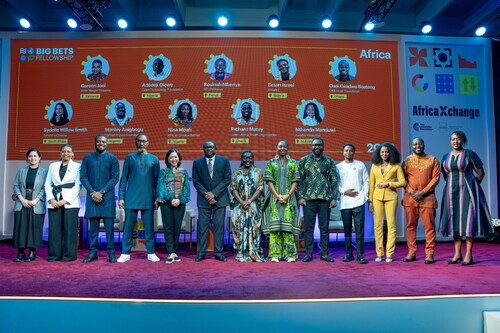
The Rockefeller Foundation has launched its inaugural Africa Big Bets Fellows cohort, selecting 10 innovators from six countries to scale solutions addressing energy access, food security, healthcare, climate resilience and financial inclusion.
The fellows were announced at the AfricaXchange Summit in Nairobi, where leaders, funders and policymakers gathered to discuss locally driven development across the continent.
The five-month fellowship brings together innovators from Ghana, Kenya, Malawi, Nigeria, South Africa and Tanzania, each working on community-led solutions ranging from mobile healthcare and clean energy to AI-powered agriculture and climate intelligence tools.
“This fellowship backs a new generation scaling ideas that expand opportunity and resilience,” said Rajiv J. Shah.
The launch comes as Africa continues to face major development gaps. Around 600 million people on the continent still lack access to electricity, while climate financing remains disproportionately low despite Africa’s growing exposure to climate risks. Experts say up to 76% of Africa’s energy needs could be met by renewable sources by 2040 with the right investments.
According to William Asiko, the selected fellows demonstrate how locally rooted innovation can deliver scalable and globally relevant solutions.
The cohort includes Kenya’s Rosinah Mbenya, who is linking school feeding programmes to regenerative agriculture; Nigeria’s Stanley Anigbogu, building solar-powered hubs for off-grid communities; and Tanzania’s Careen Joel, developing real-time climate data tools to support migration decisions.
Other fellows include Ghana’s Osei Kwadwo Boateng (mobile primary healthcare), Malawi’s Nthanda Manduwi (AI-driven agriculture systems), South Africa’s Sydelle Willow Smith (solar-powered mobile cinemas), and several Nigerian innovators working across financial inclusion, clean energy and climate-smart farming.
The fellowship coincides with the 60th anniversary of the foundation’s Africa Regional Office in Nairobi, underscoring a long-standing presence on the continent. Established in 1913, The Rockefeller Foundation now allocates roughly one-third of its global funding to Africa, focusing on energy access, nutrition and health systems.
The Africa Big Bets Fellows programme builds on similar initiatives previously launched in Latin America, Asia-Pacific and the United States, positioning African innovators at the center of solving some of the world’s most pressing challenges.
AXIAN has signed binding agreements to acquire 100% of five Letshego Africa Holdings subsidiaries across East and West Africa, in a strategic move aimed at accelerating its expansion into inclusive digital financial services.
The proposed acquisition covers Letshego Ghana Savings and Loans PLC, Letshego Faidika Bank Tanzania Limited, Letshego Microfinance Bank Nigeria Limited, Letshego Rwanda PLC Limited, and Letshego Uganda Limited.
If completed, the transaction will mark a significant milestone in AXIAN’s ambition to build a leading pan-African financial services platform, strengthening its presence in high-growth markets and expanding access to affordable financial services for underserved populations.
AXIAN operates in 21 countries across five sectors—telecommunications, financial services, real estate, energy, and digibank & fintech—and has positioned financial inclusion and digital transformation at the core of its strategy.
“This agreement represents an important step in advancing AXIAN’s long-term strategy to expand our financial services footprint across high-growth African markets,” said Erwan Gelebart, CEO of AXIAN Digital Venture Holding and Management Limited.
He added that AXIAN brings experience operating regulated financial institutions at scale, currently serving more than 24 million consumers and 860,000 SMEs across its ecosystem.
The group said it will leverage its digital and operational capabilities to modernize the acquired businesses and accelerate the delivery of innovative financial services across the five markets.
The transaction remains subject to regulatory approvals and applicable stock exchange requirements. AXIAN said it will issue further updates as the process progresses.
Advisors on the transaction include White & Case, KPMG, and EFG Hermes.
Novastar Ventures has closed its third fund, Africa People and Planet Fund III (NVIII), at $147 million, strengthening its position as one of the largest Africa-focused venture capital firms investing in climate-aligned innovation.
The fund, supported by international investors including French development finance institution Proparco, targets startups combining commercial growth with measurable environmental impact across Africa.
Proparco has committed $5 million through its Choose Africa Venture Capital programme, backing the fund’s pan-African investment strategy focused on early- and growth-stage companies.
With more than a decade of activity and over $350 million in assets under management, Novastar Ventures has become one of the continent’s established venture capital players. The firm invests between $1 million and $8 million per deal, spanning sectors such as delivery services, electric mobility, smartphone access, and sustainable agriculture.
NVIII has already supported six portfolio companies aimed at improving access to essential goods and services while driving climate outcomes such as reduced greenhouse gas emissions, improved soil health, and enhanced biodiversity.
“At Proparco, we believe that venture capital is a vital tool for driving the green transition in Africa,” said Oliver Game, Lead PE & VC at Proparco’s East Africa office. “Our commitment reflects confidence in Novastar’s ability to scale tech-enabled solutions addressing the continent’s most pressing challenges.”
The investment forms part of the EU-backed Choose Africa VC programme under the European Fund for Sustainable Development Plus (EFSD+), aligned with the EU’s Global Gateway strategy and the Team Europe Initiative IYBA, aimed at expanding access to early-stage financing and supporting entrepreneurship across Africa.
Samsung Electronics Co Ltd reported record quarterly revenue and operating profit in the first quarter of 2026, driven by strong demand for artificial intelligence (AI) memory chips used in data centres and advanced computing systems.
The South Korean tech giant said consolidated revenue rose to 133.9 trillion won ($97.8 billion) for the quarter ended March 31, up 43% quarter-on-quarter, marking an all-time high. Operating profit climbed to 57.2 trillion won ($41.8 billion), also a record, boosted primarily by its semiconductor business.
Samsung’s Device Solutions (DS) division, which houses its chip operations, posted 81.7 trillion won ($59.7 billion) in revenue and 53.7 trillion won ($39.2 billion) in operating profit, accounting for the bulk of group earnings. The company said its memory business achieved record results, supported by strong pricing and limited supply amid booming AI infrastructure demand.
The memory unit saw strong sales of high-value AI products including DDR5, SOCAMM2 modules and PCIe Gen6 solid-state drives, and began mass production of HBM4 chips for NVIDIA’s next-generation AI platforms. Samsung also plans to deliver HBM4E samples in the second quarter of 2026.
The company said demand for AI infrastructure is expected to remain strong through 2026, driven by hyperscale cloud providers and rising adoption of large language models and emerging agentic AI systems.
Samsung’s foundry business remained under pressure due to seasonal weakness but continued development of advanced process technologies, including 2-nanometre and 1.4-nanometre nodes, as it targets growth in AI and high-performance computing markets.
The Device eXperience (DX) division, which includes mobile and consumer electronics, posted 52.4 trillion won ($38.3 billion) in combined revenue, supported by premium Galaxy smartphone sales and strong TV demand, though profitability was uneven across segments.
The mobile (MX) business generated 38.1 trillion won ($27.8 billion) in revenue and 2.8 trillion won ($2.0 billion) in operating profit, helped by flagship devices, though the company expects a sequential decline in the second quarter after launch effects fade.
Samsung’s display, consumer electronics and Harman units delivered mixed performance, with display revenue of 6.7 trillion won ($4.9 billion) and operating profit of 0.4 trillion won ($0.29 billion), while TV and appliances posted 14.3 trillion won ($10.4 billion) in revenue.
The company said it will continue prioritising AI-centric semiconductor expansion and next-generation chip technologies as it positions itself at the centre of the global AI infrastructure buildout.
Airtel Africa is planning to list its mobile money business in a deal that could raise between $1.5 billion and $2 billion, as the telecom operator seeks to capitalize on rapid growth in digital financial services across the continent, according to people familiar with the matter.
The proposed initial public offering of Airtel Money could value the business at as much as $10 billion, the sources said, adding that discussions are ongoing and details remain subject to change.
The listing, which is expected to take place in London, would mark one of the largest fintech-focused IPOs tied to Africa and underscores the growing importance of mobile money as a revenue driver for telecom operators in the region.
Airtel Africa, a subsidiary of India’s Bharti Airtel, has seen strong growth in its mobile money segment, which now serves tens of millions of customers across multiple African markets and processes billions of dollars in transactions annually.
The potential spin-off reflects a broader industry trend in which African telecom operators are increasingly separating their fintech arms to unlock value and attract investors focused on high-growth digital financial services.
Airtel Africa did not immediately respond to a request for comment.
NEC Corporation has launched a new initiative to deepen collaboration with African startups, targeting agriculture and food security challenges through technology-driven innovation.
The program, dubbed the Africa Corporate Innovation Program, will be implemented in partnership with Shell Foundation and venture capital firm Double Feather Partners, expanding NEC’s global startup engagement efforts beyond its existing accelerator, the NEC Innovation Challenge.
The initiative will identify African startups tackling key development challenges and pair them with NEC and its partners to run proof-of-concept (PoC) projects, with a focus on scalable, commercially viable solutions.
At the core of the program is NEC’s digital agriculture platform, CropScope, which will be used to support data-driven farming and farm-to-market logistics systems across selected African markets.
The program officially launched in April 2026, with PoC trials expected to run through December across agricultural sites in Africa. Results will be evaluated in March 2027, with the potential for long-term partnerships and business expansion based on performance.
NEC has been ramping up its presence in Africa’s innovation ecosystem. Since 2022, it has run the NEC Innovation Challenge to co-develop solutions with startups globally, and has also participated in Project NINJA, led by Japan International Cooperation Agency, aimed at strengthening startup ecosystems in developing markets.
Masayuki Furukawa of JICA said the initiative builds on lessons from Project NINJA and reflects growing collaboration between Japanese firms and African innovators.
“Private companies taking the lead in addressing social challenges while building mutually beneficial partnerships is key to Africa’s economic development,” he said.
Jonathan Berman, CEO of Shell Foundation, said the program is designed to de-risk collaboration between corporates and startups, helping unlock capital into inclusive, climate-smart markets.
“Raising incomes while supporting a low-carbon pathway requires partnerships that combine capital, technology and local expertise,” he said.
Kohei Muto, CEO of Double Feather Partners, described Africa as “one of the world’s fastest-evolving innovation markets,” adding that the program aims to connect pilot projects with investment and scaling opportunities.
NEC is expected to showcase the initiative at SusHi Tech Tokyo 2026, where it will highlight Japan–Africa co-creation and investment models alongside partners including the Industrial Development Corporation of South Africa and Absa Bank.
The program forms part of NEC’s broader “Open Innovation” strategy, as the company seeks to expand its role in solving global social challenges through cross-sector partnerships.
Esports is often framed as entertainment, as fast-paced competition, big audiences, and digital spectacle. But beneath the surface, a different story is unfolding, one that positions gaming as a tool for cultural exchange, education, and economic opportunity.
For Wesley Kirinya of Leti Arts, esports is already doing more than just entertaining.
“Esports brings together people from different countries and cultures around a shared experience, and from that, you get friendships, cultural exchange, and a better understanding of each other,” he told TechMoran on the sides of the Games & SDG Summit in Nairobi, Kenya.
That shared experience is what transforms gaming into something more meaningful. In a world increasingly defined by digital interaction, esports is emerging as a rare space where global communities form organically—through play.
Kirinya sees this as part of a broader truth: “Entertainment is one of the most effective ways to educate because it captures and sustains attention and esports sits right at that intersection.”
Building Africa’s Voice in Global Gaming
Within this evolving landscape, Leti Games is carving out its role not just as a developer, but as a contributor to Africa’s gaming identity.
“We’ve had some of our games featured in competitive events like the MTN-sponsored Conquest esports tournament, helping showcase African-developed content on larger stages,” Kirinya notes.
Beyond visibility, the goal is deeper participation.
“Our role is to contribute to the ecosystem by building games that people can rally around both as players and as audiences.”
That effort is part of a larger movement to ensure African stories, characters, and perspectives are not just consumed globally, but created locally.
Why Africa’s Gaming Industry Is Still Catching Up
Despite growing interest, Africa’s gaming ecosystem remains underdeveloped compared to global markets. According to Kirinya, the reasons are practical rather than conceptual.
“Games are complex to make they require a diverse skill set that, until recently, has been difficult to find across the continent.”
From programming and animation to storytelling and design, game development demands multidisciplinary expertise—something that has historically been fragmented across African markets.
There are also business model challenges.
“Monetization remains a challenge, especially where systems like mobile money are not yet fully optimized for subscription-based models,” he explains.
Still, the long-term outlook remains positive.
“It’s still a young industry in Africa, but it’s promising especially because the continent has rich stories and content that can be turned into compelling games.”
Lowering Barriers, Expanding Access
While infrastructure gaps persist, shifts in technology and work culture are beginning to level the playing field.
“Remote and online work now allows teams to collaborate across the continent, which lowers the barrier for talent regardless of geography,” Kirinya says.
At the same time, rising smartphone adoption and improving internet access are expanding both the player base and the developer pipeline.
Equally important is the rise of local esports events.
“We’re seeing more esports events being organized, and that visibility will bring more people into the industry.”
Each event, tournament, and community initiative adds momentum gradually transforming gaming from a niche interest into a recognized sector.
Policy, Reality, and What Actually Matters
When it comes to policy and regulation, Kirinya takes a pragmatic stance, one shaped by experience rather than idealism.
“If the broader economy and policies are working well, industries like gaming will naturally thrive,” he says.
Instead of focusing on industry-specific interventions, the emphasis, he suggests, should be on improving the overall business environment reducing friction, supporting innovation, and enabling entrepreneurs to build.
Gaming for Good With Boundaries
As gaming grows, so do concerns around addiction and toxicity particularly among parents. Kirinya doesn’t dismiss these concerns but reframes them.
“Anything that is abused will have negative results, it’s about intentional use.”
The responsibility, he argues, lies both with consumers and creators.
“If audiences demand games that add value, developers will respond by creating more meaningful and inclusive experiences.”
In other words, the future of gaming will be shaped by what players choose to engage with.
Unlocking What Comes Next
Looking ahead, Kirinya is clear that Africa’s gaming journey is only beginning.
“We need higher-quality production skills, better monetization models, and more localized content,” he says.
And while the industry’s full potential may still be undefined, its direction is clear.
“The potential is much bigger than what we’re seeing now we’re just getting started.”
For Africa, gaming is no longer just about play, it’s about participation, storytelling, and ownership in a global digital economy. And with studios like Leti Games pushing forward, that future is starting to take shape.
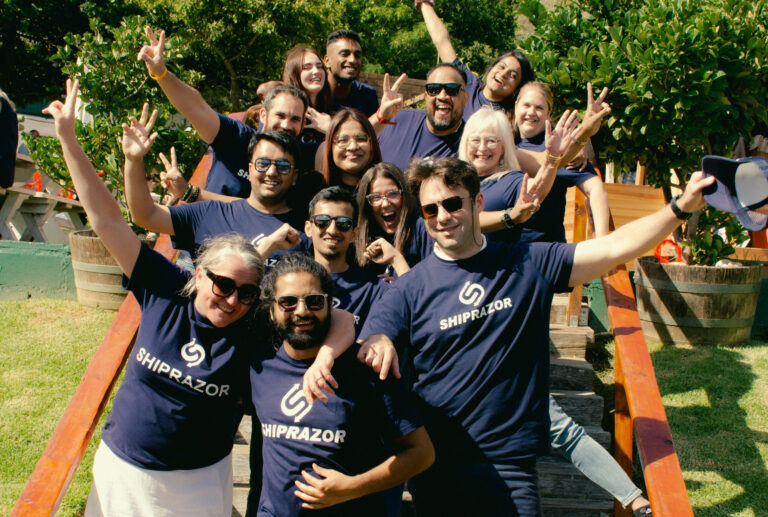
Shiprazor, the Cape Town-based e-commerce merchant tech and smart logistics platform, has raised $2.65 million (R44m) in seed funding to help African online merchants reduce delivery costs, improve conversion, and simplify fulfilment.
The seed round was led by pan-African venture capital firm Norrsken22, with participation from AAIC, E4E, Tremis Capital, and an impressive roster of angel investors, including senior leaders at Google, bringing Shiprazor’s total funding to $3.3 million (R54.5m).
According to Sahil Affriya, Founder and CEO of Shiprazor, “South African merchants are resilient — they’ve navigated load shedding, currency volatility, and now rising logistics costs driven by global oil prices. But they shouldn’t have to fight their own fulfilment infrastructure on top of all that.”
South Africa, like many emerging markets, has a fragmented logistics industry, with the African Development Bank estimating global transport costs in Africa are 75% higher than the global average. This limits growth for online merchants.
Through a single integration of platforms, including Shopify and WooCommerce, Shiprazor gives merchants access a broad network of domestic and cross-border courier and logistics partners, with cost, speed, and service quality. More than a shipping aggregator, Shiprazor is building an intelligent infrastructure layer that helps merchants make better decisions.
“Our job is to be the single intelligent logistics layer that helps South African merchants ship more, for less, while giving their customers a better experience at every step. This funding lets us move faster on all of it,” added Affriya.
The $2.65 million will help Shiprazor expand its courier and logistics supplier network across South Africa, reduce costs and end unreliable delivery. Shiprazor is also building agentic AI solutions for merchants to identify problems, recommend actions and automate more of their work. Shiprazor is launching address verification, which will tackle the inaccurate address data that leads to failed deliveries – one of Africa’s most persistent logistics challenges.
Launched in Cape Town in 2023, Shiprazor connects to more than 20 courier partners and has processed over 1.5 million deliveries across South Africa. A growing number of South African brands trust Shiprazor to manage their logistics, while the company is also increasingly positioned within the fast-growing cross-border e-commerce flows reshaping the market, including demand driven by global marketplaces.
“Africa’s e-commerce market has enormous potential, but still remains fragmented and unoptimised resulting in significantly more expensive logistics cost for merchants,”’said Nivesh Pather, Investment Principal at Norrsken22. ”Shiprazor is building the intelligent infrastructure layer that African merchants have been missing — and they’re doing it with a deep understanding of how this market actually works.”
Kenyan fintech firm Wapi Pay is strengthening its push into the Caribbean payments market, riding on record remittance inflows into Jamaica and growing demand for faster cross-border transactions.
Remittance inflows to Jamaica reached an all-time high of $3.49 billion in 2025, marking a 3.8% increase from the $3.36 billion recorded in 2024, according to company insights. The flows remain one of the country’s largest sources of foreign exchange, supporting millions of households with essential needs such as healthcare, education, and daily expenses.
The growth comes despite disruptions caused by Hurricane Melissa in late 2025, which temporarily slowed inflows. Transfers rebounded sharply by December, rising 13.6% year-on-year, highlighting the resilience of diaspora-driven financial support to the island.
Wapi Pay said its expansion aligns with regulatory approvals secured following due diligence processes by the Bank of Jamaica, ensuring compliance with global Anti-Money Laundering and Counter-Financing of Terrorism (AML/CFT) standards.
The company is positioning itself as a key bridge between Africa and the Caribbean, enabling faster, more secure, and more affordable cross-border payments. Its network spans multiple Caribbean markets including Antigua and Barbuda, Barbados, Dominica, Guyana, Haiti, Trinidad and Tobago, and Turks and Caicos Islands, among others.
Wapi Pay also leverages strong remittance corridors from the United Kingdom, United States, and Canada into the Caribbean, tapping into diaspora communities that continue to drive transaction volumes.
The company said it remains committed to maintaining high regulatory standards as it expands its global footprint, with a focus on connecting emerging markets across what it describes as the “Global South.”
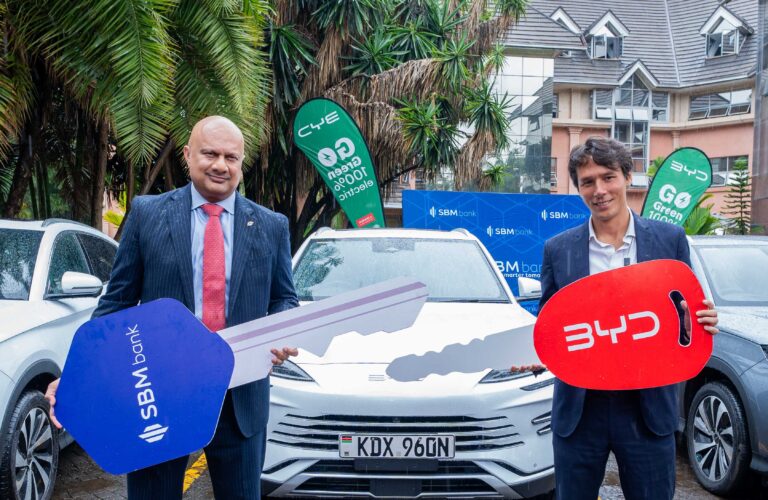
BYD has rolled out a fleet of plug-in hybrid electric vehicles (PHEVs) to SBM Bank Kenya through a leasing arrangement with Avenue Lease & Rentals E.A, marking an early corporate deployment of the models in the country.
The delivery, facilitated by CFAO Mobility’s Kenyan unit, comprises five vehicles: one BYD Shark 6 plug-in hybrid pickup and four BYD Sealion 6 plug-in hybrid sport utility vehicles.
The move underscores growing interest among Kenyan corporates in lower-emission transport options, as the country’s electric mobility sector expands rapidly.
Kenya had more than 24,700 electric vehicles registered by early 2026, representing a 31-fold increase from 2022 levels and a 47% rise in just 18 months, according to industry data.
Electricity consumption linked to EV charging has also surged, rising to 8.43 million kWh in 2025 from 2.92 million kWh in 2024, reflecting accelerating adoption.
“As the pioneer in new energy vehicles, BYD is pleased to see this partnership take shape in Kenya,” said Nicolas Ruffier des Aimes during the handover ceremony, adding that hybrid technology offers a practical path toward cleaner mobility.
SBM Bank Kenya Chief Executive Bhartesh Shah said the deployment aligns with the lender’s efforts to reduce its environmental footprint while maintaining operational efficiency.
“The introduction of plug-in hybrid vehicles allows us to modernise our fleet and significantly cut emissions,” Shah said.
Plug-in hybrid vehicles combine electric propulsion with internal combustion engines, enabling lower fuel consumption without relying fully on charging infrastructure—an advantage in emerging markets where charging networks are still developing.
Industry estimates show EVs can be up to eight times cheaper to operate than conventional petrol or diesel vehicles in Kenya, driven by lower energy and maintenance costs.
Avenue Lease & Rentals E.A said leasing provides organisations with a lower-cost entry into cleaner mobility by removing the need for large upfront capital investment.
The company added that hybrid fleets can deliver immediate emissions reductions while allowing a gradual transition to fully electric vehicles over time.
Kenya is targeting a 32% reduction in carbon emissions by 2030, with transport identified as a key sector for decarbonisation. The government is also pushing policies to accelerate adoption, including tax incentives and a target to increase the share of electric mobility in the national fleet.
The partnership is expected to open the door for further fleet deployments and the expansion of supporting services such as charging infrastructure, fleet management and lifecycle optimisation.
Ethiopia-based e-mobility startup Dodai has raised $13 million in a Series A funding round to accelerate the deployment of electric motorbikes and battery-swapping infrastructure across the country.
The round comprises $8 million in equity and $5 million in debt, with participation from the Value Chain Innovation Fund, IPC, Nagase, Persistent ACV Fund, For Seasons, CBC and ICJ, alongside British International Investment (BII).
The investment underscores growing investor confidence in Ethiopia’s emerging electric mobility sector, as the country positions itself as a frontier market for clean transport solutions.
Founded three years ago, Dodai has focused its operations in Addis Ababa, targeting unmet demand for affordable urban transport in a city experiencing rapid population growth and expanding e-commerce activity. The company’s bet on Ethiopia comes as the government enforces a ban on the import of fuel-powered vehicles, accelerating the shift toward electrification.
Dodai has so far assembled and deployed more than 2,000 electric motorbikes locally and built a workforce of around 100 employees, the majority of whom are Ethiopian.
With the new capital, the company plans to scale its battery-swapping network and user base over the next year. Dodai aims to reach 3,000 battery-swapping users supported by 30 stations across Addis Ababa within 12 months.
Over a three-year horizon, the startup is targeting 30,000 users and 1,000 battery-swapping stations in the Ethiopian capital, before expanding into other high-growth African cities including Abidjan, Kinshasa, Accra and Dar es Salaam.
“Ethiopia is emerging as one of Africa’s most compelling frontier markets for the clean mobility transition,” said Leslie Maasdorp, adding that the investment would help scale critical infrastructure and support job creation.
Dodai executives said the company has already enabled over 2,000 riders to earn a living through its platform, positioning electric mobility as both an environmental and economic opportunity.
“This investment reflects growing confidence in our ability to turn real-world constraints into scalable solutions,” said Hilina Legesse.
The company now plans to deepen its footprint in Ethiopia while laying the groundwork for regional expansion, as competition intensifies across Africa’s nascent electric mobility sector.
The Africa Digital Rights Fund (ADRF) has awarded $320,000 to 18 initiatives across 14 African countries to strengthen digital rights, inclusion, and online safety in a rapidly evolving technology landscape.
The grants will support efforts ranging from data protection and artificial intelligence governance to combating technology-facilitated gender-based violence, improving digital accessibility for persons with disabilities, and expanding online civic participation among youth and refugees.
The latest funding round brings total disbursements by the Collaboration on International ICT Policy for East and Southern Africa (CIPESA), which manages the fund, to $1.3 million since the ADRF was launched in 2019.
“The overwhelming number of applications received in this round reflects the changing funding landscape for digital rights and democracy in Africa,” said Dr. Wairagala Wakabi, CIPESA’s executive director. “The ADRF continues to bridge the prevailing funding gap and expand into new geographies and constituencies.”
This round received a record 430 applications, the highest since the fund’s inception, with new participating countries including Guinea, Liberia, and Madagascar. Previous rounds received between 120 and 283 applications.
Grantees span the Democratic Republic of Congo, Ethiopia, Ghana, Kenya, Liberia, Madagascar, Rwanda, South Africa, South Sudan, Tanzania, Uganda, Zambia, and Zimbabwe, among others.
Projects targeting digital accessibility will support persons with disabilities through training, platform audits, and inclusive design advocacy. Other initiatives will focus on youth engagement in digital democracy, women’s participation in AI governance, and strengthening responses to online harms such as misinformation and harassment.
Several grants will also address technology-facilitated gender-based violence through training for judicial officers, safety toolkits for women, and research into regulatory gaps. In addition, new projects will examine data governance, refugee digital rights, and cybersecurity risks facing journalists and human rights defenders.
The fund has also expanded into emerging areas such as artificial intelligence ethics, cross-border data rights in refugee settlements, and the impact of generative AI on political discourse.
CIPESA said applications were reviewed through multiple internal and external expert committees to ensure transparency and alignment with digital rights priorities.
The ADRF continues to position itself as one of the continent’s key funding mechanisms for civil society groups working on digital governance, rights protection, and technology accountability.
The Stellar Development Foundation (SDF) has launched an accelerator programme targeting startups in Europe, the Middle East and Africa (EMEA), as institutional adoption of its blockchain network continues to grow.
The programme, developed in partnership with CV Labs, will support 10 early-stage companies building in payments infrastructure, tokenised real-world assets and decentralised finance.
Selected startups will be eligible for up to $150,000 in funding in XLM, alongside technical support, tokenomics guidance and go-to-market development. The 12-week accelerator is scheduled to begin in August and will run primarily remotely, with an in-person component in Cape Town, South Africa, and a demo day in Lisbon in October.
José Fernández da Ponte, President and Chief Growth Officer at the Stellar Development Foundation.
The launch comes amid rising activity on the Stellar network. SDF said real-world assets on Stellar grew 158% in 2025, while total value locked increased 127%. The network now has more than 10 million active accounts and has processed over 21.5 billion operations, with more than 800 projects building across financial use cases.
Institutional players have increasingly integrated Stellar into their operations. Franklin Templeton expanded its tokenised U.S. Treasury fund, now holding more than $625 million in assets, to European investors on the network. PayPal has launched its PYUSD stablecoin on Stellar, while MoneyGram has introduced a stablecoin-based financial application built on the platform.
Companies including Visa, Mastercard, Wirex and U.S. Bank are also testing or deploying Stellar-based systems for payments and settlement.
SDF said the programme reflects a broader shift among blockchain networks toward regions where demand for cross-border payments and digital financial services is growing rapidly.
The accelerator will be operated by CV Labs, part of blockchain venture capital firm CV VC, which runs innovation hubs across Europe, the Middle East and Africa.
If you have ever used a basic bonus aggregator, you already know what the experience looks like. A long list, some filters that barely work, and no real sense of whether any of it is relevant to you specifically. The search logic behindcasinobonusesfinder.co.uk works differently, and understanding how it does that helps explain why the results feel more useful than what you get elsewhere.
It Starts With What the Player Actually Needs
Most search systems in this space are built around the casino, not the player. The casino submits a bonus, it gets listed, and the player is expected to sort through it themselves. Casino Bonuses Finder flips that around.
The starting point is the player’s situation. Where are you located? What kind of bonus are you looking for? What is your typical deposit range? Are there wagering requirements you will not go above? Which games do you actually play?
These are not optional extras. They are the foundation of how the search narrows results down. The filter system is built to take all of these variables at once and return only what genuinely matches. Not a shorter version of the same generic list, but a different list entirely based on what matters to that specific player.
This is what makes the difference between finding three good options in two minutes versus spending half an hour reading through offers that were never relevant to begin with.
How the Filters Actually Work Together
Regional filtering as the first layer
Before anything else, the platform filters by location. This is important because a large share of bonuses listed on generic sites are not available in every market. A UK player seeing a bonus that requires a payment method not supported in the UK, or that operates without a UKGC licence, is wasting time. The regional filter removes that category of results entirely before the player even starts refining further.
For UK players specifically, the listings on casinobonusesfinder.co.uk are maintained with local compliance in mind. That means the results are already pre-filtered for the regulatory environment before any personal preferences are applied.
Layered filtering by bonus characteristics
Once location is accounted for, the player can layer in additional filters: bonus type, wagering requirement ceiling, minimum deposit amount, game category, and software provider. Each filter narrows the pool further.
The important thing here is that these filters work together rather than independently. Setting a 30x wagering cap and filtering for free spins simultaneously returns only free spin offers that are at or below 30x wagering. That sounds basic, but a lot of platforms do not actually handle combined filters well. They apply them sequentially and inconsistently, which produces results that do not reflect what the player actually set.
Community data as a quality signal
Search results on the platform are not ranked purely by casino marketing spend or recency. Community reports feed into visibility. When users flag a bonus as expired, changed, or misleading, that affects how the offer is ranked and whether it continues to appear in active results. Bonuses with a pattern of negative reports lose visibility over time.
This creates a feedback loop that keeps the results cleaner than a purely editorial approach could manage at scale. The community is essentially doing continuous quality control on the data.
Filter Layer
What It Removes From Results
Regional filter
Unlicensed, geo-restricted, non-compliant offers
Bonus type
Irrelevant promotion categories
Wagering cap
Offers above the player’s acceptable threshold
Minimum deposit
Offers requiring more than the player wants to deposit
Game provider
Bonuses not valid on preferred games
Community flags
Expired, changed, or misleading listings
“Search should do the work, not the player. If you still have to read through twenty offers to find one that fits, the search has already failed.”
Personalisation Over Time
The current system works well for players who are willing to set their filters each session. The next step is making that unnecessary for regular users. CasinoBonusesFinder is developing a personalisation layer that learns from individual search and claiming behaviour over time.
The practical result would be that a player who consistently filters for low-wagering cashback offers and never claims anything above a 25x requirement would start seeing those results prioritised without having to configure anything manually. The system builds a profile from behaviour rather than asking the player to fill one out.
This is not a minor convenience. For players who use the platform regularly, it represents a meaningful reduction in the time spent on each search session.
Why Search Logic Matters More Than It Seems
The quality of a bonus discovery platform comes down to one thing: how quickly a player can get from opening the site to finding something genuinely worth claiming. Every layer of the search logic on casinobonusesfinder.co.uk is pointed at shortening that path.
Regional filtering removes the irrelevant. Layered filters narrow to what fits. Community data keeps the results accurate. Personalisation reduces the setup time on repeat visits. Each piece handles a specific part of the problem, and together they make the search process faster and more reliable than anything a generic aggregator can offer.
The Connected Africa Summit 2026 opened in Nairobi on Monday, bringing together policymakers, technology executives and investors to focus on turning Africa’s digital ambitions into measurable outcomes.
The four-day summit, organised by Kenya’s ICT Authority and running through April 30 at The Edge Convention Centre, is centred on the theme “Uniting Africa’s Innovation for an Inclusive Digital Market.”
Officials said this year’s discussions mark a shift from vision-setting to execution, as African countries push to accelerate digital transformation amid growing demand for jobs, services and economic growth.
“This year, delivery has to become measurable,” Kenya’s Cabinet Secretary for Information, Communications and the Digital Economy, William Kabogo, said at a briefing ahead of the event.
Key topics include artificial intelligence, digital public infrastructure and cybersecurity, alongside digital identity, fintech, cloud computing and data governance.
ICT Authority Chief Executive Jessy Maruti said the summit would focus on expanding opportunities for young people across the continent by improving access to skills, capital and markets.
“The global digital economy presents immense opportunity for our youth,” Maruti said. “Our focus is to unify innovation across Africa so that young people can create enterprises and secure jobs.”
The summit is expected to attract government delegations, private sector leaders and development partners, with ministers from countries including Ethiopia, Uganda, Malawi, Gabon, Guinea, Chad and Zimbabwe confirmed to attend.
A key outcome of the meeting will be the launch of the Connected Africa Secretariat, which Kenya will chair. The body is expected to support coordination and long-term collaboration on cross-border digital initiatives.
Maruti said fragmented systems remained a major barrier to growth. “We must build stronger continental connectivity and harmonised frameworks that allow data, services and innovation to move seamlessly across borders,” he said.
Private sector participants including Safaricom and Huawei are using the platform to deepen partnerships, with a focus on scaling digital infrastructure and developing talent.
MIDIS Group, alongside Hewlett Packard Enterprise operated by Selectium, also said it would continue working with Kenya’s Ministry of Information, Communications and the Digital Economy to support digital transformation efforts across the continent.
The summit builds on last year’s event, which drew more than 1,500 delegates from over 30 countries, as African governments seek to translate digital strategies into economic gains.
Do you know that the difference between a recognizable, trustworthy brand and an obscure business can be connected to a logo’s font?
Humans are emotional beings, and something as simple as a proper typeface can make them view your brand favorably.
There are over 200,000 confirmed fonts at the moment. To pick a few from that number is bound to be tough. Fortunately, we have compiled a few tips to make it easy for you.
Why Certain Fonts in a Logo Work and Others Don’t
No two font styles deliver the same result. Each performs differently depending on the logo’s intent. When people see a font, they see a brand’s intention. And how to communicate that intention matters.
For instance, typefaces like Times New Roman (Serif) tell customers the brand is seasoned, reliable, and not desperate.
Though font styling communicates brand status and intent, they still have to inform. You must choose a legible typeface, else the logo defeats its true purpose.
A stylish but illegible font creates an illusion of artistry, but it fails in its primary purpose of informing a reader about the brand. Allura is a good example of such a font.
A good font in your brand’s logo design tells your story without compromising on readability. Often, customers see your logo first before they make a decision. The logo’s font affects the outcome of such a decision.
Sometimes, the typeface determines if people continue to do business with your brand. Certain font styling makes it hard to forget a brand.
Finding the Right Font for Your Logo Design
You have to be ready to do intense research on font styling and what works. Here are some valuable steps to achieve this:
Establish Your Brand Identity
Most businesses design a logo without a brand identity. This makes choosing a font difficult. You should have an outline of what customers see when they view your brand logo.
Your brand needs to have an identity. It’s all about knowing your potential customers, their expectations, and how best to make your brand relatable.
This only happens when you categorize your brand. Do you consider your brand sophisticated, playful, or professional?
Is it a premium brand or perfect for customers on a budget?
Some AI logo design tools compile many of these questions, so it’s easy for brands to have an identity.
When you have the answers to these questions, your ideal font type is clearer.
Know Your Font Choices
You can’t pick a good font for your brand logo if you know nothing about these typefaces.
Fonts are broadly categorized into Serifs, Sans-Serif, Scripts, and Display. Due to styling differences, each group caters to different industries.
For instance, schools, consulting firms, and some premium brands use serif fonts.
If you are not sure what fonts to choose, you can consider using Zawa’s AI logo generator.
Zawa is a popular AI design platform that lets you create logos by adding prompts. Just type your prompts, and the platform will design amazing logos according to your industry.
With a styling that has a reserved and reliable vibe, it’s no surprise that such fonts are preferred by these industries.
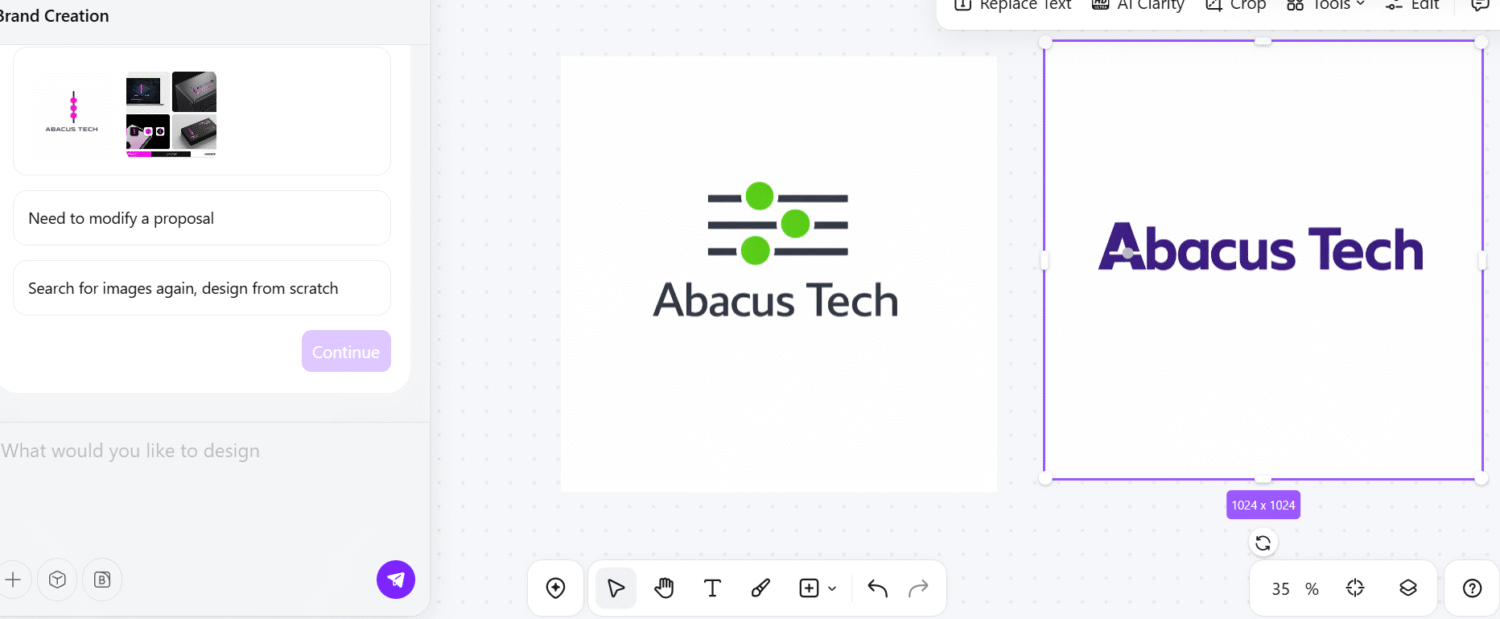
Sans-serif fonts give off a modern appeal with a minimalist undertone. Tech companies rely on these fonts for their logo designs.
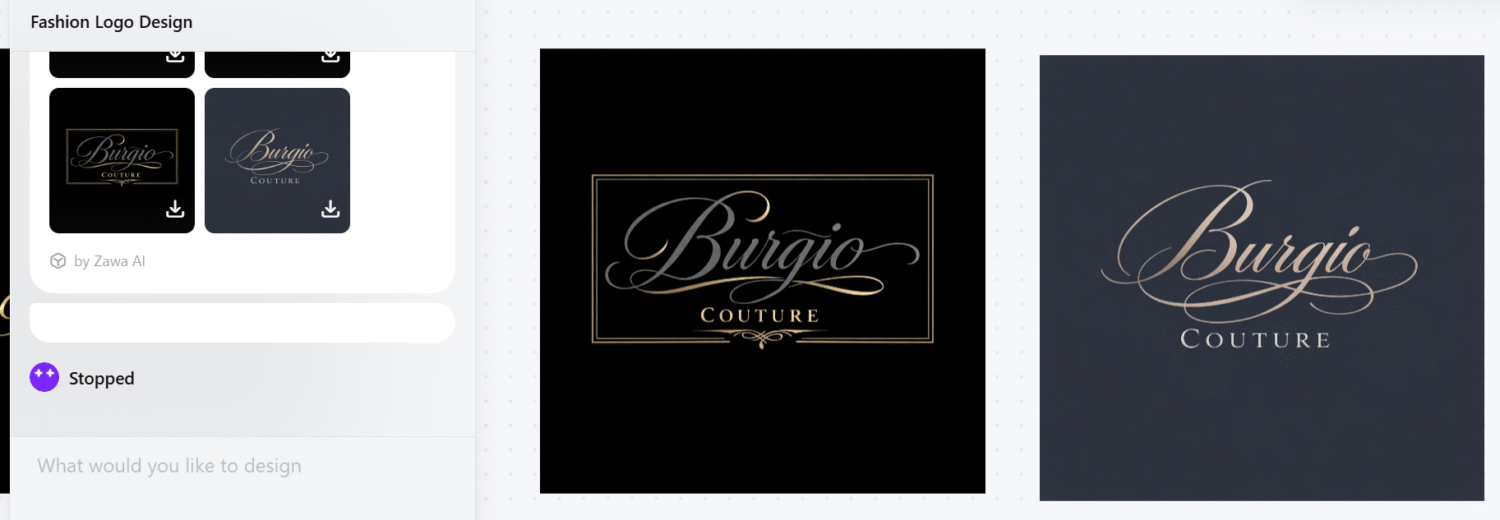
Script fonts appear classic and elegant. You see this typeface in the creative industry, such as fashion brands.
Display fonts use excessive styling to give off a playful personality. Most entertainment brands use these fonts.
When you learn more about each font group, you can easily spot where your brand belongs and the ideal typeface for your logo design.
Choose Legible Fonts Always
The words in your brand’s logo are meant to be read by people. If a font style disrupts that primary function, it shouldn’t make an appearance in your logo.
Your brand identity relies on your logo communicating the purpose of your business whenever eyeballs make contact with it. An illegible font might appear attractive, but it fails to solve the primary objective, so it’s not a good choice.
Go for fonts that anyone can easily read when they see them. People shouldn’t struggle to read the words in your logo.
Also, your logo’s font must be legible, regardless of character size. If it’s only readable when enlarged, it’s a poor typeface. And the font should stay legible no matter the color.
Compare Fonts Extensively
Dig through different fonts before you choose one for your brand’s logo.
Never settle for a typeface because of its aesthetics.
The truth is, your logo’s font isn’t meant for you to like. It’s supposed to appeal to your customers, not your whims and dictates.
Instead, explore various fonts and how it reveals your brand personality.
Comparing Several Logo Variations
Look at the spacing, shape of specific letters, and size. You can also have a fresh pair of eyes to look at the shortlisted fonts, so it’s a better reflection of how people see your brand through your logo.
Certain tools reduce the time spent comparing fonts as they bring up the most compatible iterations.
Make Your Logo’s Font About Your Brand
Selecting a font for your logo is good, but you have to make it yours. A little bit of customization helps.
Your brand identity is tied to the uniqueness of your logo’s layout.
You can alter the letter spacing, so it’s more expressive of your brand’s intent.
The shape of the letters can be altered so it sends the right message about your brand.
Letterforms changed in a logo design
How you personalize the fonts still depends on the brand personality you intend to convey. Just make sure your font isn’t generic so as not to create a forgettable impression.
Put Your Font to the Test
Once you have applied the preferred font to your brand’s logo, it’s time to exit the sandbox. You need to see how it looks in the wild.
Add the logo to your website banner, mockups, and others. This way, you can confirm if it meets your brand’s expectations or if it just looks good.
Many brands apply new fonts to realistic mockups and business cards using certain specialized tools.
A 19-year-old Thiel Fellow has raised $7.3 million in seed funding to expand Swoop, an African “super app” strategy that begins with food delivery in Lagos, Nigeria.
Aubrey Niederhoffer, who dropped out of the University of California, Berkeley, has relocated to Lagos where his startup Swoop has launched a food delivery platform backed by Long Journey Ventures, Variant, Version One, Dune Ventures and Soma Capital. The company has 28 employees.
Swoop is positioning itself as more than a delivery service, with plans to expand into payments and other consumer services as it seeks to build an integrated “super app” for African markets.
“In Africa, there’s no legacy banking infrastructure. You’re competing with other fintechs. Essentially, you’re not competing with credit cards,” Niederhoffer said. “Those are not popular, and there’s huge opportunity.”
The Thiel Fellowship, founded by investor Peter Thiel in 2011, provides $250,000 grants to young entrepreneurs who leave formal education to build companies. Past recipients include Figma co-founder Dylan Field and Ethereum co-founder Vitalik Buterin.
Niederhoffer said his interest in African markets began in his early teens after playing the online geography game GeoGuessr. At 15, he founded a recruitment company focused on Eswatini and later visited the country during school breaks.
After enrolling at Berkeley, he later dropped out to focus on Swoop, which first launched in Eswatini before relocating operations to Lagos in 2025. The company rebuilt its technology stack using AI-assisted development tools ahead of its latest product rollout.
The startup is currently onboarding restaurants and expanding its delivery network in Lagos. Niederhoffer said the company is still testing operational challenges, including performance under adverse weather conditions.
Swoop’s long-term ambition is to follow the model of Asian “super apps” such as WeChat, which combine messaging, payments and marketplace services within a single platform.
Liquid Intelligent Technologies, one of Africa’s largest internet and digital infrastructure companies, has completed an $855 million refinancing deal aimed at strengthening its finances and supporting future growth across the continent.
The company’s parent, Cassava Technologies, injected $195 million in fresh equity as part of the transaction, giving Liquid additional financial stability and helping it reduce its debt burden.
A key part of the deal was a $300 million international bond issued to global investors and listed in Dublin. The bond attracted strong demand, being oversubscribed 2.5 times, meaning investors wanted far more of it than was available.
Liquid used part of the funds to fully repay an existing $620 million bond, which had been due in 2026.
The refinancing also includes new loans worth $360 million in total, provided by a group of African and international lenders including Rand Merchant Bank, Standard Bank, Nedbank, the International Finance Corporation, Ninety One, and Mauritius Commercial Bank.
Together, the deal replaces older debt with new financing that has longer repayment timelines and more flexible currency terms, helping reduce financial pressure on the company.
Credit rating agencies responded positively, with Fitch upgrading Liquid’s outlook and Moody’s placing it under review for a possible upgrade. Development finance institution DEG was among the investors backing the new bond.
Banks including J.P. Morgan, RMB, and Standard Bank arranged the transaction.
Liquid said the stronger financial position will allow it to keep investing in expanding fibre networks, cloud services, cybersecurity, and artificial intelligence infrastructure across Africa under its parent company Cassava’s integrated technology strategy.
Six years ago, Kenya enacted the Data Protection Act (DPA), becoming the first East African country to establish a comprehensive data protection framework and positioning itself as a continental leader in privacy regulation by bringing accountability to how personal data is collected, processed and stored across both the public and private sectors.
Yet, as the Act enters its seventh year, the conditions in which it operates have shifted considerably. Organisations across Kenya are no longer simply holding or processing data; they are actively using it to understand consumer behaviour, analyse transactions, assess credit risk and personalise services.
Kenyan firms are already deploying artificial intelligence for credit scoring and debt management, and mobile money transactions through agents reached KSh 8.7 trillion in 2024, equivalent to more than half of the country’s GDP. In this environment, the Act is no longer simply a compliance instrument; it is also a reflection of how Kenyan businesses treat the people behind the data.Increasingly, consumers are paying attention to what that reflection reveals.
This matters because consumer sentiment has shifted in step with the proliferation of data-driven services. Research confirms that trust now sits alongside quality and price as a core consideration in purchasing decisions, and that consumers are willing to take their business elsewhere when they feel their personal information is mishandled.
The DPA reinforces this shift by placing real power in the hands of individuals. Kenyan consumers have the legal right to be informed, to access data held about them, to challenge inaccuracies, to object to certain forms of processing and to request deletion where data no longer serves a lawful purpose. Privacy is no longer an implied courtesy — it is an enforceable right. SMEs that recognise this early will be better positioned than those that are waiting for a reminder from the regulator.
The DPA as a catalyst for market accountability
Kenya’s DPA did not simply introduce new rules; it fundamentally changed the accountability structure of the market. Before the Act, privacy was largely an implied institutional responsibility.
Today, SMEs are explicitly recognised as data controllers and processors, with clear legal obligations across the entire data lifecycle. Non-compliance carries penalties of up to KES 5 million or 1% of annual turnover (whichever is lower), alongside the risk of civil liability that can far exceed these statutory caps. Beyond the financial exposure, an EY Kenya survey found that a sizable portion of businesses have yet to fully comply, with the most recurring obstacle being a lack of senior management commitment to devote the necessary resources to the task. That is a gap with an increasingly visible price tag attached.
The Act’s close alignment with GDPR also creates a commercial opportunity that many SMEs are not yet exploiting. Businesses that can demonstrate GDPR-equivalent data governance may find it easier to access European and international partnerships, where stricter due diligence requirements apply..
Research from the Centre for Information Policy Leadership suggests that GDPR-aligned frameworks, when properly embedded rather than superficially implemented, can elevate privacy from a compliance function into a business enabler that strengthens institutional credibility with partners and investors. Kenya’s DPA offers exactly this dual dividend.
Trust as currency in a mobile-first economy
Kenya’s digital economy is largely mobile-driven, and the volume of personal data in circulation is substantial. With 66 million active mobile connections serving a population of 55.6 million people, data is generated at scale through everyday interactions.
In this context, businesses that handle data transparently and responsibly are more likely to build trust that translates into customer retention and referrals. Conversely, those that fail to do so face exposure — not only to regulatory action but also to reputational damage and customer attrition.
This dynamics is particularly acute for SMEs serving the mass market through mobile-first interfaces, where consent flows, privacy notices and data handling practices are visible to users at every touchpoint.
The DPA’s requirements for lawful, specific and transparent processing are not obstacles to good customer experience, they form part of it’s foundation. An SME that collects only what it needs, explains why, and enables customers to exercise their rights with ease is not just compliant — it is demonstrably trustworthy.
Unified data and the SME case for privacy-by-design
One of the most practical arguments for treating the DPA as a framework rather than a checkbox is what it demands of data architecture. The Act’s accountability requirements, including the obligation to maintain accurate records, respond to data subject requests and demonstrate compliance on demand, are structurally incompatible with fragmented, siloed data environments.
When data is scattered across disconnected systems, organisations face compounding problems: greater vulnerability to breaches, inconsistent records that undermine regulatory reporting and an inability to form the coherent view of customers that effective service delivery requires. The IBM Cost of a Data Breach Report 2024 found that organisations with high data complexity face significantly higher breach costs and longer resolution times than those operating integrated environments.
Encouragingly, the barriers to building integrated data systems are decreasing. Low-code and no-code platforms now enable businesses to develop secure, privacy-conscious workflows without requiring deep technical expertise. Increasingly, these platforms embed governance features such as consent management, audit logs and controlled data access.
Gartner projects that low-code tools will account for 75% of new application development by 2026, and modern platforms increasingly embed compliance controls, consent management, audit logs and data access workflows directly into the tooling. This makes privacy-by-design, the principle of building data protection into systems from the outset rather than retrofitting it afterwards, practically achievable for businesses without large technical teams. Embedding it from the start avoids costly remediation, creates auditable processes by default and produces the kind of transparent data environment that the DPA, and international partners, expect to see.
Responsible AI starts with responsible data
As SMEs deploy artificial intelligence for customer segmentation, fraud detection and behavioural analysis, the DPA’s requirements apply directly to every model and every output. The challenge is that AI built on poorly governed or fragmented data is AI built on an unstable foundation, prone to producing outputs that cannot be explained, audited or defended. Kenya’s own National AI Strategy 2025 to 2030 makes this connection explicit, placing data privacy, cybersecurity and ethics at the core of the country’s AI ecosystem rather than treating them as constraints on it.
There is also a local relevance dimension worth building into any AI strategy. Global AI platforms, when properly configured and governed in accordance with the DPA, can be tuned to reflect Kenyan market realities: local languages, local transaction patterns, local consumer behaviours and local regulatory requirements.
Kenya’s DPA has given this country a six-year head start, and the window to capitalise on it is open now. As data-driven services become the norm rather than the exception, the businesses that will define Kenya’s next decade of digital growth will not be those that processed the most data, but the ones that processed it most responsibly.
CrossBoundary Energy has secured a $40 million investment from African climate-focused investor Inspired Evolution, strengthening its capacity to scale renewable energy projects across the continent.
The transaction, advised by Cygnum Capital, comes as CrossBoundary Energy advances key projects in Africa’s mining sector, including the Kamoa-Kakula Solar and Battery Energy Storage System (BESS) baseload facility in the Democratic Republic of Congo. The company is also nearing construction of a hybrid energy project for the Baomahun gold mine in Sierra Leone.
“This investment reflects our conviction in scalable solutions to Africa’s power challenges,” said Wayne Keast, co-founder and managing partner at Inspired Evolution. “We look forward to accelerating CrossBoundary Energy’s next phase of growth.”
CrossBoundary Energy said the investment signals strong confidence in its execution capabilities and growing track record in delivering clean energy solutions to commercial and industrial clients.
“The investment from Inspired Evolution demonstrates a vote of confidence in our delivery capabilities and the track record we have already attained in Africa,” said Tom Roberts, principal and head of investment at CrossBoundary Energy. “Inspired Evolution’s experience will be invaluable as we expand our reach.”
The funding builds on the company’s recent financing efforts. In November 2025, CrossBoundary Energy secured $200 million in senior debt through a portfolio financing facility arranged by Standard Bank of South Africa.
Cygnum Capital, which acted as financial advisor on the deal, emphasized the importance of mobilizing capital for underserved markets.
“This transaction signifies the importance of capital deployment in underserved markets to generate both strong commercial outcomes and create real impact,” said Felix Brand, managing director at Cygnum Capital.
CrossBoundary Energy develops, owns, and operates distributed renewable energy solutions for businesses, with a portfolio valued at approximately $550 million. Its assets include more than 400 MWp of solar, wind, and thermal generation, alongside roughly 700 MWh of battery energy storage.
Inspired Evolution manages over $1 billion in climate-focused investments across 21 African countries and continues to support projects aligned with Africa’s transition to net-zero emissions by 2050.
Norway’s development finance institution Norfund has appointed long-time executive Erik Sandersen as its new chief executive officer, entrusting a seasoned insider to lead its expanding portfolio across emerging markets, climate investments and Ukraine reconstruction.
Sandersen, who has spent a decade leading Norfund’s financial inclusion unit, will take over on July 1, succeeding Tellef Thorleifsson, who is stepping down after 7.5 years in the role.
The appointment comes at a time when demand for development capital is rising sharply amid climate pressures, constrained global financing conditions and the need for post-war rebuilding in Ukraine.
“The Board is very pleased to have appointed Erik Sandersen as the new CEO of Norfund,” Chair Olaug Svarva said in a statement, citing his investment expertise, institutional knowledge and commitment to the fund’s mission.
Norfund, established in 1997, invests in businesses in developing countries with the aim of reducing poverty through job creation. Its mandate has broadened in recent years to include managing Norway’s Climate Investment Fund since 2022 and, more recently, a Ukraine-focused vehicle launched in December 2024.
Sandersen said profitable investments remain a key lever for development impact.
“Whether it is about creating jobs in low-income countries, avoiding emissions in emerging economies or contributing to reconstruction in Ukraine, access to capital and expertise is becoming increasingly important,” he said.
Since joining Norfund in 2014 as an investment director, Sandersen has played a central role in deploying capital into banks, microfinance institutions and fintech firms, targeting small and medium-sized enterprises. He has led the financial inclusion department since 2016 and took on responsibility for the Ukraine Fund in 2024.
He also brings private sector experience, having co-founded a Norwegian venture capital firm and worked at Boston Consulting Group, alongside leadership roles in the IT sector. Sandersen holds a master’s degree in computer science from NTNU and an MBA from Stanford University.
Norfund employs 152 staff from 33 nationalities and has increasingly positioned itself as a purpose-driven investor bridging public capital and private markets in frontier economies.
Sandersen said he aims to build on that foundation, working with staff “to further develop Norfund as a leading purpose-driven investment company.”
Jambaar Capital has announced an investment in Trashcoin, a digital waste management platform that converts recyclable waste into economic value for communities across Africa.
Trashcoin enables users to deposit recyclable materials and receive credits in a digital wallet, which can be withdrawn as cash or used to pay for utilities, healthcare, education fees, and mobile data.
The model aims to address multiple structural challenges at once, including waste pollution, weak recycling infrastructure, climate impact, and financial exclusion, through a technology-driven incentive system.
Jambaar Capital said it is backing the startup for its approach to turning environmental challenges into economic opportunity.
“We are drawn to founders who see broken systems as opportunities,” the firm noted, highlighting Trashcoin’s execution, clarity of vision, and ability to operate in complex environments.
Trashcoin is led by Nnodim Eliot Wogu, Phebe Ilesanmi, and Damilola Daramola, and aims to become a leading incentivised waste collection platform across Africa.
Jambaar Capital said it will support the company as it scales its operations and impact.
The United Nations Capital Development Fund (UNCDF) and Bayer Foundation have launched the first investments under their Food Systems Innovation Finance Facility, deploying $1 million in catalytic financing to agribusinesses in Uganda and Kenya aimed at strengthening food systems in underserved markets.
The inaugural transactions include a $500,000 local currency loan to Uganda’s Omia Agribusiness Development Group Limited and a similar $500,000 facility to Kenya-based SokoFresh, marking the shift of the programme from design phase into active capital deployment.
The facility targets early-stage and growth-stage food system enterprises across Africa, Asia-Pacific and Latin America that face persistent financing gaps due to limited access to concessional capital and high borrowing costs from commercial lenders. It uses blended finance and tailored instruments intended to reduce risk and attract additional private investment over time.
Omia Agribusiness, which operates in northern Uganda, currently serves more than 90,000 smallholder farmers through input supply, extension services and market access support. The new financing is expected to expand its reach by more than 75,000 additional farmers, including women and refugees, according to the company.
The investment also includes a performance-linked incentive mechanism tied to impact targets such as outreach to women and refugee farmers.
In Kenya, SokoFresh will use the four-year loan to scale its solar-powered cold storage and aggregation services for fresh produce and cereal value chains. The company works with smallholder farmers to reduce post-harvest losses and improve market access, with the financing expected to support more than 5,000 farmers annually and raise incomes by about 10%.
SokoFresh said the funding would help strengthen storage infrastructure and improve pricing and payment systems for farmers.
The investments come at a time when development finance is under pressure. OECD data shows official development assistance fell 23.1% in 2025, the sharpest annual decline on record, intensifying calls for new models that can mobilise private capital into high-impact sectors such as food systems.
UNCDF said the facility is designed to use concessional capital to de-risk early-stage investments and build a pipeline that can eventually attract commercial financing at scale. Bayer Foundation described the initiative as a way to deploy philanthropic capital more catalytically to address structural gaps in agricultural value chains.
The partners said they are seeking additional foundations and development actors to join the facility as it expands its pipeline of investments across multiple regions.
UNCDF operates in more than 70 countries, focusing on mobilising capital for high-risk markets including least developed countries and small island developing states. Bayer Foundation supports innovation in health and agriculture, with a focus on strengthening local systems and improving livelihoods in low- and middle-income countries.
Egypt-based edtech firm iSchool has acquired software engineering company Rubikal, in a move to deepen its shift from a coding education provider into a full-stack AI-driven learning platform.
The deal brings Rubikal’s 21 engineers and founding team into iSchool, bolstering its internal capacity to design and deploy scalable, AI-powered education systems. Financial terms were not disclosed.
Founded in 2018, iSchool offers live, gamified coding classes for K-12 students across more than 20 countries. The company has increasingly focused on institutional clients as it expands beyond direct-to-student offerings.
Rubikal, established in 2016, specialises in building real-time, fault-tolerant web applications. The two companies have worked together for three years, with Rubikal contributing to the development of iSchool’s existing platform.
The acquisition signals iSchool’s push to own its technology infrastructure, as competition intensifies among edtech firms integrating artificial intelligence into learning systems.
By bringing engineering in-house, iSchool aims to accelerate product development and deliver more integrated and scalable AI-based education solutions for schools.
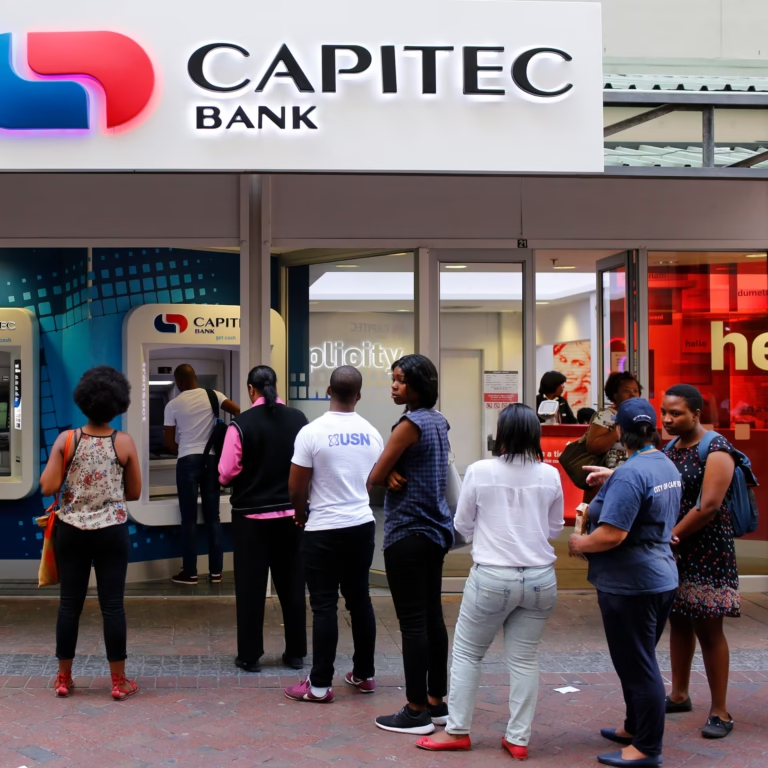
Capitec reported a 23% rise in headline earnings to R16.8 billion for the financial year ended February 2026, with the majority of its income now generated from non-lending activities, underscoring a continued shift in its business model.
Non-interest income accounted for 67% of income from operations after credit impairments, reflecting strong growth in fees, insurance and value-added services, as the bank deepens its role in customers’ daily financial lives.
The lender, which serves 26 million active clients, posted a return on equity of 31%, maintaining its position as South Africa’s largest retail bank by customer numbers.
Net interest income after credit impairments rose 18% to R24.1 billion, supported by product innovation and disciplined credit extension, but was outpaced by growth in non-lending segments.
Revenue from value-added services, including Capitec Connect, increased 38% to R6.1 billion, while net insurance income also rose 38% to R5.2 billion. Funeral cover policies grew 13% to 16.6 million, while life cover more than doubled to 221,000 policies.
Capitec Connect, the bank’s mobile virtual network operator, reached 1.5 million active users in the past three months, as the group expanded its offering beyond traditional banking services.
Digital activity continued to rise, with 15 million active app users and about half of all payments now conducted digitally. E-commerce transactions increased 32% to 643 million, while digital wallet transactions more than doubled to 335 million.
Business banking also gained traction, with the number of business clients rising 71% to 456,000. Merchant turnover through card machines reached R98.6 billion, while the scored lending book grew 118% to R3.1 billion.
During the year, Capitec returned R1 billion to customers through lower fees, reduced pricing and rewards, as it leveraged scale to enhance value. The bank said it also strengthened fraud prevention, with systems blocking more than 131,000 suspicious beneficiaries and preventing scam payments worth over R673 million.
Looking ahead, Capitec said it would focus on expanding its payments ecosystem and growing its presence in insurance, business banking and digital services.
“Our fundamentals have not changed in 25 years,” Chief Executive Graham Lee said. “We will continue to make banking simpler and more affordable while delivering value to our clients.”
Apple said on Tuesday that Chief Executive Officer Tim Cook will transition to executive chairman, with senior vice president of Hardware Engineering John Ternus set to become the company’s next CEO effective September 1, 2026.
The leadership change, unanimously approved by Apple’s board, follows what the company described as a long-term succession planning process.
Cook, who has led Apple since 2011, will remain CEO through the summer to support a smooth handover. In his new role as executive chairman, he will continue to contribute to the company, including engaging with policymakers globally.
“It has been the greatest privilege of my life to be the CEO of Apple,” Cook said, adding that Ternus is “without question the right person to lead Apple into the future.”
Ternus, a 25-year Apple veteran who joined the executive team in 2021, said he was “profoundly grateful” for the opportunity and pledged to carry forward the company’s mission and values.
The reshuffle will also see long-serving board chairman Arthur Levinson transition to lead independent director, while Ternus will join Apple’s board on the same date.
Cook’s tenure has been marked by significant growth and expansion. Under his leadership, Apple’s market value rose from about $350 billion in 2011 to roughly $4 trillion, while annual revenue nearly quadrupled to more than $416 billion in fiscal 2025.
He oversaw the launch of major product categories such as the Apple Watch, AirPods, and Apple Vision Pro, and led the expansion of Apple’s services business into a segment generating over $100 billion annually.
Cook also spearheaded Apple’s transition to in-house silicon, strengthening the company’s control over its core technologies and improving performance across its product ecosystem.
Ternus, who joined Apple’s product design team in 2001, has played a central role in hardware development across the company’s lineup, including iPhone, Mac, iPad, and Apple Watch.
He has been instrumental in advancing Apple’s Mac portfolio and led engineering efforts behind recent product launches, including the iPhone 17 series and new Mac models. He has also driven innovations in materials, durability, and sustainability, including the use of recycled aluminum and 3D-printed titanium components.
Analysts view the appointment as a continuation of Apple’s tradition of promoting deeply embedded leaders with strong product backgrounds, signaling stability in its strategic direction.
Levinson praised Cook’s leadership, saying it had “transformed Apple into the world’s best company,” and expressed confidence that Ternus would lead the company into its next phase of growth.
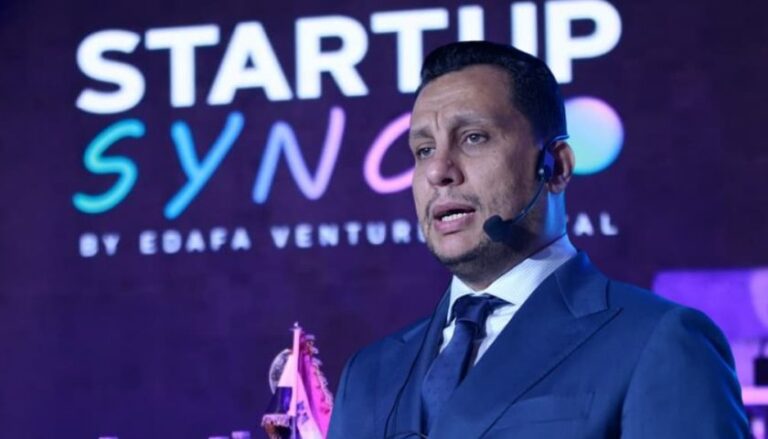
Saudi-Egyptian investment firm Edafa Venture has acquired Egypt-based recycling startup Cyclex in a six-figure deal, marking a strategic move to deepen its footprint in sustainability and circular economy investments.
The transaction, completed in the second half of 2025 and facilitated by entrepreneurship platform Startup Sync, underscores rising investor interest in waste management solutions that convert environmental challenges into economic opportunities.
Founded to address non-hazardous solid waste, Cyclex operates by transforming waste into marketable products, offering practical recycling solutions that generate value while reducing environmental impact. The company has positioned itself as a differentiated player in Egypt’s waste management sector, targeting expansion across industrial and commercial segments.
Startup Sync played a central role in the deal, supporting valuation, negotiations, and partner alignment. Essam Ali Mostafa, CEO of Startup Sync, said the acquisition highlights the platform’s broader mission beyond matchmaking.
“We are proud to have contributed to this partnership, as Cyclex represents a promising model with strong growth potential. Its innovative approach to waste management aligns with our platform’s focus on supporting sustainable companies with a positive impact,” he said.
Mostafa added that Startup Sync also provided technical and strategic support, helping Cyclex identify the right partner to accelerate its growth trajectory.
For Edafa Venture, the acquisition aligns with its strategy to expand its sustainability-focused portfolio. The firm said integrating Cyclex into its ecosystem will enhance operational and technical capabilities while supporting the development of more efficient circular solutions in line with Egypt’s sustainable development goals.
Cyclex described the deal as a “pivotal milestone” in its journey, enabling it to scale operations and advance its mission of delivering innovative waste management solutions. The company reaffirmed its commitment to sustainability and its ambition to unlock new economic opportunities through intelligent recycling.
The acquisition reflects a broader trend of increasing investment in circular economy ventures across the region, as stakeholders seek scalable solutions to environmental challenges while driving long-term economic value.
Egyptian fintech startup INVIA has raised $1.2 million from angel investors and strategic backers to expand its artificial intelligence-powered financial operating system for small and medium-sized enterprises (SMEs).
Founded in 2023 by Yehia Ashour, Ahmed Zeinhom and Omar Aboulmagd, INVIA is building a unified platform that replaces fragmented business tools by combining bookkeeping, cash flow tracking, inventory management and manufacturing operations into a single system.
The platform is designed for ease of use, allowing business owners to manage operations through text prompts, voice notes or uploaded invoices, reducing dependence on traditional accounting and enterprise software.
INVIA said the new capital will support product development, strengthen its engineering and data capabilities, and accelerate customer acquisition across Egypt, where SMEs form a large but underserved segment of the economy.
The company plans to expand its platform beyond financial management into a broader business operating system, integrating human resources, point-of-sale and customer relationship management tools.
The funding reflects continued investor interest in AI-driven fintech solutions targeting SMEs in emerging markets, where digitisation of core business functions remains at an early stage.