
back to top
Saturday, April 4, 2026
spot_imgspot_imgspot_imgspot_img
Home Blog Page 5

MTN Zambia Completes Starlink Direct-to-Cell Test as Airtel Africa Plans Wider Rollout

0

MTN Zambia said it has completed field testing of satellite-to-mobile connectivity using Starlink Direct-to-Cell technology, a milestone the operator described as the first such test by a mobile network in Africa.

The trial involved transmitting a data session and a fintech transaction using MTN Zambia’s licensed spectrum combined with Starlink’s low-Earth-orbit satellite constellation, the company said in a statement.

The successful tests pave the way for a potential commercial launch in the coming weeks, subject to regulatory approval.

Direct-to-Cell technology allows standard LTE/4G smartphones to connect directly to satellites when outside terrestrial mobile coverage, enabling services such as voice and video calls, messaging and access to mobile applications including WhatsApp and MTN’s mobile money platform MTN MoMo.

The satellites act as cellphone towers in space using phased-array antennas and connect across the Starlink network through laser links, enabling integration with mobile networks in a manner similar to international roaming.

MTN Zambia said the technology could significantly extend coverage to remote regions including rural communities, national parks and areas surrounded by rivers and water bodies where building terrestrial infrastructure is difficult.

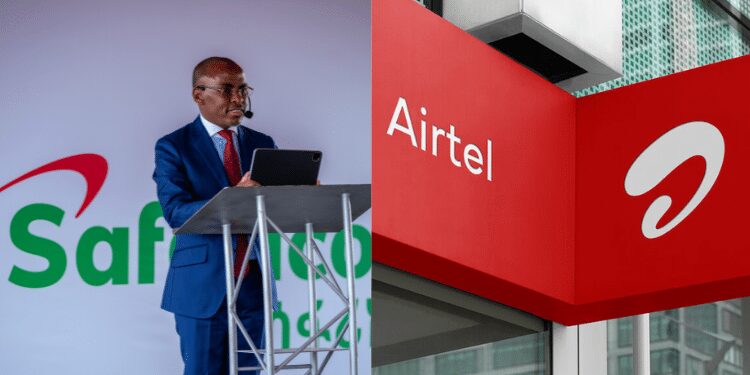
The development comes as satellite-to-mobile connectivity gains traction across Africa. In December, Airtel Africa announced a partnership with Starlink to introduce the same Direct-to-Cell satellite technology across its 14 African markets, targeting areas without traditional cellular coverage.

The Airtel rollout, expected to begin in 2026, aims to allow compatible smartphones to send messages and access data services directly via Starlink satellites without additional hardware.

Telecom operators globally are increasingly partnering with satellite providers as they seek to close connectivity gaps in rural and underserved regions where deploying conventional cell towers is expensive or impractical.

 

Cassava Technologies Unveils Dedicated AI Division

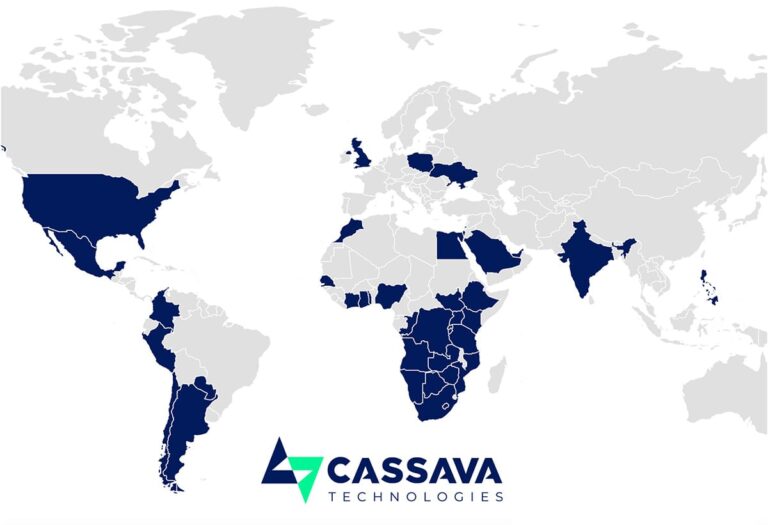
Cassava Technologies, the UK-based systems integrator, has announced the launch of a specialist business unit, Cassava AI, to consolidate its artificial intelligence operations.

The move marks a significant shift for the group as it seeks to capitalise on the surging demand for Generative AI across emerging markets.

Headquartered in London, the new entity aims to bridge the gap between global AI innovators and enterprise customers in developing economies.

Underpinning this new venture is a series of strategic alliances with industry titans.

Since the rise of Generative AI, Cassava has secured partnerships with Microsoft, Google, AWS, Anthropic, Oracle, Atlas AI, Cerebras, and Palo Alto Networks.

By leveraging these relationships, Cassava AI intends to provide high-level systems integration and support.

Furthermore, this initiative complements the group’s existing portfolio, which already spans: Data centres and cloud computing, cybersecurity and fibre connectivity and renewable energy solutions.

To facilitate this technological leap, the organisation has already begun a large-scale internal upskilling programme.

Consequently, more than 200 members of Cassava’s 5,000-strong workforce have been trained and deployed to assist clients in adopting Generative AI tools.

The group, founded by African entrepreneur Strive Masiyiwa, is backed by several prominent global institutional investors.

Leadership of the new London-based unit has been handed to Ahmed El Beheiry, a veteran of the telecommunications and technology sectors.

While the unit is managed from the UK, its operational footprint is extensive.

Hardy Pemhiwa, President and Group CEO, noted the scale of the rollout, stating: “Cassava AI is headquartered in London and can already provide services in any of the 40-plus markets in Africa, the Middle East, and Latin America, where the Cassava Technologies group companies operate.”

Smile ID Report: East Africa Grapples with Surge in AI-Driven Fraud and ‘Execution Gap’

The rapid expansion of East Africa’s digital economy is outstripping its security foundations, as fraudsters increasingly use artificial intelligence to exploit the region’s mobile-first infrastructure.

According to the 2026 Digital Identity Fraud Report by Smile ID, the landscape of cybercrime in East Africa has reached a critical turning point.

While the region remains a global leader in digital payments, with mobile money now accounting for 53% of Kenya’s GDP, this digital maturity has inadvertently widened the attack surface.

In 2025 alone, Kenya recorded a staggering 4.5 billion cyber threat events, losing an estimated KSh 29.9 billion ($230 million) to cybercrime.

A significant finding in the report is the emergence of what experts call an “execution gap.”

Despite 74% of East African organisations ranking cyber risk as their top strategic priority, only 29% currently conduct regular tabletop exercises to prepare for breaches.

This lack of operational resilience is being exploited by attackers who have shifted their strategy from “breaking in” to “logging in.”

By using AI-generated deepfakes and stolen credentials, fraudsters are now targeting the very trust layers that mobile money systems rely on, with nearly 48% of regional attacks now focused on authentication.

The report highlights a particularly sharp rise in sophisticated biometric attacks within the region.

In Tanzania, deepfake-driven fraud attempts surged by a massive 317% over the last year, while Kenya saw an 87% increase in mobile banking fraud.

These statistics underscore a shift toward “injection-style” attacks, where criminals use emulators to bypass smartphone cameras and feed synthetic media directly into verification systems.

Smile ID reported that across Africa, these injection attempts reached 100,000 per month in 2025, a trend that has now been elevated to a central threat category for 2026.

As the tactics become more industrialised, the “Modern Fraudster” in East Africa is increasingly identified as young, tech-savvy, and operating within coordinated networks.

In one instance, Smile ID traced more than 160,000 fraudulent attempts back to just 100 facial identities, with some individual faces appearing over 12,000 times across multiple platforms.

This level of automation allows criminal syndicates to move funds across platforms at scale, often targeting high-value actions such as account recovery and device changes rather than initial sign-ups.

“Fraud is no longer a ‘KYC’ problem — it is a continuous cybersecurity challenge,” said Mark Straub, CEO of Smile ID. “AI enables fraudsters to operate at unprecedented scale and sophistication. Effective defence now requires network intelligence.”

To counter this, the report advocates for a “network defence” model.

By leveraging internally tuned Large Language Models (LLMs) and privacy-preserving metadata, Smile ID has been able to surface hundreds of thousands of examples of coordinated abuse that would otherwise appear legitimate in isolation.

For East African businesses, the message from the 2026 report is clear: as identity enters the “security era,” staying ahead of AI-driven threats requires moving beyond one-time checkpoints toward continuous, ecosystem-wide protection.

CEO Weekends: Ryan Mule on Why Samsung Galaxy S26 Ultra is ‘Best in the Market’

Samsung Electronics recently launched its flagship devices, the Galaxy S26 series at its #GalaxyUnpacked event, emphasizing AI integration, advanced hardware, and user-centric design.

Ryan Mule, Samsung East Africa’s Product Manager for the Mobile Experience Division shared insights on the devices’ capabilities, including AI-driven features, One UI enhancements, and practical upgrades for everyday users.

From Smartphone to AI Phone

Samsung has declared 2026 as the year of “AI-First,” advancing from simple AI tools to what the company calls agentic AI – where the device performs multi-step tasks autonomously. “For instance, with the S26, you can instruct it to order an Uber, and it will complete the process within the app itself, rather than just notifying you to do so,” Mule explained.

He noted that AI development began with the Galaxy S24 and progressed with the S25, gradually enhancing tasks like meeting transcription, photo editing, and productivity management. “Features like AI transcription have been practical for me personally. With a hand injury, I record meetings and use transcription to take notes automatically,” Mule said.

Photography and Privacy Upgrades

The Galaxy S26 Ultra introduces improvements in photography and privacy. The device’s Privacy Display protects sensitive content natively, adjusting automatically in crowded spaces or public transport. “It’s simple but practical – you don’t need external privacy screen protectors anymore,” Mule noted.

Camera performance is also enhanced. The Ultra features lenses with apertures down to F1.2, allowing more light for high-quality photos in various conditions. Integrated AI optimizations improve both photos and videos, catering to content creators and professional users alike.

AI for Productivity

For day-to-day practical use, Samsung’s Galaxy AI features include Now Nudge, which anticipates user needs by contextual understanding. “Your phone can proactively suggest contact details or actions, speeding up tasks and improving productivity,” Mule said. Other AI capabilities, including photo editing by text prompt, highlight Samsung’s focus on blending AI into daily routines.

Performance and One UI Enhancements

The S26 Ultra runs on Snapdragon 8 Elite Gen 5, while the S26 Plus and Base models feature the Exynos 2600. Mule emphasized that Exynos 2600 ranks among the top processors globally, ensuring strong performance for users outside the U.S.

Samsung’s One UI 8.5 powers enhanced automated actions, Circle to Search, and AI Select, delivering smoother navigation and optimized AI experiences across the new devices. Initially exclusive to the S26, these features will later roll out to older models.

Local Adaptation and Financing

Samsung considered user feedback from Kenya and Africa in shaping the S26 series, focusing on durability, affordability, and battery performance. The devices feature armored aluminum construction, water and dust resistance, and fast charging up to 60 watts – achieving 75% battery in 30 minutes.

While Samsung does not currently offer a trade-in program, financing options are available through Loop, allowing installment plans with deposits starting at around Ksh 10,000.

Why the Galaxy S26 Ultra Stands Out

“Samsung is taking AI on mobile seriously,” Mule said. “Beyond enhancing photos, the S26 integrates AI into lifestyle and productivity. Features like Now Nudge and enhanced automated actions demonstrate practical AI that makes the device genuinely useful for daily life.”

With its combination of high-performance hardware, AI-first functionality, and user-centric design, the Galaxy S26 Ultra positions itself as a leading contender in the global smartphone market.


M-PESA hits 40 Million Customers as Safaricom Expands Beyond Payments

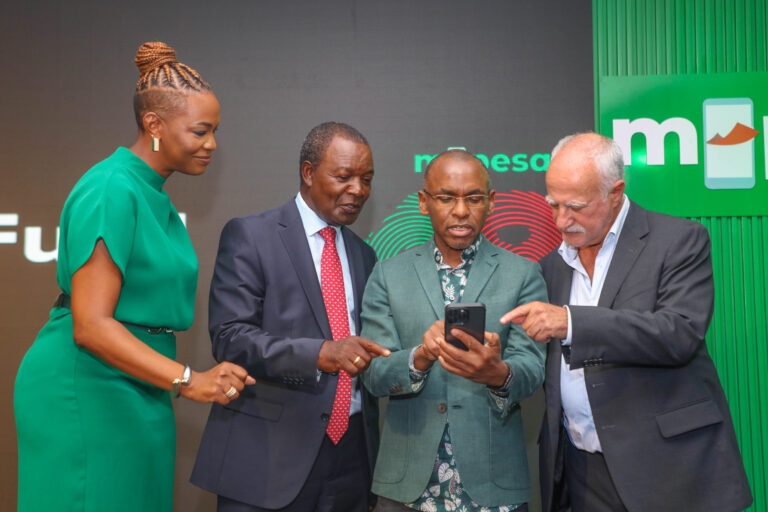
Kenya’s Safaricom said on Friday its mobile money platform M-PESA has reached 40 million monthly active customers, marking a major milestone as the service celebrates 19 years since launch and continues to expand its role in the country’s financial ecosystem.

Launched on March 6, 2007 as a simple person-to-person money transfer service, M-PESA has evolved into a comprehensive digital financial platform offering savings, credit, investment and merchant payment services used daily by millions of individuals and businesses.

Today, the platform supports a growing suite of financial products including investment and wealth management tools such as Ziidi MMF and Ziidi Trader, credit services like Fuliza and KCB M-PESA, and business payment solutions such as Lipa na M-PESA, Pochi la Biashara and Global Pay.

“Our goal is to give Kenyans, and Africa at large, digital financial tools to empower them to be more prosperous,” Safaricom CEO Peter Ndegwa said in a statement. “Reaching 40 million monthly active customers in Kenya is a milestone we celebrate as we recommit to enable every Kenyan to transact safely, grow their savings and build their wealth.”

Over the past year, Safaricom said it has continued investing in technology upgrades, fraud-prevention systems and customer education, measures aimed at improving the security, usability and reliability of M-PESA as digital transactions increase.

The company’s Fintech 2.0 strategy has accelerated M-PESA’s transformation from a payments platform into a broader financial services ecosystem, enabling users to save, borrow, invest and manage money directly from their mobile devices while maintaining strong safeguards for personal data and funds.

By lowering barriers to entry for financial products such as savings and investments, Safaricom says the platform is helping more Kenyans participate in wealth-building opportunities that were previously limited to traditional banking channels.

The growth of M-PESA reflects a wider shift across Africa toward mobile-led financial inclusion, where digital platforms are bridging long-standing gaps in access to formal financial systems.

Since its introduction nearly two decades ago, mobile money has played a central role in expanding financial access in Kenya, enabling millions of people to transact, save and borrow money using basic mobile phones.

Safaricom says it will continue innovating on the platform as it looks to deepen financial wellness and digital access for customers across the country.

“M-PESA remains committed to ensuring that everyone has the confidence and tools to navigate life’s financial journey,” Ndegwa said.

Safaricom, listed on the Nairobi Securities Exchange, serves more than 60 million customers across Kenya and Ethiopia and reported annual revenues of nearly 388 billion Kenyan shillings for the financial year ending March 2025. M-PESA remains the company’s largest fintech platform and one of the world’s most successful mobile money systems.

Cybervergent Raises $3 Million Seed to Expand AI-Driven Cybersecurity Platform in Africa

0

Cybersecurity startup Cybervergent has raised $3 million in a seed funding round co-led by venture capital firms Ventures Platform and Atlantica Ventures to expand its artificial intelligence-driven governance, risk and compliance platform across Africa, the company said on Thursday.

The funding will support the company’s regional expansion and accelerate development of its AI-native posture management platform, which helps organizations continuously monitor and manage security, compliance and digital risk across cloud environments and third-party systems.

Africa’s fast-growing digital economy has increased the complexity of cybersecurity and regulatory compliance for companies operating across multiple jurisdictions. Many organizations still rely on spreadsheets, fragmented tools and periodic audits to manage compliance, approaches that are increasingly inadequate as digital operations become continuous.

Cybervergent said its platform enables organizations to move from periodic compliance checks to real-time monitoring of their security and regulatory posture.

“We built Cybervergent to make digital trust a continuous reality for organizations across Africa,” said co-founder and Chief Executive Adetokunbo Omotosho.

The company said more than 150 organizations across West, East and Southern Africa currently use its platform to manage governance, risk, compliance and data security processes.

Cybervergent’s system supports more than 4,500 regulatory and security controls mapped across multiple frameworks and uses automated workflows to help companies implement and maintain compliance.

The startup said automation within the platform can accelerate compliance, risk management and audit initiatives by more than 70%.

Cybervergent plans to use the funding to expand into additional African markets and strengthen its AI capabilities, including deeper automation of governance and compliance workflows and more advanced security posture intelligence.

Investment in cybersecurity startups has been rising globally as companies face increasing regulatory requirements and growing threats linked to cloud adoption, fintech growth and digital infrastructure expansion. In Africa, the shift toward digital financial services and cloud computing has created new demand for tools that help organizations manage security and regulatory risk.

Samsung Galaxy S26 Ultra Wins ‘Best in Show’ at MWC 2026

0

Samsung Electronics said its flagship Samsung Galaxy S26 Ultra has won the “Best in Show” award at the Global Mobile Awards (GLOMO) during the Mobile World Congress 2026.

The awards, presented annually by the GSMA during MWC, recognize standout innovations across the global mobile industry. The Best in Show category highlights consumer-focused products judged to set new benchmarks for technology and real-world impact.

Samsung said the Galaxy S26 Ultra was recognized for combining advanced hardware with its latest software platform, One UI 8.5, designed to deliver a more intuitive and AI-driven mobile experience.

The smartphone features Galaxy AI, which the company said enables adaptive and context-aware assistance for everyday tasks while maintaining strong privacy and security protections.

Samsung also introduced what it described as the world’s first built-in Privacy Display, a technology designed to limit viewing angles and prevent others from seeing the screen while maintaining brightness and clarity for the user.

The device is powered by a customized chipset aimed at improving on-device AI processing, enabling faster performance for AI-powered applications and features.

“This year’s competition was exceptionally strong,” said Shaun Collins, chair of the Best in Show judging panel. “The Samsung Galaxy S26 Ultra stood out for pushing the boundaries of mobile technology while delivering meaningful real-world impact.”

Among more than 3,000 exhibitors at Mobile World Congress, judges said the device distinguished itself by bringing forward-looking technologies into a commercially available product.

Stephanie Choi, executive vice president and head of the Mobile Marketing Center for Samsung’s Mobile eXperience (MX) Business, said the recognition reflects the company’s efforts to advance AI-powered smartphones designed to anticipate users’ needs.

Mobile World Congress, held annually in Barcelona, is one of the world’s largest technology trade shows, bringing together mobile device makers, telecom operators and technology firms to showcase new products and innovations.


Communications Authority of Kenya to Map National Fiber Network to End ‘Wasteful’ Spending

0

Kenya’s communications regulator has launched a major push to create a national database of fiber optic cables, warning that a lack of coordination is leading to the “unnecessary duplication” of infrastructure and a waste of public funds.

Speaking at a workshop at Nairobi’s Utalii Hotel on Tuesday, the Director General of the Communications Authority of Kenya (CA), David Mugonyi, told telecom operators that the country can no longer afford to “operate with this level of confusion.”

While Kenya has invested heavily in broadband, boasting a network that spans all 47 counties and includes multiple submarine cables, the terrestrial map remains a patchwork of inconsistent data.

Consequently, public initiatives like the Digital Superhighway have occasionally funded new cables along routes where fiber already exists, simply because there was no reliable central record to check.

The regulator is now proposing the adoption of the Open Fiber Data Standard (OFDS), an international benchmark designed to harmonise how infrastructure is reported.

This move is supported by World Bank funding through the Kenya Digital Economy Acceleration Project.

Mr Mugonyi highlighted the physical and financial risks of the current system, noting that construction crews frequently damage cables they did not know were there.

“Investment decisions have at times advanced without knowledge of existing infrastructure,” he said, “resulting in the unnecessary duplication of routes, inefficient allocation of capital, preventable damage during construction, and the inability to accurately identify underserved areas.”

Despite the push for transparency, the CA chief was quick to reassure private operators that the database would not be a “free-for-all” for sensitive corporate data.

In a competitive market where network maps are often guarded as trade secrets, the regulator has promised a “thoughtful” rollout.

“It is not a platform for the indiscriminate disclosure of sensitive information or a pathway to compromising commercial interests,” Mr Mugonyi pointed out.

To address these concerns, the Communications Authority has outlined a phased approach that begins with a limited set of non-sensitive data fields.

By starting with basic information, the regulator aims to build the foundation of the national map without immediately requiring the disclosure of highly strategic assets.

Furthermore, access to the database will be strictly controlled on a “need-to-know” basis to ensure that information is only available to relevant stakeholders.

In an effort to foster collaboration, the CA intends to include industry representatives directly in the governance of the system.

This inclusion is designed to give telecom operators a voice in how their data is managed and used.

To further bolster confidence, the regulator has committed to appointing independent cybersecurity auditors from the outset, ensuring that the platform remains secure and that commercial interests are protected against unauthorized access.

The workshop marks the beginning of a consultation period rather than a final policy directive.

The CA is calling on the private sector to help define the technical parameters and the governance model to ensure the system is “founded on trust.”

Ultimately, the regulator argues that a shared map will benefit everyone by lowering deployment costs and improving the resilience of the national network.

As Mr Mugonyi concluded: “We need each other – government, industry, and development partners. This is good for all of us.”

Safaricom vs Airtel Money for Betting: Which Is Better?

0

Mobile money has revolutionized online betting in Kenya. Today, most bettors deposit and withdraw funds using their phones rather than traditional banking methods.

Two services dominate the conversation: Safaricom’s M-Pesa and Airtel Money. Both platforms allow users to fund betting accounts instantly, but they differ in areas such as popularity, fees, accessibility, and convenience.

MPesa is by far the most widely used in the industry, but Airtel has been gaining some good ground in recent times, with many betting sites now integrating Airtel deposits and withdrawals in their systems.

In this article, we compare Safaricom and Airtel Money for betting to help Kenyan punters decide which option works best for their gambling needs.

Safaricom (M-Pesa) for Betting

Safaricom’s M-Pesa is by far the dominant mobile money platform in Kenya. It launched in 2007 and quickly became the backbone of the country’s digital payments infrastructure. Because of its scale and infrastructure, M-Pesa is the default payment method on most Kenyan betting sites. Using Safaricom presents numerous advantages to Kenyan bettors, some of which are listed below:

1. Widest Acceptance

One of the biggest benefits of M-Pesa is its universal support. Almost every Kenyan betting platform integrates directly with Safaricom’s Paybill system. Making MPesa deposits are very simple, with funds typically credited instantly.

2. Large Agent Network

Safaricom has the largest mobile money agent network in Kenya. This means users can easily deposit or withdraw cash almost anywhere in the country. For bettors who frequently convert winnings to cash, this accessibility is extremely valuable.

3. Reliability and Stability

M-Pesa is known for its reliability. Because it processes millions of transactions daily, the system is optimized for fast and secure payments. Most betting deposits are processed instantly, and withdrawals often arrive within minutes.

4. Trusted by Betting Sites

Due to its widespread usage, bookmakers prefer M-Pesa integration. Many betting platforms design their payment systems specifically for Safaricom Paybill transactions. This leads to smoother deposits and faster payouts.

Downsides of Safaricom for Betting

Despite its popularity, M-Pesa does have a few disadvantages.

Higher Fees

Compared to Airtel Money, Safaricom’s transaction fees are slightly higher. For example, sending KSh 1,000 through M-Pesa can cost up to KSh. 13, while Airtel Money charges around KSh 11 for the same transfer. These differences may seem small but can add up to a lot for frequent bettors.

Network Dependence

To use M-Pesa easily, most bettors need a Safaricom SIM card. Although cross-network transfers exist, they may come with extra charges.

Airtel Money for Betting

Airtel Money is the mobile wallet offered by Airtel Kenya. Although it started much later than M-Pesa, the service has grown steadily over the past few years.

Airtel Money now holds about 10% of Kenya’s mobile money market, a significant increase from earlier years.

Amongst other advantages (listed below), the platform is particularly attractive for users who want lower transaction fees.

1. Lower Transaction Fees

Airtel Money is widely known for its competitive pricing. In many cases, sending money via Airtel Money is cheaper than using M-Pesa. Withdrawals are also slightly cheaper on Airtel Money. Charging lower fees would make sense from a business point of view for Airtel given how dominant MPesa is in the Kenyan market. For bettors who deposit frequently, these savings can make a difference over time.

2. Free Airtel-to-Airtel Transfers

Airtel has introduced promotional pricing and free transfers between Airtel users to attract more customers. This makes it very convenient for bettors who use Airtel as their primary network.

3. Increasing Acceptance on Betting Sites

Although M-Pesa still dominates, more sportsbooks are now integrating Airtel Money as an alternative payment method. Many major betting sites support both options so users can choose their preferred mobile wallet.

4. Good Backup Payment Method

Some experienced bettors keep both M-Pesa and Airtel Money accounts. If one network experiences downtime or delays, the other can serve as a backup payment option.

Limitations of Betting with Airtel

Smaller Agent Network

Compared to Safaricom, Airtel has fewer agents across the country. This can make it harder to withdraw cash in certain areas.

Limited Integration on Some Sites

Although adoption is growing, some betting platforms still prioritize M-Pesa integration.

This can lead to slightly slower processing times or fewer direct Paybill options.

Safaricom vs Airtel Money Head-to-Head


  Safaricom (MPesa) Airtel Money
Market Share 90% 10%
Betting Sites Acceptance Very High Moderate
Transaction Fees Slightly Higher Lower
Agent Network Largest in Kenya Smaller
Reliability Extremely Reliable Reliable, but smaller
Best For Convenience and Availability Lower Transaction Costs


Safaricom and Airtel Money both provide excellent mobile payment solutions for sports betting in Kenya. M-Pesa remains the market leader thanks to its massive user base, seamless integration with bookmakers, and extensive agent network.

However, Airtel Money is quickly gaining popularity due to its lower fees and competitive promotions. As more betting sites adopt the service, it may become an even stronger competitor.

Ultimately, the best strategy for many bettors is to use both services. This ensures you always have a backup payment method while enjoying the advantages of each platform.


Zeno Raises $25 Million to Scale Electric Vehicle Ecosystem in East Africa

0


Electric mobility startup Zeno has raised $25 million in a Series A funding round to expand its electric motorcycle production and battery‑charging infrastructure across East Africa, as demand for cleaner and cheaper transport alternatives grows in the region.

The funding round combines equity and debt financing and will support the scale‑up of the company’s Emara electric motorcycle alongside the rollout of battery‑swap stations and charging points across major urban centres.

The equity portion of the round was led by Congruent Ventures, with participation from investors including Active Impact Investments and Lowercarbon Capital, while debt financing was provided by Trifecta Capital and Camber Road.

Zeno said the new funding will help accelerate production of its electric motorcycles and expand its multi‑modal charging network, which includes battery‑swap stations, public charging hubs and home‑charging options for riders and fleet operators.

The company currently operates in several East African cities and has deployed more than 150 charging points serving close to 1,000 customers, including delivery fleets and motorcycle taxi riders.

Electric motorcycles are increasingly viewed as a key entry point for Africa’s energy transition because they offer significantly lower operating costs compared with petrol‑powered bikes. Zeno estimates riders can cut operating expenses by roughly half by switching to electric models.

The investment comes amid a rising wave of activity in Africa’s electric mobility sector. Established players such as Ampersand, which operates thousands of e‑motorcycles and an extensive battery‑swap network in Rwanda and Kenya, are scaling rapidly, while companies like Spiro are expanding across multiple countries with tens of thousands of bikes and hundreds of swap stations. Other startups, including Ghana‑based Kofa, are developing battery swapping systems and tailored e‑motorcycles, further intensifying competition and innovation in the region’s EV ecosystem.

Zeno said it plans to use the new capital to expand its presence across additional East African markets while strengthening its charging infrastructure and energy subscription services.


NCBA Drives Sustainable Homeownership with Electric Property Tour and Solar Leasing Solution

0

NCBA Bank has reinforced its commitment to sustainable and affordable homeownership by hosting its annual Property Investment Tour using fully electric buses and unveiling its new Solar Leasing Solution aimed at making clean energy more accessible for Kenyan households.

The initiative comes at a time when homeownership rates in Kenya are facing increasing pressure due to rising property prices, stagnant household incomes, and limited access to long-term mortgage financing. These challenges have made it increasingly difficult for many Kenyans to transition from renting to owning homes.

Through the Property Investment Tour, NCBA brought together prospective homeowners, property developers, and financial advisors in an immersive experience designed to simplify the home-buying journey. Participants were transported to various residential developments where they had the opportunity to explore different housing options, interact directly with developers, and gain practical insights into property investment and homeownership.

The use of fully electric buses for the tour also reflected NCBA’s commitment to environmental sustainability and climate-conscious innovation. By integrating clean mobility into the event, the bank sought to demonstrate how sustainability can be embedded across different sectors, including housing and finance.

During the tour, NCBA also introduced its Solar Leasing Solution, a financing model designed to enable homeowners to adopt solar energy without the high upfront costs typically associated with solar installations. Through the leasing model, customers can access solar power systems and pay for them through manageable installments, helping households reduce electricity costs while contributing to a cleaner energy mix.

The bank highlighted that the Solar Leasing Solution complements its broader property finance offering, which includes mortgages, home improvement financing, insurance solutions, and green energy financing options designed to support more sustainable living.

By combining property exposure, financing guidance, and renewable energy solutions in a single initiative, NCBA aims to empower customers with the tools and knowledge needed to make informed property investment decisions.

The initiative underscores NCBA’s broader commitment to advancing inclusive, sustainable, and climate-resilient homeownership across Kenya while helping more families access housing solutions that are both financially viable and environmentally responsible.

NCBA Urges Kenyan Corporates to Tap Global Capital as it Unveils Five-year Strategy

0

NCBA Group has urged Kenyan corporates to position themselves to attract global investment as the lender unveiled a new five-year strategy aimed at strengthening its role in financing key sectors of the economy.

The bank made the call during the 2026 NCBA Corporate Golf Day at Karen Country Club in Nairobi, where business leaders gathered to discuss Kenya’s growing appeal to international investors.

Recent developments including Nedbank Group’s proposed acquisition of a 66% stake in NCBA, the Kenyan government’s sale of a 15% stake in Safaricom to Vodacom, and Diageo’s plan to sell its 65% stake in East African Breweries Limited to Japan’s Asahi Group Holdings highlight increasing foreign capital flows into the country’s strategic sectors.

“Kenya’s role as a regional financial hub, supported by strong institutions, sophisticated markets and a dynamic technology sector, makes it a natural anchor for investment,” said James Gossip, managing director for NCBA Kenya.

He said the bank was strengthening its digital banking offerings, including its Connect Plus platform, to help businesses integrate across value chains and operate more efficiently in a digital-first economy.

Agriculture remains central to Kenya’s economy, contributing more than 20% of gross domestic product directly and over 30% when value chain linkages are included, while financial services and ICT each account for about 8–9% of GDP.

NCBA said its corporate banking footprint spans several key sectors, including banking seven of the country’s top 10 SACCOs, financing 60% of the sugar industry, and supporting more than half of the tea sector and about 30% of the floriculture industry.

The lender also launched its UBUNTU Strategy 2026–2030, which it said aims to strengthen collaboration with businesses and institutions while focusing on long-term growth.

As part of its sustainability agenda, the bank distributed 5,000 tree seedlings to participants at the event, contributing to its target of growing 10 million trees by 2030.

Absa Integrates M-Pesa into New Premium Metal Card to Capture Kenya’s Dual-Payment Market

0

Absa Bank Kenya has entered the high-end payment market with the launch of its new Visa Infinite Metal card, a product designed to bridge the gap between global luxury and local utility.

The new offering, available in both debit and credit variants, was officially introduced by a senior executive team including Consumer Banking Director, Moses Muthui and Head of Card Payments, Linda Kimani.

The move signals a strategic shift for the lender as it attempts to capture a larger share of the affluent banking segment.

While the card carries the prestige associated with the “Infinite” branding, its most distinctive feature is its integration with Kenya’s local economy.

Most notably, the card allows for direct payments to M-Pesa Paybill and Till numbers, a functionality that acknowledges the dominance of mobile money in the country.

Beyond its local mobile money integration, the card is equipped with several modern payment technologies, including NFC capabilities that support “Tap n’ Pay” via smartphones as well as wearable technology compatibility for seamless contactless transactions through Garmin smartwatches.

Also, it supports flexible financing via the  “Buy Now Pay Later” (BNPL) feature accessible through the Absa Mobile App.

In addition to its digital features, the metal card focuses heavily on the needs of frequent international travelers.

Cardholders are granted access to curated travel offers in major global hubs such as Dubai, London, and New York via the Visa Destination proposition.

Safety also remains a priority for the premium tier.

Consequently, the card includes an international travel insurance cover valued at up to USD 2.5 million, providing a significant safety net for globetrotting professionals.

According to Moses Muthui, Absa’s Director of Consumer Banking, this launch is merely the beginning of a broader overhaul of the bank’s financial products.

“The Visa Infinite card marks the first phase of a wider refresh of the bank’s card solutions,” Mr. Muthui stated.

He further explained that the strategy is centered on merging mobility and premium benefits into a single, seamless product.

As Kenya’s payment ecosystem becomes increasingly “hybrid,” Absa’s latest move places it in direct competition with other top-tier banks targeting the “affluent” demographic.

By embedding M-Pesa compatibility within a global Visa framework, the bank is betting that even the most elite customers still value the convenience of local mobile money solutions.

BasiGo Launches Kenya’s First Electric School Bus Fleet in Nairobi

0

In a landmark move for Kenya’s education sector, the School of the Nations has become the first institution in the country to begin electrifying its student transport fleet.

The Nairobi-based school took delivery of its first electric bus from BasiGo this week, marking the start of an ambitious transition.

Under the new agreement, the school plans to convert its entire transport operation to electric power over the course of 2026.

The debut vehicle is a 25-seat BYD electric bus, which arrived in Kenya in 2023.

While the technology is cutting-edge, the vehicle itself has a proven track record; it has spent the last three years operating within Nairobi’s rigorous public transport network.

Following this initial delivery, the fleet is set to expand rapidly. In the coming months, 10 BasiGo Ma3E electric vans will join the primary bus to complete the school’s 11-vehicle order.

To support the rollout, BasiGo is installing dedicated charging infrastructure on the school grounds and providing the institution with access to its wider network of charging depots.

The partnership highlights a new “refurbishment programme” designed by BasiGo to lower the barrier to entry for green technology.

By restoring used public transport buses to near-new condition, the company can offer electric mobility at a significantly lower price point than new models.

Jit Bhattacharya, Chief Executive and Co-Founder of BasiGo, believes this model is the key to scaling the technology.

He stated: “Forward-looking institutions like the School of the Nations are proving that clean mobility is not just viable, but practical and scalable across new sectors. Schools in particular represent a strong and sustainable market for second-hand electric buses, enabling institutions to access clean transport solutions at a lower cost.”

For the School of the Nations, the move is as much about education as it is about logistics.

The school intends to use the fleet as a practical example of environmental stewardship for its students.

Dr Hwaock Im, the school’s Principal, noted that the investment serves both the environment and the student body.

“It provides clean, quiet transport for our learners while helping us reduce emissions,” Dr Im said. “More importantly, it allows our students to see sustainability in action, not just in textbooks, but in their daily commute. By adopting electric transport, we are showing them that the future they study is one we are actively building.”

As interest in low-emission mobility grows across East Africa, the school’s 2026 target positions it as an early adopter in a rapidly evolving transport landscape.

Showmax to Shutdown, MultiChoice Claims Heavy Losses

0

The ambitious attempt to create an “African Netflix” has come to an abrupt end.

Canal+, the French media giant that recently seized the reins of MultiChoice, has confirmed it will shutter its streaming service, Showmax, claiming it has been making loses.

The move comes as part of a ruthless cost-cutting drive following Canal+’s acquisition of the South African pay-TV group in September 2025.

While a specific “dark day” for the platform has not yet been set due to lingering legal complexities, sources indicate the service will be discontinued “soon.”

The closure marks a dramatic fall for a platform that was once the crown jewel of MultiChoice’s digital strategy.

Launched 11 years ago in August 2015, Showmax was designed to defend the company’s legacy pay-TV base against the encroaching global might of Netflix, Disney+, and Amazon Prime Video.

Despite a high-profile relaunch just two years ago in February 2024—leveraging NBCUniversal’s Peacock technology, the service failed to gain the necessary altitude.

Even with a combined $309 million in equity funding from MultiChoice and NBCUniversal, the aggressive subscriber targets promised to investors remained out of reach.

In a recent call with investors, Canal+ CEO Maxime Saada was blunt about the platform’s performance, describing its failure as “quite obvious” and noting it was “not a commercial success.”

The financial bleeding at Showmax had become unsustainable for the new parent company.

According to recent financial disclosures, the streaming service’s fiscal health deteriorated sharply as trading losses surged by 88% in the final year leading up to the takeover.

Despite heavy capital investment, revenue experienced a significant decline, leaving a financial void that the new parent company intends to fill through aggressive restructuring.

Consequently, Canal+ has established a rigorous savings target, aiming to shave 400 million euro off its combined budget by 2030 to ensure long-term stability.

“The decision to axe Showmax reflects the continued focus on financial discipline and investment optimization,” the company stated, citing an “increasingly competitive and capital-intensive” global market.

While the standalone app is disappearing, the content itself is being repurposed. MultiChoice has already begun rebranding “Showmax Originals” under its traditional broadcast banners, such as Africa Magic, M-Net, and kykNET.

This content will now transition to DStv’s linear channels.

Furthermore, Canal+ appears to be pivoting away from direct competition with global giants in favor of collaboration.

Following a June agreement to bundle Netflix into its offerings across 24 Francophone countries, insiders suggest this strategy will likely be rolled out across the rest of the continent.

The news has sent shockwaves through the African film community, coming just two years after Amazon MGM Studios halted original commissions in the region in January 2024.

One award-winning South African director-producer told Variety that the loss of Showmax is a “huge blow” to the industry.

“Showmax was one of the only platforms willing to back stories that were bold and authentic. Losing it leaves very little hope that Canal+ will fill that gap with anything of value,” the filmmaker said. “It feels like this horse is getting sent to the factory to be turned into glue.”

In a rare piece of silver lining, there will be no immediate job losses. Under the terms of the acquisition, Canal+ is prohibited from retrenching staff for a period of three years.

Consequently, Showmax employees will be reassigned to other roles within the broader MultiChoice group.

All eyes now turn to March 11, when Canal+ is scheduled to report its first full-year combined financial results since taking control of MultiChoice.

Anthropic, Rwanda Sign AI Partnership to Boost Health and Education

0

U.S.-based artificial intelligence company Anthropic and the Government of Rwanda have signed a three-year memorandum of understanding (MOU) to expand AI use in the country’s health, education, and public sectors.

The agreement formalizes Anthropic’s multi-sector collaboration in Africa, building on a November 2025 education partnership providing AI tools and training to teachers.

Under the MOU, Anthropic will support Rwanda’s health goals, including efforts to eliminate cervical cancer, reduce malaria, and lower maternal mortality. It will also provide government developers with access to its Claude AI models and training, and expand AI literacy programs for public servants and educators, deploying AI learning tools across eight African countries.

“This partnership is an important milestone in Rwanda’s AI journey,” said Paula Ingabire, Minister of ICT and Innovation.

Anthropic’s Elizabeth Kelly said the focus is on “training, technical support and capacity building so AI can be used safely and independently” across Rwanda.


Apple Launches MacBook Neo at $599, Targets Education Market

Apple on Thursday unveiled MacBook Neo, a new 13-inch laptop with Apple silicon, a Liquid Retina display, and all-day battery life, starting at $599. Apple positions the device as its most affordable Mac yet, designed to compete with Chromebooks and other education-focused laptops.

The MacBook Neo is available in blush, indigo, silver, and citrus and weighs 2.7 pounds, making it portable for students and classrooms. The 13-inch display offers 2408-by-1506 resolution, 500 nits of brightness, and support for 1 billion colors.

Powered by the A18 Pro chip, Apple says the laptop is up to 50% faster than Intel Core Ultra 5 PCs for everyday tasks and up to three times faster for AI workloads. It also features a 16-core Neural Engine, fanless design, and integrated GPU for graphics-intensive tasks.

The laptop delivers up to 16 hours of battery life, and includes a 1080p FaceTime HD camera, dual mics, Spatial Audio speakers, a Magic Keyboard, and a Multi-Touch trackpad. Touch ID is included on select models.

Apple highlighted MacBook Neo’s environmental credentials, with 60% recycled content, including 90% recycled aluminum, and manufacturing using 45% renewable electricity.

Pre-orders start immediately, with in-store availability beginning March 11. Education pricing is $499, giving Apple a stronger foothold in classrooms traditionally dominated by Chromebooks.

John Ternus, Apple’s senior VP of Hardware Engineering, said the MacBook Neo “delivers the magic of the Mac at a breakthrough price,” emphasizing performance, design, and value tailored for students and educators.

Apple Unveils Lower-cost iPhone 17e with A19 Chip, MagSafe & 256GB Storage

0

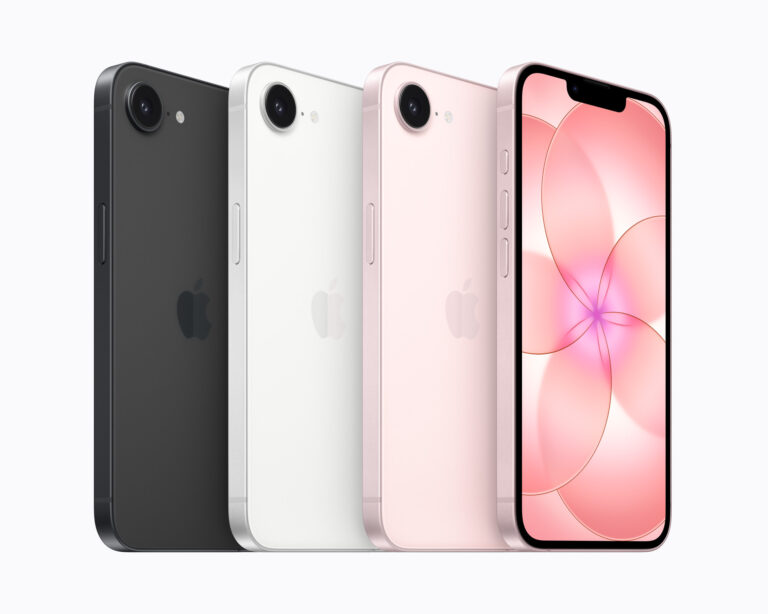
Apple on Tuesday introduced the iPhone 17e, a more affordable addition to its iPhone 17 lineup, aiming to offer high-end performance and features at a lower price point as competition intensifies in the global smartphone market.

Priced from $599, the iPhone 17e starts with 256GB of storage, doubling the entry capacity of the previous generation at the same price, Apple said. Pre-orders open on March 4, with availability beginning March 11 in more than 70 countries.

The device is powered by Apple’s latest A19 processor, built on advanced 3-nanometer technology, delivering up to twice the CPU performance of iPhone 11, according to the company. It also debuts C1X, Apple’s newest in-house cellular modem, which Apple says is up to 2x faster than the modem used in the iPhone 16e while consuming less power.

Apple is positioning the iPhone 17e as a long-lasting upgrade option, combining performance gains with durability improvements. The phone features a 6.1-inch Super Retina XDR OLED display protected by Ceramic Shield 2, offering improved scratch resistance and reduced glare, and carries an IP68 rating for water and dust resistance.

On imaging, the iPhone 17e includes a 48-megapixel Fusion camera, enabling optical-quality 2x zoom and enhanced portrait photography using machine learning. Video recording supports 4K Dolby Vision at up to 60 frames per second, along with Spatial Audio for immersive playback on compatible devices.

The model also brings MagSafe back to Apple’s lower-priced iPhone tier, enabling faster wireless charging and compatibility with a wide range of accessories. Wired charging via USB-C can reach 50% in about 30 minutes, Apple said.

Safety and connectivity features include Emergency SOS, Messages, Find My, and Roadside Assistance via satellite, as well as Crash Detection, extending capabilities first introduced on higher-end models.

iPhone 17e ships with iOS 26, introducing Apple Intelligence features such as Live Translation, call screening, and on-screen visual intelligence, though some functions remain in beta and vary by region and language.

Available in black, white, and soft pink, Apple said the iPhone 17e is manufactured with 30% recycled content as part of its broader Apple 2030 carbon-neutral initiative.

“With iPhone 17e, we’re bringing powerful performance, smarter cameras, and long-term value to more customers,” said Kaiann Drance, Apple’s vice president of Worldwide iPhone Product Marketing.

Apple is offering trade-in credits of up to $599 in select markets through carrier and Apple Trade In programs, the company said.

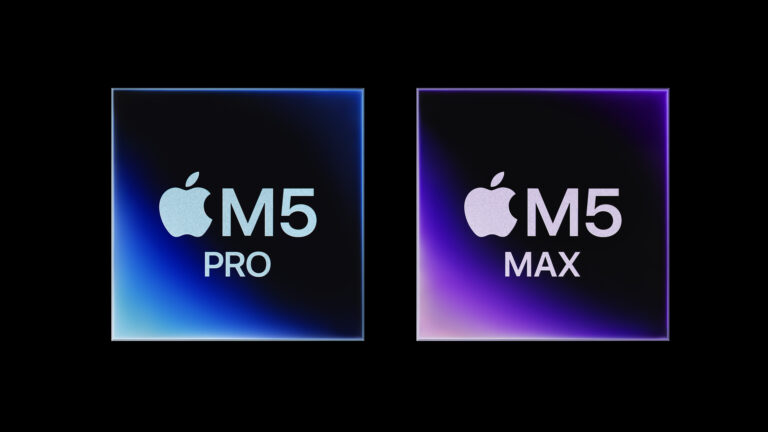
Apple Debuts M5 Pro & M5 Max to Supercharge Pro Laptop Performance

Apple on Tuesday unveiled its new M5 Pro and M5 Max chips, introducing an Apple-designed Fusion Architecture aimed at delivering major gains in CPU, GPU and on-device AI performance for professional users.

The new processors will power the latest MacBook Pro models, which Apple said will be available for pre-order starting Wednesday, with shipments beginning March 11.

Built using third-generation 3-nanometer technology, M5 Pro and M5 Max combine two silicon dies into a single system-on-a-chip (SoC), integrating the CPU, GPU, Neural Engine, Media Engine, unified memory controller and Thunderbolt 5 support. Apple says the design delivers higher bandwidth and lower latency while maintaining power efficiency.

Both chips feature a new 18-core CPU made up of six high-performance “super cores” and 12 newly designed performance cores optimized for multithreaded workloads. Apple said the architecture delivers up to a 30% performance boost for demanding professional tasks, with multithreaded performance up to 2.5 times faster than the M1 Pro and M1 Max.

Graphics performance also sees a significant jump. M5 Pro supports up to a 20-core GPU, while M5 Max scales to as many as 40 GPU cores. Each GPU core includes a Neural Accelerator, enabling Apple to claim more than four times the peak GPU compute for AI workloads compared with the previous generation. Ray-tracing performance improves by up to 35% on M5 Pro and up to 30% on M5 Max versus their M4 counterparts, Apple said.

Memory bandwidth has also been expanded. M5 Pro supports up to 64GB of unified memory with bandwidth reaching 307GB/s, while M5 Max supports up to 128GB with bandwidth up to 614GB/s — a key advantage for large 3D scenes, simulations and large language model workloads.

“M5 Pro and M5 Max are a monumental leap forward for Apple silicon,” said Johny Srouji, Apple’s senior vice president of Hardware Technologies. “They deliver an unparalleled combination of performance, efficiency and on-device AI capabilities for MacBook Pro.”

Additional features across both chips include a faster 16-core Neural Engine, an updated Media Engine with AV1 decode and ProRes acceleration, always-on Memory Integrity Enforcement for enhanced security, and Apple’s most advanced implementation of Thunderbolt 5 to date.

Apple said the improved performance-per-watt of the new chips also supports its Apple 2030 goal to make the company carbon neutral across its entire footprint by the end of the decade.


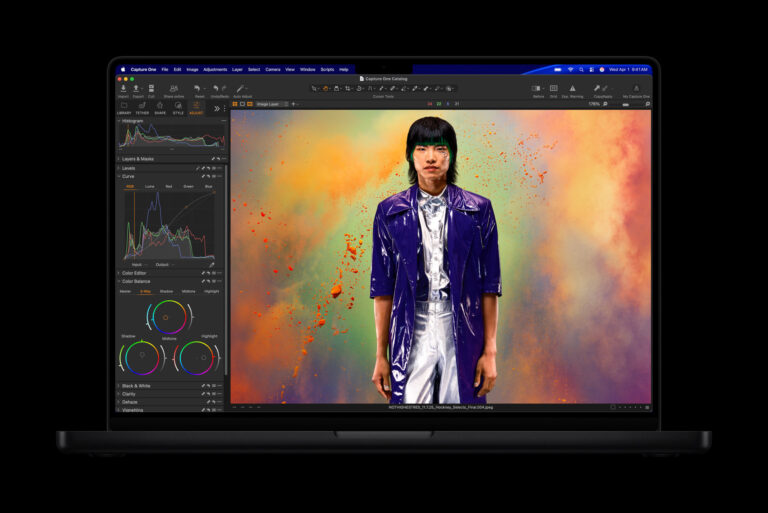
Apple Unveils MacBook Pro with M5 Pro & M5 Max, Turbocharging AI & Pro Performance

Apple on Tuesday introduced updated 14-inch and 16-inch MacBook Pro models powered by its all-new M5 Pro and M5 Max chips, promising major gains in CPU, graphics and on-device artificial intelligence performance.

The new MacBook Pro delivers up to four times faster AI workloads than the previous generation and up to eight times the AI performance of M1-based models, Apple said. The company positioned the machines for developers, researchers and creative professionals who want to run large language models and advanced AI tools locally, without relying on cloud computing.

At the core of the update are the M5 Pro and M5 Max chips, built on Apple’s new Fusion Architecture, which combines two dies into a single system-on-a-chip. Both processors feature up to an 18-core CPU, including six high-performance “super cores” and 12 efficiency-focused performance cores, delivering up to 30% faster CPU performance, according to Apple.

The chips also introduce a next-generation GPU with a Neural Accelerator embedded in every core, enabling faster AI inference, image generation and 3D rendering. Apple said graphics performance is up to 50% higher than on M4 Pro and M4 Max systems, supporting real-time work on complex 3D scenes and visual effects.

Memory and storage bandwidth were also boosted. The M5 Pro supports up to 64GB of unified memory with bandwidth of up to 307GB/s, while the M5 Max scales to 128GB and 614GB/s. Storage speeds are up to twice as fast as the prior generation, reaching up to 14.5GB/s. Starting storage has been increased to 1TB for M5 Pro models and 2TB for M5 Max configurations.

Apple also added its new N1 wireless chip, bringing Wi-Fi 7 and Bluetooth 6 to the MacBook Pro lineup. The laptops support Thunderbolt 5, HDMI with up to 8K output, SDXC card slots and MagSafe 3 charging, and can drive up to four high-resolution external displays on M5 Max models.

Battery life remains a key selling point, with Apple claiming up to 24 hours of use on a single charge, while maintaining full performance whether plugged in or running on battery power. The devices feature a Liquid Retina XDR display with an optional nano-texture finish, a 12-megapixel Center Stage camera, studio-quality microphones and a six-speaker audio system with Spatial Audio support.

The new MacBook Pro ships with macOS Tahoe, which expands Apple Intelligence features, enhances Spotlight search and introduces Live Translation across Messages, FaceTime and phone calls, while keeping AI processing on device for privacy, Apple said.

Pre-orders open March 4, with availability beginning March 11. In the United States, the 14-inch MacBook Pro with M5 Pro starts at $2,199, while M5 Max configurations start at $3,599. The laptops are available in space black and silver.

Apple Unveils MacBook Air with M5 Chip, Boosts AI Performance & Storage

0

Apple on Tuesday introduced a new MacBook Air powered by its M5 chip, promising faster performance, expanded artificial intelligence capabilities and double the starting storage, as the company continues to push its custom silicon across its product lineup.

The new MacBook Air features a 10-core CPU and up to a 10-core GPU, with a Neural Accelerator embedded in each GPU core to speed up AI workloads. Apple said the laptop delivers up to four times faster AI performance than the previous M4-based model and up to 9.5 times faster than versions powered by the original M1 chip.

Apple also doubled the base storage to 512GB, up from 256GB previously, and said customers can now configure the MacBook Air with up to 4TB of storage for the first time. The company said the updated SSD offers up to twice the read and write speeds of the prior generation.

Connectivity upgrades include Apple’s new N1 wireless chip, which enables Wi-Fi 7 and Bluetooth 6. The MacBook Air retains its fanless aluminum design and comes with a Liquid Retina display, a 12-megapixel Center Stage camera, up to 18 hours of battery life, and support for up to two external displays via Thunderbolt 4 ports.

Apple said the M5 chip also improves graphics-intensive tasks such as gaming and 3D rendering through enhanced shader cores and a third-generation ray-tracing engine. Unified memory bandwidth has increased to 153GB per second, a 28% improvement over the M4 chip, according to the company.

“The new MacBook Air with M5 brings incredible performance and even more capability to the world’s most popular laptop,” said John Ternus, Apple’s senior vice president of hardware engineering.

The MacBook Air runs macOS Tahoe, Apple’s latest operating system, which introduces new design features and deeper integration of Apple Intelligence, including AI-powered shortcuts, live translation in Messages and improved task organization in Reminders.

Apple said the new MacBook Air is made with 55% recycled content and aligns with its goal of becoming carbon neutral across its entire footprint by 2030.

The MacBook Air with M5 will be available in 13-inch and 15-inch models in sky blue, midnight, starlight and silver. Pre-orders begin March 4, with devices reaching stores on March 11. The 13-inch model starts at $1,099 in the United States, while the 15-inch version starts at $1,299. Education pricing starts at $999 and $1,199 respectively.


Apple Unveils M4-powered iPad Air at Unchanged Prices

0

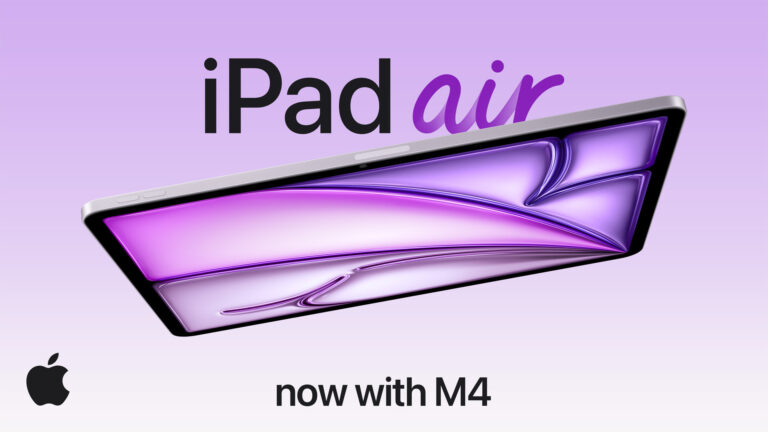
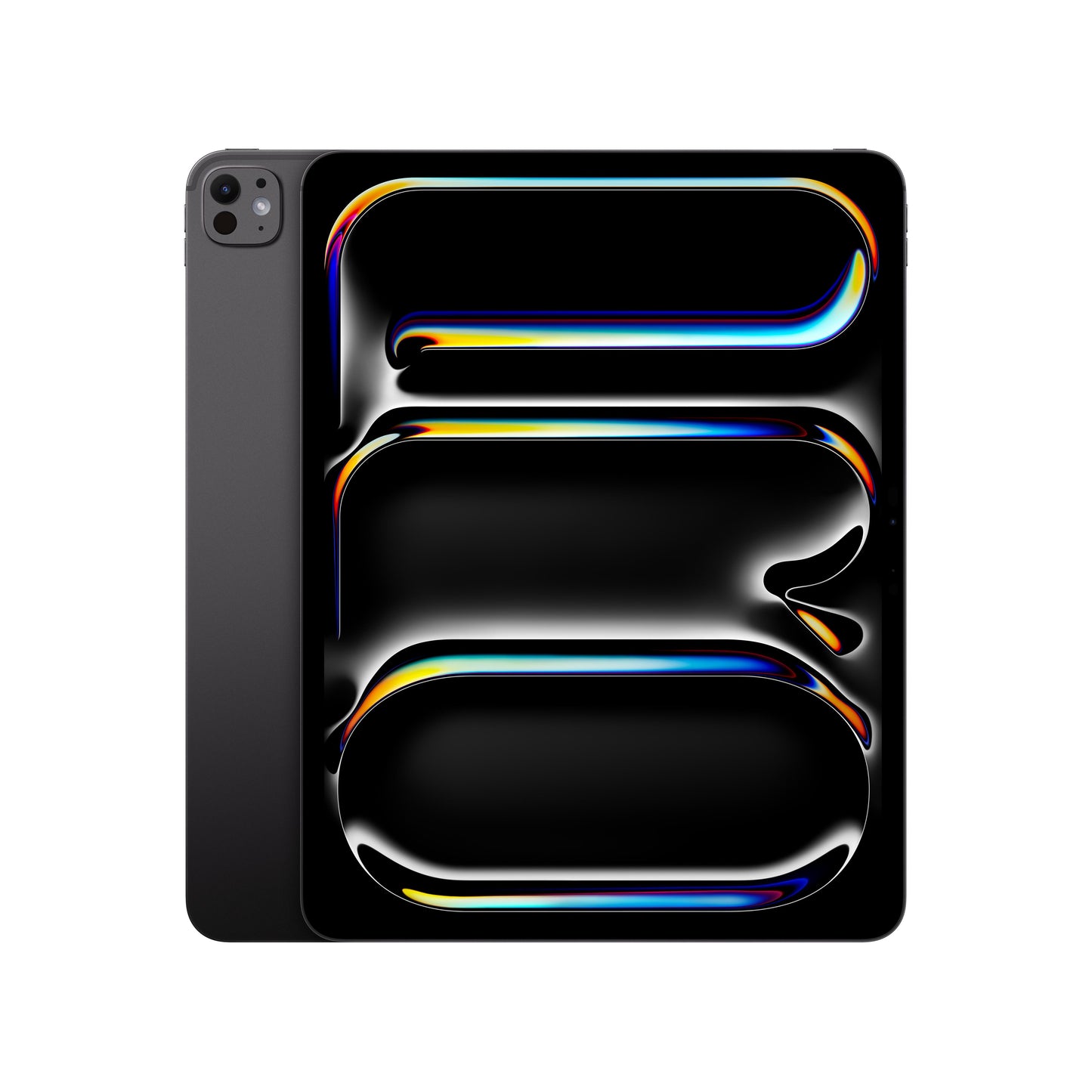
Apple on Tuesday introduced a new iPad Air powered by its M4 chip, promising faster performance, more memory and improved connectivity while keeping starting prices unchanged, as the company pushes deeper into on-device artificial intelligence.

The updated iPad Air comes in 11-inch and 13-inch versions starting at $599 and $799 respectively, the same as the prior generation. Education pricing starts at $549 for the smaller model. Pre-orders open March 4, with availability beginning March 11.


Image


Apple said the M4 delivers up to 30% faster performance than the M3-based iPad Air and up to 2.3 times the speed of the M1 model, aided by an 8-core CPU, 9-core GPU and a 16-core Neural Engine. Unified memory increases by 50% to 12GB, with memory bandwidth rising to 120GB per second.Image

The company positioned the device as a step forward for AI workloads, including photo and video editing, transcription and on-device intelligence features in apps such as Final Cut Pro and Goodnotes.

Connectivity also gets a boost, with Apple’s new N1 wireless chip enabling Wi-Fi 7 and Bluetooth 6, while cellular models add the C1X modem, which Apple says can deliver up to 50% faster cellular speeds and improved power efficiency.

Image


The new iPad Air ships with iPadOS 26, which introduces a redesigned interface, a new windowing system, an expanded Files app and a Preview app for viewing and marking up PDFs. The update also adds deeper audio controls and background task support, features Apple says take advantage of its custom silicon.

Accessories include support for Apple Pencil Pro and an updated Magic Keyboard with a function row and built-in trackpad. The device is available in blue, purple, starlight and space gray, with storage options ranging from 128GB to 1TB.

Apple said the new iPad Air uses 30% recycled content and aligns with its goal to be carbon neutral across its footprint by 2030.

Meta Smart Glasses Raise Privacy Concerns, Reveal Hidden Workforce in Kenya

0

Meta’s new AI-powered smart glasses, marketed as an all-in-one personal assistant, are exposing a hidden workforce and significant privacy risks, according to an investigation by Svenska Dagbladet.

The glasses, sold in Europe and the United States, capture images, video and audio to power features such as live translation, object recognition and AI responses. While marketed as privacy-conscious and user-controlled, the devices rely on a network of subcontractors worldwide to annotate and verify the data.

In Nairobi, Kenya, employees at Meta subcontractor Sama manually review video and image content from the glasses. Workers told Svenska Dagbladet that they regularly encounter footage showing highly sensitive situations, including bathrooms, sexual activity, and visible personal information like bank cards.

“You see these videos and it feels like you are looking into someone’s private life. But it’s your job, so you do it,” one employee said on condition of anonymity.

Tests by Swedish media indicate that even when users opt out of data sharing, the glasses require an internet connection to process visual input, sending information to Meta servers in Sweden, Denmark and other locations. Former Meta employees said that faces and bodies meant to be anonymized are sometimes visible due to algorithmic errors.

Privacy experts warned that users may not fully understand the extent of data collection, raising questions about compliance with the EU General Data Protection Regulation (GDPR). Meta says all data is handled under its AI Terms of Service and Privacy Policy and that European legal requirements are met through its Irish entity.

Meta declined to answer detailed questions about how private material reaches subcontractors or how it is filtered before human review. Sama did not respond to requests for comment.

The investigation highlights the tension between consumer-facing AI products and the largely invisible human labor required to train and maintain them.

“You think that if people knew the extent of the data collection, no one would dare to use the glasses,” a Nairobi-based annotator told Svenska Dagbladet.

Accenture to Acquire Ookla to Strengthen Network Intelligence

0

Accenture said on Tuesday it has signed an agreement to acquire Ookla, a global leader in network intelligence, benchmarking, and customer experience analytics, aiming to enhance enterprise connectivity through data and AI.

The acquisition will integrate Ookla’s data platforms, including Speedtest®, Downdetector®, Ekahau®, and RootMetrics®, enabling communications service providers (CSPs), hyperscalers, and enterprises to optimize mission-critical Wi-Fi and 5G networks that support their digital operations.

“Modern networks have evolved from simple infrastructure into business-critical platforms,” Julie Sweet, chair and CEO of Accenture, said in a statement. “Without the ability to measure performance, organizations cannot optimize experience, revenue, or security. By acquiring Ookla, we will help clients scale AI safely and build the trusted data foundations they need for reliable, seamless connectivity that drives value.”

Ookla, headquartered in Seattle, operates globally recognized brands in connectivity. Its network data platform captures more than 1,000 attributes per test and performs over 250 million consumer-initiated tests monthly, complemented by controlled drive, walk, and embedded testing. The platform provides actionable insights for:

  • CSPs: Enhancing autonomous networks through real-time data, predictive simulations, and AI-driven analytics to optimize infrastructure investments and reduce operational costs.
  • Hyperscalers and cloud providers: Ensuring resilience of AI infrastructure and edge data centers that handle large-scale inference workloads.
  • Enterprises: Designing and troubleshooting private 5G and Wi-Fi networks using Ekahau’s specialized software and hardware.

“With the Ookla portfolio, we will offer end-to-end network intelligence services essential for AI-based transformation,” said Manish Sharma, chief strategy and services officer at Accenture. “Speedtest and RootMetrics define the user experience; Downdetector identifies incidents faster; and Ekahau transforms the digital workplace with superior Wi-Fi. Low-latency, zero-friction connectivity is now a competitive necessity, and these tools give enterprises the power to build high-performance environments.”

Founded in 2006 and a division of Ziff Davis, Ookla employs approximately 430 experts in software engineering, radio frequency engineering, and data science. Its platform delivers a combination of quality of service (QoS), radio frequency (RF) signal data, and quality of experience (QoE) insights that support better business outcomes across industries.

“Joining Accenture will allow us to scale our network data business across the world’s largest enterprises and accelerate our goal of creating better connected experiences,” said Stephen Bye, CEO of Ookla. “Together, we will redefine how the world measures, understands, and experiences connectivity.”

The deal is subject to customary closing conditions, including regulatory approvals. Financial terms were not disclosed.

Roam Launches AI-powered System to Monitor Electric Vehicle Fleets Across Africa

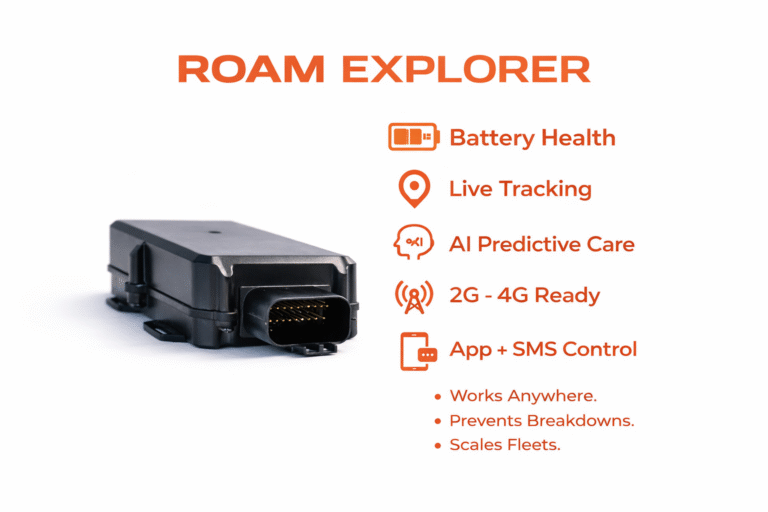
Kenyan electric mobility firm Roam on Tuesday launched Roam Explorer, an artificial intelligence-driven platform designed to track and manage electric vehicle fleets across Africa in real time, including in areas with poor connectivity.

The platform connects electric motorcycles, tuk-tuks, buses and cars to a central system that monitors battery health, performance, location and usage. Roam said the system addresses a major challenge in Africa’s electric mobility transition: the lack of visibility over vehicles operating in rural and low-network areas.

Roam Explorer works on 2G, 3G and 4G networks, allowing fleet operators to access vehicle data via smartphones or through SMS for basic commands. The system uses AI to analyse battery range, temperature and performance, helping predict maintenance needs and prevent breakdowns.

The company said the platform could also support asset financing by giving lenders, including M-KOPA, real-time insight into financed vehicles. Fleet managers can monitor multiple vehicles simultaneously, while riders receive alerts to improve safety and reliability.

“Roam Explorer changes how electric fleets are managed. It moves us from reacting to problems to preventing them,” said Habib Lukaya, Roam’s country manager. “By giving real-time visibility into battery health and vehicle performance, we are making electric fleets safer to operate and easier to finance.”

Roam, recognised as a finalist for the Earthshot Prize and among the 2024 Impact/100 startups by the Norrsken Foundation, was named Kenya’s fastest-growing company and one of Africa’s top 40 firms by the Financial Times in 2025.

The system was developed in Kenya with Swedish technology partners, reflecting a shift from producing electric vehicles to building connected electric mobility ecosystems.

Iran Plunged into ‘Digital Fog’ as Massive Cyberattacks Strike alongside Military Offensive

A sophisticated and coordinated wave of cyberattacks has crippled Iran’s digital infrastructure, leaving the nation’s leadership in what experts describe as a “digital fog”, reports state.

The disruption, which began on Monday, struck critical military command networks and public platforms simultaneously with “Operation Epic Fury,” a joint US-Israeli military campaign.

While kinetic strikes have focused on missile sites and nuclear facilities, this parallel digital offensive appears designed to paralyze the Iranian regime from within.

The scale of the technological shutdown is unprecedented.

According to the internet monitoring firm NetBlocks, connectivity across the country plummeted to just 1% of normal levels on Monday morning.

This near-total blackout followed two significant events: A massive drop in traffic recorded at 07:06 GMT and a second, definitive collapse at 11:47 GMT.

Consequently, these twin disruptions have effectively severed Iran’s communications with the outside world.

Cybersecurity analysts noted that the level of coordination suggests a highly advanced aggressor, aimed specifically at neutralizing the Islamic Revolutionary Guard Corps (IRGC).

A multi-layered digital offensive

Beyond simply cutting internet access, intelligence sources confirm that the campaign was designed to be “just as lethal” as physical bombardment.

The strategy appears to have been deployed across three distinct fronts: First, Infrastructure where deep intrusions into the energy grid and aviation systems resulted in nationwide power outages and the grounding of all flights.

Second, Military Command: Specific strikes targeted the IRGC’s command-and-control networks, directly hindering their ability to coordinate retaliatory drone or missile strikes.

Lastly, Psychological Warfare where hackers successfully hijacked BadeSaba, a popular religious prayer app used by over five million people.

In perhaps the most audacious move of the day, the hijacked BadeSaba app began broadcasting a series of Farsi push notifications to millions of Iranian citizens.

According to user reports, the messages were designed to undermine the regime’s authority.

One notification reportedly declared, “Help has arrived!” while other messages urged members of the security forces to desert their posts and join “the forces of liberation,” offering promises of amnesty for those who refused to fight.

As the joint military campaign codenamed Operation Epic Fury (US) and Operation Roaring Lion (Israel) enters its fifth day, the scale of the “soft” and “hard” fronts against Iran has become clearer.

While the physical strikes have dominated headlines, the integrated cyber offensive has been described by military analysts as a “digital decapitation” of the Iranian state.

According to US Central Command (CENTCOM), the campaign began in broad daylight at 09:45 Tehran time on February 28.

The strikes have targeted four primary military objectives: Nuclear Infrastructure: Systematic degradation of remaining enrichment and production sites.

Leadership Targets: Precision strikes on government compounds in Tehran, Isfahan, and Qom. Reports confirm the destruction of Supreme Leader Ayatollah Ali Khamenei’s compound.

Missile Arsenals: Destruction of ballistic missile launch sites and storage facilities to “blunt Iran’s ability to retaliate.”

Naval Assets: A concerted effort to “annihilate” the Iranian Navy and the IRGC’s maritime capabilities.

The combined pressure of these strikes has reportedly led to the establishment of local air superiority by US and Israeli forces, though the region remains on edge as retaliatory drone and missile strikes have been reported against US bases in Jordan, Kuwait, and the UAE.

GSMA Coalition to Pilot $40 Smartphones in Six African Countries

0

GSMA said on Monday it has identified six African countries to pilot affordable 4G smartphones priced around $40, as part of a push to narrow the continent’s mobile internet usage gap.

The pilots will be rolled out in the Democratic Republic of Congo, Ethiopia, Nigeria, Rwanda, Tanzania and Uganda in 2026 under a memorandum of understanding signed by the GSMA, a group of leading African mobile operators known as the G6, and handset manufacturers.

The initiative aims to bring low-cost 4G smartphones to millions of people who live within mobile broadband coverage but remain offline, with handset affordability cited as the main barrier to adoption.

The GSMA said the programme builds on minimum technical standards for entry-level 4G devices announced at Mobile World Congress (MWC) Kigali in 2025, turning industry coordination into market pilots.

However, rising global memory prices are making it harder to reach the $30–$40 price range seen as critical for mass adoption. With limited room to cut manufacturing costs further, the GSMA urged governments to reduce or remove taxes and import duties on entry-level smartphones.

“Affordable smartphones are the gateway to digital and financial inclusion,” GSMA Director General Vivek Badrinath said, adding that around 3.1 billion people globally have mobile coverage but do not use mobile internet services.

The GSMA Handset Affordability Coalition includes mobile operators, device makers, financing institutions and international organisations such as the World Bank Group and the International Telecommunication Union.

The GSMA said it would review progress with industry and policymakers at MWC Kigali in June, alongside discussions on handset affordability, closing the usage gap and locally relevant artificial intelligence innovation.

UNICEF to Connect up to 500,000 African Schools to Internet

0

UNICEF plans to provide high-speed internet to as many as 500,000 schools and essential public facilities across Africa, the U.N. children’s agency said on Tuesday, in a push to narrow the continent’s digital divide.

The initiative will pool demand from 54 African countries under a single procurement framework, replacing fragmented national contracts with a “group purchasing” model designed to attract large-scale investment from internet service providers.

UNICEF said the programme will prioritise schools and communities in rural and low-income areas, where limited connectivity has restricted access to digital education and economic opportunity. About 2.6 billion people worldwide remain offline, the agency said.

The plan draws on UNICEF’s experience managing large procurement programmes, including its multibillion-dollar annual vaccine purchases, to give telecoms providers greater market visibility and longer-term revenue certainty.

The rollout will begin with a request for expressions of interest, open until March 27, 2026, inviting companies to outline their ability to deliver terrestrial, wireless or satellite connectivity. A competitive tender is expected in the second quarter of 2026.

“Connectivity is no longer optional; it is foundational,” said Kaan Çentintürk, UNICEF’s chief information officer. He said suppliers would be required to provide fully managed services, including reliable network uptime, power continuity in areas with unstable electricity supply and built-in cybersecurity safeguards for children.

UNICEF will act as the main procurement agent for participating governments, working with the World Bank, Smart Africa and the United Nations Economic Commission for Africa to align financing and implementation.

By treating Africa as a single market, UNICEF said it aims to ensure digital tools, including artificial intelligence, are accessible to children across the continent and that the infrastructure remains sustainable over the long term.

Weego Raises $1.1 Million to Modernize Urban Transport Access in Morocco & Senegal

0

Moroccan-Senegalese mobility startup Weego has raised $1.1 million from Azur Innovation Fund to expand its multimodal transport platform in Morocco and prepare for regional growth, the company said on Tuesday.

Founded by Saad Jittou and Mor Niane, Weego develops software that integrates public and private transport options—including buses, trams, taxis and private mobility services—into a single digital interface for commuters and businesses.

The company aims to address mounting congestion in large African cities as governments work toward major 2030 development targets. Weego positions its platform as a digital layer that connects existing transport infrastructure, allowing users to plan and track journeys in real time.

Morocco will serve as the company’s primary deployment base, but Weego plans to expand into other African markets as well as Europe and the Middle East, where urban transport challenges are similar, the founders said.

In parallel, the startup is growing its business-to-business offering, which helps companies manage employee transport logistics, cut costs and reduce carbon emissions.

“Transportation is one of the biggest constraints on economic activity in our cities,” Jittou said in a statement. “This funding allows us to scale in Morocco and begin our regional expansion.”

Adnane Filali, managing partner at Azur Innovation Fund, said the investment reflects rising interest in smart-city technologies that improve urban efficiency and competitiveness.

Weego said the funds will be used to strengthen its engineering team, improve data integration, roll out the platform in additional Moroccan cities, accelerate B2B customer acquisition and prepare for international expansion.

Silicon Savannah 2.0: The Four New Directorates Powering Kenya’s Digital Future

0

Kenya is fundamentally restructuring its public sector, moving information technology from a background administrative role to a central pillar of national governance.

The reforms, announced by the Ministry of ICT and the Digital Economy, aim to embed technology across all government functions to boost productivity and streamline service delivery.

By elevating the status of digital leadership, the state hopes to eliminate the “accountability gaps” that have previously hindered large-scale tech projects.

According to Eng. John Tanui, the Principal Secretary for ICT and the Digital Economy, the government has spent the past year establishing a more robust hierarchy.

Central to this strategy is the creation of four specialized directorates designed to oversee the following critical areas:

First, digital infrastructure: Building the physical and virtual foundations.

Second, cybersecurity: Protecting state assets from digital threats.

Third, digital government and data management: Streamlining how citizen data is handled.

Last, emerging technologies: Harnessing the power of AI and cloud computing.

Furthermore, ICT units within various state departments have been upgraded to fully-fledged directorates.

Crucially, these units now report directly to top administrators.

“This puts technology leadership at the same table where budget and policy decisions are made,” the government noted, “rather than several steps removed from where it matters.”

Expanding the Digital Workforce

To support this structural shift, the government is significantly increasing its technical headcount.

A new cohort of 290 ICT Assistant Officers, recruited from technical and vocational colleges, has already been deployed nationwide.

When combined with the 1,050 ICT officers already in post, the state now commands a technical workforce of over 1,300 personnel.

This internal expertise is intended to reduce reliance on external contractors and ensure that digital reforms are managed from within the public service.

Beyond the walls of government offices, the reforms signal a change in tone for the private sector.

The state has committed to working more closely with businesses in several key fields: Software development and digital platforms, outsourcing and Business Process Outsourcing (BPO) and electronics manufacturing and hardware assembly.

The objective is to move away from a traditional “client-provider” relationship, instead treating private firms as genuine partners in growing the digital economy.

While the groundwork has been laid, the success of this “structured approach” to digital governance remains to be seen.

If the implementation remains consistent, citizens could eventually see faster, more reliable access to services with significantly less friction.

For now, the elevation of ICT from the basement to the boardroom marks the most significant shift in Kenya’s administrative history since the dawn of the digital age.