
back to top
Friday, June 12, 2026
Home Blog Page 7

How NCBA Is Addressing The SME Credit Gap in Kenya

0

In Kenya, small and medium-sized enterprises (SMEs) are the backbone of Kenya’s economy, contributing significantly to employment, innovation, and GDP growth.

According  to the Kenya National Bureau of Statistics (KNBS), SMEs account for approximately 98 percent of all businesses in Kenya and contribute over 30 percent of total employment (PDF). The World Bank further estimates that SMEs contribute about 40 percent of Kenya’s GDP, highlighting their central role in economic activity.

Despite their significance, access to formal credit remains limited. Research by FSD Kenya and the Central Bank of Kenya indicates that less than 10 percent of SMEs in Kenya have access to formal bank credit (PDF), with many relying instead on informal sources such as savings groups, supplier credit, or on the mushrooming mobile lending apps. Some SMEs report that they are either fully financially excluded or only partially served by formal financial institutions, largely due to lack of collateral, limited credit history, and informality of their operations.

The FinAccess Household Survey also consistently shows that while financial inclusion has improved in Kenya overall, a substantial financing gap persists among small businesses, particularly in rural areas and among youth and women led enterprises.

In the end, these credit constraints limit SMEs’ ability to scale, compete effectively, and fully realize their economic potential, despite being one of the most dynamic segments of the Kenyan economy.

For Kenyan SMEs, the path to growth depends on access not only to capital, but also to tools that enable resilience and scalability. Through its integrated suite of digital platforms, credit solutions, and trade financing tools, NCBA is helping redefine what access to finance truly means in today’s economy.

NCBA Bank sees an opportunity to serve and eliminate this structural mismatch between traditional lending models and the realities of how SMEs operate.

Many SMEs in Kenya function within semi-formal or informal frameworks. While these businesses may generate consistent cashflows, they often lack audited financial statements, formal bookkeeping systems, or documented credit histories. For traditional lenders, SMEs are high-risk especially because they don’t have structured financial data, have no reliable records and therefore locked out of access to credit.

Many SMEs also have no collateral which further compounds the issue. Conventional lenders are typically asset-backed, requiring land, buildings, or other fixed assets as security. However, NCBA’s Elevate platform has opened up to creative and youth-led enterprises, women-owned businesses, and startups unable to secure the funding they need for their music or art.

Beyond structural barriers, there is also a trust and awareness gap. Some SME owners remain hesitant to engage with financial institutions due to past experiences, perceived complexity in loan processes, or limited understanding of available financial products. In other cases, financial institutions have historically struggled to design products that align with the dynamic and often unpredictable nature of SME cashflows. The result is a disconnect that slows down financial inclusion.

However, according to NCBA Bank, the landscape is evolving and the Group aims to play a central role in reshaping SME financing in Kenya.

Recognising that traditional credit models cannot fully serve modern SMEs, NCBA has invested heavily in data-driven and digital-first lending solutions. By leveraging alternative data sources such as transaction history, mobile money flows, and account behaviour, NCBA is able to assess creditworthiness more accurately and extend financing to previously underserved segments.

A key pillar of this transformation is NCBA’s M-Shwari platform, which enables users to access instant savings and micro-loans directly via mobile phones. Built in partnership with Safaricom, M-Shwari uses mobile transaction data to provide unsecured credit, making it one of the most widely used entry points to formal financial services for micro and small enterprises.

Closely linked is Fuliza, the mobile overdraft facility integrated with M-Pesa. For SMEs, Fuliza acts as a real-time liquidity buffer, allowing transactions to go through even when account balances are insufficient. This has become particularly important for traders and service providers who operate on tight daily cash cycles.

For more structured digital banking, NCBA Loop provides SMEs with a full-service digital banking ecosystem. Loop combines business accounts, savings tools, and flexible lending products, including personal and business loans tailored to cashflow patterns. It also helps entrepreneurs track spending and manage finances more efficiently through digital dashboards.

That’s not all. NCBA’s SME Banking division offers traditional yet highly tailored financing products such working capital loans, designed to support day-to-day operations such as payroll, inventory purchase, and supplier payments. SMEs can also access asset finance, enabling them to acquire vehicles, machinery, and equipment critical for expansion without large upfront capital outlays.

For businesses involved in trade and import/export, NCBA provides trade finance solutions, including letters of credit, bank guarantees, and import financing. These instruments reduce counterparty risk and allow SMEs to engage confidently in both local and international trade.

Another important offering is invoice discounting and receivables financing, which allows businesses to unlock cash tied up in unpaid invoices. This is especially useful for SMEs supplying larger corporates or government institutions, where payment delays are common but operational expenses continue to accumulate.

NCBA also supports SMEs through overdraft facilities linked to business accounts, giving firms short-term flexibility to manage cashflow gaps without disrupting operations. In addition, business credit cards and merchant solutions (including POS and card acquiring services) enable SMEs to accept payments seamlessly and manage business expenses more effectively.

For asset-heavy businesses, NCBA’s logbook and equipment financing solutions provide access to vehicles and machinery, helping entrepreneurs expand operational capacity while spreading repayment over time.

Complementing these financial products are digital banking platforms such as NCBA Internet Banking and the NCBA mobile banking app, which give SMEs real-time control over their accounts, payments, and loan facilities. These tools are increasingly important as businesses move toward digital-first operations. Digitization has also played a major role in financial inclusion with the Group reporting that over 90% of its transactions were conducted through digital channels.

Importantly, NCBA recognises that financing alone is not enough. The bank continues to invest in financial literacy, business advisory support, and SME capacity-building initiatives that help entrepreneurs formalise operations, strengthen governance, and improve long-term sustainability.

Ultimately, closing the SME credit gap requires more than just increasing access to loans. It demands a fundamental shift in how financial institutions understand and serve businesses. It requires ecosystems built on data, flexibility, and trust.

Honda Spins Out PathAhead to Launch Desert-sand Road Material Plant in Kenya

0

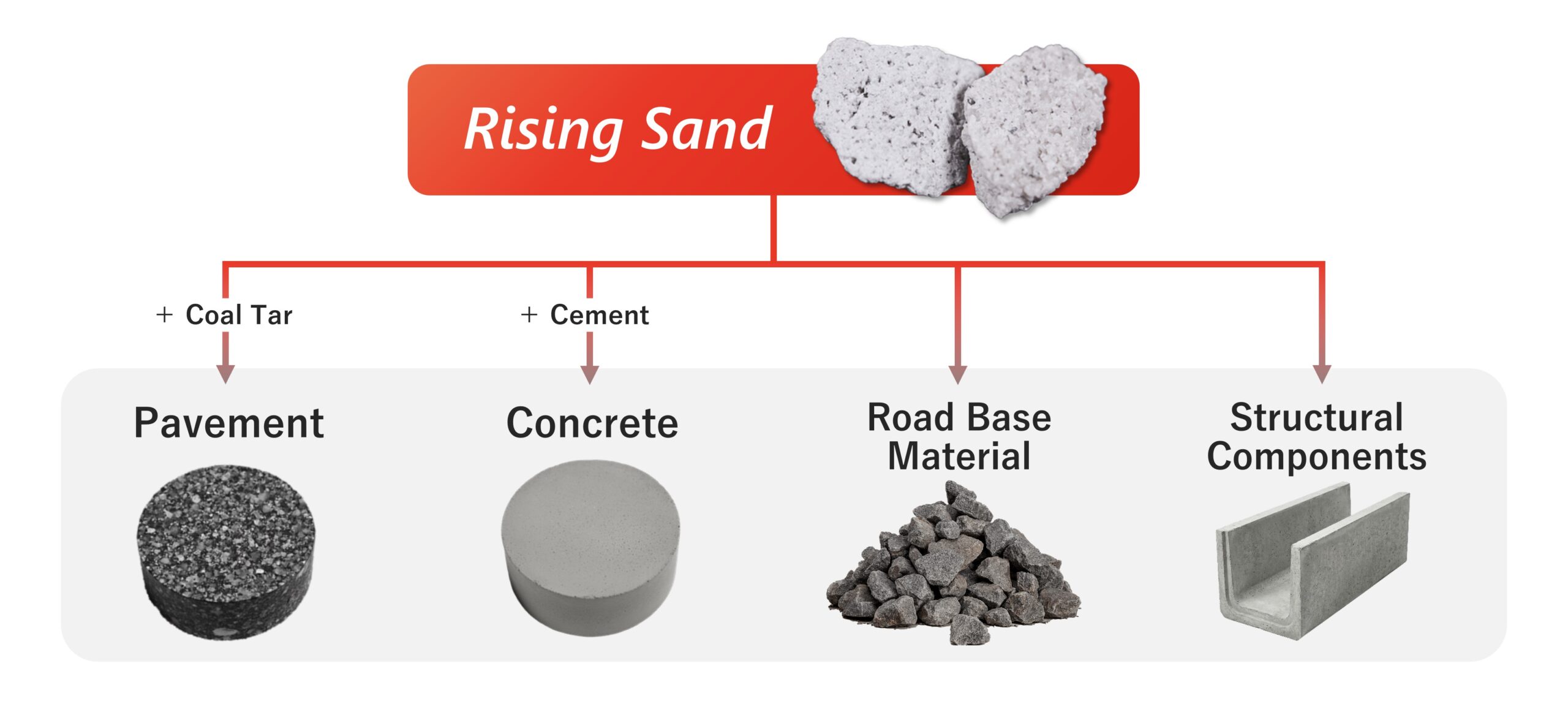
Honda Motor Co. has launched a new startup, PathAhead Co., Ltd., to commercialise a novel road construction material made from desert sand, with plans to build a production plant in Kenya by 2028.

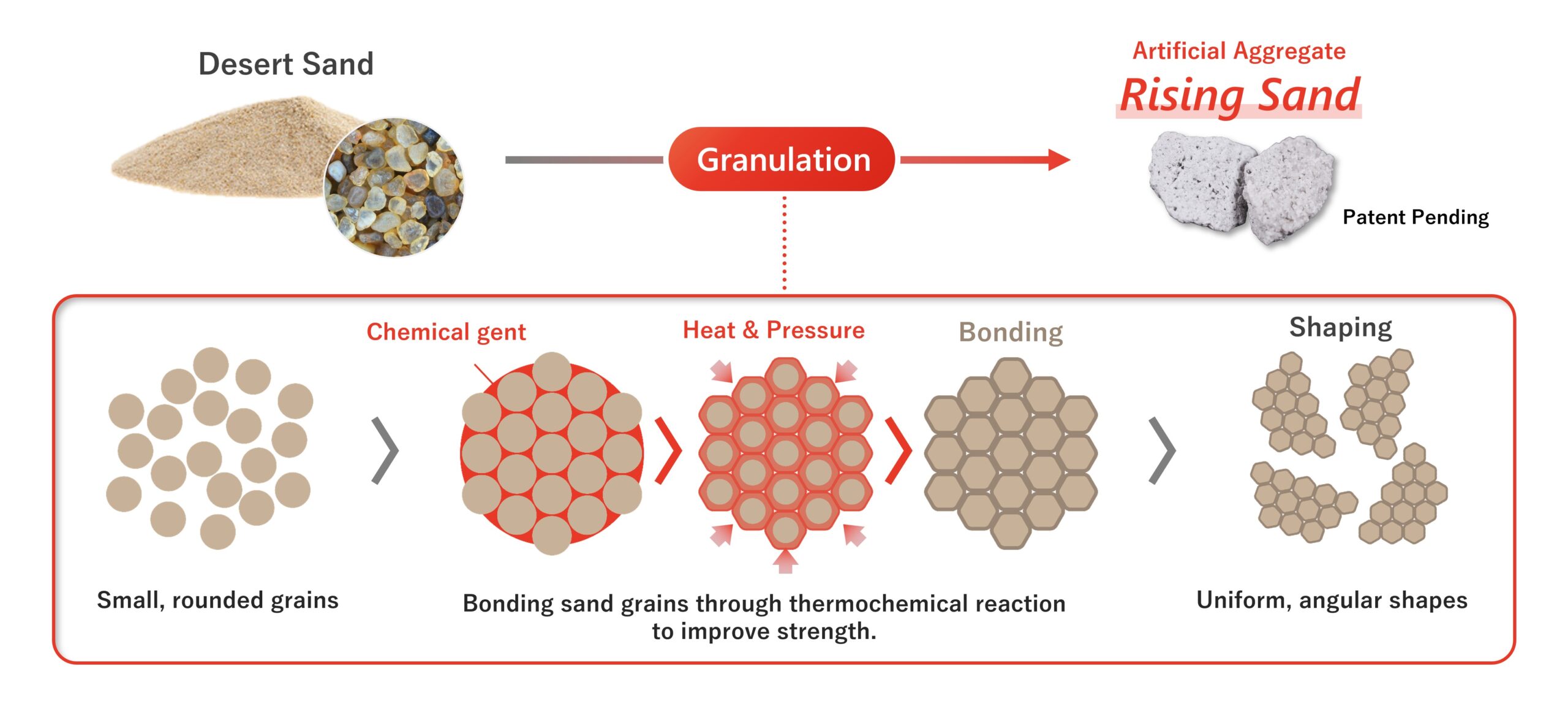
The venture, created under Honda’s IGNITION new business programme, has developed “Rising Sand,” an artificial aggregate designed to improve the durability and consistency of road-building materials.

PathAhead said it will begin demonstration testing in Kenya in 2027, before expanding trials to Tanzania and South Africa over a three-year period to assess performance under varying climate and traffic conditions.

The company aims to use the results to support large-scale production, starting with a Kenyan plant, followed by facilities in Tanzania and South Africa.

Africa’s road infrastructure gap remains a constraint on economic growth, with only about 20% of roads paved, according to PathAhead estimates. Existing roads also face rapid deterioration, driving up logistics costs.

Rising Sand is produced by granulating fine desert sand into larger, more uniform particles using a proprietary process. The material is expected to last more than 20 years in road applications, compared with roughly 10 years for conventional aggregates, potentially reducing lifecycle costs by about 60%, the company said.

By relying on locally available desert sand and additives, PathAhead expects to offer the material at costs comparable to traditional aggregates, while addressing concerns over the depletion of natural resources such as river sand and crushed stone.

Chief Executive Masayuki Iga said the company aims to tackle infrastructure challenges by improving road durability, adding that stronger transport networks could enhance access to services and economic opportunities.

Honda said it will continue to support the startup through its IGNITION programme, which backs new business ventures developed by employees and external partners.

Kenya Power Foundation Invests $11,600 in the 2026 Kenya Science and Engineering Fair

Kenya Power Foundation has committed 1.5 million Kenyan shillings ($11,600) to support the 2026 Kenya Science and Engineering Fair (KSEF), as part of efforts to promote science and technology education and nurture future innovators.

The week-long event, set to run from March 29 to April 5 in Garissa, will bring together more than 2,000 students competing across 24 categories under the theme “Sustainable Development for National Development.”

The utility’s charitable arm said the funding, channeled through its education and skills development programme, will be used to reward top participants with cash prizes, trophies and certificates, as well as support educational excursions.

“Kenya Power Foundation is coming in because one of our thematic areas is education and we are big on STEM,” said Kevin Sang, managing trustee of the foundation. He added that the investment aims to help build a pipeline of talent for the energy sector, which is critical to economic growth.

The fair, now in its 62nd edition, will feature both junior and senior school students, reflecting ongoing reforms in Kenya’s education system.

Margaret Njaggah, national chairperson of KSEF, said preparations for the event were complete and called for increased private sector support to strengthen science and innovation initiatives.

Kenya Power Foundation said the sponsorship aligns with its broader goal of supporting communities and advancing sustainable development, noting it has already backed more than 300 students and funded infrastructure improvements in over 60 schools nationwide.

African Development Bank Invests $8.1 Million in Breega Africa Seed Fund

0

The African Development Bank Group has approved an investment of about $8.1 million in the Breega Africa Seed I Fund to support early-stage technology startups across the continent.

The investment comprises $5.4 million in equity from the bank and a further $2.7 million junior tranche financed on behalf of the European Commission under the Boost Africa Initiative, which backs entrepreneurship in Africa.

The fund will target startups in sectors including fintech, insurtech, agritech, healthtech, logistics, education technology and climate technology, with a focus on expanding access to essential services such as healthcare, finance and education in underserved communities.

It will invest primarily in Nigeria, South Africa, Kenya, Egypt and Francophone Africa, key hubs for innovation and venture activity on the continent.

The African Development Bank said the investment aligns with its priorities of mobilising private capital, supporting job creation particularly for women and youth and strengthening climate resilience and sustainable value chains.

Breega, which manages around €700 million in assets, invests from pre-seed to Series A stages and provides operational support to portfolio companies. The firm, founded in 2015, has offices in Paris, London and Lagos and has backed more than 110 companies.

The African Development Bank (AfDB) also today announced an equity investment of up to $15 million in the Alterra Africa fund.

WeRide, Uber Launch Fully Driverless Robotaxis in Dubai


Chinese autonomous driving firm WeRide and ride-hailing giant Uber have launched fully driverless Robotaxi operations in Dubai, allowing passengers to book rides via the Uber app without a human operator on board.

The service initially covers the Jumeirah and Umm Suqeim districts, popular coastal tourist areas, under the oversight of Dubai’s Roads and Transport Authority (RTA). The move supports the emirate’s goal of having 25% of trips handled by autonomous vehicles by 2030.

The rollout follows a supervised trial that began in December 2025 and a driverless vehicle permit issued in February 2026. Local mobility operator Tawasul will manage WeRide’s fleet in Dubai, with plans to expand to commercial, industrial, and suburban areas including Dubai Silicon Oasis, Jabal Ali Industrial, Nad Al Sheba, and Al Hamriya Port.

“WeRide is committed to long-term operations in Dubai and will continue expanding our local fleet,” said Dr. Tony Han, WeRide founder and CEO. “This milestone reflects the combined strength of our technology, partners, and regulatory confidence.”

Sarfraz Maredia, Uber’s global head of autonomous mobility, said the launch marked a key step toward a “hybrid world” of human-driven and autonomous vehicles operating side by side.

Uber disclosed in filings this week that it owns about 5.82% of WeRide’s Class A shares, reflecting confidence in the company’s technological leadership and global commercialization strategy.

WeRide became the first UAE company to receive a national license for all types of self-driving vehicles in 2023. The firm aims to deploy at least 1,200 Robotaxis across Dubai, Abu Dhabi, and Riyadh by 2026 and currently operates more than 200 in the Middle East.

WeRide is publicly traded and has autonomous driving permits in eight markets, including China, UAE, Singapore, France, Switzerland, Saudi Arabia, Belgium, and the United States.

LOOP Unveils Easter Discounts, Targets Shoppers with Galaxy S26 Financing

0


LOOP, the fintech subsidiary of NCBA Group, has launched a range of Easter promotions, including a buy-now-pay-later offer for Samsung’s Galaxy S26, as it seeks to expand its lifestyle and digital commerce ecosystem.

Through its LOOP Discover platform, customers can access curated discounts across travel, dining, retail and entertainment, the company said on Tuesday.

As part of the campaign, customers can purchase the Samsung Galaxy S26 via LOOP FLEX, the firm’s instalment-based financing product, and receive either a Galaxy Watch 8 or Galaxy Buds 4 through participating dealers such as Ropem Telcom.

LOOP said the seasonal offers are aimed at enabling customers to “celebrate, travel, dine and shop with greater ease and value” during the Easter period.

Other promotions include discounts at restaurants and retailers such as Uncle Nene’s, Escape Room, Generation Techzone, Talanta Sports and Mandevu, alongside electronics deals through Hotpoint when payments are made using the LOOP app, card or FLEX.

The platform is also offering discounted access to events through MOOKH, including Muze Open Air on the Beach, Too Early For Birds: Wangari Maathai edition, Family BBQ Festival 2.0 and Gondwana KE.

The company said the initiative reflects its broader strategy to position LOOP as a digital lifestyle platform that integrates payments, credit and everyday consumer experiences building digital financial services spanning payments, lending, savings and embedded finance solutions across Africa.


Sophos Study Finds 95% of Organizations Have No Trust in Their Cybersecurity Vendors

Sophos, a global leader of innovative security solutions for defeating cyberattacks, today released findings from a global, vendor-agnostic study (based on responses from 5,000 organizations across 17 countries), examining one of cybersecurity’s most urgent and overlooked necessities: trust.
The Cybersecurity Trust Reality 2026 report is one of the most comprehensive studies of trust in cybersecurity and the impact on operational risk and board-level decision making. It reveals a critical challenge facing CISOs: Trust in cybersecurity vendors is fragile, difficult to measure, and increasingly shaping risk posture at both operational and board levels.
At a time of relentless cyber threats, heightened regulatory scrutiny, and accelerating AI adoption, trust has become a defining factor in cybersecurity decision-making. Yet new research reveals that nearly all organizations report lacking full confidence in their cybersecurity vendors, and many struggle to assess vendor trustworthiness in the first place.
The independent study found that:
  1.  95% of respondents said they do not have full trust in their cybersecurity vendors
  2.  79% struggle to assess the trustworthiness of new cybersecurity partners, and over six in ten (62%) even find it challenging for their existing vendors
  3.  More than half (51%) report increased anxiety about the likelihood of a significant cyber incident as a direct result of lack of trust
These findings underscore a critical reality: cybersecurity effectiveness cannot be measured by technological performance alone, but also by the confidence that organizations have in the partners defending their business. For CISOs, trust gaps create operational friction, slower decision-making, and higher vendor turnover.  Trusted cybersecurity partners reduce risk and build more resilient organizations.
“Trust is not an abstract concept in cybersecurity, it’s a measurable risk factor,” said Ross McKerchar, CISO at Sophos. “When organizations can’t independently verify a vendor’s security maturity, transparency, and incident handling practices, that uncertainty flows directly into boardrooms and security strategies.”
The survey identifies verifiable security artifacts, including independent assessments, certifications, and demonstrated operational maturity, as the single greatest driver of vendor trust. CISOs prioritize transparency during incidents and consistent technical performance, while boards and senior leadership place greater weight on independent validation, certifications, and analyst performance.
The common thread is clear. Organizations want transparency backed by evidence, not blanket assurances.
“With regulatory pressure increasing globally, organizations must be able to demonstrate due diligence in vendor selection especially where AI is involved,” said Phil Harris, Research Director, Governance, Risk and Compliance Solutions at IDC. “Trust is shifting from a marketing message to a defensible compliance requirement.”As artificial intelligence becomes embedded in cybersecurity tools, services, and workflows, organizations are not only evaluating whether security solutions are effective, but whether AI is deployed responsibly, transparently, and with appropriate governance. Trust is no longer optional. It is foundational.

“CISOs are being asked to prove trust, not assume it,” added McKerchar. “Cybersecurity providers must do the same. Respondents to the survey cited a lack of accessible, sufficiently detailed information as the primary barrier to making confident trust assessments. Trust must be earned continuously through transparency, accountability, and independent validation.”
These findings elevate trust from a brand attribute to a strategic imperative.
At Sophos, building and maintaining that trust is foundational. Through the company’s Trust Center, Sophos aims to help security leaders make faster, more defensible decisions in an increasingly hostile threat landscape.
Read the full research report here.

MTN Joins $45 Million Funding Round for AI Telecoms Startup ODC

MTN Group has joined a $45 million Series A funding round for U.S.-based AI radio access network (AI-RAN) firm ORAN Development Company (ODC), as the telecoms operator seeks to embed artificial intelligence into its network infrastructure.

The round includes participation from Nvidia, Nokia, Cisco, AT&T, Booz Allen Hamilton and Telecom Italia, reflecting growing industry interest in integrating AI capabilities into telecom networks.

AI-RAN technology shifts data processing from centralised data centres to the edge of the network, enabling workloads to be handled closer to users via cell towers. The approach is designed to reduce latency, lower bandwidth costs and support real-time applications.

ODC’s platform, built on Nvidia’s AI Aerial software stack, allows telecom operators to convert base stations into edge computing hubs capable of running AI models locally.

MTN, which operates in more than 15 African markets, said the investment aligns with its “Ambition 2030” strategy to expand digital infrastructure and develop new services beyond traditional connectivity.

Telecom networks are becoming more complex as the industry transitions toward 5G and future 6G systems, increasing the need for automated optimisation. AI-driven RAN systems can manage network performance, predict congestion and dynamically allocate resources.

MTN is also exploring the development of AI-enabled data centres in key markets including Nigeria and South Africa, as part of a broader push to combine centralised and edge computing capabilities.

The company said direct investment in ODC would allow it to help shape AI-RAN solutions for African operating environments, where power supply constraints and infrastructure variability remain key challenges.

Industry peers are making similar moves, with operators globally seeking to reposition themselves as providers of digital infrastructure and computing platforms rather than connectivity alone.

Analysts say AI-RAN could open new revenue streams for telecom companies by enabling them to offer edge computing services to enterprises, while also improving network efficiency and reducing operating costs.

However, adoption may be slowed by high initial investment requirements, integration challenges with legacy systems and a shortage of specialised skills.

The global edge computing market is expected to grow rapidly over the coming years, driven by rising demand for low-latency data processing and AI-powered applications.

African Development Bank Commits Up to $15 Million to Alterra Fund to Back High-Growth African Firms

The African Development Bank (AfDB) has approved an equity investment of up to $15 million in the Alterra Africa Accelerator Fund (AAA Fund), a private equity vehicle focused on scaling high-growth businesses across the continent.

The investment is expected to help mobilise additional institutional capital while strengthening the fund’s ability to provide long-term financing to mid-sized African companies with strong expansion potential. The AfDB said the move will support businesses driving innovation, regional expansion and job creation.

The AAA Fund targets high-growth enterprises across multiple sectors, including telecommunications, consumer goods, logistics, financial services and healthcare. It also incorporates gender and social inclusion commitments, with a focus on increasing women’s representation in leadership and expanding procurement from women-led businesses.

The bank said the investment aligns with its strategic priorities, including improving access to capital, supporting demographic growth and promoting climate-resilient infrastructure and value addition across key industries.

Alterra is an independent private equity platform formed from the spin-out of the Carlyle Africa team and bolstered by professionals from Emerging Capital Partners. Its management team brings over two decades of private equity experience in Africa, with a cumulative track record of more than $2.2 billion invested across the continent.

The fund aims to partner with high-potential African companies, supporting their growth through operational improvements, technology adoption and regional expansion, while embedding environmental, social and governance standards throughout the investment lifecycle.

Novastar Ventures Closes $147 Million Africa-focused Impact Fund

0

Novastar Ventures has closed a $147 million fund to invest in African startups addressing climate and social challenges, the venture capital firm said on Tuesday, highlighting growing global appetite for impact-driven investments on the continent.

The Africa People and Planet Fund III is about 40% larger than the $105 million Novastar raised for its second Africa fund in 2020, and will target companies from pre-Series A to Series B stages that have demonstrated early product–market fit and are ready to scale.

The fund will deploy initial investments of between $1 million and $8 million under a broader pan-African mandate, expanding beyond the firm’s traditional East and West Africa focus.

Backers include returning development finance institutions such as British International Investment, Norfund, Swedfund, Proparco and Spain’s COFIDES.

A cohort of Japanese institutional investors also participated, including SBI Holdings, Sumitomo Mitsui Banking Corporation (SMBC), Mitsubishi Corporation, Mitsui O.S.K. Lines, and the Japan International Cooperation Agency (JICA), signalling growing Asian interest in Africa’s startup ecosystem.

Novastar said it is building a “Japan–Africa bridge” to deepen partnerships and offer co-investment opportunities with Japanese institutions seeking both strategic alignment and commercial returns.

The fund has already invested in six startups, including food delivery platforms Chowdeck and Breadfast, e-mobility firms ARC Ride and Greenwheels, and agritech and renewable energy company Sistema.bio.

Novastar’s previous fund backed at least 11 companies across sectors including healthcare, education, housing, transportation, fintech and energy.

Co-founder Andrew Carruthers said the new fund builds on more than a decade of investing in mission-driven businesses, with a focus on delivering financial returns alongside measurable social and environmental impact.

The close underscores rising investor confidence in Africa’s venture capital market, particularly in sectors aligned with climate resilience and inclusive economic growth.

Safaricom’s Decode 4.0 Aims to Shape Kenya’s Next Phase of Digital Growth

0

Kenya’s ambition to strengthen its position as a regional technology hub took centre stage on Tuesday as Safaricom opened its three-day engineering summit, Decode 4.0, in Nairobi.

The summit, convened in partnership with Microsoft, Google, Dell Technologies and Huawei, brings together developers, innovators and global technology leaders to help shape the country’s next phase of digital growth.

Held under the theme “Made for Kenya,” the event highlights the country’s growing reputation for mobile-first innovation and inclusive digital ecosystems, while creating a platform for collaboration among key players driving that transformation.

More than 100,000 participants are expected to take part both physically and virtually, underscoring the scale and influence of Kenya’s expanding technology ecosystem and the rising demand for accessible digital solutions.

“The Kenyan people are known for their ingenuity, grit and hustle — constantly pushing boundaries and experimenting,” Safaricom Chief Executive Peter Ndegwa said at the opening. “Decode gives that energy a place to come alive. By bringing developers, creators and problem-solvers together, we are creating solutions that can scale across Africa and beyond.”

The summit features hands-on builder labs, code labs and mentorship programmes aimed at equipping participants with practical skills to develop and scale solutions addressing real-world challenges.

Sessions are focused on emerging technologies such as artificial intelligence, fintech and creative technology, which are increasingly seen as key drivers of Kenya’s next phase of economic transformation.

Safaricom said it will extend the impact of the summit beyond the three-day event through year-round initiatives, including regional “Decode Cafés,” ongoing code labs and mentorship programmes targeting developers and educators across the country.

Participants will also earn certificates and digital badges as part of efforts to build a stronger digital talent pipeline.

Decode is Safaricom’s flagship technology forum, aimed at accelerating innovation through partnerships and talent development.

OpenAI Raises $122 Billion at $852 Billion Valuation to Power Next Phase of AI Growth

0

OpenAI has secured $122 billion in fresh funding at a post-money valuation of $852 billion, marking one of the largest capital raises in the history of the technology sector as it accelerates efforts to scale artificial intelligence globally.

The funding round was backed by a consortium of major global investors, including Amazon, NVIDIA, SoftBank, and Microsoft, alongside institutional players such as BlackRock, Sequoia Capital, and Fidelity. SoftBank co-led the round with venture firm Andreessen Horowitz.

The company said the capital will be used to expand its computing infrastructure, advance research, and scale its consumer and enterprise products amid surging global demand for AI systems.

OpenAI, the developer of ChatGPT, reported rapid growth across both usage and revenue. The platform now has more than 900 million weekly active users and over 50 million paying subscribers. Revenue has climbed to approximately $2 billion per month, with enterprise customers accounting for more than 40% of total income.

The company said its latest model, GPT-5.4, is driving increased adoption across enterprise workflows, while its Codex coding agent now serves more than 2 million weekly users. API usage has also surged, processing over 15 billion tokens per minute.

OpenAI highlighted compute capacity as a central pillar of its strategy, noting that access to large-scale infrastructure enables more advanced models while lowering the cost of delivering AI services. The company has expanded partnerships across cloud providers including Microsoft, Oracle, Amazon Web Services, and Google Cloud, while continuing to rely heavily on NVIDIA GPUs.

The firm is also diversifying its hardware base, working with AMD, Cerebras, and developing its own chip in collaboration with Broadcom.

In addition, OpenAI expanded its revolving credit facility to $4.7 billion, supported by major global banks including JPMorgan, Goldman Sachs, and HSBC, although the facility remains undrawn.

The company said it is building a unified “AI superapp” that integrates ChatGPT, browsing, coding, and agent-based tools into a single platform, aiming to simplify how users interact with AI across personal and professional tasks.

OpenAI said its rapid growth places it ahead of early trajectories seen in major internet and mobile companies, adding that AI adoption is increasingly driving productivity gains and reshaping business operations globally.

The company also opened part of the funding round to individual investors through bank channels, raising over $3 billion, and announced plans to be included in exchange-traded funds managed by ARK Invest.

“Moments like this do not come often,” the company said, describing the investment wave as foundational to building the infrastructure layer for the AI-driven economy.

Samsung Unveils KES 68,300 Galaxy A57 5G & KES 49,000 Galaxy A37 5G with AI Features

Samsung Electronics on Tuesday launched its latest mid-range smartphones, the Galaxy A57 5G and Galaxy A37 5G, as it pushes to expand artificial intelligence features and premium capabilities to a broader base of users at more affordable price points.

The new Galaxy A series devices introduce enhanced “Awesome Intelligence,” Samsung’s suite of AI-powered tools, alongside upgrades in camera performance, processing power and durability. The move underscores the company’s strategy to democratize AI across its smartphone lineup beyond flagship devices.

“The new Galaxy A series reflects our continued commitment to AI democratization by bringing the latest innovations to more Galaxy users,” said Evelyn Munene, Head of Product and Marketing, Mobile eXperience (MX) Division at Samsung Electronics East Africa.

The devices run on Samsung’s One UI 8.5 and include features such as voice transcription within the Voice Recorder app, AI-powered content selection, and improved photo editing tools like Object Eraser. The Galaxy A57 5G also introduces “Best Face” for optimized group photos and Auto Trim for video editing.

Both models feature a triple-camera system anchored by a 50-megapixel main sensor, with improved low-light photography capabilities branded as Nightography. Samsung said the A57 5G offers enhanced image processing and faster shutter speeds for clearer shots in challenging conditions.

The company is also integrating deeper AI functionality through its upgraded Bixby assistant and Google’s Gemini, enabling more natural voice commands and cross-app task execution.

In terms of performance, the Galaxy A57 5G comes with upgraded CPU, GPU and neural processing capabilities, alongside a 5,000mAh battery that Samsung says can last up to two days. The device also supports fast charging and improved heat management for sustained usage.

Both phones are rated IP68 for water and dust resistance and feature Super AMOLED displays with slimmer bezels for improved viewing experiences.

Samsung is offering up to six generations of Android OS and One UI upgrades, along with six years of security updates, positioning the devices as long-term options in the competitive mid-range segment.

In Kenya, the Galaxy A57 5G is priced at KES 68,300 for the 8GB/256GB variant and KES 60,900 for the 8GB/128GB model. The Galaxy A37 5G will retail at KES 60,200 for the 8GB/256GB version and KES 49,000 for the 6GB/128GB option. The devices are available through Samsung Experience Stores and authorized dealers nationwide.

Samsung did not disclose sales targets but said the new lineup is aimed at strengthening its presence in emerging markets, where demand for feature-rich yet affordable smartphones continues to grow.

Uber to Invest $260 Million in South Africa to Expand Electric Mobility & Food Delivery Services

Uber Technologies plans to invest 5 billion rand ($260 million) in South Africa over the next three years, the ride-hailing company said on Tuesday, as it seeks to expand electric mobility and food delivery services despite tightening regulations in one of its largest African markets.

The investment, announced at the South Africa Investment Conference in Johannesburg, will support the rollout of electric vehicles (EVs), charging infrastructure, and growth in Uber Eats, including expansion into township economies.

Uber said the figure includes a combination of new investment and previously committed capital expenditure.

The announcement comes as the company faces regulatory uncertainty after missing a March 11 deadline to secure an operating licence under amendments to South Africa’s National Land Transport Act.

The updated rules require e-hailing platforms to obtain licences, while drivers must hold individual permits and meet stricter vehicle standards. Non-compliance can result in fines of up to 100,000 rand or imprisonment.

Rival Bolt has already secured the necessary approvals.

“We continue to see long-term opportunity in South Africa,” said Deepesh Thomas, Uber’s general manager for Sub-Saharan Africa, adding that the company is engaging regulators as it adapts to the new framework.

A significant portion of the investment will go toward scaling Uber’s electric vehicle offering. The company currently operates more than 120 EVs in Johannesburg and plans to expand the fleet as demand grows.

Uber’s push into EVs aligns with its global target to become a zero-emission platform in key markets by 2030, though adoption in South Africa remains constrained by limited charging infrastructure and policy uncertainty.

The regulatory changes are also prompting a review of Uber’s business model. The company is considering simplifying its service offerings, including a potential phase-out of its UberX category in Gauteng later this year, according to industry reports.

South Africa is a key market for Uber in Africa, with thousands of drivers relying on the platform for income. The sector has seen increasing competition from rivals such as Bolt and inDrive, alongside growing pressure from regulators to improve safety, formalise the gig economy and ensure fair competition with traditional taxi operators.

Uber said part of its investment would support small businesses through Uber Eats by providing digital tools, logistics support and access to online marketplaces, particularly in underserved areas.

The company’s expansion plans come as South Africa seeks to attract investment and boost economic growth, with unemployment remaining above 30%.


What Users Expect From a Modern Trading App in Kenya

0

The Kenyan financial landscape has evolved far beyond basic mobile payments into a more complex, digital-first asset economy. For you as a modern investor, a trading app is no longer just a gateway to markets; it has become a core tool for managing and growing your wealth.

You don’t need to visit a physical brokerage or wait until you’re at a desktop to act. In early 2026, the local market is defined by speed, accessibility and security that align with global standards.

Efficiency is now the baseline. As you explore your options, the difference between a helpful platform and a frustrating one often comes down to a few key features that directly impact your financial decisions.

Seamless Local Currency Integration

Seamless Local Currency Integration

Your experience starts with how easily you can move money in and out. In a country where mobile money is deeply embedded in daily life, friction in this process quickly becomes a dealbreaker. With mobile money penetration reported at 93% by September 2025, any gap between your wallet and your trading account is immediately apparent.

You should expect platforms to support direct M-Pesa or local bank transfers without forcing you through costly third-party conversions. When that connection is smooth, you’re in a position to act quickly instead of watching opportunities pass by.

Reliability matters just as much as speed. Many users find that choosing the best trading app in Kenya comes down to how fast withdrawals are processed in Kenyan Shillings. A platform that handles near-instant transactions removes the frustration of waiting days for international wire transfers or losing value due to poor exchange rates.

Institutional-Grade Technical Tools

Getting access to the market is only the starting point. What really shapes your outcomes is the quality of the tools you have at your fingertips. Your phone should function like a professional workstation, not a stripped-down version of one.

Data from the Capital Markets Authority (CMA) Quarterly Statistical Bulletin for Q3 2025 shows a clear rise in retail participation across asset classes. This growth is closely tied to traders’ use of technical indicators and real-time data to guide their decisions.

The shift is noticeable. Trading is becoming less about instinct and more about structured analysis. You’re expected to work with live data, layered indicators and tools that help you spot patterns you wouldn’t otherwise see.

To keep up, your platform should include:

  • Interactive charts with a wide range of indicators, such as Bollinger Bands and Fibonacci levels
  • Real-time price alerts that respond instantly to market conditions
  • Multi-timeframe views so you can compare short-term movements with long-term trends
  • Custom watchlists that combine global indices with local stocks
  • Advanced order types like trailing stop losses and OCO orders for automated risk management

These aren’t extras anymore. They’re part of the standard toolkit if you want to operate with precision.

Access to Diverse Global Markets

Access to Diverse Global Markets

While the Nairobi Securities Exchange (NSE) remains central, your strategy likely extends beyond it. The NSE recorded a strong 2025, with total revenue surpassing KSh 1 billion, but many traders are increasingly looking outward to balance local exposure.

A well-designed app lets you access global equities, commodities and indices from a single interface. This kind of access simplifies everything. Instead of juggling multiple platforms, you can see your entire portfolio in one place.

That broader view helps you manage risk more effectively. You’re not tied to one market or one economic environment, which makes your portfolio more resilient when local conditions shift.

Transparent Regulatory Frameworks

When you’re trusting a platform with your money, security isn’t optional; it’s the foundation. The CMA’s updated regulations in 2025 were designed to improve stability and better protect retail traders and you should expect full compliance from any platform you use.

It’s worth taking the time to verify licensing and ensure the platform meets current capital requirements. This isn’t just about ticking a box; it’s about knowing your funds are handled responsibly.

Transparency in fees is another key signal. You should always be able to see exactly what you’re paying, whether that’s spreads, commissions or overnight charges. If that information is unclear or difficult to find, it raises questions about accountability.

Performance and Execution Speed

In fast-moving markets, timing is everything. Even a small delay can change the outcome of a trade. During the first full week of 2026, NSE turnover reached KSh 3.50 billion, highlighting just how active the market has become.

With that level of activity, your app needs to keep up. A strong backend system should handle large volumes of orders without lag, crashes or delays. When volatility increases, execution speed becomes even more critical. You want your trades to go through exactly when you intend them to, without slippage affecting your results.

At the same time, usability plays a major role. A clear, responsive interface helps you stay focused. You should be able to see your positions, margin and available funds instantly, without digging through menus.

When everything works together, fast execution, clean design and powerful tools, you’re not just reacting to the market. You’re operating with control and clarity, turning complex data into decisions you can act on with confidence.

Uber, Bolt South Africa Drivers Demand Fare Hikes Amid Fuel Cost Surge

Uber and Bolt drivers in South Africa are calling for higher fares and reduced commission fees, citing mounting pressure from rising global fuel prices.

The demands were made by the National e-hailing Federation of South Africa (NEFSA), whose members staged app shutdowns in parts of KwaZulu-Natal over concerns including earnings, safety and platform policies.

NEFSA spokesperson Tella Makasale said drivers want a transparent pricing system that automatically adjusts fares in line with fuel price movements, alongside temporary commission cuts during periods of high operating costs.

“Our key demands include a transparent fare adjustment model linked to fuel price fluctuations, reduced commission percentages during high fuel cost periods, inclusion of driver representatives in pricing discussions, and protections against extreme cost volatility,” he said.

Drivers argue that while platforms occasionally introduce fare changes through surge pricing or limited adjustments, these are driven by algorithms and demand rather than reflecting sustained increases in fuel costs. These follows similar taxi driver strikes in Nigeria and Kenya.

Fuel is one of the largest expenses for drivers, and recent price increases have sharply eroded profit margins, forcing many to work longer hours to maintain income levels. Makasale said this has led to declining take-home pay, rising debt—particularly among drivers financing vehicles—and growing dissatisfaction with commission structures.

The federation warned that the situation risks triggering a broader industry fallout, including driver attrition, longer passenger wait times and increased likelihood of protests.

NEFSA said it has previously engaged both companies through protests, shutdowns and formal requests for fare reviews, but described progress as slow and lacking transparency.

“The rising cost of fuel is not just an economic issue. It is a livelihood crisis,” Makasale said. “If fuel prices rise, fares must respond — or the system will fail the people who keep it running.”

Sun King to Invest $150 Million in Ethiopia Solar Expansion

Sun King plans to invest up to $150 million in Ethiopia by 2030, targeting two million households and businesses as it expands into one of Africa’s least electrified markets.

The investment follows a memorandum of understanding with the Ethiopian Investment Commission, under which Sun King will establish a local subsidiary while authorities support licensing and regulatory approvals.

The move is part of the company’s broader $1.3 billion Africa expansion strategy through the end of the decade, driven by rising demand for off-grid energy solutions.

Despite having significant generation capacity, including power from the Grand Ethiopian Renaissance Dam, large parts of Ethiopia remain without reliable grid access, particularly in rural areas where extending transmission infrastructure is costly.

Sun King aims to fill this gap with distributed solar systems such as home kits and mini-grids, which are faster and cheaper to deploy.

The expansion comes amid broader efforts to improve electricity access across Africa, including the Mission 300 initiative backed by the World Bank and the African Development Bank, which targets connecting 300 million people by 2030.

Founded in 2007 as Greenlight Planet, Sun King operates in 14 African countries, offering pay-as-you-go solar products that allow low-income households to pay in instalments.

Africa remains the largest growth market for off-grid solar, with nearly 600 million people still lacking access to electricity, positioning Ethiopia as one of the last major untapped opportunities on the continent.

IFC Backs IPT PowerTech to Expand Solar Telecom Power Across Three African Markets

The International Finance Corporation (IFC) said on Monday it has invested in telecom energy firm IPT PowerTech to expand clean and reliable power for mobile networks in Ethiopia, Liberia and Sierra Leone.

The financing is aimed at improving power stability at telecom towers, many of which operate in off-grid or weak-grid areas, helping to reduce outages and improve mobile connectivity for households, schools, health facilities and businesses.

Under the project, IPT PowerTech will modernize, operate and maintain 2,235 telecom sites across the three countries, with solar and battery systems replacing diesel generators in most locations. IFC said more than 90% of the sites are in off-grid or weak-grid environments.

The transition to renewable-backed systems is expected to lower operating costs for telecom operators by up to 52% in Ethiopia, 30% in Liberia and 26% in Sierra Leone, while cutting emissions by more than 10,600 tonnes of CO₂ equivalent annually, according to IFC.

“Reliable and affordable power for telecom networks is a cornerstone of Africa’s digital transformation,” said Nathalie Kouassi-Akon, IFC Division Director for West Africa Gulf of Guinea.

IPT PowerTech chief executive Nabil Haddad said the partnership would help scale the company’s energy platforms and support the rollout of greener telecom infrastructure.

IFC said the $45 million financing package includes an A-loan and blended finance support from programs including the Canada–IFC Blended Climate Finance Program and the IDA20 Private Sector Window. It marks IFC’s return to direct infrastructure investment in Liberia in a decade and in Sierra Leone in six years.

The initiative also aligns with broader development efforts by the World Bank Group and the African Development Bank to expand electricity access across Africa, as well as digital economy strategies targeting underserved markets.

Mastercard, Scale Partner to Streamline Card Issuance in Five African Markets

0

Mastercard has partnered with South African fintech startup Scale to launch a unified card issuing platform across five African markets, aiming to simplify and speed up the rollout of payment card programs.

The initiative will initially cover Kenya, Senegal, Ivory Coast, Zambia and Zimbabwe, addressing longstanding operational hurdles that fintechs and non-financial companies face when launching card products.

Card issuance in many African markets has traditionally been complex and fragmented, requiring coordination with multiple stakeholders such as issuing banks, payment networks, BIN sponsors and regulators, often leading to high costs and long deployment timelines.

Under the partnership, Scale will provide core issuing technology, including customer onboarding, compliance systems and card program management, while Mastercard will contribute its global payments infrastructure and financial institution network.

The companies said the platform offers a single integration model that reduces complexity and allows businesses including fintechs, telecom firms and retailers to launch card programs without building extensive issuing capabilities.

“This collaboration removes key barriers for innovators looking to enter and scale in the card issuing space,” said Miranda Naidoo, co-founder and chief executive of Scale.

Mete Guney, executive vice president at Mastercard, said simplifying the issuing process would help expand access to digital financial services across the continent.

The partners said the platform is designed to adapt to varying market conditions. In Kenya, where digital payments are relatively advanced, the focus will be on accelerating time-to-market and enabling product innovation. In markets such as Senegal and Zambia, where card usage is still developing, the platform is expected to support use cases such as mobile wallet-linked cards, corporate expense cards and government payout solutions.

The announcement comes shortly after Scale raised $700,000 to support its expansion in Africa.

Africa’s financial services sector is projected to reach $230 billion in revenue by 2025, driven by increasing digitisation and smartphone adoption. Modern issuing platforms are also expected to account for a growing share of global card issuance in the coming years.

The companies said they will need to navigate differing regulatory frameworks and banking systems across the five markets as they scale the platform.

The partnership could help accelerate digital payments adoption and broaden financial inclusion across the continent if successfully implemented.

Hamilton Labs Secures AXIAN Backing to Expand Digital Dollar Access in Africa

Hamilton Labs has secured an undisclosed strategic investment from AXIAN Investment to accelerate the rollout of its dollar-pegged stablecoin across Africa, the companies said.

The funding will support the integration of Hamilton’s USDh stablecoin into fintech platforms, targeting consumers and businesses seeking access to dollar-denominated savings in markets where local currencies are often volatile.

The investment marks AXIAN Investment’s second bet on stablecoin infrastructure, underscoring growing investor interest in blockchain-based financial rails in emerging markets.

“For millions of people in Africa, access to stable dollars and reliable savings tools remains limited,” said Mo Kasstawi, co-founder and chief executive of Hamilton Labs. “We believe programmable dollars like USDh can expand access to global financial infrastructure and help people protect and grow their savings regardless of where they live.”

Hamilton’s USDh is a permissionless stablecoin pegged one-to-one with the U.S. dollar and designed to be fully redeemable. The company says the product connects users in emerging markets to sovereign yield opportunities typically available only to institutional investors, within a global sovereign debt market estimated at more than $100 trillion.

AXIAN Investment, the venture arm of AXIAN Group, said the deal aligns with its strategy of backing digital financial solutions that can broaden access to financial services.

“We believe digital asset currencies remain a key lever to support financial inclusion in Africa and beyond,” said Hassane Muhieddine, chief executive of AXIAN’s Financial Services cluster.

AXIAN Investment has backed 33 startups and participated in 38 investment funds, positioning itself as an active investor in Africa’s growing fintech ecosystem.

Inside NCBA’s Ubuntu Strategy: Banking on Belief to Drive 2026–2030 Growth

0

NCBA Group has unveiled its 2026–2030 Ubuntu strategy, a roadmap designed to strengthen its market position while exploring new avenues for growth. Building on six years of solid performance, the strategy introduces a refreshed organizational purpose: Banking on Belief – Empowering Ambitions. This purpose reflects NCBA’s conviction that belief in people, ideas, and possibilities can serve as a powerful catalyst for progress.

The strategy comes as NCBA reported robust financial results for the fiscal year 2025. The bank posted a net profit of KSh 18.7 billion, up 12% from KSh 16.7 billion in 2024, driven by growth across its corporate, SME, and retail segments. Total assets increased to KSh 780 billion, while customer deposits rose 10% to KSh 620 billion, reflecting continued confidence in the bank’s offerings.

NCBA aims to fortify its core operations by ensuring reliable services, leveraging data as a driver of growth, optimizing product management, and enhancing its corporate banking proposition. The bank is simultaneously accelerating high-potential segments, including Wealth, Consumer, SME, and Insurance, by sharpening customer propositions and deepening engagement.

Expansion into new markets and sectors is also central to the Ubuntu strategy, positioning NCBA for further growth and diversification. Equally, the bank is transforming its operating model to foster a more empowered, purpose-driven culture—a “FutureReady Ubuntu” that aligns employees, partners, and customers with long-term ambitions.

Through this integrated approach, NCBA positions itself not only as a resilient financial institution but as a forward-looking group ready to meet evolving client needs and drive sustainable growth across East Africa.


Nedbank Acquisition of NCBA Presents a Significant Opportunity – MD

0

NCBA Managing Director John Gachora said the proposed acquisition of a 66% stake in Kenya-based NCBA by South Africa’s Nedbank presents a “significant opportunity” to accelerate the bank’s strategic ambitions.

Gachora said the deal is expected to deliver value for shareholders by improving prospects for sustainable returns, unlocking liquidity, diversifying risk beyond East Africa, and strengthening NCBA’s capital position for regional expansion.

NCBA reported a strong financial performance for the year ended 2025, with net profit after tax of KES 12.3 billion, up 8% from the previous year, and total assets of KES 720 billion, reflecting steady growth across its retail and corporate banking segments. Earnings per share rose to KES 4.50, supported by increased lending and improved operational efficiency.

Customers are expected to benefit from enhanced product offerings and Nedbank’s international servicing and distribution capabilities in London, the Isle of Man, Jersey, and Dubai, along with access to larger-ticket funding for corporate and individual clients.

Commenting on the development, NCBA MD said: “We are proud of the progress we have made, excited about the Ubuntu strategy, and confident that the Nedbank transaction will accelerate our ambitions. I want to thank our customers, colleagues, shareholders, regulators, and partners for their continued trust as we deliver on our priorities and shape the next chapter of our organization.”

The acquisition highlights growing interest from international banks in East Africa, as institutions seek to expand their footprint in the region’s dynamic financial sector.


Samsung Unveils Galaxy A57 5G and Galaxy A37 5G

Samsung Electronics on Thursday unveiled two new mid-range smartphones, the Galaxy A57 5G and Galaxy A37 5G, as it seeks to bring advanced artificial intelligence features to a broader base of users while strengthening its position in the competitive mid-tier market.

The devices, part of Samsung’s popular Galaxy A series, introduce enhanced “Awesome Intelligence” capabilities powered by the company’s latest One UI 8.5 software based on Android 16. The move reflects a wider industry push to integrate AI tools beyond flagship devices and into more affordable models.

Samsung said the new phones include features such as voice transcription, AI-assisted photo editing, and improved on-device search functions. Users can convert voice recordings into text, remove unwanted objects from photos, and search multiple items within images simultaneously.

The Galaxy A57 5G, positioned as the more premium of the two, offers upgraded processing performance and enhanced camera capabilities, including improved image processing and faster shutter speeds. Both models feature a 50-megapixel main camera and upgraded low-light photography performance.

The company is also emphasizing longevity, offering up to six generations of operating system upgrades and six years of security updates — a notable extension for mid-range devices and a strategy aimed at increasing device lifespan and customer retention.

Both smartphones come with 6.7-inch AMOLED displays with refresh rates of up to 120Hz and are powered by 5,000mAh batteries designed to last up to two days under typical usage. The A57 supports faster charging and includes a larger cooling system to sustain performance during intensive tasks such as gaming or video recording.

Samsung has also incorporated IP68-rated water and dust resistance, along with its Knox security platform, as consumers increasingly prioritize durability and data protection.

The launch comes as global smartphone makers intensify competition in the mid-range segment, particularly in emerging markets where price sensitivity remains high but demand for premium-like features continues to grow.

The Galaxy A57 5G and Galaxy A37 5G will be available starting April 10 in select markets. Pricing details were not disclosed.


Key Specs

  Galaxy A57 5G Galaxy A37 5G
Display 6.7” FHD + Measured diagonally, the screen size is 6.7″ in the full rectangle and 6.6″ accounting for the rounded corners. 6.7” FHD + Measured diagonally, the screen size is 6.7″ in the full rectangle and 6.5″ accounting for the rounded corners.
Super AMOLED + Display
Up to 120Hz refresh rate
Vision Booster
Super AMOLED Display
Up to 120Hz refresh rate
Vision Booster
Dimensions & Weight 161.5 x 76.8 x 6.9mm, 179g 162.9 x 78.2 x 7.4mm, 196g
Camera 12MP Ultra-Wide Camera
• F2.2
50MP Wide Camera
• F1.8
5MP Macro Camera
• F2.4
12MP Front Camera
• F2.2
8MP Ultra-Wide Camera
• F2.2
50MP Wide Camera
• F1.8
5MP Macro Camera
• F2.4
12MP Front Camera
• F2.2
Memory & Storage 8+128 GB
8+256 GB
12+256 GB
12+512 GB
6+128 GB
8+128 GB
8+256 GB
12+256 GB
Battery 5000mAh (typical)
4,905mAh.
OS Android 16
One UI 8.5
Security Samsung Knox
Water & Dust Resistance   IP68


BFA Global, FSD Africa Back East Africa Climate Startups with $273,000 Follow-on Funding

0

BFA Global and FSD Africa said on Thursday they will provide $273,000 in follow-on funding and venture-building support to four early-stage climate startups in East Africa, aiming to help them scale operations and attract investment.

The funding targets alumni of the Triggering Exponential Climate Action (TECA) programme, which supports climate-focused businesses from concept to commercial readiness. The selected firms operate in sectors including clean energy, waste-to-energy, cold storage and food systems.

The recipients are Africa Renewables Katalyst, which links renewable energy developers to global certificate markets; Plas-tech Energies, which converts plastic waste into cooking gas; Samaking, a solar-powered cold chain and fish distribution platform; and Sunwave, which provides solar-powered ice production and storage for fishers.

The companies will receive both capital and technical assistance, including operational support, business model refinement and preparation for raising external investment.

“Early-stage climate ventures face a critical funding cliff just as they are ready to grow,” said Tyler Ferdinand, director of the TECA programme at BFA Global.

Early-stage climate investment has tightened in recent years. A report by Sightline Climate found deal volumes fell about 20% in 2025 to a five-year low, as investors concentrated funding in fewer, more mature companies.

FSD Africa said the initiative aligns with its strategy to expand financing for small and growing businesses tackling climate risks. The agency, backed by the UK government, aims to mobilise £10 billion between 2025 and 2030, including £2 billion for climate adaptation projects.

4G Capital Secures $2 Million Investment from GIF Growth to Expand East Africa Lending

0


4G Capital said on Friday it has secured a $2 million investment from Global Innovation Fund’s growth-stage vehicle, GIF Growth, to expand lending to small businesses across East Africa.

The Kenya-based fintech, which provides loans and business training to micro and small enterprises (MSEs), said the funding will support the scaling of its hybrid “touch-tech” model combining digital lending with in-person support.

MSEs account for more than 80% of employment in East Africa but remain largely excluded from formal credit systems due to limited financial records.

Founded in 2013, 4G Capital said it has disbursed more than $800 million in loans to over 755,000 customers in Kenya and Uganda. The company has issued 6.8 million loans and expects to surpass $1 billion in cumulative lending later this year.

GIF Growth, which provides debt financing to early growth-stage businesses in Africa and Asia, counts development finance institutions backed by the United States, United Kingdom and Canada among its funders, alongside corporate partners including Unilever.

“This investment provides us with the right kind of capital to scale our model sustainably,” said 4G Capital founder and executive chairman Wayne Hennessy-Barrett.

The company said the funds will also be used to strengthen its digital infrastructure and partnerships as it seeks to expand financial inclusion among underserved entrepreneurs, particularly women and youth.

4G Capital added it is considering a Series D funding round to support further digital expansion.

The firm said it has generated more than $3 billion in economic impact to date.

NCBA Mobilizes KES 9.5 Billion in Green and Sustainable Financing Under “Change The Story” Strategy


In 2023, NCBA Group launched its ambitious “Change The Story” Sustainability Strategy, setting 15 targets to be achieved by 2030. The strategy aims to combine environmental stewardship, social impact, and economic empowerment across Kenya and the broader East African region.

Since its launch, the Group has reported significant milestones: mobilizing KES 9.5 billion in green and sustainable financing, planting over 1.3 million trees, empowering 70,536 women and youth in the creative economy through skills training and mentorship, and recycling 83.6% of waste in select offices. Staff engagement has been strong, with over 3,000 employees participating in the “I Change The Story” training program, while 6 EV charging stations have been installed across the region to support clean mobility.

NCBA has also strengthened inclusivity in procurement, onboarding an average of 20% of its supply chain from women- and youth-led businesses, supported 30,000+ participants in golf and cycling initiatives, and deployed KES 100 million annually towards community engagements. To date, the strategy has positively impacted 1.2 million livelihoods.

Nurturing Golf and Sporting Talent
The bank is marking five years of golf partnerships aimed at growing the sport, monetizing player talent, and building stronger community connections. Collaborating with the Junior Golf Foundation, Kenya Golf Union, and Professional Golfers of Kenya, NCBA has invested over KES 200 million, engaged more than 10,000 golfers annually, and supported over 400 tournaments. Emerging stars, including Njoroge Kibugu, now an NCBA contracted ambassador, have benefited from scholarships and international exposure, building a robust pipeline for professional golf careers.

Powering the Creative Economy
NCBA has also cemented its role in Kenya’s creative sector, strategically partnering with the ELEV8 Live music platform to empower young creatives. Through tailored mentorship programs and financial products developed with the HEVA Fund, artists and creative entrepreneurs have gained the tools to generate income, finance their work, and scale their enterprises.

The “Change The Story” strategy reflects NCBA’s commitment to sustainable growth, community engagement, and creating pathways for a more inclusive economy in Kenya and the wider region.

How Digital Became the Backbone of Customer Experience at NCBA

0


To many banks, digital banking is just a convenience way to serve their customers. But for  NCBA, digital innovation is the bank’s core strategy and is transforming its everyday service provision.

And the numbers don’t lie. According to the bank’s full year 2025 financial results, over 90% of NCBA’s transactions are now conducted through digital channels, marking a decisive shift away from traditional branch-based banking.

NCBA Group disbursed KES 1.4 trillion, 33 per cent up year on year via digital platforms and its digital business now contributes 32 per cent of Group profitability reaching Profit Before Tax of KES 9.0 billion. The Group’s investments in upgrading digital platforms, enhancing data capabilities and collaboration with telco partners have paid off, positioning
NCBA as the undoubted regional leader in digital financial services.

Flagship platforms such as the NCBA Mobile App and NCBA Connect (internet banking) continue to anchor this ecosystem, enabling customers to manage their finances anytime, anywhere.

Through M-Shwari and Fuliza, delivered in partnership with Safaricom, the bank has reached over 30 million customers, disbursing hundreds of billions of shillings in mobile loans annually. These platforms have become essential financial tools, providing instant access to credit, savings, and liquidity for millions of users.

For small and medium-sized enterprises (SMEs), digital banking is transforming how businesses operate. Today, over 80% of SME transactions in key segments are processed digitally, supported by seamless integration with M-Pesa, EFT, RTGS, and card payment systems. This enables business owners to receive payments, pay suppliers, monitor cash flow, and access financing in real time.

Consider a Nairobi-based entrepreneur running a growing retail business. Using NCBA’s digital platforms, they can reconcile accounts instantly, track incoming payments, and access short-term credit or asset finance solutions digitally, with turnaround times reduced from days to near-instant. This efficiency allows them to focus less on processes and more on growth.

For individual customers, the experience is equally transformative. From bill payments and fund transfers to expense tracking and loan management, NCBA’s platforms offer a simple, intuitive interface. The Loop app continues to attract a younger, digitally native audience, expanding the bank’s reach and redefining lifestyle banking.

Security remains a cornerstone of this digital growth. NCBA continues to invest in advanced cybersecurity infrastructure, including multi-factor authentication, real-time fraud monitoring, and transaction alerts. These measures ensure that as convenience increases, customer trust and protection remain uncompromised.

Beyond convenience, digital banking is driving financial inclusion at scale. Mobile-first solutions like M-Shwari and Fuliza have brought millions of previously underserved customers into the formal financial system, supporting savings culture and access to emergency credit across Kenya and the wider region.

The impact extends beyond transactions. With real-time visibility and control over their finances, customers are empowered to make smarter decisions, manage risk, and plan for the future with greater confidence.

NCBA continues to invest in platform enhancements, deeper ecosystem integrations, and data-driven innovation. As digital adoption accelerates, the bank remains focused on delivering a frictionless, secure, and customer-centric banking experience and for it, digital is not just a channel but the backbone of how customers experience financial services every day.

Kenya Says New USB‑C Port Rule Not Against Low-cost Devices

0

Kenya’s communications regulator said newly introduced requirements for mobile devices will not ban low-cost phones or force consumers to discard those already in use, seeking to reassure the public amid growing concern.

Earlier, Kenyan communincations regulator Communications Authority of Kenya (CA) had issued an immediate ban on the import and sale of mobile phones and tablets that lack USB Type‑C charging ports, move that could disrupt supply chains and push up costs for low‑income consumers.

However, in a new notice, the authority has clarified that devices already approved and either shipped or awaiting shipment into the country will not be affected by the updated rules. It added that all mobile phones must receive type approval before importation, a standard requirement that remains unchanged.

The regulator emphasized that the updated framework is based on technical specifications used to assess new applications for type approval, and therefore does not require a transitional period.

“For avoidance of doubt, the notice does not ban the use, importation or sale of affordable mobile phones,” it said. “It also does not require consumers to discard devices currently in use, nor does it target any specific category of users or income group.”

The authority said it remains committed to protecting consumer interests, including access to high-quality information and communications technology products and services, while aligning with global technological developments and best practices.

NCBA Posts 7% Profit Growth to KES 23.4B, Raises Dividend by 30%

0

NCBA Group Plc reported a 7% rise in full-year profit on Thursday, boosted by strong digital lending growth and higher operating income, while raising its dividend payout by 30%.

The Kenyan lender posted a net profit of 23.4 billion shillings for the year ended December 2025, up from 21.9 billion shillings a year earlier. Profit before tax rose 10.9% to 27.9 billion shillings.

Total dividend payout increased to 11.7 billion shillings from 9.1 billion previously, with shareholders set to receive 7.10 shillings per share.

Operating income climbed 17% to 73.3 billion shillings, while operating expenses rose at the same rate to 37.5 billion shillings. Provisions for credit losses jumped 46.3% to 8.0 billion shillings.

Digital lending remained a key growth driver, with disbursements rising 33% to 1.4 trillion shillings over the year. Customer deposits increased 6% to 532 billion shillings, while total assets grew 8% to 716 billion shillings.

“The 2025 outcomes are a great milestone to close out our 2020–2025 strategy,” Group Managing Director John Gachora said, citing improved diversification and resilience.

NCBA said its Kenyan banking unit remained the main profit engine, contributing 82% of profit before tax, while regional subsidiaries and non-banking units posted steady gains.

The group also unveiled its 2026–2030 “Ubuntu” strategy, which will focus on strengthening core operations, scaling high-growth segments such as retail, SME and insurance, and expanding into new markets.

It added that a proposed acquisition by South Africa’s Nedbank of a 66% stake in the lender could accelerate growth by improving access to capital, diversifying risk and expanding international reach.

NCBA said the combination of its new strategy and the potential deal positions it for sustained long-term growth.

Cascador Appoints Former ARM Labs, Techstars Exec Oyin Solebo as COO

0

Africa-focused entrepreneurship platform Cascador has appointed Oyin Solebo as chief operating officer, the company said on Thursday, as it moves to strengthen its operational capacity and scale high-growth ventures across the continent.

Solebo, an investor and ecosystem builder, previously held leadership roles with ARM Labs and Techstars, where she worked with startups across multiple sectors, supporting their growth and investment readiness.

Her appointment marks a shift for Cascador toward building the systems and infrastructure needed to help companies move from early traction to sustainable scale.

“Oyin is a force multiplier,” said Trish Thomas, chief executive of Cascador. “As we expand our focus from developing founders to scaling companies, her operational expertise will be instrumental in helping us deliver on that vision.”

Cascador’s model centres on backing founders capable of translating training and capital into long-term economic and social impact, particularly through its ScaleUp Programme, which targets growth-stage businesses.

“In Africa, we don’t have a shortage of founders; we have a shortage of companies that successfully scale,” Solebo said. “The difference lies in systems, discipline and the ability to deploy capital effectively.”

In her new role, Solebo will focus on strengthening Cascador’s operational infrastructure, including programme delivery, alumni support and platform development, aimed at helping founders transition from learning to execution and from execution to scale.

A key priority will be advancing Cascador’s ScaleUp Programme and its Catalytic Fund, which deploys between $2 million and $5 million annually into selected high-performing ventures.

Dave DeLucia, founder of Cascador, said the appointment would strengthen the organisation’s ability to convert support and capital into “scaled, enduring businesses.”

Cascador said it has supported more than 70 entrepreneurs since 2019, whose companies have collectively raised over $125 million and created nearly 40,000 jobs in 2025 alone.

Solebo said the organisation aims to position itself as a long-term scaling partner for entrepreneurs. “We are building more than a programme. We are building a platform,” she said.

Cascador’s move comes as investors increasingly focus on Africa’s startup ecosystem, where improving execution and access to capital remain key to unlocking growth at scale.