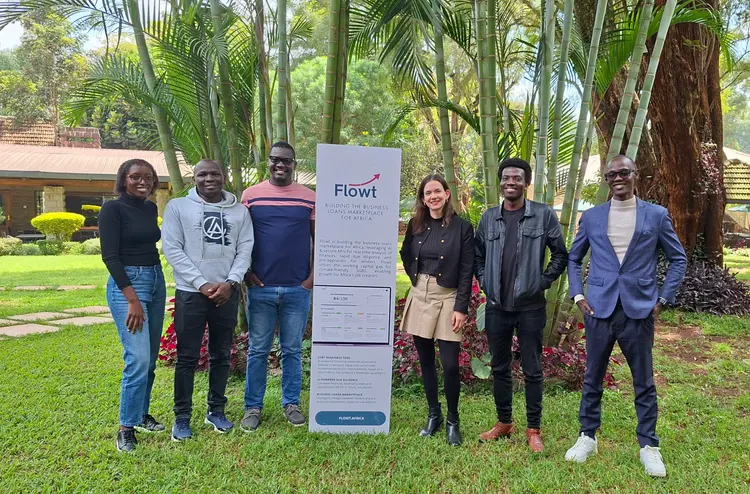
Flowt, a Nairobi-based financial technology startup has raised pre-seed funding to expand access to working capital for Africa’s climate-focused small businesses.
Founded by Elana Laichena, Flowt raised the pre-seed round from Delta40 Fund I, Impacc and Argidius Foundation and has issued its first working capital facility to GreenBay, a Kenyan refurbished and pre-owned appliances and solar home systems firm.
“Funders in Africa have three bad options when they look at a small business. Ask for collateral it does not have. Spend six months on due diligence, which makes a small loan uneconomical. Or assume the worst, price for it, and charge an interest rate the business cannot afford,” Laichena, Flowt’s founder and chief executive, said.
“Flowt lends against verified transaction history, which makes working capital both fast and affordable,” she said.
Flowt uses artificial intelligence to analyze financial information from bank accounts, mobile-money records and accounting systems, allowing lenders to assess businesses using transaction history rather than traditional collateral and plans to use the funding to expand its lending operations in Kenya and develop a financial data assessment platform for lenders and investors.
Flowt is entering a field served by platforms such as Pezesha, Pngme, Numida, Float, TradeDepot, Kuunda, Kwara and 4G Capital among others. These companies operate across financial-data infrastructure, alternative credit scoring, SME lending, embedded finance and working-capital financing.
However, the market is big as many businesses fail to raise capital as they don’t meet criteria needed by microfinance institutions and commercial banks, leaving them dependent on expensive or limited sources of capital.
According to the African Development Bank, SMEs contribute over 40 percent of GDP in many African countries and employ nearly 80 percent of the continent’s workforce yet only about 20 percent of SMEs in Africa have access to formal financing, leaving a massive funding shortfall of about $330 billion every year.
Flowt therefore argues that a lack of standardized and reliable financial information is one of the main reasons lenders struggle to serve the segment. Flowt provides its financial health assessment through a platform that allows businesses to upload bank and M-Pesa statements or connect accounting platforms including QuickBooks, Zoho and Odoo.
The company provides short-term loans through Choice Bank, a microfinance bank regulated by Kenya’s central bank. Flowt said it aims to reach a loan book of $1 million by the end of 2026 as it extends financing to more climate-smart businesses. The company also plans to generate revenue from software subscriptions for businesses and financial intelligence tools for investors and lenders. It said its longer-term goal is to build a financial data layer covering African climate-focused small and medium-sized businesses.
“A lender that only lends has to raise capital forever in order to grow,” Laichena said. “The data we build to underwrite a loan is worth something to the business that generated it, and worth something again to the investor trying to find that business.”
The funding comes as investment in African climate technology has grown rapidly. Flowt said climate technology attracted more than $1.5 billion in African venture funding in 2025, making it the continent’s largest venture funding category among disclosed investments.
For investors, however, smaller climate businesses can remain difficult to finance because the cost of assessing relatively small transactions can outweigh the potential returns.
Flowt was incubated by Delta40 Venture Studio, where Laichena previously served as managing director for Kenya. She has also worked at Open Capital and previously founded a business that converted sugarcane waste into an alternative fuel product. Delta40 is providing venture-building support, while Impacc and Argidius Foundation support its techmdevelopment and pilot lending.
“Africa’s climate SMEs are generating real revenue, creating jobs, and delivering measurable climate impact. They are not unbankable. They are underdocumented,” said Lyndsay Holley-Handler, founder and managing partner at Delta40.
Flowt said its current fundraising remains open as it prepares to expand its lending portfolio. It’s objective is not to replace commercial banks but to make businesses sufficiently transparent and measurable to eventually access conventional financing. Flowt aims to help firms establish a verified financial record before graduating to larger lenders and banks.