
back to top
Saturday, March 14, 2026
spot_imgspot_imgspot_imgspot_img
Home Blog Page 867

Somali’s Dahabshiil To Fast-Track Interconnectivity Across The Country

0

logo3Somali’s Dahabshiil, an international funds transfer is on the forefront of spreading tech and innovations in the country in a move to nurture growth and development.

Speaking at oxford University, Abdirashid Duale the firm’s CEO, pointed out the need to focus on the growing take-up of information and communication technologies (ICTs) among Somalis, and to discuss how innovation in those industries can nurture growth and development.

Duale is drumming up support for interconnectivity in the Somali territories’ burgeoning telecoms sector.
During his talk, titled “ICTs, Innovation and Regulation in the Somali Territories”, MrDuale pointed to the remarkable expansion of the Somali telecoms sector and stressed the need for further interconnection between networks.

Telecoms has been one of the Somali economy’s major growth areas since the collapse of central government in 1991, with many companies emerging to fill the void left by the single state-owned provider that had previously served the market. Thanks to a combination of strong demand and light regulation the new operators thrived. Stiff competition between them has resulted in telecoms services that are among the cheapest and most reliable in the region.
Dahabshiil, the Somali territories’ largest private employer and one of Africa’s leading remittance businesses, entered the telecoms sector with the acquisition of Somtel, a dynamic, fast-growing firm specialising in advanced mobile technology. The move was representative of a broad regional trend of money transfer companies – alert to the synergies between the two industries – becoming increasingly involved in mobile.

As the number of providers grew, so too did the need for an interconnectivity agreement between them. Calls between networks were impossible and it was common for a Somali mobile user to have four or five different SIM cards. In a government-brokered deal, a handful of companies began to open their networks up to competitors’ customers, beginning a process of integration that has made it easier for Somalis to keep in touch.

Commenting on the need to build on this progress, MrDuale said: “While important steps have been taken there is still much to do to tie the sector together for the benefit of consumers.
“The wider rewards are there for the taking. There are more than two million mobile subscriptions in the Somali territories and ordinary people are now enjoying the advantages of being connected with each other and with the outside world.”

“The spread of telecoms has been hugely empowering: enabling businesspeople, investors and aid workers to do more with existing resources. From traders checking market prices to doctors giving remote consultation, the penetration of mobile and internet services has had an extremely positive impact on Somali life.”

The manner of the Somali telecoms boom is in many ways characteristic of the way the territories have lived on their wits for the last 22 years. Innovative, freewheeling commerce has flourished in the absence of regulation – fuelling development and raising living standards. Livestock, money transfer, energy and construction have all seen astonishing growth thanks in part to inflows of financial and human capital from the diaspora. As the political and security situation in Mogadishu continues to improve, tech-savvy entrepreneurs are returning – bringing their skills and knowledge with them.

MrDuale concluded: “It is this entrepreneurial flair that has sustained the Somali people through many challenges.
“Good governance is needed for us to reach the next phase of economic maturity, and the need for agreement on mobile networks is a clear example of where regulation and regulators have a role to play. But in the interests of retaining that innovative, pioneering spirit it is vital that we refrain from overregulation.
He hopes that as the region continues to stabilise, the way will be open for a policy environment that complements rather than stifles business growth, and harnesses it for the benefit of ordinary Somalis.

Intel Education Initiative Equiping Schools In Namibia To Empower Africa

0
image:nation.sc
image:nation.sc

The Intel Education Service Corps (IESC) is a short-term service and career development opportunity for a select group of Intel employees to support the deployment of Intel classmate PCs in developing countries.
The organization works closely with non-governmental organizations (NGOs) in developing countries to deploy technology solutions based on Intel® Learning Series purpose-built platforms. The NGOs include CARE, Save the Children, World Vision, and many others.
Namibia is one of the African countries that has embarked on an exciting initiative to equip schools with education technology based on the Intel Learning Series. Intel is collaborating with the Ministry of Education to support two “model schools” in the Oshana and Omusati regions of Namibia.
The primary objectives of the initiative is to inspire educators on the effective use of technology for Namibia’s primary and secondary schools, and to create a blueprint for the technical environment required to deploy and sustain the use of Intel Learning Series solutions in Namibia’s schools.
The team has taught 45 teachers and administrators how to use a variety of educational software, content, and resources such as Khan Academy, internet search, email, YouTube, Facebook, Skype, and Microsoft Office, with a focus on developing and delivering effective lesson plans. They were also introduced to the Intel Learning Series classroom management software that allows teachers to share content with students.
IESC Team Namibia optimized 35 Intel classmate PCs and a teacher laptop at each school and enhanced them by adding a number of education software packages. The team ensured the proper configuration of internet connectivity to the school, the wireless local network and the classroom server to allow for the smooth functioning of all elements of the solution. With the documentingof their work, the team’s efforts will be shared with the other schools in the deployment to maximize the effectiveness of the technology.
According to the team, the teachers showed high interest and particular enthusiasm for instruction on email and social networking tools as well as Microsoft PowerPoint for its capability as a story telling medium. Before IESC Team Namibia left, a number of teachers expressed how technology helps them feel more connected to the rest of the world.
The Intel team that includes both teachers and administrators says it’s honored and humbled to represent Intel and help expand the use of Intel Learning Series solutions in Namibia and they target reaching more than 1,200 learners at the Ondjora and Oshikulufitu Combined schools.
Intel is indeed making impact around the globe, and since 2009 to date, more than 160 Intel volunteers have deployed over 1,200 classmate PCs in 11 countries , including Bangladesh, Bolivia, Ecuador, Egypt, Haiti, India, Kenya, Senegal, Uganda, Vietnam, and Zambia. Theteams initiative to train teachers and students to effectively use technology cannot thus be over emphasized.

Airtel Kenya Introduces Innovative Road Safety Initiative

1
nation.co.ke
nation.co.ke

Airtel Kenya recently launched a road safety initiative that is meant to encourage safe driving on Kenyan roads especially by public service vehicles in a move to reduce road accidents on Kenyan roads.

The company is partnering with Frotcom East Africa and 2NK SACCO, one of Kenya’s leading transport SACCO and will target 550 public service vehicles plying the Nyeri – Nairobi route.
The system which is being fitted by Frotcom East Africa Ltd and Airtel Kenya will allow the management to track all vehicles within the country.

According to Airtel Kenya managing director Mr. Shivan Bhargava ,Airtel believes that business is not an end in itself but rather a means to helping the society achieve more, and that Airtel has a special role in helping Kenyans accomplish more in their daily lives.

He added that, “This initiative will help to reduce road accidents on Kenyan roads whose significant direct cost in lives lost, social and economic implications cannot be ignored. He further said that this new product and partnership will contribute to the much needed preservation of lives by reducing the speeds and improving the safety of passengers in the vehicles, thereby reducing the risk of road accidents that threaten the lives of the thousands of Kenyan commuters including children using the roads on a daily basis, not only on public transport but in general.
The system will enable geo-tracking of the more than 550 vehicles in the SACCO’s fleet as well as relay messages of speed limit violation to the SACCO management. It will also track fuel consumption in their vehicles and give alerts when a vehicle diverts from its intended route The system will help in managing misuse and any possible criminal cases such as incidences of carjacking or vehicle theft

Estimated financial benefits show that the SACCO members could save up to Kshs40 million annually by sealing revenue leakage loopholes with the use of this product.Sacco members will gain access to data enabled devices (handsets) with Airtel numbers that they can pay for through monthly installments. These devices will enable them to make unlimited calls on Airtel using the closed user group rates within the SACCO group members anywhere in Kenya and access the Internet easily through the devices on Airtel’s data network.
The partnership allows passengers pay fares through Airtel Money and direct transfer of cash from the Airtel Money pay points in the matatu directly to the owners thereby reducing the risk associated with handling cash.

According to the 2NK SACCO chairman, James Kahiro, the SACCO is embracing the new system to help reduce accidents on Kenyan roads and enable them to manage the vehicles professionally. He added that, “ICT is the way to go in business today and we want to do this to further enforce compliance to traffic rules and not evasion.” The 2NK chair has urged other transport SACCO’s in the country to follow suit and acquire similar management systems.

BlackBerry 10 Bets On New Multimedia Storefront

0
Image:bgr.com
Image:bgr.com

BlackBerry  recently announced an updated  BlackBerry® World™ storefront (formally BlackBerry App World™)  before the new BlackBerry 10 smartphones in a move that will give the smartphone users one of the most robust music and video catalogs in mobile today.

The  BlackBerry® World™ storefront will include an extensive catalog of songs as well as movies and TV shows, with most movies coming to the store the same day they are released on DVD.  The competitive offering will feature content from all major studios, music labels and top local broadcast networks. Customers will be able to preview tracks and access the content using multiple payment options.

According to Frank Boulben, Chief Marketing Officer at Research In Motion, music and video content are an integral part of a rich mobile experience and he further explains that people want easy and convenient access to their favorite music, movies and TV shows wherever they are .
The video download and rental section in BlackBerry World will initially be available in the US, UK and Canada. Varying by region and distributor, customers will have access to movies from the following studios and independents: 20th Century Fox, Entertainment One (eOne), Lionsgate, MGM, National Film Board of Canada, Paramount Pictures, Sony Pictures Home Entertainment (US), Starz Digital Media, STUDIOCANAL, The Walt Disney Studios, Universal Pictures (UK), Warner Bros. Customers will also have access to TV shows from the following broadcasters and studios: ABC Studios, BBC Worldwide, CBC/Radio-Canada, CBS, DHX Media, ITV, National Geographic, NBCUniversal (UK), Nelvana, Sony Pictures Home Entertainment (US), Starz Digital Media, Twentieth Century Fox Television, Univision Communications Inc, and Warner Bros.

The BlackBerry World storefront’s DRM-free music download section will feature an extensive catalog from all major and independent labels including: 4AD Records, Domino Recording Company, finetunes, Matador Records, [PIAS] Entertainment Group, Rough Trade Records, Sony Music Entertainment, The Orchard, Universal Music Group, Warner Music Group, XL Recordings and Zebralution. The music section will initially be available in 18 countries: Canada, USA, UK, Argentina, Brazil, Columbia, Mexico, France, Germany, Italy, Netherlands, South Africa, Spain, Australia, India, Malaysia, New Zealand and Singapore.

Uganda’s Quest To Safeguard Mobile Users

0
pctechmag.com
pctechmag.com

In a bid to curb fraudsters in Uganda’s mobile industry, the country’s telcos regulator, Uganda Communications Commission (UCC) has announced plans to introduce a new law to regulate advertising using short text messaging services and mobile money business.

The move by UCC is set to ‘restore sanity’ andimprove the quality of services that mobile telephone companies have added onto their mobile platforms and have turned into a safe haven for fraudsters to fleece the unsuspecting public.

Mr Godfrey Mutabazi, the UCC Executive Director saysthat the most common form of theft by the mobile telephone operators has been loss of mobile money, dropped telephone calls, free airtime promotions, SMS promotions where the public is asked to vote through certain codes, unsolicited messaging services where the public loses money by replying text messages to certain numbers as well as unexplained airtime deductions. He singled out Orange Telecom as the only mobile operator which has tried to stick to prudent business by protecting its customers.
To protect the mobile users, UCC is partnering with Bank of Uganda to set up laws on mobile commerce as well as make amendments to the 1997 Uganda Mobile Communications Act which is lacking in the prosecution of fraudsters.

Though the prices of internet have considerably dropped in the last two years, its quality has been compromised by such unprofessional activities by the telephone operators and users are discouraged from free airtime promotions because it congests the network.


Africa Keen To Host Social Media Week

0


Image:Social Media Week

Lagos to host Social Media Week, a worldwide event that is powered by Nokia.The event is truly historic and will be happening here in Africa for the very first time since its launch. The event will take place from 18-22 February 2013, with the unifying global theme: Open & Connected: Principles for a Collaborative World.

Social Media Week is a global platform that connects people, content, and conversation around emerging trends in social and mobile media. It brings together hundreds of thousands of people every year through learning experiences that aim to advance understanding of social media’s role in society. It’s apparent that Africa can no longer be by passed as a hub of innovation.

Nigeria, an epicenter of business, art and technology for the African continent is excited to become part of the global conversation. With over 100 million mobile phone subscribers, it boasts of the highest number of internet users in Africa and ranks 10th globally.  Lagos looks forward to the invaluable opportunity to examine the economic, social, and cultural impact of social media for Africa. Attendees can expect a wealth of insight on topics ranging from mobile app development for agricultural communities to the prevalence and importance of social media in the government sector

Other host cities for the February event include Copenhagen, Doha, Hamburg, Miami, Milan, New York, Paris, Singapore, Tokyo, and Washington DC. In 2012, over 66 000 people from 26 countries around the world attended the event.

SMW  is partnering with Channel O Africa, a leading Urban music channel.

Kenyans Denying Themselves Food To Buy Airtime

0
Image:Nokia.com
Image:Nokia.com

A recent study reveals that many Kenyans in the lowest socio-economic strata go without food and transport or opt for cheaper alternatives to save money to purchase mobile phone credit.

The interesting study reveals that many people regardless of their socio-economic levels rely on the mobile phone technology for both personal and professional needs.

The study which was carried out by iHub Research and Research Solutions Africa and commissioned by the World Bank, Sought to explore mobile phone usage among prepaid Kenyan mobile subscribers making less than $2.50 per day.
It’s startling that one out of five people interviewed for the report chose to forgo necessities like food or transport to purchase mobile phone credit. Some would eat cheaper food, such as rice and vegetables, instead of meat so they could buy credit. For instance, one respondent explains that she sells mangoes and thus uses her phone to take orders from her customers. Just like her, Susan Wacera who sells jewelry in a nearby market stall often walks to work instead of using public transport.

Findings from the research suggest that mobile phones provide support to small-scale businesses, increasing their income levels as they are cited as a factor for increased business income among the target group.
This findings corroborate with the latest statistics report published by the Communications Commission of Kenya (CCK)for the July to September 2012 quarter that the country’s mobile penetration rate grew to 77.2% (from 75% in the previous quarter) on a mobile subscriber base of 30.4 million active SIM cards.
CCK also reveals that 99% of the 30.4 million active sim card users are prepaid subscribers with a 71.2 to 76.7 Minutes of Use (MoU) per subscriber per month representing a growth of 7.7% with SMS messages sent in the period increasing by 10.1 percent to reach 1 billion.
Indeed Mobile telephony is no longer just a mode of communication but a means to life and sustainability.

OLPC Introduces New Products For Child Centric Learning

0

oliverIn a bid to create learning experiences that unleash a child’s creativity, One Laptop per Child Association(OLPCA), a not for profit organisation based in Miami, has introduced new educational products to foster child centric learning.

One Laptop per Child(OLPC)is an internationally recognized project supported by Miami based, One Laptop Per Child Association.The association seeks to provide modern education to children through a modern device.

The Association is driven by the desire to prepare children to be full citizens of the emerging world and the best preparation is to develop the passion for learning and the ability to learn how to learn.

Recently the organization introduced three new products: XO Learning System, an Android Compatible software suite for child centric learning. This product is available by license to computer manufactures, governments, NGO’s and content providers for instance book Publishers. Other products include XO Tablet and a fourth generation iconic green and white laptop with both a keyboard and a multi-touch screen using Neonode Technology.

The organization works together with like minded Nonprofit Organizations to offer support to parents and teachers and help them make informed decisions about Media .Common Sense Media for instance offers more than 18 000 media ratings and reviews based on both robust educational research and child development guidelines.XO Learning also offers a full range of parental controls and user IDS for up to three children,a dashboard where the child or parent can review usage,types of content and the skills the child is developing.The device switches from English to Spanish and additional languages will be available in future releases.

In addition to helping to curate the XO Learning content, Common Sense Media has also provided Digital Passport™ an interactive learning environment designed for students in grades 3-5 to teach them how to safely navigate a technology-enhanced world, to the XO Learning platform. Digital Passport™ is already available in classrooms via OLPCA XO laptops in the U.S. and internationally.
“OLPCA and Common Sense Media share the same vision of a world in which all kids have access to the limitless learning opportunities that technology provides,” said Amy Guggenheim Shenkan, president and COO, Common Sense Media. “By using ratings and reviews from Common Sense Media to inform XO Learning, OLPCA has created a product that will point kids towards the highest quality digital media products available, and will go a long way to ensure our kids are well-prepared to grow, thrive, and succeed in the 21st century.”

A clear manifest of their desire can be traced in Kenya at Imani Primary School where 6 LPCS were purchased through the Give-One-Get-One (G1G1)programme and at Asilong Primary School in West Pokot where 100 solar powered XO laptops were deployed.These programmes are replicated in a dozen other countries.

Look out for more OLPC ventures as it prepares to launch more products to empower children.

Developing Story: Mocality Kenya & Mocality Nigeria To Be Shut Down By SA’s MIH Internet Africa

0

Mocality Kenya and Nigeria to shut down soon.

SA’s MIH Internet Africa  is cleaning its closest. Last year it shut down its Kalahari shops in several countries.

Today reports have emerged that it’s shutting down its business directory sites dubbed  Mocality with a presence in Kenya and Nigeria.

Naspers Ltd., through its subsidiary MIH Internet Africa, is shutting down operations of its digital business directory and daily deals platform, Mocality, in both Kenya and Nigeria. The closure, effective February 28, 2013, marks the end of one of Africa’s more ambitious early attempts to digitize small and medium-sized business listings on the continent.

Founded in 2009, Mocality had built a database of more than 100,000 businesses in Kenya alone and later expanded to Nigeria. The service also included Mocality Deals, a Groupon-style daily deals product that was meant to drive consumer traffic and monetization.

Despite growing user numbers, monetization remained elusive.

“We were not able to build a profitable business on top of the traffic and data we amassed,” said Mocality CEO Neil Schwartzman, citing slower-than-expected revenue growth and high operating costs.

The company said all existing advertisers with contracts extending beyond the shutdown date will receive full refunds. Digital coupons already purchased by users will remain valid until they expire or are redeemed. Business owners using the directory have been advised to back up any data before access is terminated.

Cautionary Signal

Mocality’s closure serves as a warning for digital entrepreneurs in emerging markets: user growth and data alone may not be enough to build a viable business. While Mocality offered its core directory service for free to encourage adoption, this made generating sustainable revenue more difficult, particularly in markets where online ad spending is still developing.

The move also reflects a broader strategy shift by Naspers, one of Africa’s largest tech investors, as it increasingly prioritizes ventures with more immediate monetization potential.

Regional Impact

Mocality’s exit will affect thousands of small businesses in Nairobi and Lagos that relied on the platform for visibility. The company’s early promise had attracted attention for its mobile-first approach and aggressive user acquisition tactics, which included crowdsourcing listings and offering cash rewards to contributors.

While Mocality’s shutdown ends one chapter in Africa’s digital startup story, it also underscores the importance of revenue resilience in markets where infrastructure, payment systems, and digital maturity are still evolving.

Samsung TV Becomes Better With A New Smarter Interface

0

Image:mobileworldmag.com

Samsung recently introduced the largest ultra-high definition TV, at 106”, a new F8000 flagship set and a new interface. This replaces the conventional ‘electronic programme guide’, or channel list, with five screens that make internet connectivity central to the idea of television and will be the first thing users see when they turn on their Samsung TV.

The new Smart Hub ‘On TV

Users will not need to dig through the hundreds of channels and that personalized TV recommendation even analyzes how viewing habits change throughout the day.
The new Smart Hub ‘On TV’, will include programs playing  as well as personalized suggestions for each viewer; separate home screens, which users will swipe to with either gesture or remote control, will then cover on-demand movies and TV, photos, video and music from users’ own collections and then also social features and Smart TV apps.

Other new features announced included the use of more natural language to control TV. In a demonstration, a user asked his TV, “Anything good on today?” Other options included asking “Is there Premiere League on today?” Options could be chosen by saying , for instance, “Select the first one”.

Samsung beat its counterparts in the market

Samsung beat its counterparts in the market because of its wider range of content availability, including a focus on regional and ethnic film and TV, as well as its more closely connected products. It also demonstrated, for instance, a connected refrigerator that can download apps and connect to a smart phone.

The company also introduced five intuitive panels help consumers manage and navigate different types of content, which are displayed as thumbnail images for the first time so it’s even easier to select and watch the content on the big screen. With a light hand gesture (flipping), you can discover five totally different experiences in Smart Hub, as if you have five new TV sets.”

Tanzania Reveal Plans To Cut Taxes On Mobile Phones

1

schoolnet.lk
schoolnet.lk

Tanzania government has revealed plans to cut sales tax (VAT) on mobile phones and computers. The move is intended to boost Tanzania’s communication sector as well as the economy.

Prof John Nkoma, The director General of Tanzania Regulatory Authority (TCRA) while addressing a press conference said “we are planning to reduce taxes on mobile phones handsets and computers to allow the public easily purchase them since the majority relies on their mobile phones and computers to conduct their businesses.

Mobile subscribers across East African region are highly taxed

A report by GSMA in 2009 shows that mobile subscribers across East African region are highly taxed as compared to their counterparts in other parts of the world. For instance Uganda and Tanzania impose mobile-specific taxes which when added to VAT may result to consumers paying taxes as high as 30%.

The government of Kenya cut the 16 % general tax on mobile handsets

In the year 2009, the government of Kenya cut the 16 % general tax on mobile handsets increasing purchases by more than 200% and the mobile industry generated 8% of Kenya’s GDP.
The Director added that TV broadcasters need to speed up their migration to digital broadcast services to enable the regulator to resell the digital dividend spectrum to the mobile networks.

MCash Serving Uganda’s Unbanked

0

mcash

MCash a mobile banking technology launched in Uganda in July 2012.Its an all-inclusive account targeting the Ugandan market. The technology bank partners with local banks through a joint venture with the intention to provide financial solution and bridge the gap between the people and the financial services.

The Technology is a bank card model provided by the Housing Finance Bank and regulated by the Bank of Uganda. To ensure that the services are secure various multilevel of authentication are employed. For instance customers not only can access their accounts using their phones, but also with their finger print or an NFC provided card. The modern technology in the card allows two levels of security for authentication. Unlike normal credit or debit card, which only ask customers for their pin,” we ask for the pin and we also confirm the customer’s presence during the transaction by using biometric tools, such as finger prints or with their NFC card “
says the Technology Banker.

Mcash has a remittance service from America with a plan to expand into Europe.

Currently Mcash has a remittance service from America with a plan to expand into Europe. They target to reach the rural areas, so people can send money to their families easily instead of using Western Union, which is more concentrated in urban areas.

Africa has millions of people using mobile and digital computers due to its convenience and affordability. More people have access to mobile phones and mobile transaction applications are growing everywhere. This is helpful to smaller businesses, which struggled to get access to big financial institution. There is also an increase in infrastructure, which makes it easier and faster to bring products into the market as the public has already had exposure to similar product.

Mcash have several operations in other African countries, which are under our African subsidiary company, MobiCash Africa. We have forged a partnership with other local banks. At the moment, cross border transfers are prohibited, and there is no way to make partnerships across the border. But hopefully in the next couple of years the regulations will change and allow us to partner with other regional organizations.
Mcash product is accessible to all, even those without phones and is also the most secure in the market. It uses five different access channels, and we are the first to use biometrics authentication.

.

PesaTalk To Close Shop | This Is What You Will Miss

Image;PesaTalk
Image;PesaTalk

PesaTalk, a Kenyan web news startup founded in March 2012 might close shop the end of this month if no investor is found to inject in the much-needed cash. (This is too sad.)

Over 25K Readers Monthly

Now over 25,000 readers monthly from around the world and nearly 3K followers on Twitter PesaTalk has been a reliable source of financial news and insights setting itself ready for a final takeover as print newspapers walk towards their end exemplified by the shutting of Newsweek’s print magazine for an all digital version.

 8 Investors Needed, Each Just $5K,
The founders of the startup now say its time to invite others to build together from as little as US $5000 to  US$40,000, anyone can own an equity stake in PesaTalk and sustain its  growth.  Eight investors can also pull together US $5,000 each to make the needed $40,000 for equal shareholding percentages in the startup then agree on exact equity percentage with the founders.

The founders are not doing it for fun.

Simplifying Financial Terms, Insights & News

Talking to one of the startup’s team member earlier, he had said,”We all struggle with bills, inflation, interest rates, mortgages, indices, investment and other financial terms that PesaTalk solves. Simplifying this terms is what we are known for.”

But the last quarter of 2012 wasn’t  good for this financial news startup many have come to love. PesaTalk lost its CEO, Joel Macharia, but someone had to be found to row the boat on.

That was OK, business is business, however when we got news late December that the startup was closing down we couldn’t help but believe with the founders that somehow someway someone will inject cash to turn it around just as happened with Hivisasa.com.
Here are the letters to confirm.

“Dear xxxx,

I believe you’ve already been told by Michael that Pesatalk no longer has the funds left to carry on its operations and that this means that 88mph (Rainlex) wont be able to keep you on after January.
I’m really sorry about the situation and I hope that either things will turn around for Pesatalk or if not, then you will be able to find something else very soon.
Please find attached you letter which explains that you have one month’s notice. We require you to work your notice and you will receive your last pay at the end of next month. “
All the best,

Here is another one;

“We regret to inform you that we will be terminating your employment with Rainlex Investment Ltd. As Pesatalk no longer has the funds to cover the running costs of its operations, the difficult decision hasbeen made to release all of the employees working on PesaTalk. Unfortunately this means we will nolonger be requiring your services.As per the terms of your employment, you will be given a notice period of one (1) month, as from the21st December 2012.We would like to thank you for contribution to Rainlex Investment Ltd and PesaTalk, and we wish you allthe best with your future endeavors.”

Now if things don’t really turn around we will miss the team’s comprehensive,  fun and simple to understand financial news but; business is business.

Kenyan Media Personality Julie Gichuru & Hubby Businessman Launch Fashion Portal Mimi.Co.Ke Set To Take City By Storm

0

Kenyan media personality Julie Gichuru and her husband Anthony, a top city businessman have together launched MiMi.co.ke, a fashion portal to end woes of men and women who being busy in their 9 to 5 jobs or businesses have no time to waste but still want to clad elegantly.

Fashion lovers visit Mimi.co.ke and without need for technical knowledge select latest fashion brands, drop into their shopping cart and pay by mobile money or Pesapal. Then relax at the comfort and safety of their houses or offices as MiMi delivers their order.

TechMoran talked to them and this is what they promised;

What is Mimi.co.ke?
Mimi.co.ke is an online shop currently offering fashion merchandise but with a vision to offer a range of products to consumers who do not have the time or energy to shop in conventional shops. With Kenya at the fore of technological innovation Mimi.co.ke envisions a big role for retailers, wholesalers and suppliers of products and services via the internet.

Who are its founders-age,education, prior experience in tech etc
The founders of Mimi.co.ke are entrepreneur Anthony Gichuru and his wife media personality Julie Gichuru. The platform was developed by Verviant, an IT consulting company which offers world class services in design, software and mobile. Verviant has offices in Nairobi, Kenya and in the United States of America. They are also known for their work on the online payment system, Pesapal. This is a key factor for the Mimi shop as it gives shoppers numerous payment options including Mpesa and Airtel Money along with other mobile subscriber payment options and credit cards.

What problem does it solve?

Mimi.co.ke enables shoppers to browse and shop at their own time and place of choice. In a hectic world this option eases one’s time pressures and provides and avenue for shopping while relaxing. It also ensures the delivery is made to a location of the shoppers choice. This is an added convenience. In just one week of trading Mimi.co.ke has already had incredible response with returning customers. This proves that there is a serious gap in the market that e-commerce serves.

How does it work?
It is very simple, to shop at Mimi.co.ke you just select the item you want and the size required and press buy. When one has finished shopping the system takes you through a checkout procedure where you register your account and details such as delivery location, date and time. Finally you get payment options and once payment is made the process is complete. Once you have registered you simply need to log in to shop on your next visit.

How do you get your pieces for sale?
Some pieces are imported while others are sourced locally. Mimi.co.ke has a vision to work with local designers and artisans and already we have stock from artisans in Mombasa. Kiko Romeo is working on a line for Mimi.co.ke that will be launched on the website soon. We will be looking to partner with talented designers to develop a range of collections for MIMI.

Why online when there are thousands of shops to use?
The high cost of rental properties in Kenya means that customers would have to pay much more for their merchandise. The business plan was therefore centered around the growing culture of online trade and commerce that is already fast developing. Additionally, going online offers increased accessibility to markets than a shop in a mall.
How many users/buyers?
This has been an amazing first week for Mimi.co.ke and over the past 7 days of operations MIMI SHOP has not only registered a good response but has had returning customers. The satisfaction of a customer is vital and the MIMI team is both excited and delighted at the response to this online shopping concept that many would have said would not work in Africa.

How is Mimi.co.keunique from the competition?
For one, Mimi.co.ke is online. Secondly, we have a range of clothes to suit various tastes. Thirdly, we are reasonably priced, particularly considering the brands we stock and the quality of the merchandise. Also, we are interested in the wider regional market and as such have worked out our operations around a reliable delivery system. Finally, the MIMI team is passionate and innovative but also focused on the basics. If you get the basics right everything else will fall into place.

Any partnership with like suppliers?
Mimi.co.ke has strong partnerships with a number of international suppliers and we are growing partnerships with local suppliers too.


Where do you want to be in the next two years?

Mimi.co.ke will be the premier location for online shopping in East Africa. Not just limited to fashion but across a wide spectrum of products and merchandise. Whether retail or wholesale Mimi.co.ke will be the place to go.

Kenya’s Wananchi group raises $57.5mn in growth capital

0

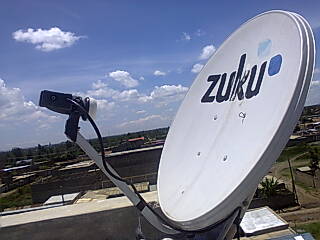
Kenya’s Wananchi Group, which runs Zuku, a triple-play service provider, has raised $57.5 million in a new funding round as growth capital from a group of international investors led by Liberty Global INC.

Wananchi group says it will use the funds to extend deployment of its Nairobi-based fibre network to other parts of the country and as well as expand its triple-play product offerings outside the Kenyan market to the larger East African marker including Uganda, Tanzania, Ethiopia, Eritrea, South Sudan, Rwanda, Burundi, Malawi and Somalia by 2015.

These was Liberty Globa’s first major investment in a cable company in Africa. Liberty Global owns cable operations across Europe and Latin America. LGI was joined by other new investors such as Oppenheimer Funds and Sarona Asset Management, a Canadian emerging markets fund manager known for its ‘impact investments’.

Existing Wananchi investors private equity firm East Africa Capital Partners (EACP) and Emerging Capital Partners (ECP), a Pan-African private equity firm also participated in the round.

According to Wananchi CEO Richard Bell: ‘Our vision is to become the leading pay-TV, broadband internet and VoIP services provider in East Africa. We welcome the support of new investors Liberty Global and Sarona as well as continued support from our existing shareholders, EACP and Emerging Capital Partners and look forward to working together to achieve our collective goal’.

France Telecom’s brand Orange takes over Telkom Kenya and Hits Telecom Uganda to form Orange Kenya & Orange Uganda

0

France Telecom’s brand Orange takes over Telkom Kenya and Hits Telecom Uganda to form Orange Kenya and Orange Uganda with recent investment in Kenya and Uganda.

In Kenya, Orange will become the commercial brand for Telkom Kenya, following France Telecom’s acquisition of 51% of its capital in December 2007. And in Uganda, France Telecom has joined forces with Hits Telecom Uganda to form a new operator Orange Uganda.

Orange is launching Kenya’s fourth mobile network with the deployment of its nationwide GSM network. Already offering fixed-line and Internet services, Orange Kenya will become the country’s first fully-integrated operator. Orange Kenya has invested €58 million in its network infrastructure since the beginning of 2008, and plans to triple its customer base to 1.5 million by September 2009. Initially, broadband Internet and mobile will be available in Nairobi and Mombassa only, but this will be progressively extended and rolled out across the whole country by the end of this year. Kenya has a population of 34 million and a mobile penetration rate of just 30%.

Also in East Africa, Orange will gain a telecommunications licence and GSM network in Uganda through its partnership with Hits Telecom Uganda. All of Hits Telecom Uganda’s staff will join Orange Uganda Limited, which is 53% owned by France Telecom. Similar to Kenya, Uganda has a population of 30 million and a mobile penetration of less than 30% (March 2008).

France Telecom Group is present in 15 African countries and is helping many incumbent operators make the transition to full market liberalization. As reported in the Orange Business Live! blog, this includes deploying a IP-based Metro Ethernet network in Cote D’Ivoire, possibly Africa’s first all-optical backbone.