Africa Tech Summit (ATS) London has selected 15 tech ventures to demo their products at the eighth edition of the London Stock Exchange on June 7th, 2024.
The 15 will get a chance to pitch their businesses to top African tech investors, corporates, and industry stakeholders in attendance from Europe, USA and Africa and raise funding or onboard partners or clients at the ATS Investment Showcase 2024.
In a statement, Lauren Adair, Director at Africa Tech Summit, said “As we celebrate the eighth ATS London, we are delighted to spotlight 15 ventures defining the future of tech innovation. With over 150 quality entries received this year, the decision-making process was a challenging one. With several of our past ATS Investment Showcase participants securing funding and partnerships, we’re excited to see what the future holds for these ventures.”
Here are ventures from across Africa:
Decarb.earth(South Africa) is accelerating the energy transition in Africa. The company helps businesses generate carbon credits from their renewable energy sources through a digital system.
Earthbond(Nigeria) utilizes carbon accounting and climate finance to offer a one-stop solar shop to African businesses.
Melanin Kapital Limited(Kenya) is leveraging blockchain technology to help financial institutions and investors verify the legitimacy and credibility of businesses.
Newform Foods(South Africa) is leveraging a continent-spanning research and development network to help food producers, retailers, and business owners develop and scale cultivated animal products at a lower cost than the industry norm.
OkHi(Nigeria) is a digital addressing system that enables businesses to collect and verify an accurate address. OkHi sells AI-powered Address Verification to banks and fintechs in emerging markets to improve compliance, reduce fraud, and increase loan performance.
OneHealth(Nigeria) is bridging the gap in healthcare by offering digital infrastructure for payers, providers, and patients to access quality medicines and healthcare solutions.
PBR Life Sciences(Nigeria) is leveraging big data and AI to transform healthcare, offering stakeholders easy and fast access to a data-as-a-service dashboard with predictive capabilities for objective decision-making.
Plentify(South Africa) is a smart energy company that offers affordable, reliable, and sustainable energy solutions. They use advanced hardware, Artificial Intelligence (AI), and user-centric design to create smart home products that strengthen electricity systems.
Poa Internet(Kenya) is bridging the digital gap in African communities by providing cost-effective residential broadband.
Rana Energy(Nigeria) Is providing sustainable, innovative & customer-centric energy solutions for a greener Africa, replacing the upfront solar system cost burden with affordable subscriptions.
Sky.Garden(Kenya) is a SaaS e-commerce platform for African retailers that allows merchants to start, manage, and grow their businesses.
So-Cool(Nigeria) is an award-winning innovation, developed to provide clean and affordable energy to SMEs in Africa.
Teraki(Ethiopia) is an audio streaming platform that addresses the challenges faced by African authors, content creators, and audiences. Despite the high demand for literature and podcasts, generating sustainable revenue remains challenging. Teraki offers a two-way solution to these problems.
VeendHQ(Nigeria) is tackling the issue of low credit penetration in Africa, which arises from the lack of adequate credit history data for most of the African population. VeendHQ enables consumers and businesses with verifiable income to access funds on demand.
Wfrley(Eqypt) is an app for promotions and instant marketing, working in the underserved areas of Cairo. Wfrley provides supermarkets with a SaaS solution to control inventory, POS points, e-commerce, and delivery platforms.
Opera Mini browser, Opera’s mobile browser with almost 50 percent mobile browser marker share in Kenya, has since 2020, run a highly popular Free Data campaigns for its Opera Mini browser users in Kenya.
Famous for its efficiency in data usage, appealing significantly to Kenyan users since data costs in the country are prohibitively high, Opera Mini claims to be the most downloaded browser, with over 13 million users in Kenya.
According to Statscounter, Opera had almost 50% of the mobile market share in February 2024, splitting the market with Chrome. Locals often rely on Opera Mini for internet access, with the browser offering up to 90% data savings.
One of Opera’s commitments to the market is its highly popular Free Data campaigns available to users of the Opera Mini browser. Through this campaign, users enjoy up to 1.5GB of data a month for free, which would also last ten times longer than on any other major browser thanks to its unique data-saving functionality. Over 2023 alone, the company has provided over 4 million GB of data for free as a part of these campaigns, the equivalent of 1.6 billion KES. The campaigns have been available to users since 2020.
When Opera celebrated its 15th anniversary, it collected users’ stories about Opera Mini’s impact on their lives. Kenyans were sharing how data-saving and free data access helped them get through universities, find new clients for their small businesses, and be closer to their family members living far away. We sought to find out from Kenyans how the free data used to help them and here is some of the feedback we received.
“ I love keeping up with football game updates and scores especially when the league is on. Using my main browser, I can get the latest updates frequently without having to worry about spending a lot of money purchasing bundles,” John Mwangi.
“I started an online business a few months ago – I sell thrifted (second-hand) clothes. I mostly advertise via Social media. I discovered Opera Mini and its data-saving capabilities through a friend running a similar business. I began using the app and have never looked back. I also loved the fact that I was getting free 50MB daily and this had a huge impact on my business as it helped me keep my costs low. Opera has helped me improve my online customer service and has grown my business significantly as I do not have to worry too much about my data costs,” Scholastica Mutheu- Business lady.
Opera’s free data comes through for me when I need to do research and school assignments. It helps me save when I am downloading a lot of documents. It has helped me save a lot of cash which I can use for other needs such as food and transport to and from college,” Mark- College student.
Despite the significant impact of Opera’s initiative, recent regulatory changes pose new challenges to keeping these campaigns running.
Regulatory Changes and Their Implications
As stated in Opera’s recent blog, the company had to stop Free Data campaigns across Kenya. After doing our investigation and talking to sources close to the company, the reason behind the halt of the free data campaigns is the recent decision of the Betting Control and Licensing Board (BCLB) to cease advertising on bookmarks.
Previously, campaigns run by Opera offered up to 1.5GB of free data monthly, significantly enhancing digital inclusion across various demographics. The BCLB’s decision is the reason why over 13 million Kenyans will no longer be getting 50 MB of free data daily. The users who benefited from them now face barriers to accessing the web.
Before the regulatory changes, Opera shared plans for an extensive investment for the upcoming year, meeting or exceeding the previous year’s amount spent on Free Data campaigns in Kenya. However, the BCLB’s decision seems to place these plans on indefinite hold, creating uncertainty about the future of these campaigns.
Broader Implications for Digital Access
The halt of Free Data programs brings up the major issue that Kenya faces in including everyone in the digital world. As the country continues to navigate the complexities of digital policy, the need for strategies that support affordable internet access becomes clear.
It now appears that Feature Phone users have been even more adversely affected by the ruling, with unconfirmed sources suggesting that over 2 million Kenyans using Feature Phones have lost internet access since Opera stopped its Free Data program. The Free Data campaigns are the only way to get online for many of Opera’s Mini’s 6 million Feature Phone users, meaning that a significant number of Kenyans have lost their main lifeline to the internet – including access to their online jobs, the opportunity to connect with family or look for educational content, news and information.
This situation shows how important it is to balance regulatory intent with its impact on public access to digital resources. It also calls for a reassessment of how such policies align with the broader goal of digital inclusion and economic development in Kenya.
Following the success of the first three editions, TotalEnergies has launched its annual Startupper of the Year Challenge aimed to recognize and reward 100 African startups.
Founded in 2015, the challenge has had 365 winners – selected from among some 40,000 applications received – have been rewarded and supported worldwide.
According to the company, this year’s edition which involves 32 African countries where the company operates, is intended to mark the company’s 100th anniversary celebration.
This new edition reaffirms TotalEnergies’ commitment to promoting innovation and entrepreneurship and supporting the socio-economic development of African countries .
During the 2021/2022 edition in Tanzania, TotalEnergies Marketing Tanzania recognised three young entrepreneurs in the categories of best startup under three years, best business creation idea, and best female entrepreneur.
For this 2024/2025 edition of the challenge, TotalEnergies will support and reward young entrepreneurs aged 18 to 35 living in Tanzania who have a business creation project or a startup under three years old, in any business sector.
A local jury comprised of experts, business leaders, startup ecosystem participants, local sustainability stakeholders and representatives from TotalEnergies Marketing Tanzania will select three winners in the categories of the best entrepreneur, the best project relating to the circular economy, and the best project relating to sustainable, affordable energy.
Registration of the startups will last until June 18th 2024 as all project entries will be assessed against four criteria: relevance to sustainable development challenges; innovation; feasibility and development potential; and respect for gender equality and inclusion of women in the project.
Each winner will receive 20m/- million personalised support and a communication campaign to enhance their project’s visibility.
Winners will also have the opportunity to promote their project during a celebratory event, the details of which will be released at a later date.
Safaricom, Kenya’s leading telecommunications provider, has revealed positive developments in its mobile lending platform, local smartphone assembly, and fibre optic network.
During the announcing of the telcos Full Year 2023/2024 Financial Results at Michael Joseph Centre today, the Telco highlighted:
Hustler Fund Sees KSh 49.5 Billion in Loans Borrowed
Since its launch, Kenyans have borrowed over KSh 49.5 billion through the Hustler Fund, a government initiative aimed at facilitating access to microloans for small businesses and individuals.
This significant uptake indicates the program’s potential in empowering Kenyans financially.
Women’s Fund Loans Reach KSh 0.9 Billion
While the Hustler Fund reports a much larger uptake, the Women’s Fund, another government program specifically targeting women-led enterprises, has also seen some traction with KSh 0.9 billion disbursed in loans.
Locally Assembled Smartphones on the Rise
In a boost to Kenyan manufacturing, Safaricom reports that over 360,000 smartphones have been assembled and sold locally.
This trend highlights a growing domestic capacity for smartphone production, potentially contributing to job creation and a more robust tech ecosystem within the country.
Fibre Optic Network Expands to Homes and Businesses
Safaricom’s fibre optic network continues to expand, reaching 248,000 homes and 59,500 businesses.
This growth suggests a rising demand for high-speed internet connectivity in Kenya, facilitating activities like remote work, online learning, and entertainment streaming.
Safaricom Chief Executive Officer (CEO) Peter Ndegwa noted: “Our commitment to the society remains at the core of our operations.As a result of our various ESG initiatives, we have grown 1.5 million trees, while over 3.5M lives have been directly impacted by our Foundations in the year under review.In line with our commitment to environment conservation we have so far converted 23% of our sites to solar.This is in line with our Net Zero target by 2050.We remain keen to create a sustainable business through decarbonizing our operations and advancing the circular economy.”
Kenya’s Telco giant, Safaricom has announced its Sh139.9 Billion earnings before interest and tax (EBIT) for the period ending March 31st, 2024.
At a group level, inclusive of startup costs and investments in Safaricom Ethiopia, the group noted it recorded an EBIT of Sh94.9 billion, marking a 3.5% year-on-year growth.
“Exceeding both market expectations and the group guidance range of Sh129 billion to Sh132 billion,” noted the telco.
This performance is attributed to customer segmentation, public sector digitization, investments in new technologies, and enhanced data analytics capabilities for improved customer service.
Safaricom PLC Chief Executive Officer (CEO), Peter Ndegwa expressed satisfaction with the group’s accomplishments despite significant startup costs in Ethiopia.
Anticipating Ethiopia’s substantial growth contribution from 2025 onwards, he emphasizes the strategic importance of the venture for both top and bottom-line growth.
“We are extremely pleased with what we have been able to achieve as a group despite the significant startup costs in our Ethiopia business. We expect that from 2025, Ethiopia will start being a significant growth contributor at group level for both top and bottom line,” said Mr Ndegwa.
During the same period, Safaricom PLC Group revenue surged by 13.4% to Sh335.3 billion, with M-PESA contributing 42.4% of revenue at Sh140 billion and the GSM business contributing 52.7% at Sh173.9 billion.
Mr Ndegwa noted the company’s commitment to purpose-led technological advancements, facilitating better efficiencies and customer engagement.
By focusing on customer needs, Safaricom solidifies its position as a billion-dollar business in Kenya.
“We are able to anticipate and serve our customers more intuitively, while engaging our communities to solve their societal challenges. As a result of our razor-sharp focus on our customers, we are now a billion-dollar business in Kenya,” Mr Ndegwa noted.
Regarding Ethiopia, the CEO highlighted the company’s significant strides, including doubling the active customer base to 4.4 million and building a robust network infrastructure, all achieved with a predominantly Ethiopian team.
The company’s Board Chairman, Adil Khawaja announced the board’s recommendation of a final dividend of 65 cents per ordinary share, totaling Sh48.08 billion for Financial Year 2024 (FY24), reflecting the company’s growth trajectory and commitment to shareholder value.
Supporting Flood Victims
Safaricom pledges support to flood victims through the M-PESA Foundation, allocating Sh30 million for immediate relief efforts in affected areas.
“The Sh30 million will be used to support the initial relief efforts that include vital supplies, food, temporary shelter, medicines, and emergency medical kits in affected areas,” Mr Khawanja noted that the company would continue to pursue its purpose of transforming lives and engage more with the communities they served.
Key Highlights – Safaricom Group (Including Ethiopia)
Service Revenue: Up by 5.2% to KES 295.7 Billion.
Voice Revenue: Declined by 2.6% to KES 81.1 Billion.
M-PESA Revenue: Increased by 8.8% to KES 117.2 Billion.
Mobile Data Revenue: Grew by 11.4% to KES 54.0 Billion.
Total Customer Base: Expanded by 8.1% to 45.9 Million.
One-month Active M-PESA Customers: Rose by 5.2% to 32.1 Million.
One-month Active Mobile Data Customers: Grew by 7.0% to 26.1 Million.
Net Income:
Safaricom Group Excluding Minority Interest: Declined by 10.6% to KES 62.3 Billion.
Safaricom Plc Kenya: Increased by 3.0% to KES 74.5 Billion.
Safaricom PLC Operating Free Cash Flow: Up by 4.3% to KES 115.7 Billion.
Safaricom operates the world’s largest mobile payment system, M-PESA, driving financial inclusion by empowering over 32.1 million customers to transact, save, or borrow money through their mobile phones, generating significant revenue and driving financial inclusion.
Tech giant, Microsoft has announced the closure of its Africa Development Centre (ADC) in Lagos, Nigeria, Bloomberg reported.
This decision will result in job losses for some employees.
Opened in 2022, the Lagos ADC played a key role in Microsoft’s efforts to develop cutting-edge engineering solutions.
Reports indicate that despite the closure, Microsoft assures continued operations in Nigeria, focusing on strategic growth areas.
“We’ve made the difficult decision to close our Nigerian ADC. This will impact some of our Nigerian employees. Regular workforce adjustments are a necessary part of our business strategy.”
The exact number of affected employees remains unclear.
In December 2022, Microsoft boasted over 200 engineers in Lagos and over 500 in Nairobi, Kenya.
This raises concerns about the future of the Kenyan center, especially considering its recent relocation to a more advanced facility.
While the reasons behind the closure haven’t been disclosed, it seems to contradict Microsoft’s previous statements about Africa’s promising talent.
This move aims to provide local businesses with easier access to entrepreneurship and innovation expertise.
ASSEK suggests upgrading county innovation centers into innovation anchors to accelerate support for local startups.
Presented at the one-day Policy Roundtable titled ‘Building An Enabling Environment For Entrepreneurship Ecosystem Actors,’ the Ecosystem Entrepreneurship Report emphasizes the importance of supporting startups and SMEs outside Nairobi.
This initiative aims to alleviate challenges such as limited digital services, funding accessibility issues, and inadequate access to clientele and pricing trade-offs by enhancing their presence in physical locations.
During the event attended by 120 founder-chief executives of entrepreneur support organizations, Chief Executive Officer (CEO) of ASSEK, Ms Mercy Kimalat emphasized the significance of formalized entrepreneurship support systems in propelling Kenya towards its next growth phase.
Kenya’s robust innovation ecosystem attracted significant investment funding volume of Sh107.6 million ($800,000) last year, positioning it as Africa’s third-ranked innovation hub, with energy and environment sectors leading in performance.
“Kenya’s innovation scene, which is ranked third in Africa with energy and environment sectors being the best performing industries, has room for further growth that will enable more startups to scale up creating new products while opening up more job opportunities. We need to come up with programmes that improve access to affordable capital, digitisation, access to best fit talent as well as tradeoff of price and access to clientele, enablers and services,” Ms Kimalat said.
The roundtable discussions also shed light on ongoing projects funded by the Kenya Industry and Entrepreneurship Project, a joint venture between the government and the World Bank.
Participants agreed to foster collaborative efforts involving ASSEK, key government agencies, and Enterprise Support Organizations (ESOs) to bolster Kenya’s entrepreneurship ecosystem.
Notable startups contributing to Kenya’s innovation landscape include M-Kopa (Energy), Cellulant (Fintech), Wasoko (E-Commerce), Sistema.bio (Energy), Twiga (E-Commerce), Copia (E-Commerce), Cytonn (Fintech), Apollo (Agtech), LipaLater (Fintech), Big Square (Foodtech), and Poa Internet (Software).
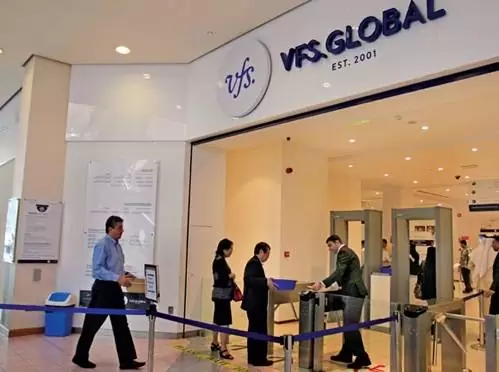
VFS Global, a leading outsourcing and technology services specialist for governments and diplomatic missions worldwide, proudly announces its partnership with the Responsible AI Institute (RAI Institute). The RAI Institute, a prestigious non-profit organization based in the USA, is dedicated to fostering responsible AI practices within organizations.
Through this partnership, VFS Global will leverage the RAI Institute’s expertise in AI ethics and data privacy, ensuring the development of AI solutions that are secure, ethical, and aligned with the operational needs of visa processing.
The partnership will enable continuous technological innovation, ensuring VFS Global provides more convenience for customers while delivering secure and responsible visa and citizen services to governments worldwide including Kenya. This innovation will enhance the role VFS Global plays in safely connecting people and countries, supporting trade, tourism, education, and skills worldwide.
VFS Global will develop its AI solutions in strict accordance with the needs and regulations of its Client Governments. This collaborative effort will give them the certainty that all developments are transparent, regulated, and tailored to their specific needs.
VFS Global will exclusively develop all AI solutions within its advanced Development Centres located in Mumbai, Dubai, and Berlin. These centres will serve as collaborative platforms where the company will work closely with Client Governments to tailor solutions that enhance visa processing efficiency, security, and user experience.
This approach ensures that VFS Global retains full ownership and control, allowing it to implement the highest standards of security and safety. Each solution will be meticulously designed with strict AI safety and security guardrails, ensuring compliance with both local and international regulatory frameworks. Any additional development will progress at the pace and readiness of the Client Governments, ensuring that each step aligns with their specific requirements and timelines.
Zubin Karkaria, Founder and CEO, VFS Global, emphasizes, “Our alliance with the Responsible AI Institute reinforces our dedication to ethical AI development. We have always been at the forefront of technological innovation, committed to ensuring security, integrity, and strict compliance with the regulatory frameworks of our Client Governments. This partnership underscores our resolve to lead in AI advancement in a responsible manner.”
Alyssa Lefaivre Škopac, Head of Global Partnerships and Growth of the Responsible AI Institute, commented, “VFS Global’s impressive track record and global outlook makes it an invaluable addition as we work to steer AI towards public good.”
VFS Global’s AI strategy demonstrates its commitment to innovating in the visa, identity, and citizen services sectors, meeting the evolving needs of its Client Governments, and ensuring their confidence and trust in its AI development endeavours.
In a world where nature and technology seem to tread parallel paths, there lies a fascinating intersection that marries the ancient allure of Amanita Muscaria with the cutting-edge advancements of modern tech. This intriguing fusion not only highlights humanity’s enduring quest for understanding but also showcases the innovative ways we harness nature’s mysteries to fuel technological breakthroughs. Let’s embark on a journey through the vibrant forests harboring the mystical Amanita Muscaria to the sleek laboratories shaping our digital future, exploring how this iconic mushroom bridges worlds in unexpected and enlightening ways.
Nature has long been a source of inspiration for technological innovation, with Amanita Muscaria emerging as an unlikely muse. Its distinctive appearance and psychoactive properties have not only permeated cultural consciousness but have also sparked interest in bioinspired design. Researchers and innovators, drawn to its complex biological mechanisms and striking visual appeal, explore biomimicry concepts that replicate the efficiency and resilience found in natural systems. From neural networks that mimic the interconnectedness of forest fungi to algorithms inspired by the mushroom’s growth patterns, Amanita Muscaria influences the tech world in subtle yet profound ways.
The Psychedelic Renaissance: A Digital Age Catalyst
As we delve deeper into the psychedelic renaissance, Amanita Muscaria finds new relevance in the realms of mental health and cognitive enhancement technology. With an increasing focus on mental wellness, tech companies are exploring digital therapeutics that incorporate lessons from psychoactive substances. Virtual reality experiences that simulate the altered states of consciousness akin to those induced by Amanita Muscaria are being developed to aid in therapy and meditation, offering a glimpse into the potential for technology to harness the mind-expanding qualities of natural compounds for healing and self-discovery.
Ethnobotany Meets Data Science
The study of Amanita Muscaria and its role in various cultures provides a rich dataset for ethnobotanists and data scientists alike. By employing machine learning algorithms to analyze historical and contemporary uses of the mushroom, researchers can uncover patterns and insights that inform both cultural understanding and potential medical applications. This convergence of ethnobotany and data science exemplifies how traditional knowledge and modern technology can complement each other, opening new avenues for exploring the symbiotic relationship between humans and nature.
Sustainable Solutions from the Forest Floor
In the quest for sustainability, the Amanita Muscaria serves as a reminder of the delicate balance within ecosystems and the potential for bio-based solutions in technology. Biodegradable materials and green chemistry principles draw inspiration from the natural decomposition processes facilitated by mushrooms, suggesting that the study of fungi can lead to more sustainable technological practices. This approach not only minimizes environmental impact but also underscores the importance of biodiversity and the conservation of natural habitats as sources of innovation.
Bridging Worlds with Mycoteria.com
For those intrigued by the confluence of Amanita Muscaria and technology, Mycoteria.com stands at the crossroads, offering a platform to explore this fascinating intersection. As a hub for high-quality mushroom products and a source of educational content, Mycoteria.com connects enthusiasts, researchers, and the tech-savvy with the natural world, fostering a community that appreciates the value of fungi in our digital age. Whether you’re drawn to the historical allure of Amanita Muscaria or interested in its contemporary applications in tech, Mycoteria.com provides a gateway to deepen your understanding and exploration of mushrooms.
In merging the ancient world of Amanita Muscaria with the possibilities of modern technology, we find a compelling narrative of integration and innovation. This journey not only highlights the enduring fascination with nature’s mysteries but also showcases the potential for these natural wonders to inspire and shape the future of technology. As we continue to explore this dynamic relationship, the story of Amanita Muscaria and technology unfolds as a testament to humanity’s quest for knowledge, connection, and harmony with the natural world.
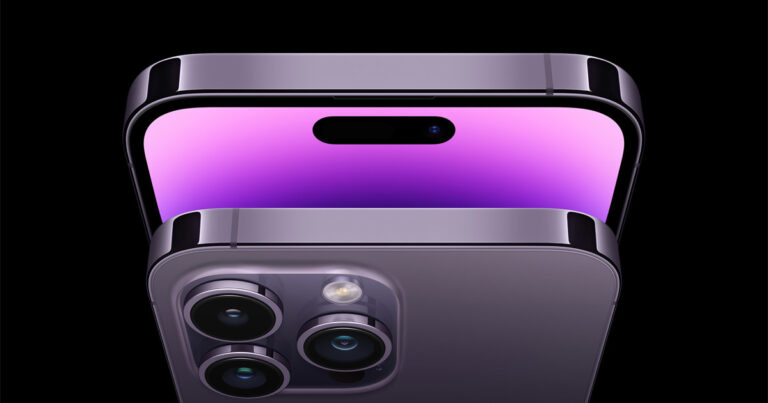
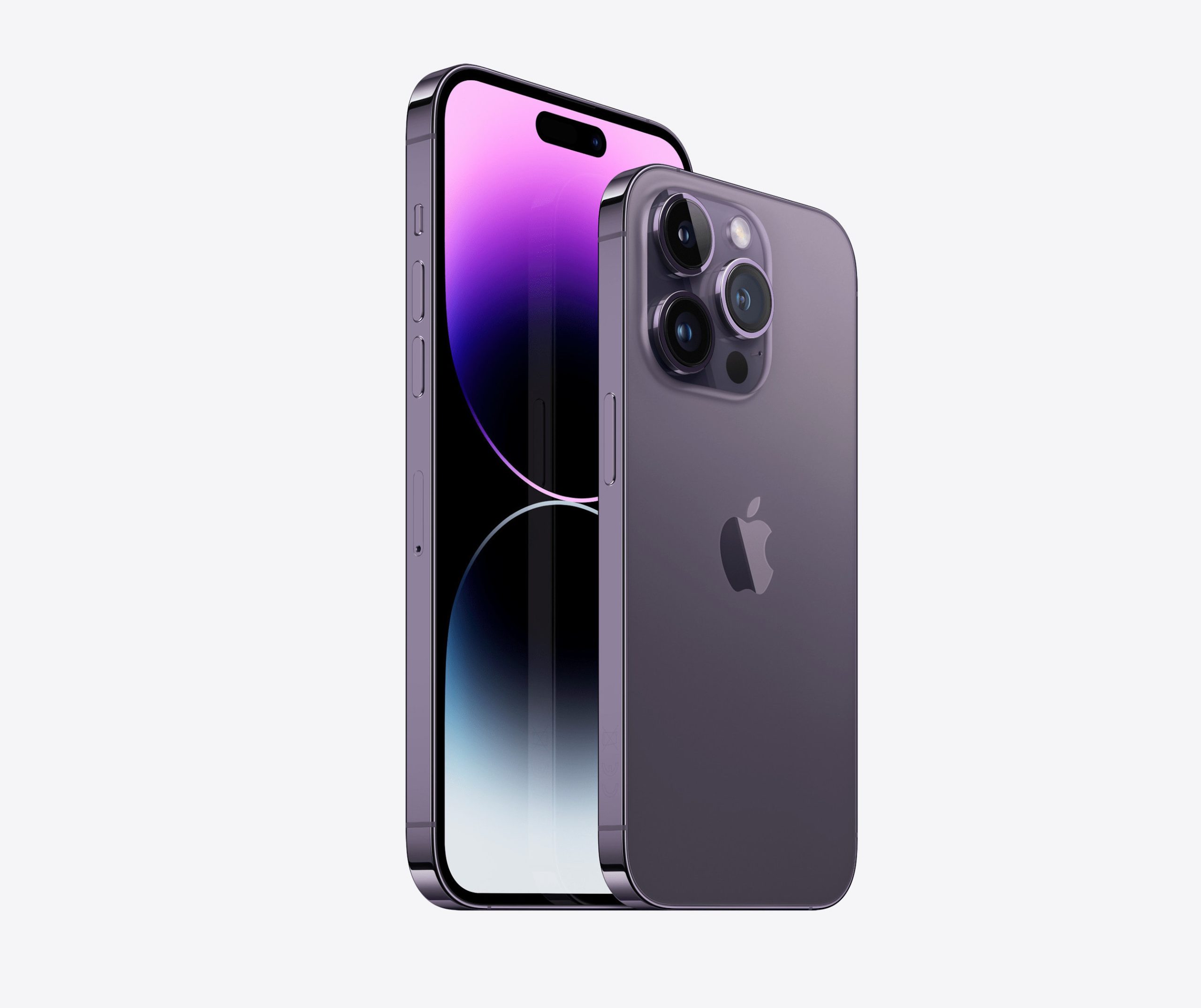
The iPhone 14 is the latest release from Apple and is one of the best smartphones on the market. It features a new A14 Bionic chip that is faster than any other phone on the market, and it has an improved camera system with new Night mode capabilities. The only downside of the iPhone 13 is its high price tag, but it is worth it for the features and performance you get in return.
Technical Specs:
Display: 6.1-inch OLED display Processor: A14 Bionic chip Storage: 64GB, 128GB, 256GB Camera: 12MP rear camera, 7MP front camera Battery life: Up to 14 hours of video playback
iPhone 14 Pro Max
Rating: 9.5/10 Price: KES 189,999
The iPhone 14 Pro Max is the top-of-the-line model in the new iPhone 13 series. It features all of the latest and greatest from Apple, including the powerful A14 Bionic chip, an improved camera system, and a large 6.7-inch OLED display. Another great thing about the iPhone 13 Pro Max is that it offers excellent battery life, lasting up to 20 hours on a single charge.
Technical Specs:
Display: 6.7-inch OLED display Processor: A14 Bionic chip Storage: 64GB, 128GB, 256GB Camera: 12MP rear camera, 7MP front camera Battery life: Up to 20 hours of video playback
iPhone SE (2022)
Rating: 9/10 Price: KES 39,999
The 2022 iPhone SE is the latest budget-friendly offering from Apple. It features the powerful A14 Bionic chip found in the iPhone 13 series, but it has a smaller 4.7-inch display and only has a single rear camera. Despite these few drawbacks, the iPhone SE is an excellent phone and is one of the best values on the market.
Technical Specs:
Display: 4.7-inch OLED display Processor: A14 Bionic chip Storage: 64GB, 128GB, 256GB Camera: 12MP rear camera, 7MP front camera Battery life: Up to 13 hours of video playback
Samsung Galaxy S22
Rating: 8.5/10 Price: KES 84,999
The Samsung Galaxy S22 is the latest flagship phone from Samsung. It features a new Exynos 2100 processor that is very fast and power-efficient, and it has an excellent camera system with three rear cameras. Unlike the iPhone 13, the Galaxy S22 does not have an OLED display but a slightly larger 6.2-inch display. This helps to keep the price of the phone down, making it more affordable than the competition.
Technical Specs:
Display: 6.2-inch OLED display Processor: Exynos 2100 processor Storage: 128GB, 256GB Camera: 12MP rear camera, 10MP front camera Battery life: Up to 15 hours of video playback
Samsung Galaxy S22 Ultra
Rating: 9/10 Price: KES 119,999
The Samsung Galaxy S22 Ultra is the top-of-the-line model in the new Galaxy S22 series. It features a massive 6.8-inch OLED display, an improved camera system with four rear cameras, and a massive 5,000mAh battery. The Galaxy S22 Ultra also has the new Exynos 2100 processor, which is very fast and power-efficient. For customers that need the absolute best from Samsung, the Galaxy S22 Ultra is the way to go.
Technical Specs:
Display: 6.8-inch OLED display Processor: Exynos 2100 processor Storage: 128GB, 256GB Camera: 108MP rear camera, 10MP front camera Battery life: Up to 18 hours of video playback
Samsung Galaxy A53
Rating: 7.5/10 Price: KES 24,999
The Samsung Galaxy A53 is a budget-friendly smartphone that doesn’t skimp on features. It has a large 6.4-inch display, a triple rear camera setup, and a long-lasting 4,000mAh battery. The only downside of the Galaxy A53 is that it uses an older Snapdragon 662 processor, which isn’t as powerful as the newer processors found in more expensive phones. However, for the price, the Galaxy A53 is a great value.
Technical Specs:
Display: 6.4-inch OLED display Processor: Snapdragon 662 processor Storage: 64GB, 128GB Camera: 48MP rear camera, 8MP front camera Battery life: Up to 15 hours of video playback
Samsung Galaxy Z Flip 4G
Rating: 8/10 Price: KES 84,999
The Samsung Galaxy Z Flip 4G is the latest foldable phone from Samsung. It features a sleek design, a powerful Snapdragon 888 processor, and an improved folding mechanism. The only downside of the Galaxy Z Flip 4G is its small 3,300mAh battery, which isn’t as large as some other phones on the market. However, overall, the Galaxy Z Flip 4G is a great phone and an improvement over the original Galaxy Z Flip.
Technical Specs:
Display: 6.7-inch OLED display Processor: Snapdragon 888 processor Storage: 256GB Camera: 12MP rear camera, 10MP front camera Battery life: Up to 8 hours of video playback
Samsung Galaxy Z Fold 4
Rating: 8.5/10 Price: KES 119,999
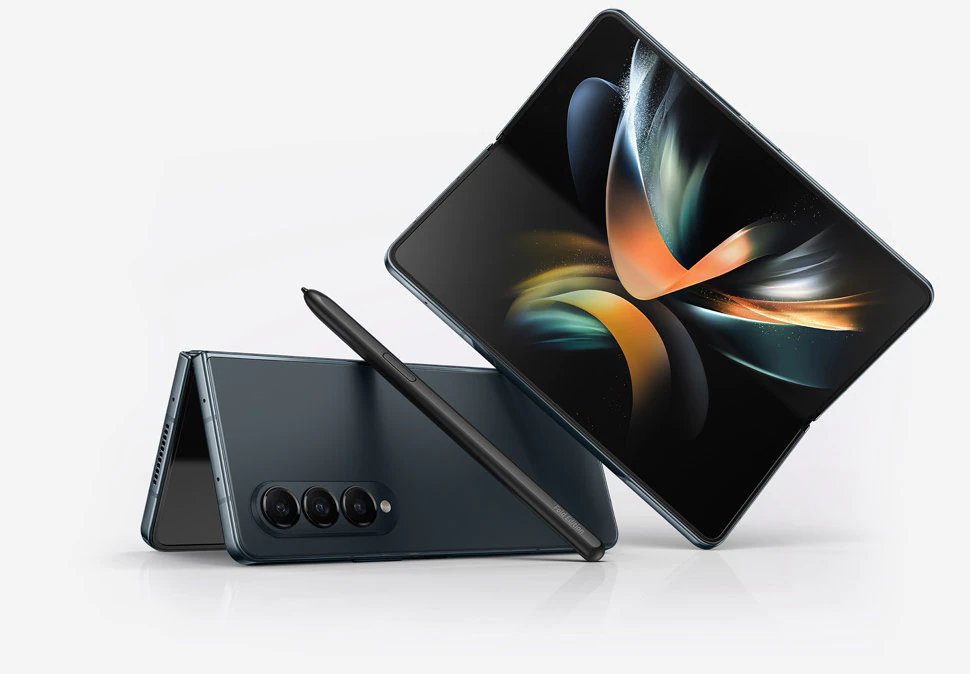
The Samsung Galaxy Z Fold 4G is the latest foldable phone from Samsung. It features a large 7.6-inch OLED display when unfolded, a powerful Snapdragon 888 processor, and an improved folding mechanism. Featuring 5G support, the Galaxy Z Fold 4G is one of the most advanced phones on the market. With the improved display and folding mechanism, the Galaxy Z Fold 4G is a great phone for anyone that wants the best possible foldable experience.
Technical Specs:
Display: 7.6-inch OLED display Processor: Snapdragon 888 processor Storage: 256GB Camera: 12MP rear camera, 10MP front camera Battery life: Up to 8 hours of video playback
Google Pixel 6
Rating: 9/10 Price: KES 74,999
The Google Pixel 6 is the latest smartphone from Google. It features a sleek design, a powerful Snapdragon 888 processor, and an excellent camera system. The Pixel 6 also has 5G support and a large 4,700mAh battery. Overall, the Pixel 6 is an excellent phone and one of the best Android phones on the market.
Technical Specs:
Display: 6-inch OLED display Processor: Snapdragon 888 processor Storage: 128GB, 256GB Camera: 12MP rear camera, 8MP front camera Battery life: Up to 10 hours of video playback
Google Pixel 6a
Rating: 8.5/10 Price: KES 49,999
The Google Pixel 6a is a budget-friendly smartphone that doesn’t skimp on features. It has a large 6-inch display, a powerful Snapdragon 765G processor, and an excellent camera system. The Pixel 6a also has 5G support and a large 3,800mAh battery. One of the phone’s only downsides is its lack of water resistance. However, overall, the Pixel 6a is an excellent phone and a great value.
Technical Specs:
Display: 6-inch OLED display Processor: Snapdragon 765G processor Storage: 128GB Camera: 12MP rear camera, 8MP front camera Battery life: Up to 10 hours of video playback
Google Pixel 6 Pro
Rating: 9.5/10 Price: KES 119,999
The Google Pixel 6 Pro is the latest flagship smartphone from Google. It features a large 6.67-inch display, a powerful Snapdragon 888 processor, and an excellent camera system. The Pixel 6 Pro also has 5G support and a large 4,700mAh battery. The Google Pixel 6 Pro has another advantage over other phones: its IP68 water and dust resistance rating.
Technical Specs:
Display: 6.67-inch OLED display Processor: Snapdragon 888 processor Storage: 128GB, 256GB Camera: 12MP rear camera, 8MP front camera Battery life: Up to 10 hours of video playback
Huawei P50 Pro
Rating: 8.5/10 Price: KES 119,999
The Huawei P50 Pro is the latest flagship smartphone from Huawei. It features a large 6.67-inch display, a powerful Kirin 9000 processor, and an excellent camera system. The P50 Pro also has 5G support and a large 4,200mAh battery. One of the phone’s only downsides is its lack of Google Play Services. However, overall, the P50 Pro is an excellent phone and one of the best Android phones on the market.
Technical Specs:
Display: 6.67-inch OLED display Processor: Kirin 9000 processor Storage: 128GB, 256GB Camera: 40MP rear camera, 32MP front camera Battery life: Up to 10 hours of video playback
Oppo Reno 7
Rating: 7.5/10 Price: KES 54,999
The Oppo Reno 7 is a mid-range smartphone that offers a lot of features for its price. It has a large 6.4-inch display, a powerful MediaTek Dimensity 1000+ processor, and an excellent camera system. The Reno 7 also has 5G support and a large 4,000mAh battery. One of the phone’s only downsides is its lack of water resistance. However, overall, the Reno 7 is a great phone and a good value.
Technical Specs:
Display: 6.4-inch OLED display Processor: MediaTek Dimensity 1000+ processor Storage: 128GB Camera: 48MP rear camera, 16MP front camera Battery life: Up to 21 hours of video playback
Oppo A15
Rating: 6.5/10 Price: KES 19,999
The Oppo A15 is a budget-friendly smartphone that offers some good features for its price. It has a large 6.52-inch display, a decent MediaTek Helio P35 processor, and a triple rear camera setup. The A15 also has a large 4,230mAh battery. One of the phone’s downsides is its lack of water resistance and fast charging support. However, overall, the Oppo A15 is a decent phone for its price.
Technical Specs:
Display: 6.52-inch HD+ display Processor: MediaTek Helio P35 processor Storage: 64GB Camera: 13MP rear camera, 2MP front camera| Battery life: Up to 12 hours of video
Sony Xperia Pro
Rating: 9/10 Price: KES 149,999
The Sony Xperia Pro features a large 6.5-inch display, a powerful Snapdragon 865 processor, and an excellent camera system. The Xperia Pro also has 5G support and a large 4,000mAh battery. One of the phone’s only downsides is its lack of water resistance. However, overall, the Xperia Pro is an excellent phone and one of the best Android phones on the market.
Technical Specs:
Display: 6.5-inch OLED display Processor: Snapdragon 865 processor Storage: 128GB, 256GB Camera: 12MP rear camera, 8MP front camera Battery life: Up to 13 hours of video playback
OnePlus 10 Pro
Rating: 8.5/10 Price: KES 84,999
The OnePlus 10 Pro is a flagship smartphone that offers a lot of features for its price. It features a large 6.67-inch display, a powerful Snapdragon 888 processor, and an excellent camera system. The 10 Pro also has 5G support and a large 4,500mAh battery. One of the phone’s only downsides is its lack of Google Play Services. Another popular feature of the 10 Pro is its Warp Charge 65 fast charging.
Technical Specs:
Display: 6.67-inch OLED display Processor: Snapdragon 888 processor Storage: 128GB, 256GB Camera: 48MP rear camera, 16MP front camera| Battery life: Up to 14 hours of video playback
Asus Zenfone 8
Rating: 8/10 Price: KES 49,999
The Asus Zenfone 8 is a flagship smartphone that offers a lot of features for its price. It has a small 5.9-inch display, a powerful Snapdragon 888 processor, and an excellent camera system. The Zenfone 8 also has 5G support and a large 4,000mAh battery. The Asus Zenfone 8 is a popular choice for those who want a small phone with high-end specs and also need 5G support.
Technical Specs:
Display: 5.9-inch OLED display Processor: Snapdragon 888 processor Storage: 128GB, 256GB Camera: 48MP rear camera, 16MP front camera Battery life: Up to 13 hours of video playback
Tecno Pop 5 Pro
Rating: 5/10 Price: KES 11,999
The Tecno Pop 5 Pro is a budget-friendly smartphone that offers some good features for its price. It has a large 6.52-inch display, a decent MediaTek Helio A22 processor, and a triple rear camera setup. The Pop 5 Pro also has a large 4,000mAh battery. One of the biggest issues with the phone is its lack of proper Google Play Services support, which results in many popular apps not working. Another downside is the phone’s camera, which is not very good compared to other phones in its price range. Overall, the Tecno Pop 5 Pro is a decent phone for its price, but there are better options available.
Technical Specs:
Display: 6.52-inch HD+ display Processor: MediaTek Helio A22 processor Storage: 32GB| Camera: 13MP rear camera, 5MP front camera Battery life: Up to 12 hours of video playback
Moto G Stylus 5G
Rating: 7/10 Price: KES 24,999
The Moto G Stylus 5G is a budget-friendly smartphone that offers some good features for its price. It has a large 6.8-inch display, a decent Snapdragon 480 processor, and a triple rear camera setup. The G Stylus 5G also has 5G support and a large 4,000mAh battery. Overall, the Moto G Stylus 5G is a decent phone for its price, but there are better options available.
Technical Specs:
Display: 6.8-inch HD+ display Processor: Snapdragon 480 processor Storage: 128GB Camera: 48MP rear camera, 16MP front camera Battery life: Up to 15 hours of video playback
New social commerce platform from the MarketForce team, Chpter, an AI-powered conversational commerce platform specifically designed for social media merchants has been named an Official Meta Business Partner to help merchants work around platforms such as Facebook, Instagram, and WhatsApp.
Chpter, which aims to bridge this gap by offering features like automated conversations, marketing tools, and integrated payments, all within a single platform to empower one million African merchants to maximize profits and thrive in the digital age, is currently operational in Kenya and South Africa.
“We’re excited to announce a major milestone for Chpter! We’re now an official Meta Business Partner,” said Tesh Mbabu Chpter CEO. “Becoming one of the few Official Meta Business Partners in Africa signifies a substantial milestone that enables us deliver our promise, as the digital landscape constantly evolves with social media and messaging apps increasingly becoming vital for business communication.”
Meta Business Partners help other firms grow and increase their revenues through their expertise in Meta’s tools and technologies such as Facebook, WhatsApp and Instagram marketing which have a combined reach of over 4 billion people.
As a Meta Business Partner, Chpter will help clients use Facebook, Instagram and WhatsApp to build relationships, boost sales and enhance customer support. More and more consumers are turning to WhatsApp, Instagram and Facebook to communicate and purchase from the brands they love, Chpter will help clients automate conversations, targeted messaging, integrate E-commerce and analyze results.
Chpter on the other hand will access deeper expertise and insights from Meta, get early access to new features such as WhatsApp Catalog, WhatsApp Flows and checkout, Meta AI and priority support from Meta as well a the ability to deliver even better results in campaigns and analytics.
In our world today, using smartphones has become a crucial aspect of our daily and everyday life. These days, smartphones have permeated every aspect of our lives. They are used as a means of communication, for taking photos, for cloud storage of data, for accessing the internet, and even as a power bank to recharge other smartphones.
You hardly ever go anywhere without seeing at least one person using a smartphone, even children and young adults alike. But it is never simple to choose a smartphone because there are so many different models on the market. Choosing the one that might best suit the specifications you have in mind is never easy.
Before deciding on the specific type of smartphone we will be purchasing when the need arises, it is pertinent to take into account several factors.
These elements to put into serious consideration include:
Display
Depending on how you use your smartphone and what you constantly use it for, the display’s size and resolution may vary.
There is no doubt that manufacturers place a lot of focus on the display of their smartphones—and for good reasons, as seen by the iPhone’s retina display and HTC’s Super LCD panels.
When you switch on the phone, the display is the first thing you see. As a result, manufacturers are concerned about the quality of the screen in addition to its size. Display technology and resolution are two important elements that affect how well a display is made.
A display between the sizes of 5.5 and 6 inches with full-HD or QHD resolution should be adequate for you if you frequently stream videos, edit images or videos, or download and watch movies.
Anything bigger than a 6-inch display makes the phone bulkier and more cumbersome to carry around.
The number of pixels in the screen is essentially the screen resolution. A TV or computer monitor has tiny individual squares that are visible if you get very near to them. Those “squares” are separate pixels. The clarity of a screen’s display increases with the number of pixels.
The phrase “retina display” refers to a screen with so many pixels that the human eye cannot perceive them. So you can see more on the screen with much more clarity and detail thanks to a high-definition display. Make sure the phone you are purchasing has a display with a resolution of 1280 by 720 pixels or higher.
However, any smartphone with a 5-inch to 5.5-inch HD or full-HD display that you regularly use for email checking, messaging, and surfing social networking apps is ideal.
Battery Life
This function has more weight when choosing a smartphone. You essentially have what is sometimes referred to as BLA, or Battery Life Anxiety if you own an iPhone.
It occurs when you are continually searching for a wall outlet, laptop, or power bank to charge your phone. Your phone occasionally seems to run out of battery right when you need it most.
So, while shopping for a new phone, be sure to consider the battery’s capacity. Don’t settle for anything less than 3000mAH. Now that battery life is critically important, phone manufacturers are packing bigger batteries into their devices.
Typical phone batteries have a starting capacity of around 700mAh and a maximum capacity of 5,000mAh.
Storage
The OS and the pre-installed programs on a smartphone take up a significant portion of the device’s capacity.
A 16GB, 32GB, 64GB, or more truly does not come with the exact space specified. Choose 32GB of storage if you like to have fewer apps on your devices.
Users who wish to retain more applications can choose the 64GB or 128GB storage options. A 16GB model with microSD card capability is also available meaning its storage capacity can be extended.
Security
Nowadays, the majority of smartphones include additional security measures like fingerprint or iris scanners. These are used as passwords to access particular files, documents, or apps in addition to locking and unlocking a phone.
Even a smartphone at the high end may be obtained with a fingerprint sensor, but iris scanners are still uncommon. Since most people now carry smartphones with personal information on them, it is advisable to get a smartphone with these added security features.
Build
A smartphone’s build determines its durability. Metal and plastic construction make up the majority of the handset market.
Some even have glass-coated panels, but there are relatively few of those. It is advised to choose a metal or plastic-built smartphone if you are one of those people who drops their smartphones frequently but mistakenly. These metal and plastic-built ones can sustain drops from 2-3 feet, while glass-based handsets are sure to shatter.
Processor
A smartphone’s processing power varies from one device to another depending on several variables, including the Operating System version, user interface, bloatware, and more.
Smartphones with Qualcomm Snapdragon 652 or Snapdragon 820/821 should enable seamless multitasking for heavy users that frequently use apps in split screen mode, play demanding games, stream videos, and edit images, videos, and documents online.
Mobile devices featuring MediaTek processors will satisfy light users, who don’t do all this heavy-duty work with their phones.
Camera
It does not matter if the camera will be used to register nice and personal moments or may have a professional function. Choosing a good smartphone camera is one of the first things people consider before buying a new cell phone.
A decent camera should meet several criteria, including megapixels, pixel size, ISO levels, autofocus, and others. A casual photographer can choose a camera with a lower megapixel number and speed shots that are slightly slower as opposed to a photography enthusiast who must choose a greater megapixel number and the shot’s speed regardless of the light level.
Price of the smartphone
The price of the smartphone, which is the deciding factor for all the others, is last but not least. All the aforementioned requirements must be met by a new smartphone, together with a reasonable price, depending on your budget.
Finding the appropriate device is difficult and takes time, but it is worthwhile to invest in a nice smartphone that will be used daily for at least a few months
Lesaka Technologies, Inc, formerly known as Net1 UEPS Technologies, and listed on the Johannesburg Stock Exchange and the Nasdaq has acquired payments services provider Adumo in a $85.9 million deal.
The purchase consideration will be settled through the combination of an issuance of 17,279,803 shares of Lesaka common stock to Adumo’s current ultimate shareholders plus $12.5 million in cash, funded by internal cash resources and external financing.
Commenting on the transaction, Lincoln Mali, CEO of Lesaka Southern Africa, said: “We are thrilled to welcome the Adumo team into the Group and Adumo CEO Paul Kent onto our executive leadership team. Adumo’s customer base provides us access to more than 245,000 consumers and to payment technologies that we can incorporate into our existing operations. The pending acquisition of Adumo is another significant milestone for Lesaka as we build the top fintech platform in Southern Africa.”
Adumo’s ultimate shareholders include Apis Growth Fund I, a private equity fund managed by Apis Partners LLP (“Apis”), African Rainbow Capital (“ARC”), the largest shareholder of Crossfin Holdings (RF) Pty Ltd (“Crossfin”), as well as the International Finance Corporation and Adumo management.
The acquisition will enable Lesaka to serve 1.7 million active consumers, 119,000 merchants, and process over ZAR 250 billion in throughput (ZAR 40 billion card, ZAR 100 billion VAS and ZAR 110 billion cash) per year.
The Group will have over 3,300 employees operating on the ground in 5 countries: South Africa, Namibia, Botswana, Zambia, and Kenya.
The acquisition reinforces Lesaka’s position as natural consolidator of Southern African Fintech and will enhance our strengths in both the consumer and merchant markets and follows the successful integration of the Connect and Kazang businesses and the recent acquisition of Touchsides.
Adumo serves approximately 23,000 active merchants. Its primary operations include card acquiring, integrated payments and reconciliation services processing more than ZAR 24 billion ($1.3 billion) in throughput per year. The company’s corporate card services cover over 245,000 card holders supporting payroll, incentives, rewards, and expense management. Adumo ISV, also known as GAAP, is the largest POS and Software-as-a-Service solutions provider to the hospitality sector in Southern Africa.
Adumo Co- Founder and Chief Executive Paul Kent expressed his excitement about the partnership: “We look forward to joining forces with the Lesaka team and contributing to the continued success of the Lesaka story. Our combined offering will significantly enhance the customer value proposition, and it is a natural fit considering our respective strengths and technology offerings.”
The transaction is expected to close in the third calendar quarter of 2024 and is subject to shareholder and regulatory approvals and satisfaction of customary closing conditions.
The number of shares to be issued was calculated based on the Base Purchase Consideration, which is defined in the Sale Agreement as an amount of ZAR 1.59 billion ($85.9 million), less the ZAR 232 million ($12.5 million) cash payment, implying a value per share of $4.25 ((ZAR 1.59 billion – ZAR 0.232 billion)/ 17,279,803). $1: ZAR 18.50.
Based on the 3 month and 6 month volume weighted average price per Lesaka share (“VWAP”) to 5 May 2024, using an exchange rate of ZAR 18.50 to $1, this implies a premium of 11% and 16% respectively.
A water immersion accident is when a car runs off the road and submerges in water. Oftentimes the passengers survive, but it can end in tragedy. Would you know how to react if your car went off the road and into a body of water and began to sink? TechMoran is here with a guide on how to escape a sinking car so you have the knowledge in your pocket in case of an emergency.
It may sound simple, but escaping a sinking car is trickier than you might imagine. The vehicle usually fills up faster than you’d think and it’s often dark under the surface; if you’re upside down or injured, it can make you even more disoriented. That’s why it’s critical to know how to escape a sinking car before it happens – you may not have much time to react.
Stay calm. Easier said than done, we know – but if you’re going to escape a sinking car, you have to stay calm. Panic is what causes drowning, so you can’t afford it. Try to take deep, even breaths to keep oxygen flowing to your lungs and brain, and take things step by step based on what you know.
Also, tell your passengers about the plan as quickly as you can – this will help them stay calmer, too.
Try to act quickly. Your best chance to act is within the first 30 seconds to 2 minutes of going into the water. Your car will float for a very short window of time, and that’s the BEST time to act. Unbuckle yourself and your passengers before you do anything else so you can all exit the vehicle as quickly as possible.
Know how to exit. The water will press on your doors and make it very difficult to open them unless you open them before the car starts to sink. Additionally, once you open the door a huge amount of water will flood in, making your car sink faster. Your best bet for exit is the window. Here are a few things to keep in mind:
Automatic windows don’t automatically short-circuit underwater but they will after a period of time. If the water hasn’t reached your windows, roll the window down immediately.
If your car is already sinking and water has reached the windows, the pressure may prevent you from rolling it down. In this case, you’ll need to break the window. That’s why we recommend having a car escape tool made especially for this in your car, like a Lifehammer.
Remember, your car windows are tempered glass and that combined with the pressure means you won’t be able to kick or punch your windows out. Use your car escape tool to break one side window and swim out – keep in mind that when you break the window water will rush in, but you should still be able to escape.
Rear windows are smaller than front windows, so it’s safer to break a front window to ensure everyone can fit through it.
If you have children, push them out of the car first and swim out after them.
Don’t wait for pressure to equalize. There’s a myth out there that you should wait for the car to fill up with water and that will make it easier to escape – when the pressure inside and out equalizes, you can more easily open the door. This isn’t necessarily the best option, though. The pressure will equalize, but it won’t happen the second your car fills up with water. It would take time, which means you have to hold your breath until then and waste precious oxygen.
Swim to safety. Once you and your passengers are out of the car, head for the surface. Don’t try to bring any of your belongings with you; they’ll just slow you down. If you can’t tell which way is up, look for bubbles (the car should be producing a ton of them) and follow them up
Star Cloud, a tech-based education publisher, is one of the Estonian private sector entities expanding into Kenya through collaborations with local educational partners.
These partnerships aim to modernize learning delivery at early childhood, primary, and secondary levels in alignment with the Competency-Based Curriculum (CBC) through digital libraries.
“Assisted by Estonian honorary consul Ms Kadri Humal-Ayal, we identified the challenges in Kenya’s education market and realized the significant potential for our product and expertise here,” said Antii Rammo, founder of StarCloud’s Kenyan subsidiary, Opiq.
Opiq, which established its Kenyan office last year, has successfully digitized CBC-approved textbooks from various local educational publishers onto its cloud-based learning platform.
The company has onboarded 50 schools onto its platform, accessible nationwide, with individual students also subscribing.
In an interview, Ms Humal-Ayal mentioned that Estonia’s ride-hailing app, Bolt, was expanding partnerships with local entities to enable drivers and riders on its platform to acquire electric vehicles.
“This partnership aims to benefit both parties through the acquisition of new skills and increased earnings,” she explained.
Enterprise Estonia, which established its Nairobi offices last year, has played a crucial role in connecting Estonian businesses with Kenyan entrepreneurs and facilitating public sector entities to attract new investments, including in education.
During the event attended by nine edutech companies from Estonia in Nairobi, Estonian Deputy Minister for Economic and Development Co-operation, Mariin Ratnik highlighted her government’s establishment of a public-private sector partnership forum, Enterprise Estonia, to support Estonian businesses globally and attract foreign investments.
“Estonia recently sponsored 20 Kenyan students for information technology and communication training in Estonian universities and companies. Upon their return, they will localize popular Estonian game apps to suit local tastes and cultures,” noted the Deputy Minister, showcasing the positive outcomes of the two-year agreement between Kenya and Estonia.
Organizations represented at the event included Education Estonia, Estonian ICT Cluster, Triumf Health, Star Cloud, ADM Interactive, Nortal, AdoptoMedia, Wisercat Software, and Digiotouch.
Nigeria-based Syndicate Bio has signed a partnership with SOPHiA GENETICS, a cloud-native software company to make comprehensive genomic profiling and liquid biopsy widely available to patients throughout the entire continent and advance health equity on a global scale.
There are roughly 1 million new cancer patients each year in Africa and currently, comprehensive genomic profiling and liquid biopsy testing options are not widely available. This means that patients are forced to forego this testing or travel out of continent for these testing options. Syndicate Bio’s implementation of this new offering will provide cutting-edge liquid biopsy testing to many of these patients and will help progress the company’s goal of advancing genomics and precision medicine in an area of the world that has been historically underserved in these areas.
“Partnering with SOPHiA Genetics to bring MSK-ACCESS® powered with SOPHiA DDM™ to our lab is a monumental step in accelerating the cancer treatment and research landscape across Africa, beginning in Nigeria. Next-generation sequencing technologies in oncology and liquid biopsy, which this collaboration enables, hold the potential for creating a leapfrogging opportunity in the oncology treatment and research landscape in Africa,” said Abasi Ene-Obong, PhD., Founder, Syndicate Bio.
With this deal, Syndicate Bio will be able to enable the widespread application of precision medicine in oncology across Africa, and presents a unique opportunity to fundamentally transform the journey of cancer patients through non-invasive cancer analysis, predictive genetic testing, and effective precision medicine.
Syndicate Bio’s partnerships with governments, industry, and other stakeholders will accelerate drug discovery and development and pioneer clinical oncology offerings and improve cancer diagnosis and treatment for African patients. This initiative not only facilitates local next-generation sequencing (NGS) testing and liquid biopsy testing but also extends access to clinical trial participation, empowering patients and healthcare providers alike.
“In our mission to democratize data-driven medicine, our decentralized global network and unique set of partnerships enable us to help reach underserved populations, just as those that are served by Syndicate Bio,” said Philippe Menu, MD, PhD., Chief Medical Officer, SOPHiA GENETICS. “By implementing this solution, Syndicate Bio will make a measurable impact throughout Africa, while also helping to generate an unparalleled and comprehensive dataset and provide invaluable insights and knowledge to shape the future of global healthcare.”
In late 2023, SOPHiA GENETICS and MSK announced they are working in partnership with AstraZeneca to bring the world-class MSK-ACCESS® powered with SOPHiA DDM™ testing solution to countries and regions around the globe, including underserved areas where access to testing remains scarce.
Amazon has launched Amazon.co.za, providing customers in South Africa with a new online shopping experience, allowing customers to shop from a selection of local and international brands across 20 different product categories, take advantage of great prices, and enjoy same-day and next-day delivery.
Available via the Amazon Shopping App or via www.amazon.co.za, customers can now discover andFor products fulfilled by Amazon, customers will enjoy free delivery on their first order, followed by free delivery for subsequent orders above R500 (about $27). Amazon.co.za offers hassle-free returns within 30 days via convenient options, including home pickup and self-drop.
“We are excited to launch Amazon.co.za, along with thousands of independent sellers in South Africa. We provide customers with great value, broad selection—including international and local products—and a convenient delivery experience,” said Robert Koen, managing director of Sub-Saharan Africa, Amazon. “From today, customers can count on Amazon.co.za for a stress-free shopping experience, fast and reliable delivery, access to 3,000 pickup points, 24/7 customer support, and easy returns. Customers will also enjoy free delivery on their first order.”
Robert Koen, managing director of Sub-Saharan Africa at Amazon.
Launching the Amazon.co.za store with thousands of independent sellers, customers can choose from a wide variety of local brands and South African businesses of all sizes can sell their products to customers across the country through Amazon. The company offers independent sellers access to easy onboarding tools, payment processing solutions, and promotional features to help them get discovered by customers, as well as reports and analytics to improve sales.
“Building a strong relationship with South African brands and businesses—small or large—is incredibly important to us. We want Amazon.co.za to be the place where they can reach millions of customers,” said Koen. “Today is only the start of Amazon.co.za. We will continue to improve and enhance our shopping experience to serve customers and sellers across South Africa.”
US-based Egyptian fintech MoneyHash has partnered with Visa to deliver secure and enhanced digital payment experiences in the MENA region.
Founded in 2020 by three co-founders: Nader Abdelrazik (Egyptian), Mustafa Eid (Egyptian), and Anisha Sekar ,the startup provides a unified checkout experience built on top of a secure Super-API that aggregates payment and fintech solutions through a single integration and a central dashboard consolidating technical infrastructure and centralizing data and operational reporting.
Elena Panchenko, CPO of MoneyHash said, “Our collaboration with Visa marks a significant leap in our journey, It empowers our customers to enhance their payment infrastructure, ensuring secure, fast, and reliable payment experiences. This is especially crucial in today’s digital-first world, where payment security is paramount.”
The new partnership will enable MoneyHash to access Visa’s extensive suite of digital payment solutions and leverage Visa’s global reach across the region.
Total transaction value in the Digital Payments in Egypt is projected to reach US$20.65bn in 2024 and total transaction value is expected to show an annual growth rate of 10.56% resulting in a projected total amount of US$30.85bn by 2028.The market’s largest market is Digital Commerce with a projected total transaction value of US$16.14bn in 2024.
According to Leila Serhan, Senior Vice President and Group Country Manager for North Africa, Levant and Pakistan region, Visa is thrilled to work with innovative platforms like MoneyHash, which contributes to the growing move to digital by providing a simplified process. The startup aims to empower its partners with the tools and resources necessary to provide secure and seamless payment solutions.
In February, MoneyHash raised a $4.5 million Seed funding round, co-led by COTU Ventures and Sukna Ventures, with participation from RZM Investment, Dubai Future District Fund (DFDF), VentureFriends, and angel investors.
IBM has expanded its software portfolio to 92 countries via AWS Marketplace, a digital catalog with thousands of software listings from independent software vendors (ISVs) in a move expected to make it easy to find, test, buy, and deploy software that runs on Amazon Web Services (AWS).
In Africa, IBM has said the it has made its software available in Angola, Burkina Faso, Cameroon, Chad,Egypt, Ethiopia, Gabon, Kenya, Madagascar, Malawi, Morocco, Rwanda, Seychelles, Sierra Leone, South Africa, Tanzania, Tunisia and Uganda.
Clients in these new region will therefore have more access to IBM’s leading artificial intelligence (AI) and data technologies within a portfolio of 44 listings and 29 SaaS offerings available for purchase such as the watsonx AI and Data platform, which allows enterprises to build, scale and govern AI workloads.
“IBM’s global expansion with AWS Marketplace opens up innovation opportunities for our joint customers across the world,” said Matt Yanchyshyn, General Manager AWS Marketplace and Partner Services at AWS.
IBM is also launching 15 new IBM Consulting professional services and assets on AWS Marketplace, exclusively designed for AWS. IBM Consulting also brings 24,000 AWS certifications and a dedicated team of experts trained in the latest AWS technologies to help clients with tailored recommendations grounded in industry best practices.
The partnership entails the launch of the inaugural startup company through the specialised entrepreneurship studio “Kemtech Valley-BTU.” This initiative aims to support and promote research outcomes and graduation projects while leveraging the expertise of the university’s faculty and students. Ultimately, the goal is to transform these valuable resources into investment ventures, practical solutions, and industrial products that can be effectively marketed.
According to Eng. Maha Mandour, group managing director for PTS Holdings, this partnership is a significant milestone in strengthening Egypt’s educational and employment infrastructure. It reflects the positive impact of educational institutions and investment firms in the development of society and in nurturing the exceptional talents of Egyptian youth in the fields of training and employment. This is accomplished through the provision of free scholarships to valedictorians from technology universities for participation in the entrepreneurship fellowship programme.
This partnership falls under the umbrella of the Supreme Council for Technological Education of the Ministry of Higher Education and Scientific Research, as part of the Egyptian Applied Technology Valley, or “Kemtech Valley.” PTS Investments Holdings Inc. has established a partnership with Venture Kemtix and COREangels MEA to introduce a digital platform. The endeavour has received significant funding of six figures, emphasising its crucial contribution to entrepreneurship, startups, and its dedication to promoting innovation and supporting young entrepreneurs in Egypt.
The platform’s main focus is to establish a framework that facilitates collaboration between governmental educational institutions and the private sector in the field of applied technology education, which can be achieved through a centralised digital gateway.
This gateway acts as a connection point, linking students and graduates from technology education institutions to various local and global job markets. It provides detailed information about available job opportunities worldwide, as well as specific skills and requirements for each role. As a result, graduates can take advantage of training and qualification programmes that equip them with the necessary skills for the job market.
The students will be trained and mentored by industry and entrepreneurship experts, with the assistance of university professors, to develop initial models for innovative project ideas. By the end of the first phase, students will present their ideas to a specialised committee of experts and industry professionals. Some projects will be selected for sponsorship and support from the specialised entrepreneurship studio “Kemtech Valley.
To date,the initiative has awarded scholarships to over 1,000 students from different technology universities over a span of three years and has incubated five innovative projects through the entrepreneurship studios with the aim of transforming them into start-ups with the sponsorship of the private sector.
The Kenya Climate Innovation Center (KCIC) has unveiled the inaugural cohort of the Sustainable Waste Innovation for a Future in Transition (SWIFT) program, marking a significant step towards transitioning Kenya to a circular and inclusive economy.
Comprising 57 entrepreneurs from across the country, with 32 in incubation and 25 in acceleration, the cohort will benefit from tailored business support over the next 18 months.
This support, which includes business advisory, mentorship, technical assistance, and financing, aims to bolster their businesses on circularity principles.
Selected after rigorous evaluation processes, these enterprises offer innovative solutions to pressing environmental challenges through sustainable waste management practices.
A joint initiative of KCIC and the IKEA Foundation, the SWIFT program seeks to transform Kenya’s waste management sector through tailored business support and policy strengthening.
Kenya’s green entrepreneurial ecosystem, with an estimated market potential of $54 billion.
Chief Executive Officer (CEO) of KCIC, Joseph Murabula highlighted the organization’s commitment to supporting climate enterprises toward commercial viability.
He expressed confidence in the cohort’s potential to become success stories within the sector.
“What we do at KCIC involves supporting enterprises like yourselves to get to the commercial stage where your business model is well defined,” he stated. “I am confident that in the next 18 months, with the support you’ll receive, you will be stellar success stories of what is possible within this space.”
The Program Manager, Jabez Mutune echoed Mr Murabula’s sentiments, emphasizing KCIC’s dedication to nurturing innovative solutions and championing environmental sustainability.
“I am excited to have the 57 of you join us. To be here is a validation that beyond yourselves, we also believe in your business and the innovation that you are coming with.” This affirmation emphasizes KCIC’s dedication to nurturing and championing innovative solutions that address critical environmental challenges.
According to the ‘Trends and Opportunities for Green Entrepreneurship in Kenya’ report by ANDE, the waste management sector holds significant market potential. However, green enterprises often lack financing and supportive policy conditions.
KCIC and the IKEA Foundation aim to address these challenges and promote green entrepreneurship through financial access and policy reforms.
The SWIFT Program aims to promote green entrepreneurship, create jobs, improve living conditions, and address environmental challenges.
Among the participants in the virtual session was Hannan Mohammed, the Founder of Minfadhli Enterprises, who conveyed her excitement about joining the program. “This opportunity represents a significant milestone in realizing my vision for sustainable waste solutions and job creation,” she stated. “I am keen to collaborate with peers and experts, refine my business strategy, and make a meaningful contribution to the circular economy. Let’s work together to innovate and build a cleaner, more sustainable future through effective waste management practices.”
Charles Kangere, the Founder of Tranbiz Waste & Recycling Solutions, expressed appreciation for being part of the program. “We are optimistic that this program will enhance our waste management operations into a robust and modern business,” he remarked. “Through SWIFT, we aim to efficiently, profitably, and environmentally responsibly manage waste in Kenya, aligning with the principles of the circular economy model.”
Over the course of its three-year implementation, the SWIFT Program aims to generate upwards of 2,000 direct jobs, 4,000 indirect jobs, and enhance the livelihoods of over 5,000 households in Kenya.
Additionally, on the policy front, the program will collaborate with Nairobi, Mombasa, Kisumu, Nakuru, and Uasin Gishu counties to enhance the waste management policy framework.
This collaborative effort seeks to cultivate a favorable business environment and encourage both public and private sector engagement in the sector.
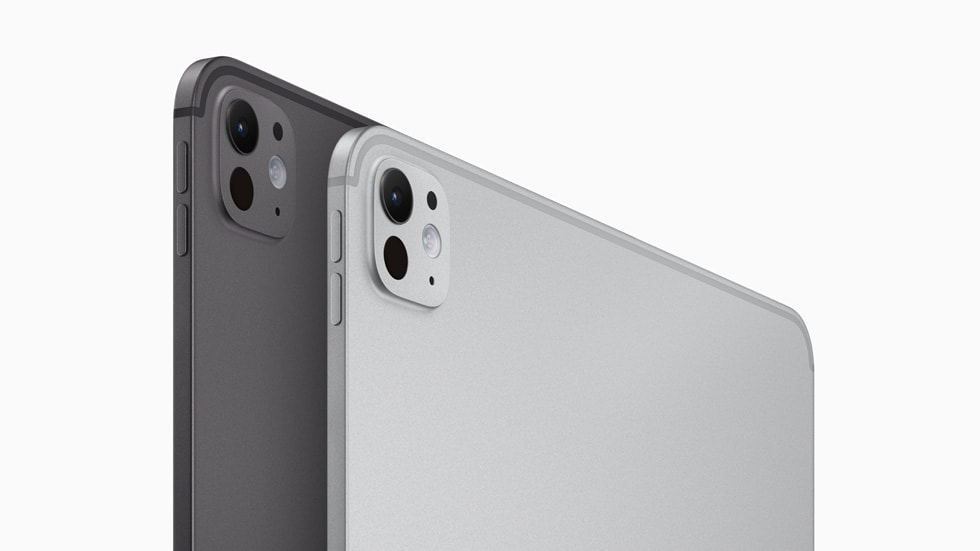
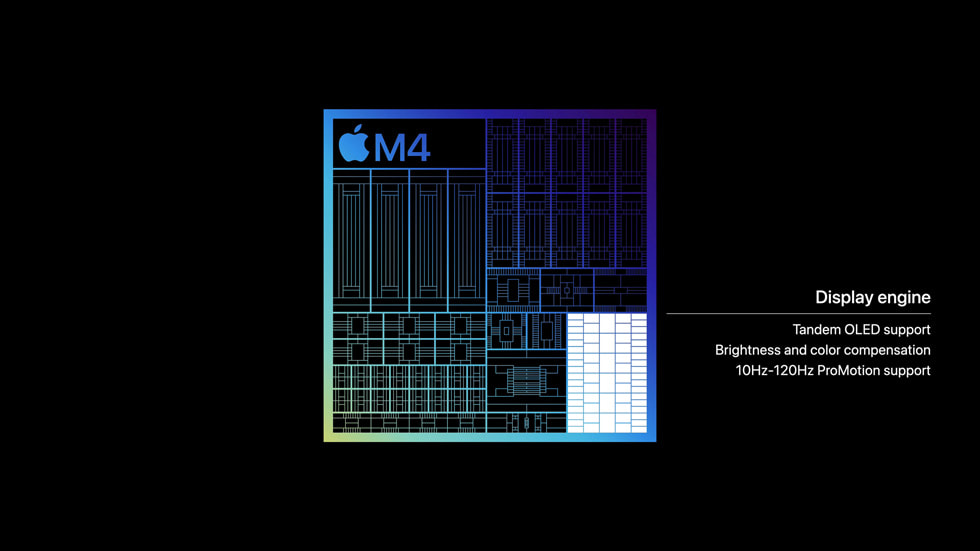
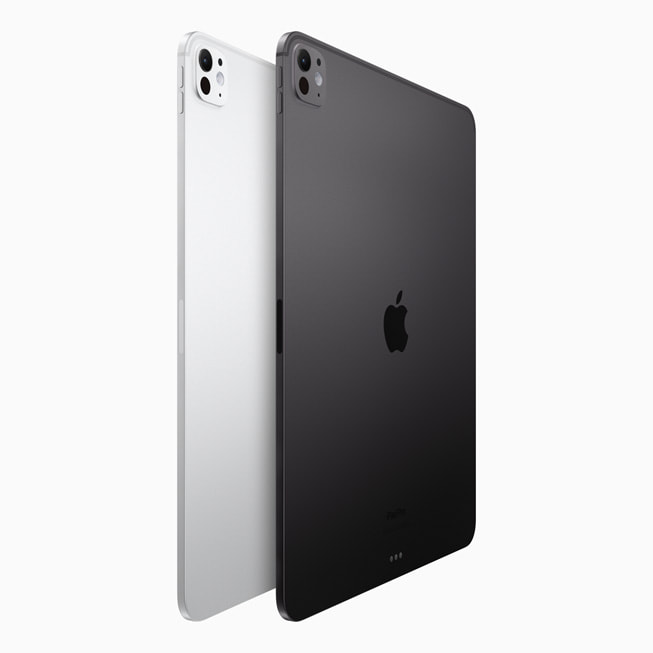
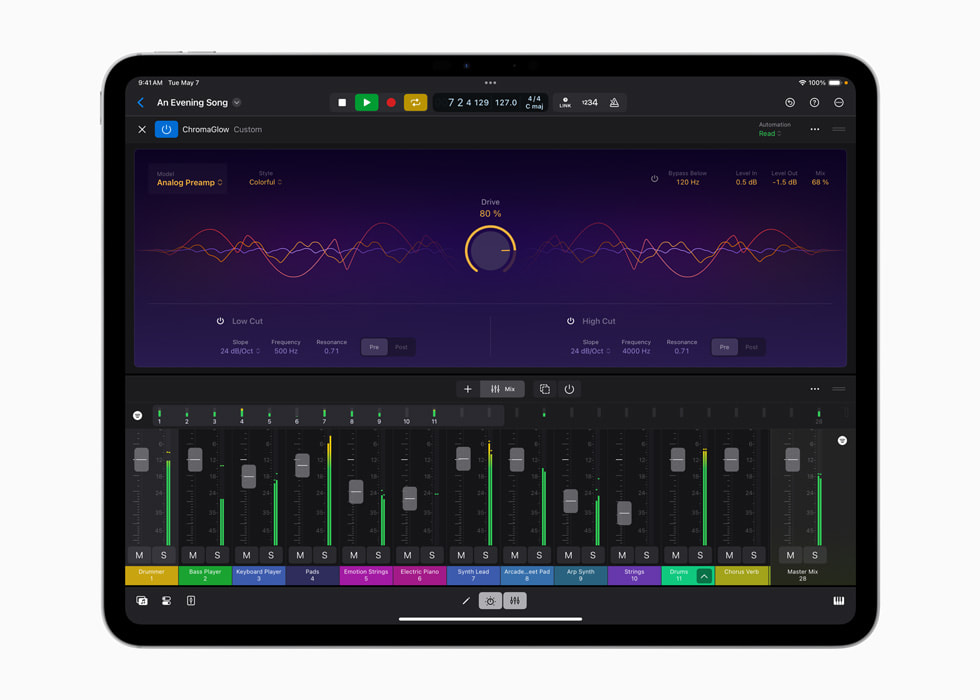
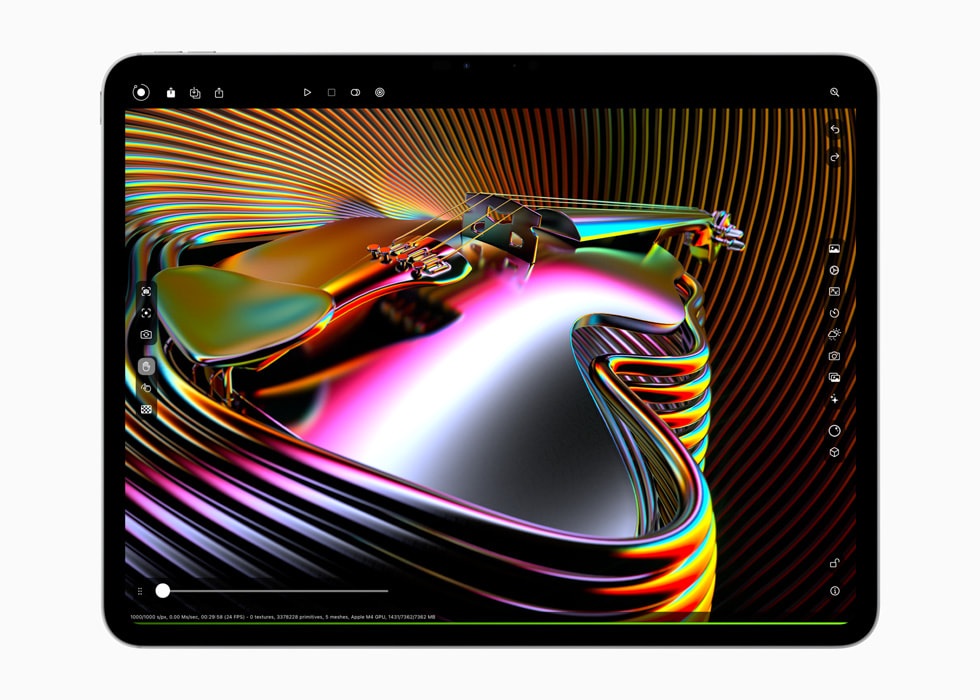
Apple has launched its new iPad Pro in silver and space black finishes and in two sizes: a 13-inch model and a 11-inch model both with an Ultra Retina XDR display with tandem OLED technology.
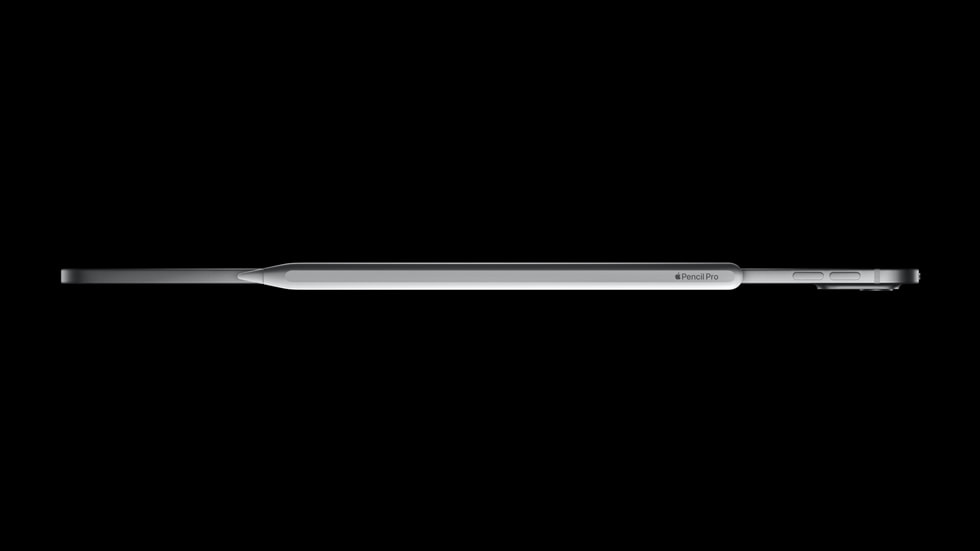
Powered by the new M4 chip, the iPad Pro also comes with an Apple Pencil Pro, and a Magic Keyboard. The new iPad Pro 11-inch model is just 5.3 mm thin while the 13-inch model at 5.1 mm. The 11-inch model weighs less than a pound, and the 13-inch model is nearly a quarter pound lighter than its predecessor.
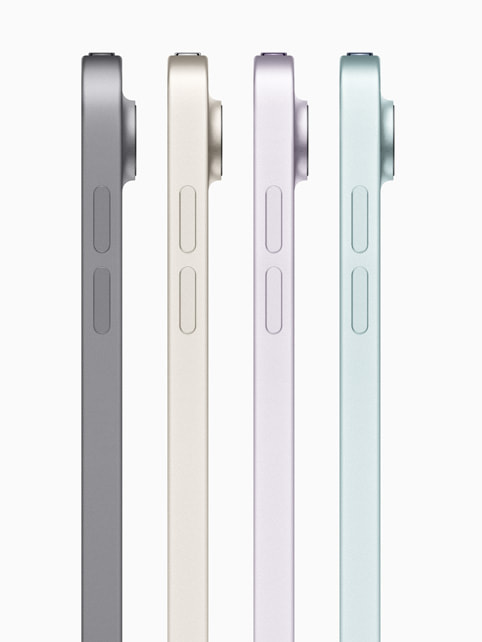
The new iPad Pro is available in two gorgeous finishes — silver and space black — both with 100 percent recycled aluminum enclosures.
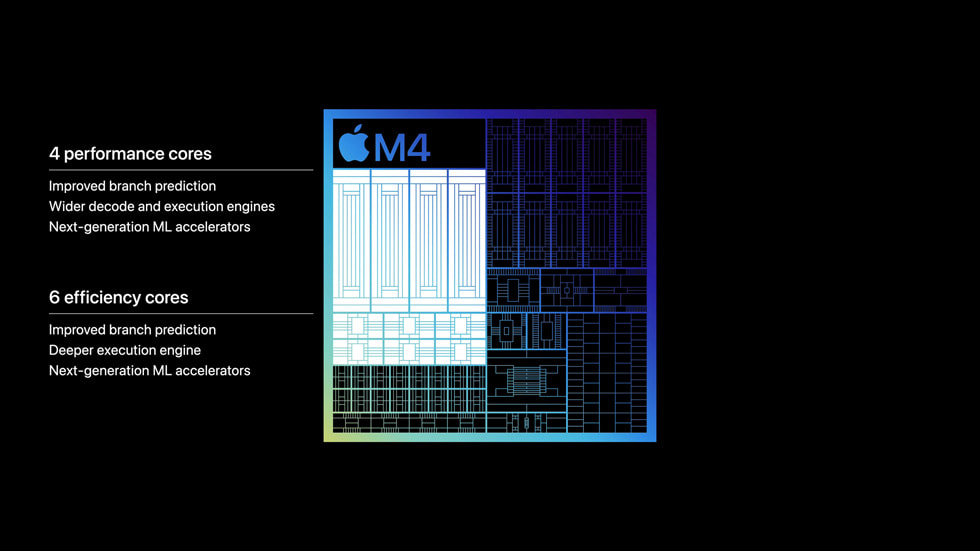
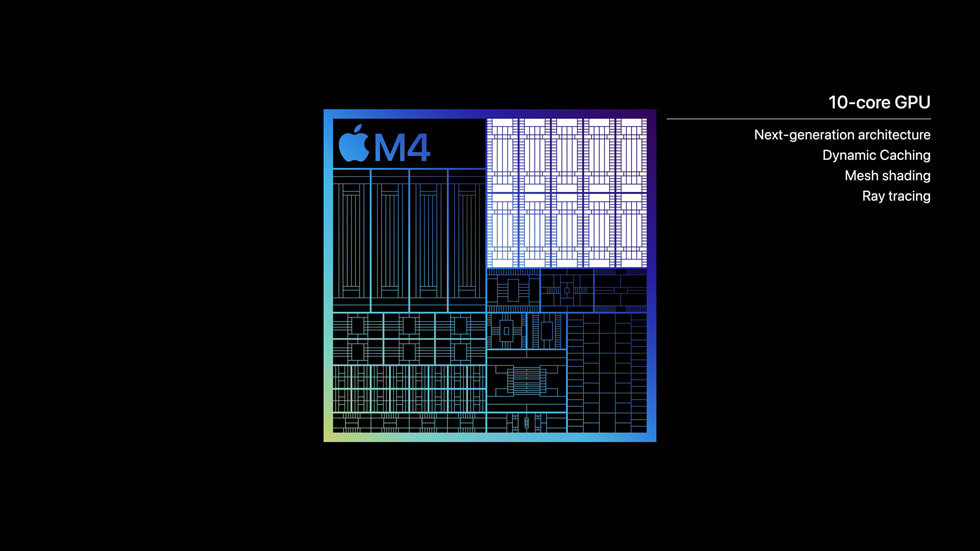
The iPad Pro runs on M4, which is built on second-generation 3-nanometer technology offering up to four performance cores and now six efficiency cores, with next-generation machine learning (ML) accelerators, to deliver up to 1.5x faster CPU performance over M2 in the previous-generation iPad Pro.
AI
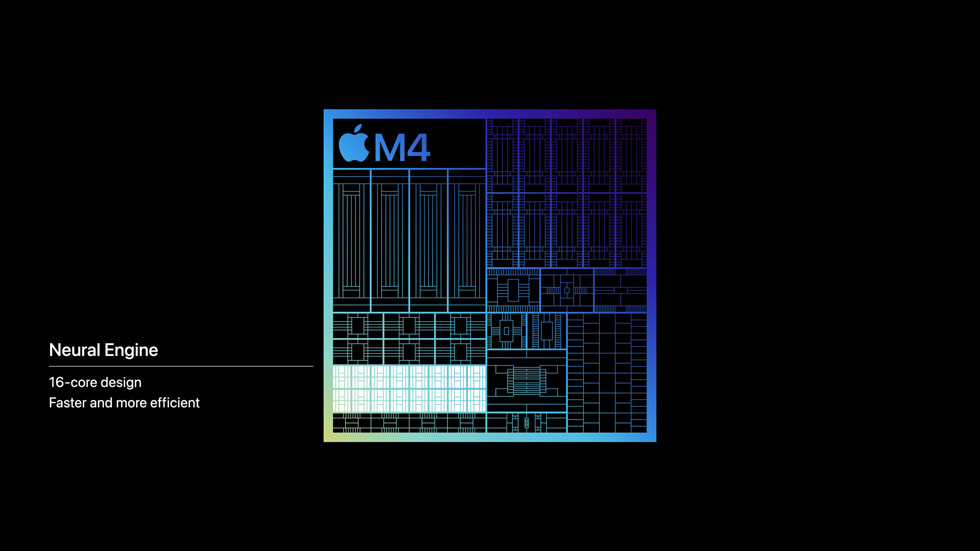
The new iPad Pro with M4 features Apple’s most powerful Neural Engine ever, capable of 38 trillion operations per second, which is 60x faster than Apple’s first Neural Engine in the A11 Bionic chip. With iPad Pro with M4, users can perform AI-enabled tasks even faster.
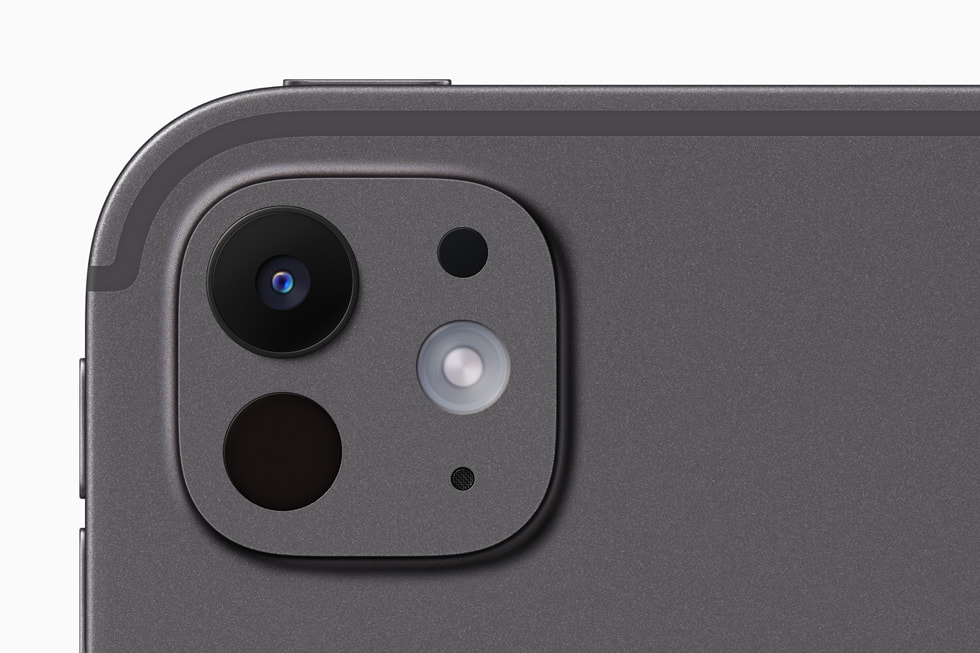
The updated camera system on the new iPad Pro delivers even more versatility, and with its rich audio from four studio-quality mics, users can shoot, edit, and share all on one device. The 12MP back camera captures vibrant Smart HDR images and video with even better color, improved textures, and detail in low light. It also now features a new adaptive True Tone flash that makes document scanning on the new iPad Pro better than ever.
On the front, the TrueDepth camera system moves to the landscape location on the new iPad Pro. The TrueDepth camera system moves to the landscape location on the new iPad Pro, making video conferencing even better.
iPad Pro includes a high-performance USB-C connector with support for Thunderbolt 3 and USB 4, delivering fast wired connectivity — up to 40Gb/s. Thunderbolt supports an extensive ecosystem of high-performance accessories, including external displays like the Pro Display XDR at its full 6K resolution, and external storage, all connected using high-performance cables and docks. iPad Pro supports Wi-Fi 6E for super-fast Wi-Fi connections for pro workflows on the go. Wi-Fi + Cellular models with 5G allow users to access their files, communicate with colleagues, and back up their data in a snap while on the go. Cellular models of the new iPad Pro are activated with eSIM.
Apple Pencil Pro
Apple Pencil Pro features even more magical capabilities and powerful new interactions that take the Apple Pencil experience even further. A new sensor in the barrel can sense a user’s squeeze, bringing up a tool palette to quickly switch tools, line weights, and colors, all without interrupting the creative process.
Apple Pencil Pro allows users to bring their ideas to life in entirely new ways, and developers can also create their own custom interactions. Apple Pencil Pro brings support for Find My for the first time to Apple Pencil, helping users locate Apple Pencil Pro if misplaced. It pairs, charges, and is stored on the side of iPad Pro through a new magnetic interface. iPad Pro also supports Apple Pencil (USB-C), ideal for note taking, sketching, annotating, journaling, and more, at an incredible value.
All-New Magic Keyboard
Designed for the new iPad Pro, the Magic Keyboard opens to the magical floating design and includes a function row for access to features like screen brightness and volume controls. It also has a gorgeous aluminum palm rest and larger trackpad that’s even more responsive with haptic feedback, so the entire experience feels just like using a MacBook. The new Magic Keyboard attaches magnetically, and the Smart Connector immediately connects power and data without the need for Bluetooth. The machined aluminum hinge also includes a USB-C connector for charging. The new Magic Keyboard comes in black with a space black aluminum palm rest, and white with a silver aluminum palm rest.
The new iPad Pro is designed with 100 percent recycled aluminum in the enclosure, 100 percent recycled rare earth elements in all magnets, and 100 percent recycled gold plating and tin soldering in multiple printed circuit boards. The packaging is 100 percent fiber-based, bringing Apple closer to its goal to remove plastic from all packaging by 2025.
Pricing and Availability
The new 11-inch and 13-inch iPad Pro will be available in silver and space black finishes in 256GB, 512GB, 1TB, and 2TB configurations.
The 11-inch iPad Pro starts at $999 (U.S.) for the Wi-Fi model, and $1,199 (U.S.) for the Wi-Fi + Cellular model. The 13-inch iPad Pro starts at $1,299 (U.S.) for the Wi-Fi model, and $1,499 (U.S.) for the Wi-Fi + Cellular model. Additional technical specifications, including nano-texture glass options, are available at apple.com/store.
For education, the new 11-inch iPad Pro is available for $899 (U.S.) and the 13-inch iPad Pro is $1,199 (U.S.). Education pricing is available to current and newly accepted college students and their parents, as well as faculty, staff, and home-school teachers of all grade levels. For more information, visit apple.com/us-hed/shop.
The new Apple Pencil Pro is compatible with the new iPad Pro. It is available for $129 (U.S.). For education, Apple Pencil Pro is available for $119 (U.S.).
Apple Pencil (USB-C) is compatible with the new iPad Pro. It is available for $79 (U.S.)and $69 (U.S.)for education.
The new Magic Keyboard is compatible with the new iPad Pro. It is available in black and white finishes. The new 11-inch Magic Keyboard is available for $299 (U.S.) and the new 13-inch Magic Keyboard is available for $349 (U.S.), with layouts for over 30 languages. For education, the 11-inch Magic Keyboard is available for $279 (U.S.) and the 13-inch Magic Keyboard is available for $329 (U.S.).
The new Smart Folio is available for $79 (U.S.) in black, white, and denim finishes for the new 11-inch iPad Pro and $99 (U.S.) for the new 13-inch iPad Pro.
Logic Pro for iPad 2 is available on May 13 as a free update for existing users, and for new users, it is available on the App Store for $4.99 (U.S.) per month, or $49 (U.S.)per year, with a one-month free trial. Logic Pro for iPad 2 requires iPadOS 17.4 or later. For more information, visit apple.com/logic-pro-for-ipad.
Final Cut Pro for iPad 2 will be available later this spring on the App Store for $4.99 (U.S.) per month, or $49 (U.S.) per year, with a one-month free trial.
Apple has announced the redesigned 11-inch and all-new 13-inch iPad Air, supercharged by the M2 chip coming with a front-facing Ultra Wide 12MP camera with Center Stage located along the landscape edge of iPad Air, perfect for video calls.
It also includes faster Wi-Fi, and cellular models include super-fast 5G and supports Apple Pencil Pro, Apple Pencil (USB-C), and Magic Keyboard.
The new iPad Air is available in new blue and purple finishes, along with starlight and space gray. The 11-inch iPad Air still starts at just $599, and the 13-inch iPad Air at just $799. The iPad Air will be available beginning Wednesday, May 15.
Landscape Front-Facing Camera
In the redesigned iPad Air, the front-facing Ultra Wide 12MP camera is now located along the landscape edge and uses machine learning (ML) to automatically keep everyone in the field of view. The 12MP Wide back camera on iPad Air is ideal for photos and detailed 4K video with support for 240-fps slo-mo. Dual microphones capture audio from the camera being used and minimize distracting background noise. The new iPad Air also has landscape stereo speakers with Spatial Audio with even better sound quality with double the bass, which is great for enjoying music and videos.
Now located along the landscape edge of iPad Air, the 12MP Ultra Wide front-facing camera with Center Stage creates a perfect video calling experience, especially when iPad Air is attached to a Magic Keyboard.
Performance with M2
The M2 chip brings another big boost in performance to iPad Air, featuring a faster 8-core CPU and 10-core GPU. M2 is a powerful chip combined with faster memory bandwidth, making the new iPad Air nearly 50 percent faster than the previous iPad Air with M1. And compared to iPad Air with A14 Bionic, the new iPad Air delivers up to 3x faster performance.
Powerful Device for AI
With M2, the new iPad Air is an amazing device for AI, featuring a more efficient 16-core Neural Engine that is 40 percent faster than M1. Combined with ML accelerators in the CPU and a powerful GPU to boost on-device machine learning, along with Apple silicon’s unified memory architecture, iPad Air delivers exceptional AI performance. Taking advantage of this performance, users can enjoy intelligent iPadOS features such as Visual Look Up, Subject Lift, or Live Text. iPadOS also has advanced frameworks like Core ML that make it easy for developers to tap into the Neural Engine to deliver powerful AI features right on device.
The new iPad Air supports Wi-Fi 6E, which delivers up to 2x increased performance than the previous generation, so users can download files, play games online, and stream movies. Wi-Fi + Cellular models with 5G allow users to access their files, communicate with peers, and back up their data in a snap while on the go. Cellular models of the new iPad Air are activated with eSIM.
Apple Pencil Pro
Apple Pencil Pro features even more magical capabilities and powerful new interactions that take the Apple Pencil experience even further. A new sensor in the barrel can sense a user’s squeeze, bringing up a tool palette to quickly switch tools, line weights, and colors, all without interrupting the creative process. Apple Pencil Pro brings support for Find My to Apple Pencil for the first time, helping users locate Apple Pencil Pro if misplaced. It pairs, charges, and is stored on the side of iPad Air through a new magnetic interface. iPad Air also supports Apple Pencil (USB-C), ideal for note taking, sketching, annotating, journaling, and more, at a great value.
iPad Air works with the Magic Keyboard, which includes a floating design, built-in trackpad, and backlit keyboard. The new iPad Air is designed with the environment in mind, including 100 percent recycled aluminum in the enclosure, 100 percent recycled rare earth elements in all magnets, and 100 percent recycled gold plating and tin soldering in multiple printed circuit boards.
Pricing and Availability
Customers can order the new iPad Air with M2 starting today, May 7, on apple.com/store, and in the Apple Store app in 29 countries and regions, including the U.S. It will begin arriving to customers, and will be in Apple Store locations and Apple Authorized Resellers, starting Wednesday, May 15.
The new 11-inch and 13-inch iPad Air will be available in blue, purple, starlight, and space gray, with 128GB, 256GB, 512GB, and 1TB configurations.
The 11-inch iPad Air starts at $599 (U.S.) for the Wi-Fi model, and $749 (U.S.) for the Wi-Fi + Cellular model. The 13-inch iPad Air starts at $799 (U.S.) for the Wi-Fi model, and $949 (U.S.) for the Wi-Fi + Cellular model.
For education, the new 11-inch iPad Air starts at $549 (U.S.), and the 13-inch model starts at $749 (U.S.). Education pricing is available to current and newly accepted college students and their parents, as well as faculty, staff, and home-school teachers of all grade levels.
The new Apple Pencil Pro is compatible with the new iPad Air. It is available for $129 (U.S.), and $119 (U.S.) for education. Apple Pencil (USB-C) is available for $79 (U.S.)and $69 (U.S.)for education.
The Magic Keyboard, available in black and white finishes, is compatible with the 11-inch and 13-inch iPad Air. It can be purchased for $299 (U.S.) for the new 11-inch iPad Air, and $349 (U.S.)for the new 13-inch iPad Air, with layouts for over 30 languages. For education, the 11-inch Magic Keyboard is available for $279 (U.S.), and the 13-inch Magic Keyboard is available for $329 (U.S.).
Apple today announced M4, its latest chip built using second-generation 3-nanometer technology. The system on a chip (SoC) has Apple’s fastest Neural Engine ever, capable of up to 38 trillion operations per second, which is faster than the neural processing unit of any AI PC today.
M4 promises faster memory bandwidth, next-generation machine learning (ML) accelerators, and a high-performance GPU, making it great for artificial intelligence.
New Technologies Enabling the New iPad Pro
The M4 consists of 28 billion transistors built using a second-generation 3-nanometer technology with advanced power efficiency.
New 10-core CPU
M4 comes with up-to-10-core CPU consisting of up to 4 performance cores and 6 efficiency cores and delivers up to 1.5x faster CPU performance over the powerful M2 in the previous iPad Pro.
GPU Brings New Capabilities to iPad Pro
The new 10-core GPU of M4 builds upon the next-generation graphics architecture of the M3 family of chips. It features Dynamic Caching, allocating local memory dynamically in hardware and in real time to dramatically increase the average utilization of the GPU. This significantly increases performance for the most demanding pro apps and games.
The new GPU of M4 will bring hardware-accelerated ray tracing to iPad for the first time, enabling even more realistic shadows and reflections in games like Diablo Immortal, and other graphically rich experiences.
Hardware-accelerated ray tracing comes to iPad for the first time, and enables even more realistic shadows and reflections in games and other graphically rich experiences. Hardware-accelerated mesh shading is also built into the GPU, and delivers greater capability and efficiency in geometry processing, enabling more visually complex scenes in games and graphics-intensive apps. Pro rendering performance in apps like Octane gets a huge boost with M4, and is now up to four times faster than on M2. M4 can deliver the same performance as M2 using just half the power.
M4 has a blazing-fast Neural Engine — an IP block in the chip dedicated to the acceleration of AI workloads. This is Apple’s most powerful Neural Engine ever, capable of an astounding 38 trillion operations per second — a breathtaking 60x faster than the first Neural Engine in A11 Bionic. Together with next-generation ML accelerators in the CPU, the high-performance GPU, and higher-bandwidth unified memory, the Neural Engine makes M4 an outrageously powerful chip for AI. And with AI features in iPadOS like Live Captions for real-time audio captions, and Visual Look Up, which identifies objects in video and photos, the new iPad Pro allows users to accomplish amazing AI tasks quickly and on device.
iPad Pro with M4 can easily isolate a subject from its background throughout a 4K video in Final Cut Pro with just a tap, and can automatically create musical notation in real time in StaffPad by simply listening to someone play the piano. And inference workloads can be done efficiently and privately while minimizing the impact on app memory, app responsiveness, and battery life. The Neural Engine in M4 is Apple’s most capable yet, and is more powerful than any neural processing unit in any AI PC today.
M4 has a blazing-fast Neural Engine that can easily isolate a subject from its background throughout a 4K video in Final Cut Pro with just a tap.
Launched in 2013, with $17.2 million in debt and equity funding, iProcure, which provides an agricultural supply chain platform in rural Africa, has been put under administration over unpaid debts.
Global advisory consulting firm KPMG has been appointed administrator and taken control of iProcure’s assets, operations and debts.
Sendy was put under administration after failing to raise follow-on funding or getting a buyer. Startups across the continent are having it rough due to the current credit crunch and due to a poor economic environment following the devastation of COVID-19.
“All the affairs and business and properties of the company are being managed by the Administrator. The directors of the company no longer have any power or authority to deal with these matters. Any party having a claim against the company should submit their claim in writing, with relevant supporting documentation to the Administrator on or before May 14 2024 for consideration,” KPMG said in a public notice.
Founded in 2015 by Meshack Alloys, Evanson Biwott, Don Okoth, and Malaika Judd, the logistics startups bringing together and connecting trucks, delivery vans and motorcycle riders to delivery jobs and fulfillment centers digitally hoped to make money out of the transport business serving digital commerce platforms. Despite raising over KES 2 billion in funding from firms such as Atlantica Ventures and Toyota Tsusho Corporation and additional funding from MOL PLUS last year, the firm has not been able to survive the post-COVID economic conditions and bad uptake of eCommerce and freight in the country.
Similarly, iProcure raised funding from early on to improve farmers retail operations by improving their inventories, orders, point of sale activities, and client profiles along with geo-located purchasing patterns, real-time agent performance and transaction analysis, and built-in mobile payments.
Founded in 2012 and launched in 2013 by Stefano Carcoforo and Nicole Galletta, the platform’s mission is to facilitate and encourage local procurement, in Kenya, by providing a secure and functional platform where businesses and Institutional buyers can connect to and source goods and services from a base of reliable pre-screened vendors. The Village Capital alumni was helping farmers access high-quality farming inputs and equipment conveniently and affordably. The platform was also helping retailers better predict demand with business intelligence data, improve inventory management, and streamline distribution efficiency.
“We have built out a Pan-African distribution infrastructure, and we are using these funds to scale our operations in our two markets and to enter Tanzania. We’re also going to be allocating some of the resources toward introducing higher-quality cheaper products that we are sourcing from international players,” said iProcure co-founder and chief data and growth officer, Stefano Carcoforo.
The Fintech Association of Kenya has announced the appointment of Joseph Githaiga, a distinguished corporate attorney and regulatory compliance specialist, to its Advisory Board, effective May 1, 2024.
Mr Githaiga brings to the board a wealth of expertise acquired through his extensive career, notably serving as a Partner and Co-Founder at Spencer West LLP and formerly as Director and Head of Legal Business Solutions at PwC Kenya.
With over a decade of leadership in legal and regulatory domains, Mr Githaiga has forged innovative legal and regulatory solutions across various sectors, including finance, technology, and corporate governance.
His tenure at PwC Kenya saw the establishment of a tailored legal consulting division, offering comprehensive services ranging from M&A support to regulatory compliance and corporate restructuring.
Prior to PwC, Mr Githaiga held prominent positions at Standard Chartered Bank, overseeing compliance across East Africa for the Corporate & Institutional Banking sectors, and at Coulson Harney Advocates, specializing in corporate legal strategies and transactions.
Chairperson of the Fintech Association of Kenya, Duncun Motanya expressed gratitude for Mr Githaiga’s appointment, stating, “Joseph has been actively involved in shaping policy, advocacy, and regulatory frameworks in the fintech sector.”
He highlighted Mr Githaiga’s contributions to initiatives such as a comparative study on digital lending regulation and a research collaboration with TheCityUK in 2022.
Mr Motanya emphasized Mr Githaiga’s extensive regulatory experience and strategic insights, which will be invaluable in navigating the fintech landscape and advocating for progressive regulatory frameworks.
Commenting on his appointment, Mr Githaiga stated, “I am privileged to join the Advisory Board of the Fintech Association of Kenya. This role presents an exciting opportunity to utilize my experience in fostering robust regulatory practices and corporate governance to support the growth and sustainability of the fintech sector in Kenya and beyond.”
Mr Githaiga will collaborate with recent appointees, including Frank Molla, to strengthen the association’s strategic partnerships and governance frameworks. “His advisory role will play a crucial part in driving initiatives aimed at promoting ethical business practices and facilitating strategic growth within the fintech community,” the association noted.
Chief Justice Martha Koome emphasized the importance of robust data privacy enforcement during the opening ceremony of the 9th Network of African Data Protection Authorities (NADPA) Annual General Meeting and Conference held at the Windsor Golf Hotel and Country Club in Nairobi.
“Privacy is not just a legal obligation, it’s a fundamental right,” Chief Justice Koome declared.
She underscored its importance in constitutions and international human rights instruments, acting as the cornerstone for individual autonomy, dignity, and trust in the digital world.
“As custodians of citizens’ personal data, it is our duty to ensure that their rights to privacy are respected and upheld. The importance of data protection lies not just in compliance with laws, but in upholding the trust and confidence that citizens place in public institutions,” the CJ noted.
Balancing Rights and Efficiency
The Chief Justice highlighted the dual responsibility of data protection authorities: ensuring citizens’ privacy rights are respected while enabling efficient data sharing between public institutions.
“Collaboration is key,” she stated, advocating for unified data collection practices across sectors. “By working together, we can minimize redundant data collection and intrusive practices, leading to increased transparency, reduced bureaucracy, and a more efficient justice system.”
Africa as a Leader in Data Protection
Chief Justice Koome envisioned a future where African nations champion data protection.
“Through collaboration, we can establish data ecosystems that serve public interests while safeguarding privacy rights,” she said. “Africa can become a leader, setting global data protection standards.”
The conference comes at a crucial time for Kenya, as the Chief Justice noted: “Our courts are actively developing legal interpretations to uphold data privacy protections.”
The 9th NADPA conference serves as a platform for African data protection authorities to share best practices, discuss challenges, and collaborate towards a future where data privacy is respected across the continent.
Egypt’s fintech startup, Swypex has raised a $4 million seed investment round, to help it become the first comprehensive platform designed to eliminate financial inefficiencies and unlock a business’s full potential.
The round was led by Accel with participation from Foundation Ventures, The Raba Partnership, among others.
Licensed by the Central Bank of Egypt, Swypex consolidates payments, invoice management, and smart corporate cards on a unified platform to empower businesses to automate financial workflows and make payments with ease.
In a statement, Ahmad Mokhtar, CEO of Swypex, said,“By empowering businesses with the most powerful corporate card in Egypt, paired with our all-in-one financial platform, we will help businesses simplify their financial operations and improve their financial health. Swypex is the first and last platform a finance team needs. We’re excited to partner with Accel, Foundation Ventures, and Raba to make this vision a reality, and we look forward to continuing this journey.”
According to the UNDP, 3.8 million businesses are currently struggling with complex and rigid financial systems. Forced to use multiple disjointed processes to manage their finances, SMEs and corporates alike have suffered from reduced financial visibility and control, leading to inefficient financial processes. Additionally, employee fraud is a costly issue, with businesses averaging a 5% revenue loss annually. To overcome these obstacles, the last few years have seen the CBE launch a wave of regulations and initiatives to transition businesses away from cash and onto digital payment rails. These are now coming into force and providing additional tailwinds for financial innovation.
“As the payments space continues to digitise, the opportunity to provide modern fintech products to Egyptian businesses has become even more important,” says Richard Kotite, Vice President at Accel. “Ahmad, Tarek, and Sasan have spotted a gap in the market for a comprehensive B2B solution that addresses many of the key pain points businesses regularly face while driving a step-change in efficiency. We see a real opportunity for Swypex to become a fintech champion across the Middle East. The team is technically experienced and highly ambitious, and we are delighted to be joining them on this journey.”
Combining their strong technical backgrounds, Swypex founders Ahmad Mokhtar, CEO (ex-Playstation), Tarek Mokhtar, CPO (ex-Spotify), and Sasan Hezarkhani, CTO (ex-Twitter), set out to redefine financial management and become a business’s competitive advantage. Swypex offers a unified and intuitive financial platform that scales with each business, saving them time and money.
Egyptian businesses can open a Swypex account today and get three free cards.
Seamfix, an digital identity solutions provider, has secured $4.5 million to scale the technology infrastructure, improve data flow crucial for continental trade and integration, and kickstart the expansion of its digital ID and credential services into five new African countries.
The funding round was from Alitheia IDF, a gender lens investing fund, in a private equity funding round and will help the firm to expand its services to Ghana, Kenya, South Africa, Ethiopia, and Uganda. Seamfix is also welcoming two new board members – Tokunboh Ishmael and Frank Atube. Tokunboh is the Co-founder and Principal Partner of Alitheia Capital and a global voice for wealth creation and transformational impact.
According to Chimezie Emewulu, Group CEO, and co-founder of Seamfix, “ This investment not only validates our vision but also empowers us to expand our reach and innovate further. We are thankful for the support from Alitheia IDF and their commitment to our mission, and we are excited to lead the charge in shaping a digitally inclusive Africa.”
Starting in Nigeria, Seamfix provides identity creation, verification and transaction accreditation solutions for large organisations and government agencies across multiple African countries. Digital ID and verification systems are crucial to unlocking significant economic value across Africa’s growing and increasingly digital societies. From financial participation and efficiency in government services to public health and job creation, digital ID and verification systems are a fundamental driver of economic growth on the continent.
Since the company was founded by Chimezie Emewulu and Chibuzor Onwurah, Seamfix has been at the cutting edge of delivering end-to-end digital ID and credentials solutions for connecting businesses and individuals to the disparate identity databases in Africa and across the world. The company has delivered a wide range of solutions for organizations such as Veremark, Nigeria’s National Identity Management Commission [NIMC], telcos (MTN, Glo, Airtel and 9 Mobile), financial institutions (United Bank for Africa, Interswitch and Union Bank) and more, enabling them and their customers globally to seamlessly create, verify and access trusted digital identities and services.
Seamfix’s key achievements include the successful development of a digital solution enabling widespread access to National Identification Numbers (NINs) for more than 100 million Nigerians. Seamfix also supported Nigerian telecommunications services providers, to register and verify a database of over 200 million Subscriber Identification Modules (SIMs) to comply with Nigerian Communications Commission regulations. Seamfix currently works with major telcos across Africa (Nigeria, Côte D’Ivoire, Liberia, Sudan, Guinea-Bissau and more) on their SIM registration, verification and linkage to national identities. Thousands of fintechs and SMEs rely on Seamfix’s verification APIs for KYC checks during customer onboarding and employee background checks.
Seamfix’s digital credential platform has also transformed the credential issuance and certification process for multiple universities across Africa, powering them to issue instantly verifiable credentials and transforming the process of certifying credentials such as student transcripts and other official documents from over 6 months to a matter of days. This transformation has also been responsible for more than 2,000 per cent growth in internally generated revenue at these universities.
Frank has experience in leading cross functional teams across Project & Product Management, Business Analysis, Sales & Marketing, Customer experience and Engineering. He has functioned in many capacities in Seamfix including Head of Product Management, Head of Growth and most recently Chief Operating Officer. Frank has been critical to the successes Seamfix has recorded especially in terms of growth in revenue, profitability and customer acquisition.
Tokunboh Ishmael, Principal Partner, Alitheia IDF, said “in an increasingly digital-first world where digital platforms are enabling inclusion and broadening access to essential services, digital IDs are key to accessing opportunities. According to a recent McKinsey report, such access can result in the unlocking of up to 70% of an economy’s full economic potential and an additional 6% of GDP. This is particularly pertinent, when you consider that studies show that low-income women in emerging economies are less likely to have a digital ID, which further hinders their ability to participate in economic value creation and access opportunities. With this investment Alitheia IDF is working with Seamfix to amplify its work in enabling millions of women to participate in the African economy and reach their full potential by providing crucial identification services and empowering businesses across the continent to scale”
Today marked the commencement of the Network of African Data Protection Authorities (NADPA) conference at the Windsor Golf Hotel and Country Club.
Running from the 7th to the 8th of May 2024, the conference serves as a crucial platform for advancing discussions and collaborations on data protection across the African continent, particularly in the context of the digital transformation era.
Under the theme “Promoting Regional Data Governance for Digital Transformation,” the conference aims to facilitate discussions on various sub-themes during panel sessions.
This gathering holds significant importance as Kenya hosts the NADPA – RAPDP Conference for the first time since its selection during last year’s 8th conference in Ouagadougou, Burkina Faso.
Distinguished guests and dignitaries at the event include Yankuba Saidy, the Permanent Secretary of the Ministry of Information in Gambia; Data Commissioners from Kenya, Uganda, Tanzania, and Rwanda; Eng. John Tanui, the Principal Secretary of the State Department for ICT & Digital Economy; Chief Justice Martha Koome; ICT Cabinet Secretary Eliud Owalo; Mme Sanady Tchimaden Hadatan, President of the Haute Autorité de Protection des Données à caractère Personnel in Niger; Sebastian Groth, the German Ambassador to Kenya, and representatives from partner organizations and exhibitors such as KCB Group, AWS Cloud, Konza Cloud, TechHive, Media Council, and Kenya ICT Action Network (KICTANet).
The conference was officially opened by the Cabinet Secretary for ICT and the Digital Economy, Eliud Owalo who noted: “We should optimise data infrastructure to avoid duplication of resources. If one country has a data centre, how do we utilise it as Africa. We must also continue with digitalisation but enhance our legal and regulatory framework on which our data storage is anchored to enhance privacy.”
PS Tanui highlighted the importance of data in today’s digital age, emphasizing the need for collaboration to optimize Africa’s digital potential.
“Data is now viewed not only as the new oil but as a source of truth. We have authorities that help us ensure that personal data is well protected and put to proper use. As a continent, we have a huge opportunity. The digital economy is growing about 2.5 times faster than the physical economy. As a country, as a continent,we shall be discussing how can we optimize this marching space, by accelerate connectivity, and ensure access and flow of data across the continent. We are very excited as a country, as a Ministry, to connect more with our colleagues from the continent,” said PS Tanui.
Data Commissioner, Immaculate Kassait reiterated the conference’s theme, emphasizing its role as a platform for networking, knowledge exchange, and capacity building in data governance and protection.
“The theme of this conference is to promote regional data governance for digital transformation. It seeks to provide all participants with a platform to network, exchange knowledge, and gain new ideas and perspectives from peers on Africa’s digital transformation journey.It is a platform for capacity building and showcasing of the best practices in data governance and protection,” noted Ms Kassait.
Chief Justice, Martha Koome emphasized the role of data in evidence-based decision-making, underlining its potential to enhance governance, service delivery, and accountability.
“We are in an era where we’re pursuing data informed and evidence-based decision making. The collection and usage of data presents incredible opportunities to improve governance, track service delivery and seek accountability,” noted CJ Koome.
KCB Group Chief Executive Officer (CEO), Paul Russo noted that the conference, “Is key to sustainability of our businesses and it is a platform for us to grow the digital economy.
Ambassador Sebastian Groth emphasized the significance of data protection laws and international collaboration for a safe digital future, particularly highlighting the dialogue between Kenya and the European Union (EU).
“New data protection laws and collaboration between authorities are crucial for a safe digital future. Excited for the first adequacy dialogue between Kenya and the EU, building a foundation to facilitate free and safe cross-border data flows.Data protection is not just a technical issue. It’s a fundamental one to build trust.”
On his part, Deputy Ambassador to EU, Odrij Simek noted: “Data has endless potential across all sectors. The risks such as data breaches, cyber attacks, cyber stalking, identity fraud etc are also there and should be mitigated. New data laws and authorities are being set-up to provide oversight. Security and innovation goes hand in hand. Collaboration between data protection authorities across the region and globe is needed to ensure harmonisation.”