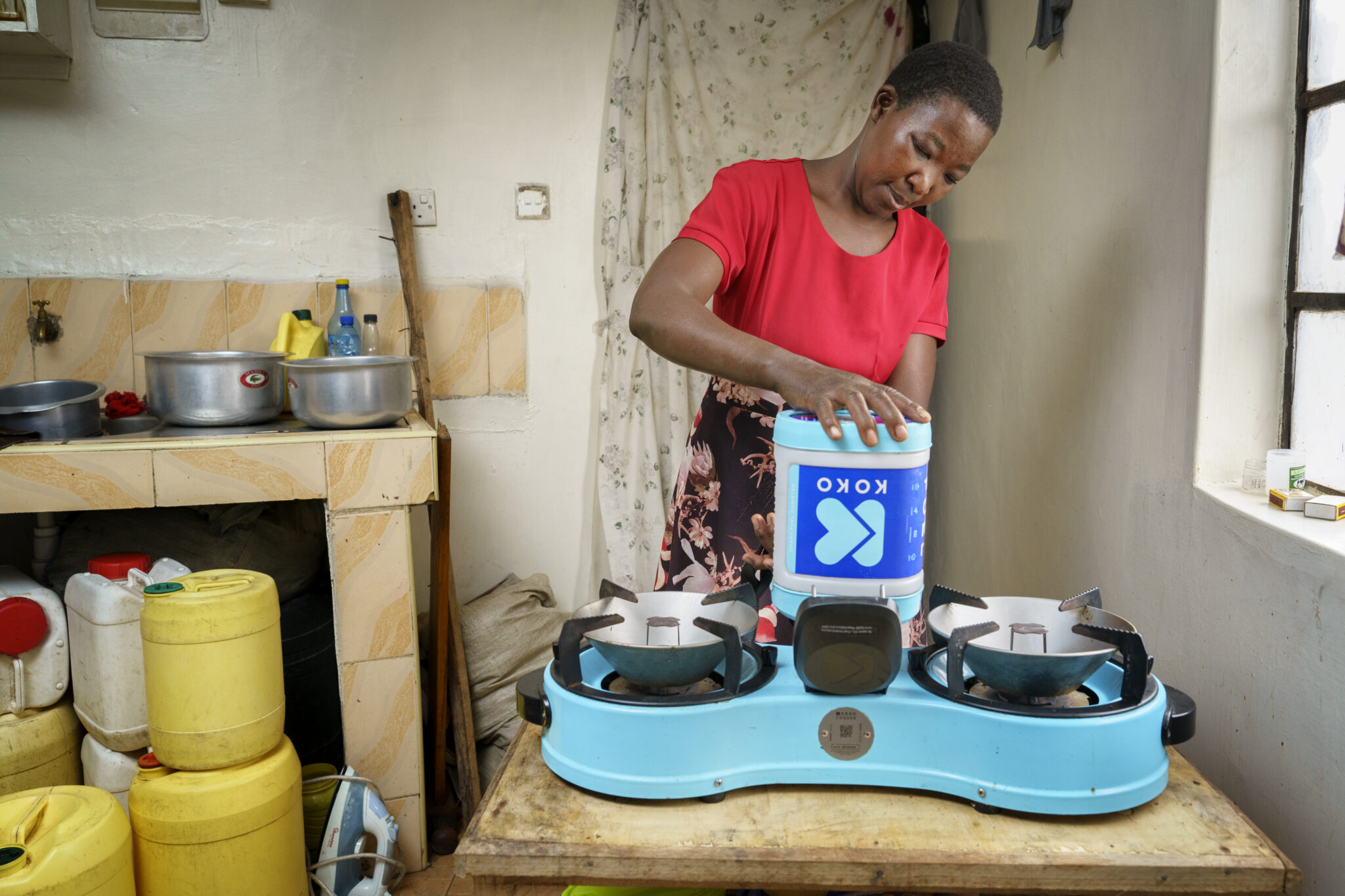
Kenya’s clean-energy sector has been dealt a significant blow after Koko Networks, the high-profile bioethanol startup, collapsed into administration following a failed bid to secure government approval for carbon credit sales.
On 1 February, directors of Koko Networks Limited and Koko Networks appointed Muniu Thoithi and George Weru of PricewaterhouseCoopers (PwC) as joint administrators, reports state.
This move, made under the Insolvency Act 2015, follows a weekend of “crisis meetings” at the firm’s headquarters after a vital lifeline from the Ministry of Environment was abruptly severed.
The $300M Collapse
The insolvency proceedings place a business that served upwards of 1.3 million low-income households and managed $300 million (£238m) in infrastructure investment under the control of auditors.
Consequently, the fallout has been immediate; more than 700 employees were laid off on 31 January, just a day before the administrators formally took charge.
PwC has confirmed it now holds “control and management of the assets and affairs” of the companies. Their primary objective, according to a formal notice, is to explore ways of rescuing the business as a “going concern” or, failing that, achieving a better outcome for creditors than a standard liquidation.
The sudden decline of Koko appears to be rooted in a regulatory deadlock as reported. For nearly two years, management had been negotiating for a Letter of Authorisation (LOA) from the Kenyan government, which would have permitted the sale of carbon credits on the international market.
While insiders say negotiations were “going well” as recently as 2025, optimism evaporated last Wednesday when a senior Ministry of Environment official reportedly “trashed” the progress made.
This rejection proved fatal, as Koko’s carbon-finance backers had tied their investment, totalling over $300 million in equity and debt to the receipt of that specific document.
Without these revenues, the company could no longer subsidise its fuel to the price of KES 30 ($0.23) promised to its customers.
The reports further stated that despite its rapid expansion across Kenya and Rwanda, Koko had been struggling with logistical and financial headwinds since early 2024.
For instance, in April 2024, the Energy and Petroleum Regulatory Authority (EPRA) suspended bioethanol imports, forcing the firm to buy more expensive local supply.
In addition to that, the local pivot destabilised fuel logistics and depleted funds originally earmarked for its Rwanda operations.
Also, by late 2025, many of the 3,000 automated fuel shops across the network were plagued by shortages.
The company’s model relied on selling two-burner smart stoves at a heavily subsidised KES 1,950 ($16), a price far below manufacturing costs, offset entirely by anticipated carbon income.
The collapse comes despite backing from heavyweight investors, including Microsoft’s Climate Innovation Fund and a $179.6 million guarantee from the World Bank’s Multilateral Investment Guarantee Agency (MIGA).
PwC is expected to communicate how salary arrears and redundancy obligations will be handled in the coming days. In the meantime, anyone with a claim against the company has been given 14 days to submit their details to the administrators to be included in the creditors’ roll.