Home Blog Page 10

Twiga Foods Enters Administration After Raising $185 Million

0

Twiga Foods, one of Kenya’s best-funded technology startups, has entered statutory administration, marking a major setback for a company that raised about $185.4 million in disclosed funding and was once positioned as a leading technology platform for transforming Africa’s fragmented food supply chain.

The company’s operating entity, GT Flow Limited, formerly known as Twiga Foods One Limited, entered administration on August 17, 2026, according to Gazette Notice No. 14595 published in the Kenya Gazette on September 11.

The company’s directors can no longer deal with its assets without the administrator’s authorization, while creditors have 30 days from publication of the notice to submit their claims. Mohamed Mohamed was appointed administrator, giving him control over the company’s business, assets and affairs.

The move follows years of financial pressure, cost-cutting, management changes, creditor disputes and attempts to restructure Twiga’s capital-intensive distribution model.

Administration does not mean Twiga has been liquidated. Under Kenya’s insolvency framework, the administrator is expected to determine whether the business can be rescued, whether creditors would obtain a better outcome through continued operations or restructuring, or whether assets ultimately need to be sold.

From startup darling to financial distress

Founded in 2014 by Peter Njonjo and Grant Brooke, Twiga built a technology-enabled distribution network designed to connect farmers and manufacturers with informal retailers.

The company sought to eliminate some of the inefficiencies and middlemen in Kenya’s food supply chain by combining digital ordering with centralized procurement, warehousing and logistics. The model attracted significant international backing with Twiga raising approximately $185.4 million in disclosed equity and debt financing during its lifetime, making it one of the most heavily funded startups in Kenya and one of the continent’s most prominent agritech ventures.

TechMoran reported on Twiga’s $50 million funding round in 2021, when the company was preparing for further expansion of its technology and distribution platform. At its peak, Twiga’s proposition was built around using technology to coordinate one of the most difficult parts of African commerce: moving food from producers to thousands of small retailers efficiently and affordably.

But the business required substantial spending on warehouses, distribution centers, employees, vehicles, inventory and working capital. That infrastructure ultimately became one of the company’s biggest challenges.

Warning signs emerged in 2023

Twiga’s financial difficulties became increasingly public in 2023. The company cut about 283 employees, roughly a third of its workforce at the time, as it attempted to reduce operating costs and move toward a leaner organization. In September 2023, TechMoran reported that Twiga faced a potential liquidation petition over an outstanding $263,691 debt claimed by Incentro Africa for Google Cloud services. Twiga disputed the claim and challenged the liquidation process. The dispute was eventually resolved.

In January 2024, TechMoran reported that Twiga Foods and Incentro Africa had reached an agreement and that Incentro had withdrawn its statutory demand against the company. The resolution, however, did not eliminate the broader financial pressures facing the business.

Founder Peter Njonjo steps aside

Twiga’s leadership also changed during the period of financial stress. In December 2023, TechMoran reported that co-founder and CEO Peter Njonjo had taken a six-month sabbatical following what he described as an “intense 2023.” The company said it was working with investors on refinancing and restructuring while also seeking to settle outstanding supplier obligations. In Janaury 2024, Njonjo announced his resignation from the firm, years after his co-founder had exited the firm.

After Njonjo left the company’s leadership, and in April 2024 Twiga appointed Charles Ballard, the former Jumia Kenya chief executive, as CEO. TechMoran reported that Ballard’s mandate included steering Twiga through its next phase of growth after a difficult 2023 marked by layoffs and the liquidation dispute. Twiga tries to become asset-light by 2025, the company was pursuing a much more radical restructuring.

TechMoran reported in June 2025 that Twiga was implementing an internal restructuring known as Project Easter, under which it planned to create a leaner NewCo and move much of its logistics operation to third-party providers.

The plan involved 319 employees leaving the company, reducing the workforce to about 435 people, while logistics operations were to be increasingly handled by companies including Jumra, Sojpar and Raisons. The restructuring represented a fundamental shift in Twiga’s original model.

Instead of owning and operating much of its physical distribution infrastructure, the company sought to become a lighter technology and coordination platform while relying on third-party logistics providers. The objective was straightforward: reduce the company’s burn rate and make the underlying business economically sustainable. But the scale of the restructuring also illustrated how far Twiga had moved from its earlier growth strategy.

A second attempt to avoid insolvency

TechMoran had already reported in April 2025 that Twiga was selling or transferring parts of its distribution operations to Jumra, Sojpar and Raisons, as the company attempted to avoid insolvency and reduce the burden of its logistics infrastructure. The strategy was designed to preserve distribution capacity while reducing the costs associated with operating the network directly. The latest administration suggests those efforts were ultimately insufficient to resolve the company’s financial problems.

Creditors now face the next stage

The administration of GT Flow puts the company’s financial position under a formal insolvency process. The administrator must now assess the company’s assets and liabilities, verify creditor claims and determine the most viable path for the business. A separate financial problem had already emerged elsewhere in the Twiga ecosystem.

In March 2026, creditors filed a winding-up petition at Kenya’s High Court seeking the liquidation of Twiga Tatu SEZ Limited, another entity associated with the group. It remains unclear from the administration notice exactly which assets, liabilities and operations of the broader Twiga ecosystem fall within GT Flow’s administration.

What went wrong at Twiga?

Twiga’s administration highlights the difficult economics of building technology businesses that depend on physical infrastructure.

The company was not simply a software platform. Its model required the movement of real products through warehouses, distribution centers and transport networks while maintaining sufficient working capital to purchase and distribute inventory.

That created a significantly higher cost base than a pure software startup.

The company also expanded during a period when global investors were willing to finance rapid growth, before the venture capital market shifted toward profitability, stronger unit economics and lower cash burn.

Twiga subsequently faced the same pressures confronting many African startups: higher operating costs, tighter access to venture capital and growing investor demands for a path to profitability.

Its repeated restructuring efforts show how difficult it proved to reconcile the economics of physical distribution with the expectations attached to a venture-backed technology company.

From $185 million to administration

Twiga’s journey is now one of the most significant cautionary stories in Kenya’s startup ecosystem.

The company raised hundreds of millions of dollars in equity and debt, attracted some of the world’s biggest institutional investors and built one of Africa’s most recognizable technology-enabled food distribution platforms.

Yet capital alone could not solve the fundamental challenge of building a profitable distribution network in a highly fragmented market.

TechMoran’s reporting over the past three years documented the progression from the 2023 layoffs and creditor dispute, through Njonjo’s departure and the appointment of Ballard, to the 2025 NewCo restructuring and outsourcing of logistics. The administration now puts the future of one of Kenya’s most prominent startup stories in the hands of an administrator. For Twiga, the immediate question is no longer how quickly it can expand. It is whether there is enough viable business left to save.

Grindstone Ventures Launches $27.7M Fund to Target South Africa’s Startup Funding Gap

0

Grindstone Ventures has launched a $27.7 million venture fund targeting high-growth, technology-enabled African businesses from Seed through Series A, seeking to close a financing gap that often leaves startups struggling between early commercial traction and institutional-scale investment.

Led by Thandiwe Maqetuka, the fund was established in partnership with Knife Capital and Thinkroom. It follows the deployment of Grindstone Ventures Fund I, which invested in seven companies and helped attract additional seed and growth capital from South African and international investors.

The new fund is targeting an initial close of about $8.3 million and plans to build a portfolio of 15 to 20 businesses, primarily in South Africa while selectively backing companies elsewhere on the continent.

Targeting Africa’s “missing middle”

Grindstone Ventures is targeting startups that have moved beyond initial product and market validation but have yet to reach the scale typically required to attract larger institutional investors.

“The evolution from Seed to Series A remains one of the clearest gaps in the African venture ecosystem,” said Keet van Zyl, co-founder of Knife Capital.

The funding challenge comes as Africa’s technology investment market remains uneven, with Seed-stage funding declining for a third consecutive year despite broader improvements in startup financing across the continent.

Maqetuka said the new fund is designed for businesses caught between demonstrating commercial demand and reaching the scale required to attract larger pools of capital.

“That is Africa’s missing middle,” she said. “Our opportunity is not simply to provide more capital, but to identify exceptional businesses earlier, invest at a point where capital remains scarce, take meaningful ownership positions and work actively with founders to build companies capable of scaling, attracting institutional capital and ultimately delivering realisable returns.”

Capital and operational support

The fund will invest from Seed through Series A, with additional capital available for portfolio companies that demonstrate strong performance.

Grindstone Ventures plans to take meaningful minority stakes and concentrate follow-on investment behind its strongest-performing companies.

Beyond funding, portfolio companies will receive support in areas including strategy, governance, commercial growth, market access, follow-on fundraising and exit preparation.

The partners bring experience across venture investing, entrepreneur development, acceleration and technology company scaling.

The wider Grindstone ecosystem screens more than 1,000 businesses each year, with around 50 companies participating in accelerator programmes annually. That pipeline will give the fund access to businesses at different stages of development as it builds its portfolio.

Focus on exits

Grindstone Ventures is also placing a strong emphasis on realised returns, arguing that venture investors ultimately need liquidity rather than simply higher paper valuations.

“We have deliberately designed the portfolio around the realities of venture investing,” Maqetuka said. “We diversify at entry, allow performance to emerge and then concentrate capital behind the strongest performers.”

“Paper valuations don’t return capital to investors, exits do,” she said.

Grindstone Ventures Fund I invested in seven companies, including Locstat, Welo and AgriLogiQ. The companies subsequently raised additional equity funding from international investors, while the fund is also finalising an exit that it expects will return capital to investors.

The strategy reflects a broader effort by African venture investors to demonstrate that startup portfolios can generate actual liquidity for limited partners, rather than relying primarily on successive funding rounds to establish higher valuations.

Expanding access to venture capital

Alongside its returns strategy, Grindstone Ventures intends to increase participation by businesses that remain underrepresented in Africa’s venture capital ecosystem.

The fund aims for at least 50% of its portfolio companies to be black-owned while pursuing gender-balanced representation among female founders and women in leadership.

“We don’t believe investors should have to choose between financial performance and building a more inclusive investment ecosystem,” Maqetuka said.

The fund will primarily target South African companies, with selective investments elsewhere in Africa.

By focusing on the Seed-to-Series A stage, Grindstone Ventures is positioning the new vehicle around a part of the African startup market where founders often face a sharp increase in capital requirements before they become attractive to larger institutional investors.

The fund’s ability to provide follow-on capital, combined with operational support and a focus on exits, is intended to help companies cross that gap while building a portfolio capable of delivering returns to investors.

Uganda’s SANDI AI Wins $50,000 GoGettaz Prize to Expand Farmer Financing

Ugandan startup SANDI AI Technologies has won $50,000 at the GoGettaz Agripreneur Prize 2026 for developing technology aimed at helping smallholder farmers access loans without traditional collateral.

Founded by Nabakka Sandra, SANDI AI received the award during the Africa Food Systems Forum 2026 Summit in Kigali, where entrepreneurs, investors, policymakers and agricultural businesses gathered to discuss ways of strengthening the continent’s food systems. The Ugandan agritech startup will use the capital to expand its work connecting smallholder farmers with financing.

The company is building a financing platform that uses agricultural and farmer data to help lenders assess borrowers who may not have conventional collateral or extensive financial records.

That targets a longstanding problem in African agriculture. Smallholder farmers often have land, production experience and established markets but struggle to obtain working capital because they cannot meet the requirements of traditional lenders. SANDI AI is seeking to close that gap by giving financial institutions another way to evaluate farmers while helping producers gain access to credit.

“Farmers should not be limited by systems that were not designed around their realities,” Sandra said. “Technology gives us an opportunity to understand farmers better, recognise their potential, and create pathways that allow them to access the resources they need to grow.”

The $50,000 prize will be used to support product development, expansion and efforts to reach more farming communities.

Tackling the Agricultural Credit Gap

Financing is critical to farmers who need to purchase seeds, fertilizer, equipment and other inputs before generating revenue from their harvests. Yet agricultural lending remains difficult for many financial institutions. Farming incomes can be seasonal, records are often limited and conventional collateral requirements exclude a large portion of producers.

SANDI AI is developing tools intended to give lenders a broader view of farmers and their businesses. The company’s approach combines information about agricultural activity with financial assessment, creating a potential pathway for farmers who would otherwise struggle to qualify for credit.

For lenders, the opportunity is to reach a larger pool of agricultural borrowers while improving how risk is assessed. For farmers, increased access to capital could allow them to increase production and invest in their businesses. The model also places SANDI AI in a growing African market where financial technology companies are looking beyond traditional banking customers to serve informal businesses, farmers and other underserved segments.

A Ugandan Startup Takes the Stage

Sandra founded SANDI AI around the challenges faced by African communities, with agriculture emerging as a key area where technology could have a direct economic impact.

Her background in artificial intelligence and sustainable development has shaped the company’s focus on applying technology to practical problems rather than developing products solely for technical applications. The GoGettaz award gives the company both funding and exposure as it seeks to build a larger business around agricultural finance.

SANDI AI emerged from a field of African agrifood ventures competing for recognition through the GoGettaz Agripreneur Prize, which supports young entrepreneurs developing businesses across agriculture, food systems and related industries. Its win also provides a boost for Uganda’s startup ecosystem, which has produced companies operating across financial technology, agriculture, logistics and digital services.

Expanding Beyond Uganda

SANDI AI’s immediate focus is on strengthening its platform and reaching more farmers, but the challenge it is addressing extends well beyond Uganda.

Across Africa, agricultural businesses require capital to increase production, while banks and other lenders need better information to determine which farmers can sustainably repay loans. That creates an opportunity for companies capable of connecting the two sides of the market.

For SANDI AI, the GoGettaz prize provides an early pool of capital to test and expand that model. The company will also need to demonstrate that its approach can translate into sustainable lending relationships and a commercially viable business as it expands.

“Farmers deserve financial systems designed around their realities,” Sandra said. “Our ambition is to make access to finance smarter, fairer and more inclusive.”

The prize comes at a time when investors and development institutions are paying closer attention to businesses working at the intersection of agriculture and financial inclusion. For SANDI AI, the next step is to turn the recognition in Kigali into wider adoption among farmers and financial partners. The company’s ambition is straightforward: make it easier for African farmers to obtain the capital they need to grow, while giving lenders better tools to serve a market that remains largely underserved.

Samsung Launches Galaxy S26 FE in Kenya at KES 103,100

0

Samsung Electronics has introduced the Galaxy S26 FE to the Kenyan market, expanding its flagship smartphone portfolio as the company targets consumers looking for premium performance at a lower price point.

The Galaxy S26 FE will go on sale in Kenya from September 4 through selected retail and partner stores. The 8GB RAM and 256GB storage configuration is priced at KES 103,100 and will be available in Blueberry, Pistachio and Graphite.

The launch gives Samsung a new device in the increasingly competitive premium smartphone segment, with the company combining upgraded imaging hardware, artificial intelligence features and long-term software support.

The Galaxy S26 FE is built around a 6.7-inch Dynamic AMOLED 2X display with a 120Hz refresh rate. It also carries a 4,900mAh battery and supports 45W wired charging, with Samsung saying the phone can reach 69% charge in about 30 minutes when paired with the appropriate adapter.

Samsung is also promising an extended software lifecycle, with up to seven generations of operating system upgrades and seven years of security updates. The device has an IP68 rating for resistance to dust and water.

The camera system includes a 50-megapixel main sensor, a 12-megapixel ultra-wide camera and an 8-megapixel telephoto lens supporting 3x optical zoom.

Samsung is positioning the camera system for both everyday photography and content creation. My FanCam is designed to automatically keep subjects centered during video recording, while Super Steady with Horizontal Lock is intended to maintain stable footage when users are moving.

The company has also integrated AI-assisted editing and content creation features. Photo Assist allows users to make image edits using natural-language prompts, while Gemini Omni can help turn photos and other gallery content into video clips.

The software experience is built around Samsung’s One UI 9, with the company highlighting context-aware AI tools aimed at helping users perform tasks and interact with content more efficiently.

The device also includes an updated Smart Switch feature, allowing users to transfer data wirelessly from Android and iOS devices as Samsung seeks to make switching to the Galaxy ecosystem easier.

Samsung is bundling additional services with Kenyan purchases, including Samsung Care+ protection and a six-month trial of Google AI Pro, which includes additional cloud storage and access to advanced productivity features.

The Kenyan launch comes as smartphone makers increasingly compete not only on processor and camera specifications but also on software longevity, artificial intelligence and ecosystem services. Samsung’s seven-year update commitment puts the Galaxy S26 FE among devices designed to remain supported well beyond the typical smartphone replacement cycle.

For Samsung, the Galaxy S26 FE also extends the reach of technologies previously associated more closely with its higher-priced flagship models.

With a KES 103,100 starting price, the Galaxy S26 FE sits above Kenya’s mass-market smartphone segment but below Samsung’s highest-end flagship devices, giving the company another option for consumers seeking flagship features without moving to its most expensive models. The Galaxy S26 FE is available in Blueberry, Pistachio and Graphite, with the 8GB/256GB model retailing at KES 103,100.

How Opiyo Wandayi Reportedly Turned Claude AI Into a New Political Megaphone

0

Energy and Petroleum Cabinet Secretary Opiyo Wandayi reportedly became the focus of a coordinated political amplification campaign that used Anthropic’s Claude artificial intelligence to generate social-media content portraying strong public support for the government.

According to a September 2026 report by Anthropic, a Kenyan actor used Claude to produce batches of political posts praising Wandayi and promoting government narratives around electricity prices and other political issues.

The campaign reportedly generated dozens of posts at a time, turning predetermined political talking points into messages designed to resemble spontaneous commentary from ordinary Kenyans.

The activity highlights how generative artificial intelligence is beginning to change Kenya’s political communications landscape, allowing political narratives to be produced at a scale and speed that would previously have required large teams of human content creators.

The reported campaign does not establish that Wandayi personally operated Claude or commissioned the activity. Rather, his name and political profile were reportedly used as part of the messaging generated through the operation.

Among the themes promoted were claims praising Wandayi over electricity tariff measures, alongside hashtags intended to create the appearance of a broader grassroots conversation.

Claude’s role reportedly went beyond simple copywriting. The AI was used to generate multiple variations of similar political messages, helping the campaign create the appearance of different people independently expressing the same views.

That creates a new challenge for voters and journalists: determining whether an apparent surge of online political support represents genuine public sentiment or an artificially amplified campaign.

Anthropic said it found no evidence linking the Kenyan government or Wandayi directly to the operation. The company also assessed that the campaign did not achieve significant breakout into genuine public discourse.

The episode nevertheless points to a potentially important development ahead of Kenya’s 2027 elections.

Political campaigns have traditionally relied on rallies, advertising, influencers, party networks and social-media teams to shape public opinion. Generative AI can now add another layer, allowing operators to manufacture large volumes of politically aligned content with relatively little effort.

For politicians, the technology offers the potential to amplify messages. For political operators, it can provide a way to create the appearance of momentum. And for voters, it makes the distinction between authentic political engagement and synthetic online activity increasingly difficult to establish.

In Wandayi’s case, the reported use of Claude demonstrates how a prominent political figure can become the face of an AI-powered influence campaign without necessarily being its architect.

The bigger question for Kenya’s political ecosystem is whether AI will become a legitimate communications tool or an increasingly sophisticated mechanism for manufacturing political sentiment.

As the country moves toward the 2027 election, the battle for attention may increasingly be fought not only between politicians and parties, but also between real voices and machines capable of making artificial voices sound real.

Power Learn Project Trains 1,700 Youth in Kenya AI, Cloud Skills

0

Power Learn Project is training 1,700 young people from refugee and host communities in Kenya’s Garissa and Turkana counties in artificial intelligence, cloud computing and data analytics, as technology skills become increasingly important to access jobs in the digital economy.

The 25-week programme, backed by the International Labour Organization, Microsoft and the Garissa County Government and funded by the Netherlands through the PROSPECTS Partnership, combines technical training with workplace skills, professional certification and employment pathways.

More than 700 learners have already enrolled in Garissa from over 1,000 applications, according to Power Learn Project. Women account for 35% of applicants, while 16 of 37 partner digital hubs across Garissa and Turkana are now delivering the programme.

Microsoft is providing as many as 1,000 certification vouchers to graduates, covering credentials including Azure Fundamentals, Azure AI Fundamentals, Power BI Data Analyst and Microsoft 365 Fundamentals.

The initiative reflects a growing push by governments, technology companies and development organisations to connect young people in underserved and refugee-hosting regions with skills that can be sold into local and international labour markets.

For Power Learn Project, the focus is shifting from digital training alone to whether those skills generate income.

“Talent is universal; access to opportunity is not,” said Mumbi Ndung’u, co-founder and executive director of Power Learn Project Africa. “Our work with the ILO and Microsoft in Garissa is about correcting that imbalance by building the skills, infrastructure and pathways that allow young people, regardless of geography or circumstance, to compete, create and earn in the global digital economy.”

The programme is designed to link graduates with employers and other ecosystem partners while supporting opportunities in employment, entrepreneurship and remote work.

Garissa Governor Nathif Jama Adam said the county sees digital skills as increasingly important to the future of work and economic participation.

“As a county, we recognise that the future of work is increasingly digital,” Adam said. The Garissa programme follows the launch of the initiative in Kakuma, Turkana County, in June, extending the training model to more young people in Kenya’s refugee-hosting communities.

The ILO said the programme is aimed at addressing the risk that digitalisation could widen existing gaps in access to employment.

“Digital transformation is reshaping labour markets faster than policy can keep pace,” said Caroline Njuki, chief technical adviser at ILO Kenya.“For refugee-hosting communities, the risk isn’t being left behind, it’s being excluded altogether from the opportunities now defining economic participation.”

The programme’s expansion comes as employers increasingly seek workers with capabilities in AI, cloud computing and data analysis, while young people outside Kenya’s main technology centres continue to face barriers to accessing relevant training and employment.

The partners ultimately intend to measure the programme by its ability to convert training and certification into jobs, businesses, freelance work and sustainable livelihoods.

For Kenya’s refugee and host communities, that could make digital skills less a development intervention and more a direct route into the country’s expanding technology economy.

Apple Enters Foldable Phone Market With $1,999 iPhone Duo

0

Apple has entered the foldable smartphone market with the iPhone Duo, a $1,999 device that combines a 7.6-inch inner display with a conventional 5.4-inch outer screen as the company seeks to redefine its flagship iPhone lineup.

The device, unveiled Sept. 10, is Apple’s first foldable iPhone and represents one of the biggest changes to the product since the original iPhone. Pre-orders begin Oct. 16, with sales starting Oct. 23.

Apple is positioning the iPhone Duo as a premium productivity and entertainment device rather than simply a phone with a folding screen. When opened, the device offers Apple’s largest-ever iPhone display, while its outer screen is designed for one-handed use and everyday tasks.

The iPhone Duo starts at $1,999 in the US for 256GB of storage and will also be offered with 512GB, 1TB and 2TB capacities. Apple is offering financing starting at $83.29 a month over 24 months.

The pricing puts the device firmly at the high end of the smartphone market and gives Apple a direct presence in a segment that has largely been developed by rivals including Samsung, Huawei and other Android manufacturers.

Apple Bets on the Foldable Form Factor

The iPhone Duo measures similar to a passport when closed and opens into a 7.6-inch Super Retina XDR display. The inner screen is 50% larger than the iPhone 18 Pro Max, according to Apple, while the 5.4-inch outer display provides 90% of the screen area of the iPhone 18 Pro.

Both displays use the same aspect ratio, allowing content to transition between the screens without significant changes in scale.

The inner display has a nano-texture finish designed to reduce glare and reflections while also making the crease less visible. It supports ProMotion, Always-On display functionality and up to 3,000 nits of peak outdoor brightness.

Apple has also redesigned iOS 27 around the foldable form factor. Controls move toward the sides of the interface to preserve vertical screen space, while the expanded display allows two applications to run side by side.

That enables users to perform tasks such as browsing the web while communicating with another person, comparing products in two Safari windows or using Siri AI alongside another application.

A20 Pro Brings Apple’s Latest Silicon to the Foldable

The iPhone Duo is powered by Apple’s A20 Pro processor, the same chip used in the iPhone 18 Pro models.

Apple says the chip’s six-core CPU is up to 20% faster than the previous-generation A19 Pro, while its seven-core GPU is up to 40% faster and more power efficient.

The A20 Pro also includes a dual 16-core Neural Engine, which Apple says delivers twice the compute power for on-device artificial intelligence workloads.

The processor is paired with a custom vapor chamber and an advanced thermal-management system designed to maintain performance during demanding workloads such as gaming, multitasking and AI processing.

Apple says the iPhone Duo can deliver up to 35% better sustained performance than the iPhone 17 Pro.

The company is using a chip package inspired by its M-series Apple silicon architecture, while the A20 Pro is manufactured using a 2-nanometer process.

AI Becomes a Bigger Part of the Foldable Experience

Apple is also using the larger display to expand the role of Apple Intelligence and its redesigned Siri AI assistant.

Siri AI can use information from a user’s messages, emails, photos and other applications to provide context-aware assistance. It can also understand what is displayed on the screen and take actions based on that information.

On the iPhone Duo, users can hold a conversation with Siri while working in another application, making the larger display a more natural environment for Apple’s AI ambitions.

Apple Intelligence also adds new image-editing capabilities, including Spatial Reframing, Extend and an upgraded Clean Up tool.

In Safari, a new Notify Me feature can monitor web pages for changes such as product availability or price reductions.

Apple says AI processing is handled through a combination of on-device processing and Private Cloud Compute, maintaining the company’s focus on privacy.

Foldable Design Changes the Camera Experience

The iPhone Duo has a 48-megapixel Fusion Main camera with a 2x optical-quality telephoto option, alongside a 48-megapixel Fusion Ultra Wide camera.

The main camera can capture 48-megapixel photographs and record 4K video at up to 120 frames per second in Dolby Vision.

But Apple is using the two-screen design to introduce camera features that would not be possible on a conventional iPhone.

Smart Take uses on-device AI to analyze a scene and automatically capture photographs when subjects are ready. Duo Preview allows people being photographed to see the camera’s live preview on the outer display.

The outer screen can also serve as a preview when users take selfies using the higher-resolution rear cameras.

Another feature, Kid Cue, uses animations on the outer display to attract children’s attention toward the camera.

For video calls, Duo FaceTime allows another person to join a conversation through the outer display and camera, while Dual Capture can show feeds from the front and rear cameras simultaneously.

Battery Life Targets a Foldable Weakness

Apple has built the iPhone Duo around a dual-battery architecture, placing one high-energy battery on each side of the device.

The batteries operate as a single system through Apple’s silicon and energy-management algorithms.

Apple rates the device for up to 31 hours of video playback using the inner display and as much as 44 hours using the outer display. With both displays used equally, the company says the device can deliver up to 24 hours of usage per charge.

Fast charging can take the battery to 50% in about 20 minutes, while MagSafe or Qi2 wireless charging can reach 50% in approximately 30 minutes.

Apple Puts Durability at the Center

Durability has been one of the biggest concerns surrounding foldable phones, and Apple is emphasizing materials and engineering in an effort to address it.

The iPhone Duo uses grade 5 titanium with a mirror-polished finish and a precision hinge made from more than 100 components.

Apple says the hinge is designed to support the center of the display while maintaining smooth opening and closing.

The device has an IP68 rating for splash, water and dust resistance. Ceramic Shield protects the rear, while Ceramic Shield 2 on the front provides three times the scratch resistance of the previous generation.

The inner folding display uses a multilayer structure with custom adhesives that allow the layers to move relative to one another as the phone folds, reducing stress on the panel.

An eSIM-Only iPhone

The iPhone Duo will use eSIM globally rather than a physical SIM card.

Apple says the move allows more internal space to be dedicated to battery capacity while offering what it describes as greater security and flexibility.

The device supports Wi-Fi 7, Bluetooth 6 and Thread through Apple’s N1 wireless chip. Its C2 cellular modem adds AI-powered improvements to cellular reliability and supports mmWave in the US.

Apple Targets the Premium End of Foldables

The launch gives Apple a product in a category that has existed for years but has yet to become mainstream across the global smartphone market.

Rather than competing primarily on price, Apple is using its ecosystem, custom silicon, cameras, AI software and tightly integrated hardware and operating system to justify the iPhone Duo’s premium positioning.

The $1,999 starting price is substantially higher than Apple’s conventional flagship iPhones, potentially limiting the foldable to affluent consumers and professionals willing to pay for a larger mobile workspace.

Apple’s strategy also puts pressure on the rest of the premium smartphone market as competitors attempt to differentiate through foldable hardware, AI and larger mobile displays.

The company is offering the iPhone Duo in two colors, Star White and Night Sky, with 256GB, 512GB, 1TB and 2TB storage options.

The iPhone Duo will be available from Oct. 23, with pre-orders opening Oct. 16.

Apple Unveils iPhone 18 Pro With Variable Aperture, A20 Pro Chip and AI-Powered Siri

0

Apple has unveiled the iPhone 18 Pro and iPhone 18 Pro Max, adding a variable-aperture camera system, a new A20 Pro processor and deeper artificial intelligence capabilities as the company seeks to push its flagship smartphone further into professional photography, computing and personal AI.

The new models were announced Thursday and will be available for pre-order from September 12, with sales beginning September 18. The iPhone 18 Pro starts at $1,199 in the U.S., while the iPhone 18 Pro Max starts at $1,299.

The biggest hardware change is the new 48-megapixel Fusion Main camera, which introduces variable aperture to the iPhone for the first time.

Apple says the camera uses six laser-cut blades to adjust the aperture automatically or manually across four settings. The system can widen the aperture to ƒ/1.48 in low light while allowing users to control depth of field and exposure for more deliberate shots.

The company is also adding Pro controls to the Camera app, allowing users to manually adjust aperture, shutter speed and white balance, as well as use a histogram to monitor exposure.

That moves the iPhone further toward the controls traditionally associated with dedicated cameras, while Apple continues to rely on computational photography to process images.

Video capabilities have also been expanded. Users can apply Cinematic effects after recording video at up to 60 frames per second, while Time-lapse now supports 4K and Dolby Vision HDR. Apple has also updated Audio Mix with new algorithms designed to improve voice quality and separate music from other audio.

Another significant addition is Apple Reference Image, a system designed to help establish whether a photograph represents what the camera sensor captured.

In Reference mode, the iPhone captures signed sensor data that Apple says is developed through Private Cloud Compute into an unalterable reference image. Users can compare that reference with the finished photograph in the Photos app to identify changes.

Apple is positioning the technology as a tool for photographers, journalists and others dealing with the growing difficulty of distinguishing authentic photographs from AI-generated or manipulated images.

The iPhone 18 Pro also gets Apple’s new A20 Pro chip, built on a 2-nanometer manufacturing process.

The processor has a six-core CPU, seven-core GPU and a dual 16-core Neural Engine. Apple says the chip has 50% more memory bandwidth than the A19 Pro and that its GPU can deliver up to 40% higher performance.

The Neural Engine is designed to handle more demanding on-device AI workloads, while a redesigned thermal system aims to allow the processor to sustain higher performance for longer periods.

Apple has paired the chip with a next-generation vapor chamber with three times the surface area of the previous-generation system used in the iPhone 17 Pro. The company says this enables up to a 40% improvement in sustained performance.

The iPhone 18 Pro lineup also introduces Apple’s N1 wireless networking chip, supporting Wi-Fi 7, Bluetooth 6 and Thread, alongside the C2 cellular modem system.

Apple says C2 improves cellular reliability and delivers faster upload speeds while using 15% less energy than its predecessor. U.S. models also gain mmWave support.

Battery life is another area where Apple is claiming a major improvement.

The eSIM-only iPhone 18 Pro can deliver up to 36 hours of video playback, while the iPhone 18 Pro Max reaches up to 45 hours. Apple says the Pro Max can provide up to seven hours of video playback from five minutes of wired charging.

The larger battery in the Pro Max is partly enabled by the removal of the physical SIM slot in eSIM-only markets.

Apple is also making AI a more central part of the iPhone experience through iOS 27 and its new Siri AI system.

Siri AI, which will roll out in beta, is designed to use personal context across applications including messages, email and photos. It can also understand what is displayed on the screen and take actions based on that information.

Apple is extending the technology to the Camera app, where Siri can provide information about objects and scenes in front of the user.

The company is also adding AI-powered features to other parts of the operating system, including image editing tools and a more photorealistic Image Playground. Safari gains a Notify Me feature that can monitor webpages for changes such as product restocks or price reductions.

Apple says sensitive AI processing will continue to rely on a combination of on-device processing and its Private Cloud Compute infrastructure.

The iPhone 18 Pro and Pro Max will come in black, silver, glacier and a new burgundy finish.

Both models will be offered with 256GB, 512GB, 1TB and 2TB storage options.

The new lineup arrives as smartphone makers increasingly compete not only on camera hardware and processor performance but also on how deeply AI can be integrated into everyday mobile computing.

With the iPhone 18 Pro, Apple is combining those trends with more traditional professional camera controls, longer battery life and hardware designed specifically to sustain AI and graphics workloads.

For Apple, the move also strengthens the iPhone’s role as the company’s primary consumer platform for its broader artificial intelligence strategy.

KCB Group Named Among Forbes’ World’s Top Performing Banks for 2026

0

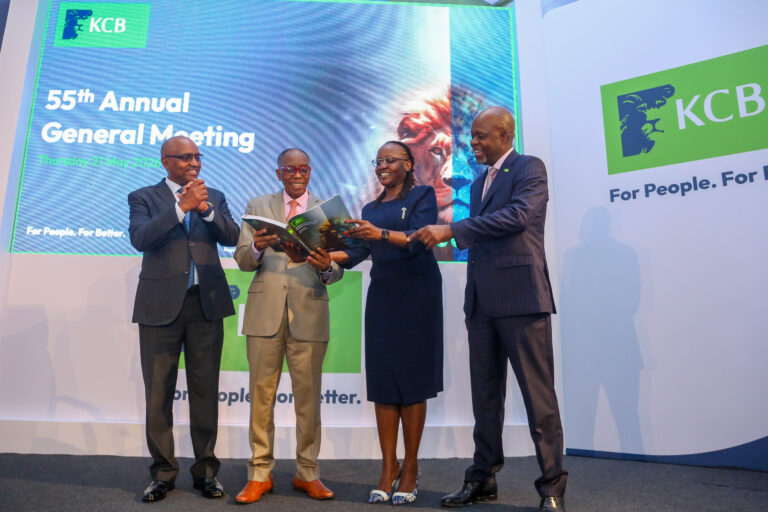
KCB Group has been named among the world’s top-performing banks in the inaugural Forbes World’s Top Performing Banks 2026 ranking, giving Kenya one of the 500 spots on a new global benchmark focused on banks’ financial performance rather than customer perception.

The ranking, published by Forbes in partnership with Statista, covers banks across 89 countries and evaluates them using financial data across four areas: profitability, growth and earnings quality, capital and funding resilience, and asset quality and efficiency.

Forbes weighted profitability at 30% of the assessment, growth and earnings quality at 20%, and capital and funding resilience and asset quality and efficiency at 25% each.

The methodology considers indicators including return on average assets, cost-to-income ratio, net interest margin, earnings and deposit growth, equity ratios, loan-to-deposit ratios, credit quality and balance-sheet resilience.

Unlike Forbes’ World’s Best Banks ranking, which is based largely on surveys of bank customers, the new ranking uses objective financial information from sources including S&P Capital IQ, desk research and data submitted by banks.

Forbes also grouped qualifying banks into six asset-size tiers before calculating their scores. The groups range from banks with more than $500 billion in assets to smaller institutions with between $3 billion and $10 billion.

KCB Group, which is headquartered in Nairobi, reported KSh68.4 billion in net profit for 2025, while its latest investor information puts its total asset base at about KSh2.3 trillion. The group operates KCB Bank Kenya alongside regional banking subsidiaries and other financial-services businesses.

The Forbes ranking comes as KCB continues to operate at a scale that makes it one of East Africa’s largest financial institutions. Its balance sheet includes about KSh1.2 trillion in net loans and advances and KSh1.7 trillion in customer deposits, according to the group’s investor-relations information.

Forbes said the global banking industry recorded a 7% increase in net income between 2024 and 2025, reaching $1.3 trillion, citing McKinsey & Company.

The strongest performers in the largest asset category included Singapore’s OCBC Bank and DBS Group, which took the first and second positions respectively. Zimbabwe’s CBZ Bank led the $100 billion-to-$500 billion category, while Saudi Arabia’s Alinma topped the $50 billion-to-$100 billion group.

KCB’s inclusion places a Kenyan banking group in a ranking designed to compare institutions on the underlying strength and quality of their financial performance.

The distinction is significant because Forbes did not select the 500 banks simply on the basis of size. Banks first had to meet eligibility requirements, including having more than $3 billion in assets, publishing audited financial statements and providing at least three consecutive years of financial data.

The ranking therefore provides another international reference point for KCB as the group expands its regional banking operations and competes for customers, deposits and corporate business across East Africa.

Forbes said companies do not pay to participate or be selected for its lists.

TendePay Gets CBK Approval to Operate E-Wallet in Kenya

0

TendePay has received approval from the Central Bank of Kenya (CBK) to operate an e-wallet in Kenya, adding a new regulated payments capability to the fintech’s platform.

The development comes about 20 months after TendePay received its Payment Service Provider (PSP) licence from CBK in January 2025. TendePay announced its PSP authorization in February 2025, saying the licence allowed it to process and settle payments on behalf of merchants.

“We are excited to receive this authorisation, which enables us to expand our payment solutions across Kenya,” Abel Masai, TendePay’s chief executive officer, said at the time.

The company’s existing platform provides businesses with payment and financial-management tools, including petty-cash management, bulk payments, payroll processing, supplier payments, collections and reconciliations.

TendePay also supports one-off and recurring payments through M-Pesa, bank transfers and Paybill integrations. Its platform allows businesses to monitor incoming and outgoing payments across M-Pesa and banks, manage different budget lines and assign users to specific wallets, with approval levels and transaction limits for different users.

Founded in 2020 and initially focused on helping businesses manage petty cash before expanding into broader spend-management and payments services, the firm has grown into what it is today due to market needs.

In September 2025, TendePay partnered with Pesalink to enable businesses to make single and bulk payments of up to KSh999,999 instantly across Kenyan banks. The integration also supports automatic reconciliation of incoming bank payments. The Pesalink partnership marked its evolution from a petty-cash management tool into a broader spend-management platform.

“This partnership reflects our evolution into a full spend management platform,” Masai said at the time. “With Pesalink’s trusted infrastructure, we are giving businesses a reliable, secure, and affordable tool to manage every payment, whether large or small, at any time.”

The CBK authorized Payment Service Provider under Kenya’s National Payment System framework now adds the e-wallet capability to its existing regulatory status as a CBK-licensed PSP.

Absa Bank’s Yusuf Omari Appointed Managing Director and Chief Executive Officer

0

Absa Bank Kenya’s Board of Directors has today appointed Yusuf Omari as Managing Director and Chief Executive Officer of Absa Bank Kenya, with immediate effect, after meeting all required regulatory and internal approvals.

Mr Omari has served as Interim Managing Director and Chief Executive Officer of Absa Bank Kenya since 1st July 2026, having previously served as the Bank’s Chief Financial Officer since 2009.

In a statement, Mohammed Nyaoga, Chairman of Absa Bank Kenya, said:”The Board is confident that under his leadership, the Bank will continue to strengthen its competitiveness, deepen customer relationships and deliver sustainable growth.”

Throughout his career, Mr Omari has built a strong track record of driving sustainable growth, financial performance and transformation in complex banking environments. As Chief Financial Officer, he played a key role in strengthening the Bank’s financial performance, improving its cost-to-income ratio, optimising capital and supporting the growth of Absa Kenya’s Corporate and Investment Banking, Business Banking and Consumer Banking franchises. He also championed strategic initiatives in digital transformation, ecosystem banking and sustainability.

Mr Omari holds a degree in Economics and a Master of Business Administration. He is also a Fellow of the Institute of Certified Public Accountants of Kenya (FCPA) and a graduate of the Advanced Management Programme delivered by Strathmore and IESE Business School.

“I am deeply honoured by the confidence that the Board and Absa Group have placed in me through this appointment. Absa Bank Kenya has a strong foundation, an exceptional team and an important role to play in supporting Kenya’s economic growth and development,” said Yusuf Omari, on his appointment as Managing Director and Chief Executive Officer of Absa Bank Kenya.

Yusuf is a highly accomplished leader who has made a significant contribution to the Bank’s business and exemplifies the values of excellence, integrity and performance that define the organisation said Saviour Chibiya, Regional Executive for East Africa, Absa Group.

3C Coding School Raises $3 Million to Enter Saudi Arabia and Build AI Learning Platform

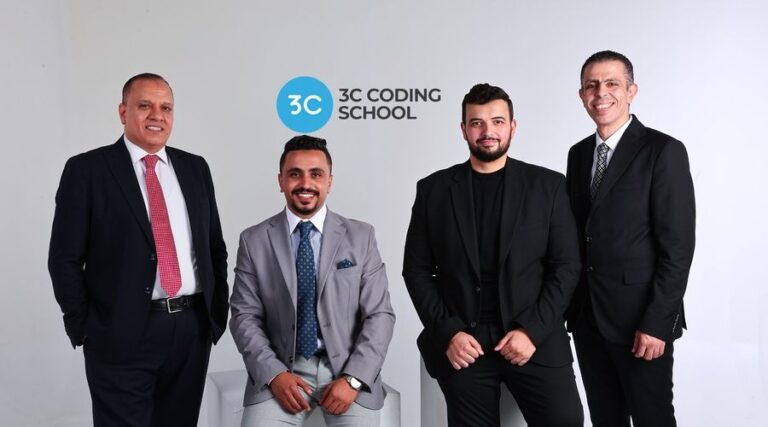
Egyptian edtech startup 3C Coding School has raised $3 million in seed funding as it prepares to expand into Saudi Arabia and accelerate development of an artificial intelligence-powered learning platform.

The equity round was led by MRG Economic Group, headed by Egyptian businessman Mahmoud Ramadan, with participation from investor Amr Saad and a group of strategic angel investors.

Founded in 2015 by engineers Hossam Hosny and Ahmed Khallaf, 3C provides technology education for children and young people, covering software development, data science, artificial intelligence, machine learning, game development and cybersecurity.

The company said it has reached more than 120,000 students and recorded 230% revenue growth, giving it a base from which to pursue expansion across the Middle East.

Saudi Arabia will be the company’s first major regional expansion market. 3C plans to develop localized programs and work with partners in the Kingdom as it seeks to scale beyond Egypt.

The company is also investing in an AI-powered learning platform designed to personalize how students learn technology. The system will analyze learning patterns and progress, help instructors track performance and adjust course content according to individual students’ pace and abilities.

The move reflects a broader shift in education technology toward adaptive learning systems that use data and AI to tailor instruction rather than delivering identical content to every learner.

3C said the new platform is being designed to support millions of students across different markets, while its underlying infrastructure will allow the company to scale its technology education programs more efficiently.

The funding gives 3C capital to pursue both objectives simultaneously: establishing a presence in one of the region’s fastest-growing digital economies and upgrading the technology underpinning its education business.

“When we launched 3C in 2015, we were driven by a core belief that technology would become an indispensable part of every child’s future,” Hosny said. “Coding isn’t just for future software engineers; it is a fundamental medium for teaching kids how to think, innovate, and solve complex problems.”

The founders said the latest investment will help the company move from an Egypt-focused education provider toward a regional technology and education platform.

“Securing a $3 million Seed round is a landmark milestone for 3C,” Khallaf said. “We see this investment not as a final destination but as the launching pad for an even more ambitious chapter in our journey.”

3C’s expansion comes as demand for digital skills and technology education grows across the Middle East, while Saudi Arabia continues to invest in digital transformation, technology talent and education as part of its broader economic diversification strategy.

The company plans to use the funding to strengthen its technology infrastructure, expand its Saudi operations and accelerate the rollout of its AI learning platform.

Saviynt Appoints Cybersecurity Veteran Kamel Heus as VP Sales for the Middle East and Africa

0

Saviynt, an identity security solutions firm has appointed Kamel Heus as Vice President of Sales for the Middle East and Africa (MEA), as the company advances its growth and strengthens its presence in key markets.

Based in Dubai, Heus will lead Saviynt’s business across the MEA region, including Turkey and is expected to drive new business, renewals and customer expansion across MEA, while leading Saviynt’s regional channel strategy, expanding its partner ecosystem, and building out the company’s local go-to-market team.

In a statement, Pete Angstadt, Chief Commercial Officer at Saviynt siad, “Kamel’s deep experience in the region and understanding of its customers, markets and partner ecosystem will be invaluable as we continue to expand our presence. We’re making a long-term investment in MEA, and his appointment is an important step in bringing Saviynt closer to our customers and partners as we help accelerate their AI journey securely.”

Heus brings 20 years of enterprise cybersecurity sales leadership across the Middle East, Africa and Europe. He has held senior leadership roles at Thales, Centrify (now Delinea) and Sophos, most recently serving as Vice President, EMEA at Thales, where he led the company’s Identity and Access Management business across the region. He holds a PhD in Applied Mathematics and Computing from Université Grenoble Alpes in France and has been based in Dubai for more than a decade.

His appointment will help Saviynt deepen its relationships with customers and partners, expand its regional capabilities and help organizations strengthen identity security as cloud, AI and digital transformation reshape enterprise environments.

Heus will also help MEA businesses address a new category of identity risk: AI agents. As these agents gain access to enterprise applications and data, they require the same discovery, governance and lifecycle controls that are traditionally applied to human identities. Saviynt’s Zuma platform is built to meet this need, giving organizations visibility into AI identities and the ability to enforce least-privilege access across their lifecycle.

As AI reshapes how organizations across government, banking and financial services, utilities, healthcare, oil and gas, and retail approach identity, Heus’ appointment reflects the growing importance of securing both agentic identities and AI-driven environments. His near-term priorities include deepening Saviynt’s regional presence, expanding into Saudi Arabia, and growing local hosting capabilities to meet in-region delivery and data residency requirements.

“The Middle East and Africa have become one of the fastest-growing cybersecurity markets in the world, and Identity sits right at the center of it, especially as AI agents enter the enterprise,” said Kamel Heus, Vice President of Sales, MEA, Saviynt.

Digital Realty Invests $80 Million in Nairobi Data Center as Kenya’s AI, Cloud Demand Grows

0

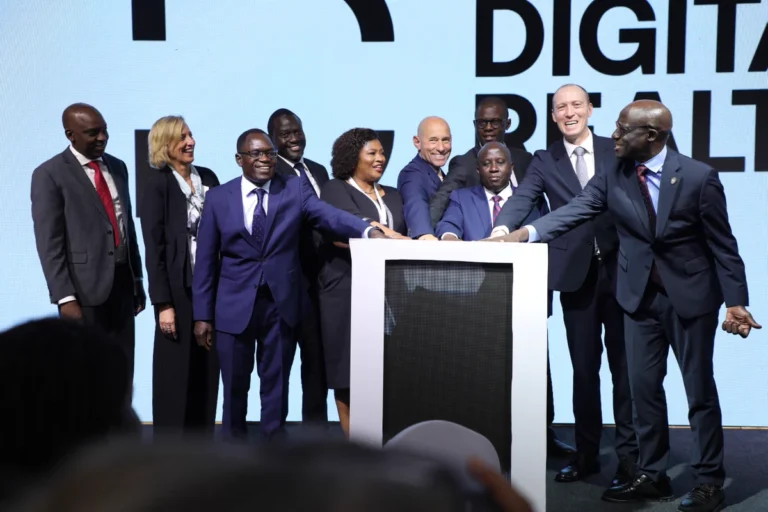
Digital Realty is investing $80 million in a new data center in Nairobi, expanding its infrastructure footprint in Kenya as demand for cloud computing, artificial intelligence and digital services accelerates across East Africa.

The investment adds 6.4 megawatts of capacity through Digital Realty’s new Nairobi Two (NBO2) facility, strengthening the company’s Nairobi campus alongside its existing Nairobi One (NBO1) data center.

The expansion gives Digital Realty additional capacity to serve enterprises, cloud providers, telecom companies and technology businesses that need locally hosted infrastructure and high-speed connections to global digital networks.

The company’s Nairobi campus provides access to more than 100 networks and two internet exchange points, positioning the facility as an important connectivity hub for East Africa.

The investment comes as Nairobi attracts increasing amounts of capital into data centers and other digital infrastructure, driven by rising cloud adoption, fintech, enterprise digitization and growing demand for computing capacity.

For Kenya, the expansion is particularly significant as AI workloads begin driving a new wave of demand for high-performance computing and data storage.

Digital Realty has also brought iColo’s Kenyan and Mozambican operations under the Digital Realty brand, integrating the regional facilities into its global PlatformDIGITAL network.

The Nairobi expansion underscores the growing importance of Kenya as a digital infrastructure market and a gateway connecting East African businesses to global cloud and technology platforms.

At $80 million, the investment also highlights how the economics of Africa’s technology sector are increasingly shifting from software alone toward the physical infrastructure required to run it.

HustleSasa Raises Funding From Impacc to Expand Africa’s Creator Economy

0

Kenyan creator-commerce platform HustleSasa has raised fresh funding from African impact investor Impacc, which is leading the company’s latest financing round as it expands its event-ticketing and commerce platform across Africa.

The amount was not disclosed.

Impacc said it has become a shareholder in HustleSasa and is leading the round, while bringing additional investors into the financing. The investment adds to funding the company has received from international and African early-stage investors.

HustleSasa raised $100,000 from Antler in 2021. It later attracted investment from Musha Ventures and Microtraction, while Best Nights VC, the venture arm of German spirits maker Mast-Jägermeister, invested in the company in February 2025. The amount of those investments was not disclosed.

Based on publicly disclosed financing and typical cheque sizes of some of its investors, HustleSasa’s total institutional funding is estimated to be above $500,000, although the company has not confirmed a cumulative figure.

HustleSasa provides ticketing, payments, marketing and commerce tools for event organizers and creators. Best Nights said the platform ticketed more than 1,700 live events attended by over 400,000 people across four African countries in 2024.

HustleSasa processed about 500,000 tickets across more than 2,000 events last year, highlighting the company’s growing role in Africa’s creative economy.

The investor estimates that every 10 tickets sold can generate about one gig job, including work for security personnel, caterers, gate staff, stage builders and technicians.

The latest funding comes as African startups targeting the creative economy attract more interest from investors looking for businesses that combine digital commerce with employment creation.

HustleSasa has not disclosed the size of the Impacc-led round, its valuation or the total amount raised to date.

AXIAN, African Development Bank Target 34,000 Women-Led Businesses With Digital Finance

0

AXIAN Group and the African Development Bank are launching a program to provide digital finance and business support to more than 34,000 women-led enterprises in five African countries, targeting a funding gap that has long constrained the growth of female-owned businesses.

The initiative will deploy AXIAN’s Mixx and MVola digital financial-services platforms to provide lending and other financial products to women-led micro, small and medium-sized businesses in Madagascar, Tanzania and Senegal.

A second component will provide financial literacy, digital skills and entrepreneurship training to 25,000 women across Madagascar, Tanzania, Senegal, Togo and Comoros.

Africa has the world’s highest rate of female entrepreneurship, but women-owned businesses face an estimated $49 billion financing gap, according to the African Development Bank. Many also lack the credit histories and collateral typically required by conventional lenders.

The program will use mobile-money transactions, digital lending and alternative credit assessments to reach businesses that have been underserved by traditional financial institutions.

“Across Africa, millions of women are already running successful businesses. The challenge is not entrepreneurship. The challenge is access to finance, to digital tools and to opportunities for growth,” said Erwan Gelebart, chief executive officer of AXIAN Digibank and Fintech.

The initiative has five main objectives: expanding digital finance for women-led businesses, improving financial and digital literacy, developing products tailored to women entrepreneurs, increasing digital inclusion through mobile technology and helping businesses transition into the formal economy.

Implementation will be led by Mixx and MVola alongside AXIAN’s local operating companies in the participating markets.

The partnership builds on the African Development Bank’s broader relationship with AXIAN Telecom. In January 2025, the bank approved a $160 million senior corporate loan to support digital connectivity and financial inclusion in nine African countries, including financing targeted at 22,000 women entrepreneurs in Madagascar.

The new program reflects a broader shift among African financial-services providers toward digital channels and alternative data as a way to expand credit access beyond traditional banking customers.

For AXIAN, the initiative also gives its mobile-money businesses a larger role in lending and financial inclusion, using existing digital platforms to reach small businesses that can be difficult for conventional banks to serve profitably.

Melissa Basque-Roux, coordinator of the African Development Bank’s AFAWA initiative, said the partnership would expand access to financial services while strengthening the skills and digital capabilities of women entrepreneurs.

The program is supported through the bank’s Affirmative Finance Action for Women in Africa (AFAWA) initiative and the Women Entrepreneurs Finance Initiative (We-Fi).

The partners expect improved access to finance and business support to help participating enterprises expand, create jobs and move further into the formal economy.

Nigeria’s Drive45 Gets $3 Million From TLG Capital to Expand Fleet

0

Nigeria-based mobility company Drive45 Mobility has secured a $3 million senior debt facility from TLG Capital as it seeks to expand its vehicle fleet and increase its presence in the country’s corporate transportation market.

The Lagos-based company, founded in 2021, operates more than 170 vehicles and provides transportation services to local and international businesses. The financing will be used to add vehicles, acquire more customers and expand into other major Nigerian cities.

Drive45 plans to establish operations in Abuja, Port Harcourt, Kano and Kaduna as it expands beyond its current market.

The transaction was arranged with a guarantee from Cascador, a Nigeria-focused platform for growth-stage companies, in partnership with Morgan Stanley. The structure is designed to give Drive45 access to institutional debt while reducing some of the financing risks associated with lending to a growing African business.

Drive45 has worked with Cascador since completing its ScaleUp program in 2024. Cascador has since provided the company with business support and helped prepare it for institutional financing.

“Mobility access is a capital business, so having the right financial backing is everything,” Drive45 Chief Executive Officer Oluwaseyi Adefemi said in a statement.

The company operates a model aimed at reducing the upfront capital required by businesses to access vehicles. Its services include vehicle financing, insurance, maintenance, tracking, documentation and fleet management.

Drive45 said it has recorded no payment defaults during its five years of operation, a track record that helped support its latest financing.

The deal comes as private credit managers increasingly provide growth capital to African companies that have established operations but may not have access to sufficient long-term bank financing or may prefer debt to additional equity dilution.

TLG Capital, which focuses exclusively on sub-Saharan Africa, has made more than 50 investments and completed more than 30 exits across more than 20 African countries since its founding in 2012. Its Africa Growth Impact Fund II is backed by institutional investors including the International Finance Corp., Norfund, Swedfund and Bpifrance.

For TLG, Drive45 is an example of the type of established African business that can use structured debt to finance expansion without raising another equity round.

“Drive45 is a prime example of disciplined capital deployment to meet a clear market need,” said Isha Doshi, co-founder and partner at TLG Capital.

TLG will continue working with Drive45 following the financing on governance, environmental, social and governance monitoring, operational performance and strategic growth initiatives.

Cascador Chief Executive Officer Trish Thomas said the financing reflects the role of structured capital in helping growth-stage African companies move beyond accelerator and early-stage funding.

The transaction was led by Adefemi for Drive45. TLG’s deal team included Aum Thacker and Rohan Subramanian. Legal counsel included Simon Harter, Hannaford Turner and Wigwe and Partners.

For Drive45, the immediate focus is expanding its fleet and reaching more corporate customers as it builds a larger mobility operation across Nigeria.

Nuclear Startup Bluecore Energy Raises $50 Million for Floating Reactor Technology

Bluecore Energy has raised $50 million in seed funding to develop small nuclear reactors mounted on floating barges, giving the startup fresh capital to advance regulatory approvals, secure nuclear fuel and move toward its first commercial deployment.

The round, led by Silverton Partners, comes only months after the company raised $10 million in pre-seed funding and emerged from stealth. The latest financing brings the company’s total funding to $60 million.

Founded earlier this year by Kofi Asante, Bluecore is developing small modular reactors that can operate on floating platforms and supply electricity to ports and other infrastructure without requiring a conventional nuclear plant to be built on land.

The company is initially targeting the maritime sector, where ports face growing electricity requirements while seeking to reduce emissions. Its technology could also serve data centers and communities that require large amounts of reliable power.

Bluecore is headquartered at the Port of Long Beach in California, where it has established its first operating base. The Port of Long Beach is also the company’s initial commercial focus, although Asante said the startup has received interest from other ports and data-center operators.

The reactors can be positioned offshore or near a port and connected to infrastructure through subsea cables. The floating configuration is intended to allow the power-generating system to be moved rather than permanently tied to a single location.

The company is now working through the regulatory process with the U.S. Nuclear Regulatory Commission and the U.S. Coast Guard. Formal engagement with the agencies began in August, with the product design undergoing review.

Regulatory approval will be critical to Bluecore’s ability to move from prototypes to commercial nuclear power generation. The company has already launched two floating barges and has a reactor as it prepares for the next stage of development.

The new funding will be used for product development, regulatory work, nuclear fuel purchases and hiring. Bluecore also expects its supply chain to be one of its biggest challenges as it seeks to obtain specialized components quickly enough to support commercial production.

The company says its team includes engineers and executives with experience at SpaceX, Rivian and Toyota, bringing manufacturing and supply-chain expertise from industries that have scaled complex hardware.

Bluecore is preparing to purchase nuclear fuel and send it to a partner at a U.S. national nuclear laboratory as it advances toward reactor testing and eventual operation.

The fundraising comes as investors increasingly back nuclear technologies aimed at meeting rising electricity demand from data centers, industrial facilities and other power-intensive customers. Small modular and microreactor developers are seeking to offer an alternative to conventional large-scale nuclear plants, which can require years of construction and significant upfront investment.

For Bluecore, the proposition is not simply smaller nuclear reactors but a different deployment model: putting the power plant on a movable platform and bringing electricity infrastructure closer to where it is needed.

That could give the technology an advantage in locations where expanding conventional grid infrastructure is slow or expensive. But the company still faces the same hurdles confronting the broader advanced-nuclear industry, including licensing, safety, fuel supply, manufacturing capacity and the cost of deploying commercial reactors.

Bluecore’s immediate test will be whether it can turn its floating reactor design into a certified power plant and secure its first customers.

The $50 million round gives the startup considerable capital for that effort, but commercial deployment will ultimately depend on regulatory approval and its ability to manufacture and operate the systems at a competitive cost.

Mastercard, Flowcart Launch WhatsApp Payments to Power Social Commerce in Kenya

0

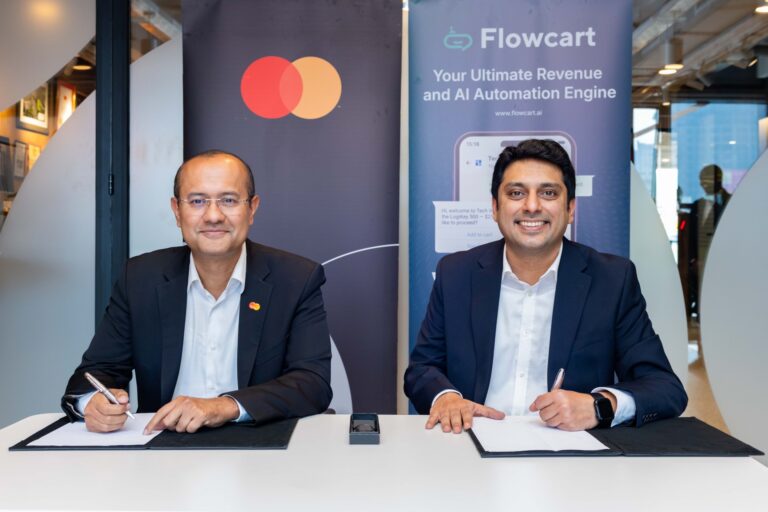
Mastercard and Flowcart have launched chat-to-pay offerings to allow secure, seamless card payments directly within social and conversational commerce journeys.

Initially launching in Kenya, the collaboration will expand across East Africa and into key high-growth markets including South Africa, Nigeria and Côte d’Ivoire, supported by broader scaling across pan-African markets.

According to Shehryar Ali, senior vice president and country manager for East Africa and Indian Ocean Islands at Mastercard, “Social commerce is redefining how consumers discover and engage with brands. Our collaboration with Flowcart enables us to embed secure, seamless payments directly into these experiences, unlocking new growth opportunities for merchants and expanding digital payment acceptance in one of Africa’s fastest-growing digital economies.”

The deal will allow consumers to discover products, place orders and complete payments within a single chat-based journey, eliminating the need to redirect users to external websites or apps. WhatsApp alone now handles over 20% of all online shopping orders in the country, officially surpassing traditional e-commerce websites as conversational commerce gains dominance.

By combining Flowcart’s AI-powered commerce orchestration platform with Mastercard’s global payment network, the collaboration enables merchants to capitalize on this growing trend to increase transaction frequency, drive repeat purchases and expand acceptance into underserved and informal commerce segments.

The solution is designed to support Kenya’s rapidly growing creator economy, empowering social sellers to monetize their audience directly within the platforms where they engage them. By enabling a complete “chat-to-pay” loop, from discovery to repeat purchase, the agreement removes friction and helps merchants increase conversion rates. Payments are completed within the conversation using embedded links, QR codes or native checkout flows powered by Mastercard Gateway and its network of acquiring partners.

Mastercard Gateway enables merchants to simplify payment acceptance through a single connection, streamline operations, and create secure, seamless commerce experiences across markets and channels.

Ananth Gudipati, Founder at Flowcart, said: “We are excited to collaborate with Mastercard to transform how businesses transact in social channels, whether that’s an independent social seller, a fast-growing SME or a large enterprise brand running WhatsApp as a core commerce channel. Together, we are enabling a future where commerce and payments happen seamlessly within conversations, driving higher conversion, repeat purchases and meaningful growth for merchants.”

For consumers, the initiative provides a secure and intuitive in-chat payment experience, while tokenized card details ensure frictionless repeat purchases. For merchants, from small social sellers to large enterprises, it simplifies digital commerce without requiring websites or traditional point-of-sale systems.

The 2026 Mastercard SME Confidence Index revealed, 80% of Kenyan SMEs identify simple, seamless and user-friendly payment methods as a top requirement for future growth. By digitizing informal and creator-led commerce, Mastercard and Flowcart are positioning social and messaging platforms as a dependable, end-to-end channel for digital payments and long-term customer growth.

ARC Ride Raises $33.3 Million to Expand Electric Mobility Network in Africa

Electric mobility company ARC Ride has raised $33.3 million from venture capital firms, development finance institutions and impact investors as it seeks to expand battery-swapping infrastructure and electric two- and three-wheelers across Africa.

The financing was led by Novastar Ventures and Norrsken22, with the International Finance Corp., British International Investment and Proparco participating. Existing investors Musashi Seimitsu Industry Co., a Japanese automotive supplier, and African impact investor Talanton also committed additional capital.

The round includes debt from BII’s Kinetic program and Mirova, giving ARC Ride a mix of equity and asset-backed financing to fund what is a capital-intensive expansion.

ARC Ride plans to use the funding to expand its operations in Kenya and enter or scale in markets including Ghana, South Africa, Tanzania and Uganda. The company also plans to add 5,000 electric motorcycles to its fleet.

The Nairobi-based company operates a Battery-as-a-Service model in which riders can exchange depleted batteries at swap stations rather than purchase and maintain the batteries themselves. The approach is designed to reduce the upfront cost of switching from petrol-powered motorcycles while limiting downtime for commercial riders.

ARC Ride says its battery-swapping network is used by electric-vehicle manufacturers including Yadea.

The company is targeting Africa’s large motorcycle and three-wheeler markets, where motorcycles are a critical part of urban transportation and informal logistics but also contribute significantly to fuel consumption and air pollution.

ARC Ride will also invest in battery lifecycle management, network reliability, automated battery swapping, smart charging and integration of renewable energy.

“This funding reinforces our vision of building a robust, scalable energy and mobility network across Africa,” founder Jo Hurst Croft said in a statement. The company aims to make electric mobility more accessible and affordable than petrol alternatives, she said.

The investment comes as electric-mobility companies across Africa seek to solve the infrastructure and financing challenges that have slowed adoption of electric motorcycles. Battery swapping has emerged as an alternative to conventional charging, particularly for commercial riders who cannot afford long periods of vehicle downtime.

For investors, ARC Ride’s combination of vehicle financing, battery infrastructure and energy services offers exposure to several parts of the emerging electric-mobility market.

“ARC Ride is helping solve one of the biggest barriers to electric mobility in Africa: reliable, extensive battery-swapping infrastructure,” said Steve Beck, co-founder and managing partner at Novastar Ventures.

Norrsken22 partner Ngetha Waithaka said ARC Ride’s technology, data and network could give it the potential to become an open platform for the wider electric-mobility ecosystem.

ARC Ride’s expansion will initially deepen its presence in Kenya, including Nairobi and the western region, before extending its infrastructure footprint across additional African markets.

BII, one of the investors in the round, said the investment supports its climate strategy while helping build infrastructure needed for electric-vehicle adoption.

“Electric mobility is essential to building cleaner, more sustainable transport across Africa,” said Chris Chijiutomi, BII’s managing director and head of Africa.

ICON Corporate Finance acted as ARC Ride’s sole financial adviser on the transaction.

The latest financing gives ARC Ride additional capital to scale its network while testing whether battery swapping can achieve the operational efficiency and economics required for mass-market electric mobility in Africa.

IFC Proposes $40 Million Camco Fund Investment to Boost Renewable Energy in Africa

0

The International Finance Corporation (IFC) has proposed to invest $40 million in Camco Renewable Energy Performance Platform 2 (REPP 2), a private debt fund focused on financing renewable energy projects across sub-Saharan Africa.

The proposed investment will be made through REPP 2’s senior debt tranche and is subject to approval. The IFC’s Board is scheduled to review the transaction on November 6, 2026.

REPP 2 is managed by Camco, a UK-based climate and impact investment manager, and is targeting a range of small and medium-sized renewable energy projects across East, West and Southern Africa.

The fund will provide financing of between $2 million and $15 million for projects at late-stage development or construction, as well as selected corporate financing.

What REPP 2 will finance

The fund will focus on decentralised renewable energy projects, including off-grid solar, mini- and metro-grids, isolated grids, commercial and industrial energy systems, and small independent power producers (IPPs).

REPP 2 has a target fund size of $250 million and uses a blended-finance structure comprising junior equity, senior equity and senior debt.

The IFC’s proposed $40 million commitment would provide financing through the senior debt portion of the structure.

Focus on Africa’s energy gap

The investment comes as demand for reliable and affordable electricity continues to grow across Africa, while many communities and businesses remain underserved by traditional power grids.

Decentralised energy systems such as solar mini-grids and off-grid installations can provide an alternative to conventional grid infrastructure, particularly in areas where extending national electricity networks is expensive or difficult.

For businesses, renewable energy can also provide a more predictable source of power while reducing exposure to fuel and electricity costs.

Projects across three African regions

REPP 2 plans to invest across East, West and Southern Africa, with no single region expected to account for more than 60 percent of the portfolio.

The fund’s investments will be limited to countries that meet the eligibility requirements set out in its legal documentation.

The proposed IFC investment also aligns with the broader Mission 300 initiative, led by the World Bank Group and African Development Bank, which aims to connect 300 million people in Africa to electricity by 2030.

The proposed investment adds to the growing involvement of development finance institutions in Africa’s renewable energy sector.

REPP 2 has attracted backing from institutions including the Green Climate Fund, Norfund, FMO, BIO and OeEB, helping to bring additional capital into the continent’s decentralised energy market.

For Camco, the financing could provide additional capacity to support smaller renewable energy projects that often struggle to secure long-term funding.

For Africa’s energy sector, it highlights the growing role of institutional and private capital in financing the clean-energy infrastructure needed to expand electricity access.

If approved, the IFC’s $40 million investment would give REPP 2 additional firepower to finance renewable energy projects across Africa, particularly in the decentralised energy market

M-KOPA Hits 10,000 Electric Motorbike Financing Milestone in Kenya

M-KOPA has financed more than 10,000 electric motorcycles in Kenya, marking a new milestone for the fintech’s electric-mobility business as it expands into financing electric tuk-tuks.

The company said its financed motorcycle riders save an average of KSh530 ($4.10) a day through lower energy and maintenance costs and access to battery-swapping infrastructure.

Across 10,000 motorcycles, that represents about KSh5.3 million in potential daily savings, according to M-KOPA’s customer data.

“Reaching 10,000 financed electric motorbikes reflects growing demand from riders looking to lower operating costs and improve their earnings,” Brian Njao, general manager of Mobility at M-KOPA, said in a statement.

“We are now applying the same financing approach to electric tuk-tuks, helping operators access cleaner, lower-cost vehicles without the burden of a large upfront payment.”

The expansion takes M-KOPA into a larger segment of Kenya’s commercial-transport market, where tuk-tuks are widely used to carry passengers and goods.

The Kenya Tuk Tuk Operators Network estimates the country has more than 250,000 registered tuk-tuks, 750,000 active drivers and about 250,000 owners and investors.

For M-KOPA, the opportunity is to apply its pay-as-you-go financing model to another income-generating asset. Instead of requiring operators to pay the full cost of an electric vehicle upfront, the company spreads payments over time.

M-KOPA finances electric motorcycles from manufacturers including Ampersand, Roam and Spiro, and has partnered with Bolt to expand access to electric motorcycles among ride-hailing drivers.

The company says its mobility customers also receive insurance, GPS tracking, security features, flexible repayments and warranty protection.

The expansion comes as Kenya strengthens incentives for electric mobility. The country’s tax framework provides zero-rating for specified electric vehicles and lithium-ion batteries, while government policy is encouraging investment in electric-vehicle manufacturing, assembly and charging infrastructure.

For commercial operators, however, the transition is ultimately an economic calculation. Electric vehicles can reduce fuel and maintenance expenses, but the savings have to outweigh financing and energy costs while keeping the vehicle productive.

M-KOPA’s latest figures contain one discrepancy. The company’s KSh5.3 million estimate in daily savings would amount to about KSh1.93 billion a year if sustained for 365 days, rather than the approximately KSh1 billion annual figure cited in its announcement. The company did not explain the difference, which could reflect vehicle utilisation assumptions.

The tuk-tuk expansion will provide another test of whether financing can make electric commercial transport economically viable for operators who depend on their vehicles for daily income.

M-KOPA’s strategy increasingly positions the company not simply as a lender for electric vehicles, but as a financing layer connecting vehicle manufacturers, mobility platforms and the workers who use those vehicles to earn a living.

Zoho Targets AI Coding Bottleneck With Agent-Ready Catalyst Cloud Platform

0

Zoho Corporation is expanding Catalyst, its cloud platform for building and deploying applications, with tools designed to let AI coding assistants perform more of the work involved in taking software from generated code to production.

The company said Monday that Catalyst by Zoho now supports Agent Skills, a non-interactive command-line interface and Model Context Protocol (MCP), alongside integrations with AI coding tools including Anthropic’s Claude Code and OpenAI’s Codex.

The move comes as AI coding assistants increasingly automate software development, shifting a growing part of the challenge from writing code to testing, deploying, managing and governing applications once they are built.

Zoho is positioning Catalyst as the infrastructure layer for that process. Rather than requiring developers to assemble separate services for functions, databases, hosting and AI capabilities, the platform provides those components within a serverless environment.

“With AI coding assistants, applications can be created very quickly, but moving that code into production reliably remains a challenge,” said Veerakumar Natarajan, Country Head, Zoho Kenya. “With Catalyst, we are reducing that friction by providing an agent-ready, serverless full-stack platform that helps developers build, deploy and scale intelligent applications with greater control and less operational overhead.”

From AI-Generated Code to Deployment

AI coding tools have made it easier for developers to generate application code, but the resulting software still needs infrastructure, deployment workflows and operational controls before it can be used in production.

Catalyst Agent Skills are designed to give coding assistants information about Catalyst’s services, architecture and recommended development practices. Zoho says the skills help AI agents understand which Catalyst services to use and how to work with them.

The platform’s non-interactive CLI is designed to allow AI coding assistants to execute multiple Catalyst operations without requiring developers to provide manual input at every step.

MCP support takes the integration further by allowing compatible AI development environments to interact directly with Catalyst capabilities.

Developers can, for example, perform database operations and other platform tasks from their existing AI development environments rather than repeatedly switching between their coding environment and the Catalyst console. Zoho’s Catalyst MCP documentation explains how developers can connect compatible AI clients to Catalyst.

Zoho said orchestration within Agent Skills can route requests through the appropriate CLI or MCP workflow, reducing the possibility of an AI assistant selecting the wrong tool or process.

The company has also made the Agent Skills repository open source and said it is open-sourcing Catalyst’s SDK, CLI and Slyte JavaScript framework.

Human Oversight Remains Part of the Workflow

The increased role of AI agents in software development has also raised questions about how much autonomy should be given to automated systems, particularly when they have access to production infrastructure.

Zoho said Catalyst maintains a separation between development and production environments. Code must be promoted to production manually, preventing AI agents from directly accessing production environments.

The platform also provides scoped collaborator controls, allowing organizations to determine who or what can participate in development and which actions they can perform.

Audit trails record application activity, platform activity and MCP tool calls, while changes made after launch are versioned and can be attributed, tracked and reversed, according to Zoho.

Applications running on Catalyst are hosted in Zoho’s own data centers and use the company’s security infrastructure, including distributed denial-of-service protection, SOC compliance, vulnerability assessments, penetration testing and a web application firewall.

For software companies and system integrators, those controls could become increasingly important as AI agents move beyond code generation and begin executing operational tasks on behalf of developers.

Free Access for Students

Alongside the new agentic development capabilities, Zoho is removing the cost barrier for students using Catalyst to build non-commercial applications.

Students can deploy applications without a subscription or credit card and receive access to Catalyst’s full-stack development capabilities, including hosting, functions, databases and AI tools.

Catalyst’s student program is aimed at giving students practical experience building and deploying complete applications rather than limiting their exposure to writing code.

Zoho says students can use Catalyst for qualifying non-commercial projects at no cost, with up to $250 in usage over six months. Students are not automatically charged if they reach that threshold; they can request additional free usage if their projects qualify.

For other developers, Catalyst offers a monthly free tier and a pay-as-you-go pricing model, with individual features charged according to usage rather than through an additional software license.

Developers can monitor usage through the Catalyst console and set budget alerts and spending ceilings. A subscription option is also available for teams seeking more predictable costs.

Catalyst is available for immediate use.

The broader strategy reflects a shift in cloud computing as AI coding tools reduce the time required to produce software. As code generation becomes increasingly commoditized, cloud providers and platform companies are competing to control the infrastructure, deployment, security and governance layers that determine how that software reaches users.

For Zoho, Catalyst’s integration with AI coding assistants is an attempt to position its cloud platform within that emerging workflow, while retaining human approval over the final transition to production.

Uber’s Exit From Nigeria and Uganda Tests the Economics of Ride-Hailing

0

Uber last week announced it had withdrawn from Nigeria and Uganda with immediate effect creating an illusion that it was giving more room to its competitors such as Yango, inDrive, Bolt, Little among other local operators, but the economics of multi-homing, thin margins and the rise of electric and autonomous mobility make a simple handover unlikely.

From a simplisitic perspective, Uber’s exit from Nigeria and Uganda creates an obvious opening for its rivals such as Bolt, inDrive, LagRide, Rida and Shuttlers in Nigeria and Yango, Bolt, SafeBoda and Faras in Uganda. But it also exposes a more complicated reality about Africa’s ride-hailing industry. The departure of a major platform does not necessarily mean another company gets to inherit its market.

Uber ended its operations in Nigeria and Uganda on September 2, 2026, after 12 years in Nigeria and roughly a decade in Uganda. The company said the decision followed a review of its business operations and priorities, without providing detailed reasons. Though Nigerian authorities are looking into it, ride-hailing platforms do not operate in a vacuum. Apart from the presence of formidable alternatives, they face rising fuel costs, inflation, currency volatility, erratic human behaviours, higher operating expenses and increasingly intense competition.

For some, the obvious question is who gets Uber’s customers but that question assumes that Uber driver-partners were not already on other platforms and had captive customers who are now opharned.

Drivers can operate more than 5 apps at the same time

Unlike social networks or enterprise software, where users can become deeply locked into a particular platform, ride-hailing has relatively low switching costs. Drivers can operate several applications at the same time, passengers have multiple apps on their phones and choose whichever platform depending on prestige, price, availability, convenience or safety. Uber, for example is known for premium and safety services and is perceived civilised and reasonable. But most driver-partners operate on all major platforms, only that the training, culture and repercussions or loopholes are different.

Uber’s exit therefore means the same number of drivers are still left in the market with one-less source of trips. As Uber leaves, its drivers will now have to be redistributied across other platforms. Hence, there is no winner-takes-all businesses even though there is undoubtedly a substantial business to fight over.

According to Mordor Intelligence’s Africa ride-hailing market report, Africa’s ride-hailing market is expected to be worth $2.64 billion in 2026, up from $2.53 billion in 2025, and is projected to reach $3.25 billion by 2031, representing a 4.25% compound annual growth rate. The research estimates that motorcycles accounted for 52.45% of 2025 market revenue, while electric two-wheelers are expected to grow at an 11.45% CAGR through 2031.

Those numbers explain why Uber’s departure matters but also open a can of worms. How much of this $2.64 billion actually becomes profit? The number of rides, drivers or downloads are not close to what a firm is looking for as revenue does not equal profit.

Revenue is not profit

According to disclosures tabled in Kenya’s Parliament, Bolt Kenya generated KSh2.45 billion in revenue in the year ended June 2024, down 25% from KSh3.27 billion the previous year. Uber Kenya, meanwhile, increased revenue to KSh2.39 billion, from KSh2.15 billion. Craft Silicon’s Little Cab increased revenue to KSh1.44 billion, from KSh1.13 billion.

Together, the three companies generated about KSh6.3 billion in revenue during the period, down from KSh6.56 billion a year earlier. In Kenya, Uber and Bolt together controlled more than 70% of Kenya’s ride-hailing market by revenue and driver numbers. Uber is not leaving profitable markets.

The Kenya Revenue Authority separately told Parliament that revenue collected from digital taxi-hailing and digital delivery services amounted to KSh16.06 billion. That broader figure covers the wider industry rather than just the three companies above. The distinction is because the value of rides taking place through a platform is not necessarily the same as the platform’s recognized revenue. Platform revenue is not the same as profit as they have to spend again on technology, customer support, marketing, regulatory compliance, incentives and other operating costs.

Numbers Do Lie

These figures demonstrate why market share can be misleading. Bolt had the largest revenue decline among the top three hailing firms in Kenya and its revenue fell by KSh1.27 billion in a single year due to fare increases introduced to address driver concerns over rising fuel costs, which subsequently contributed to customer losses in a highly price-sensitive market.

Uber and Little, meanwhile, gained revenue during the same period as customers and drivers move between platforms depending on prices, availability, incentives and operating conditions. That is exactly what makes the winner-takes-all argument difficult to sustain. These means that even safer public transport can eat into a dominant players revenues if there is no other better alternative. This is not the pattern one would expect in a market where one platform simply wins and everyone else loses.

It’s also too simplistic to argue that African ride-hailing companies are loss-making or whether the profits generated are sustainable. In 2024, Uganda’s SafeBoda recorded a total income of UGX383.3 million, down from UGX420.4 million in 2023. Yet net profit after tax increased to UGX99.5 million, from UGX34.1 million. The numbers are relatively small compared with the revenues of global platforms, but they demonstrate that a ride-hailing firm can operate profitable businesses in one sane region without becoming scaling continent-wide.

Public Company vs Startup

Uber is no longer the loss-making startup that entered Africa 12 years ago. For its full-year 2025, Uber reported $52.0 billion in revenue, $5.6 billion in operating income and $193 billion in gross bookings. Its fourth-quarter revenue alone reached $14.4 billion, while gross bookings rose to $54.1 billion. Uber has therefore built a highly profitable global platform across mobility, delivery and other activities globally, with significant scale outside Africa.

Bolt, on the other hand provides a different picture.

According to Estonian Public Broadcasting’s report on Bolt’s 2024 results, Bolt generated €1.99 billion in revenue in 2024, up 17% from the previous year, but recorded a €102.6 million net loss. Ride-hailing represented 82% of its revenue. Though Bolt is not a failing company, it still has to invest in some markets like Nigeria and Uganda for its scale and profitability even if it means low margins.

inDrive offers another contrast.

According to Reuters’ report on inDrive’s 2025 results, the company increased net revenue by 31% in 2025 to $601.6 million, driven partly by improved profitability per ride. The company has also surpassed 400 million downloads since launching in 2013. Therefore, scaling and generating rides, generating revenue are not the same thing as generating cash flow and generating sustainable net profit. Nigeria and Uganda were not sustainable for Uber.

This is even harder to determine because drivers are not normally exclusive to one platform. A driver can use Uber, Bolt, inDrive and other applications simultaneously depending on what each company is offering at the time. Discounts, commisions among others matter too and there is no possibility of one firm locking up the supply side of the market.

If Bolt offers a better opportunity in the morning, the driver can use Bolt. If inDrive produces better economics later in the day, the driver can switch. If another platform provides stronger demand at another time, the driver can return to it. The same driver can therefore contribute to the gross transaction value of several competing companies during the same week. This is the same for passengers. A customer might use Uber for one trip, Bolt for another and inDrive for a third.

The real competitive unit is therefore not necessarily the customer but the trip. When Uber disappears, Bolt does not automatically acquire Uber’s entire customer base. inDrive does not automatically acquire Uber’s drivers because these are likely the same drivers on alll major platforms. Local companies do not suddenly gain exclusive access to a pool of transportation demand instead, every platform continues competing for individual trips.

Uber’s departure removes one competitor from the market, but it does not eliminate the fundamental competition between the remaining platforms. It’s depature could mean more rides for Bolt or more rides for inDrive or for local operators but it could also mean more competition among those same companies hence spending more on marketing, discounts and driver incentives. They may compete aggressively for corporate accounts and they both might see increased activity without necessarily improving margins.

The temptation after a major competitor exits is to chase market share and unplanned expansion. Growth can be particularly attractive because higher volumes can improve the appearance of scale but ride-hailing has a difficult characteristic. Costs easily grow with the transaction as more rides require more drivers and more incentives to them. These also means more customers, hence more support and more trips create more payment and operational costs.

And the underlying vehicle still has to be fueled, maintained, insured and financed. That is why a platform can become bigger without necessarily becoming much more profitable. Bigger may lead to chaos like what Bolt has had with its image in Africa. Which again works against it.

With the Uber exit, the profitable companies need more than growth. The transportation industry is beginning to change at the vehicle level and Electric Vehicles are becoming increasingly relevant to improve fleet economics. Bolt has just around 5000 EV bikes on its platform in Kenya as the acquisition cost of the EVs is still high and most owners pay exorbitant prices to own the assests. EV assest financing is also high and battery-swapping networks need to be disrupted.

Green savings aside, the biggest threat in the next few years is autonomous driving which Uber sees as a profitable venture without blood, sweat and tears from Africa. The firm is also going heavy into food delivery with the recent Uber acquisition of Glovo.

Tesla has now begun limited commercial rides with its two-seat, fully autonomous Cybercab in selected areas of Austin, Texas. Reuters reported that Tesla had 420 autonomous vehicles registered in Texas, including 45 Cybercabs, as of early September 2026.

Waymo and Amazon-backed Zoox are also expanding their autonomous ride-hailing operations. Reuters reported in September that Zoox had expanded testing to additional U.S. cities while Waymo was expanding its commercial autonomous service to 14 cities. The significance for Africa is not that robotaxis are about to replace Uber in Lagos or Kampala. No. They are not. Not tomorrow. But the global mobility industry is experimenting with a model in which the most expensive participant in today’s ride-hailing equation, the human driver could eventually be replaced and these changes everything.

Tesla’s Cybercab is particularly relevant because it was designed specifically for autonomous ride-hailing. The vehicle has no conventional steering wheel or pedals and is being developed as part of Tesla’s robotaxi strategy. If autonomous vehicles eventually reach mass commercial deployment, today’s ride-hailing leaders could find themselves competing against an entirely different cost structure and large driver networks may not matter but who can operate the most efficient autonomous fleet.

Firms with access to capital, vehicle manufacturing, energy infrastructure, artificial intelligence, mapping and fleet-management technology. will win the day and this could be inDrive, Bolt, Yango among others but not another ride-hailing application connecting trips.

Uber’s departure from Nigeria and Uganda undoubtedly creates opportunities. Bolt, inDrive, local companies but the structure of ride-hailing makes it difficult for a winner-takes-all scenario. Both drivers and passengers can multi-home at no cost depending on fuel prices, vehicle quality, available public transport alternatives and that means more trips but less choice for passengers.

The mobility winner in Africa is not a new Uber-like clone but an ecosystem that creates value for passengers, drivers, investors and cities. That could include ride-hailing, electric vehicles, charging, vehicle financing, insurance, logistics, payments, fleet management and eventually autonomous transportation.

A company that controls several parts of that ecosystem could become more defensible than a company that simply dispatches cars. The future African mobility leader is not the number of drivers or rides but sustainable cash flow for the players involved while reducing the structural costs of moving people around African cities. Tesla’s Cybercab or Uber may win as the new generation of electric and autonomous mobility companies is beginning to challenge the economics of today’s ride-hailing platforms.

That is why Uber’s exit should not be read simply as a victory for its competitors but a warning about the future of mobility. Africa’s growing mobility players demand durable revenue, positive cash flow and ultimately sustainable profits without the driver and regulatory chaos that these firms face. That’s why Moove is contemplating its next move after Uber’s announcement.

For years, Bolt appeared to be writing one of Africa’s most impressive mobility success stories. The Estonian ride-hailing company expanded aggressively and positioned itself as an affordable alternative to Uber and traditional taxis. From Nairobi and Lagos to Johannesburg and Accra, Bolt became part of the daily transportation infrastructure of African cities.

But after years of investment and expansion, the company faces a culture problem, one which cannot be solved simply by adding more drivers, launching new features or spending more money on technology. In many parts of Africa, Bolt is increasingly perceived as cheap, chaotic and unpredictable last-resort alternative and instead of choosing Bolt, Uber loyalists might find themselves home at Little or inDrive or elsewhere.

Among some middle and upper-income consumers, the Bolt brand has developed a less aspirational image compared to Uber. But with Uber’s exit in Nigeria and Uganda, Bolt can pull off a rebirth by selling off itself as a platform for calm and collected people formerly served by Uber. This is the time the company can drop its affordability, saviour messaging to a mature, trusted, aspirational mobility platform.

Bolt has invested heavily in Africa since it first launched in South Africa in 2016. It’s now operational in major African markets, including Kenya, Nigeria, Ghana, Uganda, Tanzania and Tunisia. It built around serving the mass market and localization and it acceptied cash in markets where card penetration was limited, introduced motorcycle and tuk-tuk services, adapted pricing to local purchasing power and recruited hundreds of thousands of drivers at times, regardless of the age or quality of the car.

Just yesterday, Bolt announced it was marking 10 years of operations in Kenya with over KSh19 billion invested in the country. The company didn’t say how much it has made here cumulatively since launch but it had connected over 8 million riders and created income opportunities for more than 170,000 drivers and couriers since 2016. 

According to Dimmy Kanyankole, Bolt East Africa’s Senior General Manager, “Kenya is not a market we entered lightly, and after ten years, it is certainly not one we take for granted. As we look to the next decade, our commitment is to continue investing in Kenya and expanding the opportunities that technology can create for drivers, businesses and communities across the country.”

Those investments have required substantial external capital. In 2021, Bolt raised more than $700 million to accelerate its expansion across Africa and Europe, with the funding supporting ride-hailing, food delivery and other mobility services. The company subsequently raised a further €628 million, providing additional capital for growth, technology and expansion.

In South Africa, Bolt has invested more than $160 million, in the country over the past decade. The investment has supported its driver ecosystem, operations, safety initiatives and expansion. Bolt has said it has onboarded more than 500,000 drivers in South Africa and served tens of millions of passengers.

Looking into the future, Bolt has attempted to position itself at the center of the transition toward electric mobility working with electric-mobility manufacturers and financing companies to introduce thousands of electric motorcycles to its fleet. These initiatives have reduced fuel costs for drivers, improved the economics of motorcycle transport and lowered emissions.

Bolt has also invested in safety tech, including emergency assistance, trip monitoring, identity verification, pickup verification and other features intended to make its platform safer for riders and drivers. The numbers and initiatives tell a story of a company that has not treated Africa as a peripheral market. But investment has not automatically produced trust as its challenge has been increasingly about the brand perception and quality of the experience, rather than simply the availability or affordability of the service.

Across African markets, recurring complaints center on fare disputes, drivers requesting extra payments, cancellations, lost items, inconsistent service quality, safety concerns and inadequate customer support. These problems are not necessarily unique to Bolt; ride-hailing companies everywhere operate complicated two-sided marketplaces in which drivers and passengers have competing economic interests. But Bolt’s brand has been hit hard because its the cheaper, mass market and more accomodating platform used by all sorts of passengers and drivers.

Like the iPhone and Android wars, in Africa’s major urban markets, ride-hailing has evolved beyond a simple transportation service to a lifestyle and, in some cases, a subtle marker of social class. For some urban professionals, an Uber arriving outside an office, hotel or airport carries a different psychological signal from a Bolt. Uber is often perceived as more established, predictable or premium, while Bolt is more strongly associated with affordability and hustler-mindset. Little plays in between and at times perceived as more corporate and more decent brand. Little has used this to pitch its corporate offerings. Even though the distinction is superficial, consumer brands are built on precisely these emotional sentiments.

A customer choosing between two cars is not necessarily comparing only the price and estimated arrival time. They are looking at the car make and condition, appearance of the driver and are also asking if the driver is kind, will arrive, the car is presentable, will the driver haggle prices, will I feel safe, is the car be new, clean or dirty, will the experience be professional and what happens if something goes wrong? Affordability ceases to make sense if there is too much uncertainty.

Bolt solved the affordability problem but has struggled with the uncertainty. Traditional taxi cabs in many African cities were expensive, fragmented and difficult to regulate. Ride-hailing apps brought price transparency, digital payments, GPS tracking and greater access to transport. Bolt made the service even more accessible by competing aggressively on price but the affordability angle came with a structural cost as drivers have to pay for fuel, car financing, insurance, maintenance and vehicle depreciation.

Motorbike riders face similar pressures, while also dealing with increasingly competitive platforms. When the amount a driver earns from a trip does not appear to justify the cost of completing it, the platform can create incentives for behavior that frustrates customers and leads to more uncertainty.

That is where the interests of riders and drivers collide and a rider sees a driver asking for additional money as unprofessional. A driver may see the same request as necessary to make the trip economically viable. The platform sits between them, and every unresolved conflict becomes a potential brand problem.

This is why Bolt’s perception challenge cannot be dismissed simply as a messaging issue. Some of the behavior consumers complain about may be symptoms of deeper marketplace economics and even if Bolt invests in advertising and content creators to shape its image, the underlying issues and incentives produce poor experiences. Before social media, bloggers and journalists helped shape businesses with constructive criticism, but today content creators go with the flow as long as they can cash a cheque, killing both companies and ecosystems due to broken feedback loops. When criticism becomes a commercial liability, ecosystems stop learning.

Bolt-commissioned research, Bolt-sponsored industry events and reports and similar third-party voices may reinforce the company’s preferred narrative but it won’t be solving the underlying issues. It’s only dangerous when Bolt’s messaging consistently emphasizes its economic contribution, driver opportunities, affordability or social impact while giving less attention to the persistent concerns being raised by riders and drivers.

For consumers, the distinction between genuinely independent research by regulators and self-sponsored surveys can be difficult to see. A report is a good component of a corporate communications strategy but should not be used to silence where the firm failing, it is temporary make-up and risks a firm becoming an echo chamber.

The same concern applies to influencer campaigns and favorable media narratives. Paying creators to promote a platform is legitimate marketing just as commissioning research. But neither should become a substitute for confronting uncomfortable evidence about customer experiences. Bolt does not need more people telling Africa how good it is but it needs credible mechanisms for demonstrating where it is improving, acknowledging where it is falling short and allowing independent scrutiny of both.

That is particularly important because African consumers are becoming more sophisticated about product experience and corporate messaging. They can encounter a glossy campaign praising a platform and, minutes later, find thousands of riders discussing a completely different experience offline or online. When those two realities diverge too sharply, more promotion can actually deepen skepticism.

And Bolt has created such a group who think it doesn’t listen but will pay for a survey or a podcast to avoid constructive criticism. There is another dimension to this problem that technology companies sometimes underestimate how they respond to constructive criticism.

Bolt’s messaging is top-notch from public relations, digital communications and influencer and content-creator campaigns across African markets but promotional activity appears disconnected from the frustrations customers are raising. A driver strike in South Africa or Nigeria can be countered by how Bolt is creating jobs for the masses instead of addressing the issue at hand. Content creators promote products, explain safety features or reach younger consumers, but should not be used to cover necessary noise from passengers and driver-partners.

When riders see influencers praising a platform while they are simultaneously dealing with complaints about driver conduct, cancellations, fare disputes or customer support, the gaslighting will have an unintended effect on the brand. The public sees a firm spending money managing its image rather than one addressing the experiences damaging that image. Though Google no longer lives by its don’t be evil mantra, virtue still pays.

A large consumer platform should expect criticism and should also be able to distinguish between noise and recurring signals. Complaints about drivers requesting additional payments, refusing destinations or cancelling trips are not merely reputational threats. They can reveal weaknesses in incentives, enforcement, pricing or platform design. Similarly, persistent complaints from drivers about earnings can point to structural problems that eventually spill over into the customer experience.

As it scales, Bolt therefore faces a challenge that cannot be solved by messaging alone but visible action such as stronger enforcement where rules are repeatedly violated, faster resolution of customer complaints, greater transparency around pricing and driver economics, and clearer accountability when safety or service failures occur.

Millions of rides generate enormous amounts of operational data and with AI, the company can identify where cancellations are concentrated, which markets generate the most complaints and which behaviors repeatedly undermine customer satisfaction. Uber had enough of its issues in Nigeria and Uganda and knew when to call it a day. The competitive advantage is not a more convincing narrative, but from turning those insights into measurable improvements or scaling down to improve service quality.

For Bolt, the question is ultimately whether its brand promise matches the lived experience of its customers. Influencers can shape awareness, commissioned research can shape the narrative and native advertising can shape perception, but none can permanently manufacture trust when the experience consistently remains the same.

The perception issue becomes even more complicated when viewed through the company’s relationship with drivers. Bolt’s drivers are not employees in the traditional sense. They are independent operators whose livelihoods depend on the economics of the platform. The company needs them to keep fares competitive and consistent enough to attract riders while ensuring that drivers have sufficient incentives to remain on the platform.

The reality is that African economies are dealing with inflation, higher fuel costs, expensive vehicle financing and rising urban living costs. Add to that poor government policies and taxation, a ride-hailing platform can find itself in a loss-making cycle as lower prices attract more riders. More riders attract more drivers and more drivers increase competition between drivers. Competition puts pressure on driver earnings and driver frustration creates poorer customer interactions. Poorer interactions damage the brand and the company poors more money trying to rebuild trust. Breaking that cycle requires more than predictable positive messaging by Influencer A and B.

Bolt’s electric-mobility strategy could become part of the solution. Electric motorcycles, for example, can substantially reduce fuel expenditure for commercial riders, potentially improving driver economics while also reducing emissions. If those savings are passed through effectively, electric mobility could improve both the economics of driving and the customer experience.

But like messaging, technology cannot fix every problem. An electric motorcycle does not make a driver more courteous. A sophisticated safety feature does not automatically make a customer feel safe. A new app feature does not resolve a frustrating support experience. The brand ultimately lives at the point where the customer meets the driver. That is why Bolt’s next phase in Africa may require a different definition of growth, one centered on building the driver, not just growing the platform.

The company could develop training and education partnerships that equip drivers with skills, qualifications and pathways into other careers and businesses beyond driving. Bolt doesn’t have to pay surveys everyday but can launch a foundation to fix driver frustration as some of them are already highly educated. Drivers need to know their work can be a stepping stone to a better economic future, working capital and not getting another car loan or data bundle but moving into tech, cybersecurity, hospitality, entrepreneurship, skilled trades, management or an entirely different profession.

For years, the company’s success is measured through the number of countries entered, drivers recruited, passengers served and trips completed. or jobs created. Those metrics remain important, but as the platform matures, other measurements become equally significant: customer retention, complaint resolution, driver satisfaction, safety outcomes and the willingness of higher-value customers to choose Bolt even when another platform is available.

The company does not necessarily need to become expensive to become premium but consistency can transform an inexpensive service into a trusted brand. When a customer knows that choosing Bolt means consistent pricing, not a negotiation with the driver, not worrying about what happens if something goes wrong among others. That is ultimately the gap Bolt needs to close: the distance between its corporate investment, driver expectations and the consumer’s lived experience.

Consumers do not experience Bolt’s funding rounds and do not have to understand its technology stack or corporate strategy but the car that arrives at their location, the driver behind the wheel, the fare displayed on their phone and the response they receive when something goes wrong. That is where the brand is ultimately judged. Bolt can ‘win’ the Nigerian or African mass mobility market but the bigger challenge is winning the trust of the consumers who are left with little or no options.

CEO Weekends: Joseph Ongachi of JentaHub on Connecting African Professionals to Opportunities Globally

JentaHub is a verified talent marketplace that connects businesses around the world with verified African professionals. The firm’s mission is to give qualified African professionals greater access to international opportunities offered by global businesses, clients, and NGOs.

JentaHub says despite the existence of platforms like Upwork, Toptal, and Fiverr for many years, unemployment among qualified African professionals continues to rise, showing that the unique challenges Africans face in accessing global work opportunities still need better solutions and this is exactly where JentaHub comes in..

Apart from freelance services, JentaHub includes Jenta-Gigs, a dedicated microtask platform that provides professionals with additional earning opportunities through trusted global partners such as CPX Research, BitLabs, AdGate Media, and others.

TechMoran caught up with JentaHub founder and CEO Joseph Ongachi on how the verified talent marketplace aims give qualified African professionals greater access to international opportunities.

Why did you start Jentahub?

I founded JentaHub in 2026 after recognizing the challenges many qualified African professionals continue to face on existing freelancing platforms, particularly when it comes to accessing meaningful international work despite having valuable skills, qualifications, and experience.

As the founder and CEO, I oversee product development, technology, and the overall direction of the business while continuously improving the platform based on user feedback, industry research, and the evolving needs of both professionals and businesses.

What gap in the market did you spot?

We identified a clear gap between Africa’s growing pool of qualified professionals and the global demand for skilled talent. While many freelancing platforms provide access to online work, they have not adequately addressed the barriers that continue to limit African professionals from fully participating in the global digital economy. At the same time, businesses continue to face trust challenges when hiring remotely, making verification more important than ever.

Our competitors include Upwork, Fiverr, Freelancer.com, and Toptal. JentaHub differentiates itself by focusing specifically on verified African professionals through identity, academic qualification, and skills verification, while creating multiple earning opportunities through both freelancing and Jenta-Gigs. Our goal is not simply to compete with existing platforms, but to solve the specific challenges that continue to affect qualified African professionals.

You have investors or boostrapping?

JentaHub is currently bootstrapped and has been entirely self-funded from the beginning. This has allowed us to remain focused on building the platform around the real needs of professionals and businesses rather than external pressures.

Our biggest milestone so far has been successfully launching the platform, onboarding our first users, integrating leading global earning partners through Jenta-Gigs, and establishing the foundation for strategic partnerships that will accelerate future growth.

What has uptake been like?

JentaHub is in its early launch stage and has started onboarding its first users while actively gathering feedback to improve the platform. The growth rate has been encouraging and reinforces our belief that we are solving a genuine problem in the online hiring space, where many professionals remain underserved and businesses continue to struggle with trust when hiring remotely.

Our current focus is on growing our community of verified professionals, strengthening partnerships with international businesses and organizations, and continuously improving the platform to deliver a world-class hiring experience.

What markets are you operating in currently?

While we are based in Kenya, our primary focus is Africa, where we identify, verify, and onboard qualified professionals across multiple industries. Most of our professional community is African, the businesses, clients, and organizations we serve are global. Our objective is to bridge the gap between Africa’s highly skilled workforce and international opportunities that have traditionally been difficult for many professionals to access.

As we continue to grow, we plan to expand into more African countries while increasing our presence in international markets by attracting more global businesses and organizations to hire through JentaHub. Our long-term vision is to become the leading gateway connecting verified African professionals with opportunities around the world.

What is your business model?

JentaHub generates revenue through service fees charged as a percentage of professionals’ earnings on completed freelance projects, commissions generated through Jenta-Gigs, and premium tools and hiring features offered to businesses seeking a more advanced recruitment experience.

As an early-stage startup, our primary focus is building a sustainable platform, expanding our user base, and delivering long-term value. Revenue generation is growing alongside the platform as we continue to onboard both professionals and businesses.

Any chalenges so far?

One of the biggest challenges has been building trust as a new platform while competing against well-established global marketplaces that have operated for many years. Convincing both professionals and businesses to embrace a new platform requires consistently demonstrating credibility, security, and quality at every stage of the user experience.

Because of that we have put a strong emphasis on trust through identity verification, strict academic qualification verification, and skills verification, ensuring the professionals we connect to global opportunities are backed by verified credentials rather than just claims, while supporting every project with secure payments and built-in collaboration tools.

Another major challenge has been developing the infrastructure required to support international payments, strict verification processes, secure project collaboration, and global earning partnerships while remaining completely bootstrapped. Although these challenges have required significant investment of time and resources, they have also shaped the strong foundation on which JentaHub is being built.

TryMassive AI Launches to Help Kenyan Businesses Get More Customers Through Google Search, Maps, and AI Referrals

0

TryMassive AI has launched in Kenya with a platform aimed at helping restaurants, salons, pharmacies, retailers and other small businesses gain visibility in Google Search and Maps as consumers increasingly turn to online and AI-powered tools to find local services.

Founded by software developer Segun Olaiya, TryMassive AI is targeting a problem faced by businesses that depend on customers within a relatively small geographic area: being open for business does not necessarily mean being visible when potential customers search nearby.

A consumer looking for a restaurant, pharmacy or salon may see only a small number of businesses prominently displayed on Google Maps. TryMassive AI is designed to help businesses improve their position in those results through profile optimization, local search tracking, review management and competitor analysis.

The company is also extending its focus beyond Google by building tools intended to make business information easier for artificial-intelligence systems and voice assistants to interpret when consumers ask for local recommendations which has become a new battleground for small businesses as AI assistants become increasingly popular intermediaries and search tools.

TryMassive AI’s software starts with a local visibility scan, mapping where a business appears for searches conducted across its surrounding area. It identifies competitors ranking higher and highlights gaps in the business’s online presence.

The company then works on the business’s Google Business Profile, including categories, operating hours, services, contact information and photographs. It also provides ongoing management, including posts, service updates and responses to customer reviews.

The platform tracks changes in local rankings over time and provides businesses with reports covering measures such as calls, direction requests and search visibility.

TryMassive AI says it is designed as a managed service, allowing business owners to use the platform without having to run their own search-engine-optimization campaigns.

“Your local reputation is your most valuable asset,” Olaiya said. “If you run a great business in Kenya, you deserve to be the first option people see when they search on their phones.”

The company’s initial focus is on sectors where proximity can directly influence purchasing decisions, including restaurants and cafes, beauty businesses, pharmacies, clinics, retail outlets and home-service providers.

For these businesses, the economics of local search can be significant. A customer searching for “restaurant near me” or “pharmacy open now” is typically closer to a purchasing decision than someone conducting a general search about a product or service.

TryMassive AI is entering a market that includes established search-marketing agencies and software providers, but is positioning itself around an automated, managed approach targeted at small and medium-sized businesses.

Olaiya has previously worked as a software developer for companies including MailerLite, Xtremepush and SOCi and his experience is key in helping businesses in Kenya to bolster their visitbilty through a free local-search visibility audit via TryMassive.AI. TryMassive aims to provide Google Business Profile optimization, map-rank tracking, review management, keyword research, competitor analysis and services aimed at improving visibility in AI-powered search. The company plans to expand its local-search offering across Africa.

Glovo Kenya Partners with eBee Mobilities to Attract Female Couriers

Glovo, an on-demand delivery platform owned by Uber, has partnered with e-mobility company eBee to onboard more women on the platform on its platform in Kenya from 1% to 5% over the next year.

Glovo works with more than 2,500 active couriers daily in Kenya, the initiative dubbed ‘She Delivers’, will deliver practical rider training through eBee before participants join the Glovo platform, with the initial cohort bringing together 16 women.

According to Liz Wambua, Head of Operations, Glovo Kenya, “‘She Delivers’ is a core business strategy to build a more inclusive, resilient, and sustainable logistics ecosystem. By pairing eBee’s clean mobility technology with Glovo’s platform reach, we are creating a scalable model for women to build independent incomes while setting a new benchmark for gender parity in urban last-mile delivery across the region.”

While Kenya’s digital and gig economies have created new earning opportunities, participation has not been equal. For women considering delivery work, barriers range from limited riding experience and vehicle access costs to safety concerns and social bias surrounding traditionally male-dominated mobility jobs.

Through the partnership, eBee will provide structured training covering e-bike handling, defensive road safety, basic maintenance, navigation, and delivery-platform readiness, helping participants build the practical skills and confidence required to operate independently as couriers.

“Electric bicycles remove heavy physical exertion and lower operating expenses, making last-mile delivery a genuinely viable, high-earning opportunity for women,” said Maarten Fonteijn, Managing Director eBee Africa. “Partnering with Glovo allows us to advance gender equity while accelerating the shift toward clean, zero-emission urban transport.”

Participants will operate electric bicycles, adding a strong sustainability dimension to the programme as Kenya’s last-mile delivery sector transitions toward cleaner and more affordable forms of urban mobility.

“Access to e-bikes and structured safety training removes the biggest hurdle to joining this sector,” said Yvonne Muribi, a rider from the initial cohort. “It gives us the confidence to navigate traffic safely and build an independent income on our own terms.”

Glovo and eBee are establishing a blueprint for gender-inclusive, zero-emission last-mile logistics in East Africa. By turning real-world pilot insights into optimized asset financing, safety infrastructure, and targeted onboarding channels, the partnership lays a scalable foundation to reach the 5% female representation target, proving that sustainable mobility and economic equity go hand-in-hand.

WapiPay Partners Jamaica’s JN Money in Caribbean Expansion Drive

Kenya’s WapiPay is expanding its network into the Caribbean through a partnership with Jamaica’s JN Money Services, opening a new payment corridor linking Jamaica with markets in Africa and Asia, months after it announced entry into the market.

The agreement, announced after WapiPay received regulatory approval from the Bank of Jamaica, will allow customers using WapiPay to send money to Jamaica for cash collection at JN Money locations or direct deposits into local bank accounts.

The move gives WapiPay access to JN Money’s established payout infrastructure while extending the Kenyan fintech’s reach beyond its core Africa-Asia business. JN Money operates an international remittance network spanning 18 countries, according to its parent company, Jamaica National Group.

For WapiPay, Jamaica represents an entry point into the Caribbean and another step in its effort to build payment infrastructure across emerging markets rather than operate individual remittance corridors in isolation.

WapiPay was founded in 2019 by brothers Edward and Paul Ndichu and initially focused on payments between Africa and Asia, particularly transactions involving African businesses paying suppliers in Asia. The company has since expanded its network across Africa, Asia, the UK, the US and the Caribbean.

The Jamaica partnership also broadens the potential use of the platform beyond consumer remittances. The companies said the arrangement will support both person-to-person transfers and business-to-business payments, including trade-related transactions.

That distinction is important for fintechs competing in the increasingly crowded cross-border payments market. Remittances provide a large and recurring transaction base, while business payments can generate larger transaction values and create deeper relationships with merchants and companies.

Under the arrangement, WapiPay customers will be able to send funds to Jamaica for cash pickup through JN Money or have money deposited into recipients’ local bank accounts. WapiPay said it is targeting completion of transfers in less than 30 seconds on supported transactions and will not charge a fee on its side for the service.

The partnership comes as remittance companies compete on speed, foreign-exchange transparency and distribution rather than simply the ability to move money between countries.

JN Money said the partnership will also expand the international corridors available to Jamaicans, particularly as digital-first providers seek to connect Caribbean consumers with newer sources of migration, trade and financial flows.

For WapiPay, the move fits into a broader expansion strategy. The company has recently added regulated markets and services to its network, including a Canadian Money Services Business license that allows it to provide foreign-exchange, money-transfer and payment services in Canada. The license also covers virtual-currency and digital-asset transactions.

The company has also been building products around remittance data. Earlier this year, it introduced a remittance-based credit-scoring tool designed to help financial institutions assess borrowers using patterns in their international money transfers.

Jamaica’s importance to the strategy comes from the scale of its remittance economy. The country is one of the Caribbean’s major recipients of money sent home by citizens living overseas, making access to reliable international payout infrastructure commercially significant for payment providers.

JN Money will serve as the local payout conduit under the new arrangement, allowing WapiPay to use an existing network rather than build a physical cash-distribution infrastructure in Jamaica from scratch.

The partnership effectively creates a three-region payment link: WapiPay brings its network across Africa and Asia, while JN Money provides the local Jamaican infrastructure. The companies say the arrangement could eventually connect Jamaican customers more efficiently with Africa, Asia, North America and Europe.

For African fintechs, such corridors are becoming increasingly important as companies look beyond domestic mobile-money markets and compete to capture a larger share of international payments.

WapiPay’s Jamaica expansion is therefore less about adding another destination to a remittance app than about building a broader network through which money can move between emerging-market economies with fewer intermediaries.

The company is positioning the network around consumer remittances, trade payments and business disbursements, giving it multiple potential sources of transaction volume as it expands into new regulated markets.

With Jamaica now added to its international footprint, WapiPay is betting that the next stage of African fintech growth will involve connecting the continent not only to traditional financial centers, but also directly to other high-volume emerging markets.

Wave of African IPOs Ahead of Global Surge

0

Eric Osiakwan

In addtion to the two Dangote group IPOs this year, two Chinese tech firms with predominantly African operating businesses are seeking to list on the Stock Exchange of Hong Kong (ESHK). Transsion, whose Tecno, Infinix, and itel phones are market leaders across Africa, has cleared the regulatory hurdle for an ESHK listing. Separately, its sister company, PalmPay, a fintech firm operating in Nigeria with backing from Transsion and China’s NetEase, is seeking about $200 million ahead of a potential listing on the ESHK, with a prospective valuation of one billion dollars. Hong Kong gives these companies access to international investors and deeper capital markets exposure whilst keeping them close to their Chinese ownership base. 

PalmPay’s rival, Opay, another Nigerian payment service provider headquartered in Lagos and Singapore, with operations in Nigeria, Egypt, Pakistan and Indonesia, also plans to go public in the United States, targeting a $4 billion valuation. Airtel Money, another leading African fintech with operations in 14 African markets, had earlier announced plans for a London IPO, with a $10 billion valuation target. Finally, MNT-Halan, an Egyptian fintech, is also eyeing a listing on the Egyptian Stock Exchange at a billion dollar valuation. These African IPOs slated for 2026 are well ahead of their global compatriots, a significant development and a test of whether global investors see the continent as a source of scalable growth ventures. 

Earlier in the year, OpenAI, SpaceX, Anthropic, Discord, Kraken and others were listed as potential IPO candidates for 2026. But so far, only SpaceX has gone public with Anthropic expected to close the year, whiles OpenAI is now aiming for 2027. According to Emily Zheng, Senior Research Analyst at PitchBook, “IPOs are generally suffering from continued uncertainty from multiple wars, rising energy prices, and AI’s draining of moats around business models across industries has made the market too volatile to instill confidence in the next cohort of VC-backed IPO candidates.” She argues that, “the IPO pipeline is expected to remain thin in the coming years with a more selective cohort of IPO candidates: companies that stayed private longer, are bigger at the time of listing, and go public for a specific reason tied to their growth story. This is the new normal.”

Continental Holdings PLC became the 17th company to list on the Malawi Stock Exchange (MSE) on August 10th. More than ten thousand investors subscribed to shares in the Initial Public Offering (IPO) which covered 753.3 million shares priced at 195 kwacha each. It was 93% subscribed raising approximately K135.4 billion, making it the largest IPO in Malawi’s capital market history. The stock went up more than 75% on its first day of trading, rising from 195 to 342 kwacha.  

However, the African companies that are listing on the internantional exchanges have raised concerns in some African markets over why they are not listing on the local exchanges where they generated their value, or not considering a secondary listing so that locals can share in the wealth that is created. At a meeting with the President of Nigeria, the CEO of Nigeria Exchange Group (NGX Group), Temi Popoola, advocated for policy and legal measures that could encourage major companies with substantial Nigerian operations to pursue dual listings (local and international).  

The Dangote Group is leading by example. The group’s cement business which is currently listed on the NGX announced plans for a secondary listing on the London Stock Exchange. The group’s subsidiary Dangote Refinery also seeks to list a 5% to 10% minority stake  on the Nigeria Stock Exchange (NGX) with a dual listing on other African exchanges. The company initiated talks in 2nd quarter 2026 with African stock market leaders on building a pan-African listing framework, potentially using depositary receipts rather than direct dual listings with six African exchanges, including those in Ghana, Kenya, South Africa and the regional BRVM. 

Dangote Refinery’s pursuit of an IPO comes amid the expansion of its 650,000-barrel per day plant, which has become the main domestic supplier of refined fuels to the Nigerian market, as well as exporting jet fuel to Europe. The company has secured $1 billion in an underwriting program from two firms. The amount consists of a $600 million participation in the refinery’s $2.5 billion private placement and a new $400 million commitment that will go into effect when the IPO launches in October 2026. The refinery’s CEO, David Bird said “an international listing possibly in London is at least three years away, pending a longer track record of financial performance”.

Hopefully Dangote’s example of dual listing that allows both local and international investors to participate in the wealth created is pursued by the new entrants into the market. 

Sun King Deepens Kenya Smartphone Push With Under $1-a-Day EZ 3 Series

Sun King is expanding its smartphone business in Kenya, launching the EZ 3 and EZ 3 Pro less than a year after entering the market as the solar company looks to turn its distribution and financing infrastructure into a broader consumer technology business.

The company introduced the two devices Thursday, expanding its smartphone portfolio from one model to two. The EZ 3 starts at KES 55 a day with a KES 2,299 deposit, down from KES 60 a day and a KES 2,999 deposit for the EZ 1.

The EZ 3 Pro starts at KES 65 a day with a KES 3,099 deposit.

The launch marks a more deliberate phase of Sun King’s smartphone strategy. Rather than testing the market with a single device, the company is building a broader range while lowering the financial barrier to its mainstream model. Sun King has spent years building a distribution and financing network around affordable solar products in Kenya. Smartphones give the company another category in which to deploy that infrastructure.

Catherine Mudachi, Sun King’s global vice president for marketing, said at the launch that one in five Kenyan households has access to a Sun King product. She also said the company installs more than 330,000 solar kits every month across Africa. That scale gives Sun King a potential advantage in smartphones. The company already has agents, customers and experience managing recurring payments, allowing it to enter the device market without having to build an entirely new distribution model.

The challenge is converting that reach into smartphone sales in a market where established brands already compete aggressively on price, specifications and retail availability.

The EZ 3 is aimed at the mainstream market, with a 6.75-inch HD+ display, a 120Hz refresh rate, 4GB of RAM plus 4GB of virtual RAM, 64GB of storage expandable to 1TB, a 13-megapixel rear camera and a 5,000mAh battery. The EZ 3 Pro moves further up the range with a 50-megapixel camera, 6GB of RAM, 128GB of storage and a 6,000mAh battery supporting 18W fast charging.

The bigger strategic change, however, is the move from one device to a two-phone portfolio. Sun King launched the EZ 1 in February as its first Sun King-branded smartphone in Kenya. The company is now giving customers a choice between a mainstream model and a higher-specification Pro version.

That progression suggests Sun King is moving beyond an initial smartphone experiment and beginning to establish a dedicated device business.

Pay-as-you-go financing is not new to Sun King’s smartphone strategy. It was part of the EZ 1 proposition from the start.

What has changed is the combination of financing, product range and hardware.

The EZ 3 requires a lower deposit and daily payment than its predecessor while offering a larger display, faster refresh rate and expandable storage. The Pro model gives customers the option of paying more for higher specifications.

The approach builds on a model Sun King has used in its solar business: spread payments over time and use a network of local agents to reach consumers who may find conventional upfront purchases difficult.

For smartphones, however, the economics are more competitive. Sun King is competing against brands with established consumer recognition, extensive retail networks and increasingly capable devices at similar price points such as M-KOPA and mainstream phone manufacturers which also offer pay-as-you-go. Banking on affordability with the reach of its existing customer network is a plus.

Its solar products address access to electricity. Smartphones provide access to digital services, mobile money, e-commerce, online work and communication. For traders, smartphones can be used to market products and communicate with customers. For boda-boda riders, they provide navigation and access to digital payments. For creators, they are production and distribution tools.

That makes smartphones a logical adjacent category for a company that already has relationships with millions of consumers across its markets.

But the EZ 3 launch is not about introducing pay-as-you-go smartphones to Kenya. Sun King has already established that model with the EZ 1. Sun King is moving from a single smartphone to a two-device portfolio while lowering the entry payment for its mainstream model.

Sun King’s core business remains solar, but the scale of its distribution network gives the company an opportunity to build additional consumer businesses around the same infrastructure. The company says it has sold more than 31 million solar products globally, while Mudachi said it now installs more than 330,000 solar kits every month across Africa.

In Kenya, Sun King says one in five households has access to one of its products. The smartphone opportunity is to turn that existing reach into a broader consumer technology channel.

The EZ 3 series will test whether the company can do that in a market where smartphone adoption is growing but competition is intense. For Sun King, the significance of the launch is therefore bigger than the specifications of two new phones but a bet on its financing capabilities, distribution network and customer relationships that helped build its solar business.