

back to top
Tuesday, April 21, 2026
spot_imgspot_imgspot_imgspot_img
Home Blog Page 9

Nairobi’s Arc Ride Secures $5m IFC Backing to Drive African E-mobility Expansion

0

The World Bank’s private sector arm, the International Finance Corporation (IFC), has committed $5 million in equity to Arc Ride, a move set to accelerate the rollout of electric motorcycles across East Africa.

This significant investment serves as the anchor for the Nairobi-based startup’s Series A funding round.

It marks a pivotal moment for the continent’s transport sector, signaling robust institutional confidence in the shift away from fossil fuels toward sustainable, electric alternatives.

At the core of Arc Ride’s operational success is its innovative “Battery-as-a-Service” (BaaS) framework.

By decoupling the ownership of the vehicle from its most expensive component, the battery, the company has managed to lower the initial purchase price of electric motorcycles to a level that competes directly with traditional internal combustion engine (ICE) bikes.

Under this “swap economy” model, riders lease batteries and utilize a network of automated cabinets located at petrol stations and warehouses.

The process is designed for speed; a depleted battery can be exchanged for a fully charged one in under 60 seconds, effectively eliminating “range anxiety” for commercial operators.

Strategic deployment of capital

The $5 million equity injection is intended to help Arc Ride transition from a local pioneer into a regional leader.

Consequently, the capital will be focused on three primary objectives: First, network Density by expanding the footprint of automated swapping stations within Kenya to reduce wait times in urban areas.

Second, regional Growth by facilitating entry into new high-growth markets across East Africa, targeting major commuter hubs.

Lastly, research and development by upgrading proprietary infrastructure to ensure all technology meets internationally compliant standards.

For the “boda boda” (motorcycle taxi) sector, the transition to electric power offers a significant financial lifeline.

It is estimated that this model can slash daily fuel and maintenance costs by up to 40%, providing a meaningful boost to the disposable income of low-income gig workers.

Furthermore, the environmental benefits are substantial. Each electric motorcycle deployed is expected to save approximately 2 tonnes of carbon dioxide (CO2) emissions annually.

This aligns with Kenya’s aggressive national e-mobility policy, which aims to reduce the nation’s reliance on volatile and expensive fossil fuel imports.

The IFC’s equity stake follows a series of successful capital raises throughout 2025.

In early 2025, Arc Ride secured a $5 million debt facility from British International Investment (BII), followed by a $10 million senior secured loan from Mirova International in September 2025.

Beyond the financial boost, the IFC is expected to provide “non-financial additionality” by helping the company elevate its Environmental, Social, and Governance (ESG) standards.

This role is likely to create a “crowding-in” effect, making the venture more attractive to future private investors.

As Arc Ride scales its operations, it is not merely electrifying the streets of Nairobi; it is providing a scalable blueprint for the future of the African commuter economy.

YouTube Music Sparks Backlash as Lyrics Move Behind ‘Premium’ Paywall

0

Music streaming giant, YouTube Music, has begun a controversial shift in its service model by restricting access to song lyrics for non-paying users.

The decision, which has surfaced in the platform’s latest update, marks a departure from the industry standard where lyrics have long been viewed as a basic, inclusive feature.

Consequently, the move has ignited a fierce debate across social media regarding the diminishing value of free-tier streaming services.

For several years, listeners have enjoyed synchronized lyrics as a standard part of the interface.

However, under the new update, those using the free, ad-supported version of the app are increasingly reporting that they can no longer view full song texts.

Instead of the usual scrollable lyrics, users are now being met with restricted previews or direct prompts urging them to “Upgrade to Premium.”

While the severity of these limitations appears to vary by region, it is now clear that lyrics have officially become a “paid experience” for many.

According to technical analysts, the update is being implemented through a phased rollout.

This means that while some users currently retain full access, others have already encountered the new restrictions.

By using this gradual approach, YouTube Music can monitor system performance and gauge user sentiment before the policy is applied globally.

Nevertheless, for those who rely on lyrics to connect emotionally with songs or learn new languages, the change represents a significant barrier to engagement.

From a commercial perspective, the decision likely stems from the rising costs associated with licensing and content delivery.

In an era where streaming platforms must balance user growth with the need for profitability, converting casual listeners into paying subscribers is a top priority.

By adding lyrics to a list of “Premium” perks—which already includes ad-free listening, offline downloads, and background play—the company hopes to strengthen its value proposition.

However, this strategy places YouTube Music in a precarious position compared to its rivals.

“Streaming platforms constantly balance user growth with profitability, and encouraging upgrades is one of the most direct ways to do that,” industry experts suggest. “By turning popular features into premium perks, companies hope to convert casual listeners.”

The public response has been deeply divided. On one hand, some analysts argue that this is the inevitable business reality of the modern streaming landscape.

On the other hand, many users contend that lyrics are an accessibility tool rather than a luxury.

  • Frustration: Social media discussions reveal a growing sense of “paywall fatigue” among users who feel core functions are being stripped away.

  • Competitor Comparison: Listeners are already looking toward rival platforms to see if they will maintain free access to lyrics.

  • Potential Reversals: Historically, if user backlash becomes sufficiently intense, platforms have been known to adjust their policies or modify how restrictions are implemented.

Ultimately, the update signals a clear strategic shift: rewarding those who pay while steadily reducing the utility of the free tier.

Whether this gamble results in a surge of new subscriptions or drives users into the arms of competitors remains to be seen.

Fintech and Energy Sectors Dominate Deals as African Startup Funding Rebounds to $3.2bn in 2025

0

African Fintech sector has retained its position at the top of the continent’s funding table in 2025, even as the broader market reshapes around a handful of very large deals.

According to reports by Africa:The Big Deal, after falling sharply from $3bn in 2023 to $2.2bn in 2024, total startup funding on the continent rebounded to $3.2bn in 2025.

However, the recovery was not driven by a surge in the number of companies raising capital. Instead, the number of startups securing $100k+ remained broadly stable.

In fact, 2025 was powered by a small group of sizeable cheques and debt facilities, rather than a broad expansion of smaller tickets.

Financial technology: Still number one, but narrower

Fintech remained the largest sector by capital raised. It pulled in $1.2bn in 2025, slightly up from $1.1bn in 2024, across 124 companies, a drop in participation compared with the previous year.

Yet, while fintech kept its crown, it did not broaden.

Concentration at the top eased slightly. In 2025, the top five fintech raisers — M-Kopa, Wave, MNT-Halan, Moniepoint and ValU — accounted for $607m (52%) of the sector’s total.

“That compares with $618m (58%) in 2024 and 66% in 2023.”

The report further states that equity continued to do most of the heavy lifting at $685m. However, debt played an outsized role, contributing $467m and helping to keep the overall figures high despite fewer funded companies.

Wave’s $137m debt facility and MNT-Halan’s bond issuance illustrate how single transactions can materially shift sector totals.

Meanwhile, exits also picked up. In 2025, the continent recorded 49 exits, more than double the 22 recorded in 2024. Fintech accounted for 19 of those, underlining the sector’s maturity relative to others.

Renewable energy industry: Debt-driven surge reshapes the field

If fintech showed continuity, energy marked a structural shift.

The sector raised $857m across 50 companies in 2025 — a sharp rebound from $445m in 2024, and roughly back to its 2023 level of $792m.

However, concentration intensified. The top five energy companies captured $701m (82%) of the total in 2025, up from $351m (79%) in 2024, and 75% in 2023.

Debt was the principal driver. Of the sector’s $857m, some $611m (71%) came via debt financing — and it was heavily stacked.

d.light secured $300m, while Sun King raised $156m. Other large facilities, such as BURN Manufacturing’s $80m, reinforced the pattern.

As a result, energy now looks structurally different from many other sectors: a small cluster of very large, predominantly debt-led transactions is pulling overall totals upwards.

Outside fintech and energy, the picture shifts.

Logistics industry & Transport raised $309m across 63 companies, and was overwhelmingly equity-led, with 87% of funding coming through equity.

Healthcare industry attracted $211m across 49 companies. Again, equity dominated. Yet one deal did much of the work: LXE Hearing’s $100m round alone represented roughly 47% of the sector’s total.

Meanwhile, Agriculture industry & Food ranked lower on capital raised at $122m, but stood out for breadth, with 62 companies securing funding.

Climate Tech: A theme gaining ground

One cross-cutting theme that continues to grow is climate tech.

Not a sector in itself, climate tech spans energy, agriculture, logistics and beyond. In 2025, climate-focused startups raised $1.2bn across 149 companies, accounting for 38% of total funding.

That compares with $761m (34%) in 2024, and $1.1bn (38%) in 2023.

Importantly, participation is rising. Climate tech companies represented 26% of funded startups in 2023, 28% in 2024, and 29% in 2025. By contrast, in 2021–2022, the share was closer to 18–20%.

In other words, climate tech is one of the few themes combining scale with steadily expanding breadth.

Taken together, 2025’s figures suggest recovery — but not uniform expansion.

Total funding has returned to $3.2bn, yet the market remains shaped by concentration: large debt facilities in energy, and a handful of dominant fintech players, continue to drive the numbers.

Therefore, while the headline rebound is clear, the underlying structure tells a more nuanced story — one of selective growth, rising climate focus, and an ecosystem still reliant on big-ticket capital to move the needle.

Samsung Invites Kenyans to Join #GalaxyUnpacked Watch Party & Win Big


Samsung is turning up the heat this February with a high-energy #GalaxyUnpacked virtual watch party — and Kenyans are invited to grab a front-row seat.

Set for February 25 at 9:00 p.m., the global livestream will unveil Samsung’s latest AI-powered Galaxy innovation, promising smarter, more intuitive and more connected experiences for everyday life. If Samsung’s recent launches are anything to go by, fans can expect cutting-edge design, powerful AI features and ecosystem upgrades that push mobile technology to the next level.

But this isn’t just about watching — it’s about winning.

Samsung is sweetening the deal with a massive giveaway for those who register ahead of the event. The stakes?

  • 🎧 The 100th registrant wins Galaxy Buds3 Pro
  • ⌚ The 500th registrant takes home the sleek Galaxy Watch8
  • 📺 And the 1,000th registrant scores the grand prize — a stunning 98-inch Crystal UHD TV

All participants have to do is sign up via Samsung’s official registration page and tune in on launch night.

The virtual watch party format means anyone, anywhere in Kenya, can join the global Galaxy community as the next chapter of Samsung innovation unfolds live. It’s more than a product reveal — it’s a digital celebration of the future of AI-powered mobile tech.

If you’ve been waiting to upgrade your Galaxy ecosystem, this might just be your moment.

Mark the date. Register here early. And don’t miss out.

Egypt’s Flextock Raises $12.6 Million Series A to Scale E-commerce Logistics Platform

Egypt-founded e-commerce logistics and enablement platform Flextock has raised $12.6 million in a Series A funding round led by TLcom Capital, the company said on Tuesday.

The round also drew participation from Conjunction Capital and Capria Ventures, alongside Access Bridge Ventures, Foundation Ventures, BY Venture Partners, JIMCO, Alter Global, MSA Capital and other investors.

Founded in 2021 by Mohamed Mossaad and Enas Siam, Flextock operates an integrated platform combining fulfilment, last-mile delivery aggregation, cross-border trade enablement, sales-channel access and embedded merchant financing. The company currently operates in Egypt and Saudi Arabia.

Flextock said it will use the new funding to expand its operational infrastructure in its core markets, enhance product capabilities across its end-to-end suite and accelerate merchant acquisition.

The company aims to integrate fulfilment, shipping, cross-border expansion and financing into a single operating system to reduce fragmentation for e-commerce businesses.

Its product portfolio includes Flextock for fulfilment and inventory management, Flexship for last-mile delivery aggregation, Flexborders for cross-border trade enablement, Flexshops for marketplace access and Flexcash for data-driven merchant financing.

As e-commerce adoption accelerates across the Middle East and North Africa, Flextock is positioning itself as infrastructure for small and medium-sized enterprises seeking scalable logistics and access to working capital, enabling regional expansion without heavy fixed costs.

Stake, Dubai’s Real Estate Investment Platform Raises $31M in Series B for Expansion

0


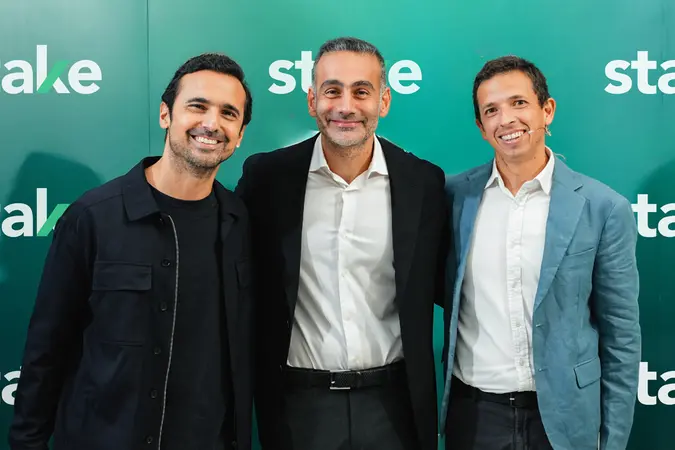
Stake, Dubai-based digital real estate investment platform, has raised $31 million in an oversubscribed Series B round, led by Emirates NBD, as it looks to scale its regulated cross-border property investment offerings.

The round drew participation from investors including Mubadala Investment Company’s MENA Venture Capital Fund, Middle East Venture Partners (MEVP), Property Finder, STV NICE, Wa’ed Ventures, GFH Partners and Ellington Properties.

The latest funding brings Stake’s total capital raised to $58 million, strengthening its position among the Middle East’s fast-growing fintech firms.

Stake operates a regulated platform that enables investors to access fractional ownership of real estate across multiple markets. The company says it is building infrastructure to connect global capital to income-generating property assets through compliant digital channels.

“Real estate remains a foundational component of global investment portfolios, yet there is an opportunity to improve how many investors access and gain transparency into these assets,” said Neeraj Makin, Group Head of Strategy, Analytics and Venture Capital at Emirates NBD.

Saudi Arabia is currently Stake’s key growth market. In the fourth quarter of 2024, the company became the first Capital Market Authority (CMA)-regulated platform to open Saudi Arabia’s property market to international investors. Since then, it has closed three real estate funds in the Kingdom, attracting nearly 7,000 international investors and channeling more than 416 million riyals ($111 million) into the sector.

The company is also expanding beyond the Gulf. In October 2025, Stake entered the U.S. industrial real estate market, targeting income-generating assets and broadening its cross-border investment strategy.

Stake has additionally launched “StakeOne,” a product designed to digitise full property ownership and post-sale asset management, offering access to Dubai properties developed by companies such as Emaar, Ellington Properties and Dubai Holding.

As part of its long-term strategy, the company is pursuing regulated tokenisation of real estate assets in collaboration with Property Finder. It has received in-principle approval from Dubai’s Virtual Assets Regulatory Authority (VARA) for the initiative, which aims to enable fractional, tradeable exposure to property assets.

Stake said it has recorded a compound annual growth rate of over 130% in gross merchandise value and more than 100% revenue CAGR over the past three years. The platform serves more than 2 million users across 181 countries.


Mubadala Invests $50 Million in Egypt’s Breadfast Ahead of Planned IPO

0


Abu Dhabi’s Mubadala Investment Company has invested in Egyptian e-grocery startup Breadfast as the company prepares for a potential global initial public offering, the companies said on Tuesday.

Mubadala participated in a $50 million pre-Series C funding round alongside Saudi Arabia’s Olayan Financing Company, Japan’s SBI Investment Co., and the International Finance Corporation (IFC), a member of the World Bank Group.

The funding will be used to expand Breadfast’s infrastructure across Egypt, including its network of warehouses, fulfilment centres and production facilities. The company also plans to explore expansion into select North and West African markets as part of its regional growth strategy.

Founded in 2017 by Mostafa Amin, Mohamed Habib and Abdullah Noufal, Breadfast began as a bread delivery service and has since evolved into a full-service e-grocery platform offering groceries, ready-to-eat meals, pharmaceutical products and digital payment services.

The company is targeting up to 3% of Egypt’s $100 billion grocery market within the next three years.

Chief Executive Mostafa Amin said Breadfast is in preliminary discussions with growth investors ahead of a larger Series C round planned for the first half of 2026.

Private-label products account for around 40% of Breadfast’s grocery sales, underscoring its strategy to improve margins and build brand loyalty.

Breadfast was valued at nearly $400 million in late 2025, according to a source familiar with the matter, positioning it among the region’s fast-growing digital commerce platforms.


Safaricom’s Daraja 3.0 Platform Speeds Up API Integration for Kenyan Businesses

Faster integration of payment systems is emerging as a competitive advantage for businesses operating in Kenya’s digital economy.

Developers say improvements introduced under Safaricom’s Daraja 3.0 platform are significantly reducing the time it takes for companies to connect their systems to M-PESA, allowing them to begin collecting revenue sooner.

“What used to take days — sometimes even a week — now takes hours,” said Robert Manyala, director at Nairobi-based technology firm Robisearch Limited. “When integration takes too long, customers look for alternatives. Speed is profit.”

Application programming interfaces (APIs) serve as the digital bridges linking hospital billing systems, e-commerce platforms and government portals to M-PESA, Kenya’s dominant mobile money service. While consumers experience seamless transactions, developers build and manage the underlying connections.

In earlier years, integration required browser-specific security certificates and multiple manual steps before going live, Manyala said. Minor configuration errors could stall deployments, delaying businesses from accepting payments.

Daraja 3.0 has introduced self-service capabilities and streamlined processes that allow developers to manage integrations more independently, reducing reliance on manual support.

“As programmers, we don’t work nine to five,” Manyala said. “With self-service tools, we can deploy when we are ready. If there’s a small mistake, we can correct it ourselves without waiting.”

Industry participants say the time saved has direct commercial implications, particularly for startups and small businesses that depend on steady cash flow.

Kenya remains one of Africa’s most advanced mobile money markets, with M-PESA processing billions of shillings in transactions daily. As more sectors digitise — from healthcare and logistics to public administration — efficient integration infrastructure has become increasingly critical.

Robisearch, which builds payment and automation systems for more than 100 clients, says improved API tools have also enabled it to expand operations into Uganda and South Africa.

“If the framework works well locally, scaling to other markets becomes easier,” Manyala said. “You’re not starting from scratch.”

Beyond private enterprise, the company recently launched a digital visitor management system for government buildings, replacing physical logbooks with electronic records to improve efficiency and data privacy. The system is designed to integrate with broader digital infrastructure, including payment and authentication tools.

Technology analysts say such developments underscore the role APIs now play as foundational infrastructure in Kenya’s economy.

“APIs are the rails of the digital economy,” said a Nairobi-based fintech consultant who declined to be named. “The more efficient those rails are, the more efficiently commerce moves.”

Developers also point to growing trust in digital payment systems as a catalyst for expansion.

“Today, people are running large businesses remotely because they trust the security of the platforms,” Manyala said.

While most users may never encounter the term “API,” its influence is expanding as digital services deepen across sectors.

For developers and businesses alike, the gains are reflected in shorter deployment timelines, faster launches and quicker access to revenue.

In a market where mobile payments underpin daily commerce, even small reductions in integration time can ripple across the broader business ecosystem.

The infrastructure may be invisible, but its economic impact is increasingly tangible.

WeThinkCode_ Launches 40-Hour Generative AI Course for Non-Technical Professionals

0

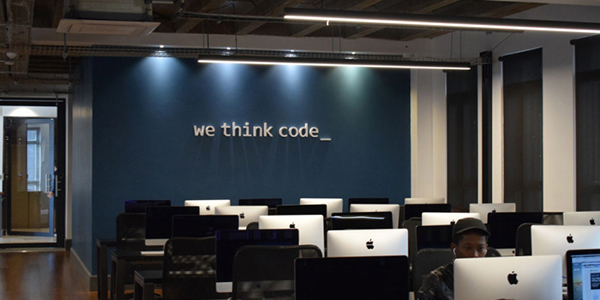
WeThinkCode_, a tuition-free technology academy, has launched a 40-hour Generative AI course designed for non-technical professionals across industries, expanding its artificial intelligence training programme in Kenya and South Africa.

The two-week course targets professionals in human resources, marketing, finance, healthcare and education, equipping them with practical skills to use generative AI tools safely and effectively in the workplace.

The programme is the second offering under WeThinkCode_’s AI training initiative supported by a grant from Google.org. The broader partnership aims to train 12,000 young people in essential AI skills across Kenya and South Africa. An earlier track focused on software engineers and is training 6,000 developers.

The new course does not require a technical background and focuses on practical applications such as writing, research, analysis and problem-solving using AI tools. Participants also receive training in ethics, data privacy and responsible AI use.

“AI is no longer the domain of technologists alone,” said Crosby Hunda, Senior AI Project Manager at WeThinkCode_. “This programme is designed to build confidence among professionals so they can integrate AI into their everyday workflows responsibly.”

The curriculum comprises 10 modules covering AI fundamentals, prompting techniques, tool selection, fact-checking, research, data analysis, professional communication and team collaboration. Participants who complete the course receive a certificate from WeThinkCode_.

The academy said the programme aims to promote inclusive digital transformation, targeting 50% female participation and prioritising youth from low-income communities. The course is offered free of charge.

Applicants are required to have basic digital literacy, familiarity with standard workplace software such as Microsoft Office or Google Workspace, and access to a reliable internet connection.

Google.org said its support aligns with its goal of expanding equitable access to AI literacy across Africa.

“By supporting WeThinkCode_, we’re investing in Africa’s workforce and helping ensure AI skills are accessible across sectors,” said Haviva Kohl, Senior Program Manager at Google.org.

WeThinkCode_ said the initiative strengthens its role as a provider of future-focused digital training and supports broader efforts to close Africa’s digital skills gap.


WomHub Opens Applications for Female-Led Green Tech Accelerator

0

WomHub, a South African boutique incubator, has officially issued a call for applications for the second cohort of its Green Acceleration Programme (GAP), as it seeks to place women at the forefront of the continent’s shift toward a low-carbon economy.

Described as a “powerhouse” in the South African tech and engineering landscape, the organisation is doubling down on its mission to bridge the gender gap within the burgeoning green sector.

By targeting female-led startups, the initiative aims to ensure that women are not merely participants in environmental solutions, but “leaders and owners” of the ventures tackling the planet’s most pressing challenges.

The GAP initiative is specifically curated for high-growth ventures that are often overlooked in male-dominated industries.

To combat this, WomHub provides what it describes as a “robust ecosystem,” which includes high-level technical and business training alongside mentorship from industry veterans.

Furthermore, the programme offers holistic support designed to help emerging founders navigate the unique barriers women face in Science, Technology, Engineering, and Mathematics (STEM).

This multi-layered approach is intended to provide the “specialized tools and investment readiness training” necessary to scale sustainable ventures in a competitive global market.

For this second edition, the incubator is seeking a diverse group of innovators working across three primary pillars of environmental technology:

  • Circular Manufacturing: Startups focused on eliminating waste, extending product lifecycles, and regenerating natural systems.

  • Climate-Responsive Technologies: Solutions designed to mitigate the effects of climate change or assist communities in adapting to environmental shifts.

  • Sustainability-Driven Innovation: A broad category for any tech-enabled venture that prioritizes ecological health alongside commercial viability.

As the global economy pivots toward sustainability, WomHub’s mission remains focused on rewriting the narrative for women and girls in technical fields.

Consequently, the programme emphasizes transforming “administration” into high-impact operations through its acceleration framework.

However, time is running out for interested entrepreneurs. Applications for the second cohort are currently open here but are set to close on February 18.

Potential candidates are encouraged to apply through the official portal to secure their place in what is becoming one of South Africa’s most watched sustainability initiatives.

ODPC, Huawei Kenya Train 200 Wajir Youth on Data Protection for Safer Internet Day

Kenya’s Office of the Data Protection Commissioner (ODPC), in partnership with Huawei Kenya and the Ministry of ICT and the Digital Economy, trained 200 young people in Wajir County on data privacy and online safety during activities to mark Safer Internet Day.

The four-day programme, held from Feb. 9–12, targeted students including first-time internet users, equipping them with practical skills to safeguard personal data, identify online risks and participate responsibly in the digital space. The initiative aligned with this year’s theme, “Together for a Better Internet.”

Organisers said the training placed special emphasis on girls and young women, who face greater barriers to digital access and skills. National statistics show that 35% of women in Kenya use mobile internet compared with 50% of men. For every 100 young men with digital skills, only 65 young women have similar competencies.

The sessions focused on personal data rights, safe online behaviour and obligations under Kenya’s Data Protection Act, 2019. Participants were also trained on how to report misuse of personal information and seek redress through the ODPC.

“As more young people come online, awareness becomes the first layer of protection,” said Vincent Musyoki, a trainer at the ODPC. “Direct engagement helps translate rights and responsibilities into practical knowledge.”

Adams Makau, a trainer at Computers for Schools Kenya, said participants gained an understanding of data protection principles and how to engage authorities if their rights are violated.

Trainees said the programme strengthened their confidence online.

“I now understand how to protect my personal data and what my rights are,” said Abdimajid Hassan Hussein, one of the participants.

The initiative comes as Kenya pushes to bridge a digital divide that leaves roughly half of its population offline, particularly in rural and marginalised counties such as Wajir. Organisers said early exposure to digital literacy and data protection is critical to enabling youth to participate safely in the country’s growing digital economy.

Kenya has nearly 7.4 million micro, small and medium enterprises employing 14.9 million people, with women running close to half of them, according to official data. Stakeholders said expanding digital skills among young people, especially women, is key to inclusive economic participation.

Through the Safer Internet Day programme, the ODPC, Huawei Kenya and the ICT ministry said they aim to strengthen digital inclusion and promote responsible internet use nationwide.

580,000 Kenyan Videos Pulled Down by TikTok for Rules Violation

TikTok has revealed that it removed more than 580,000 videos in Kenya between July and September 2025 for breaching its content rules, underscoring the scale of moderation on one of the country’s most widely used social media platforms.

The figures, published in the company’s latest enforcement report, come at a moment when concerns over privacy, consent and online safety are intensifying.

The disclosure follows days of online uproar in Kenya over a Russian content creator accused of secretly recording encounters with women and posting the clips on social media platforms, including TikTok and YouTube.

Although there has been no official confirmation, many social media users speculated that smart glasses may have been used to film women in public spaces without their knowledge or clear consent.

The controversy has reignited debate about whether platforms are moving quickly enough to detect and remove harmful or exploitative material.

Smart glasses are capable of capturing photos and video hands-free. Meta, which manufactures one such product, says its glasses display an LED light to signal when recording is taking place and that its policies prohibit harassment or privacy violations.

However, privacy advocates argue that public awareness of such indicators remains limited.

Against this backdrop, TikTok said that 99.7% of the videos it removed in Kenya during the quarter were taken down before they were reported by users.

Furthermore, 94.6% were removed within 24 hours of being posted.

In addition to video removals, the company said it interrupted about 90,000 live sessions in Kenya over the same period for violating its content policies. That figure represents roughly 1% of all livestreams in the country during those three months.

Globally, TikTok reported removing 204.5 million videos between July and September, equivalent to around 0.7% of total uploads.

According to the company, 99.3% of those removals were proactive, while nearly 95% were taken down within a day.

Automated systems were responsible for 91% of the removals worldwide.

The report also states that more than 118 million fake accounts were deleted, alongside over 22 million accounts suspected of belonging to users under the age of 13.

Meanwhile, legal experts say the Kenyan controversy highlights gaps in how platforms handle covert recording.

In response to mounting scrutiny, TikTok says its moderation efforts rely on a combination of automated detection tools and human reviewers to tackle harmful content, including harassment and misinformation.

The company also says it has expanded wellbeing features aimed at helping users — particularly teenagers — manage screen time and build healthier digital habits.

Nevertheless, as new recording technologies become more discreet and accessible, questions remain over whether enforcement systems can keep pace with emerging forms of online abuse.

ICT Authority Appoints Jessy Kiveu Maruti as New Chief Executive

0

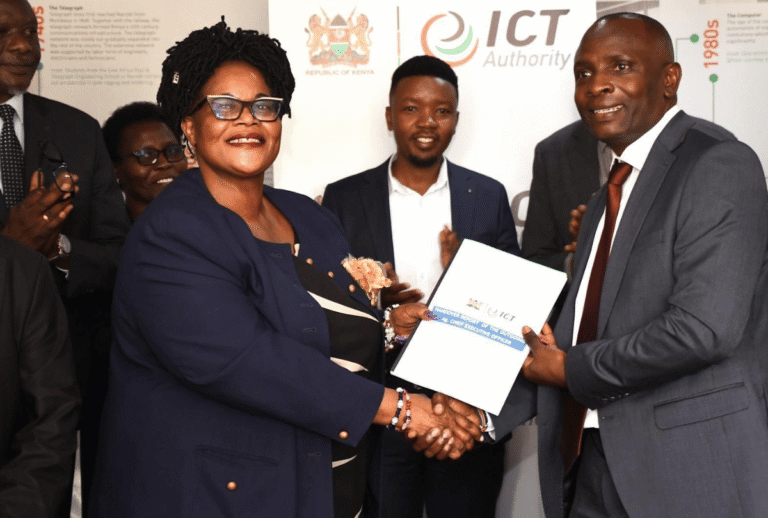
ICT Authority has appointed Jessy Kiveu Maruti as its new Chief Executive Officer (CEO), bringing to an end a seven-month leadership transition at the state agency.

The appointment followed what officials described as a competitive selection process.

It was subsequently formalised by the Cabinet Secretary for Information, Communications and the Digital Economy, William Kabogo.

Mr Maruti’s appointment concludes a period of uncertainty at the Authority. For the past seven months, the organisation has been under interim leadership after Zilpher Owiti took over as Acting CEO in July 2025.

Ms Owiti stepped into the position following the controversial exit of the then CEO, Stanley Kamanguya, whose departure came amid a high-profile legal dispute with the Board over the renewal of his contract.

Although the Employment and Labour Relations Court briefly reinstated Mr Kamanguya in late July 2025, nullifying the initial interim appointment, he resigned just days later.

At the time, he cited the need to move beyond what he described as administrative friction.

Speaking during the transition ceremony, Board Chairperson Hon. Lily Ng’ok thanked Ms Owiti for her stewardship during the transition.

She said the Board appreciated her “dedicated service” throughout the interim period, noting that it enabled the Authority to maintain operations while the search for a permanent successor was under way.

Meanwhile, Mr Maruti assumes office with more than 18 years of experience in the ICT sector and public administration.

Most recently, he headed Public Sector operations at Telkom Kenya. In that role, he oversaw key national infrastructure projects, including the National Optic Fibre Backbone Infrastructure (NOFBI) and the Government Common Core Network (GCCN).

Also in presence was the Principal Secretary for ICT and the Digital Economy, Eng. John Tanui.

He indicated that the incoming CEO’s immediate priority would be implementing the Authority’s 2024–2027 Strategic Plan.

“Mr. Maruti will oversee the implementation of the Authority’s mandate and advance key national digital initiatives that are central to Kenya’s digital economy,” Eng Tanui stated.

Starlink Sets April 30, 2026 Deadline for In-Person ID Verification in Kenya

0

Starlink subscribers in Kenya will now be required to undergo mandatory in-person identity verification, with the company setting April 30, 2026 as the deadline for compliance.

In a notice circulated to customers, the satellite internet provider warned that those who fail to complete the process by that date risk having their service interrupted.

The company said the new requirement follows directives from Communications Authority of Kenya (CA).

According to the communication, subscribers must visit an authorised Starlink retailer within Kenya and present a valid ID.

They are also required to provide their Starlink account details during the verification.

However, the firm clarified that customers do not need to carry their Starlink hardware to the verification centre. Instead, they should have a phone with the Starlink app installed to facilitate account confirmation.

The notice to subscribers was explicit. Customers are urged to complete verification before April 30, 2026, accompanied by a warning that failure to do so “may result in service interruption.”

The tone of the message underlined what appears to be a firm compliance stance.

The move however, brings Starlink more closely into line with country’s existing telecommunications registration framework.

Note that mobile network operators and internet service providers already operate under strict Know Your Customer (KYC) requirements enforced by the regulator

For years, SIM card registration and identity verification have been mandatory across the traditional telecom sector.

In that context, Starlink’s decision represents a logical extension of regulatory standards that have long governed the industry.

Starlink’s rapid expansion in Kenya has positioned it as a strong alternative to conventional broadband providers. Because its satellite-based infrastructure allows users to connect directly, without relying on terrestrial fibre networks run by licensed local operators, it has been particularly attractive in remote and underserved regions.

That operational independence has been one of its strongest selling points.

Nevertheless, the new verification directive illustrates how satellite internet services are increasingly being folded into national regulatory systems.

What initially appeared to function on the margins of traditional telecom oversight is now being drawn more firmly into domestic compliance structures.

By linking user accounts to verified physical identities within Kenya, authorities can ensure that satellite connectivity is subject to the same accountability standards as other internet services operating in the country.

Beyond the immediate compliance requirement, the development feeds into broader conversations around digital governance.

Tying internet access to verified identities strengthens regulatory control and could simplify enforcement under Kenyan law where necessary.

In tightly regulated telecommunications environments, verified identity records are often seen as critical for security and fraud prevention.

At the same time, such measures can raise questions about privacy, digital rights and the balance between security and open access.

Although Kenya has not experienced a nationwide internet shutdown in recent years, debates over state influence on digital infrastructure have surfaced during periods of political tension.

Traditionally, any restrictions have relied on directives issued to local telecom operators controlling fibre backbones and mobile networks.

When Starlink entered the Kenyan market, some observers viewed it as adding an extra layer of connectivity resilience, given that it operates outside terrestrial systems. Now, with mandatory identity verification in place, its operations sit more squarely within Kenya’s formal regulatory framework.

For customers, the immediate task is clear. Those who wish to avoid disruption must complete the in-person verification before the April 30, 2026 deadline.

Whether the move simply formalises existing compliance expectations or signals a deeper shift in oversight, one thing remains certain: Kenyan subscribers will need to act promptly to maintain uninterrupted access to Starlink’s satellite internet service.

Terra Industries Raises $22 Million Extension, Bringing Total Funding to $34 Million

0

Terra Industries, a Nigerian defense technology startup developing autonomous security systems for critical infrastructure across Africa, has raised an additional $22 million in funding led by U.S.-based venture capital firm Lux Capital, the company said on Tuesday.

The investment extends Terra’s previously announced $11.8 million round, bringing total funding in the round to $34 million.

Existing investors 8VC, Nova Global, Silent Ventures, Belief Capital, Tofino Capital and Resilience17 Capital — founded by Flutterwave CEO Olugbenga Agboola — participated in the extension, alongside angel investors including Jordan Nel and Jared Leto.

The round was completed in under two weeks, reflecting what the company described as strong investor confidence in its mission to address insecurity and protect critical infrastructure across the continent.

Founded in 2024 by Nathan Nwachuku, 22, and Maxwell Maduka, 24, Terra Industries designs and manufactures autonomous land, air and maritime security systems. Its technology is currently deployed to protect power plants, mines and other nationally significant assets in multiple African countries.

Africa holds roughly 30% of the world’s critical mineral reserves and invests an estimated $100 billion annually in infrastructure development. However, much of this expansion is occurring in remote and unstable regions where security risks — including infrastructure sabotage, illegal mining, organized crime and terrorism — remain persistent.

“Africa is industrializing faster than any other region,” said Nwachuku, Terra’s co-founder and chief executive officer. “But that progress depends on solving insecurity and terrorism, which remain the continent’s greatest vulnerabilities.”

Governments and infrastructure operators across Africa often rely on imported security systems, which can be costly to maintain and may present supply chain or data sovereignty concerns.

Terra says it is building what it describes as Africa’s first vertically integrated defense technology platform tailored to local operating conditions. Its portfolio includes autonomous drones, sentry towers and unmanned ground vehicles, connected through ArtemisOS, the company’s proprietary software platform designed for real-time threat detection and coordinated response.

The company said it currently secures infrastructure assets valued at approximately $11 billion and has secured contracts worth tens of millions of dollars across public and private sectors.

Terra operates a 15,000-square-foot manufacturing facility in Abuja and says its engineering team is composed primarily of African talent.

The new funding will be used to expand manufacturing capacity, scale deployments in Nigeria and other African markets, and grow its engineering and business development teams across Africa, London and San Francisco.

“We believe local defense technology is essential because security underpins economic growth,” said Brandon Reeves, partner at Lux Capital.

Terra Industries was founded in 2024 and focuses on security solutions for energy, mining, maritime assets, urban infrastructure, border security and counterterrorism operations.


Jumia Exits Algeria as It Sharpens Focus on Profitability

0

Ecommerce firm Jumia has ceased operations in Algeria, according to its full-year 2025 financial report, after the country accounted for about 2% of the company’s gross merchandise value (GMV) last year.

The shutdown, marks another step in the African eCommerce company’s push to streamline its footprint and focus on markets with clearer paths to profitability.

Algeria’s shutdown leaves Egypt and Morocco as Jumia’s remaining North African markets, following earlier exits from Tunisia and South Africa.

Jumia said the decision would weigh on short-term performance but forms part of a broader geographic recalibration designed to improve operational efficiency and concentrate resources on higher-growth, higher-margin markets.

However, there has been growing competition from Chinese platforms such as Temu and Shein, which have cheap Chinese imports, are spending heavily on marketing and are expanding rapidly across Africa.

Temu entered the Nigerian market in 2024 with aggressive promotions and cross-border fulfilment steadily gaining significant marketshare and a year later, Temu’s footprint grew significantly, taking on several regions initially served by Jumia and its competitors.

In South Africa, Temu and Shein reportedly account for 37.1% of the country’s sales in the clothing, textiles, footwear and leather, categories and these is said to have led to Jumia exiting South Africa towards the end of 2024.

Without opportunity for scale and significant margins, the pressure was too high on Jumia leading it to launch a sourcing office in Yiwu, China, to bolster its direct imports, something Temua nd Shein were enjoying.

Jumia had its eye on being Africa’s Amazon but with the entry of new and cheaper players, it’s dream to become a cross-border eCommerce platform is becoming elusive. It’s withdrawal in Algeria underscores its shift from expansion-led growth to market consolidation and sustainable profitability as the eCommerce market gets crowded.

In December 2023, Jumia discontinued its food delivery service, Jumia Food in Nigeria, Kenya, Uganda, Morocco, Tunisia, Algeria and Ivory Coast to focus on profitability. In 2022 it discontinued the food delivery operations in Egypt, Ghana and Senegal and suspended logistics- arm in all markets except Nigeria, Morocco and Ivory Coast.

The firm also halted Jumia Prime and scaled back first-party groceries in Algeria, Ghana, Senegal and Tunisia to help it cut losses and achieve profitability in its core physical goods business and JumiaPay.

“The more we focus on our physical goods business, the more we realize that there is huge potential for Jumia to grow, with a path to profitability,” Dufay said at the time. “We must take the right decision and fully focus our management, our teams and our capital resources to go after this opportunity.”

Spiro Secures $7M from Nithio to Expand African E-Mobility Operations

0


African electric mobility company Spiro has secured a $7 million senior debt working capital facility from Nithio’s Facility for Adaptation, Inclusion and Resilience (FAIR), the companies said on Wednesday, marking Nithio’s first direct investment in the e-mobility sector.

The financing will support the expansion of Spiro’s electric motorcycle fleet and its battery-swapping network across existing and new markets, while strengthening working capital to meet rising demand for clean transport solutions.

Founded in 2022, Spiro operates in six African countries with more than 80,000 electric motorcycles on the road, over 2,500 battery-swap stations, and four assembly facilities. The company focuses on commercial motorcycle transport, replacing petrol-powered bikes with electric alternatives supported by a dense swap network designed to minimize downtime.

Electric two-wheelers are increasingly becoming cheaper to operate than internal combustion models in several African markets, driven by lower fuel and maintenance costs.

“By replacing petrol-powered motorcycles — one of the most widespread and polluting forms of transport in African cities — Spiro is accelerating the transition to clean mobility in a practical and affordable way,” said Spiro Chief Executive Kaushik Burman. He added that supportive regulation and investment are critical to scaling electric vehicle adoption across the continent.

Nithio Chief Executive Raghav Sachdeva said Spiro had demonstrated that electric mobility can scale rapidly while delivering economic value to riders and reducing emissions.

Nithio’s FAIR facility backs climate-focused businesses with strong unit economics and measurable development impact. The investment signals growing investor confidence in Africa’s electric two-wheeler market as infrastructure and financing models mature.


Skoot Launches Electric Tuk-tuk in Kenya with SUN Mobility Battery Swapping

0

Skoot Technology on Wednesday launched an electric three-wheeler in Kenya powered by SUN Mobility’s battery swapping system, targeting urban transport and delivery drivers seeking lower operating costs.

The vehicle, branded the Skoot e3W, combines a Piaggio-designed three-wheeler distributed by Car & General with SUN Mobility’s battery swapping platform. The companies said the model has been tested in Nairobi over the past two years under local road and load conditions.

Drivers using the vehicle travel about 150 kilometres per day on average, according to Skoot. The company said that distance would cost approximately 650 Kenyan shillings ($X) using SUN Mobility’s battery swapping network, compared with around 850 shillings for diesel, representing savings of up to 30%.

Battery swaps take a few minutes, allowing drivers to reduce downtime compared with conventional charging, the companies said.

The Skoot e3W will be offered under daily, weekly and monthly lease options starting from 1,200 shillings per day, inclusive of maintenance.

Skoot Chief Executive and Co-Founder Sacha Cook said the company aims to integrate mobility, energy and digital services through a single mobile platform that allows drivers to manage leases, locate swap stations and access delivery work.

SUN Mobility, which operates more than 1,000 battery swap stations across 25 cities in India, is expanding into Kenya as part of its international growth strategy. The company says it powers more than 60,000 vehicles globally and has enabled over 465 million kilometres of electric travel.

Car & General, established in 1936 and a distributor of Piaggio three-wheelers in East Africa, said the partnership would leverage its national service network and experience in the regional mobility market.

The companies said further expansion of the battery swapping network is planned in the coming months.

NCBA Sets New Industry Benchmark as Digital-First Banking Transformation Takes Hold

0

NCBA Bank is cementing its position as a technological leader in East and Central Africa, reporting significant milestones in its long-term “Change the Story” transformation agenda.

Following a series of strategic investments in cloud infrastructure and automation, the bank has become the first in the region to achieve dual ISO certification for data security and privacy.

The bank’s aggressive digital adoption strategy has effectively transformed its operational backbone, leveraging a high-performance, distributed core banking system supported by private cloud infrastructure.

This technological pivot is designed to handle increasing transaction volumes while maintaining the agility required to serve a rapidly growing customer base.

Automating Efficiency

A centerpiece of this transformation has been “Project ZERO,” a strategic initiative aimed at streamlining internal operations through Robotic Process Automation (RPA).

By deploying automated bots to handle high-volume, repetitive tasks, ranging from financial crime detection to complex reporting, the bank has successfully automated 44 key business processes.

According to the bank’s internal reporting, these efficiencies have resulted in a remarkable saving of 91,000 man-hours, allowing staff to shift their focus toward higher-value client engagements.

Empowering Customers Through Digital Tools

NCBA has extended its digital-first approach directly to its customers, launching a suite of specialized platforms designed to reduce transaction friction:

  • ConnectPlus: Powered by Intellect’s wholesale banking technology, this cloud-based corporate platform provides businesses with real-time liquidity management and secure, mobile-accessible transaction processing.

  • NCBA Now: The bank’s flagship mobile application, which serves as an omnichannel hub for personal banking, payments, and investment services.

  • Smart SACCO Solutions: An automated reconciliation tool that offers SACCOs pre-validation of collections and real-time API notifications, significantly reducing manual administrative workloads.

  • Soma Plus: A dedicated platform built to streamline the administrative and financial management of educational institutions.

A Commitment to Data Sovereignty

In February 2026, the bank solidified its reputation for data governance by achieving dual certification from the British Standards Institution (BSI): ISO/IEC 27001 for Information Security Management and ISO/IEC 27701 for Privacy Information Management.

“Attaining these dual ISO certifications is a significant milestone in our continuous journey to strengthen information security within our operations,” said Isaac Owilla, NCBA Group Director for Technology and Operations. “Our customers can be assured that we uphold the highest standards in security, service management, and regulatory compliance.”

The bank prioritized its Kenyan operations for the initial certification phase, as the country accounts for approximately 80% of the Group’s technology functions.

Management has confirmed that plans are already underway to extend these rigorous security standards to its subsidiaries in Tanzania, Rwanda, and its fintech arm, Loop DFS.

Looking Ahead

As NCBA transitions into 2026, the integration of AI-driven security and predictive data analytics remains a priority.

By utilizing advanced database technology, such as GaussDB, the bank is positioning itself to process complex financial data more efficiently.

These digital advancements represent more than just internal updates; they are the foundation of a broader strategy to support Kenya’s evolving digital economy, ensuring that as the bank scales, its infrastructure remains stable, secure, and ready for the next generation of financial services.

NCBA “Insurance 101” Empowers Clients Through Asset Protection and Peace of Mind

0

NCBA Group is reinforcing its commitment to long-term financial stability with the “Insurance 101,” a strategic initiative designed to demystify risk management for its clients.

Under the bank’s dedicated Insurance & Risk pillar, this program aims to change the perception of insurance from a burdensome cost to an essential instrument for asset protection and personal “peace of mind.”

The initiative is being spearheaded by the Head of Retail Banking and Insurance, who emphasizes that securing one’s future requires a proactive approach to mitigating life’s inevitable uncertainties.

Reflecting on the vision behind this move, the Group Managing Director, John Gachora, noted: “Insurance is increasingly becoming a basic financial need for our customers. By integrating our insurance capabilities, we are accelerating our ambition to become a universal financial services provider that addresses the full set of our customers’ financial needs under one roof.”

The core philosophy behind Insurance 101 is that individuals and businesses spend years building assets that deserve protection from unforeseen events.

NCBA Insurance, which brings over five decades of heritage to the group, focuses on four cornerstone products to address modern risks:

  • Commercial Property Insurance: Designed to safeguard businesses from financial losses due to damage or loss of physical assets like buildings, machinery, and stock.

  • Travel Insurance: Provides comprehensive coverage for individuals and families, ensuring medical emergencies, trip cancellations, or lost baggage do not disrupt travel plans.

  • Cyber Edge Insurance: Protects businesses against the rising threat of digital attacks, covering costs related to data breaches, ransomware, and forensic investigations.

  • Personal Accident Insurance: Offers essential financial security for individuals and their families against the impact of accidental injuries or death.

Highlighting the impact of the bank’s expanded insurance division, Stella Njunge, Managing Director of NCBA Insurance, added: “Being part of NCBA has significantly enhanced our ability to deliver exceptional products and services to a wider set of customers. With our new identity and focus, we are set to drive a better understanding of insurance products, demonstrate value, and foster resilience for our clients in an ever-evolving landscape.”

To ensure that comprehensive protection remains accessible, NCBA provides diverse solutions alongside these key covers.

A standout feature of this strategy is the use of Insurance Premium Financing (IPF), which allows customers to manage their premium payments in smaller, more manageable installments rather than lump sums.

This flexibility ensures that maintaining crucial coverage does not strain monthly cash flows, reinforcing the bank’s role as a trusted partner in its customers’ financial journeys.

Established in 1972, NCBA Insurance remains committed to service excellence and rapid claims management, with branches at the Eden Square Complex and NCBA Building in Nairobi, as well as the NSSF Building in Mombasa.

By integrating these solutions through its bancassurance unit, the bank provides a “one-stop shop” where banking and insurance converge, ensuring that every dream inspired by the bank is equally protected by it.

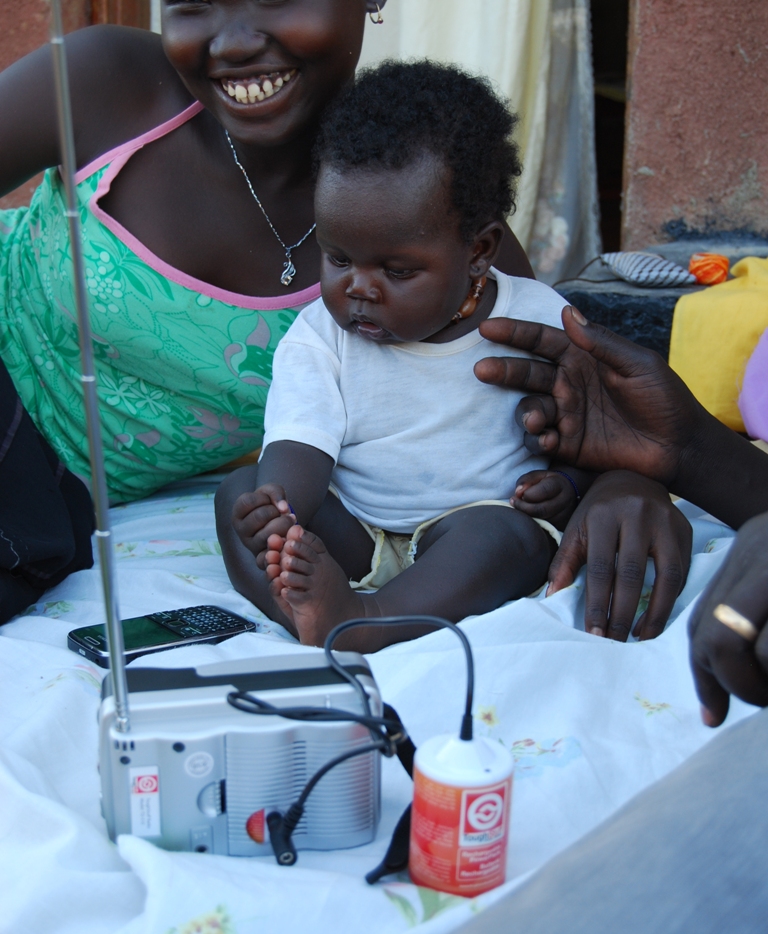
World Radio Day: Kenya launches first trial Digital radio to tackle ‘saturated’ airwaves

0

Kenya has officially taken its first major step into the future of sound broadcasting by activating a trial for digital radio services in Nairobi.

This milestone, announced by the Communications Authority of Kenya (CA) on today, coincides with the global celebration of World Radio Day.

Journalists across Kenya celebrated World Radio Day 2026 under the theme “Radio and AI: Innovation that Empowers, Ethics that Inspire, Trust that Endures,” focusing on how to integrate emerging technologies into the nation’s most trusted medium.

The regulator noted that lthough sound broadcasting remains one of the nation’s most critical media platforms—reaching approximately 98% of homes and supporting 300 licensed services—the move addresses a growing technical crisis.

“Specifically, traditional FM frequencies in VHF Band II (87.5–108.0 MHz) have become “saturated” in major coverage areas, leading to increased interference and relatively poor audio quality for listeners,” CA noted.

The transition began in earnest in 2023 when the Authority developed a framework for Digital Sound Broadcasting (DSB), focusing on Digital Audio Broadcasting in VHF Band III (174–230 MHz) and Digital Radio Mondiale in the HF band (30 MHz).

Following extensive stakeholder engagement, the CA granted authorization in 2025 to two licensees, Signet Signal Distributors Ltd and Mast Rental Services Ltd, to deploy trial networks.

Consequently, in January 2026, Mast Rental became the first operator to deploy a DAB+ trial network, which currently carries 14 radio programmes within the Nairobi coverage area.

This shift is expected to offer significant advantages for both broadcasters and investors by providing wider coverage and lower barriers to entry.

By separating content provision from signal distribution, the new system allows broadcasters to focus on “compelling content” while the ability to carry multiple services on a single channel lowers transmission costs.

Furthermore, the framework creates space for new entrants, including community broadcasters, by providing reserved capacity at “nominal carriage costs”.

For the average consumer, this technology promises clearer sound, reduced interference, and a far wider choice of “niche, regional and thematic services,” alongside potential value-added data like station information.

Looking ahead, the DSB technology is intended to initially “complement, not replace, existing FM services”.

Crucially, no analogue switch-off date has been set, ensuring continuity for all listeners as digital platforms are rolled out in phases, starting with the Mombasa–Nairobi–Kisumu corridor.

The Authority will now conduct a 12-month monitoring and evaluation period to ensure adequate signal coverage, affordable receivers, and public education.

By joining the global frontier of digital radio, Kenya aims to work with regional bodies to support harmonized approaches that “enhance interoperability and investment”.

Samsung Gears Up for Galaxy Unpacked with Major Giveaway for Kenyan Fans

Samsung has officially invited Kenyans to join a global “virtual watch party” on 25 February 2026, promising a first look at a new era of AI-integrated mobile technology.

The event, which is scheduled to begin at 9:00 pm, aims to provide an immersive digital experience that places local fans at the heart of the global reveal.

According to the mobile tech giant, the upcoming innovations are “set to make everyday life smarter, more intuitive, and more efficient for every user.”

While Unpacked events are traditionally high-octane physical launches, this year’s digital celebration ensures a “front-row seat” for everyone regardless of their location, focusing heavily on a suite of AI-driven features designed to bridge the gap between high-level innovation and the practicalities of daily life.

In a bid to drive engagement, Samsung has coupled the launch with a tiered giveaway for those who register for the stream.

Consequently, the 100th person to sign up will receive the Galaxy Buds3 Pro, while the 500th registrant will be awarded the “stylish and versatile” Galaxy Watch8.

Furthermore, the 1,000th person to register will secure the grand prize of a 98″ Crystal UHD TV for what the company describes as the “ultimate home cinema experience.”

This initiative represents a “rare opportunity for anyone to upgrade their entire lifestyle with the latest Samsung ecosystem just by tuning in to the stream.”

Registration is currently open through the official Samsung Africa portal, and by signing up ahead of the 25 February deadline, participants secure their place in a global community getting an exclusive first look at the future of Galaxy.

Ultimately, Samsung continues to position this event as the “perfect starting point for anyone ready to see what the next era of technology looks like.”

Threads Hands Users the ‘Reins’ of the Algorithm with New ‘Dear Algo’ Feature

0

In a significant shift for social media customization, Meta has launched a new artificial intelligence tool for its Threads platform.

This innovative feature allows users to manually override their recommendation algorithms using simple text commands, effectively moving away from the industry standard of purely automated content delivery.

The feature, titled “Dear Algo,” represents a fundamental change in how social media giants manage content discovery.

Rather than relying solely on passive data—such as clicks, likes, and watch time—the system now invites users to issue direct instructions to the platform’s underlying code.

This transition marks a more transparent era of user-controlled digital experiences.

To trigger the change, users must publish a public post starting with the phrase “Dear Algo,” followed by their specific content preferences.

For instance, a user seeking more audio-related content might post: “Dear Algo, show me more posts about podcasts.”

Once the post is shared, the platform’s AI processes the request and recalibrates the user’s feed almost instantly to reflect their stated interests.

Regarding the vision for the tool, a Meta spokesperson explained that they want Dear Algo to make Threads feel more personal, whether a user is following trending topics or exploring niche interests.

Furthermore, they noted that it is another way the company is helping people find the latest conversations that are specifically relevant to them at any given moment.

While traditional algorithms typically learn over long periods, this new tool is designed specifically for the “in the moment” experience.

Consequently, once a request is made, the adjustment lasts for a three-day duration—exactly 72 hours—before the feed reverts to its standard settings.

Interestingly, the feature also includes a social element where users can repost a “Dear Algo” request from someone else to instantly adopt that person’s feed preferences as their own.

The feature is currently being rolled out across several major global markets to ensure a smooth transition for the community.

As of today, “Dear Algo” is available to users in the United Kingdom, the United States, Australia, and New Zealand.

Additionally, the company has confirmed it intends to introduce the feature to more countries in the near future.

This move comes as social media platforms face increasing pressure to provide transparency regarding how AI selects the content shown to billions of users daily.

By making the algorithm “addressable,” Threads appears to be betting on a more collaborative relationship between the user and the machine, offering a new level of agency in the digital age.

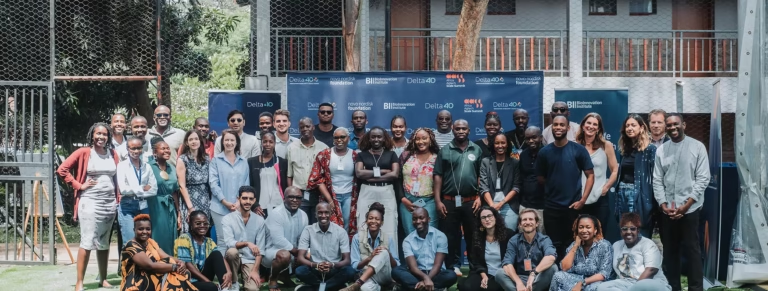
Delta40, Backed by George Soros, Raises $20M to Fund African Startups

0

Delta40, an Africa-focused venture studio and fund, said on Tuesday it had raised $20 million to support early-stage startups across the continent, with backing from prominent investors including the Soros Economic Development Fund.

The raise involved 54 investors from 13 countries, including 25 founders and 14 African investors, marking the first institutional funding round in Africa that combines venture building with early-stage capital.

Delta40 operates venture studios in Kenya and Nigeria, providing startups with hands-on support in areas such as energy, mobility, agriculture, fintech, and AI integration. The firm typically invests between $100,000 and $500,000 at the idea-to-seed stage, with follow-on funding and operational support.

“Through Delta40, we’re building innovations that transform lives, economies, and planetary health across Africa,” said Lyndsay Holley Handler, Founder and CEO. “Over 75% of our investors and team have built ventures in Africa, bringing experience, networks, and lessons from successful exits.”

Delta40 has invested in 16 companies to date, including five ventures built in-house, creating more than 5,000 jobs across 30+ African countries. The fund has achieved a 5.5x leverage on its capital.

Institutional backers include the Soros Economic Development Fund, FMO, GIZ, Autodesk Foundation, Rockefeller Foundation, and Skoll Foundation, as well as on-the-ground African investors.

“As an investor and operator, I’ve seen how difficult it is for founders to access both bold capital and hands-on support. Delta40 delivers both—and that’s why I’m confident that future funds will only accelerate the momentum we’re already seeing,” Biola Alabi, Partner, Investments, Delta40.

The round positions Delta40 to expand its portfolio and deepen operational support for African startups, aiming to address gaps in funding for female and African-led ventures.


How to Level Up Your Daily Hustle with Samsung Galaxy AI

0

In Kenya, we know the hustle. From Nairobi’s busy tech hubs to Kisumu’s growing digital enterprises, and the vibrant markets in city centers across the country, every day is a balancing act of work, school, side gigs, and big dreams. And in this fast-paced environment, a smartphone is more than a gadget—it’s a shopfront, a classroom, and a bank all in one.

As we move further into 2026, Samsung Galaxy AI is making the Kenyan hustle smarter, faster, and more efficient. Designed to work as hard as you do, Galaxy AI transforms daily challenges into effortless wins.

Smart Tools for the Real Hustler

Galaxy AI isn’t just “smart”; it’s intuitive technology built for your context. Whether you’re a student juggling assignments and side gigs, a vendor growing your online sales, or a professional navigating Nairobi’s central business district, these tools help you get more done with less stress.

Find What You Need in Seconds: Circle to Search

Kenyans are experts at deal-hunting. Whether you spot a unique fabric on Instagram or a new kitchen tool for your business, Galaxy AI’s Circle to Search with Google makes sourcing effortless.

Long-press the home button, circle the item on your screen, and Galaxy AI instantly shows where to buy it—like having a personal sourcing agent in your pocket.

Save Time on Meetings: Note Assist & Transcript Assist

Running a small business or micro-saving group often means endless meetings and paperwork. With Note Assist and Transcript Assist, Galaxy AI acts as your personal secretary.

Record meetings or lectures, and the AI will:

  • Transcribe your conversations
  • Separate different speakers
  • Summarise key points

The result? Less time on notes, more time on growth.

Break Language Barriers: Live Translate

Kenya is a gateway to global trade, but language barriers can slow deals down. With Live Translate, you can speak in your preferred language while your partner hears it in theirs—real-time, seamless, and professional.

Sound Like a Pro: Chat Assist

Whether sending a proposal via email or a persuasive WhatsApp pitch, Chat Assist ensures your communication is polished and professional. The AI suggests the perfect tone, bridging the gap between a small startup and a global-ready brand.

Perfect Photos & Videos: Photo Assist & Generative Edit

Kenya’s beauty deserves to be shared. From graduations and weddings to weekend trips to Maasai Mara, Galaxy AI helps your memories shine.

  • Photo Assist automatically optimizes your shots.
  • Generative Edit lets you remove unwanted people or objects, seamlessly filling in the background.

For content creators, Audio Eraser removes distracting noises from videos, giving professional-grade results anywhere.

Battery That Keeps Up With Your Hustle

Long commutes, power outages, or busy days can drain your phone—but Galaxy AI learns your usage patterns and prioritizes power for essential apps like M-PESA, Maps, and WhatsApp. Plus, much of the AI runs on-device, keeping your phone fast and your data secure.

The Future of the Kenyan Hustle

The hustle is evolving. With Galaxy AI, it’s not just about working hard—it’s about working smart. From sourcing supplies and managing meetings to creating polished content and closing international deals, Samsung Galaxy AI equips you to do more every day.

Experience the future of the Kenyan hustle: explore the Galaxy AI menu in your settings or visit an authorized Samsung retailer for a hands-on demo. With Galaxy AI, your daily routine isn’t just managed—it’s leveled up.


Sophos Acquires UK-based Arco Cyber to Expand Cybersecurity Governance Offering

0

Sophos, a global cybersecurity company, has acquired UK-based Arco Cyber, a cybersecurity assurance firm focused on helping organisations validate security controls and meet compliance requirements, the company said.

The deal, for which financial terms were not disclosed, strengthens Sophos’ move beyond threat detection into cybersecurity governance, risk management and executive-level assurance.

Arco Cyber’s technology and team will be integrated into Sophos CISO Advantage, a set of capabilities aimed at delivering CISO-level cybersecurity strategy and oversight to organisations with or without dedicated security leadership. The offering combines AI-assisted systems, integrated platforms and human expertise delivered through Sophos’ network of managed service providers (MSPs) and managed security service providers (MSSPs).

“There is no shortage of security technology in the market,” Sophos Chief Executive Joe Levy said in a statement. “What’s missing for most organisations is the ability to govern those tools, understand whether controls are actually working, and make informed decisions about risk.”

Arco Cyber provides continuous validation of security controls, maps controls to risk and compliance frameworks, and produces executive-ready reporting designed for boards, regulators and insurers. Sophos said these capabilities will help customers demonstrate the effectiveness of their cybersecurity investments rather than simply track activity.

The acquisition comes as many organisations face a shortage of senior cybersecurity leadership. Sophos estimates that fewer than 32,000 of the world’s roughly 359 million organisations employ a chief information security officer, increasing reliance on external partners for strategic guidance.

“As cybersecurity matures beyond alerts and point solutions, organisations are increasingly focused on proving impact, not just activity,” said Phil Harris, research director for governance, risk and compliance solutions at IDC. He said the combination of Sophos and Arco Cyber points to a growing category of platforms that link security operations with assurance and risk-based outcomes.

Arco Cyber will join Sophos as a dedicated team, with its technology integrated into Sophos Central, the company’s platform for advisory services, managed detection and response, and partner-delivered security offerings.

Matt Helling, chief executive and co-founder of Arco Cyber, said the deal would allow the company to reach a broader customer base and help organisations better prioritise risk and justify security decisions.

Sophos said the acquisition will enable MSPs and MSSPs to provide more strategic, CISO-level services, positioning them as long-term security advisers rather than technology operators.

January Total Funding Hits $174M as Investors Favor Mature Startups in Africa, Report states

0

The African tech ecosystem faced a notably quiet opening to 2026, recording its lowest monthly deal volume in over six years.

According to the latest report from Africa: The Big Deal, only 26 startups across the continent announced funding rounds of $100,000 or more in January.

This “deal desert” represents just over half of the monthly average for the previous year and highlights a significant shift toward investor caution as the market recalibrates.

Despite the record-low deal count, the total funding amount for January reached $174 million.

While this figure is a 37% decline from the $276 million raised in January 2025, it actually outperformed the totals from January 2023 ($106 million) and 2024 ($85 million).

The report suggest that the lower deal volume indicates capital is being concentrated into fewer, larger transactions—prioritizing established ventures with clear revenue paths over a broad range of early-stage startups.

The month’s funding landscape was largely dominated by late-stage debt and equity wins in Egypt and Nigeria.

Egyptian fintech firm valU led the continent with a $64 million debt facility from the National Bank, while Nigeria’s mobility financing startup MAX secured $24 million through a mix of equity and asset-backed debt.

Other significant rounds included Egypt’s NowPay raising $20 million, Morocco’s Yakeey securing a $15 million Series A, and the defense tech firm Terra Industries raising $12 million.

While primary funding was subdued, the Mergers and Acquisitions (M&A) space remained a hive of activity, signaling a trend of strategic consolidation.

Nigerian fintech giant Flutterwave acquired Mono in an all-stock deal valued at approximately $30 million.

Other notable exits included the acquisition of tech talent startup Savannah by Commit and the purchase of off-grid solar provider Qotto by Izili Group.

This movement suggests that while new checks are harder to come by, the market is maturing as larger players absorb smaller ones to build scale.

This slow start follows a resilient 2025 where total funding on the continent reached $4.1 billion, a 25% year-on-year increase.

Kenya emerged as the top destination in 2025, capturing over $1 billion in capital, largely driven by cleantech and massive debt financing rounds.

As 2026 begins, the focus has shifted toward “defensive” sectors like energy, logistics, and revenue-backed fintech, where unit economics and profitability are now valued far above rapid, unchecked expansion.

Battle for AI revenue: ChatGPT tests sponsored posts

0

OpenAI has begun a significant shift in its business model, rolling out advertisements for ChatGPT users in the United States.

The tech giant confirmed that it has started testing ads for those on its “Free” and “Go” subscription tiers.

This move marks the first time the firm has directly monetized its chatbot interface through commercial sponsors, as it seeks to offset the eye-watering costs of running its artificial intelligence infrastructure.

While the move may frustrate some, those paying for Plus, Pro, Business, Enterprise, or Education subscriptions will remain exempt from the changes.

The introduction of ads coincides with the expansion of the “Go” plan.

Launched globally in mid-January, this $8 per month tier was designed as a middle ground for users wanting more than the free version without the $20 price tag of a Plus subscription.

However, the inclusion of advertising has raised immediate questions regarding the neutrality of the AI’s advice.

OpenAI was quick to move to reassure the public, stating that ads do not influence the answers ChatGPT gives and that conversations remain private from advertisers.

The company maintains that the primary goal is to fund broader access to its most advanced features while keeping the platform free for the general public.

Unlike traditional search engines, OpenAI says its ads will be optimized around what is most helpful to the user.

In practice, this means contextual targeting; if you are researching recipes, you may see a sponsored link for a grocery delivery service.

All ads will be marked as “sponsored” to distinguish them from the AI’s organic responses, and advertisers will not see individual user data.

Furthermore, the company noted it has implemented strict “no-go” zones. Ads will be barred for users under 18 and will not appear during conversations regarding sensitive topics like mental health, politics, or medical advice.

The pivot toward an ad-supported model has already sparked a war of words in Silicon Valley.

Late last year, OpenAI was forced to defend itself after users complained that “app suggestions” felt like intrusive marketing.

The tension reached a boiling point during the Super Bowl, when rival firm Anthropic aired commercials mocking the concept of ad-supported bots.

The ads depicted AI assistants awkwardly shoehorning products into serious conversations.

Responding to the campaign, OpenAI CEO Sam Altman described the ads as “dishonest” and accused his rivals of “authoritarian behavior.”

The advertising trial is currently limited to the United States.

While OpenAI has not yet confirmed a date for a global rollout, the pressure to find sustainable revenue streams suggests that sponsored responses could soon become a common sight for millions of users worldwide.

Meanwhile, competitors like Google have signaled they may follow suit, with reports suggesting Gemini could see similar ad integrations later in 2026.

While OpenAI is making headlines with its move into ads, its rivals at Google and Microsoft are following remarkably different paths to monetize the AI boom.

Google is currently walking a fine line between traditional search ads and its AI chatbot, Gemini.

While the company has publicly denied reports that it plans to bring ads directly into the Gemini app in 2026, it is aggressively monetizing its “AI Mode” within standard search.

“As of early 2026, Google has integrated direct shopping features into its AI products. Users can now browse and purchase items from retailers like Etsy and Wayfair directly within a Gemini conversation. Additionally, a new “Direct Offers” feature allows brands to push exclusive discounts and promotional codes directly into AI-generated search overviews,” reports stated.

Microsoft has taken a more corporate-heavy approach with Copilot.

Rather than relying solely on individual ad placements, the tech giant is focusing on “agentic” monetization—charging businesses for the use of autonomous AI agents that can handle complex workflows like processing invoices or managing CRM data.

However, Microsoft has not abandoned advertising. Copilot currently integrates “Showroom Ads,” which create interactive, AI-powered shopping experiences.

These ads have reportedly delivered click-through rates (CTRs) significantly higher than traditional search links, as they are tailored to the entire context of a user’s conversation rather than just a single keyword.

Beyond direct ads, Microsoft is also testing a “Publisher Content Marketplace” in 2026.

This allows publishers to license their premium content directly to AI models in exchange for a fee.

This shift suggests that the future of AI monetization might not just be about selling your attention to advertisers, but also about creating a marketplace where high-quality information is bought and sold behind the scenes to make the chatbots smarter.

Yellowbet Kenya Launches Licensed Betting Platform | Confirms iOS App Release for February

0

Yellowbet was officially launched in the Kenyan betting market last December as a new digital platform offering sports and gaming products specially for local users. The market entry comes with a web-based platform that primarily supports online access and with a phased rollout plan that includes a mobile expansion.

Platform Features and Product Offering

At launch, the platform has a special sports betting section that covers a combination of local and international competitions. The primary component of the service is football, with additional sports markets added to appeal to a broad range of consumers. The markets and events are laid out clearly to encourage thoughtful decision-making and simple wagering.

Alongside the sports, the site has a casino department with a variety of casino games; among them are the traditional table formats and electronic slot-style games. This division is also supported by Aviator, a live game that is known in several markets for the simplicity of its mechanics and the fast tempo of the game.

In total, these sections reveal a multi-category approach, which brings together different types of interactive entertainment on a single platform

Licensing and Compliance in Kenya

Yellowbet operates as a licensed betting platform in Kenya, adhering to applicable local regulations and responsible gaming standards.

The platform’s operations — including management processes, user communication, and access control — are governed by a regulatory framework that prioritizes transparency, consumer protection, and compliance with established requirements. In this market, sports betting activities are subject to licensing by national regulatory authorities, and only approved operators are permitted to offer wagering services to users.

Licensing requirements typically include strict controls over payment processing, user verification, data protection, and responsible gaming measures. Compliance with these rules ensures that betting platforms operate within legal boundaries and provide a regulated environment for players.

Mobile App Release on iOS

Following the December web launch, February marks the official mobile app launch for iOS users. The YellowBet iOS app Kenya is available through the Apple App Store, extending access to customers who prefer to engage through mobile devices.

Norman Itumo Nthiwa, Marketing Manager at Yellowbet Kenya, said the company’s early efforts were centered on platform stability and performance. “From the outset, our priority was to ensure speed and reliability,” he noted. “Kenyan users expect a platform that performs consistently across different connection types, which is why we introduced the web platform first and followed with a mobile-first rollout shortly after the New Year.”

The iOS app mirrors the main features of the web version, such as account management, betting markets, and access to the promotions. The design and performance have been tailored for mobile use.

Accessibility, Safety, and Ongoing Development

Accessibility continues to shape the platform’s development across desktop and mobile environments. Account setup and user controls follow a simplified structure, while the underlying system architecture is built to maintain stable operation and service continuity during peak activity.

Player protection is one of the platforms’ operational aspects, and it is ensured through the use of integrated account management tools and transparent responsible gaming policies.

After going live in the market in December and launching its iOS app in February, Yellowbet has been following a deliberate rollout strategy that emphasizes product stability and organic growth.

Market Context and Early Direction

Market conditions in the online betting sector in Kenya are stressing system stability and reliable access increasingly. Yellowbet designed its market entry on a staged deployment model that was made to ensure that the company would be operationally ready at each stage. The first move was to check the performance of the platform before launching the full set of devices and connectivity settings.

Such a deployment strategy was used to plan the launch schedule, with the web platform being first introduced in December to provide the basic services and the iOS app being released in February as part of a long-term mobile development plan.


Absa Appoints Former M-PESA Africa Chief Sitoyo Lopokoiyit to Lead Retail Banking

0

Absa Group has appointed former M-PESA Africa managing director Sitoyo Lopokoiyit as chief executive of its Personal and Private Banking division, the lender said on Tuesday, as it sharpens its focus on customer-led growth under a refocused pan-African strategy.

Lopokoiyit will take up the role on April 1, 2026, Absa said, overseeing one of the group’s largest businesses, which serves retail, affluent and private banking customers across multiple African markets.

He joins from Safaricom, where he was most recently Managing Director of M-PESA Africa and Chief Financial Services Officer, leading strategy and growth for Africa’s largest mobile money platform.

M-PESA serves more than 56 million customers and over 5 million businesses across the continent. At M-PESA Africa, a joint venture between Safaricom and Vodacom, Lopokoiyit was responsible for expanding the platform beyond Kenya and deepening its presence in other African markets.

Lopokoiyit joined Safaricom in 2011 and previously held senior roles including Head of M-PESA Strategy and Business Development, and also led the company’s operations in Tanzania. He was involved in the rollout of products such as Fuliza, a digital overdraft facility, the M-PESA Super App, and partnerships with global payment platforms including PayPal and AliPay.

“This appointment demonstrates Absa’s strategic focus on delivering integrated, customer-centric solutions across our Personal and Private Banking franchise while unlocking new growth opportunities,” Absa Group Chief Executive Kenny Fihla said in a statement.

Absa said the appointment follows the completion of its updated pan-African strategy and reflects its aim to strengthen leadership capability and accelerate digital-led growth across its retail banking operations.

Lopokoiyit has been recognised internationally for his work in financial inclusion and digital payments, including induction into the 11:FS Hall of Fame, which honours innovation in financial services.

Absa operates in several African markets including South Africa, Kenya, Ghana, Zambia and Tanzania, and has been investing in digital platforms as competition intensifies from fintechs and telecom-led financial services providers.