Absa Group Ltd. has renewed its partnership with Salesforce Inc. in a three-year agreement aimed at scaling artificial intelligence and data-driven banking services across its African footprint, underscoring intensifying competition among lenders to digitize operations and personalize customer experiences.
The expanded collaboration—one of the largest Salesforce deployments in Africa’s financial sector—will introduce tools including Agentforce, Data Cloud and Loyalty Cloud across multiple business units. Absa said the rollout is expected to improve operational efficiency, speed up product development cycles and deepen customer engagement on its digital platforms.
The lender is betting on AI to sharpen its competitive edge in markets where mobile-first banking and fintech disruption are reshaping consumer expectations. As part of the agreement, Absa has already deployed Salesforce’s Agentforce capability, becoming the first bank on the continent to do so. The system powers “Abby,” an AI assistant integrated into the bank’s app and website, offering real-time support and navigation. On its business banking platform, the tool operates in all 11 of South Africa’s official languages.
“This renewed collaboration speaks to Absa’s continued focus on customer-centric, data-driven transformation,” said Thato Matolong, the bank’s chief information officer for personal and private banking.
Salesforce, which has been expanding its enterprise AI offerings globally, is positioning the partnership as a flagship example of localized AI adoption in emerging markets. “Absa exemplifies what it means to be a truly AI-driven enterprise,” said Linda Saunders, Salesforce’s country manager for Africa.
The platform is now used by about 15,000 Absa employees across frontline and back-office functions, highlighting its role as a core enterprise system rather than a niche tool. The bank has also ramped up internal capabilities, with nearly 500 active Salesforce certifications among staff as it builds out AI-related skills.
Absa’s investment comes as African banks face mounting pressure to modernize legacy systems while expanding financial inclusion. Institutions across the continent are increasingly turning to cloud-based platforms and automation to cut costs and scale services to underserved populations.
The lender has also sought to raise its global profile through regular appearances at Salesforce’s Dreamforce conference since 2023, where it has showcased its progress in AI integration and customer experience transformation. Its efforts have earned industry recognition, including AI and data innovation awards from Salesforce’s South African unit.
Financial terms of the renewed agreement were not disclosed.
UAE-based embedded finance startup Comfi has raised $65 million in a Pre-Series A round combining equity and debt as it scales its B2B Buy Now Pay Later platform targeting small and medium-sized enterprises across the Middle East.
The equity portion of the round was led by Iliad Partners, with participation from Yango Ventures and Raw Ventures, both making their first regional investments. The financing also includes a credit facility from Partners for Growth and a mezzanine facility structured by Shorooq, alongside backing from a family office.
Founded in 2023, Comfi enables SME suppliers to offer customers up to 90-day payment terms while receiving settlement within 24 hours. The company says the model is designed to ease chronic cash-flow constraints caused by long B2B payment cycles across regional supply chains.
Co-founder and Chief Executive Officer Sanjar Samiev said the company was built to address delayed payments that restrict SME growth, adding that Comfi combines embedded finance infrastructure with AI-driven underwriting to provide faster access to working capital.
The startup has processed more than 15,000 invoices and serves over 1,000 clients, according to company data.
The new capital will be used to expand underwriting and risk systems, develop additional products, and scale across key markets in the MENA region.
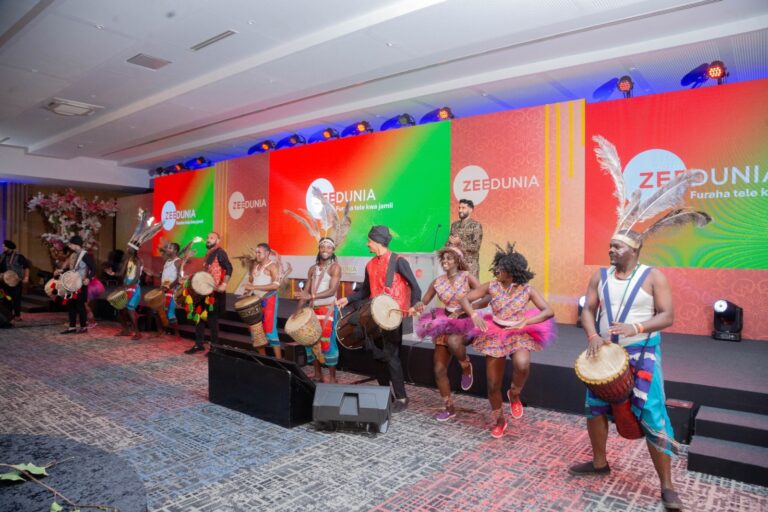
Zee Dunia, Africa’s free-to-air channel, has entered Kenya’s top 10 most-watched television stations less than a year after launch, posting a 91% surge in daily audiences between December 2025 and March 2026, according to Ipsos Kenya data.
The Swahili drama channel, which went live in March 2025, grew its average daily viewership from 95,664 in December to 183,288 in March, cementing one of the fastest climbs in a market with more than 400 active stations.
The growth was sustained month-to-month rather than driven by a single spike, with audiences rising steadily across the first quarter of 2026.Viewer engagement also deepened over the period.
Average time spent per viewer increased to 152 minutes a day in March from 109 minutes in December, signaling stronger retention in a competitive free-to-air segment where loyalty is typically fragmented.
The performance has pushed Zee Dunia into the top tier of general entertainment channels nationally, while its parent network — which includes subscription-based sister channel Zee World — now ranks seventh by weekly reach, according to Ipsos Kenya Audience Tracker (IKAT) figures. Ipsos described the Zee portfolio as the fastest-growing TV network in the country.The gains highlight shifting consumption patterns in Kenya’s television market, where cost-free access combined with localized premium storytelling is drawing younger urban audiences.
Ipsos data shows Zee Dunia’s strongest growth among viewers aged 15 to 34, particularly in Nairobi, the Lake region, Central and Upper Eastern Kenya, with women aged 25 to 34 forming a core segment.
Digital platforms are amplifying that reach. Zee Dunia had accumulated about 183,000 YouTube subscribers by March, while its combined social media following surpassed 1.1 million, extending its footprint beyond traditional broadcast.
Zee Entertainment Africa, a unit of India’s Zee Entertainment Enterprises Ltd., operates across 52 countries on the continent, reaching about 176 million daily viewers.
The company holds leading TV positions in Nigeria and Zambia and ranks among the top three in South Africa, according to company figures.
“Kenya’s audiences have told us clearly what they want — premium storytelling, available to everyone,” said Seema Sarkar Manji, the company’s Kenya business head. “We are here to compete at the top of this market.”
Zee Dunia is distributed nationally on Kenya’s free-to-air platforms PANG and Signet, positioning it to compete directly with established broadcasters without a subscription barrier — a model that appears to be gaining traction as broadcasters seek scale in Africa’s price-sensitive media markets.
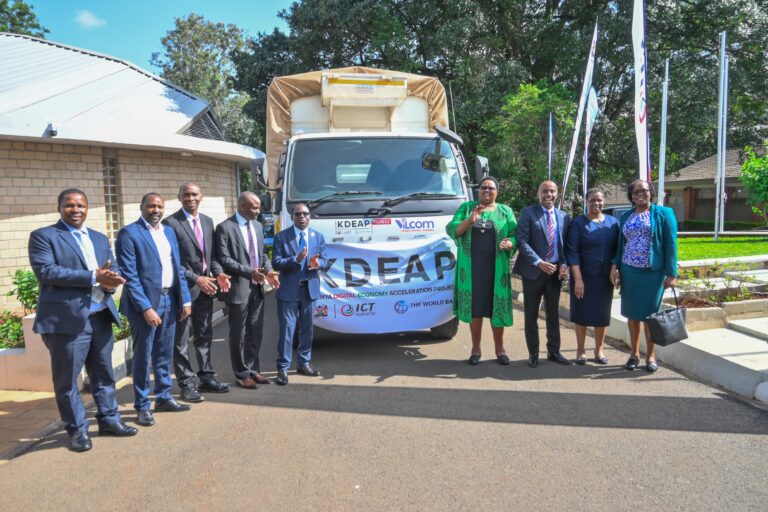
Kenya has begun distributing laptops and interactive smart boards to more than 10,000 junior secondary schools, as the government accelerates efforts to digitize education and align learning with workforce demands.
The rollout will cover 10,382 schools, each receiving one teacher laptop and one 65-inch interactive smart board, under the Kenya Digital Economy Acceleration Project (KDEAP), a government programme supported by the World Bank.
The scale of the initiative highlights the growing emphasis on digital skills in Africa’s education systems, where countries are racing to prepare young populations for participation in the global digital economy.
“Today, we are not merely flagging off devices; we are investing in human capital, digital skills and the future prosperity of our children,” said Stephen Isaboke, principal secretary in the State Department for Broadcasting and Telecommunications.
Kenya’s digital push is underpinned by parallel investments in infrastructure. The government says it has already deployed more than 30,000 kilometres of fibre optic cable toward a 100,000-kilometre national target, while over 8,000 public institutions have been connected to the internet.
Officials say these investments are critical to ensuring that the devices translate into real classroom impact, particularly in underserved and rural areas where connectivity gaps remain a challenge.
Jessy Maruti, chief executive officer of the ICT Authority, said the programme’s success will depend on outcomes rather than distribution figures. “The true value of this programme will not be measured by the number of devices delivered, but by the impact they create in classrooms,” he said.
The World Bank, which is backing the project, said the use of interactive technology could significantly improve student engagement and learning outcomes. “These devices will make lessons more visual, interactive and engaging,” said Aneliya Muller, KDEAP task leader.
Lawmakers have framed the rollout as a strategic investment in Kenya’s competitiveness. John Kiarie, chairperson of the National Assembly Committee on Communication, Information and Innovation, said integrating technology into classrooms will help equip learners with skills needed for the Fourth Industrial Revolution.
The government said the programme is part of a broader ecosystem that includes teacher training, digital content, connectivity, maintenance and monitoring systems aimed at ensuring sustainability.
The phased rollout marks one of Kenya’s largest recent investments in classroom technology, with officials positioning it as a key step toward building a digitally skilled workforce and a more inclusive, knowledge-driven economy.
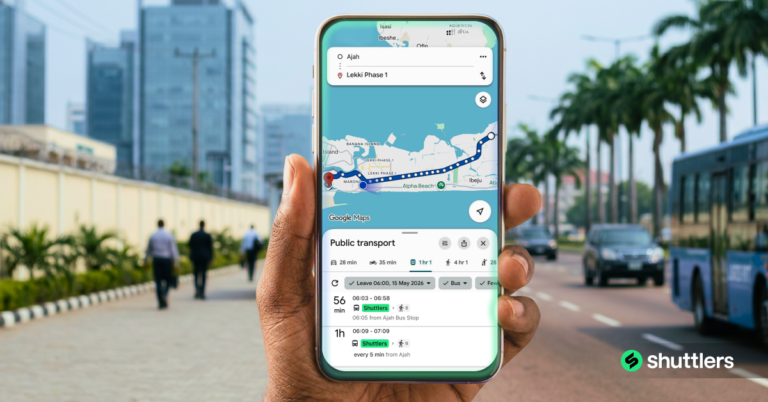
Nigerian shared mobility platform Shuttlers has surpassed 10 million completed journeys, marking a major milestone in its decade-long effort to improve urban commuting across the country.
Founded in 2016, the company has built a structured transportation network serving professionals across Lagos, Abuja, and Port Harcourt. Today, Shuttlers supports more than 30,000 active users across over 1,000 routes, with more than 430 buses operating daily.
The milestone highlights the increasing demand for reliable and cost-effective alternatives to fragmented public transport systems in rapidly growing African cities. Shuttlers reports a 99% trip completion rate and a 99.94% incident-free record across its operations.
“We are incredibly proud of hitting 10 million journeys since launch,” said Damilola Olokesusi, CEO and Co-Founder of Shuttlers. “For millions of professionals, commuting is still unpredictable, exhausting and expensive. We have spent the last 10 years building technology and operational infrastructure that makes daily transportation more dependable – for commuters, businesses that employ them, and the fleet operators who power our network.”
Beyond scale, Shuttlers says its model delivers tangible benefits to users, including transport cost savings of up to 88% compared to ride-hailing services and time savings of up to 12 hours per month.
As urban populations continue to expand, the milestone positions Shuttlers as a key player in shaping more structured, efficient mobility systems across Africa’s cities.
Since launching in 2016, the platform has maintained a 99% trip completion rate and a 99.94% incident-free rate across its entire journey history. The average Shuttlers commuter saves 60% to 88% on transport costs compared to ride-hailing services, and reclaims 8 to 12 hours from gridlock every month. Shuttlers today also announced it had joined the Google Transit ecosystem in Nigeria.
Olumide Balogun, Director for West Africa at Google, said: “We are pleased to welcome Shuttlers into the Google Transit ecosystem in Nigeria. Reliable transit information helps people navigate cities more confidently and efficiently. As more Nigerians adopt digital tools for everyday mobility, integrations like these help make trusted transportation easier to discover and access.”
Spiro, one of Africa’s leading electric mobility companies, has appointed Anant Badjatya as its new Group Chief Executive Officer, as the company accelerates its next phase of growth following a landmark $215 million equity raise.
The funding round, backed by major institutional investors including Impact Fund Denmark and Equitane, will support the expansion of Spiro’s electric vehicle and battery-swapping infrastructure across Africa. The capital will be deployed toward scaling its network, advancing local manufacturing, driving technology innovation, and enabling entry into new markets—further accelerating the continent’s transition to affordable, sustainable transportation and clean energy solutions.
Badjatya brings over two decades of experience across electric mobility, energy, and industrial sectors, with leadership roles spanning India, the Middle East, and Africa. He joins Spiro from Indofast Energy, a joint venture between Indian Oil and SUN Mobility, where he served as CEO. During his tenure, he built one of India’s largest battery-swapping networks, scaling it to more than 1,800 stations serving nearly 90,000 vehicles daily.
His appointment comes at a pivotal moment for Spiro as it ramps up its pan-African expansion strategy. The company is also strengthening its innovation capabilities, having recently acquired motorcycle engineering and design firm Coexlion and established its first African research and development center in Kenya. The move is aimed at enhancing product development, localization, and innovation for electric two-wheelers tailored to African markets.
Badjatya will oversee a broad mandate covering battery swapping infrastructure, vehicle leasing, logistics, energy solutions, and manufacturing operations. Meanwhile, Kaushik Burman will continue in his role as CEO Mobility, focusing on strengthening Spiro’s fleet and consolidating its leadership across its seven existing markets and beyond.
Spiro Founder and Chairman Gagan Gupta said the appointment signals the company’s intent to execute at scale.
“As Spiro accelerates its mission to transform mobility across Africa through clean, affordable, and accessible electric transportation solutions, Anant will consolidate the Group’s strategic initiatives and guide the company through its next chapter of growth and execution across mobility, energy, and technology,” Gupta said.
Badjatya described Africa as a key frontier for electric mobility, highlighting the continent’s potential for rapid adoption of sustainable transport solutions.
“Africa represents the most exciting frontier for electric mobility. Spiro has built a unique platform and is exceptionally well positioned to accelerate the transition to cleaner and more accessible mobility across the continent,” he said.
The leadership move, alongside fresh capital and expanded R&D investments, underscores growing investor confidence in Africa’s electric mobility sector, as companies like Spiro scale infrastructure and financing models to support mass adoption.
Apple Inc. has introduced a fully reengineered version of Siri, marking one of its most significant pushes into artificial intelligence with a system designed to be more conversational, context-aware, and deeply integrated across its ecosystem.
The new assistant, branded Siri AI, is powered by Apple Intelligence and is capable of understanding personal context, interpreting on-screen content, and delivering real-time information from across apps, messages, emails, and the web.
The launch signals Apple’s ambition to compete more aggressively in the generative AI race, emphasizing a blend of advanced capabilities and privacy safeguards.
“Siri AI is a dramatically more capable and conversational assistant designed to help users find information and get things done throughout the day,” said Craig Federighi, Apple’s senior vice president of software engineering.
A More Contextual and Action-Oriented Assistant
Unlike earlier versions, Siri AI can perform complex, multi-step actions across applications. Users can retrieve information buried in emails, locate recommendations shared in messages, or edit and share photos—all through natural conversation.
The assistant also introduces onscreen awareness, allowing it to respond to what users are actively viewing. For instance, it can suggest ideas based on a message thread and directly execute follow-up actions, such as saving notes or drafting replies.
Deep Ecosystem Integration
Siri AI is embedded across Apple devices, including iPhone, iPad, Mac, Apple Watch, and Vision Pro, enabling seamless interactions across hardware. On Macs and iPads, it integrates with Spotlight for system-wide queries, while Vision Pro introduces spatial interactions through a 3D interface.
Apple is also rolling out a dedicated Siri app that synchronizes conversations across devices via iCloud, enabling continuity between sessions.
Built on Privacy-Centric AI Architecture
A key differentiator is Apple’s hybrid AI architecture, combining on-device processing with its Private Cloud Compute system. The company says personal data processed in the cloud is neither stored nor accessible to Apple, reinforcing its long-standing privacy stance.
Visual Intelligence and Writing Tools
Siri AI expands into multimodal capabilities, allowing users to interact with visual content via the camera or screen. It can analyze images, provide contextual insights, and even perform actions such as splitting bills or identifying food nutrition.
In addition, Apple is embedding AI-powered writing tools across its platforms, enabling users to generate, edit, and refine text in apps like Mail and Messages, tailored to individual communication styles.
Availability
The new features are currently available to developers, with a public beta expected later this year across Apple’s latest operating systems.
Egypt’s fintech giant MNT-Halan has reached a valuation of $1.4 billion following the first closing of a new investment round led by Al Ahly Capital, the investment arm of the National Bank of Egypt.
The transaction was finalized after securing all required regulatory approvals, with a second closing expected as the broader funding round continues.
The deal signals rising investor confidence in Egypt’s fintech sector and underscores growing collaboration between traditional financial institutions and digital-first financial service providers. It further cements MNT-Halan’s position as one of the largest fintech platforms in the region.
The company plans to channel most of the new capital into expanding its operations in Egypt while advancing its regional growth strategy. MNT-Halan currently operates in Egypt and Türkiye, owns a specialised bank focused on micro and small enterprises in Pakistan, and has been extending its footprint across Gulf markets.
Founded by Mounir Nakhla, MNT-Halan has built an integrated digital financial ecosystem offering business and consumer lending, payments, e-wallets, savings, investments, and e-commerce services. The company became Egypt’s first fintech unicorn in 2023 and has since grown through a mix of organic expansion, strategic acquisitions, and entry into new markets.
For Al Ahly Capital, the investment aligns with its private equity strategy of backing businesses that drive financial inclusion and economic development, while supporting Egypt’s broader digital transformation agenda.
NTT DATA Inc. is expanding its partnership with Alphabet Inc.’s Google Cloud, betting that tighter integration and a larger talent pool will help corporations move artificial intelligence projects from experimentation into full-scale deployment.
The Tokyo-based IT services giant said Tuesday it will build a dedicated practice around Google Cloud’s Gemini Enterprise platform, with plans to certify 5,000 specialists globally. The companies also aim to co-develop as many as 500 AI “agents” tailored to industries including banking, insurance, manufacturing and retail.
The push reflects a broader shift among large enterprises, many of which have tested generative AI tools but struggled to translate pilots into measurable business outcomes. By combining Google Cloud’s AI infrastructure with NTT DATA’s consulting, implementation and managed services, the partners are targeting what they describe as the biggest bottleneck: operationalizing AI at scale.
“Enterprises need a practical path from pilots to production,” said Abhijit Dubey, NTT DATA’s chief executive officer and chief AI officer. “This collaboration is about embedding AI into how organizations actually run.”
The companies plan to deploy joint engineering teams directly within client organizations, a model designed to accelerate development and reduce deployment timelines. They will also introduce a “factory-style” approach to building AI agents, using reusable components to speed rollout and lower costs.
Google Cloud, which has been competing aggressively with Microsoft Corp. and Amazon.com Inc. in the enterprise AI market, is leaning on partners like NTT DATA to expand its reach. “We’re seeing strong demand for AI agents that can transform core workflows,” said Matt Renner, Google Cloud’s president and chief revenue officer. “Scale requires both platform capability and delivery expertise.”
The expanded alliance will also focus on governance and compliance, including support for so-called sovereign AI deployments that meet local data residency requirements — an increasingly important factor for regulated industries and governments.
The timing underscores a widening gap between corporate AI ambitions and infrastructure readiness. In a recent NTT DATA survey, 99% of enterprises said AI is increasing demand for cloud investment, while 88% warned that current spending levels could undermine AI and modernization efforts.
By linking AI development more closely with cloud capacity and skilled talent, NTT DATA and Google Cloud are positioning the partnership as a way to turn early experimentation into enterprise-wide transformation — and, ultimately, sustained returns on AI investment.
RemotePass has raised $17.4 million in Series B funding to expand its global payroll and employment platform, as the UAE-founded startup moves into the US and Europe after reaching profitability last year.
The round was led by the European Bank for Reconstruction and Development’s venture arm, with participation from 500 Global and existing investors including Oraseya Capital, 212 VC, Access Bridge Ventures and Khwarizmi Ventures. Early backers BECO Capital, Endeavor Catalyst and Wamda Capital also support the company.
Founded in 2020 by Kamal Reggad and Karim Nadi, RemotePass enables businesses to onboard, manage and pay employees and contractors across borders without requiring a local legal presence.
The company has steadily raised capital to scale its operations. In 2024, it secured $5.5 million in a Series A round led by 212 VC, with participation from Endeavor Catalyst, Khwarizmi Ventures, Oraseya Capital, Flyer One Ventures, Access Bridge Ventures, A15 and Swiss Founders Fund. Earlier, in 2021, it raised a pre-Series A round led by BECO Capital, alongside Wamda, Khwarizmi VC, Flat6Labs, Wealth Well and a group of Saudi investors, to support its expansion into Saudi Arabia.
RemotePass provides tools for companies to hire, pay and manage workers across jurisdictions, focusing on markets where compliance and payments infrastructure remain fragmented. The platform combines payroll, contractor management and corporate spend into a single system, and has added AI-driven automation for onboarding and compliance workflows.
The company says it supports more than 35,000 workers across over 150 countries and has processed more than $800 million in cross-border payroll.
Chief Executive Officer Kamal Reggad said the funding will accelerate expansion beyond its core Middle East and North Africa markets, where the company built its base by offering localized support and navigating complex labour regulations.
“Building a globally competitive platform from the region, in a market that incumbents underestimated, is something we are incredibly proud of,” Reggad said. “Now, we are taking that depth global.”
RemotePass became profitable in early 2025, a milestone that enabled it to bring in new investors while continuing to invest in growth. The company has sought to differentiate itself by embedding financial services into its platform, including access to US dollar accounts, debit cards and health insurance for cross-border workers.
The offering is designed to address challenges in emerging markets, where currency volatility and payment delays can affect income stability and employee retention.
The startup also launched “SpendCards” in late 2025, integrating corporate expense management into its payroll system in a bid to streamline financial operations for distributed teams.
The new capital will be used to expand compliance coverage, grow its financial services offering and deepen its presence in Western markets, where competition among global payroll providers has intensified.
Blnk, an Egyptian financial technology company focused on point-of-sale lending, has raised $37 million in a mix of equity and debt to scale its consumer finance operations in one of the Middle East’s fastest-growing credit markets.
The funding includes a $12.5 million Series A equity round led by Algebra Ventures, with participation from SANAD Fund for MSME, Endeavor Catalyst and Emirates International Investment Company.
An additional $24.6 million in local currency debt was provided by a group of Egyptian banks and non-bank financial institutions, including National Bank of Egypt, Suez Canal Bank and Bank Albaraka.
The Cairo-based startup offers instant financing to consumers at checkout, allowing shoppers to split payments over periods ranging from six to 36 months. Loans are approved in as little as three minutes with minimal documentation, using proprietary algorithms that assess creditworthiness in real time.
The company said it will use the proceeds to enhance its technology, broaden its product suite and expand geographically. It also plans to introduce a credit card product that would allow customers to access financing beyond its existing merchant network of more than 3,000 outlets.
Blnk’s model is gaining traction in Egypt, where access to formal credit remains limited despite a rise in bank account ownership. Fewer than 5% of adults have access to formal borrowing tools, according to industry estimates, while just 3.9% of women use credit cards or digital lending platforms.
At the same time, the country’s consumer finance market grew 57% year-on-year in 2025 to reach 96.3 billion Egyptian pounds ($2 billion), data from the Financial Regulatory Authority show.
Founded in 2021, Blnk says it has onboarded more than one million customers and built a loan portfolio exceeding 1 billion Egyptian pounds. About 75% of its users were previously unbanked or underserved, and more than a third are women. The company became profitable in 2025 after revenue rose 173% from a year earlier.
Chief Executive Officer Amr Sultan said the latest funding would help the company deepen financial access while maintaining disciplined risk management.
“We’re focused on expanding our reach and continuing to build products that meet consumers where they are,” Sultan said.
Blnk differentiates itself through its use of artificial intelligence to evaluate credit risk. Its system analyzes localized data points to generate real-time probability-of-default predictions, replacing traditional scoring methods that rely heavily on formal financial histories.
Investors say the approach positions the company to address a structural gap in Egypt’s financial system.
“Blnk’s ability to serve underserved consumers while maintaining strong credit discipline makes it a standout in the market,” said Karim Hussein, managing partner at Algebra Ventures.
As digital lending gains ground across emerging markets, Blnk’s growth highlights a broader shift toward embedded finance models that integrate credit directly into retail transactions—an approach increasingly seen as key to expanding access in economies where traditional banking has fallen short.
Knife Capital, a South African venture capital firm, has exited its investment in VoxCroft Analytics following the acquisition of the company’s U.S. entity by Redpoint Advisors, marking a successful exit for Knife Capital’s KNF II fund.
The transaction highlights growing international interest in African-built artificial intelligence and intelligence technologies, particularly those designed to operate in complex and underreported regions. Financial details of the acquisition were not disclosed.
Founded in South Africa, VoxCroft Analytics developed a population-centric intelligence platform that combines hyperlocal data collection, low-resource machine translation, AI-powered sentiment analysis, and human expertise to generate actionable intelligence from environments where conventional intelligence tools often struggle.
The acquisition strengthens Redpoint Advisors’ intelligence, geopolitical risk, insider risk, and security advisory capabilities for government, commercial, and private-sector clients operating in high-risk markets worldwide.
“We founded Redpoint Advisors to be a high-touch, bespoke advisory firm for global clients operating in the most complex environments,” said Michael LaFontaine. “The acquisition of VoxCroft enhances the capabilities we can bring to our clients and allows us to extend VoxCroft’s reach into additional sectors.”
Knife Capital said the exit validates its investment thesis of backing African technology companies capable of competing globally and attracting strategic international buyers.
“We saw a team building world-class AI capability at the intersection of language, artificial intelligence, and intelligence services,” said Eben van Heerden. “The exit to a U.S.-based intelligence company demonstrates that African innovation is globally competitive when paired with the right capital, networks, and support.”
In a sign of continued confidence in the business, Knife Capital is simultaneously making a follow-on investment in VoxCroft South Africa, with Redpoint Advisors joining as a strategic co-investor.
VoxCroft South Africa will continue operating independently, focusing on its data-as-a-service business and the development of specialized AI training datasets designed for applications across the Global South.
The deal adds another notable exit to Africa’s venture capital ecosystem and underscores increasing global demand for AI-driven solutions emerging from the continent. As international buyers look beyond traditional technology hubs, African startups with deep expertise in language technologies, artificial intelligence, and data intelligence are attracting growing strategic interest from global acquirers.
3IF Ventures, the first venture capital fund dedicated exclusively to Africa’s insurance technology ecosystem, has secured a $12 million first close, drawing support from FSD Africa Investments and regional reinsurer ZEP-RE as cornerstone investors.
The fund aims to address Africa’s vast insurance protection gap by providing equity financing to early-stage startups developing technology-driven insurance solutions across the continent. The first close marks an important milestone toward the fund’s targeted final close of $30 million.
Africa remains one of the world’s least insured regions, with more than one billion people lacking access to insurance products, according to the fund. Limited awareness, affordability challenges and distribution barriers have historically constrained adoption despite growing demand for financial protection.
3IF Ventures plans to invest in approximately 15 to 20 companies from pre-seed through Series B stages, focusing on four sectors: climate and disaster resilience, agriculture and rural livelihoods, digital health and wellbeing, and small business and asset protection.
The fund will also establish a technical assistance facility equivalent to roughly 20% of total commitments to help portfolio companies strengthen operations, product development and market expansion.
The investment vehicle is structured as a blended finance fund incorporating a catalytic junior capital tranche designed to attract private investors into the sector. Fund managers say the approach will enable commercial investors to participate in a market often viewed as high-risk while supporting businesses with strong development impact.
“Africa’s protection gap is the most under-served commercial opportunity of the decade,” said Anthony Chaillet and Dr. Mario Wilhelm, General Partners at 3IF Ventures. “Closing it requires patient capital, local risk capacity and industry-grade portfolio support working together.”
The managers said the fund already has a pre-qualified pipeline of 15 insurance ventures operating across 10 African markets and is preparing to begin deploying capital.
The first close builds on years of ecosystem development efforts, particularly through BimaLab, an insurance innovation platform that has supported more than 135 early-stage businesses across Africa.
Anne-Marie Chidzero, Chief Investment Officer at FSD Africa Investments, said the investment reflects growing confidence that Africa’s insurtech sector is reaching a scale attractive to institutional investors.
“As the first investment vehicle dedicated to inclusive insurance in Africa, 3IF Ventures brings institutional rigor to a segment that has long lacked it,” Chidzero said.
For ZEP-RE, the investment extends its strategy of promoting insurance penetration and economic resilience across African markets. Beyond capital, the reinsurer plans to provide technical support, including product design expertise, underwriting guidance and access to relationships with insurers and regulators.
Hope Murera, Managing Director and Group Chief Executive Officer of ZEP-RE, said the fund will help bring together public, private and development-sector investors to support innovative insurance businesses capable of expanding coverage across the continent.
Over the life of the fund, 3IF Ventures targets the issuance of more than 5.9 million new insurance policies, improved financial resilience for over 3.5 million households and small businesses, and support for more than 1.7 million jobs through direct and indirect economic impact.
The launch comes as investors increasingly view insurance technology as a critical component of Africa’s financial inclusion agenda, particularly as climate risks, health challenges and small business vulnerabilities drive demand for affordable protection products.
Advanced technology does not automatically create better businesses. More often, it introduces greater complexity.
Across Kenya’s private sector, organisations are managing growing layers of disconnected applications, duplicated workflows, and siloed data environments that quietly erode productivity and slow innovation. Finance operates on one system, sales on another, customer support on a third, while critical business information is manually transferred between teams, spreadsheets, and platforms. The issue is no longer digital adoption, it is digital coherence.
This is what can be described as the “fragmentation tax” which is the hidden operational cost businesses pay when systems cannot communicate effectively with each other. In high-growth environments, these inefficiencies compound quickly, manifesting as delayed decision-making, inconsistent reporting, and a diminished ability to respond to rapid market shifts. Over time, fragmentation slows l workflows, and also limits an organisation’s capacity for innovation.
For Kenya’s SME-driven economy, this challenge is particularly significant. SMEs account for the vast majority of businesses in the country and play a critical role in employment and economic participation. Yet, many are scaling operations on disconnected digital environments that make long-term growth harder to sustain. Businesses are digitising quickly, but not always integrating efficiently.
This is why the conversation following the Connected Africa Summit 2026 matters.
The summit reflected an important shift in Africa’s digital narrative, from ambition to implementation. For years, the focus across the continent has centred on expanding connectivity infrastructure, increasing internet access, and accelerating digital adoption. Kenya has led much of this progress, positioning itself as one ofAfrica’s most connected and digitally innovative economies.
But connectivity alone does not automatically create an integrated digital economy.
As Kenyastrengthens its leadership role within the Digital Cooperation Organization, the next phase of growth will depend increasingly on interoperability — the ability of systems, platforms, and organisations to exchange information seamlessly, securely, and in real time. In practical terms, this means businesses must move beyond simply adopting digital tools toward building unified digital environments where operations function cohesively.
This challenge is becoming more urgent as African markets move toward deeper economic integration under frameworks such as the African Continental Free Trade Area. Cross-border trade increasingly depends on trusted data flows, operational visibility, and standardised reporting structures. Businesses operating on fragmented systems will struggle to meet the speed, compliance, and coordination demands of an interconnected digital economy.
This is also where the conversation around digital sovereignty is evolving.
Digital sovereignty should not be interpreted as technological isolation or restrictive localisation. Instead, it is increasingly about ensuring businesses maintain visibility and control over their own data while participating confidently within interconnected ecosystems.
In this context, Kenya’s Data Protection Act 2019 becomes more than a regulatory requirement. It serves as both a governance framework and a trust-building mechanism for businesses operating in the digital economy.
Customers, investors, and cross-border partners increasingly favour organisations that can demonstrate strong data governance, accountability, and transparency. In what is rapidly becoming a trust economy, businesses that manage data responsibly are better positioned to scale, collaborate, and compete internationally.
However, compliance becomes significantly harder in fragmented environments where information is spread across multiple disconnected platforms.
This is why architecture matters as much as policy.
The businesses best positioned for long-term growth will be those operating from unified data foundations rather than disconnected software stacks. A unified operating environment allows finance, HR, customer engagement, analytics, and operations to work from the same real-time information rather than separate versions of reality. This “single source of truth” is becoming essential not only for operational efficiency, but for resilience and scalability.
A business managing ten disconnected systems is not merely ten times more complex than one operating on a unified platform. Complexity increases exponentially through duplicated workflows, integration overheads, inconsistent reporting structures, and governance risks. As businesses scale, these inefficiencies become increasingly difficult and expensive to manage.
AI systems are only as effective as the quality and consistency of the data powering them. Fragmented systems produce fragmented intelligence, while unified systems create the conditions for meaningful automation, accurate insights, and real-time decision-making. For many organisations, the success of AI adoption will depend less on the sophistication of the technology itself and more on whether the underlying data environment is unified and trustworthy.
Kenya’s ambition to lead Africa’s digital economy will not be determined solely by connectivity infrastructure or platform adoption rates. It will depend on whether businesses can operate through interoperable, compliant, and trusted digital systems aligned with continental frameworks such as the AU Data Policy Framework. Connectivity built the foundation of Kenya’s digital economy. Unification will determine its competitiveness.
The writer is Zoho Kenya country head. Zoho aims to be on the forefront of Kenya digital economy with appropriate digital tools for SMEs and entreprises.
Kenya Power has launched a nationwide drive to transition electric vehicle users onto a dedicated electricity tariff as the country’s fast-growing e-mobility sector begins to emerge as a meaningful source of revenue for the utility.
The state-owned power distributor said cumulative revenue from electricity supplied for electric vehicle charging reached KSh382 million ($2.96 million) between July 2023 and April 2026, underscoring the rapid adoption of electric mobility across East Africa’s largest economy.
The company is seeking to identify and meter customers currently charging electric vehicles under conventional electricity accounts and move them onto a specialized E-mobility tariff introduced in 2023. The tariff offers electricity at KSh16 ($0.12) per kilowatt-hour during peak periods and KSh8 ($0.06) during off-peak hours.
Kenya Power Managing Director Joseph Siror said the initiative is intended to support the expansion of the electric transport ecosystem while providing better visibility into future electricity demand.
“Our commitment is to create awareness, support the market and drive the adoption of e-mobility in the country,” Siror said. “The transition must serve not only private car owners, but also public transport, two and three wheelers, logistics operators, county transport systems, small businesses and ordinary Kenyans.”
The utility currently has 331 customers registered under the E-mobility tariff and expects that figure to rise to 1,000 by the end of its current financial year as more charging stations, fleet operators and electric transport businesses are onboarded.
Electricity consumption linked to vehicle charging has grown sharply since the tariff was introduced. Monthly sales climbed from 13,500 kilowatt-hours in July 2023 to 1.5 million kilowatt-hours by April 2026, while monthly revenues surged from KSh873,907 to a record KSh35.25 million ($273,000) in February this year.
Nairobi accounted for the largest share of EV-related electricity revenues at KSh271.9 million ($2.11 million), reflecting the capital’s dominance as Kenya’s electric mobility hub. The Coast region generated KSh55 million ($426,000), while North Eastern and West Kenya contributed KSh35 million and KSh11.5 million respectively.
According to the utility, November 2025 marked a turning point when monthly electricity sales to EV customers exceeded one million kilowatt-hours for the first time. Volumes have remained above that level since, suggesting the sector is entering a phase of sustained commercial growth.
Industry forecasts point to even stronger expansion. The Electric Mobility Association of Kenya estimates EV charging could generate KSh5.79 billion ($44.9 million) in annual electricity sales by 2030, supported by projected grid demand of 121 gigawatt-hours.
Kenya’s electric vehicle fleet has expanded rapidly in recent years, helped by government incentives aimed at reducing transport emissions and lowering fuel costs. More than 35,000 electric vehicles had been registered by the end of 2025, up from just 796 three years earlier, according to industry data. Most of the growth has come from electric motorcycles, which are increasingly being adopted by commercial riders and delivery companies.
The government has supported the transition through a series of tax incentives, including value-added tax exemptions on electric vehicles and lithium-ion batteries, import duty exemptions for the first 100,000 EVs, and reduced excise duties on electric bicycles and motorcycles.
For Kenya Power, the rise of electric transport presents a new avenue for demand growth at a time when utilities globally are looking to capitalize on the electrification of mobility. With EV adoption accelerating and charging volumes continuing to rise, the company expects the sector to become an increasingly significant contributor to electricity sales over the remainder of the decade.
An estimated 225 million Africans living with disabilities are excluded from education, employment and digital participation due to limited access to assistive technologies, according to a new continent-wide assessment commissioned by the Mastercard Foundation.
The Assistive Technology Landscape in Africa Report, released during the Inclusive Africa Conference in Nairobi, highlights persistent gaps in access to essential tools such as wheelchairs, hearing aids, screen readers, Braille devices and communication aids.
The study was developed by a consortium led by Stellenbosch University, in partnership with Kwame Nkrumah University of Science and Technology, Humanity & Inclusion, and the Clinton Health Access Initiative. It provides one of the most comprehensive assessments yet of the continent’s assistive technology ecosystem.
The report estimates that about 15% of Africa’s population lives with a disability, but access to assistive technologies remains uneven, constrained by high costs, limited availability and weak distribution systems.
Rural and underserved communities are the most affected, with users facing long travel distances to service providers, limited repair services and high out-of-pocket costs for devices.
While many African countries have adopted disability inclusion and accessibility policies, the report says implementation remains inconsistent due to weak coordination, limited financing and gaps in delivery systems.
Most assistive technology products in Africa are still imported, with limited local manufacturing capacity restricting affordability and the development of context-specific solutions.
The report notes that demand for assistive technologies is rising due to population growth, increased awareness of disability rights and expanding digital services. However, supply chains remain fragmented and underfunded.
Financing constraints and weak procurement systems continue to limit access for millions who require mobility, learning and communication support tools.
Despite these gaps, the report frames assistive technology as an emerging economic sector with potential for job creation, innovation and entrepreneurship, particularly in manufacturing, repair services and digital accessibility solutions.
Through its Young Africa Works strategy, the Mastercard Foundation aims to enable 30 million young Africans to access dignified work by 2030, including 1.5 million young people with disabilities under its disability inclusion strategy launched in 2023.
The report is expected to inform future investment and policy priorities across education systems, labour markets and digital inclusion frameworks.
It concludes that assistive technology is becoming central to Africa’s inclusion agenda, as governments and development partners weigh the cost of continued exclusion against the benefits of expanded access.
Modern gambling operations are difficult to manage through isolated tools, manual controls, and disconnected business channels. A casino agent system has become one of the key infrastructure models behind scalable slot hybrid business formats and multi-location networks in 2026. It helps connect player accounts, agent hierarchies, balance control, reporting, and digital access into a single structured environment.
2WinPower’s casino agent system shows how such logic can support slot distribution, account control, and centralised operational management. The value of such architecture is not limited to a website or a game lobby, because it touches the way the whole gambling network is managed.
Many owners now want a structure that can unite physical venues, digital accounts, cashier logic, and reporting tools. This shift explains why the agent-based model has become relevant for startup casino operators, land-based groups, and investors who evaluate gaming infrastructure.
Casino Agent System Relevance for Operators
This model is a management architecture that allows platform owners to work through agents, sub-agents, players, and internal teams under one controlled structure. Each participant has a defined role, a clear permission level, and a visible financial trail.
A casino agent system acts as a distribution and control layer between the operator and the user. The manager owns the platform logic, while agents help acquire clients, manage activity, or work within local networks under predefined rules.
The structure usually includes interconnected elements:
agent accounts;
player profiles;
balance management;
commission logic;
role-based access;
transaction records;
performance dashboards;
risk and activity monitoring.
This setup is especially useful when the business grows beyond one point of control. A single operator can track a small venue manually, but a larger network needs a casino management system that records what happens across many accounts, locations, and partners.
New Infrastructure Benefits
By 2026, the old way of managing machines, cash desks, and local staff does not scale well. A slot hall can run smoothly with a few terminals and one cashier, but that approach becomes fragile as the owner adds rooms, agents, or digital accounts.
A modern slot casino platform should help the operator control credits, review user behaviour, monitor revenue, prevent internal misuse, and track performance.
This is where hybrid infrastructure becomes important:
A land-based operator may start with physical machines and later add online accounts.
A digital-first brand may build an agent network to reach local communities.
A startup may use a multi-agent casino model to test markets before a wider launch.
Growth requires visibility. Without clean records, clear permissions, and automated reporting, scale creates confusion quickly.
From Slot Hall to Hybrid Casino Business
A single venue can still be profitable, but its management logic differs from a connected gambling ecosystem. The difference becomes obvious when the traditional setup is compared with a hybrid operational model.
How infrastructure changes once the business starts to combine offline and online activity:
Business layer
Traditional slot hall
Hybrid infrastructure
Player access
Mainly physical venue
Venue, online account, and agent access
Accounting
Local cashier records
Centralised balance and transaction control
Agent role
Informal or limited
Structured acquisition and player management
Reporting
Shift-based summaries
Live dashboards and consolidated data
Scalability
New halls and more staff
New agents, locations, and digital channels
Risk control
Staff supervision
Permission rules and activity monitoring
The comparison shows why land-based casino software has become more strategic. In a hybrid business, it becomes the bridge between the hall, the player, the agent, and the central office.
For land-based casino digital transformation, the most important change is the move from isolated venue management to shared infrastructure. The operator receives one view, while each local point still follows its own commercial role.
Multi-Agent Casino Model
The logic of this structure is based on controlled distribution. The operator does not need to manage every player manually, but every action still remains visible inside the platform.
The process usually follows a clear chain:
The operator configures the platform. The central team sets game access, currency rules, financial limits, reporting logic, and permission levels.
Agents receive controlled access. Each representative can manage assigned players, balances, or sub-agents depending on the selected commercial model.
Players enter the slot environment. Access can happen through online accounts, terminals, venue-based setups, or a connected slot casino platform.
Financial activity is recorded. Deposits, withdrawals, credit changes, and balance adjustments move through the management system.
Reports consolidate the results. The operator reviews revenue, agent efficiency, player activity, suspicious behaviour, and location performance from one back-office layer.
This process gives structure to a business that may otherwise become difficult to control. It also supports casino operations automation because many actions can be logged, checked, and displayed without manual spreadsheet work.
Operational Framework Behind the Model
Strong architecture depends on several layers that work together. If one part is weak, the whole structure becomes harder to manage.
Layers that a reliable setup usually includes:
game (slot catalogue, provider access, terminal compatibility);
agent (hierarchy, commission rules, player ownership, sub-agent control);
control (limits, fraud checks, KYC logic, approvals, access rights);
reporting (revenue, venue performance, agent results, player behaviour);
expansion (new halls, extra regions, online access, partner growth).
This framework explains why a casino agent system should be viewed as infrastructure. It is a tool for partner management and affects slot machine network, cashier workflows, payment discipline, and commercial planning.
For operators, the main benefit is order. Every role has a defined place, every balance change is recorded, and every agent is measured against clear performance data.
Online vs Land-Based vs Hybrid Models
Each format has its own pressure points. A digital platform needs fast onboarding and strong payment logic. A physical venue needs terminal control and cashier accuracy. A mixed model requires both.
The main approaches compared:
Model
Best Fit
Main Strength
Main Limitation
Land-based slot operation
Local halls and gaming rooms
Direct control over physical traffic
Limited reach without digital access
Online casino launch
Digital-first operators
Wider geographic reach
Higher pressure on UX, payments, and acquisition
Agent-based ecosystem
Partner-led casino networks
Flexible player distribution and account control
Requires strict reporting and permissions
Hybrid business
Groups combining offline and online activity
Strong scalability across several channels
More complex infrastructure requirements
Many businesses choose technology too early. The better route starts with the operating model. Only after that should the owner choose platform features, agent rules, payment tools, and reporting depth.
Hybrid casino software solutions make sense when the operator wants to connect several business lines. For example, a slot hall owner can use digital accounts to support returning players. An online brand can add agent coverage in markets where personal networks matter. A regional group can manage several halls through one back office.
How to Launch a Slot Casino in 2026 with Scalable Infrastructure
A successful setup starts with business logic before design. Owners who research how to launch a slot casino in 2026 should think about control, cost, legal readiness, and future expansion from the first planning stage.
The viable route:
Define the operating model. The project may begin as a slot hall, an online brand, an agent network, or a hybrid structure.
Choose the platform base. The software should support games, balances, permissions, reports, and growth beyond the first launch stage.
Set the agent hierarchy. Clear rules are needed for access, commissions, player ownership, and sub-agent activity.
Build financial controls. Every credit movement, payout, and manual adjustment should appear inside the management layer.
Test reporting before expansion. Casino platform scalability depends on accurate data across agents, players, and locations.
Add automation gradually. KYC checks, alerts, CRM triggers, payment reviews, and risk monitoring can reduce manual pressure as traffic grows.
This order helps prevent a common startup mistake. Many teams buy games first and think about operations later. A more stable approach begins with the structure that will carry the business once activity grows.
Agent-Based Infrastructure Relevance
This type of architecture becomes useful when the owner needs more than a basic website or several disconnected machines. It gives the business a way to grow through people, locations, and digital access.
The model can support several goals:
faster regional expansion;
better agent accountability;
clearer balance control;
flexible player acquisition;
centralised performance visibility;
easier offline-to-online transition;
stronger control over commission logic.
The casino affiliate infrastructure angle is also important. Traditional models usually send traffic to a brand and then stay outside the operating environment. An agent-based setup can go deeper because the partner may have a managed role inside the commercial structure, depending on permissions and local rules.
That difference makes the model attractive for markets where personal connections, local presence, and trusted intermediaries still influence user behaviour. The operator can expand reach and keep activity inside a measurable framework.
Implementation Challenges
Every scalable model creates new responsibilities. Agent-based infrastructure can support growth, but poor configuration can create financial, technical, and compliance problems.
Permission Control
Access rights should be strict from the beginning. Agents, sub-agents, cashiers, managers, and administrators must not see or change more than their role requires.
Weak permission logic can lead to balance disputes, internal misuse, and unclear responsibility. A proper casino management system should show who performed an action, when it happened, and what value changed.
Financial Transparency
Credit movement is one of the most sensitive parts of slot operations. If the platform allows manual balance changes without clear records, the business becomes vulnerable.
A stronger setup records deposits, withdrawals, bonuses, corrections, commissions, and payouts. This is especially important for hybrid casino software solutions because money can move through venues, online accounts, and agent-managed channels.
Platform Stability
Growth puts pressure on infrastructure. More players, agents, terminals, and reports all increase technical load.
A slot machine infrastructure plan should include database logic, uptime expectations, backup rules, and load testing. If the system works well with one hall but fails across ten locations, it is not ready for serious expansion.
Agent Quality
The agent layer should be managed as a business function. Operators need onboarding, training, performance checks, and fraud controls.
A productive agent can bring loyal players and support local growth. A poorly controlled representative can create disputes, bonus abuse, and reputation problems. The system should help detect both outcomes early.
Conclusion
The casino agent system is an operational framework for managing players, agents, venues, balances, and digital access. In 2026, this model matters because slot operations increasingly depend on centralised control, hybrid reach, and scalable infrastructure.
The current market is moving towards connected casino environments. Operators increasingly need platforms that combine slot access, back-office tools, financial records, agent management, and scalable logic.
2WinPower is relevant as an industry participant in this infrastructure conversation. Its role can be understood through the needs of operators who study multi-agent casino model design, hybrid expansion, and centralised control across gambling activity.
When startup teams, land-based owners, and investors compare technical models, infrastructure expertise becomes part of the decision. A provider that understands casino platform scalability can help operators evaluate the route between a small launch and a broader ecosystem.
This article was prepared byAndrew Price, an iGaming industry specialist focusing on casino technology and hybrid slot operations. His expertise covers agent-based infrastructure, multi-agent casino models, and the operational frameworks that shape scalable gambling businesses.
African innovators are increasingly developing assistive technologies tailored to local realities, as demand grows for affordable solutions addressing the continent’s accessibility challenges.
Ten startups from six African countries showcased products ranging from bamboo wheelchairs and AI-powered learning assistants to smart navigation tools for visually impaired users at the Inclusive Africa Conference 2026 in Nairobi. The innovators were selected from more than 100 applicants across the continent and presented their technologies to policymakers, investors, development organizations and technology companies gathered at the conference.
The exhibition, dubbed the AT Innovation Village, highlighted a growing shift toward locally designed accessibility solutions built for African languages, infrastructure and economic conditions. Organizers said the innovations demonstrate the continent’s capacity to address disability inclusion challenges through homegrown technology.
“Africa’s assistive technology solutions are not waiting for the world to arrive,” Irene Mbari-Kirika, founder and executive director of inABLE, said during the event. She called for increased investment, procurement opportunities and supportive policy frameworks to help innovators scale their products across the continent.
Among the companies featured was Ethiopia’s Bamboo Labs, which manufactures wheelchairs using reinforced bamboo sourced locally. The company says its customized wheelchairs are designed for durability while reducing production costs. Bamboo Labs has already conducted training programs at Kenya’s Kijabe Hospital and is seeking to expand further into the Kenyan market.
Kenya’s Sightra presented a navigation platform that combines live camera vision and GPS technology to assist people with visual impairments. The startup is targeting between 3,000 and 5,000 users in Kenya and is seeking funding to scale hardware production and software development.
Other startups showcased included Zimbabwe’s PadPerch, which enables low-vision users to transform smartphones and tablets into hands-free magnification tools, and Kenya’s Ishara Learning, which provides digital skills training in Kenya Sign Language and offers technology that translates website content into sign language.
Kenyan startup ZeroBionic demonstrated tactile robotics and coding tools designed for visually impaired learners, while The Blind Classroom unveiled an AI-powered voice-based learning platform that has already reached more than 500 students and is seeking funding to expand to hundreds of schools nationwide.
South Africa’s Senso showcased a wearable wristband that converts environmental sounds into personalized alerts for people with hearing difficulties, while Botswana-based Revision Africa introduced an AI-powered educational assistant designed to help visually impaired students access printed materials and digital content.
The Inclusive Africa Conference, now in its seventh year, attracted more than 300 in-person participants and 3,700 virtual attendees under the theme “Accelerating Digital Accessibility and AI Solutions for Africa’s Future.” Organized by inABLE in partnership with Mastercard Foundation, the conference has become one of Africa’s leading forums for advancing digital accessibility and assistive technology innovation.
The event comes as governments, nonprofits and private-sector players increasingly look to technology to close accessibility gaps affecting millions of people with disabilities across Africa, creating new opportunities for startups focused on inclusive innovation.
YADEA Group Holdings Ltd., the world’s largest maker of electric two-wheelers, has entered Kenya with the launch of a new commercial bike tailored for the region’s vast informal transport sector, underscoring intensifying competition to electrify Africa’s mobility systems.
The Chinese manufacturer unveiled its KIFA electric motorcycle at Autoexpo Kenya 2026 in Nairobi, marking its official debut in the country and its second East African market after Ethiopia. The move positions Kenya as a central pillar in YADEA’s regional expansion strategy as it seeks to capitalize on growing demand for cleaner, lower-cost transport alternatives.
Designed specifically for the ubiquitous boda boda industry, KIFA is built to handle both passenger and delivery use cases, reflecting the hybrid nature of informal mobility across African cities. The motorcycle features a payload capacity of 250 kilograms and a reinforced cargo system, signaling a focus on durability and commercial utility.
The model is powered by dual removable lithium iron phosphate batteries, offering a range of up to 150 kilometers and enabling battery swaps in roughly 30 seconds—a key feature aimed at minimizing downtime for riders whose earnings depend on continuous operation. YADEA said it is working with local partners including ARC Ride to build out battery-swapping infrastructure, a critical component for scaling electric mobility in markets with limited charging networks.
Kenya’s entry follows YADEA’s expansion into Ethiopia three years ago, where it has sold more than 48,000 units, providing a blueprint for growth in similar markets. The company is betting that rising fuel costs, urban pollution concerns and policy support for e-mobility will accelerate adoption among riders and fleet operators.
Beyond KIFA, YADEA showcased a broader lineup including high-performance and commuter models, as well as vehicles tailored for last-mile delivery—an indication of its ambition to serve both consumer and enterprise segments.
“Kenya represents a strategic market in our East African growth journey,” said John Zhang, the company’s East Africa market director, citing strong demand for sustainable transport solutions and the firm’s partnerships with local distributors and ecosystem players.
YADEA, which operates 10 manufacturing bases globally and sells in more than 100 countries, is increasingly localizing its approach in Africa, where it has established partnerships in over 20 markets. The company says this strategy will be key to navigating fragmented infrastructure and regulatory environments while tailoring products to local conditions.
With governments across the continent under pressure to cut emissions and improve urban transport efficiency, electric motorcycles are emerging as a focal point for investment. For YADEA, success in Kenya’s boda boda economy could determine whether its Africa push scales into a dominant position—or faces stiff competition from a growing field of regional and global entrants.
CargoX, a United Arab Emirates–based autonomous logistics platform, has raised $250 million from an investor group led by BlueFive Capital, marking one of the region’s largest bets on driverless delivery infrastructure.
The company also named former Talabat Chief Executive Officer Tomaso Rodriguez as CEO, signaling ambitions to rapidly scale operations in a sector poised for disruption. Rodriguez led Talabat through a period of explosive growth, expanding the food delivery platform more than ninefold and overseeing its $2 billion initial public offering in 2024.
CargoX develops and deploys driverless vehicles across last-mile, middle-mile and long-haul delivery routes. Its technology has already been piloted on public roads in the UAE, with commercial rollout expected soon in Abu Dhabi and Dubai.
The startup has secured early partnerships with major e-commerce, retail and logistics operators, alongside regulatory engagement with key authorities including Dubai’s Roads and Transport Authority and Abu Dhabi Mobility—critical approvals in a region positioning itself as a global hub for autonomous transport.
“The Middle East is ready for a step change in logistics efficiency, and autonomous delivery is no longer a future concept; it is happening today,” Rodriguez said. “With $250 million in funding, we now have the firepower to scale—starting in Abu Dhabi and Dubai, then globally.”
The fresh capital will be used to expand CargoX’s autonomous fleet and logistics network across the UAE and into international markets, while deepening investment in vehicle technology, operational infrastructure and strategic partnerships.
The raise underscores growing investor appetite for automation in supply chains, particularly in the Gulf, where governments are actively backing smart mobility initiatives as part of broader economic diversification strategies.
BlueFive Capital, the lead investor, manages about $15 billion in assets and operates across major financial centers including Abu Dhabi, London, Riyadh, Singapore and Beijing. The firm has been increasing exposure to infrastructure and technology platforms positioned to benefit from shifts in global trade and logistics.
CargoX’s expansion comes as competition intensifies in autonomous delivery, with global players racing to commercialize driverless logistics at scale. The UAE’s supportive regulatory environment and advanced urban infrastructure could give regional operators an early edge in deployment.
If successful, CargoX’s model could redefine delivery economics in dense urban corridors and long-haul freight alike—cutting costs, improving efficiency and addressing persistent labor constraints across supply chains.
Uber Technologies Inc. has agreed to acquire a 12.5% stake in Careem Technologies from UAE telecoms group e& for $100 million in cash, deepening its ownership in the Middle East super app.
The transaction will see e& reduce its shareholding to 37.53% from 50.03%, while Uber increases its position. The deal remains subject to regulatory approvals and customary closing conditions.
The move reshapes Careem’s ownership structure for the second time in two years, following e&’s $400 million investment in 2023 that gave it majority control of the super app business. Uber at the time retained ownership of Careem’s ride-hailing unit and remained a key shareholder in the broader platform.
Founded in Dubai in 2012, Careem has expanded beyond ride-hailing into a multi-service platform offering food and grocery delivery, payments, and other digital services across the Middle East and North Africa.
Chief Executive Officer Mudassir Sheikha said the transaction brings Careem and Uber into “a closer, deeply familiar alignment,” while preserving e&’s role as a strategic, long-term partner.
The investment underscores Uber’s continued focus on the Middle East and wider EMEA region, where Careem remains one of the most prominent consumer technology platforms.
Uber acquired Careem in a landmark $3.1 billion deal completed in 2020, one of the region’s largest technology exits.
Bitnob has launched a new non-custodial infrastructure stack, Bitnob Enterprise, alongside an upgraded version of Bitnob Business, expanding its platform to serve both managed and self-operated financial use cases.
The move marks the company’s evolution from a single product into a broader infrastructure ecosystem aimed at fintechs, financial institutions, developers and businesses moving money across borders.
Founded in 2020 and initially launched as a consumer Bitcoin app, Bitnob has spent the past three years building out APIs and infrastructure spanning wallets-as-a-service, payments, collections, payouts, card issuing and stablecoin settlement. More than $4.5 billion in transaction volume has been processed through its systems to date.
The updated Bitnob Business platform, first introduced in 2022, is designed as a managed solution for companies that want access to modern financial rails without building them in-house. The latest version expands treasury tools, improves stablecoin conversion, and extends payout coverage to more than 110 countries.
In practical terms, a fintech in Accra building a dollar savings product can onboard users with wallets in minutes, accept local currency deposits that automatically convert to stablecoins, issue virtual USD cards, and settle payouts globally — all without running its own infrastructure.
Similarly, an importer in Lagos paying suppliers in Asia can move from multi-day bank wires to near-instant settlement. Instead of navigating correspondent banks and foreign exchange delays, funds can be collected in naira, converted via integrated liquidity providers, and paid out internationally within minutes.
Bitnob Enterprise, launched alongside it, targets institutions and developers that require deeper control over their financial architecture. The platform allows customers to retain custody of assets while building on Bitnob’s infrastructure layer.
Enterprise users can integrate external key management systems such as AWS KMS or hardware security modules, define their own treasury policies, and access tools including multi-chain wallets, over-the-counter trading, liquidity routing and blockchain node infrastructure deployed closer to African markets.
A Tier-1 East African bank, for example, can roll out Bitcoin or USDT custody services to corporate clients while retaining full control of private keys and compliance processes, with Bitnob powering the underlying infrastructure.
“Some customers want a managed platform that lets them focus on growth, while others need full ownership and flexibility,” said Chief Executive Officer Bernard Parah. “This allows us to support both.”
The launch comes as demand for alternative payment rails accelerates. Africa’s cross-border payments market is projected to grow from about $329 billion annually to nearly $1 trillion by 2035, according to Oui Capital.
Stablecoins are playing an increasing role in that shift, particularly across Sub-Saharan Africa, where they are being used for supplier payments, treasury management and access to dollar liquidity rather than purely speculative trading.
Bitnob said both products run on the same underlying infrastructure, with the distinction based on operating model: Business offers a managed experience, while Enterprise provides full control over custody, treasury and workflows.
The company expects the convergence of traditional finance and digital asset rails to define the next phase of global payments, particularly for businesses operating across multiple markets from inception.
Bitnob Business and Bitnob Enterprise are available free beginning today. For more information, visit www.bitnob.com or schedule a call with the sales team.
Binance, the popular cryptocurrency exchange, has appointed former M-Pesa Africa and Visa executive Sammy Mutua as General Manager for Africa, as it steps up efforts to expand across Sub-Saharan markets amid rising interest in digital assets.
Based in Nairobi, Mutua will lead Binance’s regional strategy, market development, regulatory engagement, and partnerships across public and private sector stakeholders. The move comes as blockchain and digital asset adoption gathers momentum in Africa, driven by demand for lower-cost cross-border payments and broader financial access.
Mutua brings more than 20 years of experience across Africa’s financial services and payments sector. He previously held senior roles at M-Pesa Africa, Visa Sub-Saharan Africa, and Letshego Group, focusing on payments infrastructure, commercial partnerships, and market expansion.
His appointment signals Binance’s continued push to deepen engagement with regulators and institutional partners as governments across the region tighten oversight of digital asset markets.
In his new role, Mutua is expected to prioritize regulatory engagement, ecosystem partnerships, and identifying practical blockchain use cases aligned with local financial systems.
“Africa represents one of the most important regions for the future of digital assets, with strong fundamentals driven by innovation, a growing digital economy, and demand for more efficient financial systems,” Mutua said.
“What is critical now is building in a way that is aligned with local realities, working alongside regulators, partners, and communities to ensure digital assets deliver tangible value.”
Binance has been expanding its presence across Africa through education initiatives, industry partnerships, and regulatory dialogue, positioning itself within emerging digital finance ecosystems.
The exchange sees the region as a key frontier for blockchain adoption, particularly in cross-border payments, financial inclusion, and access to digital financial tools.
Digital Africa has launched a €30 million seed-stage fund targeting early-growth startups across the continent, seeking to address a critical funding gap that continues to stall promising ventures before they reach scale.
The DA Seed Fund (DASF), with a hard cap of €50 million and a 10-year investment horizon, will back about 30 companies in 20 African countries, writing average initial checks of €300,000, according to the organization. The fund will focus on startups that have moved beyond the idea stage and are beginning to demonstrate early traction.
The initiative comes as African startups face a persistent “missing middle” in financing—where companies are too advanced for pre-seed backing but not yet mature enough to attract larger institutional rounds.
“Too many promising companies quietly fail in this phase,” Digital Africa said in a statement, pointing to limited capital and a lack of structured support as key constraints.
The fund builds on Fuzé, Digital Africa’s pre-seed investment vehicle, which has deployed €10 million in tickets of between €20,000 and €100,000 across tech-enabled startups. While Fuzé helped validate the depth of entrepreneurial talent on the continent, it also highlighted the bottleneck that emerges once startups reach the minimum viable product (MVP) stage.
DASF is designed to act as a bridge, combining capital with operational support aimed at reducing execution risk. Investments will be tied to milestones such as product development, market expansion, hiring, and regulatory compliance—factors seen as essential to unlocking Series A funding.
The model reflects a growing view among investors that returns in African early-stage ventures depend less on rapid capital deployment and more on disciplined company building.
A key feature of the strategy is pipeline continuity. Startups graduating from Fuzé enter the seed fund with prior screening and performance data, helping reduce information gaps that often deter investors in emerging markets.
The broader ecosystem links pre-seed, seed, and later-stage capital through partnerships with institutions including Proparco, offering founders a more structured pathway from concept to regional scale.
DASF will target tech-enabled businesses with strong founding teams, early user adoption, and the potential for high growth and measurable impact. Applications are open through a process that includes eligibility screening, due diligence, and investment committee approval.
The launch comes amid renewed focus on capital efficiency across Africa’s startup ecosystem, as funding has become more selective following a period of rapid growth.
For investors, Digital Africa says the fund offers exposure to a high-growth market with built-in risk mitigation. For founders, it represents a rare attempt to smooth one of the ecosystem’s most difficult transitions.
African startups are tackling large, underserved markets, but often lack appropriately timed financing. DASF’s success may depend on whether it can convert early promise into scalable businesses—an outcome that has remained elusive for many in the region.
PayPal Holdings Inc. has tightened controls on Kenyan accounts, freezing funds and restricting access for some users as the company ramps up anti-money laundering (AML) compliance in higher-risk markets.
Freelancers, online merchants and remote workers say they have faced sudden limitations—sometimes permanent—even after submitting requested documentation such as work contracts, invoices and bank statements. The measures have disrupted cross-border payments that many rely on for income.
The payments firm has expanded verification requirements, asking selected users to confirm their identity, address and sources of funds. Requests include government-issued IDs, utility bills, transaction histories and explanations for incoming payments, with some accounts remaining locked until reviews are completed.
Local market dynamics have added complexity to the process. Many Kenyans rely on mobile money for everyday transactions, including utility payments, and a significant share of users operate as freelancers or crypto traders, often generating high transaction volumes that can trigger AML alerts. The country’s limited formal addressing system can also make standard proof-of-address requirements harder to meet.
I have PayPal accounts in Kenya and the EU, and the difference is ridiculous.
The Kenyan one gets blocked, restricted, and frozen so often that it is basically useless. Even after sending the documents they ask for and answering their endless questions, the account still gets… https://t.co/UwLersJp2T
The tighter controls follow increased regulatory pressure on jurisdictions under enhanced monitoring. Kenya has been on the Financial Action Task Force (FATF) grey list since February 2024, a designation that flags gaps in anti-money laundering and counter-terrorism financing frameworks and typically prompts global financial platforms to apply stricter scrutiny.
Industry observers also point to rising fraud risks tied to the platform’s ease of use, particularly following its integration with M-Pesa, Kenya’s dominant mobile money service operated by Safaricom Plc. While the linkage has streamlined cross-border transactions for millions, it has also increased transaction volumes and complexity, attracting closer attention from compliance teams.
For affected users, delays in accessing funds have disrupted cash flow, complicating both personal finances and business operations. Workers in sectors such as software development, digital marketing and content creation are among those impacted.
Accounts that fail to meet verification standards can remain restricted for months, while permanently limited accounts may see balances held for up to 180 days to cover potential chargebacks or disputes. In some cases, prolonged reviews can lead to account closures.
The clampdown highlights the trade-off between stronger financial safeguards and access to global payment systems in emerging markets. While stricter checks are designed to deter illicit activity, they can also create friction for legitimate users, some of whom say enforcement appears more stringent than in other regions.
PayPal is widely used in Kenya as a conduit for international transactions, linking local freelancers and businesses to overseas clients. Interruptions to that flow risk undermining a fast-growing segment of the digital economy.
Users undergoing reviews are advised to ensure account details are accurate and to retain supporting documentation to help expedite verification. Funds are generally recoverable even after permanent limitations, though timelines can be extended.
Absa Bank Kenya PLC posted a profit after tax of Kshs. 5.3 billion for the quarter ended March 31, 2026, as total assets rose 10% to Kshs. 571.3 billion, supported by steady balance sheet growth and diversified revenue streams.
Profit before tax stood at Kshs. 7.5 billion, with total revenue of Kshs. 14.7 billion. Net interest income came in at Kshs. 10.4 billion, while non-interest income contributed Kshs. 4.3 billion, reflecting continued expansion beyond traditional lending income.
Customer deposits rose 8% to Kshs. 399.1 billion, while loans and advances closed at Kshs. 303.8 billion. Return on equity was 20.3%, with capital adequacy and liquidity ratios remaining strong at 21% and 53.2% respectively.
The bank said subsidiary income increased 25% year-on-year, reinforcing its diversification strategy amid a lower interest rate environment.
Chief executive Abdi Mohamed said the lender remained focused on supporting customers through a challenging macroeconomic backdrop while strengthening long-term resilience.
Retail banking growth was driven by wealth and premium banking offerings, while business banking expanded MSME financing through the WEZESHA value-chain programme and digital payment solutions. Corporate banking maintained a leading regional position in M&A advisory by deal value, alongside continued growth in global markets income.
The lender also leaned on brand partnerships such as the Magical Kenya Open, Absa Sirikwa Classic, and Absa Kip Keino Classic, while scaling impact initiatives under the Absa Kenya Foundation targeting women- and youth-led enterprises in the circular economy.
Pesapal Paybill 220220 is the most popular Paybill number in Kenya for topping up Airtel Airtime. It is loved because it is simple, quick, and convenient. You can top up your Airtel line from your M-Pesa account in just a few minutes at home, at work, and while traveling.
Today, Airtel customers can stay connected without buying scratch cards or visiting a shop, using Pesapal. All you need is your phone, your M-Pesa PIN, and the Airtel number to top up.
How to Buy Airtel Airtime from M-Pesa
Follow these steps:
Go to your M-Pesa Menu
Tap Lipa na M-Pesa
Choose Pay Bill
Enter Business Number: 220220
For the account number, enter your Airtel phone number: 073XXXXXX
Put the amount of airtime that you wish to purchase.
Enter your M-Pesa PIN
Confirm the details and send
After the payment, you should get a confirmation message from M-Pesa and your Airtel number credited.
Why opt for using the Paybill 220220 by Pesapal?
Pesapal Paybill 220220 is a popular choice for its fast, reliable airtime purchase service. You can now top up directly from their M-Pesa menu without switching apps or visiting a vendor shop. Thanks to Paybill 220220 by Pesapal.
Why Pesapal?
Pesapal is a financial technology company licensed by the Central Bank of Kenya. They use secure, tried-and-tested solutions to offer fast settlement of various utility bills, airtime, and TV subscriptions in one place. Moreover, you can access our dedicated customer service agents by calling Tel: +254-709-219-000 or via Pesapal’s social media channels.
Benefits of Buying Airtel Airtime via M-Pesa
It is quick, safe, and accessible from anywhere, at any time. It also enables you to purchase airtime not only for Airtel airtime but also for Safaricom and Telkom lines. It’s handy when you need to quickly replenish family, friends, employees, or your own line.
If you prefer buying Airtel airtime through M-Pesa, Paybill 220220 is a quick and convenient option. Simply enter 220220 as the Paybill number, use your Airtel phone number as the account number, confirm the payment, and your airtime will be credited to your line within moments.
Google has partnered with Kenya’s tourism authorities to deploy artificial intelligence across the country’s tourism marketing and planning systems, in a move aimed at boosting arrivals and modernising how the East African nation promotes itself globally.
The collaboration with the Ministry of Tourism and Wildlife will centre on an AI-driven tourism strategy anchored on the government’s Magical Kenya – Origin of Wonder platform. The initiative follows recommendations from a national tourism rebranding taskforce and is intended to position Kenya as Africa’s first AI-first tourism marketing destination.
Kenya is seeking to shift from traditional destination marketing to a data-driven model that uses real-time traveller behaviour, search trends and predictive analytics to shape both campaigns and policy. “Adopting an AI-first approach allows us to move beyond traditional marketing and build a sophisticated digital infrastructure,” Tourism Cabinet Secretary Rebecca Miano said. “This will position Kenya as Africa’s leading digitally enabled tourism destination.”
A central component of the plan is a Tourism Pulse Data Hub to be built on Google Cloud, designed to aggregate global search data, sentiment signals and tourism demand indicators into a real-time dashboard for policymakers and marketers. The system is expected to help officials respond more quickly to shifts in demand across key source markets and optimise promotional spending.
The partnership will also introduce an AI-powered trip planner built on Google’s Gemini models to generate personalised itineraries based on traveller preferences, marking a shift away from standardised travel packages. In parallel, the initiative will expand the use of Google Ads and Google Analytics to target potential travellers earlier in the trip-planning cycle.
Google’s digital skilling programmes will be extended to train young people and small tourism enterprises in AI, digital marketing and content creation, while local curators will be trained to develop experiences for Google Arts & Culture, aimed at boosting Kenya’s global digital visibility.
Tourism remains a key foreign-exchange earner for Kenya, and policymakers have increasingly focused on attracting higher-value visitors and increasing revenue per tourist. Google Sub-Saharan Africa Managing Director Alex Okosi said the initiative would help build a more resilient and inclusive tourism ecosystem and showcase Kenya to global audiences.
Yoco, the payments and commerce platform, has enabled direct integration with stub, the homegrown online accounting platform to automate reconciliations, giving independent businesses an up-to-the-second picture of how their business is actually doing.
By linking stub from inside the Yoco App or by connecting Yoco directly from stub. Once connected, they get an instant picture of revenue, expenses, and cash flow, updated in real time. The result is hours saved on manual processing, faster reconciliations, and cleaner financial records that make for better decisions.
In a statement, Tayla Dandridge, Co-founder and CEO, stub said, “The integration between stub and Yoco closes the gap between running your business and doing the books, allowing businesses to claim back the time they are losing due to fragmented systems and manual data capture.”
“Along with partners like Yoco, we are building an ecosystem of tools that just work for South African entrepreneurs and provide them with features and functionality for which they have been waiting for a long time. This partnership exemplifies how local tools should work together via deep integrations that power superior customer experiences,” Dandridge added.
stub categorises each transaction, matches payments to invoice numbers and tags every sale with location data. Independent business owners no longer need to export files, capture data manually, or reconcile transactions across different systems. They can also see which location or device is performing best.
The integration makes a real difference for the coffee shop owner running three locations, the market trader with multiple devices, or the tradesperson whose business lives in a personal bank account. For busy entrepreneurs, moving from paper in shoeboxes to live transactions updating in real time opens up room to grow, access credit, and get admin off their plate.
Eugene Coetzee, VP of Engineering at Yoco, says: “It’s exciting to integrate the solutions of two South African companies that truly care about independent businesses in this country. By adding another accounting integration in stub, Yoco is expanding its support beyond payments even further. This is another example that adds to us being the smart commerce platform of choice for independent businesses.”
African electric mobility company Spiro has secured $215 million in fresh equity funding, extending a series of major capital raises as investors increase their bets on the continent’s fast-growing clean transportation and energy infrastructure sector.
The latest investment round, backed by Impact Fund Denmark and Equitane, will finance the expansion of Spiro’s battery-swapping network, manufacturing operations, technology development and entry into new African markets, including Ethiopia and the Democratic Republic of Congo.
The transaction follows several major financings that have transformed Spiro into one of Africa’s most heavily funded electric mobility companies. In 2025, the company secured a landmark $100 million investment led by the Fund for Export Development in Africa (FEDA), the investment arm of Afreximbank. Earlier this year, it also obtained a $50 million debt facility backed by Afreximbank, Nithio and the Africa Go Green Fund to accelerate deployment of clean mobility infrastructure across the continent.
The latest raise comes as African governments and investors increasingly view electric mobility as a strategic solution to rising fuel costs, growing urban populations and the need to reduce dependence on imported fossil fuels. Across many African cities, motorcycle taxis remain a primary mode of transportation, creating a significant market opportunity for affordable electric alternatives.
Founded with the goal of building a continent-wide electric mobility ecosystem, Spiro has expanded rapidly across Kenya, Uganda, Rwanda, Nigeria, Cameroon, Benin and Togo. The company says it has deployed more than 100,000 electric motorcycles and established over 2,500 battery-swapping stations, making it the largest battery-swapping network for electric two-wheelers in Africa.
For riders, the economics are becoming increasingly compelling. According to the company, operating an electric motorcycle through Spiro’s platform can reduce daily mobility costs by up to 40%, translating into savings of as much as $2 per day compared with conventional fuel-powered motorcycles.
Beyond transportation, Spiro is positioning itself as a broader clean-energy infrastructure platform. The company operates manufacturing facilities in Kenya, Rwanda and Uganda, alongside a battery recycling facility in Nigeria. Its technology ecosystem includes solar-powered battery-swapping stations, connected vehicle systems and second-life battery storage solutions designed to support renewable energy deployment.
Recent lifecycle assessments conducted on Spiro’s operations in Kenya found that its electric motorcycles reduce climate impact by approximately 72% compared with fossil-fuel alternatives. The study also reported significant reductions in ozone depletion potential and particulate matter emissions, highlighting the potential public health benefits of electrified urban transport systems.
“This past year marked a defining strategic milestone for Spiro,” said Gagan Gupta, founder of Spiro and chairman of Equitane. “Across seven active markets, our deployment of 100,000 electric vehicles and 2,500 smart-swap stations has turned sustainable mobility into an affordable, everyday reality.”
The company says its operations have contributed to the creation of more than 6,000 direct and indirect jobs across Africa while supporting local manufacturing and industrial development.
For investors, the attraction lies in combining commercial growth with measurable climate impact. “We see potential for significant commercial growth in Spiro and electric mobility across Africa, as well as measurable climate impact,” said Lars Bo Bertram, chief executive officer of Impact Fund Denmark.
As global capital increasingly targets Africa’s energy transition, Spiro’s latest funding round underscores growing confidence that the continent’s electric vehicle opportunity extends beyond vehicle sales into the infrastructure, energy and industrial ecosystems required to support large-scale adoption.
With battery-swapping technology gaining traction as a practical alternative to conventional charging in two-wheel transport markets, Spiro is positioning itself at the center of what could become one of Africa’s largest emerging clean mobility and energy networks.