back to top
Friday, June 12, 2026
Home Blog Page 2

Uber Buys $100 Million Stake in Careem From e&, Tightening Grip on Super App

Uber Technologies Inc. has agreed to acquire a 12.5% stake in Careem Technologies from UAE telecoms group e& for $100 million in cash, deepening its ownership in the Middle East super app.

The transaction will see e& reduce its shareholding to 37.53% from 50.03%, while Uber increases its position. The deal remains subject to regulatory approvals and customary closing conditions.

The move reshapes Careem’s ownership structure for the second time in two years, following e&’s $400 million investment in 2023 that gave it majority control of the super app business. Uber at the time retained ownership of Careem’s ride-hailing unit and remained a key shareholder in the broader platform.

Founded in Dubai in 2012, Careem has expanded beyond ride-hailing into a multi-service platform offering food and grocery delivery, payments, and other digital services across the Middle East and North Africa.

Chief Executive Officer Mudassir Sheikha said the transaction brings Careem and Uber into “a closer, deeply familiar alignment,” while preserving e&’s role as a strategic, long-term partner.

The investment underscores Uber’s continued focus on the Middle East and wider EMEA region, where Careem remains one of the most prominent consumer technology platforms.

Uber acquired Careem in a landmark $3.1 billion deal completed in 2020, one of the region’s largest technology exits.

Bitnob Unveils Enterprise Stack as Demand for Stablecoin Infrastructure Accelerates

Bitnob has launched a new non-custodial infrastructure stack, Bitnob Enterprise, alongside an upgraded version of Bitnob Business, expanding its platform to serve both managed and self-operated financial use cases.

The move marks the company’s evolution from a single product into a broader infrastructure ecosystem aimed at fintechs, financial institutions, developers and businesses moving money across borders.

Founded in 2020 and initially launched as a consumer Bitcoin app, Bitnob has spent the past three years building out APIs and infrastructure spanning wallets-as-a-service, payments, collections, payouts, card issuing and stablecoin settlement. More than $4.5 billion in transaction volume has been processed through its systems to date.

The updated Bitnob Business platform, first introduced in 2022, is designed as a managed solution for companies that want access to modern financial rails without building them in-house. The latest version expands treasury tools, improves stablecoin conversion, and extends payout coverage to more than 110 countries.

In practical terms, a fintech in Accra building a dollar savings product can onboard users with wallets in minutes, accept local currency deposits that automatically convert to stablecoins, issue virtual USD cards, and settle payouts globally — all without running its own infrastructure.

Similarly, an importer in Lagos paying suppliers in Asia can move from multi-day bank wires to near-instant settlement. Instead of navigating correspondent banks and foreign exchange delays, funds can be collected in naira, converted via integrated liquidity providers, and paid out internationally within minutes.

Bitnob Enterprise, launched alongside it, targets institutions and developers that require deeper control over their financial architecture. The platform allows customers to retain custody of assets while building on Bitnob’s infrastructure layer.

Enterprise users can integrate external key management systems such as AWS KMS or hardware security modules, define their own treasury policies, and access tools including multi-chain wallets, over-the-counter trading, liquidity routing and blockchain node infrastructure deployed closer to African markets.

A Tier-1 East African bank, for example, can roll out Bitcoin or USDT custody services to corporate clients while retaining full control of private keys and compliance processes, with Bitnob powering the underlying infrastructure.

“Some customers want a managed platform that lets them focus on growth, while others need full ownership and flexibility,” said Chief Executive Officer Bernard Parah. “This allows us to support both.”

The launch comes as demand for alternative payment rails accelerates. Africa’s cross-border payments market is projected to grow from about $329 billion annually to nearly $1 trillion by 2035, according to Oui Capital.

Stablecoins are playing an increasing role in that shift, particularly across Sub-Saharan Africa, where they are being used for supplier payments, treasury management and access to dollar liquidity rather than purely speculative trading.

Bitnob said both products run on the same underlying infrastructure, with the distinction based on operating model: Business offers a managed experience, while Enterprise provides full control over custody, treasury and workflows.

The company expects the convergence of traditional finance and digital asset rails to define the next phase of global payments, particularly for businesses operating across multiple markets from inception.

Bitnob Business and Bitnob Enterprise are available free beginning today. For more information, visit www.bitnob.com or  schedule a call with the sales team.

Binance Names Former M-Pesa Africa, Visa Executive Sammy Mutua as Africa Head

0

Binance, the popular cryptocurrency exchange, has appointed former M-Pesa Africa and Visa executive Sammy Mutua as General Manager for Africa, as it steps up efforts to expand across Sub-Saharan markets amid rising interest in digital assets.

Based in Nairobi, Mutua will lead Binance’s regional strategy, market development, regulatory engagement, and partnerships across public and private sector stakeholders. The move comes as blockchain and digital asset adoption gathers momentum in Africa, driven by demand for lower-cost cross-border payments and broader financial access.

Mutua brings more than 20 years of experience across Africa’s financial services and payments sector. He previously held senior roles at M-Pesa Africa, Visa Sub-Saharan Africa, and Letshego Group, focusing on payments infrastructure, commercial partnerships, and market expansion.

His appointment signals Binance’s continued push to deepen engagement with regulators and institutional partners as governments across the region tighten oversight of digital asset markets.

In his new role, Mutua is expected to prioritize regulatory engagement, ecosystem partnerships, and identifying practical blockchain use cases aligned with local financial systems.

“Africa represents one of the most important regions for the future of digital assets, with strong fundamentals driven by innovation, a growing digital economy, and demand for more efficient financial systems,” Mutua said.

“What is critical now is building in a way that is aligned with local realities, working alongside regulators, partners, and communities to ensure digital assets deliver tangible value.”

Binance has been expanding its presence across Africa through education initiatives, industry partnerships, and regulatory dialogue, positioning itself within emerging digital finance ecosystems.

The exchange sees the region as a key frontier for blockchain adoption, particularly in cross-border payments, financial inclusion, and access to digital financial tools.

Digital Africa Unveils €30 Million Seed Fund to Bridge Startup Financing Gap

0

Digital Africa has launched a €30 million seed-stage fund targeting early-growth startups across the continent, seeking to address a critical funding gap that continues to stall promising ventures before they reach scale.

The DA Seed Fund (DASF), with a hard cap of €50 million and a 10-year investment horizon, will back about 30 companies in 20 African countries, writing average initial checks of €300,000, according to the organization. The fund will focus on startups that have moved beyond the idea stage and are beginning to demonstrate early traction.

The initiative comes as African startups face a persistent “missing middle” in financing—where companies are too advanced for pre-seed backing but not yet mature enough to attract larger institutional rounds.

“Too many promising companies quietly fail in this phase,” Digital Africa said in a statement, pointing to limited capital and a lack of structured support as key constraints.

The fund builds on Fuzé, Digital Africa’s pre-seed investment vehicle, which has deployed €10 million in tickets of between €20,000 and €100,000 across tech-enabled startups. While Fuzé helped validate the depth of entrepreneurial talent on the continent, it also highlighted the bottleneck that emerges once startups reach the minimum viable product (MVP) stage.

DASF is designed to act as a bridge, combining capital with operational support aimed at reducing execution risk. Investments will be tied to milestones such as product development, market expansion, hiring, and regulatory compliance—factors seen as essential to unlocking Series A funding.

The model reflects a growing view among investors that returns in African early-stage ventures depend less on rapid capital deployment and more on disciplined company building.

A key feature of the strategy is pipeline continuity. Startups graduating from Fuzé enter the seed fund with prior screening and performance data, helping reduce information gaps that often deter investors in emerging markets.

The broader ecosystem links pre-seed, seed, and later-stage capital through partnerships with institutions including Proparco, offering founders a more structured pathway from concept to regional scale.

DASF will target tech-enabled businesses with strong founding teams, early user adoption, and the potential for high growth and measurable impact. Applications are open through a process that includes eligibility screening, due diligence, and investment committee approval.

The launch comes amid renewed focus on capital efficiency across Africa’s startup ecosystem, as funding has become more selective following a period of rapid growth.

For investors, Digital Africa says the fund offers exposure to a high-growth market with built-in risk mitigation. For founders, it represents a rare attempt to smooth one of the ecosystem’s most difficult transitions.

African startups are tackling large, underserved markets, but often lack appropriately timed financing. DASF’s success may depend on whether it can convert early promise into scalable businesses—an outcome that has remained elusive for many in the region.

PayPal Curbs Thousands of Kenyan Accounts as AML Scrutiny Rises

0

PayPal Holdings Inc. has tightened controls on Kenyan accounts, freezing funds and restricting access for some users as the company ramps up anti-money laundering (AML) compliance in higher-risk markets.

Freelancers, online merchants and remote workers say they have faced sudden limitations—sometimes permanent—even after submitting requested documentation such as work contracts, invoices and bank statements. The measures have disrupted cross-border payments that many rely on for income.

The payments firm has expanded verification requirements, asking selected users to confirm their identity, address and sources of funds. Requests include government-issued IDs, utility bills, transaction histories and explanations for incoming payments, with some accounts remaining locked until reviews are completed.

Local market dynamics have added complexity to the process. Many Kenyans rely on mobile money for everyday transactions, including utility payments, and a significant share of users operate as freelancers or crypto traders, often generating high transaction volumes that can trigger AML alerts. The country’s limited formal addressing system can also make standard proof-of-address requirements harder to meet.

The tighter controls follow increased regulatory pressure on jurisdictions under enhanced monitoring. Kenya has been on the Financial Action Task Force (FATF) grey list since February 2024, a designation that flags gaps in anti-money laundering and counter-terrorism financing frameworks and typically prompts global financial platforms to apply stricter scrutiny.

Industry observers also point to rising fraud risks tied to the platform’s ease of use, particularly following its integration with M-Pesa, Kenya’s dominant mobile money service operated by Safaricom Plc. While the linkage has streamlined cross-border transactions for millions, it has also increased transaction volumes and complexity, attracting closer attention from compliance teams.

For affected users, delays in accessing funds have disrupted cash flow, complicating both personal finances and business operations. Workers in sectors such as software development, digital marketing and content creation are among those impacted.

Accounts that fail to meet verification standards can remain restricted for months, while permanently limited accounts may see balances held for up to 180 days to cover potential chargebacks or disputes. In some cases, prolonged reviews can lead to account closures.

The clampdown highlights the trade-off between stronger financial safeguards and access to global payment systems in emerging markets. While stricter checks are designed to deter illicit activity, they can also create friction for legitimate users, some of whom say enforcement appears more stringent than in other regions.

PayPal is widely used in Kenya as a conduit for international transactions, linking local freelancers and businesses to overseas clients. Interruptions to that flow risk undermining a fast-growing segment of the digital economy.

Users undergoing reviews are advised to ensure account details are accurate and to retain supporting documentation to help expedite verification. Funds are generally recoverable even after permanent limitations, though timelines can be extended.

Absa Kenya Profit Climbs to Kshs. 5.3 Billion as Assets Hit Kshs. 571 Billion

0

Absa Bank Kenya PLC posted a profit after tax of Kshs. 5.3 billion for the quarter ended March 31, 2026, as total assets rose 10% to Kshs. 571.3 billion, supported by steady balance sheet growth and diversified revenue streams.

Profit before tax stood at Kshs. 7.5 billion, with total revenue of Kshs. 14.7 billion. Net interest income came in at Kshs. 10.4 billion, while non-interest income contributed Kshs. 4.3 billion, reflecting continued expansion beyond traditional lending income.

Customer deposits rose 8% to Kshs. 399.1 billion, while loans and advances closed at Kshs. 303.8 billion. Return on equity was 20.3%, with capital adequacy and liquidity ratios remaining strong at 21% and 53.2% respectively.

The bank said subsidiary income increased 25% year-on-year, reinforcing its diversification strategy amid a lower interest rate environment.

Chief executive Abdi Mohamed said the lender remained focused on supporting customers through a challenging macroeconomic backdrop while strengthening long-term resilience.

Retail banking growth was driven by wealth and premium banking offerings, while business banking expanded MSME financing through the WEZESHA value-chain programme and digital payment solutions. Corporate banking maintained a leading regional position in M&A advisory by deal value, alongside continued growth in global markets income.

The lender also leaned on brand partnerships such as the Magical Kenya Open, Absa Sirikwa Classic, and Absa Kip Keino Classic, while scaling impact initiatives under the Absa Kenya Foundation targeting women- and youth-led enterprises in the circular economy.

How to Buy Airtel Airtime from M-PESA

0

Pesapal Paybill 220220 is the most popular Paybill number in Kenya for topping up Airtel Airtime. It is loved because it is simple, quick, and convenient. You can top up your Airtel line from your M-Pesa account in just a few minutes at home, at work, and while traveling. 

Today, Airtel customers can stay connected without buying scratch cards or visiting a shop, using Pesapal. All you need is your phone, your M-Pesa PIN, and the Airtel number to top up. 

How to Buy Airtel Airtime from M-Pesa 

Follow these steps: 

  1. Go to your M-Pesa Menu 
  2. Tap Lipa na M-Pesa 
  3. Choose Pay Bill 
  4. Enter Business Number: 220220 
  5. For the account number, enter your Airtel phone number: 073XXXXXX 
  6. Put the amount of airtime that you wish to purchase. 
  7. Enter your M-Pesa PIN 
  8. Confirm the details and send 

After the payment, you should get a confirmation message from M-Pesa and your Airtel number credited. 

Why opt for using the Paybill 220220 by Pesapal? 

Pesapal Paybill 220220 is a popular choice for its fast, reliable airtime purchase service. You can now top up directly from their M-Pesa menu without switching apps or visiting a vendor shop. Thanks to Paybill 220220 by Pesapal. 

Why Pesapal? 

Pesapal is a financial technology company licensed by the Central Bank of Kenya. They use secure, tried-and-tested solutions to offer fast settlement of various utility bills, airtime, and TV subscriptions in one place. Moreover, you can access our dedicated customer service agents by calling Tel: +254-709-219-000 or via Pesapal’s social media channels. 

Benefits of Buying Airtel Airtime via M-Pesa 

It is quick, safe, and accessible from anywhere, at any time. It also enables you to purchase airtime not only for Airtel airtime but also for Safaricom and Telkom lines. It’s handy when you need to quickly replenish family, friends, employees, or your own line. 

If you prefer buying Airtel airtime through M-Pesa, Paybill 220220 is a quick and convenient option. Simply enter 220220 as the Paybill number, use your Airtel phone number as the account number, confirm the payment, and your airtime will be credited to your line within moments. 

Google, Kenya Partner on AI Push to Rewire Tourism Strategy

0

Google has partnered with Kenya’s tourism authorities to deploy artificial intelligence across the country’s tourism marketing and planning systems, in a move aimed at boosting arrivals and modernising how the East African nation promotes itself globally.

The collaboration with the Ministry of Tourism and Wildlife will centre on an AI-driven tourism strategy anchored on the government’s Magical Kenya – Origin of Wonder platform. The initiative follows recommendations from a national tourism rebranding taskforce and is intended to position Kenya as Africa’s first AI-first tourism marketing destination.

Kenya is seeking to shift from traditional destination marketing to a data-driven model that uses real-time traveller behaviour, search trends and predictive analytics to shape both campaigns and policy. “Adopting an AI-first approach allows us to move beyond traditional marketing and build a sophisticated digital infrastructure,” Tourism Cabinet Secretary Rebecca Miano said. “This will position Kenya as Africa’s leading digitally enabled tourism destination.”

A central component of the plan is a Tourism Pulse Data Hub to be built on Google Cloud, designed to aggregate global search data, sentiment signals and tourism demand indicators into a real-time dashboard for policymakers and marketers. The system is expected to help officials respond more quickly to shifts in demand across key source markets and optimise promotional spending.

The partnership will also introduce an AI-powered trip planner built on Google’s Gemini models to generate personalised itineraries based on traveller preferences, marking a shift away from standardised travel packages. In parallel, the initiative will expand the use of Google Ads and Google Analytics to target potential travellers earlier in the trip-planning cycle.

Google’s digital skilling programmes will be extended to train young people and small tourism enterprises in AI, digital marketing and content creation, while local curators will be trained to develop experiences for Google Arts & Culture, aimed at boosting Kenya’s global digital visibility.

Tourism remains a key foreign-exchange earner for Kenya, and policymakers have increasingly focused on attracting higher-value visitors and increasing revenue per tourist. Google Sub-Saharan Africa Managing Director Alex Okosi said the initiative would help build a more resilient and inclusive tourism ecosystem and showcase Kenya to global audiences.

The partnership did not disclose financial terms.

Yoco & stub Bundle Payments & Accounting for South African Entrepreneurs  

0

Yoco, the payments and commerce platform, has enabled direct integration with stub, the homegrown online accounting platform to automate reconciliations, giving independent businesses an up-to-the-second picture of how their business is actually doing. 

By linking stub from inside the Yoco App or by connecting Yoco directly from stub. Once connected, they get an instant picture of revenue, expenses, and cash flow, updated in real time. The result is hours saved on manual processing, faster reconciliations, and cleaner financial records that make for better decisions.

In a statement, Tayla Dandridge, Co-founder and CEO, stub said, “The integration between stub and Yoco closes the gap between running your business and doing the books, allowing  businesses to claim back the time they are losing due to fragmented systems and manual data capture.”

“Along with partners like Yoco, we are building an ecosystem of tools that just work for South African entrepreneurs and provide them with features and functionality for which they have been waiting for a long time. This partnership exemplifies how local tools should work together via deep integrations that power superior customer experiences,”  Dandridge added.

stub categorises each transaction, matches payments to invoice numbers and tags every sale with location data. Independent business owners no longer need to export files, capture data manually, or reconcile transactions across different systems. They can also see which location or device is performing best.

The integration makes a real difference for the coffee shop owner running three locations, the market trader with multiple devices, or the tradesperson whose business lives in a personal bank account. For busy entrepreneurs, moving from paper in shoeboxes to live transactions updating in real time opens up room to grow, access credit, and get admin off their plate.

Eugene Coetzee, VP of Engineering at Yoco, says: “It’s exciting to integrate the solutions of two South African companies that truly care about independent businesses in this country. By adding another accounting integration in stub, Yoco is expanding its support beyond payments even further. This is another example that adds to us being the smart commerce platform of choice for independent businesses.”

Spiro Raises $215 Million to Expand Africa’s Electric Mobility Network

0

African electric mobility company Spiro has secured $215 million in fresh equity funding, extending a series of major capital raises as investors increase their bets on the continent’s fast-growing clean transportation and energy infrastructure sector.

The latest investment round, backed by Impact Fund Denmark and Equitane, will finance the expansion of Spiro’s battery-swapping network, manufacturing operations, technology development and entry into new African markets, including Ethiopia and the Democratic Republic of Congo.

The transaction follows several major financings that have transformed Spiro into one of Africa’s most heavily funded electric mobility companies. In 2025, the company secured a landmark $100 million investment led by the Fund for Export Development in Africa (FEDA), the investment arm of Afreximbank. Earlier this year, it also obtained a $50 million debt facility backed by Afreximbank, Nithio and the Africa Go Green Fund to accelerate deployment of clean mobility infrastructure across the continent.

The latest raise comes as African governments and investors increasingly view electric mobility as a strategic solution to rising fuel costs, growing urban populations and the need to reduce dependence on imported fossil fuels. Across many African cities, motorcycle taxis remain a primary mode of transportation, creating a significant market opportunity for affordable electric alternatives.

Founded with the goal of building a continent-wide electric mobility ecosystem, Spiro has expanded rapidly across Kenya, Uganda, Rwanda, Nigeria, Cameroon, Benin and Togo. The company says it has deployed more than 100,000 electric motorcycles and established over 2,500 battery-swapping stations, making it the largest battery-swapping network for electric two-wheelers in Africa.

For riders, the economics are becoming increasingly compelling. According to the company, operating an electric motorcycle through Spiro’s platform can reduce daily mobility costs by up to 40%, translating into savings of as much as $2 per day compared with conventional fuel-powered motorcycles.

Beyond transportation, Spiro is positioning itself as a broader clean-energy infrastructure platform. The company operates manufacturing facilities in Kenya, Rwanda and Uganda, alongside a battery recycling facility in Nigeria. Its technology ecosystem includes solar-powered battery-swapping stations, connected vehicle systems and second-life battery storage solutions designed to support renewable energy deployment.

Recent lifecycle assessments conducted on Spiro’s operations in Kenya found that its electric motorcycles reduce climate impact by approximately 72% compared with fossil-fuel alternatives. The study also reported significant reductions in ozone depletion potential and particulate matter emissions, highlighting the potential public health benefits of electrified urban transport systems.

“This past year marked a defining strategic milestone for Spiro,” said Gagan Gupta, founder of Spiro and chairman of Equitane. “Across seven active markets, our deployment of 100,000 electric vehicles and 2,500 smart-swap stations has turned sustainable mobility into an affordable, everyday reality.”

The company says its operations have contributed to the creation of more than 6,000 direct and indirect jobs across Africa while supporting local manufacturing and industrial development.

For investors, the attraction lies in combining commercial growth with measurable climate impact. “We see potential for significant commercial growth in Spiro and electric mobility across Africa, as well as measurable climate impact,” said Lars Bo Bertram, chief executive officer of Impact Fund Denmark.

As global capital increasingly targets Africa’s energy transition, Spiro’s latest funding round underscores growing confidence that the continent’s electric vehicle opportunity extends beyond vehicle sales into the infrastructure, energy and industrial ecosystems required to support large-scale adoption.

With battery-swapping technology gaining traction as a practical alternative to conventional charging in two-wheel transport markets, Spiro is positioning itself at the center of what could become one of Africa’s largest emerging clean mobility and energy networks.

CEO Weekends: How AWS and Palladium are Transforming Healthcare Delivery in Kenya

Inside a clinic at Kenyatta National Hospital in Nairobi, a nurse opens a patient file on a tablet. The record loads instantly, pulling the patient’s full cancer treatment history, drug dispensing schedule, and upcoming chemotherapy sessions. The connection is stable. A few years ago, none of this would have been possible.

The clinic is one of thousands of facilities that rely on Kenya Electric Medical Record (KenyaEMR), the national electronic medical records system now running in more than 2,300 health facilities across Kenya and covering all chronic disease management. It gives clinicians what paper records could never do; provide a complete, longitudinal view of a patient that follows them across different facilities and across years.

A patient can be registered once and seen consistently across every service point in a facility, from outpatient to laboratory to pharmacy, with their full history available at each stage. KenyaEMR connects directly to the national data warehouse, enabling real time reporting of health indicators from individual facilities to national systems, while keeping patient level records where they belong, at the facility.

Delivering that visibility consistently across thousands of facilities and 47 counties is not a simple undertaking. Health facilities across East Africa operate in environments where internet access can be variable, electricity intermittent, and technical capacity stretched.

At the same time, governments are increasingly firm about where national health data can be stored and who governs it. The cost of maintaining digital infrastructure at scale, within public sector budgets, adds another layer of complexity. Palladium, a global development and management consulting company, has spent years working at precisely that intersection. Its deployment of an AWS Outpost in Kenya is designed to address this.

What is an AWS Outpost, and why does it matter here?

An AWS Outpost is a fully managed infrastructure solution delivered as physical hardware and software installed directly at a local facility, fully integrated with the global AWS cloud network. It runs the same hardware, software, application programming interfaces, and operational model as AWS data regions worldwide.

 “AWS Outposts allow institutions to bring the cloud physically closer to where critical data and services operate. It is a model that combines the innovation of global cloud infrastructure with the sovereignty and performance requirements of local digital economies,” explains Teddy Berihun, VP of Digital Technology and Delivery at Palladium.

“With AWS Outposts, you can run AWS services in Kenya and seamlessly connect to a broad range of services available in your nearest AWS Region for management and operations,” Jyoti Ball, General Manager for Sub-Saharan Africa adds. “You can run applications and workloads using familiar AWS services, tools, and APIs with the same reliability and stability as customers benefiting from Region services. Outposts support your workloads and devices requiring low latency, local data processing, data residency, and application migration with local system interdependencies.”

This means organizations can access native cloud services such as scalable compute, managed databases, and AI tools locally, without managing the underlying infrastructure themselves. AWS retains responsibility for hardware maintenance, security patching, and software updates, and the Outpost remains a connected extension of the broader cloud rather than a standalone on-premises server.

Global cloud innovation has historically come at the cost of local control, with data leaving national borders the moment it enters a cloud environment. Palladium’s deployment changes that equation. The KenyaEMR and KeHMIS III (Kenya Health Management Information Systems III) ecosystem, which consolidates data from thousands of health facilities into a national data warehouse, now runs on global cloud infrastructure that is physically present in Kenya, legally bound to Kenyan regulation, and is fast enough to be genuinely useful to the clinicians who depend on it.

The national data warehouse can process routine service and surveillance data faster, because it is no longer routing requests to cloud servers thousands of kilometers away. The Ministry of Health can also point to a physical, locally hosted infrastructure that satisfies its data residency obligations under Kenyan law.

What does this mean at the clinic level?

The local AWS Outpost means that clinicians in facilities with inconsistent internet connectivity can still access and update patient records, because the compute is local.

For patients, the practical consequence is continuity of care. When a malaria patient moves between counties, or when a pregnant woman is referred from a community health promoter to a facility-based clinic, a national interoperable record means the receiving clinician sees the full history, not a blank file.

It is about whether a health system can track its own patients across time and geography, which is the foundational requirement for managing any chronic condition at population scale.

How secure is this system?

When national health data for millions of patients sits in one place, security cannot be an afterthought. Palladium has built multiple layers of protection into the architecture from the ground up.

“Patient information is encrypted at every stage, access is restricted to authorized personnel, and every interaction with the system is logged and audited,” expounds Berihun.

Those protections are backed by AWS’s global security infrastructure, which continuously monitors, updates, and maintains the Outpost using the same systems that protect AWS deployments worldwide. The entire architecture is compliant with Kenyan law, which is anchored by the Data Protection Act 2019.

What does this mean for other industries and the rest of Africa?

While the health sector provides the most fully developed illustration of Palladium’s hybrid cloud model, the architecture extends across every sector where data residency, strict regulations, performance pressures, and institutional sustainability matter.

In financial services, African banks and fintechs face the same data sovereignty pressures as health systems, compounded by regulatory requirements from the Central Bank of Kenya and equivalent institutions in Uganda, Rwanda, and Tanzania.

A locally deployed AWS Outpost model allows regulated financial institutions to keep sensitive transaction data within national borders while still accessing the plethora of wider AWS services such as AI, Analytics and fraud detection capabilities. For government services more broadly, the pattern is identical. Kenya’s digital economy is expanding rapidly, with national ID systems, digital tax platforms, social protection registries, and land records systems all generating data that governments are increasingly determined to keep under domestic jurisdiction.

 Kenya as a blueprint

Berihun sees the deployment as the beginning of something larger.

“Palladium’s investment is not simply about Kenya. It is about demonstrating that a standardized, repeatable hybrid cloud architecture can be deployed across sectors and the region, reducing the fragmentation that has historically made East African digital infrastructure so difficult to scale,” he says. “The same hybrid architecture that works for Kenya’s national health data warehouse can be adapted in any country in Africa. The same governance and security model can be applied across sectors within a single country.”

The AWS Outpost is not a one-off project but a model for regional digital sovereignty that avoids each country starting from scratch.

“Our collaboration with Palladium demonstrates AWS’s commitment to accelerating digital transformation across Africa’s priority sectors. By combining Palladium’s deep development expertise with AWS’s secure, scalable cloud infrastructure, we’re enabling governments and organizations to modernize systems, improve service delivery, and drive measurable impact for communities,” said Ball.


Smart Business Tactics for Scaling Your Startup

0

If you’re looking for variety in your hobbies, you might check out some of the modern online entertainment options like เข้าสู่ระบบ ufabet, where you can learn a bit about user engagement. It’s valuable to learn how giant digital companies deal with huge flows of online traffic, as it’s likely that you will need to implement a similar approach with your own services. Modern companies quickly learn to deal with customer preferences and changing trends.

Start with the Right Footing

You can’t build a strong house with a weak foundation, and the same can be said about a startup. You might be tempted to grow and scale very quickly, but without a core and foundational service that is exceptional, this would be a waste of time.

Refine Your Offering

Always be sure to optimize your core offering to the highest standards. You will want to ensure your current customer base is the happiest and that your service is improved based on their needs.

Record Your Business Systems

You will want to codify your workflows and processes. This ranges from how you handle your customer service to how you manufacture your products. It is a huge gain when you clear workflows for the benefit of training new employees and time is saved.

Purposefully Understand the Limits of Your Workforce

The limits to your workforce become obvious during a startup’s growth. You will need to automate systems to make your company scalable and successful over time.

Optimize Your CRM

You will find that a good Customer Relationship Management system will help your sales team close business deals faster while also ensuring that no inquiries are completely brushed off the table.

Automate Marketing Campaigns

Scheduling tools for social media and apps for automating newsletters help maintain a digital presence and enhance your creativity. Consistent content from digital platforms is good brand maintenance, and automation frees up time.

Customer Retention

Retention always trumps acquisition. Growth depends on the increase in sales of loyal customers and the decrease in churn. Get churn to zero, always focus on loyal customers.

Exceptional Support

Fast support for customer issues adds a layer of operational professionalism to your business. Offering small compensations for support-related failures helps in your endeavor of advocacy generation.

Loyalty Program

The services or products offered become that much more attractive as they are discounted. This keeps your customers happy and gives them a reason not to go to competitors.

Data Analysis for Financial Planning

Some financial metrics become essential as your business begins to scale up. Here, they are simplified to help you best allocate your finances.

  • Customer Acquisition Cost (CAC): The total spend to gain one customer. Keeping this figure small is always important.
  • Customer Lifetime Value (LTV): The total revenue of a customer during their lifetime of patronage. This should always be at least thrice that of your CAC.
  • Monthly Burn Rate: The total cash outflow for your company on a monthly basis. It’s important to know this for your runway.

Gross Profit Margin: This percentage reflects the money that remains from the income received, after covering the costs that have been incurred by the business in the process of producing goods. The higher the margin, the more the business can reinvest.

Hire the Right People

You are not going to scale a business alone. You will need to build your team (of business employees) to help you achieve your goals. Without the right employee’s your growth will be very slow and frustrating.

Hire for Fit

Not everyone will have the skills that you are looking for, however, it is not difficult to teach others skills. What has been learned cannot be Changed. People need to be flexible and enthusiastic about your goal.

Be Balanced about the Responsibility

You can free your mind to run the business by passing the authority to the employee’s trust. Free Will. Gives your employees power and fulfillment.

Closing Statement

There are no shortcuts in growing a business. However, a strong foundation, task automation, customer focus, and accurate and timely financial records will allow a business to succeed. The help of the right employees will support this journey.

Xiaomi Launches 17T and 17T Pro With High-End Displays & Massive Batteries

Xiaomi has unveiled its latest smartphones, the 17T and 17T Pro, marking a strong push into the premium mid-range segment with a focus on performance, endurance, and AI-driven features.

The new devices continue Xiaomi’s “T series” tradition of delivering flagship-level specifications at relatively competitive pricing, with both models sharing core upgrades such as pOLED displays, silicon-carbon batteries, IP68 water resistance, and the company’s latest HyperOS 3 based on Android.

Pro model leads with performance and scale

At the top of the lineup, the Xiaomi 17T Pro features a 6.83-inch pOLED display with a 144Hz refresh rate and peak brightness reaching 3,500 nits. It is powered by MediaTek’s Dimensity 9500 chipset built on a 3nm process, paired with LPDDR5X RAM and UFS 4.1 storage.

The Pro model also introduces a 7,000mAh silicon-carbon battery, one of the largest in its class, supporting 100W wired charging and 50W wireless charging. Xiaomi positions it as a device capable of extended multi-day usage under typical workloads.

Standard 17T focuses on balance and usability

The Xiaomi 17T features a more compact 6.59-inch pOLED display with a 120Hz refresh rate and similarly high peak brightness. It runs on the Dimensity 8500-Ultra processor and is paired with a 6,500mAh battery supporting 67W fast charging, though it omits wireless charging.

AI integration with Google Gemini

A key highlight across both devices is deep integration with Google’s Gemini AI through Xiaomi’s HyperOS 3. Features include AI-assisted writing, real-time translation, generative photo editing, object removal, and intelligent video enhancements.

The Pro variant ships with Android 16, underscoring its positioning as the more future-forward model.

Cameras, connectivity, and durability

Both smartphones feature a 50MP main camera system with optical image stabilization, alongside advanced telephoto capabilities and AI-enhanced zoom features. Connectivity includes 5G support, Dolby Vision, HDR10+, and high-quality stereo audio with Dolby Atmos tuning.

The Pro model adds Wi-Fi 7 support, while the standard variant supports Wi-Fi 6. Both devices carry IP68 certification for dust and water resistance.

Market positioning

The Xiaomi 17T Pro is aimed at power users, gamers, and heavy multitaskers seeking maximum performance, battery life, and display quality. The 17T, meanwhile, targets users who want flagship-like features in a more compact and slightly more affordable package.

With the 17T series, Xiaomi continues to push its strategy of combining large batteries, high-refresh displays, and AI-powered software experiences to stand out in the competitive Android smartphone market.

Africa Jobs Fund Targets $100 Million Raise to Unlock $50 Billion in Worker Incomes

0

A new philanthropic investment vehicle led by Wasoko founder Daniel Yu is seeking to mobilize $100 million to tackle one of Africa’s most persistent challenges: the shortage of high-productivity jobs.

The Africa Jobs Fund (AJF), launched Wednesday and housed under Renaissance Philanthropy, will channel capital into companies operating in export manufacturing and international labor mobility—two sectors widely viewed as among the most effective pathways out of poverty.

The fund aims to more than double the lifetime earnings of at least 250,000 low-income workers, generating over $50 billion in income gains across sub-Saharan Africa.

“Persistent poverty is at its core a jobs problem,” Yu said in a statement. “Those same people, in the right job at home or abroad, could earn significant multiples of their income.”

A Widening Jobs Gap

Africa is projected to account for nearly 600 million of the world’s extreme poor by 2040, even as only about 3 million formal jobs are created annually—far short of what is needed to absorb the continent’s rapidly growing workforce.

AJF’s strategy zeroes in on sectors with proven historical impact.

Export manufacturing has long driven economic transformation in countries from China to Mauritius, offering a route from subsistence agriculture to higher-productivity wage employment. African economies are increasingly competitive, with lower wage costs, preferential trade access to major global markets, and growing demand from buyers seeking to diversify supply chains.

Yet early-stage manufacturers often face steep barriers, including workforce training, supply chain development, and securing international buyers. AJF plans to back “pioneer firms” that can overcome these hurdles and attract follow-on commercial capital.

Tapping Global Labor Demand

The fund’s second pillar—international labor mobility—targets a rapidly expanding global market. More than 15 million people migrate annually to high-income countries, a figure expected to rise as aging populations fuel demand for workers in sectors such as healthcare, logistics, and skilled trades.

The income differential is stark: workers earning about $2,000 annually in Africa can earn upwards of $40,000 abroad.

However, access remains constrained by opaque recruitment systems, high upfront costs, and limited training infrastructure. AJF aims to invest in companies that formalize and scale ethical migration pathways, connecting African workers with overseas employers while reducing friction and exploitation.

Backed by High-Profile Advisors

Yu, who previously raised $145 million for Wasoko and scaled it to serve over 150,000 informal retailers, will lead the fund alongside Operating Partner Ben Hyman, founder of recruitment firm Talent Safari.

The initiative is supported by a roster of prominent advisors, including Iyinoluwa Aboyeji, co-founder of Andela and Flutterwave, and Samantha Power, former USAID administrator and U.S. ambassador to the United Nations.

“In my time leading USAID, it became clear that helping people access better jobs… is one of the most powerful tools we have to lift families out of poverty,” Power said.

A Philanthropic Venture Model

AJF operates under Renaissance Philanthropy, a nonprofit founded by former White House advisors Tom Kalil and Kumar Garg, which designs time-bound, thesis-driven funds led by sector experts. The organization has already catalyzed more than $533 million across sectors including artificial intelligence, climate, and healthcare.

Kumar Garg said AJF reflects a shift toward more analytical, operator-led approaches in development finance.

“The team has identified the highest-return interventions in poverty alleviation and has the venture-building experience to activate founders who can execute,” he said.

Betting on Scale

For African founders, the fund represents a targeted push toward job creation at scale.

“African founders have shown they can build category-defining companies,” Aboyeji said. “The next decade is about building the ones that put millions of people to work.”

If successful, AJF could signal a broader shift in how philanthropic capital is deployed on the continent—less toward aid, and more toward market-driven solutions designed to generate both economic returns and large-scale income growth.

NALA Secures $50 Million Facility to Scale Global Stablecoin Payments Infrastructure

0

NALA, the cross-border payments fintech, has secured a $50 million financing facility from Liquidity and MUFG-backed Mars Growth Capital, as it accelerates the expansion of its global stablecoin-powered payments infrastructure.

The funding comes amid rising demand for faster, lower-cost, and compliant international money movement across key corridors spanning the United States, Europe, Africa, and Asia. The company said the facility will provide flexible, long-term capital to support its next phase of growth.

NALA has been building out both its consumer remittance platform and Rafiki, its business-to-business payments infrastructure, positioning itself at the intersection of traditional finance and blockchain-based settlement systems.

The company has prioritised regulatory coverage as it scales, securing 17 licenses and approvals globally to date, with additional authorisations continuing to come online. This regulatory footprint places NALA among the more licensed fintech operators at its stage of growth, as scrutiny around cross-border payments and digital assets intensifies.

Performance metrics suggest improving unit economics across its business lines. NALA’s consumer platform recorded gross profit margins of 64% in the past month, while Rafiki, its enterprise payments product, has reached margins of approximately 80%, reflecting the scalability of its infrastructure model.

The company has also expanded its institutional footprint, signing partnerships with major banks and global remittance firms. MoneyGram is among its live customers, with additional partnerships expected to be announced.

Unlike traditional equity financing, the facility provides non-dilutive capital, allowing NALA to continue scaling while preserving ownership. The company added that nearly half of the capital raised in its previous funding round remains on its balance sheet, underscoring a focus on capital efficiency.

The broader payments industry is undergoing a structural shift toward real-time, programmable, and borderless systems, with stablecoins increasingly playing a role in settlement layers. NALA is positioning itself to capitalise on this transition by building compliant infrastructure that can operate across multiple regulatory regimes.

With fresh capital in place and demand continuing to grow, the company said it expects the next two years to be a defining period for its expansion into new markets and deeper integration with global financial institutions.

Kenya Expands Jitume Digital Hubs to Boost Youth Jobs in Bungoma

0

Kenya is scaling up its push to create digital jobs at the grassroots, with eight Jitume Digital Hubs now operational in Bungoma County as part of a nationwide effort to equip young people with online work skills and income opportunities.

The hubs, set up under the government’s Jitume Digital Enablement Programme, provide internet access, devices, and training in digital skills, targeting youth in areas historically underserved by technology infrastructure. Locations in Kabuchai, Webuye West, Kimilili, Chemoge, Tongaren, and Kanduyi are already hosting beneficiaries, according to the Ministry of Information, Communications and the Digital Economy.

The initiative is part of Kenya’s broader ambition to position itself as a leading digital economy in Africa while tackling youth unemployment. Since its launch in 2023, nearly 350 hubs have been established across the country, training more than 140,000 young people and facilitating about 42,000 digital job linkages.

Officials say the programme is designed to bridge the digital divide by turning community centres into access points for online work, freelancing, and tech-enabled services. At Bungoma National Polytechnic, some participants say the hubs have already improved their employability and opened up income streams through digital platforms.

“Initiatives such as Jitume are critical in ensuring that young people at the grassroots level can access digital skills, online jobs, and technology infrastructure,” said Ruth Muriithi, Manager for Knowledge Economy and Innovation at the Technopolis Development Authority.

The government plans to scale the programme to 1,450 hubs—one in each ward across Kenya’s 47 counties—as part of a target to create one million digital jobs by 2032. The rollout is being implemented by the Technopolis Development Authority in collaboration with the Communications Authority of Kenya, the ICT Authority, and the National Government Constituencies Development Fund.

Beyond basic training, the hubs are also evolving into “centres of excellence” expected to support innovators, creatives, and digital entrepreneurs, signaling a shift from access-driven policy to productivity and job creation.

For counties like Bungoma, where formal employment opportunities remain limited, the success of the programme could determine whether Kenya’s digital economy ambitions translate into tangible livelihoods.

Samsung Targets Africa’s Creator Economy With New Galaxy A Series Push

Samsung Electronics is ramping up its push into Africa’s fast-growing creator economy with the launch of its latest Galaxy A series smartphones, positioning the devices as affordable content-production tools for a generation increasingly building businesses and audiences through social media.

The Galaxy A37 and A57 series are being marketed toward creators, vloggers and digital entrepreneurs who rely on mobile devices to shoot, edit and publish content in real time. The strategy reflects the growing importance of smartphones as all-in-one production studios across emerging markets such as Kenya, where creators are driving demand for better cameras, longer battery life and AI-powered editing tools.

Samsung says the devices are designed to perform in low-light environments through its upgraded “Nightography” capabilities, while Optical Image Stabilization (OIS) and enhanced zoom functions are aimed at improving handheld video quality during concerts, events and live experiences.

The South Korean electronics giant is also betting on durability as a differentiator. The Galaxy A37 and A57 series feature IP67-rated water and dust resistance, allowing creators to shoot outdoors in unpredictable conditions without compromising performance.

The launch comes as smartphone makers increasingly compete for Africa’s youthful digital audience, many of whom are monetizing content on platforms such as TikTok, Instagram Reels and YouTube Shorts. Industry analysts say mid-range smartphones with premium creative features are becoming central tools for influencers, small businesses and freelance creators who may not have access to professional equipment.

Samsung said the devices combine fast-charging batteries, high-performance processors and on-device editing capabilities, allowing users to capture, edit and upload 4K content directly from their phones. Features such as Object Eraser and AI-assisted editing tools are intended to reduce reliance on laptops and external software.

The company is also emphasizing display quality, with Super AMOLED screens and Vivid HDR technology designed to improve editing accuracy and viewing experiences, particularly in bright outdoor conditions common across African cities such as Nairobi.

The Galaxy A series has historically served as Samsung’s bridge between premium flagship devices and the broader mass market. By focusing its latest campaign on creators and digital storytelling, the company appears to be targeting a rapidly expanding segment of young consumers whose purchasing decisions are increasingly influenced by content creation needs rather than traditional smartphone specifications alone.

The push highlights a broader shift within the smartphone industry, where manufacturers are repositioning mid-range devices not just as communication tools, but as platforms for digital entrepreneurship and personal branding.

How Data Collection Improves Modern Digital Marketing

0

For the uninitiated, the idea of collecting data can be a minefield, but in modern-day digital marketing, it has become an essential way of ensuring you are at the forefront of your niche and able to compete with your competitors. Many factors involve data collection: your competitor’s prices, SEO and SERP tracking, and even market expansion. 

So that your business can collect data efficiently and accurately, nowadays it is highly recommended to use a proxy server and run automations from a different access point to your business’s actual IP address. This is for several reasons, one of which is that a competitor could move to block your IP address if they work out who you are, and another is that to keep track of pricing strategies, you’d need to access the website multiple tmes in a day, which could trigger a temporary block on access against your IP address.

In this article, we’ll look to cover all the bases, including the legal aspects, so that you can make an informed choice for your digital marketing team. 

What is a proxy and what does it do?

Firstly, a quick overview of proxies themselves. A proxy server is an intermediary computer service that acts as a middleman, or a gateway, between your device and the internet. This means that when you connect to a website, you instead connect via the proxy server, and the website you access will see that specific server as your connection point rather than your actual device.

By doing this, it not only masks your IP address but can also provide you with added security and firewall aspects, as well as web filtering. For example, you may find large educational establishments use a proxy server for the many devices in-house, which allows the institution’s IT team to set up filtering on the websites you can access, whilst also leaning on the server’s built-in firewall software to protect all its users.

The legality of using a proxy server

Using proxies to collect data for your company is legal, provided that the data you are trying to collect is publicly available and that you are not violating either the privacy of users or the terms of service of the website in question. Therefore, it goes without saying that proxies should never be used to hack into another website or collect private data from other individual users. 

Choosing the best proxy server for your business means selecting a provider that can offer you a wide range of locations, including at least one in the country for which your business is based, so that you can always access the data you need to make your business run as efficiently as possible.

SEO and SERP tracking automations benefit from proxy access

A key use of a proxy server for data collection is to monitor your SEO (search engine optimization) terms and track SERPs (search engine results pages). You may know that big search engines, such as Google, can present different results based on the territory you search from. This means that for an international business, it can be very difficult to assess how it ranks for its key search terms worldwide. 

Making sure that you always have the latest data on your search terms across the world allows your digital marketing team to react to any changes (both positive and negative) quickly and also guides them on what their best next steps are to make your business even more visible. The best proxy for this purpose is to select a provider that can offer you all your locations from one account. This makes managing the automations much easier, given that you can simply switch the location required for each round of data collection. 

Proxies are essential for competitor intelligence

Another key use for a proxy server is to have the most up-to-date information on your competitors’ products and pricing. Your digital marketing team will thank you for providing a proxy for them to be able to automate the information gathering on a daily basis, especially if you need to monitor your competitors internationally as well.

Often, a competitor can work out who you are by the number of accesses from a locale that matches your head office. If this happens, they can block your company’s IP address and stop anyone in your business from accessing anything they’re doing. By accessing through a proxy, you anonymise the location from which your employees access competitors. 

This is especially important when monitoring new product launches or perhaps dynamic pricing and promotional strategies. The best proxy for this type of monitoring is one based within your own country, but in a different city from where you are based. 

A proxy gets you around geo-targeting

A final strong positive to running a proxy server is when you’re beginning to consider market expansion. A very common tactic used in modern digital marketing is for a company to show a different website in every country from which they operate. This is called geo-targeting and means they show only the products, information, and services available to each country, including the prices they’re offering. 

For your marketing team to be able to plan successfully, they will need to use a proxy server to access the competitors from the country in which you wish to expand. This way, they can accurately collect data on the products/services and prices that your key competitors offer, and ensure that your business can compete from the outset. Similarly to the SEO monitoring, the best proxy for this instance is one that can offer a range of countries, including all those that you feasibly want to expand into, so that you can manage all your connections from one account

Select a proxy company with multiple access points

As you have learned, giving your digital marketing team access to a proxy service can suitably enhance their data collection abilities and make your business more efficient and more effective. By anonymising your access point, your competitors will never be able to track each access that your employees make to their platforms – and even if they did, you would be able to change the access point very quickly with one of the best proxy providers. 

In this sense, selecting a company that offers you a wide range of cities and countries, as well as fast customer service support, for when you run into connection issues or need to alter your servers, is the most logical approach.

Why Beginners Start With Cent Trading Accounts

0

Opening a forex trading account can be one of the longest decisions you make in your life; the amount of research you do to find the right broker with the best splits for your strategy, the length of time you commit to trading in a demo account to understand how the market moves, the necessity of committing a large amount of funds to open a standard account. 

One of the best ways to jump out of the demo account and into actual trading is to look for a broker who offers cent trading accounts. These are specifically trading platforms for small deposits, which frequently only require $100 or less to allow you to trade at 1/100th of the usual amount required in a standard account – trading in US cents instead of US dollars. Often regarded as a bridge between the theory that you learn in a demo and the practice of trading actual money, opening a cent account gives you low-risk access to apply everything you’ve learned in a real marketplace.

What exactly is cent trading?

Simply, these low-risk accounts are referred to as ‘cent trading’ accounts because they allow you to operate at a fraction of the cost of a standard account, 1/100th – hence the name, cent.

By committing very small capital amounts to a trading platform that allows you to trade in cents instead of dollars, you can begin to test your strategies in a controlled way without risking a huge amount of cash. Trading platforms for small deposits are becoming more common, as this is a great way for a broker to attract new users to their platform, as well as making money by encouraging demo account users to jump into the real marketplace. 

You’ll be aware that most forex brokers make their money on the spreads they offer across major currency pairs, so even on a cent trading level, a broker does make money on getting traders into the marketplace. This is why it is incredibly important that you are not only convinced by a broker’s marketing strategy but also their platform, customer support, and the spread costs.

Ultimately, even though a cent trading account means that a bad trade won’t cost you the world, it will still lose your investment. So you do need to be sure that you’re ready to move from a platform’s demo account to the broker’s cent trading account. Just because losing $100 is better than losing $1000 doesn’t mean that you want to lose at all! Do your research, practice in the paper trading market on your favoured platform, and then switch to cent trading to begin implementing your strategies in a real, moving marketplace. 

Cent-trading accounts have some obvious differences

To give you the complete picture, it’s important we also cover the differences between a standard trading account and a cent trading account. As you’ve already learned above, a cent trading account operates on smaller deposits and at 1/100th of the cost of a standard account. Some cent trading accounts allow deposits as small as $1.

This means that within your choice of platform itself, you will see that the lot sizes are only 1,000 units rather than 10,000 units. A second clear difference is the way that your currency pairs are presented – typically, you will have access to the same major currency pairs as in a standard account, but they’ll instead be displayed at a fraction of the price, with $10 being represented as 1,000 cents, rather than the actual currency amount. 

It is due to these currency pairs being available at cent-level prices that a bad trade or a failed strategy only incurs manageable losses compared to what you would lose with the same trade in a standard account. Internet discussion board posts often outline the benefits that budding forex traders experience by implementing their strategies in actual trading, even in small increments.

More often than not, spreads in a cent trading account will be slightly wider than in a standard account, as this allows your broker to make reasonable profits from your trades even though you’re only operating with a very small amount of capital. 

There is no other way to replicate the feeling of real marketplace bets

The biggest overall benefit of cent trading platforms comes from the fact that there is absolutely no way to replicate the feeling of operating in the marketplace with real money. No amount of paper trading in demo accounts will ever be able to match the decision-making you have to make to protect your investment, and the emotional triggers that this all encompasses. 

The psychology of the way your brain processes wins and losses is not to be underestimated. By understanding the emotional responses your brain goes through in these scenarios with a cent trading account, you are training yourself and becoming more resilient and disciplined before you step up to trading a larger amount of capital in a standard account. 

Demo accounts give traders a false sense of security, and it is well-reported that some traders who make substantial gains in their demo account then suffer catastrophic losses in a standard account because they lack real marketplace experience when risking their own money. Authentic confidence in trading strategies can only be found by experiencing the highs and lows of both profits and losses in an actual marketplace.

Cent trading accounts allow you to operate under normal market conditions but with a lower-risk investment, and the real-world results will allow you to better understand which trading strategies best suit your style and give you a deeper understanding of the marketplace, which you can then apply in a standard account once you’re comfortable with your cent trading results.

Leap out of the demo and into a cent account marketplace

Starting with a cent trading account gives any budding trader the ability to start forex trading with small steps, leaping out of the demo account and only risking very small investment sums at first. There are numerous leading trading platforms for small deposits available these days, with many also meeting the high standards required for top-rated regulatory agencies, meaning you are afforded all the same protection benefits as with a standard trading account, too.

You can only gain confidence in your trading strategies by training yourself to meet the resilience of real-world marketplace profits and losses, so starting with a cent trading account is a no-brainer, and a great way for beginners to test the waters without risking all their potential capital.

bp-Backed bPOWERd Enters Nigeria With Solar Battery Rentals

0

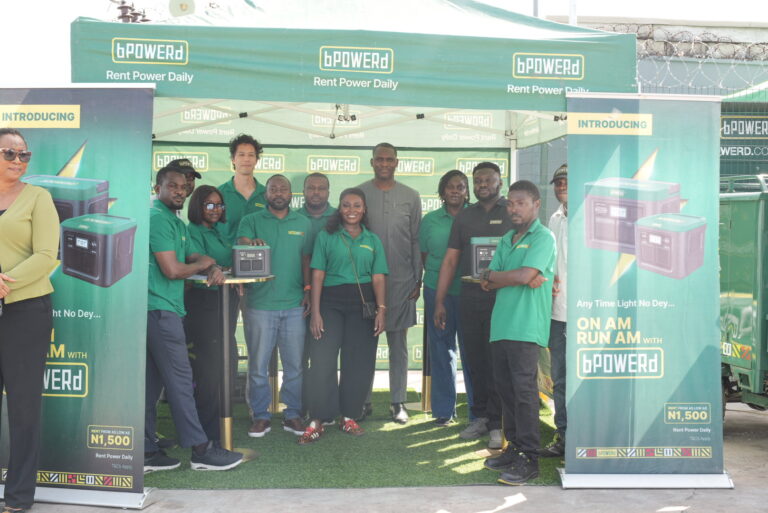
bPOWERd, a clean energy startup developed by bp Plc, has expanded into Nigeria with a solar-powered battery rental model aimed at households and small businesses grappling with high energy costs and unreliable grid supply.

The company has launched operations across seven sites in Lagos in partnership with 11Plc, operator of Mobil service stations, using the locations to distribute portable, solar-charged batteries on a pay-per-use basis. Early demand has been strong, with bPOWERd reaching 60% of its six-month rental target within seven weeks, according to the company.

Nigeria, Africa’s most populous nation, faces a persistent electricity shortfall, with about 43% of the population lacking access to the grid, according to World Bank data. For those connected, outages are frequent, driving widespread reliance on petrol generators that can cost around ₦10,000 ($—) per day for small units.

bPOWERd’s offering provides up to 12 hours of electricity for about ₦3,000 daily, positioning it as a lower-cost alternative. Customers pay a refundable ₦15,000 deposit, with rental prices starting from ₦1,500 per day for smaller units and ₦3,000 for higher-capacity batteries capable of powering appliances such as lights, fans, televisions and small business equipment.

The expansion builds on the company’s rollout in South Africa, where it recorded 125,000 rentals in its first year after launching in 2025. The Nigeria push underscores growing interest from energy firms in distributed, off-grid solutions as fuel prices rise and grid investments lag demand.

“Small businesses sit at the center of everyday economic activity, yet many continue to operate against the backdrop of unstable and expensive power,” said Managing Director Jonathan Lule. “bPOWERd is helping households and SMEs access dependable pay-per-use power they can rely on.”

bp’s West Africa head Oluwole Ogidan said the initiative also aims to create local jobs through sales roles and partnerships with solar technicians, alongside expanding access to cleaner energy.

The model enters a competitive but fast-growing market for alternative power in Nigeria, where startups and utilities are racing to serve millions seeking cheaper and more reliable electricity options.

Africa Jobs Fund Targets $100 Million to Drive $50 Billion Income Boost for African Workers

0

A new philanthropic investment vehicle, the Africa Jobs Fund (AJF), has launched with an ambitious mandate to mobilise $100 million to back companies capable of significantly raising incomes across Sub-Saharan Africa.

Housed under Renaissance Philanthropy and led by Wasoko founder Daniel Yu, the fund will focus on two sectors it identifies as the most effective pathways out of poverty: export manufacturing and international labour mobility. Through these channels, AJF aims to generate more than $50 billion in income gains for African workers while doubling the lifetime earnings of at least 250,000 low-income individuals.

The launch comes against a stark backdrop. By 2040, Africa is projected to host around 600 million of the world’s extreme poor, while formal job creation lags at roughly 3 million positions annually—far below what is needed to absorb a rapidly growing workforce.

AJF’s strategy centres on backing early-stage, high-impact companies that can create jobs at scale but often struggle to attract commercial capital due to high upfront costs. In export manufacturing, this includes expenses tied to worker training, supply chain development and securing international buyers. The fund aims to de-risk these early investments, paving the way for larger pools of private capital to follow.

The opportunity, according to AJF, is substantial. African manufacturing wages are increasingly competitive with Asia, while preferential trade access to major markets such as the United States, European Union and Gulf Cooperation Council strengthens the continent’s export potential. For workers, transitioning from subsistence agriculture to manufacturing can increase productivity—and income—by as much as fivefold.

The second pillar, international labour mobility, targets a global imbalance in workforce supply and demand. More than 15 million people migrate annually to high-income countries, a figure expected to rise sharply as ageing populations fuel labour shortages in sectors such as healthcare, logistics and skilled trades.

For African workers, the income differential is significant: individuals earning roughly $2,000 annually in informal roles can earn upwards of $40,000 abroad. Yet barriers including high recruitment fees, opaque hiring processes and inadequate training limit access. AJF plans to invest in companies that formalise and scale ethical recruitment and training pathways, unlocking these migration corridors.

Yu, who previously built Wasoko into one of Africa’s largest B2B e-commerce platforms serving over 150,000 informal retailers, said the fund is designed to tackle poverty at its root.

“Persistent poverty is at its core a jobs problem,” he said. “Those same people, in the right job at home or abroad, could earn significant multiples of their income. AJF exists to back the companies that create those jobs and opportunities.”

The fund’s leadership includes Operating Partner Ben Hyman, founder of recruitment firm Talent Safari, alongside senior advisors such as Iyinoluwa Aboyeji, co-founder of Andela and Flutterwave, and Samantha Power, former USAID administrator and U.S. ambassador to the United Nations.

Power underscored the development impact of employment-focused interventions, noting that expanding access to better jobs remains one of the most effective tools for lifting households out of poverty.

Renaissance Philanthropy, the nonprofit incubating AJF, has rapidly built a track record in mobilising capital for targeted global challenges, catalysing more than $533 million across 22 initiatives spanning sectors including artificial intelligence, climate and health.

With a thesis-driven approach and operator-led model, AJF is positioning itself to bridge a critical gap between philanthropic capital and scalable job creation—an area many economists argue will define Africa’s economic trajectory over the coming decades.

Binance Marks Africa Month With Push for Digital Inclusion Across Continent

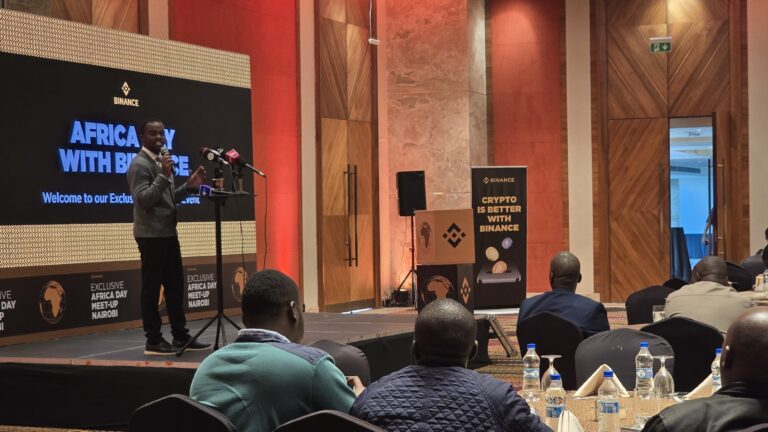
Binance, the world’s largest cryptocurrency exchange by trading volume, used Africa Month to deepen its engagement on the continent, positioning digital assets and blockchain technology as tools for economic inclusion and community development.


The company said it ran a month-long campaign from April 25 to May 25 aimed at boosting participation in the digital economy, while convening policymakers, technology leaders and development stakeholders in Kenya to discuss how innovation can support Africa’s long-term growth.


The initiative underscores Binance’s broader strategy to expand its footprint in emerging markets, where rising mobile penetration and a young population are accelerating adoption of financial technology. Africa has become a key battleground for crypto firms seeking to demonstrate real-world utility beyond trading.


“Across Africa, we are seeing strong momentum in how technology is being adopted to solve real-world challenges,” said Saruni Maina, Binance’s regional operations lead for Africa.


The campaign included a pan-African trading program designed to encourage users to engage with digital assets, alongside efforts to promote financial literacy and awareness of blockchain applications.

Binance said it is also focusing on community-led initiatives and partnerships that extend beyond financial access to broader development goals.


Crypto adoption across Africa has grown steadily in recent years, driven in part by currency volatility, limited access to traditional banking services, and demand for faster cross-border payments. Companies like Binance are increasingly framing their role as ecosystem builders, working with regulators and local organizations to address concerns around security, education and compliance.


The firm said its Africa Month activities were rooted in “collective action and community empowerment,” with an emphasis on making digital assets more accessible and relevant to local users.


Binance, which counts more than 300 million users globally, is seeking to strengthen ties with governments and industry players as scrutiny of the crypto sector intensifies worldwide. Its outreach in Africa highlights a dual approach: driving adoption while promoting responsible innovation.

“When communities come together, they can unlock new opportunities and contribute to meaningful, long-term progress,” Maina said.

The company said it plans to continue supporting initiatives that expand access to digital tools and foster a more inclusive financial system, as competition among global crypto platforms for emerging market users accelerates.

TRIFIC Launches $37.3 Million Green USD I-REIT to Fund Expansion of Nairobi SEZ Towers

0

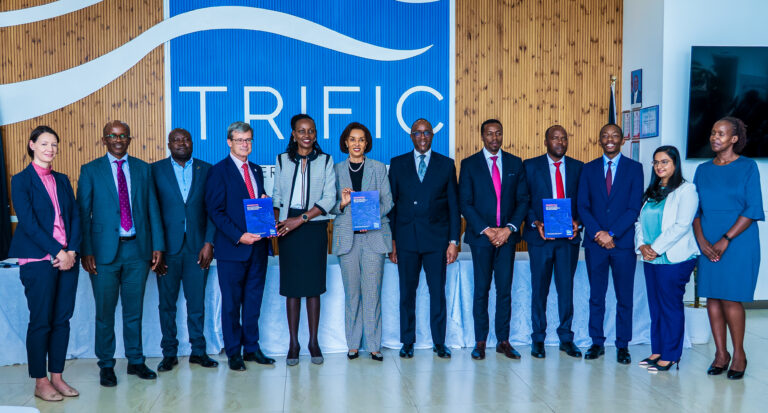
The Two Rivers International Finance and Innovation Centre (TRIFIC), a Special Economic Zone operator within Nairobi’s Two Rivers Development, has launched a USD 37.3 million green, dollar-denominated Income Real Estate Investment Trust (I-REIT) to finance the acquisition and expansion of premium commercial towers within its SEZ.

The offer opens on May 13 and closes on June 12, 2026, with proceeds earmarked for the purchase of the TRIFIC North Tower and the development of additional environmentally certified office buildings aligned with international green construction standards.

The transaction positions itself among Kenya’s early USD-denominated green income REITs, offering both institutional and retail investors exposure to a hybrid infrastructure-real estate income instrument tied to export-oriented service revenues.

“The I-REIT investors will effectively earn a stable share of the export revenues of a diversified portfolio of global service firms operating from TRIFIC, making this one of the most future-oriented real estate income products in the region,” said TRIFIC Chief Executive Officer Brenda Mbathi at the launch.

The REIT is structured to distribute at least 80 percent of net income as tax-exempt dividends under Capital Markets Authority regulations, a feature expected to support yield attractiveness for income-focused investors.

The minimum subscription is set at USD 1,000, with allotment scheduled for June 15, 2026. Results and refunds will be processed the following day. The REIT is expected to list on the Nairobi Securities Exchange on June 23 under the Main Investment Market Segment.

KCB Investment Bank is acting as transaction advisor, sponsoring broker, and lead placing agent.

“This offer is unrestricted and open to both institutional and retail investors,” said KCB Investment Bank Managing Director Maurice Opiyo. “It provides access to a dollar-based income stream backed by high-quality commercial real estate anchored by global tenants.”

Centum Investment Company Group Chief Executive Dr James Mworia and NCBA Bank Kenya Managing Director James Gossip attended the launch.

TRIFIC’s North Tower, with more than 16,000 square metres of lettable space, is currently 92 percent leased to multinational business process outsourcing firms, technology companies, shared services centres, and professional services firms serving global markets.

The tenant base is largely composed of export-oriented service companies generating foreign currency revenues through international contracts, reinforcing the SEZ’s positioning within Kenya’s growing knowledge economy.

Ms Mbathi noted that long-term USD-denominated leases with annual escalations, combined with integrated facility support services and SEZ tax incentives, underpin a predictable and scalable income stream for investors.

Located within Nairobi’s diplomatic “blue zone,” TRIFIC is the only private services-focused SEZ in the capital. It spans 64 acres within the broader 106-acre Two Rivers Development and has operated under its SEZ licence since June 2023.

The project is classified as a Project of Strategic National Importance (PSNI) and aligns with Kenya’s Vision 2030 agenda, particularly priorities around expanding high-value exports, attracting foreign direct investment, and scaling green urban infrastructure.

Planning is already underway for a second tower in response to rising demand for premium SEZ-grade office space.

Spotify Hits 761 Million Users, Bets on AI to Reach 1 Billion

0

Spotify Technology SA is betting that artificial intelligence and higher-value subscriptions will power its next stage of growth, as the streaming company moves to expand margins and push toward a long-term goal of one billion users.

The company said it has reached 761 million monthly active users, underscoring its scale across global markets and reinforcing its position as one of the largest audio platforms in the world. Executives used its 2026 Investor Day to signal a shift in strategy from broad-based user expansion to monetizing its most engaged listeners.

Shift Toward Higher-Value Users

Spotify is increasingly focused on increasing revenue per user rather than sheer growth, pointing to what executives described as a “power law” dynamic in its business, where a smaller segment of heavy users drives a disproportionate share of value.

To capitalize on that, the company is expanding beyond its core subscription offering with new paid features and add-ons, including audiobook bundles and AI-driven tools designed to deepen engagement and increase lifetime value.

AI Becomes Core to Product Strategy

At the center of the company’s roadmap is its proprietary “Large Taste Model,” which leverages billions of daily user signals across music, podcasts and audiobooks. Rather than competing directly in building general-purpose large language models, Spotify is applying AI to personalize and generate audio experiences based on user behavior.

Executives described a shift from traditional recommendation systems toward “generation,” where users can actively shape playlists, podcasts and other audio content in real time using natural-language prompts.

Early deployments of AI features have shown increased engagement, including improved discovery and higher interaction rates with personalized tools such as Spotify’s DJ product.

Gustav

Expanding Beyond Music Streaming

Spotify is also pushing deeper into adjacent formats:

  • Music: Licensing deals and new tools enabling AI-assisted remixes and covers, alongside fan-focused features such as early ticket access
  • Podcasts: A profitable segment with new subscription tools for creators under development
  • Audiobooks: Rapid catalog growth and rising engagement among younger users

The company said both its music and non-music businesses now operate above 30% gross margins, reflecting improved monetization across the platform.

Competing for Attention

Executives reiterated a strategy centered on “time well spent,” positioning Spotify as a platform built around user intent and satisfaction rather than maximizing engagement at any cost.

That framing places the company in competition not only with other streaming services, but also with social and video platforms such as TikTok, YouTube and Netflix in the broader fight for user attention.

Financial Targets Through 2030

Spotify outlined long-term targets that include mid-teens revenue growth, gross margins of 35%–40% and operating margins above 20%.

Management said these goals will be supported by continued expansion in subscription pricing power, new monetization layers, and AI-driven personalization.

Spotify’s push toward one billion users hinges on the effectiveness of its freemium model and its ability to convert engagement into higher-priced offerings.

The company’s core bet is that AI will not only improve discovery, but also reshape how users interact with audio content—turning passive listening into a more interactive, personalized experience that users are willing to pay for.

CEO Weekends: Tolga Özdil, Regional Director ASUS on Kenya As A Gateway For East Africa

0

As Kenya positions itself as a growing technology and artificial intelligence hub in East Africa, global device makers are sharpening their focus on the country’s business market. For ASUS, the opportunity is not just about selling laptops. It is about showing how engineering, durability, security and AI-ready hardware can support businesses, governments, students and creators in a fast-changing digital economy.

TechMoran spoke to Tolga Özdil, Regional Commercial Director, Middle East, Turkey and Africa at ASUS, on what makes ASUS different, why Kenya matters, and how the company is building devices for the next phase of work.

Kenya As A Gateway Market For East Africa

Why is Kenya an important market for ASUS?

Kenya is a key country for this region. It may not have the population size of Nigeria or Egypt, but its influence is much bigger than its numbers. Kenya acts as a gateway to East Africa and connects to a market of hundreds of millions of people around it.

That is why events like GITEX Kenya are important. They show that Kenya can become a strong centre for IT and AI development in the region. For ASUS, being here allows us to demonstrate our devices, meet customers directly and show the engineering thinking behind our products.

We want people to experience the products, not just hear about them. When customers see the build quality, the durability and the small features we include, they understand what makes ASUS different.

Engineering as A Competitive Advantage


What is the unique selling point of ASUS commercial products?

Our biggest difference is that ASUS comes from an engineering background. Our DNA is engineering. We care deeply about how a product is built, how long it lasts and how well it performs in real working conditions.

For example, we include certain protection features in our devices that may look small, but they matter. One basic dust filter may cost around one dollar. Some companies may remove that to save cost. But when you produce more than 20 million devices a year, that one dollar becomes a very big number. For us, we do not want to remove a useful feature just to save money. We prefer to give better protection and better quality to the user.

That is the ASUS mindset. We are not only thinking about the outside look of the product. We are thinking about what happens inside the device and how it supports the customer every day.

How do ASUS commercial devices differ from consumer devices?

Consumer devices are built for home use, entertainment, gaming and personal productivity. Commercial devices are built for continuous work. Businesses need consistency. They need devices that can support employees without frequent failure or downtime.

That is why our commercial products have stronger durability, longer warranty options and additional security features. Some models can support up to five years of warranty. We also test devices for stronger real-life conditions. A commercial laptop must keep working even when it faces rough handling.

Security is also very important. Our commercial devices include features such as TPM for data protection. We also include sensors that can inform IT teams if a device has been opened. These features are not only for top models. We try to bring them across the family, including entry-level devices.

Does ASUS offer a full commercial portfolio?

Yes. We are not only producing laptops. We have desktops, all-in-one PCs, monitors, workstations, servers and other business solutions. Our portfolio starts from Core i3 and goes up to Core i9, and we also have AMD solutions.

All-in-one devices are becoming popular, especially in government and office environments, because they reduce cable clutter and make workspaces cleaner. ASUS has one of the broadest portfolios in the industry.

AI Built Into The Device


What is ASUS doing around embedded AI?

AI is now part of daily life. People use it to ask questions, make decisions and solve problems. In Kenya, sectors such as agriculture can benefit strongly from AI. For example, a farmer can take a picture of a crop and use AI to understand possible diseases or problems.

But most AI today works online. You send data to a server and then receive an answer. That creates questions around privacy, security and internet access.

That is why on-device AI is important. With the right processors and NPUs, users can run AI tasks directly on the device, even offline. This improves privacy because sensitive data does not always have to leave the device. It also helps businesses that have strict rules on data security.

For B2B customers, this is very important. Companies want AI, but they also want control, security and speed. ASUS is building devices that can support that future. Our goal is to give businesses AI-ready tools that are powerful, secure and practical for daily work.

Why Younger Consumers Are Choosing Lab-Grown Diamond Engagement Rings

0

Shifting Preferences in Modern Engagements

Younger generations are reshaping traditions, and one of the most striking changes lies in how they approach engagement rings. Millennials and Gen Z are increasingly drawn to lab-grown diamonds, not only for their beauty but also for the values they represent. These consumers are more conscious of sustainability, affordability, and innovation, making lab-grown diamonds a natural fit for their lifestyle choices.

The Appeal of Lab-Grown Diamonds

Lab-grown diamonds are chemically and physically identical to mined diamonds, yet they come without the environmental and social concerns often associated with traditional mining. For younger buyers, this alignment with sustainable values is crucial. They want jewellery that reflects their principles, and lab-grown diamonds deliver that balance of elegance and responsibility.

Affordability Meets Luxury

Another driving factor is affordability. Younger consumers often face financial pressures such as student loans or housing costs, yet they still want to celebrate love with meaningful symbols. Lab-grown diamonds provide the opportunity to own a stunning engagement ring at a more accessible price point, without compromising on quality or brilliance.

Technology and Transparency

This generation has grown up with technology, and they value transparency in the products they purchase. Lab-grown diamonds are created using advanced techniques that can be explained and verified, offering a level of clarity that resonates with tech-savvy buyers. The ability to trace the origin of their diamond adds confidence and trust to the purchase.

Sustainable Ring Styles Leading the Way

Among the jewellers leading this movement is Cullen Jewellery, whose designs highlight craftsmanship while embracing modern values. Their Cullen Jewellery sustainable ring styles showcase how innovation and tradition can coexist beautifully. By offering lab-grown diamonds in a variety of settings and cuts, Cullen Jewellery appeals directly to younger couples who want their rings to reflect both personal taste and shared values.

A Cultural Shift in Proposals

For many, choosing a lab-grown diamond is more than a financial or aesthetic decision — it’s a cultural statement. Younger couples see their engagement rings as symbols of a future built on sustainability, inclusivity, and conscious living. This shift is redefining proposal traditions, making lab-grown diamonds not just an alternative but a preferred choice.

Looking Ahead

As awareness continues to grow, lab-grown diamonds are expected to dominate the engagement ring market. Younger consumers are setting the tone for future generations, proving that love and sustainability can shine together. With jewellers like Cullen Jewellery at the forefront, the movement is gaining momentum and reshaping the jewellery industry in profound ways.

Google Bets Search Future on AI Agents

0

Google is reshaping its core Search business around autonomous artificial intelligence agents and personalized task execution, marking what executives describe as the platform’s most significant transformation in more than two decades as competition intensifies in the global AI race.

At its annual developer conference in Mountain View, California, Google unveiled a redesigned Search experience powered by Gemini 3.5 Flash, a lightweight but high-performance AI model that will now become the default engine behind AI Mode globally.

The move signals Google’s attempt to defend its dominance in online search as users increasingly shift toward conversational AI systems capable of answering questions directly, completing tasks, and synthesizing information without traditional web navigation.

“Search is evolving from an information retrieval tool into an intelligent, proactive companion,” the company said in briefing materials released during the event.

Google said AI Mode, introduced just a year ago, has already surpassed one billion monthly users, with query volumes more than doubling every quarter since launch. The company did not disclose revenue implications, but the figures suggest rapid consumer adoption of AI-assisted search experiences.

Central to the overhaul is a redesigned Search box that expands dynamically to accommodate more detailed prompts and multimodal inputs including images, files, videos, and Chrome tabs simultaneously. The interface is intended to move beyond keyword-based searches toward natural, conversational interaction.

The company is also introducing “Search agents,” autonomous AI assistants capable of monitoring the web continuously on behalf of users. The agents can track apartment listings, sneaker releases, or other live events and deliver synthesized updates without requiring repeated searches.

The feature, launching first for Google AI Pro and Ultra subscribers this summer, represents Google’s latest push into agentic AI — systems that not only generate responses but also perform ongoing tasks independently.

Google also expanded its booking capabilities inside Search, allowing users to request highly specific local experiences and services, such as reserving private karaoke venues or contacting local businesses directly through AI-powered voice calls.

In one of the event’s more ambitious announcements, Google said Search will soon generate custom interfaces and mini-applications in real time through a system it calls Antigravity. Powered by Gemini 3.5 Flash, the technology can assemble interactive dashboards, graphs, simulations, and personalized tools dynamically within Search results.

The company said users planning weddings, fitness routines, or home relocations could eventually create persistent AI-powered dashboards connected to maps, reviews, weather, and other live data feeds.

Google is simultaneously expanding “Personal Intelligence” features to nearly 200 countries and 98 languages, enabling users to connect services such as Gmail, Google Photos, and eventually Google Calendar to produce more context-aware search responses.

The rollout comes as Silicon Valley’s largest technology companies race to integrate generative AI deeper into consumer products, threatening to reshape internet traffic flows, advertising economics, and how users discover information online.

For Google, whose advertising business remains heavily dependent on Search, the transition carries both strategic opportunity and risk: AI-generated answers may keep users within Google’s ecosystem longer, but could also reduce clicks to external websites that have historically powered the open web.

Still, the company appears determined to position Search as the central interface for the AI era.

“This represents the next chapter of Google Search,” the company said. “People can now ask whatever’s on their mind, and Search can do more for users than ever before.”

Safaricom’s Pochi Generates $12.9 Million as Women Traders Fuel Growth

Safaricom’s merchant payments platform, Pochi la Biashara, generated 1.68 billion Kenyan shillings ($12.9 million) in revenue in the first half of fiscal 2026, as women micro-entrepreneurs emerged as the fastest-growing segment on the service, according to a new report by the GSMA and research partners IDinsight and YUX.

The report found that the number of women actively using Pochi grew about 92% between December 2024 and December 2025, compared with 78% growth among men. Women now account for just over 52% of active Pochi users, equivalent to more than 900,000 merchants.

The growth highlights Safaricom’s increasing focus on Kenya’s informal economy, where women dominate micro-trading businesses but often remain excluded from formal banking and digital financial systems.

Launched in 2020, Pochi la Biashara allows small traders to separate business and personal money through a dedicated M-PESA wallet. The product includes features such as non-reversible customer payments, mini-statements, airtime sales, savings tools and access to working-capital loans.

Researchers found that women traders were drawn to features addressing everyday risks in informal commerce, particularly fraud, payment reversals and financial discipline.

Many women users reported stronger savings habits and higher daily sales after adopting the platform. About 35.6% of new users said they were saving more money, while 24.2% reported increased sales.

“Pochi makes me feel like the CEO of my business,” one trader in Kajiado County said in the report. “I’m in control, I track my money, and I’m able to support my family.”

Safaricom has also benefited commercially from the expansion. The number of Pochi accounts rose 72.6% year-on-year to about 1.5 million accounts in the first half of fiscal 2026, while the broader merchant base expanded by more than 55%, according to the report.

The study, which surveyed 1,992 women micro-entrepreneurs across Nairobi, Murang’a and Kajiado counties, found that peer recommendations and face-to-face onboarding remained key drivers of adoption despite Kenya’s mature mobile money market.

Safety concerns also emerged as a major issue for women merchants using digital payments. Some traders reported harassment from customers who obtained their mobile numbers through payment stickers displayed at shops and market stalls. Safaricom has since removed phone numbers from payment notifications and is developing additional privacy features expected to launch in 2026.

M-KOPA Ghana Extends More Than $90 Million in Credit to 550,000 Customers in Ghana

0

M-KOPA says its smartphone financing platform in Ghana is helping expand access to health insurance, digital services and income opportunities for low-income earners, with more than three-quarters of customers reporting an improved quality of life.

The company’s latest Ghana Impact Report showed that since entering the market in 2021, M-KOPA Ghana has extended more than $90 million in credit to over 550,000 customers through a network of more than 3,000 direct sales agents.

The report highlights how smartphone ownership is increasingly acting as a gateway to financial inclusion in Ghana, where affordability remains a major barrier. According to the GSMA, entry-level smartphones can cost as much as 95% of a low-income earner’s monthly wages in Sub-Saharan Africa, while roughly 76% of the region’s population still lacks smartphone access.

M-KOPA said 44% of customers accessed a product or service for the first time through its platform, while 36% of customers — and 41% of female users — said their M-KOPA device was their first smartphone.

The company’s “More than a Phone” platform, launched in January 2025, bundles smartphone financing with mobile data, device protection and health insurance. M-KOPA said the offering drove a fourfold increase in sales and supported its expansion across all 16 regions of Ghana.

A key component of the strategy is health insurance provided through a partnership with Turaco. The report found that 67% of customers accessed health insurance for the first time through the partnership, while 43% of female customers said health coverage influenced their decision to purchase an M-KOPA phone.

The company said 67% of insured customers now feel more confident managing healthcare costs.

M-KOPA also said smartphones are increasingly supporting livelihoods, with 55% of customers using their devices for income-generating activities and 54% reporting increased earnings after purchasing a smartphone.

The company is also targeting greater participation by women in the digital economy. Women currently account for 37% of newly acquired customers and 31% of the company’s sales agent workforce, up from 26% a year earlier.

To support female sales agents, the firm piloted stationary kiosks aimed at addressing safety concerns and providing more stable working environments. The company said 84% of agents reported higher earnings after joining M-KOPA, while 93% said their quality of life had improved.

“M-KOPA Ghana works to dismantle barriers to formal financial services, and this report shows what’s possible when Every Day Earners get access,” said Chioma D. Agogo, General Manager of M-KOPA Ghana.

The company said it contributed about $3.4 million in annual tax revenue in 2024 and spent more than $28 million on local procurement. The firm currently employs 254 people directly, 37% of whom are women, alongside its network of 3,000 sales agents.

KCB Shareholders Approve Record KSh22.5 Billion Dividend After Profit Growth

0

KCB Group Plc shareholders approved a dividend payout of KSh22.5 billion ($174 million) for the financial year ended Dec. 31, 2025, as East Africa’s largest lender by assets posted stronger earnings and expanded regional operations.

The payout, approved at the company’s annual general meeting on Thursday, includes an interim and special dividend of KSh4.00 per share declared in November and a final dividend of KSh3.00 per share. Total dividends for the year reached KSh7.00 per share, up 133% from the previous year.

The Nairobi-based lender said the final dividend will be paid on or about May 22 to shareholders registered as of April 2.

Group Chairman Joseph Kinyua said the payout reflected the bank’s “strong financial performance, resilient balance sheet, and commitment to delivering sustainable shareholder value.”

KCB reported net profit of KSh68.4 billion for 2025, an 11% increase from a year earlier, while total assets rose 9% to KSh2.1 trillion. Subsidiaries outside Kenya contributed nearly 30% of group profit, underscoring the lender’s regional diversification strategy.

Chief Executive Officer Paul Russo said the bank’s regional footprint, digital investments and diversified business model helped sustain growth despite a difficult operating environment.

For the first quarter of 2026, the lender posted pre-tax profit of KSh24.4 billion, up 15.3% from the same period a year earlier, supported by growth in interest-earning assets and higher operating income.

KCB also expanded its sustainability-linked lending initiatives. The bank said it screened KSh587.8 billion in loans under its environmental and social risk framework during 2025 and disbursed KSh48.8 billion in green loans.