back to top
Thursday, April 2, 2026
spot_imgspot_imgspot_imgspot_img
Home Blog Page 22

TERN Group Raises $24M to Scale AI-Driven Healthcare Talent Platform in the Gulf

TERN Group, an AI talent mobility platform for healthcare workers, has raised $24 million in Series A funding, as it scales operations across the Gulf Cooperation Council (GCC) and beyond to meet surging demand for clinical capacity.

The round was led by UK-based Notion Capital, with participation from UAE’s EQ2 Ventures, RTP Global, LocalGlobe, Leo Capital, Presight Capital, and DST Global’s Tom Stafford. The raise brings TERN’s total funding to $33 million, following an oversubscribed seed round last year.

Founded in 2023 by Dubai-based Avinav Nigam, TERN is building a Clinical AI Workforce platform for training, certifying, and deploying healthcare professionals from across 13 countries into global markets, with a focus on the GCC, Europe, and the UK.

“We are building the infrastructure to make global healthcare careers faster, fairer, and fully transparent,” said Nigam, Founder & CEO. “The UAE, in particular, is central to our mission as regional healthcare systems race to expand capacity.”

Fast-Tracking the Global Healthcare Workforce

TERN’s AI platform is designed to dramatically shorten international healthcare hiring timelines—from a typical 6–12 months to under 10 weeks—while delivering 3x cost savings, 60% faster time-to-hire, and 15–20% productivity gains. The company claims 96%+ retention rates in early deployments and has already onboarded over 650,000 professionals to its system.

Clients include more than 100 healthcare organizations, with several of the GCC’s largest hospital groups already adopting or piloting the platform. The solution combines AI-driven resume parsing, compliance automation, and AI-led interviews with human-led training, relocation, and cultural onboarding.

“Our AI makes the system fast and efficient; our people make it sustainable,” Nigam said.

TERN is working closely with UAE regulators and hospital networks to ensure a steady pipeline of qualified nurses and care workers, particularly from India and Southeast Asia—key source regions for healthcare labor globally.

Strategic Investment in a Healthcare Talent Crisis

The funding comes as the UAE healthcare sector is projected to exceed $50 billion in spending by 2029, with workforce shortages emerging as a critical bottleneck. Regional policymakers are looking to technology as a solution, especially as Gulf states invest in AI-enabled healthcare infrastructure and clinical innovation hubs.

“TERN is solving one of the most urgent challenges in global healthcare: how to scale talent efficiently and responsibly,” said Itxaso del Palacio, Partner at Notion Capital. “Their platform blends regulatory compliance and AI-driven efficiency to deliver a true workforce operating system.”

The company plans to use the fresh capital to expand its AI capabilities and compliance infrastructure, deepen partnerships across the UAE, Saudi Arabia, Europe, and the UK and build out a long-term healthcare workforce operating system for governments and providers.

“Dubai is an ideal launchpad,” Nigam added. “The region’s bold AI and healthcare ambitions align perfectly with our mission to scale systems that put professionals and patients at the centre.”


Uber Partners Joy Aviation to Bring Blade Helicopter Rides to its App

0

Uber has partnered with Joby Aviation, an electric air taxis for commercial passenger service, to bring Blade’s air mobility services to the Uber app as soon as next year.

These announcement follows Joby’s recent acquisition of Blade’s passenger business.
In 2024, Blade flew more than 50,000 passengers across a network of routes in the New York metropolitan area and Southern Europe, including high-traffic destinations such as Newark Liberty International Airport, John F. Kennedy International Airport, Manhattan and the Hamptons.

“We’re excited to introduce Uber customers to the magic of seamless urban air travel,” said JoeBen Bevirt, founder and CEO of Joby. “Integrating Blade into the Uber app is the natural next step in our global partnership with Uber and will lay the foundation for the introduction of our quiet, zero-emissions aircraft in the years ahead. Together with Uber’s global platform and Blade’s proven network, we’re setting the stage for a new era of air travel worldwide.”

Joby and Uber have been working together to deliver the future of urban air mobility since 2019. In 2021, Joby acquired Uber’s Elevate division which played a pivotal role in establishing the urban air mobility sector and developing the tools required for market selection, demand simulation and multi-modal operations.

Joby acquired Blade’s passenger business in August 2025 and intends to capitalize on Blade’s existing infrastructure and decade of experience delivering vertical air travel at scale to accelerate Joby’s launch of its electric air taxi service in markets across the world, including in Dubai, New York, Los Angeles, the United Kingdom and Japan. Joby’s electric air taxi is designed to carry four passengers and a pilot at speeds of up to 200 mph, and has an acoustic impact 100 times lower than a traditional helicopter.

“Since Uber’s earliest days, we’ve believed in the power of advanced air mobility to deliver safe, quiet, and sustainable transportation to cities around the world. By harnessing the scale of the Uber platform and partnering with Joby, the industry leader in advanced air mobility, we’re excited to bring our customers the next generation of travel,” said
Andrew Macdonald, President and COO of Uber.

UAE Fintech CredibleX Lands $100M Credit Facility from Pollen Street Capital

0

In a move that underscores growing global investor appetite for Gulf fintech, UAE-based embedded finance startup CredibleX has secured a $100 million secured credit facility from UK-headquartered Pollen Street Capital, marking the alternative asset manager’s first transaction in the region.

Founded in 2023, CredibleX offers digital working capital solutions—including receivables and payables financing—to small and medium-sized enterprises (SMEs) via an embedded lending platform. The facility will enable the company to expand its loan book and accelerate its market penetration in the UAE, a country seeing rapid growth in its non-oil SME sector.

“Pollen Street’s expertise in private credit and their belief in our model puts us in a strong position to scale our mission of democratizing credit access for SMEs,” said Anand Nagaraj, CredibleX co-founder and CEO, in a statement.

The deal also represents a strategic entry for Pollen Street Capital into the Gulf market. The London-based firm, which manages over $7 billion in assets across private credit and equity, opened its Abu Dhabi office earlier this year as part of its global expansion strategy.

“The UAE’s diversification push has fostered a vibrant SME sector, creating significant demand for short-term liquidity,” said Ethan Saggu, Investment Director at Pollen Street. “Our facility will help CredibleX meet this demand while growing sustainable lending volumes.”

CredibleX previously raised $55 million in seed funding in late 2024 and now works with more than 60 distribution partners across the UAE. The company’s rapid growth and regulatory alignment have drawn praise from senior UAE officials as a model for digitally-enabled financial inclusion.

The deal is the latest signal that private credit is gaining momentum in emerging markets, especially in the Middle East, where underserved SMEs are seeking alternatives to traditional bank lending.


Samsung Launches the Galaxy A07 in Kenya

0
Samsung has officially launched the Galaxy A07 in Kenya, the latest addition to its popular Galaxy A Series portfolio.
The Galaxy A07 comes in two storage variants the 64 GB & the 128 GB this is couples up by a durable body, design, slim sleek appearance, large immersive screen. The Galaxy A07 is made for people seeking a dependable, feature-rich device that can handle everyday demands.
The Galaxy A07 blends innovation with the performance and durability. It has IP54-rated splash and dust resistance, has a 6.7-inch immersive display with a large, bright 90 Hz screen perfect for streaming, gaming, split-screen multitasking, or digital creativity.
The Galaxy A07 has 128 GB of internal memory with 4+4 GB RAM, room enough for photos, apps, and videos and has a 5,000 mAh battery with 25 W fast charging. Samsung promises six generations of Android OS upgrades and six years of security updates ensure the device stays secure and up to date and of course it comes with Samsung Knox Vault, Theft Protection, and Auto Blocker.

At 7.6 mm and 184 g, the Galaxy A07 is selling at recommended retail price of A07 4+64 GB is Ksh. 12,800 and the 4+128 GB is 14,600. The Galaxy A07 comes in three vibrant colours Black, Light Violet, and Green and comes with a Samsung 24 month warranty.

Key Specs

Weight:184g

CPU Speed: 2.2GHz, 2GHz

CPU Speed: 2.2GHz, 2GHz

CPU Type:Octa-Core

Size: 171.3mm (6.7″)

Resolution (Main Display):720 x 1600 (HD+)

Technology (Main Display) PLS LCD

Rear Camera – Resolution:50.0 MP + 2.0 MP

Rear Camera – F Number (Multiple): F1.8 , F2.4

Rear Camera – Auto Focus:Yes

Rear Camera – OIS: No

Rear Camera Zoom: Digital Zoom up to 10x

Front Camera – Resolution: 8.0 MP

Front Camera – F Number: F2.0

Front Camera – Auto Focus: No

Front Camera – OIS: No

Rear Camera – Flash:Yes

Front Camera – Flash:No

Memory: 4GB

Storage: 128 GB Available Storage (GB) 109.4

MicroSD (Up to 2TB)

Number of SIM-Dual-SIM

SIM Slot Type:SIM 1 + SIM 2 + MicroSD

USB Interface:USB Type-C

Earjack: 3.5mm Stereo

Dimension (HxWxD, mm) 167.4 x 77.4 x 7.6

Battery Capacity (mAh, Typical) 5000 non-removable

KawiSafi Secures $90 Million to Invest in Climate Tech Startups Across Africa

0

KawiSafi, the energy transition, clean transportation, and nature-based carbon solutions investor across Africa, has secured $90 million for its second fund to invest in climate solutions across Africa.

Managed by Acumen, the global impact investor building markets to solve poverty, KawiSafi fund II has $90 million in approved capital, including $40 million in committed capital, for its for-profit investment strategy.

“Securing $90 million for a successor KawiSafi fund is a major milestone and a signal to the market: capital can and must flow toward a more inclusive, low-carbon future,” said Amar Inamdar, Managing Director of the KawiSafi funds. “We are backing the entrepreneurs who are building scalable business models that turn climate challenges into growth opportunities across Africa.”

Anchor investors include the African Development Bank’s Sustainable Energy Fund for Africa (SEFA), the Green Climate Fund, the Schmidt Family Foundation, and Quadrature Climate Foundation.

KawiSafi II follows the predecessor KawiSafi fund, a $67 million clean energy fund launched in 2016. KawiSafi fund will provide catalytic equity financing to businesses that build low-carbon pathways to economic resilience in underserved communities. Fund II is channelling capital toward businesses that combine capital appreciation with measurable climate impact.

Climate change disproportionately affects Africa. The continent is home to the majority of the world’s poorest people and receives only 6 percent of global investment flows, while climate shocks, including droughts, floods, and rising seas, could push an additional 100 million people into poverty worldwide.

Fund II supports business models addressing these structural risks. The fund targets use cases such as distributed renewable energy, resilient mobility, clean cooking, and access to carbon finance. It builds on lessons from its predecessor while expanding into new sectors and technologies.

This milestone comes at a pivotal moment in Africa’s energy transition. Expanding access will require investment beyond traditional grids and infrastructure to reach communities historically excluded from energy systems. Fund II is responding by deploying capital to African-based entrepreneurs who are building the foundation of a low-carbon future.

“The KawiSafi funds show that distributed clean energy solutions can drive Africa’s energy transition and economic transformation,” said Jacqueline Novogratz, Founder and CEO of Acumen. “This milestone brings together years of learning, a coalition of committed partners, and the local insight needed to scale climate solutions where they are needed most.”

In Somalia, half the population has no electricity, and those who do often pay around 65 cents per kWh—double the highest rate paid by U.S. consumers. These typically diesel-powered systems are expensive, unreliable, and carbon-intensive. Yet Somalia has over 310 sunny days per year, which is enough to meet most of its energy needs. However, uptake remains low due to high costs and weak infrastructure, which is exactly where patient, catalytic capital can make a difference.

In June, Acumen’s Hardest-to-Reach initiative invested $1 million in KIMS Microfinance, the largest microfinance institution in Somalia, to support the scaling of its off-grid solar financing activities. This investment is anticipated to bring energy access to 17,000 people and reach 440 businesses and large households with productive-use energy, helping to facilitate local economic activity.


Kenya’s SunCulture Raises $5 Million to Expand Rural Water Access in Africa

0

Rural communities face the greatest challenges in accessing reliable water, with over 80% of Africa’s rural population using sources that require collecting water outside their home, a huge time burden for mainly the women and girls who are responsible.

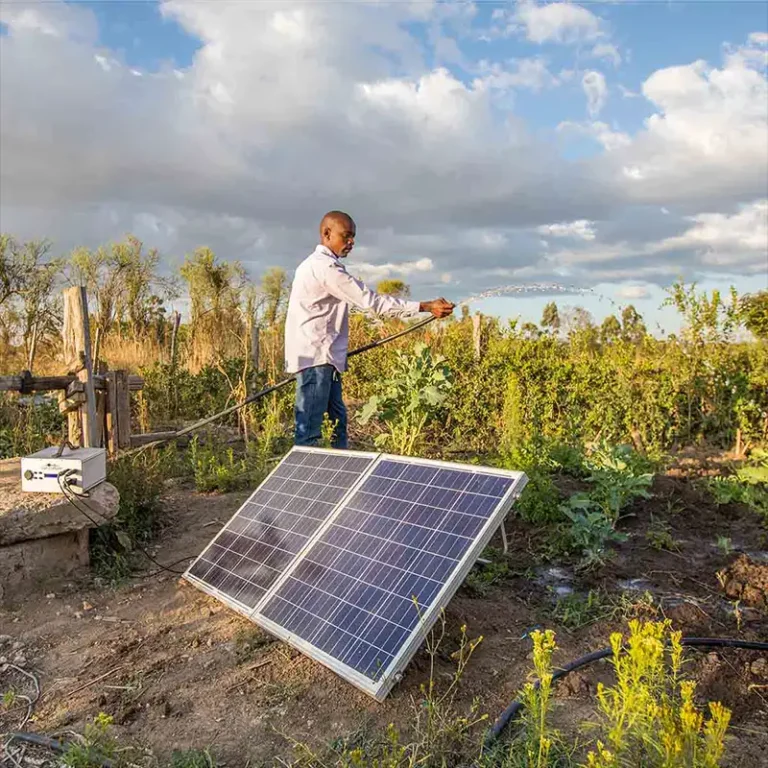
Kenya’s SunCulture, a solar-powered water pump company, has raised $5 million to expand rural water access in Africa and help address these challenges in Africa. The $5 million growth equity investment to Savant Group Ltd., parent company of SunCulture, was from WaterEquity, through its Water & Climate Resilience Fund.

According to Aleem Remtula, Head of Private Equity and Infrastructure Investments at WaterEquity, “At WaterEquity, our Water & Climate Resilience Fund is designed to invest in decentralized, resilient solutions that can scale equitably. SunCulture exemplifies the kind of company we seek out – locally grounded, adaptation-focused, and committed to expanding water access to underserved communities.”

Founded in 2012, SunCulture designs and sells solar-powered irrigation systems that make it cheaper and easier for farmers in Kenya to grow high-value fresh fruits and vegetables. In 2017, the firm launched RainMaker1 solar water pump system and a year after launched PAYG financing offering and raised investment from EDF and Energy Access Ventures to expand its operations in Kenya as well as to release further affordable products onto the market. 

In 2019, the firm launched RainMaker2 and ClimateSmart, IoT connected, remote monitoring, ability to power a range of 12v & 24v appliances) and ClimateSmart Direct and Direct Drip the same year. In 2020, the firm launched ClimateSmart + TV offering and in 2021 it launched its My SunCulture digital platform to provide SunCulture’s first smartphone ready digital platform. 

Still, SunCulture’s solar-powered water pumps offer an affordable alternative to diesel and manual water pumps. Designed for irrigation, the pumps are also used by more than 90% of customers to access groundwater for drinking, cooking, and cleaning – helping rural households meet daily water needs more reliably, efficiently, and sustainably. WaterEquity’s investment will enable SunCulture to scale its operations and deepen its impact – aiming to expand water access to millions of farmers and their families in rural Africa.

For it to achieve these, SunCulture raised $27.5 million in 2024 to scale up its solar irrigation solutions throughout sub-Saharan Africa. Nithio, a leading energy finance platform in Africa, also announced an investment in SunCulture. The cleantech start-up was also among seven African ventures recognized by WEF as 2022 tech pioneers.

In 2021, SunCulture received its first disbursement from a new $11m from SunFunder to help it expand solar irrigation in sub-Saharan Africa. In 2020, SunCulture raised $14 million to accelerate direct sales in Kenya, continue to expand internationally, and fund existing product improvements and new product innovation.

Samir Ibrahim, CEO and Co-Founder of SunCulture said, “WaterEquity understands that water investments don’t fall into a single box – scaling water infrastructure can deliver both incredible impact and strong commercial returns. We’re proud to be the first investment from their new fund and look forward to growing our business together.”

The Water & Climate Resilience Fund brings together a diverse group of global investors—including Microsoft, Starbucks, Xylem, Ecolab, Reckitt, Gap Inc, and others – whose leadership demonstrates the growing role of the private sector in closing the water and sanitation funding gap. Their commitment to the first fund in this new strategy underscores confidence in WaterEquity’s team to deliver on innovative investments aimed at improving water quality, increasing access, and reducing the impacts of water scarcity.

“This first investment marks a pivotal milestone for the Water & Climate Resilience Fund, demonstrating how collective action and strategic investing can scale water and sanitation solutions in emerging markets. It reflects a shared commitment among our investors to advancing a water-positive future – one that builds resilience, protects lives, and drives lasting impact in underserved communities.” said Elan Emanuel, Managing Director and ​Chief Investor Relations Officer, WaterEquity.

Operating with a shared vision of safe water and sanitation for all, WaterEquity works with the non-profit organization Water.org – both founded by Gary White and Matt Damon – to deliver innovative, market-based financing to communities who need it most. Water.org is partnering with SunCulture to deliver technical assistance through complementary initiatives, including a water quality education program to help farmers better understand, manage, and protect their drinking water sources. In addition, Water.org is helping SunCulture strengthen its operations through practical tools and assessments, including a greenhouse gas emissions audit that will include practical suggestions to reduce emissions.

With a growing pipeline across Africa, Asia, and Latin America, WaterEquity is positioned to expand its strategy and aims to deliver strong impact alongside risk-adjusted returns.

Accion Raises $61.6M | Launches Accion Ventures for Fintech Startups

0

Accion has announced the final close of a $61.6 million fund for its Accion Venture Lab Fund II and rebranded from Accion Venture Lab to Accion Ventures to invest in early-stage tech startups across Africa, South and Southeast Asia, Latin America, and the United States.

The Limited Partners in the fund include the Dutch entrepreneurial development bank FMO, Proparco, ImpactAssets, Ford Foundation, MetLife, and Mastercard.

According to Michael Schlein, President and CEO of Accion: “This fund seeks to support the growth of early-stage, disruptive companies providing high-quality, affordable financial services that can help reduce poverty and create opportunity for millions of people globally.”

Schlein adds that with the huge uptick in mobile technologies in emerging economies, there is a significant opportunity for the fund to connect many small businesses and low-income consumers to the digital economy for the first time.

Amee Parbhoo, Managing Partner, Accion Ventures, said: “With this new funding, we seek to build on our success to date, finding and scaling some of the world’s most innovative fintech companies that provide a full suite of financial products and services to small businesses globally.”

Established in 2012, $59.4 million has been deployed in 76 companies across more than 30 countries, with 13 full or partial exits across all geographies. The three most recent exits were Apollo Agriculture, a company providing tech-enabled inputs, financing, insurance, and training to smallholder farmers in Kenya and Zambia; Lula, an all-digital small business lender and bank account provider for small and medium enterprises in South Africa; and Pula, a company providing agricultural insurtech solutions to smallholder farmers across Africa and Asia.

Recently, Accion invested in Nigeria’s PaidHR, Foyer in the United States, FinFra in Indonesia, and Flowcart in Kenya.

Beyond deploying capital, Accion Ventures provides hands-on support to startups with access to market expertise, board governance, networking and follow on investments among others.

 “We are excited to support the growth of incredible innovators across the globe in early-stage fintech who are using technologies ranging from satellite imagery to conversational commerce and embedded finance,” Rahil Rangwala, Managing Partner, Accion Ventures. ”We believe we have a strong pipeline and team in place and will continue to leverage our networks to deliver quality, affordable financial services for small businesses and consumers globally.”

According to the Global Findex 2025, worldwide, 1.6 billion people do not have an account with a financial institution or have an inactive account, and the $5.7 trillion annual financing gap for micro, small, and medium-sized businesses represents a huge market opportunity for innovative startups ready to disrupt the traditional financial system. Accion Ventures aims to find and help scale companies at the forefront of the latest trends in fintech, delivering financial solutions leveraging embedded finance, alternative data, and more.

Kenya’s Triply Integrates Verto’s Atlas Suite to Simplify its Cross-Border Payments Across Africa

0

Kenya’s Triply, a Kenyan-based travel-tech company providing software for travel businesses, has integrated Atlas to offer embedded multi-currency payment solutions to clients across Africa, speeding up transactions, reducing costs, and maintaining full regulatory compliance.

The Atlas Suite also includes features critical for the African market, such as local collection accounts, centralized treasury tools, and last-mile payouts via bank transfers or mobile money. These capabilities support businesses in executing bulk payments, including payroll and remittances, in a secure and compliant manner.

“We have witnessed the hurdles businesses face in scaling operations across borders, especially in African markets. Atlas is a transformative solution built to eliminate these challenges and accelerate growth,” says Ola Oyetayo, CEO and Co-founder of Verto.

Triply is just one of the businesses in Africa that that are grappling with fragmented financial ecosystems, regulatory complexity, limited access to local banking services, and currency volatility, challenges that have historically hindered cross-border trade and digital commerce. With the launch of Atlas Suite, firms like Triply address these pain points by offering instant access to local accounts, deep FX liquidity, and a fully compliant infrastructure supporting 49 currencies across multiple markets.

The Atlas Suite is an API platform for cross-border payments for financial institutions, digital marketplaces, and platforms. It aims to empower businesses to offer fully integrated banking, FX, and payment services through a single API integration.

The Atlas Suite comprises distinct offerings:

  • Atlas for Fintechs: Designed for fintech companies, digital banks, and financial institutions, this solution allows seamless integration of Verto’s banking, FX, and payments infrastructure, without the need for local licensing or in-house system development. Institutions can provide local virtual accounts in over 12 African markets, execute real-time FX across 49 currencies, and send payments to over 100 countries, all under their business name.
  • Atlas for Platforms: Non-financial platforms such as e-commerce, logistics, or travel tech providers can now embed financial services directly into their products using Verto’s infrastructure. This removes the burden of regulatory compliance and technology development, allowing them to offer embedded payments, FX, and account management with ease.
  • White Label Broker Services: Atlas also provides an end-to-end white label solution, enabling brokers to offer branded cross-border financial services to their customers. With full control over pricing, brokers can generate new revenue streams without heavy capital or operational expenditure.

MOPO Raises £5 Million to Scale its Solar-Powered Battery Rental Model

0

MOPO, a UK technology company at the forefront of sustainable energy access, has secured a £5 million from Norfund, the Norwegian Government’s investment fund to scale its solar-powered battery rental model.

The​ investment will help create jobs, improve lives, and support the transition to net zero in developing countries and adds to the backing from Octopus Energy and BII, signalling growing international momentum.

“We’re delighted to welcome Norfund as the Chris  Longbottom,  CEO  of MOPO, “This is a strong signal that our model, combining impact, innovation, and commercial return, is working. With Octopus and BII already behind us, Norfund’s support reinforces the belief that MOPO is a standout solution to the clean energy challenge. Demand is growing fast across Sub-Saharan Africa, and this investment will help us scale even faster to meet it.”

With a presence in Nigeria, DRC, Sierra Leone, Liberia, Chad and Uganda, with over 28 million rentals already completed, the firm will use the funds to scale its pay-per-use battery rental system to more households and businesses.

Its two core products, MOPO50 for lighting, phone charging and small appliances, and MOPOMax for higher-load devices, generators, small businesses and e-mobility, are designed to replace expensive and polluting fossil fuel alternatives.

“We are excited to share that Norfund has invested £5 million in MOPO. MOPO has demonstrated innovation in its offerings, providing climate-friendly solutions improving energy access in underserved areas in particularly challenging markets. Norfund is delighted to back MOPO’s ongoing expansion and its efforts to bring access to sustainable energy to those who need it most,” said Pål Helgesen, Investment Director, Norfund.

With a vast addressable market, as around one billion people in Africa still lack access to reliable electricity, and a proven product-market fit, MOPO is well-positioned for rapid expansion. The $75 billion-a-year petrol generator market, especially relevant for MOPO’s larger MOPOMax battery, is particularly primed for clean disruption.

Notably, MOPO has also recently attracted significant backing from Octopus Energy, the UK’s largest energy supplier, and British International Investment (BII), the UK Government’s development finance institution.

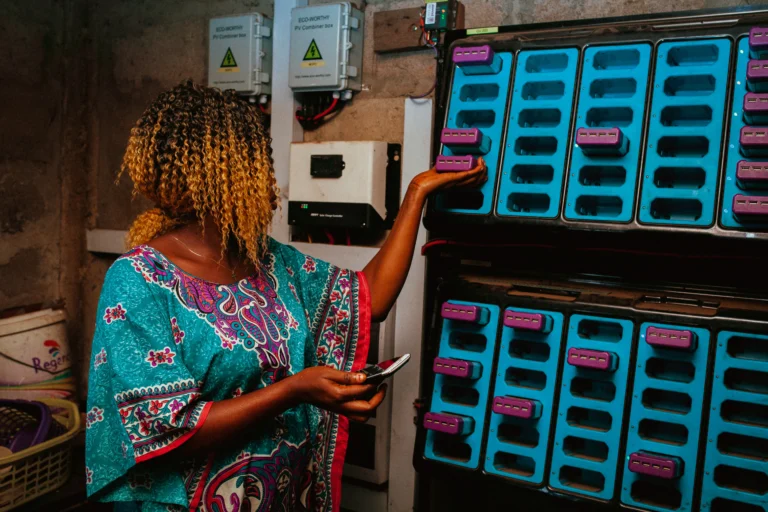
MOPO’s battery rental service is making a huge impact on lives in Sub-Saharan Africa where it already operates in six countries. MOPO’s business is based on the rental of its unique MOPO batteries from solar powered charging hubs that are managed by a network of local agents. Its portfolio includes the MOPO50 battery, which provides basic household energy access for lighting, phone charging and Direct Current (DC) appliances; and the MOPOMax, a 1kWh battery for AC appliances which is used to replace fossil fuel generators.

Each MOPO battery can be tracked via the MOPO Platform to determine whether it is with an agent, a customer, or has reached the end of its life and is ready to be recycled. MOPO batteries are controlled through integrated technology, ensuring energy is only discharged upon agent payment through the bespoke MOPO App. With committed plans to roll out its service across Africa, MOPO already has operations in Nigeria, DRC, Sierra Leone, Liberia, Chad, and Uganda.

Can Emergency Responders Trust Your Site Design — or Will It Slow Them Down

0

Seconds determine outcomes in emergencies, and small design flaws often create delays that ripple into larger consequences. Every barrier, gate, or pathway on a property becomes a potential obstacle or a point of access. For fire crews, paramedics, and police, misplaced features can turn simple entry into a costly detour when time is already running thin.

Architects, planners, and managers make decisions that balance visual appeal, public use, and operational demands. Yet function carries the most weight when lives hang in the balance. Thoughtful layouts, reliable barriers, and clear access paths turn blueprints into trusted systems. Attention to detail today secures readiness tomorrow, where design choices directly shape the speed and success of every urgent response.

Access Barriers That Respond Instead of Resist

Security features often add complexity during urgent responses, and even small obstacles can cost crews precious seconds. A gate requiring multiple actions or a fixed post narrowing access may delay stretchers or force vehicles to detour. Among the most practical solutions are fold down bollards, which provide reliable protection while still allowing emergency teams to pass without obstruction. Used alongside removable posts with quick-release pins and gates fitted with manual overrides, they create security that adapts instead of resists.

Audits conducted regularly confirm clearance, visibility, and proper function under stress. Timed walkthroughs with responders reveal problem points early, while a release key stored locally eliminates hesitation when immediate entry is required.

Fire Lane and Drive Path Design That Holds Up in Practice

A fire engine stalled at a tight corner exposes design failures. Function beats ornament: curb lines and decorative medians can create pinch points. Verify lane widths against the largest on-call apparatus and test turning radii with vehicle templates. Generous curb radii keep wheels clear so apparatus can reach hydrants and staging areas without scraping.

Bring crews into commissioning runs with full-size vehicles to reveal approach angles and street-furniture conflicts. Keep hydrant aprons free, add night-contrast lane markings, and follow practical design standards rather than stylized renderings. Keeping a vehicle-length turning template on site at handover reduces late fixes and helps move the project into regular use.

Ongoing Maintenance That Protects Emergency Readiness

Weather and wear expose flaws more quickly than blueprints ever reveal. A blocked drain, a mud-slicked lane, or a dead gate battery can undo the best planning in seconds. Regular upkeep keeps pathways clear, mechanisms dependable, and crews confident they won’t face surprises when urgency strikes.

The most reliable sites treat maintenance like rehearsal. Gates and barriers are tested under real conditions, not just on paper. Repairs and inspections are logged, giving responders predictable access every time. Spare parts kept close to entrances shorten downtime, while schedules designed around urgency prevent readiness from eroding quietly over time.

Collaboration With First Responders From Day One

A captain walking the site with a notebook spots how a decorative berm forces a long carry for stretchers. Early planning sessions that invite firefighters, medics, and EMS drivers bring field knowledge into specifications — clearance heights, gate timing, radio dead zones, and staging areas get defined to match real-world equipment and tactics.

After construction, staged drills under timed conditions turn assumptions into measurable failures and fixes. Record exact delays, adjust specs, update as-built drawings, and train property teams on access procedures so crews find what they expect. Hold a paid, half-day commissioning drill with responding agencies before final landscaping so fixes go into contract closeout.

Design That Blends Public Space Appeal With Safety

Public areas don’t need to trade safety for beauty. Benches, lighting, and landscaping can invite use while leaving sightlines clear and pathways open. A well-placed planter can guide flow without blocking hydrants, and carefully positioned seating defines gathering zones without forcing responders into detours.

Subtle design choices make spaces intuitive in moments of stress. Non-slip paving, reflective accents, and natural sightlines point the way without overwhelming daily users. Even small cues—like patterned walkways or a clearly posted site map—help responders orient instantly. Good design blends seamlessly, offering comfort to the public while staying legible to emergency crews under pressure.

Emergency access is measured in seconds, and property design sets the stage for success or delay. Clear lanes, reliable barriers, and tested staging areas give crews confidence to move without hesitation. When responders find pathways that function as expected, they provide aid more quickly and with fewer risks. Collaboration, timed drills, and consistent maintenance turn planning into dependable readiness. Each fold-down bollard, painted lane, and unobstructed hydrant apron represents time returned to emergency teams. Time returned translates into lives preserved. Trust in site design becomes trust in response when urgency allows no margin for error.

How Digital Coupons Are Becoming Africa’s Hidden Fintech Tool

0

For years, coupons were dismissed as an old-fashioned way to save a few cents on groceries. They were seen as scraps of paper clipped from newspapers and redeemed reluctantly at supermarket tills. But in today’s digital economy, coupons have undergone a quiet but profound transformation. Across Africa and the wider Middle East, digital coupons are no longer just a marketing gimmick—they are emerging as a powerful fintech tool, reshaping consumer behavior, retailer strategies, and even the financial wellbeing of millions of households.

At the center of this movement is GC Coupons, a fast-growing platform that has quickly become the region’s leading coupon hub. With more than 12,000 active coupons for over 1,850 online retailers, GC Coupons today serves shoppers in more than 50 countries, including the UAE, Saudi Arabia, Egypt, and several African markets. What started in 2020 as a simple savings platform has evolved into a digital infrastructure for smarter shopping and financial empowerment.

The Intersection of E-Commerce and Fintech

Africa’s fintech story has largely been written around mobile payments, lending apps, and neobanks. But there’s a subtler layer that rarely makes headlines: the role of savings technologies. Just as payment apps help people transact, coupons help them stretch their purchasing power, with websites such as Bountii making these savings more accessible in everyday shopping.

In markets where disposable incomes are under pressure and inflation erodes real wages, every percentage saved is meaningful. A 10% discount on a monthly grocery order or a 15% voucher on electronics can mean the difference between affordability and postponement. This is why digital coupons, though often overlooked, function as a financial planning tool—they reduce consumer expenditure while allowing retailers to drive volume.

Platforms like GC Coupons make this interaction seamless. Instead of hunting for deals across scattered social media posts or waiting for seasonal sales, shoppers can instantly access verified codes across categories—fashion, electronics, food delivery, travel, and more. In effect, the platform democratizes savings in the same way fintech democratized payments.

Why Africa Is Ready for a Coupon Revolution

Several structural factors explain why Africa and adjacent regions are fertile ground for a digital coupon boom:

  1. Mobile-First Internet Adoption
     More than 60% of Africans access the internet primarily via smartphones. This aligns perfectly with app-based coupon distribution, making savings just a tap away.
  2. E-Commerce Acceleration
     Online shopping is growing at double-digit rates annually, with platforms like Jumia, Noon, and Carrefour driving mainstream adoption. Coupons naturally integrate into checkout flows, creating an easy win for price-sensitive buyers.
  3. Financial Pressure
     Rising costs of food, fuel, and everyday essentials are squeezing households. Coupons provide an immediate relief mechanism—an informal “savings account” built into shopping journeys.
  4. Retailer Competition
     As global players enter African markets, local and international retailers are fighting for customer loyalty. Coupons have become a customer acquisition strategy, not just a sales tactic.

GC Coupons: From Savings Hub to Fintech Enabler

What makes GC Coupons stand out in this landscape is its scale and exclusive partnerships. The platform aggregates deals from global giants like adidas, Carrefour, and H&M while also securing exclusive codes from regional favorites like Noon, Namshi, and Level Shoes. In fact, a shopper searching for high-end footwear can easily find a verified offer on the dedicated Level Shoes discount codes page.

The broader value proposition, however, goes beyond discounts. By consolidating 12,000+ offers into one ecosystem, GC Coupons acts as a real-time financial optimization tool for consumers. Instead of overspending or paying full price, users automatically incorporate savings into their monthly budgets.

The founder, Yash Bhojwani, often notes that GC Coupons isn’t just about shopping smarter—it’s about living smarter. In interviews, he emphasizes that the mission is to “help every household find savings in everyday purchases, whether it’s groceries, electronics, or fashion.” That consumer-first approach explains why the platform has gained traction across more than 50 countries in just a few years.

How Coupons Function Like Fintech

To understand why digital coupons deserve a place in fintech conversations, consider how they mirror financial tools:

  • Budget Optimization: Just as budgeting apps track expenses, coupons directly lower them.
  • Micro-Savings: The small amounts saved per transaction add up to meaningful monthly relief.
  • Inclusion: Anyone with a phone and internet access can benefit, regardless of bank account status.
  • Data-Driven Insights: Retailers and platforms analyze coupon redemption to improve customer experience, similar to how fintechs analyze spending data.

In short, coupons act as micro-transactions of savings, functioning like tiny deposits into a consumer’s financial health. When aggregated, they represent a powerful fintech layer.

The Retailer Perspective: Coupons as ROI Machines

For retailers, digital coupons are not a sunk cost—they are measurable, trackable ROI machines. A retailer that issues a 15% coupon through GC Coupons can instantly see how many redemptions occurred, what categories benefited, and how customer lifetime value is impacted.

Unlike traditional advertising, coupons create direct action: click, shop, save. This is why retailers across fashion, electronics, food delivery, and even healthcare are integrating coupon distribution into their marketing funnels. In many cases, the cost of offering a discount is offset by new customer acquisition and repeat orders.

The Future: AI, Personalization, and Super-Apps

The digital coupon space is just getting started. Looking ahead, three trends are set to define the next decade:

  1. AI-Powered Personalization
     Instead of browsing endless codes, users will receive curated coupons based on their past shopping behavior, location, and budget.
  2. Integration Into Super-Apps
     Just as payments and ride-hailing converged in African super-apps, coupons will likely become an embedded feature within lifestyle apps.
  3. Financial Wellness Dashboards
     Imagine a personal finance app that not only tracks spending but also shows how much you saved using coupons that month. That’s where platforms like GC Coupons are headed.

Why This Matters

In regions like Africa, where disposable incomes are fragile and inflation bites hardest, the fintech narrative cannot be limited to payments and loans. Savings—no matter how small—play an equally critical role in financial resilience. Digital coupons are the hidden fintech tool enabling that resilience, transaction by transaction.

By placing verified, accessible, and usable discounts at consumers’ fingertips, GC Coupons has proven that innovation in fintech doesn’t always mean blockchain or digital banks. Sometimes, it means helping a family in Cairo save 150 pounds on their grocery order, or a student in Lagos buy sneakers at a price they can afford.

Conclusion

The future of African fintech will be shaped not only by how money moves but also by how money is saved. Digital coupons, once seen as trivial, are emerging as one of the most practical, scalable, and inclusive savings tools on the continent.

As platforms like GC Coupons continue to expand—offering more than 12,000 active coupons, serving shoppers across 50+ countries, and partnering with over 1,850 retailers—the line between e-commerce and fintech will blur further. What’s clear is that the quiet coupon revolution has already begun, and it is changing how Africans shop, save, and live.


 

S.A Edtech Startup The Invigilator Raises $11 Million to Scale its AI Platform

0


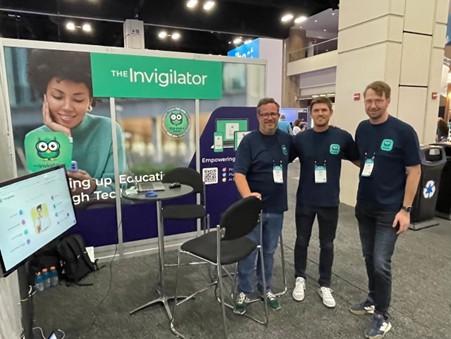
South African education technology company The Invigilator, which provides secure remote exam solutions, has raised $11 million (approximately R195 million) to fuel its international expansion and enhance its AI-driven capabilities.

The funding round was led by Kaltroco, a privately held, family-backed investment firm based in Jersey, Channel Islands. The investment attracted additional backing from professionals in Nashville, Zurich, and Cape Town, reflecting growing global interest in the startup’s technology. Kaltroco’s structure allows for long-term, flexible investment support without external constraints.

Founded in 2020, The Invigilator was created to tackle academic integrity challenges, especially in resource-limited settings. Its platform is used by over 100 educational institutions, including Varsity College, Regenesys Business School, Curro Academy Schools, Eduvos, and Boston City Campus, enabling cost-effective, secure exam monitoring. Earlier this year, the company introduced an AI-powered feature that analyzes student submissions to detect potential over-reliance on AI tools, helping educators maintain evaluation credibility.

The company plans to use the capital to further develop its AI monitoring technology, add multilingual support, expand teams in international markets, and deepen partnerships with schools and corporate clients across North America, Europe, Asia, and the Middle East.

CEO Nicholas Riemer said the investment will accelerate the company’s move toward continuous AI-driven assessment monitoring, expanding access to secure education globally. The Invigilator aims to establish itself as a leader in AI-based remote assessments while highlighting African innovation on the world stage.


iXAfrica Secures RMB Financing to Fast track 20 MW of Growth at its Nairobi Campus

0

iXAfrica,” a carrier-neutral, AI-ready Data Centre closed a multi-tranche funding package from Rand Merchant Bank (RMB), a division of FirstRand, to deliver the next phase of iXAfrica’s growth.

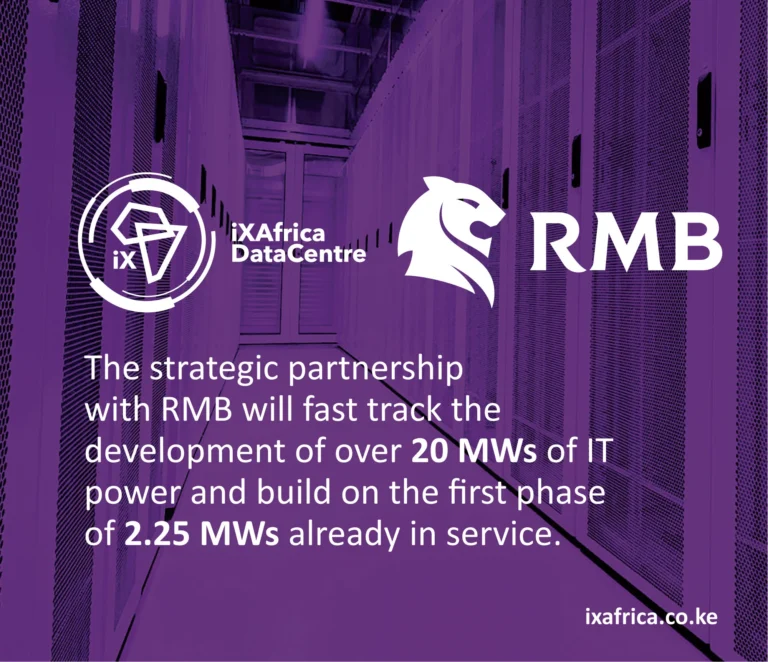
The financing enables iXAfrica to meet the region’s growing digital demands by facilitating the construction of an additional 20 MW of IT power at the Nairobi data centre campus. It will support the company’s expansion and build on the first phase of 2.25 MW already in service.

RMB developed a customised solution for iXAfrica, marking the beginning of a new relationship and underscoring RMB’s commitment to partnering with high-quality clients across Africa.

“Our company has bold plans and ambitions, and we’ve been consistently delivering on them,” says Guy Willner, Chairman of iXAfrica. “Closing this financing with RMB secures our next phase of growth and positions us to welcome more hyperscale and AI customers. We remain committed to expanding our East African footprint and deepening our investment in Kenya.”

“This transaction reflects RMB’s commitment to supporting scalable, high-impact digital infrastructure across Africa,” says Corrie Cronje, Senior Transactor RMB.

With Nairobi One Campus’s overall design capacity of 22.5MW, iXAfrica has the largest datacentre project in the greater East African region, serving a total population of over 300 million people. The campus is situated close to the main fibre optic communications arteries and is in close proximity to major and resilient electrical connections, capable of delivering high-availability and low-carbon power. iXAfrica is also able to power the high-density AI workloads as high as 40 kW per rack using its free-air cooling technology and over 90% of Kenya’s electricity is generated from renewable/clean energy sources.


Kenyan Fintech Raise Shuts Down, Users Migrate to Carta

0


Raise, the Nairobi-based startup that digitized equity management for African startups, is closing after seven years of operation, transitioning its users to Carta, the U.S.-based equity management platform.

Founded in 2018 by Marvin Coleby, Tina Nyamache, and Eugene Mutai, Raise aimed to simplify cap table management, equity issuance, and due diligence for startups in Kenya and Nigeria. Despite backing from early-stage investors such as 500 Startups, Microtraction, and Launch Africa, the company struggled to develop a scalable business model in Africa’s emerging venture ecosystem.

Marvin Coleby said in a LinkedIn post that while private equity presented opportunities, it was not enough to sustain the platform long-term. Paid Raise users will migrate automatically to Carta, while free-tier users can transition to Carta Launch, a no-cost option for early-stage startups. Coleby will join Carta as Head of Product for Asia, Middle East, and Africa (AMEA), though the future of Raise’s staff is uncertain.

Raise gained traction after its 2019 alpha launch, and by mid-2020, had facilitated more than $20 million in fundraising transactions. At its peak, the platform supported over 200 companies, managing roughly $150 million in equity, with total startup valuations exceeding $90 million. Clients included Nestcoin, Numida, Accrue, and Workpay.

In 2023, Carta invested in Raise, bridging Raise’s local expertise with Carta’s global infrastructure. The shutdown highlights the challenges of scaling venture-focused fintech in Africa while cementing Carta’s growing presence in the continent’s startup ecosystem.

Tanzanian Fintech NALA Targets Kenya’s $5 Billion Remittance Market via Partnerships

0

Tanzanian fintech NALA is making a strategic push into Kenya, bypassing the Central Bank licensing route by partnering with Equity Bank and Pesalink, the instant payments platform owned by the Kenya Bankers Association. The move positions NALA to tap into Kenya’s booming remittance market, which reached $4.94 billion in 2024, the country’s second-largest source of foreign currency.

Under the partnership, funds sent via NALA are routed through Pesalink’s instant payment rails and settled by Equity Bank, allowing recipients to access money in real time via mobile wallets or bank accounts. The arrangement offers a shortcut to market, enabling NALA to compete with entrenched players including Safaricom’s M-PESA, Western Union, MoneyGram, and local banks with established diaspora networks.

Founded in 2017 by Benjamin Fernandes, NALA has built a strong user base in the US, UK, and Europe—key sources of remittances to Kenya. COO Nicolas Eddy said the partnerships are central to the company’s strategy of reducing fees and accelerating cross-border payments. Analysts note that the move reflects a broader trend of fintechs leveraging local partnerships to sidestep regulatory delays while expanding rapidly across Africa.

Officials described the deal as a growth lever for financial inclusion. Kenn Lisudza of Pesalink said it will enhance “inclusion and reliability” in cross-border transactions, while Equity Bank’s Samuel Ireri framed it as part of the bank’s Africa Recovery and Resilience Plan, aimed at driving economic growth.

With a foothold in Kenya, NALA now faces the challenge of competing on speed, cost, and customer experience in a market dominated by established digital and bank-led remittance channels. Success here could signal a new wave of fintech cross-border expansion in East Africa.

Betika Denies Experiencing Any Cyber Security Breach

0

Betika, a betting firm operating in Kenya, has denied being hacked, despite reports that a certain university student hacked it leading to an alleged loss of lost KSh11 Million.

“We acknowledge receipt of various media inquiries regarding a purported cyber security breach involving Betika and wish to provide clarity on the matter,” the firm said in a statement. “At the onset, we would like to unequivocally state that Betika has not experienced any cyber security breach, nor has the company lost KSh11 Million as has been suggested.”‘

The firm says it is neither a complainant nor a victim in the matter currently before the courts. This fact can be independently verified with the Directorate of Criminal Investigations (DCI), who are handling the case, added the firm.

Betika added that it employs advanced, multi-layered security systems including encryption, intrusion detection, continuous monitoring, and regular third-party audits and its systems cannot be hacked easily.

The firm added that these measures ensure the highest standards of privacy and data security for all customers.

“Our systems remain uncompromised, and customer data has not been breached. We strictly adhere to global best practices in information security as well as relevant data protection regulations,”said the firm.

As part of its ongoing investment in cyber resilience, the firm continues to enhance its infrastructure, conduct frequent audits, train its teams, and engage with regulators and law enforcement to stay ahead of evolving threats.


Nigeria’s Babban Gona Raises $7.5M from British International Investment to Boost Food Security

0

Nigerian agri-tech platform, Babban Gona, has received $7.5 to boost food security and climate resilience for smallholder farmers in Northern Nigeria.

The debt investment was from British International Investment (BII), the UK’s development finance institution and impact investor, to help Babban Gona to provide farmers with high-quality agricultural inputs, financial credit, training on climate-smart practices, and support with harvest, storage, and access to market.

According to Kola Masha, Babban Gona’s Managing Director, “We are thrilled to have BII partner with us in this next phase of our journey as we accelerate the impact of our work, with the ambition to become the Earth’s highest-impact business.”

Northern Nigeria produces 50-60 per cent of the country’s maize but smallholder farmers face persistent challenges that limit their productivity and income. Many cultivate small plots of land, with limited access to finance, quality inputs, agronomic training, and reliable markets. These constraints are compounded by growing exposure to climate risks such as floods and droughts, which further threaten yields and income stability. These challenges contribute to post harvest losses of up to 30 per cent, worsening food insecurity across the region.

UK Trade Envoy to Nigeria, Florence Eshalomi MP, said: “Today, I’m proud to stand alongside British International Investment (BII) as we announce a $7.5 million investment into Babban Gona, a pioneering social enterprise transforming smallholder agriculture in Nigeria. This investment will help scale an innovative, tech-enabled model that empowers farmers with access to finance, training, and services, boosting yields and incomes while building climate resilience.”

Babban Gona aims to end this by helping farmers establish and run their own micro-enterprises which provide farmers with inputs and working capital financing. Babban Gona later supports these enterprises to access funding from local banks.

Babban Gona also provides climate-smart agricultural inputs such as drought-resilient seeds and multi-peril area yield insurance, which helps farmers recover from climate shocks.

216 Capital Invests in Addvocate AI to Revolutionize Sales Performance Through AI

0

216 Capital has invested into Addvocate.AI, a Franco-Tunisian startup specialized in optimizing sales performance with artificial intelligence.

Addvocate.AI, the startup redefining intelligent sales will use the funds to help firms manage and optimize their sales and enter a new era of smart automation.

“With the support of 216 Capital, we are equipped to stay ahead, breaking through the limits of traditional CRM and delivering a solution built for impact, not for data entry.” explains Ridha Mami, CEO & Founder of Addvocate.AI.

According to McKinsey, between 35% and 50% of sales opportunities stagnate in pipelines, slowing company growth. This is how Addvocate.AI was born: a copilot designed to prepare salespeople for their meetings through AI and data consolidation.

Mami identified a major gap in supporting sales teams after more than fifteen years as a Sales Leader in B2B SaaS scale-ups, after he kept witnessing the same scenario: countless hours wasted preparing for client meetings, compiling scattered information, and above all seeing entire deals stall without any clear explanation, threatening business predictability.

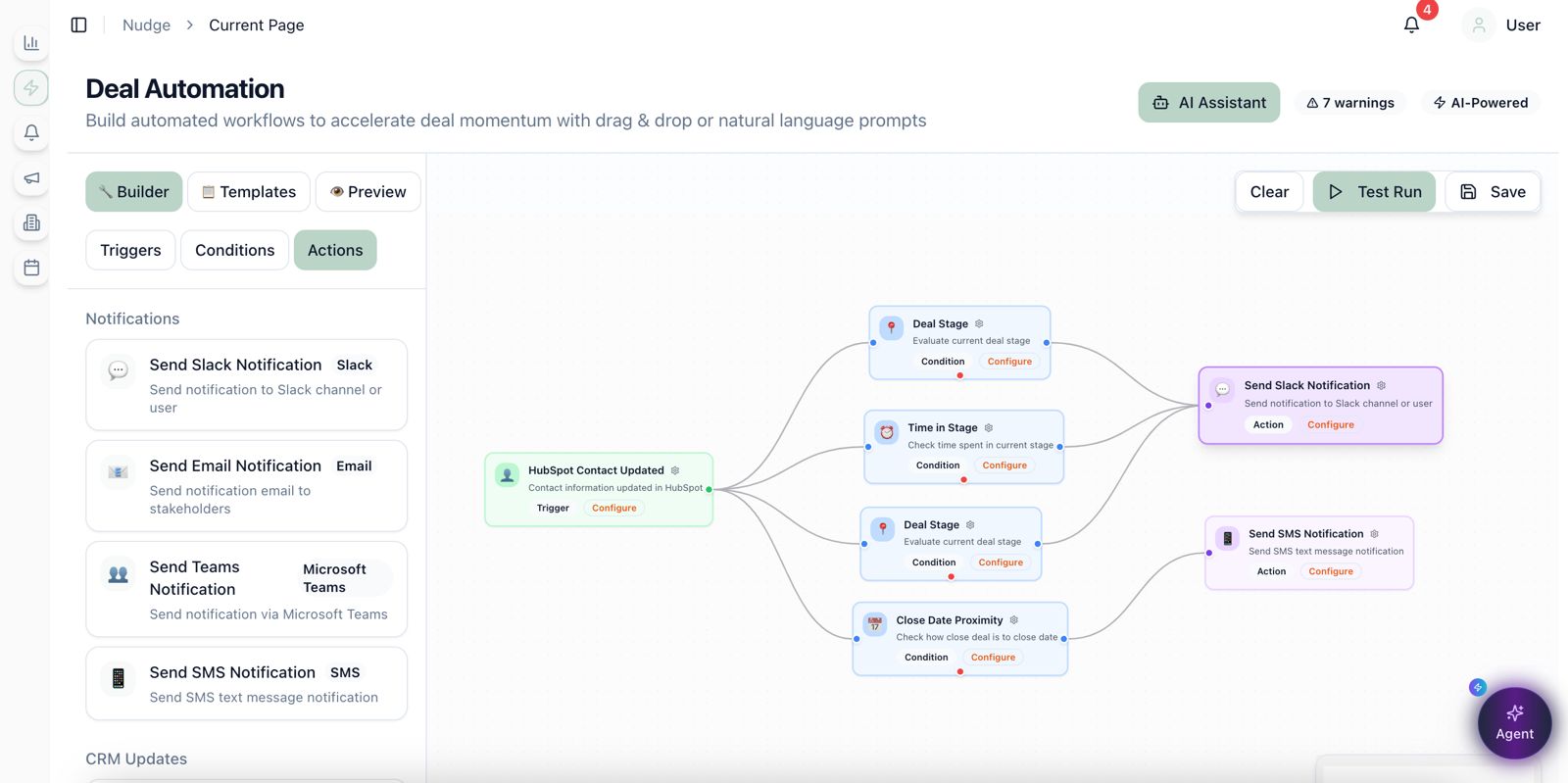
The startup stands out due to its AI-native architecture, a “Sales Performance OS” that aggregates data, a design centered on natural adoption by sales teams through behavioral nudges and actionable insights that help teams better anticipate and maximize results.

Dashboard Nudge by Addvocate AI - Kit 216 Capital.jpg

Where Addvocate initially addressed the symptom (preparation), Nudge tackles sales performance before, during, and after meetings. With this approach, Addvocate.AI becomes a trusted partner for salespeople, making their meetings more productive, focused, and effective, while maximizing the chances of closing or quickly moving opportunities forward in the pipeline.

Toward international expansion

Based in France and Tunisia, Addvocate.AI takes a decisive step forward with this funding. From a sales preparation tool, it is becoming an integrated sales performance platform capable of addressing the challenges of modern business.

“This strategic investment from 216 Capital marks a key milestone for Addvocate.AI, enabling it to accelerate innovation and international expansion, with the goal of sustainably transforming sales performance through AI-native solutions designed around sales team efficiency,” says Dhekra Khelifi, Partner at 216 Capital.

Addvocate.AI is now positioning itself as a pioneer in intelligent sales, strengthening its lead in a rapidly evolving global market.

Morocco’s Justyol Raises $1 million to Transform Digital Commerce Across North Africa

0

Justyol, Morocco’s cross-border e-commerce platform, has raised $1 million in funding to transform ecommerce across North Africa and to scale its product offerings and meet growing customer demand across the region.

Danis Group, a major Turkish investment group, is providing $600,000 in inventory financing while $400,000 is a strategic equity investment from a distinguished angel investor.

“The confidence shown by our angel investor and the strategic inventory financing partnership with Danis Group reflects the broader ecosystem’s recognition of Justyol’s unique position in the market,” said Ahmed Badran, Co-Founder and CEO of Justyol. “We are building more than just a platform; we are creating the infrastructure that will define the future of cross-border commerce in North Africa, serving hundreds of thousands of customers with unprecedented access to global products at competitive prices.”

With the funds, Justyol aims to expand across multiple fronts, increase its operational capacity and enhance its sales capabilities to serve its customer base and deepen its market penetration in Morocco.

Justyol will also expand into new markets across North Africa and the broader MENA region.

Justyol’s Turkish team brings deep expertise in e-commerce operations and strategic partnerships, while its Moroccan team provides essential local market knowledge and customer insights that drive our regional expansion.

With over 250,000 active customers, representing significant market penetration and more than 30,000 monthly orders with exceptional 300% year-over-year growth, the firm has established relationships with leading global platforms including AliExpress and Trendyol and logistics providers such as Aramex, Cathides, and Colis Privé and payment integrations with CMI and Payzone.

“This milestone package, combining strategic angel investment with Danis Group’s inventory financing, provides us with both the capital and operational support to accelerate our expansion across North Africa. Stay tuned for exciting developments as we continue to build the future of e-commerce in the region,” said Ahmed Rashed, Co-Founder & Chief Growth Officer of Justyol.

The firm is now actively preparing for a Series A funding round in the near future due to its proven growth trajectory, expanding market presence, and strong ecosystem support position it well for this next phase of scaling.

“With this new support, we will further strengthen our logistics network to ensure faster, more reliable deliveries across Morocco and beyond,” added Anas Ahmed, Co-Founder and Head of Logistics at Justyol.

Bharti Airtel’ Indus Towers to Launch in Nigeria, Uganda & Zambia

0

Bharti Airtel’ Indus Towers Bets Big on Africa, Challenging ATC and Helios

Bharti Airtel’s tower arm, Indus Towers, is making its first international push into Africa with three of Africa’s most dynamic telecom markets Nigeria, Uganda, and Zambia.

Indus Towers is using these markets as its launchpad for its continental expansion, with Airtel Africa as its anchor customer coming head to head with American Tower Corporation (ATC) and Helios Towers who have dominated Africa’s passive infrastructure business, leasing thousands of sites to Airtel, MTN, and other operators.

Now, Indus wants a piece of that action and it’s bringing deep pockets, strong balance sheets, and the home advantage of Airtel’s 169.4 million customers across 14 African markets.

Why Now?

Indus Towers’ financials have turned a corner. The company generated $187 million in free cash flow in the June 2025 quarter, after cash-strapped Vodafone Idea finally settled most of its long-standing dues. Instead of rewarding shareholders with dividends, Indus’ board has chosen to reinvest in growth and Africa, with its young population and explosive mobile adoption, is the target.

“Recognizing the growth potential in emerging geographies, the Board has approved the Company’s foray into African markets,” Indus said in a filing, signaling it sees infrastructure demand on the continent as a once-in-a-decade opportunity.

The Competitive Landscape

ATC has been Airtel Africa’s go-to tower partner since 2022, while Helios Towers has long had a strong foothold in markets like Tanzania, DRC, and Ghana. Together, they’ve carved up a market where operators prefer asset-light models, selling towers and leasing them back to cut costs.

Indus’ late entry won’t be easy. But it has a unique angle: it’s tied directly to Airtel, one of Africa’s fastest-growing operators, giving it a guaranteed anchor tenant from day one. The company will need to prove it can compete on efficiency, reliability, and cost in environments where power supply is patchy, logistics are complex, and political risks remain high.

Airtel’s African Strategy and Indus’ Role

Airtel has doubled down on Africa as a growth engine, with mobile money, data, and digital services powering subscriber growth. But these services rely heavily on network quality and reach and that’s where Indus comes in.

By building and managing towers in Airtel-heavy markets, Indus could cut Airtel’s reliance on third-party providers like ATC, reduce leasing costs, and tighten strategic control. In the long run, Indus could even expand beyond Airtel, offering services to MTN, Orange, and other operators to fully establish itself as a continental player.

The Stakes

Africa’s tower market is projected to grow in double digits as 4G and 5G rollouts accelerate and mobile money becomes mainstream. Whoever controls the tower grid will hold the keys to the digital economy.

“By leveraging our expertise in delivering innovative and cost-effective solutions, we are well-positioned to differentiate ourselves in Africa’s fast-growing telecom market and emerge as the preferred tower company,” said Indus Towers CEO Prachur Sah.

The challenge will be proving that an Indian tower giant can adapt to Africa’s unique on-the-ground realities while fending off entrenched competitors with deep local networks.

For Airtel, Indus’ entry is more than a corporate reshuffle it’s a strategic move to bring a trusted ally closer to the heart of its African growth story. For ATC and Helios, it’s the start of a battle to defend their turf.


Intella Raises $12.5 Million to Launch Ziila, its Conversational AI Agent

Intella, the Egyptian-founded Arabic Arabic speech intelligence startup, has closed $12.5 million to launch its new conversational AI agent, Ziila, to work in tandem with its intellaCX analytics product.

The Series A round was led by Prosus, with participation from 500 Global, Wa’ed Ventures, Hala Ventures, Idrisi Ventures and HearstLab, the investment arm of Hearst Corporation. With today’s round announcement, the company has raised over $16.9 million in funding.

“From day one, our vision has been to bridge the gap between global AI advancements and the Arabic-speaking world,” said Nour AlTaher, Co-founder and CEO of Intella. “This funding allows us to accelerate our goal of helping every enterprise in the region transform their customer conversations from dark data into a strategic asset.”

Ziila’s launch will create a complete product suite that enables enterprises to both analyse conversations and build next-generation, voice-based customer experiences. With the funding, Intella will double down on R&D, product expansion, and hire new AI talent.

Founded in 2021 by CEO Nour Taher and CTO Omar Mansour, Intella offers enterprise-grade transcription, analytics, and AI-powered customer engagement tools for more than 25 dialects.

Intella supports enterprises across the MENA region, spanning sectors such as finance, telecommunications, and government. Jumia is one of its customers.

“The market opportunity in MENA is enormous, with over 7,500 companies and organisations operating across the region and Arabic being the fifth most spoken language globally,” said Robin Voogd, Head of Middle East Investments, Prosus Ventures.

Further, intella will use the funding to solidify its market leadership and expand its technological edge. The capital will be strategically deployed to launch its new conversational AI agent, Ziila, to work in tandem with its intellaCX analytics product. This creates a complete product suite that enables enterprises to both analyse conversations and build next-generation, voice-based customer experiences.

“This round is a catalyst for our product roadmap,” added Omar Mansour, Co-founder and CTO of Intella. “Our models already set the benchmark for Arabic accuracy. Now, we’re focused on building truly intelligent, Arabic-first conversational agents capable of multi-turn dialogue and contextual understanding—redefining how enterprises engage with their customers.”

Munify Raises $3 Million to Build Cross-Border Digital Bank for Egyptians Abroad

Cairo-based fintech Munify has raised $3 million in seed funding to expand its mission of making global banking and payments radically more accessible for Egyptians abroad. The round was led by Y Combinator, with participation from BYLD, Digital Currency Group, and other strategic investors.

The funding coincides with Munify’s graduation from Y Combinator’s Summer 2025 batch, making it one of the few fintech companies from the MENA region to join a cohort dominated by artificial intelligence startups.

“Remittance flows are one of the most critical financial lifelines for Egypt, yet millions still face costly, slow, and fragmented services,” said Khalid Ashmawy, Founder and CEO of Munify. “We’re building the infrastructure to make global banking and payments radically more accessible for Egyptians, wherever they live.”

Founded in 2024 by Khalid Ashmawy—a former Microsoft and Uber executive and co-founder of proptech platform Huspy—Munify is building a cross-border digital bank tailored to Egyptians overseas.

The platform offers instant, low-cost remittances to Egypt, access to U.S. bank accounts and debit cards and currency hedging tools to protect against volatility in the Egyptian pound.

Munify is already live in the U.S., U.K., Europe, and the GCC, targeting freelancers, SMEs, and Egyptians abroad who frequently face high remittance fees and long settlement times.

The fresh capital will be invested in scaling Munify’s engineering and compliance teams, strengthening regulatory and banking partnerships, and expanding into new markets.


Oxford University Hosts VCs to Strengthen Africa’s VC Landscape

0

Oxford University’s Saïd Business School is hosting the Africa Venture Finance Programme (AVFP), taking place from 1–5 September 2025 to strengthen the venture capital landscape in Africa.

The in-person executive programme dubbed Boost Africa brings together more than 40 of Africa’s leading venture capital fund managers — nearly half of them women — for a week of peer learning, skills development, and strategic dialogue.

The programme was created to unlock Africa’s entrepreneurial potential by providing technical support to fund managers and addressing an early-stage financing gap.

“Boost Africa is about more than just finance – it’s about building resilient economies, fostering innovation and creating inclusive growth through smart, targeted investment,” said EIB Vice-President Ambroise Fayolle.

Now in its fourth edition, the AVFP is delivered by Boost Africa — a program of the European Investment Bank’s development arm (EIB Global) and African Development Bank, with support from the European Commission and the Organization of African, Caribbean & Pacific States (“OACPS”) — and the AfricaGrow Technical Assistance Facility, funded by the German Federal Ministry for Economic Cooperation and Development (BMZ) through KfW/DEG.

Following this edition, over 150 of Africa’s most relevant venture capital fund managers will have participated in the programme, representing the lion’s share of active VC funds on the continent. These alumni form a vibrant and engaged community that continues to collaborate and exchange knowledge on an ongoing basis.

Investors, Development Finance Institutions (DFIs) including the EBRD, Proparco, the Arab Fund, FCDO, and British International Investment (BII) and the EU via the Global Gateway strategy will take part. Senior partners from three established VC firms include TLcom, Partech, and AfricInvest.

Africa receives only 1% to 2% of global venture capital while representing 18% of the world’s population. In addition, relatively few African-led startups receive significant funding.

Boost Africa is designed and led by Oxford academics equips fund managers with the tools, networks, and critical thinking needed to shape the future of capital on the continent. It isn’t about growing funds—it’s about reimagining what finance can do when it’s grounded in context, community, and long-term value creation.

The programme will offer early-stage funding and hands-on support to venture capital fund managers

Africa’s entrepreneurial ecosystem secured 487 deals in 2024, according to the African Private Capital Association. This included 427 venture capital deals with a value of $2.6 billion and 60 venture debt deals worth $1 billion.

The initiative has supported six private equity funds as well as more than 70 companies and mobilised over €380 million in capital for startups across the continent. Moreover, 94% of Boost Africa-supported founders were able to raise $1 million or more in funding – nearly double the rate of comparable entrepreneurs.


BFA Global, FSD Africa, ClimateWorks & FCDO Nigeria to Inject $1.1 Million into 12 Climate Startups

BFA Global, FSD Africa, ClimateWorks Foundation, and the UK’s Foreign, Commonwealth & Development Office (FCDO) Nigeria are committing $1.1 million into 12 startups developing solutions to protect communities from chronic heat waves.

Dubbed TECA Heat Action Wave (THAW), the new initiative addresses Nigeria’s escalating extreme heat crisis, now at least ten times due to human-caused global warming. Lagos, Kano, and Abuja experience heat indices above 50°C during peak months.

“Extreme heat represents perhaps the most overlooked consequence of climate change affecting Africa today,” said Juliet Munro, Early-Stage Finance Director at FSD Africa. “It’s not only a public health emergency, but a threat to livelihoods, productivity, and long-term economic resilience. Through this initiative, we’re making a strategic investment in African-led innovation, supporting scalable, context-specific solutions that deliver real impact where it’s needed most.”

THAW will support 12 early-stage ventures developing market-driven early warning tools, innovative financial instruments such as parametric heat insurance, emergency-centric finance tech, and ecosystem enablers and builders — tools and services that help individuals and small businesses operate more safely and efficiently in rising heat, preferably integrating early warning systems or fintech solutions.

The 12 will receive seed capital, venture-building support, and expert-led sprints on user research, product design, business modeling, and fundraising.

The program will run through mid-2026, culminating in demo days and investor events. High-performing ventures may qualify for reinvestment and tailored follow-on support through 2027.

“Extreme heat is silently eroding lives, productivity, and economic opportunity,” said Tyler Ferdinand, TECA Director at BFA Global. “Through TECA, we’re not only funding ventures, we’re embedding the strategic support, networks, and capital they need to transform survival into resilience.”

Implemented by BFA Global in partnership with FSD Africa, TECA aims to position Nigeria as a hub for scalable, investable climate innovations. Entrepreneurs are invited to apply to join the Heat Action Wave.

Naspers & Prosus Launch $100,000 Tech FoundHER Africa Challenge for Women-Led Startups

0

Naspers and Prosus have launched the Tech FoundHER Africa Challenge, inviting applications from women-led tech and tech-enabled startups across the continent.

Originally piloted in India earlier this year, the programme has now launched in Africa as part of the company’s commitment to championing and supporting female founders in technology.

Women represent 26% of Africa’s entrepreneurs, yet women-led startups receive less than 3% of venture capital funding, according to recent research by TechCabal Insights and the Africa Growth Fund. This funding gap, estimated at $42 billion, if closed, could unlock as much as $316 billion in GDP growth.

Phuthi Mahanyele-Dabengwa, South Africa CEO and Executive Director of Naspers and Prosus, said: “The Tech FoundHER Challenge is about closing one of Africa’s most urgent gaps in entrepreneurship – the lack of funding and visibility for women-led startups. Female founders are already proving that they can build competitive, tech-enabled businesses that drive growth and innovation. What they need now is the capital, networks, and market access to scale. By backing them, we are not only empowering individual entrepreneurs but unlocking economic opportunities that will benefit entire communities and the continent at large.”

Tech FoundHER Challenge will award three outstanding women founders operating in Africa with equity-free grants totalling US$100,000 to accelerate their growth. Beyond financial support, participants will gain access to senior mentors within the Naspers-Prosus ecosystem, curated networking opportunities, and enhanced brand visibility.

Women founders will benefit from having their businesses assessed by a high-calibre panel of executives, investors, entrepreneurs, and business leaders, providing valuable insights and visibility at the highest levels.

The six shortlisted founders will present at the Johannesburg Stock Exchange on 19 November 2025, coinciding with Global Women’s Entrepreneurship Day. This will be a unique platform to showcase their ventures, expand their networks, and connect with influential decision-makers.

The Tech FoundHER Africa Challenge will be conducted in partnership with Lionesses of Africa is a fast-growing, 1.8 million strong network of women entrepreneurs in Africa, providing access to resources, funding opportunities, and a powerful platform to share their business stories.

To apply, applicants must meet the criteria set out below. Applicants must be a startup focused on tech or tech-enabled products, have at least one-woman founder in a leadership position, be at or before Series B funding stage and be revenue-generating with proven market traction.

Applications open 1 September 2025 via the Lionesses of Africa website: click here

Six finalists will advance to the final stage on 19 November 2025, where winners will be announced.

Prajna Khanna, Chief Sustainability Officer at Naspers and Prosus said: “For women founders to succeed, access, capability, and visibility must come together. At Naspers and Prosus, we know strategic interventions are essential – and this challenge is designed to give proven women-led startups the platform, connections, and confidence to scale sustainably. After a successful launch in India, we are thrilled to bring the Tech FoundHER Challenge to Africa and unlock the extraordinary innovation and talent the continent has to offer.”

Google.org Injects $1M into Wits University’s MIND Institute

0

Google.org has awarded $2 million to Wits University’s Machine Intelligence and Neural Discovery (MIND) Institute in Johannesburg, South Africa to accelerate scientific discovery through external collaborations that enable real-world impact.

The funding will boost the Institute’s targeted capacity development and networking-building programmes across disciplines, and dialogue among academia, industry, policymakers and others.

According to Professor Benjamin Rosman, Director of The Wits MIND Institute, “The Wits MIND Institute was conceived to place African researchers at the forefront of the understanding and study of intelligence – natural and artificial. Google.org’s support cements our capacity to train talent, incubate disruptive ideas, and ensure our discoveries translate into societal benefit.”

Launched in November 2024 after more than a decade of Wits University’s investment in postgraduate education, capacity building, and pan-African AI initiatives, The Wits MIND Institute has rapidly become a hub for cutting-edge research and thought leadership. MIND Fellows and Chairs are already collaborating on more than 25 projects in domains from reinforcement learning to digital humanities. The MINDFund also provides targeted capacity and seed funding to novel research and is currently supporting five projects.

It recently launched its inaugural cohort of 34 MIND Fellows, among them various research Chairs and National Research Foundation-rated researchers from all Faculties and core Departments at the University — a truly cross-functional group that sparks transdisciplinary engagement and research.

By developing and deploying AI models and dictating policies that consider the culture and diversity of more than one billion people on the continent, the Wits MIND Institute will ensure that Africa has a seat at the global AI table.

“Wits University is proud to host The Wits MIND Institute, a bold experiment in converging natural and artificial intelligence research. This funding from Google.org reinforces our shared vision for enhancing Wits’ historical role, from the first computer to the RADAR, in placing South Africa, and the rest of Africa, at the cusp of technological development,” says Professor Zeblon Vilakazi, Vice-Chancellor of the University of the Witwatersrand.

Researchers and stakeholders are invited to engage with The Wits MIND Institute’s growing ecosystem. Sign up to learn about the Institute’s events and opportunities, and look out for the next MIND Fellows cohort application in September 2025.

The Machine Intelligence and Neural Discovery (MIND) Institute at the University of the Witwatersrand is an African-based interdisciplinary AI research hub that aims to advance the scientific understanding of both natural and artificial intelligence, foster breakthrough research and technological innovation, invest in developing a crucial mass of African AI expertise, and establish responsible policies for systemic, sustained impact both locally and globally.

WheelsOn Raises $12.5M to Disrupt the UAE’s Traditional Car Rentals

0

WheelsOn, the UAE’s mobile-first car rental platform, has closed a $12.5 million funding round to expand WheelsOn’s fleet, speed up product development, and grow its market presence.

The funding included $2.2 million in equity from a group of MENA-focused private investors, including partners of Xploration Capital, $6.5M for a fleet expansion round and $4M financing from local banks.

This latest round brings WheelsOn’s total funding to $12.5 million, pushing its valuation near $30 million.

According to Maxim Olivson, CPO at WheelsOn,“Our mission is to rethink car rentals by offering full transparency, digital convenience, and a product that puts users in control. We remove deposits completely, eliminate paperwork and counter queues, and give customers a seamless experience all through our intuitive mobile app and website,” 

WheelsOn is working on advanced AI tools for dynamic pricing, vehicle personalisation, insurance, and rental periods based on user preferences. Upcoming tech features include digital car keys, enabling renters to unlock vehicles directly via smartphones for a contactless rental.

Founded in 2023 by Nikolay Melnichuk, Partner at Xploration Capital, and Adlet Shagirov (Co-Founder & COO), and later joined by Maxim Olivson (CPO), WheelsOn was created out of frustration with the traditional car rental experience. In the UAE, for instance, customers still face steep security deposits, hidden fees, and lengthy paperwork, making the process stressful for locals, expats, and tourists.

Unlike aggregator platforms, WheelsOn owns and directly operates its entire fleet, controlling the complete rental experience to ensure consistent vehicle quality, transparent pricing without hidden fees, and reliable service. The company’s proprietary fleet management and vehicle tracking system monitors each vehicle in real-time, enabling proactive maintenance scheduling and operational transparency that safeguards customers and improves fleet availability.

This technological backbone is a key reason why WheelsOn can eliminate the need for large security deposits and reduce hidden costs: better fleet control and data-driven operations translate into less risk and more trust between renters and the company. WheelsOn’s technology also powers an enhanced customer support loop, integrating user feedback directly into product and service improvements, ensuring rental issues are swiftly addressed and customer satisfaction remains high.

WheelsOn plans to strengthen its footprint in the UAE and expand to other Gulf countries where travellers and residents face similar rental frustrations. it’s presently available in  English, Arabic, Chinese, and several European languages, including French, Italian, Spanish, and German.

WheelsOn caters to locals seeking flexible monthly rentals, business customers who require premium cars or chauffeured vans for events, and tourists looking for convenient airport or hotel delivery.

Bolt Market, Bolt’s Grocery Delivery Arm Records 300% Growth Since Launch

0

Bolt Market, the grocery delivery arm of mobility platform Bolt, has recorded 300% growth in orders since launching in December 2024.

The firm says this is due to rising demand for fast, affordable, and reliable grocery delivery in Kenya. Bolt Market promises average delivery times just over 15 minutes, and is standing against Glovo, GoBeba, UberEats and a number of other delivery platforms.

According to Edgar Kitur, General Manager of Bolt Food, “The reception of Bolt Market has exceeded our expectations. Kenyans want affordability without sacrificing convenience, and Bolt Market delivers exactly that. The rapid growth since launch confirms we are solving a real need. Looking ahead, our ambition is to expand coverage to more towns and neighbourhoods, ensuring even more people can access seamless, cost-friendly grocery delivery.”

Launched in December 2024, the grocery delivery service aimed at tapping into Kenya’s growing online on-demand grocery delivery for shopping, food and essentials and take on competitors UberEATS, Glovo, GoBEBA among others. The service is an extension of the Bolt Food app and allows customers to order food and make grocery delivery orders from 8:00 am to 11:00 pm as well as schedule their essentials and grocery delivery 24 hours in advance.

The platform allows users to order fresh produce, household essentials, and pantry staples with just a tap of a button. Kenya also has a rising demand for doorstep delivery, due to the expansion of retail partnerships to include both large retailers and local stores; giving customers access to a curated mix of over 3,500 products.

Bolt wants to expand Bolt Market’s delivery coverage into new towns nationwide by the end of 2025. By connecting households to both large chains and local merchants, the service is not only simplifying shopping but also supporting the growth of Kenya’s retail ecosystem.

Bolt Market underscores Bolt’s commitment to redefining urban convenience in Kenya, saving people time, money, and effort while shaping the future of how cities shop.

These Builders & Investors to Share Their Experiences at 12th Angel Fair Africa

0

 African builders and investors will be sharing their remarkable experiences at the 12th Angel Fair Africa (aka AFA@12) themed “Building and Investing in Africa” at the Google NYC office on 19th September 2025.

Iyinoluwa Aboyeji, Managing Partner of Accelerate Africa and a two-time unicorn co-founder of Andel and Flutterwave, Barbara Iyayi, co-founder of Liquid Credit who doubles up as an investor – both from Nigeria with Barbara now based in NY. Benjamin Fernandes, CEO of NALA and founding partner of P1 Ventures from Tanzania, Alexandre N’djore, CEO of Digitech from Cote d’Ivoire and moderated by Otema Yirenkyi of Nviron Hive from Ghana.

The investors panel has Candice Morgan from Black Angel Group, USA, Steven Grin from Lateral Frontier, USA, Achumboro Ataande from Ataande & Advisors, Ghana, Dr. Ola Brown from HealthCap Africa, Nigeria moderated by Tinyiko Valoyi from Chanzo Capital, South Africa.

The builders will be sharing their experiences of building ventures, funds, accelerators and incubators on the continent from ground up. These experiences will serve as inspiration for the founders who would be pitching. The investors would be sharing their criteria and requirement for selecting founders as well as their experiences from their portfolio companies. These panels would be interspersed with the pitches from the ten founders.

The day will start with a keynote fireside involving Arcangel Esther Dyson of Term Limits, USA in conversation with Eric Osiakwan from Chanzo Capital, Ghana. Esther’s unique investment experience spans the US, Europe and Africa. Her upcoming book “Term Limit” would be worth reading in 2027 but snippets would be out in the fireside chat.


Keja Move Adopts AI to Introduce a New Era of Moving Services in Nairobi

Founded with the mission to simplify relocation, Keja Move has adopted an AI-powered instant quoting system to simplify the moving and relocations businesses in Kenya.

The AI tool powers the firm’s customer support for seamless communication, has an digital inventory tracking to log household items before and after moves; and an online booking and tracking tool for real-time updates. Among the most trusted movers in Nairobi, the firm is combining professional service with modern technology to ensure every customer enjoys a safe, affordable, and stress-free moving experience.

A New Era for Moving Services in Nairobi

Relocating homes or offices in Nairobi has often been stressful. From unreliable movers to hidden costs, many Kenyans have experienced challenges when hiring moving companies. Keja Move is solving all that.

www.kejamove.com
Kejamove helps you move houses in an easy credible and convenient way.

Why Customers Choose Keja Move

Thousands of clients have already discovered the Keja Move difference:

  • Professional Movers in Nairobi – A trained crew that handles every item with care.
  • Affordable Relocation Services – Transparent pricing with no hidden costs.
  • Customer-Centered Service – Tailored moves to fit schedules and budgets.
  • Wide Coverage – Whether moving within Nairobi, across counties, or across borders.

“Keja Move made my house move in Nairobi so easy. The team was on time, professional, and nothing was damaged. I highly recommend them.” – Verified Customer

Technology Driving Better Moving Experiences

Unlike traditional moving companies in Kenya, KejaMovers leverage technology to enhance customer service:

  • AI-powered instant quoting system.
  • Customer support tools for seamless communication.
  • Digital inventory tracking to log household items before and after moves.
  • Online booking and move tracking for real-time updates.

This innovation makes the platform a pioneer in Nairobi’s moving industry, giving customers peace of mind.

Affordable and Reliable Movers in Nairobi

Cost is always a concern when moving as it provides clear and competitive rates with no surprises. Services include:

– House moving (bedsitters to multi-bedroom homes).
– Office relocation tailored for businesses.
– Packing, wrapping, and unpacking services.
– Furniture and appliance protection during transit.

Customer Reviews & Testimonials

Positive feedback continues to highlight the firm’s professionalism and customer-first approach:

– “Best movers in Nairobi – reliable and affordable.”
– “The team was professional and careful. Stress-free moving!”
– “I’ve used Keja Move twice, and I wouldn’t trust anyone else with my relocation.”

Conclusion: Nairobi’s Trusted Movers

Whether you’re moving across Nairobi or to another part of Kenya, Keja Move has become the go-to relocation partner for thousands of satisfied customers. By combining professionalism, affordability, and technology, Keja Move is redefining how Kenyans experience relocation.