
back to top
Thursday, April 2, 2026
spot_imgspot_imgspot_imgspot_img
Home Blog Page 23

Djibouti Telecom to Extend DARE1 Cable From Kenya to South Africa

0

Djibouti Telecom has announced that it will extend its Djibouti Africa Regional Express 1 (DARE1) to South Africa by 2028 just a day after Meta announced it had invested in Daraja, Safaricom’s fiber optic cable network.

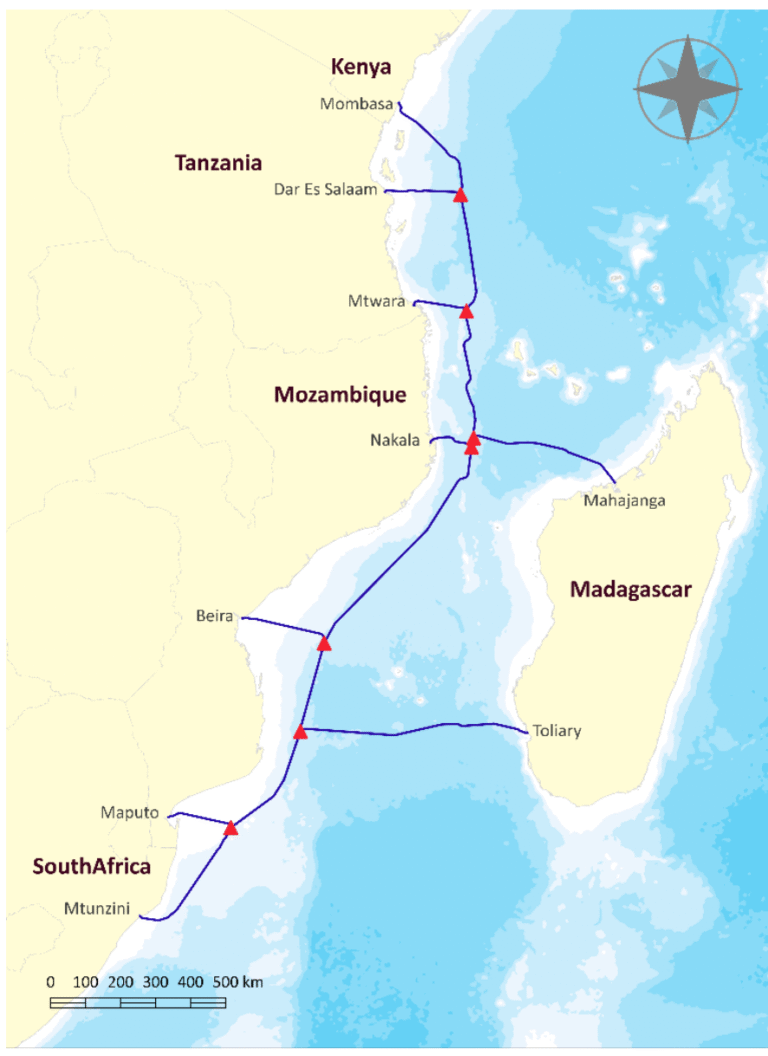
The cable will link Mombasa to Mtunzini in South Africa, with branches planned for Tanzania, Mozambique and Madagascar and will add new capacity and route diversity between East and Southern Africa.

Launched in 2021, the DARE1 system currently stretches from Djibouti City to Bosaso and Mogadishu in Somalia, and to Mombasa, Kenya, offering 36 terabits per second across three fibre pairs.

The planned 3,200–3,500 km extension will run from Mombasa to Mtunzini, South Africa, with new landing points in Tanzania (Dar es Salaam, Mtwara), Mozambique (Nakala, Beira, Maputo), and Madagascar (Mahajanga, Toliary), the company said Thursday.

Djibouti Telecom said the expansion will transform DARE1 into a “regional African cable,” delivering additional capacity, lower latency, and greater resilience for carriers, enterprises, and cloud providers. Construction is expected to begin in 2026, with the system targeted to go live in 2028.

The DARE1 consortium currently includes Djibouti Telecom, Hormuud Telecom Somalia, Somtel International, and Telkom Kenya.

Telkom Kenya which is the Kenyan partner said the DARE1 is a 36TB cable expected to  provide additional transmission options in the country and the greater East Africa region. As an $86 M investment, the DARE 1 sub-sea cable is a 3-fiber pair, with a capacity of 36TB each. Kenya has access to both, one an express route from Djibouti to Mombasa and the second one terminating into Somalia and then Kenya.

The DARE 1 idea was mooted in 2018, paving way for a year-long planning process to chart the cable route from Djibouti to Kenya. By March 2019, the process towards the reception of all the requisite territorial and environmental permits was well underway and concluded in October 2019, when cable laying experts, SubCom began the manufacture of the cable. The process of building and laying of the DARE 1 cable has been ongoing for the past three months before its landing in Mombasa, today. Telkom Kenya will now take up the task of laying and managing the inland fiber optic cabling to various terrestrial locations across the country.


Meta Backs Safaricom’s $23m Daraja Subsea Cable to Boost Kenya’s Internet Capacity

0

Meta Platforms Inc.’s affiliate Edge Network Services will help finance and take a stake in Safaricom PLC’s new 4,108-kilometre Daraja subsea cable, a system linking Oman to Mombasa that is set to go live in 2026.

Regulatory filings show Safaricom as the project proponent, with Kenya’s Communications Authority already reviewing its application for landing rights. The Kenyan segment of the build is expected to cost $23 million.

The Daraja system is being designed with 24 fibre pairs—well above the eight to 16 typically deployed—allowing Safaricom to expand bandwidth for 4G, 5G, and fixed broadband users. Undersea cables carry about 95% of global internet traffic.

For Safaricom, East Africa’s largest telecom operator, Daraja will diversify capacity and reduce reliance on third-party providers such as SEACOM and Telkom Kenya, which currently handle most of Kenya’s subsea landings. Safaricom’s SEACOM agreements are due to expire in June 2028.

The investment underscores Meta’s broader push into subsea infrastructure, including its Project Waterworth system, and comes as rivals like Google also increase cable deployments touching Africa.

The rollout lands amid heightened competition from satellite broadband providers such as Elon Musk’s Starlink and new cable activations by Airtel Kenya, alongside government-driven digitisation and rural connectivity projects.

If executed on schedule, Daraja is expected to lift Kenya’s internet capacity and reliability, potentially reshaping pricing and service performance in a market where Safaricom already leads fixed broadband share and counts mobile data as its fastest-growing revenue line.


Communications Authority of Kenya Cracking Down Unlicensed Parcel & Courier Service Providers

0

Communications Authority of Kenya (CA) has extended its crackdown on unlicensed parcel and courier service providers in a move to ensure compliance with the law in the provision of postal services in the country.

The Communications Authority of Kenya (CA) extended its crackdown on unlicensed parcel and courier service providers to Mombasa, leading to the arrest and arraignment in court of five (5) individuals.

The five were arrested on Tuesday August 26th, 2025 during an operation at Mwembe Tayari and Bondeni Bus stages in Mombasa City, undertaken by the Authority and the National Police Service. The crackdown targeted Zahara Parcels and Courier, Maslah Parcel Services, Simba Parcel Services and Mombasa Raha Bus Company, which have been operating without a postal and courier license from the Authority.

The suspects were arraigned at the Mombasa Law Courts Thursday, for operating postal services without a valid licence contrary to section 49 (2) as read with section 49(3) of the Kenya Information and Communications Act no. 2 of 1998 and fined between KSh. 10,000 and KSh. 50,000.

The Mombasa raid followed a similar one a week ago in Nairobi, that led to the arrest of nine (9) people in the Eastleigh area.

The Authority urges firms wishing to engage in parcel and courier services to apply for the requisite licenses from our offices in Nairobi, Kisumu, Eldoret, Nyeri and Mombasa and cautions members of the public to seek parcel and courier services from CA licensed providers only.

Dealing with licensed parcel and courier operators safeguards consumers, ensures secure and reliable delivery, and supports lawful and sustainable growth of the sector.

Green Jobs and Skills Take Centre Stage at the second Africa Climate Summit (ACS2)

0

The second Africa Climate Summit (ACS2) is set to take place from September 8 to 10, 2025, at the Addis International Convention Centre (AICC) in Addis Ababa, Ethiopia. Jacob’s Ladder Africa (JLA) is playing a leading role in advancing the green jobs and skills agenda at the summit, with a focus on creating tangible employment opportunities linked to climate action.

Jacob’s Ladder Africa will spearhead two major engagements during ACS2. On September 10, it will host a high-level session at the Africa Pavilion in partnership with the African Union Commission’s Department of Education, Science, Technology and Innovation (AUC-ESTI)  to highlight strategies for developing Africa’s green workforce.

JLA will also host the Green Jobs & Skills Pavilion, a dedicated space running concurrently with the summit’s main events. The Pavilion is designed as an African-led, solutions-driven platform to address the urgency of solving climate vulnerability and unemployment among youth, women, and marginalized communities,  through green job creation. It will facilitate dialogue and innovation among diverse leaders, women, indigenous groups, private sector actors, civil society, and policymakers.

Sellah Bogonko, Co-Founder and CEO of JLA, emphasized the importance of concrete action: “Africa’s youth, women, and marginalized communities need real jobs and sustainable livelihoods, not empty promises. When supported, they become the innovators and changemakers advancing Africa’s green transformation.” She described the Pavilion as a call to recognize green jobs and skills as critical links between climate ambitions and economic justice.

The African Union Commission, through its Department of Education, Science, Technology and Innovation (ESTI), reaffirms that the green skills and jobs agenda is central to the recently adopted Continental Strategy for Technical and Vocational Education and Training (CTVET) 2025–2034. The Strategy prioritizes equipping Africa’s youth with future-ready skills to drive sustainable industrialization, climate resilience, and inclusive growth. As part of this commitment, the AUC will also be convening Africa Skills Week 2025 in October, which will foreground green skills development as a key driver of Africa’s economic transformation under the Decade of Education and Skills Development (2025–2034). This upcoming continental platform will build on the momentum of the Africa Climate Summit, providing space for governments, private sector, civil society, and youth to co-design solutions for scaling green workforce opportunities.

The Pavilion will focus on sectors with high potential for green job creation, such as renewable energy, sustainable agriculture, and e-mobility. Projections underline these sectors’ promise where renewable energy could create up to 4.5 million jobs by 2030 through decentralized solar and clean cooking solutions.; sustainable agriculture could unlock 700,000 jobs, including 377,000 from climate-smart agriculture technologies; and e-mobility is expected to develop into a $2.85 billion market by 2030, generating employment across manufacturing, logistics, servicing, and software development.

JLA’s leadership at ACS2 builds on the foundation laid during ACS@ONE, a series of civil society-led post-Summit meetings in late 2024 that reviewed progress since the inaugural Africa Climate Summit in Nairobi and explored practical African-led climate solutions.

By focusing on actionable outcomes, JLA aligns its work with Agenda 2063, demonstrating how climate action can drive economic progress for Africa’s marginalized populations, shifting the narrative from aid dependency towards investment in local innovation.

ACS2 is expected to gather more than 45 heads of state and government, alongside ministers, development partners, youth leaders, civil society, and private sector representatives. Co-convened by the Ethiopian government and the African Union Commission, the summit will emphasize Africa-led climate solutions and mobilizing climate finance under the theme “Accelerating Global Climate Solutions: Financing for Africa’s Resilient and Green Development.

Verto Launches Atlas, an API for Fintechs & Marketplaces

0

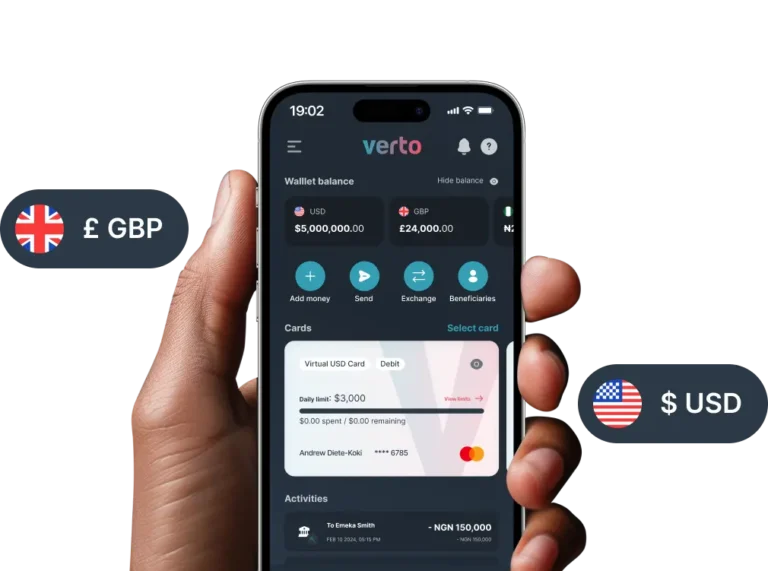
Verto, a B2B global payments platform, has launched The Atlas Suite, an API platform for financial institutions, online marketplaces, and digital platforms to integrate global payment services seamlessly.

Verto says the API is available to all its customers worldwide and will simplify operational, regulatory, and cost challenges of international transactions, particularly in high-growth emerging markets.

According to Ola Oyetayo, CEO of Verto, “We have seen firsthand how complex and costly it is for businesses to expand into new markets and move money, especially across Africa. Atlas is a game-changer, removing these barriers and giving our partners the freedom to grow.”

Unlike other regions, Africa has fragmented financial systems, with complex regulations, limited local banking access, high operational costs, and volatile currencies, making it extremely hard to move money. Atlas aims to solve this by providing instant access to local accounts, deep FX liquidity, and compliant infrastructure across 49 currencies.

With these, firms can expand into and out of Africa, process payments, and unlock new opportunities for growth and cross-border trade with ease.

There is an API or an ‘Atlas for Fintechs’  and an ‘Atlas for Platforms’. For fintechs, banks, and other financial institutions the API allows firms to integrate Verto’s banking, FX, and payment infrastructure directly into their platforms, eliminating the need to build internal solutions or secure multiple local licenses.

Fintechs can offer local virtual accounts to their customers in over 12 markets, execute FX 24/7 and instantly between 49 currencies, and make international payments to over 100 countries – with payments coming out in their businesses’ names.

On the other hand, the API for platforms allows non-financial businesses – such as marketplaces, or e-commerce platforms, to embed financial services directly into their existing products. Firms can embed payments, banking, and FX, eliminating the need for licensing, expertise, and in-house development.

White label brokers can use the API to offer Verto’s services under their own brand and markup FX at their desired rate. Atlas allows brokers and firms  to open local collection accounts across Africa, manage multiple sub-accounts, and move seamlessly between currencies with built-in FX options. Atlas also also support last-mile payouts, enabling remittance and payroll firms to do instant mass payments instantly via bank transfer or mobile money.

Recently, Verto launched a new accounts payable solution designed to significantly reduce the time, cost, and complexity of managing international business payments. Integrated into the Verto Accounts product, the feature directly addresses the inefficiencies and risks inherent in manual invoice processing, enabling finance teams to streamline operations and enhance financial controls.

Speaking about the solution, Tomasz Bilakiewicz, Product Director at Verto, said: “Beyond the challenge of navigating the foreign exchange landscape and managing multi-currency payments,  which has long been a significant hurdle, finance teams are often bogged down by repetitive, error-prone tasks that should be automated. Our new solution addresses both hurdles, giving businesses the speed and accuracy they need to stay on top of payments. This frees up time and mental energy, allowing finance teams to focus on more strategic initiatives such as performance analysis, improved forecasting, and driving better business decisions.”

Key features of the new solution include an automated data extraction and pre-filled payment forms to cut down on manual entry and reduce errors, direct payments from uploaded invoices to speed up the process, support for 49 currencies and intelligent beneficiary matching and attached invoices for better tracking and visibility.

Samsung Brings Microsoft Copilot to 2025 TVs and Monitors

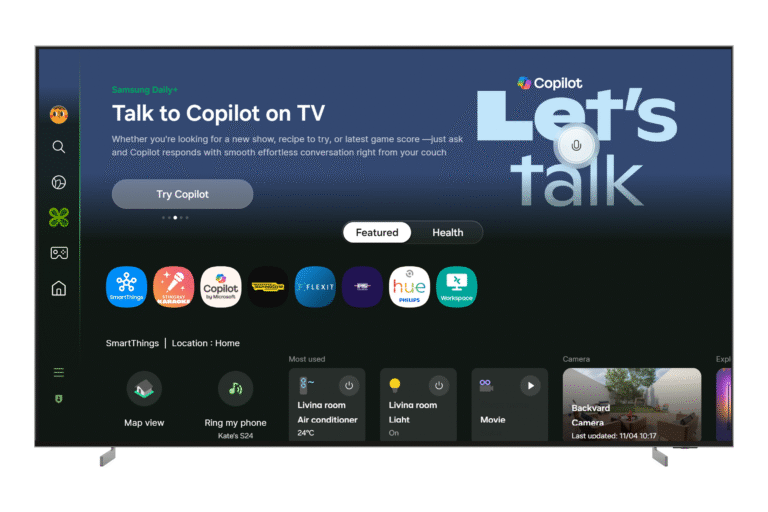
Samsung is integrating Microsoft Copilot with its 2025 lineup of TVs and Smart Monitors, making it easier for users to search, learn and engage with content directly from their screens. 

Copilot gives users access Microsoft’s powerful AI companion through a simple voice command or click of the remote. Copilot will help viewers search quick facts about actors or athletes, summarize plots, support foreign language learning or help break down complex concepts — all from the largest screen in the user’s home.

“Through our open AI partnerships, Samsung is setting a new standard for AI-powered screens,” said Kevin Lee, Executive Vice President of the Customer Experience Team at the Visual Display (VD) Business of Samsung Electronics. “Copilot makes it fun and easy to quickly get what you need through tailored experiences, whether you’re learning something new, enjoying entertainment, tackling everyday tasks or more.”

Copilot can be accessed through the Samsung Tizen OS home, Samsung Daily+ and Click to Search, enabling conversational AI support for a range of scenarios. Through natural voice interaction, Copilot offers personalized recommendations, relevant information and interactive learning experiences.

Recently, Samsung added Click to Search and Bixby to bring a richer, more contextual smart display experience.

“Copilot on Samsung TVs is designed to feel like an AI companion in your living room,” said David Washington, Partner General Manager, Microsoft AI. “Together with Samsung’s leadership in advanced display technology, we’re bringing people a shared experience that helps them discover something to watch, ask questions, make plans, or simply enjoy a moment together, all on the biggest screen in their home.”

Africar Group Acquires Côte d’Ivoire’s Koto.ci to Broaden AUTO24.africa’s Offering

0

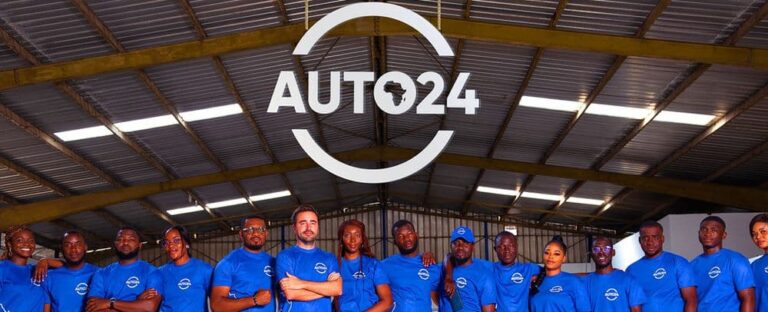
Africar Group, operator of the used car marketplace AUTO24.africa, has acquired Koto.ci, a Côte d’Ivoire–based platform that provides reference pricing for new vehicles. The deal strengthens Africar’s position in West Africa and expands its ecosystem beyond the used car segment.

The acquisition is part of Africar Group’s broader strategy to become a fullstack automotive services provider across Africa. By integrating Koto.ci’s new car pricing data into AUTO24.africa’s marketplace, the company aims to engage with consumers earlier in the vehicle ownership journey from the initial research phase through financing, insurance, and post-purchase services.

“We aim to support African car buyers throughout their entire journey from research and comparison, to buying, financing, insuring, and now having full visibility on new car prices,” said Axel Peyriere, CEO of AUTO24.africa.

AUTO24.africa currently operates in five markets including Côte d’Ivoire, Morocco, Senegal, Rwanda, and South Africa and is backed by Stellantis, one of the world’s largest automotive manufacturers. The platform has gained traction by offering certified pre-owned listings, financing tools, and cross-border services tailored to emerging market consumers. The group recently launched an EV marketplace, the first in Africa.

Founded in Abidjan, Koto.ci has built a reputation for accurate pricing benchmarks and market transparency in new car listings. Its integration gives Africar Group a competitive edge as it works to build what it describes as a pan-African digital automotive ecosystem.

Terms of the deal were not disclosed.

Terraton, a Carbon Dioxide Remover, Raises $11.5 Million to Scale in Africa

Terraton,a biochar platform scaling carbon dioxide removal (CDR), has raised $11.5 million in seed funding to scale in Africa and other merging markets.

The round was co-led by Lowercarbon Capital and Gigascale Capital with participation from leading angel investors included Jeff Dean, Bret Taylor, Pete Koomen, Lars Rasmussen, John Lilly, Tom Stocky, Tim Rann, Ryan Aytay, Matt Portman and Stephanie Hannon.

Additional strategic investment came from ANA HOLDINGS INC.’s ANA Future Frontier Fund L.P. and East Japan Railway Company’s TAKANAWA GATEWAY Global Co-Benefits Fund L.P.

“We’re bridging the divide between high-demand biochar carbon credits and the agribusinesses who produce them, making it easier to bring these valuable credits onto the voluntary carbon market,” said Kevin Gibbs, CEO of Terraton. “By removing upfront costs and complexity, Terraton’s full-stack platform empowers these businesses to diversify revenue streams while meeting growing market demand. This funding will accelerate our ability to scale impact for both farmers and the carbon removal economy.”

The funding will accelerate development and deployment of Terraton’s vertically integrated software platform for biochar production and help expand the company’s generation of high-integrity carbon credits.

Biochar accounts for the majority of carbon removal credits delivered to date and is one of the most scalable, proven methods of durable carbon removal. In 2024 alone, it enabled over 250,000 tonnes of carbon removal, outpacing other approaches thanks to its low cost and co-benefits. It converts low-value crop waste into stable carbon that improves soil health and generates new income through verified carbon credits.
Biochar helps offset these challenges by turning waste into a valuable resource. However, high upfront costs, operational complexity and limited market access continue to impede broader adoption.
With Terraton, agribusiness operators can get access to financing, technology and the market they need to participate in high-integrity carbon removal, with low upfront investment.
Terraton’s first two projects, Three Mountains Cocoa in Ghana and EcoFix, a nut processor in Kenya, are expected to remove over 20,000 tons of CO₂ annually while benefiting thousands of smallholder farmers through waste payments and improved soil health.
“Scaling biochar gives agricultural producers a new revenue stream while capturing carbon, and Terraton is uniquely positioned to connect these producers to global carbon markets,” said Mike Schroepfer, founder of Gigascale Capital. Led by an exceptional second-time founding team, Terraton brings deep technical expertise, global agricultural sourcing experience and a proven track record building scaled businesses.”
Terraset, a nonprofit climate fund that catalyzes early-stage carbon removal through philanthropic capital, has committed to a six-figure carbon credit pre-purchase from the Three Mountains Cocoa project.

Ghana’s Complete Farmer Raises $5 Million to Drive Innovation & Productivity

0

Complete Farmer, a Ghanaian agritech company has raised $5 million to scale its operations and reinforce Ghana’s agricultural supply chain by improving production capacity and market connectivity for smallholder farmers.

The debt financing from Symbiotics, the market access platform for impact investing, will enable Complete Farmer to expand its operations, tackling critical bottlenecks in crop production and market access for Ghana’s farming communities, serving over 12,000 smallholder farmers.

“This investment marks a pivotal moment in our journey to build the most efficient agricultural supply chains in Africa.” added Desmond Koney, CEO of Complete Farmer. “With Symbiotics’ support, we’re accelerating our mission to empower smallholder farmers with the tools, knowledge, and market access they need to thrive. Together, we’re laying the foundation for a more resilient and inclusive agricultural future.”

Despite Ghana’s significant agricultural potential, smallholder farmers often face fragmented value chains, inconsistent product quality, and difficult market linkages. Complete Farmer addresses these challenges by equipping growers with the necessary tools and expertise to meet quality standards, directly connecting them to buyers, and investing in the infrastructure required to strengthen the agricultural value chain.

This investment will support rural livelihoods, improve income stability for farmers, and contribute to more resilient agricultural value chains in West Africa, advancing progress toward SDG 2.

“Symbiotics is proud to support Complete Farmer in its mission to transform agriculture for the benefit of small-scale producers across Ghana in a sustainable way.” said Vincent Lehner, Head of Markets at Symbiotics. “We have been particularly impressed by the company’s integration of technology to build and deliver agronomic expertise throughout its extensive network of growers. This investment aligns closely with our vision of fostering sustainable development in frontier markets.”

PALM, Egypt’s Goal-Based Saving App Launches After Securing the FRA License

PALM, Egypt’s first incentivized goal-based investment platform, has officially launched after obtaining its Portfolio Management License from the Financial Regulatory Authority (FRA).

The FRA license will enable the firm to directly manage investments for retail users and as well enable them to save, grow, and access their money at daily competitive yields along with zero deposit, withdrawal, and transaction fees.

According to Mazen El Kerdany, PALM’s Co-Founder and CEO, “Obtaining the FRA license is not just a regulatory milestone—it’s a validation of our mission to democratize access to professional investment management. With one app, users can plan their life goals, grow their money, and spend smarter through our merchant partners.”

PALM recently closed pre-seed funding round recently led by 4DX Ventures, with participation from Plus VC and a group of global angel investors.

PALM offers merchant-linked saving plans for travel, healthcare, consumer electronics, and appliances, the application also provide saving plans for education, marriage, buying a car or a new house. In addition to the everyday goals, users can save in professionally managed investment portfolios in Egyptian Pounds or U.S. Dollars.

The PALM allows users to choose how they prefer to save, manage multiple goals with different return levels at once. Users can choose to save in locked or unlocked plans, save in Sharia’ compliant financial products only, use their invested amount at any merchant within PALM’s exclusive network, and decide if they want to have a flexible or instalment-like saving plan.

PALM account creation only takes minutes, once registered, the user can create their goals, adding funds to each goal is easily done through InstaPay or bank transfers, and tracking progress as funds get invested motivates users to achieve their goals. Users can track their savings daily, see their investment gains and additional merchant benefits, and get ongoing behavioural support to reach their goal. Whenever they like, users can opt for using their investments at any partner merchant or withdraw their funds to their bank account and move to their next goal.

PALM invests user funds across high quality, secured, and regulated investment products across different asset classes including gold, fixed income products like treasury bills and bonds, and Egyptian companies’ shares traded through the Egyptian Stock Market. All customer funds are securely custodied in Egyptian banks and all investments are done in regulated financial instruments and products to ensure customer funds security.

“Egyptians are faced with a tough reality when it comes to saving their money,” said Ahmed Ashour, Co-founder and Chief Business Officer of PALM. “You either spend time and money trying to learn how to invest on your own—or watch your savings lose value sitting idle, earning nothing. That’s the choice most people face, and it’s just not good enough.”

“At PALM, we saw a huge opportunity to change that. We’re making investing easy, smart, and personal—giving everyday Egyptians access to professionally managed financial services that used to be reserved for the super-rich or top earners. Because for most people, it’s not just about being rich—it’s about being able to afford the life they want and work hard to realize.”

The launch of PALM in Egypt marks a bold step toward reshaping the future of personal financial services in the region. By delivering a faster, more innovative, and more effective savings experience, PALM is committed to being the ultimate financial partner for individuals seeking to manage their savings, optimize their spending, and live a better life on their terms.

Creem, a Financial OS for AI Startups Co Founded by South African Tech Veteran, Raises €1.8M

0

Creem, an Estonian fintech startup, co founded by South African entrepreneur Alec Erasmus, has raised €1.8 million in pre seed funding to build a programmable financial operating system for the next generation of AI native companies.

The round was led by Practica Capital, with backing from Antler and a group of angel investors including Johan Pietilä, Martin Olofsson, and advisors to Revolut and Crypto.com.

Founded just 10 months ago by Erasmus and Gabriel Ferraz (a Brazil born founder), the company is already generating over €930,000 in annualized revenue — without a sales team and operated solely by the two founders. Creem’s product is targeted at lean, globally distributed startups built around AI native workflows, offering them programmable tools to manage global payments, revenue automation, tax, and compliance.

“AI is blowing open the doors of entrepreneurship, but the financial infrastructure hasn’t caught up,” said Ferraz, Creem’s CEO. “These are small teams of global contributors who need programmable, scalable financial tools, not enterprise systems built for another era.”

Replacing the Traditional Finance Department

Creem’s platform functions as a financial operating system, designed to integrate directly into product workflows and developer stacks. It supports both fiat and stablecoin payments, and features such as Revenue Splits allow companies to automatically distribute income across contributors, sales channels, or products.

The platform is already gaining traction with startups in emerging markets, solving operational bottlenecks caused by manual reconciliation and outdated financial tooling.

“Creem is building the orchestration layer for a new category of companies,” said Arvydas Bložė, Partner at Practica Capital. “They are serving a future where small teams of builders work alongside agentic workflows and distributed contributors from day one.”

South African Expertise in Global Fintech

Co founder Alec Erasmus, originally from South Africa, previously led KYC infrastructure at Adyen and built backend systems for crypto brokerages. His co founder Ferraz had earlier scaled a crypto payments platform in Brazil to over €180 million in GMV before relocating to the Baltics.

The company envisions a wave of what it calls programmable organisations — startups embedded with automated compliance, finance, and contributor workflows from their inception.

With the new capital, Creem plans to expand into additional markets, deepen its compliance stack, and develop programmable APIs for revenue automation, tax, KYC, and embedded finance.

“As company formation becomes more decentralized and global, Creem is creating the infrastructure to support the next generation of digital entrepreneurs,” said Tobias Bengtsdahl, Partner at Antler.


EV24.africa Wants to Be Africa’s Leading Electric Vehicle Marketplace

EV24.africa, the pan-African electric vehicle (EV) marketplace launched a few months ago, wants to be the leading platform for electric mobility on the continent.

Operated by AUTO24.africa and Africar Group — with the strategic backing of global automotive leader Stellantis — EV24.africa is already transforming the African automotive landscape with a clean, connected, and continent-wide offering.

Since launch, EV24.africa has received more than 350 qualified vehicle requests from more than 30 countries across Africa, with particularly strong traction in countries like South Africa, Côte d’Ivoire, Morocco, Kenya, Nigeria, Senegal, Ghana, Rwanda, and the Democratic Republic of Congo. The first vehicles have already been successfully delivered to ten African countries, demonstrating the reliability of EV24’s logistics and supply chain capabilities.

EV24.africa serves a broad spectrum of clients — from individual drivers and ride-hailing professionals to corporates, NGOs, public institutions, and automotive distributors — offering not only vehicles but also charging infrastructure, fleet tools, and after-sales support tailored for both urban and remote environments.

The marketplace features more than 200 electric vehicle models sourced from over 50 global manufacturers. Among the most popular models are compact electric cars like the BYD Dolphin, BYD Atto 3, Leapmotor T03, Wuling Bingo Plus, and Ora Good Cat, along with higher-end options such as the ROX T01, Xiaomi SU7, Tesla Model 3 or MG4. Demand is also growing for practical vehicles like the Hyundai Kona EV, Dongfeng Nammi 01, Geely Geometry C, and a range of electric pickups and commercial vans. Customers are increasingly focused on vehicles that suit urban mobility, last-mile delivery, and corporate or government fleet operations.

To support this growth, EV24.africa has developed a full-service approach that includes continent-wide logistics covering over 20 African ports, warranty coverage for batteries and motors, and access to spare parts. It also provides solar-powered off-grid charging solutions for rural areas and a fleet management platform developed with regional partners, offering real-time monitoring, preventive maintenance, and smart recharge planning — particularly valuable for taxis and ride-hailing fleets.

Younes Rabeh, EV24.africa Business Manger, commented: “In just three months, we’ve proven that the demand for electric mobility in Africa is not only real but accelerating. Our team is building more than a marketplace — we are laying the infrastructure and services to support Africa’s electric transition at scale.”

Axel Peyriere, CEO and Co-Founder of AUTO24.africa and Africar Group, added: “EV24.africa is a strategic move aligned with our mission to reshape mobility in Africa. Backed by Stellantis and built with a lean, digital-first approach, we are uniquely positioned to scale EV adoption across the continent and make sustainable transport a reality for all.”

EV24.africa has already taken part in major industry events, including Gitex Africa in Marrakesh last April, and will next be present at the Africa EV Mobility Expo in Addis Ababa this September.

AUTO24.africa, backed by Stellantis Group, is a leading online used car marketplace with operations in 5 African countries (Morocco, Sénégal, Côte d’Ivoire, Rwanda and South Africa). It was among the first platforms to introduce electric vehicle sales in Africa, paving the way for the launch of EV24.africa.

EV24.africa is the next step in driving the future of electric mobility in Africa, making EVs accessible to a wider audience and ensuring that buyers across the continent can find, finance, and receive their electric vehicles with ease. EV24.africa is now live, offering Africa’s widest selection of EVs with expert guidance, competitive pricing, and streamlined importation support.


The Blend of Tradition and Tech in Italian Cars

0

Italian cars are known not only for their striking design and performance, but also for their ability to integrate history with innovation. From the track-ready builds of Ferrari to the electric charm of the Fiat 500e, Italian manufacturers continue to preserve their unique brand identities while incorporating cutting-edge technologies.

This careful balance of legacy and progress is what makes Italian cars distinct. Whether producing exotic supercars or accessible urban vehicles, these marques focus on maintaining core values while evolving with the demands of modern motoring.

Iconic Design Informed by Modern Engineering

Italy’s design heritage plays a central role in the appeal of its cars. Ferrari and Lamborghini retain strong visual links to past models, yet they refine those forms using contemporary tools like computational fluid dynamics (CFD) and active aerodynamics. This ensures that performance is enhanced without sacrificing the essence of the brand.

Pagani continues this philosophy, using handcrafted carbon fibre structures shaped by modern simulation techniques. Even the Fiat 500e, though compact and designed for efficiency, retains the unmistakable silhouette of the original Cinquecento while adopting a fully electric drivetrain. The result is a family of vehicles that look familiar but operate at the forefront of automotive technology.

Traditional Craftsmanship with Digital Functionality

Interiors across Italian marques continue to prioritise craftsmanship, using materials like stitched leather, brushed metal, and carbon fibre. However, these elements are now combined with modern features such as touchscreen infotainment, digital gauge clusters, and adaptive driving modes.

Ferrari incorporates digital controls directly onto the steering wheel, influenced by its Formula 1 heritage. Lamborghini offers fully digital instrument displays while maintaining physical switchgear for key functions. Even Pagani’s analogue-style cockpits are supported by modern ECUs and real-time vehicle monitoring systems.

This approach ensures that technology complements rather than dominates the driving experience, allowing the driver to feel connected to both the car’s mechanics and its digital systems.

Mechanical Purity Enhanced by Electronic Systems

Traditionally, Italian performance cars have been celebrated for their mechanical engagement—responsive steering, manual gearboxes, and high-revving engines. While many of these elements remain, they now work in concert with modern systems designed to improve control, safety, and efficiency.

For example, Ferrari integrates hybrid systems that deliver more power and faster response, while preserving the dynamic feel expected by drivers. Maserati’s MC20 uses F1-derived engine technology supported by electronic controls that fine-tune its performance in real time.

Fiat and Alfa Romeo apply this approach at a more accessible level. The Fiat 500e blends electric propulsion with the original’s compact, agile character, while the Alfa Romeo Giulia Quadrifoglio pairs traditional rear-wheel dynamics with advanced systems like torque vectoring and brake-by-wire. To maintain this blend in everyday ownership, specialist workshops such as the Automoda Alfa Romeo and Fiat Service Centre provide the technical expertise to service these electronically enhanced systems while respecting the original mechanical character of the vehicle.

Innovation That Supports Identity

One of the reasons Italian cars continue to resonate with enthusiasts is that each brand adopts technology in a way that supports its core identity. Ferrari uses hybrid systems not simply to reduce emissions but to enhance throttle response and chassis balance. Lamborghini explores electric power while preserving the sound, feel, and design language that define its models.

Similarly, Fiat focuses on building urban vehicles that are compact, stylish, and now increasingly electrified. Alfa Romeo has introduced advanced driver assistance systems, but ensures they operate subtly to preserve the car’s sense of control and responsiveness.

Driving Forward Without Losing Identity

Italian carmakers demonstrate that innovation and tradition do not have to compete. By blending historical design, mechanical feel, and driver-focused engineering with digital interfaces, hybrid systems, and intelligent safety features, they continue to create cars that reflect their past while remaining relevant today.

For drivers who appreciate both heritage and progress, Italian cars offer a uniquely compelling combination of emotional design and modern capability.


African Angel Academy to Bridge Africa’s $194B Startup Funding Gap

0

The African Angel Academy (AAA), an angel investor training organization, has launched its 12th cohort amid growing recognition that angel investing represents a critical solution to Africa’s massive startup funding gap.

Since its inception, the organization has trained more than 770 investors from over 26 African countries, empowering them to back high-potential ventures in fintech, health tech, agriculture, climate solutions, and education.

“Angel investing in Africa has moved beyond hobby investing; it is now a strategic lever for economic transformation,” said Stephen Gugu, Angel Investor, Co-founder of the African Angel Academy, and Director at ViKtoria Ventures.

Gugu noted that of the 100 participants in Cohort 11, sixty percent were new to angel investing, and thirty-five percent were women—well above the global average of 20-30% female representation in angel networks.

The Academy’s measurable impact includes 216 facilitated deals that have unlocked $53.6 million in funding for startups and innovation. Of this total, $7.2 million represents direct investments by AAA-trained angels, while curated startup showcases alone have generated 10 deals worth $1.8 million 2. This growing alumni network is playing a transformative role in strengthening Africa’s investment landscape and catalyzing growth across multiple sectors.

The announcement of Cohort 12 follows the successful completion of Cohort 11, which brought together over 100 participants from more than 25 countries including Nigeria, Kenya, South Africa, and Egypt. AAA’s innovative model blends self-paced learning with live, interactive sessions led by experienced African angels, and continues post-program with access to an active alumni network for deal flow, syndication, and peer learning.

According to the African Development Bank, Africa’s early-stage businesses face an annual financing shortfall of $194 billion, equivalent to approximately 7% of the continent’s GDP.

Over the past five years, AAA has directly addressed this challenge by building a pan-African platform that equips new and active angel investors with the skills, tools, and networks needed to fund early-stage innovation.

Cohort 12 offers two sequential tracks: Mechanics of Angel Investing (September 17 – October 29, 2025), a foundation-level course for new angels, and Advanced Angel Investing (November 5 – December 10, 2025), a deep dive for experienced investors. Participants can join either track individually or complete both as part of the Full Programme Experience. Delivered fully online, the program blends self-paced modules on Thinkific, live Q&As and masterclasses via Zoom, simulations, and peer engagement on WhatsApp.

Speaking about Cohort 12, AAA Programme Manager Fiona Kiruja said, “When we launched AAA in 2020, our mission was simple: bring angel investing out of the shadows and create a space where new and seasoned investors could learn, connect, and back Africa’s boldest startups. Four years and 11 cohorts later, we’ve listened to our community—what works, what’s missing, and what’s next. Cohort 12 is the result: more dynamic, flexible, and personal than ever before.”

Guided by the tagline “for angels, by angels,” AAA’s trainer network features seasoned investors including Stephen Gugu, Alexandra Fraser, David van Dijk, Michelle Matthews, Sewu-Steve Tawia, and SG Laubscher, giving participants direct access to the practical expertise shaping Africa’s early-stage capital markets.

Applications for Cohort 12 close September 10, 2025. For more information or to apply, visit: https://bit.ly/AAACohort12Application

Legit.ng Partners Africa Check to Launch Free Fact-Checking Course

0

Legit.ng, a top Nigerian digital media outlet, has partnered with fact checking platform Africa Check to launch a free, edutainment-style fact-checking course in celebration of the 2025 International Youth Day. The firm is also spotlighting the power of young people to shape the future of online spaces and following the success of its first media literacy campaign.“We’re not just telling people what misinformation is, we’re showing them how to spot it, verify it, and stop it from spreading,” said Rahaman Abiola, the Editor-in-Chief at Legit.ng. “By meeting our audience where they are — on TikTok or Instagram — we’re breaking down complex topics with an accessible, entertaining approach,” he added.

Starting August 25, the 14-day campaign rolled out on TikTok, Instagram, Facebook, and other key platforms. These are the very spaces where young Nigerians and Africans express themselves, engage with news, and, too often, encounter misleading content. The course is a direct response to this challenge — positioning youth as consumers of content and agents of truth and digital change.

The media firm is also working with influencers and creators, including Kie Kie, Tomike Adeoye, Aproko Doctor, AkwaMan, and others across Nigeria to share bite-sized, engaging content with fact-checking tips tailored for their followers.

Apart from Africa Check, the firm is also working with DUBAWA, an independent transnational verification and fact-checking initiative of the Centre for Journalism Innovation and Development (CJID) working across West Africa to tackle information disorder and strengthen media literacy — to co-create expert-backed content that enhances media literacy with credible, easy-to-understand insights.

“For over a dozen years, we have worked at reducing the spread of misinformation through various means such as fact-checking, media training, and digital literacy campaigns,” David Ajikobi, Africa Check’s Nigeria Editor, said. “In the past few years, we have ramped up efforts towards building the capability of the public, especially young people, in spotting false information and verifying media content amid increasing use of AI in disinformation schemes,” he added.

The course is designed for everyone, including baby boomers, Gen X, Y, and Z users, and first-time content creators. It is entirely free to access on Legit.ng’s platforms and social media channels. Each lesson combines expert-backed content with relatable language, interactive elements, and real-life examples.

Spotify Introduces Direct Messages for Users to Share Playlists

0

Spotify has launched Direct Messages to allow friends and family share their favorite music, podcasts, audiobooks with one another.

The firm says recommendations have always been at the heart of the Spotify experience because word of mouth is one of the most powerful ways for people to discover their next favorite track.

“Our goal is to give users what they want and make those moments of connection more seamless and streamlined in the Spotify app,”announced the firm. “That’s why, beginning this week, Messages will start rolling out to Free and Premium users aged 16 years and older in select markets on mobile devices.”

The firm says its users will share songs, podcasts, or audiobooks with friends and family, and keep track of recommendations to enable artists, authors, and creators, spread more word-of-mouth and help create new fans.

Here’s how Messages work

One-on-one conversations on Spotify will build community and also increase reach and engagement of content as more users will share content and concurrently start a message in-app with their friends and family.

Users listening to a song, podcast, or audiobook in the Now Playing View, can tap the share icon, select a friend, and hit send. Once one accepts a message request, they will be able to react with emojis, send texts, and seamlessly share content back and forth.

The Messages are near the profile photo in the top left corner.

Video Player

Spotify has had social media platforms like Instagram, Facebook, WhatsApp, Snapchat, TikTok, and more and its own messages will complement these integrations, not replace them.

“We’re excited to continue offering more ways to drive hype for the Spotify content you love, wherever you are,”said the firm. “With Messages on Spotify, users are always in the driver’s seat. Users have the choice to accept or reject message requests from friends and family.”

For security, Spotify conversations are protected with industry-standard encryption and Spotify is utilizing proactive detection technology to scan messages for certain unlawful and harmful content, automatically and via moderators.

Danielle Crawford Media Launches Full-Service Digital Marketing Agency to Empower Brands in the Digital Age

Danielle Crawford Media, an innovative full-service digital marketing agency, is proud to announce its official launch. The agency delivers tailored, data-driven marketing strategies designed to help businesses of all sizes stand out and succeed in today’s fast-evolving digital landscape.

With services spanning SEO optimization, content creation, website development, and social media marketing, Danielle Crawford Media offers a comprehensive suite of solutions aimed at amplifying online visibility, increasing engagement, and delivering measurable results. By combining creative expertise with advanced analytics, the agency provides personalized strategies that align with each client’s unique goals, fostering impactful and sustainable growth.

“Our mission is to empower brands to shine in the digital world,” said Danielle Crawford, Founder of Danielle Crawford Media. “We understand that every business has its own story and unique challenges, which is why we focus on developing customized strategies that deliver real, measurable impact. Our goal is to not only increase visibility but to help brands build lasting connections with their audiences.”

Danielle Crawford Media’s approach integrates creativity, technology, and deep market insights to help brands connect authentically with audiences and stand out in competitive markets. Whether serving small businesses, startups, or established enterprises, the agency’s flexible solutions are designed to scale alongside clients’ evolving needs.

Businesses seeking to strengthen their digital footprint and accelerate growth are encouraged to contact Danielle Crawford Media for customized marketing solutions built to deliver tangible results.


Kenya’s Poa Internet Raises $4 Million to Expand Affordable Broadband

0

Kenya’s Poa Internet, a local internet service provider, has raised $4 million from Finnfund in a debt investment to expand its network and improve internet accessibility.

Poa Internet will use the debt financing to bridge the digital divide by providing affordable broadband internet to underserved communities in Kenya.

According to Andy Halsall, CEO of Poa Internet, “We are delighted to be partnering with Finnfund on our mission to bring internet access to every home in Africa. Abundant broadband connectivity is a fundamental enabler for trade, education, healthcare and government services. Using Finnfund’s financing and Nokia’s fibre infrastructure we will be able to bring Poa’s highly affordable internet service to even more Kenyan communities and increase their digital inclusion.”

Finnfund is acting in a broader Finnish-Kenyan context with Nokia serving as preferred fibre technology partner for Poa Internet. Furthermore, earlier this year in May the President of the Republic of Finland Alexander Stubb, and his spouse Suzanne Innes-Stubb visited Kawangware in Nairobi to learn about Poa Internet’s operations in the area, including affordable residential internet services and the transformative impact of connectivity in low-income communities.

The fund is betting on Kenya as the country’s economic growth is expected to strengthen to 5.5 per cent this year, supported by resilient performance in tourism and recovery in the agricultural sector. Lower inflationary pressure and robust remittances to Kenyan households will also bolster consumer spending, representing a key driver for growth over the next few years.

“We are excited to support Poa Internet in expanding its provision of high-speed internet to lower income areas in Kenya. At Finnfund, digital infrastructure is one of our strategic priorities. Improving digital connectivity through affordable broadband internet supports economic growth and enables inclusive access to remote work, financial services, education, healthcare, and provides possibilities for small businesses to connect with global value chains. This new investment, supported by the European Union and the European Fund for Sustainable Development Plus, underscores our commitment to fostering digital inclusion and economic growth across the continent,” says Kelvin Kiiru, Investment Associate at Finnfund.

Finnfund also believes digital tools and technologies are key drivers of economic growth, boosting productivity, fostering innovation and opening new markets. Digitalisation enhances access to information and resources, empowering entrepreneurs and small businesses, especially in developing countries. E-commerce platforms, mobile payments and digital supply chains have already revolutionised the business landscape, allowing greater participation in the global economy.

The investment into Poa Internet is part of the EU’s Global Gateway, as Poa Internet  brings high-speed, affordable internet to more under-served neighbourhoods and vibrant communities in Kenya’s cities.

“It proves that human-centred digitalisation is not just a vision, but a reality—one that empowers people, creates opportunities, and strengthens social inclusion. The private sector is a crucial partner in this journey, helping us bridge the digital divide and ensure that everyone can participate in and benefit from the digital economy,” says Henriette Geiger, EU Ambassador to Kenya.

Finnfund Raises €80M to Invest in Digital Infrastructure & Fintechs in Africa, Asia and Latin America

0

Finnfund, a Finnish development financier and impact investor, has closed EUR 80 million to invest in digital infrastructure and solutions in a move to bridge the digital divide and promote digital, financial and gender inclusion in underserved regions in Africa, Asia and Latin America.

This is the first closing of Finnfund Digital Access Impact Fund I LP (DAIF), marking a significant milestone in mobilising private capital for impactful investments in emerging markets.

According to Hanna Loikkanen, Finnfund´s Chief Investment Officer, “The first closing of Finnfund Digital Access Impact Fund I LP (DAIF) is a pivotal step in our mission to mobilise private capital for sustainable development. This fund not only addresses critical digital infrastructure needs but also empowers communities by enhancing access to essential services. We are excited to offer professional investors a chance to partner with us in driving meaningful change in these rapidly growing markets.”

The fund provides professional investors the opportunity to enter emerging markets alongside Finnfund, an experienced impact investor with over 40 years of expertise. The fund benefits from a risk-sharing facility and technical assistance, issued under the European Commission’s European Fund for Sustainable Development. DAIF targets investments in sectors such as telecom towers, digital infrastructure, and scalable high-impact technology solutions, seeks to offer access to attractive growth, high-impact markets and sector.

Capital for a more inclusive digital future

The focus of the fund is on closing the coverage gap, connecting unconnected communities and promoting affordable and reliable internet access. By investing in digital infrastructure and solutions, Finnfund aims to create a more inclusive digital future, fostering economic growth and improving quality of life in the regions it serves.

As digital use expands from basic communication to services like e-commerce and remote work, the economic impact grows. “These applications need more bandwidth and reliable connectivity, yet most African users rely on limited mobile data. This is where the fund’s portfolio companies come into play. The rise of unlimited home Wi-Fi, especially in countries that the fund targets, presents a major opportunity to drive digital inclusion and economic growth”, says Loikkanen.

Finnfund also integrates child-related considerations in the investment process, advancing positive outcomes for children while minimising harm. The Child-Lens Investing approach was developed in collaboration with UNICEF Innovative Finance Hub.

“The first closing of Finnfund Digital Access Impact Fund I LP shows the power of collaboration between public and private sectors”, says Ville Tavio, Minister for Foreign Trade and Development. “By mobilising private capital, we can enhance the efforts to finance sustainable development in partner countries. This fund exemplifies Finland’s commitment to leveraging innovative financial solutions to address critical infrastructure needs and promote inclusive growth. We support initiatives that not only drive economic development but also improve the quality of life for many communities in emerging markets.”

The Ministry for Foreign Affairs and Finnfund are anchor investors of the fund. Finnfund Digital Access Impact Fund I LP makes its first investments during 2025, with initial investments under consideration targeting to bring unlimited high-speed internet to more low-income households in Latin America.

Koolboks Raises $11M to Scale its Solar-powered, IoT-enabled Refrigeration Solutions Across Africa

0

Koolboks, the climate-tech company making clean, affordable cooling accessible across Africa, has raised $11 million to scale its solar-powered, IoT-enabled refrigeration solutions across Africa and other emerging markets.

The Series A equity and debt financing, led by KawiSafi Ventures and co-led by Aruwa Capital, the Lead Investor in the Seed Round, and All On, another follow-on investor. Debt funding was secured from FFEM and bpifrance with grants from FFEM/AFD, PREO, Efficiency for Access, and Innovate UK and results-based financing (RBF) from BGFA (Uganda), CEI Africa, and Shell Foundation.

“Every day, I meet small business owners, mostly women, who are forced to throw away unsold food or burn diesel just to stay open,” said Ayoola Dominic, Co-Founder & CEO of Koolboks. “For them, cooling is not about convenience. It’s about survival, dignity, and income. This raise allows us to deepen our reach, build locally, and put power literally back in their hands.”       

With over 10,000 solar freezers deployed in 25 countries, including Kenya, Koolboks is empowering market women, frozen food sellers, bars, and rural clinics with reliable cold storage without the need for diesel or unstable electricity. Each Koolboks unit is embedded with IoT technology, enabling remote monitoring of temperature, energy use, location, and door activity while powering its flexible Pay-As-You-Go (PAYGO) payment system.                                                                                  ​

“As a woman and co-founder, I’ve seen firsthand how access to reliable cooling can transform a small business and a household,” added Deborah Gaël, Co-Founder of Koolboks. “This isn’t just about technology. It’s about economic freedom for women, for families, for communities. This funding helps us reach the people who’ve been overlooked for too long.”

Koolboks will use the funds to expand its Koolbuy platform, which offers both solar and non-solar cooling products on BNPL (Buy Now, Pay Later) terms, and to scale Scrap4New, its circularity program that transforms discarded freezers into refurbished, solar-powered, IoT-enabled units extending product life cycles while reducing e-waste.

As temperatures rise and energy insecurity grows, Koolboks sits at the intersection of climate resilience, gender equity, and inclusive tech innovation.

NTT DATA Partners with Google Cloud to Accelerate AI Adoption

0

NTT DATA, a digital business and technology services firm, has partnered with Google Cloud to accelerate AI-powered cloud innovations and unlock new possibilities with AI for enterprise organizations across industries.

This collaboration combines NTT DATA’s deep industry expertise in AI, cloud-native modernization and data engineering with Google Cloud’s advanced analytics, AI and cloud technologies to deliver tailored, scalable enterprise solutions.

“This collaboration with Google Cloud represents a significant milestone in our mission to drive innovation and digital transformation across industries,” said Marv Mouchawar, Head of Global Innovation, NTT DATA. “By combining NTT DATA’s deep expertise in AI, cloud-native modernization and enterprise solutions with Google Cloud’s advanced technologies, we are helping businesses accelerate their AI-powered cloud adoption globally and unlock new opportunities for growth.”

According to Gartner®, worldwide end-user spending on public cloud services is forecast to reach $723 billion in 2025, up from $595.7 billion in 2024. The use of AI deployments in IT and business operations is accelerating the reliance on modern cloud infrastructure, highlighting the critical importance of this strategic global partnership.

NTT DATA will leverage Google Cloud technology to develop several industry-specific AI and cloud solutions, accelerating enterprise transformation across sectors including banking, insurance, manufacturing, retail, healthcare, life sciences and the public sector.

For example, in financial services, this collaboration will support regulatory compliance and reporting through NTT DATA solutions like Regla, which leverage Google Cloud’s scalable AI infrastructure. In hospitality, NTT DATA’s Virtual Travel Concierge enhances customer experience and drives sales with 24×7 multilingual support, real-time itinerary planning and intelligent travel recommendations. It uses the capabilities of Google’s Gemini models to drive personalization across more than 3 million monthly conversations.

“Our partnership with NTT DATA will help enterprises use agentic AI to enhance business processes and solve complex industry challenges,” said Kevin Ichhpurani, President, Global Partner Ecosystem at Google Cloud. “By combining Google Cloud’s AI with NTT DATA’s implementation expertise, we will enable customers to deploy intelligent agents that modernize operations and deliver significant value for their organizations.”

NTT DATA will support these innovations through a full-stack suite of services including advisory, building, implementation and ongoing hosting and managed services.

By combining NTT DATA’s proven blueprints and delivery expertise with Google Cloud’s technology, the partnership will accelerate the development of repeatable, scalable solutions for enterprise transformation. At the heart of this innovation strategy is Takumi, NTT DATA’s GenAI framework that guides clients from ideation to enterprise-wide deployment. Takumi integrates seamlessly with Google Cloud’s AI stack, enabling rapid prototyping and operationalization of GenAI use cases.

This initiative expands NTT DATA’s Smart AI Agent Ecosystem, which unites strategic technology partnerships, specialized assets and an AI-ready talent engine to help clients deploy and manage responsible, business-driven AI at scale. 

This global partnership builds on NTT DATA and Google Cloud’s 2024 co-innovation agreement in APAC. In addition it further strengthens NTT DATA’s acquisition of Niveus Solutions, a leading Google Cloud specialist recognized with three 2025 Google Cloud Awards – “Google Cloud Country Partner of the Year – India”, “Google Cloud Databases Partner of the Year – APAC” and “Google Cloud Country Partner of the Year – Chile,” further validating NTT DATA’s commitment to cloud excellence and innovation.


Samsung Expands One UI to Home Appliances

Samsung has expanded its proprietary One UI platform to its home appliance lineup, delivering a unified and intuitive software experience across smartphones, TVs and now smart appliances.

The firm has also announced that smart appliances will be receiving software updates for 7 years after launching, starting from 2024-launched home appliances being updated in September.  

“By bringing One UI to smart appliances, we are transforming the way people interact with technology in their homes,” said Jeong Seung Moon, EVP and Head of the R&D Team of the Digital Appliances (DA) Business at Samsung Electronics. 

With One UI, Samsung is unifying the user experience for the product categories of mobile devices, TVs and home appliances through the application of consistent design elements and functionality.

This includes Apps & Services like Bixby, Gallery and Samsung TV Plus, which are being made available across various types of screens to enable seamless device interaction and media consumption.

Device Connectivity is also enhanced through SmartThings, integrating the home’s devices into a unified ecosystem with easy access to helpful services like Family Care, Pet Care and Home Care. When it comes to Common UI, users will get the benefit of familiar interfaces like Now Brief, which deliver personalized and relevant information at a glance.

Now Brief offers family members a curated selection of useful content, including daily weather updates, family schedules, tailored recipes, and home insights such as how much time is left on the washing machine.

Wi-Fi-enabled Samsung home appliances will be eligible for software updates for up to seven years after launching, starting from models launched in 2024. This commitment supports product longevity, enhanced functionality and prolonged security throughout the product lifecycle. 

Beginning in September, eligible 2024 launched models will be receiving various software updates that bring enhancements in usability, intelligence and security.

Wi-Fi enabled refrigerators, washers and dryers, air conditioners, EHS, and slide-in induction ranges will be protected through Trust Chain, which allows connected appliances to monitor each other’s security status.

Screen-equipped models like the refrigerator with Family Hub or 9″ screen and Bespoke AI washers with the 7″ screen will also be receiving advanced protections like encrypted Credential Sync and Passkey support. These screen appliances will also be updated with the Knox Security dashboard provided on 2025 models, which allow users to easily monitor the security status of connected appliances in real time.

Refrigerators with the Family Hub™ and 9″ screens will benefit from the upgraded AI Vision Inside applied to 2025 products, which now supports the recognition of frequently used packaged foods in addition to a larger number of fresh foods.

Bixby is also upgraded to support Voice ID, allowing it to recognize user voices and provide personalized experiences on shared devices. Users can also enable Bixby quickly and intuitively by simply double tapping on the screen.

Samsung TV Plus, supported on refrigerators with Family Hub, will also expand to Canada, Brazil and India in addition to the originally supported countries, and 7″-screen washing machines will support eight additional Indian local languages such as Bengali, Punjabi, and Gujarati.

Twiva, Kenya’s Creator Platform Raises Funding from Sony Innovation Fund

0

Twiva, a Kenyan platform focused on monetizing Africa’s growing creator economy, has secured investment from the Sony Innovation Fund, the corporate venture capital arm of Sony Group Corporation.

The deal marks a key milestone for Twiva as it scales its operations and expands into new markets across Africa. The startup helps independent creators and influencers monetize their content and digital presence while offering brands access to authentic marketing channels through creator-led campaigns.

“With Sony’s expertise in entertainment and technology, we will scale our impact, expand into new markets, and unlock new income opportunities for Africa’s youth,” said Peter N. Kironji, CEO of Twiva.

Sony’s investment highlights the fund’s growing interest in Africa’s digital and entertainment sectors. Twiva becomes one of the first African companies to join the Sony Innovation Fund portfolio, which is increasingly focused on emerging markets.

Twiva operates at the intersection of technology, commerce, and content creation. Its business model includes influencer marketing, social commerce, digital skills training through Twiva Academy, embedded financial services via Twiva Pay, and livestreaming. The platform enables creators to become entrepreneurs by equipping them with tools, education, and access to monetization pathways.

“Africa’s digital creative sector has significant untapped potential,” said Antonio Avitabile, Managing Director for EMEA at Sony Ventures Corporation. “Twiva’s platform offers a strong foundation for growth and inclusion in the region’s creator economy.”

With over 250 million young people active on digital platforms across the continent, the creator economy is emerging as a major engine for employment and commerce. Twiva plans to use the funding to expand its footprint, enhance its AI-powered tools, and accelerate innovations such as Twiva Pay, which simplifies payments and introduces purchase order financing for influencer campaigns.

The company aims to create more than one million digital jobs across Africa over the next five years by connecting creators, brands, financial institutions, and digital platforms into a unified ecosystem. Twiva’s platform provides brands with cost-effective customer acquisition while offering creators data-driven tools and financial support to grow sustainable businesses.

The Sony Innovation Fund invests in early to late-stage startups globally, with a focus on entertainment, media, mobility, fintech, and now, Africa’s digital economy.

FrontEnd Ventures Lands First Deal to its $8.5M Startup Fund

0

FrontEnd Ventures, a Nairobi-based early-stage venture capital fund, has secured the inaugural investment from Small Foundation’s GP Working Capital Facility, marking a significant milestone for both organizations as they work to strengthen Africa’s early-stage investment ecosystem.

The funding provides critical operational runway for FrontEnd Ventures as it raises an $8.5 million fund aimed at supporting tech and tech-enabled startups across Kenya. The fund is focused on sectors including fintech, health tech, logistics, and software, with a strong emphasis on local and female founders.

Launched in February 2025, Small Foundation’s GP Working Capital Facility was created to support emerging African fund managers with the resources needed to reach financial close and begin deploying capital. Many African GPs face structural challenges raising sufficient working capital in the early stages of fund formation, a gap this facility aims to bridge.

“FrontEnd Ventures exemplifies the kind of fund we set out to support with our GP Working Capital Facility,” said Karina Wong, Head of Investments at Small Foundation. “Locally led and ecosystem-focused, they’re not just deploying capital—they’re actively reshaping Kenya’s venture landscape to unlock local capital.”

FrontEnd Ventures is one of the few locally led funds in the region with a clear focus on underrepresented founders. To date, the fund has backed more than ten startups, many of which are already generating revenue, securing follow-on funding, and expanding beyond Kenya into regional markets.

The fund invests at MVP and seed stage, with follow-on capacity at Series A and planned exits from Series B onwards. Beyond capital deployment, FrontEnd plays a broader ecosystem-building role, engaging in advocacy and education to unlock local institutional capital in particularly among pension trustees and fund managers.

Through targeted programs and direct engagement, FrontEnd is helping to create a more informed and confident base of domestic investors, seen as critical to the long-term sustainability of the venture capital ecosystem in Kenya and across the continent.

“FrontEnd is laying the groundwork for a more inclusive venture ecosystem in Kenya by unlocking opportunity for local founders and building pathways for local capital to participate,” added Wong. “We are proud to support their vision and encourage others to join us in helping FrontEnd reach final close and scale their impact.”

This partnership signals a growing trend of impact-driven capital supporting local fund managers who not only invest in startups but also work to build the infrastructure and trust needed to attract more capital into African innovation ecosystems.

Lendable Raises $10M from FMO for its 2nd MSME Fintech Credit Fund

0

Lendable has raised $10 million to its latest emerging-markets credit vehicle, from Dutch development bank FMO to expand lending to fintechs serving small businesses across Africa, Asia, and Latin America.

The commitment, made through FMO’s MASSIF fund, will be invested in the first-loss tranche of the Lendable MSME Fintech Credit Fund 2 (LMFCF2), a $ debt fund managed by DynoLabs Asset Management, a wholly owned subsidiary of Lendable Inc. The structure is designed to attract capital from development finance institutions and commercial investors into more senior tranches.

The new fund follows Lendable’s inaugural MSME fintech fund and will provide secured and unsecured loans to fintech lenders, payments platforms, and asset-backed financiers that target underserved entrepreneurs and low-income populations.

“This investment plays a catalytic role by mobilizing both public and private investors into a blended structure that strengthens access to finance for fintechs serving MSMEs,” FMO said in a disclosure.

The fund has been given FMO’s 100% Reducing Inequalities label and is eligible under the 2X Challenge for gender impact. Beyond capital, it also offers fintech borrowers technical assistance and incentives to enhance environmental, social, and governance (ESG) performance and consumer-protection standards.

FMO’s first-loss participation is expected to be crucial in de-risking the platform for other financiers. Lendable, which has worked with FMO since its early years, specializes in providing credit to fintechs in emerging markets.

The fund has been classified as environmental and social Category C, reflecting a low-risk profile. Lendable applies a management system co-developed with FMO and Belgian DFI BIO, with a dedicated ESG lead overseeing compliance. Consumer protection remains a focus given some borrowers operate in lightly regulated environments.

Nigeria’s Boldswitch Launches FacePay, a Face-Based Payment System

0
Nigeria’s Boldswitch, a fintech startup, has launched FacePay, allowing users to transfer money simply by taking a photo of a recipient’s face in a move expected to eliminate the need for account numbers, phone details, or payment cards.
The app allows a sender to activate the FacePay feature by taking a quick picture of the recipient, followed by instant verification then the app completes the transaction. 

“We wanted to make sending money as natural as greeting someone,” said Glad Akhison, Founder and CEO of Boldswitch. “With FacePay, you can pay a vendor, tip a waiter, or send money to a friend instantly without asking for their bank details—just their face.”

FacePay works simply.

It’s powered by AI facial recognition algorithm and a real-time identity matching platform to identify real users and curb fraud.

Using liveness detection, the app ensures only real individuals—not photos, videos, or deepfakes—can receive funds. To register new users, Boldswitch generates a QR code for instant registration and transfer.

FacePay says it uses bank-grade encryption, multi-layer biometric verification, and anti-spoofing safeguards. Importantly, biometric data is never stored or shared without explicit user consent. Boldswitch emphasizes that the platform aligns with international data protection and privacy standards.

Beyond peer-to-peer transfers, FacePay introduces new opportunities for frictionless transactions such as tipping, paying street vendors, instant payouts for gig workers and freelancers, donations to charities and identity verification for events and services.

CypherFace, a U.S.-based fintech company has a facial recognition system that confirms user identity in real time during digital payments. FacePay might learn a thing or two from CypherFace which began operations in 2024.

FacePay is the first in Nigeria and Africa to allow facial recognition for payments and it’s planning international expansion across the continents. It already has already set up  US operations and is working on partnerships, patent protections, and regulatory approvals.

Monex Ventures, Uncovered Fund Launch $20 Million Fund for African Infrastructure Startups

0

Monex Ventures and Tokyo based Uncovered Fund have created a ¥3 billion ($20 million) investment partnership to back early stage African and Middle Eastern startups building digital and physical infrastructure.

The Uncovered Monex Africa Investment Partnership will focus on finance, logistics, mobility, and sustainability, sectors seen as foundational for mass technology adoption across the continent.

Uncovered Fund, which has operated in Africa since 2019, brings local deal sourcing and regional expertise. Monex Ventures contributes corporate relationships in Japan, which the fund intends to leverage by connecting startups to established Japanese companies for market access, technical knowhow, and distribution support.

The fund is looking into consumer payments, micro lending, and B2B payment and accounting platforms, last mile delivery, warehouse management, and retail tech, used vehicle marketplaces and early stage EV ecosystems and agritech and carbon related ventures that could generate demand for Japanese machinery and IoT solutions.

Strategic Matchmaking

A source close to the fund described the model as “strategic matchmaking,” offering Japanese corporates a route into African innovation while giving startups commercial pathways into new markets.

The fund will write seed and pre Series A checks, with a focus on operational support rather than chasing valuation driven rounds. The partnership’s dual mandate—financial returns plus corporate integration—will test its ability to align procurement cycles and compliance frameworks with startups’ rapid product iterations.

Execution Challenges

Africa’s startup scene remains fragmented, and building corporate partnerships requires patience. Translating introductions into contracts or distribution agreements can take years. The fund’s differentiation will hinge on its ability to secure tangible commercial outcomes such as procurement deals, joint ventures, or manufacturing tie ups with Japanese partners.

Competitive Landscape

Pan African funds and regional VCs remain active across these sectors, raising the bar for differentiation. The Uncovered Monex vehicle will need to prove that its corporate partnership model delivers more than capital—a theme increasingly central as global investors shift toward hands on engagement with African startups.

If successful, the strategy could validate a playbook pairing regional venture expertise with multinational corporate access. If not, it risks underscoring the difficulty of aligning global corporate structures with early stage innovation cycles.


Kenya Weighs Splitting Safaricom Into Three Separate Companies

0

Kenya is weighing plans to split Safaricom Plc into three standalone businesses, a move that could reshape the country’s telecom sector and potentially reduce the government’s 35 percent stake in East Africa’s most valuable company.

Treasury Secretary John Mbadi said officials see “huge benefit” in separating Safaricom into a traditional telecoms services provider, a tower company, and its mobile payments platform M Pesa. He added that a final plan would require cabinet approval and could also determine whether the government sells its stake before or after the breakup.

“We are discussing whether to offload more shares as an entity or split them and then get a fresh valuation, and then get to that direction,” Mbadi said in an interview this week. The goal, he explained, is to maximize value both for the state and investors.

Why Split Safaricom?

Safaricom dominates Kenya’s telecom landscape with close to 50 million subscribers, nearly the entire adult population, giving it an unrivaled scale. Its services extend beyond voice and data into financial services, with M Pesa widely considered one of Africa’s most successful fintech platforms.

By unbundling its businesses, the government hopes to unlock hidden value that could be diluted in the company’s current structure. Analysts say a carve out could allow each division to be independently valued:

  • Telecoms operations would be benchmarked against African peers such as MTN and Airtel Africa.
  • Tower infrastructure Safaricom has about 7,400 towers in Kenya according to TowerXchange could attract infrastructure investors and global tower companies.
  • M Pesa, which processes billions in mobile transactions annually, could be valued alongside fintech players, where revenue multiples are significantly higher.

Such a breakup could also address longstanding competition concerns. Regulators have previously flagged Safaricom’s dominance, particularly in mobile money, where it controls more than 90 percent of the market. A structural separation could ease those worries and foster more competition in Kenya’s digital economy.

Government’s Fiscal Needs

The plan also comes at a time when the government is seeking to shore up its finances. In May, Kenya announced it would raise 149 billion shillings (1.16 billion dollars) in the financial year 2025 to 2026 by selling stakes in state linked firms, including Safaricom. A well structured breakup could boost Safaricom’s overall valuation, giving the state a stronger base for divestment.

For the government, Safaricom is both a prized asset and a potential source of quick liquidity. Its 35 percent stake is worth billions of dollars, and any sale would be closely watched by global investors.

Safaricom’s Market Reach

Safaricom was founded in 1997 as a subsidiary of Telkom Kenya and sold a 40 percent stake to Vodafone Group Plc in 2000. In 2017, Vodafone transferred part of its holding to Johannesburg listed Vodacom Group Ltd, giving South African investors a significant stake in the Kenyan firm.

The company has expanded beyond Kenya, securing a license in Ethiopia in 2021. It launched commercial services there in 2022, marking its first major foray into another African market. Ethiopia, with a population of over 120 million, offers Safaricom a huge growth opportunity as the government liberalizes its telecom sector.

M Pesa: The Jewel in the Crown

Safaricom’s crown jewel remains M Pesa, launched in 2007 as a mobile money service and now a cornerstone of Kenya’s financial system. The platform enables peer to peer transfers, bill payments, savings, and loans, and has since expanded to Tanzania, Mozambique, and beyond.

M Pesa’s contribution to Safaricom’s revenue has steadily grown, with financial services now accounting for over a third of the company’s earnings. Analysts say a standalone valuation of M Pesa could rival or even exceed that of Safaricom’s telecom operations, making it a powerful fintech story in its own right.

Investor and Market Implications

For investors, a breakup could provide clarity on the true value of Safaricom’s different divisions. While telecom operations are capital intensive, tower businesses and fintech units often deliver higher margins and growth rates.

At the same time, structural separation could bring challenges. Safaricom’s integrated model has given it significant synergies. Its telecom base fuels M Pesa adoption, and its tower ownership ensures network quality. Splitting the businesses may create duplication of costs and complicate management.

Still, market watchers say Kenya’s government is under increasing pressure to boost fiscal revenues and attract foreign investment. A Safaricom breakup, if well executed, could achieve both.

Female-Led VC First Circle Capital Secures $10.9 Million for Pan-African Fintech Fund

0

First Circle Capital, a women-led venture capital firm, has raised $10.9 million for its debut Africa-focused fintech fund, launched in 2022.

The capital includes a $6 million commitment from the International Finance Corporation, split between $4 million from its Startup Catalyst Platform and $2 million from the Women’s Entrepreneurs Finance Initiative (We-Fi). The fund has a $25 million target and a $30 million hard cap.

Co-founded by Selma Ribica, a former M-Pesa executive, and Agnes Aistleitner Kisuule, an entrepreneur experienced in frontier markets, the firm operates from Casablanca and Kampala, though its fund is registered in Delaware.

First Circle Capital targets pre-seed and seed fintech startups beyond the crowded payments sector, focusing on financial infrastructure, insurtech, alternative lending, regtech, and climate fintech. The fund already has 13 investments across seven countries, including South African travel fintech TurnStay, card-issuing startup Scale, and agritech platform Pumpkn.

The IFC and We-Fi commitments reflect a growing institutional interest in women-led funds in Africa. Investments are made on a pari-passu basis, aligning First Circle’s interests with other investors while embedding gender-smart investment strategies that prioritize women-founded or women-led fintech ventures.

The fund has also attracted backing from the FSDAi Nyala Facility, a UK government-supported initiative, which committed $1 million earlier this year. First Circle will participate in IFC’s Startup Catalyst Booster Program, which provides capacity-building and advisory support to emerging fund managers.

Africa’s fintech sector continues to expand rapidly, with Boston Consulting Group projecting revenues could grow 13-fold by 2030. Yet funding gaps persist, particularly for early-stage startups and female founders, something First Circle Capital is positioning itself to address.The fund targets $25 million and caps at $30 million.

Based in Casablanca and Kampala, First Circle Capital has already backed 13 fintech startups across seven African countries, focusing on sectors beyond conventional payments. The portfolio includes:

  • Scale – card-issuing infrastructure
  • E-Doc Online – financial data infrastructure
  • Orca – fraud orchestration platform
  • Credify – digitizing trade-finance and logistics for SMEs
  • MNZL – asset-backed financing solutions
  • Pumpkn – agribusiness financing
  • Terminal – logistics and shipment facilitation
  • Balad – remittance infrastructure
  • Estafsar – digital insurance platform
  • WiASSUR – brokerage across auto, health, home, and travel insurance
  • WafR – micro retail payments solutions
  • CredRails – open-banking infrastructure
  • Others: Penee, Talk360, VeendHQ, Flow48, Lenco, Collect Africa, Gamp, Traction, myStash, Kashier, Dayra, Infiuss Health, Klump, and Yemaachi Bio.

Sector Analysis

The portfolio spans a broad spectrum:

  • Infrastructure & Interoperability: CredRails, E-Doc Online, Balad
  • Insurtech & Regtech: Estafsar, WiASSUR, Orca
  • Lending & Trade Finance: Credify, MNZL, Pumpkn
  • Logistics & Digital Trade: Terminal, Talk360, Collect Africa
  • SME Fintech & Payments: Scale, WafR, Traction, Lenco, myStash, Kashier, Flow48

This diversified strategy underscores the firm’s thesis-led approach, seeking undercapitalized verticals and strengthening the fintech stack broadly.

Institutional Catalysts & Gender-Lens Investing

The IFC and We-Fi capital infuse credibility and reinforce the fund’s gender-smart investing strategy, which thoughtfully targets women-founded and women-led fintech startups—without concessional terms, via pari-passu investment.

The FSDAi Nyala Facility, backed by the UK government, added $1 million earlier this year—signaling strong institutional confidence.

Strategic Capacity Building

First Circle is also part of IFC’s Startup Catalyst Booster Program, receiving capacity-building and advisory support tailored to emerging fund managers.


10 Best Digital Marketing Strategies for Banks to Attract More Customers

0

Key Takeaways

  • Digital transformation in banking is no longer optional—customers now expect seamless, secure, and personalised digital experiences.
  • Effective digital marketing strategies help banks boost customer acquisition, build trust, and grow deposits.
  • From content marketing and mobile optimisation to data-driven campaigns, banks must shift from traditional messaging to value-focused engagement.
  • Personalisation, compliance, and transparency are key to standing out in a competitive, regulated environment.
  • With the right mix of tools and tactics, banks can compete not just on products, but on digital experience.


Why Digital Marketing Matters More Than Ever for Banks

Today’s customers are mobile-first, research-driven, and highly selective. They’re not walking into branches, they’re searching, comparing, and onboarding online. For banks in competitive and emerging markets, the ability to attract, engage, and convert customers digitally isn’t just about visibility, it’s about survival.

At Welcome Tomorrow, we work with financial brands across Africa to build digital strategies that scale sustainably while meeting regulatory requirements. Here are the 10 best digital marketing strategies we recommend for banks looking to acquire more customers and deepen engagement.


1. Invest in Local SEO

Customers often start their banking journey with a search. A strong local SEO strategy ensures your services appear in relevant local results and builds visibility among high-intent users.

  • Optimise Google Business Profiles
  • Use localised keywords and schema markup
  • Create dedicated branch or region-specific landing pages


2. Build a Mobile-First Experience

In African markets, mobile is the dominant channel for financial interaction. From discovery to onboarding, your digital experience must be fast, responsive, and intuitive on mobile devices.

  • Simplify account opening via mobile
  • Ensure fast-loading mobile pages
  • Integrate mobile money and USSD flows where relevant


3. Create Educational, Search-Friendly Content

Financial services can be intimidating—clear, educational content helps demystify complex topics while attracting search traffic.

  • Develop content hubs around savings, credit, and financial planning
  • Answer common customer questions via blog, video, or FAQs
  • Address local financial challenges and opportunities


4. Leverage First-Party Data for Predictive Personalisation

Banks sit on rich behavioural data—but few use it to tailor acquisition or cross-sell effectively.

  • Segment users by account activity or financial habits
  • Trigger automated messaging based on events (e.g. salary deposits, inactivity)
  • Use this data to recommend relevant products (like top-up loans or savings boosters)

This strategy enables banks to move from reactive to anticipatory marketing—delivering the right message at the right moment, while respecting privacy.


5. Run Performance Marketing with Cohort-Based Attribution

Many banks focus on cost-per-lead but fail to track what happens after signup. By analysing performance over time, you can identify which campaigns drive long-term value.

  • Group new customers into cohorts by source or channel
  • Track deposit activity, engagement, or product uptake over 30/60/90 days
  • Optimise campaigns based on actual customer quality, not just volume

This approach supports smarter media buying and a stronger return on ad spend.


6. Use Embedded Finance and API Integrations

Rather than forcing users to come to your digital channels, bring your products to them.

  • Integrate account or loan services into partner platforms (e.g. payroll, fintech apps, marketplaces)
  • Use APIs to offer embedded onboarding or product access within third-party ecosystems

This shifts acquisition from “push” to “pull”—reaching customers when and where they need you most.


7. Activate Conversational Channels like WhatsApp and SMS

Customers increasingly expect real-time, on-the-go support. Messaging platforms offer a high-engagement way to connect.

  • Use WhatsApp Business to answer queries and send personalised nudges
  • Send secure SMS updates for payments, offers, or account actions
  • Combine automation with live support for better UX

These channels can also support lead generation and re-engagement for lapsed users.


8. Prioritise Trust and Transparency in Messaging

In banking, trust isn’t a bonus—it’s the baseline. Every digital touchpoint must reinforce that customers’ money and data are safe.

  • Clearly explain fees, terms, and eligibility criteria
  • Highlight security features and data protection practices
  • Avoid overpromising or using misleading headlines

Transparency reduces drop-off, especially during acquisition flows like loan applications or sign-ups.


9. Promote Customer Reviews and Social Proof

Word-of-mouth still drives trust—especially in finance. By showcasing real customer experiences, banks can lower the psychological barrier to sign-up.

  • Display verified reviews on product pages
  • Share customer success stories on social media or email
  • Encourage satisfied clients to leave feedback post-transaction

This strategy builds credibility, especially for newer or challenger banks.


10. Simplify the Conversion Journey

It’s not enough to drive traffic—banks must reduce friction in the path to conversion.

  • Minimise form fields and steps in account opening
  • Use progressive profiling and pre-filled data where applicable
  • Offer live support, callbacks, or chatbot assistance

Fewer hurdles mean more conversions—and fewer abandoned applications.


Final Thoughts

In a sector as competitive and regulated as banking, digital marketing is a key differentiator. But success today requires more than just basic campaigns—it demands a thoughtful, data-driven, and user-centred approach.

At Welcome Tomorrow, we help financial institutions across Africa design marketing strategies that balance performance, compliance, and customer experience.

Looking to modernise your acquisition strategy? Contact Welcome Tomorrow, best digital marketing strategy agency, to explore how we can support your next growth phase.