back to top
Monday, May 4, 2026
spot_imgspot_imgspot_imgspot_img
Home Blog Page 3

Galaxy S26’s Nightography and the Visual Language of the After-Hours City

0

The Galaxy S26 Nightography and the Visual Language of the After-Hours City

There is a specific kind of energy that only exists after the sun goes down. In a city like Nairobi, the “9-to-5” is only half the story. The real pulse of the city often skips a beat until the streetlights flicker on, giving way to a world of late-night artisans, chefs, and digital creators who find their best light long after the offices have closed. Historically, however, this nocturnal world was notoriously difficult to share with the rest of the world. The grain, the blur and the lost details of a low-light shot often meant that the best moments of the night stayed in the night.

With the arrival of the Galaxy S26, that barrier is disappearing. The latest evolution of Nightography is all about capturing the vibe of the city with the same clarity we’ve always had during the day. It’s a tool that is finally keeping pace with the city’s after-hours creative class. In the past, mobile photography in low light was a game of compromises. To let in enough light, sensors had to stay open longer, leading to blurred movement, or they had to artificially boost the gain resulting in the digital noise that flattens an image’s texture. For an artist or entrepreneur, this was an obstacle to professional branding.

In the modern lifestyle, visibility is everything. The quality of what you capture matters. The Galaxy S26 solves this through a massive primary sensor and an intelligent AI Image Signal Processor that handles the tricky physics of dark environments in real-time. Instead of a washed-out, grainy photo, the S26 preserves the rich textures of the scene against the black sky. For the urban creator, this means your social currency no longer devalues once the sun sets. You can produce professional-looking content on the fly, making spontaneous evening moments look like a high-budget production.


Beyond the aesthetics, there’s a practical side to this tech. The city’s night-time economy is fueled by people who work while others sleep. By providing a camera that can actually “see” in the dark, the Galaxy S26 is giving these businesses the ability to tell their stories. When you can capture the steam rising off a plate of street food or the intensity of a drummer’s performance in a basement club with 4K precision, you’re doing more than just taking a photo. You’re validating a lifestyle. The Galaxy S26 ensures that the city’s after-dark culture is no longer a dark spot on the map, but a vibrant, high-definition playground that’s always ready for its close-up.

The Galaxy S26 changes the game for anyone working after dark. Now, you can take professional-grade 4K video and sharp photos without needing extra lights or expensive gear. This technology turns challenging low-light environments into high-quality visual assets, making the night-time hustle look as polished and professional as any daylight office.

Kenyan Robotics Startup Zerobionic Joins Qualcomm’s 2026 Make in Africa Cohort

0

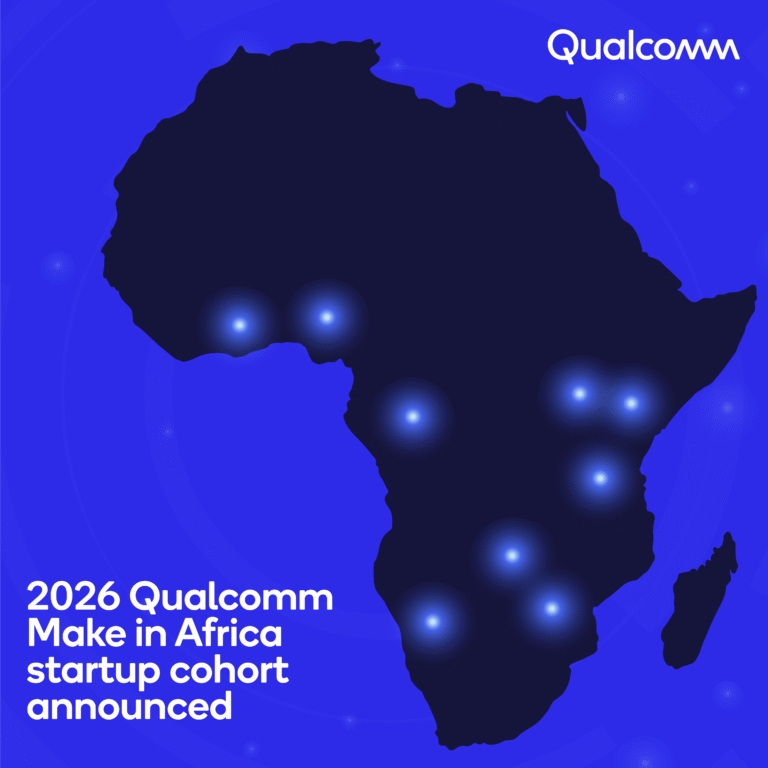
Kenyan robotics startup Zerobionic has been selected among 10 companies for Qualcomm’s 2026 Make in Africa Mentorship Programme, the U.S. chipmaker said, highlighting the country’s growing presence in Africa’s deep technology sector.

Zerobionic is developing assistive robotics solutions aimed at improving independence for people with disabilities, targeting a gap in accessible technology across the continent.

Qualcomm said the fourth edition of the programme, part of its Africa Innovation Platform, drew more than 1,200 applications from over 45 countries. The initiative supports early-stage startups working on technologies such as artificial intelligence, smart systems and connected devices.

Startups in the cohort will receive mentorship, engineering support and training on intellectual property, with those completing the programme eligible for stipends of up to $5,000 and potential funding through Qualcomm’s social impact initiatives.

“The quality and ambition of this year’s cohort reflect the rapid growth of Africa’s innovation ecosystem,” said Wassim Chourbaji, Qualcomm’s senior vice president and president for the Middle East and Africa.

The programme is run in partnership with the African Telecommunications Union (ATU). Other selected startups come from countries including Nigeria, Ghana, Uganda, Tanzania, Zambia, Namibia, Zimbabwe and the Republic of the Congo.


How Digital Platforms Are Transforming Vehicle Insurance in the UAE?

0

The vehicle insurance industry in the UAE is going through a noticeable shift. What was a process with many requirements like paperwork, office visits, and long waiting times has become easier and faster now due to digital platforms that are reshaping how people deal with car insurance.

Many drivers in UAE realise the difference nowadays. Steps to get insurance that used to take days can now be completed in minutes, often from home with just a smartphone and this transformation is changing expectations across the entire insurance experience.

In the past, getting vehicle insurance meant visiting multiple offices, speaking to insurance companies and agents, and dealing with physical documents.

The good news is that you no longer have to go through all of this to get insured because of AI and Technology that is Changing Car Insurance in the UAE, Digital platforms have simplified this process today by:

  • Browse multiple insurance options in one place
  • Compare coverage details side by side
  • Get instant quotes based on their profile
  • Complete the purchase online without paperwork

Speed ​​is one of the most significant advantages of digital platforms when obtaining vehicle insurance. Instead of waiting for responses and approvals the traditional way, which can lead to delays, users now receive information electronically and instantly without needing to be physically present.

You might wonder how this is possible. Well, advanced technological systems that utilize artificial intelligence are now able to analyze user data, such as driving history, vehicle type, and usage patterns, to generate instant quotes. This presents users with numerous options, allowing them to make an informed decision.

This process not only benefits users but also insurance companies, whose efficiency improves thanks to the rapid electronic procedures, enabling them to provide greater customer support.

Policy details, coverage limits, and add-ons are now easier to review before making a decision.

Users now have greater control over their documents through mobile applications, allowing them to easily:

  • Upload documents electronically
  • Update personal information
  • Purchase policies and download them digitally
  • Renew coverage

Digital platforms are now professionally utilizing data to design vehicle insurance policies in the UAE that cater to individual needs as well as those of institutions and companies.

For example, a driver who uses their car lightly on a daily basis will have less insurance requirements than drivers who travel long distances or are exposed to some level of risk.

Instead of being forced to choose a generic package that may not suit them, drivers can now select a plan that fits their budget and individual needs, allowing for more tailored coverage and cost-effectiveness.

Digital platforms have transformed vehicle insurance in UAE, not only in choosing the right plan but also in providing seamless claims and support services through technology and artificial intelligence.

Previously, claims processing involved potentially cumbersome stages and long waiting periods. Now, digital platforms offer a much simpler process, including:

  • submitting car insurance claims online
  • uploading photos and documents
  • expediting approval procedures
  • tracking the status of claims until processing is complete.

This digital transformation in claims processing is a radical shift for many, especially in situations requiring rapid response, such as accidents.

 To further facilitate the insurance sector through technology, mobile applications powered by digital platforms are designed to be simple and easy to use, from browsing quotes to claims, all with just a few clicks.

Despite the advantages that digital platforms have brought to the UAE’s car insurance sector, this digital transformation may present some challenges.

One unusual aspect is that some users may not feel comfortable with the electronic process and instead prefer direct interaction, which makes them feel more secure about their data privacy.

However, this does not prevent the shift towards digital insurance platforms from growing, accelerating, and evolving. A better user experience is expected to emerge through the use of artificial intelligence technologies.

Drivers who use their vehicles less or drive more safely benefit from lower insurance premiums.

Instead of paying a fixed price for coverage that a driver may not need based on their driving habits, thanks to technological advancements and digital platforms, vehicle insurance pricing in the UAE is now more closely linked to actual driving behavior.

Instead of navigating between different platforms, digital car insurance platforms allow users to manage everything related to their vehicles from one place by:

  • Purchasing insurance entirely online
  • Linking insurance to car financing options
  • Accessing roadside assistance and maintenance services

Customer service has become more seamless with the integration of artificial intelligence. Instead of relying solely on call centers, branch visits, insurance companies, or agents and brokers to understand vehicle insurance requirements.

Many digital platforms now use AI-powered chat systems to handle frequently asked questions, answer inquiries about insurance policies, coverage limits, and claims status updates.

Digital platforms provide assistance in automatically renewing vehicle insurance in the UAE by sending advance notices before expiry, or confirming pre-filled policy data to speed up the insurance renewal process, thus reducing the occurrence of fines or interruption in coverage.

Conclusion

Digital platforms have revolutionized the motor insurance sector in the UAE, making the experience more transparent, flexible, and responsive to user needs.

While some challenges and areas still require improvement, this digital experience has made insurance a seamless and accessible process, easily managed through mobile applications. This includes everything from obtaining and comparing quotes and purchasing policies online to claims and renewals. Further AI-powered technologies are expected to enhance the user experience in the insurance sector.


South Africa’s Refiant AI Raises $5 Million to Cut Energy Use in Artificial Intelligence

0

South Africa-founded startup Refiant AI has raised $5 million in seed funding to develop technology aimed at reducing the energy and computing costs of artificial intelligence systems.

The round was led by California-based climate technology investor VoLo Earth Ventures, the company said, without disclosing its valuation.

Founded in 2025 by Viroshan Naicker, Siddharth Gutta and Mathew Haswell, Refiant AI builds tools that compress and restructure AI models to make them more efficient. The company says its technology lowers the computational requirements of AI systems while maintaining performance, allowing them to run on smaller devices or local infrastructure.

The funding will be used to expand its platform, hire engineers and deepen partnerships with enterprise customers, the company said.

The investment comes as demand for AI drives a surge in spending on data centre infrastructure. Technology companies including Microsoft and Meta have committed tens of billions of dollars to expand capacity for AI workloads.

That growth has raised concerns over energy consumption. Data centres are among the fastest-growing sources of electricity demand globally, with projections showing usage could more than double in the next decade as AI adoption increases.

Refiant AI said its approach offers an alternative to scaling AI through larger infrastructure.

“AI’s growing energy footprint is one of the most urgent challenges in the climate space,” co-founder Siddharth Gutta said. “Our approach is to make the AI itself more efficient.”

The company said its technology could be particularly useful in regions with limited computing resources or high cloud costs, including for sectors such as banking, telecommunications and government services.

Refiant AI is in early discussions with multinational technology firms as it seeks to expand its customer base.

“AI’s biggest constraint isn’t demand — it’s energy,” said Joseph Goodman, managing partner at VoLo Earth Ventures. “Refiant’s approach focuses on efficiency rather than brute-force scaling.”

Saudi Edtech Startup GAGA Raises $2.5 Million to Scale Live Learning Platform


Saudi Arabia-based edtech startup GAGA has raised $2.5 million in a pre-Series A funding round led by Phoenix Venture Partners, bringing its total funding to $4.2 million.

Founded in 2021 by Abdullah Alkharsani and Eyad Alshabaan, GAGA provides live, interactive online education for students aged 4 to 18. The platform offers more than 1,000 programmes across 200 subjects, combining academic and skills-based learning through real-time teacher engagement.

The company differentiates itself from traditional recorded-content platforms by focusing on live, gamified sessions that aim to improve student engagement and learning outcomes.

GAGA is also developing AI-powered tools to personalise learning journeys, assess student performance and identify knowledge gaps, enabling more tailored education pathways.

The new funding will be used to expand its teacher network, strengthen its technology infrastructure and scale Arabic-language educational content across Saudi Arabia. It will also support the continued development of its AI capabilities.

GAGA is positioning itself as an alternative to private tutoring and passive digital learning platforms in the Kingdom.

Kenya Probes Ray-Ban Meta Smart Glasses Over Privacy & Surveillance Concerns

Kenya’s Office of the Data Protection Commissioner has opened an investigation into the use of Ray-Ban Meta smart glasses, citing growing concerns over privacy, surveillance, and the potential misuse of personal data in artificial intelligence training.

The regulator said it had initiated suo moto proceedings following reports that the AI-powered wearable devices may be capturing and processing personally identifiable information without adequate user consent, raising questions about compliance with Kenya’s data protection laws.

The inquiry comes after a formal petition by The Oversight Lab, which earlier in March called for scrutiny of the glasses’ surveillance capabilities and their broader human rights implications.

“The ODPC is taking this matter seriously and has decided to investigate,” said Mercy Mutemi, Executive Director at The Oversight Lab, who urged authorities to ensure a transparent and consultative review process. She added that the findings could set a precedent for how Kenya governs emerging digital technologies.

Public pressure has intensified, with more than 150 organizations and individuals backing calls for an inquiry and demanding greater accountability from both regulators and technology firms.

Concerns escalated further following local reports alleging that an individual used the smart glasses to secretly record women without their consent, an indecent incident that has amplified fears over the misuse of discreet recording features embedded in wearable devices.

Separately, international media investigations have raised questions about how data collected through such devices is processed. Some reports suggest that footage captured globally may have been reviewed in Nairobi by contracted workers, including sensitive and private recordings.

Regulators ‘playing catch-up’ on wearables

According to Maria Buza, Senior Policy Analyst at Digital Policy Alert, existing data protection frameworks including Kenya’s apply in principle to wearable technologies, but were not designed with always-on, body-worn devices in mind.

“These frameworks regulate the processing of personal data regardless of the device used,” Buza said. “The challenge lies in their level of specificity, particularly for technologies that continuously generate and infer data beyond traditional contexts.”

She noted that wearable devices can capture sensitive personal data such as biometric identifiers and behavioural patterns, making compliance more complex especially when data is collected passively in public or semi-public spaces involving individuals who are not aware they are being recorded.

Traditional consent models, she added, assume a clear relationship between users and data controllers, an assumption that breaks down when devices collect data continuously and from bystanders.

Maria Buza, Senior Policy Analyst at Digital Policy Alert

“Obtaining consent from all affected individuals may not always be feasible,” Buza said, pointing to the need for additional safeguards such as transparency measures, data minimisation, and privacy-by-design systems.

Global policy response taking shape

Buza pointed to emerging regulatory responses globally, noting that policymakers are beginning to adapt frameworks to address wearable surveillance risks.

In Switzerland, authorities have issued guidance on connected devices, warning that covert recording via wearables could constitute an offence. Brazil and parts of the United States are also considering laws requiring visible or audible recording indicators and stricter safeguards for AI-enabled glasses.

“These developments suggest a shift towards complementing consent with stronger transparency requirements and default safeguards,” she said.

Digital Policy Alert database provides a growing body of evidence tracking how governments are responding to such challenges. The platform monitors regulatory developments across G20 economies including the European Union and its member states as well as Switzerland and several Southeast Asian countries such as Malaysia, New Zealand, the Philippines, Singapore, Thailand, and Vietnam.

More recently, it has expanded coverage in Africa, tracking how countries including Algeria, Egypt, Ethiopia, Ghana, Kenya, Morocco, Nigeria, and Rwanda regulate the digital economy and enforce emerging rules.

The database also tracks international cooperation frameworks addressing the digital economy, including those focused on artificial intelligence governance.

Cross-border data risks under scrutiny

The investigation also highlights concerns around cross-border data processing particularly where sensitive or non-consensual recordings are involved.

Buza warned that transferring data across jurisdictions can create compliance and accountability risks, especially where legal protections differ.

“Where data is collected in one country and processed in another, the level of protection depends on the safeguards in the receiving jurisdiction,” she said.

Kenya’s Data Protection Act provides several mechanisms for cross-border transfers, including adequacy decisions, appropriate safeguards such as binding corporate rules, necessity-based transfers, and explicit consent which is mandatory for sensitive personal data.

The issue is particularly relevant as Kenya and the European Union continue discussions on a potential data adequacy agreement, a move that could shape future digital trade and data governance.

Rethinking consent in the age of invisible recording

Buza said policymakers may need to rethink how consent is defined in a world where recording devices are embedded in everyday objects and are not easily detectable.

“The assumption that individuals are aware of data collection and able to make informed choices becomes less applicable,” she said.

Instead, regulators are increasingly exploring complementary approaches, including visible recording indicators, clearer disclosures, and mechanisms that allow individuals to opt out where feasible.

Global implications for Meta and AI regulation

The scrutiny extends beyond Kenya. Meta Platforms, which produces the glasses in partnership with Ray-Ban, is facing regulatory attention in multiple jurisdictions. In the United Kingdom, the Information Commissioner’s Office has launched a similar review into potential privacy breaches linked to the devices.

Meta is also confronting legal challenges in the United States over its handling of user data, adding to mounting global pressure on the company.

Buza noted that investigations such as Kenya’s could have broader ripple effects.

“Past cases show that investigative reporting and civil society engagement can influence regulatory responses,” she said, citing recent global scrutiny of AI systems and biometric data collection practices.

She added that findings from such probes could lead to new enforcement actions and legislation requiring stronger safeguards including clearer disclosures, visible recording indicators, and stricter limits on how data from wearable devices is used, particularly in AI training.

The ODPC said it would provide further updates once the investigation is complete.

The case underscores the growing tension between rapid innovation in AI-powered consumer devices and the ability of regulators to safeguard privacy, as technologies increasingly blur the boundaries between public and private life.


UAE’s Zypl.ai Raises $5.5 Million at $80 Million Valuation to Scale AI Credit Decisioning


UAE-based credit scoring platform zypl.ai has raised $5.5 million in a bridge funding round led by Carbide Ventures, with participation from investors including Eurasian Resources Group CEO Shukhrat Ibragimov, the company said on Thursday.

The round values the artificial intelligence firm at $80 million and will support its global expansion and deployment of next-generation AI solutions for financial institutions.

Founded in 2021 by Azizjon Azimi, zypl.ai develops synthetic data technology designed to improve credit decision-making, particularly in volatile economic environments. Its proprietary generative AI model, known as zGAN, focuses on producing outlier synthetic data to enhance predictive accuracy.

The company’s technology is integrated into its no-code platform, Lucid, which enables banks and other financial institutions to build and deploy AI models independently.

“Carbide Ventures first invested in zypl a year ago and is thoroughly impressed with the team, product and growth over the past twelve months,” said Dan Weirich, general partner at Carbide Ventures. “When given the opportunity to invest more, we jumped on it immediately.”

zypl.ai currently serves more than 60 financial institutions across 20 markets and counts Prosus Ventures among its backers.

Ibragimov, one of the investors in the round, is CEO of Eurasian Resources Group and chairman of Eurasian Bank and Eurasia Insurance Company.

The funding marks a key step in zypl.ai’s efforts to scale its AI-driven credit scoring solutions across new markets.


UAE Launches World’s First Commercial Upper 6GHz Network Ecosystem

The United Arab Emirates has announced the launch of the world’s first commercial upper 6GHz (U6GHz) network ecosystem, in a move aimed at accelerating next-generation connectivity and supporting the transition toward 6G technologies.

The initiative was unveiled at the SAMENA Council Leaders’ Summit 2026 and is being led by the Telecommunications and Digital Government Regulatory Authority (TDRA), alongside telecom operators, equipment makers and global industry bodies.

U6GHz refers to the 6425–7125 MHz spectrum band, offering 700 MHz of contiguous bandwidth. The band is expected to support peak download speeds of up to 10 gigabits per second under 5G-Advanced standards, while enabling broader coverage than higher-frequency millimeter wave spectrum.

TDRA said the rollout would begin commercially in 2026 as part of the country’s push to become a “10 Giga intelligent nation,” calling on device manufacturers and chipmakers to accelerate support for the band.

The announcement brings together industry participants including Huawei, Nokia, e&, du, GSMA and the SAMENA Telecommunications Council, reflecting a coordinated effort to move the spectrum from trials to large-scale deployment.

Officials said the upper 6GHz band would play a central role in handling rising data demand driven by artificial intelligence, cloud computing and connected devices, while also serving as a foundation for future 6G networks.

Analysts say early deployment could give the UAE a first-mover advantage by attracting investment, shaping global standards and enabling faster adoption of emerging digital services across sectors such as finance, healthcare and manufacturing.

Operators in other markets, including Europe, China and Latin America, have conducted field trials of the band, but most countries have yet to move to full commercial rollout.


Samsung Retains No. 1 Position in Global Gaming Monitor Market for Seventh Year

0

 Samsung Electronics Co., Ltd. today announced it has retained its position as the world’s No. 1 gaming monitor brand for the seventh consecutive year, continuing a run that started in 2019.

According to the latest data from International Data Corporation (IDC), Samsung captured 18.9% of the global gaming monitor market by revenue, reinforcing its leadership in high-performance gaming displays. Samsung also ranked first in the OLED gaming monitor segment for the third consecutive year, achieving a 26% market share.

“As the No. 1 gaming monitor brand, our goal is to continue leading the market with differentiated innovation,” said Hun Lee, Executive Vice President of Visual Display (VD) Business at Samsung Electronics. “Strong partnerships with game studios guide our innovation, while a clear technology roadmap keeps us focused. By expanding our gaming library and broadening platform compatibility, we’re delivering displays that perform when it matters most to gamers.”

“In gaming, the smallest difference makes all the difference,” said esportsstar Lee ‘Faker’ Sang-hyeok of T1. “Being No. 1 for seven consecutive years shows that so many of us choose Samsung for a reason. I’m excited to see what innovative gaming technologies Samsung will bring next to help us perform at our best.”

Samsung’s sustained leadership reflects its focus on next-generation gaming monitor technology and immersive gaming experiences. That momentum was recently on display at GDC 2026 in San Francisco, where Samsung showcased its latest Odyssey lineup, giving developers a firsthand look at glasses-free 3D and HDR10+ GAMING. The 2026 Odyssey lineup includes:

  • 27-inch Odyssey 3D (G90XF model): Glasses-free 3D gaming with advanced eye-tracking that delivers natural-looking depth and makes action jump off the screen.
    • Odyssey 3D Hub supports a growing library of compatible titles, including “Hell is Us” and “Cronos: The New Dawn,” with plans to support over 120 titles this year.
  • 32-inch Odyssey OLED G8 (G80HS model): Stunning 4K QD-OLED at 240Hz with exceptional color and contrast, protected by Samsung OLED Safeguard+ technology.
  • 32-inch Odyssey G8 (G80HS model): The industry’s first 6K gaming monitor, delivering native 165Hz performance with Dual Mode support up to 330Hz in 3K. This model also offers VESA-certified DisplayPort 2.1 (DP 2.1) connectivity, which supports smooth gaming and efficient video playback.
  • 27-inch Odyssey G6 (G60H model): The world’s first 1,040Hz gaming monitor with Dual Mode, delivering esports-level motion clarity and responsiveness.

Kenya’s Mobile Money Subscriptions Hit 51.36 Million, Safaricom Maintains Lead

Kenya’s mobile money sector continues to drive growth in a maturing telecommunications market, with subscriptions reaching 51.36 million in the second quarter of the 2025/26 financial year, according to the Communications Authority of Kenya.

While total mobile (SIM) subscriptions barely increased by 0.1% to 78.4 million, mobile money uptake grew 5.6%, highlighting a shift in the industry: growth is no longer defined by new subscribers, but by the depth and diversity of services consumers use.

Safaricom remained the dominant player in mobile money through M-Pesa, accounting for 45.7 million users, roughly 89% of the market. Rivals are gradually making inroads; Airtel Money Kenya increased its subscriptions to 5.6 million, lifting its market share to 11.0% from 10.3% in the previous quarter. Analysts say even modest gains are significant in a highly concentrated market, signaling early competitive shifts.

This competitive dynamic is mirrored in broader mobile subscriptions. Safaricom remains the largest network with about 53.9 million subscriptions, followed by Airtel Kenya with 24.3 million, Telkom Kenya with 1.1 million, and smaller operators and MVNOs holding marginal shares.

Voice services continue to play a key role in engagement. Airtel Kenya recorded 11.83 billion minutes of voice traffic, up 2.4% from the previous quarter, with off-net calls rising 8.4%, showing increased cross-network communication. Airtel users averaged 2.7 minutes per call, compared to about 1.6 minutes on Safaricom, illustrating how pricing continues to shape usage patterns.

At the same time, data adoption is rising steadily. Mobile data subscriptions grew 2.9%, broadband connections by 9.3%, and overall smartphone adoption increased 9.1%, reinforcing the trend toward a data-driven digital economy. Meanwhile, SMS volumes declined across all networks, reflecting a structural shift toward internet-based messaging platforms.

Other players, including Jamii Telecommunications, remain niche, while entrants like Starlink are starting to influence connectivity, particularly in underserved regions, which may create new channels for mobile money adoption in the future.

The latest report highlights that Kenya’s telecom sector is moving beyond subscriber numbers. Market leadership is increasingly determined by how well operators integrate financial services, maintain affordability, and deepen consumer engagement, making mobile money central to the country’s digital economy.


Madica Invests $600,000 in Three African Startups, Launches Fundraising Guide

0

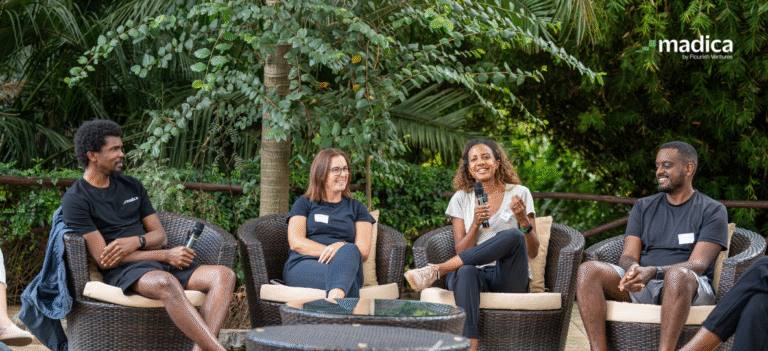
Madica, an early-stage investment program,  has invested a total of $600,000 across three African startups—Kilimo Fresh, Hakimu, and Biovana—as it expands efforts to support underrepresented founders on the continent.

Each startup will receive up to $200,000 in pre-seed funding and participate in Madica’s 18-month support program, which includes mentorship, executive coaching, and funded immersion trips to global and regional technology hubs.

Madica, launched in 2022, focuses on addressing structural gaps in Africa’s startup ecosystem, including limited access to capital, investor networks, and hands-on operational support.

The latest investments span key sectors such as agriculture, legal technology, and health data infrastructure.

Kilimo Fresh, based in Tanzania, operates a technology-enabled supply chain that connects smallholder farmers to urban markets, aiming to reduce food waste and improve income stability.

Kenya’s Hakimu is building AI-powered legal infrastructure designed to expand access to justice across Africa.

Meanwhile, Nigeria-based Biovana focuses on harmonising and certifying African health datasets for use in global pharmaceutical research and artificial intelligence applications.

Madica said the investments are part of a broader strategy to diversify venture capital flows across the continent, which have historically been concentrated in a few markets and sectors.

“Each new investment brings us closer to building a portfolio that reflects the full breadth and diversity of African entrepreneurship,” said Emmanuel Adegboye, head of Madica.

As part of its ecosystem-building efforts, the firm also launched a 75-page fundraising guide titled “Zero to Funded: A Founder’s Guide to Pre-Seed Fundraising in Africa, aimed at helping first-time founders navigate early-stage capital raising.

The guide provides practical tools, templates, and insights on engaging investors, understanding venture capital trade-offs, and aligning local business realities with global expectations.

Madica also appointed Tauriq Brown as a mentor to support founders with operational and scaling expertise.

The program said it will continue seeking investment opportunities across Africa as it builds a more inclusive startup ecosystem.


Google, UpSkill Universe Relaunch Hustle Academy to Expand Free AI Training Across Africa

0

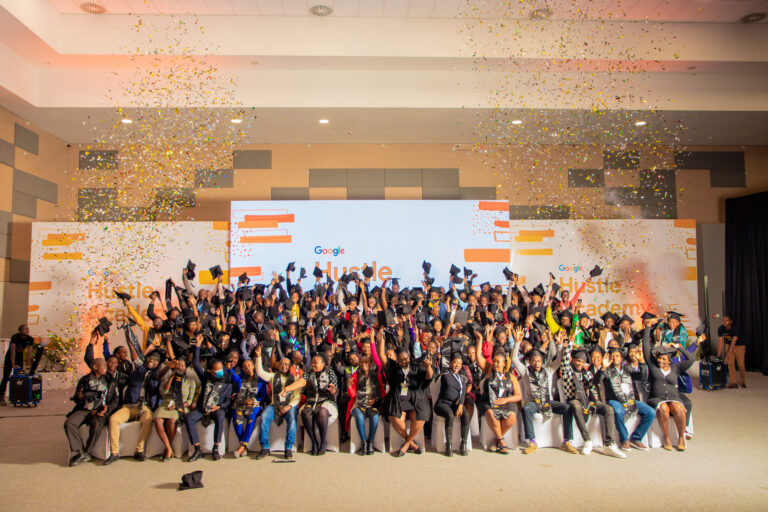
Google and UpSkill Universe have relaunched the Hustle Academy programme, expanding the free training initiative to individuals across Africa as demand for artificial intelligence (AI) skills accelerates.

The programme, first introduced in 2022 to support small and medium-sized enterprises (SMEs), has trained more than 18,000 businesses in digital skills, leadership and AI, with participants reporting gains in revenue and job creation.

The 2026 edition opens access beyond business owners to include students, employees and jobseekers, reflecting shifts in the labour market driven by AI adoption. The updated format features 60-minute webinars alongside more intensive bootcamps focused on practical applications in digital commerce, marketing and growth strategy.

“AI is reshaping how businesses win and how careers are built across this continent,” said Gori Yahaya, founder and chief executive of UpSkill Universe, adding the programme aims to deliver “hands-on training that is short, focused, and immediately useful.”

Small businesses account for more than 80% of jobs in Africa, making upskilling a key economic priority. The initiative is designed to help participants move from basic awareness of AI to practical implementation, improving competitiveness in a digital economy.

Google said the redesigned programme focuses on scaling access to AI tools and training for individuals and entrepreneurs alike.

Applications for the 2026 cohort are open.  Interested participants can apply at: https://rsvp.withgoogle.com/events/hustle-academy

Egypt’s Reme-D Raises $500,000 to Expand Room-Temperature Diagnostics Across Africa

0

Egyptian biotech startup Reme-D has secured $500,000 in funding from the Global Innovation Fund to expand production and distribution of its room-temperature stable molecular diagnostic kits across Africa, the company said on Tuesday.

Founded in 2022 by nanotechnology researcher Salma Tammam, Reme-D was initially developed as part of a government-backed effort to address shortages of PCR testing during the COVID-19 pandemic. The company has since pivoted toward tackling broader diagnostic gaps in emerging markets.

Traditional PCR tests require constant refrigeration, posing challenges in regions with unreliable electricity. Reme-D uses freeze-drying and nanotechnology to stabilise reagents at room temperature for extended periods, reducing dependency on cold-chain logistics.

The company says its kits can cut diagnostic costs by up to 40% compared with imported alternatives, while maintaining clinical accuracy of 95% sensitivity and 98% specificity. Its products are also tailored to detect local pathogen variants.

Reme-D currently operates in Egypt, Iraq, Sudan and Kenya, with early deployments in Nigeria and Libya. It processes around 50,000 tests monthly across 92 hospitals and laboratories in Egypt and has tested more than 500,000 patients to date.

The startup previously raised about $1 million, including backing from the Oman Technology Fund.

Adoption has been particularly strong in blood banks, where Reme-D’s technology has shortened screening times by enabling direct molecular testing of donated blood, replacing slower two-step processes.

Despite growing demand, the company faces production and regulatory challenges. While its facility in Egypt can produce up to 12 million tests per month, packaging constraints currently limit output to about 130,000 units. Reme-D plans to expand capacity later this year.

Regulatory fragmentation across African markets also remains a barrier, with approval processes varying widely and often favouring established international manufacturers.

Tammam said investor skepticism toward African biotech firms has been an additional hurdle. The company recently received the Bayer Foundation Women Empowerment Award, which included a €25,000 grant.

Reme-D plans to use the new funding to scale operations and support commercial expansion into Nigeria and Libya, while advancing research into diagnostics for cancer, genetic disorders and maternal health.

Endeavor South Africa Closes $12.5 Million Venture Fund to Back Startups

0

Endeavor South Africa has closed its third Harvest Fund at 230 million rand ($12.5 million), targeting later-stage technology companies as investor appetite grows for African scale-ups.

The fund, Harvest Fund III, will co-invest alongside lead investors in Series B and later-stage rounds, focusing on companies with proven traction and expansion potential, the organisation said on Tuesday.

The vehicle builds on its predecessor and reached a final close after raising 190 million rand in October 2024.

It has already deployed capital into companies including GoTyme Bank, Onafriq, Entersekt and Plentify.

Investors in the fund include FirstRand, SA SME Fund, Standard Bank and Allan Gray, alongside a group of founders and operators.

“Harvest Fund III reflects what Endeavor has always believed: the strongest venture ecosystems are built when successful founders reinvest,” said Tjaart van der Walt, a board member at Endeavor South Africa.

The fund draws from a pipeline of about 40 Endeavor-backed companies across South Africa, Nigeria, Egypt and Kenya, within a broader portfolio of 144 businesses.

Endeavor South Africa said its previous fund’s portfolio companies recorded annual revenue growth of 49% and employment growth of 24% between 2020 and 2025, while raising more than 27 billion rand over the period.

CEO Alison Collier said the fund aims to address gaps beyond capital, including access to global networks and founder-led mentorship.

“As the market matures, exits matter more than ever. They validate the asset class, recycle capital, and build long-term confidence in venture investing,” said Ketso Gordhan.

The fund is expected to support companies scaling across borders as global investors increasingly look to high-growth markets outside traditional venture hubs.

Morocco’s ZSystems Raises $1.65 Million to Digitise $40 Billion B2B Commerce Market

0

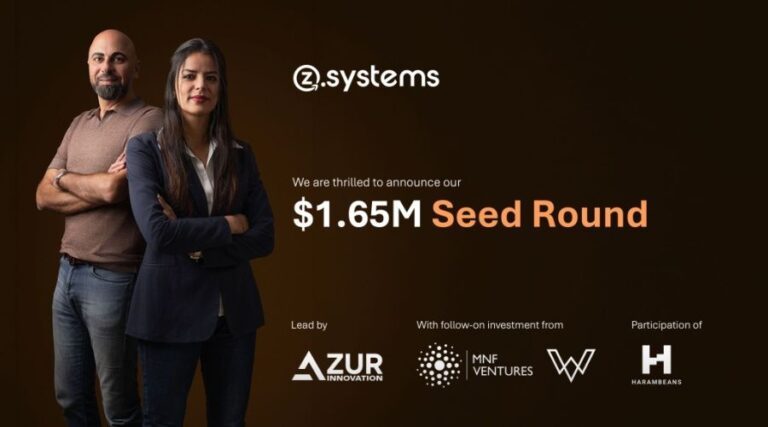
ZSystems, a Moroccan startup, has secured $1.65 million in seed funding to accelerate the development of its unified digital commerce platform, targeting inefficiencies in a largely undigitised $40 billion market.

The round was led by Azur Innovation Management, with continued backing from existing investors MNF Ventures and Witamax. The Harambeans Prosperity Fund also joined as the company’s first international institutional investor.

The latest raise brings ZSystems’ total funding to $2.7 million, following a $1.05 million pre-seed round backed by MNF Ventures, Witamax, CASHPLUS Ventures, and Kalys Ventures.

ZSystems is building a platform that connects brands, wholesalers, and retailers into a single ecosystem, aiming to improve transparency, streamline operations, and unlock growth opportunities across fragmented supply chains.

Beyond funding, the company is supported by the European Bank for Reconstruction and Development’s Star Venture programme and Amazon Web Services, providing access to infrastructure and scaling support.

The new capital will be used to enhance product development, expand the platform’s reach, and deepen market penetration as ZSystems seeks to modernise B2B commerce across Morocco and the wider region.


Nigeria’s Paga Appoints Opeyemi Oyinloye as Nigeria CEO | Tayo Oviosu Assumes Group CEO

Nigerian fintech company Paga has appointed Opeyemi Oyinloye as acting chief executive of its Nigeria business, marking a major leadership transition after more than a decade under founder leadership.

Founder Tayo Oviosu said in a LinkedIn post he will step away from the day-to-day running of the Nigeria unit to assume the role of Group CEO, where he will oversee the company’s broader strategy and expansion. Oyinloye’s appointment is subject to approval from the Central Bank of Nigeria.

The move marks the first time since Paga’s launch in 2009 that its Nigeria operations will be led by someone other than its founder.

The company said the leadership change is part of a wider restructuring aimed at positioning Paga for its next phase of growth, including expansion into other African markets and increased investment in emerging areas such as artificial intelligence, stablecoins and global payments infrastructure.

Oviosu, who has led Paga since inception, will focus on scaling the group’s technology and strengthening its position as a financial services platform connecting African users to global systems.

Oyinloye, who has held senior roles within the company, will oversee operations in Nigeria, Paga’s largest and most mature market.

The transition comes amid strong growth, with Paga processing 17.1 trillion naira in transactions in 2025, a 96% increase year-on-year, highlighting rising adoption of digital payments in Nigeria.

The company has also expanded beyond its home market through partnerships with global players such as PayPal and by building products for cross-border transactions.

Paga’s restructuring reflects a broader trend among African fintechs, where founders are increasingly moving into group or strategic roles as companies scale across markets. Similar leadership transitions have been observed at firms such as Flutterwave, as they evolve from local payment solutions into multi-market financial infrastructure providers.

The company said the changes signal the start of a new phase focused on cross-border payments, interoperability and building scalable systems for digital finance.

Egypt’s Lucky Raises $23 Million Series B to Expand Credit and Target North Africa

0

Egyptian fintech platform Lucky App has raised $23 million in a Series B funding round combining equity and debt, as it looks to scale its consumer credit offering and expand into North Africa.

The round drew participation from a mix of existing and new investors, including Disruptech Ventures and DPI Venture Capital through the Nclude Fund. Strategic investors Suez Canal Bank and OneStop also joined the round.

As part of the deal, Egyptian tech investor Mohamed Farouk has been appointed Chairman of Lucky’s Board.

The funding comes after a strong growth period for the Cairo-based company, which reported threefold annual growth in 2025 and reached profitability by year-end, positioning itself among a growing cohort of African fintechs balancing scale with sustainable margins.

Lucky operates in the consumer credit space, offering users access to financing through a card-based system accepted across merchants. The company is betting on rising demand for digital financial services in Egypt, where regulators are pushing financial inclusion under the Central Bank of Egypt.

“Lucky has demonstrated disciplined growth, strong product-market fit, and a clear vision for inclusive digital finance,” said Farouk, noting the company is well-positioned to capture the next wave of consumer credit and neo-banking in the region.

Chief Executive Ayman Essawy said the capital will be used to scale operations while investing in infrastructure and regulatory readiness.

“Financial access is the foundation of progress. This round allows us to scale responsibly and deepen our impact as regulators unlock digital onboarding and modern payment frameworks,” Essawy said.

Egypt’s fintech sector has seen increasing regulatory support, including progress on digital onboarding, improved payments infrastructure, and the rollout of Payment Service Provider (PSP) licensing frameworks—developments that are lowering barriers for fintech expansion.

Lucky said it has already begun the process toward securing a PSP license, a move that would allow it to broaden its product stack into more comprehensive digital financial services.

The company also plans to expand beyond Egypt into select North African markets, leveraging its growing merchant network and user base.

Across Africa, fintech startups continue to attract investor interest, particularly those focused on credit access and embedded finance, as millions of consumers remain underserved by traditional banking systems.

Cape Town AI Startup Yazi Raises First Institutional Funding at $1.6 Million Valuation

0

Cape Town-based AI research platform Yazi has raised its first institutional funding round from 3 Capital Ventures at a pre-money valuation of $1.6 million, the company said. The size of the investment was not disclosed.

Founded in 2022 by Chief Executive Timothy Treagus and Chief Technology Officer Mzwandile Sotsaka, Yazi enables companies to conduct surveys, interviews, diary studies and panel research via WhatsApp. Its platform uses artificial intelligence to engage respondents in conversational formats, ask follow-up questions and analyse responses in real time.

The investment comes from 3 Capital Ventures, an early-stage firm spun out of Allan Gray. The funding will be used to advance product development, expand Yazi’s research panel and support international growth.

As part of its roadmap, Yazi plans to introduce automated voice interviews on WhatsApp and broaden its participant base across Africa, while scaling demand from research agencies in the United Kingdom and Europe.

The company currently operates in more than 15 countries and has access to 1.8 million pre-qualified research participants. Its client base includes Old Mutual, Pick n Pay, Discovery, Capitec and Ipsos.

Yazi said revenue increased 2.5 times over the past financial year, with 64% month-on-month growth recorded in the most recent quarter. More than 65% of its revenue is generated in foreign currencies.

Treagus attributed the company’s growth in part to AI-driven search visibility. “We rank number one on Google for WhatsApp research keywords and more than 80% of our leads come through AI search,” he said.

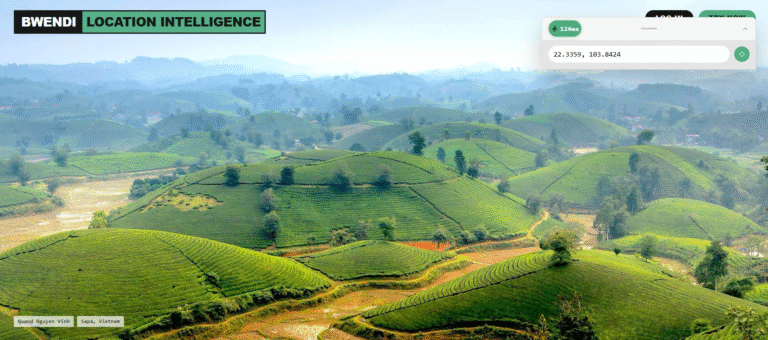
Bwendi Wants to Solve Africa’s Addressing Problem

0

For decades, Africa has lacked a reliable addressing system, a gap that has hindered e-commerce, financial services, and logistics. Across 54 countries and 1.4 billion people, many locations cannot be formally verified, creating friction for businesses and consumers alike.

Swiss-based location intelligence startup Bwendi said on Thursday it has deployed a system capable of turning GPS coordinates into verifiable digital addresses, bypassing the need for street signs or government-issued postal codes.

Founder Francis Osih previously led Cameroon’s national digital addressing project in 2019. Despite technical success, the system was discontinued due to corruption and bureaucratic hurdles. “We needed to build something that could not be switched off,” Osih said. “Not dependent on a single government, but usable by anyone building for Africa.”

The platform is now based in Switzerland and designed to operate independently of any state. In many African cities and rural areas, directions rely on landmarks rather than numbered streets. Phrases such as “turn after the church, next to the blue pharmacy” are common. While intuitive for people, these directions are difficult for digital systems that require precise, standardized location data.

Bwendi’s API converts any GPS coordinate into a structured address, enriched with local economic and commercial context. Responses are delivered in under 20 milliseconds and localized in more than 30 African languages. Rather than simply labeling a place, the system attempts to define its economic relevance, supporting credit scoring, logistics optimization, and marketplace expansion.

Africa receives less than 3 percent of global venture capital. Analysts cite infrastructure gaps, such as addressing, as a key reason for investor hesitation. okHI has been building a similar platform for years but Bwendi aims to reduce friction for fintechs, logistics firms, and online marketplaces by providing a standardized “address-of-record.”

The company said its platform currently covers all 54 African countries, supports 1.4 billion people, indexes over 19 million commercial points of interest, and delivers responses in approximately 20 milliseconds. The API is publicly available to developers and enterprise partners at https://bwendi.com/en/africa.

The success of digital addressing systems depends on adoption. Bwendi’s platform aims to make Africa’s locations legible to the digital economy, but its impact will hinge on how widely it is integrated by businesses and governments.


Airtel Surpasses 650 Million Users, Ranks Second Globally by Subscribers

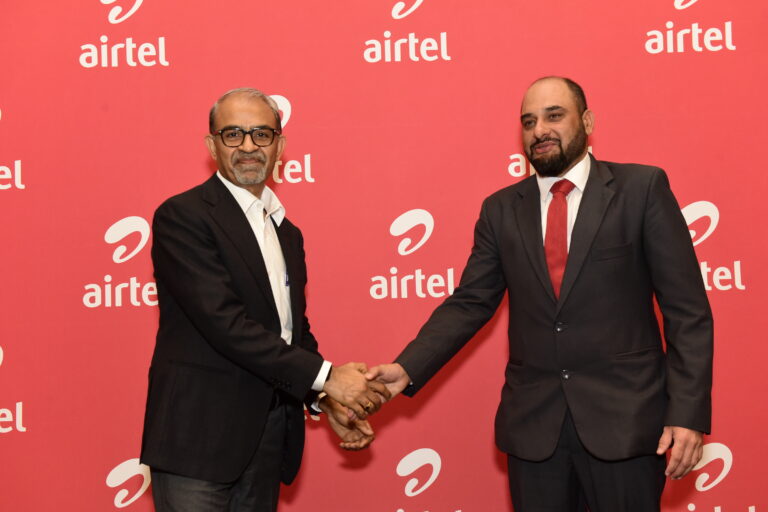
India’s Bharti Airtel has surpassed 650 million customers, becoming the world’s second-largest mobile operator by subscriber base, according to GSMA Intelligence, as the telecom group expands across India and Africa.

The milestone underscores Airtel’s growing scale in two of the fastest-growing telecom markets globally, with over 368 million users in India and 179 million across 14 African countries.

Airtel has been investing heavily in next-generation networks and digital services to drive growth. In India, the company has rolled out 5G Plus services, alongside offerings such as Xstream AirFiber and IPTV, as it targets rising demand for high-speed data. It serves more than 13 million broadband homes and over 15 million digital TV customers, it said.

The company is also expanding its enterprise segment through Airtel Business, offering services including cloud computing, cybersecurity, software-defined wide area networks (SD-WAN), and Internet of Things (IoT) solutions. Its infrastructure includes more than 400,000 route kilometres of subsea cables and a network of Nxtra data centres.

In a push to diversify revenue, Airtel recently entered the non-banking financial services (NBFC) sector, aiming to offer credit and financial products via its mobile app.

In Africa, Airtel continues to scale its Airtel Money platform, which has grown to over 52 million users, providing mobile payments and banking services in markets with limited access to traditional financial systems.

The company is also investing in satellite-based connectivity through partnerships with Eutelsat OneWeb and SpaceX, targeting broadband access in remote and underserved areas.

“Achieving the milestone of 650 million customers is a great responsibility,” Executive Vice Chairman Gopal Vittal said, adding the company would continue to invest in network quality and customer experience.

Airtel’s growth reflects broader industry trends, with telecom expansion increasingly driven by emerging markets in Asia and Africa, where mobile and financial services adoption continues to rise.

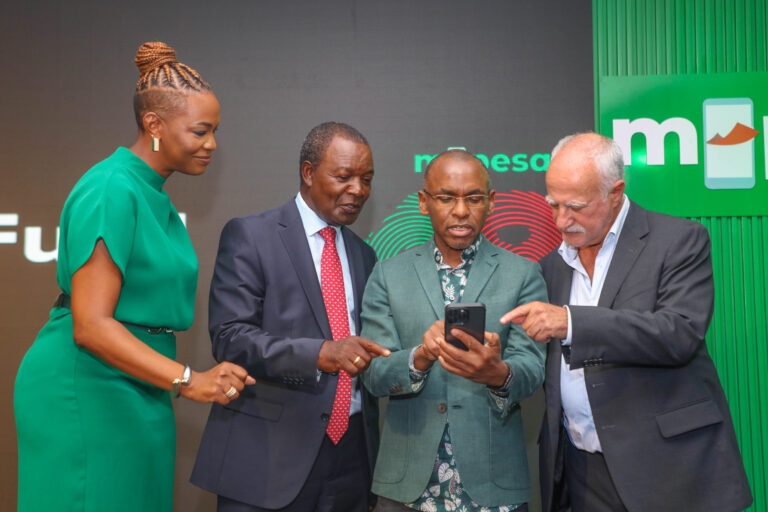
Safaricom’s AI Super App Moment: Inside the Launch of My OneApp and Kenya’s Next Digital Leap

Safaricom is not content with being just a telco and payments company but a tech giant with ambitions to become the operating system of kenya’s everyday life.

These was made clear at its launch of My OneApp at the Decode Summit in Nairobi, yesetrday. My OneApp merges the widely used M-PESA app with the struggling MySafaricom App into a single, AI-powered “super app” placing Safaricom at the center of Kenya’s emerging digital economy.

“This is not just about convergence,” said Chief Financial Services Officer Esther Waititu. “It’s about building intelligence into the customer experience.”

From Super App to Smart Infrastructure

Though this shift is not limited to Safaricom, but a broader global trend where telecom operators are transforming into technology platforms. Few have the advantage Safaricom holds via its deep financial rails through M-PESA platform and its unmatched agency distribution network across Kenya.

With over 6.5 million monthly active users and 80+ integrated mini-apps, My OneApp isn’t starting from zero. It is building on a mature ecosystem and layering intelligence on top.

The differentiator is artificial intelligence.

Rather than acting as a static interface, My OneApp learns user behavior by prioritizing frequent transactions, surfacing relevant services, and adapting in real time. Whether it’s recurring bill payments, lending habits, or investment activity, the app reorganizes itself around the user.

In effect, Safaricom is shifting from a menu-based experience to a predictive one.

The Quiet Power Play: Owning the Customer Journey

For years, M-PESA dominated payments but existed alongside separate apps, USSD flows, and fragmented digital services. My OneApp collapses those layers into a single interface bringing telecom, finance, and lifestyle into one continuous experience.

That matters.

Because in digital ecosystems, whoever owns the interface often owns the customer relationship.

Inside My OneApp, users can:

  • Pay bills and manage airtime
  • Access Fuliza credit
  • Invest in money market funds via Ziidi
  • Trade shares through CD Trader
  • Run small businesses using Pochi la Biashara
  • Purchase insurance products
  • Engage with entertainment, gaming, and third-party services

This is no longer just fintech. It’s platform economics.

Scaling for a Digital Economy

Behind the user interface lies a less visible but critical transformation: infrastructure.

Safaricom says it has upgraded its systems to handle up to 6,000 transactions per second, a dramatic leap from roughly 100 transactions per second in earlier years. This shift to a multi-tenant, AI-first architecture reflects long-term thinking preparing not just for today’s usage, but for an ecosystem of developers and services yet to be built.

Through its Daraja API platform, which already supports more than 66,000 integrations, Safaricom is positioning itself as the backbone for innovation.

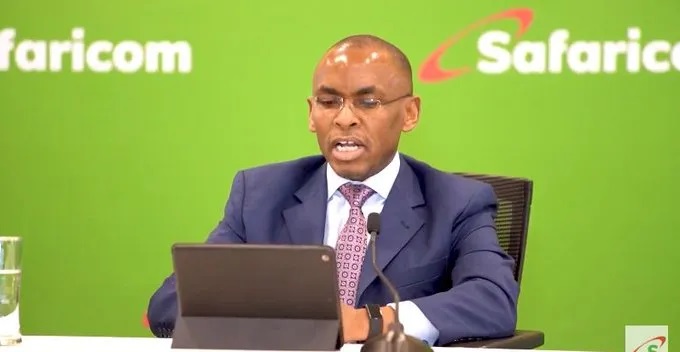
CEO Peter Ndegwa framed it simply, “Our role is to provide the rails. What gets built on top of them will define the future.”

From Financial Inclusion to Financial Power

M-PESA’s first chapter was about access. It helped move Kenya’s financial inclusion rate from 23% to 84% in under two decades  becoming one of the most significant fintech success stories globally.

But access is no longer the endgame.

The next frontier is financial health, wealth creation, and resilience.

By embedding investments, credit, insurance, and business tools directly into a daily-use app, Safaricom is attempting to move users up the economic ladder and not just keep them transacting.

This is where My OneApp becomes more than a product launch but infrastructure shaping how millions save, borrow, invest, and build livelihoods.

The Competitive Landscape

Safaricom’s move also raises the stakes across Africa’s fintech and telecom sectors.

Super apps are not new globally. Asia has shown what’s possible with platforms like WeChat and Grab. But Africa is not a country and it’s ecosystem has remained relatively fragmented, with fintech startups, banks, and telcos each controlling different parts of the value chain.

My OneApp changes that dynamic.

By integrating services and opening its platform to developers, Safaricom is effectively daring competitors to match its breadth or find ways to plug into it.

The Bigger Bet

At its core, My OneApp is a bet on behavior.

That users will prefer a single intelligent platform over multiple apps.
That AI-driven personalization will deepen engagement.
And that the future of digital economies will be shaped not by standalone services but by ecosystems.

If Safaricom gets this right, it won’t just dominate payments. It could define how a generation experiences money, services, and digital life itself. And in doing so, it may quietly cement its position not just as Kenya’s leading telco but as its most important technology company.

Make Easter Memorable with Samsung with Gifts That Turn Moments into Memories

There is a particular warmth that comes with an Easter weekend spent at home. It’s found in the slow mornings that turn into long afternoons, the familiar hum of a house full of people, and the ease of a conversation that picks up exactly where it left off months ago. These are the moments that define the season, not the formal traditions, but the spontaneous ones. It’s the shared glance across a dinner table, the collective groan at a movie choice, or the way everyone naturally gravitates toward the kitchen.

When we think about gifting during this time, it’s rarely about the object itself. It’s about the experience that object creates. The right gift integrates into the day, making it easier to connect, share and enjoy the people around you. If you’re looking to make this season more memorable, here is a guide to gifting for the people, and the places that make Easter feel like home.

For the One Who Never Misses a Moment

Every family has the person who captures the quiet, candid moments everyone else might overlook. Gifting them the Samsung Galaxy S26 Series is about giving them a tool that finally keeps up with their perspective. With AI-powered Nightography, they can capture the warmth of a candlelit dinner or a late-evening garden chat ensuring every detail remains crisp and vibrant. The 200MP sensor on the S26 Ultra is particularly strategic for family gatherings as it allows them to take one wide shot of the entire lunch table and later zoom in to save a perfect, high-resolution portrait of a single relative without losing any detail. For those who also still prioritize staying connected and sharing every highlight, the Galaxy A57 5G and Galaxy A37 5G are excellent choices. These devices feature bright, sunlight-readable displays and AI-enhanced cameras that make capturing and posting high-quality photos effortless, ensuring that every memory is ready to be shared with the family group chat the moment it happens.

For the One Who Sets the Mood

Some people just have a knack for keeping everyone entertained, whether they are finding the right playlist or the perfect movie for the evening wind-down. The Galaxy Tab A11 is the companion for this person because it functions as a portable window into the family’s favorite content. Its slim, lightweight design means it moves easily from the kitchen, where it might be displaying a new recipe, to the couch for a quick game or a shared video. The vibrant display is built to stay clear in different lighting, so whether the family is sitting in a sunlit garden or a dim lounge, the picture remains sharp. It is a gift that doesn’t just entertain one person as it facilitates those small, shared “look at this” moments that bring everyone together on the sofa.

For the Home That Brings Everyone Together

Easter often centers around one home that opens its doors to everyone, and in these moments, the TV becomes the modern campfire. Upgrading to a premium display with 4K Upscaling is a strategic gift for the whole family because it takes older content like classic movies or home videos and sharpens them to look crisp on a modern screen. This season, making that upgrade is more accessible, for those looking for the sweet spot for a cinematic family movie night, the 65″ UHD Samsung TV is the ideal. For the ultimate host, the 75″ QLED Samsung TV features Quantum Dot technology, ensuring the screen stays vivid and clear even in a bright, sun-drenched living room, so no one has to squint to see the action.

For the Space That Breathes Life into the Day

The most thoughtful gifts are often the ones that act as a quiet support system, making the work of hosting feel effortless. A refrigerator with Twin Cooling Plus™ is a game-changer for an Easter host because it uses independent cooling systems to ensure the savoury scents of the main course don’t drift into the dessert, while keeping groceries fresh twice as long. Similarly, the aftermath of a big weekend usually involves a mountain of laundry, which is where Samsung’s EcoBubble™ technology comes in, allowing washing machines to clean deeply and protect fabrics even in cold water You can gift this smarter home experience offering the gift of time back to the person who usually does it all.

Making Every Moment Count

At its heart, Easter is about reconnection and the ease of being around the people who matter. Whether it’s through a sharper photo that saves a memory, a more immersive screen that hosts a movie night, or a kitchen that makes a large family lunch feel simple, Samsung is here to ensure the technology works so perfectly you forget it’s even there. This season, give a gift that doesn’t just look good on the day, but makes every day after feel a little more connected and a lot more meaningful.

South Africa’s Skynamo Acquired by UK’s Klipboard to Expand Global Sales Operations Platform

0


Skynamo, a South African mobile-first sales operations platform for manufacturers, wholesalers, and distributors, has been acquired by Klipboard, a global provider of vertically focused business management software, the companies said on Monday.

The acquisition aims to strengthen Skynamo’s ability to support nearly 1,000 businesses across Sub-Saharan Africa, the United Kingdom, and the United States, while continuing to manage more than $70 million in monthly order value and millions of customer interactions.

Founded in 2012 as Honeybee, Skynamo initially offered a field sales application but has evolved into a unified sales operations platform that integrates field sales, customer ordering, product and pricing data, financial visibility, and sales analytics in a single cloud-based environment.

Sam Clarke, Skynamo’s Chief Executive Officer, said the acquisition marked “an exciting next chapter” and would allow the company to leverage Klipboard’s global reach and complementary software solutions.

For customers, the deal is expected to provide continued platform innovation, greater integration with enterprise resource planning (ERP) and business management systems, and access to a broader ecosystem of solutions for distributors and wholesalers.

Ian Bendelow, Chief Executive Officer of Klipboard, said the acquisition strengthened Klipboard’s presence in Sub-Saharan Africa and aligned with its strategy to invest in innovative solutions for global customers.

Klipboard serves more than 55,000 enterprise and small-to-medium business customers across 74 countries. Skynamo currently facilitates nearly 1,000 clients and over $70 million in monthly order value through its cloud-based platform.


Africa Prize for Engineering Innovation Shortlists 16 Innovators to Pitch for the £85,000 Africa Prize

0

The Royal Academy of Engineering has shortlisted 16 innovators for the 2026 Africa Prize for Engineering Innovation, an eight-month programme of training, mentoring and networking opportunities ahead of the final in October.

Shortlisted innovators will receive expert business, technical, and sector-specific engineering mentoring, alongside access to the Academy’s extensive network of engineers and business leaders across the UK and Africa.

The programme’s panel of judges will then select four finalists who will pitch to win the 2026 Africa Prize at a live final event in Johannesburg in October.

The winner of the Africa Prize will receive £50,000, while the three runners up will each be awarded £10,000. The audience will then select the winner of this year’s ‘One-to-Watch’ award for the most impactful pitch, worth £5,000.

All shortlisted candidates will join the Africa Prize alumni community of more than 160 innovators, gaining access to exclusive opportunities for funding, development, and ongoing support. Since 2014, the alumni have introduced nearly 700 products and services to the market in more than 40 countries across five continents, and developed solutions linked to each of the UN Sustainable Development Goals on a local level.

Shortlisted innovations and entrepreneurs from Ghana, Kenya, Lesotho, Malawi, Niger, Nigeria, Rwanda, Senegal, South Africa, Tanzania, Zambia have each been selected for their solutions to critical environmental, educational and health challenges in their communities:

Applications for the next Africa Prize shortlist will open in mid-July and close in mid-September 2026.

Oikocredit & GCPF Provide $10 Million to Sawa Energy to Expand Solar Projects in East Africa


Oikocredit, a Netherlands-based social impact investor, and the Global Climate Partnership Fund (GCPF) have jointly provided a $10 million debt facility to Sawa Energy, a leading commercial and industrial solar developer in East Africa.

The financing will support the deployment of 35 megawatts (MW) of solar capacity across 250 commercial and industrial projects in the region over the next three years, the companies said in a statement on Thursday.

Sawa Energy designs, finances, installs, owns, and operates solar photovoltaic and energy storage systems under long-term service contracts, typically ranging from 10 to 25 years. The company’s energy-as-a-service model allows businesses to access reliable and affordable electricity without upfront capital investment, while reducing reliance on costly diesel generators.

Henna Savolainen, senior investment officer at Oikocredit, said the partnership “delivers tangible benefits to businesses and communities and advances energy security and climate goals in line with our strategy.”

Samuel Kaufman, CEO and co-founder of Sawa Energy, added that the facility would enable the company to “accelerate the deployment of clean energy infrastructure that helps companies reduce energy costs, improve operational reliability, and lower their environmental footprint.”

Sawa Energy has so far installed more than 65 solar projects across Rwanda and Uganda, serving sectors including manufacturing, agro-processing, hospitality, education, and commercial real estate. The company is actively expanding into additional East and Southern African markets.

Oikocredit, which has more than 45,000 investors globally, focuses on impact investing in financial inclusion, renewable energy, agriculture, and community resilience. GCPF is a climate finance fund that provides financing solutions for renewable energy projects worldwide.

Flutterwave Secures Nigerian Banking License, Deepens Control Over Payments Ecosystem

Flutterwave has obtained a Nigerian banking license, allowing the fintech firm to hold customer deposits directly and reduce reliance on partner banks, as it seeks to improve payment efficiency in one of Africa’s largest digital economies.

The license enables Flutterwave to connect more directly to Nigeria’s clearing and settlement systems, shifting away from the traditional “sponsorship” model where fintechs depend on commercial banks to process transactions and share fees.

Chief Executive Olugbenga Agboola said the move would help the company accelerate settlements and expand its financial services offering. “By operating directly within the financial system, we can streamline money movement, accelerate settlement for merchants, and build products that support long-term growth,” he said.

Flutterwave, which has processed more than $40 billion in payments and over 1 billion transactions to date, will now be able to offer accounts, transfers and treasury services across its platform. The company said more than 1 million users of its remittance product SendApp and over 2 million businesses on its platform stand to benefit from enhanced financial tools.

Nigeria handles trillions of naira in digital payments annually, making it a key market for fintech expansion. By internalising parts of its value chain, Flutterwave aims to capture a larger share of transaction revenues while improving speed and reliability.

The company said it plans to roll out additional services including merchant lending, working capital financing and savings products powered by transaction data, alongside exploring stablecoin-based settlement to boost cross-border efficiency.

The milestone follows Flutterwave’s recent acquisition of fintech infrastructure firm Mono and comes as the company marks a decade in operation in 2026.

Flutterwave operates in 34 African countries and counts global and regional clients such as Uber, Air Peace and PiggyVest.

Kenya Approves Sale of 15% Safaricom Stake to Vodacom in $1.6 Billion Deal

0

Kenya’s parliament has approved the sale of a 15% government stake in Safaricom to South Africa’s Vodacom in a deal valued at about 240 billion shillings ($1.6 billion), one of the country’s largest privatisation moves in recent years.

The National Assembly on Tuesday backed a joint report by the Finance and National Planning Committee and the Public Debt and Privatisation Committee, paving the way for the National Treasury to execute the transaction from April, subject to regulatory approvals.

The government expects to raise around 200 billion shillings ($1.33 billion) from the equity sale, alongside 40.2 billion shillings ($268 million) in upfront payments structured as advance dividends. The proceeds are earmarked for the National Infrastructure Fund to finance transport, energy and digital infrastructure projects.

Safaricom, East Africa’s most profitable company, has a market capitalisation of roughly 800 billion–900 billion shillings ($5.3 billion–$6.0 billion), implying the 15% stake sale aligns broadly with prevailing market valuations, according to the parliamentary committee.

The Kenyan government currently holds about a 35% stake in Safaricom. A 15% divestment would reduce its shareholding to roughly 20%, while Vodacom — already the largest shareholder with a stake of about 35% — would increase its ownership and strengthen control of the telecoms operator.

The deal structure includes conditions aimed at protecting public interest, including commitments to preserve jobs, maintain Safaricom’s existing operating model and ensure compliance with Kenya’s data protection and cybersecurity laws.

Lawmakers also directed that 100% of the proceeds be ring-fenced for infrastructure spending, with oversight mechanisms to track utilisation of the funds.

The approval came despite objections linked to an ongoing court case challenging the transaction. Suba South MP Caroli Omondi questioned the legality of proceeding while the matter is under judicial review.

National Assembly Speaker Moses Wetang’ula ruled that parliament could proceed, stating it is not a party to the case. Majority Leader Kimani Ichung’wah said the concerns had already been addressed during earlier debate.

Safaricom, which serves more than 40 million customers across Kenya and Ethiopia and generates annual revenues exceeding 300 billion shillings ($2.0 billion), has defended the transaction in court. The company warned that halting the deal could unsettle capital markets and dent investor confidence.

If completed, the transaction would rank among Kenya’s largest capital market deals in over a decade and significantly deepen Vodacom’s strategic position in East Africa’s telecoms sector.

Kulipa Raises $6.2 Million to Expand Stablecoin Card Issuing Infrastructure Globally

0

Paris-based fintech Kulipa said on Thursday it has raised $6.2 million in a seed funding round co-led by Flourish Ventures and crypto-focused investment firm 1kx, as it looks to scale infrastructure that enables real-world spending of stablecoins.

White Star Capital and Fabric Ventures also participated in the round, bringing Kulipa’s total funding to $9.2 million.

Kulipa provides card issuing infrastructure that allows fintech platforms, digital banks and crypto wallets to offer payment cards funded directly from stablecoin balances. The company aims to bridge the gap between blockchain-based settlement and traditional payment networks such as Visa and Mastercard.

Stablecoins process more than $300 billion in daily transactions, but their use in everyday payments remains limited due to fragmented infrastructure and regulatory hurdles. Kulipa’s platform is designed to address this by enabling compliant, capital-efficient card issuance without relying heavily on prefunded accounts.

“Card issuance is the bridge between onchain balances and real-world payments,” Kulipa founder and CEO Axel Cateland said, adding that the company is focused on helping regulated fintechs scale globally.

The startup operates a “local-first” regulatory model, with issuing coverage across the European Union, Argentina and Nigeria, and plans to expand into the United States through BIN sponsorship.

Since launching in February 2025, Kulipa said it has issued more than 120,000 cards and signed 20 customers, including African payments firm Flutterwave, crypto wallet Solflare and fintech platforms nSave and Ready. The company also reported 70% month-on-month growth in transaction volumes.

Flutterwave CEO Olugbenga Agboola said the partnership allows the company to extend stablecoin functionality into globally accepted payments in a compliant way.

Investors say the company is positioning itself as key infrastructure for broader adoption of digital assets.

“Stablecoins are reshaping how money moves globally, but for mainstream adoption, people need to spend them as easily as fiat,” said 1kx founding partner Christopher Heymann.

Kulipa plans to use the funding to expand its regulated issuing capabilities across Europe, Latin America and Africa, as demand grows for stablecoin-based financial products.

Cascador Opens Applications for 2026 ScaleUp Program, to Deploy up to $5M Annually

0

Nigeria-based accelerator Cascador has opened applications for its 2026 ScaleUp Program, with plans to invest between $2 million and $5 million annually in African startups through its Cascador Catalytic Fund.

The accelerator will select 12 growth-stage companies for a 12-week hybrid program, combining two weeks of in-person sessions — including a kickoff and pitch week — with 10 weeks of virtual training for founders and their leadership teams.

Participants will also compete in a live pitch day, with up to $50,000 in prize funding available.

Applications close on June 15, with the program scheduled to begin on Aug. 15.

Cascador said the application process includes a short preliminary submission followed by a more detailed application for shortlisted candidates, with early applicants receiving benefits such as interviews and early-stage selection opportunities.

“Entrepreneurs are the engines of change,” Chief Executive Officer Trish Thomas said. “This program is designed to empower impactful ventures on the cusp of scale for social good.”

Since its launch in 2019, Cascador has supported 70 ventures that have collectively raised $125 million, the company said. In 2025, its alumni created more than 67,000 jobs and served over 1.7 million customers.

Co-founder David DeLucia said the program aims to support entrepreneurs navigating the challenges of scaling businesses across Africa through mentorship, advisory services and access to capital.

Past participants include startups such as Sycamore, ORÍKÌ, Koolboks, Lenco and OneHealth.

Applications are currently open, with additional information sessions scheduled for April 29 in Abuja and May 5 in Lagos.

Digital Nomad Health and Wellness Strategies

0

Working from anywhere sounds like a dream, right up until your spine stages a protest, your sleep pattern falls apart somewhere over a time zone, and you realize your last “real meal” was an airport sandwich two days ago.

Here’s the uncomfortable truth: digital nomad wellness tips aren’t lifestyle accessories. They’re the actual load-bearing structure underneath your productivity, your focus, and honestly, your happiness.

This guide covers the ground that matters, nutrition that travels, movement routines that require zero equipment, sleep recovery strategies, mental health rituals, and emergency preparedness that doesn’t require a spreadsheet degree. Real systems. Portable ones.

According to the Global Wellness Institute, the wellness economy hit a record $6.8 trillion in 2024  which means the tools exist. You just need to know which ones are worth your bag space.

Let’s start at the foundation: what you eat.

Smart Nutrition: Health Strategies for Digital Nomads on the Move

You don’t need a full kitchen. You don’t need a Whole Foods on every block. The health strategies for digital nomads that actually hold up are flexible, simple, and built for imperfect conditions.

Finding clean, nourishing food in an unfamiliar city is genuinely easier when you’re not scrambling for Wi-Fi. That’s where reliable connectivity becomes a practical health tool, not just a work one. For instance, an austria esim from a provider you trust gives you consistent 4G/5G access so you can pull up healthy café options, scout local markets, and find filtered water without leaning on sketchy public networks.

Local Markets and Backup Meals

Local markets are underutilized by most nomads. Fresh produce is typically cheaper and far better quality than anything sold near a tourist strip. A reusable produce bag and a small collapsible cooler cost almost nothing and pay off fast.

And hotel kettles? Criminally underrated. Oatmeal, instant miso, herbal teas, these aren’t glamorous, but they’re available at 11pm when you’re in a new city and every restaurant closed an hour ago.

Hydration Isn’t Negotiable

A filtered water bottle is one of the highest-return investments in your entire kit. Dehydration degrades your focus faster than you’d think, and the effect is subtle enough that you might blame your work before you blame your water intake. Alternate herbal teas between coffee rounds. It sounds minor. It genuinely isn’t.

Fitness Routines for Remote Workers That Travel Easily

Most people assume staying fit on the road requires a gym. It doesn’t. The best fitness routines for remote workers are the ones you can execute with what fits in a backpack.

Movement That Packs Flat

Resistance bands weigh almost nothing and unlock hundreds of exercise variations. A compact yoga mat adds maybe 600 grams. Combine that with whatever the city offers, a hiking trail, a bike rental, a neighborhood run at dawn, and you’ve built a complete, zero-contract movement practice.

Joining a local running club or yoga class is also one of the fastest ways to meet people worth knowing. That’s a wellness bonus most guides forget to mention.

Day Passes and Class Apps

Most gyms globally offer short-term passes with no strings attached. Apps like Mindbody or ClassPass let you book fitness classes in cities before you land. Do the research before you arrive. Scrambling after doesn’t work nearly as well.

Sleep Optimization and Jet-Lag Recovery

Without sleep, every other strategy in this guide starts degrading fast. Your body repairs itself at night, and that process doesn’t negotiate with time zones.

Your Portable Sleep Kit

Eye mask, foam earplugs, white noise app. That’s your baseline. Blackout curtains matter more than most travelers realize, push for accommodation that has them.

And build a pre-sleep ritual you can repeat anywhere: same stretches, same music, same sequence. It signals your brain to wind down regardless of what city you’re in.

Resetting Your Internal Clock

Get bright natural light within an hour of waking up. The Timeshifter app is genuinely useful for multi-timezone travel, worth downloading before your next long-haul flight. Keep sleep and wake times consistent, even on transit days when every instinct says otherwise.

Mental Health and Well-Being for Digital Nomads

Mental health for digital nomads deserves the same planning energy you put into accommodation and flights.

About one-in-six Americans report feeling lonely or isolated all or most of the time, and that baseline climbs when you’re changing cities every few weeks with no fixed social anchors.

Mindfulness Without the Retreat Budget

Five minutes of morning breathwork, that’s it. It genuinely shifts how a day unfolds. Apps like Insight Timer offer offline sessions for low-connectivity environments.

Journaling doesn’t need to be elaborate: three sentences before bed builds more emotional clarity than most people expect.

Building Social Infrastructure

Set a weekly social minimum: at least two meaningful interactions beyond transactional exchanges.

Coworking spaces, language exchanges, micro-volunteering, all count. And don’t underestimate scheduled calls with people back home. That connection carries more weight than nomads usually admit out loud.

Ergonomic Health for Nomadic Workspaces

A laptop balanced on a hostel pillow isn’t charming. It’s a cumulative posture injury waiting to surface. Your workspace directly shapes your physical output and your cognitive endurance.

The Core Gear Trio

Lightweight laptop stand. Compact folding keyboard. Noise-canceling headphones. These three items transform almost any surface, café table, co-working desk, hotel room, into a genuinely functional workspace. Skip the stand and you’ll feel it in your neck by week three.

Screen and Digital Hygiene

The 20-20-20 rule is simple and it works: every 20 minutes, look at something 20 feet away for 20 seconds. Blue-light filtering settings after dark help more than you’d think.

Declutter your digital files regularly, cognitive clutter is real, and it translates directly to mental fatigue.

Sustainable Routines That Travel With You

Geography changes constantly. Routines create psychological stability when everything else is in motion. Wellness travel advice for nomads that skips routine is solving the wrong problem.

Anchors and Home Bases

Morning stretch, weekly schedule review, photo journal, low-effort, high-stability anchors. Choosing a home base city you return to every few months also dramatically reduces burnout. You’re not abandoning the nomad lifestyle, you’re protecting it.

Intentional, Sustainable Living

Refillable bottles. Minimalist packing. Supporting local wellness providers instead of international chains. These habits aren’t just ethical, they reinforce the kind of intentional lifestyle that makes nomadic life sustainable over years, not just months.

Tech Tools and Preparedness for Digital Nomad Health

The number of digital nomads in traditional jobs increased by 10% in 2025, reaching 11.2 million (https://stg.mbopartners.com/state-of-independence/digital-nomads/). Wellness strategies at that scale need to be professional-grade.

Insurance and Telehealth

Nomad-friendly insurance, SafetyWing, WorldNomads, Cigna Global, is non-negotiable. Test your telehealth provider before you actually need it.

Know the nearest hospital in every city you stay longer than a week. These aren’t dramatic preparations. They’re basic professional hygiene.

Health Tracking

Tools like Oura, Whoop, or even Apple Health help you catch burnout trends before they become full crises. Mood-tracking apps do the same for mental health. And all of it, telehealth calls, navigation, app syncing, depends on one thing: reliable connectivity wherever you land.

Questions Nomads Actually Ask About Health on the Road

What are essential quick health hacks for new digital nomads?

Sleep consistency, filtered water bottle, resistance bands, offline meditation app. Those four habits prevent the majority of common nomad health problems.

How do you stay fit without gym access?

Bodyweight circuits, resistance bands, local movement. Consistency beats equipment every time.

How can digital nomads manage stress and loneliness?

Weekly social minimums, recurring video calls, coworking communities, and a consistent morning routine. Loneliness responds to structure far better than spontaneity alone.

Can an eSIM improve nomad health routines?

Absolutely. Reliable connectivity supports telehealth appointments, healthy food discovery, emergency navigation, and staying connected to support networks, all of which affect physical and mental health outcomes directly.

What travel insurance covers remote worker wellness needs?

SafetyWing, WorldNomads, and Cigna Global offer nomad-appropriate plans. Compare coverage regions carefully before you commit.

Healthy Anywhere

Sustaining the nomad lifestyle long-term isn’t about grinding harder than everyone else. It’s about building systems that hold up whether you’re in Vienna, Bali, or Buenos Aires.

Smart nutrition, portable fitness habits, sleep optimization, mental health rituals, and professional-grade tech preparedness, together these create a framework that travels as well as you do. The nomads who last aren’t the most disciplined.

They’re the ones who figured out early that their health isn’t separate from their career. It is their career’s foundation. Treat it accordingly, and the rest becomes manageable.