back to top
Friday, June 12, 2026
Home Blog Page 3

How Pittsburgh Small Businesses Can Maximize ROI with PPC Advertising

0

In the competitive Pittsburgh business landscape, small businesses face a unique challenge: standing out in a crowded market while managing limited marketing budgets. Pay-per-click (PPC) advertising has emerged as one of the most effective digital marketing strategies for local businesses looking to generate immediate leads and measurable returns on investment.

Understanding the Pittsburgh Market

Pittsburgh’s economy is diverse, spanning healthcare, technology, manufacturing, and professional services. For small business owners, this diversity means both opportunity and competition. Local consumers increasingly turn to Google when searching for services, making search advertising a critical channel for visibility.

Unlike traditional advertising methods, PPC campaigns allow businesses to target specific demographics, geographic areas, and search intent. A well-structured campaign can put your business in front of potential customers at the exact moment they’re searching for your services.

Key Strategies for PPC Success

Geo-Targeting: Pittsburgh businesses should focus their ad spend on specific service areas. Whether you serve the entire metro area or focus on neighborhoods like Squirrel Hill, Lawrenceville, or the South Side, geo-targeting ensures your budget reaches the right audience.

Keyword Selection: Local intent keywords such as ‘Pittsburgh [service]’ or ‘[service] near me’ typically convert at higher rates than broad terms. These keywords indicate immediate need and local relevance.

Ad Copy Optimization: Effective PPC ads speak directly to local pain points. Mentioning Pittsburgh-specific landmarks, neighborhoods, or local events can increase click-through rates and build immediate trust with potential customers.

Measuring What Matters

Successful PPC management goes beyond clicks and impressions. Small businesses should track:

  • Cost per lead
  • Conversion rate by campaign
  • Return on ad spend (ROAS)
  • Quality Score trends

Regular analysis and optimization separate profitable campaigns from budget drains. Even small adjustments to bidding strategies, ad scheduling, and landing page experience can significantly improve performance.

When to Seek Professional Help

While DIY PPC platforms are accessible, managing campaigns effectively requires ongoing expertise. Algorithm changes, competitive bidding, and quality score optimization demand consistent attention that many small business owners cannot provide while running their operations.

Working with a specialized PPC management Pittsburgh agency can provide the expertise needed to maximize results while freeing business owners to focus on what they do best.

Conclusion

PPC advertising offers Pittsburgh small businesses a powerful tool for growth when executed strategically. By focusing on local targeting, relevant keywords, and continuous optimization, businesses can achieve strong returns and sustainable lead generation in the competitive Pittsburgh market.

Samsung Electronics Averts Chip Strike With $26 Billion Employee Bonus Pact

0

Samsung Electronics reached a last-minute agreement with labor unions representing its semiconductor division, averting a strike that threatened to disrupt global supplies of artificial intelligence memory chips and deepen shortages across the tech industry.

The South Korean technology giant agreed to distribute about KRW40 trillion ($26.6 billion) in bonuses to workers in its semiconductor business, with the average employee expected to receive more than $339,000 in stock and cash incentives if the deal is approved by union members.

The agreement came just one day before an 18-day strike was scheduled to begin on May 21, following weeks of tense negotiations between Samsung management and labor representatives. The walkout would have risked slowing production of high-bandwidth memory (HBM) and DRAM chips that are critical for AI servers and accelerators used by companies including major cloud providers and AI developers.

Under the tentative agreement, Samsung will allocate 10.5% of annual semiconductor profits as stock-based bonuses and an additional 1.5% in cash payouts. The structure falls short of the union’s demand for a 15% profit-sharing plan but exceeds compensation proposals reportedly offered by rival memory-chip maker SK Hynix.

The payout program is expected to continue for up to a decade if Samsung meets certain profitability targets, marking a significant shift from the company’s earlier proposal that reportedly involved only a one-time bonus payment.

Workers in Samsung’s semiconductor division pushed for higher compensation after the business emerged as the company’s dominant profit engine during the global AI boom. In the first quarter of 2026, the chip division reportedly generated about 94% of Samsung’s total operating profit, fueled by soaring demand and tight supply for advanced AI memory chips.

Only three companies globally — Samsung, SK Hynix and Micron Technology — are capable of manufacturing advanced DRAM and HBM chips at scale. The rapid expansion of artificial intelligence infrastructure has driven sharp increases in memory prices over the past two years, delivering record earnings across the semiconductor industry.

Union members had also demanded the removal of a cap that limited performance bonuses to 50% of annual salary. Samsung’s refusal to initially meet those requests triggered threats of industrial action that raised concerns within South Korea’s government and the global technology sector.

The strike was ultimately called off after mediation by government agencies helped both sides reach a compromise. Union members are expected to vote on the proposed agreement in the coming weeks. If approved, employees are expected to begin receiving payouts in early 2027.

Workers will reportedly be allowed to immediately sell one-third of their stock awards, while the remaining shares can be liquidated gradually over the following two years.

The scale of the bonuses has already triggered signs of increased consumer spending in South Korea, with local media reporting crowded luxury and high-end car showrooms near major semiconductor hubs as workers anticipate the windfall payouts.

KCB Group Profit Climbs 15% as Lending Growth Offsets Margin Pressure

0

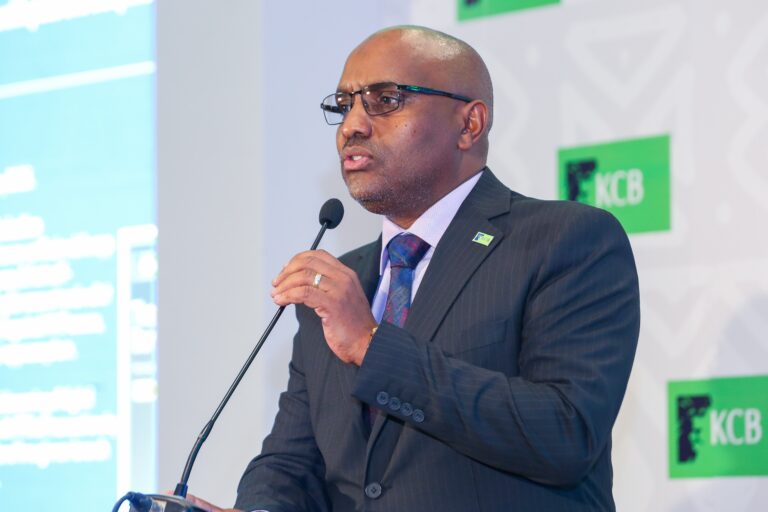
KCB Group posted a 15.3% rise in first-quarter pretax profit, signaling resilience across East Africa’s banking sector even as lower interest rates compressed margins and geopolitical tensions weighed on regional economic activity.

The Nairobi-based lender reported pretax profit of KShs. 24.4 billion for the three months ended March, up from KShs. 21.2 billion a year earlier, supported by strong loan growth, rising customer deposits, and increased income from digital lending and foreign exchange transactions.

Total operating income rose 8.5% to KShs. 53.6 billion as expansion in interest-earning assets helped cushion the impact of declining net interest margins following a wave of monetary easing across regional markets.

The lender’s balance sheet expanded 10.8% to KShs. 2.3 trillion, fueled by a 16% increase in customer deposits to KShs. 1.7 trillion, underscoring continued confidence among retail and corporate clients despite a challenging macroeconomic backdrop. Gross loans climbed to KShs. 1.32 trillion from KShs. 1.21 trillion a year earlier.

Chief Executive Officer Paul Russo said the bank’s performance reflected disciplined execution and continued investment in digital channels aimed at supporting trade and economic transformation across the region.

“Despite the challenging operating environment, we delivered solid growth driven by disciplined execution, continued investment in digital innovation, and our unwavering commitment to providing financing which catalyzes economic transformation across the region,” Russo said.

KCB also pointed to mounting risks linked to the conflict in the Middle East, warning of potential spillover effects including weaker credit demand, higher credit risk, and softer remittance inflows into East Africa.

The bank’s asset quality improved during the quarter, with the non-performing loan ratio declining to 16.6% from 19.3% a year earlier after aggressive recovery efforts and loan book expansion reduced bad loans to KShs. 217.8 billion.

At the same time, KCB increased provisions for possible loan losses to KShs. 4.9 billion, maintaining a cautious stance amid lingering economic uncertainty.

Non-funded income rose 8.3% to KShs. 17 billion, driven by higher digital loan disbursements and foreign exchange trading activity. Operating costs increased 7.3% to KShs. 24.3 billion due to higher staffing expenses, technology investments, and regional expansion costs.

Subsidiaries continued to play a larger role in earnings diversification, contributing nearly 30% of group pretax profit. The lender said performance excluding the divested National Bank of Kenya showed pretax profit growth of 17%.

Return on equity stood at 21.5%, while earnings per share increased to KShs. 22.18 from KShs. 20.03 a year earlier. Total shareholder equity rose 18.5% to KShs. 352.2 billion.

Chairman Joseph Kinyua said the results demonstrated the effectiveness of the bank’s long-term regional strategy and positioned the lender to benefit from growing trade and financial inclusion across East Africa.

Beyond banking operations, KCB continued to deepen its sustainability and development financing agenda. During the quarter, the group secured approval for a $96.9 million Green Climate Fund-backed financing program to support green investments for small businesses and farmers in Kenya.

The lender also expanded partnerships in refugee financial inclusion, sustainable education financing, and digital payments, while maintaining its visibility through sponsorship of the 2026 WRC Safari Rally.

AVEVA, IMD Warn of Digital Ecosystem Gap Despite Industrial AI Push

0

Industrial software maker AVEVA and Swiss business school IMD have released a new global report showing that while companies increasingly view digital ecosystems as critical to future competitiveness, most still struggle to share data effectively across partners and supply chains.

The inaugural Industrial Intelligence Report on Digital Ecosystems and the Future of Connected Industries, unveiled at AVEVA World 2026 in Milan, surveyed more than 275 senior executives across 12 industries. The findings highlight growing demand for connected industrial operations powered by artificial intelligence, operational technology and data-sharing platforms.

According to the report, 74% of executives consider digital ecosystems a top strategic priority, yet only 27% said their organizations share data substantially or extensively with ecosystem partners. Researchers identified legacy infrastructure, integration complexity and weak governance frameworks as key barriers slowing adoption.

The study defines “industrial intelligence” as the organizational capability to integrate operational technology (OT), information technology (IT) and artificial intelligence (AI) to support connected, data-driven decision-making across industrial ecosystems.

The report argues that companies are increasingly turning to digital ecosystems to address mounting operational pressures, including supply-chain volatility, decarbonization targets and the need for faster innovation.

“Understanding why that gap persists, and how organizations are beginning to close it, has become a strategic imperative for success in today’s volatile operating environment,” the report said.

AVEVA Chief Executive Officer Caspar Herzberg said the partnership with IMD aims to establish practical frameworks for companies seeking to transition from siloed operations to ecosystem-driven business models.

“With this collaboration with IMD, our ambition is not merely to understand the motivations behind the move to digital ecosystems, but to define the frameworks, competencies and leadership practices that will concretely enable companies to transcend silos and build more adaptive, ecosystem-driven operating models,” Herzberg said.

Michael Wade, Director of IMD’s Global Center for Digital and AI Transformation, said companies should prioritize governance and organizational learning ahead of purely technological considerations.

“Governance, integration and learning matter more right now than algorithms,” Wade said. “The next phase is about converting that foundation into strategic advantage through better data sharing, coordination, clearer roles and more deliberate leadership.”

The report also includes case studies from organizations including the Port of Rotterdam and Australia’s Kwinana industrial region, examining how industrial operators are using connected systems to improve coordination and operational resilience.

AVEVA, headquartered in Cambridge, UK, provides industrial software and AI-enabled platforms used by energy, manufacturing and infrastructure companies worldwide. The company says more than 90% of leading industrial enterprises use its technologies.

IMD, based in Lausanne, Switzerland, is a global business school focused on executive education and digital transformation research.

Google Bets $190 Billion on ‘Agentic’ AI Push as Gemini Usage Surges

0

Google unveiled a sweeping expansion of its artificial intelligence strategy at its I/O 2026 developer conference, positioning the company for what Chief Executive Officer Sundar Pichai described as the next phase of computing: autonomous AI agents capable of handling increasingly complex tasks on behalf of users.

The announcements underscore the mounting competition among technology companies racing to commercialize generative AI tools while building the infrastructure needed to support them. Google said it expects to spend roughly $190 billion this year, largely on data centers and custom silicon, as it scales the systems powering its Gemini AI models.

“Gemini 3.5 and Antigravity are unlocking a new world of agents and agentic capabilities,” Pichai said during the company’s keynote presentation in Mountain View, California.

The company framed the event as a milestone in its decade-long transition to becoming an “AI-first” organization, a strategy Google says now spans chips, cloud infrastructure, research labs, developer tools and consumer products.

AI Adoption Accelerates

Google highlighted the rapid growth of AI usage across its ecosystem. The company said its systems now process more than 3.2 quadrillion tokens per month, up from 480 trillion a year ago and 9.7 trillion two years ago.

More than 8.5 million developers are building with Google’s AI models each month, according to the company, while Google APIs process roughly 19 billion tokens every minute.

The growth is also reshaping Google’s consumer products.

AI Overviews in Search now reaches 2.5 billion monthly active users, while the company said AI Mode has surpassed 1 billion monthly users within a year of launch. Google said the Gemini app now has more than 900 million monthly active users, more than double the figure from a year earlier.

Executives emphasized that users are increasingly engaging with conversational interfaces rather than traditional search formats, signaling a broader shift in how consumers interact with information online.

New Consumer AI Features

Google introduced several AI-powered tools designed to bring conversational interactions deeper into its products.

Among the new offerings:

  • Ask YouTube, which allows users to search videos conversationally and jump directly to relevant segments.
  • Docs Live, a voice-driven document creation tool enabling users to dictate and edit documents conversationally.
  • Expanded AI capabilities inside Gmail, Keep and Maps.

The company also previewed a range of experimental products, including AI-powered smart glasses, collaborative creative tools and “Information Agents” in Search designed to continuously gather information and complete tasks in the background.

Gemini 3.5 Flash

At the center of the announcements was Gemini 3.5 Flash, Google’s latest AI model aimed at balancing performance, speed and cost efficiency.

Google said the model outperforms Gemini 3.1 Pro across several benchmarks while operating four times faster than competing frontier systems. The company also said the model can deliver advanced AI capabilities at less than half the price of comparable offerings.

The release reflects growing pressure across the industry to reduce the cost of deploying AI systems while maintaining competitive performance.

Gemini 3.5 Flash is available immediately through Google products and APIs, while Gemini 3.5 Pro is expected to launch next month.

Antigravity and AI Agents

Google also expanded its “Antigravity” platform, a system designed to coordinate and manage groups of autonomous AI agents.

The updated Antigravity 2.0 desktop application serves as a central interface for interacting with AI agents capable of carrying out long-running workflows.

One of the flagship agent products, called Gemini Spark, is designed to run continuously in the cloud, handling tasks across email, chat and web browsing. Google said the service will begin beta testing next week for subscribers to its AI Ultra plan.

The company also announced “Agentic Search,” a feature that enables AI agents inside Search to continuously monitor topics, collect information and perform actions on behalf of users.

Infrastructure Arms Race

Supporting the expansion is a massive increase in computing infrastructure.

Google unveiled two new custom AI chips, TPU 8t and TPU 8i, designed separately for training and inference workloads. The company said TPU 8t delivers triple the raw computing power of its predecessor and can scale across more than 1 million TPUs globally.

The investment reflects the escalating capital demands of the AI race, as companies including Microsoft, Amazon and Meta Platforms spend aggressively on data centers and specialized processors.

Google said both chips offer up to twice the performance-per-watt of earlier generations, a key metric as energy consumption becomes a growing concern across the industry.

Expanding Beyond Search

The announcements signal Google’s broader ambition to evolve beyond traditional search and become a central operating layer for AI-powered digital experiences.

In addition to consumer tools, the company previewed “Gemini for Science,” an experimental platform connecting AI systems to more than 30 life sciences databases to accelerate scientific research.

Other experimental projects included Google Flow, a collaborative workspace assistant, and Google Pics, an AI-powered image editing platform.

The breadth of the announcements highlighted Google’s effort to integrate AI across nearly every layer of its business as competition intensifies in the generative AI market.

Alphabet shares have faced increasing scrutiny from investors over whether AI-driven conversational interfaces could disrupt Google’s core advertising business. The company’s latest strategy suggests it intends to position AI not as a threat to Search, but as the next evolution of it.

Checker Raises $8M to Expand Stablecoin Infrastructure in Emerging Markets

0

Checker, a global infrastructure company building a unified network for digital asset markets, has raised $8 million in new funding to accelerate the adoption of stablecoin-powered financial services across Africa and other emerging markets.

The round was led by Al Mada Ventures, the investment arm of Morocco’s sovereign wealth ecosystem and parent of Attijariwafa Bank, alongside Galaxy Ventures and Framework Ventures. It also included participation from DFS Lab, Bitso, Airtm, Onigiri Capital, SNZ Capital, and Velocity Ventures, as well as strategic investors from Africa, Latin America, and Asia.

Notable angel investors in the round include Flutterwave co-founder Iyin Aboyeji, former Onafriq executive Gwera Kiwana, Juicyway co-founder Justin Ziegler, and operators from Stripe and Tala.

In a statement, Al Mada Ventures Managing Director Omar Laalej said the firm backed Checker after identifying liquidity fragmentation as one of the most pressing constraints in stablecoin markets. He said Checker’s “orchestration layer” helps financial institutions aggregate fragmented liquidity and streamline fiat on- and off-ramps in a compliant manner.

Al Mada’s participation is also seen as a signal of growing institutional interest in stablecoin infrastructure among traditional African financial groups, given its control of Wafa Cash, a major remittance network operating across the continent and diaspora corridors.

Checker’s platform connects banks, neobanks, and payment providers to global stablecoin liquidity through a single application programming interface (API), enabling cross-border payments, foreign exchange, treasury management, and credit services.

The company argues that emerging markets, particularly in Africa, face persistent inefficiencies in cross-border finance due to fragmented payment rails, high correspondent banking costs, and foreign exchange volatility. It positions its network as an alternative settlement layer that reduces reliance on traditional correspondent banking systems.

“Through one integration, we connect financial institutions to global liquidity and payment providers, reducing settlement times and operational complexity,” said Isaac Umejiaku, Checker’s head of Africa sales.

Checker says it has already processed more than $3 billion in transaction volume and now works with over 30 regulated financial institutions globally, including Rail (acquired by Ripple), Braza Bank in Brazil, and Belo in Argentina. The network supports 75 currencies and spans markets across Africa, Latin America, Asia, and North America, including Nigeria, Kenya, Tanzania, and Francophone West Africa.

The company plans to use the new capital to expand its payments coverage, reduce reliance on correspondent banking networks, and develop embedded lending and borrowing products designed to improve capital efficiency for institutional clients. It also intends to introduce AI-driven tools for treasury management and operational automation.

Checker co-founder and chief executive Jack Chong said the company is building “the network-of-networks for the stablecoin era,” aimed at simplifying how financial institutions access foreign exchange, payments, and digital asset liquidity across markets.

Founded by former financial infrastructure operators, Checker positions itself as a backbone layer for stablecoin-based financial services, offering a single API for FX, liquidity, settlement, and payments across global markets.

The company is backed by investors including Galaxy Ventures, Al Mada Ventures, Framework Ventures, Bitso, and Airtm.

Samsung’s Galaxy Hangout Targets Kenya’s Growing Creator Economy With Galaxy A Series Push

Samsung Electronics used a community-focused activation in Nairobi to spotlight its strategy of targeting the creator economy through its mid-range Galaxy A Series smartphones.

The Galaxy Hangout event, which featured the recently introduced Galaxy A37 and Galaxy A57, was structured as an interactive showcase of mobile photography, artificial intelligence tools, and connected home features. The company is positioning the A Series as an entry point for users seeking content creation tools at more accessible price points, as competition intensifies in Africa’s mid-range smartphone segment.

During the event, participants engaged in hands-on demonstrations of features such as object removal, automatic image enhancement, and facial optimisation tools designed to improve group photography. Samsung framed these capabilities as part of a broader shift toward AI-assisted content creation on mobile devices.

Attendees, including digital creators and consumers, were also asked about their current smartphone usage and whether they owned Galaxy devices, reflecting a broader effort to deepen engagement within the Samsung ecosystem.

The company also highlighted street photography as a use case for the A Series, encouraging participants to capture Nairobi’s urban environment using the devices’ 50-megapixel main camera and low-light imaging features.

Beyond photography, Samsung showcased its SmartThings platform, demonstrating home automation features such as appliance control and lighting management. The company also provided education on TV Guard Protection, a feature it says is designed to help mitigate risks associated with power fluctuations in markets with unstable electricity supply.

Samsung’s focus on the A Series comes as smartphone manufacturers increasingly compete for younger consumers and first-time smartphone upgraders across emerging markets, where affordability and content creation capabilities are becoming key purchasing factors.

The Galaxy Hangout forms part of Samsung’s broader experiential marketing approach in Kenya, combining product demonstrations with lifestyle and creator-focused programming aimed at strengthening brand loyalty in the region.

Moniepoint Taps tell.money to Meet UK Payment Checks in Expansion Push

0

Moniepoint Inc., an African fintech firm, has partnered with UK-based tell.money to introduce account name-checking for payments, as it deepens its expansion into Britain’s regulated financial market.

The agreement will see Moniepoint adopt the UK’s Confirmation of Payee (CoP) system, which verifies that a recipient’s name matches their bank account details before a transfer is completed. The requirement is a key safeguard against fraud and misdirected payments, and is increasingly mandatory for firms operating in the UK.

The service will be rolled out through Monieworld, Moniepoint’s remittance platform serving Africans in the diaspora, initially focused on Nigerian users in the UK. The platform enables transfers to Nigerian bank accounts through bank rails, cards and digital wallets.

The move underscores Moniepoint’s effort to align with UK compliance standards while scaling its cross-border payments offering in a competitive remittance market.

“Our goal is to make it easier for people to support families, invest back home and manage cross-border finances with confidence,” said Ravi Jakhodia, chief executive officer of Monieworld. He added that the partnership allows the company to meet regulatory requirements without adding operational complexity.

Tell.money will provide the infrastructure layer for the CoP service, including integration, accreditation and ongoing compliance monitoring.

Moniepoint joins a growing number of international fintech firms adopting CoP as UK regulators tighten oversight of payment security and consumer protection.

Founded in Nigeria, Moniepoint says it serves more than 20 million businesses and individuals and processes about $22 billion in monthly transaction volume across payments, banking and credit services.

The UK push reflects a broader trend of African fintechs targeting diaspora remittances, a high-volume corridor where reliability and compliance are increasingly critical differentiators.

TikTok Removed over 820,000 Million Videos in Kenya for User Safety

0

TikTok has released its Q4 2025 Community Guidelines Enforcement Report, highlighting its continuous commitment to fostering a safe and trusted space for its users.

In the fourth quarter of 2025, TikTok removed 820,552 videos in Kenya for violating its Community Guidelines. 99.9% of these videos were proactively removed before anyone reported them, while 98.4% were taken down within 24 hours of posting. These figures underscore TikTok’s continued investment in advanced detection systems and rapid response mechanisms designed to limit the spread of harmful content.

Additionally, TikTok banned 108,752 accounts in Kenya for policy violations. A significant portion of these , 93,704 accounts, were suspected of being accounts aged below 13, which is a violation of our rules. This highlights the platform’s commitment to protection of younger users online

Globally, TikTok removed a total of 175,302,085 videos during the quarter, representing about 0.5% of all content uploaded on the platform. Of these, 152,580,933 videos were detected and taken down using automated detection technologies and 8,360,780 videos were reinstated after further review. The platform recorded a 99.1% proactive removal rate, with 93.4% of flagged content removed within 24 hours of posting.

By combining advanced automated moderation tools with the expertise of thousands of trust and safety professionals worldwide, TikTok continues to enforce its Community Guidelines consistently and at scale, addressing harmful content such as misinformation, hate speech, and other policy violations.

The full Q4 2025 Community Guidelines Enforcement Report is available and can be accessed here.

Censys and EVAD to Showcase SOC Modernization Platform in Nairobi

Cybersecurity firm Censys, together with partner EVAD, will showcase its Security Operations Centre (SOC) Modernization platform at GITEX Kenya 2026, as organisations across East Africa accelerate digital transformation and face growing exposure to cyber risk.

The event, scheduled for 19–21 May in Nairobi, comes as Kenya deepens its push into artificial intelligence, cloud adoption and digital public infrastructure under its national AI strategy for 2025–2030. While the policy framework positions the country as a regional tech leader, it also highlights the rising importance of secure and resilient digital systems.

Censys said its platform is designed to help organisations continuously map and monitor their external attack surface, providing visibility into internet-facing assets such as cloud services, applications and exposed systems that could be targeted by attackers.

The company argues that rapid digital expansion has outpaced many organisations’ ability to track new systems and integrations, creating security blind spots that can increase operational, regulatory and reputational risk.

By combining internet-wide scanning with threat intelligence and historical data, the platform aims to support faster threat detection, asset discovery and incident response.

“GITEX Kenya offers a very significant platform to connect with customers and partners who are building the future digital economy of East Africa,” said Meriam ElOuazzani, Vice President for the Middle East, Turkey and Africa at Censys. “As organisations across the region rapidly adopt artificial intelligence and implement digital transformation, cybersecurity visibility and resilience become increasingly critical. Our presence with EVAD reflects this need.”

At the conference, Censys and EVAD will demonstrate the platform’s capabilities, including live use cases on attack surface discovery, threat hunting and risk monitoring, targeting security teams and enterprise decision-makers.

Electric Transits Africa Secures €600,000 to Expand EV Fleet, Charging Network in Kenya

0

Electric Transits Africa (ETA), a Dutch-Kenyan e-mobility company, has secured a €600,000 ($650,000) loan from Invest International to expand its electric vehicle leasing fleet and fast-charging network in Kenya, the company said on Tuesday.

The financing, provided through the Dutch Good Growth Fund (DGGF), will support the rollout of additional vehicles and public charging infrastructure as the firm scales operations across East Africa.

ETA, which launched its first vehicles and charging sites following an earlier funding round in May last year, is now serving commercial clients in sectors including tourism, logistics and security.

The company offers electric vehicles through an EV-as-a-Service model, bundling financing, maintenance, insurance and charging access into a single package aimed at lowering upfront costs for businesses transitioning from internal combustion engines.

“Electric mobility in Kenya has moved beyond the pilot phase and is now proving its economic viability,” co-founder Wout van Blommestein said, citing volatile fuel prices, urban air pollution and the country’s largely renewable power mix.

Co-founder Dennis Kant said the funding would help accelerate growth and position electric transport as a mainstream option for businesses. He added that the company aims to raise additional capital in the coming months.

Invest International said ETA’s model aligns with its focus on sustainable mobility and climate-oriented investments.

“ETA has a strong team, a solid group of investors and has already demonstrated promising traction in Kenya,” said Erik Pentinga, an investment manager at the Dutch firm.

Kenya has emerged as one of Africa’s early adopters of electric mobility, supported by a growing ecosystem of startups, policy incentives and relatively clean electricity generation.

ETA said it plans to expand its footprint across the region as demand for cost-efficient and low-emission transport solutions rises.

Rockefeller Foundation Channels $133 Mln into Africa as Development Financing Tightens

The Rockefeller Foundation deployed more than $350 million in 2025 and reached 731 million people worldwide, as it scaled investments in energy access, food systems, climate resilience and digital public goods amid a global decline in aid.

In its 2025 impact report, Big Bets, Real Results, the foundation said it issued funding through 235 grants and program-related investments to 204 partners and helped mobilize $32 billion in total capital, including $3 billion in direct mobilization and $29 billion in additional capital leveraged through partner ecosystems.

The foundation said its programmes enabled 731 million people to access supported products and services in 2025, while 3 million people recorded measurable gains from direct interventions.

It estimated its work helped avoid, reduce or sequester 84 million tonnes of carbon dioxide equivalent and contributed to the protection or restoration of 23 million hectares of land.

“Disruption changes how we work, but not who we work for,” said Rajiv J. Shah, president of the Rockefeller Foundation, adding that declining global aid had intensified pressure on vulnerable communities while reinforcing the need for scaled philanthropic action.

The foundation channelled more than $133 million to Africa, $93 million to Asia and Oceania, $59 million to Latin America and the Caribbean, and $49 million to North America.

It advanced work across three priority areas: frontier technology, community-driven models and decisive data.

Through its energy portfolio, the foundation backed projects under the Global Energy Alliance for People and Planet, supporting battery storage deployment in India, solar-powered systems in Zambia and microgrid expansion in Haiti. It said more than 100,000 people gained access to reliable electricity in parts of India, while 21,000 people in Haiti received new electricity connections through solar systems.

The alliance’s wider pipeline is projected to reach 91 million people with improved energy access and prevent about 296 million tonnes of carbon emissions over time.

In agriculture and nutrition, the foundation expanded regenerative school meal programmes and partnerships with the World Food Programme across countries including Kenya, Ghana, Rwanda, India and Benin.

In South Africa, it supported the rollout of an AI-enabled civic participation platform in Cape Town that allows residents to engage with local government in multiple languages and has reached about 100,000 people.

“As The Rockefeller Foundation marks 60 years of its Africa Regional Office, it reflects a broader shift in development,” said William Asiko, who heads the office, citing increased emphasis on African-led solutions in health, education and energy amid tightening global fiscal conditions and climate shocks.

The foundation said it is prioritising locally driven models as geopolitical tensions, climate impacts and aid contractions reshape global development financing.

Ecobank Raises $450M in Oversubscribed Tier 2 Sustainable Agriculture Bond

0

Ecobank Transnational Incorporated (ETI) has raised $450 million through an oversubscribed Tier 2 bond focused on sustainable agriculture and natural capital, in a transaction that highlights strong investor appetite for African ESG-linked debt.

The deal attracted more than $1.36 billion in orders, around 3.9 times the initial $350 million target, allowing the bank to upsize the issuance by $100 million and tighten pricing by 50 basis points, Ecobank said.

The 10.25-year notes, callable after 5.25 years, are expected to be listed on the London Stock Exchange, with settlement scheduled for May 19.

Ecobank said the bond carries the ICMA Nature Bond secondary designation under the Sustainable Bonds for Nature framework and aligns with the ICMA Green Bond Principles, marking what it described as a first for a commercial bank issuance in Africa with the Nature Bond designation.

Moody’s Ratings assigned the transaction a Sustainability Quality Score of SQS1 (Excellent), its highest rating, citing strong alignment with international sustainable finance standards.

Proceeds will be used to conduct a tender offer for Ecobank’s $350 million Tier 2 sustainability notes due 2031 and to finance or refinance eligible green assets, including sustainable agriculture and water infrastructure loans across 24 African countries.

Dutch development bank FMO placed a $50 million anchor order, continuing its participation in Ecobank’s sustainable capital markets transactions.

“The strength and quality of demand allowed us to upsize and tighten pricing,” said Ecobank CEO Jeremy Awori, adding that investors had rewarded “rigour and credibility in sustainable finance.”

Chief Financial Officer Ayo Adepoju said the issuance combined liability management with expansion of the bank’s sustainable lending programme.

Renaissance Capital Africa and Standard Chartered Bank acted as joint lead managers and bookrunners, with Ecobank Development Corporation as co-manager and African Finance Corporation as financial adviser.

Stitch Raises $25 Million Series A Led by Andreessen Horowitz in First GCC Investment

0

Riyadh-based fintech Stitch has raised $25 million in a Series A funding round led by Andreessen Horowitz (a16z), marking the Silicon Valley firm’s first investment in the Gulf Cooperation Council (GCC), the company said on Wednesday.

The round, which brings Stitch’s total funding to $35 million, also drew participation from existing investors Arbor Ventures, COTU Ventures, Raed Ventures and Saudi Venture Capital (SVC).

Stitch provides a cloud-native platform designed to serve as a unified infrastructure layer for financial institutions, spanning lending, cards, payments and ledger systems. The company aims to help banks and fintechs modernize legacy systems and enable faster adoption of artificial intelligence.

Financial institutions globally continue to rely on fragmented infrastructure despite heavy spending on digital transformation, creating a bottleneck for innovation, particularly in deploying AI capabilities, Stitch said.

“Financial institutions globally run on fragmented, legacy infrastructure that should have been left behind 20 years ago,” said founder and CEO Mohamed Oueida. “Now every institution wants to adopt AI, but AI on top of broken infrastructure is a dead end.”

The company reported that more than $5 billion has been processed on its platform over the past six months, with customer numbers growing tenfold in 2025 and revenue increasing twentyfold over the same period.

Stitch operates across the GCC, Africa — including Egypt and Kenya — and Southeast Asia. Its clients include Raya Financing, LuLu Exchange, Noqodi and Foodics.

Andreessen Horowitz said the investment reflects growing demand for modern financial infrastructure in emerging markets.

“Financial institutions are sitting on decades of infrastructure debt, and that debt is now the single biggest obstacle to AI adoption,” said Alex Rampell, general partner at a16z.

Stitch said it will use the proceeds to accelerate product development, expand across the GCC and wider Middle East and North Africa region, and grow its global go-to-market operations.

NCBA, Salvador Caetano Kenya Partner on EV Financing in Kenya

0

Kenya’s NCBA Bank has partnered with automotive distributor Salvador Caetano Kenya to expand asset financing for both conventional and electric vehicles, in a move aimed at improving access to mobility and supporting the country’s green transport shift.

Under the agreement announced Tuesday, customers will be able to access financing of up to 100% for personal vehicles and up to 95% for commercial units, with repayment periods of up to 84 months and reduced processing fees.

Electric vehicle buyers, including models such as the Kia EV6, Hyundai IONIQ 5 and Hyundai Kona EV, will be eligible for financing of up to 90% over a maximum of 60 months.

The scheme covers vehicles from brands including Hyundai, Kia, Ford, JMC and Chery.

NCBA Group Director for Asset Finance and Business Solutions Lennox Mugambi said the partnership would improve affordability and accelerate adoption of sustainable mobility solutions.

“We remain committed to delivering solutions that support individuals, SMEs and corporates while accelerating Kenya’s transition towards sustainable mobility,” Mugambi said.

Salvador Caetano Kenya Managing Director Aurélien Glay said the collaboration would integrate financing into the vehicle purchase process, improving customer convenience.

The scheme targets retail buyers, SMEs, corporate fleet operators and logistics companies, NCBA said.

NCBA, one of East Africa’s largest banks by customer base, has a market share of 35.4% in hire purchase asset finance as of April 2026, it said.

CEO Weekends: Equity Group CEO Dr James Mwangi Urges Tech-finance Integration to Accelerate Africa’s Digital Trade

Equity Group CEO Dr James Mwangi has called for stronger collaboration between governments, financial institutions and technology firms to unlock Africa’s digital economy and boost intra-African trade.

Speaking at a high-level Tech Breakfast hosted by Equity Group on the sidelines of the Africa CEO Forum 2026 in Kigali, Mwangi said Africa’s growth trajectory depends on integrating technology with finance to create scalable platforms for businesses and entrepreneurs.

“We need an intersection of technology and money,” he said. “We want to enable trade across the continent and create platforms that empower businesses and entrepreneurs to scale.”

The session, themed “From Fintech to Futuretech: Scaling Africa’s Digital Economy,” brought together policymakers, investors and innovators to explore the infrastructure needed to support the continent’s digital transformation.

Mwangi emphasized the importance of long-term investment in digital systems that can expand financial inclusion and strengthen enterprise development, particularly among young entrepreneurs.

“We want the youth to leverage technology to develop their enterprises and participate meaningfully in the digital economy,” he said.

He added that Africa’s transformation would require institutions willing to develop shared infrastructure and deepen cross-border cooperation beyond traditional silos.

“The Africa CEO Forum has been about scaling, and this is an invitation for all of us to scale together, partnering to build public infrastructure that serves the entire continent,” he said.

Discussions also focused on emerging technologies such as blockchain, digital assets and decentralized systems, with participants noting their potential to improve transparency, efficiency and access to financial services across African markets.

Rwanda’s ICT and Innovation Minister Paula Ingabire said African countries must take greater ownership of their digital transformation by building systems that deliver value to local economies.

She highlighted the growing importance of digital infrastructure — including cross-border payment systems, digital identity and data governance frameworks — describing data as a key strategic economic asset.

“We need to start setting the pace on how technology empowers us and builds value for our people,” she said. “The rails are ours to build and the rules are ours to create.”

The forum took place as African governments and businesses intensify efforts to strengthen regional integration and digital connectivity to support trade, innovation and economic inclusion across the continent.

Proparco Invests $2M in Cauridor to Expand Africa Payments Infrastructure

0

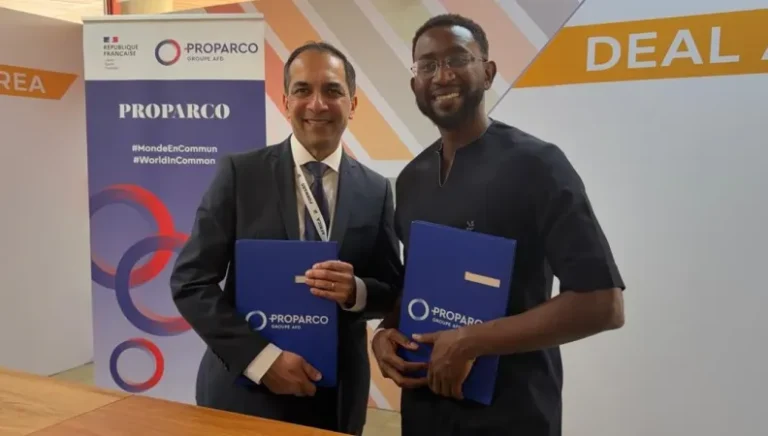
French development finance institution Proparco has invested $2 million in Guinea-founded fintech Cauridor as part of a broader Series A funding round aimed at scaling cross-border payment infrastructure across Africa.

The investment, announced during the Africa Forward Summit in Nairobi, brings Cauridor’s total funding to about $13 million and includes participation from investors Flourish Ventures and LoftyInc Capital.

Founded in 2022, Cauridor builds payment infrastructure that connects international money transfer operators such as Western Union, MoneyGram, RIA, Taptap Send and Sendwave to African last-mile payout networks, including mobile money operators, banks and cash agents.

The company focuses on improving the efficiency of remittance flows into Africa by addressing bottlenecks in last-mile distribution, a segment that has historically contributed to high transaction costs and delays.

Remittances are a key source of foreign inflows for many African economies, often supporting household consumption and financial stability.

Proparco said the investment aligns with its mandate to promote financial inclusion and digital infrastructure development in emerging markets. The funding is part of the EU-backed Choose Africa VC programme.

Cauridor said the capital will be used to expand its engineering, operations and commercial teams, and to accelerate its expansion across West and Central Africa as it works toward closing its Series A round by the end of 2026.

Zero-rated M-PESA Kadogo Transactions Hit 17.1 Billion

0

M-PESA Kadogo’s zero-rated transactions have reached a major milestone, hitting 17.1 billion transactions in the 2025/2026 financial year and accounting for 58% of all activity on Safaricom’s mobile money platform.

The surge underscores how deeply low-value, everyday digital payments have become embedded in Kenya’s economy, driven by Safaricom’s decision to zero-rate small transactions under the M-PESA Kadogo initiative. The policy covers person-to-person transfers between KES 1 and KES 100, Lipa na M-PESA payments below KES 200, cash deposits at agent outlets, and airtime purchases via M-PESA.

In total, M-PESA processed 46.4 billion transactions valued at KES 41.7 trillion during the year, reinforcing its position as the backbone of Kenya’s digital financial ecosystem.

Safaricom says the removal of charges on small-value transactions—first introduced during the COVID-19 period and later sustained—has significantly reduced friction in everyday payments. Since 2020, transaction volumes have tripled as users increasingly rely on low-value digital transfers.

“With M-PESA Kadogo, our purpose is to make digital payments affordable for small-scale daily purchases and deepen financial inclusion,” said Safaricom CEO Peter Ndegwa. “The removal of transaction fees has reduced friction and accelerated the usage of M-PESA across the country.”

Despite the large share of zero-rated activity, M-PESA continues to deliver strong financial performance. The platform recorded a 13.4% increase in revenue to KES 182.7 billion, driven by growth across consumer payments, business payments, and international transactions.

Consumer payments remained the largest contributor at KES 74.5 billion, followed by business payments at KES 56.7 billion, reflecting M-PESA’s evolution from a basic money transfer service into a broader financial ecosystem.

A key growth highlight was Pochi la Biashara, which serves small businesses. Its user base grew from 600,000 in FY2024 to 2.2 million in FY2026, while revenue rose from KES 800 million to KES 4 billion over the same period. The product now also allows users to invest idle balances in Ziidi Money Market Fund, extending M-PESA’s reach into savings and investments.

Safaricom says the sustained growth of M-PESA reflects increasing adoption of digital financial services and its ongoing mission to expand financial inclusion and economic participation across Kenya.

Jiji Expands Beyond Africa with Acquisition of Bangladesh’s Bikroy

0

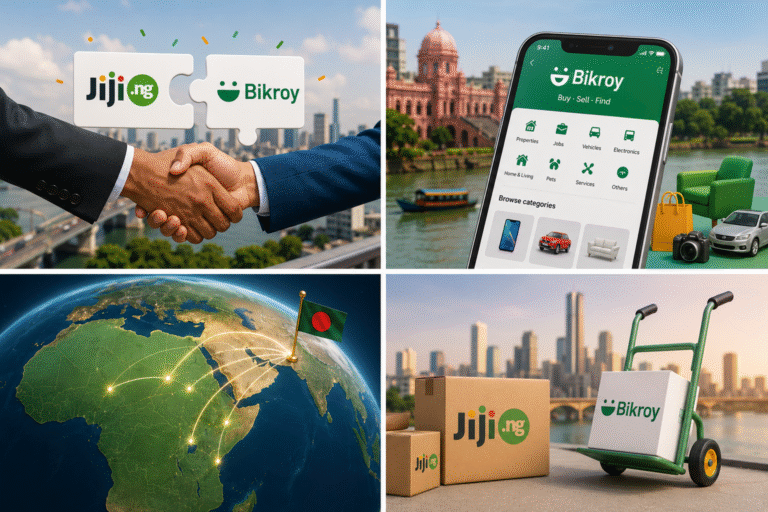
Jiji.ng, the Nigerian-based online marketplace, has announced its first acquisition outside Africa with the purchase of Bangladesh’s classifieds platform Bikroy. The move marks a significant milestone in the company’s strategy, signaling a broader shift among African tech startups toward global expansion.

According to CEO Anton Volianskyi, the acquisition was financed through internal resources. However, the financial terms of the deal were not disclosed.

Founded in 2014, Jiji has grown into one of Africa’s leading online classifieds platforms, operating across multiple countries and serving more than 90 million users. The company reportedly processes approximately $70 billion in annual gross merchandise value, positioning it as a major player in the continent’s digital commerce ecosystem.

Jiji has followed an aggressive expansion strategy, entering new markets, competing with existing platforms, and later consolidating its position through acquisitions. This approach has previously included the purchase of OLX’s African operations as well as Tonaton in Ghana.

The company entered Bangladesh in March 2025, targeting a fast-growing digital economy driven by a youthful population and rising internet penetration. With over 130 million internet users, Bangladesh presents a significant opportunity in e-commerce, although competition remains strong from local platforms and global players such as Temu.

Following the acquisition, Bikroy will retain its brand identity, while gradually integrating Jiji’s technology, tools, and operational systems. Jiji also plans to increase investment in marketing to accelerate growth in the market.

The deal underscores a broader trend of emerging market tech companies expanding beyond their home regions, leveraging proven business models to enter new and highly competitive international markets.

Sony Unveils Xperia 1 VIII with AI Camera, Prices Start at $1,499

Sony on Wednesday launched its latest flagship smartphone, the Xperia 1 VIII, featuring an AI-powered camera system and upgraded telephoto lens as the company sharpens its focus on mobile photography.

The device introduces a new “AI Camera Assistant,” powered by Xperia Intelligence, which analyzes scenes in real time and suggests optimal color tones, lenses and bokeh effects to help users capture enhanced images with minimal effort.

Sony also upgraded the phone’s telephoto camera with a 1/1.56-inch sensor—around four times larger than its predecessor—aimed at improving detail and low-light performance. The handset’s triple-lens setup (16mm, 24mm and 70mm) uses RAW multi-frame processing to boost dynamic range and reduce noise, delivering clearer images in high-contrast and dark environments.

The Xperia 1 VIII features a redesigned “ORE” aesthetic inspired by natural gemstones, with color options including Graphite Black, Iolite Silver, Garnet Red and Native Gold. It retains hallmark Sony features such as a dedicated camera shutter button and a 3.5mm headphone jack, alongside upgraded stereo speakers for enhanced audio performance.

Powered by Qualcomm’s Snapdragon 8 Elite Gen 5 processor, the device offers a 20% performance boost and up to two days of battery life, according to the company.

The smartphone will be available for pre-order starting May 13, priced at approximately $1,499 for the 256GB model, with a 1TB version priced at $1,999. Pre-order customers will receive Sony’s WH-1000XM6 headphones as part of the launch offer.

HewaSafi by Two Kenyan Teenagers Wins $100,000 at African Regional Earth Prize Award

0

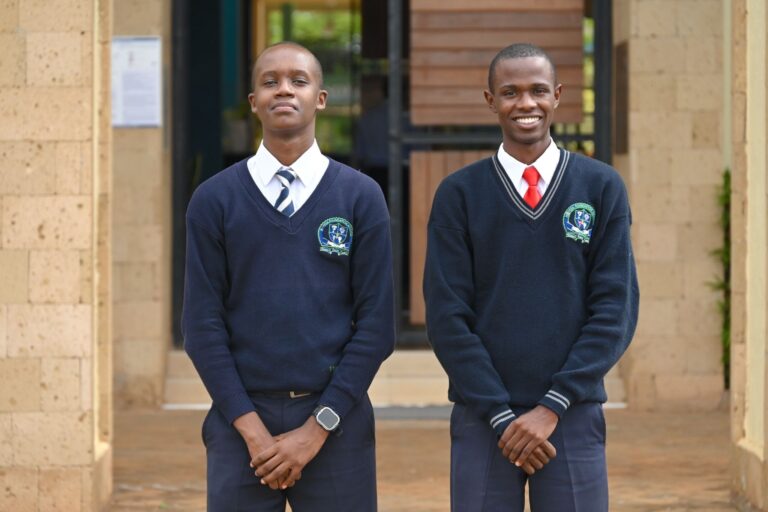
HewaSafi, a low-cost vehicle emissions filter developed by two Kenyan teenagers using maize waste, coconut shells and algae, has won the Africa regional award in the 2026 edition of The Earth Prize.

The project, created by 17-year-olds Fredrick Njoroge Kariuki and Miron Onsarigo, received $12,500 in funding after being selected from entries across the continent in the global environmental competition for young people aged 13 to 19.

Designed for matatus and motorcycle taxis widely used across East Africa, the HewaSafi prototype uses locally sourced agricultural waste and algae to capture particulate emissions and reduce carbon monoxide and carbon dioxide output, according to the team.

The students said the idea was inspired by worsening air pollution in Kenyan urban centres including Nairobi, Naivasha and Kisumu.

“I didn’t choose this problem, it chose me,” Fredrick said in a statement issued by The Earth Foundation, the Geneva-based nonprofit behind the competition.

Air pollution contributed to an estimated 1.1 million deaths across Africa in 2019, according to the World Health Organization, with vehicle emissions a major contributor in rapidly growing cities.

The HewaSafi prototype cost about KES 16,288 ($125) to build, making it significantly cheaper than conventional emissions-control systems that often rely on expensive metals and imported components.

The team said pilot tests had already been conducted with a local matatu association and that the next phase would focus on scaling the technology with transport operators, beginning with the Eastleigh Matatu SACCO in Nairobi.

Now in its fifth year, The Earth Prize says the competition has reached more than 21,000 students across 169 countries and territories.

Public voting to select the global winner opens on May 18, with the final winner expected to be announced on May 29 through The Earth Prize.

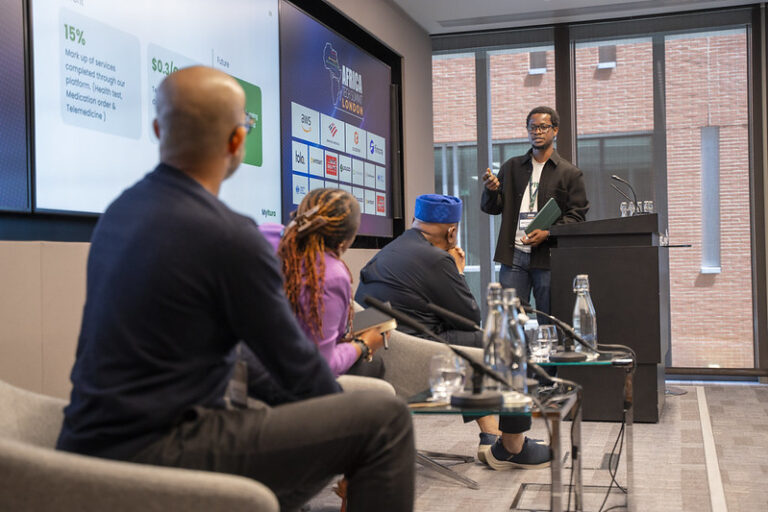
Africa Tech Summit London 2026 Selects 13 Startups for Investor Showcase

0

Africa-focused startups spanning fintech, mobility, healthtech, creator economy, climate tech, AI and travel infrastructure have been selected to pitch investors at the 10th edition of Africa Tech Summit London 2026, set for May 29 at the London Stock Exchange.

The summit, regarded as one of the leading African tech ecosystem gatherings in Europe, will bring together more than 350 founders, investors, corporates and policymakers to discuss investment, innovation and cross-border expansion opportunities across Africa’s startup ecosystem.

Organizers said the showcase attracted over 200 applications, underscoring the growing maturity and competitiveness of African startups seeking international capital and partnerships.

The 13 selected ventures reflect the continent’s widening innovation landscape, with Nigerian startups dominating the cohort.

Among the selected companies is Aktivate, which is building infrastructure for African creators to collaborate with brands, manage campaigns and receive cross-border payments. Also selected is Bunce, a startup helping businesses personalize customer engagement using data-driven tools.

Health financing startup 10mg Health was chosen for its embedded credit platform that allows clinics and pharmacies to purchase medicines using buy-now-pay-later financing powered by AI underwriting.

In mobility and energy, Orbit Electric is assembling IoT-enabled electric motorcycles in Lagos while offering pay-as-you-go financing for delivery riders, while Koolboks is expanding access to solar-powered refrigeration through flexible financing models aimed at reducing food spoilage for small businesses.

Travel startup Mowoki is building infrastructure for cross-border travel and curated African experiences, while Workspace Global Ltd provides subscription-based creative production services for businesses.

The fintech category featured strongly. Redbiller Technologies Inc. is building financial infrastructure for neobanks, fintechs and crypto exchanges, while UltraPay enables users to spend crypto, stocks and fiat currencies globally through a single payment card.

Meanwhile, Zynta is developing regulated stablecoin payment rails for businesses operating across African markets.

The showcase also includes enterprise and AI startups such as Scandium Systems, which develops AI-powered software testing tools, and ProDevs, focused on helping companies hire software engineers more efficiently.

Restaurant technology startup Reisty was also selected for its guest management platform aimed at improving customer experience and profitability for restaurants.

According to Marc Mugenwa, the evolution of the showcase mirrors the rapid growth of Africa’s startup ecosystem over the last decade.

“Ten years ago, Africa’s startup ecosystem was still finding its feet, with only a handful of investor-ready ventures getting global attention. The ecosystem is far more mature now, and the quality of ventures applying for the Investment Showcase continues to rise,” he said.

Over the past decade, Africa Tech Summit London says it has showcased more than 100 African startups to international investors and ecosystem stakeholders, helping founders secure partnerships, visibility and investment opportunities across global markets.

Stream Raises $5.2 Million to Build MENA’s Billing Infrastructure Layer

0

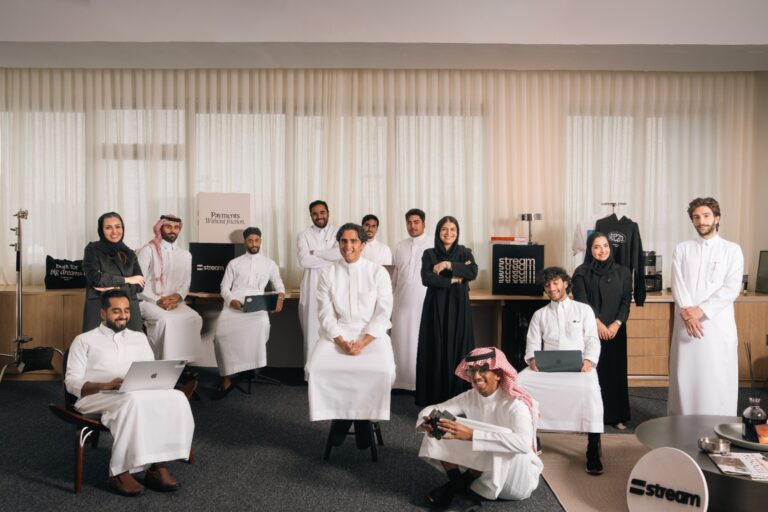
Saudi fintech startup Stream has secured a $5.2 million seed extension led by BECO Capital, bringing its total seed funding to $9.2 million as the company positions itself as a core financial infrastructure provider for businesses across the Middle East and North Africa (MENA).

The round also drew participation from STV, Flourish Ventures, Arab Bank, alongside existing investors Outliers and BYLD.

Founded in 2024 in Riyadh, Stream is building infrastructure that combines billing, payments and post-payment operations into a unified platform aimed at helping businesses automate collections, reconciliation, subscriptions and reporting.

The company says the funding comes amid growing demand from businesses in MENA that are scaling rapidly but still rely on fragmented financial systems ill-equipped for modern revenue models such as subscriptions, installment plans and recurring payments.

“Billing is evolving faster than most businesses realise,” said Ibrahim Aldlaigan, founder and CEO of Stream. “As our region is realizing its potential, infrastructure needs are changing. Stream is focused on removing any friction that slows or blocks businesses from getting paid.”

Stream has been expanding its platform beyond basic payment processing into broader financial operations tooling. The startup recently launched subscription management APIs that allow businesses to build recurring billing models and introduced support for MCP (Model Context Protocol), which it describes as a step toward AI-native payments infrastructure.

The platform also integrates with Saudi Arabia’s tax authority system, ZATCA, helping businesses remain compliant with local invoicing and tax regulations.

According to the company, Stream initially gained traction in the education sector before expanding into SaaS and service-led businesses. It now processes millions of dollars in payments monthly and serves hundreds of businesses, including organizations such as Atyab and Riyadh Schools Group.

BECO Capital founder and managing partner Dany Farha said the investment thesis centered on Stream’s potential to create an entirely new category between payment processors and accounting software.

“Our conviction in Stream was rooted in backing a resourceful exceptional founder, Ibrahim, who has deep local payments expertise and sharp product vision,” Farha said.

The fundraising reflects increasing investor appetite for infrastructure-focused fintech startups in MENA, particularly as businesses across the region digitize operations and adopt more complex online revenue models.

ASUS Showcases AI-enabled Commercial Devices at First-ever GITEX Kenya 2026

ASUS will participate at the first edition of GITEX Kenya, taking place in Nairobi from May 19-21, 2026 and will showcase its portfolio of AI PCs designed to support the country’s national digital economy agenda.

“We’re excited to be a part of the inaugural edition of GITEX Kenya. The country plays an important role in ASUS’s commercial long-term vision for the African market,” said Tolga Özdil, Regional Commercial Director, Middle East, Turkey & Africa (META) at ASUS. “As the region undergoes a significant shift with industry trends like AI, cloud and sustainability, GITEX Kenya gives us the platform to show our latest innovations to customers in the enterprise, SMB and government sectors.”

“ASUS’s line of PCs integrates AI support at the hardware level, allowing professionals to take advantage of AI tools without the need to connect online. In addition to that, our devices demonstrate the highest level of security fit for organizations where data protection is a must.”

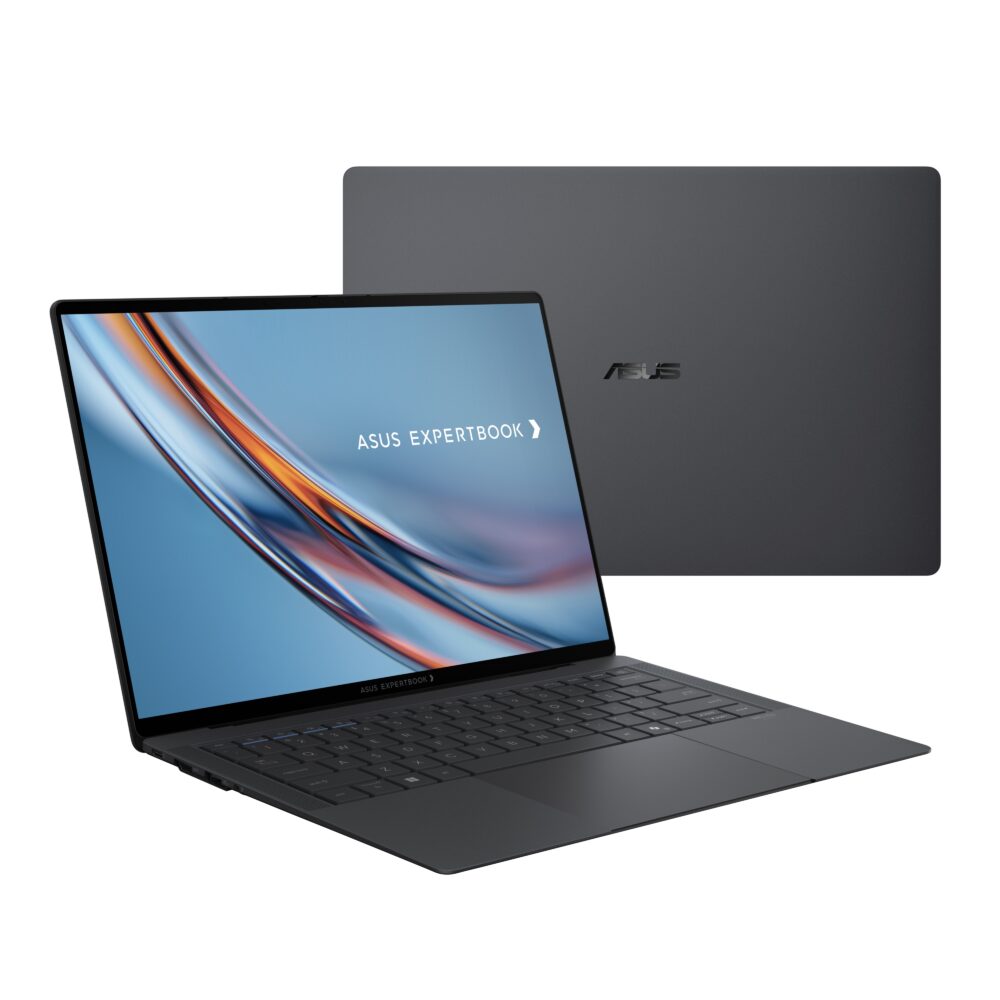
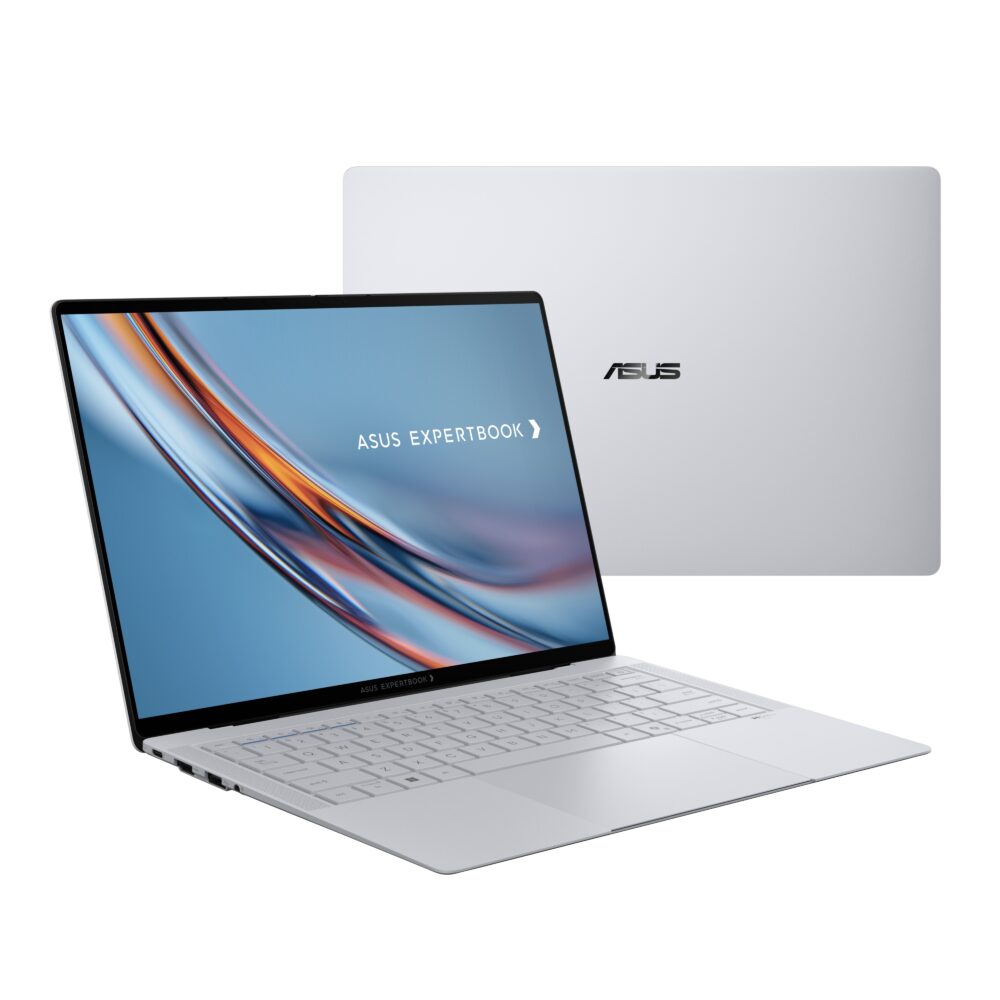
ASUS will showcase its strong lineup of commercial devices that includes the ExpertBook series and workstation PCs at the exhibition. Visitors will get a chance to try out the recently released ExpertBook Ultra (B9406), the company’s flagship device that weighs less than a kilogram and measures 10.9 mm thin. Designed for next-generation professionals, the B9406 features up to 50 TOPS NPU, which enables it to perform AI tasks on-device without affecting the performance or battery life. All of this is packed in a lightweight device that also features robust durability and enterprise-grade security. Other devices in the ExpertBook series, the B5405, P5405, as well as the P440 All-in-One and the P500 Expert Centre Mini Tower, will be on the stand.

ASUS will also highlight its AI-driven solutions that enhance productivity, such as AI ExpertMeet, a powerful AI-powered collaboration tool that helps simplify meetings with real-time transcriptions and summaries.

Building on national initiatives such as the Kenya AI Strategy 2025-2030, which positions the region as a hub for AI research, ASUS will support its ambitions with innovative AI-ready solutions. The company has designed its entire commercial portfolio focusing on key factors that help drive digital transformation priorities, such as AI-first design, cloud-ready devices and sustainability.

Attendees can visit ASUS’s booth at Hall 2, Stand B45, to experience their latest products.

France Deepens Digital Partnership With Kenya as AI and Cybersecurity Agenda Expands

0

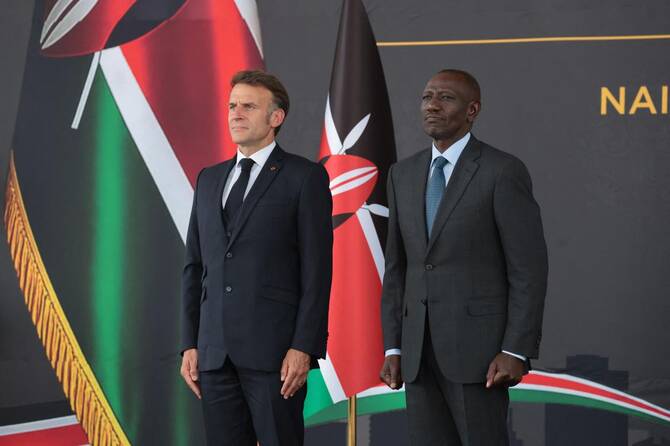
Kenya and France have agreed to deepen cooperation in artificial intelligence, cybersecurity and digital infrastructure as Nairobi strengthens its position as East Africa’s leading technology and innovation hub.

The agreement was among 11 bilateral deals signed during French President Emmanuel Macron’s visit to Kenya ahead of the Africa Forward Summit.

President William Ruto said the partnership will support Kenya’s broader digital transformation strategy, including flagship projects such as Konza Technopolis and the country’s Digital Superhighway initiative.

The cooperation framework covers digital infrastructure, digital public services, cybersecurity systems, artificial intelligence, data governance and regional digital integration.

“Kenya is building a dynamic digital economy that is driving innovation, competitiveness and regional integration,” Ruto said.

The agreement comes as African governments race to modernize public services and position themselves for the rapidly evolving global AI economy.

Kenya has emerged as one of Africa’s strongest technology ecosystems, attracting global investors, startups and multinational technology firms seeking expansion into East and Central Africa.

French interest in Kenya’s digital sector also reflects Europe’s growing effort to strengthen strategic technology partnerships in Africa amid increasing competition from China and the United States.

Analysts say the collaboration could create opportunities for French firms in cloud infrastructure, cybersecurity systems, digital identity management and AI research partnerships.

The partnership may also strengthen Kenya’s role as a regional technology gateway serving neighboring markets across East and Central Africa.

The two countries additionally discussed cooperation in digital health systems, laboratory infrastructure and epidemic preparedness through the use of real-time health data systems capable of improving outbreak detection and emergency response capabilities.

Airtel Africa Profit Jumps to $813 Million as Mobile Money & Data Drive Growth

0

Airtel Africa plc reported a sharp rise in annual profit to $813 million for the year ended March 31, 2026, driven by strong growth in its mobile money and data businesses across sub-Saharan Africa.

Revenue increased 29.5% to $6.42 billion, while constant currency revenue rose 24.0%, supported by strong demand in Nigeria and Francophone Africa and continued expansion in data services.

Earnings before interest, tax, depreciation and amortisation (EBITDA) rose 37.2% to $3.16 billion, with margins improving to 49.3% from 46.5% a year earlier.

Basic earnings per share rose to 18.6 cents from 6.0 cents in the previous year.

The company said its customer base grew 10.5% to 183.5 million, while data customers increased 14.8% to 84.2 million. Average data usage per user rose to 8.9 gigabytes per month, supporting a 35.2% rise in data revenues in constant currency.

Mobile money platform Airtel Money also recorded strong growth, with customers rising 21.3% to 54.1 million. Annualised transaction value exceeded $215 billion in the fourth quarter, reflecting increasing adoption of digital financial services across the region.

The mobile money business has become a key growth pillar for Airtel Africa alongside data services as telecom operators expand into financial technology across Africa.

Capital expenditure rose 31.9% to $884 million during the year, with the company rolling out more than 3,250 new sites and expanding its fibre network by 3,200 kilometres.

The group expects capital expenditure of about $1.1 billion in the 2027 financial year as it invests in network expansion, home broadband and data infrastructure.

Net debt leverage improved to 1.8 times from 2.3 times a year earlier, supported by stronger earnings and cash generation.

The board proposed a final dividend of 4.26 cents per share, bringing total dividends for the year to 7.1 cents, up 9.2% year-on-year.

Chief Executive Officer Sunil Taldar said the performance reflected strong demand for digital services, but warned that rising energy costs could create margin pressure in the near term.

Airtel Africa operates in 14 countries across sub-Saharan Africa, providing mobile voice, data and mobile money services.

Threadbare Wants to Turn Africa’s Young Gamers Into the Next Generation of Digital Creators

0

Across Africa, millions of young people are growing up immersed in digital culture of playing games, consuming online content, and engaging with technology daily. Yet for many, there is still no structured pathway that turns that interest into recognized skills, meaningful work, or economic mobility.

Threadbare, an open-source game-based learning initiative by Endless Access, wants to change that.

Rather than treating games as distractions, the initiative positions game creation itself as a gateway into the broader digital economy—one capable of producing designers, storytellers, artists, developers, coordinators, and future digital professionals across Africa.

“We’re solving for the gap between curiosity and credential, and between credential and participation in a digital economy,” Heather Drolet, Director of Learning Programs at Endless Access told TechMoran, days after the Games & SDG Summit in Nairobi.

From player to creator

At the center of the initiative is Threadbare, an open-source adventure game built using the Godot engine. But unlike traditional games designed purely for entertainment, Threadbare is intended to function as both a learning environment and a production ecosystem.

Learners begin by simply playing the game. From there, they are encouraged to modify it by changing characters, writing dialogue, designing levels, and eventually contributing original assets back into the game itself.

The journey follows what Endless Access describes as a Consumer to Creator to Contributor to Career pathway.

A learner starts as a consumer interacting with a digital world. Over time, they transition into creators experimenting with modifications and eventually contributors producing original work such as pixel art, sound design, quests, and gameplay systems.

At every stage, learners accumulate experience points, badges, and measurable milestones tied to skill progression.

“The game is the vehicle. The skills are the destination,” Drolet explained.

The model is designed to address one of the most persistent problems in digital skills development: proving capability in ways employers can recognize.

Solving the “proof problem”

For many young people across Africa, access to learning opportunities has improved dramatically over the last decade. What remains difficult is translating learning into employability.

Threadbare attempts to solve that challenge through three interconnected layers.

The first is credentials. Learners who complete the programs earn industry-recognized microcredentials issued in partnership with Arizona State University.

The second is portfolio development. Because learners contribute to a real open-source game environment, they leave with verifiable proof of work rather than theoretical exercises.

The third is career visibility. Endless Access says the platform is designed to make digital and future-ready skills “visible and hirable” by helping learners demonstrate practical collaboration, technical literacy, creative thinking, and project participation.

“We’re building the infrastructure for digital and future-ready skills to become visible and hirable,” Drolet told TechMoran after her presentation at the Games & SDG Summit in Nairobi.

While the gaming industry itself is growing across Africa, Endless Access says the skills developed within Threadbare are intentionally broader than game development alone.

Building a broader digital workforce

The initiative’s skills framework spans art and creative production, engineering and technical systems, game design, go-to-market and community development, as well as management and production.

That multidisciplinary structure reflects a deliberate strategy.

Not every learner will become a game developer. Some may discover strengths in visual storytelling, digital design, project coordination, operations, content creation, or community management.

“We’re building a broad digital workforce that happens to know how games are made,” Drolet said.

In many ways, Threadbare treats game creation less as the final destination and more as a highly engaging environment for building transferable skills.

Designed for Africa’s infrastructure realities

One of the biggest challenges facing digital learning initiatives across Africa remains infrastructure—limited device access, inconsistent internet connectivity, and unreliable power supply.

Rather than assuming ideal conditions, Endless Access says Threadbare was intentionally built for low-resource environments.

The Explore: Threadbare program runs directly in a web browser, reducing installation requirements and allowing it to function on lower-spec devices. Activities are also structured around shared-device learning models, enabling group participation where hardware availability is limited.

For more advanced learning tracks, learners use accessible open-source tools such as Godot, allowing them to continue experimenting even outside formal learning environments.

“Our philosophy is to meet learners where they are, not where we wish they were,” Drolet noted.

That philosophy has become increasingly important as African countries push to expand digital literacy while still facing major infrastructure and affordability gaps.

Shifting perceptions around games and careers

Beyond infrastructure, Threadbare is also confronting another challenge: perception.

In many African households, traditional career paths still dominate conversations around education and economic security. Digital creative careers especially those linked to gaming are often viewed with skepticism.

Endless Access says one of its goals is to reframe gaming from passive entertainment into a valid learning and workforce development context.

By combining portfolio work, structured progression, and recognized credentials, the organization believes families can begin to see participation differently.

“The narrative shift from ‘just playing games’ to ‘learning real-world skills’ can be a concrete next step for families looking at opportunities for their children,” Drolet said.

The initiative also places strong emphasis on measurable growth in creative thinking, analytical reasoning, collaboration, and technology literacy.

Measuring outcomes beyond engagement

Unlike many education technology platforms that prioritize engagement metrics, Endless Access says its focus is on measurable skill development and long-term opportunity creation.

The organization points to outcomes from programs already implemented in multiple countries.

In Jordan, learners participating in the program reported a 108% increase in self-assessed Godot proficiency and a 71% increase in GitHub and GitLab literacy across approximately 1,375 learners in 50 schools.

At Universidad Tecnológica del Perú, more than 90% of learners cited mentors and facilitators as key motivators for sustained participation, while microcredentials played a significant role in keeping learners engaged despite external personal pressures.

In programs run with Black Girls Code in the United States, interest in careers within the gaming industry increased by 15% after participation.

“Engagement matters to us, but it’s not the metric,” Drolet said. “The metric is whether learners leave with verified skills, a credential, and a clearer path forward.”

From consuming technology to building it

For Endless Access, the transformation Threadbare aims to create is not only technical—it is psychological.

The organization believes the shift from consumer to creator fundamentally changes how young people relate to technology and to their own potential.

“A consumer asks ‘what does this do?’ but a creator asks ‘what could this do?’” Drolet said.

The organization says it has already seen this transformation emerge in programs across multiple countries.

In El Salvador, learners who had never used the Godot engine reportedly began creating custom pixel art assets and experimenting with game mechanics within weeks. In Jordan, high school girls participating in the initiative went on to script projects and develop original characters and story worlds.

“When a young person realizes they can build the thing, not just use it, something changes,” Drolet added.

The long-term vision

As Africa’s digital economy continues to expand, Endless Access believes the continent will need more visible and accessible pathways into creative and technical work.

For Threadbare, success would not simply mean more players or more learners. It would mean a generation of young Africans entering the digital economy through pathways that previously did not exist.

It would mean employers recognizing portfolio-based credentials alongside traditional qualifications. It would mean African studios and digital companies being able to hire from local talent pipelines. And it would mean more young people—especially young women—seeing themselves as builders rather than just users of technology.

“We’re not building this to sell it,” Drolet said. “We’re building it to hand it over.”

In that vision, Threadbare becomes more than a game or a learning platform. It becomes infrastructure for the next generation of African digital creators.

CEO Weekends: Heather Drolet On How Threadbare is Turning Africa’s Young Gamers into the Next Digital Workforce

The Threadbare programme sits at the intersection of education, game development, and workforce inclusion, designed to help young people move from consuming digital content to actively creating it. Built by Endless Access, it uses open-source game environments to teach creative and technical skills while simultaneously producing real, usable digital assets. Instead of separating learning from application, the programme embeds skill development directly into the process of building and modifying a game world.

This approach has become increasingly relevant in the context of Africa’s growing digital economy and persistent youth unemployment. Across the continent, there is a rising demand for creators, designers, and digital collaborators, but traditional education systems often do not provide structured pathways into these roles. Threadbare attempts to bridge this gap by combining microcredentials, portfolio-based learning, and hands-on contribution to live game projects, making skills both visible and verifiable.

The interview also comes in the context of broader regional conversations around games, technology, and development. At the recent Games & SDG Summit held in Nairobi, stakeholders from across Africa’s game development, education, and innovation sectors gathered to explore how games can contribute to the United Nations Sustainable Development Goals. Discussions focused on how interactive media can be used not just for entertainment, but for learning, economic empowerment, and social impact—an agenda closely aligned with the philosophy behind Threadbare. Heather Drolet, Director of Learning Programs at Endless Access, the team behind the Threadbare programme takes us through the programme.

1. What problem is Threadbare actually solving for young people in Africa?

Across Africa there are millions of young people with genuine creative talent. But many of these future visual storytellers, world-builders, collaborators and technical innovators don’t have access to a structured pathway from that talent to recognition and a paycheck. Traditional tech education tends to be focused on a singular discipline, and often assumes a level of prerequisite knowledge and skill. We start by asking learners to play Threadbare and ask themselves: what if I made part of this? We’re solving for the gap between curiosity and credential, and between credential and participation in a digital economy.

2. Youth unemployment across Africa remains high despite strong creative talent. How does your model translate that into real income?

We think about this in three layers. The first is the credential. Learners who complete our programs earn industry-recognized microcredentials issued in partnership with Arizona State University. The second is the portfolio. Because learners contribute real assets to a real open-source game, they leave with verifiable proof of work. The third is the pipeline. Our platform is explicitly designed as a Consumer to Creator to Contributor to Career journey. We’re building the infrastructure for digital and future-ready skills to become visible and hirable. The games industry in Africa is growing. The broader digital workforce – UX, asset creation, project coordination, community management – is growing faster. We’re building for both.

3. Infrastructure gaps are a reality across the continent. How does Threadbare function where access to devices, internet, or power is limited?

Endless Access has always been focused on providing opportunities for learning digital skills in low-resource contexts, whether that is through our flagship offline operating system, Endless OS, or our accessible learning programs and the open-source tools that support them. Our Explore: Threadbare program is built to run in a web browser, which means no installation, lower hardware requirements, and compatibility with lower-spec machines. We also design our curriculum to function in a shared-device model, with activities structured around group work and rotation. In our Core: Threadbare and More: Threadbare programs, we lean on accessible tooling, like the free and open-source game engine Godot. We won’t pretend that we have a solution for every infrastructure challenge, but our philosophy is to meet learners where they are, not where we wish they were.

4. Many African families prioritize traditional career paths. What makes you confident this model can gain real acceptance?

Families are making rational decisions under real economic pressure. We aim clarify the workforce readiness outcomes of participation in programs that promote digital skill growth. When a young person finishes our program, they have a microcredential from ASU, a portfolio of contributed work, and measurable skill growth across creative thinking, analytical thinking, and technology literacy. The narrative shift from “just playing games” to “learning real-world skills” can be a concrete next step for families looking at opportunities for their children.

5. How does a user move from playing a game to acquiring skills the job market will pay for?

The journey runs from Consumer to Creator to Contributor to Career. A learner starts by playing Threadbare – an open-source adventure game built in Godot. From there, they begin modifying it: changing characters, writing dialogue, designing levels. That’s the Creator stage. As skills develop, they begin contributing original content, like pixel art, story quests, and sound, back to the game itself. That’s the Contributor stage. At every step, they’re earning experience points, unlocking badges, and building toward a microcredential. The skills acquire along the way – game design principles, collaborative production, version control, creative problem-solving – are directly transferable to roles in game development, digital media, UX, and project management. The game is the vehicle. The skills are the destination.

6. Are you building a pipeline for game developers, or a broader digital workforce?

Both, and we’re deliberate about that. Our skill framework covers five domains: Art, Engineering, Game Design, Go to Market, and Management and Production. Not everyone who goes through our programs will become a game developer, and we don’t need them to. A learner who discovers a talent for pixel art might end up in digital design. Someone who thrives in the project coordination side might end up in production or operations. Someone who engages deeply with the community and storytelling layer might end up in content or marketing. The game-making context is the common thread. It’s a rich, multi-disciplinary environment that maps naturally onto a wide range of real-world roles. We’re building a broad digital workforce that happens to know how games are made.

7. What changes when a young person shifts from consumer to creator, and why does that matter in this context?

A consumer asks “what does this do?” but a creator asks “what could this do?” That’s a fundamentally different orientation toward the world, and in contexts where young people have largely been on the receiving end of technology – using apps, platforms, and tools designed elsewhere – that reorientation is significant. We see it in the data and we see it in rooms. In El Salvador, we watched a student who had never opened Godot go from uncertainty to building custom pixel art assets and experimenting with game mechanics within a few sessions. In Jordan, high school girls who were told by their environment that this wasn’t for them went above and beyond, scripting entire projects and creating original characters and lore. When a young person realizes they can build the thing, not just use it, something changes. That’s the foundation everything else is built on.

8. What proof do you have that this leads to measurable outcomes, not just engagement?

We measure across three layers: platform analytics, experience point and progress data, and pre/post program surveys. In Jordan, learners showed a 108% increase in self-reported Godot proficiency and a 71% increase in GitHub/GitLab literacy over the course of the program – across roughly 1,375 learners in 50 schools. At Universidad Tecnológica del Perú, mentors and facilitators were rated a motivating factor by 92.9% of learners, and the microcredential drove 91.8% of learners to stay engaged even when personal obligations were their biggest external challenge. In our Black Girls Code programs in the US, career interest in the games industry rose 15% post-program. Engagement matters to us, but it’s not the metric. The metric is whether learners leave with verified skills, a credential, and a clearer path forward.

9. What needs to happen at policy and industry level to scale this across Africa?

We actually had this conversation directly – at an Endless Access convening in Nairobi in April, with 23 games industry professionals from across the continent. We talked about how studios can collaborate to develop capacity. What actually happens to kids after they get the skills? Are internships enough? The industry is asking great questions. What needs to follow is action on three fronts. First, recognition – microcredentials and portfolio-based credentials need to be accepted by employers and institutions as legitimate proof of skill. Second, infrastructure investment – not just devices and connectivity, but formal curriculum space in schools for digital skills and game making as a valid learning context. And third – studios and employers on the continent need to actively define what the pipeline looks like and be ready at the other end of it.

10. If this works, what does success look like in terms of jobs and economic mobility over the next decade?

Success is a generation of young people across Africa who entered the digital economy through a door that didn’t exist before – not through a traditional CS degree, not through luck, but through a structured, credentialed, community-supported pathway that started with a game. It’s hundreds of thousands of learners with verified portfolio work and industry-recognized credentials. It’s game studios and digital media companies on the continent that can hire locally because the talent pipeline is real and visible. It’s young women who were told this wasn’t for them, building careers that contradict that. And it’s the infrastructure – the platform, the open-source game, the contributor community – becoming something the next generation inherits and builds on. We’re a nonprofit. We’re not building this to sell it. We’re building it to hand it over.

Safaricom Profit Tops $770 Million as Ethiopia Expansion Boosts Growth

Kenya’s biggest telecom operator Safaricom PLC posted annual net income of more than $770 million on Thursday, helped by strong growth in its mobile money and data businesses as losses from its Ethiopia expansion narrowed.

The company said net income for the year ended March 31 rose to 100 billion Kenyan shillings ($772 million), while group service revenue climbed 11.5% to 414.1 billion shillings ($3.2 billion).

Safaricom declared a total dividend of 2 shillings per share, amounting to 80.1 billion shillings ($618 million), up 66.7% from a year earlier.

“We have shown strong execution in the first year of our five-year strategy,” Group CEO Peter Ndegwa said in a statement, adding that the company exceeded guidance despite currency reforms and market repair measures in Ethiopia.

Safaricom’s Kenyan business remained its largest earnings driver, with service revenue rising 10% to 400.8 billion shillings ($3.1 billion), while earnings before interest and tax grew 15.3% to 182.3 billion shillings ($1.4 billion).

The company’s Ethiopia unit, launched in 2022, continued to gain traction, with subscriber numbers increasing to 13.6 million customers. Service revenue from Ethiopia jumped 86.6% to 14.1 billion shillings ($109 million), supported by network expansion to 3,504 sites covering 60% of the population.

Chairman Adil Khawaja said the group was beginning to see benefits from scale in Ethiopia as startup costs eased.

“This balance in growth, investment and discipline is exactly what the board expects at this stage of our journey,” he said.

Revenue from M-PESA, Safaricom’s mobile money platform, rose 13.4% to 182.7 billion shillings ($1.4 billion), while mobile data revenue increased 18.3% to 92.9 billion shillings ($717 million).

Safaricom said its total customer base across Kenya and Ethiopia grew to 71.6 million users.

iGaming AFRIKA Summit Opens in Nairobi with Focus on Regulation, Taxation & Growth

The inaugural iGaming AFRIKA Summit opened in Nairobi on Monday, bringing together regulators, operators, investors and technology firms to discuss the future of Africa’s fast-growing gaming industry.

Held at the Sarit Expo Centre, the three-day event runs from May 4–6 and is focused on opportunities, regulation and taxation in a sector seeing rapid expansion across the continent.

Jeremiah Maangi, chief executive of iGaming AFRIKA, said Africa’s gaming market had evolved into a key growth sector driven by rising mobile penetration, a young population and increasing consumer spending.

“Africa’s gaming industry is no longer a frontier market; it is a growth market,” Maangi said, adding that the summit aims to promote structured and inclusive development.

Kenya’s regulator struck a similar tone, positioning policy as central to industry expansion. Peter Karimi, director general of the Gambling Regulatory Authority, said effective regulation was essential to ensure sustainability and investor confidence.

“Effective regulation is not the enemy of growth. It is the foundation upon which sustainable growth is built,” Karimi said, pointing to reforms aimed at strengthening licensing, tackling illegal operators and enhancing consumer protection.

Karimi also highlighted ongoing changes under Kenya’s new regulatory framework, noting that updated laws would prioritise player safety while adapting to rapid technological shifts.

Joseph Kirui Limo, chairperson of the Gambling Regulatory Authority, warned that poorly designed tax regimes could undermine the sector’s potential.

“When tax structures are punitive or unpredictable, they drive operators underground and deprive governments of revenue,” Limo said, calling for competitive and transparent taxation frameworks across African markets.

Data from the Kenya Revenue Authority shows the government collected about $240 million from betting and gaming in the 2024/25 financial year, reflecting the sector’s growing economic significance.

Panel discussions at the summit highlighted regulatory fragmentation across Africa as a key challenge. Denis Mudene Ngabirano, head of Uganda’s National Lotteries and Gaming Regulatory Board, said countries with clear regulatory and tax policies were more likely to attract investment.

Speakers also called for greater harmonisation of licensing and tax reporting standards across the continent to reduce compliance costs and support cross-border operations.

The summit comes as African governments seek to balance revenue generation with consumer protection in a sector increasingly shaped by digital platforms and mobile technology.