back to top
Tuesday, April 14, 2026
spot_imgspot_imgspot_imgspot_img
Home Blog Page 30

ICP HUB and DFINITY Kick Off 4-Month Hackathon to help Developers Build Internet’s Next Chapter

0

DFINITY Foundation and ICP HUBS Network are launching the World Computer Hacker League 2025 (WCHL25): a four-month global hackathon challenging developers to build production-ready applications on the Internet Computer technology.

The competition, running July through October with registrations now open, is primed to offer an unparalleled experience for builders by granting access to all valuable resources and incentives necessary to accelerate their journey. 

Participants will receive weekly mentorship and feedback from technical experts and experienced builders, ensuring continuous growth and guidance throughout the hackathon. Comprehensive technical support is available through workshops, office hours, and in-depth explorations of the ICP tech stack. Developers also benefit from the exposure to a well established global network of stakeholders, alongside opportunities to pitch their projects to leading Web3 venture capitalists and angel investors.

Unlike traditional hackathons, WCHL provides four months for teams to focus, develop, test, and deploy fully functional applications on the Internet Computer blockchain. The extended timeline enables developers to create more genuine products rather than proof-of-concepts, addressing the industry’s well known challenge of translating hackathon projects into sustainable ventures.

“WCHL gives developers what they’ve been asking for: real time to focus and build, real support from experts, and real pathways to growth,” said Emilio Canessa, Director of Global Adoption at DFINITY Foundation. “We’re not just running a hackathon, we’re creating the environment developers need to succeed. Most importantly, we want this event to be an unforgettable experience for tens of thousands of builders around the World.”

In addition to a globally open track, the hackathon leverages a consolidated audience of developers from the ICP HUBS Network – which spans across  North America, South America, Europe, Africa, and Asia and revolves around four stages:

Participants will be challenged to build fully functional applications that run on the Internet Computer blockchain and will go through 4 rounds of selections. The Qualification Round, where teams submit their ideas and qualify to participate; the National Round, where 30% of the teams will be selected; the Regional Round, which brings together top teams on a Continental level; and the Global Grand Finale, where the best projects will compete for top prizes and honors on a global stage.

A panel of judges including prominent members of the ICP ecosystem and industry experts will be evaluating projects based on technical execution, user experience, and real-world applicability.

Fueling Entrepreneurial Growth with Stanbic Bank Kenya’s Vehicle and Asset Finance Solution

Are you dreaming of buying a new car, upgrading your business equipment, or investing in
Agricultural machinery, but the upfront cost is holding you back?

Stanbic Bank Kenya is supporting entrepreneurs through its Vehicle and Asset Finance facility Vehicle and Asset Finance (VAF), designed to help individuals and
businesses acquire vehicles and other movable assets affordably and conveniently. Whether
you are a salaried professional, an SME owner, or a contractor in need of specialized
equipment, Stanbic’s VAF could be the bridge between you and your next big investment.
Let us break it down. Vehicle and Asset Finance is a financing arrangement that enables you to purchase key assets without requiring full payment upfront. Instead, you get the asset now and repay the cost gradually through monthly instalments.

The bank has fine-tuned this offering to support growth in nearly every sector: Transport, agriculture, construction, healthcare, and even personal lifestyle.

What Can You Finance with Stanbic Bank Kenya VAF?

With Stanbic’s VAF, you can finance a wide range of assets, including:

  • Personal vehicles, both new and used.
  •  Commercial vehicles like vans, buses, and trucks
  • Construction machinery such as excavators and graders
    Agricultural equipment such as tractors, planters, harvesters
    Solar plant to lower your cost of power

This makes it a versatile solution, whether you are farming, running a business, or simply
looking for a reliable vehicle.

Why Choose Stanbic Bank Kenya for Vehicle Asset Management?

Here are some of the top reasons why you should choose Stanbic’s VAF over other options:
1. Up to 100% Financing
For new vehicles and equipment, Stanbic can finance up to 100% of the asset’s value.
2. Flexible Terms
You can choose a repayment period that suits you, ranging from 12 to 60 months. Seasonal
payment options are also available for agribusinesses.
3. Tailored to You
Stanbic Bank Kenya offers both hire purchase and financial lease options. Whether you want
to own the asset outright or lease it with an option to buy later, they have a structure for you.

4. Quick Turnaround
Once your application is complete and approved, you can expect disbursement within just a few
working days. That is a significant plus if you need the asset urgently.
5. Support with Dealers and Insurance
Stanbic partners with reputable dealers and insurance providers, enabling them to help you
secure the best deal on both the asset and the cover, thereby saving you time and effort.

Who Can Apply for Stanbic Bank Vehicle Asset Financing?

Stanbic Bank Vehicle Asset Financing is available to:
Salaried individuals
Business owners, including SMEs and corporates
Professionals like doctors, engineers, consultants
Farmers and cooperatives societies

To apply, you will need:-

  • A proforma invoice from a recognized asset seller / motor dealer
  • Proof of income or bank statements for the last 6 months
  •  A duly filled application form

Personal or company identification documents

How to Get Started

Applying for Stanbic’s VAF is simple:
1. Select the asset and get a quotation.
2. Submit your application with the necessary documents.
3. Await approval and receive your offer letter.
4. Complete the insurance and registration process.
5. Take delivery of your assets and begin repayment after a 60days grace period.

Owning a vehicle or key equipment does not have to be a long-term goal. With Stanbic Bank Kenya’s Vehicle and Asset Finance. You can take a significant step forward today.
Whether you are expanding your fleet, upgrading your workshop, or simply buying your first car, this financing solution is built to help you grow without stretching your cash.

Ready to move forward? Visit your nearest Stanbic Bank branch, speak to your relationship
manager, or explore the offering on the official website to get started.

Starlink Resumes Sign-Ups in Nairobi, Promises Better Connectivity

0

After a seven-month freeze, Starlink has officially resumed new customer sign-ups in Nairobi and surrounding counties, offering renewed hope for faster and more reliable internet in Kenya’s tech capital.

The SpaceX-owned satellite internet service paused registrations in November 2024 for key areas including Nairobi, Kiambu, Machakos, Kajiado, and Murang’a, citing network congestion due to overwhelming demand. The suspension left many users unable to access or expand services, despite growing interest in satellite broadband—especially in underserved urban and peri-urban zones.

Ground Station Boosts Bandwidth

The major turning point came in January 2025, when Starlink quietly launched a ground station (Point of Presence) in Nairobi. This infrastructure upgrade helped offload traffic from satellites and improve local latency and throughput. By June 2025, with increased capacity, the company began reinstating new user activations in the affected counties.

“New sign-ups are live again. We’re seeing improved performance and wider coverage,” confirmed a Nairobi-based installer affiliated with Starlink.

Surge in Demand and Market Impact

Before the service pause, Starlink’s user base in Kenya surged from 8,000 to 17,000 between June and September 2024. The spike in demand pushed it from the 10th to the 8th largest fixed internet service provider in the country.

Industry observers attribute the growth to Starlink’s ability to deliver high-speed internet in areas where fiber is limited or unreliable. Many early adopters include SMEs, remote workers, rural schools, and tech-savvy households seeking alternatives to traditional providers.

Performance & Pricing

Users now report download speeds of 50–150 Mbps, upload speeds up to 15 Mbps, and latency ranging from 18 to 40 milliseconds—a significant improvement from earlier figures. However, Starlink’s affordability remains a concern for the average Kenyan consumer.

Current pricing:

  • KES 30,000 (~$230 USD) for the satellite kit (dish, router, cables)
  • KES 6,500/month (~$50 USD) for the internet subscription

While competitive in remote regions, this cost is still steep compared to fiber bundles offered by Safaricom, Zuku, or Airtel in urban neighborhoods.

Regulatory Headwinds

The return to Nairobi’s market comes amid looming regulatory changes. Kenya’s Communications Authority is considering a massive hike in annual license fees for satellite ISPs—from KES 1.6 million (~$12,000) to KES 15 million (~$115,000). Additionally, a new 0.4% levy on annual turnover is under discussion.

Industry insiders warn that such changes could affect the viability of satellite ISPs and possibly be passed down to consumers through price hikes.

The Bigger Picture

Starlink’s Nairobi comeback signals growing competition in Kenya’s internet space. As more consumers look for reliable connectivity beyond fiber, satellite internet may become a viable long-term solution—if costs and regulations remain favorable.

Meanwhile, traditional telcos are not standing still. Safaricom, Airtel, and Faiba are investing heavily in fiber expansion and 5G rollouts to retain market share.

With network congestion addressed and new sign-ups reenabled, Starlink’s return to Nairobi is good news for high-demand users—especially in locations still plagued by slow or unreliable connections. The real test, however, will be affordability, service reliability, and regulatory stability in the months ahead.

SISCOM Tech Expands Digital Infrastructure with New Data-Center Cluster in Kenya

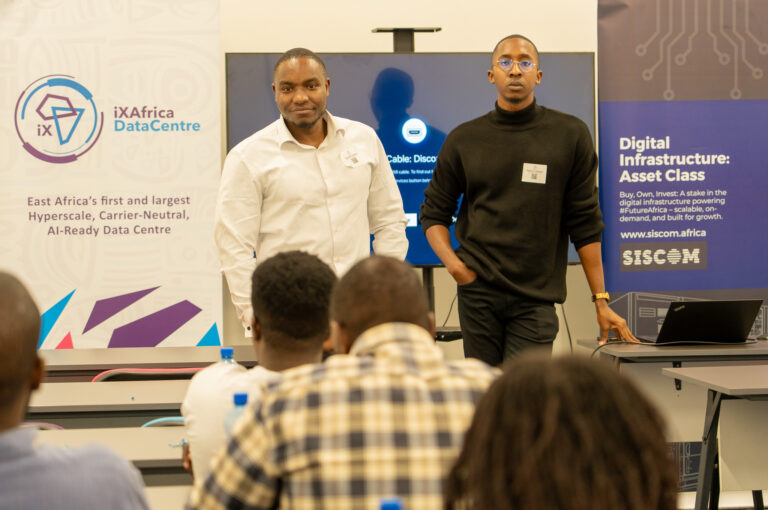
SISCOM Tech has unveiled its newest data-center cluster, hosted inside IX Africa’s Tier III-designed, 4.5 MW, 780-rack, carrier-neutral campus on Mombasa Road in Nairobi.

The deployment immediately triples SISCOM’s available capacity while giving customers direct access to the region’s most scalable, AI-ready colocation hub.

The launch coincides with SISCOM’s certification as a Data Controller under Kenya’s Data Protection Act. This designation confirms that SISCOM meets the nation’s highest standards for data governance, privacy, and security, a critical prerequisite for fintechs, AI innovators, government workloads, and multinationals operating across Africa.

“Every successful digital initiative rest on two cornerstones: trusted compliance and world-class colocation,” said Derrick Gakuu, Co-Founder of SISCOM Tech. “By combining our new Data Controller status with IX Africa’s hyperscale-ready facility, we’re giving African enterprises exactly what they need to build, launch, and scale without compromise.”

Why The IX Africa Partnership Matters

  1. Hyperscale headroom – IX Africa’s first phase delivers 4.5 MW of IT power today and is part of a planned 22.5 MW campus, ensuring SISCOM customers can grow on demand without disruptive migrations.
  2. Carrier & cloud neutrality – Multiple tier-one network providers and on-ramps to leading clouds give customers the latency, redundancy, and choice required for modern multi-cloud strategies.
  3. AI-ready design – High-density racks, robust cooling, and Schneider Electric’s EcoStruxure architecture support GPU-intensive workloads and next-generation AI/ML stacks.
  4. Sustainability first – The campus draws on Kenya’s abundant renewable energy mix, aligning with both companies’ commitments to greener digital infrastructure.
  5. Location advantage – Nairobi’s status as East Africa’s connectivity gateway shortens routes to end-users across the continent, improving app performance and data-sovereignty compliance.

Snehar Shah, CEO of IX Africa Data Centres, commented, “SISCOM’s cluster demonstrates exactly why we built IX Africa: to enable fast-growing African tech companies to achieve global-grade resiliency and scale, right here at home.”

Building Confidence Through Compliance

SISCOM’s new Data Controller certification assures clients that:

  1. Personal data is processed in accordance with Kenya’s Data Protection Act and global best practice.
  2. Independent audits verify technical and organizational safeguards for confidentiality, integrity, and availability.
  3. Cross-border data transfers comply with recognised adequacy and contractual mechanisms, supporting regional expansion.

“Our customers can now combine bullet-proof compliance with hyperscale capacity in a single contract. That’s a game-changer for any organisation that wants to innovate quickly while satisfying boards, regulators, and investors.” Added Gakuu.

Looking Ahead

SISCOM will immediately begin onboarding customers in fintech, e-commerce, government, AI research, and digital media. The company is also exploring additional edge nodes across East Africa to extend low-latency coverage while maintaining a secure, centralized core at IX Africa.

Kenya’s Peach Cars Raises $11 Million for Expansion

0


The investment was led by Suzuki Global Ventures (SGV), with participation from the Japan Bank for International Cooperation (JBIC), Gogin Capital, and a follow-on investment from the University of Tokyo Edge Capital Partners (UTEC).

“We are building a platform where trust and transparency are central to every transaction,” said Kaoru Kaganoi, co-founder of Peach Cars. “This funding allows us to enhance the customer experience and expand our model to serve more markets across Africa.”
The new funding will support its growth and simplify the car buying and selling process across the continent and highlights the growing investor interest in digital platforms that provide structured and scalable solutions within Africa’s automotive sector.

Founded in 2020 by Kaoru Kaganoi and Zachary Petroni, Peach Cars wants to revolutionize car ownership in Sub-Saharan Africa, particularly for locally used vehicles.

In March last year, Peach Cars joined forces with Umba Microfinance Bank to introduce a groundbreaking 24-hour car financing option for customers to make car ownership more accessible and convenient.

Then later in the same year, it raised $5 million in seed funding led by The University of Tokyo Edge Capital Partners (UTEC) from Japan, along with participation from notable angel investors including Shintaro Yamada (founder and Chief Executive Officer of Mercari), Peter Kenevan (VP, Head of Japan at PayPal), and Hiroaki Ohta (general partner at Japan’s Waseda University Ventures).

Established in 2020 by Kaoru Kaganoi and Zachary Petroni, Peach Cars aims to enhance trust, transparency, and customer experience in the growing used-vehicle market across Sub-Saharan Africa.

Customers can access pre-vetted vehicles, receive help with administrative paperwork, and benefit from secure payment systems, which greatly reduce the risks typically associated with informal car transactions.

The support from Suzuki Global Ventures aligns with their strategic vision, as they see Peach Cars playing a crucial role in developing automotive infrastructure across emerging economies in Africa. “We are extremely impressed with Peach’s ‘customer-first’ ethos and their ability to operate with integrity in one of the most complex automotive markets in the world,” said Mike Sarchet, Senior Director at SGV. “This investment reflects Suzuki’s broader strategy: Africa is our next India, and Peach Cars is building the infrastructure we want to be a part of.”

The African used car market is worth billions of dollars annually, yet it remains largely informal. Many consumers lack access to reliable vehicle information or safe financing options. Peach Cars’ tech-driven approach aims to provide scalable solutions to these long-standing challenges.

With the new funding, Peach Cars intends to strengthen its presence in Kenya, expand into other African countries, and invest in AI-powered tools for vehicle inspections, pricing, and matchmaking between buyers and sellers. As digital innovation transforms Africa’s automotive landscape, Peach Cars positions itself at the forefront of a trust-based, consumer-friendly future for used car transactions.


Eight Crucial Steps to Securing Real Estate Syndication Trust

0

There are three things that drive passive investors to enter syndicated real estate deals  – enthusiasm, integrity, and the expectation of success. In short, they trust the sponsor’s value proposition will deliver their capital back as promised with a healthy ROI. However, there’s much more to it than meets the eye. The “more” revolves around what transpires between the launch and the final result.

What’s at stake here is sponsor competence and reliability in managing complex moving parts. When all parts of a syndication work in harmony, investors enjoy a clear, rewarding experience. But when things go off track, it can create confusion and losses. In this article, we’ll explore what separates successful syndications from those that fall short of expectations.

Real Estate Syndication in 2025 and Beyond

While it’s challenging to nail reliable stats on syndication, not so much tracking crowdfunding real estate projects, much of which channel into syndicated models. According to Zion Market Research, the global property crowdfunding market reached nearly USD 22 billion in 2023.

That may seem substantial, but it’s an early growth stage metric projected to escalate to over USD 538 billion by 2032 – a mind-boggling CAGR (compound annual growth rate) of 42.7% over nine years. What does this signify? Four vital considerations:

  1. In 2025, real estate syndication continues to gain momentum, attracting both excitement and caution.
  2. This isn’t an overhyped trend; it’s a proven model used by both individual and institutional investors.
  3. However, passive investors must understand the journey before committing.
  4. Customer Relationship Management (CRM) should be a top priority for sponsors, as the quality of a syndicator’s investor CRM directly affects leadership, investor retention, and new investor acquisition.

The Importance of Integrity and Competence in Real Estate Syndication

The ideal syndicator is someone who can find and improve undervalued properties, manage day-to-day operations smoothly, and communicate clearly with investors. These skills help build trust and ensure that a project stays on track. However, competence alone isn’t enough. Integrity plays an equally important role. If a syndicator isn’t transparent or prioritizes short-term gains over long-term relationships, it can quickly erode investor confidence.

Why Sponsor Integrity is Key to Building Successful Syndications

Not all syndicators bring the same value, or the same risk. While obvious bad actors can usually be spotted through basic due diligence, less visible challenges arise when sponsors have either questionable integrity or limited competence.

Some may have strong ethics but lack execution ability, while others may perform well operationally but cut corners in communication or transparency. Both can undermine investor trust and syndication outcomes.

Recent high-profile cases – from Clayton Morris to ongoing lawsuits involving celebrity-backed syndications – highlight that branding alone isn’t a safeguard. Long-term success depends on trust, clear communication, and sound execution.

Eight Must-do Initiatives: Taking Your Real Estate CRM to the Next Level in 2025

An effective CRM system is more than just a database – it’s a relationship engine. The way you engage with your investors can make or break your syndication success. These eight strategies will help elevate your CRM game in 2025:


1. Create Transparency

Investor relationships thrive on sponsor transparency – constant, unambiguous communication, with KPI-driven insights into your model’s challenges and benefits. Investors are often frustrated by inconsistent reporting, vague metrics, unclear communication, or delayed responses to their questions. It can quickly erode investor trust, as does avoiding tough questions.

2. Network

A contented existing or past investor network establishes a fantastic credibility platform. Still, it’s not enough to secure leadership in a constantly changing, fickle, competitive marketplace. Instead, springboard off your solid base to explore new horizons. This is how it can be done:

  • Nurture strategic partnerships
  • Engage in industry events
  • Participate in relevant forums

Capture every high-potential introduction that crosses your path. Frequently, it takes only one to significantly enhance your credibility.

3. Manage Your Media

Communicate with potential investors how they want to see and hear from you, not necessarily how you prefer to reach them. For example, suppose LinkedIn is your audience’s hot-button channel, yet to you, it’s nothing special – one of many in the SM category. Switch your focus to learn everything you can about LinkedIn, its opportunities to stage your model, and the KPIs your targeted viewers look for on this channel.

4. Professionalize Your Website

It’s guaranteed potential investors interested in your value proposition will Google your website. That’s where insights into your history, CRM, and pedigree reside. A drab digital marketing effort will kill the sale before it gets to second base. So, showcase a top-class website with no-nonsense take-home value, real-time verifiable reviews, and performance metrics you can prove with complete transparency.

5. Recognize and Do Something About Investor Frustrations

“Blowing hot, blowing cold” is one of the worst tactics for retaining investor confidence. One of the fastest ways to lose investor trust is showing excitement before the launch and then going quiet once funds are raised. Investors expect consistent communication throughout the project. Include programmed schedules, prompt accurate reporting, facing tough issues head-on, and encouraging participation to build trust between passive and active partners.

6. Maintain a Healthy Relationship Between Reality and Investor Expectations

Strong investor interest is often driven by positive word of mouth. When you consistently exceed expectations, your existing investors become your best advocates. How do you achieve this? Under-promise and over-deliver. It contrasts massively with the approach of less desirable syndicators who over-promise and under-deliver.

7. Ensure You’re Compliant with Required Protocols and SEC Regulations

Failing to follow regulations, even by accident, can send the wrong message to investors. It might suggest a lack of attention to detail or a casual approach to serious responsibilities. Even if the property is performing well financially, regulatory missteps can cast doubt on the syndicator’s professionalism and long-term reliability.

Investors want to know that every part of the process, from fundraising to compliance, is handled with care. Staying on top of legal requirements not only protects the business but also builds trust – an essential ingredient for any successful syndication.

8. Install an Investor Loyalty Program

Every syndication integrates passive and active participants. Irrespective, all share the same vision and success commitment. Investors speak up when they’re:

  • Concerned about their journey derailing on the one hand
  • Want to enthuse over performance on the other

Whether positive or negative, your CRM must reflect gratitude for investors’ trust in your capabilities by engaging with them and listening to their thoughts and comments. Here is how:

  • Arrange exclusive investor events
  • Offer priority access to current investors for oversubscribed syndications
  • Implement suggestions and acknowledge the passive partner contributions by name

Sewing It All Up

Today’s CRM platforms offer more than contact storage; they provide integrated, AI-powered features for fundraising, reporting, investor communication, and data analysis. With customizable dashboards, automated workflows, and omnichannel engagement, sponsors can manage investor relationships more effectively and at scale.

These tools are not just operational upgrades; they’re strategic enablers. By building on the eight integrity pillars described above, sponsors can create a professional and transparent experience that sets the foundation for long-term trust and repeat participation. Your audience will immediately see the difference, and your bottom line will reflect the benefits.


Chowdeck Acquires Mira to Reach More Hospitality Businesses

0

Chowdeck, Nigeria’s on-demand delivery platform, has acquired Mira, a point-of-sale (POS) solutions firm tailored for the food and hospitality industry.

Chowdeck says the expansion will see it go beyond delivery, positioning it as a comprehensive technology partner for food businesses across the continent.

According to Femi Aluko, CEO and co-founder of Chowdeck, said “We are thrilled to welcome Mira to the Chowdeck family. I’ve admired their work for a long time, and I’m excited about what we can build together. The Mira team brings deep experience in solving operational challenges for food and hospitality businesses, and their expertise will be instrumental as we continue to evolve our platform and empower our partners to succeed.”

As part of the acquisition, Mira’s CEO, Ted Oladele will join Chowdeck as Head of Product. Other selected team members will also join Chowdeck to build new solutions for food and hospitality businesses across the continent.

Mira’s all-in-one platform is already used by over 500 hospitality businesses to manage everything from sales and inventory to kitchen performance and customer engagement – through a single, intuitive interface. Since inception, Mira has championed a new kind of business software, one that’s built with empathy for local realities and a belief that running a business in Africa should be as seamless as anywhere else. From inventory chaos to growth clarity, Mira has been the quiet partner behind some of Africa’s most innovative retail and hospitality brands.

With this acquisition, Chowdeck will now be able to leverage Mira’s exceptional product development capabilities to ideate and deliver new technology solutions to support growth and improve customer experience.

While food and hospitality businesses in Africa share many of the same operational needs as their global counterparts, they also face distinct challenges shaped by infrastructure gaps, inconsistent supply chains and limited access to bespoke technology solutions. In Nigeria, for example, multiple studies have highlighted the link between inventory mismanagement and reduced profitability – underscoring the need for smarter tools that can address inefficiencies, minimize stockouts and reduce waste.

These operational challenges present a clear opportunity for technology companies with strong, solution-driven value propositions. By combining its renowned delivery infrastructure with smart tools that enhance business efficiency, Chowdeck is primed to enable food and hospitality businesses to overcome longstanding growth challenges and meet rising consumer expectations across Africa.

Since its launch in Nigeria in October 2021, Chowdeck has acquired over 1.5 million users and more than 20,000 riders across 11 cities. Its tech-enabled logistics infrastructure enables businesses to deliver items to customers in an average of 30 minutes, while giving consumers a seamless platform to order meals, groceries, and everyday essentials. The company recently expanded to Ghana, marking a significant milestone in its mission to power Africa’s commerce and convenience economy.

As Chowdeck expands across key African cities, this increased capacity will position it to support food and hospitality businesses to scale more effectively while meeting rising consumer expectations for speed, quality and convenience.


Bitget Committed to Supporting Africa’s Digital Future

Bitget, the cryptocurrency exchange, and Web3 company is committed to supporting Africa’s digital future.

Bitget showcased this at the just concluded Kenya Blockchain and Crypto Conference 2025 where it highlighted its ongoing commitment to driving global adoption and financial inclusion.

Bitget hosted a high-impact Masterclass attended by over 100 participants from the conference. The session introduced attendees to the fundamentals of blockchain and cryptocurrency, followed by a deep dive into Bitget’s product ecosystem. From P2P trading and fiat onramps to spot, futures, and copy trading, participants were given a hands-on understanding of how Bitget’s offerings enable smarter, more accessible trading for users at every stage.

Bitget also delivered a keynote presentation led by Andrew Letting, which explored how fintech companies can leverage Bitget’s institutional infrastructure to integrate digital asset solutions. The keynote outlined Bitget’s powerful APIs, liquidity access, and secure backend systems as foundational tools for businesses building crypto-enabled services.

Further emphasizing its leadership role in the ecosystem,  Bitget Kenya Marketing Lead Mathendu Lorena took part in a panel alongside key industry players. On the panel, OKX, MEXC, YIKSI, and Busha, explored the role of crypto exchanges in driving mass adoption across the region. Mathendu highlighted Bitget’s localized strategies, educational efforts, and product accessibility as critical to accelerating crypto literacy and usage in Kenya.

Bitget’s presence at the Kenya Blockchain and Crypto Conference reflects its ongoing dedication to emerging markets and the empowerment of local communities through innovation and knowledge-sharing. Born in a bear market, Bitget insists on putting users first, focusing on product innovation, and advocating long term prospects with the spirit of “earnestness.” Bitget aims to inspire people to embrace crypto and improve the way they earn, one trade at a time. As Africa continues to grow as a major force in the crypto economy, Bitget remains committed to being a partner in progress for the continent’s digital future.

Taiwan Launches 2025 “Go Healthy with Taiwan” Global Healthcare Proposal Contest

0

Taiwan has launched 2025 “Go Healthy with Taiwan” Global healthcare proposal contest calling on governments, institutions, enterprises, and organizations worldwide to submit innovative healthcare proposals.

The proposals should incorporate Taiwan’s world-class health products and comprehensive solutions in a move expected to raise global health standards and promote well-being in communities, cities, and workplaces through collaborative efforts.

According to Joe Chou, Executive Vice President of TAITRA, “Through Taiwan’s cutting-edge technologies and holistic health solutions, we aim to co-create smart and sustainable healthy lifestyles with our global partners.”

This year’s launch follows the success of last year’s “Go Green with Taiwan” initiative, which received 396 proposals from 45 countries, the 2025 “Go Healthy with Taiwan” campaign aims to further broaden Taiwan’s international health footprint. This year’s goal is to collect over 500 submissions across five continents.

The top three proposals will each receive a US$30,000 cash award, and all high-potential entries will gain opportunities for collaboration and commercialization with leading Taiwanese companies.

The campaign elevates Taiwan’s global presence in the health industry and foster international collaboration through local implementation, the International Trade Administration (TITA).

It’s being organized under the Ministry of Economic Affairs (MOEA) has commissioned the Taiwan External Trade Development Council (TAITRA) to launch the 2025 global initiative “Go Healthy with Taiwan.”

The campaign highlights Taiwan’s competitive edge in five key health industry sectors such as smart healthcare technologies, fitness equipment & sports technologies, bicycle industry, medical aesthetics and wellness checkups.

Ms. Susan Hu, Deputy Director General of TITA, noted that President Lai Ching-te is actively advancing the vision of a “Healthy Taiwan.” The launch of this campaign marks a crucial step in realising this vision by inviting global innovators to participate and collaborate in shaping a healthier and more sustainable future.

Submit Your Proposal Today

The submission window is open from May 15 to August 14, 2025 (Taiwan time). Innovators from around the globe are invited to participate in shaping the future of global health.

Visit the official website at https://go-healthy.growthpad.co.ke for submission guidelines and further details.

For inquiries, please contact:

Taiwan Trade Centre, Nairobi

Tel: +254-20-271-1189 / 1187 / 1190

Email: nairobi@taitra.org.tw


How Custom Legal Case Management Software Transformed Our Law Firm’s Efficiency

0


The legal industry gets a lot of criticism for being slow to adopt new technology. While other industries went digital decades ago, many law firms still rely on outdated systems, paper files, and inefficient processes that create bottlenecks and limit how much you can grow. But if you’re a forward-thinking firm, you’re discovering that custom technology solutions can completely revolutionize how you operate and dramatically improve both your efficiency and client satisfaction.

The Challenge of Scale in Legal Practice

Managing a growing legal practice presents unique challenges that generic software just can’t handle. You’re dealing with complex workflows, strict deadlines, detailed documentation requirements, and you need to maintain constant communication with clients who are often going through incredibly stressful situations. Whether you’re representing accident victims dealing with truck accidents, workplace injuries, or other traumatic events, maintaining clear communication becomes even more critical. As your caseloads increase, these challenges multiply fast.

Traditional case management approaches typically involve a combination of basic practice management software, spreadsheets, email systems, and physical filing systems. While these methods might work when you’re handling dozens of cases, they quickly become a nightmare when you’re dealing with hundreds or thousands of active matters. You end up with missed deadlines, poor client communication, duplicated work, and your attorneys spending more time on paperwork than actually practicing law.

The Technology Gap in Legal Services

Most off-the-shelf legal software tries to be everything to everyone, which results in bloated systems that include features you don’t need while lacking the specific functionality your firm actually requires. These generic platforms force you to adapt your processes to fit their software, rather than having technology that supports your unique workflow and client service approach.

Plus, most existing solutions struggle with integration. You need your case management system to work seamlessly with your billing software, document management platforms, court filing systems, and client communication tools. When these systems don’t talk to each other, your staff ends up manually entering the same information multiple times, creating opportunities for errors and wasting time.

Building Our Own Solution from Scratch

We recognized these limitations and made the strategic decision to develop our own comprehensive case management platform. Instead of forcing our operations to conform to existing software limitations, we designed a system specifically tailored to our workflow, our client needs, and our growth objectives.

We started by thoroughly analyzing our existing processes, identifying bottlenecks, redundancies, and areas where automation could improve efficiency. We mapped out the entire client journey, from that first phone call through case resolution, making sure our software would support each stage seamlessly.

Our custom platform integrates every aspect of case management into one unified system. Client intake, document management, deadline tracking, communication logs, billing, and reporting all function within one cohesive environment. This integration eliminates the data silos that plague many firms and ensures that everyone on our team has access to real-time, accurate information about every case.

Automation and Smart Workflow Management

The key to our system’s effectiveness is its intelligent automation capabilities. Routine tasks that used to require manual work are now handled automatically. Deadline reminders, document generation, client status updates, and progress reports are all automated, freeing up our staff to focus on higher-value activities.

The platform also includes sophisticated workflow management that routes tasks to the right team members based on case type, urgency, and current workload. This ensures that nothing falls through the cracks while optimizing how we allocate resources across our team.

Results That Speak for Themselves

The impact of our custom case management solution has been incredible. With a lean team of just 15 people, including four attorneys, we now effectively manage thousands of active cases while maintaining exceptional client service standards. This level of efficiency would have been impossible with traditional methods or generic software solutions.

Our client retention rates have improved significantly since implementing the system. Clients love the consistent communication, timely updates, and professional service delivery that our technology enables. Automated status updates keep clients informed throughout their case, while our integrated communication system ensures that client inquiries get prompt, informed responses.

The efficiency gains have been equally impressive. Our injury attorneys can focus on practicing law rather than administrative tasks, while our support staff can handle larger caseloads without feeling overwhelmed. The system’s reporting capabilities give us valuable insights into our operations, helping us identify opportunities for further improvement and ensuring we maintain our high service standards as we continue to grow.

What We Learned and Best Practices

Developing custom software was a significant investment in both time and money, but the return on investment has far exceeded our expectations. However, success required careful planning and a clear understanding of what we specifically needed and wanted to accomplish.

The key was starting with a thorough analysis of our existing processes and identifying exactly what we needed the system to do. We involved team members from every department in the design process, making sure that the final product would actually improve their daily work rather than creating new headaches.

We also prioritized user experience from day one. Even the most powerful software is useless if your team finds it difficult or frustrating to use. Our platform features an intuitive interface that requires minimal training, allowing team members to become productive quickly.

The Future of Legal Technology

Our experience shows that you don’t have to accept the limitations of generic software solutions. Custom technology can give you significant competitive advantages, enabling you to deliver better client service while operating more efficiently.

As the legal industry continues to evolve, firms that embrace technology innovation will be the ones positioned to thrive. Whether through custom development or carefully selected and integrated third-party solutions, the key is making sure that technology supports your firm’s unique approach to client service rather than holding you back.

The investment in custom case management software has transformed our practice, enabling us to achieve scale and efficiency that would have been impossible otherwise. If you’re ready to take your operations to the next level, technology isn’t just a tool – it’s a strategic advantage that can define the future of your practice.


itel Debuts CITY Series with CITY 100 New Model

itel CITY 100: A Stylish, Durable & DeepSeek AI-Powered Smartphone for Gen Z

itel, a reliable smart life brand for everyone, is excited to announce the launch of the CITY 100, the inaugural smartphone in its brand-new CITY Series. With an RRP price tag of Ksh 11,200 itel CITY 100 redefines expectations for budget smartphones by integrating both playful features and strong performance within a sleek design and tech-enhanced AI, bridging the gap between advanced AI capabilities and budget-friendly devices, empowering users to enjoy a smarter, more connected life.

Unibody Frame & Ultra-Flat Display – A First in Its Class

Embodying the series motto – “Fun, Yet Strong” –CITY 100 is more than just a device, it’s a lifestyle companion for young trendsetters. With a premium 7.65mm unibody frame, it offers seamless and sleek aesthetic. Unlike traditional budget phones designs, it features an ultra-flat display that sits perfectly flush with the frame. This refined design ensures comfort during long browsing sessions and adds a touch of sophistication to every interaction. Its immersive 6.75-inch display offers a smooth 90Hz refresh rate, a peak brightness of 700 nits and an 83% wide color gamut to deliver smooth and vibrant visuals even under sunlight.

Engineered for durability and longevity, itel CITY 100 is also remarkably durable with an IP64-rated dust and water resistance, effortlessly withstands the rigors of daily use. Built to last, itel supports this phone with a 60-month fluency guarantee. Its frame has undergone testing against 1.5-meter drops and has endured 25,000 micro-drop tests, demonstrating its resilience even in challenging conditions. Also CITY 100 comes with a free magnetic speaker in particular countries and supports accessories like stands and card holders, enhancing everyday convenience and fun.

Furthermore, CITY 100 features a 5200mAh high-capacity battery with 18W fast charging and a 4-year battery health guarantee, ensuring all-day long performance and long-term reliability.

itel’s First DeepSeek AI-Powered Creativity

What truly sets itel City 100 apart in its price range is its creative AI functions. As itel’s first smartphone equipped with the DeepSeek R1 model, itel CITY 100 offers DEEPSEEK AI to support intelligent interaction scenarios powered by itel AI. This enables users to transform texts into custom wallpapers or stylize their favorite images with AI creativity, while also enjoying various AI assistant services, such as one-press AI search for shopping or help, instant AI translation, image-to-text conversion, AI writing, AI call noise reduction, and AI voice snap.

Thanks to the upgrade of AI tools, young users can engage with the latest advancements in AI technology and experience the convenience brought by mobile innovation. itel’s commitment to integrating AI into mobile applications demonstrates its dedication to meeting the smart lifestyle needs of entry-level users, making cutting-edge technology more accessible and affordable. With these enhancements, itel continues to bridge the gap between advanced AI capabilities and budget-friendly devices, empowering users to enjoy a smarter, more connected life.

As the first release in itel’s City Series, City 100 is built for the adventurous, expressive, and connected young people who embrace technology not just as a tool, but as a way of life. From its trendy, integrated design to its strong, reliable performance, this is a device that dares users to explore, play, and live their lives to the fullest and have confidence comparing with same price competitors.

Yellow Card Partners Visa to Accelerate Stablecoin Adoption Across Africa

Yellow Card, the stablecoin payments firm has partnered with Visa to help drive stablecoin adoption across Africa.

The two firms will explore stablecoin use cases and adoption and enhance liquidity management according to business and technology site Business Tech Kenya.

According to Chris Maurice, Co-Founder and CEO of Yellow Card, “We are thrilled to partner with Visa to help realize the potential of stablecoins technology in emerging economies.”

Founded in 2016 by Christopher Maurice, the Chief Executive Officer, and Justin Poiroux, the Chief Technology Officer, Yellow Card enables businesses of all sizes to make or accept stablecoins as payments, manage their treasury, and access USD liquidity.

Since launching in Nigeria in 2019, the firm has generated volumes of over US$6 billion and provided its stablecoin adoption solutions to banks and other financial institutions, importers/exporters, manufacturers, food producers, venture-backed FinTechs, and others.

Yellow Card operates in 20+ African countries and provides access to secure, compliant, and accessible stablecoin products for consumers, businesses, and developers. This partnership further cements Yellow Card’s role as a critical financial gateway and infrastructure provider in emerging markets.

“We’re excited to team up with Yellow Card to enable faster and more accessible digital payments,” said Godfrey Sullivan, Senior Vice President and Head of Product and Solution for CEMEA, Visa. “As more players in the payments ecosystem explore this powerful new technology, Visa stands ready to help our partners navigate the transformation, bringing the scale, trust and innovation needed to help build the next generation of global payments.”

In a new report released by the firm, Nigeria emerges as the global standout, ranking first worldwide for Stablecoin adoption and second for all digital assets adoption, with 25.9 million customers representing an 11.9% penetration rate.

The report identifies ten African countries in the top 50 of global digital asset adopters: Nigeria, Ethiopia (26th), Morocco (27th), Kenya (28th), South Africa (30th),
Uganda (34th), Algeria (43rd), Egypt (44th), Ghana (46th), and the Democratic Republic of the
Congo (48th).

Talenteo, Algerian HRTech, Gets Funding From Tunisia’s 216 Capital

0
Talenteo, an Algerian HRTech startup has recieved funding from Tunisia’s 216 Capital to meet the needs of African SMEs and mid-sized companies.
Talenteo offers a complete SaaS platform for human resources and payroll management, and is currently serving over 10,000 active users.
“We believe business success starts with investing in people. Talenteo was designed to help African companies digitize their HR management to support growth and impact,”

says Louai Djaffer, CEO of Talenteo. 

In a market where demand for digital HR solutions is growing fast, this new six-figure investment, led primarily by 216 Capital, marks a major milestone for Talenteo.

It will enable the firm to open new operations in Tunisia, the first step in a regional rollout, strengthen its technology, especially AI capabilities and scale across strategic HR markets in Francophone Africa.

Talenteo offers a SaaS platform that combines artificial intelligence, local legal frameworks, and automation of key HR processes.
By 2030, Africa is expected to have more than one billion working-age individuals—becoming the world’s largest talent pool. With over 80% of jobs created by SMEs and mid-sized businesses, HR management is a growing challenge and a key lever for performance, compliance, and competitiveness. Talenteo is emerging as a locally developed, tech-driven solution tailored to these dynamics.

The HR tech startup’s SaaS platform combines artificial intelligence, local legal frameworks, and automates key HR processes such as personnel administration, time tracking and payroll, talent development and regulatory compliance.

As it now expands to Tunisia, its intelligent engine will ensure its client’s HR operations are reliable, automates repetitive tasks, and strengthens HR departments’ ability to anticipate and adapt—especially in a fast-changing economic and regulatory environment.

“Talenteo embodies exactly the kind of innovation we back: locally rooted, scalable, and built to address the operational realities of African companies,” explains Dhekra Khelifi, Partner at 216 Capital Ventures.

216 Capital has also invested in Juridoc to accelerate the digitalization of legal services in Africa and the Middle East.

Founded in 2021,  Juridoc simplifies access to legal resources through a comprehensive database that includes legislation, case law, doctrine, and legal monitoring. Its intelligent search engine, powered by generative AI, enables legal professionals, businesses, and institutions to optimize their work by quickly accessing reliable and up-to-date information.”

Already established in Tunisia and Senegal, Juridoc has achieved impressive figures: over 252,000 documents available, 325,000 successful legal searches, and more than 4,000 paid users. Building on this success, the startup aims to democratize access to legal information in new markets.

“We believe our solution addresses a critical need for legal professionals, not just in Tunisia and Senegal but across West Africa and the Middle East. We aim to expand our expertise and deliver significant value to new users.” – Kais Assali, co-founder and CEO of Juridoc.”

Earlier on 216 CAPITAL participated in a $1.5M funding round for the startup Arcube.

Mastercard, Enza Partner to Enable Fintech Innovation Across Africa

0
Mastercard and enza, a payment firm, are partnering to connect fintech companies across Africa to the Mastercard network.
The two aim to enable fintech players to build propositions on the enza platform that serve both consumers and businesses with embedded Mastercard payment solutions capabilities.
“At Mastercard, we are focused on powering the fintech ecosystem by enabling access to our trusted global network. Through our work with enza, fintech innovators in Africa will be able to deploy embedded payment capabilities more efficiently – helping accelerate financial inclusion and the region’s digital transformation,” said Mete Guney, executive vice president, Market Development, EEMEA, Mastercard.
According to a report by the European Investment Bank, the number of fintech companies in Africa has nearly tripled since 2020. Many of these innovators focus on embedding payment services into broader solutions that tackle financial access, offering alternatives to legacy systems that often have a high cost to serve.
Fintech companies in Africa will now be able to easily access the full suite of Mastercard services. The collaboration aims to reduce complexity and speed up time to market for emerging players building digital financial solutions across the continent.
As part of the agreement, enza will host consumer and merchant accounts, manage integration with Mastercard’s network, and ensure high levels of security and system availability. Fintech companies can configure pre-paid or post-paid accounts, and issue physical or virtual Mastercard cards. For businesses, enza will enable acceptance of Mastercard payments across in-store, online and in-app channels.
“enza is on a mission to make digital payments more accessible and affordable across Africa, helping to build a more financially inclusive continent that is ready and able to compete globally. Our collaboration with Mastercard leverages our existing relationship to more effectively serve the fintech community. Together, we will provide innovators with a platform capability that means they do not need to build this aspect of their proposition and can get to market with greater speed and security,” said Andrew Key, Executive Director, enza.
 
Founded in 2023, enza is headquartered in Abu Dhabi, with regional offices in Egypt, South Africa and Nigeria. enza’s payment infrastructure delivers the flexibility and agility needed to increase competitiveness, capitalize on new markets and develop new revenue streams through better serving consumer and business customers across Africa.

CineGo APK-Download CineGo TV Official For Android 2025

0

CineGo APK is an exciting streaming application designed for movie and TV show lovers who want instant access to a world of entertainment right from their Android devices. With its sleek interface, fast loading times, and extensive media library, CineGo offers users a premium viewing experience without the usual subscription hassles. Whether you’re into the latest blockbusters, timeless classics, or trending TV series, CineGo brings it all together in one place. It supports HD streaming, user-friendly navigation, and even offline downloads for on-the-go viewing. Perfect for cinephiles, CineGo APK is your portable cinema—free, flexible, and fun to use.

Key Features of CineGo APK

Extensive Movie & TV Show Library

CineGo APK offers a massive collection of movies and TV shows from all around the world. From Hollywood blockbusters to international indie films, you can explore every genre including action, comedy, horror, romance, thriller, and more. The content is regularly updated to ensure users never miss out on new releases.

High-Definition Streaming

One of CineGo’s strongest features is its support for HD and Full HD streaming. Users can watch their favorite shows and movies in crystal-clear resolution, enhancing their viewing experience with smooth playback and high-quality visuals that rival paid platforms.

Download for Offline Viewing

CineGo APK allows users to download content directly onto their devices. This offline feature is ideal for those who want to enjoy entertainment during travel or in areas with poor internet connectivity. Downloaded files remain accessible without any time restrictions.

No Subscription or Signup Required

Unlike most streaming apps, CineGo APK doesn’t require users to create an account or subscribe. You can access the entire content library instantly without sharing personal information, making the app convenient and privacy-friendly.

User-Friendly Interface

CineGo features an intuitive and easy-to-navigate interface. Categories are clearly organized, search options are quick and accurate, and playback controls are smooth. Even first-time users can quickly understand how to use the app without any learning curve.

Regular Content Updates

The developers keep CineGo updated with the latest content. New movies and episodes are added frequently, ensuring that users always have something fresh to watch. Updates also include bug fixes and improvements for better performance.

Multiple Language Support

CineGo 2025 caters to a global audience by offering content and subtitles in multiple languages. This multilingual feature helps users from different regions enjoy content in their preferred language, breaking language barriers.

Built-in Media Player

CineGo comes with a built-in media player that supports various video formats. It offers adjustable settings like subtitles, playback speed, brightness, and volume control, giving users more control over their viewing experience without needing an external player.

Smart Search Function

The advanced search feature helps users quickly find specific movies, shows, or genres. With filters and recommendations based on user preferences, CineGo ensures that users spend less time searching and more time watching.

Chromecast Support

Want to watch on a bigger screen? CineGo supports Chromecast, allowing users to stream content from their mobile device to a smart TV with just a few taps. This makes it perfect for group viewing and family movie nights.

Low Storage Usage

Despite its vast features and content, CineGo APK is lightweight and doesn’t consume excessive storage space. This makes it ideal for users with low-end devices or limited internal memory.

Ad-Free Experience (Optional)

While CineGo may contain occasional ads to support development, many versions offer an ad-free experience or minimal ad interruptions. This allows users to enjoy uninterrupted streaming without constant pop-ups or banners.

FAQS

Q: Is CineGo APK free to use?

A: Yes, CineGo APK is completely free with no subscription required.

Q: Do I need to sign up or log in?

A: No, you can use all features without registration or login.

Q: Can I download movies for offline viewing?

A: Yes, CineGo allows you to download content and watch it offline.

Q: Does it support subtitles?

A: Yes, many videos include subtitles in multiple languages.

Q: Is CineGo APK safe to install?

A: If downloaded from a trusted source, it is generally safe. Always use antivirus protection.

Final Words

CineGo APK is an excellent choice for movie and TV lovers who want free, fast, and flexible access to a wide range of entertainment. With its user-friendly interface, HD streaming, offline downloads, and frequent updates, it stands out as a powerful alternative to paid streaming services. Whether you’re watching alone or with family, at home or on the go, CineGo ensures a smooth and enjoyable viewing experience. Just make sure to download the app from a trusted source for safety. If you’re looking for non-stop, high-quality entertainment without spending a dime, CineGo APK is definitely worth a try.


Egypt’s Octane Raises $5.2M to Expand its Fleet Management Platform Across MENA

Octane, Egypt’s digital platform for fleet and on-road expense management, has raised $5.2 million to accelerate the expansion of its acceptance network, deepen its technology stack.

The round, led by Shorooq, Algebra Ventures and SC Holding, will also support the company’s growth across Egypt and the wider Middle East and North Africa (MENA) region.

According to Amr Gamal, Co-Founder and CEO of Octane, “At Octane, we’re focused on giving fleets the rails they need to manage day-to-day payments with precision. This funding lets us broaden our acceptance network, expand AI-powered fraud detection and route optimisation features, and stay ahead of the shift toward cleaner, more efficient mobility, without adding complexity for our customers.”

Unlike traditional fuel cards, Octane delivers a single closed-loop digital wallet that consolidates every on-road expense—fuel, maintenance, spare parts, petty cash and more into one platform. Real-time controls and analytics give fleet operators clear visibility, typically trimming avoidable fuel and mileage costs by double-digit percentages. The solution already supports diesel, gasoline and CNG, with EV-charging payments rolling out at pilot locations to keep pace with customers’ evolving energy needs.

Founded in September 2022, Octane has built Egypt’s largest fleet-payment coverage, now spanning 2,400 petrol stations and 400 CNG outlets nationwide. More than 1,600 corporate clients with a total fleet of ~250,000 vehicles rely on the platform to streamline fleet spending.

“What drew us to Octane wasn’t just the size of the problem they’re tackling – it was the clarity and precision of their solution,” said Laila Hassan, General Partner at Algebra Ventures. “In a market where billions leak through inefficiencies and fraud, Octane brings real accountability and control to fleet operators.”

With fuel prices volatile and logistics costs rising, fleet owners need smarter expense-management tools to protect margins.

“The first wave of digitisation of mobility companies moved people; the second wave moved goods. But unlike the consumer space, the enterprise space lacked the payments and expense-management infrastructure to enable it. Octane is building that infrastructure,” said Tamer Azer, Partner at Shorooq. “Octane is redefining financial technology and access products for fleet managers, and we’re excited to support them as they scale their world-class technology to every company that operates a fleet across the MENA region.”

Integrated fleet-expense platforms are gaining momentum worldwide. Established players such as Corpay and WEX prove the demand for centralised fuel and maintenance payments, while newer fintechs like Coast and Fleetio are introducing modern, digital-first tools. Octane is bringing this proven model to Egypt and the MENA region, pairing a broad local acceptance network with controls and analytics tailored to regional tax and compliance requirements, giving operators automation and insight previously available only in mature markets.

With its robust network, proprietary technology and growing customer base, Octane is well poised to scale as more fleets seek data-driven solutions to control costs and improve operational efficiency.

Paratus & Powertel to Launch National Fiber Network Across Zimbabwe

Paratus Zimbabwe, a subsidiary of Paratus Group, has signed a major deal with PowerTel, wholly owned subsidiary of Zimbabwe Electricity Supply Authority (ZESA), to launch a new high-capacity national fiber network across Zimbabwe.

Paratus Zimbabwe and PowerTel will combine their strengths and invest equally in the roll-out of high-capacity fiber infrastructure to create a new long-distance fiber network across Zimbabwe and provide cross-border links to Zimbabwe’s neighbouring countries.

Acting MD of PowerTel Communications, Willard Nyagwande says: “This marks a major step forward in Zimbabwe’s digital transformation because this partnership will enable us to deliver on our mission to provide high capacity and affordable connectivity to the people and enterprises of Zimbabwe. We are proud to be working with Paratus Zimbabwe and to be creating a resilient national long-distance backbone.”

The first phase of the roll-out within the next six months will be to connect Plumtree, Bulawayo and Livingstone.

Paratus Zimbabwe will be offering an unmatched service through the Paratus Group’s quality network. By extending our footprint into yet another African territory, we will bridge gaps between neighbouring countries and further strengthen and widen our contiguous network offering.

Paratus Group in March 2025 announced entry into Tanzania with the launch of Paratus Tanzania through a joint venture with Tanzanian based Green Telecom. The announcement comes just four months after the group opened Paratus Kenya, further strengthening the Group’s entry into East Africa and its ambitious sub-equatorial expansion plans in Africa.

Paratus Group’s Chief Commercial Officer, Martin Cox concurs: “This is very good news for Zimbabwe, and we are delighted to be partnering with PowerTel to bring about this landmark deal.

“The Paratus Group is at the centre of Africa’s digital revolution, driving and reshaping connectivity across the continent. We are building networks and creating the digital arteries that will connect more and more people in Africa and give them the service and the support they need to realise their individual and collective potential.”

Afya Gemma Using AI to Enhance Clinical Decision-Making in Kenya

0

Afya Gemma, an AI-powered clinical decision support platform developed by Aga Khan University Data Innovation Office, has been selected for 2025  Google.org  accelerator to advance AI powered health care in Kenya.

The platform integrates anonymized health records from a Kenyan Electronic Health Record (EHR) repository enabling clinicians to make more informed decisions via natural language queries.

“We’re honoured to join the 2025 Google.org Accelerator,” said Farhana Alarakhiya, Chief Data Innovation Officer, Aga Khan University and Principal Investigator for Afya Gemma. “In Kenya, just over 10,000 doctors serve more than 52 million people, leaving vast gaps in access to specialist expertise, particularly in rural and underserved communities. Afya Gemma was built to help close this gap.”

According to Kenyan business and tech news site BusinessTech, Afya Gemma will receive a share of $30M alongside six months of support, training, and Google Cloud credits.

With the support, it will scale its efforts to equip clinicians across Kenya with real-time, evidence-based guidance tailored to local healthcare realities.These will make clinical knowledge accessible to frontline healthcare workers in English and Swahili.

With the 2025 Google.org Accelerator: Generative AI support, the team will accelerate the localization and refinement of the model and reach more remote clinics.

Afya Gemma will be deployed in 40 facilities across the extensive network of Aga Khan University Hospital (AKUH) and Aga Khan Health Services (AKHS) facilities focusing on bridging the research-practice gap and enhancing care quality through AI. 

Clinicians across the world need real-time, evidence-based guidance to help them make healthcare decisions. Evidence-based practice and decision-making have been consistently linked to improved quality of care, patient safety, and many positive clinical outcomes in various cases.

Verto Launches Verto Reserve in Kenya & Nigeria

0

Verto, a cross-border payments platform, has launched its Verto Reserve that allows businesses to earn interest on their holdings in G10 and African currencies regardless of their country of incorporation.

Kenya’s BusinessTech reports that Verto customers can earn up 10% interest on funds in their accounts.

According to Verto CTO Anthony Oduu, “We understand that businesses operating globally often hold significant balances in various currencies. Verto Reserve is designed to make those funds work harder.”

These service will allow the firm’s customers to earn interest in key African and G10 currencies, even if they don’t have a local presence in those markets, in various currency wallets and accounts.

With Verto Reserve, customers can seamlessly open interest-earning accounts in Nigerian Naira (NGN), and Kenyan Shilling (KES) eliminating the need to have a local entity in these countries to benefit from local currency interest rates.

Businesses can now manage their cross-border payments and simultaneously take advantage of interest-earning savings and treasury management, all within the platform’s unified platform.

The Reserve product will be offered in partnership with financial institutions partners that have the necessary licenses in Kenya and Nigeria to provide deposit-taking services.

Founded in 2017 by Nigerian-born, British ex-bankers Anthony Oduwole and Ola Oyetayo, VertoFX aims to make cross-border payments seamless starting from Africa and other emerging markets.

In 2019, Verto raised $2.1m to build a cross-border payments platform for Africa and other emerging markets, just months after graduating from YCombinator. In 2021, it raised $10 million Series A investment to expand its geographical reach.

Last year it appointed Dr. Austin Okpagu as its first Country Manager for Nigeria and the broader West African region. Okpagu was the Managing Director at JumiaPay, Okpagu has also worked OPay and Pagatech, where he drove partnership and business development efforts in both respective companies.

Ola Oyetayo, CEO Verto adds that Africa is a continent bustling with entrepreneurial spirit and economic potential, but there are challenges too, especially with cross-border payments.

“Recognizing these hurdles, Verto is on a mission to revolutionise the way businesses operate in this region, offering clear, no-nonsense solutions coupled with a ceaseless drive for improvement,” he said, adding that cross-border payments in Africa have long been fraught with complications – high costs, opaque pricing structures, and sluggish transaction times, to name just a few but Verto is fixing that.

“Verto has stepped into this financial frontier with a refreshingly innovative approach that promises to redefine the status quo. Through smart technology and a deep understanding of the African market’s nuances, Verto has systematically tackled these issues to streamline cross-border payments for both African and Western businesses,” Oyetayo said.

DisrupTech Ventures Backs Nigerian Agritech Winich Farms

0

DisrupTech Ventures, an Egyptian early-stage fintech fund, has made its first pan-African investment in Nigerian startup Winich Farms, an Agri-tech transforming access to markets and credit for smallholder farmers across Nigeria.

The amount of the Pre-Series A round was not disclosed.

According to Mohamed Okasha, Managing Partner at DisrupTech Ventures, “Our investment in Winich reflects our conviction in the potential of Nigeria’s agri-fintech sector and the scalability of its model. Winich is not only solving real problems for smallholder farmers but doing so with a scalable model. Agriculture is also core to Egypt’s economy, and we look forward to sharing insights and best practices between both markets as Winich grows across the continent.”

Based in Lagos, Winich is addressing the most pressing challenges facing Nigeria’s agriculture sector, market fragmentation and lack of financial inclusion. Despite agriculture contributing 21% of Nigeria’s GDP and employing millions, smallholder farmers—who make up 80% of the farming population and produce 90% of output—remain largely excluded from modern supply chains and financial systems.

Winich poses as a timely and impactful solution that addresses both access to market and access to finance—two of the biggest hurdles for Nigeria’s agricultural sector.

Currently active in 29 of Nigeria’s 36 states, Winich is fast becoming a vital link between smallholder farmers and the broader agri value chain. Winich’s digital platform connects over 180,000 smallholder farmers directly with off-takers such as processors and small retailers, eliminating layers of intermediaries that often erode farmers’ profits. Through a countrywide network of agent collection points, the platform facilitates efficient produce aggregation and logistics without owning physical infrastructure.

Attai Riches, CEO and Co-founder of Winich Farms, added: “We are excited to welcome DisrupTech Ventures on board as we enter our next phase of growth. Their experience in scaling early-stage fintechs will be invaluable as we strengthen our operations, empower more farmers, and explore expansion opportunities across Africa and beyond. This partnership reinforces our vision to build a more inclusive and efficient agricultural value chain, starting from Nigeria and reaching out to global markets.”

Their state-of-the-art Winich Cards are helping shift farmers away from cash transactions by enabling digital payments that build financial records—key to qualifying for credit in the future. In addition, Winich provides direct credit and agronomic advisory services, in partnership with Kebbi Agricultural Research Development Agency (KARDA), to help farmers scale operations and improve productivity.

Looking ahead, Winich plans to leverage its success in Nigeria to scale across other African markets and explore export partnerships into the MENA region. With rising demand for reliable, traceable, and tech-enabled agricultural supply chains, Winich is well-positioned to become a continental leader in post-harvest agri-fintech solutions.

NCBA Bank Mobilizing KES 30B to Help Firms Move to Solar Energy

NCBA Bank is mobilizing at least KES 30 billion to invest in sustainable finance by 2030.

Through its Change the Story initiative, which was launched in 2023, NCBA aims to help its over 60 million customers transition to low-carbon pathways and meet their net zero goals.

In partnership with solar tech firm Ofgen Africa, with its accessible and flexible financing and leasing solutions, NCBA plans to expand similar renewable energy projects across other industries, particularly targeting small and medium-sized enterprises (SMEs) that often face funding gaps but are eager to adopt green energy solutions.

The two firms have recently installed roof-mounted, grid-tied 181kWp (DC)/130kWp (AC) Solar PV system to Haco Industries aimed at helping Haco Industries with a one-stop shop solution for sustainability to achieve their sustainability goals without compromising cash flow or working capital.

“We are thrilled to support Haco Industries in this transformative shift toward clean energy,” said Robert Marete, NCBA Deputy Director Leasing LLP. “This project is an example of how sustainable financing and innovative partnerships can help businesses adopt green technologies and secure long-term financial and environmental gains.”

Haco Industries told Kenya’s BusinessTech the deal will achieve a 41 per cent reduction in electricity bills, generating significant cost savings that can be reinvested into business growth, innovation, and operations.

Specifically, 41 per cent of the company’s energy needs will now be met by renewable solar power, reducing reliance on the national grid and cutting carbon emissions.

“We are happy to partner with NCBA and Ofgen Africa on this sustainability journey. This solar installation is a significant milestone for us and it is a step forward for us to reduce our operational costs. We believe this investment strengthens our business and reinforces our promise to the communities we serve.” Said Maryann Musangi – MD, Haco Industries

With this project now complete, Haco Industries is positioned as a trailblazer in Kenya’s manufacturing sector, leading the way in responsible, forward-looking business practices.


Bolt Launches Comfort, New Premium Category As CRSP Deadline Looms

0

Ride-hailing platform, Bolt, has launched Bolt Comfort, a new premium ride category to serve Nairobi’s expanding middle class and professional commuters.

Bolt Comfort offers spacious, newer-model vehicles, 2016 and above, mandatory air-conditioning, and access to top-rated drivers (4.8+ rating). 

According to Dimmy Kanyankole, General Manager for Bolt Kenya and Tanzania, “With Bolt Comfort, we’re building on that foundation by offering a premium, yet accessible option for riders seeking a higher level of service.”

Though Bolt says the launch is due to its internal research showing a strong appetite among corporate and middle-income passengers, it’s a calculated move to meet or prepare its drivers for Kenya Revenue Authority (KRA) July 1st deadline on second hand vehicle importation in Kenya.

According to KRA, “effective 1st July, 2025, a new Current Retail Selling Price (CRSP) schedule will be applied in the computation of customs value for used motor vehicles imported into the country.”

KRA has asked importers and other stakeholders to familiarize themselves with the new list and acquaint themselves with the changes meaning the updated CRSP list is going to be effected on July 1.

The new CRSP will set the official price for revenue body to calculate taxes on imported used cars. KRA used to use a fixed retail price but this new development will see it base taxes on the actual vehicle price, making the prices more accurate and fair.

Because the old CRSP system used fixed values and not as shown in purchase invoices and receipts, some prices were also fraudlent. The new taxes will also factor in shipping costs, freight charges, insurance, and other import-related costs and luxury cars will become affordable than in the old system. Meaning luxury cars than saloon cars will be imported. Bolt therefore needs to attract a new class of passengers willing to pay a modest premium for a more refined and consistent travel experience.

“This strategic move is part of Bolt’s broader effort to diversify its offerings, attract new premium passengers, and increase overall trip value in an evolving urban mobility landscape,” Bolt said in a statement.

To remain competitive, Bolt Comfort remains around 13% more affordable than Uber Comfort, Little Comfort among others. 

The introduction of Bolt Comfort is also a major step in strengthening Bolt’s offering to corporate clients and high-value passengers. By bridging the gap between affordability and luxury, Comfort gives riders access to better vehicles and drivers at a price point that is approximately 13% lower than similar categories on other ride-hailing platforms,” Bolt said in a statement.

The service is initially available in high-demand areas within Nairobi and its environs, including Nairobi CBD, Westlands, Kilimani, and Jomo Kenyatta International Airport (JKIA), with estimated pickup times of under 5 minutes. Bolt plans to expand the category citywide, extending to Kiambu County by December 2025, with a target fleet size of 1,000+ Comfort vehicles.

AI Creators Academy Launches in Kenya to Empower Digital Storytellers

An AI Creators Academy has launched in Kenya to empower the next generation of digital storytellers.

POSH I.T, in collaboration with the AI-powered creative education platform ArtsEnvoy.ai, have launched the Kenya Edition of the Africa AI Creators Academy to equip Kenyan artists, content creators, educators, and digital entrepreneurs with artificial intelligence (AI) skills for their art.

According to Lisa Russell, an Emmy-winning filmmaker and the founder and CEO of ArtsEnvoy.ai, “As a filmmaker and AI artist myself, I’ve seen firsthand how creative AI can open doors – not just to technology, but to self-expression, entrepreneurship, and impact. This is about building local talent for global influence.”

Slated to begin on June 30, 2025, this one-month immersive program offers Kenyan youth access to over 100+ AI-powered tools – including video generators, scriptwriters, music makers, and art creation platforms – along with expert-led training sessions, peer learning, and a final creative showcase.

Kenya’s Africa AI Creators Academy is part of a pan-African initiative aiming to democratize access to the AI economy through culturally relevant, story-first training.

ArtsEnvoy.ai provides an all-in-one solution tailored for creatives.  Whether building a short film, designing a social campaign, or crafting a poetry book, students can ideate, create, edit, and export – all in one platform.

“This isn’t just a course. It’s a movement to unlock the creative and economic potential of AI for Kenyan youth,” states Oscar Mwai, Founder of POSH I.T. “We’re proud to pilot it right here in Kenya where digital innovation meets storytelling.”

Oscar Mwai

The Academy aims to help shift the power of the creative economy away from traditional gatekeepers. With AI, students can write their own scripts, produce films, design campaigns, and distribute their work, without needing expensive software, industry connections, or institutional approval.

The Kenya cohort will include over 30 short video modules, weekly live sessions with mentor, Lisa Russell, and 5,000+ AI credits per student to experiment and build their portfolios. The program is open to filmmakers, designers, musicians, poets, educators, and creators of all backgrounds who want to learn how to use AI ethically and creatively.

Applications are now open for students across Kenya. A limited number of scholarships are available to ensure equitable access.

To apply, visit: artsenvoy.ai/kenya


DFINITY Unveils Internet Computer 2.0 and Caffeine AI at 2025 World Computer Summit

0


The DFINITY Foundation unveiled Internet Computer 2.0 and the Caffeine AI platform, the world’s first self-writing apps platform during the World Computer Summit (WCS).

Held in Zürich, the one-day event gathered over 1,000 attendees from around the globe, including developers, policymakers, academics, entrepreneurs, and Web3 pioneers. The summit focused on critical themes shaping the evolution of the open internet, such as decentralized computing, sovereign cloud infrastructure, AI on-chain, and data autonomy.

Hosted by DFINITY, the foundation behind the Internet Computer blockchain, WCS25 provided a platform for thought leadership and innovation across the decentralized ecosystem. The event featured keynote addresses, live demos, and panel discussions with speakers from notable organizations, including Animoca Brands, the United Nations Development Programme (UNDP), Cisco, ETH Zurich, Credit Agricole Italia, and the Boston Consulting Group.

Caffeine AI Demo Ushers in the Era of Self-Writing Applications

The highlight of the summit came when Dominic Williams, Founder and Chief Scientist of the DFINITY Foundation, took the stage to unveil Caffeine AI—a revolutionary platform that enables users to build decentralized applications (dapps) using natural language prompts, eliminating the need for coding.

In a world-first, Williams performed a live onstage demonstration, showing the audience how anyone, regardless of technical background, can use Caffeine’s intuitive interface to create secure, fully functional web applications in just minutes.

“Caffeine is not just a product; it’s a paradigm shift,” said Williams. “We are proud to introduce the world’s first self-writing apps platform, empowering people everywhere to build on the internet simply by speaking or typing in natural language.”

The alpha version of the platform is now open for early access at join.caffeine.ai, with a public beta expected within a month.

A Technological Leap: Internet Computer 2.0

Alongside Caffeine, DFINITY announced the evolution of its flagship blockchain into Internet Computer 2.0—a decentralized, sovereign cloud computing environment designed to natively host AI, autonomous infrastructure, and next-generation dapps.

Unlike traditional blockchains, the Internet Computer offers full-stack capabilities, allowing smart contracts (called canisters) to serve web experiences directly to users. This eliminates the reliance on centralized cloud providers like AWS or Azure. The upgrade also includes native integration for on-chain AI agents, expanding use cases in finance, governance, education, and public services.

“With Internet Computer 2.0, we’re moving from proof-of-concept to production-grade infrastructure,” Williams explained. “This is the next frontier for the open internet.”

Builder Ecosystem Takes Center Stage

A key feature of WCS25 was the emphasis on community development and real-world application building. The event’s Ecosystem Stage showcased projects developed on the Internet Computer, many of which highlighted the protocol’s unique capabilities.

Among the featured projects were:
– KongSwap: A decentralized exchange platform with innovative tokenomics.
– Liquidium: Enabling decentralized lending against staked ICP tokens.
– PiggyCell: A gamified savings tool designed to onboard users into DeFi.
– Omnity Network: A digital identity and data-sharing protocol with cross-chain ambitions.

These presentations, alongside others focusing on DeFi, Agentic AI, and real-world asset (RWA) tokenization, demonstrated the protocol’s growing versatility and adoption.

DFINITY also used the summit to provide updates on key infrastructure tools, including OISY Wallet a lightweight, secure crypto wallet and Chain Fusion, which enhances interoperability between the Internet Computer and other blockchains like Ethereum and Bitcoin.

Decentralization, Regulation, and the Future of the Web

Beyond technology, WCS25 addressed critical questions surrounding digital sovereignty, regulatory frameworks, and investment trends. Speakers discussed how decentralization can promote more democratic control of data and services and emphasized the need for cross-sector collaboration to navigate legal and governance challenges.

The participation of organizations like Heidrick & Struggles, 21Shares, and the UNDP highlighted the growing convergence of traditional institutions with decentralized technologies.

“Decentralization is no longer a niche experiment—it’s a serious, scalable solution,” remarked one speaker. “This summit proves that the ecosystem is ready to lead.”

DFINITY’s announcements mark a new chapter not just for the foundation but for the broader decentralized ecosystem. With Caffeine AI lowering barriers to entry and Internet Computer 2.0 expanding possibilities, the movement toward a more open, sovereign, and intelligent internet is truly underway.

Binance Applauds Kenyan Govt for Plans to Regulate Crypto Industry

Binance, the global blockchain ecosystem and cryptocurrency infrastructure provider, wants digital assets to be regulated in Kenya.

Speaking during a high-level press conference held at the JW Marriott Hotel in Westlands, Nairobi, Binance emphasized its support for the Virtual Asset Service Providers (VASP) Bill, while unveiling ongoing and future initiatives to promote inclusive crypto education across the country.

“The Virtual Asset Service Providers Bill is a game-changer, but more than that, it’s a symbol of Kenya’s willingness to lead Africa in responsible innovation,” said Binance Africa’s Legal Counsel Larry Cooke. “We have been working closely with regulators, parliamentarians, and educators because the crypto ecosystem cannot thrive without trust.”

The new Virtual Asset Service Providers Bill, currently under review by Parliament, seeks to formally recognize digital assets and provide a licensing framework for companies such as Binance to operate legally in Kenya. Industry leaders view the bill as a milestone for fostering trust, consumer protection, and innovation in the digital economy.

Allan Kakai, a policy advocate representing the Virtual Asset Chamber, explained the importance of regulatory dialogue.

“One thing the Virtual Asset Chamber was very passionate about is identifying the key regulators and trying to build a bridge for an audience where we can have dialogue,” he said. “The Capital Markets Authority (CMA) has been particularly forward-thinking through its Regulatory Sandbox. That environment of dialogue and experimentation is exactly how we’ve made progress toward what is now the Virtual Asset Service Providers Bill.”

Kakai noted that as of two years ago, no regulations existed around virtual assets in Kenya. However, ongoing engagement with CMA, the Central Bank of Kenya (CBK), and Parliament has resulted in meaningful developments, including the possibility for crypto firms to obtain licenses, collaborate with financial institutions, and protect consumer interests.

“When you’re dealing with people’s money, there needs to be a safety net. The bill makes sure Kenyans can invest without losing their money. It’s a win for regulators, a win for the people, and a win for investors,” Kakai added.

In a major shift, the CBK recently surveyed local banks, payment service providers, and fintech companies regarding their interest in the crypto space. According to Kaikai.

“Thirty-one percent of banks indicated they are open to integrating with crypto firms. This shows the tide is turning. Once the bill becomes law, we expect a surge in partnerships and investment — similar to what South Africa experienced after enacting crypto-friendly regulations.”

Beyond regulation, Binance is also prioritizing education and skills development. According to Saruni Maina, Regional Lead at Binance Africa,

“The main purpose of Binance Academy is to bring crypto education to the masses. Whether you’re a beginner, a developer, or someone curious about digital finance, we have certified courses that upskill and open employment opportunities.”

Maina noted that Binance Academy plans to scale up its programs in Kenya and across Africa to fill the gap left by traditional institutions.

“You’d be surprised — even members of the VASP task force have certifications from Binance Academy. We’re not just teaching theory. We’re creating a workforce that understands and can build within this new economy.”

The bill also includes provisions for institutional education, ensuring that lawyers, tax professionals, and even law enforcement officers are well-versed in virtual asset frameworks.

“Imagine reporting a crypto fraud to a police officer who doesn’t know what Bitcoin is. That’s a reality we’re changing with this bill,” Kaikai explained. “Education has to extend beyond consumers — we need a full ecosystem of understanding to build trust and security.”

Binance affirmed its continued engagement with Kenya’s Ministry of ICT, Capital Markets Authority, and Parliamentary Committees to ensure the bill is enacted effectively and that Kenyans are empowered to participate in the digital economy.

As Binance’s programs expand and the VASP bill progresses, the company envisions Kenya becoming the crypto capital of Africa.

“This legislation might seem local, but it has pan-African implications,” said Kakai. “If we do this right, Kenya could be the launchpad for crypto innovation across the entire continent.”

Binance has emerged as a leading force in supporting cryptocurrency regulation and education across Africa, partnering with governments, regulators, and local communities to foster a safe and inclusive digital asset ecosystem. Recognizing the continent’s vast potential for blockchain innovation, Binance has actively engaged with regulatory bodies in countries such as Nigeria, Kenya, South Africa, Uganda, and francophone nations like Côte d’Ivoire.

The exchange has offered technical guidance and policy recommendations to central banks and financial regulators, helping to shape frameworks that balance consumer protection with innovation. In Nigeria, for example, Binance collaborated with regulators during early policy formation and later introduced features like stronger user verification and transaction tracking tools to align with emerging compliance standards.

On the education front, Binance has invested heavily in demystifying blockchain technology and expanding digital literacy. Through its Binance Masterclass Series, launched in 2020, the company has trained more than 1 million Africans on crypto fundamentals, trading, cybersecurity, Web3 applications, and blockchain development.

Since 2020, the exchange has trained over 50,000 South Africans on blockchain fundamentals, crypto trading, Web3 concepts, and digital personal finance. These trainings have taken the form of in-person workshops, university campus tours, and online webinars. Binance has also localized content in indigenous South African languages, such as isiZulu and Afrikaans, making crypto knowledge accessible to broader communities. Notably, the exchange has held sessions with law enforcement officers and legal professionals to equip them with the tools to investigate and understand crypto-related crimes.

These free educational programs have reached students, entrepreneurs, developers, and even law enforcement officers in over 20 African countries. The training content is often tailored to local needs, translated into regional languages such as Swahili, Yoruba, Amharic, and French, and delivered through in-person events, webinars, and partnerships with universities and coding academies.

To further support responsible adoption, Binance has conducted workshops for regulators and police departments in countries like Uganda, Ghana, and Cameroon, educating them on how to investigate crypto-related crimes and trace blockchain transactions. These initiatives have helped demystify the sector for public institutions while equipping them with tools to ensure user safety and tackle illicit activity. Binance has also collaborated with government agencies in francophone Africa to pilot blockchain applications in public services and financial inclusion initiatives.

In addition, Binance has pushed for financial inclusion by promoting crypto use cases that resonate with local economic realities—such as low-cost cross-border remittances, decentralized finance (DeFi), and mobile-based P2P trading. In several African markets where traditional banking access is limited, Binance’s P2P platform has enabled users to exchange digital assets with local currencies at minimal fees, often bypassing the friction of conventional financial systems.


 

Pesapal, RACK Partner to Digitize Small Businesses

Pesapal, a payments and financial services provider, has partnered with RACK to enable businesses across Kenya, Uganda and Tanzania to manage their sales, inventory, payments and taxes on a single point-of-sale solution.
Despite advances in technology, many small and medium sized enterprises still rely on outdated tools such as handwritten receipts, manual inventory logs and disconnected payment systems to transact.
This manual way of operating has slowed their growth, increased errors, and locked them out of credit and capital opportunities. The RACK POS solution will cover the full spectrum of business operations – from payments and inventory to petty cash and performance tracking.
“Ours is not just a partnership, it is a response to one of the most urgent problems faced by businesses in East Africa – ease of starting, running and scaling a business,” said Agosta Liko, CEO of Pesapal.
According to the International Finance Corporation (IFC), more than 80 percent of the 30 million SMEs operating across East Africa still operate informally, relying on paper records, manual inventory checks and disconnected payment systems to transact.
Most of these businesses have no digital footprint, meaning no access to financial services, no real data for decision-making and no way to scale confidently. This lack of structure does not just slow growth; it actively locks entrepreneurs out of opportunity.
Indeed, only 20–25 percent of SMEs in sub-Saharan Africa have access to formal credit due to the lack of digital records, consistent transaction data and formal registration.
“This partnership is about powering Africa’s next generation of business leaders and ensuring no entrepreneur is left behind. With the RACK POS, we are not just providing technology – we are delivering a lifeline,” posed Liko.
Within six months of using RACK POS, SMEs generate verified transaction history and digital records that will unlock access to business credit from Pesapal – transforming paper-based businesses into credit-worthy enterprises.
“This partnership brings structure, clarity, and visibility to businesses that have operated in the dark for too long. It’s not just about digitization; it’s financial inclusion in motion,” stated Liko.
The RACK POS solution is available on both web and android, allowing business owners to manage operations from anywhere. Its centralized control and reporting feature makes it ideal for growing businesses with multiple locations.
“Our cloud-enabled solution is designed to make daily business easier for SMEs, to help them do better record keeping and get a clearer picture of how their business is doing,” said Ferdinand Eloto, Co-Founder and Team Lead of RACK.
Most importantly, having digital records will make it possible for SMEs to access credit and funding – something that has been out of reach for these businesses for a long time.
“Our partnership with Pesapal is a significant milestone because it turns everyday business tools into a pathway for financial inclusion, scale, and sustainability across East Africa’s SME ecosystem,” said Eloto.

Apple Brings Liquid Glass, Apple Intelligence & Apple Games to Life With iOS 26

Apple’s iOS 26 is bringing Liquid Glass design, Apple Games and Apple Intelligence to life and giving great updates to the Phone and Messages apps.
iOS 26Liquid Glass is translucent and behaves like glass in the real world. Liquid Glass uses real-time rendering and dynamically reacts to movement with specular highlights.
Available on iPhone, iPad, Mac, Apple Watch, and Apple TV, Liquid Glass extends from the smallest elements users interact with every day — like buttons, switches, sliders, text, and media controls — to larger elements, including tab bars and sidebars for navigating apps, the Lock Screen, Home Screen, notifications, Control Center, and more.
Liquid Glass reflects and refracts its surroundings, bringing greater focus to content, and delivering a new level of vitality across controls, navigation, app icons, widgets, and more.
Liquid Glass also brings new customization options to app icons and widgets, including in Apple Music, News, and Podcasts. On the Lock Screen, the time fluidly adapts to the available space in an image for a more dynamic feeling.
iOS 26 also introduces new features in CarPlay, Apple Music, Maps, and Wallet, as well as Apple Games, a brand-new app that gives players a single destination for all their games.
According to Craig Federighi, Apple’s senior vice president of Software Engineering. “Experiences are more expressive and personal, from the Lock Screen and Home Screen, to new capabilities across Phone and Messages that help users focus on the connections that matter most. And with powerful new Apple Intelligence capabilities integrated across the system, users can get things done easier than ever.”
Apple Intelligence elevates the iPhone experience and helps users get things done easier than ever, while unlocking new ways to communicate and do more with what’s on their screen.
Live Translation is integrated into Messages, FaceTime, and Phone to help users communicate across languages, translating text and audio on the fly. Live Translation is enabled by Apple-built models that run entirely on device, so users’ personal conversations stay personal.
Building on Apple Intelligence, visual intelligence now extends to a user’s iPhone screen, making it easy to search and take action across apps with anything they’re viewing.
Fundamental to the iPhone experience, the Phone app now offers a unified layout that combines Favorites, Recents, and Voicemails all in one place. Call Screening builds on Live Voicemail and helps eliminate interruptions by gathering information from the caller and giving users the details they need to decide if they want to pick up or ignore the call. And for the times when a user is stuck on hold, Hold Assist notifies the user when a live agent is available
In Messages, users can now screen messages from unknown senders, giving them more control over who appears in their conversation list. Messages from unknown senders will appear in a dedicated folder where users can then mark the number as known, ask for more information, or delete. These messages will remain silenced until a user accepts them.
iOS 26 also offers enhancements to conversations, including custom backgrounds and the ability to create polls. With Apple Intelligence, Messages can detect when a poll might come in handy and suggest one, and users can generate unique backgrounds that fit their conversation with Image Playground. Additionally, in group chats, users can now see typing indicators, and request, send, and receive Apple Cash.
CarPlay in iOS 26 includes a new compact view for incoming calls, allowing users to see who’s calling without missing key information like upcoming directions.
iOS 26 also brings Tapbacks and pinned conversations to Messages in CarPlay, and with widgets and Live Activities, users can stay in the loop without losing focus on the road. These updates also come to CarPlay Ultra, which brings the best of iPhone and the best of the car together for a deeply integrated, unified experience across every screen
In Apple Music, Lyrics Translation helps users understand the words to their favorite songs, while Lyrics Pronunciation allows everyone to sing along, regardless of language. AutoMix uses intelligence to transition from one song to the next like a DJ, using time stretching and beat matching to seamlessly move from one song to the next.
In Apple Maps, Visited Places help users remember the places they’ve been. Users can view all of their Visited Places in Maps. Visited Places are protected with end-to-end encryption and cannot be accessed by Apple.
Apple Wallet in iOS 26 can help users choose to pay with installments or rewards when they make in-store purchases with Apple Pay. Refreshed boarding passes in Wallet offer the ability to see and share Live Activities for real-time updates on a flight. There also Maps to navigate airports, Find My to track important items and report missing bags.


Apple Games is an all-in-one destination for games. It helps players jump back into titles they love, find their next favorite, and have even more fun with friends. Players can find out info about all their games, including major events and updates. The Games app is also the best way to experience Apple Arcade, Apple’s game subscription service with more than 200 games.

iOS 26 will be available soon as a free software update for iPhone 11 and later. Apple Intelligence is supported by iPhone 16, iPhone 15 Pro, iPhone 15 Pro Max, iPad mini (A17 Pro), and iPad and Mac models with M1 and later that have Apple Intelligence enabled and Siri.

Kenya’s BuuPass to Pitch For $1M From Startup World Cup

0

Kenya’s BuuPass, a mobility and digital ticketing platform will represent Kenya at the Startup World Cup Grand Finale in San Francisco, where they will compete for a $1 million investment.

BuuPass was one of the ten startups shortlisted to pitch live at the Kenya Startup Festival on June 4 and was crowned the winner of the local leg of the Startup World Cup and will represent Kenya at the Startup World Cup Grand Finale in San Francisco, where they will compete for a $1 million investment.

“Representing Kenya at the global finale in San Francisco is both humbling and energizing. It’s a powerful moment, not just for BuuPass, but for African innovation as a whole. , but for African innovation as a whole. We look forward to sharing our story, learning from other global startups, and showcasing the potential of African-born solutions on one of the biggest entrepreneurial stages in the world”

The global Startup World Cup circuit, is a partnership between Silicon Xchange, the Kenya National Innovation Agency (KeNIA), and NaiBAN. The pitch events are run by Pegasus Tech Ventures, the venture capital firm behind companies like SpaceX, OpenAI, Airbnb, and SoFi.

According to Ashley Njoroge, Founder of Silicon Xchange, “By bringing the Startup World Cup to Kenya, we’re creating a direct pathway for local founders to plug into a global investment ecosystem. It’s a moment to reframe how African innovation is represented and recognized.”

Other finalists included Sio Valley Technologies, Ndovu Wealth, Neural Labs Africa, Jahazii, LeafyLife, PaydHQ, Melanin Kapital Neobank, Zerobionic and VunaPay.

“We’re honored to have won the Kenya regional finals of the Startup World Cup. This milestone reflects the passion, grit, and commitment our team has poured into building a seamless transport booking experience for millions across Africa,” said Wyclife Omondi, Co-founder of BuuPass.

This initiative is more than a competition—it’s a proof of concept for how governments, investors, and ecosystem builders can collaborate to unlock global capital, networks, and infrastructure for African startups.

“This partnership is part of KENIA’s broader strategy to reimagine how the government supports startups,” said Dr. Tonny Omwansa, CEO of KENIA.


Roam Increases Domestic Production to 36%

Roam, the Kenyan electric battery, bus and motorcycle manufacturer, has increased domestic production of key parts to 36%, including the body panels, wire harness, connectors, battery compartment, mechanical auxiliaries, and storage unit, in line with its commitment to local manufacturing.

According to the firm, this step is expected to shorten the supply chain, reduce maintenance costs, and support Kenya’s growing clean-tech manufacturing sector by creating jobs.

The announcement was made during Roam’s unveiling of the new Generation 2 Roam Air, an upgraded electric motorcycle co-designed with boda boda riders. The new model features over 40 practical improvements and has designed and engineered by Roam’s in-house team.

The revamped Roam Air is a direct response to the economic and practical needs of Kenya’s more than 3 million boda boda riders, whose work sustains an estimated 5 million livelihoods nationwide, according to United Nations (UN) data. The updated model is one kilogram lighter than its predecessor, contributing to improved battery efficiency and overall handling.

The Gen 2 supports up to 240 kilograms—20 kilograms more than the original model—allowing the motorcycle to better handle the demands of daily transport on Kenya’s diverse roads. The Gen 2 also has a lockable single-door battery compartment to reduce theft and simplify the battery exchange process.

The new version offers increased rust protection and further waterproofing, including the storage and electronics. The new Roam Air variant also features a more simplified cabling, more sophisticated lighting, and mechanical refinements designed for everyday wear and tear.

Monicah Mwalo

Under Kenya’s Legal Notice 112, manufacturers that localize 11 key parts qualify for the Duty Remission Scheme (DRS). Roam’s Generation 2 goes further, with over 40 locally produced components, including plastic, metal, and electronic parts. As an Original Equipment Manufacturer (OEM), Roam owns its designs and tooling, enabling greater local value addition and long-term affordability. The Generation 2 showcases a strong commitment to local innovation and manufacturing.


Salus Raises $3.7M to Expand Secure Software Delivery in Africa & the Middle East

0

Salus Cloud, the AI-native Developer & Security Operations (DevSecOps) platform for engineers, has closed a $3.7 million to accelerate access to secure software delivery across Africa and the Middle East.

The seed round was co-led by Atlantica Ventures and P1 Ventures, with participation from LoftyInc Capital, Zedcrest Capital, and Everywhere Ventures. Angel investor Tim Chen, a world-class DevSecOp expert and General Partner at Essence VC joined the round independently.

According to Andrew Mori, CEO of Salus Cloud: “In much of the growth market, most startups and SMEs still operate without secure automated software delivery processes, leaving them vulnerable to breaches, compliance challenges, and slow release cycles. This funding gives us the firepower to level the playing field, so that high-growth teams, regardless of size or geography, can deploy secure, production-grade software with confidence”.

The firm will use the funding to accelerate product development, advance its go-to-market strategy, and scale its AI-powered developer agents across Africa and the Middle East.

Launched in 2024, Salus’ enterprise-grade platform uses AI-driven automation and tooling consolidation to deliver zero-touch configuration for Continuous Integration/Continuous Delivery (CI/CD).

Salus’ AI system assists developers by detecting and remediating production issues, including security vulnerabilities and performance problems, in real time.

With clear, usage-based pricing, Salus removes traditional cost barriers, making high-quality tools accessible to startups and SMEs. Since launching, the platform has gained traction from top fintechs and e-commerce brands across Africa.

Mika Hajjar, Co-Founder & Managing Partner at P1 Ventures, said:  “Salus is exactly the kind of transformative infrastructure we back. They are accelerating developer productivity and security in one of the fastest-growing digital markets globally. As early institutional investors, we’re proud to support the team and actively contribute to shaping the company’s governance and product strategy.”

The global DevOps tooling market is projected to reach $25.5 billion by 2028, with application security surpassing $20 billion by 2030, highlighting the urgent need for smarter, more secure delivery systems. Many African markets still rely on legacy tools and fragile pipelines that slow development and increase risk. Salus is designed for the 95% of teams that lack access to dedicated DevOps talent, making best-practise software delivery accessible to high-growth teams everywhere.

 “There is a convergence of security, AI, and development, and Salus is positioned to bring that to market. This is aligned with our vision for Africa and the future expansion markets for Salus.” said Ik Kanu, Founding Partner at Atlantica Ventures.