Social media platform Twitter announced it is now much easier for its users in Africa to enjoy video on its platform. In a statement made available to TechMoran, Twitter said native videos, Vines and GIFs will begin to play back automatically.
“You can keep up with the action without missing a Tweet and get a better sense of what’s been shared instantly,” Twitter stated.
This is how the new feature works. Once you tap the video, sound will turn on and the video will continue to play in an expanded view. If you turn the video to landscape mode, the sound will automatically turn on and the video will expand to fill the screen.
“Twitter gives the users ultimate control through your settings; they can choose to revert to the previous click-to-play experience all the time or simply have videos autoplay only when you’re connected to Wi-Fi,” Twitter said.
If you are somewhere with high data rates or you have low bandwidth on your device, Twitter will opt you out of autoplay to avoid unexpected charges or slow performance; so you’ll continue to see videos as click-to-play.
The social media giant said from today, it has started to roll out this change to everyone on Twitter for iOS and twitter.com; the Android version is coming soon.
Currency fluctuations in a number of the region’s key markets, as well as to the ongoing instability in global oil prices are the causes of poor performance in the PC market within the Middle East and Africa (MEA) PC which suffered a year-on-year decline of 9.6% in Q1 2015, with shipments to the region totaling 4.3 million units.
That’s according to the latest market insights announced today by International Data Corporation (IDC) which showed that portable PC shipments declined 9.4% to 2.7 million units, while desktop shipments fell 10.0% to 1.6 million units.
“Currency fluctuations were one of the main causes of the market’s decline slowdown, with key markets such as Nigeria, Turkey, Egypt, and Algeria all being hit,” says Fouad Charakla, research manager for personal computing, systems, and infrastructure solutions at IDC. “Low oil prices have also had a negative impact on almost all parts of the region, with the extent varying from country to country. Inventory pile-ups from the previous quarter also caused the Turkey market to decline faster year on year, while ongoing political and social unrest in the ‘Rest of Middle East’ sub-region* compounded the decline for MEA as a whole.”
Once again, the top three vendor positions in the region remained unchanged, with each of the top three vendors experiencing annual growth despite the market’s significant overall decline. HP continued to lead in terms of market share, growing 6.5% year on year, while Lenovo maintained second position with growth of 5.3%. Third-placed Dell’s shipments were up 3.5% over the same period, while fourth-placed Toshiba suffered a considerable downturn of 34.3%. Rounding out the top five, Asus posted a year-on-year decline of 7.2%. It should be noted that the segment of market players to suffer the most were local desktop assemblers, as they faced stiff competition from multinational PC brands and, more importantly, the refurbished PC market in many parts of the region.
For 2015 as a whole, IDC expects the MEA PC market to decline 4.8% year on year to total 17.3 million units. “Aside from currency fluctuations, one of the most significant market inhibitors will be the high PC inventory levels held by the region’s channels,” says Charakla. “While this inhibitor was primarily only felt in Turkey during Q1 2015, the impact is now expected to extend to many other parts of the region, including the UAE and the ‘Rest of Middle East’ sub-region. Additionally, the devaluation of some major international currencies, such as the euro and ruble, will continue to negatively impact PC demand in MEA through reduced international trade and tourism from the affected regions.”
In the longer run, IDC expects the MEA PC market to remain almost flat between 2015 and 2019. However, there will be a gradual shift in the weight of demand from consumers to the commercial segment as a growing proportion of home users switch from PCs to tablets and smartphones and commercial end users maintain their loyalty towards PCs.
A forensic investigator working for the Ethics and Anti-Corruption Commission yesterday appeared before Nairobi Chief Magistrate Daniel Ogembo charged with unauthorised access to computer data in contravention of the Kenya Information and Communications Act of 2009.
Mr Weldon Kiptoo Rotich allegedly committed on June 11 where he was spotted by other colleagues on the ground-floor offices of the commission at around 4 pm at the work station of a colleague assigned on international duties.
The prosecution’s case against the investigator states that on the material day while in the, he was spotted at around 4pm by his fellow staff members at a colleague’s workstation while he was out of the country on official duties.
According to the Daily Nation he claimed that he had been “sent by the boss to retrieve some data for training” when he was asked why he was seated there.
It was established that he had logged into the site using Mr. John Kiilu’s profile using the administrator’s password, which he was not supposed to use and retrieved information using his flash disk.
The screenshot of the monitor , hardcopy and flash disk are all in police custody for investigations.
The suspect was given a bond of Sh50,000 and the case will be mentioned on June 29 and heard on July 14.
Kenyan Agribusiness innovator Taita Ngetich is the man who will be flying Kenya’s flag high at the Global Entrepreneurship Summit to be held next month in Nairobi.
Ngetich was among 30 Finalists who will now undergo web based training prior to their flying to Nairobi where they will also get 2 days of intensive entrepreneurial skills training, mentorship, and networking access to global leaders in their fields all culminating to live pitching final to decide who will become the Tech-I 2015 winners.
Reacting to the news, an excited Ngetich took to Twitter and said, “IT’’S OFFICIAL!!!!!!!!!……….WE WON!! My heart is palpating like the Western Drums of Senegal.”
This year the Tech-I competition received a record 792 applications from 74 countries in the sectors of agriculture, energy, healthcare, and information communication technology. Following initial review at AAAS, applications went to the formal review stage conducted by the expert panels. Over 110 regional, scientific, technical, innovation, and entrepreneurship experts from around the world participated in the review process assessing: the feasibility of the idea/start-up; and the potential societal impact and target market of the idea/startup including a consideration as to what problems the idea solves, what the benefits of such an idea are, and how this product compares to others. Each application was reviewed by a minimum of 3 experts within a specific panel focused on their region and application sector.
Following full review, 76 semi-finalists from 37 countries were announced on May 8. From May 11 through June 11, semi-finalists embarked on a huge promotion campaign to advertise themselves, their product, and not forgetting to get people to vote on the Tech-I website for their idea. In total, Tech-I semi-finalists received an amazing 407,697 votes hugely surpassing the 1,000,000th Tech-I competition vote since 2011. During the month of voting, semi-finalists appeared on national and international television, on radio, Voice of America, in newspapers, and social media including the Prime Minister of Albania! Their efforts promoted entrepreneurship around the world in addition to highlighting how amazing ideas and hard work can not only benefit an individual but a community, a country, a region, and the world as a whole.
Other African countries that will be represented are Nigeria, Zambia, Morocco , Malawi, Uganda, South Africa Algeria and Botswana. There will also be participants from Asia , Europe and Mexico.
Facebook users who prefer to share their photos with loved ones privately now have the opportunity to so through the Moments standalone app that uses facial recognition technology to organize photos in the phone.
The app which is based on part on work conducted by the Facebook AI Research (FAIR) team organizes the photos according to the friends in the photos.
Product Manager Will Reuben said, “Syncing photos with the Moments app is a private way to give photos to friends and get the photos you didn’t take. Moments groups the photos on your phone based on when they were taken and, using facial recognition technology, which friends are in them. You can then privately sync those photos quickly and easily with specific friends, and they can choose to sync their photos with you as well. Now, you and your friends have all the photos you took together.”
“Moments also keeps all of your synced photos organized and even lets you search them to find the ones that you or specific friends are in.”
A new platform has been launched to play in the online hotel booking space in Nigeria – a space that is currently dominated by Hotels.ng and Jovago.
Unlike the two very popular platforms, founders of HotelNowNow.com are targeting to become the leading discount hotel site in Africa.
“We negotiate deep discounts on your behalf so you can sit back and live it up! Whether you are planning to take a break or go on a business trip Hotel Now Now can get you ridiculously low prices from a variety of hotels offering added services from buffets, gym access to free wifi and lots more,” the company stated on its website.
The startup is being pitched as a brand that goes all out to get the customers great discounts on hotel rooms from 3, 4 and 5-star hotels across Nigeria.
“You don’t have to worry where to stay or what it costs. All you need to do is step into the sealed deal J Perhaps you’re a business mogul who does a lot of travelling, or you’re a freelance traveler who enjoys leisure outings. Maybe you’re a honeymooner or a holiday seeker. Hotelnownow makes provision for every kind of person and every kind of budget with our Hotel rooms starting from the discounted to the flat rate of N5,400/night,” it said.
Nigeria’s major ecommerce platform Konga.com today officially announced it has developed a novel online payment solution called KongaPay which it said will foster trust and safety for online shoppers in Nigeria.
In a statement, Konga described KongaPay as a payment solution that allows users to perform one-click payments on the Konga marketplace. Every time a customer triggers a transaction, the bank sends a secure authorization code to the customer’s registered mobile number.
“Anyone with a bank account and a registered mobile phone number can use KongaPay. There is no need to sign up for internet banking,” Konga.com stated.
KongaPay is now available on a “limited first-look release basis” with national launch scheduled for third quarter of the year.
The ecommerce giant said it has completed integrations with Access Bank, Diamond Bank, Ecobank, FCMB, First Bank, GTB, Heritage Bank, UBA and Zenith Bank.
“It is expected that by its national launch, most Nigerian banks will have completed integration in order to achieve widespread access to KongaPay,” Konga said.
Speaking on the development, Konga.com CEO, Sim Shagaya said: “KongaPay is a partnership with Nigerian banks. We strongly believe that together, we could change the face of online shopping in Nigeria by removing the uncertainties customers associate with pre-paying for goods and services they are yet to receive.”
According to him, payments made with KongaPay are held in escrow until the transaction is satisfactorily completed.
“With KongaPay, shoppers on Konga’s marketplace can rest assured knowing that their transactions are fully protected. They are in full control of their money, and will get instant refunds for cancelled or returned orders with just an easy click. The use of KongaPay eliminates the need to enter sensitive personal information such as card details or Internet banking passwords,” Shagaya said.
The company said to register for KongaPay while shopping on Konga, all the shopper has to do is select his or her bank, enter a name, account number and date of birth and then finish registration by using the code sent via SMS to the individual’s registered mobile number.
“Every time the user wants to shop, all the user has to do is enter the secure authorization code sent by the bank to complete transactions,” Konga stated.
The Nigerian government is planning to announce 29 new guidelines for tech companies operating in the country next month. This was disclosed by the Director General of the National Information Technology Development Agency (NITDA), Mr. Peter Jack.
According to him, arrangement had been concluded to unveil 29 new standards, guidelines and regulations for all ICT operators in the country next month.
Speaking at NITDA”s multi-stakeholder approach for rapid deployment of e-governance across all sectors of the economy, Jack said the 29 standards and guidelines were developed by NITDA with inputs from the Standards Organisation of Nigeria (SON).
The new standards, regulations and guidelines, he said, will specify the type of hardware that will be imported or being manufactured in the country before it goes into the market.
Jack said: “We have developed 29 standards, guidelines and regulations for all categories of the Information Communication Technology (ICT) operators.”
The benchmarks, the DG averred had become very necessary to regulate the industry on what they are supposed to do and the way they should carry it out. He said before any hardware is imported or manufactured in the country, there must be specifications that it must meet.
8028 call-in sytem, Ethiopia’s first agricultural hotline has hit over one million registered callers making close to 6.5 million phone calls in less than a year after it was launched nationwide.
Launched in partnership with the Ministry of Agriculture, the Ethiopian Institute of Agricultural Research (EIAR), Ethio Telecom, and the Ethiopian Agricultural Transformation Agency (ATA),8028 is used by smallholder farmers to access free information on cereal, horticulture, and pulse/oil seed crops and other agriculture-related activities according to a report by Dire Tube News.
Apart from the call-in system famers also use SMS and Interactive Voice Responses (IVR) in a move aimed at disrupting traditional agricultural extension services in the country.
Speaking to Dire Tube News, Ethiopian Agricultural Transformation Agency CEO, Ato Khalid Bomba said: “Hitting the one million caller mark in under a year is a tremendous endorsement of the 8028 system. Out of the one million registered callers, 730,000 have identified themselves as farmers. This is a major validation of the system’s potential.”
According to Ato Wondirad Mandefro, State Minister of Agriculture, the milestone signals the significance ICT is playing in the lives of the country’s smallholder farmers by giving them targeted information to up their agricultural productivity and improve their livelihoods.
With right information on weather, pricing and markets, farmers make right desicions which later influence directly their farm yields and also up their productivity. The country’s main aim is to use such inovations to up help transform agriculture and improve lives in the country.
During the 2015/16 Budget Speech, Cabinet Secretary, National Treasury, Henry Rotich said the Government had launched the M-Akiba bond, Kenya’s first mobile-based Treasury bond with a minimum investment level of Kshs. 3,000.
M-Akiba was developed by NSE, Capital Markets Authority, Central Bank of Kenya, the Kenya Association of Stockbrokers and Investment Banks, the Central Depository and Settlement Corporation, the Nairobi International Financial Centre Authority, the ICT Authority and the National Treasury.
M-Akiba bond and the roll out of the Treasury Mobile Direct (TMD) platform will see ordinary Wananchi invest in govt bonds originally a preserve of banking and insurance institutions. M-Akiba is also expected to increase financial inclusion in the country.
In a statement Mr. Geoffrey Odundo, CEO, NSE said, “Throughout the process, we have kept our eyes on the ultimate target: promoting financial inclusion in Kenya. The M-Akiba bond will enable an entirely new group of investors to access Government debt securities via their phones, which will undoubtedly drive up the national savings rate.”
The Treasury Mobile Direct (TMD) will enable just about anyone with a mobile phone to invest in govt, a move the govt says will the numbr of retail investors hence up the govt’s liquidity. Set to be operational next year, the platform will allow the traders to invest a minimum Ksh 3,000 down from Ksh 50,000.
Other than M-Akiba, the govt is also set to move all itsmajor transactions online to cut fraud via its e-citizen portal and the Integrated Financial Management Information System (IFMIS) which aims to be sole accounting system for the government. The e-citizen portal has so far signed up over 400,000 citizens who have done over 8,000 transactions worth Sh10 million per day.
The govt set aside Ksh 223b to tackle insecurity and Ksh 112.5bn for military security while Ksh 102bn was allocated to internal security. Ksh 25bn was allocated police and military for security mordernization. All Govt departments are now required IFMIS even if its so complicated and uninstalled in some counties.
The govt’s Huduma Centers are to be rolled out into all the 47 counties while e-Citizen online services would be expanded to accept business and land transaction charges, motor vehicle fees and registration of persons. Uwezo fund got Ksh 850m, the Youth Fund got Ksh 300m while money for women fund stood at Ksh 500m.
The Jubilee Laptop project was also moved from the Education Ministry to the Ministry of Information Communication and Technology (ICT) and aims to see over 1 million kids from over 11,000 primary schools get laptops which the govt aims to spent some Ksh 17.58 billion to have them manufactured locally. Of the total laptop budget, Ksh 9.58 billion will be used on capacity building while Ksh 8 billion on local manufacturing and assembly and some other cash will be spent on creation of digital content.
Launched sometime in May in Kenya together with the Lumia 640XL and the Lumia 430 Dual SIM, the Lumia 640 LTE is a beautiful phone. Sleek, affordable and so presentable.
At around 19,000, Lumia 640 LTE comes in the box its user guide, a battery and a charger. There’s no USB and no ear phones and users need to buy them separately to transfer data or listen to the FM radio. However, users get 15 GB Free on OneDrive and an additional 15GB free when they activate Camera roll backup.
The phone is around 72.2mm by 141.3mm by 8.8mm and you can hold it with one hand and make a call. It’s 5” Corning® Gorilla® Glass 3 Display with a resolution of 1280 by 720 makes it a good phone for both work, social media and just fun. It’s 8.0 MP back camera coupled with 8 GB internal memory and an expandable memory card of up to 128GB makes it a good phone for photos and videos even while on the go as you catch your 4G LTE Network.
It has a 0.9 HD front camera with a LED flash and a Quad-core 1.2GHz clock-rate Qualcomm® Snapdragon™ 400 processor.
The phone runs Windows Phone 8.1 with Lumia Denim and weighs around 145 g and comes with a 2500 mAh removable battery.
We picked a white Lumia 640 LTE which is single SIM and uses a Micro SIM.
On the front, the Lumia 640 has a front camera at the top left, an earpiece in the middle just above the Microsoft Logo. On the bottom front, the phone has a back button on the left, the home button at the centre and search button on the far right but they are not put on the edge but designed to be on the display screen not on the edge as normal. At the back, the phone has its main camera at the top and and its flash next to it towards the left. The Microsoft logo and name comes on the back middle.
The phone’s left egde has nothing, the top edge has ear phone jack towards the left while the right edge has the volume and the power or lock buttons. The charging slot is on the bottom edge at the center.
One of the challenges any new Lumia users will have is the struggle to get started. After inserting in your Micro SIM, you still need a Microsoft account to have some of the processes working. Of course Microsft wants to promote its accounts too. Microsoft keeps putting people off with its need to create or use an existing account, not because its bogus, but the time wasted is way too much especially to someone who’s moving from Android.
You will also need the account to buy and updates apps or sync your data and get other Microsoft services such as OneDrive. Then you get to customizing your tiles and getting apps like Google, Here Maps, Twitter and Facebook working. At the moment, the firm is promising that on every buy of this phone you will get a 12 month Office 365 Personal subscription for free. Plus you get your Cortana, a digital personal assistant to remind you of your itenary everyday.
We promise to get a deep dive into the phone for a more detailed review of its perfomance soon.
Key Specs of the Lumia 640 LTE
Size: 72.2mm by Lumia 640 LTE by 141.3mm by 8.8mm
Display: 5”
Main Camera:8 MP
Internal Memory: 8 GB with MicroSD expandable to 128GB.
Network : 4G LTE
Front camera: HD 0.9 MP wide angle with a LED Flash.
Processor : Quad-core 1.2GHz
OS: Windows 8.1
You have probably heard of Twitch, the Amazon-owned live streaming video service for gamers. YouTube has announced it’s launching a similar service dubbed YouTube Gaming.
“This summer, we’ll launch YouTube Gaming, a brand new app and website to keep you connected to the games, players, and culture that matter to you, with videos, live streams, and the biggest community of gamers on the web—all in one place,” Alan Joyce, Product Manager, YouTube announced.
With more than 25,000 games, YouTube Gaming promises to be about your favorite live streams, games will each have their own page with channels from a wide array of game publishers and YouTube creators. The firm is also saying that it has made it easy for users to add games to their collections for quick access.
“YouTube Gaming will be available this summer, starting in the U.S. and U.K. We’re building this just for gamers—so we want to hear from you about how we can make it the best way to connect with your community,” Joyce added.
The site has set up gaming.youtube.com as the designated address for YouTube Gaming which to some sounds like a revenge to Amazon that paid $970m to snap up Twitch after Google had reportedly made offers to acquire it. Last year, Twitch claimed it had 100m viewers each month, a feat YouTube will have to sweat to overtake even if it has a mammoth YouTube videos.
YouTube Gaming is promising to give its users 60 frames per second live streaming to help the creators and gamers easily record and broadcast high quality videos with their friends.
YouTube gaming comes with live streams on the YouTube Gaming homepage and the firm says its launching an improved live experience to simplify gamers broadcasts. Apart from its high frame rate streaming at 60fps, YouTube gaming comes with DVR, and automatically converts a users stream into a YouTube video, ad the firm says it’s redesigning its system so that users no longer need to schedule a live event ahead of time as well as a single link to share their streams.
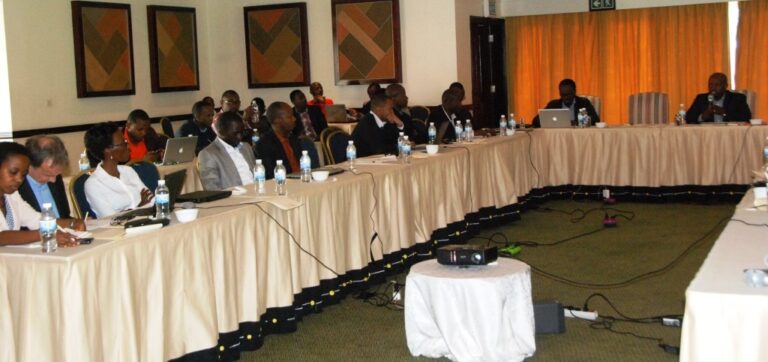
Partipants at the Rwanda Open Data Policy Consultative Workshop
Open Data is a precious national resource and a strategic asset of the Government of Rwanda as it turns into an information and knowledge-based economy.
Together with the World Bank and other stakeholders, the Ministry of Youth and ICT organized a two day workshop that brought together experts from various institutions to champion for an Open Data policy.
According to Rwanda’s Minister of Youth and ICT, Jean Philbert Nsengimana, “As we think about open data policy we should also think on demand side, as data to be discovered, on demand side, think on the big miners who are youth.”
The Rwanda Open Data Policy Consultative Workshop was held in Rubavu District to make data available by governments, businesses and other groups for anyone to read, use and share.
Rwanda aims to transform its society an agrarian one to one that’s based on information and knowledge as enshrined in its Vision 2020 and translated into action through its mid-term implementation framework, the EDPRS and the SMART Rwanda Master Plan 2014-2018.
Group photo taken at the Rwanda Open Data Policy Consultative Workshop
Information and Communication Technologies particularly Open Data, has got enormous potential to spur innovation and creativity, increase the proliferation of high skilled jobs, contribute to economic growth, and create a more accountable, efficient, responsive, and effective government.
Easy access to data allows individuals and organizations to develop new insights and innovations that can improve the lives of others and help to improve the flow of information.
Smartphone brand OPPO plans to invest not less than 1.1 billion KSh and hire an estimated 1,000 employees to take over the Kenyan smartphone market.
According to the Marketing Director of OPPO Kenya, Mr. Wayne Zheng, “We do not do feature phones, only mid and high-end smartphones. This means that our main competitors are Apple, Samsung and LG. Our marketing strategy is to maximize awareness and build our young and trendy global brand image.”
Last year, the 2004 founded firm said it had sold 30 million units was number 3 in both the high-end and mid-end markets in China and an 11% market share of both the Indonesian and Vietnamese markets in just one year.
In Kenya, the firm will be selling the N3, R5 and Neo 3 and the Joy Plus. In other markets, OPPO has the N1, the world’s first rotating camera phone, and the Find 5, the world’s first full HD Smartphone and the Find 7, the world’s first smartphone able to capture 50MP Ultra-HD photos, and the VOOC Flash Charging technology, the world’s fastest charging system running on its in-house Android-based ‘ColorOS’.
The firm is also in talks with mobile operators, dealers and large distributors to help it take over the Nairobi region, with later expansion aimed at other major towns before it enters the neighboring countries and the East African Region at large.
MTN Rwanda has partnered with the Bank of Kigali to improve access to mobile financial services (MFS) by enabling customers to transact money between MTN Mobile Money wallets and the Bank of Kigali accounts.
Bank of Kigali customers can now use the MTN service centres and MTN Mobile Money agents to first load their wallets and then push funds from their wallets to their bank accounts.
MTN Rwanda is part of the Y’ello family of 223.4 million subscribers across Africa, Asia and the Middle East. The newly launched Mobile Money platform is aimed at supporting the Rwandan government’s efforts to deepen financial inclusion in the country and promote a cashless economy.
Customers can indirectly load their wallets by depositing in their bank accounts at any of the BK branches, mobile vans and over 900 agents countrywide.
South Africa’s online education platform MasterStart has launched a new ecommerce course to help you master the trade and create your next big etail shop on the continent.
Spearheaded by Jody Basson, Charl Norman and Jesse HemsonStruthers, the course dubbed ‘learn from the experts’ has been created by industry experts and endorsed by Nic Haralambous, serial entrepreneur and the founder of NicHarry.com, formerly NicSocks.
In a statement, MasterStart’s spokesperson Nic Haralambous said, “I think we’re on the cusp of something in Africa and MasterStart is positioned right at the heart of the movement. That movement is ecommerce business. I get at least one email a week, either from a business or an individual, asking me how to start a business online or how to make a business more ecommerce relevant. MasterStart walks people through the most difficult parts of starting an online business, and then helps you grow once you’ve started”.
If you join MasterStart, you’ll have 12 months to complete the ecommerce course, either parttime or full time. You’ll get telephonic support during this time as well as have 24/7 access to support forums and a personal progress dashboard.
Students will also acces audio playback of course notes, download course notes and infographics, checklists, business documents and legal templates, three online mentorship sessions with MasterStart’s expert team members and a sixmonth complimentary access to an online selling platform.
At the end of the course, you’ll be able to create your own web store, operate an online shop, market it effectively and manage it efficiently.
MasterStart hopes to facilitate the growth of small, independent businesses in Africa and to encourage local talent to embrace entrepreneurship.
Tuteriahas been unveiled with the goal of connecting tutors with individuals who are in search of private tutoring in different subjects.
Godwin Benson, co-founder of the startup, told Innovation Village he got the idea to start Tuteria after realizing that while many people want to learn various things, they had no way of connecting with people who could teach them, especially when those same people lived within their communities.
“There were other problems of people teaching and struggling to collect payments, or those who pay for lessons and don’t get quality service,” he said.
According to him, Tuteria was built to provide a reliable way for people to find, evaluate and schedule lessons with their preferred tutors within their communities, as well as help people teach what they love to earn extra income.
For now, he said only tutors can use the platform – people who want to teach various subjects and skills.
“Right now they can apply, complete ID verification, and create the subjects they want to teach etc. That’s all a user can do on the site right now,” he said.
To ensure that those that are applying to be tutors actually know what they want to teach, he said several qualification verification steps are undertaken before the tutors are allowed on the platform.
He said: “First of all, we manually review every tutor applicant, as well as interview them to ensure Tuteria they have the kind of high quality in personality, passion and communication that can succeed on Tuteria.
“Then for most subjects like academics, languages, music and instruments, various exams like IELTS, SAT, GRE, TOEFL etc., and even some skills like Public Speaking, Data Analytics, Creative Writing, Swimming, etc., we have created standard competency tests that tutors have to pass before they can teach those subjects. The tests are timed, and can only be attempted once per tutor.
“For other subjects that are not testable, like Bead-making, Dance, Photography etc., tutors write about their experience and method of teaching which is reviewed by our quality team, as well as upload samples of their work if applicable. If the review is positive, then they are can teach that subject, otherwise, their application is rejected.
“Beyond that, we also verified tutors’ online and offline identities, facilitate background checks and continuously evaluate tutors performance with previous clients, and only tutors who continue to offer great service to clients can continue on Tuteria.”
He said the platform’s major source of monetization is via commission on every booking a tutor gets on the platform.
“We earn a commission on every booking made via the site. When clients book and pay for lessons online, which is saved in our account and only transferred to tutors after the lessons have been fully delivered, so we take a cut and pay the rest to the tutor.”
After meeting startups in Accra Ghana, the DEMO Africa team is set to have a pre-pitch event on 12th June at the PAWA254 studio with a selected panel of hand-picked technology industry players as judges.
The most outstanding on these start-ups will get a direct nomination to DEMO Africa with ticket and accommodation fully paid for. Start-up teams from East Africa can now register to interact with the DEMO Africa team in Nairobi.
Nairobi will play as the host to all East Africa startups. Last year, Nairobi sent five start-up teams to DEMO Africa coming third after Nigeria and Ghana. Some of the Nairobi based DEMO Africa alumni have taken great strides in fund raising and acquisition deal. Recently, Weza Tele, a DEMO Africa alumni, was acquired at $1.7m by AFB.
DEMO Africa’s executive producer Harry Hare said, “Meeting various players gives us a better understanding of the start-up needs which in turn enables us to enrich the DEMO Africa platform with various lessons and experiences drawn.”
The team is also scheduled to make other stops in Cairo and Harare in the month of June. Start-up application for DEMO Africa is still ongoing following an extension of the deadline to June 30th 2015. Applications are being accepted on https://vc4africa.biz/demo-africa/demo-africa-2015/ in the 12 application categories which include: Agriculture, Health, Education, Manufacturing and Retail. Others are Media and entertainment, Communication, Transport and Logistics, Energy, Finance and Banking, Water and Sanitation, Waste Management and recycling.
Leading integrated payments processing and transaction switching business focused on Africa, Interswitch, has announced that its business-to-consumer value exchange platform, Quickteller, can now be used to add top up credit to UK mobile phone lines.
With this announcement, Interswitch said Nigerians who travel to the UK will be able to use the international vending service to top up their UK lines directly either from their Nigerian payment card or their bank accounts. The service, which can be accessed on the Quickteller website, is available on all major UK mobile networks including Orange, Three, O2, T-Mobile, EE, Tesco Mobile, Asda Mobile, Lyca Mobile and Lebara.
Based on market research from Interswitch, approximately 49% of respondents travel to the UK at least once a year and of that number, about 41% do not roam with their Nigerian SIM card, meaning they use a UK number when they are in the UK. Almost half of the respondents said they keep their foreign SIM card even after returning to Nigeria, and more than two-thirds indicated a desire to be able to top up their UK numbers from Nigeria. This new service from Quickteller will fulfil that need. Plans are also at an advanced phase to extend this service to South Africa, USA and the UAE.
Mitchell Elegbe, Group Managing Director, Interswitch, said: “This development is symbolic of the fast pace of change happening on the continent. Nigerians will now have the ability to use the Quickteller platform to support their UK travel plans and make staying in touch while abroad easier and more efficient. This is just the latest example of how Quickteller continues to revolutionize the African payments landscape with its multi-channel offerings covering varied services like bill payments, airtime recharge and funds transfer.”
Quickteller is the leading B2C value exchange platform in Nigeria and allows access to services such as airtime recharge, bill payments and funds transfer via Web, Mobile (App & USSD), ATMs, POS and Agents.
There are currently over 3 million active users of the Quickteller platform in Nigeria, making it the most popular online Value Exchange portal in the country.
Following his recent endorsement as Brand Ambassador for Nigeria’s No 1 Car website, Folarinde Falana a.k.a Falz The Bahd Guy last week, received a branded KIA Rio as part of the juicy endorsement package for his services to the technology company. This was presented at a quiet ceremony by the company’s General Manager, Mrs. Tomi Hodonu.
Cheki.com.ng is the highest ranked vehicle online destination in Nigeria, boasting of approximately 80,000 vehicle listings on the site at any given time, over 45,000 visitors daily and 1.5 million visitors monthly. The online platform serves to bridge the gap between buyers and sellers of automobiles by bringing the Nigerian car market to the comfort of your homes and devices.
Cheki.com.ng was incorporated in Nigeria in 2011 and has firm roots in and around Sub-Saharan Africa.
Ghana’s Flippy Campus, a university news and info portal keeping students up to date on current campus happenings via its Flippy Campus channels has won itself a place at the DEMO Africa 2015 set to take place in Lagos this September.
Flippy Campus allows students to follow campus events from their halls and social groups including reminders for these events and was named as the most outstanding start-up in the just concluded DEMO Africa pre-pitch event in Accra beating 9 other teams that pitched at the Accra pre-pitch event.
According to David Sleek, Founder, Flippy Campus, “I am elated at this win and I look forward to learning more from other entrepreneurs and mentors at the DEMO Africa event in Lagos come September.”
Flippy Campus, has secured its space to launch its product at the DEMO Africa stage later in September and will also receive a ticket to Lagos and full accommodation. DEMO Africa is holding pre-screening events for feedback sessions across Africa in a bid to raise the standards of the technology products.
Recently, DEMO Africa extended applications to 30th June instead of the earlier 30th May deadline. 30 start-ups are expected to on the DEMO Africa stage.
Congratulating the winner, DEMO Africa’s Accra Event Director, Martin Obuya, expressed enthusiasm on the ability of entrepreneurs to create wealth in Africa using innovations. “What took place today is a clear demonstration of the great ability of entrepreneurs across Africa to create wealth from world class solutions which solve our own problems first, then the rest of the world”.
The DEMO Africa team, is scheduled to stop in Nairobi on 12th June, Cairo on 22nd June and Harare on 24th June for pre-screening of projects in East, North and West Africa.
Investors, IT Buyers and Consumers and Media are expected to congregated in Lagos , Nigeria on 24th and 25th September for the DEMO Africa event. To witness the unveiling of the technology product from Africa, register now.
Todd Holcombe, Senior lecturer at Meltwater Entrepreneurial School of Technology (MEST), which has one of the leading acceleration programs in Africa echoed Martin’s sentiments adding that the rate of technology adoption in various sectors across Africa has risen significantly. “Africa has taken significant strides in securing its future through technology; it is very encouraging to see young people’s enthusiasm to shoulder this responsibility”.
Intel Capital has launched the Intel Capital Diversity Fund, a $125m fund to invest in technology startups run by women and underrepresented minorities in a move to address the Silicon Valley 1 percent problem ( less than 1% of the founders of Silicon Valley companies are African American or Latino).
The fund launched with investments into four companies and it aims to complement Intel’s $300 million Diversity in Technology Initiative by Intel launched in Janaury.
In a press statement Intel CEO Brian Krzanich said, “We believe that a diverse and inclusive workplace is fundamental to delivering business results. Our goal with this new fund is to meaningfully support a technology startup workforce more reflective of society, and ultimately to benefit Intel and the broader economy through its success.”
Intel wants to achieve full representation of women and underrepresented minorities in its U.S. workforce by 2020 by being on the forefront of having women and minority groups having broader participation in technology entrepreneurship and employment. The firm also aims to invest in the best talent from a myriad of backgrounds in the valley.
Intel Capital has invested more than US$11.4 billion in over 1,400 companies in 57 countries and 211 portfolio companies have gone public, and 369 were acquired or participated in a merger.
Ghana’s capital city of Accra is hosting a workshop on Mobile Number Portability (MNP) and quality mobile service.
The 5-day workshop is organised by the National Communications Authority (NCA) Ghana, in collaboration with the West Africa Telecommunications Regulations Assembly (WATRA) and is being attended by nine ECOWAS countries. It is intended to provide opportunities for the delegates to benefit from experience and knowledge of NCA in the area of MNP.
Declaring the workshop open, Ghana’s Minister for Communications, Dr. Edward Omane-Boamah, said Ghana’s success in the implementation of the MNP policy could be largely attributed to the initial advanced preparations and planning as well as the effective collaboration amongst all the key stakeholders within the sector.
He said Ghana is more than ready to share her experience with the other country representatives on the MNP, adding that the workshop would include discussions on the phases involved in the roll out of the regulators.
Dr Omane-Boamah said the Mobile Network Operators would also provide insight into the management of the MNP service and decipher some challenges that they have had to endure.
“The quality of service, which is dear to consumers’ heart will also be touched on,” the Minister said.
Set to facilitate business opportunities and partnerships between North European and East African companies, at least ten entrepreneurs graduating from GrowthAfrica’s startup accelerator managed to present their business and showcased innovative products at the Green Pioneer Venture Forum yesterday.
Participating companies were selected to join the Green Pioneer Business Accelerator Programme from 150 applicants from Kenya, with 50 per cent of the applicants coming from outside Nairobi and 20 per cent led by a female CEO.
“As you can imagine, today is a very exciting day for us,” said Johnni Kjelsgaard, CEO of GrowthAfrica, in the Venture Forum welcome speech yesterday, “It’s been an almost five month journey. We’ve had a lot of fun, and a lot of boxing matches – figuratively speaking! – trying to figure out how to improve these startups’ businesses. We are excited to accelerate the growth of early stage businesses being led by ambitious African entrepreneurs to strong commercial ventures.”
Since 2002, the Green Pioneer Accelerator has focused on early stage enterprises contributing innovative solutions to environmental issues such as climate change, energy insecurity, loss of biodiversity and degradation of ecosystems. This year, the inclusive businesses showcasing their innovations to local and international investors for prospective funding discussions ranged from a hardware company that is developing a roofing tile infused with solar cells to inclusive business models to distribute clean on and off grid power solutions such solar lighting, water heating and UPS systems that serve unmet needs in the market.
“The Green Pioneer Accelerator has been a great network for Sanivation to refine our business model, meet fellow entrepreneurs, and really understand what it is going to take to grow our business to reaching 1 million people in the next 5 years”, said Andrew Foote, CEO and co-founder of Sanivation.
With its headquarters in Nairobi, GrowthAfrica has emerged to cover three areas such as: the consulting services aimed at facilitating business opportunities and -partnerships between North European and East African companies, Acceleration programs for Kenyan start-ups and Development of strategies and facilitation of investments for Kenyan growth SMEs.
The recent event included partners: Hivos, VCAfrica and Impact Amplifier, a 25 member Dutch delegation – social impact and trade mission from the Hague and a key note speech.
“Do not wait for anyone to come and move your innovative product to the end user, set up multi distribution channels,” Peter Scott the CEO of Burn Manufacturing said during the inaugural Green Pioneer venture forum adding that “a startup only fails when founders quit, always be on the look out for niches in the market.”
Peter Scott is one of the world’s leading experts in cook stove commercialization and has trained producers in over 20 countries to set up for-profit stove businesses. In 2006, he received an Ashden Award for designing and promoting institutional cookstoves in Southern Africa. In 2010 he was chosen as one of the Top100 Global Thinkers by Foreign Policy Magazine.
Speaking on developing products for the Bottom of the Pyramid market, Scott advised participants not to merely listen to the experts but to what the market says. “Kenyans will pay for a good product priced competitively,” he said.
In all, the recipient of the investment will be announced soon, from the following top Kenyan businesses that pitched to win the $50,000 USD from programme partner – Hivos:
Strauss Energy (Kenya) – Tony Nyagah – The company focuses on building an integrated photovoltaic roofing tile for residential houses and commercial units. The excess power generated will be fed into the national grid so that home owners can earn income from the feed-in-tariff.
Afrisol Energy Limited (Kenya) – Amos Nguru – specializes in design, installation and maintenance of biogas digesters to produce clean and cheaper energy for institutions.
Boma Safi Limited (Kenya) – Joyce Gema – Sells affordable solar products, clean cook stoves and briquettes to rural households through a hub-spoke and promoter distribution model.
Cobitech Solar (Kenya) – Samson Gichia – Cobitech works with microfinance institutions and savings and credit cooperatives to provide the solar kits on loan to rural poor households for repayment within one year.
Consumer’s Choice Limited (Kenya) – Mohammed Kadhi – Consumer Choice replaces the use of fossil fuels with more efficient, more economical Bio-Ethanol Gel and environmentally friendly clean cook stoves.
Green Pencils Limited (Kenya) – Ivan Ochieng – Green Pencils sources old newspapers from registered groups like the disabled, women and youth groups to produce customized pencils and ball pens.
Kencoco Limited (Kenya) – DR. Said Twahir – Kencoco uses coconut shells, husks and other biomass material to produce charcoal briquettes and sells to households and institutions.
Plexus Energy Limited (Kenya) – Edward Kinyanjui – Plexus distributes off grid power solutions such solar lighting, solar water heating and UPS systems for network masts for telecommunication companies and data centres for internet service providers.
Sanivation (Kenya) – Andrew Foote – Sanivation installs portable toilets and charges a monthly fee to provide household sanitation and energy services to people living in congested areas.
Skynotch Energy Africa (Kenya) – Patrick Kimathi – Skynotch Energy runs a mini-hydro power generation plant, and works with small dealers to provide last mile distribution for solar lanterns and solar energy applications.
The recipient of the 50K USD investment will be announced soon at the GrowthAfrica alumni meetup.
Collins Onuegbu, member of Lagos Angel Network (LAN), who attended the European Business Angel Network (EBAN) conference in Eindhoven, Holland alongside Tomi Davies, president of the African Business Angel Network (ABAN), said EBAN is committed to the support of the development of the African angel community.
“Our attendance was to deepen the ties and encourage the relationship between the two continental networks,” he said.
At the Eindhoven programme, LAN requested EBAN to support Demo Africa and many investors from EBAN have committed to attend Demo in September in Nigeria to seek alliances and opportunities for investment in African start-ups.
“We will continue to draw on the experience and support of EBAN as we build the angel community across Africa to support the start-up community that is growing in the continent”, Onuegbu said.
At the 2015 Demo Africa, 40 of the most innovative startups in Africa would be offered a platform to showcase their products and announce to Africa and the world what they have developed.
Demo Africa brings together Africa technology eco-system to share ideas and witness new innovations by technology start-ups from across Africa.
“Demo Africa 2014 was a huge success. We hope to build on this. It’s a great opportunity to showcase the local start-up scene to the rest of Africa and the world. It is a great opportunity to showcase African start-ups and help to deepen the investment ecosystem that Africa needs to grow. The investment summit that precedes DEMO is a great forum that brings investors from across the continent. This year, EBAN will attend”, he explained.
While reiterating what EBAN would bring to Demo Africa, Onuegbu listed as some of the support EBAN would offer to include setting professional standards, training and certification, benchmarking, research and networking with peers, lobbying, raising awareness and capacity building as well as cross-border syndication and co-investment support.
“This is far better than when all Africa wanted from Europeans was aid. The big opportunity for African start-ups will come when fellow Africans and Diaspora Africans start to invest heavily in indigenous ventures. I believe that investments from non-African investors will be a catalyst to this”, he enthused, adding that Angel investing is growing worldwide as an asset class.
Angel investors help to provide seed funding to start-ups before they mature to receive investments from venture capital companies. According to him, this is a critical component of the ecosystem that supports start-ups, which is in its nascent in Nigeria. “Nigeria is seen as one of the countries building an exciting start-up community and the Angel Network will definitely be part of this success story”.
Aimed at fostering cross-border co-investment, EBAN’s mission is to pay particular attention to drive additional funds to emerging markets instead of concentrating funds into more competing entrepreneurial communities to which funds are naturally attracted to. Cross-border co-investment facilities work on the principle that capital needs to be available where companies are located so “they don’t need to follow the money around and lead to potential relocation of startups”
Jonathan Doerr, Managing Director of Jumia Nigeria has said less than 30% of customers shopping on the ecommerce giant’s platform are paying with credit cards – the majority prefer the cash on delivery payment option.
“Less than 30% of Jumia customers pay with the credit card online, but we are seeing growth in that area,” he said.
He also revealed that most of the platform’s traffic come from mobile devices.
“Most of our traffic comes from mobile devices,” Doerr said.
He believes mobile is very important and urged stakeholders to intensify efforts to ensure more Nigerians have access to affordable mobile internet.
“Mobile is the most important thing. Internet on mobile device brings internet to Nigeria. There are not so many landlines here,” the MD said.
Opera Software today announced the official released of the popular Opera Mini browser – for Windows devices. The journey to bring Opera Mini to Windows devices began last year.
“We approached it carefully, because rebuilding Opera Mini from scratch for a new platform is no joke. We wanted to give you an app that works. We released the beta version of Opera Mini for Windows Phone several months back, and all your feedback is paying off,” Opera said in a newsletter.
In three of the company’s major African markets, Windows phone is particularly popular. These countries are Nigeria, South Africa and Kenya.
The new Opera Mini for Windows Phone gives users daily, weekly or monthly view of your data savings.
“You asked for easier downloading. We’ve improved the download manager so that you’re in control of what, when and where your downloads are going. You called for better access to your favorite sites. Save and preview your favorite websites with Speed Dial and bookmarks,” Opera said.
Ecobank has appointed Ade Ayeyemi as its new Group Chief Executive Officer effective from 1 September 2015. Mr Ayeyemi, 52, will replace Albert Essien, who retires on 30 June, 2015 after 25 years of service with the Group.
In a staement, Ade Ayeyemi said: “I am delighted to have been offered the opportunity to lead this great institution, and commend Albert Essien for his legacy work of helping further the premier pan-African financial institution. Ecobank has an exceptional platform, great people, solid strategy and strong momentum. I sincerely look forward to working with the management team, the Board of Directors, and the employees of Ecobank as we set new standards in financial services for our clients across the board.”
The Ecobank Board will appoint an interim head during the period 1 July through 31 August, pending the resumption of the new GCEO.
Currently Chief Executive Officer of Citigroup’s sub-Saharan Africa division, based in Johannesburg, Ayeyemi is an Accounting graduate of the University of Ife, now Obafemi Awolowo University, Ile-Ife, Nigeria. He also studied at the University of London and is an alumnus of Harvard Business School’s Advanced Management Programme.
The Chartered Accountant and a trained UNIX Administrator and Network Operating Systems Manager with interests in business strategy, economics, process engineering and technology is seen as the best person to lead Ecobank through the next phase of its development and beyond as a world-class pan-African bank.
“Ade is a truly outstanding individual with deep knowledge of banking across Africa, and we welcome him to the Board,” said Ecobank Group Chairman Emmanuel Ikazoboh.
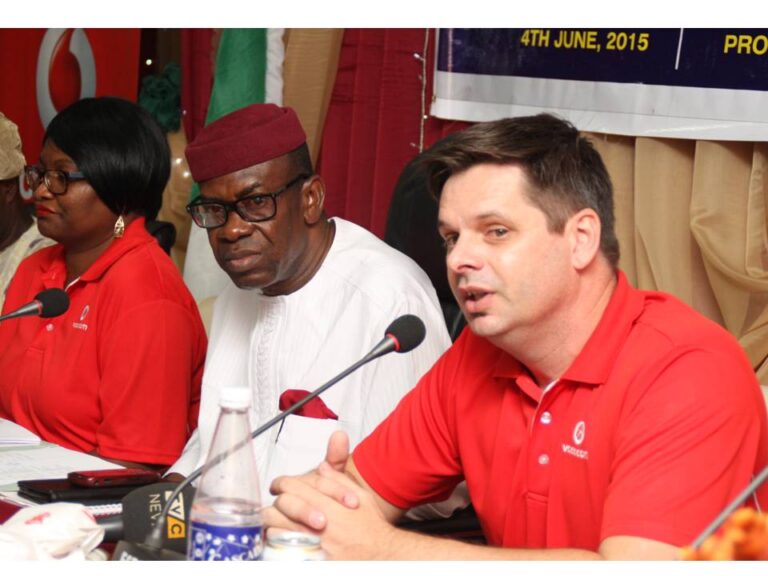
Vodacom Business Nigeria has expressed its readiness to bridge the existing digital divide in Nigerian communities and schools that lack access to ICT. Managing Director of Vodacom Business Nigeria, Guy Clarke said at an event in Lagos.
He said: “Internet penetration in Nigeria is still low, especially in public schools. With the Power to You Project, we aim to bridge the digital divide that exists in communities and schools without access to ICT. It’s for this reason that we’re proud to be able to provide this connectivity to The Federal Science and Technical College, Yaba.”
At the event, the company supported the Federal Science and Technical College, Yaba, with WiFi services for students and teachers in classrooms, laboratories, workshops and staff offices. Vodacom Business Nigeria also sponsored a 220KVA powered generator to help keep the school connected during power outages.
Speaking at the handover ceremony was the Principal, Federal Science and Technical College, Yaba, Hon. Chris Ugorji who said, “The vision of the college is to provide the scientific and technical skills, required to produce self-reliant young men and women, ready for tertiary institution and the ICT industry. The sponsorship of high-speed internet access and power generator by Vodacom guarantees this vision and we are happy to be beneficiaries of this project”.
The Vodacom Power to You Project supports public and private schools in the country by ensuring that students and teachers have access to ICT and new telecommunication technologies. The power of the internet is invaluable and connectivity has the potential to transform education and accelerate economic growth in Nigeria.
12 months ago today, Carey Eaton, co-founder and CEO of One Africa Media passed away in Nairobi in the early hours of that fateful morning.
At a prime age of 41, Carey was a dear to Nairobi’s tech scene and is one people went to for insights, courage and determination to build stuff this side of the world.
One Africa Media runs Cheki Africa, BrighterMonday, BuyRentKenya and StayNow in Kenya, as well as Jobberman in Nigeria, Cheki in Nigeria and Ghana and PrivateProperty in both Nigeria and SafariNow in South Africa.
Carey came back home in 2011 to start Cheki after a lucrative career in Autralia as the CIO of the Australian classified groupSEEK. who are also investors in One Africa Media. Carey grew Cheki into Kenya’s number one car portal from scratch to over 150 people spread across the country and into a top classifieds site in Africa.
This is a follow-up series of what Carey Eaton began a few days ago, first as an interview. Today he talks about building profitable businesses not just the technology involved.
His earlier phrase that a website is not a business ruffled some feathers and we got several emails arguing against his idea. Eaton explains what he meant and what it means to build a profitable and long-lasting company regardless of where you are.
Pitch, Raise Funding & What Next
We are not going to dilute his words.
I was thinking about the tech space in Kenya and realized that a lot of attention had been poured into pitching – Pivot25/East and Hackthons etc which is all good but the problem is what happens next after the pitch fests.
I went back and looked at all the people who won in those pitching competitions to see where they are today. Very few got anywhere – and by anywhere I mean a second round of funding, some revenue, some profits or some sort of meaningful traction in the consumer space. Pesapal, Kopokopo seem to be going places. I’m actually really struggling to think of more. Go Get Customers
The cause of the failures is the lack of farsightedness by the ‘winners’ as most of the “businesses” spent their money on building technology / apps / applications / websites and very few spent their money on getting customers. Purely talking out of love for the tech industry and not criticizing founders by any means but the current ecosystem has been very geared to building developer capacity than business.
Tech Skills Vs Business Skills
But that doesn’t mean founders have no help to build businesses out of their tech skills. That gap in building business skills among the tech community is now being addressed more by the likes of GrowthHub, 88mph and iHub. iHub is more focused on the tech capability, and probably that was right in the early days and they should continue to play that important role.
Of all the pitch competitions and VC’s that came and went, I also get the sense that very few really acted as close business mentors. Few could still be active in Kenya but on a practical end they left limited results or no trace of what they did in 2010 and 2011. But there is a new breed of investors who needs praise for setting up shop here and working with founders day by day.
Local Presence Is Great
The Savannah Fund or 88mph, I think these guys are filling that gap by being physically here on the ground, whereas many of the first set of early VC’s here flew in and out a lot. That probably made a difference I reckon.
The setting up shop here by this funds means a lot. They don’t give money to founders and fly out but work with them to develop products ready for the market unlike the pitch fests earlier which most of the winners just have websites online and no work being done, no customers being recruited and in the meantime the money they ‘won’ being spent.
Product Problem
The product problem is not just with pitch fest ‘winners’ but with bigger players who also had own money to spend.
Kalahari.co.ke, Dealfish.co.ke and Mocality.co.ke had massive amounts of money to spend, best technology platforms and greatest teams of the most qualified and experienced in town but what happened is the opposite. And not using them for ridicule but as teaching aid to up and coming entrepreneurs. Their lives as companies was cut short due to a number of complexities.
Kalahari.co.ke had a pricing non-competitiveness, underestimated the supply chain and a delivery complexity while Dealfish had no revenue model but a money spending model and sadly for Mocality, there was also no real viable business model.
Traffic Vs Sales
Advertising could have been in their mind but Google Ads are fine if a company has a MASSIVE audience and only want small margins. Being free doesn’t necessarily draw in masses of traffic but is a loss making operation for any firm.
There are a bunch of people here who have read the Freemium book and are going for that as the gospel – ie the main stuff is free, the premium of the same stuff is expensive. Freemium doesn’t really work in a fragmented market where there is Freemium AND loss leading going on at the same time.
The objective of Google is to grow the usage of the internet itself in the short term only. The objective of the freemium guys is a long term play. Google has no intention of dominating Kenyan classifieds. It started Google Trader to make the internet itself more useful. That usefulness is now being provided by Google’s biggest spending local customers. The more Google get better at driving Google Trader, the more they undermine their spending customers, the more they work against the actual point of doing Google Trader in the first place – to drive internet usage (and hence ad revenue). Free Doesn’t Mean Popular
I think there’s also Kenya to consider. Bure ni Bure (free is fake). Most Kenyans believe “Free” is a. a lie. b. temporary c. stupid. And rightly so if you look at the track record so far!
We had on our Cheki.co.ke website “KShs1,000/-” crossed out, and “Free For Now”. And we also were very clear with dealers, that we offered a three month Free Trial, after which it would be 20,000/- a month, and we made them sign contracts that specifically spelled that out. ie we were very clear we were a monetised service which priced according to value. We also told them all in writing that if they got less than 30 buyer leads per month, we wouldn’t charge them because of our belief in pricing to value delivered.
How Do You Make Money
A lot of dealers asked us ‘How do you intend to make money” so we had to tell them, since we were telling them we are here for the long-term with you. Also many questioned “How does Dealfish make money” and actually it was quite interesting, the more they saw Dealfish’s heavy spending, the more the dealers feared Dealfish in that they figured they were going to have to pay for all this at some point.
The more Dealfish spent on marketing to consumers, the harder they found it in sales. This is the opposite of how it normally works, and is a lesson in getting pace right. Overspending is a real thing!
No I think big things will come. It’s just very early. You know once everyone has a smartphone, and some credit (due to data prices coming down) there is absolutely clear evidence of massive Kenyan demand for this stuff. Just like the rest of the world. I think Moses Kemibaro‘s latest blog post on Safaricom was very interesting – it shows that barrier dropping.
If you saw the presidential debate last night, did you see exactly how mainstream social media has become in day-to-day discourse in Kenya? Totally normal. If you’d have seen that only two to three years ago you’d never have believed it. The Silicon Savannah Will Be Real
It’s coming for sure. It just takes time – just in jobs category, if you look at Seek, Monster, JobsDB, Kariyer, TotalJobs, Jobstreet, 51Job, Cath, Naukri, Stepstone, Careerbuilder – all the major regional / global players – how many of them made it big in under 5 years? Zero. How many in under 10? Not many. Average is 12 years.
On top VC’s coming here, 97% of VC’s will hardly travel to New York from San Francisco, let alone Nairobi. Of all the VC’s focused on Emerging markets, many are focused on China, India, South East Asia and Latin America due to better infrastructure, higher growth, better tech up of tech, later stage markets and lots of opportunity.
Israel, Turkey and Indonesia right now are super hot tech markets. Many more people are getting into the VC business which itself is fragmenting especially in Africa where there is no much data available to make investment decisions. There have been no successful exits from Africa to date. Africa is also not very understood, and is also very misunderstood. Many see it as a homogenous market and the risks are still high here but that should not discourage serious entrepreneurs. There is capital money in the industry.
No Shortage of Investment Capital
There is no shortage of investment capital available here in Nairobi for good startups. I get called literally once or twice a week by people looking for deal flow. There are also now an increasing number of local angels in this space. I think in the $0-25K space, plenty of options in $25-250,000 space, probably about 10 realistic options. In the $250-$2m space, I think there are a number of players around too. And in the $2-20m space, you’ve also got options, maybe not as many at the lower figures in that range, in fact if you’ve got $1m revenue, you have all the options in the world, that simple.
There are also a lot of social investment firms active here, and frankly a number of strategic investor type people as well – Naspers, Ringier and so on.
Cheki began humbly but is growing into a mammoth business on the continent, and even bigger!Carey Eaton is Co-Founder, One Africa Media and CEO of Cheki Africa Media. Cheki Africa media runs several online and mobile startups. Eaton today speaks how Cheki Africa Media will take over the continent’s classified market. The recent merge withPrivateProperty Holdings and Tiger Global Management is one of the fuel towards the firm’s move to revolutionalise the African online classified’s scene.Some History & FutureCarey Eaton says, “In the past, the biggest audience a car seller could reach was their neighbours, their friends, the people in their neighborhood but now a car seller in Kenya, Tanzania and Nigeria can reach a huge population without having to travel there.”
Eaton says Cheki reflects the real market and allows all players to reach each other instantly in space and time.
He adds that there should be no car or car seller in the real market not on Cheki, there should be no car on Cheki not in the real market, and similarly for buyers even from the diaspora.
Testimonies
Cheki online classifieds are helping masses of people allover. He adds that the firm gets amazing stories from time to time of people from remote areas who sell their cars in a snap on Cheki but after trying to sell them for months without success.
Cheki is also serious on security. According to Eaton, 95 percent of the adverts on Cheki are posted by fully trained Cheki employees.
The online auto-classified does not use agents, or crowdsourced data and cars that people post directly, are never directly published but go to a moderation pool then posted after cross checking and receiving payments via M-Pesa, the Cheki staff post them.
Eaton ventured into the internet marketplace space since the late 1990’s, and as a 3rd generation Kenyan with close connectivity to home he kept a very close eye on things internet back home and when he knew fibre cables were coming back in 2008, he knew the timing was right.
He says, “I did a bit of work on what was going to be the easiest to execute and chose cars. Since it was easiest to get the ad volume, and there were a range of structural changes happening in the market that meant it was attractive. At the time I was working with SEEK which is the biggest jobs player globally, so did not go into jobs as that would have been a conflict of interest. Later once that conflict was no longer there, I had the opportunity to get involved in the jobs businesses, and being somewhat of a jobs expert, it would have been crazy not to get involved.”
Challenges Along The Way
But the walk is not as easy.
Eaton says in e-commerce, there are significant barriers in logistics and payments that make it hard -it is so hard for clients to turn from their mobile phone as they browse to log in into M-Pesa to pay for a good as they have to leave the site they are on to complete the transaction.
He says job boards are also not easy to run as the number of job seekers far outweighs the number of job ads and charging people for job ads doesn’t make sense as they can get them for free.
BrighterMonday and Jobberman charge employers not for the ads, but for the rapid filtering of candidates; the firms charge job seekers a low membership fee. But generally job boards are not as easy and BrighterMonday is set to launch a program to highlight job seekers at a fee in a few days.
Quitters Never Win
And though the going was tough, and instead of quitting Eaton got tougher.
Eaton says, “What I’ve loved about it is the chance to return home, the chance to really build a local product that solves local problems, competing against big international players that have tried to import foreign products that solve foreign problems.”
He adds that its still very early here in these markets and there are big challenges of educating car buyers and sellers, job seekers and employers about how powerful these marketplaces are for their businesses or the future of people’s lives and there are local peculiarities too, that require constant day to day problem solving and he quips how hard it is to run an internet marketplace where 40% of his customers have no electricity but he has kept going.
The Power Of Branding
Eaton adds that the Cheki car branding really works and has been their business driver.
“Nothing is better Kenyan experience than driving one of our famous Cheki cars into a small town and having half the market shout “Cheki Cheki!”
The branding has helped the firm get to where it is now, with over 5000 cars on site and what he says scaring traffic to the website.Cheki has painted green the huge wall at Likoni Ferry, is active Facebook and the internet a lot. Has great alliances with firms like Standard, Home, Safaricom, Airtel and others and is also branding physical signs and online badges with links in partnership with its dealers.
Cheki also goes to every single Kenyan car dealer every week, remove sold cars and get up several others and the business is growing.
KSh 5 Billion Worth of Sold Cars Monthly
He says, “We know we’re removing about KShs5 billion worth of sold cars per month – about 5,000 cars a month being added to these streets of ours”
The billions are not as shocking as the survey figures.
Cheki in April 2012 began to survey car buyers in the country and found that 62 percent bought their car from their site and 88 percent of those who intend to buy a car in the next 6 months say they’ll use Cheki and though it is still a private consumer to consumer market, car dealers are also making money though Eaton laments lack of real wholesalers in the market and he adds that corporate car buying is also very limited – less than 5% of the market in cars.
And if you are into trucks like us, Eaton says Cheki is starting to make headway in that space.
Eaton is also happy that roads are being build in the country and across Across Africa and the 8 year limit on imported cars in Kenya is helping buyers get cars in good condition. The limit also ‘keeps the price and quality high for tax, and enables the government to have a fighting chance to keep pace with roads infrastructure.”
Cheki can be found mobile devices via its mobile site and on basic Ovi and Android apps which are owned by the majority in their markets in Nigeria and East Africa.
Word For Upstarters
To be successful in any business Eaton says one ” needs attention to detail so as people trust you as the car business is not that transparent a business, where there is risk for buyers and sellers,” but the firm has invested in security, application firewalls, and a whole bunch of other mechanisms to eliminate marketplace risk for our customers.
At just Ksh 750/- per ad for private sellers and dealers at Ksh 20,000/- a month for unlimited ads and service with volume discounts and Ksh 5,000/- for upcoming dealers, Cheki is establishing itself as a reputable car classified portal for Africa, with operations in Nigeria, Uganda, Tanzania and Kenya.
Eaton says the site sells about 5,000 cars a month and 300-400 a week and even higher during December.
Cheki also sells car insurance and car finance leads www.cheki.co.ke/insurance and have a Top of the List product, where one can feature their ad at the top of the list for all searches on a particular make and model (eg Toyota Premio) for KShs 3,000/- a week among others.
Cheki will also soon launch a ‘Stand Out in the List” product at an extra KShs1,000 per ad. Cheki also makes money from display ads from their clients and from the Google ad network.
A Half A Billion Market
According to him the African market is massive, with over 400 million people compared to Australia’s 20 million where a team he admires, CarSales.com.au have built a $1 billion from scratch.
Eaton adds that though car ownership and affordability are totally different, Cheki is intending to be Africa’s largest online business. There is no magic, Eaton says, ” We ‘re very focused on building a strong consumer brand. Our strategy is to be visible everywhere people are looking to buy cars. I think the most innovative things we’ve done is the Cheki cars themselves which people love.


















 South Africa’s online education platform MasterStart has launched a new ecommerce course to help you master the trade and create your next big etail shop on the continent.