back to top
Friday, March 27, 2026
spot_imgspot_imgspot_imgspot_img
Home Blog Page 9

WhatsApp Tackles Onboarding Confusion With New Group History Feature

0

WhatsApp has officially begun the rollout of a long-anticipated feature designed to solve “onboarding confusion” by allowing new group members to view recent chat history.

For over a decade, joining a group on the platform meant entering a “blank slate,” often forcing new participants to ask for context or request screenshots of previous discussions.

However, as of January 21, 2026, a new “Recent History Sharing” tool has started appearing for beta users on both Android (version 2.26.1.28) and iOS (version 26.2.10.73).

The feature is not an automatic archive but rather a manual, consent-based tool.

To ensure a balance between convenience and privacy, WhatsApp has implemented specific parameters that strictly govern what can be shared with newcomers.

The primary restriction is a message limit, which caps the transfer at a maximum of 100 recent messages.

This prevents overwhelming a new member while providing just enough context to understand the current direction of the conversation.

Furthermore, the feature utilizes a specific time window, meaning only content sent within the last 14 days is eligible for sharing.

Any discussions older than two weeks remain inaccessible to the new participant.

Finally, to prioritize default privacy, the option is disabled by default; it only becomes active if an admin or member manually engages a toggle during the “Add Member” flow, ensuring that chat history is never shared unintentionally.

Furthermore, to distinguish historical context from live chat, WhatsApp highlights these shared messages in a different colour.

In line with its privacy-first reputation, WhatsApp confirmed the feature maintains end-to-end encryption. The messages are pulled directly from the device of the person adding the newcomer and encrypted using their specific keys.

To maintain transparency, a system message is automatically posted in the group chat whenever history is shared, notifying all participants about who shared the messages and which new member received them.

Additionally, the app now displays “multiple confirmation prompts” to prevent accidental oversharing.

This update marks a significant step in WhatsApp’s evolution toward becoming a structured collaboration tool, similar to Slack or Discord.

The implementation of this change is expected to significantly streamline communication across a variety of sectors by removing the need for manual recaps.

In workplace groups, the update allows new collaborators to instantly catch up on task assignments and project timelines without disrupting the flow of the team.

Similarly, for social planning, late-joining participants can easily view previously settled details, such as venues and schedules, ensuring everyone is on the same page.

Finally, within community groups, the feature reduces the burden on administrators by eliminating the need to repeat important announcements for every new member who joins the circle.

While the rollout is currently gradual to monitor performance, the stability of the beta suggests a wider public release is approaching.

For millions of users, this small adjustment turns a traditionally frustrating experience into a more welcoming, context-rich entry point.

PayPal Partners Paga to Allow Payments & Withdrawals in Nigeria

0

PayPal, the global payments and commerce platform, has partnred with Paga to allow live account linking for customers in Nigeria, a first for users in Nigeria to access PayPal-supported cross-border payments, allowing them to receive international payments and withdraw funds locally in Naira.

With this integration, users in Nigeria can link their PayPal accounts directly to their Paga wallets to receive cross-border payments from PayPal supported markets, shop with global PayPal merchants, and access their funds locally. The service also enables Nigerian merchants and entrepreneurs to reach PayPal’s global network of over 400 million users worldwide, and grow their businesses internationally.

Through Paga, users can easily access their PayPal balances and withdraw funds across everyday financial needs, including spending via card, transferring to local bank accounts, or paying bills and merchants within the Paga ecosystem, providing a seamless bridge between global earnings and local use. The collaboration strengthens Nigeria’s financial services ecosystem by promoting cross-border commerce, empowering merchants and small business growth, and supporting the country’s digital economic infrastructure.

“We are proud to make this integration live and available to users across Nigeria,” said Tayo Oviosu, Founder and Group CEO of Paga. “Whether you’re a freelancer receiving international payments, a business selling online, or a consumer shopping globally, this collaboration makes it easier to access and use global funds locally, in a way that’s simple, secure, and built for our markets.”

“We’ve been intentional about partnering with local innovators like Paga and developing solutions that help Nigerians earn, spend, and grow,” said Otto Williams, Senior Vice President, Regional Head and General Manager of PayPal Middle East and Africa. “This collaboration helps strengthen the broader payments ecosystem by supporting local innovation, expanding financial inclusion, and enabling more consumers and businesses to participate confidently in the digital economy.”

Nigeria’s digital payments market continues to expand rapidly, with transaction values reaching ₦657.8 trillion in 2023 and more than 30 million active mobile wallet users (Novatia Consulting, 2024). With over 21 million users and a fast-growing API infrastructure, Paga is uniquely positioned to scale PayPal’s services to both consumers and businesses across the country, leveraging its local settlement network, digital wallet, and Visa card integrations positioning it as a secure and trusted local partner for cross-border digital payments.

To access PayPal services through Paga, users  can log in to the Paga app or  www.paga.com, link their PayPal account, and  start receiving international payments into their Paga wallet and use those funds to pay bills, transfer to bank accounts, or shop online.


Ugandan Telecom Giants Count $7M Loss as Social Media Blackout is Lifted

0

The full restoration of social media platforms in Uganda has finally been confirmed, ending a period of digital isolation that cost the country’s leading mobile operators an estimated $7 million (UGX 24 billion) in lost data revenue.

Following a series of government-mandated internet disruptions surrounding the January 15 general elections, the nation’s digital gates were fully reopened on Monday.

The announcement was made via the social media platform X by Uganda’s Chief of Defence Force, General Muhoozi Kainerugaba, who stated, “We are releasing all social media today. I thank all the great people of Uganda for their support and cooperation throughout this electoral season.”

He further maintained that the restrictions were a necessary measure to ensure order during the sensitive polling period.

A phased return to connectivity

The road back to full connectivity has been a gradual one. Although the Ugandan Communications Commission (UCC) initially ordered a total blackout two days prior to the election, the government began a phased reopening last Sunday.

While general web browsing and emails were reinstated at that time, social media and over-the-top (OTT) messaging services remained blocked for an additional week.

UCC Executive Director Nyombi Thembo defended this staggered approach, explaining that platforms remained restricted “to prevent misuse that could threaten public order.”

Consequently, it took 13 days from the initial order for citizens to legally regain access to WhatsApp, Facebook, TikTok, and Instagram without the use of specialized tools.

The heavy price of silence

While the government focused on security, the economic repercussions were immediate and severe.

According to reports from the local dailies, the four-day total shutdown alone wiped out roughly $7 million in revenue for MTN and Airtel.

Beyond the balance sheets of these telecom giants, the restrictions sent shockwaves through the wider economy.

For instance, local traders and digital creators who rely on social media for marketing and sales saw their primary revenue streams vanish overnight.

Furthermore, mobile money services were temporarily suspended, though MTN confirmed these were reinstated two days after the first phase of restoration.

In addition, users reported significant hurdles in basic communication and accessing essential online news portals.

A recurring regional dilemma

The events in Uganda underscore a growing and contentious trend across the continent, where the use of “kill switches” to manage political tension often clashes with the aspirations of a burgeoning digital economy.

For operators like MTN and Airtel, these shutdowns represent a significant operational risk.

MTN Uganda confirmed to its customers on Monday that all major platforms were back online, yet the financial scar of the $7 million loss remains.

As mobile connectivity becomes the backbone of African commerce and governance, analysts warn that the cost of such digital restrictions will only continue to rise, affecting not just the bottom line of corporations, but the daily survival of the digital-first workforce.

KCB Group Secures Regulatory Green Light for KES 2bn Riverbank Solutions Takeover

0

The Competition Authority of Kenya (CAK) has formally approved KCB Group PLC’s acquisition of a 75% stake in Nairobi-based fintech, Riverbank Solutions Limited, marking a pivotal shift in the region’s banking landscape.

Valued at approximately KES 2 billion ($15.4 million), the deal was sanctioned by the regulator on December 19, 2025.

This follows a binding agreement originally signed in March 2025, as Kenya’s largest commercial bank moves to reinvent itself from a traditional lender into a platform-led financial services provider.

Despite granting the clearance under the Competition Act (Cap. 504), the CAK has imposed rigorous safeguards to ensure the merger does not stifle competition or compromise consumer privacy.

Specifically, the regulator has mandated that KCB must “strictly isolate all third-party transactional, customer, and merchant data” processed through Riverbank’s existing infrastructure.

This directive is designed to prevent the bank from leveraging sensitive fintech data to gain an unfair advantage over its rivals.

Furthermore, the CAK has insisted that the merging parties must honour all existing contracts with Riverbank’s current clients under their original terms.

The acquisition brings several high-performing platforms under the KCB umbrella, including:

  • Swipe: A platform dedicated to agency banking services.

  • Zizi: A specialist tool for revenue collection.

  • CheckSmart: A digital solution for social payments.

Founded in 2010 by Nick Mwendwa, Riverbank Solutions has established a significant footprint across Kenya, Uganda, and Rwanda.

By integrating these systems, KCB aims to capitalize on the rapid expansion of the digital payments sector.

KCB Group CEO Paul Russo previously highlighted the strategic importance of the move, noting that the acquisition is essential for capturing growth in payments—currently the fastest-growing segment in regional finance.

While the competition regulator has given its blessing, the transaction is not yet fully concluded.

The deal now awaits final approval from the Central Bank of Kenya (CBK), which holds the ultimate authority over licensing and supervision within the banking sector.

This takeover, alongside KCB’s separate 2025 proposal to acquire a stake in Pesapal, underscores a broader strategy to modernise digital capabilities.

As the African economy becomes increasingly mobile-first, the bank appears determined to secure its dominance through fintech integration rather than traditional branch expansion alone.

US formally withdraws from World Health Organization

0

The United States has officially severed its ties with the World Health Organization (WHO), following a year of escalating tensions and warnings regarding the impact on global health security.

The departure, which took effect end of last week, follows an executive order signed by President Donald Trump on his first day in office in 2025.

This move marks the culmination of the administration’s long-standing criticism of the United Nations health agency, citing what it describes as failures in managing the COVID-19 pandemic.

According to a joint statement from the U.S. Health and State Departments, Washington intends to bypass international bodies in favor of direct partnerships.

According to reports by Reuters, senior government health official clarified the administration’s stance, stating: “We have no plans to participate as an observer, and we have no plans of rejoining.”

Instead, the U.S. noted it aims to coordinate with individual nations on disease surveillance and public health priorities.

To facilitate the exit, reports noted that the officials confirmed that the U.S. will only engage with the WHO in a “limited fashion” during the transition.

The withdrawal has triggered a significant legal and financial row over outstanding debts. Under U.S. law, the government is required to provide one year’s notice and settle all arrears—estimated at approximately $260 million—prior to leaving.

However, the State Department has challenged this interpretation of the statute where a spokesperson asserted on Thursday that “the American people have paid more than enough,” arguing that the law does not mandate payment as a condition of withdrawal.

However, the agency maintains that the U.S. has yet to pay its dues for 2024 and 2025.

Furthermore, the Department of Health and Human Services (HHS) confirmed that all funding contributions have been halted.

An HHS spokesperson noted that President Trump paused the transfer of resources because the organization had allegedly cost the U.S. “trillions of dollars.”

Impact on global health operations

The departure of the WHO’s largest donor—which traditionally provided 18% of its overall funding—has plunged the agency into a financial crisis.

The consequences for WHO have been immediate and severe; notably, the agency’s management team has already been reduced by half as a direct result of the funding shortfall.

Furthermore, budgets have been slashed across every department, forcing a significant scale-back of global operations.

Consequently, the agency expects to lay off approximately 25% of its total staff by the middle of this year, a move that experts warn could cripple the international infrastructure required to monitor and respond to emerging health threats.

In Geneva, witnesses reported that the American flag was removed from outside the WHO headquarters on Thursday. This exit coincides with the U.S. withdrawing from several other UN organizations, fueling concerns that the recently established “Board of Peace” may further undermine the United Nations structure.

The international community has reacted with deep concern. Lawrence Gostin, director of the O’Neill Institute for Global Health Law at Georgetown University, described the move as a “clear violation of U.S. law,” though he added that “Trump is highly likely to get away with it.”

While WHO Director-General Tedros Adhanom Ghebreyesus has spent the last year urging a rethink, major private donors see little hope for an immediate reversal. Speaking at Davos, Bill Gates, chair of the Gates Foundation, said he did not expect the U.S. to return in the short term, though he vowed to continue advocating for it. “The world needs the World Health Organization,” Gates said.

Kelly Henning of Bloomberg Philanthropies warned that the move could “weaken the systems and collaborations the world relies on to detect, prevent, and respond to health threats.”

The WHO’s executive board is scheduled to meet in February to discuss the formal handling of the U.S. departure.

WHO in Kenya

It is noted that WHO operates in Kenya as a vital technical advisor and strategic partner to the Ministry of Health, primarily focusing on the realization of Universal Health Coverage (UHC) and the enhancement of national health emergency preparedness.

Under its first major pillar, the organization aligns with Kenya’s “Bottom-up Economic Transformation Agenda” by pivoting the healthcare system toward preventive primary care.

This shift was underscored in July 2025 by a massive immunization campaign that protected 16 million children from measles, rubella, and typhoid, notably reaching 74,000 “zero-dose” children who had previously lacked any vaccinations.

Furthermore, the agency continues to facilitate the Malaria Vaccine Implementation Programme, reaching 11,000 additional children monthly, and recently supported the January 2026 launch of the National Cervical Cancer Elimination Action Plan.

Beyond routine healthcare, Kenya functions as a critical regional hub for WHO emergency operations. The Emergency and Preparedness hub in Nairobi currently houses roughly 65 experts who manage over 100 health emergencies across the African continent annually.

Within Kenya specifically, the WHO has been instrumental in managing cholera outbreaks across 10 high-risk counties and executing a 10-day Mpox vaccination campaign.

As of January 2026, the organization is also tackling the health and nutrition crises brought on by severe drought, which has left more than two million Kenyans in a vulnerable state.

The third pillar of the WHO’s strategy in Kenya focuses on fostering healthier populations by addressing long-term environmental and lifestyle factors.

This includes the “Tobacco-Free Farms” initiative, which helps farmers transition from tobacco cultivation to high-iron beans to bolster both economic stability and national nutrition.

Additionally, the organization is scaling up mental health support through the “Problem Management Plus” model and partnering with the government to mitigate the health impacts of climate change and air pollution.

Despite these efforts and positive indicators—such as a life expectancy of 67 years and a reduction in under-five mortality to 41.1 per 1,000 live births—significant hurdles remain.

The 2025 health budget stands at 7.2% of the national total, yet the WHO has raised concerns regarding a rise in HIV infection rates observed since 2022.

Moreover, regional disparities persist, with a stark contrast in healthcare access between well-served urban centers and underserved rural areas, highlighting the ongoing need for equitable health resource distribution.

Safaricom Shangwe @25 Promotion Concludes | Creates 25 Millionaires

0
 Safaricom has unveiled the final five winners of KES 1 million in its Shangwe @25 nationwide consumer promotion, bringing the total number of new millionaires to 25.
The final winners Quinter Akinyi Wanyama (Bungoma), Sheila Cherotich (Bomet), Fidel Mwendwa (Kitui), Geoffrey Mawira (Meru), and Grace Nyiva (Uthiru, Nairobi)  join 20 other Kenyans whose lives have been changed through the promotion.
In a move that extends the impact beyond individual households, each winner also received an additional KES 250,000 to fund a community project of their choice, ensuring that their good fortune creates a ripple effect of positive change where it matters most.
Over the course of the promotion, more than five million customers across the country walked away with prizes, worth KES 250 million, a powerful reflection of Safaricom’s commitment to sharing its success with the people and communities who have been part of its journey for 25 years.
Safaricom CEO Peter Ndegwa thanked customers for their participation and highlighted the campaign’s impact in transforming lives across the country.
“I am truly delighted to see how successful Shangwe @25 has been and the positive impact it has created for millions of Kenyans. We have created 25 millionaires, with more than five million customers nationwide winning prizes worth a total of KES 250 million. This campaign reflects Safaricom’s ongoing commitment to transforming lives, empowering our customers, and supporting communities across the country,” said Ndegwa.
Safaricom launched the Shangwe @25 nationwide consumer promotion in October last year (2025) to reward customers as the company marked 25 years of transforming lives. The campaign offered a wide range of prizes including cash, electronic devices, household appliances, shopping vouchers, goats, chickens, and other gifts.
Grace Nyiva, one of the final winners from Uthiru, Nairobi, was overwhelmed with joy after receiving her KES 1 million cheque from Safaricom CEO Peter Ndegwa. The 23-year-old single mother sells sausages and smokies at the local market and also works as a cleaner at a nearby club to support her child. She described the win as a miracle.
“I cannot really describe how happy I am. Life has been very difficult for me and my child. Even putting food on the table or paying school fees has been a struggle. I work two jobs just to survive. Out of millions of Kenyans, Safaricom found me here in Uthiru. It is God,” said Grace.
Grace plans to set up a cereal shop for her mother, pay her daughter’s school fees, and enroll in college to study IT.
For her community project, she has committed KES 250,000 to support unemployed youth by providing salon and car wash equipment. Her goal is to help reduce drug and alcohol abuse while creating income opportunities.
In Webuye, 38-year-old Quinter Akinyi Wanyama is still in disbelief after receiving her KES 1 million cheque. At first, she thought the call was a scam until she received confirmation from Safaricom.
A mother of five, Quinter runs a welding workshop with her husband. She plans to purchase new equipment, expand the business  and pay school fees for her children, including one in university and High School.
“ I use M-PESA for almost all my transactions. At first, I doubted the win, but now I truly believe because I am holding my cheque. I will use part of the money to restock the welding shop I run with my husband, and also pay school fees for my children, one in university and another in high school.” Said Quinter Akinyi.
She has committed KES 250,000 to Mahanga PEFA School to purchase lockers, teachers’ chairs, and a printer.
Just like the other winners, in Bomet County, 21-year-old Sheila Cherotich was overcome with emotion after receiving her KES 1 million cheque.
The young mother works as a sales agent selling M-KOPA phones at Chebunyo Centre.
With her KES 1 million prize, she plans to buy land and build a house for her mother, start a clothing and shoe business, and support her brother’s education something she has always wished to do.
“The Shangwe @25 win is not just a financial boost, it is an opportunity to transform my family’s future and make a lasting impact in my community. I plan to purchase a piece of land and build a house for my mother, something I have always dreamed of but could not afford. Thanks to Safaricom, this has now become possible. I am truly grateful, as from today, my life will never be the same,” said Sheila Cherotich.
She will use her KES 250,000 community fund to support a water project at Chebunyo Health Centre by installing water tanks.
In Kitui County, Fidel Mwendwa Kavinya, a 25-year-old mechanic and one of the final millionaires in Safaricom’s Shangwe @25 promotion, was overjoyed after receiving the life-changing call.
“As an orphan from a young age, I have faced many struggles. I have been working for others, and I am currently employed as a mechanic. I never imagined that one day God would bless me with a million shillings at this age. This is truly life-changing for me, as I will use the money to open my own workshop, earn independently, and grow my future. I was a bit doubtful at first, but now it is real, I am a young millionaire in town,” said Fidel Mwendwa.
‎‎
Inspired by his own experiences growing up without parental support, Fidel has chosen to give back through his community project. He will use KES 250,000 to support Timboni Tiva Children’s Home in Kitui County, aiming to improve the welfare of vulnerable children and provide them with the care and opportunities he once longed for.
Meanwhile, 52-year-old Geoffrey Mawira Muguongo, a resident of Mujwa Village in Meru County, could hardly contain his joy upon receiving KES 1 million in the Shangwe @25 consumer promotion.
A single father of two, a boy and a girl, Geoffrey lives with a disability and works as a cobbler and shoe seller in Nkubu town, doubling his income with a barbershop, a trade he has pursued for many years to support his family.
Geoffrey plans to expand his workshop and buy a shoe-making machine to create opportunities for more disabled people in his business.
With the KES 250,000 community project fund, Geoffrey has chosen to support Mujwa traders by purchasing tents for hire. Through this initiative, he hopes to give back to his community while creating income opportunities, especially for traders living with disabilities.
Beyond the individual KES 1 million winners, Safaricom also awarded 6 enterprise customers including, Peter Kamau (Snaap Kenya Limited), Alex Karanja (Robstar Premium Fit LTD), Ketan Patel (Ronak Distributors), Robert Nyakundi, Fredrick Miruka and Justin Kareri (EBee Mobility) with  stock valued at KES 250,000 each to accelerate growth and strengthen operations.
Additionally, Leonard Oongo (Almervic Hardware), Alex Wasike (Ryattah Medical Center), and Milenah Mwarashu (Nona Millz) won Tuk-Tuk pickups to support their business logistics.

Sports Betting Site in Kenya with Faster Payouts

0

Sports betting in Kenya is growing so fast these days. It’s mostly because of mobile phones and the internet everywhere, plus people really love sports like football. I mean, you can bet from anywhere now, and that changes everything.

Bettors are getting pickier with all the options out there. They want sites that are reliable and easy to use. But the big thing, I think, is fast payouts. Nobody likes waiting forever to get their money after a win. That just kills the fun. So platforms that handle withdrawals quickly and clear are standing out.

One site that comes up a lot is  Secretbet Kenya,. It seems to focus on making things smoother for local players, especially with speed. I have heard users like how it works for them.

When picking a betting site in Kenya, there are a few things to check. Like, does it support M-Pesa for deposits and withdrawals. That’s huge because it’s what everyone mostly  uses here. Also, good odds and a site that works well on your phone. Without that, it’s frustrating.

You want variety too, right. Lots of sports betting Kenya, leagues from local stuff to big international ones. Tournaments and different markets so you have choices, whether you are just casual or really into it. It adds that flexibility, making betting more convenient.

Live betting is getting popular with Kenyan bettors. You can place bets while the game is going on, which feels more exciting. It gives you control to react as things change, like in football matches.

With live betting in Kenya, odds shift all the time. You get live stats to look at and decide. But the platform has to be fast and stable. A delay of even seconds could mess up your bet. That’s the part that stands out, I guess.

Choosing a site isn’t just about bonuses or promotions. Fast payouts and reliable performance matter more. A seamless experience keeps players coming back. As things evolve in the industry, sites that get speed and trust right will probably keep loyal bettors. It sort of feels like that’s where it’s heading.


Female CEOs in Africa Receive Lowest Proportion of Funding Since 2019, Report Reveals

0

The gap between male and female entrepreneurs in Africa has reached a startling new low, as fresh data reveals that women-led start-ups are receiving a smaller slice of the investment pie than they were four years ago.

In a report titled ‘Crumbs, basically’, analysts at Africa: The Big Deal have highlighted a “dismal” trend in the continent’s tech ecosystem.

“Despite years of advocacy for diversity, the proportion of funding flowing to all-male teams has actually increased, leaving women-led ventures struggling for survival,” the report stated.

According to the report, back in 2021, the funding split already appeared heavily skewed, with less than 1% of capital going to all-female teams, 18% to gender-diverse teams, and 81% to all-male teams.

However, four years of supposed progress has resulted in a regression.

By 2025, the report highlights that the share for all-male teams surged to 91%, while gender-diverse teams saw their portion plummet to just 8% and all-female founding teams remained stagnant at less than 1%.

“While these figures represent a marginal technical improvement over 2024, where male teams took 93%, industry experts argue there is “no real cause for celebration.

There is, however, one area where women appear to be competing on equal footing: the world of non-dilutive grants. In 2025, women claimed a significant 20% share of all grant funding, while gender-diverse teams secured 42%.

Nevertheless, this “silver lining” is thin. Grants represented a mere 1.5% of the total capital invested in African start-ups last year, amounting to only $46m out of a total $3.2bn pool.

The struggle is particularly evident when looking at the “big ticket” rounds. When examining the number of individual start-ups raising at least $100,000, the split is slightly less dramatic: 7% for women, 17% for diverse teams, and 75% for men. Yet, this remains the lowest share recorded for female-involved ventures since 2021.

Furthermore, the leadership statistics are equally “dreadful.” In 2025, only 2.2% of all funding on the continent was invested in companies with a woman CEO.

“This is the lowest proportion recorded since tracking began in 2019, falling even below the previous record low of 2.3% in 2024.If debt and grants are removed from the equation, the share of female-led companies raising significant capital falls to just 8%—another all-time low,” the report highlighted.

Despite the “startling new low” in funding statistics, Kenya remains a powerhouse for female-led innovation.

Below are several prominent startups founded by solo women or all-women teams, categorized by their sector.

Health-Tech & Med-Tech

  • Lami Technologies: Founded by Jihan Abass (Solo Founder). Lami is a digital insurance platform that enables businesses to offer insurance products via API. It has raised over $1.8M in seed funding.

  • AshaCare: A health-tech startup providing tailored community healthcare solutions. It recently secured KES 1.3M in seed funding from the 2025 Standard Chartered Women in Tech (WiT) cohort.

  • UzimaNexus: A digital healthcare operating system focused on patient transparency and efficiency.

Fintech & Business Services

  • Pezesha: Founded by Hilda Moraa (Solo Founder). A digital marketplace that connects small businesses with working capital through a collaborative approach.

  • Juakali Workers: Founded by Judith Owigar (Solo Founder). An online platform that connects skilled manual workers in the informal sector with clients.

  • MAMA Social Ventures: Founded by Kitawa Wemo. A venture builder and support network specifically for female-led social enterprises.

Sustainability & Agritech

  • Kavalian Limited: Founded by Anna Chari. This startup manufactures eco-friendly construction tiles from recycled plastic and agricultural waste.

  • Pollen Patrollers: An agritech startup building IoT and AI hive-monitoring technology to reduce bee colony loss.

  • Grounded: A women-run manufacturer of non-toxic, eco-friendly cleaning products made from local Kenyan ingredients.

Consumer & Creative Industries

  • Busu Skincare: A beauty brand developing natural skincare products using locally sourced African ingredients.

  • Tuwe Bora: A sustainable textile brand producing handcrafted fashion and recycling textile waste.

While the overall “investment pie” for women has shrunk, specialized accelerators continue to bridge the gap. In November 2025, the Standard Chartered Women in Tech program awarded KES 9.1 million ($70,000 approx.) specifically to seven female-founded Kenyan startups to help them scale.

Zenith Bank Gets CAK Green Light for 100% Acquisition of Paramount Bank

0

The Competition Authority of Kenya (CAK) has formally cleared the path for Zenith Bank Plc to acquire 100% of Paramount Bank, marking a pivotal moment in the Nigerian lender’s long-anticipated entry into the East African market.

The decision removes a significant regulatory roadblock for the Lagos-based financial giant. However, this approval is anchored by a strict legal mandate requiring Zenith to retain all 78 of Paramount Bank’s current employees for a minimum of 12 months following the deal’s conclusion.

While the regulator determined that the takeover would not stifle competition, it emphasized that safeguarding local jobs remains a critical public-interest priority.

“The Authority has approved the proposed acquisition… on condition that the acquirer retains the target’s 78 employees for at least twelve months following completion” CAK noted.

This strategic move effectively concludes months of industry speculation regarding Zenith Bank’s expansion tactics in Kenya.

By choosing an acquisition over a greenfield start-up, the bank, which maintains dual listings in Lagos and London secures immediate access to a domestic banking license, an established workforce, and an existing client portfolio.

This maneuver aligns Zenith with other West African banking peers like Access Bank, UBA, and GTBank, all of whom have established a presence in Nairobi.

Notably, Access Bank recently set a valuation benchmark for such entries in 2025 when it paid $109.6 million to acquire the National Bank of Kenya.

The timing of this acquisition is particularly significant as smaller Kenyan lenders face immense pressure from aggressive new capital adequacy rules introduced in December 2024.

These reforms mandate a steep increase in minimum core capital, rising from KES 1 billion to KES 3 billion by December 2025, with a final target of KES 10 billion by 2029.

With 10 out of Kenya’s 39 licensed banks failing to meet the initial December 2025 threshold, a “buyer’s market” has emerged.

Tier III lenders like Paramount, which currently ranks 33rd in market share, are increasingly seeking well-capitalized foreign partners to ensure their long-term survival in a tightening regulatory environment.

Because Zenith Bank currently has no existing operations within Kenya, the CAK concluded that the transaction would not materially alter the competitive landscape, as established rivals will continue to control the vast majority of the market.

The authority’s official decision explicitly stated that the approval was conditional upon the protection of the target’s 78 staff members.

Despite this green light from the competition watchdog, the deal still awaits final authorization from the Central Bank of Kenya and relevant regulatory bodies in Nigeria.

Should these final hurdles be cleared, Zenith Bank, with its $2.03 billion market capitalization, is poised to become a powerful new force in Kenya’s evolving financial sector.

Ilara Health-owned Expand Health Launches Cape Town Clinic, Eyes Asia Expansion

0

Expand Health, a longevity healthcare platform owned by Ilara Health, has launched a fully operational clinic in Cape Town and is preparing to expand into Asia in 2026, following a year focused on standardising protocols and stabilising operations across multiple markets.

The Cape Town facility marks Expand Health’s transition from pilot projects to live, protocol-driven clinical operations, the company said, as it seeks to build a scalable model for longevity care across borders.

“Longevity clinics only scale when the fundamentals are in place,” said Emilian Popa, Co-founder and CEO of Ilara Health, citing standardised clinical protocols, disciplined teams and viable unit economics.

From pilots to operational maturity

Expand Health said the Cape Town clinic is now operating as a stable longevity hub under a standardised operating model.

In Europe, the company launched Expand Labs Bucharest in 2025, building the clinic from the ground up with a focus on fixed pricing, cost control and workflow discipline. The company said the Bucharest operation reached profitability after completing its operational build-out.

Expand Health was also involved in bringing a large Miami-based longevity clinic to operational maturity, applying the same clinical and operational frameworks across a different regulatory and consumer market.

“Different markets, different regulations, but the same execution principles apply,” Popa said.

AI as operational infrastructure

During 2025, Expand Health invested in rebuilding its internal AI systems, deploying tools to support booking, patient intake, operational oversight and staff workflows.

The company said the technology was designed for daily clinical use rather than experimentation.

“Technology is no longer the bottleneck,” Popa said. “Trust and real-world delivery are now the limiting factors in healthcare.”

Restructuring and reset

Ilara Health confirmed it undertook restructuring during 2025 after a late-stage funding process collapsed, prompting a reassessment of growth strategy and capital deployment across its portfolio, including Expand Health.

Popa said the process reinforced the need to prioritise operational fundamentals over rapid expansion narratives.

Asia expansion in 2026

Looking ahead, Expand Health plans to enter selected Asian markets in 2026, while also exploring U.S.-based longevity clinic consolidation opportunities and partnerships embedding longevity services into hospitality and real estate developments.

Future growth will focus on scaling only business models already proven in operating clinics, Popa said.

“We are scaling what works, and being deliberate about what we don’t,” he said.

KSA Announces 2026 Window for Direct Communication With Space Station via ARISS Programme

0

Kenya has been selected to host a prestigious global space program that will allow its citizens to speak directly with astronauts orbiting the Earth, being the first African country.

Today, the Kenya Space Agency (KSA) announced that it had secured a place in the 2026 Amateur Radio on the International Space Station (ARISS) program.

The initiative, which is typically reserved for a small number of elite global institutions, uses amateur radio to connect students and local communities with the International Space Station (ISS).

In regard to this, between July and December 2026, Kenyan students and industry professionals will participate in live, coordinated communication sessions with astronauts as they fly overhead at approximately 28,000 km/h.

“This milestone brings space closer to the Kenyan people and empowers the next generation of explorers, researchers, and innovators,” the KSA said in a statement. The agency confirmed it will soon issue an “open call” for individuals and institutions wishing to take part in the live broadcasts.

To ensure the technical success of the mission, the KSA will collaborate with the Pan-African Citizen Science e-Laboratory (PACS eLab) and Agency Liaison Harold Safary.

Expanding space ambitions

The selection comes at a time of rapid growth for Kenya’s space sector. Following the successful launch of the country’s first Earth observation satellite, Taifa-1, in April 2023, the government is now looking to establish more permanent infrastructure.

In December 2025, the KSA began a search for experts to guide the construction of a national spaceport. If successful, this would be the country’s first active launch site since the historic Luigi Broglio Space Centre in Malindi ceased rocket launches in 1988.

The equatorial advantage

Kenya’s geographical position on the equator makes it a prime location for the multi-billion dollar space industry.

Because the Earth’s rotational speed is greatest at the equator, rockets launched from this region require significantly less fuel to reach orbit. Experts estimate this provides a 10-15% payload capacity advantage over launch sites at higher latitudes, such as Cape Canaveral in the United States.

The ISS itself is a massive scientific collaboration involving 15 countries. Since its first crewed mission in 1998, it has hosted more than 250 astronauts and cosmonauts, supported by mission control centers in Houston, Moscow, and various hubs in Europe and Asia.

By hosting ARISS in 2026, Kenya hopes to inspire a new generation to pursue careers in Science, Technology, Engineering, and Mathematics (STEM), cementing its role as a leader in Africa’s emerging space ecosystem.

Blue Origin Unveils ‘TeraWave’ Satellite Network to Rival Terrestrial Fibre

0

Jeff Bezos’s space firm, Blue Origin, has announced plans to launch a high-capacity satellite network capable of delivering data speeds that rival the world’s fastest ground-based fibre optics.

The system, named TeraWave, is designed to provide global connectivity with total throughput reaching a staggering 6 Terabits per second (Tbps).

Unlike existing consumer-focused satellite internet services, Blue Origin’s new venture is “purpose-built” for heavy-duty users, including data centres, government agencies, and major corporations.

The Kent-based company  has today revealed that the TeraWave architecture will consist of 5,408 satellites.

In a departure from simpler networks, this fleet will be split across two different altitudes , mainly: on Low Earth Orbit (LEO) where a massive constellation of 5,280 satellites will provide “last-mile” connectivity and at Medium Earth Orbit (MEO) which will be a backbone of 128 satellites focused on high-speed optical links.

By using this multi-orbit design, the firm aims to provide “route diversity,” offering a reliable backup for global hubs in areas where traditional fibre paths are either too slow to deploy or technically impossible to build.

One of the most significant claims made by Blue Origin is the promise of symmetrical data speeds—meaning upload and download speeds are equally fast. This is a critical requirement for businesses handling massive cloud backups or real-time data processing.

Under the current technical specifications, individual enterprise customers could access speeds of up to 144 Gbps via Q/V-band radio links. Meanwhile, the MEO satellites will act as the network’s super-highway, capable of shifting up to 6 Tbps via advanced optical (laser) interconnects.

The company stated that the system is intended for “enterprise-grade” users who require rapid scalability and network resilience, particularly in remote and suburban areas.

The move signals an escalation in the “space race” for data dominance, as Blue Origin seeks to capture the lucrative high-end market currently served by terrestrial telecoms.

“TeraWave provides both point-to-point connectivity and enterprise-grade internet access,” the company stated on its official website. “It enables customers to choose throughput and physical presence in response to changes in their needs.”

While the technology is being unveiled today, potential users will have to wait a little longer for the service to go live.

Blue Origin confirmed that the first phase of the TeraWave constellation deployment is scheduled to begin in the fourth quarter of 2027.


How to File Tax and Access Other KRA Services on WhatsApp

0

The Kenya Revenue Authority (KRA) has launched a suite of new digital tools designed to allow taxpayers to settle their dues without ever stepping foot in a government office.

The tax man nited it is pivoting toward an “AI-first” approach to simplify compliance, as it seeks to meet an ambitious revenue target of Kshs 2.968 trillion for the 2025/26 Financial Year.

On Thursday, 22 January, Commissioner General Humphrey Wattanga confirmed that a new 24-hour WhatsApp chatbot is now live, offering 15 different services.

This move follows the recent introduction of a USSD platform, ensuring that even those without smartphones can remain tax-compliant.

How to use the KRA WhatsApp Chatbot

For taxpayers with internet access, the WhatsApp service provides a step-by-step guide to filing returns on the iTax portal.

  1. Save the number: Add the official KRA WhatsApp contact +254 711099999 to your phone book.

  2. Start the chat: Open WhatsApp and send the word “Hi” or “Menu” to the number.

  3. Verify identity: The bot will prompt you to verify your details for security purposes.

  4. Select a service: You can then choose from 15 options, including PIN management, ETIMS invoicing, and tax return assistance.

“You can file returns via WhatsApp and through the web,” Mr Wattanga said. “Just ask a query via our 24-hour WhatsApp chatbot… where we have 15 services that can be served.”

Filing via USSD (No internet required)

Recognising that not everyone has a smartphone, the KRA has also rolled out a USSD service. This is particularly useful for small-scale traders and landlords and one can simply dial *222# on any mobile phone.

It is worht noting that this platform handles PIN registration, Monthly Rental Income (MRI), Turnover Tax (TOT), and applications for Tax Compliance Certificates.

The authority stated that the system was developed because “not every taxpayer has a smartphone, reliable internet, or even the digital expertise” to navigate complex online portals.

The ‘Digital Taxman’: AI and Data

These updates are part of a broader technological overhaul. Mr Wattanga revealed that the KRA is now investing heavily in artificial intelligence (AI), machine learning, and data analytics to monitor tax management more effectively.

KRA Chairman Ndiriitu Muriithi added that modernising these IT systems is vital for “erasing paper-based processes” and lowering costs for the average Kenyan.

The digital push appears to be paying dividends. In the second half of the 2025/26 fiscal year, which concluded in December 2025, the KRA collected Sh307.6 billion against a target of Sh285 billion. This represents a performance rate of 108 percent.

Furthermore, Customs and Border Control reported Sh85.9 billion, the highest monthly collection in the authority’s history.

With a required growth of 15.4 percent over the previous year’s collections, the KRA remains optimistic that these simplified digital tools will help it bridge the gap and reach its nearly 3 trillion shilling goal.

Netflix Hits 325 Million Subscribers as it Pivots to $72bn Warner Bros Takeover

0

Netflix has reached a major new milestone, announcing earlier this week that its global paid membership has climbed to 325 million.

The figures, released a year after the streaming giant last disclosed its subscriber totals, came as the company reported fourth-quarter financial results that narrowly beat expectations on Wall Street, CNBC reported.

“Despite the record numbers, the company’s share price fell by more than 4% in after-hours trading. Investors appear cautious as the firm moves away from its traditional “go-it-alone” strategy to pursue a massive, $72bn (£57bn) acquisition of Warner Bros. Discovery assets,” the reports stated.

Financial growth and ad revenue

For the period ending 31 December, Netflix reported a revenue of $12.05bn, slightly ahead of the $11.97bn predicted by analysts. Earnings per share stood at 56 cents, compared to the estimated 55 cents.

The company’s net income for the quarter rose to $2.42bn, up from $1.87bn during the same period the previous year.

A significant driver of this growth has been the company’s ad-supported tier, which launched in late 2022.

Netflix revealed that advertising revenue in 2025 jumped by more than 2.5 times compared to 2024, exceeding $1.5bn.

Looking ahead, the firm expects overall revenue for 2026 to reach between $50.7bn and $51.7bn, bolstered by a projected doubling of ad revenue.

The Warner Bros. gamble

The results are reported to be overshadowed by the ongoing drama surrounding Netflix’s bid for Warner Bros. Discovery’s film studio and HBO Max.

In a surprising change of tactics, Netflix amended its offer on Tuesday to an all-cash deal valued at $27.75 per share, or an equity value of $72bn.

To fund the acquisition, the company has confirmed it will pause its share buyback programme.

Co-CEO Ted Sarandos defended the move to investors, describing it as a “strategic accelerant” that would bring in expertise and intellectual property Netflix currently lacks.

“We’re expanding content creation, not collapsing it in this transaction,” Mr Sarandos said, dismissing fears of job cuts. He added that he remains confident of gaining regulatory approval, calling the deal “pro-consumer” and “pro-worker.”

Nevertheless, the proposed deal marks a radical departure from Netflix’s long-standing avoidance of industry mergers, and the market has reacted with skepticism. Since rumours of the acquisition first surfaced in October, Netflix’s stock is reported to have plummeted by nearly 30%.

In addition, the path to completion is also complicated by a hostile rival bid from Paramount Skydance for the same assets, as well as scrutiny from lawmakers concerned about media consolidation.

While co-CEO Greg Peters acknowledged that internal financial targets reported by the Wall Street Journal in April were “long-term aspirations” rather than firm forecasts, the company remains under pressure to prove that its new, more aggressive acquisition strategy will pay off in an increasingly crowded market.


Kenya Agritech Firm GrowPact Sold to Dutch Investors

0

A Kenyan agricultural firm that has helped thousands of small-scale farmers increase their crop yields has been sold to a private Dutch investment group.

Truvalu, a global impact investment firm, confirmed it had finalised its strategic exit from GrowPact Kitale on 21 January 2026.

The company, which produces high-quality seedlings, was acquired by a Dutch family office that has been involved with the project since it began. However, more details about the aquisition have not been publicized yet.

From local crisis to regional success

GrowPact was founded in 2016 by Maicy and Joshua Mugendi.

It is reported that the enterpreneurs initially lost their savings after a delivery contract was cancelled, but they used the setback to identify a gap in the Kenyan market: the lack of reliable, professional-grade seedlings for local farmers.

By moving away from traditional seed-sowing methods and using professional transplanting techniques instead, the venture has significantly improved crop resilience in the region.

Since its launch, the business has expanded from a modest 1,500 square metres to an 8,000-square-metre production site.

Record yields

The scale of the operation reached a new peak last year. In 2024, GrowPact Kitale produced 35 million vegetable seedlings, including tomatoes and onions and 500,000 fruit seedlings.

This surge in production has had a direct impact on the local economy. The number of farmers benefiting from the scheme jumped from 5,500 to more than 12,700 in just two years.

The firm has also introduced a tissue culture laboratory to ensure that plants like bananas and sweet potatoes are free from viruses.

‘Phenomenal transformation’

Joshua Mugendi Njiru, the director of GrowPact Kitale, praised the outgoing investors for their role in the company’s expansion.

“The collaboration with Truvalu has grown to a level where they offer support in finance and strategic advice, which are of crucial importance,” he said. “The effect is phenomenal considering the transformation of our business model.”

Truvalu’s exit is being seen as a rare success story for early-stage agribusiness in Africa, proving that social impact projects can also be commercially viable. While the ownership has changed, the new Dutch owners intend to expand the model to other emerging economies under a new initiative called GrowPact Global.


Kenya Confirms Deletion of Worldcoin Biometric Data

Worldcoin’s parent company, Tools for Humanity, has deleted all biometric data collected from Kenyan citizens, Kenya’s Office of the Data Protection Commissioner (ODPC) has confirmed.

The move follows a government-mandated suspension of the Worldcoin cryptocurrency and data collection project in the country in 2023 after thousands raised doubts on the safety of their identity data collected via an Orb by the firm allied to OpenAI‘s Sam Altman.

The Orb is open-source and verifies an individual is a unique human using iris imaging technology. The iris image is encoded and encrypted directly on the Orb to create unique, anonymous numeric codes to distinguish humans from robots in the age of AI.
Tools for Humanity was using the Orb to collect data to verify humanness among Kenyans and paying them around $40 for their Iris data via Worldcoin, its cryptocurrency coin.

In a notice dated Jan. 20, the ODPC said the deletion was verified through a comprehensive compliance audit under the Data Protection Act, 2019.

“Regarding the processing of Kenyans’ personal data by Tools for Humanity, we confirm that the data controller has deleted all biometric data previously collected from Kenyan citizens,” the commission said.

Worldcoin faced scrutiny after thousands of Kenyans exchanged iris scans for digital tokens, prompting a multi-agency probe and government intervention.

The regulator said the move sets a precedent for multinational digital firms operating in Kenya and underscores the enforcement of Section 25 of the Data Protection Act on personal data privacy.

Worldcoin has expressed interest in resuming operations under a revised framework, but any future data processing will be subject to strict compliance with Kenyan law, the ODPC added.

Kenya is also preparing tighter rules on cross-border data transfers, expected to be discussed at the Data Privacy Conference 2026 in Mombasa.

M-KOPA X30 Review | A Budget 4G Smartphone on Flexible Payment Options

The M-KOPA X30 is a successor of the M-KOPA X20, both budget-friendly Android smartphones designed for Africa’s growing urban and rural consumer who want a smartphone experience via flexible payment options.

M-KOPA X30 is for everyday users who want big battery life, a large display, capable cameras, and smooth performance without paying cash. The brand is retailing in phones and motorcycles in Kenya, Uganda, South Africa, Nigeria and a number of other African countries with flexible payment options.

What We Like

Strong Cameras for the Price

  • The 50MP rear camera with OIS (optical image stabilization) captures clear and steady shots, especially in daylight.
  • The 8MP ultra-wide lens adds flexibility for landscapes or group photos.
  • A 50MP AI-powered front camera gives very good selfies in good lighting — impressive on a phone in this price range.

Spacious Screen

  • The 6.72-inch Full HD+ display is large and crisp, making it great for videos, browsing, and social apps.
  • While the 60Hz refresh rate isn’t the fastest, it’s smooth enough for everyday use.

Battery That Lasts All Day

  • A 5000mAh battery easily lasts through a full day of use — up to two days if you’re light with gaming and video.
  • 10W charging isn’t super fast by today’s standards, but it’s reliable.

Practical Security & Features

  • Side-mounted fingerprint sensor (on the power button) unlocks the phone quickly.
  • Face unlock adds another convenient option.
  • Extras like an LED notification light, custom button, and OTG support make everyday use more enjoyable.

Where It’s Average

  • The Unisoc Tiger T615 processor performs well for everyday tasks — messaging, social apps, video streaming — but it isn’t meant for heavy gaming or intensive multitasking.
  • 4G connectivity is widely used and dependable, though no 5G support means it’s not future-proof for high-speed networks.
  • 60Hz refresh rate is fine but not as smooth as higher-refresh phones.

Comparison With Other Mid-Range Phones

Here’s how the M-KOPA X30 stacks up against similar mid-range phones in the market:

Feature M-KOPA X30 Samsung Galaxy A05/A06 M-KOPA X20
OS Android 15 with AI enhancements Android 14/15 Android 14
Processor Unisoc Tiger T615 Entry-level Exynos Similar Unisoc
RAM 6GB (up to 10GB extended) 4GB 6GB
Storage 256GB + microSD 64-128GB + microSD 256GB + memory support
Display 6.72″ Full HD+ 6.6-6.7″ HD+/FHD+ 6.56″ HD+
Refresh Rate 60Hz 60-90Hz 90Hz
Rear Camera 50MP OIS + 8MP Ultra-Wide ~50MP 50MP
Front Camera 50MP AI 8-13MP 50MP
Battery 5000mAh 5000mAh 5000mAh
Charging 10W 15-25W 20W
Network 4G 4G/5G (varies) 4G
Security Side fingerprint & face unlock Fingerprint & face unlock Fingerprint & face unlock

Key Takeaways

  • M-KOPA X30 shines in camera quality, storage, and display size — making it ideal for social media, media viewing, and everyday apps.
  • Samsung A05/A06 offers brand reliability and software support, but cameras and storage are more basic.
  • M-KOPA X20 is good for smooth display refresh and affordability, but the X30 offers better cameras and modern Android features.

Verdict

The M-KOPA X30 is a value-packed smartphone with a good battery life, reliable performance, solid cameras, and a large display. It’s best for students, everyday users, and anyone who wants a dependable phone without breaking the bank.

If you’re moving up from a basic or feature phone, or want a capable everyday Android device, the M-KOPA X30 is worth considering if you can pay KES 4,000 deposit and a daily amount of like KES 100 for a whole year or more.

M-KOPA X30 Full Phone Specifications 

Platform

  • OS: Android™ 15 with AI enhancements
  • Certification: Android Enterprise Recommended
  • Processor: Unisoc Tiger T615

Design & Dimensions

  • Size: 169.2 × 78 × 8.6 mm
  • Fingerprint Sensor: Side-mounted (Power Key)

Display

  • Type: 6.72″ Full HD+
  • Resolution: 2400 × 1080 pixels
  • Refresh Rate: 60Hz

Cameras

  • Rear: 50MP OIS + 8MP Ultra-Wide
  • Front: 50MP AI

Memory & Storage

  • RAM: 6GB (expandable up to 10GB)
  • Internal Storage: 256GB ROM
  • Expandable: microSD
  • SIM: Dual Nano SIM

Battery

  • Capacity: 5000mAh
  • Charging: 10W

Connectivity

  • Network: 4G / 3G / 2G
  • Bluetooth: v5.0
  • NFC: Yes
  • GPS: GPS/AGPS/Galileo
  • USB: USB Type-C
  • Headphone Jack: 3.5mm

Security

  • Side fingerprint sensor & Face Unlock

Sensors

  • Accelerometer, G-sensor, Ambient light sensor

Special Features

  • Custom button, LED notifications, OTG support

In the Box

  • M-KOPA X30 handset
  • 10W Charger
  • USB Type-C Cable
  • Earphones
  • SIM ejector tool
  • Screen protector
  • Free phone cover


Mirova Injects $19M into Kenya’s Cold Solutions Kiambu Ltd to Scale Sustainable Agri-Solar Infrastructure

0

NAIROBI – In a move to revolutionize East Africa’s agricultural and health supply chains, Mirova has announced a landmark $19 million investment in Cold Solutions Kiambu (SEZ) Limited.

The financing, executed through the Mirova Gigaton Fund, aims to scale energy-efficient refrigeration and bolster food security across the region.

As an affiliate of Natixis Investment Managers dedicated to sustainable investing, Mirova’s capital injection will support the continued ramp-up of this flagship infrastructure project located within the Tatu City Special Economic Zone.

Agri-Solar Innovation at Tatu City

Cold Solutions Kiambu is setting a new global benchmark by integrating renewable energy directly into large-scale logistics.

The Tatu City facility features a cutting-edge rooftop solar system that generates approximately 30% of the energy required for its massive operations.

In addition to its solar capacity, the warehouse utilizes ammonia refrigerants, a sustainable alternative that poses no threat to global warming.

This “Agri-solar” approach not only reduces operational carbon but also provides a more resilient and cost-effective storage model for temperature-sensitive goods.

Enhancing Food Security and Healthcare

The scale of the infrastructure is significant for the regional economy. By offering approximately 15,000 pallet positions, Cold Solutions Kiambu effectively tackles the chronic issue of post-harvest spoilage.

This is vital for Agriculture where it will help in reducing food loss and increasing income for local farmers.

In addition, the Pharmaceuticals sector will benefit by ensuring the integrity of medical supplies and vaccine efficacy throughout the distribution chain.

John Kimotho, Investment Director at Mirova Kenya, emphasized the broader impact of the deal.

“This financing exemplifies how the Mirova Gigaton Fund aims to accelerate transformative climate solutions in emerging markets,” Kimotho stated. “By backing Cold Solutions Kiambu, we’re scaling clean-powered, climate-aligned, and operationally resilient cold chain infrastructure, critical for food security and health systems across East Africa.”

Alignment with Global Sustainability Goals

This strategic partnership extends beyond logistics, contributing actively to the United Nations’ Sustainable Development Goals (SDGs).

Specifically, the project addresses SDG 2 (Zero Hunger), SDG 12 (Responsible Consumption and Production), and SDG 13 (Climate Action).

Furthermore, the collaboration highlights a shared vision between Mirova and ARCH Emerging Markets Partners.

Suki Muia, Investment Director at ARCH, noted the importance of the partnership, noting:”Our partnership with Mirova underscores our commitment to working with like-minded investors to reduce food loss and strengthen food systems, and vaccine efficacy across East Africa — all in a sustainable, energy-efficient manner.”

Future Outlook for Mirova Gigaton

Structured as a blended finance vehicle, the Mirova Gigaton Fund continues to target high-impact climate solutions in the Global South.

By providing flexible, long-term debt to commercially viable models like Cold Solutions Kiambu, the fund aims to bridge the financing gap in the distributed renewable energy sector.

With this latest investment, Mirova reaffirms its dedication to impactful emerging market projects that harmonize economic growth with environmental responsibility.

Zipline Secures $600M for US Expansion After Surpassing 2M Deliveries

0

Zipline, an autonomous drone logistics firm, has surpassed two million commercial deliveries, marking a milestone for what it says is the world’s largest autonomous delivery system, as the company accelerates expansion in the United States.

Following the milestone, Zipline said on Tuesday it had raised more than $600 million in new funding, lifting its valuation to $7.6 billion.

The company said the capital would be used largely to scale its domestic home delivery service, building on its long-standing role in international medical logistics.

U.S. rollout gathers pace

Zipline plans to launch operations in Houston and Phoenix early in 2026, with additional major U.S. metropolitan areas to follow later in the year.

In the new markets, eligible customers will be able to order tens of thousands of items, including retail and healthcare products, through the Zipline app. The company said deliveries could arrive in as little as 10 minutes, with a median flight time of about three minutes, using its fully autonomous system.

Zipline said U.S. deliveries have grown by roughly 15% week over week over the past seven months, signalling what it described as a shift from experimental use cases to everyday logistics infrastructure.

The pace of adoption has also quickened. Zipline said its first site in Dallas took about 10 weeks to reach 100 deliveries per day, while newer locations have achieved the same volume in just two days.

The company added that it exceeded its third-quarter daily delivery target by about 30% and reached its fourth-quarter goals six weeks ahead of schedule. Zipline hit 1 million commercial deliveries in the US in May 2024.

The same year, the Zipline received $150 million from the U.S. Department of State to expand its life-saving artificial intelligence and robotics infrastructure across Africa.

Investors bet on autonomous logistics

The latest funding round included participation from Fidelity Management & Research Company, Baillie Gifford, Valor Equity Partners and Tiger Global.

Antonio Gracias, chief executive of Valor Equity Partners, said autonomous aircraft delivery was poised to become a standard part of logistics over the next decade.

Zipline co-founder and chief executive Keller Rinaudo Cliffton said demand for autonomous delivery was accelerating rapidly as performance improved.

“When deliveries are faster, cleaner, safer and cheaper, demand isn’t just high, it grows exponentially,” Rinaudo Cliffton said in a company blog post, adding that autonomous logistics would become a routine part of daily life in several U.S. states in 2026.

Safety and sustainability claims

Zipline says its electric, zero-emission aircraft have flown more than 125 million autonomous commercial miles and delivered over 20 million items, with no serious injuries reported.

By comparison, U.S. road safety data suggest that driving a similar distance would typically result in hundreds of crashes and injuries and at least one fatality.

The company says shifting lightweight deliveries from roads to air reduces congestion and emissions, and that its medical delivery operations globally help save more than 10,000 lives per year.

Deep roots in Africa

Zipline is widely regarded as a pioneer of medical drone logistics in Africa, where it operates what it says is the world’s first and largest autonomous drone delivery network integrated into national public health systems.

As of early 2026, the company operates in five African countries.

Rwanda, where Zipline launched its first operations in 2016, remains the most comprehensive network, covering nearly the entire country with deliveries of blood, vaccines and animal health products. Rwanda is also expected to launch Zipline’s first home delivery service in Kigali in 2026 using its newer “Platform 2” drones.

Ghana hosts Zipline’s largest African network, with multiple distribution centres serving thousands of health facilities nationwide.

In Nigeria, Zipline operates in several states, including Kaduna, Bayelsa and Cross River, with a focus on expanding equitable healthcare access and supporting vaccination of so-called “zero-dose” children.

In Kenya, the company primarily delivers HIV treatments, vaccines and essential medicines to remote health facilities.

Côte d’Ivoire became the first Francophone African country to adopt Zipline’s services and has recently scaled operations to reach more than 1,000 health centres nationwide.

With fresh funding in hand and rapid uptake in the United States, Zipline is betting that autonomous drone delivery is moving from the margins of logistics into the mainstream.

Uganda’s MTN & Airtel Restore Mobile Money After Election Shutdown

0

Mobile financial services have finally resumed across Uganda, days after authorities enforced a sweeping digital blackout in the lead-up to the 15 January 2026 general elections, reports state.

Major telecom operators MTN and Airtel confirmed that their mobile money platforms were fully operational, ending a week of severe financial paralysis.

While the Uganda Communications Commission (UCC) had announced a phased restoration of the public internet on Sunday, critical payment gateways remained inaccessible until now, leaving millions of individuals and businesses in a state of economic limbo.

MTN Uganda signaled the return to normalcy through a direct customer broadcast stating, “Kindly note that Mobile Money services have been restored. Please proceed with your transactions and share your feedback.”

This breakthrough allows users to once again deposit, withdraw, and transfer funds—essential functions in a country where mobile money serves as the primary engine for the digital economy.

The prolonged suspension had created immense strain, particularly for those in remote areas who rely on digital wallets for daily necessities, healthcare, and urgent business expenses.

Despite the resumption of financial services, the digital landscape remains heavily regulated.

UCC Executive Director Nyombi Thembo clarified that while general web browsing, news portals, and educational resources are back online, social media and over-the-top (OTT) messaging apps like WhatsApp and TikTok continue to be blocked.

“In line with the directive issued to all licensed mobile network operators and internet service providers, social media platforms and messaging OTT applications remain temporarily restricted to continue safeguarding against misuse that could threaten public order,” Thembo explained.

This decision has sparked ongoing frustration, as these tools are vital for both communication and commerce.

The shutdown also highlighted a significant lack of transparency regarding the chain of command.

MTN Uganda initially attributed the mobile money block to a UCC directive but later issued a correction, revealing that the Bank of Uganda (BoU) had actually ordered the restriction.

“We apologise for the earlier misinformation,” the telecom noted, confirming the Central Bank’s role in the lockout. To mitigate the fallout, MTN has promised to compensate data subscribers whose plans expired during the blackout, with technical teams currently analyzing data to determine the appropriate payouts within one week.

These digital restrictions served as a tense backdrop to the 15 January polls, which saw President Yoweri Museveni declared the winner with 72% of the vote. His primary challenger, Bobi Wine, secured 25% but has since contested the results.

While the restoration of mobile money is a vital step toward economic recovery, the continued suppression of social media serves as a reminder of the fragility of digital rights during periods of political sensitivity.

For now, Ugandans are navigating a “new normal” where financial mobility has returned, even if their digital voices remain partially silenced.

Five More Kenyans Win KES 1Million Each as Shangwe @25 Nears the Final Week

0
Safaricom has announced five more winners of KES 1 million in the Shangwe @25 national consumer promotion, bringing the total number of winners to 20 since the campaign launched last year.
The latest winners Moses Elekana, Simon Magika, Faith Nyongesa, Brenda Chelagat and Nasibo Abdi received KES 1 million, alongside an additional KES 250,000 to fund a community project of their choice. Last week, a security guard became the 15th nationwide winner of the Safaricom Shange @25 national consumer promotion.
Speaking during the award ceremony at Kangundo Road Market in Nairobi, Safaricom CEO Peter Ndegwa said the Shangwe @25 campaign continues to demonstrate the power of shared prosperity.
“It is truly inspiring to see how this campaign has continued to transform the lives of thousands of Kenyans across the country. Beyond individual winners, we are seeing a ripple effect that is uplifting families, strengthening communities, and supporting small businesses that form the backbone of our economy. So far, the campaign has created 20 Kenyan millionaires, with five more winners set to be crowned as we head into the final stretch. This reflects our commitment to celebrating our customers by creating opportunities that have a real and lasting impact.”

Moses Elekana, one of the winners from Nairobi, was over the moon after receiving a cheque of KES 1 million. The 55-year-old father of three, who works as a plumber, described the moment as life-changing and thanked Safaricom for transforming the lives of millions of Kenyans through such campaigns.
Mr. Elekana, who usually uses M-PESA for payments, could hardly believe that the small amounts he uses could make him an overnight millionaire.
“I am still in shock that today I am a millionaire, courtesy of Safaricom. Indeed, you never know what God has planned for you or what destiny holds. I work as a plumber and have really been struggling with life. Today, my life has changed. I plan to use some of the money to pay college fees for my son, who has been unable to pursue technical training to become a mechanic due to financial constraints, and the rest to complete my shop and build a better home for my family,” said Moses Elekana
For the KES 250,000 community project fund, Mr. Elekana has chosen to support the Salvation Army Madegwa Special School for Intellectual Disability in Vihiga County. He plans to contribute towards completing ongoing classroom construction, helping create a more conducive learning environment and supporting education for learners with special needs in the community.
Meanwhile, 29-year-old Faith Nyongesa, a second-year nursing student from Lunga Lunga in Kwale, described winning a million shillings through Safaricom as “truly unbelievable.” At first, she thought it was a scam, but after confirming at a Safaricom shop in Diani, she realized it was real.
“I was heading home from my rotational station, where I am currently assigned, when I received a call from Safaricom. At first, I didn’t believe it and had to visit the Safaricom shop in Diani to confirm. I plan to use the money to further my education. I want to earn a Bachelor’s, Master’s, and Doctorate in Nursing,” said Faith.
For the KES 250,000 meant for community project of her choice, she has chosen to support teen moms and the less fortunate women in Lunga Lunga by paying for their health covers so that they can access antenatal healthcare and prevent maternal and child-birth deaths.
Elsewhere in the Kerio Valley, 31-year-old Brenda Chelagat, a primary school teacher at Kapkono Primary School, is still in disbelief, and celebration, after receiving a life-changing call from Safaricom.
Brenda says she nearly fainted when the news was confirmed that she had won KES 1 million, a moment she describes as nothing short of miraculous. Becoming a millionaire was something she had never imagined would happen anytime soon. But God has made it possible through  Safaricom.
“I almost fainted when I received the call from Safaricom telling me I had won a million shillings. I had always seen people winning on TV and online, but I never imagined that one day I would be among them, even though it had always been my prayer. I use M-PESA a lot, buying airtime, data bundles, and paying for goods and services. I have gone through a lot while taking care of my siblings. With this money, I plan to further my studies and pursue a bachelor’s degree in education, as I currently hold a diploma. I also want to invest in farming, particularly sheep rearing and growing cypress trees, to secure my future.” Said Brenda.
With the additional KES 250,000 community project fund, Brenda plans to support Tugumoi Primary School, where she studied as a child. She intends to use the funds to construct proper sanitation facilities (toilets), which has been the institution’s biggest and long-standing challenge.
In Borabu, Nyamira County, 25-year-old Simon Magik, father of three and a resident of Borabu in Nyamira, was still in shock. He makes bricks alongside his parents; a job he has been doing since High School to support his young family. He did not believe the call at first, but upon visiting Safaricom shop in Nyamira, his heart settled.
“I was on my daily duty making bricks when the call came. I couldn’t believe it immediately, you know how these fraudsters operate. I didn’t tell anyone, even after receiving a confirmation message following the call. Two days later, Safaricom called me again, and when I visited their shop, I finally confirmed it was true. I plan to build my mother a decent home and open a salon for my wife so she can have a reliable source of income. I also want to start a clothing business. With the community project fund, I will donate water tanks to Nyagacho DOK Primary School, ensuring students can focus on their studies without worrying about access to drinking water,” Simon said.
Just like other winners, 19-year-old Nasibo Abdi, a young entrepreneur from Isiolo, is also still in shock after Safaricom confirmed that she is one of the latest millionaires.
Beyond the individual KES 1 million winners, an enterprise customer, Robster Premium Fit Ltd, received stock valued at KES 250,000 to accelerate growth and strengthen operations. Additionally, Douglas Onserio from Rongai won a Tuk-Tuk pickup, providing vital support for his business logistics.
Since its launch, Shangwe @25 has rewarded thousands of customers daily and weekly with cash prizes, data bundles, devices, and business support tools. Each week, customers win KES 10,000, KES 50,000, or KES 100,000, contributing to more than 50,000 winners weekly. Over the promotion period, more than five million customers are expected to win prizes worth KES 250 million.

Sony, TCL Plan Home Entertainment Venture to Take on Global TV Rivals

Sony Corp. and China’s TCL Electronics Holdings Ltd. are planning a new global home entertainment venture that would combine Sony’s television and audio business with TCL’s manufacturing scale and display technology, as competition intensifies in the premium TV market.

The companies said Tuesday they have signed a memorandum of understanding to form a joint venture in which TCL would hold a 51% stake and Sony 49%. The proposed company would assume Sony’s home entertainment operations and oversee the full value chain, from product development and design to manufacturing, sales, logistics and customer service.

Sony and TCL aim to complete definitive agreements by the end of March 2026, subject to regulatory approvals and other conditions. If finalized, the new venture is expected to begin operations in April 2027.

The partnership would marry Sony’s high-end image processing, audio technologies and global brand — including the BRAVIA name — with TCL’s vertically integrated supply chain, cost efficiency and large-scale manufacturing footprint. Products developed by the venture are expected to be sold under Sony-branded labels.

The move reflects structural shifts in the global television market, where demand is increasingly driven by larger screens, higher resolutions and smart features linked to streaming platforms and changing viewing habits. Chinese manufacturers such as TCL have gained share through aggressive pricing and supply-chain control, while Japanese brands have focused on premium positioning and image quality.

Sony Chief Executive Officer Kimio Maki said the collaboration would allow the company to deliver more compelling audio and visual experiences by combining strengths across both organizations. TCL Electronics Chairperson Du Juan said the partnership would enhance scale, brand value and operational efficiency.

Sony’s home entertainment business sits within its Entertainment, Technology & Services division. TCL is among the world’s largest television manufacturers by shipment volume.


Nedbank Offers $800 Million for Controlling Stake in Kenya’s NCBA

0

South Africa’s Nedbank Group Ltd. has proposed acquiring a 66% stake in Kenya’s NCBA Group Plc in a deal valued at about $800 million, marking a major push into East Africa’s financial sector.

Under the tender offer, NCBA shareholders would receive 20% of the consideration in cash and the remainder in Nedbank shares listed on the Johannesburg Stock Exchange. The remaining 34% of NCBA shares would continue trading on the Nairobi Securities Exchange.

NCBA, formed from the merger of NIC Group and Commercial Bank of Africa, operates across Kenya, Uganda, Tanzania, Rwanda, Ivory Coast and Ghana, serving over 60 million customers through 122 branches. The bank holds roughly KES 665 billion ($4.7 billion) in assets and disburses more than KES 1 trillion in digital loans annually, with an average return on equity of around 19% since 2021.

Nedbank, one of Africa’s largest banks, currently has a limited East African presence through a representative office. The acquisition would provide the Johannesburg-listed lender with a platform to expand its footprint in high-growth East African markets without immediate systems or operational integration.

John Gachora, NCBA Group managing director, said Nedbank’s balance sheet and sector expertise make it an “ideal partner” for regional growth, including potential expansion into Ethiopia and the Democratic Republic of Congo.

Jason Quinn, Nedbank CEO, described Kenya as a strategic gateway for East Africa, citing the country’s strong institutions, capital markets, and technology ecosystem.

The transaction is subject to regulatory approvals across relevant jurisdictions and is expected to close within six to nine months.


Uganda Restores Web Access but Keeps Digital Money Wallets Locked

0

I recently reached out to a Kenyan friend who runs a cross-border trade business in Kampala via WhatsApp, only to be met with total silence.

When we finally connected, he confirmed the reports: “During the heat of the elections, the digital lights completely went out.”

While the “on” switch has finally been toggled back for basic browsing, the digital heartbeat of the country—its money—remains flatlined.

The Great Reconnection (With a Catch)

Following the conclusion of its general elections, Uganda has officially restored public internet access,reports states.

However, the celebration is muted. Despite the return of the web, key digital services—most notably MTN and Airtel mobile money—remain frustratingly unavailable, prolonging a period of deep disruption for millions of users.

Earlier this week, the Ugandan Communications Commission (UCC) confirmed it had directed providers to restore nationwide connectivity after a grueling five-day shutdown.

This restriction, imposed ahead of the January 15 elections, was framed by the government as a necessary measure to curb misinformation and maintain security.

A “Phased” Return to the Online World

The restoration is far from a return to normalcy. UCC Executive Director Nyombi Thembo explained that the gradual comeback was a deliberate strategy.

“While general web browsing and access to essential online services have resumed, social media and over-the-top (OTT) messaging platforms remain blocked to ‘safeguard against misuse that could threaten public order,” he noted.

Consequently, while news websites and educational portals are live, popular social networks used for political mobilization remain behind a digital wall.

This selective blocking was independently confirmed by the monitoring group NetBlocks, which noted that restrictions were still in effect.

Financial Gridlock: The Mobile Money Blackout

Perhaps more damaging than the social media silence is the continued suspension of financial platforms. For many Ugandans, MTN Mobile Money and Airtel Money are not luxuries—they are the primary way to pay for food, transport, and emergency bills.

In response to a wave of complaints on X, MTN Uganda confirmed that services remain down due to a government directive, noting there is currently “no defined timeline for full restoration.”

The High Cost of Bypassing the Law

As frustration boils over, many have turned to Virtual Private Networks (VPNs) to leap over the digital fence. However, the authorities are watching.

Mr Thembo issued a stern warning, claiming the regulator now has the technical prowess to detect such tools.

“If you bypass these restrictions and use the bypass to break the law, don’t be surprised that we may attack you, and your device may not go on the network again,” Thembo warned, threatening to permanently disconnect offenders.

A Political Victory Amidst Digital Silence

This digital blackout served as the backdrop for a significant political milestone.

President Yoweri Museveni was declared the winner of the election, securing another five-year term to extend his rule to over four decades.

The official tally placed Museveni at 72% of the vote, while opposition candidate Bobi Wine trailed at 25%.

While the political dust settles, the economic dust is just beginning to rise.

Critics argue that these shutdowns—including the pre-election suspension of Elon Musk’s Starlink—undermine trust in Uganda’s tech ecosystem. For now, the digital economy remains only partially functional, waiting for the day when both the conversation and the currency can flow freely again

Standard Chartered Names Dalu Ajene CEO for Africa Operations

0

Standard Chartered Plc has appointed Dalu Ajene as chief executive officer for Africa, expanding his role to include head of coverage for the region as the lender sharpens its focus on high-growth emerging markets.

Ajene, who has served as CEO of Standard Chartered Nigeria since April 2024, will oversee the bank’s African operations spanning corporate and investment banking as well as wealth and retail businesses. His appointment comes as international lenders reposition to capture trade flows, infrastructure financing and capital market opportunities across the continent.

During his tenure in Nigeria, Ajene led the unit to strong year-on-year financial performance and oversaw compliance with the Central Bank of Nigeria’s ₦200 billion recapitalisation requirement for national commercial banks ahead of the March 2026 deadline. Before joining Standard Chartered, he was chief executive officer of Rand Merchant Bank Nigeria.

“Across the region, Standard Chartered remains a key partner in trade finance, structured solutions and development finance,” Ajene said in a statement. He added that the bank would continue leveraging technology and mobilising capital to support client growth and sustainable development across Africa.

Ajene has more than 25 years of experience in global financial services. He holds a bachelor’s degree in economics from Dartmouth College and an MBA from Harvard Business School.

He succeeds Kariuki Ngari as CEO for Africa and assumes responsibilities previously held within Sarmad Lone’s Africa coverage portfolio.


Sophos Launches Browser-Based Security Product Targeting Hybrid Work & AI Risks

Sophos on Tuesday launched Sophos Workspace Protection, a browser-centric security product aimed at securing hybrid and remote work while giving organizations greater visibility into the use of cloud applications and artificial intelligence tools.

The product expands Sophos’ portfolio beyond traditional endpoint and network security, offering a lower-cost alternative to complex Secure Access Service Edge (SASE) and Security Service Edge (SSE) architectures, which often require multiple cloud services and dedicated infrastructure.

Workspace Protection is built around the Sophos Protected Browser, powered by enterprise browser provider Island. The browser integrates security controls directly into the workspace where most work now occurs, allowing organizations to manage application access, data handling, and internet usage without routing traffic through centralized gateways.

Sophos said the product is managed through its Sophos Central platform and provides organization-wide visibility into unsanctioned software and AI tools, commonly referred to as Shadow IT and Shadow AI. Companies globally have struggled to govern the use of generative AI in the workplace as employees adopt such tools faster than corporate policies can be established.

“Security teams are increasingly impacted by complexity as hybrid work, SaaS adoption and AI tools expand the workspace,” said Mike Jude, research director at IDC, adding that the approach reflects a shift toward endpoint- and browser-based security models that reduce operational overhead.

Unlike traditional SASE deployments, which typically backhaul user traffic through cloud points of presence, Sophos Workspace Protection applies security controls directly on endpoints and within the browser. Sophos said this reduces cost and deployment complexity while maintaining control over applications and data.

The product includes several components that can be deployed together or individually, including the secure browser, Zero Trust Network Access (ZTNA) for private web applications, DNS protection to block malicious domains, and an email monitoring system for Google and Microsoft email services.

Chief Executive Joe Levy said existing SASE and SSE offerings often add layers of infrastructure without fully addressing visibility and governance challenges.

“By combining Island’s enterprise browser technology with Sophos’ security capabilities, we are helping organizations govern AI use and protect critical data with less complexity,” Levy said.

Island co-founder and CEO Mike Fey said the browser has become the primary control point for modern work, making it a logical focus for security and data protection.

Sophos did not disclose pricing details for Workspace Protection.


Fintech Firm Watu Confirms Sharp Recovery in 2025 Motorcycle Sales

0

Kenya’s transport sector recorded a strong recovery in 2025, driven by a sharp rebound in motorcycle sales and asset financing, according to official data and industry figures from local asset fintech firm Watu.

Data from the Kenya National Bureau of Statistics (KNBS) show the broader automotive market gained momentum toward the end of the year, with newly registered vehicles rising to 27,219 units in November 2025 from 25,167 in October.

Motorcycles accounted for the bulk of the growth. Registrations rose steadily through the year, from 12,456 units in January to 15,699 units in August, before peaking at 18,839 units in November. Overall, motorcycle registrations were up 19.8% in the first 11 months of 2025, KNBS said in its November Leading Economic Indicators report.

The official figures mirror trends seen by Watu, a Nairobi-based asset financing company focused on mobility and productive assets. The firm said demand for motorcycles remained resilient as the vehicles continue to underpin small businesses and public transport services across the country.
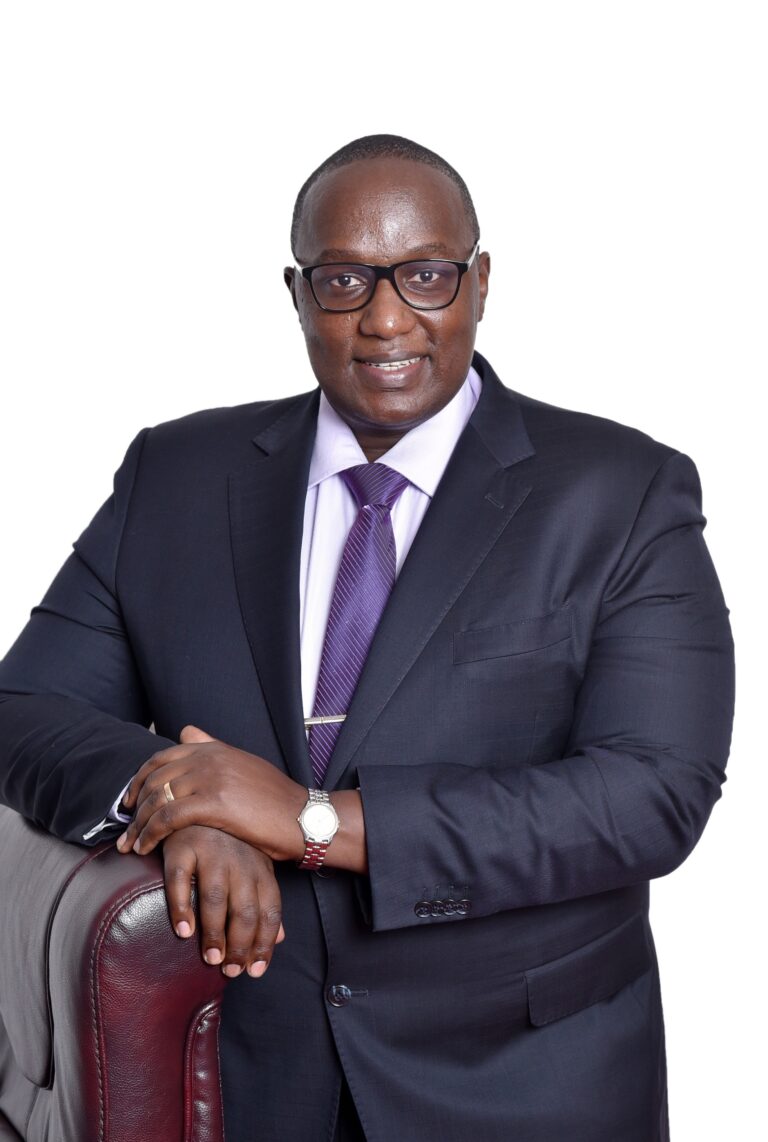
“Motorcycles are still the backbone of many SMEs and public service providers,” said Erick Massawe, Watu’s Kenya country manager. He added that alongside traditional internal combustion engine models, electric two-wheelers were gaining traction.

By the end of 2025, Watu Credit had financed about 8,000 mobility assets, including electric motorcycles, Massawe said.

“We acknowledge that the data by KNBS provides a good glimpse of the overall market and reflects our own pace of growth at Watu Credit,” he said.

Founded in 2015 to support Kenya’s boda-boda and tuk-tuk sectors, Watu has since expanded its operations to eight African countries. In 2025, the firm entered Latin America, launching operations in Brazil and Mexico, becoming the first Kenyan-heritage international business to do so.

Watu attributes its growth to its focus on impact financing for customers typically excluded from traditional banking due to limited credit histories.

“Traditional financing often excludes people without a credit history,” Massawe said. “By removing unnecessary barriers, Watu empowers more people to access life-changing assets — whether for mobility, business, or digital connectivity.”

The recovery in motorcycle sales underscores the sector’s role in employment creation and last-mile transport, as Kenya’s economy continues to rely on two-wheelers as a key driver of grassroots growth.

Rojifi’s Stablecoins-Powered Cross Border Payments Platform Launches

In the sprawling ports of Lagos, Timothy Joseph, a finance manager, stares at a screen refreshing a payment status that refuses to change. Somewhere between two continents, the money exists, but a broken infrastructure leaves Joseph unsure of his payment status. In Africa’s cross-border trade, this scenario is a familiar presence where funds are caught in opaque systems, nameless intermediaries, and processes no one fully controls.

Against this backdrop, Rojifi is launching to fix the trust and delay problem with business payments in Africa. More than a pan-African startup, it’s a bet to prove Africa’s traders  deserve systems that see them, name them, and move at the speed their businesses demand.

In 2025, Africa was a key driver of global trade gains alongside East Asia and South-South trade, with its imports growing faster than any other region. Exports also performed strongly, tied with Asia for the fastest growth rate in merchandise exports.

The World Trade Organization (WTO) and the UN suggest that while Africa experienced strong import and export growth in 2025. Projections for 2026 indicate a moderation in global and African trade growth due to factors such as global economic slowing, trade policy uncertainty, and rising debt.

Despite the trade slowdown, Africa is expected to be the world’s fastest-growing economic region in 2026, with GDP growth projected to reach 4.0 percent in 2026 and 4.1 percent in 2027, according to the UN and the African Export-Import Bank

Yet, for modern African business, the hardest part of global trade isn’t navigating customs or finding a buyer; it is the act of paying. It is the moment when money becomes the bottleneck.

A System Designed for a Different Era

The African Development Bank (AfDB) estimate highlights how settlement delays and high foreign exchange (FX) charges can erode up to 15 percent of African small and medium enterprises’ (SMEs) operating margins, making these factors critical to business survival and growth, particularly for firms with already razor-thin margins like pharmaceutical distributors.

These challenges lead to significant cash flow problems, increased borrowing costs, and strained supplier relationships.

“Global commerce has become real-time, but African payments infrastructure hasn’t,” said Moses Onyekaonwu, founder and CEO of Rojifi. “You can have the capital, the demand, and the supplier, but without the ability to move money instantly and credibly, the entire system breaks down.”

From Friction to Foundation: The Founder’s Journey

Before launching Rojifi, Onyekaonwu managed multiple businesses with complex supply chains reaching across Asia.Hence, Rojifi did not emerge from a whiteboard at a venture capital firm; it was born from the ‘lived friction’ of a founder who had been faced with a similar issue.

He knew the feeling of watching a critical order get cancelled because a payment was ‘held for review’ by a distant intermediary bank. He knew the strain of explaining to a Chinese supplier why a payment appeared to come from an unknown third-party broker rather than his own company.

“In Africa, you could have the money, but not the ability to move it instantly,” Onyekaonwu reflects. “And the longer you wait, the more you lose.”

This frustration shaped Rojifi’s central thesis, which is that African businesses deserve to pay international suppliers directly, transparently, and crucially in their own name. This implies that no offshore entities, informal brokers, or workarounds that erode credibility.


The Anatomy of Trust: Why ‘In-Name’ Payments Matter

In the world of global finance, there is an invisible barrier more formidable than any tariff, which is regarded as ‘The Trust Deficit’.

When an African business sends a payment through traditional fragmented channels, it often passes through multiple ‘correspondent’ banks.

When the money reaches the supplier, the sender’s identity is often obscured or replaced by an intermediary’s name. This triggers ‘de-risking’, which is regarded as a process where international banks pull back from regions they perceive as opaque or high-risk.

Rojifi tackles this head-on. Every transaction on the platform is sent in the client’s registered business name and is clearly reflected on the MT103 SWIFT message.

“Your supplier sees your company name and not an unknown intermediary, and that credibility changes the relationship,” Onyekaonwu explains. This shift implies fewer disputes, faster audits, and the ability for African firms to build long-term, high-trust partnerships with global giants.

Built at the Intersection of Speed and Discipline

Rojifi positions itself at a unique crossroads: the agility of a fintech and the discipline of a traditional bank. This balance is perhaps most expressed in its ability to settle payments using stablecoins, which are digital currencies pegged to the US Dollars. Traders can move money across borders through stablecoins, which are then settled into foreign bank accounts.

A September 2025 J.P. Morgan report, titled ‘2025 Cross-Border Payments Trends for Financial Institutions’, cited a survey where 88 percent of respondents reported being a victim of payment fraud in 2022–2023. The report used this statistic to emphasise the challenge of cybertheft and fraud in cross-border payments.

To combat this, Rojifi uses AI-driven systems for:

  • Behavioral Analytics: Reducing “false positives” that often flag legitimate African transactions as suspicious.
  • Transaction Monitoring: Providing real-time oversight to ensure compliance without the traditional 36-hour wait.
  • Streamlined Onboarding: Reducing the time to get trade-ready to as little as 24 hours.

Caleb Nnamani, expert African storyteller and Chief Executive at Blacktrigger, said, “An ever-increasing demand for imported goods on the continent has carved out global payments for African businesses to be an intensely competitive sport with a handful of winners and many graveyard relics.

“Rojifi’s play is ambitious and interesting, and it will be exciting to see the team make good on their AI-first promise,” he said.

Infrastructure for a Trillion-Dollar Market

Rojifi isn’t just a payment app; it is a B2B infrastructure play. It is a fully licensed Money Service Business in Canada and is aggressively pursuing International Money Transfer Operator (IMTO) licenses in Nigeria. This dual-regulatory strategy signals to the world that Rojifi speaks the language of global compliance.

The platform supports payments to over 200 countries, handling USD, EUR, GBP, and CNY. It offers high-liquidity rails designed to withstand the volatile FX swings that often plague African markets. Crucially, it allows businesses to onboard using their existing local entities democratising access for those who don’t have the resources to set up offshore LLCs.

This focus mirrors a massive market shift; while consumer remittances once dominated the narrative, the African cross-border B2B market is valued at $329 billion today and is projected to explode to $1 trillion by 2035.

Rojifi is betting on a simple premise, which is that Africa’s challenge isn’t a lack of ambition, but it’s a lack of infrastructure. By dismantling decades-old barriers, the company isn’t just moving money, but it is redefining how African commerce shows up globally.

 Israeli Tech Firm Commit Acquires African Talent Platform Savannah in Multi-Million Dollar Deal

0

Israeli software services leader Commit has acquired Savannah, a tech talent recruitment and placement platform focused on connecting African developers with global technology teams. The all-cash deal, estimated to be worth several million dollars, marks a strategic expansion by Commit into Africa’s emerging technology talent market.

Founded in 2022 by CEO Itai Azogui, Savannah has built a network of more than 100 experienced software developers across the African continent and successfully placed them with international companies including Firefly, Aqua Security, Port, and Bright Data. The business grew organically without external venture funding.

Under the acquisition, Savannah’s entire team—including Azogui—will join Commit, and the startup will operate as part of Commit’s Offshore division. The move expands Commit’s global footprint beyond its existing operations in Eastern Europe, Portugal, and Spain.

The global demand for skilled software developers—especially those experienced in AI and advanced product engineering—is at an all-time high. Traditional outsourcing hubs such as India and Eastern Europe have become more expensive and competitive, prompting companies to explore new talent markets.

Commit’s leadership says Africa represents a largely underleveraged reservoir of highly skilled, English-speaking engineers. The continent’s tech ecosystems, particularly in countries like Kenya, Ghana, and Nigeria, are rapidly evolving and producing professionals with strong academic and practical capabilities.

“Africa is one of the highest-quality yet underleveraged talent markets in the world,” said Arik Feingold, Chairman and President of Commit. The acquisition positions Commit to be among the first major software services companies to establish a substantial presence in the region.

For African developers and the broader technology community, this acquisition could be a pivotal moment. It signals growing international recognition of African engineering talent and may unlock greater opportunities for local professionals to work with global startups and enterprises.

Savannah’s founder, Azogui, believes the partnership will allow the company’s model to scale globally, helping more international firms integrate African developers into their core teams—especially as demand for AI-related expertise continues to rise.

Commit’s acquisition of Savannah isn’t just an M&A transaction; it’s a signal that global tech firms are increasingly looking beyond traditional talent markets and recognising the value of African engineers. As competition for tech talent intensifies worldwide, Africa’s role in the global software workforce is set to grow.

NCIC Sets New Social Media Guidelines for Monitoring Hatespeech and Radical Content

0

The National Cohesion and Integration Commission (NCIC) has launched a sophisticated new set of social media monitoring guidelines, signaling a shift from passive observation to aggressive, evidence-based oversight.

The newly rolled-out framework isn’t just a slap on the wrist for internet trolls; it is a comprehensive tactical manual designed to scrub the Kenyan digital landscape of hate speech and radical ideologies.

By providing clear procedures and legal boundaries, the guidelines aim to:

  • Monitor Harmful Content: Implementing real-time tracking of inflammatory narratives.

  • Standardize Oversight: Establishing a uniform framework for how digital platforms are policed.

  • Detect Radicalization: Identifying and addressing extremist ideologies before they manifest in the physical world.

As social media platforms become the primary battleground for public opinion, these guidelines offer the NCIC a much-needed roadmap for navigating the roughness and lawlessness’s of online interaction.

Closing the “Screenshot Loophole”

Perhaps the most significant shift in the commission’s strategy is the move toward “prosecution-ready” data. For years, digital investigators have been frustrated by legal technicalities that saw cases crumble in court due to poor evidence handling.

“A primary goal of these guidelines is to strengthen the NCIC’s capacity for evidence-based digital monitoring,” explained Peris Waweru, a NCIC Officer during a televised briefing. “One of the significant hurdles in prosecuting hate speech cases has been the quality of evidence.”

The commission is now teaching the public—and its own officers—that the law requires more than just a quick finger on a phone button.

“As the law dictates, a simple screenshot is often insufficient in court,” Waweru warns. “You cannot just take a screenshot… it doesn’t work like that. There must be proper, legally recognized steps for obtaining digital evidence to ensure successful prosecution.”

Building a Watertight Case

Consequently, the NCIC noted it is pivoting toward forensic-grade data collection.

By establishing legally recognized steps for obtaining digital evidence, the commission said it aims to bridge the gap between “online monitoring” and “legal accountability.”