I&M Group Plc has appointed former Absa Bank Kenya Chief Executive Officer Abdi Mohamed as the incoming Chief Executive Officer of I&M Bank Kenya, shortly after his departure from Absa Bank Kenya was announced.
Mohamed resigned from his role as Managing Director and CEO of Absa Bank Kenya effective June 30, ending a 32-year career at the lender where he spent the last three years as chief executive. His appointment at I&M Bank Kenya remains subject to regulatory approval from the Central Bank of Kenya.
He will succeed Gul Khan, who led I&M Bank Kenya from 2023 to 2026 before taking on broader responsibilities within the group following Kihara Maina’s move to a regional leadership position.
Mohamed joins I&M with more than three decades of banking experience across East and Southern Africa. During his tenure at Absa Bank Kenya, he oversaw the lender’s transition from the Barclays brand to Absa and led wider business transformation initiatives. He previously served as Chief Operating Officer at Barclays Bank Kenya and held senior retail and business banking leadership positions in Kenya and Zambia.
Outside banking, Mohamed is Chairman of the United Nations Global Compact Kenya Chapter and serves on the boards of Touch Health Inc. and Integrated Payment Systems Ltd.
The appointment comes as I&M continues efforts to strengthen its market position in Kenya’s banking sector. The group has a market value of approximately KES 108.76 billion ($844 million), making it the country’s seventh-largest listed bank by market capitalization. Absa Bank Kenya, Mohamed’s former employer, is valued at about KES 176.53 billion ($1.37 billion), ranking as the fourth-largest listed bank in Kenya after Equity Group, KCB Group and Co-operative Bank.
“We are delighted to welcome Abdi to I&M Group at an important time in our journey as we continue to scale our business, deepen customer relationships and strengthen our market position,” said Sarit Raja-Shah, Executive Director of I&M Group.
Mohamed’s appointment adds to a series of leadership changes across Kenya’s banking sector in 2026, with lenders including Family Bank, Commercial International Bank Kenya, Stanbic Bank Kenya, Standard Chartered Bank Kenya and Sidian Bank naming new chief executives as institutions pursue digital transformation and expansion strategies.
WhatsApp is rolling out usernames, a long-anticipated feature designed to let users connect without sharing their phone numbers, as the messaging service expands privacy controls and narrows feature gaps with competing platforms.
The Meta-owned app said users will be able to reserve usernames beginning today, with the rollout expanding gradually across markets later this year. While accounts will still be tied to phone-number registration, users will be able to communicate using a chosen username rather than exposing personal contact details.
Usernames can contain between three and 35 characters and can be configured through the app’s account settings once the feature becomes available in a user’s region. WhatsApp is also introducing an optional username key that can be shared with trusted contacts as an added privacy layer.
“When you meet someone new, whether it’s a classmate, a neighbour, or someone you met at an event, sharing your phone number can feel like a big step,” Alice Newton-Rex, WhatsApp’s vice president and head of product, said in a statement. “So usernames are designed to give you control of who gets to see your phone number in the first place.”
The move brings WhatsApp closer to competitors that have long supported username-based communication. Unlike some rival platforms, however, WhatsApp said usernames will not be searchable inside the app. Users will need to know an exact username before starting a conversation, a restriction aimed at reducing unwanted contact and preserving privacy.
The company also plans to reserve usernames for public figures, brands and organizations to limit impersonation risks. Businesses and creators will be able to claim usernames already used across Meta’s other social platforms to maintain consistency across services.
At launch, usernames can only be shared manually through text or spoken communication, with no QR-code functionality available initially. Users will be able to change or disable usernames at any time.
The feature arrives as WhatsApp continues to emphasize privacy and user control while serving a global audience of more than three billion users. Meta said a reservation system will help prevent duplicate usernames and support a gradual worldwide rollout.
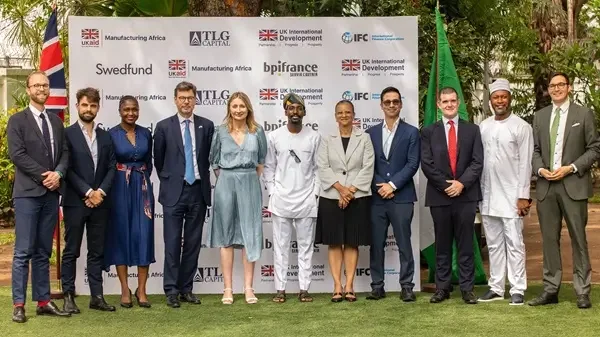
African private credit manager TLG Capital has secured a $120 million second close for its Africa Growth Impact Fund II (AGIF II), attracting backing from development finance institutions, insurers, family offices and impact investors seeking exposure to small-business lending across underserved markets.
The latest round was led by Proparco and Calvert Impact Capital and included new commitments from Africa Re, along with increased allocations from existing investors including Swedfund. Other investors in the fund include IFC and Tsao Family Office. The financing expands the investor base to 22 participants and highlights growing appetite for African private credit among institutional investors.
Nearly half of the fund’s committed capital now comes from investors outside the development finance institution ecosystem, a sign that private capital is increasingly viewing African SME lending as a scalable investment category rather than a niche impact strategy.
The second close comes roughly a year after AGIF II reached its $75 million first close in April 2025. Since then, the fund has deployed capital to nine small and medium-sized businesses operating across seven countries and seven industries, with individual debt facilities ranging from $5 million to $15 million.
The strategy is notable for its concentration on frontier and higher-risk markets that have historically struggled to attract commercial financing. According to TLG, 59% of invested capital has been directed toward United Nations-designated Least Developed Countries, while a further 19% has been invested in World Bank conflict-affected environments.
TLG’s lending model, known as Bank Originated & Mitigated Assets, or BOMA, is designed to address one of Africa’s longstanding financing constraints: the mismatch between the needs of growing businesses and the risk appetite of local lenders.
Under the structure, TLG works with African banks to originate loans to SMEs while providing borrowers with longer maturities than banks would typically extend. The originating bank then guarantees repayment of principal, shifting risk exposure from the underlying business to a regulated financial institution.
The model aims to create a more attractive risk-adjusted profile for investors while extending financing options for businesses that frequently struggle to secure long-term capital.
“AGIF II exists to bring African SMEs the financing they need to grow,” TLG Capital Co-Founder Isha Doshi said in a statement, adding that the structure seeks to balance commercial returns with measurable social impact.
TLG said companies financed through the fund currently support about 850 jobs across several African markets. The firm also traced broader economic effects from its investments, including expanded recycling capacity in Nigeria, wider fiber connectivity in Djibouti and financing for lower-cost schools in Kenya serving more than 20,000 additional students.
Several investors pointed to the fund’s risk mitigation structure as a central factor behind their participation.
Calvert Impact said TLG had demonstrated an ability to innovate while providing downside protection aligned with commercial investment requirements. Africa Re described the use of bank guarantees as a mechanism that could help make African private credit more accessible to institutional capital.
The fund also maintains a strategic partnership with the UK Foreign, Commonwealth and Development Office through its Manufacturing Africa program.
TLG and AGIF II were recognized in 2026 under the Gender 2X Challenge and included in the ImpactAssets 50, reflecting the fund’s emphasis on development outcomes including employment creation, gender inclusion and sustainable industrial growth.
Vodacom Group Ltd. completed the acquisition of an additional 15% stake in Safaricom Plc, taking majority control of East Africa’s largest telecommunications operator after Kenya’s Court of Appeal removed legal barriers that had delayed the transaction.
The South African telecom company said the purchase increases its ownership in the Nairobi-listed operator to 55%, strengthening its position in one of Africa’s fastest-growing markets for mobile, digital, and financial services.
The transaction was finalized days after the court cleared the sale, paving the way for Kenya’s Treasury to receive Sh204.3 billion from the disposal of its stake. The proceeds are expected to provide a substantial boost to government finances at a time when authorities continue seeking additional revenue sources.
Under the agreement, the Treasury will also receive a Sh40.2 billion dividend top-up through a financing structure backed by the government’s remaining 20% holding in Safaricom.
“This is a landmark moment for Vodacom, for Safaricom, and for the communities we serve across East Africa,” Vodacom Chief Executive Officer Shameel Joosub said, adding that the deal would create opportunities to expand digital and financial inclusion across the region.
The acquisition gives Vodacom greater strategic influence over Safaricom, a telecom and mobile-money giant whose operations have made it one of Kenya’s most valuable listed companies, potentially reshaping competition and investment trends in East Africa’s telecommunications sector.
Anda, an Angolan mobility and financial technology startup focused on bringing informal transport workers into the formal economy, has secured investment from French development finance institution Proparco to expand affordable transport access and accelerate the rollout of electric vehicles in the country.
The financing will support Luanda-based Anda’s drive-to-own vehicle program for transport operators while funding expansion of its electric fleet and battery-swapping infrastructure. Financial terms of the transaction were not disclosed.
The deal highlights growing investor interest in African technology companies building solutions around mobility and financial inclusion, particularly in markets where large segments of the workforce remain outside formal banking systems.
Angola’s moto-taxi sector employs an estimated 1.2 million drivers, with approximately 600,000 operating in Luanda. Despite playing a critical role in keeping the capital moving, many drivers remain excluded from traditional financial services, lacking bank accounts, insurance and formal credit histories that would enable access to vehicle financing.
Founded in 2022 by Sérgio Tati and Joerg Nuehrmann, Anda has developed a platform designed to formalize urban mobility in one of Africa’s most underserved transport markets. The company provides motorcycles, tuktuks and cars to drivers primarily through drive-to-own and subscription arrangements.
Before joining the platform, drivers undergo certified training through Anda Academy, delivered in partnership with Angola’s national vocational training institute, INEFOP, and receive insurance through licensed partners. Drivers then generate income through street-hailing services, digital ride-hailing platforms and Anda Express, the company’s business-to-business delivery operation.
Anda currently operates about 2,000 vehicles in Luanda and says drivers using its platform earn on average around three times more than they did in the informal sector.
The company also connects passengers with vetted driver-partners through a mobile application that offers transparent pricing and real-time tracking, with a particular focus on middle-income and underserved communities across Luanda. Anda has also emerged as a leading operator in Angola’s collective mobility market through its growing electric two- and three-wheeler fleet.
By offering a safer and more affordable alternative to informal transportation, the company aims to reduce mobility costs for lower-income workers and improve access to employment, education and essential services.
Proparco’s investment will help finance technology upgrades, expand Anda’s network of driver-partners and broaden coverage across the Luanda metropolitan area, while supporting the company’s plans to expand into other Angolan cities.
Part of the financing will also be directed toward electrification efforts, including battery-swapping and charging infrastructure. Anda plans to open its first Energy Hub in partnership with Sonangol, Angola’s state-owned energy company, in June 2026 at a service station in central Luanda.
Johann Choux, Proparco’s Regional Director for Southern Africa and the Indian Ocean, said the investment reflects the institution’s strategy of supporting African companies that combine economic inclusion with sustainable development objectives.
Tati said Anda is addressing two structural challenges simultaneously: limited access to affordable asset financing and the lack of formal digital systems for urban mobility. He said greater vehicle ownership among drivers can create more sustainable livelihoods while raising standards across the transport sector.
Aruwa Capital Management has led a $2 million investment in Sika Financial Group, backing the startup’s efforts to build financial infrastructure designed to streamline cross-border transactions across Africa and other emerging markets.
The investment, made through Aruwa Capital Fund II alongside co-investors, represents a seed extension round for Sika, a company founded in 2023 by Chief Executive Officer Emmanuel Ashirifi. The deal underscores growing investor interest in financial infrastructure platforms seeking to address inefficiencies in emerging-market payments and settlement systems.
Sika develops technology that enables financial institutions, corporations, brokers, fintechs and liquidity providers to manage cross-border transactions more efficiently. Through its ClearNet platform, the company provides foreign exchange settlement, liquidity aggregation, multilateral netting, Payment-versus-Payment (PvP) settlement and market data services across frontier and emerging-market currencies.
The company is targeting a longstanding challenge across Africa and the broader Global South, where fragmented financial systems and dependence on correspondent banking networks often increase transaction costs and create settlement risks. While developed economies operate through mature clearing and settlement systems, many emerging markets continue to rely on bilateral relationships and manual processes that limit liquidity and capital efficiency.
The issue has become increasingly significant as trade and investment flows across Africa expand. Policymakers and financial institutions are looking for infrastructure that can support regional integration, particularly as the African Continental Free Trade Area (AfCFTA) seeks to strengthen trade among African economies.
Sika says its technology allows institutions to settle transactions directly across multiple currencies while reducing dependence on offshore financial centers and intermediary currencies. The company currently supports more than 15 currencies and has expanded operations across Africa, Latin America, Asia and the Middle East.
“Financial markets cannot scale efficiently without trusted infrastructure,” Ashirifi said in a statement. “We are creating the financial market infrastructure that enables institutions to transact confidently across borders while reducing risk, unlocking liquidity and improving capital efficiency.”
Aruwa Capital said the company’s focus aligns with its investment strategy of supporting businesses with both commercial growth potential and broader economic impact.
“Sika is addressing one of the most fundamental challenges facing financial markets across Africa and other emerging economies: the lack of efficient and trusted infrastructure for cross-border settlement and liquidity management,” said Adesuwa Okunbo Rhodes, Founder and Managing Partner of Aruwa Capital.
The investment proceeds will be used to expand Sika’s regulatory footprint, strengthen its clearing and settlement systems, broaden currency corridors and increase investment in technology, enterprise partnerships and risk-management capabilities.
The transaction also reflects Aruwa’s gender-lens investment strategy. According to the firm, women account for half of Sika’s senior management team and approximately 37% of its workforce.
As cross-border commerce accelerates across emerging economies, infrastructure providers such as Sika are positioning themselves to become a critical layer in the movement of capital, payments and liquidity across fragmented markets.
SpaceX is planning a move into consumer mobile services in the United States through its Starlink satellite business, according to a report by the Financial Times, potentially expanding the company’s communications operations beyond broadband internet and into the wireless market.
The report said SpaceX has informed investors of plans involving a Starlink-branded mobile service aimed at U.S. consumers. The proposal was reportedly discussed during recent investor presentations and fundraising-related conversations, according to people familiar with the matter cited by the newspaper.
SpaceX already operates direct-to-cell connectivity services in the United States through a partnership with T-Mobile. The service is designed to provide additional coverage from space, allowing users in areas with limited or no traditional cellular coverage to access communication services through satellite technology.
According to the Financial Times report, the company is considering a broader consumer offering that could eventually include direct retail mobile services under the Starlink name. The report also said SpaceX may pursue the development of a terrestrial wireless network in the United States alongside its satellite infrastructure.
Neither SpaceX nor company executives immediately issued a public response following publication of the report. Reuters said it was unable to independently verify the information.
The latest reported plans would represent an expansion of Starlink, which began as a satellite internet service intended to provide broadband access in underserved regions and locations where conventional internet infrastructure was limited or unavailable. Since launching commercially, Starlink has grown into one of SpaceX’s largest businesses and has expanded service availability across multiple countries and markets.
The company’s satellite network relies on thousands of low-Earth orbit satellites positioned significantly closer to Earth than traditional communications satellites. The lower operating altitude is intended to reduce latency and improve performance for users.
SpaceX has also taken steps in recent years to strengthen its wireless capabilities through spectrum acquisitions and partnerships. In September of last year, the company acquired wireless spectrum licenses from EchoStar for approximately $17 billion for use with its Starlink network, according to earlier reports. Additional spectrum assets valued at approximately $2.6 billion were also acquired later in the year.
Those acquisitions gave SpaceX access to wireless airwaves that could support expanded direct-to-cell services and other communications products.
Industry observers have increasingly focused on Starlink as a major source of growth for SpaceX. The business has continued expanding globally as the company increases the number of satellites in orbit and introduces additional services.
The reported mobile initiative comes as SpaceX continues expanding beyond launch operations into broader communications and connectivity businesses. Alongside satellite internet services for households, the company has introduced products for businesses, aviation customers, maritime users and government agencies.
The Financial Times report did not provide details on potential pricing, launch timing or how a future consumer mobile service would be structured.
SpaceX was most recently valued at record levels in private markets, with investors increasingly focused on the growth potential of its Starlink business and recurring subscription revenue.
Further details about the reported plans have not yet been officially announced by the company.
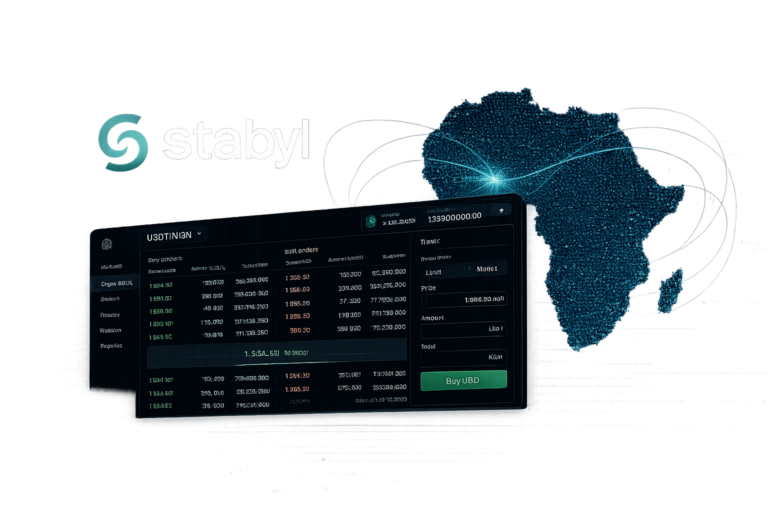
Stabyl, an Africa-focused financial infrastructure startup, has raised $2.7 million in pre-seed funding to build a foreign-exchange liquidity platform aimed at banks, payment firms and institutional clients seeking faster cross-border settlement.
The funding round was led by , which will also serve as Stabyl’s first commercial deployment partner through its payments unit, KongaPay, providing naira settlement capabilities.Founded by , and , Stabyl is positioning itself as an infrastructure provider rather than a consumer payments business.
The company plans to help financial institutions source foreign exchange and complete settlements more efficiently across African markets.The startup initially targets the naira-dollar corridor, one of Africa’s largest and often most volatile foreign-exchange routes, with plans to expand into additional currency pairs over time.
Stabyl’s platform uses a central limit order book that automatically matches buy and sell orders for foreign exchange transactions. The system seeks to replace fragmented treasury operations that often require payment companies and banks to negotiate rates manually across multiple liquidity providers.
The platform also supports settlement through both conventional banking channels and digital assets, including and . Wallet infrastructure is provided by .The company said proceeds from the financing will be used to strengthen compliance systems, secure regulatory approvals and build technology infrastructure as Nigeria’s digital-asset framework evolves.
The raise comes as policymakers in Nigeria move toward formalizing oversight of virtual assets, creating new opportunities for firms attempting to bridge traditional financial systems with blockchain-based settlement rails.For African fintech companies, access to liquidity remains a persistent challenge. While many firms have developed efficient payment and money-transfer systems, obtaining reliable foreign exchange for settlement continues to create operational bottlenecks.
Stabyl is betting that greater transparency and automated liquidity matching can reduce friction in cross-border transactions. The broader challenge will be achieving sufficient scale and trust — requirements that typically determine whether market infrastructure platforms become foundational financial networks or remain niche services.
For years, Africa’s digital transformation story has largely centered on cities, where infrastructure investment, technology adoption, and innovation ecosystems have grown rapidly. Yet beyond these urban centers, millions of people across rural and peri-urban communities still remain under-connected, limiting access to education, healthcare, entrepreneurship opportunities, and economic participation.
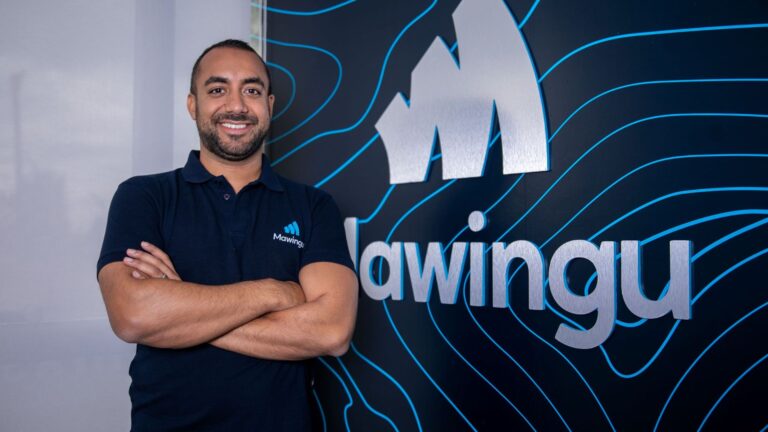
At Mawingu Group, that gap became an opportunity to build something different. What began as a social impact initiative in the foothills of Mt. Kenya has evolved into one of East Africa’s largest rural-focused connectivity providers, operating across more than 33 counties in Kenya and through Habari in Tanzania. Today, the company is expanding beyond internet access into digital services designed to support communities and businesses long after they get online.
Leading this vision is Farouk Ramji, who believes internet access is no longer simply about connectivity. Under his leadership, Mawingu is pursuing an ambitious target of positively impacting one million people by 2028 through affordable connectivity, digital skills development, and broader inclusion efforts. The goal, he says, is straightforward: ensure geography no longer determines opportunity.
TechMoran had an interview with Ramji last week on Mawingu’s plan for youths in Africa. Below is the second instalment of our interview on the role of internet for rural and peri-urbarn youth in Africa.
Please introduce yourself and briefly share your journey to becoming CEO of Mawingu. What has been your biggest achievement so far?
Farouk Ramji: I’m Farouk Ramji, CEO of Mawingu Group, East Africa’s largest internet service provider focused on connecting rural and peri-urban communities. My journey has been built over more than 15 years across operations, technology, and strategy in Africa and Central Asia.
I’ve worked with both startups and established organizations, helping scale operations, shape strategy, and lead mergers and acquisitions. Those experiences gave me a deep appreciation for what it takes to build sustainable businesses in the digital infrastructure space.
What drew me to Mawingu was the opportunity to combine commercial discipline with meaningful social impact, proving that connectivity for underserved communities can be both transformative and commercially viable.
My biggest achievement isn’t one milestone; it’s the trajectory we’re building as a company and seeing our work translate into meaningful impact as we pursue our goal of positively impacting one million people by 2028.
What products and services does Mawingu currently offer, and what makes the company different from other internet providers?
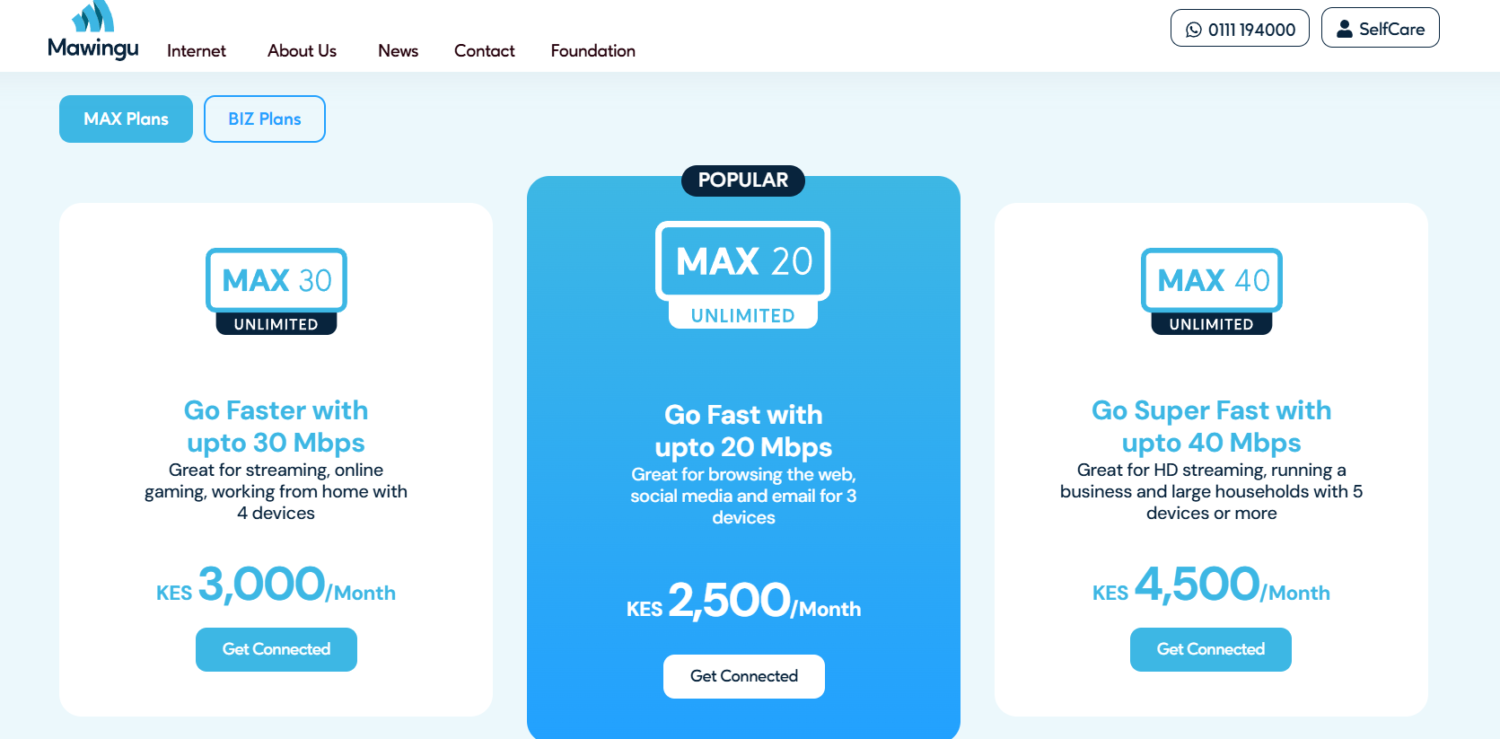
Farouk Ramji: At Mawingu, our core offering is fixed wireless and fibre broadband serving rural and peri-urban communities across Kenya and through Habari in Tanzania.
Beyond connectivity, we’ve expanded into value-added services including cloud solutions, hosting, and domain services to help businesses grow digitally.
What sets us apart is our mission and our long-term community presence. We have become a trusted operator in many communities where we’ve worked for over a decade. Our teams are deeply embedded in these regions, and we focus on building relationships, not simply delivering internet connections.
We’re not just selling bandwidth. We are building a platform for digital inclusion.
Mawingu has established itself as a leading connectivity provider in rural and peri-urban Kenya. What inspired the company’s focus on underserved communities?
Farouk Ramji: The majority of East Africans live outside urban centers, but much of the investment in connectivity historically moved in the opposite direction.
Initially, this represented a market opportunity. But over time, it became much more purposeful.
When you see a nurse accessing specialist healthcare remotely, a farmer checking commodity prices before heading to market, or a student accessing learning resources previously unavailable to them, you realize communities don’t lack ambition or capability.
They lack access.
What impact has Mawingu had so far in the communities it serves?
Farouk Ramji: We’ve seen remarkable transformation across communities, schools, health facilities, and cooperatives.
Farmer cooperatives have significantly reduced internet costs while gaining access to real-time market information and digital financial services.
Schools and TVET institutions are modernizing learning through online educational content and practical digital tools.
We’ve also seen powerful results in special-needs education, where teachers are using digital tools and AI-powered platforms to create more inclusive learning experiences.
Across all these examples, the message remains consistent: when communities gain meaningful connectivity, the internet stops being a luxury and becomes an equalizer.
Kenya has made progress in mobile connectivity, but many people remain offline or under-connected. What is the biggest challenge to universal internet access?
Farouk Ramji: Universal internet access is achievable, but several challenges remain interconnected.
The first is infrastructure costs. Building towers, laying fibre, and deploying equipment across geographically challenging and low-density regions requires significant investment.
Affordability also remains a major issue, both in terms of internet costs and device access.
Perhaps most importantly, communities need to understand how connectivity creates value in their lives. Digital inclusion requires infrastructure, devices, skills, relevant content, and awareness all working together.
Connectivity alone is necessary, but never sufficient.
How is Mawingu helping bridge the digital divide for schools, businesses, and young people?
Farouk Ramji: We focus on three things: access, affordability, and value.
We extend connectivity throughout institutions rather than simply connecting one office or building.
We subsidize connectivity where possible and pair access with digital skills training programs that help communities understand both opportunities and risks online.
The goal is to make internet connectivity as essential and sustainable as electricity or water.
What opportunities do you see for startups, SMEs, creators, and young innovators in a more digitally connected Kenya?
Farouk Ramji: We’re approaching an important inflection point.
Reliable and affordable connectivity opens entirely new possibilities for SMEs, creators, and entrepreneurs.
Businesses can access digital payment systems, online markets, and cloud-based tools. Young people can pursue online education, freelance work, content creation, and entrepreneurship.
I believe the next wave of Kenyan innovation won’t just come from Nairobi’s tech hubs. It’ll come from places like Laikipia, Nyeri, Kitale, and communities that historically lacked access to these opportunities.
What technologies will shape the future of internet access in Kenya and Africa?
Farouk Ramji: We’ll increasingly see hybrid connectivity models where fibre, fixed wireless, and satellite technologies work together depending on location and population density.
AI will also become increasingly important in network optimization, customer support, and resource management.
But infrastructure alone won’t define the future. Device affordability, digital literacy, and online safety will matter equally because getting online is only the first step.
How do you view increasing competition in affordable broadband, especially from larger players?
Farouk Ramji: I welcome competition because it shows the market is maturing and more organizations recognize the opportunity in underserved communities.
The connectivity gap remains large enough for multiple players.
Our advantage has always been our purpose-built infrastructure, local presence, and mission-driven approach.
Competition pushes everyone to become more innovative and customer-focused, ultimately benefiting the people we’re all trying to serve.
Looking ahead, what key milestones are critical to achieving Mawingu’s goal of impacting one million Africans by 2028, and what is your broader vision for Kenya’s digital future?
Farouk Ramji: First is continued network expansion across rural and peri-urban communities.
Second is strengthening our digital inclusion work by connecting more schools, health facilities, and community institutions while expanding skills development and access to devices.
Third is building additional value-added services that help entrepreneurs and SMEs create businesses on top of connectivity.
And finally, strategic partnerships with governments, NGOs, and organizations that share our vision.
My broader vision is simple: a Kenya where geography no longer determines access to education, information, markets, and opportunity.
Digital infrastructure is becoming as fundamental as roads or electricity. Reaching one million people by 2028 is an important milestone, but it’s only one step in a much larger journey toward a more inclusive digital future.
Stanbic Foundation and Microsoft are deepening their collaboration on digital workforce development through the rollout of the Microsoft Elevate AI National Skilling Initiative, an effort aimed at expanding access to practical artificial intelligence skills and strengthening digital readiness among communities and institutions.
The initiative, launched in partnership with Pathways Technologies and Konza Technopolis, has already trained 152 participants across multiple counties, focusing on equipping trainers and institutions with foundational and applied AI knowledge.
The partnership combines Microsoft’s technology and AI expertise with Stanbic Foundation’s established reach across youth networks, small businesses and community-based programs. Together, the organizations are seeking to broaden access to digital skills while creating pathways for employability and entrepreneurship.
“Digital literacy is one of the core pillars of Stanbic Foundation’s work,” said Mercy Githanji, Head of Stanbic Foundation. She said the organization has continued working with technical and vocational institutions to strengthen instructors’ ability to deliver digital skills training aligned with emerging workforce needs.
As businesses and institutions increasingly integrate AI into daily operations, organizations are also placing greater emphasis on workforce preparedness and practical technology adoption. Through county-level engagements and community platforms, the initiative is designed to bring training opportunities closer to underserved communities and learners outside traditional technology ecosystems.
“Through partners like Stanbic Foundation, we have been able to deliver training via county-level engagements and community-based platforms, expanding access beyond major cities,” said Winnie Karanu, AI Skills Director at Microsoft. She added that content has been adapted to address practical sectors such as agriculture, entrepreneurship and small business operations.
Stanbic Foundation said it has worked with partners since 2021 to provide digital skills training to women, youth and micro, small and medium-sized enterprises. Through its Future ni Digital platform, more than 250,000 learners have accessed digital skills training since 2019.
The latest initiative reflects a broader strategy by both organizations to move beyond digital literacy and toward practical AI capability-building that can support workforce development and future economic participation.
For Emmanuel Uduebholo, CEO and founder of Thankeeu, workplace milestones often pass too quietly. Birthdays become rushed messages in group chats, work anniversaries become generic emails, and years of contribution can sometimes go unnoticed.
That disconnect felt bigger than it appeared. To Emmanuel, it represented a deeper problem: people investing time, energy, and commitment into organizations without feeling genuinely seen.
Thankeeu was created to solve that problem.
But Emmanuel’s journey toward building an employee recognition platform began far away from HR technology.
From Telecom Networks to Human Connections
Emmanuel Uduebholo began his career as a network engineer in the telecom industry, an experience that shaped the way he thinks about systems and problem-solving.
“In telecom, you learn very quickly that infrastructure is invisible until it breaks,” he says. “When it fails, people feel it immediately.”
That lesson stayed with him. The idea of building systems that work quietly in the background while powering meaningful experiences became a recurring theme throughout his entrepreneurial journey.
A turning point came in 2017 during his time at Hebron Startup Lab at Covenant University, an experience he describes as one of the most transformative periods of his life.
“Being surrounded by young people building things and solving real problems completely changed the way I viewed the world.”
While still in school, Emmanuel launched Mentorships.ng, a platform connecting students with mentors across industries. It became his first experience building something designed around human connection at scale.
“That was the first time I truly understood what it meant to create systems that bring people together,” he says.
He later worked on a smart card solution, an experience that introduced him to the realities of building physical products in Nigeria and the challenges of getting products into users’ hands.
Eventually, those experiences led him toward a different problem entirely.
The Problem Hidden Inside Workplace Culture
The inspiration for Thankeeu came from something simple: watching people be overlooked.
Emmanuel kept seeing situations where people who had invested years into a company reached birthdays or major milestones and received almost nothing in return.
“I kept seeing situations where someone who had genuinely invested years into a company would reach a birthday or important milestone and receive almost nothing,” he says. “Or they would get a generic message that felt copied and pasted.”
For him, the issue was larger than celebration. It was about recognition.
As companies grow, making people feel individually valued becomes increasingly difficult. How do fifty people feel genuinely seen inside a company of five hundred?
That question became the foundation for Thankeeu.
What Thankeeu Does
Thankeeu is a group card and gifting platform designed to help teams celebrate birthdays, promotions, work anniversaries, new hires, farewells, and other important moments.
The process is intentionally simple.
HR teams or managers set up their organizations and import employee information into the platform. Thankeeu then automatically detects upcoming occasions, creates digital cards, and notifies colleagues to contribute personal messages.
On the day of the celebration, the recipient receives a personalized digital card filled with messages from teammates. Teams can also contribute financially to a collective gift pot, which recipients can withdraw directly into their bank accounts.
Behind the scenes, most of the work is automated.
“You set it up once and it runs itself,” Emmanuel says. “The experience feels warm and personal, but the operation is completely automated.”
More Than Social Media
Some might wonder whether platforms like LinkedIn or WhatsApp already serve this purpose.
Emmanuel sees a clear distinction.
“Social media and Thankeeu are solving different problems,” he says. “When you post ‘Happy Birthday’ on LinkedIn, you’re performing publicly. When you sign a Thankeeu card, you’re writing something personal to someone specific.”
He describes the difference in simple terms:
“We’re not in the attention economy. We’re in the meaning economy.”
That message appears to resonate with users. Although still in the early stages, feedback from companies using the platform has been encouraging.
“When someone opens a card and finds thirty thoughtful messages from colleagues, you immediately understand why it matters,” he says.
Building for African Workplaces
Building Thankeeu has also meant building for the realities of African businesses.
Emmanuel says creating software for Nigerian companies required a different set of assumptions from products built in Silicon Valley.
“Things like bank transfer reliability, WhatsApp as a communication channel, or the reality that an HR manager may also be handling operations and administration — these realities shape the product.”
Thankeeu initially launched as a consumer product, allowing anyone to create group cards for friends and colleagues. That experience generated valuable user insights before the company expanded into its enterprise offering, Thankeeu for Teams.
The transition also brought important lessons around enterprise sales, implementation, and organizational change.
“The most valuable moments were conversations with HR leaders who challenged our assumptions,” he says. “Every pushback made the product better.”
Looking Ahead: Recognition Powered by Intelligence
For Emmanuel, the long-term vision extends beyond digital cards and gifting.
Today, Thankeeu automates reminders and celebrations. Tomorrow, he imagines a system capable of understanding company culture and identifying meaningful moments before people even notice them.
“We want the system to understand context,” he says. “Maybe it recognizes when someone deserves acknowledgment or creates a personalized welcome experience for a new employee.”
Artificial intelligence will play a role, but with practical intent.
Current AI initiatives include helping users generate thoughtful messages when they struggle with what to write and building systems that identify celebration opportunities automatically.
“The goal isn’t AI for the sake of AI,” he says. “It’s using technology to help people feel seen at the right moment.”
For now, the company continues to grow while remaining largely bootstrapped, prioritizing product-market fit before aggressive fundraising.
As Thankeeu looks toward the future, its mission remains simple: helping organizations scale recognition without losing the human element that makes it meaningful.
Because sometimes, being seen matters more than simply being noticed.
Small and medium-sized businesses (SMBs) hold valuable data, serve as entry points into larger supply chains and often lack the cybersecurity defences of enterprise organisations. These facts alone make SMBs an attractive target for cyberattacks. Some of their top challenges includes the rise of commoditised ransomware, phishing attacks, and staff shortages. Each of these issues poses a significant risk and overwhelms lean teams.
The good news is that none of them require an enterprise budget to address. The solution in each case is the same: reduce complexity, consolidate visibility and build on what your existing team can realistically manage.
Challenge 1: The commoditisation of ransomware
Ransomware was once the domain of sophisticated, well-resourced criminal groups. That is no longer the case. The rise of Ransomware-as-a-Service (RaaS) means that relatively low-skilled cyber attackers can now purchase pre-built ransomware kits and deploy them against businesses of any size.
For SMBs, this shift is significant. Ransomware groups have also become more targeted and financially precise, calculating their demands based on what a victim can plausibly pay. Around half of organisations globally now consider ransomware their top cyber risk, according to the World Economic Forum.
Addressing this requires a layered approach rather than a single tool. Anti-ransomware protection driven by machine learning can block known threats automatically, while AI-powered behavioural analytics can identify suspicious patterns that signature-based controls miss. Automating endpoint isolation limits how far an attack can spread, and alert aggregation helps teams investigate potential incidents without being overwhelmed. Regular data backups and user awareness training round out a strategy that treats ransomware as a constant, manageable risk rather than a catastrophe.
Challenge 2: Most breaches involve the human element
Phishing continues to be one of the most effective initial attack vectors, largely because it targets the one element no technical control can fully secure: human judgment. Modern phishing attacks are convincing, often exploiting legitimate-looking emails, trusted sender identities and, increasingly, AI-generated content that personalises messages at scale.
The statistics make uncomfortable reading. User execution and phishing techniques rank among the top three threats, according to Kaspersky’s “Anatomy of a Cyber World: 2026 Security Services Global Report”, which demonstrates that users are still a weak link. For many SMBs, the organisational structures and resources that large enterprises use to build a strong human firewall simply do not exist.
An effective defence needs to work across three dimensions simultaneously:
Process controls, such as multi-person authorisation, for high-value transactions and tightly governed access to sensitive data, reduce the blast radius when someone does click.
People-focused training that is continuous rather than periodic, with automatic re-enrollment triggered by risky behaviour, turns mistakes into learning moments.
Technology that provides real-time scanning of emails, links and attachments, combined with behavioural controls that act after a click, provides the technical backstop.
None of these layers alone is sufficient, together though, they significantly reduce both the likelihood and the impact of a successful phishing attack.
Challenge 3: Staff shortages and the skills gap
Three-quarters of businesses globally consider the cybersecurity skills shortage a serious issue according to Kaspersky data. For SMBs the consequences are particularly acute. Most cannot compete for dedicated security talent, which means general IT staff often serve as the de facto first line of defence against sophisticated threats they were never trained to handle.
A dangerous middle ground exists. Advanced cybersecurity training is too specialised for IT generalists, while basic cyber hygiene programs don’t equip them to investigate or respond to real incidents. The result is that skilled attackers slip through gaps that a dedicated cybersecurity team might catch.
The sustainable response is to deliberately upskill existing IT staff into cyber first responders. For generalists and sysadmins, this means building practical skills in incident response fundamentals, secure cloud configuration and working effectively with EDR and XDR tools. IT teams benefit from training that helps them recognise and triage cybersecurity alerts, not just IT tickets.
Formalising security responsibilities in job descriptions helps ensure these capabilities are retained and developed over time and investment in training can help improve employee loyalty, reducing the churn that compounds the skills gap in the first place.
Building resilience without building complexity
The common thread running through each of these challenges is complexity. SMBs are making diligent efforts to take cybersecurity seriously, but they are facing difficulties in keeping pace with a threat environment that has evolved more rapidly than their tools and teams can manage. Adding more products rarely solves this problem, in fact it frequently deepens it, increasing alert volume, integration overhead and the risk of coverage gaps. The more effective path is consolidation, converging prevention, detection, response and awareness into platforms that are genuinely manageable by small teams. To protect against this wide range of threats targeting small and medium-sized companies, organisations can look to solutions such as Kaspersky Next Optimum, which provides real-time protection, threat visibility and investigation and response capabilities spanning both EDR and XDR adapted for lean teams. Companies can choose another option to gain robust managed protection through a tailored MXDR solution if they don’t have time or resources to develop internal expertise.
When complexity decreases, resilience follows. Incidents are contained faster, downtime is reduced and teams regain the capacity to be proactive rather than permanently reactive. SMBs can explore how to enhance their security posture with Kaspersky’s expert guidance tailored specifically for their environment. With this knowledge they can enhance their processes and build a solid cyber resilience.
CedaPay, a payments orchestration startup targeting merchants in underserved markets, has joined FasterCapital’s EquityPilot support program as the company seeks to expand integrations and strengthen operational infrastructure ahead of broader commercial activity.
The Kenya- and Dubai-focused initiative will initially concentrate on product integrations, partner-led growth strategies, and compliance capabilities, according to a statement released Thursday. During the first 30 to 60 days of the engagement, FasterCapital and CedaPay will prioritize acquirer integrations, partner enablement, and compliance tooling.
The move comes as merchants across many emerging markets continue to contend with persistent operational challenges including payment failures, settlement delays, foreign-exchange costs, and fragmented payment systems. Such frictions can pressure margins and create barriers for businesses seeking to scale digital commerce activity.
CedaPay aims to address those issues by consolidating multiple payment service providers and settlement methods into a single infrastructure layer. The platform routes transactions across payment providers, supports failover capabilities designed to improve transaction continuity, and enables regional payment-method routing and USDC settlement options.
The company also offers a unified subscriptions API, a partner and affiliate commission engine, and merchant tools intended to increase visibility into balances, reserves, and settlement processes.
The timing may prove favorable as digital commerce activity expands across emerging markets while payment networks and local acquiring infrastructure continue evolving. Increased demand for faster settlement options and broader adoption of stablecoin-based payment rails have also created opportunities for payment orchestration providers seeking to simplify fragmented ecosystems.
Under the EquityPilot engagement, FasterCapital said it will provide execution support around integration priorities, introductions to ecosystem stakeholders, guidance on compliance processes and merchant KYC frameworks, and operational support tied to partnership growth models.
The initial work plan will focus on expanding acquirer coverage across priority markets, strengthening regional payment flows including mobile-money and bank-transfer routing, and improving compliance systems. The program will also emphasize measurable milestones intended to improve operational readiness and fundraising preparation, though no funding commitment was announced.
“We’re excited to support CedaPay through EquityPilot,” said Hesham Zreik, founder and chief executive officer of FasterCapital. “Our team will focus on execution milestones and connecting the startup with the right ecosystem stakeholders.”
Over the next three months, the companies said they expect to monitor integration progress, introduce partner onboarding capabilities, and refine merchant-facing transparency features such as balance visibility, statement reconciliation, and reserve scheduling.
Founded by William Odera, CedaPay provides payment orchestration infrastructure designed to improve reliability and settlement transparency for merchants operating in underserved markets.
FasterCapital, established in 2014, operates as a venture builder and startup incubator supporting early-stage companies through funding assistance, technical development, and business advisory programs. Its EquityPilot initiative is designed to help startups scale through mentorship, strategic guidance, and network access.
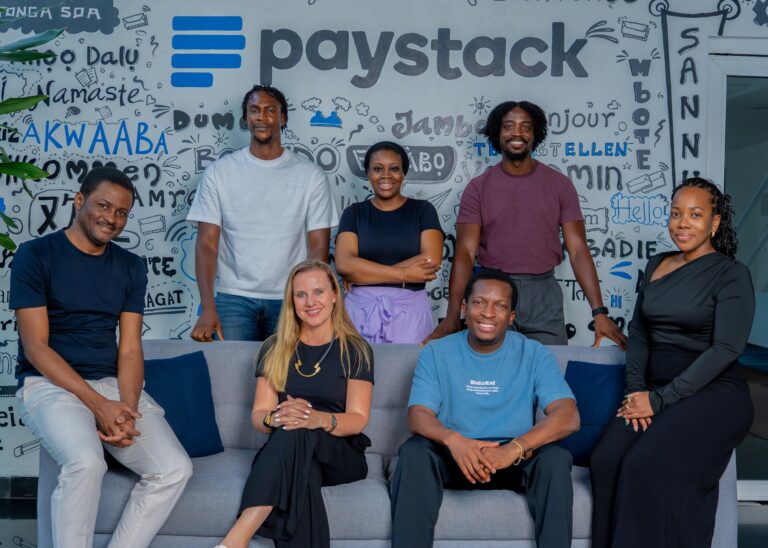
Paystack is betting that the next evolution of digital payments in Africa may involve artificial intelligence agents completing transactions on behalf of users with the launch of Paystack Index, an early-access product designed to let consumers in Nigeria carry out routine transactions through supported AI assistants.
The product, developed by Paystack with support from its own TSG Labs, initially enables users to purchase airtime and mobile data, transfer funds through Zap, and order food from delivery platform Chowdeck. The system currently works with supported AI clients including ChatGPT, Claude, and OpenClaw.
The launch comes as technology companies globally race to move AI systems beyond chat interfaces and into tools capable of taking actions on users’ behalf. While most AI products have focused on generating content or answering questions, a growing number of companies are exploring “agentic” systems designed to execute tasks such as scheduling appointments, shopping, or processing transactions.
For payments providers, that shift presents both an opportunity and a challenge: enabling AI systems to initiate transactions while ensuring users remain in control of their finances.
“Paystack has always focused on helping businesses get paid safely and reliably, wherever their customers are,” Chief Executive Officer Shola Akinlade said in a statement. “As AI agents become a more common way for people to search, decide, and take action, we think checkout has to evolve too.”
The company said users would retain authority over what actions AI systems can perform through permissions and spending limits set by customers. Transactions are processed through Paystack’s existing payments infrastructure, while the company said it does not store card numbers, CVVs, PINs, or bank account credentials.
The rollout is initially limited to Nigeria as part of a controlled beta program that Paystack said will help it understand how consumers interact with AI-led commerce experiences and what infrastructure merchants may require as usage evolves.
The move also signals a broader ambition extending beyond traditional payment processing. Rather than simply powering checkout buttons on websites and mobile apps, Paystack appears to be positioning itself as infrastructure for AI-native commerce experiences.
Paystack currently serves more than 300,000 organizations across Nigeria, Ghana, South Africa, Kenya and Côte d’Ivoire.
Additional merchants, billers, features and African markets are expected to be added over time, according to the company.
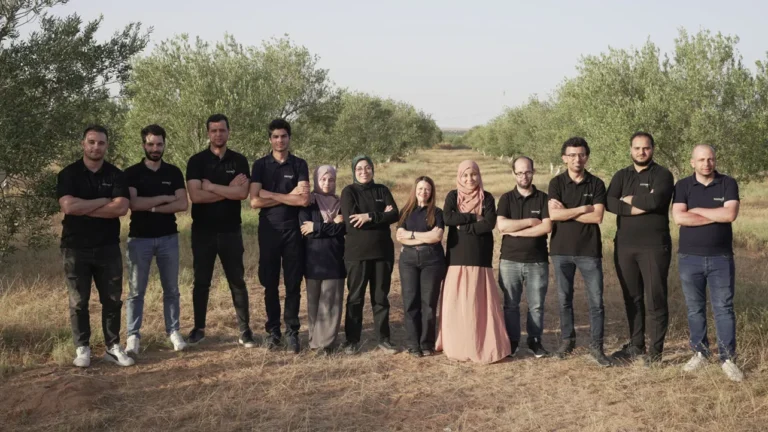
Tunisian agritech startup RoboCare has secured a six-figure investment from venture capital firm 216 Capital, adding fresh momentum to a growing wave of African startups using artificial intelligence to tackle food production and climate challenges.
The funding will support the company’s expansion across Africa and the Middle East, strengthen its commercial operations, and enhance machine-learning models designed for different agricultural environments, RoboCare said.
Founded in 2020 in the southern Tunisian city of Sfax by entrepreneur Imen Hbiri, RoboCare develops precision agriculture software that combines satellite imagery, drone data, Internet-of-Things sensors, weather information and field expertise to help farmers monitor crop conditions and make operational decisions.
The company says its technology can detect crop stress and disease before visible signs emerge, allowing farmers to intervene earlier and reduce waste. RoboCare reports that field deployments have delivered water savings of as much as 35%, reduced agricultural input use by up to 25%, and increased yields by as much as 20%.
The investment comes as agricultural producers across North Africa and the Middle East face mounting pressure from climate volatility, water scarcity and rising production costs. Governments and agribusinesses in the region are increasingly turning to digital tools and predictive analytics to improve efficiency and strengthen food security.
Unlike broader agricultural platforms built for global markets, RoboCare says it has focused on crops central to regional economies, including olive trees, cereals and processing tomatoes. The company trains its models using localized datasets to account for the climate and soil conditions specific to North Africa and MENA markets.
RoboCare currently monitors several thousand hectares of farmland and has generated thousands of agronomic alerts for farmers and operators, according to the company. It has also built partnerships with institutional organizations and expanded its presence in international agritech ecosystems.
For investors, the deal reflects a wider shift in African venture capital beyond fintech and consumer applications toward technologies addressing infrastructure and productivity challenges in sectors such as agriculture, climate adaptation and food systems.
“Agriculture remains a strategic sector for both economic development and food security,” Hassen Arfaoui, Principal at 216 Capital, said in a statement accompanying the investment announcement.
Financial terms beyond the six-figure investment amount were not disclosed.
Halo, a tech startup focused on products for textured hair, has raised $7 million in seed funding to commercialize HaloBraid, a device designed to help professional stylists complete braids faster and with less physical strain.
The Cambridge, Massachusetts-based company said Monday that the financing round was led by venture capital firm Seven Seven Six, founded by Alexis Ohanian, with participation from AlleyCorp and Bling Capital.
Halo says its patent-pending HaloBraid device can complete portions of the braiding process up to five times faster than traditional manual methods while allowing stylists to maintain control over the appearance and technique of each braid. Stylists begin the braid by hand and the device assists with the repetitive finishing work, according to the company.
The startup is targeting one of the most labor-intensive areas of the beauty industry. Hair braiding appointments frequently stretch beyond six hours, with demand for protective styles continuing to grow across consumer markets. Halo estimates that roughly 8 billion hours are spent globally on braiding each year.
Rendering of Halobraid
For salon professionals, the repetitive nature of braiding can create long-term physical stress, including hand and wrist injuries. The company argues that reducing those pressures could allow stylists to serve more customers without increasing workloads.
“Braiding is more popular than ever but the way we braid hasn’t changed,” Chief Executive Officer Yinka Ogunbiyi said in a statement. “We designed this with stylists, using their perspective to build a product that supports them, without replacing them.”
The company cited survey data of 2,000 braid wearers showing that 95% said they would braid their hair more frequently if the process required less time.
Investors view the company as an attempt to modernize a process that has seen little technological disruption despite representing a sizable industry opportunity.
“As an investor, I look for founders that see something broken that everyone else has accepted as fixed,” Alexis Ohanian, general partner at Seven Seven Six, said in a statement. He described braiding as a large market that has remained largely unchanged for centuries.
Halo plans to use the funding to advance product development, conduct additional testing with stylists, prepare manufacturing operations, and establish salon partnerships ahead of a planned commercial launch later this year.
Founded by Ogunbiyi, a biomechanical engineer and repeat hardware entrepreneur, Halo was inspired by her personal experience with braided hairstyles and the amount of time required to create them. Before founding Halo, Ogunbiyi co-founded consumer hardware company Desora and helped develop multiple patented products.
While HaloBraid is the company’s first product, Halo said it ultimately aims to build a broader portfolio of technology focused on improving care for textured hair.
The company is entering a beauty technology sector that has historically seen relatively limited investment in tools specifically designed for textured hair, a category that industry observers say remains underserved despite substantial consumer demand.
Daya, a startup building stablecoin-based payment infrastructure for African businesses, has raised $2.4 million in pre-seed funding as it seeks to simplify how companies move money across borders.
The round was led by Hivemind Capital, with backing from Lattice, Alliance, Globelink and Aptos Foundation, underscoring growing investor interest in blockchain-powered financial rails for emerging markets.
The company is targeting a longstanding friction point for African firms operating internationally. Businesses that import goods, pay overseas suppliers or manage multi-country operations often depend on fragmented systems spanning banks, foreign exchange providers and crypto services. That patchwork typically leads to delays, high costs and limited visibility over transactions.
Daya’s platform brings these functions into a single interface, allowing companies to receive payments, convert currencies and transfer funds globally. It uses stablecoins as the underlying layer and routes transactions across different rails to optimize for speed and cost.
The product includes virtual accounts in major currencies such as U.S. dollars, Hong Kong dollars and Chinese yuan, as well as APIs that enable other fintechs and platforms to integrate cross-border payment capabilities.
The startup was founded by Nigerian entrepreneurs Aleph L and Paul Joe, who previously built Helicarrier, an early crypto exchange and remittance platform backed by Y Combinator. Both founders have experience across global technology and payments firms, including Circle and Microsoft.
“The next phase of payments won’t just be about moving money, but about integrating it into business workflows,” Joe said. “We are building infrastructure that makes cross-border transactions as seamless and programmable as modern software.”
Investors are betting on the increasing role of stablecoins in global commerce, particularly in regions where access to hard currency remains constrained.
Aptos Foundation, which supports development on the Aptos blockchain, joined the round as a strategic investor, pointing to demand for faster settlement and improved dollar liquidity in emerging markets.
“Bringing payments, FX and treasury into one system can materially improve how businesses operate across borders,” said Ash Pampati, senior vice president at the foundation.
Globelink highlighted the scale of trade flows between Africa and Asia as a key driver. According to Afreximbank, trade between the two regions accounts for hundreds of billions of dollars annually, creating significant demand for efficient payment infrastructure.
The funding comes as Africa’s payments landscape undergoes broader change. The African Continental Free Trade Area is accelerating intra-African commerce, while new systems such as PAPSS aim to reduce reliance on traditional correspondent banking networks.
At the same time, stablecoins are increasingly being used as practical alternatives for cross-border settlement, particularly in markets facing currency volatility and limited liquidity.
Daya plans to deploy the new capital toward product development, regulatory licensing, corridor expansion and partnerships with financial institutions, as it positions itself to capture a share of Africa’s growing cross-border payments market.
WapiPay, a Kenyan financial technology firm, has obtained a Money Services Business license from Canada’s Financial Transactions and Reports Analysis Center, marking its first regulated entry into North America as it scales its global payments network.
The license allows the Nairobi based company to offer foreign exchange, money transfer and payment services in Canada through a local subsidiary, and to handle virtual currency and digital asset transactions.
Chief Executive Officer Edward Ndichu said the approval strengthens WapiPay’s ambition to build global payment infrastructure that integrates traditional currencies with digital assets under established regulatory frameworks.
Founded in 2019 by twin brothers Eddie and Paul Ndichu, WapiPay initially focused on facilitating payments between Africa and Asia, particularly for Kenyan importers paying Chinese suppliers. The company says it processed about $500 million in remittances for more than 1 million users within 18 months of receiving its Kenyan license.
WapiPay’s network now spans Africa, Asia, the United Kingdom and the Caribbean. Its entry into Canada follows recent expansion moves including a partnership with JN Money Services in Jamaica and the rollout of a remittance based credit scoring tool earlier this year.
The credit scoring product analyzes transaction patterns such as frequency, size and consistency of remittance inflows to generate borrower profiles that can be integrated into bank lending systems. The company says the tool is designed to unlock access to credit for users without formal financial histories.
Remittances to Kenya exceeded $5 billion in 2025, underscoring their role as a key source of foreign exchange. However, the majority of these flows are used for immediate household consumption and are rarely incorporated into formal credit assessment systems.
WapiPay is targeting the high cost of sending money to sub Saharan Africa, where fees average about 7.7% for a $200 transfer, according to World Bank data, significantly above the United Nations target of 3%.
The Canadian authorization also positions the company to participate in the growing use of digital assets, including stablecoins, in cross border settlement.
WapiPay said it plans to pursue additional licenses and partnerships as it expands its international payments infrastructure.
4G Capital has disbursed more than $1 billion in loans to entrepreneurs in Kenya and Uganda, underscoring rising demand for working capital among small businesses typically shut out of formal finance.
The Nairobi-based fintech said it has served about 800,000 customers since its 2013 launch, issuing more than 7.6 million short-term loans designed to support inventory purchases and day-to-day operations. The firm focuses on micro and small enterprises, pairing credit with basic business training to improve repayment and growth outcomes.
4G Capital uses a data-driven lending system that evaluates borrowers based on business cycles and cash flow patterns. Loans are distributed through a network of more than 1,600 field agents across 226 branches, blending digital underwriting with on-the-ground customer engagement.
The company reports a repayment rate of 95%, highlighting what it says is a sustainable model for extending credit to higher-risk segments. It estimates its financing has contributed to more than 1.4 million jobs and generated over $3 billion in economic impact across the two markets.
Women make up 73% of its customer base, while more than half of borrowers operate in rural areas where access to banking services remains limited. As clients build credit histories, their borrowing capacity expands, nearly doubling on average within 36 months, according to the firm. Customer revenues have grown by an average of 82% annually.
“Reaching the $1 billion milestone reflects the resilience and ambition of the entrepreneurs we serve,” Founder and Executive Chairman Wayne Hennessy-Barrett said in a statement.
The milestone comes as fintech lenders across Africa scale digital credit offerings to bridge a persistent financing gap for small businesses. 4G Capital was recently ranked among the Financial Times’ Fastest Growing Companies in Africa for 2026, placing third among Kenyan firms in the fintech and financial services category.
EdenCare, Rwanda’s digital health insurer, has received €250,000 from French development finance institution Proparco in a move aimed at accelerating access to affordable, tech-driven healthcare coverage across East Africa. The funding will support EdenCare’s expansion in Rwanda and Kenya, two markets where gaps in insurance coverage remain significant.
EdenCare is positioning itself at the intersection of insurance and technology, targeting long-standing structural inefficiencies in the region’s health insurance ecosystem. With coverage still limited and fragmented particularly among small and medium-sized enterprises (SMEs) the company offers digital-first insurance products tailored to employers seeking affordable and efficient healthcare solutions for their staff.
Alongside its core insurance business, EdenCare is building a B2B SaaS platform designed to help traditional insurers modernize their operations. The platform integrates artificial intelligence to automate claims processing, detect fraud, and streamline interactions between insurers, healthcare providers, and patients.
That infrastructure is already gaining traction. EdenCare’s system connects to roughly 70% of Rwanda’s healthcare facilities over 1,300 hospitals and clinics and extends into Kenya, where it integrates with more than 600 facilities. The result is near real-time access to care and improved operational efficiency across the healthcare value chain.
“By supporting EdenCare, we are contributing to a concrete shift in access to healthcare for underserved workers and businesses in East Africa,” said Fabrice Perez, Head of Financial Institutions and Innovation at Proparco. “In a context where fewer than 16% of Rwanda’s population has private health coverage, EdenCare’s model demonstrates that inclusive insurtech is both impactful and commercially viable.”
The investment reflects a broader trend of impact capital flowing into African healthtech and insurtech startups that combine scalability with social outcomes. For EdenCare, the fresh capital is expected to deepen provider integrations, expand its product offering, and accelerate regional growth strengthening its role as a key player in reshaping how healthcare is financed and delivered in East Africa.
Amazon’s cloud computing subsidiary Amazon Web Services (AWS) has selected nine African organisations for the fourth cohort of its Social Entrepreneur Accelerator programme, the company said on Tuesday, marking the largest continental representation in the global initiative.
The organisations from Kenya, Nigeria, Ghana, Tanzania, Cameroon and South Africa are among 42 social enterprises from 16 countries chosen for the accelerator, which provides technical training, business support and access to cloud and artificial intelligence tools to help mission-driven organisations scale.
Developed in collaboration with Deloitte, the programme supports entrepreneurs working on challenges spanning education, healthcare and climate resilience. Since its launch in 2023, it has supported more than 100 social entrepreneurs across 34 countries.
“Africa’s representation in this cohort reflects what we’re seeing across the continent, a generation of founders who don’t wait for conditions to be perfect. They build anyway,” said Jyoti Ball, General Manager for Sub-Saharan Africa at AWS. “Our role is to ensure they have access to the same world-class cloud and AI technology as any startup in Silicon Valley, and the support to scale impact across borders.”
AWS said the selected founders are using cloud and AI technology to address issues including skills shortages, youth unemployment and food security.
Kenya has two organizations in the cohort. Nairobi-based KuzeKuze is developing digital “education passports” designed to create lifelong learning records and enable personalised education pathways. STEM Center Africa, founded in 2017 by brothers Dancun Akoum and Denish Akoum, provides hands-on STEM education, including coding, robotics and 3D design, and has reached more than 18,000 students.
Nigeria accounts for three of the selected organisations. Sabi Scholar, led by CEO Divine Iloh, is building a platform to help universities launch online degree programmes within 30 days. Kayode Alabi Leadership focuses on empowering underserved young people through education and technology-driven solutions, while Wetech Inc., founded by Gabriella Uwadiegwu, is building a pipeline for women entering technology careers.
Ghana’s BASICS International, founded by Patricia Wilkins, provides education and certified digital skills training for underserved children and young people.
In Cameroon, EduCloud, founded by Rosius Ndimofor Ateh, delivers cloud and AI workshops aimed at connecting academic learning with industry skills.
Tanzania’s Fiqra Academy, founded by CEO Gerald Revocatus, provides digital training and certification programmes designed to link young people with employment opportunities.
South Africa’s FunHouse Digital, founded by Ayabulela Yokwana, uses gaming centres in rural communities as education hubs, with gaming revenue supporting free coding and digital literacy programmes.
The accelerator will provide participants with AWS cloud technology support and Deloitte consulting expertise to help them develop scalable models for their social ventures.
The programme comes as African startups and social enterprises increasingly seek access to artificial intelligence tools and digital infrastructure to expand solutions in areas such as education, employment and healthcare.
Pauline Namwakira, 23, an AWS Authorized Instructor, cloud educator, and technology mentor, has become the second Kenyan to receive the prestigious AWS Golden Jacket, joining an elite group of cloud professionals globally recognized for attaining all active AWS certifications.
The achievement places Namwakira alongside Timothy Munyao, Founder and CEO of Shinrai Technologies, who became Kenya’s first AWS Golden Jacket recipient in 2025. Together, their accomplishments underscore Kenya’s growing influence in the global cloud computing ecosystem and the rising calibre of local technology talent.
The AWS Golden Jacket is awarded to individuals who successfully complete the entire portfolio of active AWS certifications spanning foundational, associate, professional, and specialty levels. Widely regarded as one of the highest achievements in the AWS certification ecosystem, the recognition demonstrates expertise across cloud architecture, security, networking, machine learning, DevOps, and other critical cloud disciplines.
“I received the email on the night of June 1 and woke up to it on June 2,” said Namwakira. “Reading that AWS was recognising my certification achievement and awarding me a Golden Jacket made my day. But the real emotion came when I finally held the jacket. It reminded me of every certification, every challenge, every late night, and every moment I questioned whether the journey was worth it.”
Namwakira’s cloud journey began in 2021 through the AWS re/Start programme under the AWS Ajira Digital Program while she was a telecommunications student at Kabarak University. What started with a single AWS Cloud Practitioner certification evolved into a five-year journey culminating in 13 AWS certifications and recognition among the region’s most accomplished cloud professionals.
Today, she serves as an AWS Authorized Instructor, delivering official AWS training programmes and helping professionals and organizations build cloud capabilities across East Africa.
Following in a Trailblazer’s Footsteps
Namwakira’s achievement follows the path blazed by Munyao, whose own AWS Golden Jacket recognition helped elevate Kenya’s standing within the global AWS community.
Munyao says earning the Golden Jacket became a defining moment in his professional journey, opening doors to new opportunities and helping shape the growth of Shinrai Technologies, an AWS Advanced Tier Partner with Snowflake, Informatica and DOMO practices in Nairobi and Dubai.
“The Golden Jacket was more than a personal achievement. It became a powerful validation of my expertise and opened doors to opportunities that I might not otherwise have accessed,” said Munyao. “It gave clients and partners confidence in my capabilities and accelerated my growth as a cloud professional and entrepreneur.”
Today, Shinrai Technologies delivers AI, data and cloud solutions that enable organizations to make faster, data-driven decisions across Africa and the Middle East.
Congratulating Namwakira on her achievement, Munyao described the recognition as another milestone for Kenya’s cloud ecosystem.
“I would like to congratulate Pauline on this remarkable achievement. Earning the AWS Golden Jacket requires extraordinary dedication, discipline, and commitment to continuous learning,” he said. “She has demonstrated not only technical excellence but also a passion for empowering others through training and mentorship. She is a deserving recipient.”
Munyao added that the growing number of Kenyan Golden Jacket recipients sends a powerful message to the global technology industry.
“When I earned the Golden Jacket, very few people in Kenya understood what was possible in cloud computing. Today, seeing Pauline achieve the same recognition shows how far our ecosystem has come. It demonstrates that Kenya is producing globally competitive cloud professionals and that we have the talent needed to build world-class digital solutions.”
For Namwakira, joining a list that includes one of Kenya’s most respected cloud leaders carries special significance.
“I remember seeing Timothy wearing his Golden Jacket at an event in 2025 and wondering what that must feel like,” she said. “To now be associated with that calibre of excellence is incredibly humbling. It tells a story that Kenya is producing world-class cloud talent, and that story is only getting started.”
Building Kenya’s Cloud Talent Pipeline
Beyond her personal achievement, Namwakira has emerged as a leading advocate for cloud education, mentorship, and digital skills development.
Through training, mentorship, and community engagement, she has helped learners transition into careers as cloud engineers, solutions architects, and DevOps professionals, enabling many to secure local and international opportunities in the rapidly expanding cloud economy.
“Cloud education is foundational to Kenya’s digital future,” she said. “Every person I train is a potential contributor to the digital infrastructure our country needs to compete globally.”
Her work has focused particularly on creating opportunities for women, persons with disabilities, refugees, career switchers, and young professionals seeking pathways into technology careers.
A Win for Kenya’s AWS Community
Namwakira views the recognition as a collective achievement for Kenya’s cloud ecosystem.
“Having two Golden Jacket recipients from Kenya tells a powerful story,” she said. “It demonstrates that Kenyan professionals can compete at the highest global standards. AWS certifications are the same worldwide, and this recognition proves that the skills, talent, and ambition exist right here in Kenya.”
Following the milestone, Namwakira plans to deepen her work in cloud education, artificial intelligence, and machine learning while expanding access to cloud skills training across Africa.
She is also working toward establishing a cloud training and consulting practice focused on helping organizations and individuals build practical, industry-relevant cloud capabilities.
“The Golden Jacket is a milestone, not a destination,” she said. “I want to help create a future where there is a fourth, a tenth, and many more Golden Jacket recipients from Kenya and across Africa. If my journey, my content, or my mentorship plays even a small role in someone else’s certification path, then the jacket has served a purpose beyond recognition.”
Football fans across Sub-Saharan Africa are increasingly turning to podcasts for match analysis, commentary and fan-led discussion, with new Spotify data showing a sharp increase in listening across the region as anticipation builds ahead of the 2026 FIFA World Cup.
Average daily streams of football-related podcasts rose significantly between June 1 and June 20 compared with the January–May period, according to Spotify. The gains cut across Southern, East, West and Central Africa, underscoring how long-form audio is becoming a key companion to live matches and short-form social media content.
Smaller markets are driving much of the acceleration. Eswatini recorded the fastest growth, with football podcast streams jumping 160.2% over the earlier five-month average. Angola followed at 144.7%, while Madagascar and Mozambique posted increases of 137.2% and 136.0%, respectively.
West African markets also featured prominently, with Togo up 121.0% and Benin rising 120.0%. Cabo Verde (+113.6%), Côte d’Ivoire (+110.4%) and Guinea (+94.3%) all recorded strong gains. In East and Central Africa, Rwanda (+98.0%), Cameroon (+86.8%) and Burundi (+82.9%) continued to expand steadily.
South Africa, the region’s most mature streaming market, posted an 80.3% increase, suggesting the trend is being driven not only by new listeners but also by deeper engagement among existing users.
The surge highlights a broader shift in how football audiences in Africa consume content. As smartphone penetration rises and creator ecosystems expand, podcasts are offering localized perspectives, in-depth storytelling and community-driven conversations that traditional formats often lack.
The data is based on Spotify podcast listening between June 1 and June 21, 2026, comparing average daily football-related podcast streams from June 1–20 with the January–May average.
Dubai-based surplus food marketplace Peekabox has secured $1.5 million in an oversubscribed seed round, as it looks to scale operations in the United Arab Emirates and expand across the Gulf.
The startup, founded in 2025 by brothers Hasan and Omair Sarwar, connects restaurants, cafés and grocery retailers with consumers by offering surplus food at discounts of 50% to 70%. Users purchase “surprise boxes” via the app and collect them within set time windows.
The round drew backing from regional operators and advisors, with a board chaired by former Dubai International Capital CEO Sameer Al Ansari. Other advisors include Meta’s Middle East and Africa chief Fares Akkad and Nestlé MENA Chairman Yasser Abdulmalak.
Peekabox is entering a market shaped by both high food waste and rising living costs. The UAE discards more than $3.5 billion worth of food annually, with about 38% of prepared food going to waste, according to company estimates. At the same time, inflation has pushed up household expenses in cities such as Dubai.
“We’re solving two problems at once,” Chief Executive Officer Hasan Sarwar said. “Consumers access brands they already love at meaningful discounts, while partners turn surplus stock into incremental revenue instead of waste.”
The platform launches with more than 1,000 stores signed across over 40 brands, including Carrefour, Costa Coffee, Tim Hortons, Dunkin’, Krispy Kreme and Eataly. Franchise partners include Majid Al Futtaim, Apparel Group and Americana.
Proceeds from the funding will be used to support go-to-market efforts in the UAE, including marketing and operations, before a broader regional rollout. Saudi Arabia is the next target market, given what the company describes as a surplus food volume of more than 4 million tonnes and over 130,000 potential partner outlets.
“The UAE is the perfect launchpad,” Chief Operating Officer Omair Sarwar said. “We’ve built the supply side first, and now we’re ready to scale.”
NTT DATA, an AI, digital business and technology services firm, and Nutanix, a cloud computing company that specializes in hyperconverged infrastructure, have partnered to accelerate hybrid multicloud adoption, infrastructure modernization and AI readiness in Middle East and Africa (MEA).
Across MEA, organizations are increasingly prioritizing infrastructure that can support long‑term innovation. Hybrid cloud, AI and data sovereignty are no longer isolated trends, but interconnected pillars shaping the future of enterprise technology. NTT DATA and Nutanix work together to combine their expertise in systems integration and cutting-edge cloud software to help businesses modernize their infrastructure with confidence.
The collaboration also supports the adoption of AI by enabling organizations to deploy and test workloads in secure, private environments, helping address concerns around cost, control and compliance.
The relationship aligns with NTT DATA’s broader growth strategy in MEA, enhancing its full-stack offering and expanding its position in large enterprises across the region.
“This partnership reflects our shared commitment to helping organisations modernize, deliver simplified, secure and scalable infrastructure that responds to the real challenges our clients are facing.” said Hani Nofal, Executive, Head of Technology Solutions Middle East and Africa, NTT DATA. “Together, we can co-create tailored solutions, strengthen regional ecosystems and advance AI initiatives that deliver clear business outcomes.”
“By combining Nutanix’s simplified, software-defined, one platform approach and NTT DATA’s trusted client relationships, we aim to reduce complexity, lowers costs and accelerate innovation to deliver faster transformation outcomes at scale.” said Mohammad Abulhouf VP and GM Nutanix.
By working together, NTT DATA and Nutanix are reinforcing a collaborative approach to infrastructure modernization, NTT DATA continues to position itself at the center of this transformation, supporting organizations as they modernize with confidence, scale efficiently and realize greater value from their digital investments.
For Kenyan content creators, a painful contradiction has become unavoidable. Creator platforms like OnlyFans and ManyVids are accessible. A Kenyan creator can sign up. They can upload content. They can build an international audience. They can watch fans subscribe and send tips.
But they cannot get paid.
The infrastructure that allows creators in California or London to monetize their work simply doesn’t exist for creators in Nairobi, Mombasa, or Kisumu. The problem isn’t platform access—it’s payment processing. And it’s pushing Kenyan creators toward alternatives like Chatalystar, a blockchain-native platform designed to solve exactly this problem.
The Broken Promise: Accessible to Create, Impossible to Get Paid
OnlyFans and ManyVids are accessible in Kenya. A Kenyan creator can sign up. They can upload content. They can build an audience. Creators have done exactly this—building followings of thousands of international fans who want to subscribe and pay.
But there’s a catch that only reveals itself when earnings arrive: payment processing.
Stripe is not officially supported in Kenya. For a Kenyan creator trying to connect a payment method to OnlyFans or ManyVids, Stripe integration fails. They could register a U.S. shell business to bypass this, but that requires an EIN, U.S. business address, and fees—a workaround that most creators can’t justify.
PayPal is nominally available but with crippling restrictions: account freezes without explanation, inability to withdraw earnings to local Kenyan banks, and customer support that effectively doesn’t exist for African creators.
So the paradox becomes clear: A Kenyan creator can access OnlyFans. They can create content. They can gain 50,000 international followers willing to pay for access. But when it’s time to actually receive the money they’ve earned, the payment infrastructure—not the platform, but the underlying payment processor—blocks them completely.
This isn’t a hypothetical problem. It’s the lived experience of Kenyan creators right now.
Meanwhile, M-Pesa and local mobile money systems dominate Kenyan digital commerce—Safaricom and Airtel process hundreds of billions in transactions annually. These are the payment systems Kenyans actually use. But international creator platforms don’t integrate with them. They require Stripe or PayPal or Western bank accounts. For Kenyan creators, this creates an impossible choice: operate invisibly in the international creator economy, or stick to local audiences.
The Adult Creator Economy and Kenya’s Legal Framework
The adult content creator economy in Kenya is not hypothetical. Thousands of Kenyan creators use platforms like OnlyFans to monetize intimate content—cosplay, roleplay, exclusive images and videos, personalized interactions. The demand exists. The creators exist. The income is real.
But Kenya’s legal framework creates a specific problem for these creators. Kenya’s Penal Code does not criminalize sex work, but it criminalizes third parties who profit from the earnings of prostitution. This distinction matters.
When OnlyFans takes a 20% commission from a creator’s earnings, it’s technically profiting from that creator’s intimate work. The legal ambiguity this creates—compounded by payment processing barriers—leaves Kenyan adult creators in legal and financial limbo.
Chatalystar’s structure directly addresses this. By design, it adheres to Kenyan law and regulatory expectations:
Age Verification: Every creator and member undergoes age verification (18+). Chatalystar uses Veriff, an EU-regulated KYC provider, ensuring compliance with Kenya’s age of consent laws and protection against exploitation.
Crypto Wallets and Direct Settlement: Payments move peer-to-peer from member to creator using USDC on Base blockchain. No intermediary holds funds. No platform takes a cut of creator earnings. The creator receives 100% of their listed price. This eliminates the legal ambiguity around “profiting from another’s intimate work”—because the platform doesn’t profit from creator earnings at all.
100% Creator Ownership: Traditional platforms like OnlyFans generate revenue by taking a percentage of creator work. Chatalystar takes only a 5% member fee (for platform operations), not a creator fee. A Kenyan creator earning $1,000 keeps $1,000. This structure means Chatalystar is not “living off the earnings of prostitution” in any legal sense—creators are solely responsible for their own earnings.
For Kenyan adult creators navigating a legal framework designed to prevent exploitation, Chatalystar’s architecture represents compliance rather than circumvention. The platform is built to operate cleanly within Kenya’s regulatory intent.
How Blockchain Payments Solve the Payment Settlement Problem
The solution isn’t a new content creation platform. Kenyan creators don’t need a replacement for OnlyFans’ interface or ManyVids’ creator tools. What they need is a way to actually receive payment.
A blockchain-based payment system operates outside traditional financial corridors. It doesn’t require Stripe. It doesn’t require PayPal. It doesn’t care whether a creator’s address is in Nairobi or New York. It doesn’t discriminate based on geography or passport.
A ManyVids alternative where creators keep 100% earnings works precisely because it solves the payment processor problem. ManyVids typically takes 20-30% commission, but more fundamentally, it routes payments through Stripe and PayPal—processors that don’t support Kenya. A blockchain-native platform eliminates that dependency entirely.
Chatalystar is a site like OnlyFans but offers an alternative with P2P crypto payments. When a member subscribes or unlocks content, the payment moves directly from their wallet to the creator’s wallet using USDC (a stablecoin pegged to the US dollar) on Base. No Stripe. No PayPal. No intermediary. No hold period. No account suspension risk. No geographic discrimination.
For a Kenyan creator, this means something radical: they can actually get paid. Full amount. Immediately. No U.S. business registration required. No Western bank account required. Just direct peer-to-peer settlement between fan and creator, settled on a blockchain that doesn’t care where either of them lives.
The Technical Reality
One common misconception is that blockchain payments are risky or unregulated. In fact, the opposite is true. Blockchain-based platforms can implement the same regulatory safeguards—identity verification, age verification, compliance checks—without using fund custody as the mechanism. Chatalystar, for example, uses Veriff (an EU-regulated KYC provider) for identity verification. Regulatory compliance happens at account creation, not at the payment processor level.
This inverts the traditional logic. Platforms like OnlyFans argue they need to hold funds and apply strict controls because of regulatory risk. But this justification has become cover for financial exclusion. Blockchain platforms achieve compliance and eliminate payment friction.
The Emerging Market Context
This shift is accelerating across Africa. According to the creator economy market projections cited by AWISEE, Africa’s creator economy is positioned for 5x growth. But that growth will only happen if creators in Kenya, Nigeria, Ghana, and elsewhere have functioning payment infrastructure.
Kenya’s startup funding ecosystem is the highest in Africa. The infrastructure and talent are here. The only missing piece is payment settlement that actually works for Kenyan creators.
Blockchain-based platforms aren’t a niche experiment. They’re a response to real infrastructure gaps that traditional finance has no incentive to fix. For Kenyan creators tired of payment rejections, holds, and accounts frozen without explanation, blockchain-based alternatives are starting to look like the only option that works.
What This Means for the Kenyan Creator Economy
The transition from traditional payment processors to blockchain settlement in creator monetization is beginning now. As more Kenyan creators discover that blockchain alternatives actually work—that they eliminate the payment friction that’s been locking creators out of the international economy—adoption will accelerate.
Platforms building on this model are positioning themselves not as competitors to OnlyFans or ManyVids, but as the infrastructure layer those platforms should have been built on from the start.
For Kenya’s 75% of youth facing limited employment options, for the creators already building audiences and creating content at scale, for the country positioning itself as Africa’s Silicon Savannah, blockchain-based creator infrastructure represents an inflection point.
The creator economy in Kenya is not a future opportunity. It’s a present reality waiting for payment infrastructure to actually work.
Spiro, the African electric motorcycle and clean energy infrastructure company, has secured a $55 million investment from NewTrails Capital, a China-focused growth-stage fund with operations in Shanghai, Shenzhen, and Nigeria. The latest commitment brings Spiro’s current funding round to $270 million.
The raise builds on a prior $215 million round announced recently, which marked one of the largest e-mobility financings in Africa at the time and positioned Spiro among the continent’s most heavily backed clean mobility platforms.
According to Gagan Gupta, Founder of Spiro and Chairman of Equitane, “Having deployed 100,000 electric vehicles and 2,500 smart-swap stations across seven active markets, Spiro has firmly moved past the proof-of-concept phase. Partnering with NewTrail Capital’s deeply experienced team marks a powerful new chapter for Spiro as we prepare for the next steps of our pan-African and international expansion.”
The company has also appointed Anant Badjatya as its new Group Chief Executive Officer as it enters its next phase of scale, focusing on manufacturing expansion, deeper localization of its supply chain, and accelerated rollout of its battery-swapping infrastructure across Africa.
The round includes continued backing from existing institutional investors such as FEDA, alongside participation from Impact Fund Denmark, Equitane, Nithio, and the Africa Go Green Fund.
Gupta added that the partnership with NewTrails Capital marks a new phase of expansion across Africa and international markets, particularly as Spiro deepens manufacturing and supply chain localization with Chinese partners.
“We believe Spiro is driving a profound “energy revolution” across mobility use cases in Africa,”Yufan Zhang, Founding Partner of NewTrails Capital. “This represents not only a vast and highly imaginative market opportunity, but also the potential to grow into an infrastructure-like business that creates meaningful commercial, social, and environmental value. In our view, Spiro’s core strengths lie in its deeply localized operating capabilities, vertically integrated supply chain, digitally enabled ecosystem, sound unit economics, and strong ability to scale rapidly.”
Spiro operates Africa’s largest electric mobility platform and the continent’s most extensive battery-swapping network for two-wheel vehicles. It reports more than 30 million battery swaps to date and continues to expand its regional assembly and production footprint under its “made in Africa, for Africa” strategy.
NewTrails Capital is a growth-stage investment fund focused on emerging markets across Africa, the Middle East, Southeast Asia, and Latin America, backing companies driving energy transition and digital infrastructure across high-growth corridors.
Google has selected 15 AI-focused startups from Nigeria, Kenya, South Africa, Uganda, Tanzania, Senegal, Côte d’Ivoire and Angola for its latest Google for Startups Accelerator Africa cohort, highlighting a shift toward scalable, revenue-generating innovation across the continent.
The startups, drawn from fintech, mobility, healthtech, agritech and SaaS, graduated from the three-month hybrid program with strong commercial traction, about 60% are already profitable, posting average monthly revenues of $60,000 and average funding of $1.1 million.
Showcased at the 2026 Close-out Week and Demo Day in Nairobi, the cohort reflects a maturing ecosystem where founders are building AI-driven solutions to address structural gaps in finance, logistics, healthcare and agriculture. From March to June, participants received access to Google technologies and mentorship from global engineering teams to accelerate scale.
“We are proud to see how these startups are innovatively using AI to tackle real-world challenges,” said Alex Okosi, Google’s Managing Director for Africa, citing the company’s equity-free support model.
Alex Okosi, Managing Director, Africa
The cohort includes Kenya’s Coamana, Duck, ReportsAI and VunaPay, all targeting “invisible infrastructure” gaps, alongside Tanzania’s Safiri, which is building transport and tourism systems. Other participants span Anda Africa (Angola), Bani, MasteryHive AI, Regxta and Termii (Nigeria), Emaisha Pay (Uganda), Loop and Vambo AI (South Africa), Maad (Senegal) and Meditect (Côte d’Ivoire).
Since 2018, the accelerator has supported more than 190 startups across 17 countries, which have raised over $400 million and created 3,500 jobs, with $11 million in equity-free funding and product credits provided to date.
For decades, Africa’s technology story has been centred on major cities such as Nairobi, Lagos, Cape Town, and Kigali. These urban hubs have attracted investment, startups, and digital talent, becoming symbols of the continent’s growing innovation economy. However, Mawingu, Kenya’s largest ISP for rural and peri-urban areas, a quieter transformation is taking place beyond city limits.
Sub-Saharan Africa remains predominantly rural, with an estimated 57% of its population,more than 700 million people, living outside major urban centres. Despite this, much of the continent’s digital infrastructure investment has historically been concentrated in cities, leaving millions of people disconnected from the opportunities of the digital economy.
As internet access increasingly becomes a prerequisite for education, healthcare, entrepreneurship, and economic participation, many experts believe Africa’s next wave of innovation may emerge from the very communities that have long been overlooked. Launched in 2012, at the foothills of Mount Kenya, in Nanyuki. Mawingu has expanded its coverage to 33 counties in Kenya serving over 20,000 active customers, connecting over 35,000 homes and businesses. Recently, Mawingu launched in Kwale County in line with its long-term ambition of positively impacting 1,000,000 Africans by 2028 through inclusive and meaningful digital access.
While Africa has made significant progress in mobile connectivity, the digital divide remains one of the continent’s biggest development challenges.
According to the International Telecommunication Union (ITU), only 38% of Africa’s population currently uses the internet, well below the global average of 68%. Although approximately 85% of Africans are covered by at least 3G mobile broadband services, only 60% have access to 4G networks, while 5G coverage remains limited at just 11%.
The disparities are even more pronounced in rural communities. ITU estimates show that one in four people living in rural Africa still has no possibility of connecting to the internet due to gaps in broadband coverage. Limited infrastructure, high data costs, device affordability challenges, and low digital literacy continue to restrict meaningful access.These barriers have real-world consequences.
Without reliable connectivity, students struggle to access digital learning resources, farmers miss opportunities to obtain market information, healthcare facilities face challenges in accessing specialist services, and entrepreneurs are unable to fully participate in the digital economy.
Why Connectivity Matters More Than Ever
Across the world, internet connectivity is increasingly viewed as critical infrastructure. Research shows that increased digital connectivity contributes to economic growth, job creation, financial inclusion, and improved access to essential services. Mobile money platforms, digital marketplaces, e-learning solutions, and telemedicine services all depend on reliable internet access.
For Africa, where the majority of the population is under the age of 25, connectivity represents more than convenience,it represents opportunity.
From accessing online education and remote work opportunities to launching digital businesses and participating in global markets, internet access is becoming a key driver of economic empowerment.
Experts argue that bridging Africa’s digital divide will require not only investment in infrastructure but also efforts to improve affordability, digital skills, and the relevance of online content for underserved communities. And these has been the focus of Mawingu.
The Company Betting on Rural Connectivity
Operating across more than 33 counties in Kenya and expanding into Tanzania through its sister company Habari, Mawingu Group focuses on delivering affordable internet services to rural and peri-urban communities that have traditionally been underserved by mainstream providers.
According to CEO Farouk Ramji, the company’s mission was born from a simple observation: the majority of East Africans live outside urban centres, yet most internet investment was flowing in the opposite direction.
“We saw a structural gap and an enormous opportunity,” he says.
That vision has since evolved into a broader mission to ensure that geography does not determine access to education, healthcare, markets, or economic opportunity.
Transforming Education Through Digital Access
One of the clearest examples of connectivity’s impact can be seen in education. Through partnerships and community initiatives, schools and technical training institutions are gaining access to digital learning resources that were previously unavailable.
Students at vocational training institutions can now supplement classroom instruction with online tutorials, technical demonstrations, and industry-specific content. For many learners, internet access provides exposure to skills and knowledge that improve their career prospects and employability.
The impact is also being felt in special needs education. Digital tools and online resources are helping educators support visually impaired learners, deaf students, and children with intellectual disabilities through more inclusive learning experiences.
As technology continues to evolve, connectivity is helping ensure that learners in remote communities are not left behind.
Connectivity Is Transforming Special Needs Education
The impact of digital connectivity is perhaps most visible in special needs education, where technology is helping bridge learning gaps and create more inclusive classrooms.
At Kambi ya Juu Integrated Primary School in Isiolo, teacher Amina uses Microsoft Copilot to generate audio descriptions of images for visually impaired learners.
“When we teach about animals, maps, or complex diagrams, our learners can see through sound,” she says.
At Likii Special School in Laikipia, digital tools are helping learners with intellectual disabilities connect visual concepts to real-world objects, improving communication, engagement, and comprehension.
Meanwhile, at Wajir School for the Deaf, internet connectivity has opened access to sign language content, digital learning resources, and educational opportunities that were previously difficult to reach.
These examples illustrate how reliable internet access is helping ensure that learners with different abilities are not left behind in Kenya’s digital transformation.
Creating Opportunities for Farmers and Entrepreneurs
The benefits of internet access extend well beyond the classroom.For farmers, connectivity is increasingly becoming a business tool. Access to market prices, agricultural information, financial services, and weather updates can help improve decision-making and increase productivity.
Entrepreneurs and small businesses are also leveraging digital tools to expand their customer base, streamline operations, and participate in online commerce.
For instance: At Ainabkoi Farmers’ Cooperative Society, connectivity has enabled farmers to access market information, weather forecasts, and digital financial services, helping improve decision-making and productivity.
As connectivity improves, rural communities are becoming active participants in the digital economy rather than passive observers.
Mawingu Says The Future of Innovation Is Rural
Farouk Ramji believes that Africa’s next generation of innovators will emerge from places that have historically been excluded from the technology ecosystem.
As barriers to connectivity continue to fall, talented young people in rural communities are gaining access to the same information, learning opportunities, and digital tools available in major cities.
This shift has the potential to unlock entirely new sources of innovation and entrepreneurship across the continent.
The future of Africa’s technology sector may not be determined solely by what happens in established innovation hubs. It may also be shaped by students learning online in remote schools, farmers accessing new markets through digital platforms, and entrepreneurs building businesses from communities that were once disconnected from the digital world.
Bridging the Digital Divide
Ramji knows that closing Africa’s digital divide requires more than infrastructure alone. It requires partnerships, investment, digital skills training, and a commitment to ensuring that connectivity translates into meaningful opportunities. And that’s what Mawingu is all about.
As governments, technology companies, and development partners work to expand internet access, the focus is increasingly shifting from simply connecting people to empowering them.
For millions across rural Africa, reliable internet access is opening doors to education, innovation, and economic participation.
And as that transformation continues, the continent’s next tech revolution may emerge from the communities that were once considered the hardest to reach and one company has built its business around this opportunity and is seeing results.
While cybersecurity companies leverage Artificial Intelligence (AI) to enhance threat detection, cybercriminals are weaponising the same technology for automated phishing and malware attacks — highlighted by the fact that 43% of organisations believe hackers are using AI-driven methods to boost their effectiveness. To stay protected, organisations must adopt AI-powered platforms rather than relying on isolated tools.
AI has firmly established its presence in enterprise cybersecurity. Solution providers are embedding it to accelerate detection, reduce analyst workload and counter cyberattacks that move faster than human responders can manage. While cybercriminals are using it to automate reconnaissance, generate convincing phishing content and scale operations that would previously have required significant resources and expertise.
This symmetry is the challenge. Every AI-driven capability available to cybersecurity providers is also available, or adaptable, to cyber attackers. According to Kaspersky data, 21% of organisations globally believe cybercriminals are ahead in the technology arms race, with 43% saying criminals are able to adopt new technologies like AI to increase the effectiveness of their attacks.
Security leaders need to understand how AI is being weaponised, invest in AI-powered protection that is genuinely integrated into daily security workflows and approach the organisational and technical challenges of AI implementation with the same rigor applied to any critical infrastructure decision.
AI-based threats: How cybercriminals are using AI
The adoption of AI by threat actors is systematic. Attackers are integrating generative AI across the full attack chain: automating the creation of phishing lures, generating functional malicious code, improving the evasiveness of payloads and making social engineering more convincing at scale. What previously required skilled human operators can now be replicated and scaled cheaply.
Kaspersky’s Global Research and Analysis Team (GReAT) documented this shift in detail through its investigation of the RevengeHotels campaign, which targeted hospitality businesses across Latin America. Threat actors incorporated AI-generated code into their malware development and delivery process, producing more convincing phishing content and more evasive payloads than earlier iterations of the campaign.
The financial sector has also felt the impact directly. Kaspersky’s analysis of financial threat trends in 2025 identified AI as a key enabler of increasingly targeted fraud, social engineering and market manipulation attempts, with attackers using AI to model victim behaviour, craft more persuasive lures and probe infrastructure at a pace and scale that manual methods cannot match.
The entertainment industry tells a similar story. Kaspersky identified AI as the thread running through the most significant emerging risks facing studios, content platforms and rights holders in 2026, from AI-generated deepfakes and content fraud to AI-assisted probing of content delivery infrastructure.
The common thread across these threat scenarios is speed and scale. AI removes the manual bottlenecks that previously constrained attackers, compressing the time between reconnaissance and compromise, between identifying a target and deploying a convincing lure, and between creating a payload and adapting it to evade detection. For defenders, the response time advantage that once existed is eroding.
AI-based protection: How security vendors are responding
The cybersecurity industry has responded to the AI threat landscape by embedding AI throughout the detection and response lifecycle. Kaspersky has extended AI-driven capabilities throughout its portfolio enabling security teams to understand what is happening across their ecosystems, why it matters and what to do next, delivering richer, faster and more actionable intelligence without increasing the burden on analysts.
AI has the potential to deliver wide ranging advantages. For instance, behavioural correlation rules can be used to establish a baseline of normal login activity and automatically flag anomalous events, triggering account theft alerts without requiring manual analyst review of individual log entries. While AI-powered asset scoring can continuously evaluate for risk based on the sequence and context of detected security events across the infrastructure. Assets with unusual or correlated patterns receive elevated risk scores and are automatically categorised by severity helping teams focus limited resources where exposure is greatest.
In addition, AI-enabled incident summarisation can explain the attack chain, initial vector and adversary actions in plain language. Analysts can use this to immediately understand what happened without manually reviewing large volumes of raw event data, directly addressing the investigation bottleneck that strains under-resourced SOC teams. Meanwhile, AI-based assistants can deobfuscate command lines, provide analytical explanations and produce concise investigation reports, reducing cognitive load and accelerating analysis, especially in complex, multi-stage incidents.
In addition to these capabilities, there are many other AI-powered features that further assist cybersecurity companies in creating comprehensive and resilient solutions against evolving threats.
AI implementation in infrastructure: Challenges and key steps
According to a 2025 Kaspersky survey, nearly every company planning to establish a SOC within the next two years (99%) intends to enhance it with AI. However, many of these organisations face a distinct set of organisational and technical challenges when integrating this technology into their security infrastructure, and approaching these challenges without a clear framework risk compounding the very problems AI is meant to solve.
Data quality and telemetry coverage: AI detection and correlation capabilities are only as effective as the data they operate on. Fragmented architectures with siloed data sources produce inconsistent telemetry that limits AI effectiveness. Organisations must prioritise centralised data collection across endpoints, identity, cloud and network before AI-driven correlation can deliver meaningful results.
Integration complexity and total cost of ownership: AI capabilities introduced as isolated features within fragmented stacks add integration overhead without delivering unified operational benefit. Infrastructure requirements, API complexity and ongoing model tuning can multiply initial investment costs significantly. Enterprises should evaluate AI security capabilities not by feature lists but by how effectively the underlying platform consolidates telemetry, eliminates manual context-switching and reduces total operational burden.
Skill gaps and change management: AI tools that require deep technical configuration to operate effectively may widen rather than narrow capability gaps in under-resourced teams. The most operationally effective AI implementations are those that embed intelligence directly into analyst workflows.
Responsible AI governance: As AI becomes embedded in security operations, enterprises must also consider the governance framework governing those tools. Kaspersky has committed to responsible AI development as a signatory to the EU AI Pact, going beyond baseline compliance requirements and actively integrating principles of transparency, human oversight and risk-based governance into its AI practices.
The practical steps for organisations navigating AI integration are as follows:
Consolidate telemetry into a unified platform before layering AI capabilities. Fragmented data limits AI effectiveness
Evaluate AI security tools based on workflow integration, not feature count. The measure is analyst time saved, not capabilities listed
Prioritise platforms where AI capabilities are built-in rather than bolted on, to minimise integration overhead and reduce TCO
Establish internal AI governance standards that align with emerging regulatory requirements and vendor accountability frameworks
Run phased deployments with measurable outcome baselines to validate AI impact before full-scale rollout
Building a resilient AI strategy
The question for enterprise security leaders is not whether to engage with AI, but how to implement it in a way that delivers genuine operational benefit rather than added complexity.
The answer lies in integration. AI capabilities that operate in isolation, or that require significant manual configuration to function, add overhead without reducing risk. AI embedded directly into unified detection and response workflows is where the operational gains are realised. The Kaspersky Next Expert product line is built on this principle, embedding AI across detection, investigation and response within a unified platform designed to scale with enterprise environments without scaling headcount or operational complexity.
Organisations ready to transition from AI aspiration to AI implementation can discover how to make the process seamless with the dedicated Kaspersky’s expert guidance.