4G Capital has disbursed more than $1 billion in loans to entrepreneurs in Kenya and Uganda, underscoring rising demand for working capital among small businesses typically shut out of formal finance.
The Nairobi-based fintech said it has served about 800,000 customers since its 2013 launch, issuing more than 7.6 million short-term loans designed to support inventory purchases and day-to-day operations. The firm focuses on micro and small enterprises, pairing credit with basic business training to improve repayment and growth outcomes.
4G Capital uses a data-driven lending system that evaluates borrowers based on business cycles and cash flow patterns. Loans are distributed through a network of more than 1,600 field agents across 226 branches, blending digital underwriting with on-the-ground customer engagement.
The company reports a repayment rate of 95%, highlighting what it says is a sustainable model for extending credit to higher-risk segments. It estimates its financing has contributed to more than 1.4 million jobs and generated over $3 billion in economic impact across the two markets.
Women make up 73% of its customer base, while more than half of borrowers operate in rural areas where access to banking services remains limited. As clients build credit histories, their borrowing capacity expands, nearly doubling on average within 36 months, according to the firm. Customer revenues have grown by an average of 82% annually.
“Reaching the $1 billion milestone reflects the resilience and ambition of the entrepreneurs we serve,” Founder and Executive Chairman Wayne Hennessy-Barrett said in a statement.
The milestone comes as fintech lenders across Africa scale digital credit offerings to bridge a persistent financing gap for small businesses. 4G Capital was recently ranked among the Financial Times’ Fastest Growing Companies in Africa for 2026, placing third among Kenyan firms in the fintech and financial services category.
EdenCare, Rwanda’s digital health insurer, has received €250,000 from French development finance institution Proparco in a move aimed at accelerating access to affordable, tech-driven healthcare coverage across East Africa. The funding will support EdenCare’s expansion in Rwanda and Kenya, two markets where gaps in insurance coverage remain significant.
EdenCare is positioning itself at the intersection of insurance and technology, targeting long-standing structural inefficiencies in the region’s health insurance ecosystem. With coverage still limited and fragmented particularly among small and medium-sized enterprises (SMEs) the company offers digital-first insurance products tailored to employers seeking affordable and efficient healthcare solutions for their staff.
Alongside its core insurance business, EdenCare is building a B2B SaaS platform designed to help traditional insurers modernize their operations. The platform integrates artificial intelligence to automate claims processing, detect fraud, and streamline interactions between insurers, healthcare providers, and patients.
That infrastructure is already gaining traction. EdenCare’s system connects to roughly 70% of Rwanda’s healthcare facilities over 1,300 hospitals and clinics and extends into Kenya, where it integrates with more than 600 facilities. The result is near real-time access to care and improved operational efficiency across the healthcare value chain.
“By supporting EdenCare, we are contributing to a concrete shift in access to healthcare for underserved workers and businesses in East Africa,” said Fabrice Perez, Head of Financial Institutions and Innovation at Proparco. “In a context where fewer than 16% of Rwanda’s population has private health coverage, EdenCare’s model demonstrates that inclusive insurtech is both impactful and commercially viable.”
The investment reflects a broader trend of impact capital flowing into African healthtech and insurtech startups that combine scalability with social outcomes. For EdenCare, the fresh capital is expected to deepen provider integrations, expand its product offering, and accelerate regional growth strengthening its role as a key player in reshaping how healthcare is financed and delivered in East Africa.
Amazon’s cloud computing subsidiary Amazon Web Services (AWS) has selected nine African organisations for the fourth cohort of its Social Entrepreneur Accelerator programme, the company said on Tuesday, marking the largest continental representation in the global initiative.
The organisations from Kenya, Nigeria, Ghana, Tanzania, Cameroon and South Africa are among 42 social enterprises from 16 countries chosen for the accelerator, which provides technical training, business support and access to cloud and artificial intelligence tools to help mission-driven organisations scale.
Developed in collaboration with Deloitte, the programme supports entrepreneurs working on challenges spanning education, healthcare and climate resilience. Since its launch in 2023, it has supported more than 100 social entrepreneurs across 34 countries.
“Africa’s representation in this cohort reflects what we’re seeing across the continent, a generation of founders who don’t wait for conditions to be perfect. They build anyway,” said Jyoti Ball, General Manager for Sub-Saharan Africa at AWS. “Our role is to ensure they have access to the same world-class cloud and AI technology as any startup in Silicon Valley, and the support to scale impact across borders.”
AWS said the selected founders are using cloud and AI technology to address issues including skills shortages, youth unemployment and food security.
Kenya has two organizations in the cohort. Nairobi-based KuzeKuze is developing digital “education passports” designed to create lifelong learning records and enable personalised education pathways. STEM Center Africa, founded in 2017 by brothers Dancun Akoum and Denish Akoum, provides hands-on STEM education, including coding, robotics and 3D design, and has reached more than 18,000 students.
Nigeria accounts for three of the selected organisations. Sabi Scholar, led by CEO Divine Iloh, is building a platform to help universities launch online degree programmes within 30 days. Kayode Alabi Leadership focuses on empowering underserved young people through education and technology-driven solutions, while Wetech Inc., founded by Gabriella Uwadiegwu, is building a pipeline for women entering technology careers.
Ghana’s BASICS International, founded by Patricia Wilkins, provides education and certified digital skills training for underserved children and young people.
In Cameroon, EduCloud, founded by Rosius Ndimofor Ateh, delivers cloud and AI workshops aimed at connecting academic learning with industry skills.
Tanzania’s Fiqra Academy, founded by CEO Gerald Revocatus, provides digital training and certification programmes designed to link young people with employment opportunities.
South Africa’s FunHouse Digital, founded by Ayabulela Yokwana, uses gaming centres in rural communities as education hubs, with gaming revenue supporting free coding and digital literacy programmes.
The accelerator will provide participants with AWS cloud technology support and Deloitte consulting expertise to help them develop scalable models for their social ventures.
The programme comes as African startups and social enterprises increasingly seek access to artificial intelligence tools and digital infrastructure to expand solutions in areas such as education, employment and healthcare.
Pauline Namwakira, 23, an AWS Authorized Instructor, cloud educator, and technology mentor, has become the second Kenyan to receive the prestigious AWS Golden Jacket, joining an elite group of cloud professionals globally recognized for attaining all active AWS certifications.
The achievement places Namwakira alongside Timothy Munyao, Founder and CEO of Shinrai Technologies, who became Kenya’s first AWS Golden Jacket recipient in 2025. Together, their accomplishments underscore Kenya’s growing influence in the global cloud computing ecosystem and the rising calibre of local technology talent.
The AWS Golden Jacket is awarded to individuals who successfully complete the entire portfolio of active AWS certifications spanning foundational, associate, professional, and specialty levels. Widely regarded as one of the highest achievements in the AWS certification ecosystem, the recognition demonstrates expertise across cloud architecture, security, networking, machine learning, DevOps, and other critical cloud disciplines.
“I received the email on the night of June 1 and woke up to it on June 2,” said Namwakira. “Reading that AWS was recognising my certification achievement and awarding me a Golden Jacket made my day. But the real emotion came when I finally held the jacket. It reminded me of every certification, every challenge, every late night, and every moment I questioned whether the journey was worth it.”
Namwakira’s cloud journey began in 2021 through the AWS re/Start programme under the AWS Ajira Digital Program while she was a telecommunications student at Kabarak University. What started with a single AWS Cloud Practitioner certification evolved into a five-year journey culminating in 13 AWS certifications and recognition among the region’s most accomplished cloud professionals.
Today, she serves as an AWS Authorized Instructor, delivering official AWS training programmes and helping professionals and organizations build cloud capabilities across East Africa.
Following in a Trailblazer’s Footsteps
Namwakira’s achievement follows the path blazed by Munyao, whose own AWS Golden Jacket recognition helped elevate Kenya’s standing within the global AWS community.
Munyao says earning the Golden Jacket became a defining moment in his professional journey, opening doors to new opportunities and helping shape the growth of Shinrai Technologies, an AWS Advanced Tier Partner with Snowflake, Informatica and DOMO practices in Nairobi and Dubai.
“The Golden Jacket was more than a personal achievement. It became a powerful validation of my expertise and opened doors to opportunities that I might not otherwise have accessed,” said Munyao. “It gave clients and partners confidence in my capabilities and accelerated my growth as a cloud professional and entrepreneur.”
Today, Shinrai Technologies delivers AI, data and cloud solutions that enable organizations to make faster, data-driven decisions across Africa and the Middle East.
Congratulating Namwakira on her achievement, Munyao described the recognition as another milestone for Kenya’s cloud ecosystem.
“I would like to congratulate Pauline on this remarkable achievement. Earning the AWS Golden Jacket requires extraordinary dedication, discipline, and commitment to continuous learning,” he said. “She has demonstrated not only technical excellence but also a passion for empowering others through training and mentorship. She is a deserving recipient.”
Munyao added that the growing number of Kenyan Golden Jacket recipients sends a powerful message to the global technology industry.
“When I earned the Golden Jacket, very few people in Kenya understood what was possible in cloud computing. Today, seeing Pauline achieve the same recognition shows how far our ecosystem has come. It demonstrates that Kenya is producing globally competitive cloud professionals and that we have the talent needed to build world-class digital solutions.”
For Namwakira, joining a list that includes one of Kenya’s most respected cloud leaders carries special significance.
“I remember seeing Timothy wearing his Golden Jacket at an event in 2025 and wondering what that must feel like,” she said. “To now be associated with that calibre of excellence is incredibly humbling. It tells a story that Kenya is producing world-class cloud talent, and that story is only getting started.”
Building Kenya’s Cloud Talent Pipeline
Beyond her personal achievement, Namwakira has emerged as a leading advocate for cloud education, mentorship, and digital skills development.
Through training, mentorship, and community engagement, she has helped learners transition into careers as cloud engineers, solutions architects, and DevOps professionals, enabling many to secure local and international opportunities in the rapidly expanding cloud economy.
“Cloud education is foundational to Kenya’s digital future,” she said. “Every person I train is a potential contributor to the digital infrastructure our country needs to compete globally.”
Her work has focused particularly on creating opportunities for women, persons with disabilities, refugees, career switchers, and young professionals seeking pathways into technology careers.
A Win for Kenya’s AWS Community
Namwakira views the recognition as a collective achievement for Kenya’s cloud ecosystem.
“Having two Golden Jacket recipients from Kenya tells a powerful story,” she said. “It demonstrates that Kenyan professionals can compete at the highest global standards. AWS certifications are the same worldwide, and this recognition proves that the skills, talent, and ambition exist right here in Kenya.”
Following the milestone, Namwakira plans to deepen her work in cloud education, artificial intelligence, and machine learning while expanding access to cloud skills training across Africa.
She is also working toward establishing a cloud training and consulting practice focused on helping organizations and individuals build practical, industry-relevant cloud capabilities.
“The Golden Jacket is a milestone, not a destination,” she said. “I want to help create a future where there is a fourth, a tenth, and many more Golden Jacket recipients from Kenya and across Africa. If my journey, my content, or my mentorship plays even a small role in someone else’s certification path, then the jacket has served a purpose beyond recognition.”
Football fans across Sub-Saharan Africa are increasingly turning to podcasts for match analysis, commentary and fan-led discussion, with new Spotify data showing a sharp increase in listening across the region as anticipation builds ahead of the 2026 FIFA World Cup.
Average daily streams of football-related podcasts rose significantly between June 1 and June 20 compared with the January–May period, according to Spotify. The gains cut across Southern, East, West and Central Africa, underscoring how long-form audio is becoming a key companion to live matches and short-form social media content.
Smaller markets are driving much of the acceleration. Eswatini recorded the fastest growth, with football podcast streams jumping 160.2% over the earlier five-month average. Angola followed at 144.7%, while Madagascar and Mozambique posted increases of 137.2% and 136.0%, respectively.
West African markets also featured prominently, with Togo up 121.0% and Benin rising 120.0%. Cabo Verde (+113.6%), Côte d’Ivoire (+110.4%) and Guinea (+94.3%) all recorded strong gains. In East and Central Africa, Rwanda (+98.0%), Cameroon (+86.8%) and Burundi (+82.9%) continued to expand steadily.
South Africa, the region’s most mature streaming market, posted an 80.3% increase, suggesting the trend is being driven not only by new listeners but also by deeper engagement among existing users.
The surge highlights a broader shift in how football audiences in Africa consume content. As smartphone penetration rises and creator ecosystems expand, podcasts are offering localized perspectives, in-depth storytelling and community-driven conversations that traditional formats often lack.
The data is based on Spotify podcast listening between June 1 and June 21, 2026, comparing average daily football-related podcast streams from June 1–20 with the January–May average.
Dubai-based surplus food marketplace Peekabox has secured $1.5 million in an oversubscribed seed round, as it looks to scale operations in the United Arab Emirates and expand across the Gulf.
The startup, founded in 2025 by brothers Hasan and Omair Sarwar, connects restaurants, cafés and grocery retailers with consumers by offering surplus food at discounts of 50% to 70%. Users purchase “surprise boxes” via the app and collect them within set time windows.
The round drew backing from regional operators and advisors, with a board chaired by former Dubai International Capital CEO Sameer Al Ansari. Other advisors include Meta’s Middle East and Africa chief Fares Akkad and Nestlé MENA Chairman Yasser Abdulmalak.
Peekabox is entering a market shaped by both high food waste and rising living costs. The UAE discards more than $3.5 billion worth of food annually, with about 38% of prepared food going to waste, according to company estimates. At the same time, inflation has pushed up household expenses in cities such as Dubai.
“We’re solving two problems at once,” Chief Executive Officer Hasan Sarwar said. “Consumers access brands they already love at meaningful discounts, while partners turn surplus stock into incremental revenue instead of waste.”
The platform launches with more than 1,000 stores signed across over 40 brands, including Carrefour, Costa Coffee, Tim Hortons, Dunkin’, Krispy Kreme and Eataly. Franchise partners include Majid Al Futtaim, Apparel Group and Americana.
Proceeds from the funding will be used to support go-to-market efforts in the UAE, including marketing and operations, before a broader regional rollout. Saudi Arabia is the next target market, given what the company describes as a surplus food volume of more than 4 million tonnes and over 130,000 potential partner outlets.
“The UAE is the perfect launchpad,” Chief Operating Officer Omair Sarwar said. “We’ve built the supply side first, and now we’re ready to scale.”
NTT DATA, an AI, digital business and technology services firm, and Nutanix, a cloud computing company that specializes in hyperconverged infrastructure, have partnered to accelerate hybrid multicloud adoption, infrastructure modernization and AI readiness in Middle East and Africa (MEA).
Across MEA, organizations are increasingly prioritizing infrastructure that can support long‑term innovation. Hybrid cloud, AI and data sovereignty are no longer isolated trends, but interconnected pillars shaping the future of enterprise technology. NTT DATA and Nutanix work together to combine their expertise in systems integration and cutting-edge cloud software to help businesses modernize their infrastructure with confidence.
The collaboration also supports the adoption of AI by enabling organizations to deploy and test workloads in secure, private environments, helping address concerns around cost, control and compliance.
The relationship aligns with NTT DATA’s broader growth strategy in MEA, enhancing its full-stack offering and expanding its position in large enterprises across the region.
“This partnership reflects our shared commitment to helping organisations modernize, deliver simplified, secure and scalable infrastructure that responds to the real challenges our clients are facing.” said Hani Nofal, Executive, Head of Technology Solutions Middle East and Africa, NTT DATA. “Together, we can co-create tailored solutions, strengthen regional ecosystems and advance AI initiatives that deliver clear business outcomes.”
“By combining Nutanix’s simplified, software-defined, one platform approach and NTT DATA’s trusted client relationships, we aim to reduce complexity, lowers costs and accelerate innovation to deliver faster transformation outcomes at scale.” said Mohammad Abulhouf VP and GM Nutanix.
By working together, NTT DATA and Nutanix are reinforcing a collaborative approach to infrastructure modernization, NTT DATA continues to position itself at the center of this transformation, supporting organizations as they modernize with confidence, scale efficiently and realize greater value from their digital investments.
For Kenyan content creators, a painful contradiction has become unavoidable. Creator platforms like OnlyFans and ManyVids are accessible. A Kenyan creator can sign up. They can upload content. They can build an international audience. They can watch fans subscribe and send tips.
But they cannot get paid.
The infrastructure that allows creators in California or London to monetize their work simply doesn’t exist for creators in Nairobi, Mombasa, or Kisumu. The problem isn’t platform access—it’s payment processing. And it’s pushing Kenyan creators toward alternatives like Chatalystar, a blockchain-native platform designed to solve exactly this problem.
The Broken Promise: Accessible to Create, Impossible to Get Paid
OnlyFans and ManyVids are accessible in Kenya. A Kenyan creator can sign up. They can upload content. They can build an audience. Creators have done exactly this—building followings of thousands of international fans who want to subscribe and pay.
But there’s a catch that only reveals itself when earnings arrive: payment processing.
Stripe is not officially supported in Kenya. For a Kenyan creator trying to connect a payment method to OnlyFans or ManyVids, Stripe integration fails. They could register a U.S. shell business to bypass this, but that requires an EIN, U.S. business address, and fees—a workaround that most creators can’t justify.
PayPal is nominally available but with crippling restrictions: account freezes without explanation, inability to withdraw earnings to local Kenyan banks, and customer support that effectively doesn’t exist for African creators.
So the paradox becomes clear: A Kenyan creator can access OnlyFans. They can create content. They can gain 50,000 international followers willing to pay for access. But when it’s time to actually receive the money they’ve earned, the payment infrastructure—not the platform, but the underlying payment processor—blocks them completely.
This isn’t a hypothetical problem. It’s the lived experience of Kenyan creators right now.
Meanwhile, M-Pesa and local mobile money systems dominate Kenyan digital commerce—Safaricom and Airtel process hundreds of billions in transactions annually. These are the payment systems Kenyans actually use. But international creator platforms don’t integrate with them. They require Stripe or PayPal or Western bank accounts. For Kenyan creators, this creates an impossible choice: operate invisibly in the international creator economy, or stick to local audiences.
The Adult Creator Economy and Kenya’s Legal Framework
The adult content creator economy in Kenya is not hypothetical. Thousands of Kenyan creators use platforms like OnlyFans to monetize intimate content—cosplay, roleplay, exclusive images and videos, personalized interactions. The demand exists. The creators exist. The income is real.
But Kenya’s legal framework creates a specific problem for these creators. Kenya’s Penal Code does not criminalize sex work, but it criminalizes third parties who profit from the earnings of prostitution. This distinction matters.
When OnlyFans takes a 20% commission from a creator’s earnings, it’s technically profiting from that creator’s intimate work. The legal ambiguity this creates—compounded by payment processing barriers—leaves Kenyan adult creators in legal and financial limbo.
Chatalystar’s structure directly addresses this. By design, it adheres to Kenyan law and regulatory expectations:
Age Verification: Every creator and member undergoes age verification (18+). Chatalystar uses Veriff, an EU-regulated KYC provider, ensuring compliance with Kenya’s age of consent laws and protection against exploitation.
Crypto Wallets and Direct Settlement: Payments move peer-to-peer from member to creator using USDC on Base blockchain. No intermediary holds funds. No platform takes a cut of creator earnings. The creator receives 100% of their listed price. This eliminates the legal ambiguity around “profiting from another’s intimate work”—because the platform doesn’t profit from creator earnings at all.
100% Creator Ownership: Traditional platforms like OnlyFans generate revenue by taking a percentage of creator work. Chatalystar takes only a 5% member fee (for platform operations), not a creator fee. A Kenyan creator earning $1,000 keeps $1,000. This structure means Chatalystar is not “living off the earnings of prostitution” in any legal sense—creators are solely responsible for their own earnings.
For Kenyan adult creators navigating a legal framework designed to prevent exploitation, Chatalystar’s architecture represents compliance rather than circumvention. The platform is built to operate cleanly within Kenya’s regulatory intent.
How Blockchain Payments Solve the Payment Settlement Problem
The solution isn’t a new content creation platform. Kenyan creators don’t need a replacement for OnlyFans’ interface or ManyVids’ creator tools. What they need is a way to actually receive payment.
A blockchain-based payment system operates outside traditional financial corridors. It doesn’t require Stripe. It doesn’t require PayPal. It doesn’t care whether a creator’s address is in Nairobi or New York. It doesn’t discriminate based on geography or passport.
A ManyVids alternative where creators keep 100% earnings works precisely because it solves the payment processor problem. ManyVids typically takes 20-30% commission, but more fundamentally, it routes payments through Stripe and PayPal—processors that don’t support Kenya. A blockchain-native platform eliminates that dependency entirely.
Chatalystar is a site like OnlyFans but offers an alternative with P2P crypto payments. When a member subscribes or unlocks content, the payment moves directly from their wallet to the creator’s wallet using USDC (a stablecoin pegged to the US dollar) on Base. No Stripe. No PayPal. No intermediary. No hold period. No account suspension risk. No geographic discrimination.
For a Kenyan creator, this means something radical: they can actually get paid. Full amount. Immediately. No U.S. business registration required. No Western bank account required. Just direct peer-to-peer settlement between fan and creator, settled on a blockchain that doesn’t care where either of them lives.
The Technical Reality
One common misconception is that blockchain payments are risky or unregulated. In fact, the opposite is true. Blockchain-based platforms can implement the same regulatory safeguards—identity verification, age verification, compliance checks—without using fund custody as the mechanism. Chatalystar, for example, uses Veriff (an EU-regulated KYC provider) for identity verification. Regulatory compliance happens at account creation, not at the payment processor level.
This inverts the traditional logic. Platforms like OnlyFans argue they need to hold funds and apply strict controls because of regulatory risk. But this justification has become cover for financial exclusion. Blockchain platforms achieve compliance and eliminate payment friction.
The Emerging Market Context
This shift is accelerating across Africa. According to the creator economy market projections cited by AWISEE, Africa’s creator economy is positioned for 5x growth. But that growth will only happen if creators in Kenya, Nigeria, Ghana, and elsewhere have functioning payment infrastructure.
Kenya’s startup funding ecosystem is the highest in Africa. The infrastructure and talent are here. The only missing piece is payment settlement that actually works for Kenyan creators.
Blockchain-based platforms aren’t a niche experiment. They’re a response to real infrastructure gaps that traditional finance has no incentive to fix. For Kenyan creators tired of payment rejections, holds, and accounts frozen without explanation, blockchain-based alternatives are starting to look like the only option that works.
What This Means for the Kenyan Creator Economy
The transition from traditional payment processors to blockchain settlement in creator monetization is beginning now. As more Kenyan creators discover that blockchain alternatives actually work—that they eliminate the payment friction that’s been locking creators out of the international economy—adoption will accelerate.
Platforms building on this model are positioning themselves not as competitors to OnlyFans or ManyVids, but as the infrastructure layer those platforms should have been built on from the start.
For Kenya’s 75% of youth facing limited employment options, for the creators already building audiences and creating content at scale, for the country positioning itself as Africa’s Silicon Savannah, blockchain-based creator infrastructure represents an inflection point.
The creator economy in Kenya is not a future opportunity. It’s a present reality waiting for payment infrastructure to actually work.
Spiro, the African electric motorcycle and clean energy infrastructure company, has secured a $55 million investment from NewTrails Capital, a China-focused growth-stage fund with operations in Shanghai, Shenzhen, and Nigeria. The latest commitment brings Spiro’s current funding round to $270 million.
The raise builds on a prior $215 million round announced recently, which marked one of the largest e-mobility financings in Africa at the time and positioned Spiro among the continent’s most heavily backed clean mobility platforms.
According to Gagan Gupta, Founder of Spiro and Chairman of Equitane, “Having deployed 100,000 electric vehicles and 2,500 smart-swap stations across seven active markets, Spiro has firmly moved past the proof-of-concept phase. Partnering with NewTrail Capital’s deeply experienced team marks a powerful new chapter for Spiro as we prepare for the next steps of our pan-African and international expansion.”
The company has also appointed Anant Badjatya as its new Group Chief Executive Officer as it enters its next phase of scale, focusing on manufacturing expansion, deeper localization of its supply chain, and accelerated rollout of its battery-swapping infrastructure across Africa.
The round includes continued backing from existing institutional investors such as FEDA, alongside participation from Impact Fund Denmark, Equitane, Nithio, and the Africa Go Green Fund.
Gupta added that the partnership with NewTrails Capital marks a new phase of expansion across Africa and international markets, particularly as Spiro deepens manufacturing and supply chain localization with Chinese partners.
“We believe Spiro is driving a profound “energy revolution” across mobility use cases in Africa,”Yufan Zhang, Founding Partner of NewTrails Capital. “This represents not only a vast and highly imaginative market opportunity, but also the potential to grow into an infrastructure-like business that creates meaningful commercial, social, and environmental value. In our view, Spiro’s core strengths lie in its deeply localized operating capabilities, vertically integrated supply chain, digitally enabled ecosystem, sound unit economics, and strong ability to scale rapidly.”
Spiro operates Africa’s largest electric mobility platform and the continent’s most extensive battery-swapping network for two-wheel vehicles. It reports more than 30 million battery swaps to date and continues to expand its regional assembly and production footprint under its “made in Africa, for Africa” strategy.
NewTrails Capital is a growth-stage investment fund focused on emerging markets across Africa, the Middle East, Southeast Asia, and Latin America, backing companies driving energy transition and digital infrastructure across high-growth corridors.
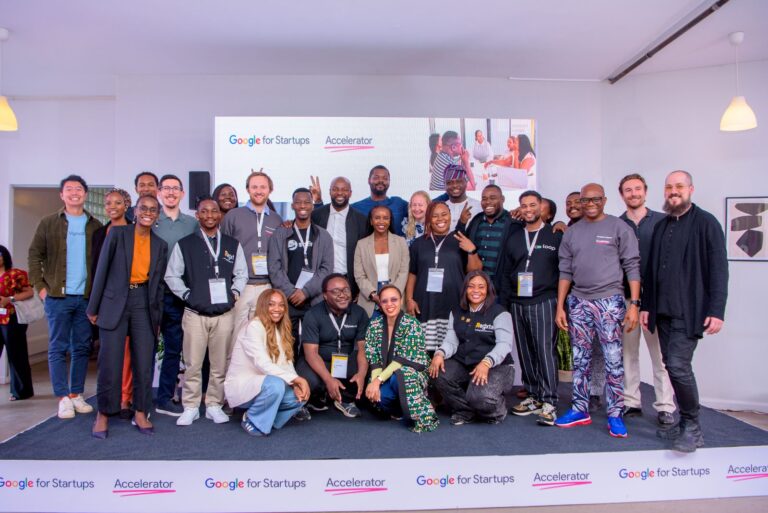
Google has selected 15 AI-focused startups from Nigeria, Kenya, South Africa, Uganda, Tanzania, Senegal, Côte d’Ivoire and Angola for its latest Google for Startups Accelerator Africa cohort, highlighting a shift toward scalable, revenue-generating innovation across the continent.
The startups, drawn from fintech, mobility, healthtech, agritech and SaaS, graduated from the three-month hybrid program with strong commercial traction, about 60% are already profitable, posting average monthly revenues of $60,000 and average funding of $1.1 million.
Showcased at the 2026 Close-out Week and Demo Day in Nairobi, the cohort reflects a maturing ecosystem where founders are building AI-driven solutions to address structural gaps in finance, logistics, healthcare and agriculture. From March to June, participants received access to Google technologies and mentorship from global engineering teams to accelerate scale.
“We are proud to see how these startups are innovatively using AI to tackle real-world challenges,” said Alex Okosi, Google’s Managing Director for Africa, citing the company’s equity-free support model.
Alex Okosi, Managing Director, Africa
The cohort includes Kenya’s Coamana, Duck, ReportsAI and VunaPay, all targeting “invisible infrastructure” gaps, alongside Tanzania’s Safiri, which is building transport and tourism systems. Other participants span Anda Africa (Angola), Bani, MasteryHive AI, Regxta and Termii (Nigeria), Emaisha Pay (Uganda), Loop and Vambo AI (South Africa), Maad (Senegal) and Meditect (Côte d’Ivoire).
Since 2018, the accelerator has supported more than 190 startups across 17 countries, which have raised over $400 million and created 3,500 jobs, with $11 million in equity-free funding and product credits provided to date.
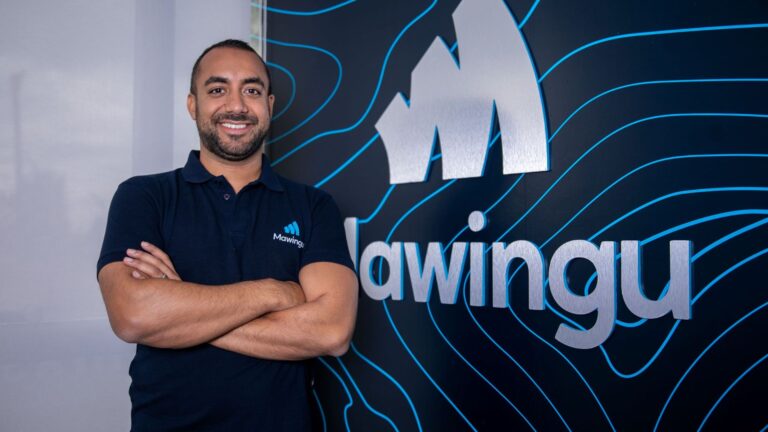
For decades, Africa’s technology story has been centred on major cities such as Nairobi, Lagos, Cape Town, and Kigali. These urban hubs have attracted investment, startups, and digital talent, becoming symbols of the continent’s growing innovation economy. However, Mawingu, Kenya’s largest ISP for rural and peri-urban areas, a quieter transformation is taking place beyond city limits.
Sub-Saharan Africa remains predominantly rural, with an estimated 57% of its population,more than 700 million people, living outside major urban centres. Despite this, much of the continent’s digital infrastructure investment has historically been concentrated in cities, leaving millions of people disconnected from the opportunities of the digital economy.
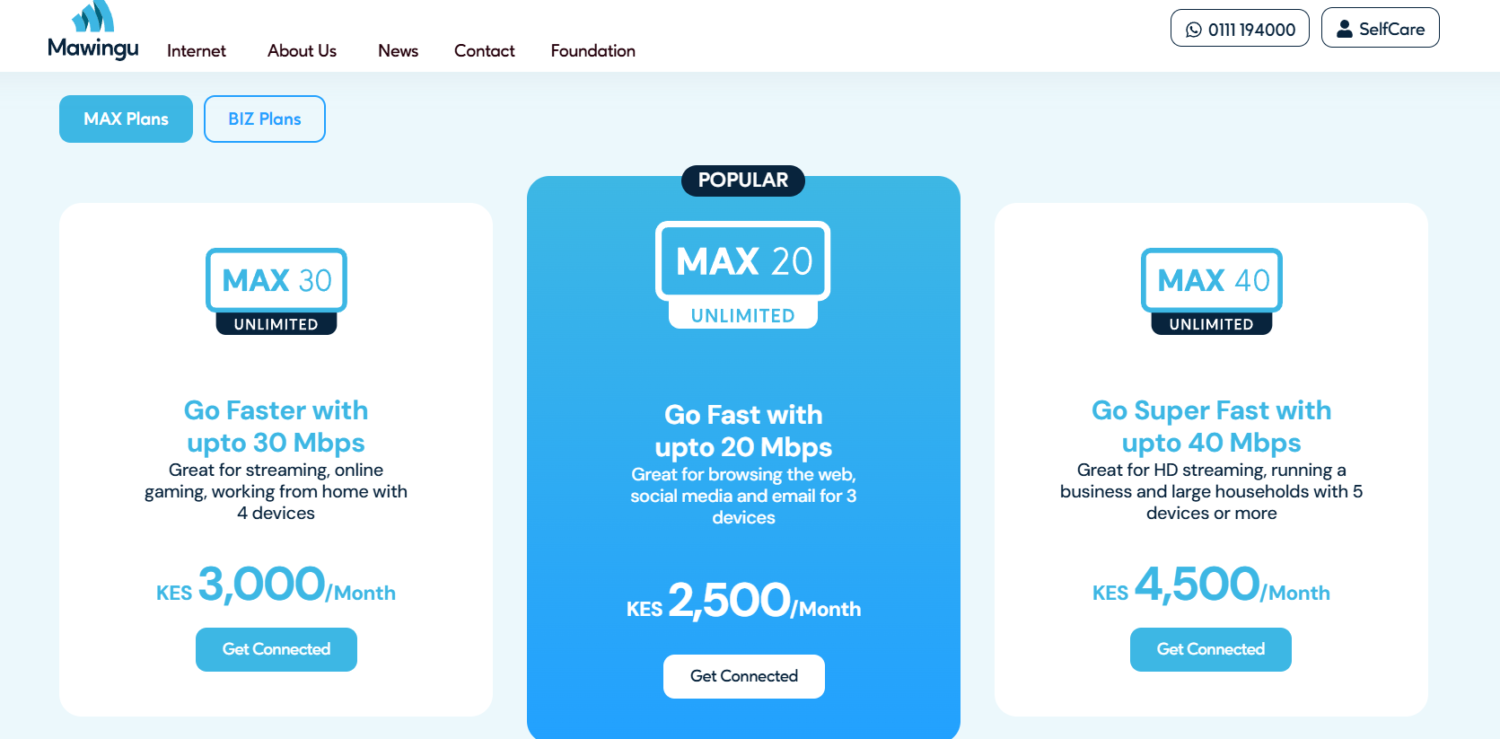
As internet access increasingly becomes a prerequisite for education, healthcare, entrepreneurship, and economic participation, many experts believe Africa’s next wave of innovation may emerge from the very communities that have long been overlooked. Launched in 2012, at the foothills of Mount Kenya, in Nanyuki. Mawingu has expanded its coverage to 33 counties in Kenya serving over 20,000 active customers, connecting over 35,000 homes and businesses. Recently, Mawingu launched in Kwale County in line with its long-term ambition of positively impacting 1,000,000 Africans by 2028 through inclusive and meaningful digital access.
While Africa has made significant progress in mobile connectivity, the digital divide remains one of the continent’s biggest development challenges.
According to the International Telecommunication Union (ITU), only 38% of Africa’s population currently uses the internet, well below the global average of 68%. Although approximately 85% of Africans are covered by at least 3G mobile broadband services, only 60% have access to 4G networks, while 5G coverage remains limited at just 11%.
The disparities are even more pronounced in rural communities. ITU estimates show that one in four people living in rural Africa still has no possibility of connecting to the internet due to gaps in broadband coverage. Limited infrastructure, high data costs, device affordability challenges, and low digital literacy continue to restrict meaningful access.These barriers have real-world consequences.
Without reliable connectivity, students struggle to access digital learning resources, farmers miss opportunities to obtain market information, healthcare facilities face challenges in accessing specialist services, and entrepreneurs are unable to fully participate in the digital economy.
Why Connectivity Matters More Than Ever
Across the world, internet connectivity is increasingly viewed as critical infrastructure. Research shows that increased digital connectivity contributes to economic growth, job creation, financial inclusion, and improved access to essential services. Mobile money platforms, digital marketplaces, e-learning solutions, and telemedicine services all depend on reliable internet access.
For Africa, where the majority of the population is under the age of 25, connectivity represents more than convenience,it represents opportunity.
From accessing online education and remote work opportunities to launching digital businesses and participating in global markets, internet access is becoming a key driver of economic empowerment.
Experts argue that bridging Africa’s digital divide will require not only investment in infrastructure but also efforts to improve affordability, digital skills, and the relevance of online content for underserved communities. And these has been the focus of Mawingu.
The Company Betting on Rural Connectivity
Operating across more than 33 counties in Kenya and expanding into Tanzania through its sister company Habari, Mawingu Group focuses on delivering affordable internet services to rural and peri-urban communities that have traditionally been underserved by mainstream providers.
According to CEO Farouk Ramji, the company’s mission was born from a simple observation: the majority of East Africans live outside urban centres, yet most internet investment was flowing in the opposite direction.
“We saw a structural gap and an enormous opportunity,” he says.
That vision has since evolved into a broader mission to ensure that geography does not determine access to education, healthcare, markets, or economic opportunity.
Transforming Education Through Digital Access
One of the clearest examples of connectivity’s impact can be seen in education. Through partnerships and community initiatives, schools and technical training institutions are gaining access to digital learning resources that were previously unavailable.
Students at vocational training institutions can now supplement classroom instruction with online tutorials, technical demonstrations, and industry-specific content. For many learners, internet access provides exposure to skills and knowledge that improve their career prospects and employability.
The impact is also being felt in special needs education. Digital tools and online resources are helping educators support visually impaired learners, deaf students, and children with intellectual disabilities through more inclusive learning experiences.
As technology continues to evolve, connectivity is helping ensure that learners in remote communities are not left behind.
Connectivity Is Transforming Special Needs Education
The impact of digital connectivity is perhaps most visible in special needs education, where technology is helping bridge learning gaps and create more inclusive classrooms.
At Kambi ya Juu Integrated Primary School in Isiolo, teacher Amina uses Microsoft Copilot to generate audio descriptions of images for visually impaired learners.
“When we teach about animals, maps, or complex diagrams, our learners can see through sound,” she says.
At Likii Special School in Laikipia, digital tools are helping learners with intellectual disabilities connect visual concepts to real-world objects, improving communication, engagement, and comprehension.
Meanwhile, at Wajir School for the Deaf, internet connectivity has opened access to sign language content, digital learning resources, and educational opportunities that were previously difficult to reach.
These examples illustrate how reliable internet access is helping ensure that learners with different abilities are not left behind in Kenya’s digital transformation.
Creating Opportunities for Farmers and Entrepreneurs
The benefits of internet access extend well beyond the classroom.For farmers, connectivity is increasingly becoming a business tool. Access to market prices, agricultural information, financial services, and weather updates can help improve decision-making and increase productivity.
Entrepreneurs and small businesses are also leveraging digital tools to expand their customer base, streamline operations, and participate in online commerce.
For instance: At Ainabkoi Farmers’ Cooperative Society, connectivity has enabled farmers to access market information, weather forecasts, and digital financial services, helping improve decision-making and productivity.
As connectivity improves, rural communities are becoming active participants in the digital economy rather than passive observers.
Mawingu Says The Future of Innovation Is Rural
Farouk Ramji believes that Africa’s next generation of innovators will emerge from places that have historically been excluded from the technology ecosystem.
As barriers to connectivity continue to fall, talented young people in rural communities are gaining access to the same information, learning opportunities, and digital tools available in major cities.
This shift has the potential to unlock entirely new sources of innovation and entrepreneurship across the continent.
The future of Africa’s technology sector may not be determined solely by what happens in established innovation hubs. It may also be shaped by students learning online in remote schools, farmers accessing new markets through digital platforms, and entrepreneurs building businesses from communities that were once disconnected from the digital world.
Bridging the Digital Divide
Ramji knows that closing Africa’s digital divide requires more than infrastructure alone. It requires partnerships, investment, digital skills training, and a commitment to ensuring that connectivity translates into meaningful opportunities. And that’s what Mawingu is all about.
As governments, technology companies, and development partners work to expand internet access, the focus is increasingly shifting from simply connecting people to empowering them.
For millions across rural Africa, reliable internet access is opening doors to education, innovation, and economic participation.
And as that transformation continues, the continent’s next tech revolution may emerge from the communities that were once considered the hardest to reach and one company has built its business around this opportunity and is seeing results.
While cybersecurity companies leverage Artificial Intelligence (AI) to enhance threat detection, cybercriminals are weaponising the same technology for automated phishing and malware attacks — highlighted by the fact that 43% of organisations believe hackers are using AI-driven methods to boost their effectiveness. To stay protected, organisations must adopt AI-powered platforms rather than relying on isolated tools.
AI has firmly established its presence in enterprise cybersecurity. Solution providers are embedding it to accelerate detection, reduce analyst workload and counter cyberattacks that move faster than human responders can manage. While cybercriminals are using it to automate reconnaissance, generate convincing phishing content and scale operations that would previously have required significant resources and expertise.
This symmetry is the challenge. Every AI-driven capability available to cybersecurity providers is also available, or adaptable, to cyber attackers. According to Kaspersky data, 21% of organisations globally believe cybercriminals are ahead in the technology arms race, with 43% saying criminals are able to adopt new technologies like AI to increase the effectiveness of their attacks.
Security leaders need to understand how AI is being weaponised, invest in AI-powered protection that is genuinely integrated into daily security workflows and approach the organisational and technical challenges of AI implementation with the same rigor applied to any critical infrastructure decision.
AI-based threats: How cybercriminals are using AI
The adoption of AI by threat actors is systematic. Attackers are integrating generative AI across the full attack chain: automating the creation of phishing lures, generating functional malicious code, improving the evasiveness of payloads and making social engineering more convincing at scale. What previously required skilled human operators can now be replicated and scaled cheaply.
Kaspersky’s Global Research and Analysis Team (GReAT) documented this shift in detail through its investigation of the RevengeHotels campaign, which targeted hospitality businesses across Latin America. Threat actors incorporated AI-generated code into their malware development and delivery process, producing more convincing phishing content and more evasive payloads than earlier iterations of the campaign.
The financial sector has also felt the impact directly. Kaspersky’s analysis of financial threat trends in 2025 identified AI as a key enabler of increasingly targeted fraud, social engineering and market manipulation attempts, with attackers using AI to model victim behaviour, craft more persuasive lures and probe infrastructure at a pace and scale that manual methods cannot match.
The entertainment industry tells a similar story. Kaspersky identified AI as the thread running through the most significant emerging risks facing studios, content platforms and rights holders in 2026, from AI-generated deepfakes and content fraud to AI-assisted probing of content delivery infrastructure.
The common thread across these threat scenarios is speed and scale. AI removes the manual bottlenecks that previously constrained attackers, compressing the time between reconnaissance and compromise, between identifying a target and deploying a convincing lure, and between creating a payload and adapting it to evade detection. For defenders, the response time advantage that once existed is eroding.
AI-based protection: How security vendors are responding
The cybersecurity industry has responded to the AI threat landscape by embedding AI throughout the detection and response lifecycle. Kaspersky has extended AI-driven capabilities throughout its portfolio enabling security teams to understand what is happening across their ecosystems, why it matters and what to do next, delivering richer, faster and more actionable intelligence without increasing the burden on analysts.
AI has the potential to deliver wide ranging advantages. For instance, behavioural correlation rules can be used to establish a baseline of normal login activity and automatically flag anomalous events, triggering account theft alerts without requiring manual analyst review of individual log entries. While AI-powered asset scoring can continuously evaluate for risk based on the sequence and context of detected security events across the infrastructure. Assets with unusual or correlated patterns receive elevated risk scores and are automatically categorised by severity helping teams focus limited resources where exposure is greatest.
In addition, AI-enabled incident summarisation can explain the attack chain, initial vector and adversary actions in plain language. Analysts can use this to immediately understand what happened without manually reviewing large volumes of raw event data, directly addressing the investigation bottleneck that strains under-resourced SOC teams. Meanwhile, AI-based assistants can deobfuscate command lines, provide analytical explanations and produce concise investigation reports, reducing cognitive load and accelerating analysis, especially in complex, multi-stage incidents.
In addition to these capabilities, there are many other AI-powered features that further assist cybersecurity companies in creating comprehensive and resilient solutions against evolving threats.
AI implementation in infrastructure: Challenges and key steps
According to a 2025 Kaspersky survey, nearly every company planning to establish a SOC within the next two years (99%) intends to enhance it with AI. However, many of these organisations face a distinct set of organisational and technical challenges when integrating this technology into their security infrastructure, and approaching these challenges without a clear framework risk compounding the very problems AI is meant to solve.
Data quality and telemetry coverage: AI detection and correlation capabilities are only as effective as the data they operate on. Fragmented architectures with siloed data sources produce inconsistent telemetry that limits AI effectiveness. Organisations must prioritise centralised data collection across endpoints, identity, cloud and network before AI-driven correlation can deliver meaningful results.
Integration complexity and total cost of ownership: AI capabilities introduced as isolated features within fragmented stacks add integration overhead without delivering unified operational benefit. Infrastructure requirements, API complexity and ongoing model tuning can multiply initial investment costs significantly. Enterprises should evaluate AI security capabilities not by feature lists but by how effectively the underlying platform consolidates telemetry, eliminates manual context-switching and reduces total operational burden.
Skill gaps and change management: AI tools that require deep technical configuration to operate effectively may widen rather than narrow capability gaps in under-resourced teams. The most operationally effective AI implementations are those that embed intelligence directly into analyst workflows.
Responsible AI governance: As AI becomes embedded in security operations, enterprises must also consider the governance framework governing those tools. Kaspersky has committed to responsible AI development as a signatory to the EU AI Pact, going beyond baseline compliance requirements and actively integrating principles of transparency, human oversight and risk-based governance into its AI practices.
The practical steps for organisations navigating AI integration are as follows:
Consolidate telemetry into a unified platform before layering AI capabilities. Fragmented data limits AI effectiveness
Evaluate AI security tools based on workflow integration, not feature count. The measure is analyst time saved, not capabilities listed
Prioritise platforms where AI capabilities are built-in rather than bolted on, to minimise integration overhead and reduce TCO
Establish internal AI governance standards that align with emerging regulatory requirements and vendor accountability frameworks
Run phased deployments with measurable outcome baselines to validate AI impact before full-scale rollout
Building a resilient AI strategy
The question for enterprise security leaders is not whether to engage with AI, but how to implement it in a way that delivers genuine operational benefit rather than added complexity.
The answer lies in integration. AI capabilities that operate in isolation, or that require significant manual configuration to function, add overhead without reducing risk. AI embedded directly into unified detection and response workflows is where the operational gains are realised. The Kaspersky Next Expert product line is built on this principle, embedding AI across detection, investigation and response within a unified platform designed to scale with enterprise environments without scaling headcount or operational complexity.
Organisations ready to transition from AI aspiration to AI implementation can discover how to make the process seamless with the dedicated Kaspersky’s expert guidance.
The world that we are living in today is digitally driven, and convenience isn’t defined by physical comfort alone; it is also shaped by how easily we can access information, communicate, work, learn, and manage daily tasks online. At the centre of this digital lifestyle is home WiFi, an invisible yet essential infrastructure that quietly supports almost everything that we do.
Whether it is productivity, communication, entertainment, or smart living, home WiFi adds a lot to digital convenience and reduces friction across digital activities. Let us discuss and understand what home WiFi truly adds to digital convenience and why home WiFi has become a basic household necessity.
24/7 Internet Access Without Data Anxiety
One of the most significant ways in which home WiFi adds to the convenience is by providing uninterrupted internet access without having to worry about data limits. Unlike mobile data, which requires strict monitoring usage, managing caps, and throttling speeds, home WiFi, such as the TP-Link routers, provides instant access to the internet without any data limits. This allows users to browse, stream, and download without having to adjust their behaviour to conserve data. You can log in to web management page of the TP-Link router to change Wi-Fi settings and guest networks easily through your web browser.
This convenience is unmatched and helpful in households with multiple users and devices that rely on the internet simultaneously. The absence of data anxiety creates a relaxed and productive digital environment that allows users to focus on their tasks rather than worrying about connectivity constraints.
Seamless Multi-Device Connectivity
You will find modern homes filled with internet-enabled devices, and all of these devices operate under a single, unified network, thanks to home WiFi. Smartphones, laptops, desktops, tablets, smart TVs, printers, and even household appliances connect to the internet and access the connectivity effortlessly without the need for individual data plans or manual network switching.
This seamless connectivity has simplified digital life and enabled digital devices to connect to the internet seamlessly. Plus, advanced routers used in home WiFi networks provide the option to manage and configure the network so that no single device can monopolize the network. ZTE routers for instance offers device management on both laptop and mobile so you can simply click to check your device settings.
Enabling Remote Work and Home-Based Productivity
Home WiFi has reshaped and changed how and where people work. Reliable internet access at home has enabled remote jobs, freelancing, and hybrid work models that were once impractical and considered a thought only. Video conferencing, cloud collaboration tools, and remote desktop access all depend on stable internet connectivity, and home WiFi provides just that and reduces interruptions.
A stable home WiFi connection means fewer dropped calls, smoother file uploads, and consistent access to work platforms. This type of reliability is unmatched and has allowed professionals to maintain their productivity, meet deadlines, and communicate effectively, even from their homes, without needing external workspaces or mobile hotspots.
Supporting Online Learning and Skill Development
Another way in which home WiFi adds to convenience is by supporting online learning and skill development. Education has increasingly moved online, and home WiFi plays a central role in this transition. Through their homes, students and professionals can join virtual classrooms, watch recorded lectures, and access digital libraries and interactive learning platforms.
This convenience has extended beyond formal education and enables people from all over the world to continue their learning journey and learn new skills every day. Plus, multiple learners within a household can attend learning sessions simultaneously and improve their knowledge and skills. This has made home WiFi a shared educational resource that supports long-term personal and professional growth.
Smart Home Integration
Home WiFi is also central when it comes to supporting smart home technology. IoT devices like smart lights, security cameras, voice assistants, and thermostats depend on Wi-Fi to function cohesively. When home WiFi is working properly, users can control their home environment through apps, voice commands, or automated routines. With Wi-Fi, you can get real-time updates, remote monitoring, and synchronised actions across smart home devices.
Whether it is adjusting the lighting, checking security cameras, or managing energy usage, home WiFi ensures that complex smart home systems turn into simple, user-friendly experiences.
Revolut has received key regulatory approvals from the Central Bank of the United Arab Emirates, clearing a major hurdle as the fintech giant prepares to launch its services in one of the Middle East’s most competitive financial markets.
The London-based company said it has been granted Stored Value Facilities (SVF) and Retail Payment Services licences under Category II, following an in-principle approval issued in September 2025. The authorisation completes Revolut’s licensing process in the UAE and allows it to begin building out its local offering ahead of a full rollout.
The move marks a significant step in Revolut’s broader Middle East expansion strategy, as the firm looks to tap into the UAE’s fast-growing digital payments ecosystem and internationally mobile population. With more than 75 million users globally, Revolut has been steadily pushing into new markets amid rising demand for app-based financial services.
“The UAE’s position as a global hub for financial services innovation is built on the strength of its regulatory environment,” said Mohammad Abdulrahman Alhawi, Undersecretary at the UAE Ministry of Investment. He added that Revolut’s approval underscores the country’s appeal to international firms contributing to its knowledge-based economy.
For Revolut, the licences provide a foundation to offer multi-currency accounts, domestic and cross-border transfers, and card-based payments within a regulated framework. The company is expected to tailor its product suite to the UAE’s expatriate-heavy population, where demand for seamless international money movement remains high.
Ambareen Musa, Revolut’s GCC chief executive, described the approval as “a pivotal moment,” highlighting the firm’s focus on compliance and long-term investment in the region. “We see tremendous opportunity to contribute to the country’s digital economy by providing consumers with more choice and greater control,” she said.
Revolut said it is now investing in local infrastructure, hiring, and operational capabilities to support its launch, though it has not disclosed a timeline for going live.
The entry of a global player like Revolut is set to intensify competition in the UAE’s fintech space, where incumbents and startups alike are racing to capture a share of digital payments, remittances, and neobank services.
Dubizzle Group has invested in UAE-based rental rewards platform Tern, betting that incentives and payment flexibility can help it capture more of the value chain beyond property listings.
The deal will integrate Tern exclusively into Dubizzle-owned platforms Bayut and dubizzle, enabling tenants to pay rent via credit cards while earning loyalty points redeemable across retail, travel and lifestyle partners. The feature targets one of the largest recurring household expenses, long dominated by inflexible payment structures.
Financial terms of the investment were not disclosed.
The move underscores Dubizzle’s strategy to evolve from a classifieds marketplace into a full-service property ecosystem, layering financial tools and tenant services onto its high-traffic platforms. The company says its marketplaces attract about 58 million monthly visits and 20 million users across the region.
Tern, founded in 2024 by Said Al Sayyed and launched in 2025, has processed more than AED150 million ($40.8 million) in annualised rent payments, according to the company. Its model allows tenants to earn rewards on rent without additional fees for credit card usage, while offering landlords and property managers a digital rent collection system.
“At Bayut and dubizzle, our focus has always been on solving real challenges across the property journey,” said Haider Ali Khan, chief executive officer of Dubizzle Group UAE. “Rent is one of the largest recurring expenses for most households, yet the payment experience has traditionally offered very little flexibility.”
The investment was made through Dubizzle Group Ventures, the firm’s venture arm focused on early-stage technology startups across the Gulf. Head of investments Surya Raviganesh said the company is targeting startups that can scale alongside its platforms and tap into its user base, which reaches roughly half the UAE population each month.
For landlords and agents, the integration could improve tenant retention and enhance property appeal, particularly in a competitive rental market where service differentiation is becoming increasingly important.
The partnership reflects a broader shift in property technology, where platforms are embedding payments, financing and rewards into the rental journey to unlock new revenue streams and user engagement.
Google has begun rolling out Android 17, introducing a sweeping set of updates aimed at reshaping multitasking, mobile gaming, and device security, as the company continues to tighten integration between Android and its Gemini intelligence layer.
The update, which first ships on Pixel devices before expanding to eligible smartphones throughout 2026, centers on a more fluid, productivity-focused interface and deeper system-level controls designed to improve performance and safety.
A key feature in Android 17 is Bubbles, a new multitasking system that converts any app into a floating, resizable window. On larger devices, the feature is paired with a docked “bubble bar,” allowing users to switch between active apps with a single tap while keeping multiple workflows visible simultaneously. Google says the system is designed to make split-task behavior more natural across phones and foldables, particularly for messaging, navigation, and media consumption.
For creators and educators, Android 17 introduces Screen Reactions, a combined screen recording and front-facing camera tool that enables real-time commentary over app activity without external editing software. The feature is positioned as a response to growing demand for short-form instructional and reaction-based content.
Gaming receives a notable upgrade on foldable devices with a new foldable gaming mode, which divides the display into a gameplay area and a dedicated touch-control panel. The company has also optimized memory management to reduce frame drops and stuttering during high-performance gaming sessions, part of a broader push to improve consistency across mid- and high-tier Android hardware.
Security and privacy features also take a more prominent role in Android 17. Users gain the ability to grant apps temporary precise location access and share selected contacts instead of full address books. An enhanced “Mark as lost” function within Google’s Find Hub adds biometric locking, preventing unauthorized access or tracking shutdown even if a device passcode is compromised.
Google has also tightened device protection further by limiting PIN attempts and increasing lockout delays after repeated failures, alongside improved Live Threat Detection and expanded Advanced Protection mode designed to counter increasingly sophisticated mobile scams and malware.
Beyond headline features, Android 17 expands parental controls across all devices, introduces app-specific memory limits to improve system efficiency, and adds interface customization options such as hiding app labels and adjusting dark theme behavior. A dedicated volume control for assistant interactions is also included.
The company said select advanced devices will gain access to Gemini-powered intelligence features later this summer, as part of its broader effort to make Android more proactive in handling routine tasks and system optimization.
Android 17’s rollout comes as Google intensifies competition in the mobile ecosystem, where incremental hardware improvements have increasingly been overshadowed by software-driven differentiation and AI integration.
CNTXT AI, a UAE-based data and artificial intelligence company focused on sovereign AI solutions, has raised $60 million in a Series A funding round co-led by AI71 and BlueFive Capital, as it positions itself to scale secure AI deployments for enterprise and government clients worldwide.
The funding marks a significant milestone for the two-year-old company and underscores growing investor appetite for AI infrastructure that prioritizes data sovereignty, particularly across regulated industries and public-sector environments.
Founded in 2023 by serial entrepreneur Mohammad Abu Sheikh, CNTXT AI enables organizations to build and deploy AI applications while retaining full control over their data. The company plans to use the fresh capital to accelerate product development, expand into new markets, and roll out secure AI infrastructure globally.
“The era of AI experimentation is over; the era of execution has begun,” said Abu Sheikh. “This funding strengthens our ability to build the sovereign infrastructure and talent needed to deploy AI at scale.”
Abu Sheikh previously founded LocAI, which was acquired by AI71—now returning as a co-lead investor in CNTXT AI’s latest round. He also leads SMPL AI, a $25 million fund backing early-stage AI startups, further cementing his role in shaping the region’s AI ecosystem.
Strategic Expansion and Arabic AI Focus
As part of its growth strategy, CNTXT AI recently acquired Actualize, an enterprise AI startup specializing in dialect-aware Arabic voice agents. The move strengthens its position in Arabic-language AI, a segment seeing increased demand across the Gulf.
Its flagship product, Munsit, is positioned as one of the most advanced Arabic voice AI platforms, having processed over one million minutes of speech and serving more than 250 enterprises and 150,000 users.
CNTXT AI also collaborates with global technology partners including Oracle, NVIDIA, and AWS, and has supported large-scale AI initiatives for global developers, spanning both enterprise and government deployments.
Betting on Sovereign AI
The investment reflects a broader shift toward sovereign AI infrastructure, where countries and enterprises seek tighter control over data, compliance, and security in AI systems.
“CNTXT AI’s capabilities and speed of execution stand out in this fast-moving AI world,” said Reda Nidhakou, AI71 board member and CEO of VentureOne. “This investment strengthens our ability to build the environment needed to deploy AI at scale and address clients’ data sovereignty requirements.”
BlueFive Capital echoed the sentiment, emphasizing the importance of building globally competitive AI platforms from the region.
“We backed CNTXT AI because they are building exactly the kind of technology-driven platform the region needs—one that turns raw data into real AI outcomes,” said Hazem Ben-Gacem, Founder and CEO of BlueFive Capital.
Global Ambitions
With fresh funding and strategic backing, CNTXT AI is aiming beyond the GCC, targeting international markets where governments and enterprises are increasingly prioritizing secure, localized AI deployment.
As regulatory scrutiny intensifies and geopolitical considerations shape AI adoption, companies like CNTXT AI are positioning themselves at the center of a rapidly evolving global AI infrastructure race.
VOOM, a startup attempting to modernize one of West Africa’s most fragmented industries is seeking fresh capital after building an early network of verified auto-parts vendors in Ghana.
The Ghana-focused vertical marketplace for automotive spare parts, is raising a $400,000 pre-seed round through a SAFE with a $2 million valuation cap and a 20% discount, according to the company. The startup aims to replace a largely informal ecosystem of WhatsApp transactions, physical market visits and horizontal classified listings with a structured search platform designed specifically for automotive parts.
The company has onboarded 359 verified vendors in Greater Accra and facilitated 394 buyer-vendor conversations this month, according to internal figures shared by the company. Its marketplace currently hosts 880 listings, of which 804 are active.
The effort targets Africa’s automotive aftermarket, a sector estimated by the company at approximately $23.2 billion annually. Despite the size of the market, much of the trade remains highly fragmented, with buyers often relying on personal networks or broad classifieds platforms to locate parts.
Unlike general marketplaces, VOOM allows users to search inventory by vehicle make, model, year and part category. Existing platforms operating in the region, including major classifieds providers, generally lack structured catalog functionality designed specifically for automotive components.
The company says it processed more than 2,100 monthly searches from 189 buyers and generated over 27,000 paid Meta clicks in the last month, at an average cost of approximately $0.011 per click. Vendor subscriptions currently produce gross margins of 78%, according to the startup.
Chief Executive Officer Jim Stephen, a Gabonese-American entrepreneur with more than eight years of enterprise software sales experience, co-founded the business alongside Justice Ayiah, who oversees Ghana operations and previously built an automotive sales and rental business in Accra.
VOOM is also heavy on artificial intelligence expecially in its internal operations such as vendor onboarding and listing generation to investor outreach and operational monitoring. The company says the approach allows its two-person team to operate with the capacity of a much larger organization.
The strategy reflects a broader shift among African startups toward lean operating structures following a period of tighter venture financing across the continent.
VOOM’s model also diverges from previous attempts to build automotive-parts marketplaces in Africa. With the recent shutdown of a Nairobi-based spare parts platform which had raised roughly $1.8 million. VOOM intentionally avoids owning inventory or delivery infrastructure, positioning itself instead as a software and intelligence layer connecting buyers and sellers.
Beyond marketplace revenue, the startup is betting on the commercial value of transaction and search data, expecting future demand-intelligence products to create an additional revenue stream.
With ground operations in Accra, Zoom plans to include additional markets across francophone West Africa, including Côte d’Ivoire, Senegal, Cameroon and Togo.
Kenya Pipeline Company PLC is partnering with the Bloggers Association of Kenya (BAKE) to support environmental storytelling in Kenya’s fast-growing digital creator economy, as the energy infrastructure firm expands efforts to strengthen its sustainability agenda.
The company will sponsor the Environment Category at the 10th Annual BAKE Awards, recognizing digital creators producing content focused on climate action, environmental conservation, sustainable development and responsible resource management.
The partnership comes as this year’s awards adopt the theme, “The Creator Economy: Turning Content into Capital,” reflecting the growing influence of digital platforms in shaping public discourse and economic opportunities.
“Environmental sustainability is central to KPC PLC’s purpose and long-term vision,” Acting Managing Director Pius Mwendwa said in a statement. “We are proud to support creators who are leveraging digital platforms to champion conservation, climate action and sustainable development, helping to build a greener future for generations to come.”
The move underscores a broader shift among Kenyan corporations toward using partnerships with digital creators and online communities to advance environmental and social objectives.
KPC said its conservation efforts have included large-scale mangrove restoration initiatives. Over the past five years, the company has worked with local communities to plant more than 1.2 million mangrove trees across 100 hectares at Jomvu Creek, in collaboration with the Bidii Creek Conservation Group and other community forest associations.
The BAKE Awards have evolved into one of Kenya’s major platforms for recognizing innovation in digital content creation, spanning categories such as blogging, podcasting, videography and digital storytelling.
By backing the environment category, KPC said it aims to encourage the production of impactful sustainability content while supporting the growth of Kenya’s creator economy.
Voting for the 2026 BAKE Awards remains open through June 18, with winners expected to be announced during the awards gala on June 27.
Ericsson named longtime executive Per Narvinger as its next chief executive officer, handing leadership of the Swedish telecom equipment maker to an internal veteran as the company seeks to capitalize on growing demand for AI-driven network infrastructure.
Narvinger, currently executive vice president and head of Ericsson’s Networks business, will assume the CEO role on Oct. 1, succeeding Börje Ekholm, who will step down after nearly a decade leading the company. Ekholm will remain involved during the transition period as an executive advisor until mid-2027.
The move marks a planned succession rather than a strategic reset, with Ericsson’s board emphasizing continuity as the company enters a new phase of competition centered on advanced connectivity and artificial intelligence.
“Per has deep technical knowledge of our industry as well as extensive commercial experience,” Chairman Jan Carlson said in a statement announcing the appointment.
Narvinger joined Ericsson in 1997 and has held senior positions spanning research, product development, software and customer operations. Before taking over the Networks division in 2025, he led the company’s Cloud Software and Services business.
The leadership change comes as telecom equipment makers increasingly position themselves around AI-related demand, betting that wider deployment of intelligent systems will require faster, more sophisticated network infrastructure. Ericsson has been emphasizing how next-generation connectivity could support what executives describe as the emerging era of “physical AI,” where autonomous systems and industrial applications become more deeply integrated into real-world environments.
Ekholm, who took over in 2017 amid operational and market challenges, oversaw a broad restructuring effort that helped restore Ericsson’s position in the global telecommunications market. During his tenure, the company strengthened its standing in 5G infrastructure and expanded its focus on software and enterprise opportunities.
The appointment of Narvinger suggests Ericsson is betting that experience within its core networks business to guide its next stage of growth.
Ukiyo, a South African edutech and youth development organisation, has launched a mobile app that brings education, funding, career opportunities and student support into one platform.
Dubbed Global Student Support Platform [GSSP], the platform aims to link young people to educational opportunities, bursaries and scholarships, career pathways, mentorship, accommodation, tutoring, student support services, wellness and psychosocial support, leadership development and work-readiness resources.
“South Africa does not have a shortage of ambitious young people. It has a shortage of integrated pathways into economic participation and systems that connect young people to what they need to succeed,”‘ said Nozuko Mzamo, Founder, Ukiyo. “We built GSSP to support the full journey, from finding a place to study and securing education funding, to building a career and accessing mentorship.
GSSP has registered over 4,200 users and has recorded over 1,300 click-throughs to scholarship and bursary opportunities and 2,100 to job opportunities. Users have also engaged with course information, events, international exchange programmes and student support services.
Ukiyo works with corporate partners, higher education institutions, funders and communities to design and deliver youth development programmes. As part of this work, Ukiyo has partnered with organisations including Thrive Accommodation, North-West University, The LINK by Airlink and Emeris to deliver student support and employment-readiness initiatives.
CFAO Mobility Kenya has launched the Toyota bZ4X, marking the Japanese automaker’s first fully electric vehicle to enter the Kenyan market as it positions itself for a growing shift toward battery-powered mobility.
The launch represents a significant milestone for Toyota, a brand long associated with internal combustion engines and hybrid technology, as it enters Kenya’s emerging full-electric passenger vehicle segment while retaining its emphasis on quality, durability and reliability.
The bZ4X—whose name stands for “Beyond Zero”—offers a driving range of up to 516 kilometers on a single charge and accelerates from 0 to 100 kilometers per hour in 5.1 seconds. The SUV features all-wheel drive capability, Toyota’s X-MODE terrain management system, ground clearance of 206–212 millimeters and a 500-millimeter wading depth, positioning it for both urban and light off-road use.
Toyota said the model supports 150-kilowatt DC fast charging, enabling a 10% to 80% charge in approximately 30 minutes. It is backed by an eight-year or 120,000-kilometer battery warranty and supported through CFAO Mobility Kenya’s nationwide network of service centres.
The launch comes as Kenya’s electric vehicle market continues to expand, supported by rising consumer interest, infrastructure development and a relatively clean energy grid that favors electrification.
The bZ4X enters a rapidly evolving electric SUV segment in Kenya, where competition is increasingly defined by imported and locally distributed models. Key rivals include BYD’s Atto 3, NETA’s electric crossover offerings and Kia’s expanding EV lineup, as manufacturers target early adopters and premium buyers with a mix of pricing strategies and technology differentiation. Toyota is expected to counter with its established dealer network, aftersales infrastructure and strong brand loyalty in the market.
“The bZ4X represents the next chapter in mobility,” CFAO Mobility Kenya Managing Director Arvinder Reel said, adding that the model combines zero-emission driving with Toyota’s established engineering standards and durability focus.
The model forms part of Toyota’s broader multi-pathway strategy toward carbon neutrality, balancing investments across hybrid, hydrogen and battery-electric technologies as it navigates differing market readiness levels globally.
SEACOM has activated a new terrestrial fibre route between Nairobi and Kampala, expanding its East African backbone as demand for regional data transit capacity accelerates.
The corridor, which runs through Kisumu and connects major backbone nodes between Kenya and Uganda, increases the resilience and throughput of traffic flowing from Mombasa’s subsea cable landing systems into inland markets. The upgrade places additional capacity on one of the region’s busiest digital transit paths, which underpins cloud services, mobile operators and enterprise connectivity.
SEACOM said the route forms part of a broader effort to scale infrastructure along high-growth East African corridors as data consumption rises across financial services, cloud computing and digital platforms.
“We are strengthening a route that already plays a central role in regional connectivity,” said David Kariuki, chief technology officer at SEACOM. “This ensures the corridor is served by a high-capacity, carrier-grade network that can support the scale and performance required by today’s digital economy.”
The Nairobi–Kampala link is a key segment in East Africa’s terrestrial fibre architecture, carrying traffic between Kenya, Uganda and onward to Rwanda, Burundi and South Sudan. Industry operators increasingly rely on such routes to balance latency, redundancy and international bandwidth access.
SEACOM said the system is built with Automated Switched Optical Network (ASON) technology, enabling traffic rerouting in under 50 milliseconds in the event of disruption. The company has also introduced route diversity across the A104 highway corridor and an alternative path via Narok, Kericho and Kisumu.
The network incorporates dual international border crossings at Malaba and Busia, reducing reliance on a single transit point and improving route resilience for cross-border data flows.
At launch, the corridor provides 1 terabit per second of capacity, scalable to 30 terabits per second. The system supports 1GE, 10GE, 100GE and 400GE interfaces, targeting carriers, cloud providers and enterprise customers.
Latency on the route is approximately 7 milliseconds to Nairobi and 13 milliseconds to Mombasa, according to the company.
The upgrade adds to SEACOM’s ongoing expansion of its East African backbone, as regional operators increase investment in fibre infrastructure to meet rising demand for cloud connectivity and digital services.
Nairobi is likely to be home of the first OpenAI Academy initiative in Eastern Africa if Kenya’s president William Ruto is to be believed after his meeting on the margins of the G7 Leaders’ Summit with OpenAI Chief Executive Officer Sam Altman.
President William Ruto said he held discussions with OpenAI Chief on opportunities to deepen collaboration in artificial intelligence and digital transformation.
According to President Ruto, discussions focused on potential areas of cooperation including establishing Nairobi as the home of the first OpenAI Academy initiative in Eastern Africa. The proposed collaboration would seek to expand AI education, strengthen digital skills development, support educators and learners, and reinforce Kenya’s position as a regional hub for AI talent and innovation.
“We explored potential collaboration through establishing Nairobi as the home of the first OpenAI Academy initiative in Eastern Africa, expanding AI education, strengthening digital skills, supporting educators and learners, and reinforcing Kenya’s position as a leading hub for AI talent and innovation,” said President Ruto. “I underscored the importance of harnessing emerging technologies to create opportunities for young people, drive innovation and ensure Africa plays a meaningful role in shaping the future digital economy.”
President Ruto said emerging technologies should be leveraged to create opportunities for young people and drive innovation while ensuring Africa plays a meaningful role in shaping the future digital economy.
The discussions reflect Kenya’s continued efforts to strengthen its digital economy agenda and position itself as a leading technology and innovation center in the region.
No further details were immediately available regarding timelines, funding commitments, or formal agreements arising from the discussions.
CapitalSage Vantage Limited, a subsidiary of CapitalSage Holdings, has signed an agreement to acquire Chi Technologies Inc. and its subsidiaries, marking an unexpected turnaround for fintech startup Chimoney just weeks after its co-founder and CEO announced plans to wind down operations.
The acquisition would give CapitalSage its first payments entity in Canada, expanding the multinational group’s footprint across the United Kingdom, the United Arab Emirates, Nigeria, Kenya, The Gambia and other markets.
The deal comes roughly four weeks after Chimoney publicly disclosed it was shutting down after struggling to resolve core challenges around distribution and liquidity despite building payments infrastructure.
“When I announced the wind-down in May, I was honest about what went wrong,” said Uchi Uchibeke, co-founder and CEO of Chimoney. “We built real infrastructure but never solved distribution or liquidity.”
According to the company, CapitalSage initiated discussions shortly after the shutdown announcement.
CapitalSage is led by executives with extensive financial services experience. Group CEO Abiola Bawuah previously spent more than 25 years in banking across Africa, including serving as chief executive for United Bank for Africa’s operations across 20 countries. Founder John A. Alamu started CapitalSage in 2014 as a microlending business with initial capital of N100,000 and has since grown it into a diversified group spanning fintech, agribusiness, manufacturing and healthcare across three continents.
Executives from CapitalSage traveled to Toronto this week to formalize the agreement, with the signing taking place at OneEleven Innovation Hub. The visit also included a private dinner with financial services executives, investors and community leaders ahead of the group’s planned expansion into Canada.
Financial terms of the transaction were not disclosed.
Under the agreement, Chimoney said all existing investors will be repaid in full upon closing, a condition the founder described as non-negotiable.
“Every person who believed in this company when it was just an idea will get their money back,” Uchibeke said. “How you close something matters as much as how you build it.”
Employees will also participate in transaction proceeds, recognizing contributions from teams that built and operated the platform.
Chimoney’s platform is expected to continue operating under CapitalSage ownership. Uchibeke will lead the transition, including relaunching the platform, re-engaging customers, activating U.S. payment corridors and handing over operations to the acquiring group.
The transaction will close in phases to comply with regulatory requirements, including re-registration under Canada’s Retail Payment Activities Act.
For founders in the fintech sector, the deal underscores how quickly trajectories can shift even after a public wind-down announcement. What began as the closure of a startup has evolved into an acquisition and a renewed operating path under a larger financial group.
PawaPay has processed three billion mobile money transactions on its platform, as daily volumes nearly doubled over the past nine months driven by increased cross-border and merchant payment activity across Africa.
The company said the milestone was reached in under nine months, about three months faster than the previous billion transactions. Daily volumes rose from roughly 2.4 million in September 2024 to about five million.
The growth comes amid continued expansion in Africa’s mobile money ecosystem. The GSMA reported that mobile money transaction value across the continent rose 26% last year, while global merchant payments increased 50% to $155 billion in its 2026 State of the Industry report.
PawaPay said usage has expanded across transport operators, subscription services, remittance providers and small businesses.
The company connects merchants to about 50 mobile money operators across 20 African markets through a single application programming interface, providing access to more than one billion wallets. It holds regulatory licences in several jurisdictions where required.
To date, PawaPay has processed more than €10 billion in payments.
The platform handles operator connectivity, settlement, foreign exchange, reconciliation and compliance. The company has also used stablecoins in treasury operations since 2022 to reduce settlement delays and currency exposure across markets.
“Businesses expanding across Africa should not have to build a payments company inside their own organisation,” said Heiti Allak, director of product at PawaPay. “Three billion transactions reflect everyday economic activity across transport, subscriptions, remittances and humanitarian payments.”
Clients include online trading platform Deriv and nonprofit GiveDirectly, which use the platform to operate across multiple African markets through a single integration.
PawaPay has positioned itself as a cross-border payments infrastructure provider for businesses operating in Africa’s fragmented mobile money landscape.
Financial institutions across Africa must focus on business value, cyber resilience and leadership if they are to successfully harness the transformative potential of artificial intelligence (AI), speakers said during the opening day of BFSI Week 2026.
Held from June 17-18 under the theme “Powering Africa’s Financial Transformation,” the event brought together more than 300 decision-makers from banking, SACCOs, insurance, fintech and technology organizations to discuss the future of financial services in an increasingly digital economy.
Opening the conference, Harry Hare, Chairman of CIO Africa by dx5, urged organizations to look beyond the hype surrounding AI and focus on practical business outcomes.
“Technology is not there for technology’s sake. Technology is there to help us solve very specific problems, improve efficiency and create value for customers,” said Hare.
He noted that organizations are facing mounting pressure to adopt AI from boards, customers, competitors and technology vendors, but warned against implementing the technology without a clear understanding of the value it creates.
“Your board is asking what you are doing about AI. Your customers are asking how you are using AI. Your competitors are adopting AI, and vendors are constantly offering AI solutions,” he said.
While acknowledging AI’s transformative potential, Hare emphasized the need for organizations to remain grounded in business realities.
“Let’s ride the hype, but let’s reason reality into what we’re doing in technology so that we don’t lose sight of what technology is supposed to do,” he added.
However, as organizations accelerate AI adoption, they must also prepare for a rapidly evolving cybersecurity landscape, according to Dennis Muriithi, Senior Solutions Engineer at Sophos.
Delivering a keynote address titled “Cyber Crisis Decision Room: A Strategic Leadership Experience,” Muriithi warned that AI is enabling cybercriminals to launch attacks faster and at greater scale than ever before.
“With new technology come new risks, and one of the most constant risks has always been cybersecurity,” he said.
According to Muriithi, phishing attacks have increased by more than 1,200 percent during the generative AI era, while AI-enabled cyberattacks continue to rise globally.
“The number is not going to go down. Whatever we’re experiencing today will get worse,” he warned.
Muriithi noted that AI is increasingly being integrated into every stage of the cyberattack lifecycle, including reconnaissance, credential theft, privilege escalation, lateral movement and ransomware deployment, significantly reducing the time organizations have to detect and respond to incidents.
“In the AI era, we are moving from minutes to seconds of impact,” he said.
He urged organizations to establish clear incident response plans, test backup systems regularly and ensure leadership teams understand their roles during a cyber crisis.
“The question is, what is your escalation chain? Do you have a plan?” Muriithi asked delegates.
The opportunities presented by AI were highlighted by Sarah Muriuki, Group Head – Enabler Systems Support at Equity Bank Kenya Ltd, who argued that Africa has the potential to become a global delivery engine for AI-enabled services.
“Africa is not only a market for AI, we are becoming a delivery engine,” she said.
Muriuki pointed to Africa’s growing business process outsourcing and shared services industry, valued at nearly $20 billion, and noted that the continent already employs approximately 1.1 million people in business processing services while maintaining a significant cost advantage over Europe and North America.
She challenged African organizations to move beyond competing as low-cost outsourcing destinations and instead position themselves as providers of higher-value, AI-enabled services.
“Are we going to just stay as an arbitrage back office, or do we level up and start bringing value to the market through AI-augmented services?” she asked.
According to Muriuki, the answer lies not in technology alone but in leadership and strategic vision.
“That is not a technology question. It is a leadership question,” she said.
The discussions underscored the dual challenge facing financial institutions across Africa: embracing AI to improve efficiency, customer experience and competitiveness while simultaneously managing the risks associated with cybersecurity, governance and responsible deployment.
As BFSI Week continues, delegates are expected to explore how emerging technologies, digital transformation and innovation can help accelerate financial inclusion, strengthen operational resilience and power the next phase of Africa’s financial transformation.
SpaceX will proceed with its planned $60 billion acquisition of AI coding startup Cursor, deepening Elon Musk’s push into artificial intelligence just days after the company’s Wall Street debut boosted its market value.
A regulatory filing on Tuesday showed the transaction is expected to close in the third quarter, with Cursor becoming a wholly owned subsidiary. SpaceX had previously secured rights to acquire the company or pursue a partnership arrangement valued at roughly $10 billion.
The deal gives SpaceX access to one of the fastest-growing products in AI-assisted software development. Cursor, developed by San Francisco-based Anysphere, has gained broad adoption among professional programmers and emerged as a major player in AI coding tools.
The acquisition also strengthens SpaceX’s position in an increasingly competitive AI landscape dominated by companies including OpenAI and Anthropic. For Musk’s broader AI ambitions, Cursor adds both developer reach and software distribution channels that are difficult to build organically.
Cursor had already outlined plans to collaborate with xAI, SpaceX’s AI affiliate, using the Colossus computing infrastructure in Memphis to support future products.
Founded in 2022, Cursor helped accelerate the rise of so-called “vibe coding,” a trend in which increasingly capable AI systems handle larger portions of programming work.
The transaction comes as investors continue to push SpaceX shares higher following last week’s market debut, with the stock gaining in premarket trading Tuesday.
AURA, a safety and emergency response technology provider, has partnered with Glovo Kenya to roll out a real-time emergency response system for delivery riders in Kenya.
The integration embeds AURA’s response infrastructure into Glovo’s rider operations, enabling access to medical, security and roadside assistance through a single alert mechanism.
The companies said incidents will be logged and tracked in real time, allowing Glovo to monitor response progression from dispatch to resolution through a centralized dashboard.
AURA said the system connects riders to a vetted responder network covering security, medical and vehicle-related emergencies.
“Every incident becomes fully traceable from alert to resolution,” said Victor Odera, Kenya country manager at AURA.
Liz Wambua, operations manager at Glovo Kenya, said the partnership improves rider access to emergency support during deliveries.
AURA operates across Kenya, South Africa, the UK and the US, providing digital emergency response services through API integrations and mobile platforms.
The companies did not disclose financial terms or rollout timelines.
Fox Corporation has agreed to acquire Roku, Inc. in a $22 billion cash-and-stock transaction that would fuse one of the world’s largest live sports and news broadcasters with a dominant connected-TV platform, reshaping the U.S. streaming landscape.
Under the agreement, Roku shareholders will receive $160 per share, comprising $96 in cash and 0.9693 FOX Class A shares, valuing the deal at approximately $22 billion in enterprise value. The transaction is expected to close in the first half of 2027, subject to regulatory and shareholder approvals.
The combination brings together FOX’s portfolio of live sports, news, and entertainment — including NFL, MLB, NASCAR, and FOX News — with Roku’s streaming ecosystem, which reaches more than 100 million global streaming households through its operating system and The Roku Channel.
FOX said the acquisition will position the combined company as one of the largest players in U.S. television by viewing share, spanning broadcast, cable, and streaming. The company also owns the ad-supported streaming service Tubi, which will be integrated into the broader platform strategy alongside Roku’s distribution infrastructure.
Lachlan Murdoch, FOX’s executive chair and CEO, described the deal as a “defining moment” that accelerates the company’s pivot toward high-growth digital video markets, particularly connected TV advertising.
Roku founder and CEO Anthony Wood said the transaction would accelerate innovation and scale, calling FOX a “natural partner” for the next phase of streaming growth.
Strategically, FOX said the deal will deepen its position in connected TV advertising, strengthen content distribution, and expand direct-to-consumer engagement. The company expects about $400 million in annual cost synergies and anticipates the transaction to be accretive to free cash flow per share within two years of closing.
FOX plans to finance the cash portion through a mix of debt and cash on hand, supported by a $12 billion bridge financing package arranged by Morgan Stanley. The company expects pro forma net leverage of about 2.8x after closing.
Upon completion, FOX shareholders will own roughly 73% of the combined entity, with Roku investors holding about 27%. Roku’s CEO will join the FOX board following the merger.
The deal marks one of the largest media convergence transactions in recent years, underscoring accelerating consolidation between traditional media companies and streaming platforms as competition for viewer attention and advertising dollars intensifies.