US-headquartered Egyptian fintech MoneyHash, has secured new funding from Tom Preston-Werner, co-founder of GitHub, as part of an undisclosed seed financing round.
Founded in late 2020 by Nader Abdelrazik, Mustafa Eid and Anisha Sekar, MoneyHash allows companies to build a payment stack that fits their needs.
“When we met with Tom, Mustafa and I were just big fans who wanted to get some feedback and guidance from an entrepreneur we admire. It was very surprising and exciting to know his interest in investing in us and being an active partner in our journey. His positive feedback on the quality of our tech and the product-driven approach is a great testament to the team and their efforts over the last couple of years.”
The investment marks Preston-Werner’s first investment in the Middle East and his second in the African market.
MoneyHash addresses a pressing need in the region, over 30% of digital payments fail. The region’s fragmented and complex payment ecosystem is quite costly to merchants across the region. The potential for improvement is immense, considering the projected growth of the digital payments market in the region, which is projected to hit $150B+ end of this year.
Their full suite of fully integrated products enables businesses to integrate multiple payment processors and methods, optimize payment flows and recurring revenue, reduce fraud and payment failures, streamline reconciliation processes, and handle various payment needs efficiently.
Their mission is to empower medium to large businesses in emerging markets by simplifying the complexity of payment infrastructure, flows, and operations, giving them an unfair advantage to grow and expand their customer base.
In February 2022, MoneyHash raised $3 million pre-Seed funding, led by UAE venture capital firm COTU Ventures among others.
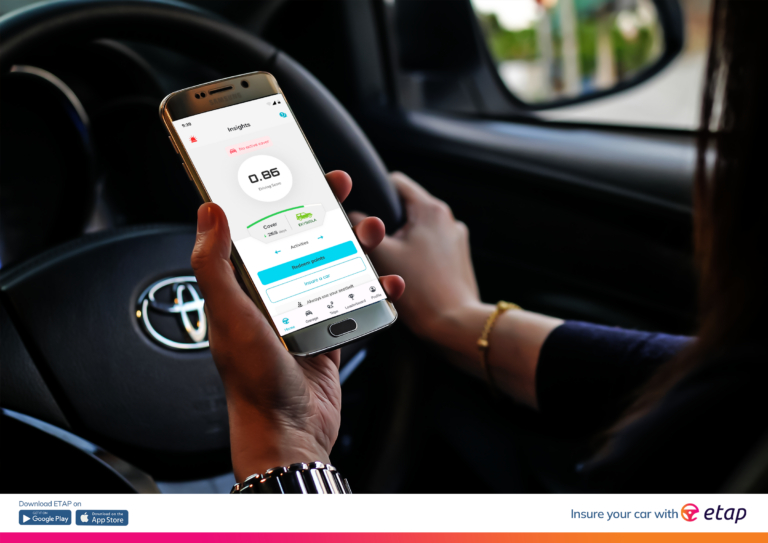
Nigerian insurtech startup ETAP has partnered with AIICO Insurance to increase access for car insurance in Nigeria.
As part of the deal, AIICO will combine its car insurance product with ETAP’s tech-enabled distribution and customer acquisition model to increase the adoption of car insurance in Nigeria.
“We are proud to collaborate with AIICO Insurance on this transformative collaboration. The app’s ability to reward safe driving habits while providing rewards for doing so as well as quick access to insurance purchase and claims payment will undoubtedly empower car owners and encourage responsible behaviour on the roads. We invite everyone to download the app from Apple App Store or Google Play Store and experience a new dimension of driving,” said Ibraheem Babalola, CEO of ETAP.
Launched in November 2021, ETAP simplifies buying and claiming of car insurance , providing drivers with access to a range of daily, weekly, monthly and quarterly plans to choose from.
The insurtech uses machine learning to design intelligent risk profiles that determine appropriate premiums for each driver, allowing them to achieve lower premiums by driving safely.
Using advanced telematics, the driving experience is gamified to improve driving behaviour and drivers can earn Safe Driving Points that can be exchanged for shopping vouchers for the most in-demand retail outlets, fuel, cinema and concert tickets, and other exciting experiences.
On the other hand ,AIICO Insurance offers life and health insurance, general insurance and investment management services to create and protect wealth for individuals, families and corporate customers.
Gbenga Ilori, head of retail business of AIICO Insurance said, “We are elated to unveil our collaboration with ETAP, marking the inception of a transformative era in car insurance. By harnessing the power of gamification, we are poised to shift perceptions around car ownership and driving in Nigeria. This initiative will not only elevate the driving journey but also significantly enhance safety on our roads.”
South Africa-based payments infrastructure company Stitch has secured a $25 million Series A extension round aimed to expand its services into additional global markets.
The funding which was led by Ribbit Capital withsupport from existing investors such as PayPal Ventures, The Raba Partnership, and CRE Venture Capital and 9 Yards Capital, brings Stitch’s total funding to $52 million.
“We’ve known the Ribbit team for a few years and have consistently been impressed with their knowledge of the space. In particular, they have a strong view of the global landscape, and their exceptional understanding of emerging markets has already proven to be immensely valuable,” stated Stitch co-founder and CEO Kiaan Pillay.
Founded in South Africa, Stitch is an API fintech company that provides tailored payment solutions to enterprise clients worldwide.The company’s services include accepting payments via various methods, managing payments across multiple providers and geographies through its PayOS dashboard, and facilitating effortless fund disbursement.
The company stands out from its competitors because of its hands-on client support, providing localised insights into the payments landscape, co-created solutions, and access to cutting-edge open banking innovations.
These innovations, including solutions like Pay by bank and real-time payments rails, empower businesses to effortlessly navigate the financial system, simplifying the complexities associated with sending, receiving, and managing funds.
The company’s robust infrastructure is the backbone for several leading global and African businesses, including industry giants like MTN, Multichoice, The Foschini Group (TFG), Standard Bank’s SnapScan, Yoco, and various global payment service provider partners.
This funding round follows Stitch’s earlier successes, including a $21 million Series A round in February 2022 and a $6 million Seed round in 2021.
This latest funding round positions the company strongly to expand its reach, innovate its offerings, and reinforce its commitment to simplifying payment processes for businesses worldwide.
With Ribbit Capital’s strategic guidance and the ongoing support of its dedicated investors, Stitch is poised for an exciting chapter of growth, innovation, and global impact.
Njeri Rionge, the co-founder of Wananchi Online, a once popular Internet Service Provider (ISP)which grew to become East Africa’s leading pay-TV, broadband Internet, and VoIP services firm has passed on.
TechMoran is yet to establish the details of her death but the once successful and revered serial entrepreneur reportedly fell victim of suspicious cultic teachings that emphasized intensive religious fastings, prayer and repentance above her health and work.
In 1999, Rionge, together with former ICT Cabinet Secretary Joseph Mucheru co-founded multi-million dollar firm Wananchi Online which grew to become today’s Wananchi Group, Zuku’s parent firm. Rionge and her team saw the company from idea to conceptualization, to their final exit. Rionge and her team saw Wananchi Online raise several rounds of both equity and debt financing from Private Equity firms such as Liberty Global, Emerging Capital Partners, Export Development Canada, Altice, and Prudence Holdings, among others. Wananchi Online grew to form what is now known as Wananchi Group Holdings with operations in Kenya, Uganda, Tanzania, Burundi, Rwanda, Somalia, South Sudan, Ethiopia, Zambia, Malawi, and Mauritius among others.
Early days at Inter-Connect ISP
Rionge, ventured out into business early at just 20. She was selling yogurt to the International School Of Kenya and Loretto Convent Musongari High School students from her car trunk during their breaks and also moonlighted as a hairdresser. She could later start going to London to bring in re-sale luxury merchandise for her growing clientele. Rionge would later join Inter-Connect, a local ISP. After three years and working faithfully, Njeri grew up the ranks to become its marketing manager before venturing out. In February 1999, Rionge, then the marketing manager and Mucheru, the ISP’s technical manager stepped out in faith to serve Wananchi, Swahili for common man or common folks who were not being reached as internet and computers were the preserve of a privileged few.
In February 1999, Rionge and Mucheru decided that it was time to fulfill their ambitions. Unlike Inter-Connect, their employer, Rionge and Mucheru’s dream was to make internet affordable and available to every Kenyan whether in an urban or rural area. In December that year they incorporated Wananchi Online Limited (WOL) and in March 2002 the company began operations with a radical price war of up to 85 – 90% discounts. By December 2005, WOL was a darling of both corporate, SME and individual customers making it the leading ISP services provider in the Kenya. As WOL was acquiring customers, others saw the firm as their best acquisition target in the then nascent local internet and tech ecosystem. 2008 was the beginning of WOL’s end but a happy ending to that effect for the firm’s founders and shareholders.
Joseph Mucheru and Jimana Ltd
WOL was run simply by Rionge, its founder and CEO and Joseph Mucheru, its CTO and later Director of Strategy and Business Development and a board of six. James Mungai Gachui of Jimana Ltd was the Chairman and the majority shareholder of the company with 51% ownership while Rionge and Mucheru had 20% each. Another board member, Joseph Kamau had the remaining 9% ownership. James Mungai Gachui and Joseph Kamau have interests in Transcentury Holdings.
Though the internet became available in Kenya in 1993, it was expensive, slow and unavailable to most Kenyans. Wananchi Online came on the scene to provide high quality, high speed internet services at affordable prices. WOL also provided domain registration, e-commerce, email, web hosting and collocation solution for individuals, businesses, developers and resellers under three product categories namely X-Plore, NetLife and Tunda. X-Plore was tailored for corporate business entities including commercial and non-commercial institutions. NetLife targeted individuals, small and medium firms, and small Office Home Offices while Tunda was targeted at the common man, home users and students.
Change of guard
In 2008 things began changing. Rionge’s Wananchi Online would partner with a cable television service to form Wananchi Group Holdings which launched triple-play service and brand Zuku in Kenya, Tanzania, Uganda, Malawi and Zambia. Fast forward October 2014, Helios announced $40 million investment into Wananchi Group Holdings with participation from existing shareholders, Altice S.A. and Liberty Global Inc and existing financial investors, ATMT and Emerging Capital Partners. The total raised was $130 million to fund its growth and expansion in East and Southern Africa.
“The new capital investment will be used to consolidate the group’s market leadership in East Africa and to extend our services across East and Southern Africa. We will continue the deployment of fiber to the home networks in more cities in East Africa and extend our business services networks and product offerings across a wide variety of geographies and market segments. With our stronger balance sheet we will also invest in exciting new technologies and service platforms to improve the quality of our products and deliver a superior experience for our customers,” said Richard Bell, Vice Chairman of Wananchi Group.
Foreign ownership
With Wananchi Online diluted and 75% of Wananchi Group Holdings sold to foreign firms, Ms. Rionge put all her energies behind Ignite Consulting, working with startups and entrepreneurs from across the world from her office in Nairobi and Toronto. The entrepreneur became a director and board secretary of the Corktown Residents and Business Association, a Northern Secondary School Council member and Co-Secretary. She was also Co-Chair for Elevate Tech 2018 Toronto, and was a well known events speaker globally, including attending the 2015 Oscars for Cadillac.
In Kenya, she held board positions at Unilever Tea (Brooke Bond Kenya), the Institute of Directors (Kenya), the Internet Corporation of Assigned Names and Numbers (ICANN), the East African Tea Trade Association (EATTA), and Ambulance Air Rescue (AAR) Holdings, and at Wananchi Group. She was also an advisory committee member of Sport at the Service of Humanity at the Vatican. She was instrumental in the restructuring of Telkom Kenya and its merger with France Telecom to launch the Orange brand in the country.
New found zeal
Before her demise, Ms. Rionge 54, was one of the few female pioneers in the technology sector in Africa and she was raising capital for an African private-equity firm based in the Cayman Islands. These plans were likely thwarted when Ms. Rionge went neck deep into new found zeal into the alleged cult. Ms. Rionge has always been a staunch born-again Christian throughout her entrepreneurial life but was later consumed by the alleged extreme religious beliefs. And her social media profiles attest to that. Her baby, Wananchi Online was gone. No cases of severe depression were ever reported or made public.
In August last year, Triple Hold Co Limited, Liberty Global Europe 2 Limited (Liberty), and Altice Africa S.A.R.L (Altice) were granted equity shares and controlling rights of Wananchi Group by the Competition Authority of Kenya(CAK). CAK approved the conversion of their loans to Wananchi Group into equity shares and certain controlling rights.
Wananchi group Holdings’ Zuku has not been the best in the market and has continued to lose market share to Safaricom’s Home Fibre. However, Safaricom Fibre is only available in a number of counties and in just over 200,000 homes across the country in Nairobi, Nakuru, Mombasa, Kisumu, Eldoret, Thika, Bungoma, Kitale, Nyeri and Nanyuki towns. Wananchi Group Holdings has therefore continued to consolidate its market leadership in other East Africa countries and aims to extend her services across East and Southern Africa. It’s likely to continue the deployment of fiber to the home networks in more cities where no serious competition exists. Safaricom’s trial at triple play services also failed terribly before launch, giving Zuku more confidence to survive in the market.
Wananchi Group Holding’s only advantage might be its geographical spread in more markets, more business services and product offerings across a wide variety of geographies and market segments. But the firm is expected to invest in new technologies and service platforms to improve the quality of its products and deliver a superior experience for her customers.
In an era dominated by technological advancements, the healthcare industry has been undergoing continual transformations, begging the question, Are we on the brink of a tech-driven health revolution? Has technology already taken the reins in healthcare, and what does this mean for the future? Let’s explore the healthtech landscape, with a specific focus on Kenya.
The Current State:
Tech’s Takeover in Health:
It is undeniably evident that technology is reshaping the very fabric of healthcare as we know it. From wearables that monitor vital signs to virtual hospital consultations and online medicine dispensers, tech is already a prominent player in our health journeys.
Globally and locally in Kenya, several key technologies are making waves. Mobile health apps, remote patient monitoring systems and electronic records are becoming increasingly prevalent. In Kenya specifically, initiatives like M-Tiba, a mobile health wallet, or Zuri Health, a fully-fledged virtual hospital providing healthcare to patients via mobile app, are revolutionizing how healthcare is accessed and paid for. We rarely waste half a day in a hospital queues anymore, for instance, do we?
The healthtech startups have amassed huge success, no doubt. To achieve the amount of success seen in the healthtech industry in a country like Kenya is, indeed,no mean feat. No offense. And a testament to the fact that revolution is inevitable, ready or not. We are talking about a country where the very remote areas barely have stable internet. And, they are majorly making it happen, with Zuri Health, for instance, offering medical services even via SMS.
Looking Forward:
Emerging Health Technologies:
Healthtech, or simply Digital health, is a highly promising eventuality with advances in healthcare technologies such as artificial intelligence, VR/AR, 3D-printing, robotics and nanotechnology.
The rise of artificial intelligence (AI) in healthcare is particularly noteworthy. AI algorithms are being developed to analyze medical images, assist in diagnostics, and even predict outbreaks. In Kenya, initiatives like Ilara Health, which focuses on affordable diagnostic tools powered by AI like Butterfly IQ, exemplify the potential for more effective and economical healthcare solutions.
Startup Scene in Kenya:
As of 2023, there are over 180 health-Tech startups in Kenya, addressing various aspects of healthcare, from telemedicine platforms like MyDawa to health information systems like Afya Rekod.
Funding Dynamics:
All things considered, it is no surprise that health startups seem to have an upper hand in securing funding. All investors, Angel Investors and VCs alike, have one thing in common when making an investment decision; relevance and scalability of a startup. The urgency and relevance of health-related solutions have garnered investor attention. Moreover, the potential for scalable and impactful solutions positions health tech startups favorably in the funding landscapes.
The Role of AI:
Tech giants like Microsoft, Google and Amazon have been battling for their expanding corners of health care universe for years, and AI is a linchpin in this tech-wise health evolution.
Cancer is one of the major areas where the big tech companies have set their sights. From startup funding to R&D investments, companies are leaning into AI for cancer care.
And it is not just the tech giants that want a share of the healthcare market, Pharmaceutical, brands like Moderna also are positive about developing an AI-based cancer cure.
Implications for Traditional Health:
The rise and fast success of Health Tech has put traditional health systems at a crossroads. While technology enhances accessibility and affordability, it also challenges existing paradigms.
Gearing Up for a Revolution:
The signs are clear—healthcare is undergoing a revolution. Ready or not, digital health is inevitable. Embracing this shift, especially in Kenya, entails not just technological adoption but also addressing infrastructural gaps and ensuring equitable access.
The future of health lies in a harmonious blend of tradition and technology, steering us toward a healthier and more connected society.
The world of outbound sales and lead generation has been transformed by the evolution of auto-dialing technologies. Power dialing, in particular, has emerged as an invaluable tool for modern contact centers looking to enhance agent productivity and streamline outbound initiatives. Let’s explore the history, modes, benefits, and real-world impact of power dialing solutions.
The Evolution of Auto Dialing in Modern Contact Centers
Dialing technologies have revolutionized contact center operations by eliminating the need for agents to manually dial every number on their call lists, significantly increasing workflow automation. As we delve into the history of auto-dialing, it’s evident that technology has played a pivotal role in enhancing agent productivity.
The shift from manual dialing to automated solutions has been a game-changer for contact centers. Back in the day, agents had to repeatedly dial numbers one by one to progress through their lead lists. This was a tedious and time-consuming process. The introduction of auto-dialers that could programmatically dial contacts without agent intervention boosted efficiency tremendously.
Today, sophisticated power dialing solutions integrate seamlessly with CRM and contact center infrastructure to deliver optimized outbound call pacing. Agents are presented with a continuous flow of dialed leads without wasting time between calls. This automation allows them to focus more on conversations and relationship-building.
The Different Modes of Auto Dialing
While the evolution of auto dialing has set the stage for modern contact centers, it’s the specific modes of dialing that truly define their efficiency. Let’s explore these modes to understand their unique characteristics and benefits.
Power dialing also enables increased compliance and risk mitigation. With the right telemarketing auto dialer contact centers can ensure they abide by critical regulations. Features like automatic recording, DNC list scrubbing, and customizable opt-out messaging help keep dialing above board.
Power Dialing automatically dials the next contact on the list as soon as an agent completes a call, ensuring that agents don’t waste time deciding which number to dial next.
Predictive Dialing takes automation a step further by using statistical algorithms to dial multiple contacts simultaneously. It predicts when a call is likely to be answered and ensures an available agent is ready for the connection. This mode optimizes live call connections.
Preview Dialing is ideal for sales teams as it allows agents to review lead information before initiating a call. This ensures they are prepared with relevant context instead of going in cold.
Progressive Dialing is configured to only present live, answered calls to agents when they are free rather than dialing blindly. This prevents agents from experiencing downtime.
Key Benefits of Power Dialing Solutions
While understanding the modes of auto-dialing is crucial, it’s equally important to recognize the tangible benefits these systems bring to the table. Let’s dive deeper into how power dialing, in particular, can be a game-changer for contact centers.
Power dialing enhances agent efficiency by automating the dialing process, ensuring that agents don’t have to manually dial numbers. This automation allows agents to focus more on the conversation and less on the technicalities of dialing.
Studies show that manual dialing results in only 2-3 hours of talk time for agents per day. However, leveraging power dialing can increase talk time to 5-6 hours due to accelerated pacing through call lists.
Moreover, power dialers provide better lead management, and personalized customer service, and have been linked to higher sales conversions. The accelerated pacing leads to more conversations and opportunities to land sales.
Power dialing also enables calling local numbers from anywhere to present callers with a familiar area code. This increases pick-up rates when agents call locally but operate remotely.
The Impact of Power Dialing on Outbound Sales Initiatives
Now that we’ve established the undeniable advantages of power dialing, it’s essential to see its real-world impact, especially on outbound sales initiatives. How does this technology align with campaign goals, and how does it play a role in converting leads faster? Let’s find out.
Sales campaigns aim for maximum reach and efficiency in working through lead lists to identify promising prospects. Power dialing is invaluable for outbound calls targeted toward list-building, lead nurturing, data verification, customer surveys, upselling, cross-selling, renewals, and more.
The main goal of power dialing aligns perfectly with sales objectives – enhanced connection rates. With manual dialing, 60-80% of calls go unanswered and 10-20% are bad numbers. Power dialers can boost live call connection rates to over 50-60% by automatically scrubbing out wrong numbers and focusing on targeting engaged leads.
Higher connection rates mean more conversations and a greater likelihood of surfacing prospects who convert to sales. Power dialing also provides detailed analytics on call outcomes to refine strategies. Overall, it delivers results fast at scale – catalyzing conversions by reaching more leads sooner.
Real-World Success Stories
The effectiveness of power dialing is evident from success stories and testimonials from leading businesses across industries:
CloudTech, a B2B startup offering SaaS solutions, leveraged power dialing to qualify 6000 new prospects in just 3 weeks – reducing sales cycle time by 5X.
RealtyNow, a real estate firm, integrated its CRM with an auto-dialer to assign callbacks automatically. This decreased follow-up time from 4 hours to just 15 minutes per lead.
GreenEnergy, a solar solutions provider, utilized local presence dialing to boost call pick-up rates by 40%. This expanded their sales reach nationwide despite having only California-based agents.
The following pie chart highlights the difference in response time between Manual follow-up and Power dialing
Manual follow-up: 4 hours
Power dialing: 15 minutes
Integrating Power Dialing With CRM Systems
To fully optimize outbound sales efforts, it’s crucial to ensure power dialing integrates smoothly with CRM platforms. An integrated system makes lead management seamless.
Popular CRMs like Salesforce, Zoho, and Dynamics already offer embedded dialing or third-party integrations with leading dialing solutions. These deep integrations allow easy contact syncing, call logging, and click-to-dial features within the CRM interface.
Market-leading dialers like RingCentral and Five9 offer open APIs that allow custom integration. This means teams can build CRM-dialer integrations tailored to their unique requirements.
The right integration empowers sales teams with enhanced visibility into call metrics, campaign performance, and agent productivity. It also ensures optimal lead targeting and routing for conversion.
The Future of Power Dialing
Power dialing has cemented its place as an invaluable sales acceleration tool. As per projections, the global predictive dialer market will grow to $4.78 billion by 2025.
Moving forward, we can expect more advanced integrations, detailed analytics, and AI-powered optimizations in power dialing systems. Vendors are also focusing on improving predictive algorithms to boost engagements.
Compliance will continue to be an emphasis area with stringent measures to adhere to telemarketing regulations across regions. Overall, innovations in power dialing technology will empower contact centers with optimized efficiency at scale for sales growth.
Key Takeaways
Power dialing delivers accelerated lead engagement by ensuring agents never manually dial or wait between calls.
Integration with CRM platforms offers sales teams enhanced visibility and efficiency in executing campaigns.
Higher connection rates achieved by power dialing translate directly to more conversions and sales growth.
Adopting power dialing solutions is a proven approach for modern contact centers to maximize agent productivity and unlock the full potential of outbound sales.
Frequently Asked Questions
1. How does power dialing differ from other auto-dialing modes?
Power dialing automatically dials leads as soon as the agent completes a call to maximize talk time. Other modes like predictive focus more on forecasting when a live call will be answered. Power dialing offers simplicity and consistent pacing.
2. Can power dialing be integrated with existing CRM systems?
Yes, leading dialing solutions offer seamless integration with popular CRM platforms like Salesforce, Zoho, and Dynamics. There are also open APIs to build custom integrations matching unique workflows.
3. What measures are in place to ensure compliance with telemarketing regulations?
Reputable power dialing vendors have measures like call masking, opt-out features, and dialer thresholds to adhere to DNC list restrictions and TCPA regulations. Teams should ensure compliance based on geographic norms.
The inaugural Pwani Innovation Week 2023 has kicked off today at Swahilipot Hub, Mombasa County, marking the beginning of a five-day celebration of innovation, technology and entrepreneurship.
The event, organized by the Swahilipot Hub Foundation, aims to create a widespread culture of innovation and stimulate the innovation ecosystem in the coastal region and Kenya at large.
Around 100 local innovators from the six coastal counties namely: Kwale, Mombasa, Kilifi, Tana River, Lamu and Taita-Taveta are anticipated to present their creative endeavours during the fourth edition of the Pwani Innovative Week, scheduled to take place today (October 2) to 6.
Day one of the tech extravaganza under the hashtag #PwaniInnovationWeek2023 or #PIW2023 has witnessed the arrival and registration of guests, setting the stage for a week of engaging sessions, workshops, and hackathons.
The event is being held under the theme ‘Sailing Beyond Borders: Empowering Youth in the Digital Economy for a Sustainable Future.’ This theme underscores the commitment to empowering young individuals in the region and fostering a vibrant culture of innovation.
A stellar lineup of speakers, including Charlene Ruto, Youth Champion; Mahmoud Noor, Chief Mentor, Swahilipot Hub; Ben Roberts, Group CTO, Liquid Intelligent Technologies; Alice Gugelev, Chief Executive Officer (CEO), Global Development Incubator Africa; Nadia Ahmed Abdalla, Former CAS ICT, Innovation, and Youth Affairs, Founder of Africa ni Mimi; and Dr. Ehud Gachugu, Project Director, Ajira Digital Program, Kenya Private Sector Alliance among others are set to share their insights during the event.
The first session of the day delved into the critical topic of Intellectual Property and Innovation Protection, with Wendy Kuyo, a lawyer specializing in data protection, providing key insights into data processing, identifiable data subjects, personal data vs. sensitive data, data controllers, and data processors.
Felicia Solomon Tunje, Partner at MMS Advocates LLP and Director of Sanaa Kama Biashara, emphasized the importance of protecting trade secrets, outlining the three criteria for trade secret protection.
She said, “Invention is the act of devising new products, processes and services. While innovation is taking a step further by making sure your product or service is marketable. For a trade secret to be protected it must satisfy three criteria. One, it must be a secret. Two, it must have a commercial value and lastly, It should have an obligation to keep the information confidential.”
Also, an ongoing Blockchain Hackathon is a highlight of the tech week, providing participants with the opportunity to learn about Blockchain technology, build skills, and network.
The hackathon offers cash prizes of $1000 for the most innovative solutions.
The Pwani Innovation Week is a collaborative effort by the Swahilipot Hub Foundation and its partners, aiming to showcase the creativity of about 100 local innovators during the fourth edition.
Mahmood Noor, the founder of Swahilipot Hub, emphasized the focus on young innovators, providing them with a platform to showcase their work and contribute to the transformation of the community.
During the tech week, the Kenya WhatsApp Impact Recognition Awards will celebrate unsung heroes in the digital and innovative space.
Swahilipot Hub and Kayana Creatives, a community of female entrepreneurs partnered to recognize and empower the youth.
The awards’ main sponsor is 4gotten Bottom Millions (4BM), Kenya’s largest digital disruptor, empowering the youth since 2016.
The event has garnered support from various partners, including the National Museums of Kenya, Huawei, Cisco, Close the Gap Hub, Communication Authority of Kenya (CAK), Konza Technopolis; the French, Belgian and UK embassies among other renowned entities in the tech industries.
This collaboration aims to explore and recognize innovations outside Nairobi, contributing to the government’s goal of opening up digital spaces for youth across the country.
The Pwani Innovation Week is a testament to the commitment to fostering innovation, supporting youth, and building a sustainable future through the power of technology.
Hopefully, this week-long tech event will inspire young minds, create lasting connections and contribute to the growth of the innovation ecosystem in the coastal region and Kenya as whole.
X, led by Chief Executive Officer (CEO), Linda Yaccarino, has revealed that the company disbursed nearly $20 million to content creators.
The announcement was made on the formerly known as Twitter platform, where Ms Yaccarino shared insights into the success of the Creator Ads Revenue Sharing program launched in July of this year.
“Under this initiative, creators are entitled to a portion of the advertising revenue generated from ads displayed in the responses to their posts by other verified users.”
To qualify for participation in the program, individuals must subscribe to X Blue (formerly known as Twitter Blue) or be recognized as a Verified Organization.
Additionally, eligibility criteria include accumulating a minimum of 15 million impressions on posts over the preceding three months and having a follower count of at least 500.
In August 2023, reports started emerging confirming that creators received payments.
Elon Musk, the owner of X announced that the inaugural round of payouts for creators would reach an impressive sum of nearly $5 million.
It’s worth noting that the Creator Ads Revenue Sharing program is accessible in countries where Stripe facilitates payouts.
Unfortunately, this excludes all African nations, as Stripe currently lacks support. It is pertinent to mention that Stripe operates in only 46 countries globally.
Check Point® Software Technologies Ltd , a provider of cybersecurity solutions globally, has partnered with Africa based Non-Governmental Organization , Cybersafe Foundation to combat cybersecurity skills shortage.
The collaboration with Check Point’s SecureAcademy program, which provides free cutting-edge cyber educational content through partnerships with higher learning institutions and non-profit organizations, will see its courses being used as part of Cybersafe’s program CyberGirls , a one-year free initiative designed to equip women between the ages of 18 and 28 with globally sought-after technical skills.
“We are extremely proud of the impact our programs have had on the lives of many of our fellows, helping young women gain access to life changing opportunities,” says Confidence Staveley, the Founder and Executive Director Cybersafe Foundation. “Our partnership with Check Point will contribute immensely to our disruptive educational model by providing free quality cybersecurity training to the CyberGirls community.”
Cybersafe Foundation strives to raise awareness about cybersecurity and empowers communities to navigate the digital landscape securely through the power of education.
The CyberGirls program is one of its programs that specifically focuses on closing the gender gap in the industry and uplifting those living in underserved communities across Africa, helping them improve their socio-economic position while also combatting the increasing threat posed by cybercrime.
The fellowship achieves this by offering its fellows hands on training, mentorship to become certification ready, and the chance to partake in a number of internships and shadowing placements.
The partnership with Check Point’s education program SecureAcademy will see the NGO’s fellows gain access to free training, training of Cybersafe teachers, as well as industry-recognized certifications that will accelerate their career.
Through the program, Check Point is already working with over 160 academic partners who serve over 45 thousand students, across more than 60 countries to combat the 3.5 million cybersecurity job vacancies that currently exist globally.
Pankaj Bhula, Regional Director, Africa at Check Point added: “Education is fundamental to combating the increasing volume of cybercrime both at home and abroad. Partnerships such as this one is key in closing the skills gap and helping to create a future employee pipeline in the cybersecurity sector. We are thrilled to be partnering with an organization that has had so much success in not only this aspect, but also one which has made a real impact on the lives of their fellows through upskilling and education.”
Snapplify , a South African digital education solutions provider has been awarded the UNESCO King Sejong Literacy Prize for 2023, which recognises contributions to mother-tongue-based literacy development.
With over 50,000 free eBooks, Snapplify’s e-library offers around-the-clock access to engaging educational and leisure reading materials. Teachers can easily share curriculum-aligned educational content and grow reading communities in their schools while receiving insightful analytical data on student activity and performance. Various language settings are accommodated, and teachers receive language-specific training and support. Currently, the platform hosts content in all 11 South African languages, and several other African languages.
Snapplify South Africa Government Partnership Manager, Stephen Bestbier, expressed his pride in the company’s achievements, stating, “We were very warmly welcomed by the entire community, and our contribution to their children’s education has been deeply appreciated. Seeing little children in some of the remotest parts of our country proudly reading aloud from books they only have access to because of our work, is extremely humbling.”
This prestigious award is a testament to Snapplify’s groundbreaking e-library programme, which is dedicated to providing accessible digital educational resources to learners from diverse linguistic backgrounds.
The impact of Snapplify’s Africa e-library project extends far beyond the classroom. Through partnerships with local governments and over 1,000 local and international publishing and content partners, over three million learners have been reached.
The inspiration for this online resource was a realisation of the profound language diversity that exists worldwide. Accessing sufficient digital educational resources is often a significant challenge, especially for learners from different linguistic backgrounds. The COVID-19 pandemic further underscored the importance of remote learning and accessible digital resources.
This initiative has brought educators, parents, and the wider community together to inspire a love for reading and life-long learning.
Collaborations with education departments in various provinces, particularly KwaZulu-Natal, Gauteng, and the Western Cape, have played a significant role in equipping thousands of students and teachers with the digital tools and resources they need to learn and teach effectively.
Snapplify believes that literacy skills should be intertwined with broader issues such as environmental consciousness, social justice, and cultural understanding. The e-library features multicultural literature with diverse characters, settings, and perspectives to encourage empathy, tolerance, and cultural awareness while advancing literacy skills. By continuously adapting to the rapidly evolving technological landscape, accessibility is ensured across various devices such as smartphones, tablets, and laptops.
“Snapplify relies on the support of key stakeholders who share our mission to increase access to education and transform the future through literacy. We invite governments, NGOs, and ministries of education throughout Africa to collaborate with us and expand the range of available content by adding more resources and books in local languages. Together, we can enable all African learners to access the best digital education tools and empower them for a brighter future,” says Bestbier.
According to the company,while the UNESCO King Sejong Literacy Prize is a tremendous honour, Snapplify sees it not as an endpoint, but a steppingstone toward their greater goal. The company aims to extend their technology solutions across the entire African continent, collaborating with governments, teachers, learners, and other education stakeholders to establish robust and sustainable digital learning ecosystems.
Africa has often been a canvas of innovation and resilience. At the epicenter of this energy, Africa’s technological landscape has experienced significant advancements in recent years and this digital transformation has paved the way for the rise of smart home technology, empowering individuals to create intelligent, automated, and secure living environments.
Kenya stands tall, emerging as a powerhouse in technological adoption. As the winds of change sweep across its vast landscapes, the concept of smart homes is gradually gaining momentum. Kenya’s rapid digital transformation has set a robust foundation for technological advancements. With over 80% of its population accessing the internet and mobile penetration reaching new heights, Kenya’s readiness for the digital age is evident. This connectivity forms the bedrock upon which smart homes are built.
Developers are increasingly acknowledging the demand for homes that offer more than just a roof and walls, but more of convenience, security, and a touch of luxury. For example, one of the leading real estate companies in Kenya, Cytonn has developed upscale residential projects in Nairobi. Their developments often come with modern amenities, integrated smart home systems, and heightened security features.
As a pioneer in the world of electronics, Samsung is actively shaping the blueprint for the smart homes of tomorrow. Samsung’s smart home journey was seeded in their commitment to enriching lives through technology. At its core, Samsung views the smart home not as a luxury but as an evolution in how humans live, work, and interact with their surroundings. Their vision is not just about connecting devices, it is about connecting lives.
One of the primary pillars of Samsung’s smart home vision is seamless interaction. With the integration of Artificial Intelligence (AI) and the Internet of Things (IoT), Samsung envisions a home where devices do not just operate but communicate. From refrigerators suggesting recipes based on their contents, to washing machines choosing the perfect cycle for your clothes, it is about creating an ecosystem where devices understand and anticipate user needs. They have introduced a Smartthings app, which is used for controlling Samsung smart devices ranging from TVs and projectors to ovens and washing machines, it is a familiar app in many homes and plays a vital role in a smart home.
At its core, Samsung views the smart home not as a luxury but as an evolution in how humans live, work, and interact with their surroundings. Their vision is not just about connecting devices, it is about connecting lives.
Furthermore, the ability to harness and manage energy efficiently is a cornerstone of smart living. As energy costs rise, the allure of homes that can intelligently manage and even produce energy becomes undeniable. While the trajectory seems promising, challenges persist. High costs of smart devices, coupled with irregular internet downtimes, can hinder seamless smart home experiences. Moreover, there’s a pressing need for localized solutions tailored to Kenya’s unique needs and cultural nuances. For example, as a segment of the overall population, GSMA places the mobile internet penetration rate in Kenya at 27% of the people, representing one of the highest five-year growth rates in Africa.
There needs to be initiatives to foster tech education, combined with investments in infrastructure, which will lay the groundwork for a brighter future. Collaborations between local startups and global tech giants like Samsung can usher in innovations tailored for Kenya’s demographic.
In conclusion, the fusion of tradition and technology paints a hopeful picture for smart homes in Kenya. As the country strides forward, the dream of homes that resonate with intelligence, efficiency, and convenience is slowly, but surely, turning into a palpable realitity.
Africa has often been a canvas of innovation and resilience. At the epicenter of this energy, Africa’s technological landscape has experienced significant advancements in recent years and this digital transformation has paved the way for the rise of smart home technology, empowering individuals to create intelligent, automated, and secure living environments.
Kenya stands tall, emerging as a powerhouse in technological adoption. As the winds of change sweep across its vast landscapes, the concept of smart homes is gradually gaining momentum. Kenya’s rapid digital transformation has set a robust foundation for technological advancements. With over 80% of its population accessing the internet and mobile penetration reaching new heights, Kenya’s readiness for the digital age is evident. This connectivity forms the bedrock upon which smart homes are built.
Developers are increasingly acknowledging the demand for homes that offer more than just a roof and walls, but more of convenience, security, and a touch of luxury. For example, one of the leading real estate companies in Kenya, Cytonn has developed upscale residential projects in Nairobi. Their developments often come with modern amenities, integrated smart home systems, and heightened security features.
As a pioneer in the world of electronics, Samsung is actively shaping the blueprint for the smart homes of tomorrow. Samsung’s smart home journey was seeded in their commitment to enriching lives through technology. At its core, Samsung views the smart home not as a luxury but as an evolution in how humans live, work, and interact with their surroundings. Their vision is not just about connecting devices, it is about connecting lives.
One of the primary pillars of Samsung’s smart home vision is seamless interaction. With the integration of Artificial Intelligence (AI) and the Internet of Things (IoT), Samsung envisions a home where devices do not just operate but communicate. From refrigerators suggesting recipes based on their contents, to washing machines choosing the perfect cycle for your clothes, it is about creating an ecosystem where devices understand and anticipate user needs. They have introduced a Smartthings app, which is used for controlling Samsung smart devices ranging from TVs and projectors to ovens and washing machines, it is a familiar app in many homes and plays a vital role in a smart home.
At its core, Samsung views the smart home not as a luxury but as an evolution in how humans live, work, and interact with their surroundings. Their vision is not just about connecting devices, it is about connecting lives.
Furthermore, the ability to harness and manage energy efficiently is a cornerstone of smart living. As energy costs rise, the allure of homes that can intelligently manage and even produce energy becomes undeniable. While the trajectory seems promising, challenges persist. High costs of smart devices, coupled with irregular internet downtimes, can hinder seamless smart home experiences. Moreover, there’s a pressing need for localized solutions tailored to Kenya’s unique needs and cultural nuances. For example, as a segment of the overall population, GSMA places the mobile internet penetration rate in Kenya at 27% of the people, representing one of the highest five-year growth rates in Africa.
There needs to be initiatives to foster tech education, combined with investments in infrastructure, which will lay the groundwork for a brighter future. Collaborations between local startups and global tech giants like Samsung can usher in innovations tailored for Kenya’s demographic.
In conclusion, the fusion of tradition and technology paints a hopeful picture for smart homes in Kenya. As the country strides forward, the dream of homes that resonate with intelligence, efficiency, and convenience is slowly, but surely, turning into a palpable reality.
Motorists using vehicles bearing foreign registration number plates are subjected to tough conditions.
Using such cars requires proof of employment in the country of origin, including work permits or residency documents, according to the NTSA and KRA.
Foreigners from the Common Market of East and Southern Africa (Comesa) and the East African Community (EAC) are not exempt from this requirement and must present proof of ownership or, if acting as the owner’s representative, a power of attorney from the owner.
Along with demonstrating their employment in a diplomatic role, diplomats must also demonstrate their diplomatic status.
The foreign operator from EAC and Comesa nations must possess a valid temporary importation of road vehicles form (Form C32), which is issued at a border station, before receiving entry approval.
Foreigners from outside the two regional blocs must present valid passports or international circulation permits from their countries of origin.
A foreign-registered motor vehicle cannot be accessed by anybody without these documents, and any such vehicle that is operated without them will be seized.
Despite having all the required paperwork, the car owners will still need to apply online through the eCitizen site for a foreign motor vehicle permit.
The Form C32 or an endorsed international circulation permit from the country of origin, along with Comesa insurance, are requirements for applicants.
Kenyans frequently use vehicles with foreign registration since they are less expensive, particularly those from Tanzania, Uganda, and South Sudan. Some countries even let older vehicles in their marketplaces.
While Tanzania permits the importation of vehicles up to ten years old, Kenya now only permits the importation of vehicles up to eight years old, and Uganda recently passed a law restricting the entry of vehicles made more than fifteen years ago. On the other hand, there are no official restrictions on the age of used cars in Burundi, Rwanda, or South Sudan.
By 2021, member nations of the EAC must conclude negotiations on plans to reduce the importation threshold for used cars.
Kenya has already made plans to reduce the current eight-year limit on the age of secondhand automobiles with engines larger than 1500cc to five.
The decision to purchase a car might be emotionally charged, so it’s critical to uphold logic to avoid making bad financial decisions.
Since 80 percent of our vehicle market consists of grey imports, which are second-hand vehicles brought in from other countries, chances are your first car will have high mileage, with about 100,000 kilometers on the clock. These vehicles are already at half of their life cycles, and major components are due for replacement. Take the time to study the crucial procedures to take when buying your first car before going online or to a dealership because confidence is all about preparation.
Here’s how to maximize this circumstance.
Determine your financial capacity.
Finding out how much you can spend is the first step in making a good purchase. This choice should take into account your credit rating, monthly income, and desired car type. The secret is to choose an automobile that meets your wants while remaining within your budget.
Consider the actual cost rather than just the sticker price when creating your budget. The total cost you will be required to pay, including taxes and dealer fees, is the true out-the-door price. Once you have that amount or an appropriate approximation, add your normal wage into the equation and use a car loan calculator to calculate the monthly payment for the automobile.
Save for a down payment
The initial lump sum payment you make for your upcoming car is known as the down payment. At least 20% of the purchase price should be paid for, though this may take some time.
If you can wait to buy a car until you have the money, it may be worth your while to be patient and save money for a sizable down payment. It will save you money overall and lower your monthly costs.
If you can’t wait, you can make a lower down payment. However, you may not get a good rate with your lender. In this situation, choose a less-priced vehicle instead. The less you pay altogether, the less you will need to save for a down payment.
Examine your credit history.
If this vehicle is your first large financial investment, it is possible that you don’t have a lengthy credit history. Check your credit history to see what loan possibilities are available if this is the case.
The main aspect that lenders take into account when deciding what interest rates to give you is your credit score. Your interest rate will be more advantageous the better your credit is.
Before speaking with a possible dealer, check your credit score.
Select the ideal vehicle for you.
There are a lot more factors to take into account when deciding which car is perfect for you than just color or style. Take into account additional elements including the vehicle’s longevity, appropriate size for your demands, technology, safety features, gas mileage, and the surrounding environment.
Determine your financial eligibility
Apply with lenders that offer prequalification after gathering information on the kind of vehicle you want to buy and your financial background. This action will help you save money and give you more control over selecting the best financing option.
Even once the prequalification procedure is complete, it is not finalized since prequalification, or preapproval, differs from full approval. Preapproval will instead provide you with a general indication of possible prices and conditions. Even though you still need to submit a formal application, you will know in advance if you can pay for it.
To apply for prequalification, you will require the following:
Average income and finances.
Details about an individual.
Employment information.
Any current debt.
Get online or in person to the dealership.
It’s time to start the car-buying process after prequalifying for a loan and deciding on your ideal vehicle. The best way to find out what vehicles are offered in your area is to browse online. You can schedule appointments because the majority of vendors have their inventory listed on their websites.
Before making a purchase, it’s crucial to get in the driver’s seat of a potential car and test-drive it. Make sure the seat is adjusted, that it will fit in your garage, and that it can withstand your daily activities.
However, you are not restricted to the nearby dealers. You can browse a nationwide inventory of used automobiles thanks to online retailers like Carvana, TrueCar, and Vroom. Without leaving your home, you may browse and apply for financing. After choosing a car, you have up to a week to test drive it and have a mechanic look it over.
Negotiate
Although it can be intimidating, you must advocate for yourself to receive the greatest offer. Bring any necessary papers, a solid grasp of your credit history, and the correct questions to ask. But the ultimate truth is that if you can’t get the bargain you deserve, be ready to walk away.
When it’s time to seal the sale, stick to the figure you agreed upon. The dealer will likely push for extra charges and add-ons. When an addition like gap insurance may be more helpful, decline choices like fabric or paint protection.
The Windows keyboard shortcuts save time by allowing you to skip using your mouse or opening a menu only to complete a simple task. A cheat sheet for all the crucial Windows keyboard shortcuts you should know.
Keyboard Shortcuts for Windows’ Best Features
You’ll use this initial set of keyboard shortcuts a lot, thus they’re considered the greatest ones. These could be regarded as the more common shortcuts since they can be used in the majority of software programs in addition to the Windows operating system.
Ctrl+A: Select all available content in focus.
Ctrl+Z: Undo the previous action.
Ctrl+Y: Redo the previous action.
Ctrl+S: Save what you’re working on.
Ctrl+O: Open a new file.
Ctrl+C: Copy selected content. (Ctrl+C can also abort commands)
Ctrl+V: Paste copied content.
Ctrl+Shift + V: Paste unformatted content.
Ctrl+X: Delete and copy selected content. (good for moving text, files, etc.)
F11: Enter full-screen mode.
Esc: Stop or close a prompt or process.
Ctrl+P: Open the print dialog box.
Ctrl+F: Open the search tool to find something on the page.
Ctrl+R: Refresh the contents on the screen. (only F5 works in some cases)
Alt+F4: Close the active program.
Screenshot Shortcuts on the Keyboard
Alt+PrtScn: Screenshot just the active window.
Win+PrtScn: Auto-save full-screen screenshot to Pictures > Screenshots.
Win+Shift+S: Choose a part of the screen to make a screenshot.
Even though Epic Games does not support Linux or Chrome OS, this post outlines two hacks for installing Fortnite on a Chromebook. We’ll go over how to sideload the Fortnite Android app and how to use Chrome Remote Desktop to play the game remotely on Windows or Mac.
You must use an Android phone to download the Epic Games launcher and enable developer mode, Android apps, and apps from unknown sources. After all that, if your Chromebook doesn’t make the grade, you won’t be able to install or play Fortnite.
To sideload Fortnite onto your Chromebook, follow these steps:
On your Chromebook, activate the developer mode for Chrome OS.
Your Chromebook’s Android apps should now be enabled.
To manage Android preferences, go to Settings > Google Play Store.
Select Security.
Click on Unknown Sources.
On an Android smartphone, go to fortnite.com/android and save EpicGamesApp.apk when requested.
Transfer EpicGamesApp.apk to your Chromebook by using a USB cord to connect your Android phone to the computer.
On your Chromebook, launch EpicGamesApp.apk.
Simply select Package Installer.
Tap or click Install.
To open, click or tap.
Tap or click Install.
After finishing the installation, launch Fortnite.
Fortnite on a Chromebook: How to Play Using Chrome Remote Desktop
Try using Chrome Remote Desktop to play Fortnite if your Chromebook is unable to install or run the Android version of the game. You may play Fortnite on that machine by using this program to link your Chromebook to a desktop or laptop running Windows or Mac.
You’ll need a fast Internet connection and a Windows or macOS computer that can run Fortnite to use this method.
Here’s how to use Chrome Remote Desktop to play Fortnite on a Chromebook:
Activate Chrome Remote Desktop on a device that can run Fortnite.
On your Chromebook, install the Chrome Remote Desktop application.
Connect to your Windows or macOS computer using your Chromebook, and when prompted, enter your PIN.
Open Fortnite on the Epic Games Store.
Use Chrome Remote Desktop to play Fortnite.
Compatibility is poor because Epic doesn’t officially support sideloading the Fortnite Android app on Chromebooks. You require at least 4 GB of RAM, a 64-bit processor, Chrome OS, and the ability to execute Android apps. It might work if you can fulfill all of those requirements.
Your Epic Games Launcher, which created the well-known online video game, is probably the problem if Fortnite isn’t functioning. There are several ways to troubleshoot the launcher, including disabling your antivirus and firewall software, updating your graphics drivers, forcing the program to close and reopen, clearing the web cache, and reinstalling the launcher.
The 2024 Tesla Model Y has been updated with a longer claimed driving range, quicker acceleration, restyled interior trims and new features. Interestingly, despite the new changes, the price remains the same.
Tesla’s upgraded Model Y starts its journey in China, where it holds the crown of China’s best-selling SUV from January to May.
The CLTC range of the base Model Y has been increased to 554 km, a minor but welcome improvement of 9 kilometers, or a 1.65% increase. Its acceleration time from 0 to 100 km/h has been reduced from 6.9 seconds to 5.9 seconds, meaning it’s quicker off the mark. The price remains RMB 263,900 (about €33,680), with an estimated delivery time of 2-6 weeks.
The Model Y Long Range’s range has been increased by 28 kilometers to 688 kilometers, a 4.24% improvement. Keeping with the same theme, the pricing remains intact at RMB 299,900 (€38,300), with a 6- to 8-week waiting period.
Model Y Performance did not receive a facelift; its CLTC range remains unchanged either at 615 km, and naturally, its starting price remains unchanged at RMB 349,900 (€44,700). Customers that are eager to get one should expect 2-6 weeks for delivery.
The company teased the Model Y’s sophisticated new multi-colored ambient lighting, a refreshed dashboard trim, and flashy 19-inch wheels on its Weibo account.
According to sources, a more significant upgrade for the Model Y is due this time next year, with the restyled front and back fascias, stalk-less steering wheel, and other improvements announced with the latest Model 3.
Subaru teased a new WRX sedan, no it’s not the STI but rather the TR , as in “Tuner Ready”. The automaker is reaching back to 2006 for the historical name.
The previous WRX TR was a stripped-down variation designed for owners who wanted to personalize the car in the aftermarket. It was $1000 less expensive than a normal WRX. Subaru describes the new 2024 version of its popular sports sedan as “sharper and more enthusiast-focused.”
Aside from a single teaser image showing a portion of the car’s wheel, no more information has been revealed. The design appears to be a match with the wheels on a prototype of a WRX version that appeared in May. The prototype’s wheels were larger than the usual 17-inch set seen on the WRX, and they were equipped with a Brembo brake kit with red calipers. A small spoiler was also fitted to the trunk lid as well.
It’s unclear whether the WRX TR will get any powertrain upgrades. The current WRX is powered by a turbocharged 2.4-liter flat-4 producing 271 horsepower. It is available with either a 6-speed manual or a CVT transmission.
The new 2023 WRX starts at $31,625 and goes up to $44,415 for the higher-end GT trim. There isn’t enough evidence to know if Subaru is sticking to the no-frills approach of the previous TR, but we don’t expect this new version to be less expensive than the base WRX. The automobile will be unveiled in its entirety on October 7 at the automaker’s annual Subiefest event in Daytona Beach, Florida. Subaru has confirmed that rally drivers Travis Pastrana and Bucky Lasek will be present during the unveiling of the vehicle.
Toyota Motors global sales, including subsidiaries Daihatsu Motor and Hino Motors, have hit an all-time record of close to a million cars. The record was driven by enhanced supply conditions and heightened demand.
The automaker and its subsidiaries increased sales by 9% year on year in August, hitting 923,180 vehicles. Toyota’s sales climbed by 15% in the United States, and domestic sales increased by 46%. However, sales in China fell by about 7%.
Despite a 2% drop in international output, Toyota’s overall production increased 4%, propelled by a 22% increase in home producton over the previous year. The increase demonstrates the company’s comeback from last year’s semiconductor and supply chain issues.
Due to its collaboration with Suzuki Motors, production in India increased by 221%, reaching little more than 32,000 automobiles. Toyota built a third facility in India, increasing production capacity to approximately 200,000 units.
In August, the Japanese automaker sold 11,880 battery-powered electric vehicles, for a total of 65,467 units successfully sold this year, compared to 24,000 units sold in 2022. Despite the increase, it is still far short of the lofty target set by Chief Executive Officer Koji Sato, who hoped for 1.5 million EV sales per year by 2026.
Unergy, a Latin American CleanTech and FinTech specializing in the financing of high-performance renewable energy production assets, announces the opening of its first subsidiary in Europe to strengthen its positions in the French, British, Spanish, Dutch and Swiss markets. The start-up is seeking to reach out to private and individual investors, with the promise of a low-risk investment capable of guaranteeing an internal rate of return (IRR) of at least 7% per year.
With the ambition to facilitate the financing of renewable energies in countries with the right natural conditions but lacking liquidity, Unergy has set up an innovative model of mini-solar farms, accompanied by a high-profitability and low-risk financial protocol to raise the capital needed for their construction and operation.
Thanks to a platform combining Blockchain and artificial intelligence, Unergy splits up assets to enable anyone to become an investor with a stake as low as 500 USD, while monitoring their performance in real time and with complete transparency.
Behind the scenes of a promising, low-risk, high-return financial model
While crowdfunding for renewable energies has been strongly developing over the past ten years and is now booming in Europe, Unergy’s proposal is something special: the start-up is able to guarantee an unrivalled profitability of between 7% and 10% per year, where European players show 7% in 5 years.
To achieve this, Unergy combines 5 key elements in its model:
– Climatic conditions: Each mini-farm is strategically located in areas with the highest levels of solar radiation, especially in the Equatorial regions of Latin America with a photovoltaic potential of nearly 1,800 kWh/kWp. – The characteristics of the land: Each mini-farm is built on a standard area of 2 hectares with an inclination not exceeding 10 degrees. The parcels are systematically located in countries with large proportions of unexploited land, accessible via existing land infrastructure, and with purchase or rental prices dictated by the potential for agricultural exploitation. The panels are also placed 2 meters above the ground, enabling solar production to be combined with agricultural activities such as the farming of legumes or the breeding of small livestock. – Regulatory stability in target countries: Unergy’s mini-farms are established in countries that benefit from a stable regulatory framework in terms of energy, allowing electricity sales and distribution prices to be set on 20- or 30-year contracts and providing for indexation on inflation. – Regions with significant financing needs: The countries chosen by Unergy have experienced sustained economic development over the past 20 years, offering a stable framework for business. However, they have significant shortcomings in terms of liquidity, which hinders local institutional actors in the deployment of substantial sustainable infrastructure in the short and medium term. – A patented system of mobile solar panels: The icing on the cake! In order to make the most of the chosen climatic and geographical conditions, Unergy’s mini-farms are equipped with a patented system of mobile solar panels that follow the path of the sun to capture maximum radiation. This device increases the production capacity of Unergy’s solar panels up to 25% compared to a conventional fixed panel.
Together, all these conditions enable Unergy to optimize the production capacity of its mini-farms, to control the costs related to operation and maintenance, including insurance, and to anticipate their minimum yield over a period of 20 to 30 years. This allows the company to deliver on the promise of exceptional profitability at low risk.
“We know that Europe has many crowdfunding projects for renewable energy and we do not intend to compete with them. What we want is to provide a new alternative where everyone can find their interest!”Eduardo Ospina, CEO, co-founder of Unergy, and one of the leaders of Innovation Under 35 at MIT. “The energy transition must take place all over the world, but unfortunately not all countries have the same means to finance it. To address this issue, we have designed a model capable of appealing to investors, that offers both guarantees and attractive profitability, and impacting both the planet and the populations of the countries where our projects are located,” he continues.
The start-up currently has a portfolio of more than 50 mini-farm projects to finance, located mainly in Colombia and Brazil, and plans to reach 300 projects by 2024. Each project requires an initial investment of about 1 million US dollars (930 thousand euros) and brings in, through the sale of energy, between 150,000 USD and 180,000 USD in net profits per year.
Safaricom’s Company Secretary Ms Kathryne Maundu has stepped down from her role effective September 30th 2023 after seven years working at East Africa’s biggest telecommunications firm.
According to the Company’s Board Chairperson Adil Khawaja in a statement, “Kathryn has served in the Board and its various committees for more than seven years. During this period, she has supported the Board in the implementation of its mandate in line with the laws and regulations in Kenya and the process has earned the Board’s trust and appreciation.”
“The Board takes this opportunity to thank Kathryne for her dedicated service, sound advice and commitment to Safaricom over the years, and wishes her the very best for the future,” Khawaja added.
The Safaricom Board didn’t take long to make a decision.
Katherine
“The Board is also pleased to announce the appointment (subject to regulatory approval) of Ms. Linda Mesa Wambani as the acting Company Secretary of Safaricom PLC with effect from 1st October 2023,” it announced in a statement.
Ms. Linda Mesa Wambani, Safaricom PLC’s Senior Legal Counsel and a senior advocate with 19 years of experience, is now the new acting Company Secretary of Safaricom PLC with effect from 1st October 2023. Linda is Safaricom PLC’s immediate Senior Legal Counsel where she was providing legal support for Safaricom PLC, the M-PE SA Foundation and Safaricom Ethiopia.
Linda has a Bachelor of Laws Degree from the University of Nairobi, a MBA in Strategic Management from the United States International University (USIU) and a Master of Laws Degree in Commercial Law from the University of Nairobi and is a member of the Institute of Certified Public Secretaries of Kenya and the Women on Boards Network and the Law Society of Kenya.Prior to joining Safaricom PLC, Linda was a commercial and litigation lawyer at Demons Hamilton Morrison & Mathews.
Kathryne’s resignation follows former CEO Michael Joseph’s resignation as board director of Safaricom PLC in August. Though she has not stated her next career moves, Katherine sits on the East African Breweries Limited (EABL) board and there is no word about her resignation there meaning her resignation from the Safaricom Board is not a career move or health-related issue but a disagreement in principle just like director Michael Joseph’s.
In August this year, former Safaricom CEO Michael Joseph resigned from the company after 23 years of service. Joseph served as CEO from 2000 to 2010 and resigned from the Safaricom board of directors August 1 to focus on his other ventures.
“The Board announces the resignation of Mr. Michael Joseph as a Director in the Board of Safaricom PLC, with effect from August 1, 2023. Michael leaves the Board to focus on other ventures in his life including continuing his role as Chairman of Kenya Airways and being a director in various organizations. He will continue to pursue his passions in matters of conservation and community service,” ” the company said in a statement.
Mr Ngumi was a close ally of the former President Uhuru Kenyatta and has served as chairman in many parastatals, such as the Industrial & Commercial Development Corporation (ICDC) which was in charge of the Kenya Transport & Logistics Network that had Kenya Ports Authority, Kenya Pipeline Company Limited and Kenya Railways Corporation. He also served on the board of Kenya Airways with Michael Joseph.
Klasha, a cross-border payments company that powers African payments for global companies to sell cross-border online to and from Africa has been granted a license by the regulatory authorities of Sierra Leone to operate and offer its groundbreaking fintech services in the country.
Klasha’s inclusion in the Bank of Sierra Leone’s Regulatory Sandbox Program underscores the company’s commitment to developing cutting-edge cross-border financial technology solutions that enhance the efficiency, accessibility, and security of cross-border payments and digital commerce.
With this license, Klasha will be able to operate in Sierra Leone and provide its innovative payment services to the country’s citizens and businesses.
“We are thrilled to have obtained this license, which will accelerate our growth and expand our reach in the Mano River Union,” said Klasha’s CEO Jessica Anuna. “Sierra Leone is a vibrant and growing market, and we look forward to working with the Bank of Sierra Leone and other stakeholders to drive seamless cross-border transactions in the country.”
Klasha‘s acquisition of the financial services license in Sierra Leone is part of the company’s broader strategy to expand its presence across Africa. Backed by American Express, Greycroft, and Seedcamp, Klasha has served over 1,102,284 transactions across its 6 markets in Africa
Founded in 2021 with a presence in Nigeria, South Africa, and Kenya, Klasha provides cross-border payment solutions for global and African businesses selling online to and from Africa. The platform allows global businesses to accept payments from their African customers in local African currencies and money methods, send cross-border payments seamlessly online, and get payouts in hard currencies via Klasha business account to facilitate both local and international cross-border payments.
Root Platform (Root), the Cape Town-based low-code, API-first, digital insurance technology platform provider, has raised $1.5 million from South Africa-based Invenfin, the venture and growth capital arm of Remgro Limited, to power modern insurance digital products.
Root, which was founded in 2016 in South Africa, offers a low-code platform that powers modern digital insurance products designed for direct, affinity and embedded distribution at scale. The company first raised an external round of funding from investors including Invenfin in 2021, and will now accelerate its plans to expand in the UK and Europe thanks to this further investment.
According to Louw Hopley, Co-Founder at Root, “We want to continue to expand in the UK while also making strides into the rest of Europe, and this growth capital from Invenfin enables us to do just that. The time is right for us, as lots of insurers are realising that innovative partner insurance channels such as embedded insurance are essential, and they want to invest in the robust, API-first technology they need to get to market quickly and confidently. We’re excited about what is to come over the next few years for our business.”
Root, launched through a partnership with MMI Holdings, has built a trusted partnership with Invenfin since they invested in the business two years ago, and are suitable partners in their growth strategy especially as the company scales up internationally. Root’s API enables third-party developers to easily access digital insurance licenses and insurance and banking-related products for a quick launch.
Root allows developers, start-ups and brands to develop insurance products especially to service low-income families,a sector which has seen much expansion over the last years with start-ups such as SureFOX, for cargo owners and transporters and Naked Insurance, a digital insurance platform promising customers a faster, fairer and more flexible insurance experience. Such platforms have been possible due to the advent of cloud computing and the API-economy, which allows third-party platforms to pull resources from other established platforms for mass adoption on a micro-level especially in health, banking and insurance.
For starters, Hopley previously started an iPhone app development company in New York and Silicon Valley and came back to South Africa to start Root. He as seen Root partner with Standard Bank of South Africa, one of the biggest banks on the continent and also partnered with Andela, a global network for remote technologists and financial services company Momentum Health Solutions.
In November 2021, Root announced it had raised $3 million in seed funding from its primary investors Invenfin, Base Capital, Savannah Fund, P1 Ventures, Luno, and FireID, a select group of high-impact angel investors took part to expand into Europe. It’s latest funding round cements its expansion and growth plans.
“Root is a great example of the type of company that Invenfin looks to invest in: a strong team building a world-beating product that’s winning in its South African home market and has clear potential globally. We believe in Root’s vision that the future of insurance is embedded, enabling companies to provide much more accessible, contextual and affordable insurance to consumers. We’re excited to back Root again following our first investment in 2021, as it accelerates its growth in the UK and beyond.” said Theo van den Berg, Investment Executive at Invenfin.
Spotify has launched Jam, a personalized, real-time listening session for any group to tune in together to bring music lovers over a shared love of music and to make listening together better than ever before.
Jam builds on Spotify’s popular social features such as Blend and Collaborative Playlists, and combines them with its personalization technology to make listening with your squad better than ever. With Jam, a whole group can get in on the fun with shared queue control, recommendations tailored to the group, and the ability to see who’s added which track.
Here’s how it works:
To start your Jam, a Premium user selects a playlist or song to play. Then, you’ll see a “Start a Jam” button by clicking the Connect button at the bottom of your screen or by hitting the three dot menu within your favorite playlist, album or song.
You can also select a device to play on, whether that’s your phone or speaker. Those in your household on your shared WiFi will also be prompted to join into the Jam.
You can then invite your squad (Premium or Free users) in one of three ways:
Turn on Bluetooth, then tap your phones together
Have your friends scan the QR code on your host screen
Everyone in the Jam can add songs to the queue, see who added which song, and receive recommendations, all from their own devices.
The host also has the ability to determine who’s in the Jam, change the order of the tracks, or remove a song that doesn’t fit the vibe.
The host can also turn on “Guest controls” to allow everyone in the session to remove or change the order of the tracks. When “Guest controls” are turned off, only the host can rearrange the queue.
Jam is available for all Premium and Free Spotify users globally.
P1 Ventures, a Pan-African fund investing in fintech, e-commerce, healthtech, SaaS and AI ventures in African market has completed the first $25 million close of its second fund, in a move to support ambitious startups with global multi-stage and sector experience via its networks across the US, Europe and Asia.
Founded in 2020 by Mikael Hajjar and Hisham Halbouny, P1 Ventures intentionally focuses on a small number of exceptional African founders and companies building transformational software businesses with regional and global potential. P1 combines its local market knowledge, a global track record and AI to unlock the continent’s huge and largely untapped potential.
In a statement, Mikael Hajjar said: “As far I know, I’m the first Mauritanian who’s ever launched a fund. Coming from a relatively small economy inspires us at P1 Ventures to go off the beaten path and back the underdogs. We love ambitious African founders who build products and services addressing a regional, if not global, customer base. Combining our deep local knowledge, our strong data orientation and our experience as investors, we can identify unique opportunities and help entrepreneurs become global winners.”
P1 Ventures has invested in 29 early-stage companies across 10 countries including Money Fellows in Egypt, and Reliance Health in Nigeria, Yassir in Algeria – a super-app operating in Francophone Africa which recently announced the closing of $150 million in a Series B funding round and Gameball, a software company gamifying loyalty and customer retention with an international client base across 70 countries.
About 65% of the world’s remaining arable land is in Africa, creating a significant opportunity to scale up agriculture, address food security issues, and combat climate change. P1 recently launched an Entrepreneur In Residence program and seeded Nkoloso, which gathers data and keeps track of vast tracts of agricultural land using satellite imagery and AI. The company provides a wide range of applications, including tracking crop acreage and yields for credit and insurance underwriting, as well as calculating the value of timber and carbon credits.
Founder and general partner Mikael Hajjar is an engineer and Stanford MBA graduate who has led Fortune 500 technology companies Areva, Google and Zum and started angel investing in Africa in 2014 while co-founder and general partner Hisham Halbouny previously served as a Partner at Man Capital, an early investor in Uber, Airbnb, and Bolt, and has scaled businesses across Africa, Nigeria, Kenya and Egypt. He was Managing Director at EFG Hermes, the region’s largest investment bank.
P1 has also identified an opportunity for the pan-African region to use AI to leapfrog legacy infrastructure, particularly in antiquated sectors such as agriculture and FMCG retail. Just as mobile money in Africa leapfrogged debit and credit card infrastructure, AI can build high-fidelity data and enhance the time-to-value proposition to transform sectors.
FMCG is one of the largest, most fragmented and informal industries in Africa. P1 recently invested in a Senegalese startup that leverages computer vision, geolocation and conversational AI technologies to gather and analyse data, providing actionable solutions for brands and distributors. P1 believes this can be expanded in other industries such as healthcare, consumer electronics distribution or the creative economy.
While AI is a huge opportunity for the continent, it can also accelerate the distribution and potential of venture capital, if used strategically by investors with deep knowledge. P1 Ventures is embedding AI in its own workflow to source deals and augment its investing team, helping the firm have even greater reach in a region where information and data are notoriously scarce. In building the most comprehensive database of African startups to date, P1 can be even more useful to the portfolio companies it invests in.
P1 Ventures’ new fund will build on the success of the first fund as well as the huge opportunity in Africa’s startup tech sector. Africa was one of only a handful of tech ecosystems to see increased VC funding in 2022 when global VC funding fell by 35%. Africa has experienced the fastest VC growth globally, with almost $6bn deployed in African startups in the past year alone. African founders have also been capital efficient, over $10bn of enterprise value has been created across only 12 technology companies – including P1 Ventures’ Yassir. Over 10 years, less than $20bn of VC has been invested across the entire continent. However, some $3 trillion of consumer spending is forecast for the region.
Noureddine Tayebi CEO and co-founder of Yassir said P1 Ventures was one of the most hands-on Seed investors they had and Mikael helped Yassir source GM candidates to expand, recruit a Strategy Lead from Lyft, introduced them to Emil Michael, the former Chief Business Officer at Uber, and most importantly reinvested in every single round including the firm’s last Series B.
Kua Ventures, a Kenyan-based faith-driven impact investment firm has invested over 1 million (approximately Ksh. 145 million) into 20 Small and Medium Enterprises (SMEs) in Kenya, three years after it launched in the country.
The milestone is after the firm’s four rounds of funding over the last three years that have seen 20 growing local SMEs added to the Kua Ventures portfolio.
According to Kua Ventures Operations Director, Madalena Santos, “Having invested over USD 1 million in 20 businesses in the last three years, we have seen the potential in the Kenyan entrepreneurial ecosystem and look forward to investing an additional USD 2 million by June 2024 so that entrepreneurs within our portfolio can continue making a positive impact in their communities and beyond.”
Kua Ventures launched in the country in 2020 at the onset of the COVID-19 pandemic and began providing the much needed capital in a season when many businesses, particularly SMEs, had been adversely affected by the economic effects of the pandemic. The countrywide dust-to-dawn curfews, reduced cash flows among Kenyan consumers, and disruption in supply chain set back many enterprises that were forced to reduce production, lay off employees or even shut down.
Apart from the much-needed capital, Kua Ventures also began offering coaching and community support for SMEs to survive the economic downturn. The landmark $USD 1 million cumulative investment is a testament of the firm’s commitment to supporting more Kenyan small businesses to realise their social impact in job creation and poverty reduction.
Modeled on its three pillars of Capital, Coaching and Community (3Cs), Kua Ventures gives growth capital of between USD 50,000 – 100,000 (approximately Ksh. 7 million – 14 million) mostly through straight debts, revenue shares and convertible notes.
Understanding that capital isn’t the silver bullet for the success of SMEs, Kua Ventures also provides Coaching in the form of one-on-one mentorships to help entrepreneurs navigate different phases of their businesses, as well as a Community of like-minded entrepreneurs where founders connect, fellowship, learn and share their entrepreneurial experiences.
The 3C model by Kua Ventures positively impacts the Entrepreneur, Enterprise and Employee (3Es) in terms of unlocking growth and efficiency of the business, helping founders achieve kingdom impact in their communities, creation of more stable jobs, among other positive outcomes.
SMEs in the Kua Ventures portfolio during a recent workshop held in Nairobi
“We have found that our 3C model clearly works in Kenya and that there are many growth-oriented businesses led by faith-driven entrepreneurs throughout the country,” said Peter. “As revenue grows, the businesses add hardworking employees to their workforce and sustain their own vision of local outreach. In turn, this gives us great optimism about helping more local entrepreneurs grow their businesses and support their communities,” said Kua Ventures Executive Director, Peter Fry adding that the three-year period was a testament to the success of the organization’s 3C model consisting of Capital, Coaching and Community.
Over the last three years, SMEs supported by Kua Ventures have contributed directly to creation of more than 200 jobs in Kenya, providing a safe nest for communities living in poverty to sustain their lives.
With more than USD 1 million investment already committed to supporting Kenyan SMEs, and an additional USD 2 million set aside to almost double the portfolio over the next 10 months, Kua Ventures is poised to positively impact the SME sector of the country while fostering socio-economic growth of individuals and communities.
South African fintech firm, Revio has recently announced a successful seed investment round, securing $5.2 million in funding.
This funding round was led by QED Investors, a prominent fintech fund, and saw participation from Partech, along with continued support from Revio’s existing investors, including Speedinvest, RaliCap, and Everywhere VC.
This marks the second funding round Revio has secured in the past year.
In November, the company raised $1.1 million in a seed funding round led by SpeedInvest, with the participation of RaliCap Ventures, The Fund, and Two Culture Capital.
With this fresh capital infusion, Revio intends to further expand its presence across Africa, enhance its routing logic, and broaden its capabilities to offer even more value to its customers.
The company is actively scouting for top talent in both African and international markets to support its growth initiatives.
Co-founder and Chief Executive Officer (CEO) of Revio, Ruaan Botha emphasized the rapid growth of digital payments in Africa, with projections expected to reach $146 billion in 2023, not including approximately $500 billion in mobile money transactions.
He also highlighted the unique challenges and opportunities in the African payments landscape, including fragmentation, multiple currencies and diverse consumer payment habits.
On his part, Nicole Dunn, co-founder and Chief Operations Officer (COO) of Revio, pointed out that, “A significant portion of the African consumer base is just beginning to adopt digital platforms and has limited disposable income, making effective cash flow management crucial. Consequently, merchants, whether local or global, face challenges in reaching customers and collecting payments, resulting in high customer acquisition costs, complex integration processes, and payment failures.”
Revio simplifies these complexities through its single payment API and orchestration platform, creating new avenues for collaboration among merchants, payment providers, and platforms to improve customer acquisition, success rates, and retention.
The company offers features such as intelligent transaction routing, automated failover and retries, and real-time customer engagement workflows.
Gbenga Ajayi, Partner and Africa Lead at QED Investors expressed confidence in Revio’s potential to revolutionize payments in Africa and assist merchants in accessing new customer segments.
Since its previous funding round in 2022 led by Speedinvest, Revio has expanded its presence to cover more than 25 African markets and supports 70 payment methods.
The company has secured notable clients among Africa’s largest insurers and telecommunications companies and has established a strategic partnership with a tier 1 African bank to provide distribution to its enterprise and mid-size clients.
Multichoice has officially notified its users about the imminent shutdown of Showmax Pro in its current form.
This announcement comes as part of the company’s plans to revamp its sports offerings and enhance its streaming services, three years after it was launched.
Why is Showmax Pro Being Phased Out?
“With the forthcoming relaunch of Showmax, the company is making strategic changes to its sports content offerings. As a result, Showmax Pro in its current format will be discontinued by November 30, 2023. The revamp aims to focus exclusively on the Premier League considered the continent’s most popular football league,” the firm noted in a blog post.
Multichoice says it aims to ensure that its existing Showmax Pro customers can still enjoy the sports content they love. As part of this transition, South African Showmax Pro subscribers will be offered an exclusive DStv Compact Plus Stream package at the same price as their Showmax Pro subscription.
This package includes access to an array of live sports, including the Premier League, LaLiga, Serie A, UEFA Champions League, NBA, NFL, UFC, and selected Rugby World Cup 2023 games via the DStv Stream app. Additionally, customers will be able to stream over 115 live channels and access the full DStv video-on-demand library while retaining full access to Showmax’s entertainment catalogue.
“In the rest of sub-Saharan Africa, existing Showmax Pro subscribers will also be offered a DStv Stream package at the same price as their Showmax Pro subscription.”
This package provides access to live sports from SuperSport, including the Premier League, LaLiga, Serie A, NBA, NFL, UFC, and more via the DStv Stream app, along with live channel streaming, the DStv video-on-demand library, and Showmax’s entertainment content.
When Will Showmax Pro Be Phased Out Completely?
The complete phasing out of Showmax Pro is scheduled for October 1, 2023. Subscribers with auto-renewal subscriptions won’t be charged after October 30, 2023, and will be able to continue enjoying their subscription until its expiration.
How Can Showmax Pro Customers Find Out More About the Deal?
Multichoice’s exclusive DStv Compact Plus Stream package is available only to existing Showmax Pro customers. Eligible customers will receive emails from Showmax and DStv with detailed information about the deal.
“Please note that this offer is not available to Showmax Pro mobile customers, although other mobile offers may become available in the future. For those who wish to continue enjoying Showmax content, alternative products are available.”
Multichoice has encouraged its customers to stay tuned for more updates on the refreshed pricing and product offerings as they work towards delivering an improved streaming experience.
A Kenyan startup in the venture capital sector, Enza Capital, has successfully closed two funding rounds, securing a total of $58 million, TechCrunch reports.
Enza Capital specializes in supporting startups that aim to bridge the gap between offline and online services while digitizing essential industries across Africa.
Back in 2019, the company launched an early-stage fund intending to identify, support and nurture groundbreaking startups at the pre-seed and seed stages.
“This fund remains active and has already invested in various sectors, including fintech, logistics, healthcare, human capital, and climate technology. Enza Capital has since expanded its investment scope to include later-stage companies, particularly those at the Series B level,” the news outlet reported.
In an interview, Mike Mompi, the co-founder and managing partner of Enza Capital, shared that the firm has made investments in 31 different companies, totalling 48 investments across eight African markets, spanning from Kenya and Uganda to Nigeria, Ghana, Ivory Coast, Senegal, Egypt, and South Africa.
Notable investments from Enza Capital’s portfolio include Guidewheel, a Kenyan climate tech startup that expanded to the U.S. and Mexico, as well as Shara, a Kenyan fintech company.
Enza Capital also co-led a Series A investment in Ivorian fintech Djamo and Kenyan insurtech Turaco.
The company is known for its commitment to its portfolio companies, providing support at various stages of development.
“Enza Capital typically invests between $250,000 and $5 million in its portfolio companies, including Autochek, Jumba, Craydel, Cloudline, and SeamlessHR. Additionally, they offer follow-on investment opportunities through Enza Growth Capital, a later-stage investment vehicle capable of allocating up to $20 million per company.”
Enza Capital operates from Nairobi but has an eight-person team spread across multiple cities, including Johannesburg, London and New York.
There are plans to potentially open offices in Lagos and a Francophone African city to better assist portfolio companies in those markets.
In a unique move, Enza Capital is launching a founder partner program, which allows founders and leadership teams of its portfolio companies to become co-owners of the firm. This program aims to strengthen trust and long-term partnerships beyond traditional venture capital structures.
“The company intends to allocate 10% of its carry pool back to the founders, with distribution determined by factors like referrals, initial investments, and follow-on funding.”
While this approach may seem like giving away equity or money, Enza Capital believes it fosters alignment and collaboration with founders, ultimately increasing the likelihood of success for all stakeholders.
It is noted that Mr Mompi and his partner, John Lazar, have experienced the challenges of raising venture capital and scaling a company, which drives their desire to support founders, even in cases where startups may not succeed.
Enza Capital stands out as one of Africa’s largest funds not backed by typical African institutional investors, signalling the increasing mainstream acceptance of venture capital in Africa.
The firm’s limited partners include founding partners, private individuals, family offices, foundations, fund of funds, hedge funds, and venture capital funds, reflecting a diverse and robust investment base.
Enza Capital hopes to see more involvement from African Development Finance Institutions (DFIs) and other traditional African LPs, as well as global endowments, foundations, and pension funds as the African startup ecosystem matures.
Safaricom has today launched a revamped in-country cloud computing platform and services, to help businesses and organisations digitise their operations, offer flexibility and resilience to ever changing environment.
The new cloud services, hosted in Data centres in Nairobi and Kisumu are powered by VMware technologies. The additional services include but are not limited to the ability for customers to run their applications with the flexibility to allocate cloud computing capabilities on a single pane of glass. The features allow customers to buy cloud computing capabilities in bulk and set up the environment to suit the business application requirements.
“This signifies a new era of possibilities for businesses as a catalyst for innovation and growth. We believe that by providing businesses with world-class cloud computing capabilities, we empower them to unlock new opportunities, thrive in the digital age and achieve their growth aspirations more efficiently and cost-effectively,” said Cynthia Karuri-Kropac, Chief Enterprise Business Officer, Safaricom.
“Today’s launch, therefore, aligns with our unwavering commitment to powering possibilities and fostering the digital transformation in Kenya and more so, brings us closer to our mission to transform to a purpose-led technology company by the end of 2025,” she said.
The Safaricom cloud services will provide enterprise customers with the flexibility to grow their businesses by utilising computing resources in a scalable manner leveraging OPEX models. It will provide them the capabilities to run their business from anywhere with access to their operations being highly available thus providing reliable operations to their end customers.
The cloud services also include provision of secure hosting services for business applications while complying to data residency concerns, provision of secure connectivity and secure payment integrations to business applications hosted securely on the cloud.
Safaricom Cloud as a service was Started in 2010 offering Infrastructure as a Service and with consumption based on Virtual Machines and Managed Service as opposed to Self-Service.