
back to top
Thursday, June 11, 2026
Home Blog Page 139

 JICA Announces  5 startups  for the 3 rd cohort of its NINJA Accelerator in Kenya

0

The Japan International Cooperation Agency (JICA) has  launched the 3rd cohort of its NINJA Accelerator in Kenya aimed to support Kenya’s cleantech space.

 This cohort is set to embark on a 12-week transformative journey, implemented by Double Feather Partners, Deloitte Tohmatsu Venture Support, Deloitte Tohmatsu Financial Advisory, and GrowthAfrica.

“We are thrilled to launch this 3rd cohort as another testament to our commitment to fostering innovation, collaboration, and entrepreneurship in Kenya, against the backdrop of the 60th Anniversary of Kenya-Japan diplomatic relations, and in support of the vision set forth by the Kenya National Innovation Agency,” said Hajime Iwama, Chief Representative from JICA Kenya.

 5 Kenyan ventures have been selected for an opportunity to receive tailored support to solidify their businesses and access to international mentoring, networking, and fundraising opportunities, including a roadshow to Japan.

The following 5 post-revenue cleantech startups from Kenya were selected based on criteria such as team, business model, and potential impact, they include

 Baridi ,a Pay-as-you-Store or Lease-to-Own solar-enhanced cold-storage solution provider focused on down-stream consumption markets in the Meat and Fishery value chain requiring sub-zero technology.

Mazi Mobility ,a Mobility-as-a-Service (MaaS) ecosystem provider that locally assembles and deploys electric motorcycles and 24/7 affordable, fast battery-swapping stations.

 MegaGas collects plastic waste and converts it into clean cooking gas thanks to its patented thermal cracking process, providing low-income customers with safe, affordable, and environmentally friendly energy alternatives to LPG Gas or charcoal.

Ycenter Shambah Solutions provides last-mile soil testing and analysis to smallholder farmers via Internet of Things (IoT) technology, addressing deteriorating soil health, reduced crop productivity and quality caused by the misuse of agricultural inputs.

 Timao Group recycles post-consumer plastic waste and converts it into modular building materials for construction companies and developers as part of the circular economy, and addresses both the reduction of plastic waste and the supply shortage of building materials in rapidly urbanizing areas.

Reciprocally, the Kenya National Innovation Agency (KeNIA) voiced its appreciation for Japan’s involvement in providing opportunities for innovators in Kenya. “As we are set to implement the government’s 10-year Innovation Plan, collaborations such as the one with JICA will help us NINJA Accelerator in Kenya – Demo Day (Cohort 2) – AGENDAreach the ambitious goals we have set for our country”, said Dr. Tonny Omwansa, Chief Executive Officer of the KeNIA.

Moreover, GrowthAfrica, one of the implementing partners, expressed their enthusiasm for supporting thriving entrepreneurs on their growth journeys.

“Through our involvement with Project NINJA, we have witnessed the importance of mentorship and investment support for local businesses,” said Patricia Jumi, Managing Director at GrowthAfrica. “Our goal is to increase the success rate of businesses in Africa, and programs like Project NINJA are one step closer to achieving this.”

Among the impressive alumni of the NINJA Accelerator in Kenya are successful ventures such as Wasoko, Kwara, Amitruck, Zana Africa, Shamba Pride, Kijenzi, and My Movies.Africa. These ventures serve as inspiring examples of the program’s nurturing of entrepreneurial success.

The NINJA Accelerator in Kenya equips founders with the necessary tools to increase their readiness for partnerships and investments, enabling them to enhance their businesses and scale effectively within the Kenyan market. Additionally, the program offers domestic and international exposure, including joining JICA’s delegation to the Africa Early Stage Investor

Summit 2023 in Cape Town, as well as a roadshow to Japan, opening doors to Japanese venture capitalists, institutional and corporate investors, and strategic partners.
Turaco launches in Ghana after acquiring MicroEnsure Ghana

0

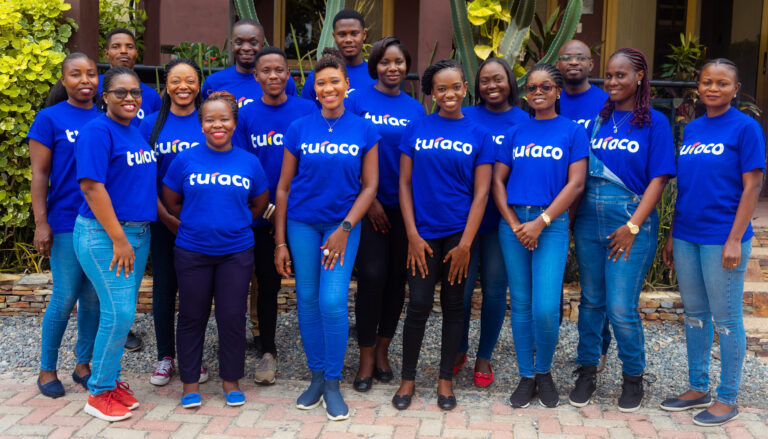
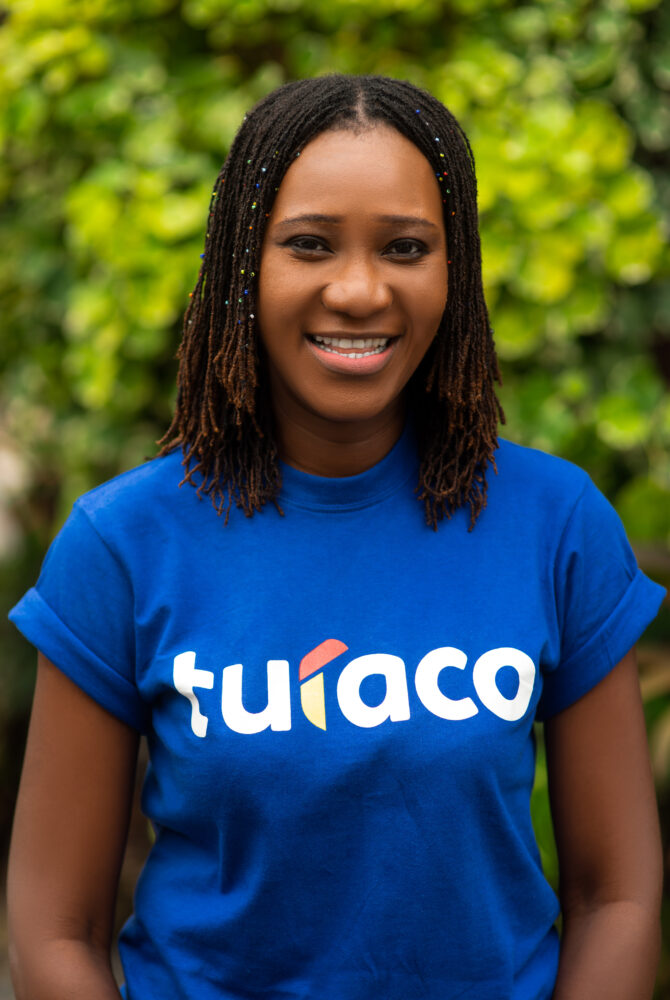
Turaco, a Kenyan tech-enabled affordable insurance startup with operations in Kenya, Nigeria and Uganda has launched in Ghana after the acquisition of MicroEnsure Ghana for undisclosed sum.

The expansion increases Turaco’s operational markets to four–Kenya, Uganda, Nigeria, and Ghana–and active policies by 25% and is part of the firm’s long-term vision to provide simple and accessible insurance to 1 billion people.

According to Ted Pantone, Co-founder & CEO of Turaco: “This deal marks a significant milestone for our growth and expansion strategy for Africa and a strategic move to drive innovation into a market that has one of the continent’s highest insurance coverage rates. We are excited about the opportunity of building on the 15 year legacy of MicroEnsure and leveraging our customer-centric tech solution to provide affordable and accessible cover.”

MicroEnsure will rebrand as Turaco Ghana and retain the expertise of the existing team and leadership to make the transition seamless for both its partners and customers. MIC Global, the current owner of MicroEnsure Ghana and one of the leading micro-reinsurance businesses in the world, combines insurance capacity, in-country insurance licenses, world class distribution, and scalable tech. it also creates embedded microinsurance solutions as white-label products for firms to enhance their brand, differentiate their product, drive up revenue, and attract and retain customers.

In Ghana, MicroEnsure, now Turaco Ghana, was the pioneer microinsurance intermediary in Ghana, providing insurance for low-income earners and the first to launch mobile insurance through Tigo in 2012 and Airtel in 2013, serving 3 million customers. In 2020, the company provided insurance protection to 4,000 Micro, Small and Medium Enterprises in Ghana, with free comprehensive life and business protection in partnership with the United Nations Capital Development Fund. In 2020, it launched a health protection plan for customers of Vodafone Ghana.

These deal will give Turaco easy access to the Ghanaian market for its medical, life, asset, and vehicle insurance solutions. With over 1,300,000 lives across Kenya, Nigeria, Uganda covered, Leveraging its technology, Turaco maintains that its claims process is the best and will remain within 3 days.

“I am delighted to partner with Turaco as they take over management and operations of MicroEnsure Ghana (now Turaco Ghana). We are confident that our micro insurance products and the unique Turaco model will drive continued success in providing millions of customers the insurance safety net they need,” said Harry Croydon, Co Founder & COO MIC Global.

The acquisition gives Turaco access to a very big market in West Africa.

According to 2021 census data, Ghana has one of Africa’s widest insurance coverage levels, with more than 60 per cent of its population holding either the National Health Insurance Scheme (NHIS) or a private health insurance scheme. Yet millions of Ghanaians still lack access to healthcare, with more than 10 per cent experiencing catastrophic financial shocks due to yearly health expenditures. Those who do have insurance find it hard to use, with complex exclusions and slow turnaround times for claims payment. 

Leona Abban, General Manager of Turaco Ghana,

Leona Abban, General Manager of Turaco Ghana, said: “As a pioneer of microinsurance in Africa, we focused on making an impact while providing affordable insurance to low-income customers. Over our 15 year history, our inclusive approach has benefited 3 million Ghanaians with the safety net of being insured. As we move into this next growth phase as Turaco Ghana, we look forward to leveraging our in-market experiences to improve our approach further and capture additional segments of the market that have historically been excluded.”

Omidyar Network, and Sanlam Emerging Markets are some of MicroEnsure’s backers. The company is headquartered in
the United Kingdom with offices in nine countries. TechMoran has not established whether Mic Global will exit other markets or not.

Launched in 2019, Turaco uses technology to increase access to affordable insurance with a seamless and customer-centric approach. Turaco’s B2B2C business model leverages partnerships with tech-enabled, mass-market companies such as telcos, banks, and fintechs, to provide easy distribution and insurance management. Turaco embeds its service as a white-labelled offering that is bundled with a partner’s core product or service, integrating with their existing payment processes to collect premiums.

There was a time Turaco partnered with Power Financial Wellness, a fintech startup to provide customers with affordable health insurance products. The insurance plans with flexible premium payments were aimed towards gig and salaried employees across the region. Power Financial was to simplify the process and empower workers across Africa by delivering a holistic financial wellness solution for firms and their workforce as technology continues to revolutionize the way people transact, borrow, save, and insure. Turaco was up to something here as most freelancers and the young skilled population prefer gig work from full-time employment and micro-insurance services are highly needed.

Recently, Turaco announced it had  secured an underwriting license in Uganda to expand access to  affordable and simple insurance for the mass market in Africa. In Uganda, more than 15% of the population faces catastrophic health expenses each year. Unfortunately, insurance adoption remains low, with a mere 2% of individuals in sub-Saharan Africa being insured, and less than 1% of Ugandans holding insurance coverage

Turaco Microinsurance aims to leverage its triumphant technology-driven insurance distribution model to bolster insurance penetration in Uganda. The firm also surpassed 1,000,000 lives insured with 350,000 of those signing up after a newly launched partnership with Airtel Money Uganda and Prudential Uganda.

The rapid customer uptake reinforced the demand for Turaco’s products and approach. From a simple 2-step USSD sign-up process to an average 15 hour turnaround time on claims processing and payment, the Airtel Hospital Sente product was designed to be simple and easy to use.

Last year, Turaco announced the close of a $10 million Series A equity round led by AfricInvest, via the Cathay Africinvest Innovation Fund, and existing investor, Novastar Ventures. The round also included participation from Enza Capital, Global Partnerships, Zephyr Acorn, Operator Stack, Asi Ventures Limited, and Push Ventures

In 2019, the Nairobi-based micro-insurtech startup raised $1.2 million in seed funding to further scale its operations across Africa led by GAN Ventures, Mercy Corps Ventures and Musha Ventures alongside several angel investors. That round followed a $40,000 received in grant funding late 2018 from Villgro Kenya and between $50,000 to $60,000 venture building support facilitated by inclusive fintech accelerator, Catalyst Fund

Lupiya raises $8.25 million in Series A round to grow its neo-banking business

0

Zambian neobank, Lupiya has secured $8.25 million in Series A seed funding round led by Alitheia IDF Fund, a Private Equity Fund that invests with a gender lens, with substantial participation from INOKS Capital SA and the German Investment Bank KfW DEG.

In 2020, Lupiya raised $1 million from South Africa’s Enygma Ventures to enable it to scale.

Founded in 2016, the neobank has steadily risen as a prominent figure in Zambia’s fintech scene and has an impressive list of backers that includes Mastercard, Google, The World Bank, and the UN International Trade Center. Lupiya’s primary mission is to bridge the financial inclusion gap by offering easy-to-use, technology-driven financial solutions to the unbanked and underbanked populations in Zambia. Lupiya’s efforts were recently lauded by US Vice President Kamala Harris during her visit to Zambia where she said, “Providing capital to women helps them increase the economic status of their families and their communities.”

Evelyn Chilomo Kaingu, Co-founder and CEO of Lupiya, expressed her excitement about the funding: “This Series A investment marks a significant milestone in our journey to continue serving our customers and the opportunity to further provide holistic financial solutions. The team at Lupiya has worked hard and is excited for the new phase of our growth. With the support of Alitheia IDF, INOKS Capital, Mastercard, and Kfw DEG, we are better poised to scale our operations and deepen our footprint not just in Zambia but also in the broader Southern and East African region.”

The funding will be channeled into enhancing Lupiya’s technological infrastructure, expanding its range of financial products, and scaling its operations to reach more customers.

Polo Leteka, founder of South African based financial service firm, IDF Capital, and a co-Managing Partner of Alitheia IDF Fund, commented on their decision to lead the round, stating, “We have always been on the lookout for startups that are at the cusp of making a significant impact in the financial sector of Africa. Lupiya’s vision and dedication to financial and gender inclusion resonates deeply with our own objectives. We believe that with this funding, they will be better equipped to make financial services accessible to many more Zambians.”

“It’s remarkable to witness Lupiya’s growth, especially given our initial investment of $1 million during the peak of the pandemic. We have always believed in the resilience and potential of this team. Their vision to transform financial inclusion in Zambia, even amidst global challenges, aligns perfectly with Enygma’s mission,” says Sarah Dusek, a partner at Enygma Ventures – one of the early backers of Lupiya. “Today’s Series A funding further validates our early belief and the transformative power of resilient entrepreneurship.”

Vincent Malekani, Mastercard Country Director for Zambia, and Malawi stated, “Our collaboration with Lupiya stands as a testament to Mastercard’s commitment to fostering digital inclusion across Africa. Lupiya’s emphasis on bringing reliable financial services to the underserved resonates deeply with us. By integrating Mastercard’s payment rails into the Lupiya platform, we are not only enhancing transaction efficiency for users. but also building a more inclusive financial ecosystem in Zambia.

“Partnerships of this nature support Mastercard’s global commitment to bring 1 billion people into the digital economy by 2025, including 25 million women entrepreneurs.”

The involvement of renowned financial institutions like INOKS Capital SA and KfW DEG further underscores the trust and confidence the global investor community places in Lupiya’s potential to revolutionize the financial landscape in Zambia.

As fintech solutions continue to reshape the African financial ecosystem, Lupiya’s fresh capital infusion is yet another testament to the continent’s dynamic and evolving digital economy.

Hurone AI Incorporates Generative AI to Revolutionize Cancer Care in Nigeria & Kenya

0

Hurone AI, an Al oncology software maker, is set to revolutionize cancer care in two of Africa’s largest economies with its expansion into Nigeria and Kenya after it announced partnerships with key health institutions in these regions.

Hurone AI will utilize Amazon’s Bedrock, Hurone AI to integrate generative AI technology to provide specific tools such as creating personalized treatment plans and summarizing patient information, thereby making cancer treatment and side effect management more accurate and efficient.

“This strategic agreement demonstrates our commitment to redefining patient experiences and outcomes in underrepresented populations around the world,” says Kingsley I. Ndoh, MD, MPH, Founder & Chief Strategist of Hurone AI. “We are excited to work with the Government of Kisumu and Jaramogi Teaching and Referral Hospital to improve cancer care in Kisumu and beyond.”

Hurone AI’s flagship software, Gukiza, reduced off-duty oncology calls by approximately 60% by enabling patients to interact directly with an AI-driven system for real-time monitoring and symptom reporting. The interaction replaces the traditional need for phone calls, allowing oncologists to instantly assess patient symptoms and provide timely interventions.

Generative AI automates complex tasks such as creating clinical summaries, generating treatment plans, and monitoring side effects, now allowing oncologists to save more than 75% of the time traditionally required to handle these responsibilities thus achieving superior patient care and operational effectiveness.

With Hurone AI, healthcare institutions can not only improve the quality of treatment but also streamline processes in a blend of technological innovation and patient-centred care.

In Kenya, Hurone AI through a strategic partnership with the Government of Kisumu has joined forces with Jaramogi Teaching and Referral Hospital in Kisumu, the largest tertiary medical center in Kisumu that caters to over 5,000 cancer patients annually. This partnership will help enhance operational efficiency and optimize patient data, improving the quality of cancer treatments, ensuring seamless remote monitoring, and access to timely care interventions when needed to improve patient outcomes.

Echoing this sentiment, Dr. Gregory Ganda, Minister of Health, Kisumu, adds, “Kisumu continues its commitment to healthcare innovation by embracing Hurone AI’s capabilities. This stride dovetails perfectly with our earlier adoption of San Francisco-based Zipline drone technologies for healthcare logistics.”

In Nigeria, Zenith Medical & Kidney Center, the largest Kidney Center in West Africa, is at the forefront of treating urologic cancers, chronic kidney disease, and performing kidney transplants. Nigeria bears 20% of the cancer burden in Africa.

The Amazon Web Services (AWS) Health Equity Initiative has pledged additional support for these expansion efforts. Danielle Morris, health equity lead at AWS, articulates, “AWS is committed to helping improve health outcomes around the world. We believe that cloud technology can help address inequities in global health, and Hurone AI is a great example of how customers in our Health Equity Initiative are innovating truly novel solutions that can easily scale using cloud technology to bridge gaps in our global healthcare system and drive positive outcomes.”

The visionary incorporation of generative AI into Hurone AI’s suite, with support from the AWS Health Equity Initiative, significantly improves the precision of the company’s solutions. “AWS’ support and the cutting-edge cloud tools we have incorporated not only improve accuracy but also leaves a profound impact on cancer patients worldwide,” concludes Ndoh.

Unboxing & First Impressions of the OPPO Reno10 5G

0

OPPO recently launched its Reno 10 series in Kenya with Reno10 Pro 5G and Reno10 5G both presented in ultra-slim body, big battery with SUPERVOOCTM for fast charging at Recommended Retail Price of Ksh 56,999 RRP for the Reno10 5G and Ksh 69,999 for the Reno10 Pro 5G.

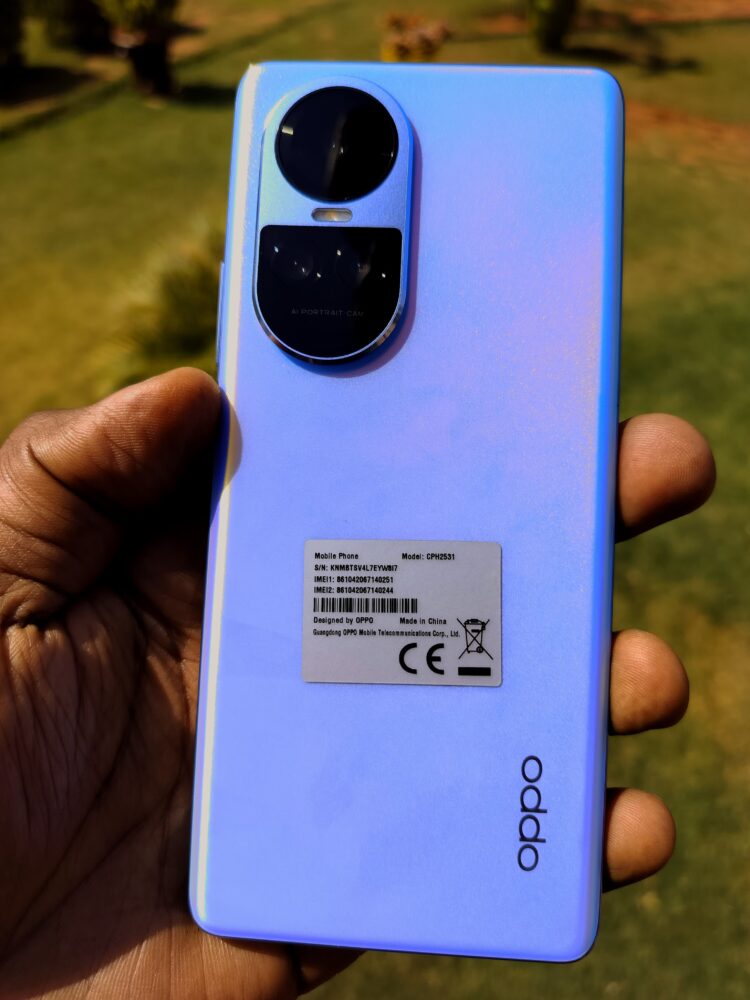
I got an Ice Blue OPPO Reno10 5G review unit a few days before the launch and have had some time with it and I love it and I know you will love it too. What stands out is the sleek curved finish and the camera system. Like its predecessor, the Reno 8T, the Reno 10 5G comes with a sleek, smooth, curved glossy back. It’s also curved on the front display and features an ultra-slim body. From a distance, you are likely to mistake it for Reno 8T but we will get into the details later.

Apart from stunning Ice Blue design I got, there is also a Silvery Grey version in the market so if Ice Blue is so girly for you, you can go for the Silver Grey version.

Here is a short video of the unboxing.

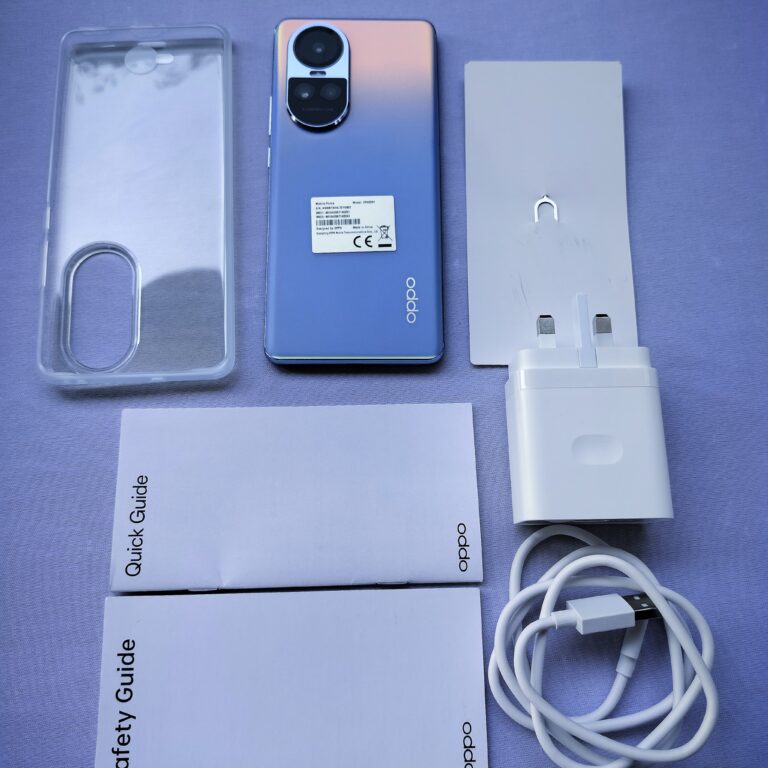
In the Box

Phone x 1
Charger x 1
USB Data Cable x 1
SIM Ejector Tool x 1
Quick Guide x 1
Safety Guide x 1
Protective Case x 1

Quick Specs

Colour: Ice Blue

Size: 162.43mm by 74.19mm by 7.99mm

Weight: 185g

RAM: 8GB

ROM: 256GB

Display: 6.7″

Camera: Rear

Main camera: 64MP
Telephoto: 32MP
Ultra-wide-angle: 8MP

Front

32MP

Chip: MediaTek Dimensity 7050

CPU: 8 cores

GPU: ARM Mail-G68 MC4

Battery: 5000mAh/19.45Wh (Typical) with SUPERVOOCTM 67W Fast Charge

SIM: SIM 2 Support: Nano-SIM card / Nano-USIM card

USB Interface: USB Type-C

Earphone Jack: Type-C

Operating System: ColorOS 13.1

Display & Design

The Ice Blue back finish gives the phone a sparkling, shimmering look and the 3D cover finish also comes with OPPO Glow which glows and shifts colour depending on the light. The curved 3D cover also makes the phone smooth and comfortable in the hand due to its slim body structure.

The shiny plastic back cover has the phone’s powerful camera system at the top left and the OPPO logo at the bottom right. The power and volume buttons are on the right edge while the left edge is clear and smooth for hand support. OPPO Reno8 T has the power button on the right while its volume keys are on the left edge. OPPO Reno 10 5G top edge has proximity sensors and the IR blasterIR to remote control your TVs, air conditioners ,DVD player, projector,fans, camera and many others.

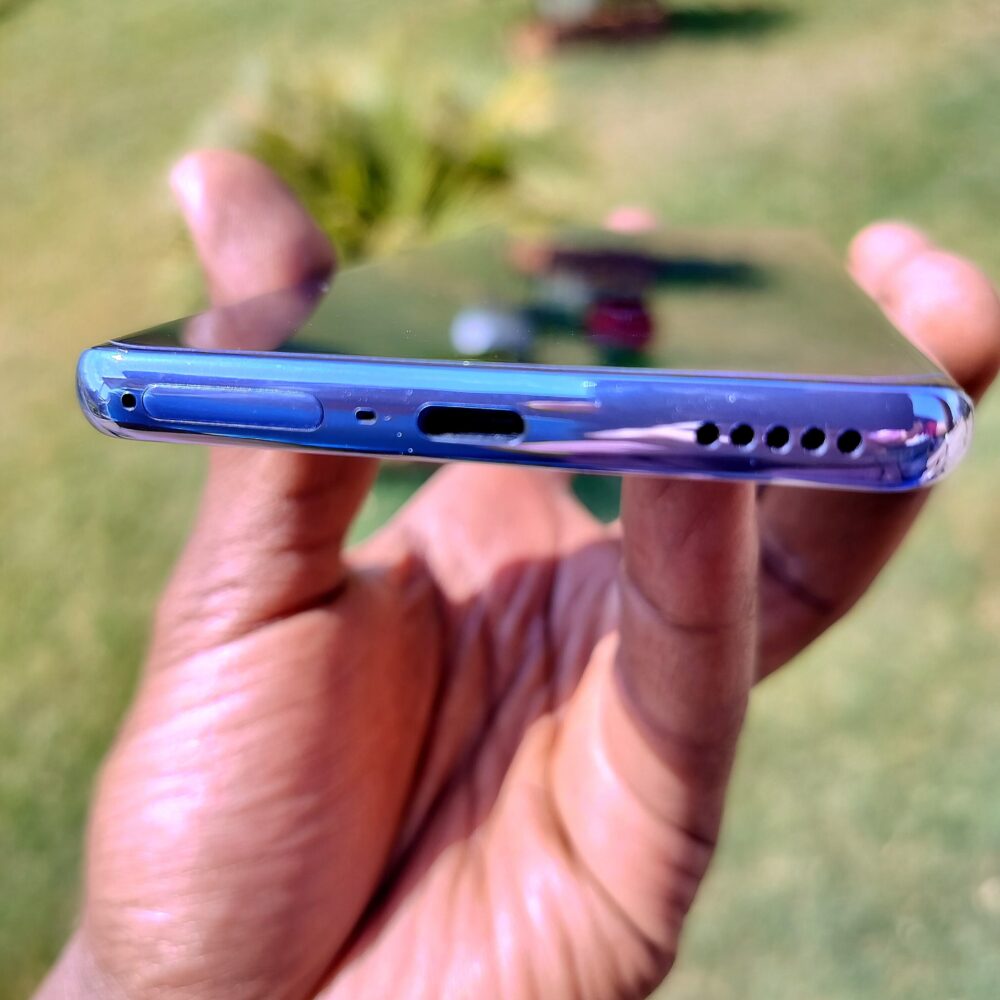
The bottom edge has USB Type C in the middle, memory and SIM slot on the left and the stereo speaker on the right. The curved 6.7″ display has minimal bezels surrounding it and on the top side is the front camera and speaker. The bottom section on the display has the menu with home button, the back button and recent button.

Camera System

I talked about the OPPO Reno 10’s camera system briefly and I will get into detail later. It has a main camera of 64MP, a 32MP Telephoto, an 8MP Ultra-wide-angle camera and a 32MP Front camera. I will just show its photos now but in the review I will include enough photos taken by the OPPO Reno 10 5G in different modes for us to get a deep dive into its performance in my review article.

Performance

The Reno10 is powered by the MediaTek Dimensity 7050 SoC that promising fast and reliable performance to its users. On battery performance, the Reno10 packs a 5000mAh battery, with 67W SUPERVOOCTM charging to 100% in just 47 minutes.  

With the additional support from OPPO’s exclusive Battery Health Engine, the effective battery lifespan of both the Reno10 Pro 5G and the Reno10 5G can be extended to as many as hours as possible.

Reno10 5G comes with 8GB of RAM and 256GB of ROM and supports OPPO’s innovative RAM Expansion technology, which virtually converts unused ROM space into up to an additional 12GB and 8GB of RAM for enhanced performance.

OPPO Reno10 5G

OPPO Reno 10 5G

ANKA, the SaaS for global African businesses, closes S$5M led by IFC to expand in Kenya & Nigeria

0

ANKA, the “all-in-one SaaS for global African businesses”, has closed $5M pre-Series A extension round led by the International Finance Corporation (IFC) with participation from Proparco and the French Public Investment Bank to fuel its efforts in product building as well as expansion.

With the new round of funding, ANKA’s total investment to date reaches US$13.5M since being founded in 2016.

According to ANKA Co-Founder and CEO Moulaye Taboure, “This new round of investment from our partners is crucial in pushing forward the creativity and innovation that we know is being spearheaded by the continent and that is speaking louder than ever on the global stage.”

The company is set to strengthen its presence in key countries where it has already recorded unparalleled growth; including Nigeria and Kenya for the number of sellers, and the US for its buyers and subscribers. Furthermore, ANKA also plans to use the investment to actively recruit sales, technical, and product talent to catalyse its growth.

Since its last injection of capital in 2022, ANKA has almost doubled its margins and its community of African SMEs in 47 out of 54 countries on the continent. The company processed over US$50M in transactions in over 175 countries around the world. Since its first round of fundraising in 2022, ANKA’s turnover has increased over 18 times from €200k to €3.6M.

ANKA now aims to onboard 100,000 African sellers by 2030, championing the cross-border trade of “all things made of Africa” to a global audience. These achievements underline ANKA’s influential presence in the African e-commerce ecosystem. As well as its ambition to reach the same level as ‘Paypal’ for all the entrepreneurs on the continent.

“Empowering African artisans, particularly women, and helping them access wider markets is crucial to raise the bar of economic inclusion and spur sustainable growth. ANKA’s strategy of connecting artisanal fashion designers and merchants to global markets aligns with our vision of supporting Africa’s creative industry to unlock new opportunities for inclusive growth,” said Makhtar Diop, IFC Managing Director.

ANKA provides a subscription model platform for African entrepreneurs to sell goods via a customised storefront, Instagram or WhatsApp, be paid for goods and services via international payment methods and withdraw money instantly via local payment methods (e.g. mobile money or bank transfer) or ANKA’s dedicated VISA cards and access to an aggregation of the best shipping solutions to ship goods, such as with DHL service for less than $20 up to 2kg in under 72 hours.

Fabrice Perez, Head of Proparco VC division shared: “We are delighted to see the growing impact of ANKA on the development of SMEs in Africa, as well as on employment for women, who account for 80% of the 20,000 merchants using the platform. Following a loan bridge by Digital Africa (fully repaid now), this equity investment reaffirms Proparco’s support for ANKA.”

Globally, the world has a vast distribution of African diaspora, with close to 45 million people of African descent living in North America, and 10 million living in Europe. Both regions are already home to ANKA’s biggest exports and represent a significant growth opportunity for the company as it pursues its goal to boost the investment in and sale of Africa’s creative economy, globally. 

COO and Co-Founder of ANKA Abdoul Kadry Diallo added, “We have always believed in the untapped cultural wealth of the continent. Our continent has amazing people, products and services that can contribute significantly to the global economy. This additional round of funding will allow us to continue improving our operational efficiencies, supporting us to achieve the next level of profitable growth, not only for us but for our sellers”.  

Sophos Supports Shift to Hybrid Environments with New Generation Remotely Managed Wi-Fi 6 Access Points

0

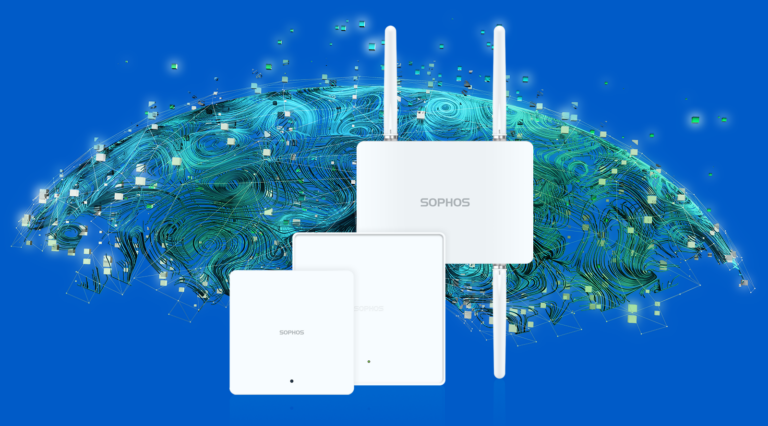
Sophos a global leader in innovating and delivering cybersecurity as a service, announced the Sophos AP6 Series to support the shift to hybrid environments with a new generation of remotely managed Wi-Fi 6 access points. The new offering adds another component to Sophos’ secure access portfolio, which includes Sophos Firewall and Sophos Switch.

“With cloud-managed Wi-Fi, Sophos is addressing the need for more scalable, remote-managed Wi-Fi solutions that support the increasing number of connected devices and the proliferation of IoT systems,” said Daniel Cole, vice president of product management at Sophos. “This combination of our Sophos AP6 Series and Sophos Switches provides channel partners with a consolidated single vendor access solution strategy, easing the burden and overhead cost of managing multiple disparate systems from different vendors. Many access layer networks are still operating at 1 Gigabit speeds. With the significant performance enhancements in Wi-Fi 6, the industry has a great opportunity to review and modernize the network ecosystem that wireless is deployed into. Sophos’ solution dissolves a common bottleneck at the physical layer and can boost the total network performance of a company’s Wi-Fi infrastructure.”

Sophos AP6 models – including 420E, AP6 840, AP6 840E and the outdoor AP6 420X – have at least one built-in 2.5 Gigabit interface for faster LAN connectivity. When combined with the Sophos multi-Gigabit switches, which also support 2.5 Gigabit Ethernet, companies can unlock faster speeds across the entire network. With the AP6 420E and 840E devices, which support Wi-Fi 6E, companies can additionally use the 6 GHz band, which is a newer, less congested space, offering high performance for the latest devices. 

Sophos access points can be remotely managed in the cloud-based Sophos Central platform alongside a broader range of solutions than any other vendor. This enables partners to oversee all customer installations, respond to alerts, and track licenses and upcoming renewal dates via a single, intuitive interface. Additionally, there is an on-premises interface administrators can take advantage of for on-AP settings.

Availability

The Sophos AP6 Series is available for immediate purchase exclusively through Sophos’ global channel of partners and managed service providers (MSPs). 

Sha Zhu Pan Scammers Use Fake Cryptocurrency Trading Pools to Steal More Than $1 Million, Sophos Reports

0

Sophos, a global leader in innovating and delivering cybersecurity as a service, today released findings on a major shā zhū pán (pig butchering) operation utilizing fake trading pools of cryptocurrency (liquidity pools) to steal more than $1 million.

The report, “Latest Evolution of ‘Pig Butchering’ Scam Lures Victim in Fake Mining Scheme,” details the story of one of the scammed victims in the pools, named *Frank, and how he lost $22,000 in one week after “someone” pretending to be “Vivian” on the dating app MeetMe contacted him.

After Sophos X-Ops investigated Frank’s story, the team uncovered a total of 14 domains associated with the scam operation, as well as dozens of nearly identical fraud sites that, together, netted this one “ring” of pig butcherers more than $1 million in three months.

This scam takes advantage of the largely unregulated world of decentralized finance (DeFI) cryptocurrency trading applications. Such applications create “liquidity pools” of various types of cryptocurrencies that users can then access to make trades from one cryptocurrency to another. Those who participate in the pool receive a percentage of any fee paid when a trade is made, creating an enticing return on investment. To join a pool, participants first have to sign an online smart contract—a contract that gives another account (typically the operators of the pool) permission to access participants’ wallets to facilitate trades. Fake pools, which pig butcherers are increasingly utilizing to siphon funds from targets, operate in much the same way. However, unlike legitimate pools, at some point these scammers “pull the rug” and empty the entire liquidity pool for themselves.

“When we first discovered these fake liquidity pools, it was rather primitive and still developing. Now, we’re seeing sha zhu pan scammers taking this particular brand of cryptocurrency fraud and seamlessly integrating it into their existing set of tactics, such as luring targets over dating apps. Very few understand how legitimate cryptocurrency trading works, so it’s easy for these scammers to con their targets. There are even toolkits now for this sort of scam, making it simple for different pig butchering operations to add this type of crypto fraud to their arsenal. While last year, Sophos tracked dozens of these fraudulent ‘liquidity pool’ sites, now we’re seeing more than 500,” said Sean Gallagher, principal threat researcher, Sophos.

Sophos X-Ops first learned of this liquidity mining operation from a victim named Frank. Frank had connected on the dating app MeetMe with a scammer hiding behind the persona of Vivian, a German woman supposedly living in Washington, D.C. for work. For weeks, Frank chatted with Vivian, who mixed her romantic promises with persistent attempts to convince Frank to invest in crypto.

Eventually, Frank opened a Trust Wallet account (a legitimate app for converting dollars to cryptocurrency) and connected to the link to the liquidity pool site Vivian recommended. In reality, the pool site was a fraud site utilizing the brand of Allnodes, an established decentralized finance platform provider, as a cover. Between May 31 and June 5, Frank invested $22,000 in the scheme. Just three days later, the scammers emptied Frank’s digital wallet. Frank, looking to recover his money, turned to Vivan, who claimed he needed to invest even more in the pool to recover his funds and reap the “rewards.” While waiting for his bank to authorize a money transfer to Coinbase, Frank started researching what was going on and came across an article on liquidity mining from Sophos. At this point, Frank reached out to Gallagher for help.

Even after Gallagher instructed Frank to block Vivian, she eventually found him on Telegram and continued her attempts to entice him into “continuing their investment,” going so far as to send a lengthy, emotional letter that was very likely created by a generative AI app.

“What makes these sorts of scams particularly tricky is that they don’t require any malware to be installed on a victim’s device. They don’t even involve a fake app, like some of those we’ve encountered in other CryptoRom scams. This entire fake liquidity pool was run through the legitimate Trust Wallet app. At one point, Frank even tried to contact Trust Wallet’s support to recover his money, but he connected with a fake support contact from the fraudulent liquidity pool site. There is no regulation of these pools, legitimate or otherwise, on these crypto apps. These scams succeed solely through social engineering, and the scammers are persistent. Vivian continued trying to contact Frank for weeks after he blocked her on WhatsApp.

“The only way to stay safe from these scams is to be vigilant and know that they exist and how they operate. That is why Frank wanted to share his story. Users need be wary of anyone they have no connection with reaching out to them suddenly via any dating app or social media platform, particularly if the ‘person’ reaching out wants to move the conversation to a platform like WhatsApp and then discusses investing in cryptocurrency,” said Gallagher.

Sophos has shared its data on this case with Chainalysis and Coinbase, as well as other threat intelligence professionals in the cryptocurrency space, all of whom continue to investigate. People who believe they may be a victim of pig butchering or liquidity mining fraud are free to reach out to Sophos. They should also reach out to their local law enforcement for assistance.

CA Board Suspends Ezra Chiloba, Appoints Christopher Wambua

0

The Communication Authority of Kenya has suspended Ezra Chiloba as the Director General after an internal board meeting on Monday. Chiloba who ascended to office in September 2021 will be replaced by Christopher Wambua as the Acting Director General until Further notice. Wambua who has been serving as the Director for Cooperate Communications at the Authority prior to the new appointment.

The announcement was made through an internal memo by the board chair Mary Mungai.

In the statement, mungai said, “Following a meeting of the Authority’s Board held on 18th September 2023, resulting in the suspension of the Director General, I am pleased to inform all staff of the appointment of Mr Christopher Wambua as a Director General in Acting Capacity effective today until further notice. I trust that you will accord him the necessary support,”

Prior to his suspension, according to the appointment letter, Chiloba was to serve in the position for a renewable period of four years. So far, there’s no much communication regarding his suspension, we wait for the CA to give further communication.

ITW Africa 2023 Wraps Up, Setting New Benchmarks for Connectivity Excellence in Africa

0

ITW Africa 2023 the continent’s premier digital infrastructure event, has successfully concluded, leaving a significant impact on the industry and paving the way for a future of connectivity and innovation across Africa.

This year’s event, held in the bustling metropolis of Nairobi, brought together over 800 delegates from over 55 countries, exceeding expectations and solidifying ITW Africa’s reputation as a vital hub for the industry. The event also attracted more than 350 leading companies and organizations who showcased their latest technologies, services, and solutions.

We wish the connectivity issue can be solved, and we are always looking for new technologies to help us

Lucenildo Lins, CTO of Angola Cables, emphasized the industry’s positive trajectory, stating, “We have increased our revenues with open topology, with the new cables we will increase revenues,” underlining the event’s forward-looking focus.

Ronald Philip, Senior Director at Agility Data Center Campuses, touched on the intricacies of infrastructure development, stating, “Land acquisition can be unpredictably long, and if the clock is ticking that can be a challenge… You need to have many horses running the race,” highlighting the multifaceted nature of telecom growth.

David Eurin, CEO of Liquid Dataport, Liquid Intelligent Technologies, spoke to the industry’s adaptability, saying, “We are one of the largest distributors of Microsoft services across Africa. People find a way to use the cloud. We wish the connectivity issue can be solved, and we are always looking for new technologies to help us, such as LEOsat.”

Beyond the knowledge exchange, ITW Africa 2023 fostered invaluable networking opportunities, with connections made poised to drive future innovations and partnerships that will accelerate the telecom sector’s growth.

As ITW Africa 2023 came to a close, the overriding message was clear: Africa’s connectivity sector is poised for unprecedented growth, driven by innovation, collaboration, and a collective dedication to connectivity excellence.

How to Set Up and Use Apple Pay in Stores and Online for Payment with Your iPhone

0

Apple Pay is the default payment method for iPhone, iPad, Apple Watch, and Mac owners. Your iPhone or Apple Watch can be used to pay for things both in-person and online by attaching a credit or debit card through the app. You can also use your iPad or Mac to buy items at supported websites. The money is deducted from your account after you verify the purchase with Face ID, Touch ID, or a PIN.

You must have a suitable device and operating system version in order to use Apple Pay. For instance, the app and service are only compatible with iOS 8.1 and higher. However, iOS 15.5 or higher is required if you also wish to utilize Apple Cash to transfer and receive money from other people. Here’s how to set up Apple Pay for each of your gadgets.

Add a Card to iPhone Apple Pay

  • Open the Wallet app on your iPhone, then tap the plus sign (+) in the top-right corner. 
  • Select Debit Card or Credit Card, then click Continue. 
  • You now have two options for adding your credit or debit card.
  • To record your name, phone number, and expiration date on the card, you can scan it using the camera on your phone.
  • The card details can also be manually entered in the alternative. 
  • Type the card number and expiration date after selecting Enter Card Details Manually.
  • The security code on the back of the card must be manually entered using either method. After entering the expiration date and tapping Next, you must accept the terms and conditions.
  • The security code on the back of the card must be manually entered using either method. After entering the expiration date and tapping Next, you must accept the terms and conditions.
  • The bank must then receive an email, text message, or phone call from you to validate your card. Your card will be accepted after entering the code and added to the Wallet app for later usage with Apple Pay.

Add a Card to iPad Apple Pay

  • There is no Wallet app if you wish to set up Apple Pay on your iPad to make purchases online or in physical stores. Instead, select Add Card by going to Settings > Wallet & Apple Pay.
  • To add a new card, choose Debit or Credit Card and then enter the card details similarly to how you would on an iPhone. 
  • To add a payment method that you have already added to your iPhone, tap Previous Cards. A list of the cards you added to your iPhone will appear.
  • Select any you don’t want to add to the iPad by unchecking them, and then select Continue. 
  • The next step is to confirm the card via text, email, or phone call to the card issuer.

On Apple Watch, Add a Card to Apple Pay

Additionally, you can utilize Apple Pay on your Apple Watch. You can add a card to your Apple Watch once you’ve finished adding it to your iPhone. You may always manually add the card to your watch using the Watch app on your phone if you didn’t do so throughout this step.

  • To add a new card, navigate to Wallet & Apple Pay in the app and hit Add Card.
  • Scroll to the Other Cards On Your Phone section for a card you’ve previously added to your iPhone, then hit Add next to any card you want to use from your watch.
  • Open the Wallet app on your Apple Watch to see your cards. 
  • To see the newly added cards, swipe downward. 
  • If you swipe to the bottom of the screen and select Add Card, you can also add a card directly from the watch.
  • You can then add a new card or one from your iPhone.

Add a Card to Apple Pay on Mac

  • Go to System Settings (or System Preferences if you’re using macOS Monterey or earlier) on your Mac to access your cards.
  • After making your selection, click Add Card under Wallet & Apple Pay. 
  • The cards that have already been added to Apple Pay are displayed on the next screen.
  • Click Next after unchecking any you do not want to add. The security code must then be entered before any card can be used on your Mac. 
  • Click Add a Different Payment Card to add a new card. The information can then be manually entered or scanned. 
  • Accept the terms and conditions before calling, texting, or emailing the card’s issuer to confirm the card’s validity.

Customize Apple Pay Settings

There are a few settings you can change in Apple Pay once you’ve added your credit and debit cards to make your experience with the app better. 

  •  Navigate to Settings > Wallet & Apple Pay on your iPhone or iPad. 
  • Select Wallet & Apple Pay from System Settings or System Preferences on a Mac.

From your iPhone, you can do the following:

  • Enable or disable the need to double-click the Side button to view your cards.
  • Enable or disable the ability to use Apple Pay in Safari AutoFill on compatible websites.
  • Allow your phone to confirm payments on a nearby Mac.
  • Directly add orders to the Wallet app.

Finding Phishing Attempts in Email and SMS.

0

If you want to make sure an email you received has safe links and is from a known source? 

Here are some measures for staying safe:

  • Check the email’s From address. Think twice before clicking any links in an email if you don’t recaognize the sender or the address.

  • Find a common greeting. Typically, you wouldn’t start a business email with a salutation like “Hi Dear.” An email from a friend won’t often misspell your name or use an honorific like “Mr., Mrs., or Miss.”

  • Check the link URLs. Before clicking on a link, hover your mouse over it. Your browser will display each one’s web URL. Don’t click on a link if it seems suspect (for example, a link from Netflix that sends you to a completely other domain). Move on after deleting or reporting the email as spam. 

  • Be wary of any emails that invite you to click on a link, whether to update your payment details, update your account information, receive a coupon for free stuff, or examine an invoice you aren’t expecting.

How to Prevent Phishing Email Attempts

Boost your online security by adding additional levels of protection to lessen the harm that scammers might cause:

  • Put security software to use. The top security and antivirus programs include built-in phishing defense. To protect you from phishing attempts, configure the software to update automatically and run in the background.

  • Whenever possible, use multi-factor authentication online. If you set up multi-factor authentication to require something you have (like a hardware security key or an authenticator app passcode) or something you are (like a scan of your fingerprint, retina, or face), it will be more difficult for hackers to access your accounts even if they manage to obtain your username and password.

  • Make a data backup. Regularly make copies of your vital papers and data, and save them on an external drive or with an online backup or storage service.

Ways to Control Your Teen’s Safety and Privacy Online

0

Teenagers may keep their Internet activities a secret, but they still need to be protected from risks. 

Tips for Online Family Safety

What will your family plan look like? Six steps are listed below to get you started:

 Learn Self-Protection Techniques

Although antivirus software is essential for online security, a software security suite that protects both your PC and mobile devices offers a broader level of protection. The top security packages include VPN, phishing protection, a password manager, and firewall security.

Learn Online Identity Protection Techniques

McAfee’s study found that 15% of children experienced attempted account theft, while 28% of parents reported it happening to them. Your family’s accounts and personal information are monitored by an identity protection service for unauthorized or suspect behavior.

Spend some time protecting your devices.

Utilize a PIN or another kind of security, such as fingerprint or facial recognition, to lock down the mobile devices used by your family. Wherever practical, implement multi-factor authentication for apps.

Create Strong Passwords To Protect Your Accounts

Each account should have a different password. As a result, it is more challenging for hackers to compromise several accounts. A password manager will handle all the work for you by generating and storing secure, one-of-a-kind passwords.

Update Your Devices’ and Software

You can stay up to date with the newest features and advancements and stay one step ahead of hackers by updating your operating systems and applications. Operating system and app updates frequently come with safety fixes and enhancements that can prevent hackers from using any exploits or security gaps on your devices.

Maintain Contact with Your Family

Ask your children a few questions about the news online as you talk to them about their day. What are their current favorite games and apps? What programs do they watch? Is there a funny post or video they want to share? These inquiries will make it easier for you to comprehend their world and will make it easier for kids to open out to their parents about their private online life.

Gates Foundation-backed i3 to Fund 29 Healthcare Supply Chain Startups in Africa

0

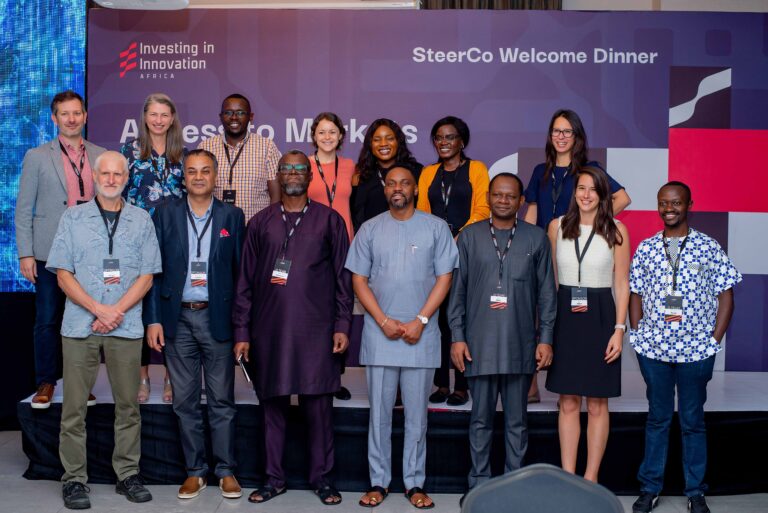
Investing in Innovation Africa (i3), a pan-African initiative for start-ups building the future of healthcare supply chains, has announced its second cohort of 29 companies.

i3, funded by the Bill & Melinda Gates Foundation and sponsored by Cencora (formerly AmerisourceBergen), Merck Sharpe & Dohme (MSD), Microsoft, and Chemonics, will give the early and growth stage startups a $50,000 grant, and tailored investment readiness support from leading accelerators Villgro Africa, IMPACT Lab, Startupbootcamp Afritech, and CcHUB.

According to Kieran Daly, Director, Global Health Agencies and Funds at the Bill and Melinda Gates Foundation: “As countries and global health institutions work to expand access to priority products, we face an urgent need to leverage solutions across the public and private sectors to improve health outcomes and strengthen local health systems. Programs like i3 help us understand, support and engage with technology-driven solutions emerging across Africa, hand-in-hand with our partners.” 

The 29 startups operate in 21 different African countries, 38% of the companies selected are women-led and 17% are conducting operations in Francophone Africa. The startups include: Afia Group Limited, Aimcare Health, Bena Care, BioCertica, Chari Pharma, CheckUps Medical, Chefaa, Dawa Mkononi, Drugstore Nigeria, Famasi Limited, Field Intelligence, Inc, GICMED, Grinta, Healthtracka, Kapsule, Medical Diagnostech, Medpharma Alliance International Limited, Octosoft Technologies Limited, Pharmarun, Pharmaserv Health Project Nigeria Limited, Reductiona, SASA Health Limited, Tech Care For All Eastern Africa, Technovera – Pelebox Smart Lockers, Tibu Health, UltraTeb, Waspito, WellaHealth, and Welo.

Yusuf Rasool, Director, Global Market Access, Sustainable Access Solutions at MSD, noted, “We are excited to have a second cohort of 29 innovative changemakers in African healthcare enter the program. Investing in these companies are a means of delivering lifesaving solutions and empowering communities through the access of critical medicines across the continent.” 

In November, i3 will hold its annual Access to Markets event in Nairobi, between 14-15 of November to facilitate dynamic partnership dialogues between industry stakeholders, governments, donors, and large multilateral agencies. Last year, the first cohort of 31 companies supported forged 24 contracts, pilots, and strategic partnerships to date.

Jason Dinger, Senior Vice President of Global Products and Solutions at Cencora, “The range of startups selected for the second cohort reflects the breadth of talent and creativity in the African entrepreneurial landscape, and we look forward to witnessing the transformative impact of their solutions in the years to come.”

Ensuring Uninterrupted Connectivity: Exploring the Importance of Network Redundancy

0

Learn how network redundancy safeguards against downtime and disruptions in today’s interconnected world

In an era where our lives are increasingly reliant on digital connectivity, network redundancy has emerged as a critical component of maintaining uninterrupted access to data, services, and applications. 

This technology, often hidden in the background, plays a crucial role in ensuring that our internet connections remain robust and reliable. 

In this explainer, we delve into the concept of network redundancy, its significance, and how it safeguards us against downtime and disruptions.

What is Network Redundancy?

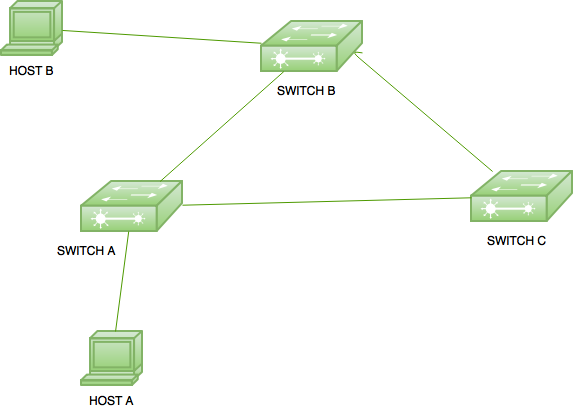
Network redundancy is a strategy used in the field of computer networking to ensure continuous connectivity and minimize downtime. 

At its core, redundancy involves duplicating critical network components such as routers, switches and connections. 

By having multiple redundant elements, networks can withstand hardware failures, outages or other unexpected disruptions without causing service interruptions.

Why is Network Redundancy Essential?

  1. Business Continuity: In the corporate world, downtime can translate to significant financial losses. Network redundancy is vital for maintaining uninterrupted business operations. For example, if a primary internet connection goes down, a redundant connection can automatically take over, ensuring that employees can continue working without interruption.
  2. Disaster Recovery: Natural disasters, cyberattacks, and infrastructure failures can cripple networks. Redundancy allows for data and services to be quickly rerouted through alternative paths or locations, mitigating the impact of such events.
  3. Improved Reliability: Redundant components reduce the risk of a single point of failure. If one part of the network fails, others can seamlessly take over, preserving overall reliability.

Types of Network Redundancy:

  1. Hardware Redundancy: This involves duplicating physical network components. For instance, having multiple routers or switches in parallel can ensure that if one fails, another can continue routing traffic.
  2. Path Redundancy: Networks can have multiple paths for data to travel. If one path becomes congested or experiences issues, data can be rerouted along an alternative path.
  3. Data Redundancy: In data storage systems, redundancy is achieved by storing data in multiple locations. RAID (Redundant Array of Independent Disks) is a common example of data redundancy, which can protect against disk failures.
  4. Geographical Redundancy: This form of redundancy involves setting up duplicate network infrastructure in different geographic locations. In the event of a disaster or regional outage, users can be seamlessly switched to the redundant location.

Real-World Examples:

  • Content Delivery Networks (CDNs): Companies like Akamai and Cloudflare use a vast network of servers distributed globally to deliver web content efficiently. If one server or data centre encounters issues, requests are automatically redirected to the nearest available server.
  • Internet Service Providers (ISPs): ISPs often maintain redundant connections to the Internet backbone. If one connection fails, traffic can be rerouted through another provider to maintain internet access.

Challenges and Costs:

While network redundancy is vital, it comes with costs. Duplicating hardware, setting up redundant paths, and maintaining geographical redundancy can be expensive. 

Balancing the need for redundancy with cost considerations is a challenge that organizations must navigate.

In conclusion, network redundancy is the unsung hero of our interconnected world, quietly ensuring that our digital lives remain uninterrupted. 

It’s a critical component for businesses, individuals, and the infrastructure that keeps the internet running smoothly. As technology continues to evolve, the importance of redundancy in network design will only become more pronounced, allowing us to stay connected in an increasingly connected world.

 JICA’s Project NINJA reveals 5 startups  for the 3rd cohort of its Accelerator in Kenya 

0

Adding to the 60th anniversary of diplomatic relations between Japan and Kenya ,Project NINJA (Next INnovation with JApan has launched  the 3rd cohort of its NINJA Accelerator in Kenya aimed to support Kenya’s cleantech space.

The NINJA Accelerator in Kenya equips founders with the necessary tools to increase their readiness for partnerships and investments, enabling them to enhance their businesses and scale effectively within the Kenyan market. Additionally, the program offers domestic and international exposure, including joining JICA’s delegation to the Africa Early Stage Investor Summit 2023 in Cape Town, as well as a roadshow to Japan, opening doors to Japanese venture capitalists, institutional and corporate investors, and strategic partners.
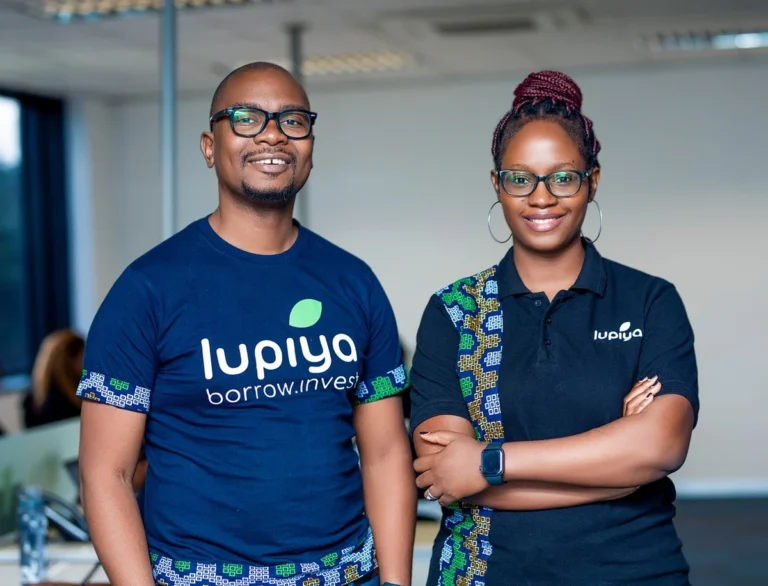
“We are thrilled to launch this 3rd cohort as another testament to our commitment to fostering innovation, collaboration, and entrepreneurship in Kenya, against the backdrop of the 60th Anniversary of Kenya-Japan diplomatic relations, and in support of the vision set forth by the Kenya National Innovation Agency,” said Hajime Iwama, Chief Representative from JICA Kenya.

“We are particularly excited about this cohort as it is the first post-COVID one that we lead on behalf of JICA. We look forward to introducing them to our network of investors and corporations bullish on the cleantech space,” said Kohei Muto, CEO of Double Feather Partners, the Japan-based Venture Capital and Startup Ecosystem Engagement firm leading the consortium to which JICA awarded this project.

Reciprocally, the Kenya National Innovation Agency (KeNIA) voiced its appreciation for Japan’s involvement in providing opportunities for innovators in Kenya. “As we are set to implement the government’s 10-year Innovation Plan, collaborations such as the one with JICA will help us reach the ambitious goals we have set for our country”, said Dr. Tonny Omwansa, Chief Executive Officer of the KeNIA.

 Moreover, GrowthAfrica, one of the implementing partners, expressed their enthusiasm for supporting thriving entrepreneurs on their growth journeys. “Through our involvement with Project NINJA, we have witnessed the importance of mentorship and investment support for local businesses,” said Patricia Jumi, Managing Director at GrowthAfrica. “Our goal is to increase the success rate of businesses in Africa, and programs like Project NINJA are one step closer to achieving this.”

Among the impressive alumni of the NINJA Accelerator in Kenya are successful ventures such as Wasoko, Kwara, Amitruck, Zana Africa, Shamba Pride, Kijenzi, and My Movies.Africa. These ventures serve as inspiring examples of the program’s nurturing of entrepreneurial success.

The following 5 post-revenue cleantech startups from Kenya were selected based on criteria such as team, business model, and potential impact. This cohort is set to embark on a 12-week transformative journey, implemented by Double Feather Partners, Deloitte Tohmatsu Venture Support, Deloitte Tohmatsu Financial Advisory, and GrowthAfrica.

1.Baridi is a Pay-as-you-Store or Lease-to-Own solar-enhanced cold-storage solution provider focused on down-stream consumption markets in the Meat and Fishery value chain requiring sub-zero technology.

2.Mazi Mobility is a Mobility-as-a-Service (MaaS) ecosystem provider that locally assembles and deploys electric motorcycles and 24/7 affordable, fast battery-swapping stations.

3.MegaGas collects plastic waste and converts it into clean cooking gas thanks to its patented thermal cracking process, providing low-income customers with safe, affordable, and environmentally friendly energy alternatives to LPG Gas or charcoal.

4.Ycenter Shambah Solutions provides last-mile soil testing and analysis to smallholder farmers via Internet of Things (IoT) technology, addressing deteriorating soil health, reduced crop productivity and quality caused by the misuse of agricultural inputs.

5.Timao Group recycles post-consumer plastic waste and converts it into modular building materials for construction companies and developers as part of the circular economy, and addresses both the reduction of plastic waste and the supply shortage of building materials in rapidly urbanizing areas.

The Role of RNG in Online Gaming: Ensuring Fair Play

0

To anyone familiar with the intricacies of online gaming, the term RNG or Random Number Generator is no stranger. At its core, RNG is the unseen force ensuring unpredictability and fairness in the virtual gaming world. When delving into the dynamics of any digital game, be it the intricacies of a strategic board game or the spinning reels of the Mega Moolah slot, RNG plays a pivotal role in dictating outcomes.

A Deeper Dive: How RNG Operates

Imagine standing at a crossroad where multiple paths lie ahead. Without knowing where each one leads, you make a choice. In the digital gaming realm, RNG works similarly. Every potential outcome, be it a dice roll, a card draw, or a slot machine spin, is determined by a complex algorithm. This ensures that each result is as unpredictable as your choice at that crossroad.

However, the essential component to understand is that true randomness is challenging to achieve. In digital platforms, what we perceive as “random” is often a product of intricate computational algorithms. These algorithms produce sequences of numbers or results that, for all practical purposes, appear random to the user.

The Importance of RNG in Upholding Fair Play

Without the consistent and unbiased nature of RNG, online games would lose their credibility. It’s akin to a level playing field in sports. If one team had an unfair advantage, the integrity of the game would be compromised. Similarly, in the digital gaming sphere, RNG ensures that every player, regardless of their experience or familiarity with the game, starts with an equal chance of success.

Consider a scenario where you’re playing an online card game. If the cards were not shuffled using a trustworthy RNG mechanism, players might predict or manipulate outcomes, significantly undermining the fairness of the game. Thus, RNG acts as the guardian of authenticity, keeping the digital gaming world grounded in integrity.

Maintaining Trust in a Digital Age

In today’s age, where the line between the virtual and the real world is increasingly blurring, maintaining trust is paramount. Players invest not just their time but also their emotions in these games. Any hint of bias or predictability can jeopardize the trust players place in online gaming platforms.

While players might not always be aware of the intricacies of RNG, they certainly feel its impact. A trustworthy RNG mechanism assures them that their efforts, strategies, and skills are valued. It reassures them that every victory is earned and every defeat is a result of fair play, not a manipulated system.

The Challenges and the Way Forward

While the principles of RNG remain consistent, the challenges in its implementation evolve. As technology advances and players become more sophisticated, the demand for even more refined RNG systems grows. The online gaming industry continually strives to stay ahead, ensuring that RNG systems are not just robust but also immune to external interferences.

Moreover, external audits and certifications further bolster the credibility of RNG implementations. Leading gaming platforms frequently subject their RNG algorithms to rigorous testing by independent bodies. This not only ensures compliance with industry standards but also reinforces players’ trust.

TikTok Faces $370 Million Fine Over Violation of Child Data Privacy

TikTok is facing a substantial fine of 345 million euros ($370 million) for violating privacy regulations related to the handling of children’s data within the European Union, according to an announcement made by the EU’s primary regulatory authority.

Ireland’s Data Protection Commissioner (DPC) revealed that TikTok, the popular Chinese-owned short-video platform favoured by teenagers globally, had breached several EU privacy laws during a specific time frame from July 31, 2020, to December 31, 2020.

This incident marks the first time TikTok, owned by ByteDance, has come under scrutiny from the DPC, which acts as the EU’s leading regulator for many major tech companies due to their regional headquarters being based in Ireland.

In response to the decision, a spokesperson for TikTok expressed disagreement, particularly with the size of the fine.

They also argued that many of the issues raised had already been addressed through corrective actions taken before the DPC initiated its investigation in September 2021.

The DPC’s investigation revealed TikTok’s violations, “Including the default “public” setting for accounts of users under the age of 16 in 2020, without proper verification of whether the user was indeed a child’s parent or guardian, especially concerning the “family pairing” feature.”

TikTok made changes to family pairing in November 2020, switched the default setting for users under 16 to “private” in January 2021 and announced plans to improve privacy materials to clarify the distinctions between public and private accounts.

For new users aged 16-17, a private account will be pre-selected when registering on the app starting later this month.

The DPC has given TikTok a three-month window to address all processing practices found to be in violation.

Additionally, the DPC is conducting a separate investigation into TikTok’s transfer of personal data to China and its compliance with EU data laws regarding the transfer of personal data outside the EU. In March, the DPC indicated its preparation of a preliminary draft decision regarding this investigation.

Under the EU’s General Data Protection Regulation (GDPR), which took effect in 2018, the lead regulator for a company has the authority to impose fines of up to 4% of the company’s global revenue.

The DPC has previously imposed substantial fines on other tech giants, including a combined penalty of 2.5 billion euros on Meta. As of the end of 2022, it had 22 ongoing inquiries involving multinational companies headquartered in Ireland.

Qardy and Shohdy Chartered Accountants & Consultants sign a partnership to provide financial advisory

0

  Qardy,an Egyptian online lending marketplace that offers the fastest and easiest access to financing through a fully-digital experience through partnerships with top financial institutions  has partnered with Shohdy chartered accountants & consultants to provide companies in the MSME sector with the support needed to maximize their chances of getting the financing they need.

 Shohdy Chartered Accountants and Consultants was established in 1991 as a pioneering office providing an objective portfolio of auditing, tax, and consulting services aimed at serving the companies involved in economic development.

 According to Mr. Tamer El Manasterly, Co-founder & COO of Qardy, “We are pleased to announce this exciting partnership with Shohdy chartered accountants & consultants. Together, we will provide our clients in the MSME sector with all the tools they need to maximize their chances of getting access to finance. This collaboration is a testament to our shared vision of giving everyone the power of debt financing, and support the Egyptian national financial inclusion agenda”.

  Through this partnership, Qardy & Shohdy chartered accountants & consultants will provide businesses in Egypt with financial advisory services to support them in having a complete and financing-ready package and increase their chances to obtain financing.

 According to Mr. Abdo Shohdy, Chairman of Shohdy Chartered Accountants and Consultants, “We are excited to leverage this partnership, and we assume that there are many possibilities for fruitful cooperation. To offer tailored financial advice and consultancy services, empowering SMEs to thrive and achieve their business objectives. We will work together to power MSMEs and support Egyptian financial inclusion’’.

Flutterwave Eyes $50 Million Investment in Kenya Pending License Approval

0

African giant fintech, Flutterwave has disclosed its ambitious intention to invest $50 million in Kenya, reflecting its strong confidence in obtaining an operational license in the country.

This announcement was made by Olugbenga Agboola, Flutterwave’s Chief Executive and Co-founder, during a recent media interview.

Mr Agboola also revealed that Flutterwave has received preliminary approval from the Central Bank of Kenya (CBK) and is fully prepared to make phased investments once the official license is granted.

This strategic move aligns with Flutterwave’s broader objective of expanding its presence in the Kenyan market, particularly in the payments and remittances sector.

In anticipation of the forthcoming license approval, Mr. Agboola emphasized the company’s proactive preparations for its operations in Kenya, stating, “We are gearing up to invest at least $50 million, hiring staff, securing a new office, and scaling up our infrastructure. There’s significant potential in Kenya, and we are committed to the approval process. We persevered even during challenging times, and we appreciate the support from the current administration.”

Expressing high hopes for the license approval by Kenyan regulatory authorities, Agboola added, “We are highly optimistic about Kenya, and once we obtain the license, our team in the country is ready to hit the ground running.”

Currently, Flutterwave maintains approximately 27 staff members in Kenya and has applied for both payment service provider and remittance licenses. These licenses will enable the company to facilitate money deposit and withdrawal, as well as electronic funds transfers.

Flutterwave encountered challenges in Kenya last year when the CBK raised concerns about its operations without prior approval.

Additionally, it faced investigations by the Asset Recovery Agency (ARA) related to money laundering allegations but was subsequently cleared of any wrongdoing.

However, Mr Agboola emphasized that the company emerged stronger from these challenges and is now fully prepared to explore opportunities in Kenya.

He stated, “We’ve undergone a rigorous test in Kenya, and we have emerged stronger. We see tremendous potential here and are committed to contributing to the Kenyan market.”

Securing approval in Kenya will complement Flutterwave’s existing presence in various African markets, including Egypt, South Africa, Nigeria, Rwanda, Tanzania, and Cameroon, where it provides vital payment infrastructure solutions for merchants and service providers.

Mr Agboola highlighted that Flutterwave aims to serve merchants across various sectors, including entertainment, hospitality, logistics, and health.

Just last week, the company expanded its operations into India through a strategic partnership with IndusInd Bank, one of India’s prominent financial institutions.

Equity  Bank And  Mastercard  Sign  Ten-Yea r Partnership  To  Scale Consumers’ Payment  Experience In The Region

0

Equity Bank has signed a deal with Mastercard to give customers a broad range of benefits from a wide selection of Mastercard payment solutions ranging from World and World Elite cards, corporate cards and virtual cards.

This collaboration is set to revolutionize the digital payments arena, empowering previously marginalized small, mid-sized, and micro businesses to seamlessly and securely handle both domestic and international payments from physical and e-commerce transactions.

Speaking during the signing of the agreement, Dr. James Mwangi (CBS), Group Managing Director and CEO of Equity Group Holdings Plc said, “We are pleased to scale up our strategic partnership with Mastercard through the Customer Business Agreement. The opportunity to co-create futuristic payment solutions for our customers across all our bank subsidiaries is part of our strategy of delivering a “One Equity” experience across all our markets.  Equity has become the preferred trade and investment partner in the region, and this makes our value proposition in payments and remittances a central part of our offerings. Our partnership with Mastercard is both mutually beneficial timely and aligned to our customer centric commitment.”

As part of the deal,customers will be able to perform a range of payments including cross border remittance, e-commerce payments, QR and Tap on phone solutions.

The broad range of services and benefits that customers will enjoy has been informed by the partners’ shared vision of empowering customers to meet their payment needs across a broad spectrum of lifestyle and business requirements.

Additionally, Equity and Mastercard will collaborate and continuously co-create innovative payment solutions in tandem with customer changing needs especially in e-commerce, cross border payments and segment-based value propositions. Other innovations will include community pass solutions that will enable farmers and traders to access services via different identification methods such as QR, biometric and facial recognition.

The partnership will see Equity Bank offer modern payment capabilities across all its subsidiaries in Kenya, Uganda, Rwanda, Tanzania, South Sudan and DRC.

“This alliance underlines our commitment to financial inclusion and digital transformation in Africa. Over the years, we have been working on developing, incubating, and scaling simple and locally relevant digital solutions, building stronger payment ecosystems, and extending acceptance infrastructure to small, mid-sized and micro businesses. By working together with Equity Group – the largest financial institution in East Africa – we are setting the pace for an evolved, affordable, and transparent payment ecosystem across Africa,” said Mark Elliott, Division President for Sub-Saharan Africa at Mastercard.

Artificial intelligence (AI) tops Google Search trends in Kenya

0

Artificial intelligence (AI) is topping Google Search trends in Kenya with new statistics showing a 400% increase over the last five years and 270% since last year alone.

Searches for “how to use artificial intelligence? (+350%), “what is an AI?” (+300%), “how AI works” (+200%) and “how to make artificial intelligence” (+200%) are all trending in Google Search’s latest search report.

According to Agnes Gathaiya, Director, East Africa: “It’s great to see people in Kenya showing such a keen interest in the transformational technology that is AI. People in Africa and across the world are already using and benefiting from responsibly developed AI-based tools every day – but the speed of technological advancement is accelerating, and while it’s exhilarating to see these breakthroughs, it’s important that we get it right here in Kenya. We’re committed to working boldly, responsibly and together with Kenya to maximise the potential of AI, while minimising its abuse.

AI, the simulation of human intelligence by software-coded machines to quickly reach reasonable conclusions or solutions to complex problems, has captured the imagination of business leaders, investors and consumers alike with its superhuman capabilities. Big tech companies are investing in AI to remain on the front-line.

Google’s conversational AI service Bard in Kenya in English in March and in Swahili in July is advocating for responsible regulation, working in partnership with others, and prioritising the technology’s purpose for public good.

Globally, search interest in AI in relation to jobs increased by over 5,000% this year – while searches for AI in relation to CV or resume building increased by 1,150% and searches in relation to AI courses doubled (+100%). Searches for “free AI image generator” (+2,500%), “AI music generator” (+2,200%), “AI website builder” (+1,600%), “AI video generator” (+1,400%) and “logo maker AI” (+1,150%) all also increased.

Building careers and learning new skills.

People in Kenya are also turning to Google looking for resources to build their careers. Searches for AI courses increased by 100%, while searches for “online business from home” have increased by 250% since last year, and “how to register a business” have increased by 200%.

People in Kenya are also looking to gain new certifications, particularly in digital skills – with searches for courses in virtual assistance (+450%), data analysis (+200%), digital marketing (+200%), and cybersecurity (+100%) all increasing significantly this year.

Google itself offers digital skills training – and has trained over 7 million people across Africa through its Grow with Google programme since 2015. Google’s Career Certificates also offer a unique opportunity for job seekers to reskill, without the need for a college degree or prior experience: and offers certifications including data analytics, UX design and digital marketing.

Cybersecurity and misinformation.

The trends released by Google today also show that people in Kenya continue to be concerned about protecting their cybersecurity. Searches for “DNS hijacking” (+350%), “click fraud” (+150%) and “voice phishing” (+100%) are all trending, having increased significantly since last year.

Search interest in misinformation has also increased: with searches for “fake news” increasing by over 5,000% over the past ten years, while searches for “fact-checking” and “disinformation” rose by 2,700% and 1,150% respectively over the past ten years. Searches for “how to identify fake news” have increased by 200%, while searches for “types of disinformation” have increased by 60%.

Google is using AI to address security challenges and misinformation. Gmail automatically blocks 99.9% of malware, phishing and spam, and protects more than 1.5 billion inboxes using AI – while through the Google News Initiative, engineers are working directly with fact-checkers and publishers to use AI-enabled tools to find and tackle misinformation.

Meanwhile, Jigsaw, a team within Google that develops technology to counter online harms, has partnered with local experts and academics to develop approaches to both directly counter disinformation and help people more easily identify and refute it.

AI helps Google Search to provide answers that better address the meaning of your query; Google Photos to return the right results when you search for “dogs”, and Google Maps to help predict your time to a destination.

 Ugandan fintech  Emata Secures $2.4 Million seed fund to expand it’s agri-loan offering across East Africa

0

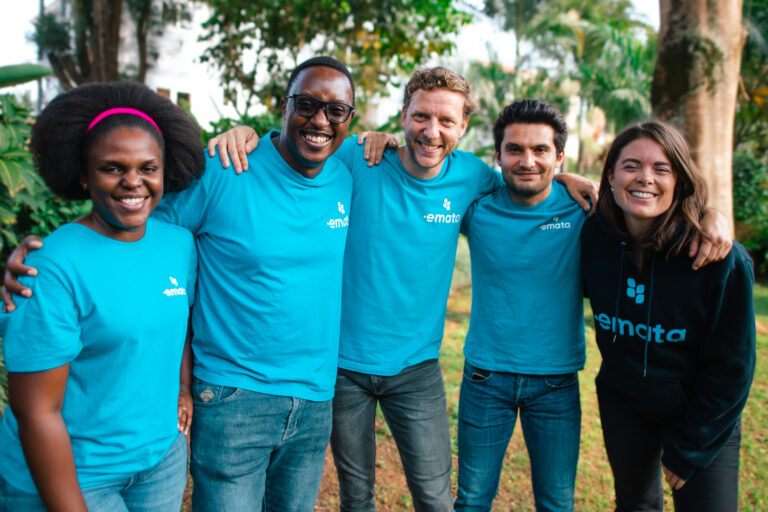
Emata – the agricultural finance solution for East African farmers – announces its successful completion of a $2.4 million seed fund raise, comprising $800,000 in equity and $1.6 million in on-lending capital.

The fundraise was backed by African Renaissance Partners – the VC firm investing in entrepreneurs in East Africa and the Horn of Africa; Norrsken Accelerator – an investment arm of Europe’s largest impact tech ecosystem; Zephyr Acorn – an investor in early-stage technology businesses in East Africa; renowned Swedish angel investor Marcus Boström; and global venture philanthropy firm – the Draper Richards Kaplan Foundation.

Bram van den Bosch, Founder & CEO of Emata, said:“We are thrilled to complete our $2.4 million seed fund raise, backed by high-profile, impact-oriented investors who recognize the huge potential of digital agri-loans in East Africa, and beyond. Emata dares farmers to dream big and eliminates traditional obstacles that have made agricultural finance unavailable for the vast majority. Our solution turns a lifelong struggle into a five minute process, and is already tangibly impacting thousands of East African farmers.”

Proceeds will be used to expand Emata’s agri-loan offering across East Africa – both within its debut market of Uganda, and via imminent international expansion – which is most likely to be Tanzania. It will focus on scaling its core markets – dairy and coffee. A multi-crop company from inception, Emata’s other operations are oilseeds and maize, whilst expansion is also anticipated into potatoes.

As East Africa rapidly digitizes, Emata’s business model addresses East Africa’s lack of agricultural financing – by providing automated loans to farmers. This reduces cost and enables lending to smallholders at rates 5x more affordable than the informal loans they have often relied on to date. Instant lending and data-based decisions also benefits all farmers, without the need for collateral.

Emata has digitized the full lending process and is embedded in the agricultural value chain – via its partnerships with cooperatives and farmer-based organizations – which aids rapid scaling. Such partnerships also de-risk Emata’s business model, as they provide access to a direct source of repayment – as loan repayments are deducted by Emata’s partners on its behalf. By solving the financing challenge, Emata helps farmers raise their productivity, increase income and food production.

In 2022, Emata grew 7x year-on-year, is now live with 50 agricultural partners – reaching over 40,000 individual farmers – and has disbursed $1 million of loans.

Emata’s credentials have already attracted global attention. The multiple award-winning company won the coveted “Best Newcomer / Best New Startup” at the 2023 Global Startup Awards – beating 80,000 other start-up entrants from around the world and was named on Yale Africa Startup Review’s list of 30 startups to watch in 2023.

The need for agricultural finance in Sub-Saharan Africa is estimated at $240 billion by consultancy firm Dahlberg, with the value of Emata’s target markets in East Africa being $13 billion.

Other awards won by Emata include those from ‘CATAPULT: Inclusion Africa’ and ‘Fintech Abu Dhabi: The Search in Africa’. They are alumni of the Stockholm-based Norrsken Impact Accelerator and Silicon Valley-based Plug and Play Tech Center Accelerator.

Alex Bakir, General Partner at Norrsken Accelerator, commented:“Norrsken Accelerator invested in Emata because we believe their team and model places them in the top 1% of impact companies, globally. We’re excited to support the team on the next leg of their impact journey.”

Mike Mbari, Investment Principal at Zephyr Acorn, commented:“We are excited about this partnership with Emata. With agriculture contributing 25% to East Africa’s economy and employing over 70% of the population, improving access to affordable and flexible financial services such as credit facilities is poised to spur economic growth and improve livelihoods. Emata fits well within Zephyr Acorn’s thesis of investing in promising and impactful high-growth start-ups that are utilizing technology to bring vital services to the underserved markets in East Africa.”

The Technology Powering Live Casino Gaming

0

In recent years, the world of online gaming has seen the meteoric rise of live casino games. These games offer the thrill of being in a physical casino from the comfort of one’s home and are available to play at JeffBet and most popular online casinos. But have you ever wondered about the technology behind live casino gaming that brings you the immersive experience? Let’s dive in.

1. High-Definition Streaming

To deliver crisp and uninterrupted video to players, live casino platforms utilize high-definition (HD) cameras. These cameras, often of professional broadcast quality, ensure that players can see every detail of the game, from the turn of a card to the spin of a roulette wheel. The streaming technology used ensures minimal latency, so players see actions in real-time.

2. Optical Character Recognition (OCR)

OCR technology plays a crucial role in live casinos. When a card is dealt or a roulette wheel is spun, OCR automatically translates the physical action and result into data that the online gaming system can interpret. This enables instant bet outcomes and immediate pay-outs, all without manual input.

3. Game Control Unit (GCU)

Every live casino table is equipped with a GCU, a small device responsible for encoding and broadcasting video. The GCU assists the dealer in running the game smoothly and ensures that the gaming experience is seamless for online participants.

4. Multiple Cameras

To capture every angle and ensure that players have a full view of the action, multiple cameras are placed around the gaming table. This not only adds to the transparency of the game (so players know there’s no foul play) but also adds to the immersive experience.

Live casino games come with an interactive interface that allows players to place bets, chat with the dealer, and make game-specific decisions (like hitting in blackjack). Advanced software integrates the live video feed with a user-friendly interface, ensuring players have all the controls they need.

5. Live Chat Features

A critical component of live casino gaming is the ability to interact. Players can communicate with the dealer and sometimes other players via a live chat feature. This adds a social dimension, mimicking the interpersonal interactions of a brick-and-mortar casino.

With the increasing use of mobile devices, live casino technology ensures that games are compatible across devices, including smartphones and tablets. Adaptive streaming technology adjusts the quality based on the user’s connection speed, ensuring smooth gameplay on the go.

Behind the scenes, various software providers ensure that the live gaming feed, player’s interface, and the casino’s backend systems work in harmony. This ensures that player data is secure, transactions are seamless, and games are fair.

6. Advanced Security Features

Security is paramount in online gaming. Live casinos employ advanced encryption techniques to safeguard player data. Moreover, measures like firewalls, intrusion detection systems, and anti-DDoS tools are employed to ensure the integrity and safety of the gaming experience.

7. Professional Live Dealers

Though not strictly a “technology,” it’s worth mentioning that live casinos invest in training professional dealers. These dealers not only know the ins and outs of the games but are also trained in engaging with online participants, ensuring an authentic and enjoyable experience.

The evolution of live casino gaming is a testament to the convergence of traditional casino gaming and cutting-edge technology. As technology continues to advance, there’s no doubt we’ll see further enhancements in the live gaming experience, bridging the virtual and physical realms even closer.

How to Reduce (or Avoid) Taxes When Selling Your House

0

While often overlooked, understanding the tax implications of selling a home is important. This is probably because of the generous federal exceptions that exempt homeowners from paying capital taxes for their primary residences. Nonetheless, you should understand capital gains tax Nebraska if you are selling your investment property or your home value increased significantly during the period of ownership.

However, this doesn’t mean you can’t completely reduce or avoid paying capital tax. You can avoid or reduce taxes on your primary residence, rental property, or real estate properties with the following tips:

1. Make the House Your Primary Residence for At Least Two Years

The best strategy to avoid paying capital gains tax after selling your property is to own and live in it for at least two years. Federal tax laws exempt up to $500,000 for married couples and $250,000 for single persons in gains on primary residences.

However, to qualify for the capital tax exclusion, you should have lived in the property for two or more years as your private residence before listing it for sale. As such, you can take advantage of this provision by living in the house for two years and converting it into a rental or vacation home before the five-year provisional period lapses.

2. Find Exceptions

You can also qualify for capital tax waivers using various exceptions. The IRS laws allow homeowners to sell their homes tax-free if they are forced to due to work, health, or unforeseeable issues. You can qualify for exceptions and avoid paying taxes on property sales in the following situations:

  • If you are relocating because of work: You qualify for an exemption if you or your spouse is transferred or took a new job more than 50 miles from your current home.

  • Health-related issues: You are also exempted if you or your loved one must relocate to diagnose or treat an illness or injury. You can also sell your home tax-free if you are doing so to provide medical care to family members.

  • Unexpected personal events: Divorce, legal separation, or death are also exemptible.

  • Unemployment or change in income: Being unemployed means you can’t afford the basic living expenses. This is a valid reason to sell your home tax-free.

3. Use 1031 Exchange

Taxation laws and regulations are designed to encourage homeowners to replace properties they sell by buying another one. The 1031 real estate exchange provision allows investors to buy two or more properties using proceeds from the sale without paying capital gains tax.

However, you should follow and complete various processes within a given time frame to benefit from this option. For instance, you should sell your property through an intermediary  and identify a replacement property within 45 days. You should also close the purchase within 180 days.

4. Installment Sale

While you can’t avoid paying taxes using this option, it helps spread capital gains tax over several years, reducing its impact. Installment sale means selling your home over time. This spreads out tax gains over multiple years.

Endnote

Selling your property with profits doesn’t mean you should pay huge tax bills. You can reduce or completely avoid paying capital gains tax using these strategies. However, regulations vary, and you should research before using either option.

What online payment methods are the safest?

0

In many parts of the world, online payments are now commonplace. It is undeniable how convenient it is to pay online rather than in person when paying bills or just doing some online shopping. What are the safest methods of making payments online, though, considering the risk that hackers and fraudsters could steal your credentials?

There are several ways to pay for things online, including credit cards, digital wallets, PayPal, and others. But which ones are the safest?

The best techniques for safe internet payments are typically these:

PayPal. 

When it comes to online payments and shopping, PayPal is regarded as one of the safest systems.

Pros

  • Safety. PayPal uses secure socket layer (SSL) technology with 128-bit encryption to ensure secure data transmission.
  • Security. Your danger of data breaches is decreased because it does not share your financial information with retailers.
  • security for both buyers and sellers. PayPal provides buyer and seller safety and aids in resolving problems with online purchases. Chargebacks are available, and it offers protection against unlawful purchases.
  • Customer identification. It uses two-factor authentication (2FA) on its platform, which means it will send you a one-time code on an authenticator app that you must enter to complete the login process. This adds an extra layer of protection.
  • Convenience. It is well-liked on many different web sites.
  • numerous ways to pay. It is compatible with debit cards, bank accounts, and credit cards.

Cons

  • Fees. PayPal levies charges for business transactions.
  • breaches of data. Data breaches at the corporation have happened before, and PayPal scams are not unheard of. If you decide to stop using PayPal as a payment option, you can terminate your account at any time.
  • Account restrictions. If PayPal notices suspicious activity, your account may be temporarily frozen or restricted.
  • Hold periods. In some circumstances, PayPal can decide to keep the money you received, rendering it inaccessible to you for a while.

Credit card. 

Another well-known, safe, and fraud-resistant online payment option is a credit card.

Pros

  • Systems for detecting fraud. The majority of banks and credit card firms keep an eye out for suspect patterns in transactional behavior and may block your card to halt a transaction if they find one. You can also let them know if you see any erroneous charges on your card so they can look into it and compensate you.
  • Chargeback options. If you did not receive the things you paid for, if they differ from what you were told they would be, or if billing problems happened, credit card issuers often provide a chargeback option.
  • Liability for fraudulent transactions is minimal or nonexistent. Most credit card companies either cap your responsibility at a minimal amount or don’t hold you liable if your card is stolen and used without your consent.

Cons

  • Not anonymous. Making anonymous transactions is not possible because banks offer credit cards.
  • accumulating debt. When using credit cards, there is a risk of overspending and subsequent debt accumulation.
  • safety concerns. When entering your credit card information online, you should exercise caution and make sure the website is secure.
  • charges for interest. You will be charged interest if you keep a balance on your credit card.
  • Fees. Some credit cards may charge fees, especially for foreign transactions.

Debit cards are excellent for limiting your spending.

Pros

  • Budgeted spending. Overspending is avoided when you have a set amount on your account.
  • Zero debt. When you have a fixed budget as opposed to using a credit card, you’ll be less inclined to make impulsive purchases. This method of payment prevents debt accumulation.
  • No interest is incurred. Since you are using your own money when you use a debit card, interest is not applied. Additionally, if your card is lost or stolen, the thief will be unable to spend more money than is available in the account.

Cons

  • Limited dispute resolution. buyer protection and dispute resolution are less strong.
  • fewer alternatives for legal action. When using a debit card to make a transaction, the money is immediately deducted from your account, which limits your choices if the merchant was dishonest. Refunds can take longer as well.

Prepaid card. 

A prepaid card is comparable to a debit card, however it provides greater privacy when making online purchases.

Pros

  • Privacy. You don’t have to give any personal information when buying a prepaid card in person, therefore your purchase data won’t be associated with you.
  • Don’t need a bank account. A prepaid card can be purchased with cash in a retailer. You can buy it without a bank account.

Cons

  • Not completely private. In order to register and activate some cards intended for use abroad, you may need to provide some personal information, such as your name, address, and/or contact information.
  • Fraud. To avoid being duped, make sure you are purchasing it from a reputable source.
  • local dispute settlement. Prepaid cards either provide no buyer protection at all or very little.
  • Limited use. Prepaid cards are not accepted by all online merchants and service providers, including hotels and auto rentals.

Digital wallets:

Digital wallets are characterized by their convenience because they allow for online, in-app, and in-person contactless transactions. The most well-known and trustworthy digital wallets are Samsung Pay, Apple Pay, and Google Pay.

Pros

  • swift and simple. You can shop online with only a few clicks after creating your digital wallet with your personal information and avoiding continually entering your payment information. Your device stores your credit card information, enabling you to make purchases with it by merely confirming your identification (with a fingerprint or face scan).
  • Secure. Your credit card number is hidden from the vendor; just the transaction ID is visible.
  • Numerous ways to pay. Your digital wallet can be connected to a variety of payment methods, including bank accounts, debit cards, and credit cards.
  • P2P and in-person transactions. P2P payments are supported by many digital wallets, making it simple to send money to loved ones. They also make it easier for you to convert currencies and make overseas payments. For in-store transactions, you can also utilize the digital wallet app on your smartphone.
  • Encryption. To prevent hackers from intercepting your payment information or compromising it during transactions, it is tokenized and encrypted.

Cons

  • Limited acceptance. The biggest drawback of digital wallets is the low number of online merchants that accept them.

Apps for mobile payment

Digital wallets and mobile payment applications are quite similar, however mobile payment apps are considerably more practical for sending money to friends and family.

Pros

  • Simple to use. Apps for mobile payments are simple and easy to use.
  • Convenient. Money is not necessary. For splitting invoices and distributing payments appropriately, it is tremendously convenient.
  • Quick payouts. With only a few taps on your smartphone, mobile payment apps enable you to rapidly send and receive payments from your social contacts.
  • Versatile. While some mobile payment apps require you to link your bank account, others let you keep an in-app amount.
  • Optional physical cards. A few mobile payment apps provide actual debit cards that may be used at ATMs and in retailers. To avoid scams like the Venmo scam, you should use caution while utilizing mobile payment apps given the surge in cybercrime.

Cons

  • Restricted acceptance. Not all businesses and service providers accept payments from mobile devices.
  • Fees. For instant withdrawals, some apps charge a fee.
  • Public feed. Some consumers may be put off from using mobile payment apps by the ability to view their friends’ payment histories.

Cryptocurrencies

Digital currency, sometimes known as cryptocurrency, is entirely digital and one of the most private methods of internet payment.

Pros

  • Private. Transactions involving cryptocurrencies are associated with digital addresses rather than actual people.
  • Decentralized. Cryptocurrencies are not under the control of a single organization or authority, thus there is no single point of vulnerability.
  • Secure. Advanced cryptography is used by cryptocurrencies to protect financial transactions.

Cons

  • Technical knowledge. Understanding how cryptocurrency operates and navigating cryptocurrency exchanges require a certain amount of experience.
  • no central government. Due to the lack of a centralized authority and defined regulations, it is up to users to protect their passwords and only do business with reputable merchants because it is very difficult to get your cash back. A cryptocurrency transaction can also be impossible to undo.
  • Limited acceptance. Only a small number of online stores and platforms allow cryptocurrency payments.

How to import a car duty-free for disabled people, KRA requirements

0

Disability-related individuals are given an exemption from taxes on their monthly or yearly income.

The first 150 000 Kenyan shillings per month or the first 1.8 million Kenyan shillings annually are exempt from this tax.

What documents must be submitted with an Exemption Certificate application?

  • Disability Medical Assessment Report that stipulates the nature of disability and upholds the signature of the Director of Medical Services (AFYA HOUSE LG 29).
  • KRA Pin certificate (iTax).
  • National Identification Card.
  • NCPWD Disability card.
  • A certificate copy of the latest pay slip where applicable.
  • A letter from the employer where applicable, clearly stating the nature of disability and how it affects the employee?s productivity at place of work.
  • Tax compliance certificate.
  • Applicants to physically appear for interviews before Domestic Taxes Department officers in the nearest KRA offices for an Acknowledgement Slip.

The same application documents and a copy of the previously issued exemption certificate must be submitted in order to renew an exemption certificate.

Requirements for Kenyan Disabled Persons’ Car Import Tax Exemption

  • Application letter addressed to the commissioner of customs services
  • Original medical certificate from a registered doctor
  • Original letter of recommendation from the Association for the physically Disabled Of Kenya or The National Council Of Persons With Disabilities
  • Copy of driving license with class ?H? endorsement
  • Bill of lading for the vehicle
  • Invoice/proforma invoice for the vehicle
  • Tax compliance certificate/Tax exemption certificate
  • Cash remittance transfer slips used to pay for the vehicle (i.e. proof that payment for the vehicle was made by the applicant)
  • Bank statement for the last six months
  • Test drive in using the modified vehicle (specially designed to suit the nature of the disability) in the presence of a customs officer
  • If the applicant has previously been granted exemption on a vehicle falling under this category, subsequent exemption will not be granted unless the applicant has used the motor vehicle so imported on exemption for a period of 4 years and the vehicle’s tax has been paid.

Getting a Certificate of Exemption

  • Obtain and complete forms 1 and 2.
  • To apply and attach the verification documents, go into iTax.

IXAfrica Data Centre names Snehar Shah CFA as the new CEO

0

IXAfrica Data Centre has appointed Snehar Shah, chartered financial analyst (CFA), as its new Chief Executive Officer (CEO).

The company, known for its development and operation of hyperscale-ready data centres in East Africa, welcomes Mr Shah, who brings over 25 years of diverse industry experience to the team.

“With an extensive background in business development and management, Mr Shah is expected to lead IXAfrica Data Centre to new heights during its next growth phase,” IXAfrica noted.

Having spent more than 15 years at the Global Telecoms Operator, Orange, where he held various leadership roles in Finance and Strategy across the UK, Europe and East Africa, Mr Shah has been deeply involved in the African startup ecosystem.

He played pivotal roles in businesses such as Eaton Towers (Regional CFO, later sold to American Tower in 2018), Azuri Technologies (GM, Africa, serving over 250,000 households across five African countries), and most recently Moringa School (CEO, a leading coding bootcamp provider in the region).

Mr Shah has also served as a Non-Executive and Chair of the Tech Advisory Board at Moringa School.

Chairman of IXAfrica, Guy Willner expressed confidence in the company’s trajectory and Mr Shah’s role in it, stating, “Our company has always had bold plans and ambitions and, we’ve been consistently delivering on those, not in the least by strengthening our team, adding the brightest talent with a well-proven track record in the global market.”

Tosin Awoyinka, Senior Vice President at Helios Investment Partners, welcomed Mr. Shah’s appointment, highlighting his leadership track record, organizational development capabilities, and extensive enterprise network, which align well with IXAfrica’s mission to shape the digital ecosystem in Kenya and East Africa.

Snehar Shah, in his new role as CEO of IXAfrica, expressed his excitement about contributing to Africa’s GDP growth through the development of leading data centres in the region.

He aims to accelerate the Cloud and Artificial Intelligence (AI) revolution that is currently underway.

IXAfrica has received a $50 million investment to fast-track the development of its Nairobi campus in response to the surging demand for internet connectivity in Kenya driven by a young and rapidly growing population.

The company has also announced plans for a secondary data centre campus, solidifying its position as a key player in Kenya’s data centre market.

“Snehar Shah holds a degree in Electrical and Electronic Engineering from Imperial College, London, and qualifications in Chartered Accountancy from PwC and Chartered Financial Analyst (CFA). He has been recognized among the Top 40 under 40 by Business Daily Africa and holds active leadership positions at Young Presidents Organisation (YPO)” the data centre stated via LinkedIn.

Mastercard partners with Crisis24 to provide safety and security for business travelers across Eastern Europe, Middle East and Africa

0

 Mastercard has partnered with Crisis24, a GardaWorld company and a leading integrated risk management, crisis response, consulting and global protective solutions firm, to provide Mastercard Travel and Expenses (T&E) cardholders with a comprehensive risk management platform underpinning its travel risk management offering. Available across the Eastern Europe, Middle East and Africa (EEMEA) region, the platform offers travel and business-related risk assessments and mitigation recommendations.

The travel risk management solution aims to deliver successful and safe travel experiences for the employee and the company. Organizations can take a more proactive approach to managing potential threats to their people and sites, as well as ensuring their safety while traveling on business.

“People are vital resources for companies, and as such, a human-centric approach to risk management is critical. Through our partnership with Crisis24, we’re building on our robust T&E offerings with a leading risk management solution which may enable corporates to enhance employees’ safety and the quality of experiences while on business travel,” said Clyde Rosanowski, Senior Vice President of Commercial Solutions, EEMEA, Mastercard.

Aimed at providing peace of mind to corporates, Crisis24’s new innovative risk management platform complements Mastercard’s existing T&E solutions and is the first of its kind to be offered on commercial cards in the region.

“We’re pleased to partner with Mastercard to provide their commercial customers with access to the most comprehensive travel risk management solutions available. Our proprietary platform combines cutting-edge AI with the largest team of intelligence analysts monitoring and feeding information on a wide variety of risks across the globe. Our solutions enable organizations to easily meet their duty of care requirements by helping them make informed decisions and proactively manage risks to their people both internationally and domestically,” said Craig Sweet, Managing Director, Northern Europe for Crisis24.

Mastercard’s T&E solutions enable control, security, and visibility across the many touchpoints of the payment journey. Adding functionality to ensure the safety of people is a welcomed new feature of Mastercard T&E value proposition, which has been designed and built by leveraging decades of experience, industry best practices and user input.

 Accessible online or via app, the fully integrated, seamless platform provides authorized users access to location intelligence briefs, risk ratings, alerts, and evacuations1 in the event of a crisis. Supporting the corporate security function, the solution allows companies to conduct pre-emptive assessments of risk versus reward of business activities, develop and execute a corporate security strategy and establish alert protocols to instantly communicate important information across the organization’s people.

Responsive and easy to use, the travel risk management solution features dynamic intelligence capabilities, with extensive content intuitively categorized and rated to ensure superior clarity. Equipping companies with an in-depth understanding of the global risk landscape, the solution offers a high degree of configurability to align with any organization’s policies. Users can also request bespoke analyst reports directly from the platform.

President Ruto says Kenya is Committed to Creating a Favorable Environment for Foreign Investment

0

President William Ruto has affirmed Kenya’s strong commitment to attracting high-quality foreign investments to the nation. 

President Ruto made these statements on Friday during an investment forum held at Silicon Valley in San Francisco, United States. 

He highlighted the government’s ambitious reform agenda aimed at transforming Kenya into a prominent business hub within the region.

The President emphasized the implementation of a pro-business tax system as one of the strategies employed by the government to attract foreign investment. 

He stressed that creating a more investor-friendly environment would foster innovation, growth, and the generation of increased economic opportunities for the populace.

“A more investor-friendly environment will allow businesses to innovate, thrive and create more economic opportunities for the people,” he said.

He also outlined several key factors that make Kenya an attractive destination for foreign investment, including upgraded data protection regulations in alignment with the Global Cross-Border Private Rules framework, a secure environment, a commitment to green energy, and robust infrastructure.

In addition, he highlighted specific tax incentives, such as the elimination of Value-Added Tax (VAT) on exported services and the removal of taxes on stock-based compensation for startup employees, which further enhanced Kenya’s appeal to global firms.

The President assured international companies of Kenya’s abundant supply of energetic, talented, and skilled human capital, particularly those contributing to the country’s thriving tech sector. 

He emphasized ongoing efforts to develop a workforce that is well-equipped for the evolving demands of the modern world.

Furthermore, President Ruto mentioned Kenya’s support for entrepreneurs through the establishment of digital hubs in every ward, which will provide learning and innovation opportunities to over a million talents, ultimately benefiting businesses.

The forum was attended by notable figures, including US Ambassador to Kenya Meg Whitman, Coordinator of Prosper Africa, British Robinson as well as various investors and industry leaders. 

Ambassador Whitman praised Kenya as the most stable democracy in East Africa, highlighting its regional logistics, financial prowess, access to the East African market, and its status as a prime destination for foreign direct investment and venture capital.