back to top
Thursday, June 11, 2026
Home Blog Page 143

Kenya’s Electric Vehicle Revolution Gains Momentum

0

In a bid to combat carbon emissions and promote eco-friendly transportation, Kenya’s rapidly evolving transportation industry is embracing electric vehicles and motorcycles.

BasiGo, a prominent electric vehicle provider, has reported remarkable success in reducing carbon dioxide emissions. Over the course of just two years, they claim to have prevented the release of a staggering 217.4 tonnes of carbon dioxide into the atmosphere. The deployment of their electric buses has not only slashed fuel expenses but has also significantly contributed to environmental conservation efforts.

Fredrick Mutitika, BasiGo’s Product Marketing and Operations Manager, has revealed the company’s innovative approach to making electric buses more accessible. They have introduced a pioneering financing structure that offers a purchase price of Sh7.5 million, coupled with a mileage-dependent subscription fee of Sh40 per kilometre. This subscription fee encompasses charging and maintenance services provided by BasiGo. By offering a lease option, BasiGo aims to reduce upfront costs, thereby increasing the accessibility of electric buses.

Nevertheless, BasiGo faces a notable challenge in transitioning to electric buses—the scarcity of charging stations.

Fredrick Mutitika acknowledges this hurdle but remains optimistic, stating that the company intends to deploy more electric buses to various transport companies and solicit user feedback to enhance its services.

During the 60th Madaraka Day celebrations, President William Ruto announced a commitment to provide low-cost financing for electric motorbikes, primarily targeting boda boda riders. The aim is to liberate Kenyans from petroleum-dependent transportation, significantly reducing the overall cost of transportation.

Mazi Mobility and Roam Motors are two companies at the forefront of the electric motorcycle movement in Kenya, offering both electric motorcycles and charging solutions to boda boda riders.

These riders are taking the lead in transitioning to clean energy within the transport industry. Jesse Forrester, the founder of Mazi Mobility, began his journey in 2021 by assembling ten motorcycles in his living room. Today, he collaborates with Technical and Vocational Education and Training institutes to assemble even more electric motorcycles.

Jesse Forrester reported that riders who have adopted electric motorcycles have saved approximately 50% on their operational costs. According to the company’s analysis, a rider typically spends Sh600 on fuel daily. In contrast, the cost of electricity for e-motorcycles, currently available through battery-swapping services, amounts to about Sh300 for the same distance.

Mazi Mobility offers e-motorcycles with single or dual batteries. The single-battery bike, priced at Sh130,000, can travel up to 70 kilometers on a single charge. The dual-battery bike, priced at Sh180,000, can cover twice the distance. Roam Motors, on the other hand, has established public charging stations for its electric motorcycles at strategic locations. Roam Park has emerged as the largest e-motorcycle assembly plant in East Africa, boasting a production capacity of 50,000 units.

Jesse believes that electric bikes could gain even more popularity among boda boda riders if the government fulfills its promised incentives.

Simplifying the import process for e-mobility companies and streamlining registration processes for electric vehicles could further boost adoption. However, Jesse also highlights potential challenges, including managing mechanical waste generated during the transition and the need for regulations regarding second-hand electric vehicle imports.

The transition to electric vehicles holds promise not only for reducing air pollution but also for improving overall public health.

Kenya aims to reduce greenhouse gas emissions by 32% by 2030 through the adoption of electric vehicles and has plans to set up 1,000 charging stations. Incentives are also being provided to promote local manufacturing of e-mobility products, marking a significant step towards a greener, more sustainable future.

Energy economist Thuo Njoroge Daniel suggests that policies to encourage e-vehicle use and attract investors are essential for the success of this transition. Kenya Power is actively exploring the feasibility of placing electric vehicle charging stations alongside fuel pumps, with the goal of accelerating the installation process and promoting the adoption of electric vehicles in the country.

Zoom personal assistant feature ‘AI Companion’ Capable of Meeting Summaries and Automated Response Generation

0

Zoom is introducing its Artificial Intelligence (AI) personal assistant tool, the “Zoom AI Companion,” to paid accounts without any additional charges.

This feature leverages advanced language models, including those from OpenAI, to assist users in summarizing video meetings and composing chat messages.

Previously, the Zoom AI Companion was available as a free trial for businesses using the video conferencing platform. However, it is now included in standard Zoom subscriptions.

Users can take advantage of the AI Companion’s capabilities, which include composing Zoom Chat messages and providing meeting summaries.

Zoom had faced criticism for its terms of service, which initially suggested the use of video calls and user data for training its models.

In response to this backlash, Zoom clarified its policy, emphasizing that it does not utilize audio, video, or chat content without customer consent for AI training purposes.

This policy also applies to the AI Companion tool, which is disabled by default.

Account owners and administrators have the option to enable this feature, and users will be aware when these features are in use.

When AI Companion is activated during Zoom Meetings, attendees can use it to catch up on missed content through private side-panel conversations with the AI.

After a meeting concludes, administrators can generate and share meeting summaries with attendees, including those who were invited but unable to attend.

In Zoom Team Chat, users can enlist AI Companion to summarize messages and create drafts of replies and new messages, similar to Slack’s AI tool.

Message drafting is already available, and summarization will be introduced in the coming weeks.

With Zoom’s assurance that it does not eavesdrop on your video calls, the use of Zoom is now a less contentious choice.

Moreover, the introduction of AI Companion provides transparency and control to users who opt for this feature.

UAE backs Africa’s Clean Energy Initiatives by Commiting $4.5 Billion to the sector

0

Africa’s clean energy prospects received a significant boost as the United Arab Emirates (UAE) unveiled a substantial investment of $4.5 billion to accelerate initiatives in the sector across the continent. 

This momentous commitment was announced by COP28 President-Designate Sultan Al Jaber during the Africa Climate Summit, presently underway in Nairobi.

The UAE’s dedication to advancing global climate action finds expression through its ambitious climate initiative, backed by prominent UAE entities including Masdar, Abu Dhabi Fund for Development, Etihad Credit Insurance, and AMEA Power, a leading Dubai-based renewable energy firm. 

These organizations will collectively finance the endeavour, as per the COP28 Presidency’s announcement.

Here’s a breakdown of the commitment:

  • The Abu Dhabi Fund for Development will furnish $1 billion in financial assistance.
  • Etihad Credit Insurance will offer $500 million in credit insurance to mitigate risk and facilitate private capital involvement.
  • Masdar commits to $2 billion in equity and aims to mobilize an additional $8 billion in project finance, to deliver 10 gigawatts of clean energy capacity in Africa by 2030.
  • AMEA Power will contribute to the funding of 5 gigawatts of renewable energy capacity on the continent by 2030, mobilizing $5 billion, comprising $1 billion in equity investments and $4 billion from project finance.

Although Africa is responsible for only approximately 4 per cent of global greenhouse gas emissions, the continent disproportionately suffers from the consequences of climate change. 

Escalating temperatures, unpredictable rainfall patterns, and extreme weather events are adversely affecting African nations, posing substantial challenges to agriculture, infrastructure, and overall development. 

To tackle these issues, significant investments in clean energy and climate resilience are imperative.

The allocated funds will be directed toward clean energy ventures and climate adaptation initiatives, assisting African countries in strengthening their infrastructure, refining regulatory frameworks, and establishing grid systems to support the transition to renewable energy sources.

To ensure the effective utilization of these funds, the African Development Bank’s Africa50 investment platform will collaborate as a strategic partner. 

This partnership will identify and advance suitable projects aligned with Africa’s sustainable development goals and climate action strategies.

The UAE’s commitment to investing in Africa’s clean energy future is especially timely. 

According to the Global Center on Adaptation, Africa may require nearly ten times its current climate adaptation funding, amounting to $100 billion annually. 

This funding gap underscores the urgency of international support for African nations as they strive to build climate-resilient economies.

Uganda’s Asaak acquires FlexClub Mexico, expands into Latin America

0

Asaak, a Ugandan fintech company, has acquired FlexClub Mexico, expanding operations across two continents in a move that marks Asaak’s entry into the Latin American market and signifies its commitment to transforming financing for mobility workers around the world.

Since achieving profitability in Uganda, this acquisition of FlexClub Mexico by Asaak represents a strategic long-term investment and significant leap forward in proliferating affordable financing across emerging markets. This transaction empowers Asaak to build on its innovative credit ecosystem, collaborating with FlexClub Mexico’s expert team to create transformative financial solutions tailored for the Latin American region.

According to Tinashe Ruzane, CEO and co-founder of FlexClub, “Our departure from the Mexican market is driven by the need for sharper focus in this very challenging economic environment, not a reflection of the potential. We are excited about the opportunity for the talented FlexClub Mexico team including Javier Serrano, Gerardo Cedano, Karen Garcia, and Emmanuel Velez to join Asaak and contribute to their vision in Latin America.

According to Ruzane, FlexClub will continue to prioritize its work with car rental and leasing companies in South Africa to catalyze vehicle subscriptions in the country.

Asaak’s acquisition of FlexClub Mexico opens a new era in mobility financing. By extending its reach into Latin America, Asaak is addressing a critical gap in the financial landscape. Through this deal, Asaak will introduce its innovative incremental credit solutions to Mexico, enabling workers to more seamlessly access affordable credit for their economic advancement.

“The vehicle is the entry point into our credit ecosystem, from which drivers can eventually access additional credit for fuel, repairs, smartphones or other needs they may have. We’ve proven this can be done profitably at scale for our clients , both online and in person,” said Kaivan Khalid Sattar, CEO and founder of Asaak.

The acquisition reflects Asaak’s commitment to reimagining financial inclusion in the mobility financing space. Through the collaboration, Asaak envisions empowering Latin American workers to secure their financial futures by accessing credit that aligns with their needs. “We’re thrilled to bring African innovation to Latin America through the acquisition of FlexClub Mexico. This is a testament to our vision of creating meaningful financial solutions that transcend borders and foster prosperity for mobility workers across emerging markets,” said Sattar.

The partnership between Asaak and FlexClub Mexico is poised to catalyze prosperity in Latin America. Over the last few years, FlexClub Mexico received thousands of applications for vehicles from mobility workers in Mexico, thanks to its partnership with platforms like Uber. This presents an incredible opportunity for Asaak to serve these customers with its broader credit proposition and pioneer this innovative model in Latin America.

The FlexClub Mexico team, now Asaak Mexico, is led by General Manager Javier Serrano who helped build the team and portfolio from scratch.

“We are really excited to embark on this new chapter in our company’s journey. We started four years ago by providing a simple and transparent car lease to drivers struggling in an informal market rife with fraud. With the trust of these early clients, our years of experience in the market, and Asaak’s tech-driven approach to scaling operations, we now look to serve a wider audience with even better financial products,” said Serrano.

Asaak’s global team is strongly supported by its consortium of investors including Simple Capital, Untapped Global, and Cauris Finance, from whom Asaak has raised more than $30 million in equity and debt financing. Their unwavering commitment underscores the confidence in Asaak’s mission to revolutionize mobility financing globally.

“As active investors in both Asaak and FlexClub, simple.Capital spotted an opportunity to procure the acquisition of FlexClub’s Mexican business by Asaak. We congratulate both management teams on the closing of this transaction which we believe has significant benefits for both Asaak and FlexClub,” commented Blake Musgrove, Partner and Chief Investment Officer at simple.Capital().

Asaak’s strategic acquisition of FlexClub Mexico cements its role as a transformative force in mobility worker financing. This collaboration is set to redefine financial norms and empower workers to access credit solutions that enhance their financial resilience and enable economic progress.

Okra Solar Raises $12 Million Series-A Round of Financing to Scale Mesh-Grid Technology

0

Okra Solar, which provides IoT enabled hardware and software to last-mile energy companies so they can profitably energize remote off-grid communities, has just closed $12 million Series-A round of financing to scale mesh-grid technology.

The $12M of fresh financing including debt and equity with $7.85M raised on equity led by At One Ventures, along with FMO, Susquehanna Private Equity Investments LLLP, Autodesk Foundation and King Philanthropies. The debt financing was provided by EDFI.

In statement, Okra Solar CEO Afnan Hannan said, “It’s clear that mesh-grids are the most efficient way to achieve last-mile electrification. It starts by ensuring off-grid people have access to basic services such as lighting, e-cooking and water pumping, and next, to have all of these people connect to the global digital economy. Now we need the regulations to keep up with exponential technology advancement for us to hit 100% electrification by 2030.”

Launched in 2016, Okra Solar develops mesh-grid technology, composed of their proprietary Okra Pod and sold together with PV panels, battery, and inverters to electrify underserved or unserved communities. The company sees Nigeria as its highly strategic market due to power failures in Africa’s populous nation.

Nigeria, Africa’s most populous country, has grappled with an inadequate power supply for many years, generating just 4,000 megawatts though the population of more than 210 million people needs 30,000 megawatts. The oil-rich but energy-poor West African nation has ramped up investments in the power sector but endemic corruption and mismanagement have resulted in little gains.

“Even with off-grid solutions like mesh-grids being 10 times cheaper than grid extension for hard to reach communities, 80 million people continue to live off-grid in Nigeria,” said Afnan Hannan, Co-founder and CEO, Okra Solar.” Okra is incredibly excited to work with EDFI ElectriFI to deploy innovative financial tools that will enable local developers to deploy mesh-grids at scale and continue rapidly bringing power to the people.”

Okra Solar will use the funding to develop mesh-grids, a technology that has rapidly established itself as a game-changer in this industry to serve the more than 700 million people worldwide who still live without access to electricity. Okra’s proprietary device, the Okra Pod, allows for all assets – from solar panels to batteries and inverters – to be distributed and interconnected as a mesh-grid. Power is shared autonomously to reduce the chance of blackout and increase overall energy availability to each household. Grid operators can easily monitor, maintain, service and receive payment from end-users via the cloud using Okra Harvest whilst scaling up projects and building a profitable business.

In 2022, Okra Solar raised $4.5 million from EDFI ElectriFI under the ElectriFI Country Window for Nigeria to provide access to electricity through the mesh-grid technology to mini-grids developers, targeting some 76 000 beneficiaries by the end of 2025.

Operating in the challenging off-grid energy market where scalability is highly sensitive to cost viability, mesh-grids present a compelling solution to energy developers. Mesh-grids enable solar power to be generated at the source of individual homes, where excess power is then redistributed by Okra’s smart algorithms from one connection to the next to optimise utilisation. What makes mesh-grids unique vs. traditional mini-grids or grid extension, is that rather than sending power long distances from a centralised generation house, power only travels between neighbouring houses.

This hyper-decentralised implementation reduces the cost of distribution (cables and poles) by up to 90% while maximising up-time and power availability. This is especially pertinent as we move into a future where widespread copper shortages are expected. Okra’s B2B model supplies technology to last-mile energy utilities, who then energise last-mile households.

“With the compounding effects of population growth and growing industrialisation, energy consumption on the African continent will increase disproportionately in the coming decades. The IEA forecasts that total power generation capacity in Africa is expected to double to 510 GW by 2030. There is no reason for this new power generation capacity to come from dirty fossil fuel power. We can skip that phase entirely and build it correctly from the start – clean, renewable, and suited to the needs of this market,” notes Helen Lin, Partner, At One Ventures.

With mesh-grids already being deployed in 4 countries, energizing more than 14,000 people, the demand for the technology and the business model has been proven. Okra sees that the successful Series-A investment is a beacon of light during a challenging fundraising climate and is especially inspiring because this technology is making a transformational impact to livelihoods in the Global South.

During the Series-A fundraising round Okra leveraged the support of GET.invest, a European programme that mobilises investment in renewable energy in developing countries.

“FMO is proud to partner with Okra on their pioneering journey to leverage mesh-grid technology to help electrify rural areas and provide affordable power to last-mile households and businesses. We look forward to our collaboration with the Okra team and will actively leverage our value-add services to support their scaling ambitions,” says Marieke Roestenberg, Manager of FMO Ventures Program.

Okra previously won the TechCrunch Hardware Battlefield award and has a track record of pushing boundaries on the tech side. The firm now has automated network planning software using geospatial data and monitoring of commercial performance down to the asset level. Okra Pods are now stackable so power output can be increased from 1.2kW AC up to 4.8kW AC power output. The latest version of the pods will also enable mesh-grids to be interconnectable to existing grid infrastructure.

The Catalyst Fund Hits 20% of its Target $40M Fund to Propel Climate Innovation in Africa

0

The Catalyst Fund, a pre-seed venture capital fund and accelerator focused on driving climate resilience innovation in Africa, has announced the successful first closing with over 20% of its targeted US$40 million fund closed.

This milestone signals its strong commitment to shaping a climate-resilient future through bolstering early-stage startups across the African continent. The commitments are from FSD Africa, FSDAi, Cisco Foundation, USAID Prosper Africa, and seasoned tech investor Andrew Bredenkamp.

According to Anne-Marie Chidzero, Chief Investment Officer, FSDAi, “At FSDAi we believe strongly that Africa has the potential to lead in climate solutions provided it has the finance it needs. Our mission is to support that by investing in innovative solutions that will help channel finance to under-resourced parts of the green economy.”

FSDAi’s collaboration with the Catalyst Fund is part of a package of investments totalling US$19.5m which will go to supporting made-in-Africa climate-resilient solutions to contribute to Africa’s green economic growth and to global efforts to tackle the impact of climate change.

With support from JPMorgan Chase & Co and the Global Environmental Facility, Catalyst Fund also works to provide dedicated impact measurement and research support to climate innovators, share insights and learnings, and enable partnerships via its Ecosystem Hub. 

Some of its key areas include agtech and fishery management, food systems, insurtech and climate fintech, cold chain, waste management, and water management, among others. The Catalyst Fund will support 40 pre-seed startups, especially mission-driven local and women founders with funding and tailor-made venture building support to accelerate startups’ growth. The Fund will provide follow-on capital to startups in their Seed and Series A rounds to bridge the critical funding gap and address a key bottleneck for climate ventures in Africa, positioning them for further growth-stage funding at Series B.

“By blending equity investments with hands-on venture building, we believe we can unlock tremendous potential for innovative companies on the continent. Supporting ventures at the pre-seed stage requires more than capital. Our venture builders are the engineers, data scientists and growth marketing experts who can supercharge founders’ journeys toward building scalable and highly impactful ventures,” said Maelis Carraro, Managing Partner of the Catalyst Fund.

This initial close marks the Catalyst Fund’s transition from a philanthropic startup accelerator to a venture capital fund, building on seven years of experience supporting startups on the continent. The first Catalyst Accelerator, backed by The Bill & Melinda Gates Foundation, JPMorgan Chase & Co, the UK Foreign, Commonwealth and Development Office, PayPal, and Mastercard Foundation, supported 61 startups across emerging markets; 70% on the African continent, including companies such as Wasoko, Chipper Cash, and Turaco.

he Catalyst Fund will focus on solutions that can enable communities to better prepare for and manage shocks, adapt livelihoods to climate impacts and build long-term resilience.

Zoho Celebrates 100 Million Users

0

Zoho Corporation has announced it’s serving 100 million users across its 55+ business applications, the first bootstrapped SaaS company to reach this milestone.

Zoho says the growth comes on the heels of its 1 billion USD in annual revenue mark last year. The firm has steadily increased its traction from 1 million users in 2008 to 100 million 15 years later—with the last 50 million users added within the past five years. Zoho is profoundly grateful for the enduring support of its more than 700,000 customers across 150+ countries.

“I want to thank all of our customers for trusting us with their business and helping us reach 100 million users worldwide,” said Sridhar Vembu, Co-founder and CEO of Zoho Corp. “This is an impressive milestone for any organisation, but it’s particularly sweet for us as a bootstrapped company that has never raised external capital. And we are not done yet. We have an impressive innovation pipeline covering the next 10 years, investing in deep technologies to serve billions of users around the world. We’re working towards it, and we want to thank all of you for your continued support.” 

Zoho has grown steadily and responsibly, without ever taking external funding. This allows the company to preserve its long-term vision and culture without outside pressure or influence. It’s also what keeps the company centered on its values, such as debt-free growth and serving customers closer to where they are—a product of the company’s transnational localism efforts.

After completing 13 Zoholics (user conference) in the first half of the year, which included Zoholics Kenya, the company will host 18 Zoholics across 16 countries in the next 8 weeks, totaling 31 user events across 27 countries in 2023. In Africa, Zoho will host Zoholics Egypt in October and Zoholics Nigeria is set to take place in November. Zoholics South Africa was held in August in Johannesburg, Durban, and Cape Town. Zoholics is transnational localism in action. Zoho has always believed that being close to customers allows the company to build useful, trusted, customer-focused solutions.

Pan-African Fund Managers’ Launches Association to increase cross-border collaboration

0

The Pan-African Fund Managers’ Association (PAFMA) has announced the launch of the a new trade association bringing together fund managers from across the continent with backing from some of the industry’s most powerful players.

The five founding members of PAFMA are the Pension Fund Operators Association of Nigeria (PENOP); the Fund Managers Association (FMA) in Kenya; the Botswana Investment Professionals Society (BIPS);the Ghana Securities Industry Association (GSIA) and the Investment Management Association of Uganda (IMAU). These national associations,which between them account for assets under management (AUM) of over US$70 billion, have established PAFMA in collaboration with FSD Africa, a specialist development agency working to build and strengthen financial markets across Sub-Saharan Africa.

Commenting on the launch, Oguche Agudah, CEO, PENOP Nigeria, said:“I’ve always believed that the solutions to Africa’s challenges lie within us. We need to come together, commit to collaborate, and speak with one voice. The managers of capital on the continent have a unique opportunity to individually and collectively determine to a large extent the trajectory of the continent. Working together, we can achieve so much more. The time is now.”

The launch of PAFMA comes as the industry faces many challenges. These include historically low savings rates – which as of 2021 stood at just 24% of GDP in Sub-Saharan Africa – along with a scarcity of viable investment opportunities and the escalating environmental risks confronting the continent.

Recognising the prevalent dominance of government securities among the current investible assets managed by fund managers on the continent, PAFMA’s primary objective is to foster the adoption of alternative investments. This includes a particular focus on green finance, a pivotal driver for bolstering various sectors of the economy. By championing these alternative investment avenues, PAFMA seeks to not only stimulate job creation but also enhance income generation.

Among its activities, PAFMA aims to spearhead localised research efforts and initiatives to enhance knowledge sharing and capacity building enabling fund managers to evaluate and make investments in regions and countries where they did not previously have a presence. Serving as a proactive advocate, PAFMA will also offer policy insights and champion the interests of its members in both regional and international arenas as well as facilitating regular gatherings of fund managers from across Africa.

Patrick Kariuki, Chairman, FMA and Managing Director, Gen Africa Managers Ltd, said:“The Fund Managers Association is very excited to partner with other like-minded Pan-African Fund Manager Associations. Our industry and its future growth depend on vibrant collaboration amongst fund managers across Africa. With PAFMA, fund managers will be able to evaluate and make investments in regions and countries where we did not have sufficient local context. The Fund Managers Association is honoured to be invited to this exciting and very important initiative.”

Mark Napier, CEO, FSD Africa, said:“We are excited about the establishment of the Pan-African Fund Managers’ Association which comes at a timely juncture. This association will be integral for African Fund Management organisations to ensure that they share industry knowledge, manage risks with a continental and international view and drive needed investment in critical sectors such as climate mitigation and adaptation. This African-led initiative is a powerful demonstration of our shared vision to transform Africa’s financial and investments sector landscape.”

How to Transfer a Vehicle in Kenya Using the NTSA TIMS System

0

NOTE: If not logged in and registered with the TIMS system, see How to sign up 

The Transfer of Vehicle Ownership – The Seller Procedure

  • To reach the Transfer menu, click the Vehicle Registration button followed by “Apply for Transfer of Ownership”.
  • Enter the registration number of the car you wish to transfer after clicking the “Create New” button.
  • After viewing the vehicle’s details by clicking view, you can upload a scanned copy of the logbook.
  • Select the person/non-person/financier under “New Vehicle Owner” before entering the buyer’s information.
  • Enter the National/Alien ID and PIN for individuals, and the PIN and Add Button for businesses and financial institutions.
  • Click “Send verification code” after selecting mobile phone under Security Verification.
  • Check the “Disclaimer” displayed and enter the verification code that was delivered to your phone number.

Procedure for Buyers: Acceptance/Refusal of Ownership

  • Buyer will be notified through SMS to accept the transfer of the car after Seller files request. Therefore, in order to accept or reject the transfer, the Buyer must sign into his NTSA TIMS account.
  • To examine the vehicle’s details, click the ACCEPT OWNERSHIP button, enter the registration number, and then click Inquire followed by examine.
  • Choose “mobile” as the verification mode from the security verification menu, then click the “Send to Buyer’s Phone” button.
  • Enter the received verification code in the corresponding field, then select whether to accept or reject the transfer.
  • If you agree, fill out all the necessary information, then click the submit button to send the data to the NTSA for processing and the issuing of a logbook within seven working days.

NOTE: The NTSA will process your logbook in fourteen working days, and you have to hand over your previous logbook in order to receive the new one.

How to use Face ID on an iPhone to lock WhatsApp

0

It’s crucial to protect your private WhatsApp conversations. On your iPhone, you can now lock WhatsApp with Face ID, adding another level of security to shut down your WhatsApp app and conversations.

Before enabling WhatsApp, Face ID employs cutting-edge facial recognition technology to verify your identity. Once set up, you’ll be able to quickly and securely access WhatsApp just by looking at your phone.

Make sure your iPhone is running iOS 11 or later before you start utilizing Face ID for WhatsApp. For your iPhone, Face ID must also be configured. If you haven’t activated Face ID yet, do so by doing the following:

  • Go to Face ID & Passcode under Settings.
  • Type in your passcode.
  • Hit Face ID Setup.
  • Use the instructions on the screen to scan your face.

How to Configure WhatsApp Face ID

Once your iPhone satisfies the requirements, you may begin configuring Face ID for WhatsApp. The steps are as follows:

  • Launch WhatsApp.
  • In the lower right corner, tap the Settings icon.
  • Click Account.
  • Click Privacy.
  • Select Screen Lock.
  • Turn on the Face ID requirement.

All done! You’ve now successfully configured WhatsApp to use Face ID. From this point on, Face ID will be required to unlock WhatsApp.

How to Unlock WhatsApp Using Face ID

Simply hold your iPhone up to your face to utilize Face ID to unlock WhatsApp. WhatsApp will be accessible if your face is recognized by Face ID.

Tips for Troubleshooting

Here are some troubleshooting suggestions if you’re having issues using Face ID to unlock WhatsApp:

  • Ensure that iOS on your iPhone is updated to the most recent version.
  • Make sure Face ID is configured properly.
  • Make sure the light is bright enough to see your face.
  • Attempt to restart your iPhone.

Using Face ID to lock WhatsApp is an excellent approach to protect your private conversations. You can quickly set up Face ID for WhatsApp and begin using it to secure your conversations by following the instructions in this article.

BMW unveils its cheapest electric SUV, with longer range – iX1 eDrive20

0

BMW expanded the already wide lineup of the X1/iX1 compact SUV with a new entry-level battery electric vehicle (BEV) offering, the iX1 eDrive20. The car is supposed to be the most affordable SUV in its car series.

The new car has a single electric motor and is a less expensive alternative of the dual-motor iX1 eDrive30, which launched last year. The front-mounted electric motor generates up to 201 horsepower with a momentary boost and 247 Nm of steady torque.

The eDrive20’s decreased energy usage results in a longer range estimated between 430-475 km (267-295 miles) in the WLTP cycle. In terms of performance, the FWD model accelerates from 0 to 100 km/h (0 to 62 mph) in 8.6 seconds and has an electronically limited top speed of 170 km/h (106 mph).

The normal 11 kW charger takes 6:30 hours to fully charge the battery, while the optional 22 kW charger takes 3:45 hours. The electric SUV can charge at a rate of up to 130 kW on a DC charging station, filling from 10-80% in 29 minutes.

Despite being BMW’s entry-level EV, the iX1 eDrive20 comes with a generous standard package that includes dual-zone automatic air conditioning and other advanaced features such as the Parking Assistant and reverse camera. In addition, the latest BMW Operating System 9 powers the digital cockpit  which is a BMW Curved Display with two screens measuring 10.25-inch and 10.7-inch.

The BMW iX1 eDrive20 will be available in Europe beginning in November 2023, with prices starting at €47,900 ($51,308) effectively making it €7,100 ($7,606) less expensive than the dual-motor BMW iX1 eDrive30, which starts at €55,000 ($58,913) in Germany. Both EVs are manufactured at the BMW Group factory in Regensburg.

Lipa Later Initiates Global Crowdfunding Campaign via Republic, Aiming to Raise $1.24M

0

Lipa Later has embarked on an ambitious crowdfunding venture through Republic, to secure $1.24 million in capital.

Republic, a renowned global investor ecosystem, provides a platform for retail investors to access diverse investment opportunities worldwide, spanning startups, cryptocurrencies, real estate, art, music, and more, often at the early stages of development.

Securing approval for public crowdfunding in the United States represents a significant milestone for the pioneer fintech platform, as it opens the doors to investors from across the globe.

This achievement places the company in an elite category of African startups that have successfully ventured into the realm of global crowdfunding.

The company is eagerly anticipating the influx of additional investment, which will play a pivotal role in advancing its expansion initiatives throughout Africa.

Established in 2018 by founders Eric Muli and Michael Maina in Kenya, Lipa Later has emerged as a prominent fintech platform specializing in providing merchant solutions, including consumer credit, working capital, and e-commerce solutions.

The company is widely recognized for its innovative Lipa Later Buy Now Pay Later (BNPL) product, which empowers consumers to make purchases and pay for them in convenient instalments.

The company’s core mission is to empower African businesses by facilitating e-commerce, promoting financial inclusion, and offering a fully integrated and centralized shopping platform.

Since its inception, Lipa Later has successfully secured $25 million in funding.

Currently, Lipa Later operates in four key markets: Kenya, Uganda, Rwanda, and Nigeria. Its recent achievement of raising $12 million in pre-Series A funding has significantly bolstered its expansion plans, allowing the company to set its sights on a broader African presence.

Lipa Later boasts an impressive customer base exceeding 350,000 individuals and collaborates with over 30,000 merchants.

The company has also forged an exclusive partnership with Mastercard for point-of-sale (POS) financing in East Africa.

Notably, Lipa Later maintains profitability and has achieved a remarkable year-over-year growth rate of 558%.

The company’s ambitious goal is to provide financial services to 100,000 SMEs (Small and Medium-sized Enterprises) across Africa and achieve a revenue milestone of $20 million by the conclusion of 2024.

Lipa Later’s endeavours not only signify a remarkable achievement for the Kenyan fintech sector but also underline its commitment to driving economic growth and financial inclusion on the African continent.

M-PESA set to pioneer ‘Standing Orders’ feature disrupting the mobile fintech industry

0

Safaricom‘s Chief Information Officer, George Njuguna, has unveiled a groundbreaking development for M-PESA, marking a significant milestone in the mobile money industry.

M-PESA, the renowned mobile money platform, is gearing up to introduce Standing Orders, a feature that will set it apart as the world’s first mobile money platform to offer this functionality.

This move comes despite standing orders being a common feature in traditional and neo-banking products.

Mr Njuguna emphasized the significance of this initiative, stating, “This is the first initiative where you will have standing orders on a mobile platform – a global first, not limited to Africa. We plan to extend its use to other sectors, such as healthcare, to enhance accessibility and affordability.”

The introduction of Standing Orders within M-PESA is poised to revolutionize how users manage recurring payments and transfers. This new feature empowers users to establish automated, scheduled payments from their mobile money accounts to individuals, businesses, or services, ensuring timely and effortless payment of bills, rent and other recurring expenses.

M-PESA has steadily evolved to encompass a wide array of products and services, spanning payments, savings, and credit access.

Among its offerings are bill payment services like Lipa na M-PESA and Buy Goods, making the firm ideal candidate for users to set up standing orders, simplifying the process of automatically settling utility bills, rent, and other regular expenses on designated dates.

Additionally, M-PESA provides various credit facilities, including M-Shwari, KCB M-PESA, and Fuliza (an overdraft facility).

The introduction of standing orders will play a pivotal role in ensuring prompt loan repayments.

Traditionally, Standing Orders have played a crucial role in savings and investments.

Safaricom offers similar products such as KCB M-PESA and M-Shwari for savings, as well as Mali, an investment product.

Integrating Standing Orders with these services could facilitate regular transfers of a portion of a customer’s balance into investments or savings.

Notably, last year, Safaricom collaborated with VISA to launch a virtual card exclusively for online payments, providing Kenyan customers with the ability to make payments for services like Netflix through M-PESA.

The introduction of feature here could streamline payment settlements, eliminating the need for manual intervention in every transaction.

While specific details regarding when Standing Orders will be available to users and the implementation process have not been disclosed by Safaricom, this innovative addition is set to further enhance the M-PESA experience.

In the fiscal year ending in March 2023, M-PESA demonstrated remarkable revenue growth of 8.8%, reaching Sh117.19 billion ($816 million). Although this fell short of the previous fiscal year’s results, Safaricom attributed the decline to macroeconomic factors.

Following the successful go-live of M-PESA services in Ethiopia recently, Safaricom has signed a partnership with Ethiopia’s Abay Bank.

Through this collaboration, all M-PESA customers in Ethiopia are able to deposit and withdraw cash at all Abay Bank branches. Customers of Abay Bank will enjoy the convenience of keeping track of their finances via Abay Bank’s mobile banking through USSD (*811#) and mobile app using their Safaricom 07 line to transfer money from their Abay bank account to their M-PESA wallet and vice versa, pay bills, check account balances, purchase airtime, and access other mobile banking services from the bank.

Customers with a Safaricom line are required to visit their nearest Abay Bank Branch with a valid ID card to integrate their Abay Bank account into their Safaricom lines.

SasaPay Announces Daniel Njoroge as New COO

0

SasaPay, a Pan-African leader in payments acceptance solutions has announced the appointment of Daniel Njoroge Kiriungi as the company’s Chief Operating Officer and Deputy CEO, effective immediately. Mr. Njoroge is an experienced executive with a 15-year track record in the technology sector particularly in Africa.

Daniel joins SasaPay following a successful career at a number of leading technology-focused, disruptive brands, bringing with him a wealth of industry experience and knowledge. He most recently served as the Director Sales Network for global payments company Interswitch, where he successfully led the company’s penetration and growth into the Kenyan market.

“We strongly believe Daniel is the right captain for the next stage of transformation and growth of SasaPay. We are confident that his passion for innovation and sustainability, coupled with his experience in the payments sector will enable us to
unlock and create new opportunities for growth and deliver exceptional value to our clients,” the Board said in a statement.

His new appointment comes as the company continues to deliver further growth and re-focus its strategic plan to empower millions of businesses in the country by leveraging technology to make payments more accessible, affordable and profitable.
Commenting on his appointment Daniel said: “I am hugely excited to be joining the SasaPay team. The business has demonstrated real potential to be a valuable, disruptive force in the financial services sector and I am looking forward to leading the business and ensuring we deliver a positive impact for our customers.

Privacy in the Age of the Internet of Things (IoT): How to Keep Your Data Safe

0

The internet is continuously evolving and changing how we communicate, work, and interact with the world. One significant aspect many people are integrating into their lives is the Internet of Things. 

What is the Internet of Things? 

The Internet of Things (IoT) describes physical objects (things) built with sensors, software, or other technologies. 

IoT objects are connected to the internet, and their purpose is to link with other devices and share data to increase efficiency, decision-making, and ultimately to make our lives easier. 

These devices can be simple household devices or sophisticated industrial tools. Popular IoT objects include: 

  • Smart Home Devices: These are smart lights, locks, or speakers, like Amazon Echo or Google Home. 
  • Wearable Technology: Smartwatches or health trackers that track, analyze, and share data related to physical activity, heart rate, etc. 
  • Smart Cities: These may include smart street lighting, waste and traffic management, and public safety measures, such as CCTV. 

There are an estimated 7 billion connected IoT devices today; this number is expected to grow to 22 billion by 2025 and 29 billion by 2030. So, with so many devices connected to the internet, how can we be sure our data is protected from third-party sharing or cybercriminals?

The Risks of The Internet of Things

IoT devices are vulnerable to many cybersecurity attacks, including phishing, spoofing, ransomware, and Denial of Service (DoS) attacks. 

One example of an IoT exposure was the Verkada hack in March 2021. Verkada specializes in cloud-based security camera systems. The incident led to hackers accessing over 150,000 cameras across factories, schools, prisons, and hospitals. 

This breach demonstrates that security for IoT devices is imperative. The Verkada breach occurred due to lax security in critical areas, such as weak employee passwords and a lack of multi-factor authentication.

Why IoT Devices Are at Risk

Unfortunately, the more data a device collects, the more attractive it is to cybercriminals to try to breach and sell on platforms like the dark web. Identifying the risks associated with your IoT devices will be a significant step in securing the sensitive data stored on these devices. The following three are common attacks IoT devices face.

  1. Weak Passwords

Firstly, as was the case in the Verkada hack example, one common entry point for hackers to IoT devices is weak passwords. 

Many devices come with a default username or password that can be easily exposed because the login credentials are available on dark web blogs or because a hacker’s software can easily guess the primary password with little effort. 

Generally, users fail to change these default details or are unaware they should change them. Therefore, with any new smart device, ensure you familiarise yourself with the device settings, change the default username details, and use a strong password generator to protect it from hackers. 

  1. Lack of Multi-Factor Authentication (MFA)

Many IoT devices do not incorporate multi-factor authentication, a vital feature that adds extra security to an account if a password is breached. MFA prompts a user for additional information to validate their identity, which can be a one-time code, fingerprint, or as complex as an iris scan. 

However, many IoT devices need a user interface to make this feature possible. MFA is impossible to add for some devices, such as smart light bulbs. Whereas other devices can include MFA, some companies choose a more straightforward interface over security.   

So, while the device may be more aesthetically pleasing and convenient, it unfortunately compromises the security of the device. Therefore, MFA should always be activated from the device settings. If not, protecting your device with a powerful password is crucial to protect your accounts. 

  1. Lack of Encryption When Sharing Files

Cloud storage is one of the most popular forms of sharing, storing, and backing up our data. It is integral to many IoT devices because it allows for a centralized location of the data they generate, collect, and share. 

Unfortunately, many IoT devices do not have basic security features to keep your information safe and can expose data sent over Wi-Fi. Although some devices offer encryption, many need more computing and processing power to do so effectively. 

Although many businesses endeavor to utilize encryption in IoT devices, it may not be possible due to resources or budget constraints. When data is not stored effectively, users are vulnerable to attacks such as ransomware, which will lock you out of your device unless you pay a ransom. 

How to protect yourself from Internet of Things Attacks

While there can be risks to IoT devices, you can protect yourself online by increasing your cyber awareness to keep your devices secure. The following tips also benefit your mobile device safety, business, and general online privacy, so let’s take a look. 

  1. Update Firmware and Software

Outdated software is especially vulnerable to attacks because, after a specific amount of time, manufacturers stop fixing security vulnerabilities or bugs in the software. For this reason, cybercriminals will target outdated devices to expose vulnerabilities and spread malware. 

To reduce this risk, check for notifications from the manufacturer when an update is ready, or check your device settings and download the update immediately. 

  1. Review Privacy Settings

IoT devices often collect vast amounts of data, including personal identifiable information (PII), usage patterns, and device settings. The risk of this data being collected is that companies may share the data they collect with third parties for advertising purposes, and the more companies that have access to your data the higher the risk of a data breach. 

To protect your privacy from data sharing, review your app permissions from the device settings and opt out of any data settings that make you uncomfortable. 

  1. Secure your Mobile Devices

Securing the networks related to IoT devices is crucial to protect against data breaches. Therefore, to reduce this risk, secure your smartphones, tablets, and computers with strong passwords and multi-factor authentications. 

Ensure you have changed your Wi-Fi network’s default username and password and regularly update your router’s firmware.

4. Use a Corporate APN
Another effective way to safeguard IoT connections is by implementing a corporate APN. This dedicated network isolates your data traffic from the public internet, providing more robust protection against cyber threats. By maintaining a private, secure path for your IoT devices, you can significantly reduce the risk of data interception or tampering.

Balancing the Internet of Things and Cybersecurity Effectively

While the Internet of Things can offer us greater convenience, we must exercise caution when incorporating these devices into our daily lives. 

While we can no doubt enjoy the benefits of a future where technology becomes a part of our daily lives, we must equally incorporate cybersecurity practices to increase our resilience against cyberattacks and protect our privacy online. 

Sony launches the Xperia 5 V

In the ever-evolving world of smartphones, Sony has once again stepped up its game by unveiling its latest compact flagship, the Xperia 5 V. 

This sleek and stylish device introduces a range of exciting features that are sure to capture the hearts of tech enthusiasts and photography lovers alike.

Design and Build Quality

Weighing in at just 187g, the Xperia 5 V boasts a compact form factor, measuring 165mm by 71mm by 8.3mm. It’s designed to fit comfortably in your hand while offering a substantial 6.5-inch 21:9 wide display. 

The phone’s 4K HDR OLED (3840 x 1644) resolution display delivers breathtaking visuals, making it a treat for multimedia consumption.

Durability is a key focus, with Corning Gorilla Glass Victus 2 protecting the front and Corning Gorilla Glass Victus guarding the back. 

The Xperia 5 V is also water-resistant and dust-proof, boasting an impressive Ingress Protection rating of IP65/68.

Camera System

One of the most significant updates to the Xperia 5 V is its camera system. Sony has opted for a dual-camera setup at the back, featuring a 52MP (Full Aspect) / 48MP (Effective) primary sensor and a 12MP secondary sensor. 

This new configuration, coupled with an improved bokeh mode, elevates portrait photography to a professional level. Even in low light conditions, the Night Shooting feature ensures that you can capture stunning images that the naked eye might miss.

On the front, there’s a 12MP camera for high-quality selfies and video calls. The Xperia 5 V’s camera capabilities are truly remarkable, offering a versatile and impressive photography experience.

Performance and Battery

Under the hood, the Xperia 5 V is powered by the latest Snapdragon 8 Gen 2 chipset, accompanied by 8GB of RAM and 128GB of onboard storage. If you need more space, there’s a microSD card slot for expansion. 

Running on Android 13, the phone delivers a snappy and responsive user experience.

Despite retaining the same 5,000mAh battery capacity as its predecessor, the enhanced Snapdragon 8 Gen 2 SoC promises improved battery life. Sony claims that with the 30W charger (available separately), you can get a 50% charge in just 30 minutes, ensuring that you stay connected throughout the day.

Availability and Pricing

The Sony Xperia 5 V is set to hit the market in late September and will be available in three stylish colours: Khaki Green, Platinum Silver, and Black. It comes with a price tag of €999 in Europe and £849 in the UK. 

While it may be a premium offering, the Xperia 5 V’s blend of cutting-edge technology, camera innovation, and compact design make it an enticing choice for those seeking a flagship experience in a more manageable form factor.

Jay-Z & Jack Dorsey-funded Bitcoin Non-profit Acquires Qala Africa to Build Next Generation of Open-Source Bitcoin Developers

0

₿trust, a non-profit organisation which exists to decentralise development of Bitcoin software, has acquired Qala, the organisation training the next generation of African Bitcoin and Lightning engineers. T

he deal, completed on 1st September 2023, will see Qala rebrand as the ₿trust Builders Programme, to strengthen ₿Trust’s mission to drive the development and education of Bitcoin open-source engineers from across the Global South. 

According to Bernard Parah, Co-Founder & Director of Qala, “When we launched our programme in 2021, our goal was clear – to build a critical mass of African engineers with a deep understanding of Bitcoin’s capabilities to transform the continent.”

Parah adds that the acquisition significantly accelerates their mission, strengthening its capacity to not only expand its existing community, but effectively resource them to play a major role in influencing Bitcoin’s open-source development as a vital solution to Africa’s unique socio-economic challenges.”

Founded in 2021, Qala sources, trains and matches African software developers with leading Bitcoin companies from across the world, equipping its engineers with the most sought-after skills in the global Bitcoin talent market. To date, Qala has built Africa’s largest online community of Bitcoin developers spanning over 42 countries including Nigeria, Kenya and Uganda. With an impressive fellowship placement rate, the programmes’ alumni have secured roles at the likes of Galoy, SphinxChat and Bitnob, as well as open-source grants from ₿trust and Superlunar

“With this in mind, we strongly believe our new transition should not only be viewed as a massive boost for the Bitcoin ecosystem, but a crucial foundation in leveraging Bitcoin as the gateway and catalyst to financial freedom in Africa and the Global South,” added Parah.

As part of the deal, Femi Longe, CEO of Qala, and Stephanie Titcombe, Programmes Manager at Qala, will officially join ₿trust as Programme Leads at ₿trust Builders. To kickstart the next phase of its growth journey, ₿trust Builders’ programme will pivot to focus on open-source training and has launched a call for its next cohort of senior African software developers seeking to transition into building for Bitcoin and Lightning. 

Launched in 2021, ₿trust focuses on fostering developer talent and supporting the free and open source Bitcoin ecosystem by locating, educating, and remunerating Bitcoin open source engineers from the Global South. Originally funded by Jack Dorsey and Jay-Z, ₿trust is currently headed up by a board of directors – Abubakar Nur Khalil, Carla Kirk-Cohen, Obi Nwosu and Ojoma Ochai.

Recently Btrust launched the Africa Open Source Cohort, which offers support to its pioneer member, Vladimir Fomene, working on the Bitcoin Development Kit, and proudly sponsors the Africa Bitcoin Conference, an annual gathering for Bitcoin stakeholders from all around Africa and beyond. 


“We’re incredibly proud to welcome Femi and his excellent team to ₿trust. With Qala’s extensive outreach and world-class programmes, the organisation has made rapid progress in driving open-source development in the Global South through the advancement of education within the region, which is heavily aligned with our core mission at ₿trust.” said Ojoma Ochai, Board Member at ₿trust.

“As we move forward, we’re fully focussed on not only building on Qala’s impressive work in Africa, but empowering more developers throughout the Global South with the support they need to build truly innovative open source solutions through the power of Bitcoin.”

In September 2023, ₿trust Builders will launch the ‘Build for Africa’ Hackathon, which seeks to encourage makers to build solutions that solve African challenges and increase bitcoin adoption in Africa. This will serve as a platform for open innovation and collaborative problem-solving, where makers will converge to generate novel ideas through an idea hack focused on tackling Africa-specific challenges, and accelerate their bitcoin projects through mentorship in design, development, and lightning integration.

The hackathon is a key pre-event for the Africa Bitcoin Conference on 1 – 3 December in Accra, Ghana, which ₿trust is proud to support for the second year running.

Nigeria secures $500M to bolster digital economy

0

Nigeria has secured a substantial financial boost of $500 million to kickstart a domestic funding initiative aimed at fostering innovation and entrepreneurship within the country’s digital sector. 

Dr Bosun Tijani, Nigeria‘s Minister of Communications and Digital Economy, made this announcement on behalf of the Federal government of Nigeria during a gala event held in collaboration with the World Bank in Abuja, the nation’s capital, according to local dailies.

The government’s strategy involves a partnership with the Bank of Industry (BOI) to ensure that the allocated funding is effectively utilized for the benefit of authentic Nigerian enterprises.

Dr Tijani emphasized his unwavering commitment to ensuring that only genuine Nigerian businesses reap the rewards of this initiative. 

To achieve this, he plans to collaborate closely with the Bank of Industry and proficient firms in business management and investment.

As the initiative takes shape to enhance innovation and entrepreneurship in Nigeria’s digital landscape, several pivotal stakeholders stand to gain from this transformative endeavour:

  1. Local Businesses and Entrepreneurs: The primary beneficiaries of this initiative are local businesses and entrepreneurs operating within Nigeria’s digital sector. The injection of financial support and resources through the funding program will empower them to innovate, expand their operations, and compete on a global scale. The initiative’s overarching goal is to create a conducive environment for these enterprises to thrive and excel.
  2. Investors: Success in this endeavour could attract both local and international investors seeking to capitalize on Nigeria’s burgeoning digital economy. Dr Tijani revealed an additional objective to bring more investors on board, thereby increasing the pool of resources available to local digital businesses. As these enterprises grow and prosper, investors have the potential to enjoy substantial returns on their investments.
  3. Job Seekers: With the growth of local digital businesses, there is a prospect of increased job opportunities. These expanding enterprises are likely to hire a range of professionals, from tech experts to administrative staff, which could contribute to reducing unemployment rates.
  4. National Economy: A flourishing digital sector holds the promise of significantly contributing to the nation’s economic growth. The infusion of funds and subsequent growth of local digital enterprises can lead to increased tax revenue for the government, which can then be allocated to public services and developmental projects.
  5. Ministry of Communications and Digital Economy: The success of this initiative serves as a positive validation of the Ministry of Communications and Digital Economy’s efforts in securing the funding. It underscores the ministry’s commitment to driving innovation and entrepreneurship within the digital sector.
  6. Bank of Industry (BOI): As a crucial partner in this initiative, the BOI benefits from its pivotal role in ensuring the effective deployment of secured funding. Its involvement in channelling these funds to genuine Nigerian businesses solidifies its position as a key player in promoting the digital sector’s growth.
  7. Consumers: As Nigeria’s digital sector expands and evolves, consumers can look forward to improved services, products, and experiences. This may encompass advancements in e-commerce, digital financial services, communication platforms, and more.

It has been a mere 15 days since Dr Tijani assumed office as the Minister of Communications and Digital Economy. In this brief span, the response and suggestions received thus far indicate that Nigeria is taking significant steps toward realizing a thriving digital economy in West Africa.

Ten Kenyan Startups Secure Training Opportunity From Whitebox Strathmore Program

0

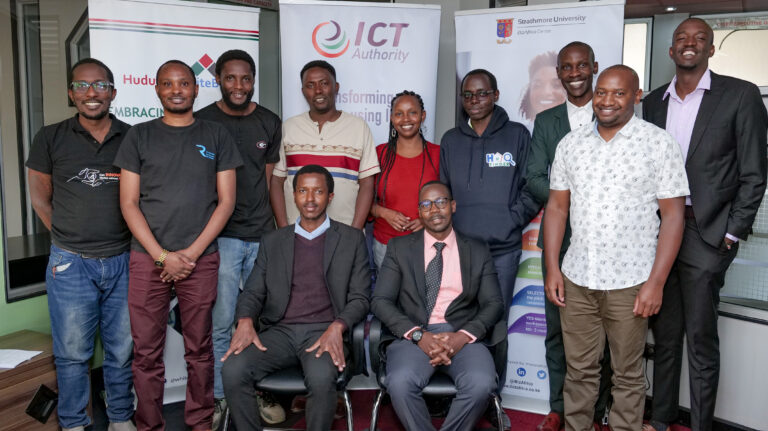
The ICT Authority (ICTA) has revealed the winners of the Whitebox Strathmore Bootcamp Program following a call for applications on 17th July 2023. The program is run through a partnership between the ICT Authority and Strathmore following the signing of an MOU in February 2023.

The startups are: Giftpesa, Residence Smart Address System, Hela.money, Fundi Link, Shop Okoa, PLAT-DEL, NeuralSight, Thorium App, Hao Finder and Meira.

Speaking after the announcement, Stanley Kamanguya, CEO of the ICT Authority, said: “I am delighted to note that the call for applications has come to a successful end with the naming of the 10 top finalists. The partnership between the ICT Authority will go a long way building the already robust ICT Innovation in Kenya.”

The strategic partnership between the Huduma WhiteBox program and iBizAfrica at Strathmore University highlights the importance of academia and business working together to develop the next generation of ICT startups. The Whitebox Strathmore Bootcamp aims to provide an incubator for innovation, creativity, and sustainable growth by offering a caring environment that allows businesses to thrive.

Through initiatives like the Huduma WhiteBox programme and the Whitebox Strathmore Bootcamp, the ICT Authority remains steadfast in its mission to drive Kenya’s tech landscape forward. By nurturing the country’s brightest minds and fostering an environment of collaboration, the ICTA ensures that Kenya remains at the forefront of technological advancement in the region.

In February 2023, the Authority entered into a partnership with Strathmore University’s ibizAfrica to support the growth of the innovation ecosystem.

The Whitebox Strathmore Bootcamp was mooted to support capacity building of startups in the areas of business planning, market entry strategies, financial management and Legal & regulatory framework, provide acceleration to startups and provide technical support to the startups.

The Bootcamp will redefine the startup landscape by offering 10 promising Kenyan startups an immersive experience in training, mentorship, and incubation.

On his part, Dr. Joseph Sevilla, Director of @iLabAfrica said: “I am delighted to welcome the 10 startups to the Whitebox Strathmore Innovation Program. These startups represent the essence of Kenyan innovations in diverse sectors such as agritech, fintech, and cyber-security which showcases the diversity and ingenuity that our nation is known for.”

He added: “@iBizAfrica is excited to provide them with the necessary support, mentorship, and resources to nurture their growth and amplify their impact. The Whitebox Strathmore Innovation Program is not just about individual startups; it’s about fostering an ecosystem of collaboration, and inspiration through @iLabAfrica’s and @iBizAfrica’s dynamic approach.”

Here are the founders of the startups

1 Joseph Mjomba Fundi Link Software Service

2 Daniel Njiu Giftpesa Fintech

3 John M. Kioko Residence Smart Address System Cybersecurity (Information Technology)

4 Washington Mageto PLAT-DEL E-commerce and Logistics

5 Frida Karani Hela.money Fintech

6 Kelvin Mulama SHOP OKOA FINTECH AND BANKING

7 Kennedy Kariuki Wanyugi Thorium App Agritech

8 Tom Kinyanjui Njoroge Neural Sight HealthTech

9 Gilbert Nakiboli Waliuba Hao Finder Proptech

10 Margaret Wairimu Meira Marketing and communication Tech

Google Appoints Alex Okosi as Managing Director for Africa

0

Google has appointed Alex Okosi, currently Managing Director for YouTube in EMEA Emerging Markets, as the new Managing Director for Google in Africa, responsible for Google’s operations in Africa including programs to help businesses and economies on the continent to grow.

Okosi will also be in charge of expanding access and providing tools to help the next billion users get more from the Web.

“Alex is a proven leader with a wealth of experience in the media and technology industries. He has a deep understanding of African countries and a passion for using technology to empower people and businesses,” said Meir Brand, Vice President, EMEA Emerging Markets at Google.

Okosi is a seasoned media, entertainment, and technology leader. Prior to joining YouTube, he held the position of Executive Vice President and Managing Director of Viacom International Media Networks Africa and BET International. In his most recent position at YouTube, Okosi played a pivotal role in steering the platform’s growth and expansion across Africa, the Middle East, and Turkey.

“I am excited at the prospect of leading Google’s team in Africa and the opportunity to be an even closer part of this diverse and dynamic region, which is so close to my heart,” said Okosi. “I’m a firm believer in the potential for technology and, in particular, the internet to improve people’s lives and to help individuals and businesses in Africa to thrive.”

Google has been operating in Africa for over a decade and has offices in Ghana, Kenya, Nigeria and South Africa. The company’s products and services are used by millions of people in Africa every day.

Unveiling the Dark Side of Remote Job Opportunities on LinkedIn

0

As the world witnesses the rapid expansion of remote work opportunities, a sinister LinkedIn scheme has quietly taken root, aiming to harvest data from unsuspecting job seekers.

At its core, this scheme is nothing but a sophisticated phishing attack. In the realm of cybersecurity, phishing is a nefarious tactic employed by cybercriminals to dupe individuals into divulging sensitive information or unwittingly installing malicious software, such as ransomware.

The Mechanics of the LinkedIn Scam

These cybercriminals operate under the principle of creating fake job postings and persuading unwary applicants to apply. These con artists have a tendency to favour jobs that can be done easily remotely on a regular basis. Their preferred job postings are in industries like content writing, digital marketing, and virtual support. Additionally, they deftly take use of LinkedIn’s “Quick Apply” function, lowering the obstacles that potential victims must face.

For instance, malevolent actors masquerading as the “International Association of Professional Writers and Editors (IAPWE)” have been orchestrating this LinkedIn scam for a considerable duration.

A disheartening incident involved a gentleman whose daughter fell victim to the scammers, who shamelessly used her details to perpetrate fraudulent charges on her PayPal account.

The Victim’s Perspective

Another method employed in this LinkedIn scam involves direct messaging. Cybercriminals initiate conversations with LinkedIn users, claiming that the individuals have been shortlisted for a position based on their LinkedIn profiles. Subsequently, they request that the unsuspecting users furnish their most up-to-date resumes. Typically, a resume contains a treasure trove of personal data, which these malevolent actors can exploit for malicious purposes.

In some instances, scammers may coerce users into inspecting project files prior to arranging a Zoom meeting. These project files, however, conceal a sinister plot. EXE file that unsuspecting victims might unwittingly install.

In more sophisticated instances, these scammers hunt for publicly shared email addresses on LinkedIn and send enticing job offers via email. These deceptive emails contain links leading to unsecured websites. In both scenarios, once the victim is ensnared, the cybercriminals can inject various types of malicious elements into the victim’s computer or mobile device, compromising both the device’s security and the user’s privacy.

The Arsenal of Malicious Materials

These unscrupulous individuals are armed with a variety of malicious materials, including but not limited to malware, spyware, keyloggers, remote access Trojans (RATs), adware, and botnets. Additionally, visiting compromised websites may result in the installation of crypto-jacking scripts or phishing pages.

LinkedIn’s Dilemma

Regrettably, reporting such accounts to LinkedIn yields little respite, as these accounts seldom infringe upon LinkedIn’s policies. As a result, it is exceedingly challenging for users to substantiate their suspicions of malicious intent. Perhaps LinkedIn can draw inspiration from platforms like Indeed.com and adopt measures to shield users’ email addresses from prying eyes.

In conclusion, as the remote job landscape continues to flourish, vigilance and caution on professional networking platforms like LinkedIn are paramount. Awareness of the tactics employed by cybercriminals can serve as a powerful shield against falling victim to such insidious scams.

Kenya’s President Ruto drives himself from State House to KICC in electric car 

0

President Ruto demonstrated his support for Kenya’s electric mobility sector by using an all-electric fleet for his motorcade during Africa Climate Week and the Africa Climate Summit. His security team traded in their internal combustion engine motorcycles for electric ones from local EV firms such as Roam, Ampersand, Spiro and KiriEVs.

The highlight of the event was watching President Ruto drive himself from the State House to the summit venue, KICC. The president drove a bright yellow Autopax Air EV Yetu which will soon be built in Thika, Kenya. Yetu is Swahili for “ours,” hence the car is known as “Our Air EV.”

In Kenya, the Autopax Air EV Yetu will be available in two configurations. The first is the regular range model, which has a 17.3 kWh battery and a reported range of 200 km (124 miles), and the second is the extended range variant, which has a 26.7 kWh battery and a range of up to 300 km (186 miles).

The summit follows the announcement of a groundbreaking agreement between Kenya and Spiro, Africa’s premier electric motorbike maker and clean energy provider, the firm will deploy electric bodas throughout Kenya. Since its inception just over a year ago, the company has successfully introduced almost 10,000 electric motorcycles in nations such as Benin, Togo, Rwanda, and Uganda.

As a part of this agreement, Spiro is set to introduce an additional 3,000 battery charging and swapping stations, considerably improving the country’s EV infrastructure. Spiro currently operates 350 battery switching and charging stations across Africa.

The EV manufacturer is also setting up a local assembly plant in Kenya, which will raise the national manufacturing contribution to GDP from 7.2 per cent in 2021 to 15 per cent by 2027 according to Moses Kuria CS Ministry of Investments, Trade and Industry (MITI)

Africa’s Business Heroes Announces Top 10 Finalists for 2023

0

The Africa’s Business Heroes (ABH) Prize Competition, a philanthropic program sponsored by the Jack Ma Foundation and Alibaba Philanthropy has announced this year’s top 10 finalists following an intense round of semi-finale business pitches and judging held on September 1 and 2 at Norrsken House in Kigali, Rwanda.

These 10 entrepreneurs will compete for their share of the final prize of US$1.5 million in grant funding at the competition’s Grand Finale scheduled for November 23 and 24.

 Jason Pau, Executive Director of International Programs at the Jack Ma Foundation said,“ABH remains committed to uncovering, championing and supporting trailblazing African entrepreneurs who are bringing positive change to their communities. As we reach the fifth anniversary of our 10-year commitment to this initiative, we’re excited by the expanding and diverse array of talent among our contenders.With November on the horizon, we wish every of the top 10 finalists the best of luck on their journey, and we encourage the public to join our Summit and Grand Finale, as it promises to be truly special.”

The 2023 ABH top 10 entrepreneurs were selected through multiple stages of interviews and evaluation from 27,267 applications across all 54 African nations. They hail from eight African countries, including Benin, Egypt, Ghana, Kenya, Morocco, Nigeria, Rwanda and South Africa.

Their start-ups have been drawn from a wide variety of industries, including agriculture, education & training, energy, financial services, healthcare, manufacturing and retail.

The 10 finalists will present their businesses on stage to a panel of inspiring business people at this year’s Grand Finale, which will take place in conjunction with a summit and will be the biggest in ABH’s history in celebration of the fifth anniversary of the competition. Held offline in Kigali, Rwanda on 23 and 24 November and also partially livestreamed to reach audiences across Africa, the Summit and Grand Finale will be a gathering of a diverse group of African entrepreneurial ecosystem players.

 The action-packed event will comprise exciting sessions including speeches, workshops, an entrepreneurial showcase and a live pitch competition, among other activities.

“We would like to extend our heartfelt gratitude to the distinguished panel of Semi-finale Judges: Fred Swaniker, Founder and CEO, African Leadership Group; Hasan Haider, Founder and Managing Partner, Plus Venture Capital; Ken Njoroge, co-founder, Cellullant and Rene Parker, co-founder and CEO, RLabs.”

“The ABH competition has shown that African entrepreneurship can emerge as a potent force propelling both social upliftment and economic progress. It is a dynamic stage, spotlighting ingenious start-ups that steer toward solutions, tackling challenges with a resonance that’s impactful, competitive, sustainable and additive. I believe that entrepreneurs are carriers of HOPE as they can unlock possibilities that can change the world. I look forward to the Grand Finale, where the top 10 finalists will demonstrate their remarkable business acumen on stage,” said Rene Parker, Cofounder and CEO of RLabs, ABH semi-finale judge (2019 – 2023).

Originally launched in 2019, the ABH Prize Competition is Pan-African, inclusive, sector-agnostic and grassroots-oriented. It aims to identify, support and inspire the next generation of African entrepreneurs who are making a difference in their local communities by working to solve the most pressing problems and building a more sustainable and inclusive economy for the future.

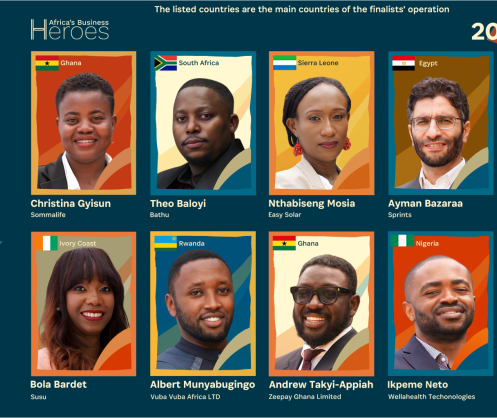
The top 10 finalists are  

  1. Ms. Bola Bardet, CEO and Co-Founder, Susu (Benin)
  2. Mr. Ayman Bazaraa, CEO and Co-Founder, Sprints  (Egypt)
  3. Mr. Andrew Takyi-appiah, Founder, Zeepay Ghana Limited (Ghana)
  4. Ms. Christina Gyisun, CEO and Co-Founder, Sommalife Limited  (Ghana)
  5. Mr. Thomas Njeru, CEO and Co-Founder, Pula Advisors Limited  (Kenya)
  6. Mr. Ismael Belkhayat, CEO and Founder, Chari  (Morocco)
  7. Mr. Ikpeme Neto, CEO and Founder, Wellahealth Technologies  (Nigeria)
  8. Mr. Albert Munyabugingo, CEO and Co-Founder, Vuba Vuba Africa LTD  (Rwanda)
  9. Ms. Nthabiseng Mosia, CMO and Co-Founder, Easy Solar (South Africa)
  10. Mr. Theo Baloyi, CEO and Founder, Bathu  (South Africa)

Africa Finance Corporation Partners with Kenya’s CPF Financial Services to Boost Infrastructure Investment

0

Africa Finance Corporation , Africa’s infrastructure solutions provider, and CPF Financial Services (CPF), a  provider of innovative financial solutions in Kenya, have partnered  to support  infrastructure investments within the country.

Signed on the opening morning of the Africa Climate Summit in Nairobi, the agreement commits AFC and CPF Financial Services to collaborate in identifying, developing, and co-financing priority infrastructure projects that are aligned with Kenya’s development roadmap, leveraging their combined technical expertise and access to domestic and global capital.

“African institutional investors are one of the single largest sources of investable capital and will play a catalytic role in bridging Africa’s infrastructure gap,” said Samaila Zubairu, President & CEO of AFC “It is with this immense potential in mind that we are partnering with CPF Financial Services. Our combined expertise and access to capital will accelerate progress towards achieving economic prosperity and job creation for Kenya and, ultimately, the African continent.”

The collaboration aligns AFC, with a track record of generating competitive returns on over US$12.7 billion of investments in transformational infrastructure projects across 36 African countries, with CPF, one of Kenya’s leading institutional investors with more than US$1 billion in assets under management. African institutional investors, including pension funds, insurance companies and asset managers, hold nearly US$1trillion dollars of assets under management, equivalent to a third of the continent’s combined GDP and more than 5 times the annual infrastructure and climate financing needs of the continent.

AFC is a major development partner in Kenya—a sovereign member since 2017—with cumulative investments of approximately US$400 million in the country to date and a robust in-country pipeline of infrastructure, industrial and trade finance projects valued at over US$750 million.

“We are excited to collaborate with AFC, a recognised leader in the infrastructure sector,” said Hosea Kili Group Managing Director and CEO of CPF Financial Services. “This alliance aligns perfectly with our goals of creating value-driven solutions and supporting Kenya’s infrastructure agenda. By working together, we aim to unlock new opportunities and facilitate sustainable economic growth.”

Electric motorbike startup Spiro to deploy over a million EVs in Kenya

0

The Government of Kenya has partnered with Spiro, an electric motorbike manufacturer and clean energy provider to deploy over a million electric vehicles (EVs) throughout Kenya, highlighting the nation’s unwavering commitment to renewable energy and sustainable transportation.

Launched over a year ago, Spiro has rapidly penetrated the African e-mobility market and is present in Benin, Togo, Rwanda, and Uganda, the company has successfully introduced nearly 10,000 electric bikes. These EVs have cumulatively provided over 90 million km of eco-friendly travel, preventing over 5,000 tons of CO2 emissions.

“We are committed to enhancing our climate action by adopting low-carbon and efficient transportation systems through the application of innovations including clean, efficient, and sustainable energy technologies,” declared H.E. William Ruto, President of Kenya.

Spiro has around 350 battery swapping and charging stations established across Africa and is building the infrastructure for renewable energy in transportation in Africa. As a part of this fresh agreement with Kenya, Spiro is set to introduce an additional 3,000 battery charging and swapping stations, significantly enhancing the nation’s EV infrastructure.

Jules Samain, CEO of Spiro, expressed, “Spiro is privileged to spearhead Kenya’s transformative shift towards environmental conservation. Our mutual vision of tackling the climate crisis, promoting public health, and enhancing the profitability of Boda Bodas propels this collaboration. Given the escalating fuel prices, the shift to EVs is both an environmental and economic necessity. Spiro’s electric bikes have already showcased their profitability for Boda Bodas, amplifying daily earnings substantially”. 

Kenya’s dedication to green technology shines through this initiative. Transitioning from traditional internal combustion engine bikes to electric variants offers myriad benefits, especially pertinent for the “last mile” of travel. This change is poised to curtail greenhouse gas emissions and provide a sustainable solution for Kenya’s transportation challenges.

Jules Samain further elaborated on the energy autonomy facilitated by Spiro’s innovative battery technology, “With our batteries and locally produced energy in Kenya, we diminish the dependence on fossil fuels, fast-tracking Kenya’s journey towards energy independence”. 

Spiro’s CMO, Dominique Nkurunziza, chimed in, “This is a defining moment in Kenya’s green transition. As an increasing number of people make the switch to EVs, we’re not merely reducing our carbon footprint but also fostering a healthier, more sustainable environment for the Kenyan people”. 

In a strategic move to boost the local economy, Spiro has pledged to set up a manufacturing base in Kenya. This venture, in conjunction with the establishment of charging stations and the recruitment of service staff, is anticipated to create thousands of employment opportunities.

Epson Creates New Regional Unit to Drive Growth in Africa, Asia & Middle East

0

Seiko Epson Corporation has established a new sales company, Epson Middle East FZCO [EME], reflecting the tremendous potential to accelerate expansion in key markets including Africa, Caucasus, Central Asia, the Middle East, Moldova, Türkiye, and Ukraine, centrally managed from a regional office in Dubai, UAE.

The newly established EME sales company has set forth an ambitious goal to accelerate its revenue growth and footprint over the next five years.

It plans to achieve this goal by expanding its presence in the core domains of printing, scanning, and visual display solutions.

Former Vice President CISMETA Europe BV Neil Colquhoun, has been appointed as President, Epson EME, after more than a decade with the company.  

“Establishing Epson EME demonstrates our commitment to customers and partners in the region, that we will continue to invest and grow our presence in all key markets, from Africa to the Middle East to Central Asia, while centralising operations in our Dubai-based office. This investment will give us the agility and ability to address the changing needs of customers in these dynamic, fast-growing markets with our key areas of printing, scanning, and visual display solutions.”

The company’s progress is expected to gain momentum in line with the wider region’s adoption of sustainable technologies, with particular emphasis on Epson’s business inkjet and ink tank printing systems, a cornerstone of Epson’s business globally.

 These solutions boast advantages such as lower power consumption, reduced CO2 and plastic waste, compared to laser printers, and heightened efficiency thanks to Heat-Free technology.

Colquhoun added: “Epson product portfolio provides businesses and consumers with the opportunity to switch to sustainable technology solutions.”

Epson reported sales increases of more than 40% in the Middle East and Turkey, almost a third in Africa, and around 10% in Central Asia, Caucasus and Ukraine for FY2022.

The company anticipates a huge demand for Epson technology solutions such as the increased scanning and automation needs for digitised workflows in various business sectors.  The continued expansion of world-class professional sports and entertainment events, taking place across the GCC, Africa and into Central Asia is also introducing greater demand for projection technologies and immersive retail experiences.

With more than 250 Epson employees currently in place, Epson forecasts an increase of 45% in new hires, as the EME entity becomes operational in April 2024.  The recruitment drive will focus on nationalization, diversity and inclusivity, with women already accounting for up to 40% of the workforce.  The largest Epson offices will be in the UAE, South Africa, and Türkiye, complemented by operations in the Kingdom of Saudi Arabia, Morocco, Kenya, Nigeria, Israel, Kazakhstan, and Ukraine. There are also plans to expand and enhance Epson’s network of resellers and distributors in the region.  

UAE Carbon Alliance pledges to purchase US$450 million in African carbon credits by 2030

0

The UAE Carbon Alliance, chaired by Her Highness Sheikha Shamma bint Sultan bin Khalifa Al Nahyan, President and CEO of the UAE Independent Climate Change Accelerators (UICCA), has signed a non-binding Letter of Intent with the Africa Carbon Markets Initiative’s Advance Market Signal to pledge an indicative intended purchase of US$450 million in African carbon credits by 2030.

The Africa Carbon Markets Initiative (ACMI) is a collaborative effort incubated by Sustainable Energy for All (SEforALL), the Global Energy Alliance for People and Planet (GEAPP), and The Rockefeller Foundation, and rolled out in partnership with the United Nations Economic Commission for Africa (UNECA) and the UN Climate Change High-Level Champions.

Launched during COP27, the initiative aims to create, amplify, and sustain the next generation of high integrity carbon credits in Africa with the ambition to reduce emissions and bring transparency and integrity to voluntary carbon markets in the region. Signatories under ACMI’s Advance Market Signal represent the carbon market buyers and investors interested in purchasing African carbon credits to support the development of African carbon markets.

Her Highness Sheikha Shamma bint Sultan bin Khalifa Al Nahyan, President & CEO of UICCA, said: “As we navigate the climate crisis, carbon markets stand as a pivotal tool in our decarbonisation journey. The UAE Carbon Alliance aspires to aggregate demand for high-quality carbon credits from the UAE; demand which already exceeds the supply available from the UAE alone. Our collaboration with the Africa Carbon Markets Initiative provides carbon market buyers in the UAE and wider region with access to high-quality carbon credits in Africa. This does not only help to unlock Africa’s carbon credit generation potential, but also supports sustainable investment opportunities and long-term climate impact. Through this pledge, we hope to foster more integrated and efficient carbon market mechanisms between our two regions.” 

Paul Muthaura, CEO of ACMI, said: “We are thrilled to announce this critical signal from the United Arab Emirates Independent Climate Change Accelerators (UICCA), which amplifies the ACMI mission to build integrity via transparency and accountability for high-integrity carbon credits in Africa.  We seek to promote a conducive environment, across continental jurisdictions, that bridges the demand from the Middle East, among others, with Africa’s potential for high integrity supply. UICCA’s pledge is a testament to the opportunity created through international cooperation in addressing climate change. Together, we aim to create a sustainable, transparent, and equitable carbon market ecosystem in Africa that will drive significant positive impact for our continent and the world.”

To date, the current signatories under ACMI’s Advance Market Signal include Standard Chartered, Vertree, ETG and Nando’s, with an estimated US$200 million collected for purchase of African carbon credits by 2030. ACMI is aligned with the Integrity Council for Voluntary Carbon Market’s Core Carbon Principles, the Science Based Targets initiative (SBTi), and the Voluntary Carbon Markets Integrity Initiative’s recommendations.

The UAE Carbon Alliance is a coalition of partners dedicated to advancing the development of a carbon market ecosystem. Chaired by Her Highness Sheikha Shamma bint Sultan bin Khalifa Al Nahyan, its founding members include AirCarbon Exchange (ACX), First Abu Dhabi Bank (FAB), Mubadala Investment Company (Mubadala), Abu Dhabi National Energy Company (TAQA) and Abu Dhabi Future Energy Company (Masdar), in addition to UICCA as its secretariat.

Bitcoin For Small Businesses And Beginners

0

Bitcoin, a decentralized digital currency without a central bank or single administrator, has been capturing the attention of consumers and businesses worldwide. Its rise to prominence has been marked by volatile price swings, attracting investors and speculators, but its utility as a medium of exchange is equally significant, particularly for small businesses. Small businesses can benefit from Bitcoin transactions due to lower fees, faster payment processing, and the potential to reach a global customer base.Visit news spy for further information.

For beginners, the world of Bitcoin might seem complex. However, getting started is simpler than it seems. The first step is to set up a digital wallet, which is a software application that allows you to send, receive, and store digital assets securely. There are many wallet providers to choose from, each offering different features and levels of security.

Once a wallet is set up, you can start acquiring Bitcoin either by purchasing it from an exchange or receiving it as payment for goods and services. It’s important to note that Bitcoin prices can fluctuate dramatically, so it’s wise to only invest money that you can afford to lose. It’s also vital to maintain strong security practices to protect your digital assets.

Different Uses Of Bitcoin

Bitcoin offers a multitude of use cases, varying from individual to commercial applications. Here are some ways it can be used:

  • Remittances: Bitcoin can be used for sending remittances. Traditional remittance methods often involve high fees and can take several days. Bitcoin transactions, on the other hand, are processed relatively quickly and usually cost less than traditional methods.
  • Store of Value: Given its scarcity (the maximum supply of Bitcoin is capped at 21 million), some view Bitcoin as “digital gold” and a store of value. It’s seen as a hedge against inflation and economic instability.
  • E-commerce: Many online businesses accept Bitcoin as a form of payment. This allows businesses to reach a global customer base, and it can also lower transaction costs compared to traditional payment methods.

Bitcoin’s influence is not limited to the financial sector, but also extends to other areas such as:

  • Charitable Donations: Many charitable organizations accept Bitcoin donations. This provides a new way for these organizations to receive funding and enhances transparency since Bitcoin transactions are recorded on a public ledger.
  • Digital Art Marketplace: With the rise of NFT (Non-Fungible Token), Bitcoin and other cryptocurrencies have become popular methods of buying and selling digital art.

Despite the many uses of Bitcoin, users should be aware of the associated risks:

  • Price Volatility: The price of Bitcoin can fluctuate wildly. This can lead to significant financial gain or loss.
  • Regulatory Risk: As digital currency becomes more prevalent, it’s likely to face increased scrutiny and regulation from governments. This could impact the value and use of Bitcoin.
  • Security Risks: While Bitcoin transactions are secure, digital wallets can be vulnerable to hacking. Users should ensure they use secure wallet providers and follow best practices to safeguard their assets.

A Guide To The Different Types Of Cryptocurrency

In addition to Bitcoin, there are several other types of cryptocurrencies available in the market, each with its unique features and uses. Ethereum, for example, is a blockchain-based platform that allows developers to build and deploy decentralized applications. Its native cryptocurrency, Ether, is used to facilitate these applications and as a store of value.

Another notable cryptocurrency is Ripple’s XRP, which was designed for speed and to be a payment protocol. It acts as both a cryptocurrency and a technology protocol for facilitating quick, low-cost international money transfers.

Lastly, we have Litecoin, often considered the silver to Bitcoin’s gold. Created by former Google engineer Charlie Lee, it offers a faster block generation time and hence a faster transaction confirmation. Like Bitcoin, it can be used for transactions anywhere in the world. These are just a few of the many digital currencies out there. As the world continues to accept and adapt to these new forms of financial tools, it is likely we will see even more variety in the near future.

Bitcoin Users: How Many People Own Bitcoin In 2023?

The number of people who own Bitcoin in 2023 is a figure that’s challenging to determine with absolute precision due to the inherent anonymity of Bitcoin transactions. However, some estimates suggest that the number of Bitcoin users worldwide could reach into the hundreds of millions, as more people recognize its potential as both an investment and a medium for conducting business transactions.

The adoption rates of Bitcoin vary widely from region to region, influenced by factors such as regulatory environment, economic stability, and public awareness of cryptocurrencies. Countries with unstable local currencies, for instance, have seen a surge in Bitcoin utilization as citizens seek safer alternatives for storing their wealth. Meanwhile, in regions with robust banking industries and stable currencies, Bitcoin adoption has been driven more by its potential for investment and its use in digital transactions.

The growing number of Bitcoin owners in 2023 reflects an increasing trend in digital currency use. As more businesses start to accept Bitcoin and other cryptocurrencies, and as more digital wallets and cryptocurrency exchanges become available, it’s likely that this trend will continue. It’s also worth noting that as awareness and understanding of Bitcoin increase, the demographics of Bitcoin ownership are also likely to broaden, encompassing a wider age and income range.

Final Words

Cryptocurrencies, primarily Bitcoin, have revolutionized the financial landscape, offering an alternative form of currency that is decentralized, digital, and potentially more secure. As Bitcoins and other cryptocurrencies continue to gain acceptance, their influence in the global economy is likely to grow. Their advantages, such as reducing transaction times and fees, increasing financial accessibility, and providing a potentially stable alternative to traditional currencies, make it a promising resource.

However, it is important to remember that the world of cryptocurrencies is still relatively new and therefore, subject to a high degree of volatility. It’s essential for potential investors and users to thoroughly research and understand the dynamics of the crypto market before getting involved. Cryptocurrencies possess a high-risk, high-reward investment nature, requiring a well-informed approach to avoid potential pitfalls.

Looking toward the future, it’s evident that cryptocurrencies, particularly Bitcoin, will play a significant role in shaping the financial sector. They offer an innovative solution to many of the challenges present in our current financial systems. However, their widespread adoption will rely heavily on regulatory acceptance and advancements in technology. As the market matures and becomes more stable, we can expect to see an increase in the number of people using and investing in cryptocurrencies.

Unlocking New Avenues-Turning Cars into Profitable Investments

0

Owning a car for personal use in Kenya’s urban life has almost become a basic need. Especially if you have a family. However, a shifting perspective is emerging as individuals and entrepreneurs recognize the potential of cars as profitable investments. From ride-hailing services to delivery platforms, cars can be transformed into revenue-generating assets that contribute not only to personal mobility but also to financial growth.

A few years ago, cars were seen as liabilities due to their high purchase price, maintenance costs, and depreciation. However, the rise of the sharing economy and digital platforms has transformed the way we view car ownership. Instead of being merely a mode of transportation, cars can now be leveraged to generate income. This paradigm shift has given rise to opportunities that were previously unimaginable.

1. Joining the Ride-Share Revolution

Ride-hailing services like Bolt, Little Cab and Uber have gained significant traction in Kenya’s urban areas. With a well-maintained and presentable car, one can employ a driver or opt to have a weekend side hustle as a ride-hail driver, catering to the growing demand for convenient and reliable transportation. This option allows car owners to earn a consistent income while maintaining flexible working hours. Cars best suited for this are Daihatsu, Toyota Pixis, Suzuki Alto, Nissan Dayz, Suzuki Hustler among others that have an engine rating of 600cc to 700 cc.

2. Tapping into E-Commerce Boom

The rapid growth of e-commerce in Kenya has fueled the demand for efficient and timely delivery services. Car owners can capitalize on this trend by partnering with delivery platforms such as Glovo or Jumia Food. By delivering packages or food orders, individuals can earn money while contributing to the logistics infrastructure of the country. Some of the cars to consider for this are those with a large trunk space and 1000cc to 1600cc like Nissan Advan, VW Touran, Nissan Caravan, Toyota Porte, Toyota Spade.

3. Car Rentals: Catering to Travelers and Tourists

Tourism is a significant industry in Kenya, attracting both local and international visitors. Car owners can convert their vehicles into rental options for tourists looking to explore the country at their own pace. Some options to consider include Suzuki Jimny, Toyota Noah, Honda Stepwagon, Mitsubishi Pajero. This list is largely open due to the vast options that clients may request, based on their choice of destination, number of travelers, and cost of hiring the unit.

4. School Transportation

In Kenya, providing school transportation during your daily commute can be both rewarding and community-focused. Parents highly value safe and dependable transportation for their children, making your service invaluable. The advantage is that the school schedule often aligns with your daily commute, optimizing your time and resources.

Minivans like the Toyota Noah, Mitsubishi Delica, Toyota Voxy, or Nissan Serena  are excellent choices due to their ample space and reputation for reliability. They come equipped with sliding doors for easy entry and exit. Alternatively, you can use any four-door car that meets safety standards, especially if it’s part of your daily work commute.”

5. VIP Transportation:

The demand for luxury transportation experiences has risen with the increasing affluence in the EA region. High-profile individuals, business executives, and tourists seeking personalized and exclusive travel options have paved the way for upscale transportation services.

Car owners can tap into this market by offering VIP transfers, airport pickups, and chauffeur services in vehicles equipped with premium amenities and exceptional comfort. Luxury SUVs like the RangeRover, Mercedes-Benz ML and GL, BMW X5 among others offer a seamless blend of opulence and reliability. The VIP transfers and travel sector not only offers a lucrative opportunity for car owners but also contributes to Kenya’s reputation as a high-quality destination for travelers seeking sophisticated transportation solutions.

Kenya’s evolving economic landscape presents numerous opportunities for turning cars into profitable investments. The shift from considering cars as mere expenses to recognizing their potential as income generators has opened doors for individuals to diversify their income streams.

Whether through ride-hailing, delivery services, rentals, advertising, or niche transportation, car owners can leverage their vehicles to achieve financial growth while contributing to the country’s overall development. As the digital economy continues to expand, the potential for cars as revenue-generating assets is poised to grow even further.