back to top
Saturday, April 4, 2026
spot_imgspot_imgspot_imgspot_img
Home Blog Page 738

Standard Group CEO Sam Shollei Allegedly Threatens to Fight Kenya’s Anti-Corruption Chief

1
notwThere was a fiery exchange in an audio recording believed to have been between Ethics & Anti-Corruption Commission (EACC) Chairman Mr Mumo Matemu with another party believed to have been Standard Group CEO Sam Shollei.
The voice believed to be Mr Shollei’s threatens to “bring down the EACC and its Chairman” if Gladys Shollei, his wife is prosecuted for alleged corruption. According to the voice, the wife is innocent and the body is welcome to check the couple’s property and bank details and is ready and willing to help them find any evidence of corruption against her.

According to COFEK which earlier reported this, “A very emotional Mr Shollei is heard fighting on phone, over prosecution of his younger brother (at the IEBC) and his wife, Gladys (formerly the Chief Registrar at the Judiciary). He appears to be blaming EACC Secretary Mr Halake Waqo whom he refers as a “Somali getting you out of town” and wants Mr Matemu to “take charge”.”The anger is itself not an issue because it’s a family affair but questions arise on how he knew and called Matemu on the prosecution. How much power he has to bring down the anti-corruption chief apart from his media empire? Are there CEO’s using their media empires for mudslinging?

news_of_the_world_idiots

Other questions arising include how ready and sure was he to dig and expose the chief’s personal life? Is he snooping everyone’s phone in town or is he runing his own intelligence unit to know what agency is planning what? Is Standard Group intercepting Matemu’s communications or probably yours for its scoops? Will this lead to a scandal like Rupert Murdoch’s?

Get the entire story on COFEK‘s site. Standard Group is the second biggest media house in Kenya after Nation Media Group and runs print, TV and online media.


Kenya’s Mobile Subscriptions Hit 31.8 Million

0

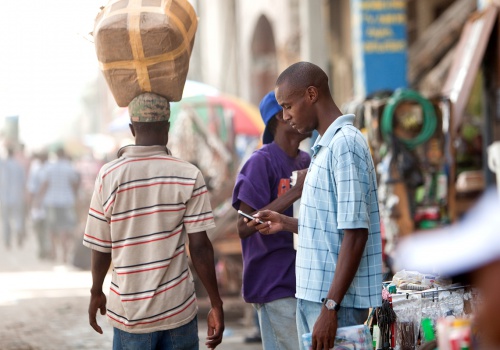
567-mobile-money-on-street-1140x800-2Kenya now boasts of more than 31.8 million mobile subscriptions up from 31.3 million recorded during the last quarter, according to recent ICT Sector Quarterly Statistics Report for Q3 Financial Year 2013/14. This increase  represents a 1.7 per cent growth during the period.

From the 31.8 million, 31.2 milion are prepaid subscriptions while 607,569 are post paid subscriptions.

The prepaid subscriptions increased by 1.5 per cent from 30.7 million during the previous quarter while the post-paid grew by 8.4 per cent from 560,503 subscriptions compared to the previous quarter. This puts Kenya’s mobile penetration to 78.2 per cent after a 1.3 percentage growth.

According to the report, Safaricom, Airtel and Orange Kenya were the biggest gainers while Essar Telkom the loser.Safaricom and Airtel gained 1.5 and 1.8 per cent subscriptions respectively while Telkom Kenya had the highest gain in subscriptions of 8.8 per cent compared to Essar Telecom’s 3.5 per cent loss of its subscriptions.

Safaricom Limited had 21,567,388 from 21,248,287, Airtel Networks Limited had 5,251,087 from 5,156,269, Essar Telecom Limited had 2,557,630 from 2,649,362 and Orange or Telkom Kenya had 2,453,898 from 2,255,099 totalling to 31,830,003 in March 2014 from 31,309,01 in December 2013.

On market share by subscription, Orange or Telkom Kenya saw an increase in shares of 0.5 percentage points to 7.7 per cent up from 7.2 per cent shares while Safaricom Limited and Essar Telecom limited lost 0.1 per cent and 0.5 per cent of market shares to reach 67.8 per cent and 8.0 per cent shares respectively. Airtel Networks Limited shares remained unchanged at 16.5 per cent compared to the previous quarter.

Other key highlights unclude:

Mobile money transfer grew by 0.9 per cent to record 26.2 million subscriptions from 26.0 million in the previous quarter while money transfer agents grew by 10.6 per cent to stand at 103,660 agents. MNP increased by 31.2 per cent to stand at 362 in-ports up from 276 in-ports recorded in the previous quarter.

On a downward trend was voice traffic and SMS.Local mobile voice traffic dropped by 2.7 per cent to post 7.6 billion minutes down from 7.8 billion minutes while the subscriber average minutes of use stood  at 80.3 minutes per month compared to 84.1 minutes registered in the last quarter.

Due to smartphone penetration and increasing use of OTT,  SMS traffic declined by 1.0 per cent to reach 6.22 billion down from 6.28 billion messages sent during the preceding quarter with each subscriber sending an average of 65.1 messages per month.

Internet penetration stood 53.3 per cent up from 52.3 per cent during the preceding quarter. The number of broadband subscriptions increased marginally by 0.9 per cent to reach 1.44 million subscriptions from 1.43 million subscriptions recorded during the previous quarter while the number of domain names grew  by 9.1 per cent to 33,381 up from 30,585 in the previous quarter.

Kenyans also send just 16.8 million letters, a 2.8 per cent decline from 17.3 million letters sent out during the previous quarter.

More in the report here.

Teraco Now Connecting Over 54 Countries to Cloud Services

0

Data center - 1When it was launched two years ago, the Africa Cloud eXchange (ACX) from Teraco Data Centre Environments, nothing this big was expected apart from an ambition to give partners access to key content from local and international content providers.

Today, Teraco now provides access to 54 African countries via local and global carriers.

According to Lex van Wyk, CEO of Teraco Data Centre Environments,“The tremendous growth that Teraco Data Centre Environments has experienced in the last year, makes it a true telecommunications hub and a low risk entry point into Africa.”

With the deployment of a single cable within the data centre, Teraco can now distribute throughout Africa at low latency and high availability to serve the growing demand of ICT services due to infrastructure projects, growth in financial services and an increase in governments’ spend.

“By nature, cloud providers are continuously exploring new markets for IT services and view an increase of their overall performance as a competitive advantage.  For these companies it makes business sense to colocate at Teraco. We have a growing footprint, high network density and an excellent track record,” says Van Wyk.

ACX aims to enable clients to share and interconnect with other cloud providers and grow their product suite with a promise of lowest interconnect fees, minimising infrastructure spend and competitive solutions, security, power and facility uptime.

“The continuous growth in our client base, not only in numbers but also in quality is proof that organisations are starting to believe in the value of doing business in a vendor neutral space. They can focus on their core business and do not have to build data centre infrastructure to cater for the growing demands of their customers.”

“This year promises to remain challenging for the ICT landscape and I believe there will not only be an improvement in the quality of connectivity but more and improved technologies will be added to the telecommunication mix.” He says that cloud customers and content providers will expect more from the changing landscape, especially in terms of service, technology and choice. “Teraco encourages any organisation with an aim to build a business in Africa to colocate in the Africa Cloud eXchange. It will assist them in doing business effectively in Africa and it will be aligned with world-class service,” concludes van Wyk.


Africa.com Launches New Social-Media Driven Pages to Put Africa on the Map

0

Animals-Africa-wildlife-giraffes-trees-sky-photo-evening-sun-sunsetFollowing news on Africa by country is cumbersome as the 54 countries have various media companies; in different languages and on various mediums.

To simplify that, Africa.com, an Africa-related website curating news on the most important topics on the continent, today launched its new country pages to offer basic facts and maps live country specific social media feeds, daily headline news from several sources within each country, general and travel videos, quick facts and figures, an “Afripedia” and Slide shows of many images from each country.

The new pages have been optimized to display well on mobile devices and tablets, making them ideal for visitors on the African continent, especially millenials.  Africa.com expects that its new country pages will help expand its role as the leading source for information about Africa, with nearly five million pageviews per month from visitors in some 200 countries around the world.

Africa.com Chair and CEO Teresa Clarke said, “There is nothing comparable to what we have created for those searching for information on Africa.  We love Wikipedia, but by comparison, our country pages have not only the encyclopedia content you would find on Wikipedia, but so much more.  Our live Twitter feeds let you know what is happening in the country up to this minute.  Our live Tumblr feeds give you a deeper sense of what bloggers in the country are saying right now, often along with beautiful pictures to accompany those blogs.  The headline news gives you traditional media’s views on what is important today in that country.”

The new country pages take advantage of the real time news feeds for every country hash tag (for example, #nigeria, #kenya).  They also provide for a greater degree of interactivity with users by allowing visitors to Tweet directly from the page, connect to Africa.com’s active Facebook community of over 60,000 followers, and engage with Tumblr’s blogs.

Former US Ambassador to South Africa Jendayi Fraser said, “With its new country pages, Africa.com takes a major step forward to stay in the lead as the definitive one stop source for information about each of the fifty four African countries.  The new content is dynamic and up to the minute, and is a great resource unlike any other I have seen for Africa.”


SA Companies Adopting ‘Tap-n-Go’ Cashless Payment Systems

0

554378_377323412289967_933155849_n

Retailers, financial institutions and brands in South Africa are adopting to new payment technologies to help consumers to easily and quickly transact using cashless payment methods wherever they are.

Webtickets, South Africa’s online ticketing solutions firm recently introduced NFC’s ‘Tap-n-Go’ technology as an effective event management solution. Event-goers preload their Webtickets cards using cash or coupons and once they’re at the event or festival, purchases can be made for food, drinks or promotional goods by simply tapping the card against the vendor’s NFC-enabled device. This system works even when the event is technically offline and is most convenient at events where cash machines or ATMs aren’t readily available.

This technology helps venue operators track sales, determine and offer commission on sales, and use the data from purchases to streamline their offering to event-goers.

Webtickets’ cashless payment system works with existing devices, such as Samsung smartphones and tablets, and the app can be readily downloaded.

According to Jonathan Wayne, Co-Founder of Webtickets, “Cashless ‘Tap-n-Go’ and mobile payments are rapidly becoming the way to do business.  “We felt it was imperative to offer our customers and clients an innovative payment solution, and in so doing, increase their purchasing and event management convenience. We always strive to be the forerunners technologically in online ticketing retail, and event-goers can experience the benefits of our cashless payment system at the upcoming FNB JoburgArtFair due to take place at the Sandton Convention Centre from 22-24 August.”

Apart from Webtickets, several firms are adopting methods such as near-field communication (NFC) for mobile and cashless payments, a new trend which was not so two years ago. Such firms include Cape Town MyCiTi bus service, Absa, and Cricket South Africa among others which are utilising the ‘Tap-n-Go’ technology with growing success.

“We have been working with our technical partners to develop and introduce a cashless ‘Tap-n-Go’ system that would benefit both our event-goers and venue operators.  Our cashless payment system is not only convenient and easy-to-use but it also reduces the potential of fraud for vendors”.

Safaricom breaks new ground for mobile ticketing in Kenya

0

Ticket solutions provider Tickets Kenya has partnered with Safaricom to create a mobile platform for easy sale of tickets during sports, travel and entertainment events.

The new platform provides event organizers with a platform to sell tickets via M-Pesa. In return, buyers receive the tickets via SMS.

Tickets Kenya has over the recent past proven to be a responsible partner in events management. Established in June 2009, it has served over one million event goers.

The company becomes Safaricom’s main partner in mobile ticketing, a service that has made mobile phones point of sale for tickets.

Ticket Kenya designs and prints tickets with security features. It also makes customized wristbands, offers advanced sale solution, online point of sale, online event management system, Box Office management and events entry management services.

To place an order, customers can call 1511 to ask for tickets for an event of interest.

The customer care representative will reserve a ticket and send payment details via M-PESA through SMS.

The customer can then proceed to pay for the ticket after which he will receive a confirmation of purchase and a ticket through SMS that has a unique Ticket Number to be presented to a ticket agent at the event along with the SMS and ID details.


Bharti Airtel hits 300 million subscribers

0

Global mobile telco Bharti Airtel announced it crossed the 300 million-customer mark across its entire operations on Monday. The milestone includes subscribers across fixed line and DSL, mobile and DTH services.

photo credit: Worldfinance100.com
photo credit:
Worldfinance100.com

Bharti Airtel, whose operations are in 20 countries across Africa and Asia, started its operations in 1995 and reached the 100 million customers mark in 2009. The company crossed the 200 millionth mark in 2012. The additional 100 million subscribers have joined the Airtel family in just less than two years.

“This milestone emphasizes the strength of our operations, which is among the biggest globally. Additionally, it is a tribute to the ‘Airtel’ brand trusted by clients in 20 countries. Today, telecom is at the turning point of transformation, which, going forward will be driven as much by the force of technology as by the changing demographics in emerging markets across Africa and Asia,” said Christian de Faria, CEO of Airtel Africa.

“Accelerated data consumption by the youth is going to be the underlying story. I am confident that Airtel will continue to be at the forefront of this future growth story and continue to delight customers by adding value to their lives.”

Currently, Airtel ranks as the fourth largest mobile service provider worldwide and the second largest outside China. It is the largest mobile telco in Africa in terms of geographical footprint that spans 17 countries and more than 70 million customers.

Airtel’s mobile networks cover more than 1.85 billion people and carry more than 311 billion minutes of calls quarterly.

Celestine Ezeokoye Launches Ocaman to Help You Manage Any Type of Occasion

0
ocamanpageNigeria’s Ocaman is an app that aims to connect its users to awesome service providers who will help host an event, right from your invitation cards to selecting a venue to hiring photographers and even venue decorators.
Launching in Beta, the startup says its users can also use it design and order invitation cards apart from just helping users plan their events from the comfort of their couch. Ocaman is also inviting designers to join them and earn money anytime their designs are used as invitation cards.
Designers who are registered on Ocaman are paid every time their design is used on an invitation card, directly into your account.
Ocaman is the brainchild of Celestine Ezeokoye, a Software engineer who has co-founded various startups and recently worked for the Interswitch Group and several others.
According to Celestine, “I was actually thinking of a way to rekindle my entrepreneurship flame and the idea for an occasions and RSVP-based app dropped into my head. I have been working on this since then.”
Ocaman is short for occasions management, an area the founder says is the biggest expenditure-intensive areas in Nigeria.Known for the The TiketMobile Saga, Ezeokoye, is an award-winning programmer who berated the lack of enough investment in the industry as it were. There was, to say the least, an uproar with various technology heads including Jason Njoku (whose offer was refused) and even Tony Elumelu (the subject of the matter) weighing in.

Jumia Launches in Ghana & Cameroon | Up’s its Operations in Uganda

0

Jumia Kano PRIn June 2013, Rocket Internet-backed Jumia launched in Ivory Coast and later in February went live in Kampala, Uganda.

Today, the firm announced it had launched in Ghana and Cameroon and as revamped its Kampala operations, adding to 8, the number of countries its present in Africa namely Nigeria, Morocco, Egypt and Kenya.

In an interview with Reuters, Jumia co-founder Sacha Poignonnec said: “We know we are early. We are coming to markets which are not as mature in terms of Internet penetration and Internet savviness but still there is a big appetite for this service.”

The company also told the paper that Jumia Uganda had been relying on its Kenyan sister for most of its goods but will now have its own. That means a warehouse has been set up locally and stocked with goods and not just offices since its earlier launch.

It’s major competition, Konga in Nigeria has not planned to expand yet mainly because the Nigerian market, with over 170 million people and over 50 million online, is yet to be covered. Meeting needs of shoppers in Nigeria seems to be Konga’s priority but we cannot say the firm doesn’t want to invest as earlier it had said it would take Rocket Internet to court for allegedlly domain squatting. Ironically, both e-commerce firm have roots in the Swiss fund Kinnevik, which backs Rocket Internet and is also an investor in Konga and in Millicom as well. Naspers bought a majority stake in Konga.

Rocket Internet managed to get MTN and Millicom to invest in its operations in the MEA region and using those funds to expand Amazon-like sites across Africa, Asia and the Middle East in their dream to build an Amazon for emerging markets. Both MTN and Millicom have mobile money networks in most of this markets through MTN Mobile Money and Tigo Pesa respectively and this agent network will also help act as offline pick-up points for Jumia; so there’s a huge possibility that Jumia will be a huge success in less than a decade.

Other than Konga, Jumia will take on South Africa’s Takealot which is set to expand across Africa, uAfrica, Amazon.com which will be huge with the launch of PayPal in Nigeria and Alibaba Group’s AliExpress. Other challenges include local payments and logisitics services and inadequate infrastructure.


Airtel partners with East African Business Summit (EABS) to host regional conference

0

Airtel Africa, has signed an agreement with the East African Business Summit (EABS) to be a partner in the upcoming regional summit slated for October in Rwanda.

Through Airtel Money, the company will be one of the partners of the two-day summit, scheduled to take place on October 16 and October 17, 2014 in Kigali, Rwanda.

Held bi-annually, the Summit brings together the region’s top business minds from Kenya, Rwanda, Tanzania Burundi and Uganda, to engage with thought-leaders, policy makers, practitioners and development actors with a view to find and influence the implementation of solutions that create growth of the East Africa market.

airtelMr. Christian de Faria, Airtel Africa’s CEO said: “This is a great opportunity for business leaders to put their heads together and deliberate on ideas that can take our economies to the next level as regional integration shapes up. As a company at the vanguard of technological innovation in the region, we see this as a perfect platform to contribute towards solving socio-economic issues, especially through mobile technology.”

Commenting on the partnership, East Africa Business Summit (EABS) 2014 Chair Mr. Linus Gitahi said: “We are excited to have Airtel Money on board as a partner. This demonstrates increased confidence that the business community has on the impact the summit continues to have in championing inclusive development across East Africa. We look forward to Airtel’s participation as top business and government leaders converge to address wide-ranging development issues affecting the region.”
The partnership agreement with Airtel comes at a time when Rwanda’s central bank, National Bank of Rwanda, has approved the company’s intention to roll out its mobile money transfer service – Airtel Money – in the region.

East Africa Business Summit was established in 2002 as a joint initiative of Citibank, Deloitte, KPMG, Nation Media Group, PwC and The Serena Hotels.

Microsoft & South Africa’s Global Micro Partner to Boost Local Cloud Services

0

Microsoft Devices GroupLast week, Global Micro Solutions and Microsoft partnered to boost South Africa’s cloud reseller market by providing practical advice on how to become a cloud provider and the benefits of using a local cloud partner.

The companies said opportunity exists for resellers to add cloud services to their offering and how and why they need to partner with a local provider.

Nick Keene, Cloud Sales Manager at Microsoft SA said,“The Hosting Service Provider Market is part of the Microsoft Cloud Strategy and as such Microsoft will continue to invest and support our HSP partners. Our hosting partners have many years of cloud experience as they have been providing cloud services since 2000. Recently Microsoft announced further integration between the hosting providers and the Microsoft public cloud that will allow our customers to obtain Public and Hosted Cloud from a one stop shop. Global Micro Solutions has been a long standing strategic hosting partner for Microsoft.”

Microsoft, through its Azure platform provides a cloud space for building, deploying and managing applications and services through a global network of Microsoft-managed datacentres, like the one with Global Micro. The firm has long been promoting cloud solutions as a way to cut costs, save hardware space and bandwidth and use software as and when it is needed.

“People see one of the benefits of the cloud as being the opportunity to buy into a global framework anywhere in the world, from anywhere in the world, but this isn’t strictly a benefit,” says JJ Milner, founder and chief cloud architect at Global Micro. “In truth, you want your data in the same country as you, bound by the same laws as you,  who will support you in your own language in a familiar accent. This is why you should have a local cloud partner.”

Partnerships with local partners ensure;

  1. Data sovereignty: Simply put, your data is in the same country as you and governed by the same laws as you and your business, which are understood by any local legal advisors and technology consultants you may engage.
  2. Local contacts: When and if something goes wrong, you can be confident that there is a viable, real, local contact that you can get in touch with who can, if necessary, come and see you to resolve the issue.
  3. Efficient functionality: You will be able to easily and quickly control the uploading or downloading of your data whenever it is needed.

The Global Micro reseller programme has been created to allow consultants, web hosting companies or service providers to leverage the company’s enterprise infrastructure and expertise, and offer value-added services that are locally relevant and robust to their customers. Global Micro provides hosting infrastructure, the administrative control panel, and the 24/7 technical support and that all exist within South Africa’s borders, ensuring all the benefits of local cloud provisioning.

“We work with two independent datacentres and two independent ISPs. We provide our channel partners with the ability to get to market faster with automated management platforms.”

According to Milner, Global Micro offers Hybrid transitioning services, Messaging and collaboration, backup and data recovery, McAfee, Flowgear Ground-to-cloud integration, a defined roadmap of services that are integrated into the cloud, which partners can choose when to bring to market, the opportunity to earn up to 30% reselling white label cloud services, sales collateral – brochures, cheat sheets and FAQs, technical training so that they can hit the ground running and the ability to leverage the Global Micro sales and marketing team.


Charged blogger released on 0.5M cash bail

0

Seth Odongo alias Dikembe Disembe, a blogger has today been released by a Kenyan court on a Ksh. 500, 000 cash bail after his lawyer James Orengo argued that the initial cash bail set last Friday at Ksh 2 million was too high and prohibitive to civil liberties.

Also reduced was the bond which Principal Magistrate Hellen Ndung’u had reduced to Ksh. 2million all the way from Ksh. 5million as Orengo assured the court that the blogger will not run away as he was still a student at the Kenyatta University not to mention that he was the one that presented himself to be questioned by the police.

Earlier this month,Odongo posted hate remarks on his Facebook page over the recent killings that took place in Mpeketoni in Lamu county and Chief Magistrate Ellena Nderitu charged him with intent to stir ethnic animosity between communities.

When speaking to the press after his release Odongo maintained his innocence while at the same time insisting that there were issues that Kenyans needed to talk about despite them being painful.

“I just want to make it clear to everyone involved in this case that I believe that justice will be found,” said Odongo who vowed to continue blogging for the Coalition for Reforms and Democracy (CORD) and on social issues affecting the country.

DIKEMBEThe mention of the case has been set for August 8 while the trial has been scheduled for September 4.


Rocket Internet’s Easy Taxi Secures $40 Million Series D to Take on Uber

0

taxiAs Uber expands in Africa and across the world, its competitors aren’t asleep. Rocket Internet-backed taxi hailing app Easy Taxi, operating in Latin America, Africa, Middle East and Asia has secured USD 40m in Series D funding led by the Russian Phenomen Ventures with participation of Tengelmann Ventures, a Tengelmann Group company to strenthen its position in the multiple markets.

According to Dennis Wang, co-CEO at Easy Taxi: “This new round of funding will allow us to continue our growth trajectory in existing markets, advance our technology, scale our operations and improve our service towards more audiences and geographies. In particular, the expertise of our new investors aligns with our ambition to further increase our market share in Asia and consolidate our leadership in Latin America.”

Founded in Brazil in 2011, Easy Taxi is now live 32 countries and 162 cities worldwide and it’s dead simple to use .I have used Easi Taxi on Windows and it’s dead simple. You simply download the app, get a driver on the other end and confirm where you want to be picked up and order a cab with just a click. You get the name of the driver, his passport photo and car model and registration plate of their pre-screened taxi driver, and as the driver comes to pick you up, you can monitor where he has reached and how long it will take before he or she picks you up. Easy Taxi is getting much competition from nearly similar apps across its various markets but Uber also has a huge war chest and has been expanding like bush fire.

The investment will help the firm double up its efforts of hiring more drivers and getting word out about themselves.

“In the last year we were able to add over 150,000 drivers to our network, bringing it now to around 185,000. We complete millions of rides per month across 160+ cities in 30+ countries worldwide, and the additional funding will enable us to continue working towards our mission of making the traditional taxi industry function in a much more convenient and safe way than it ever has,” says Tallis Gomes, co-CEO.

Phenomen Ventures and Tengelmann Group  have invested in various Rocket Internet companies globally.

Family Bank now issuing chip-and-pin debit cards

0

Family bank has made the switch to chip-and-pin payment cards as part of an ongoing to adhere to regulations in the banking sector targeted at reducing fraud.

Visa-debit-card-and-credit-card-e1309541715531To be branded by Visa, the Chip-and-pin cards, also known as Europay MasterCard Visa (EMV) cards are more secure unlike the magnetic strip payment cards which are vulnerable to security breaches.

“The card makes payments safe and easy at no extra charge. These cards are also usable globally wherever our customers travel,” Family Bank Chief Executive Officer Peter Munyiri said.

Local banks were supposed to make the move from magnetic strip cards by the end of March this year but have since asked for an extension as they were not ready.

The Kenya Bankers Association however maintains that banks that failed to issue their customers with EMV cards would take the liability for any fraud committed with the magnetic strip cards.

Safaricom ordered to open its M-Pesa platform

0

Kenya’s communications regulator Communications Authority of Kenya (CAK) has ordered Safaricom to open its M-Pesa platform following a petition Airtel Kenya filed earlier this year accusing Safaricom of unfair competition.

photo credit: Mobilemoneyexchange.wordpress.com
photo credit:
Mobilemoneyexchange.wordpress.com

In a statement, Airtel said that the order brings to an end its extended battle with its rival mobile telecoms firm Safaricom over service exclusivity, which blocked M-Pesa agents from working with other mobile operators.

CAK signed a letter on July 25, 2014 and sent it to Airtel and Safaricom ordering Safaricom to effect the order before July 18.

According to the letter, every restrictive clause in the agreements between mobile money transfer (M-Pesa agents) and Safaricom should be expunged instantly before July 18.

Earlier, Airtel CEO Adil El Youssefi said: “Safaricom needs to publicize and make official the decision to open up its network.”

In its ruling, CAK also declared that Safaricom’s oversight would be limited to its business with the agents. Every mobile money service provider operating in Kenya would also be liable to ensuring compliance with the Central Bank of Kenya (CBK) regulations.

CAK director-general Wang’ombe Kariuki said that they did not rule on the cost and interoperability of transactions since it is an issue that requires CAK and CBK’s input.

Airtel and Kirusa Unveil Fan-Celebrity Connection platform

0

airtel


Airtel Nigeria and Kirusa have unveiled a mobile service dubbed the Celebrity Connect intended to connect the public with their celebrities

The telecommunication company says the service enables Nigerians to reach out and connect to their favorite celebs.

Airtel Nigeria pointed out that by using the platform, celebrities can share updates on their daily lives, thought and emotions using their own voices to their fans. The celebrities can afterwards use their smartphones to leave a voice message, which are then be delivered to fans to listen to what their favourite celebrity has to say.

Nigerian customers can call and listen to celebrity updates over the phone. The fans also get an opportunity to speak and engage with the celebrities in multiple ways online and offline.

Airtel Nigeria chief commercial officer Maurice Newa noted that the introduction of Celebrity Connect as a social platform that links Airtel customers with their favourite celebrities is an indication that the service provider remains committed to offering unique and quality products and services to its new and existing customers in Nigeria.

Celebrity Connect, which is powered by Kirusa’s Vobolo social media platform, has been launched by Airtel Ghana and is available to all Nigerian Airtel customers.

LG 2nd quarter profits ascends, smartphone sales almost triple

0

LG


LG Electronics has chalked up one of its most successful quarter profits with positive results from smartphone sales, recording a marked improvement after shipping some 14.5 million handsets over the last quarter.

The South Korean electronics manufacturer says that a 165-percent increase in second-quarter net profit compared with the same period last year is an indicator of strong earnings from its television and mobile devices operations.

LG reported second-quarter 2014 net profit of $399.8 million and operating profit of $588.5 million, an increase of 26.5 percent year-over-year. Unaudited second quarter consolidated revenues of $ 14.93 billion increased 7.7 percent from the previous quarter.

The mobile phone sales were up 20 percent more than last year and LG Electronics attributed the impressive performance to the uptake of the acclaimed LG G3 and mid-range L series products, with LTE products accounting for more than one-third of all LG smartphones sold this year.

As a result, sales increased 16 percent from the same period last year to $3.51 billion, the highest since the first quarter of 2010. The mobile division’s operating profit of $83.4 million in the second quarter put an end to three consecutive quarters of losses.

LG plans to continue its global rollout of the G3 and introduce more mass tier products in the second half, including variations of the LG G3, such as the recently announced G3 Beat, and additional L Series models. The G3 is equipped with a 13 megapixel rear-facing camera with dual-LED (dual tone) flash and a 2.1 MP front-facing camera.

The new device can shoot 4K (3,840 x 2,160) videos. The killer camera features of LG G3 include ‘Laser Autofocus Sensor’ and ‘Selfie’ Mode. LG claims that the laser autofocus sensor functionality is very quick as it takes only 0.276 seconds to focus.

The successor to the company’s well-received LG G2 is a culmination of consumer research based on LG’s product development philosophy, Learning from You.

The LG Home Entertainment Company also saw steady performance with second-quarter revenues of $4.94 billion, a 3-percent increase quarter-over-quarter and almost unchanged from the same quarter 2013. Operating profit of $150 million was an increase of 64.9 percent from the same quarter last year due to diversified product mix.

Nigerian Access Bank honors Mobile banking app users

0

Access Bank Plc has rewarded its mobile banking customers in Nigeria with “Download and Win promo” for using and downloading its groundbreaking mobile banking app.

Access Bank Mobile-Banking-App

According to the bank, the move will encourage mobile banking customers to use electronic payment channels.

With the new app, customers can use their mobile device to manage their money and enjoy access to their accounts 24 hours seven-days-a-week anywhere.

Rita Erumosele, Access Bank’s Head of Mobile Financial Services, said the app allows customers to review detailed account activity, transfer funds between accounts, check account balances, cancel pending payments and update bills payment.

Three suitable mobile banking alternatives are available to select from, which include sms texting where customers can send and get fast account information through text messages securely without signing in. Others include current account activity and help, says Erumosele.

“To download the app, you are only required to visit ‘App Store’ in a mobile device and look for Access Bank. After clicking on ‘Download’, you can click ‘Yes’ to permit the app utilize your current location. Once the app is downloaded, it is now ready for use,” she said.

She further mentioned that a user is only required to click on ‘Register’, key in a ten-digit account number and click ‘Continue’ to register on the platform. Afterwards, the user will receive on his mobile number, which is registered with the bank, six digits authentication code.

“Put the six-digit code inside the ‘Authentication Code’ box and select a unique user identity and password that you can easily memorize. Once registration is complete, banking services are now ready for use,” Erumosele said.

According to Erumosele, downloading the smartphone app gives users quick and free access to account information such as transferring funds, getting balances and paying bills.

One of the award recipients, Olufohunsi Tolulope, said the app is user-friendly and that 90 percent of his transactions went through.

“For approximately six months now, I use my phone to transfer money, purchase recharge cards and pay bills using the same channel,” stated Tolulope.

Firefox Gives Android OS Major Upgrade

0

ffandroid


In addition to revamping its browser for Android smartphones with a new home screen and sharing features, Firefox is introducing Firefox Account to power the Firefox Sync.

With this upgrades, users can synchronize unlimited data, including passwords, open tabs, form data, history and bookmarks, between computers and Android devices.

With the Android upgrade, users can customize the swipe-able history, like Top Site they visit to appear as default. They can also hide the pages they do not use regularly.

New icons that are also available that appear on the ‘menu bar’ for two top sharing services, hence allowing users to share content faster.

The software is now available in more than 30 languages.

Nigerian government urged to install CCTV cameras nationwide to curb Insecurity

0

cctv


The Nigerian Federal Government should consider investing intensively on close-circuit television cameras to help curb insecurity in the country, says Prof David Adewumi, the President of the Nigerian Computer Society (NCS).

Speaking last week during the opening ceremony of the 25th annual national conference of the Nigerian Computer Society (NCS) Prof Adewumi opined that the government should consider installing these devices on strategic places across the nation.

A simple technology such as CCTV would go a long in helping to check against the activities of insurgents that have taken guns against the country, he said, adding that appropriate use of ICT tools will effectively tackle insecurity across the nation.

Prof Adewumi also pointed out that as a way forward, the government needs to address and “extract functional utility from the present databases maintained by Federal Road Safety Commission, FRSC, Police, National Identity Management Commission, NIMC, Banks among others.”

In his view, the urgent thing government must do is establish a national biometric database programme to tackle insecurity in the country.

“We cannot be clamouring for digital when the security situation in the country is porous. Therefore it is critical for Nigeria as a nation to put appropriate security measures to secure the country’s sovereignty,” commented Demola Aladekomo, former President of NCS.

NCS recommends the immediate and appropriate use of ICT tools to tackle the insecurity in the land.

Africa Tech Challenge kicks off at Technical University of Kenya

0

Africa Tech Challenge kicks off today at the Technical University of Kenya in Kenya’s capital Nairobi.

photo credit: Hapakenya.com
photo credit:
Hapakenya.com

The challenge, which aims to encourage participants to use their technical skills and to teach them essential skills on entrepreneurship and self-employment, will be inform of a global contest that will see the emerging winning teams get into commercial production.

Africa Tech Challenge, an initiative by the Ministry of Education, Science and Technology and AVIC, a Chinese state-owned company, seeks to empower and reach out to students registered in technical institutions.

Various representatives from AVIC and officials from the Ministry of Education, Science and Technology are expected to attend the opening ceremony.

Eighteen teams, taking part in the competition, have already arrived at the venue. The teams were selected following an intensive countrywide recruitment process. Prior to the actual competition, every participant will be subject to two weeks of training from Chinese experts.

25,600 marginalized girls in Kenya to benefit from DFID’s e-learning programme

0

E-LEARNING


The British government’s Department for International Development (DFID) has partnered with the private sector to launch ‘Project iMlango’ initiative aimed at delivering e-learning programmes to thousands of marginalized girls in Kenya.

The integrated programme is viewed as likely to improve learning outcomes for some 25,600 marginalized girls, across more than 190 Kenyan primary schools. It is a first of its kind e-learning partnership led by global satellite operator Avanti Communications and its other partners sQuid, Whizz Education, and Camara Education.

Lynne Featherstone, International Development Minister at DFID, said: “Education is vital for helping improve the life chances of millions of marginalized girls and protecting them from harmful practices like child and forced marriage. Through this private sector partnership we are able to deliver innovative and cutting edge solutions that mean marginalized girls in Kenya get the education they deserve.”

Project iMlango is set to uniquely address the cross-cultural and economic issues that could contribute to reduced school attendance and drop outs, with electronic attendance monitoring and conditional payments to families.

At the programme’s core sits an internet learning platform, accessed via high-speed satellite broadband connectivity, where partners provide students with interactive, individualised learning tools. Project iMlangodelivers:

•         High-speed satellite broadband connectivity to schools;

•         Personalised maths tuition with a virtual online tutor, alongside digital learning content for maths, literacy and life skills;

•         Tuition and support to teachers to use ICT in their teaching;

•         Electronic attendance monitoring with conditional payments – to incentivise families to send their daughters to school – for use with local merchants;

•         In-field capacity in IT, technology and support resources;

•         Real-time project monitoring and measurement;

The programme can measure and benchmark Project iMlango’s impact in real-time. Data includes daily attendance statistics at the whole school level for over 100,000 children as well as measurement of access to the learning platform and monitoring each student’s individual progress over time.

Kenyan Woman sues Microsoft for using her Photos

0

Kenyan businesswoman Susan Wokabi is suing Microsoft for using her pictures ‘her hands and son Maceo’s foot’ on the company’s billboards without her permission.

photo credit: Telegraph.co.uk

Wokabi, who is the CEO of Suzie Beauty Cosmetics and  Suzie Beauty shops, claims that the pictures were handed over to the global company’s advertising agency by Muthoni Njomba, a make-up entrepreneur and artist, reports the Standard Digital.

“A year ago, Muthoni approached me and inquired whether she could use I and my son as models for her artwork. She found a professional photographer who captured pictures of my hands and son’s foot,” Wokabi told the Heads Up.

She said she had not imagined they could use the photos for commercial purposes.

Wokabi narrated how she got shocked after her husband informed her that he had seen a similar photo on a Microsoft billboard followed by the words ‘Art Deeper with Windows 8’.

Njomba claims that she had indeed approached Susan and dismissed the allegations that she sold the pictures to Microsoft.

“I actually don’t know what happened because even the photographer had the right to do whatever he wished with the pictures,” said Njomba.

When contacted for a comment, Microsoft Corporation, through its communication and public relations representative Annette Mutuku, promised to get back.

Through Wokabi’s lawyer Kittony and Waiyaki Advocates, the complainant wants compensation for being used as models and a statement by Microsoft that her constitutional right to property was violated, bearing in mind her celebrity status.

Rural Ghana to benefit from Samsung’s solar-powered Internet Schools

0

solar pwered


Electronics giant Samsung is set to deploy its Solar-Powered Internet Schools Initiative in rural and remote parts of Ghana. Already, the move is seen as making the vision of digitising Ghanaian schools within reach by the end of this year.

Samsung’s Solar-powered Internet Schools consists of a shipping container fitted with desks, a 65-inch electronic board, Internet-enabled solar-powered notebooks, Samsung Galaxy tablet computers, and Wi-Fi cameras.

Internet School are specifically designed for Africa, specifically for off-the-grid remote regions in Africa. According to Samsung, the facility will ensure that children receive technology-rich education locally.

The Solar-powered Internet Schools-classroom can accommodate up to 24 students. Samsung says Internet Schools will teach students how to use computers and how to surf the internet.

Fold-away solar panels provide sufficient energy to power the classrooms’ equipment for up to nine hours a day, or one-and-a-half days without any sunlight. The solar panels are made from rubber, rather than glass, ensuring they are hardy and durable enough to survive long journeys across the continent.

Samsung is working with the Government of Ghana and the Ministry of Education, local educators, content developers, school administration and management to integrate the Internet Schools into local communities in Ghana by the end of July.


Nigerian copyright commission shields endangered global creative industry

0

The Nigerian Copyright Commission (NCC) has launched an electronic copyright registration platform intended to ‘put in place measures to document and protect creative works’ from any part of the world.

The new platform dubbed Nigerian e-Copyright Registration System (NeCRS) becomes part of NCCs move to maintain a databank on copyright works and authors, following ongoing concerns that the Nigerian (and global) creative industry is experiencing serious piracy threats.

piracy

Afam Ezekude, the Director-General (DG) of the Nigerian Copyright Commission (NCC), told the Nigerian Tribune that Nigeria is keen to curb piracy even as it is grappling with “the task of transforming the fortunes of its citizenry.”

Directing his statement to those engaging in acts of piracy, Ezekude reiterated that the “days of free riding were over.”

Ezekude said: “We have progressively up-scaled our anti-piracy activities since January 2011, which has led to the arrest of 403 suspected infringers, seizure of over six million pirated goods, including 19 containers of pirated books, CDs and DVDs of local and foreign authors, from various seaports across the country with a street value of more than N7.02 billion.

According to Ezekude, NCC has, between January 2011 and June 2014, secured conviction in 52 cases. Some 170 cases are still at stages of trial.

“Very recently, the Federal High Court, sitting in Ilorin, Kwara State, delivered a judgment in a criminal trial that was initiated by NCC, where the accused person was sentenced to 18 months in prison without option of fine, after full trial of the case on merit,” Ezekude said, as quoted by the Nigerian Tribune.

The Attorney-General of the Federation and Minister of Justice, Mr Mohammed Bello Adoke, commented that the NeRCS has the potential to promote the protection of rights of Nigerian authors as well as expose their works to global audience.

Adoke hopes that this would also afford Nigerian authors an opportunity to earn foreign income from their works.

Savana Kenya Wants to Fix Online Shopping in Kenya

1

1656423_1437223356517841_1131096854_nSavanaKenya.com is a new online shopping and delivery service aiming to disrupt Kenya’s online shopping for good by helping users buy drinks, food and groceries from the comfort of their home from whichever supermarket the shoppers want to shop.

Founded by Bradley Opere, Anthony Maina, Jason Oteng-Nyame, Gabriel Wamunyu,Tapiwa Sondayi and Dofan Kone, all graduates from the prestigious African Leadership Academy, Savana is your day to day grocery shop, only it delivers your shopping at your doorstep at just Ksh 300.

The team of six comprising of guys mostly in their early 20’s aim to empower shoppers in Kenya by having their essentials delivered to them at their doorstep and end the inconvenience of shopping in physical malls and then wasting time on a line to pay at the till or wasting more hours in traffic going shopping.

“We understand how valuable your time is to you and as such, we are here to ensure that you never have to deal with the unnecessary hustle of traffic and standing in line when all you want is a a packet of milk or a loaf of bread,” they say.

Now live in Nairobi, the startup aims to deliver groceries to both offices and individual homes by utilizing M-PESA payments to give customers a secure and fast way to do so.They also aim to customize shopping for SME’s and corporations and even individual consumers.

The entrepreneural youth also want to use the business to mentor youths and influencing positive change. They also aim to set up a fund for the youth dubbed the Savana Young Entrepreneurs Fund from their revenues to inject it to youths to build businesses.

Now in pilot phase, Savana Kenya aims to make money from advertising, delivery charges and mark-ups and the firm is working in various deals to see them deliver groceries to homes and offices in just 2 hours.

Though this is a brilliant move, Savana Kenya will face it rough with Nairobi’s poor addressing system and poor logistics services. The firm will also need its own warehousing services if they have to operate around the clock. Building their won delivery service is also another huge temptation to increase its revenues though working with a third party provider is more convenient.

Another major challenge Savana Kenya will have is competition from offline retailers/shops next to the offices or homes and supermarkets such as Nakumatt building their own logistics network and online ordering system. The safety of the riders and their goods will need to be insured, which will require huge sums that a startup of this scale would need to seek investors to inject cash in, but most investors would be skeptical to invest cash in a company still in a pilot phase.

Ghana’s Voto Mobile Raises $100,000 to Help Organizations Reach their Audience Via SMS

0
3774.voto-header-imgGhana’s VOTO Mobile,  a web-based platform for mass communication by phone has received $100,000 in seed funding from Engineers Without Borders Canada tto end the barriers to insightful mobile communication between organizations and their stakeholders worldwide via voice and SMS.
The web-based platform that helps users connect and engage their target audience through their mobile phones via interactive voice calls (including IVR) in local languages, instantly reaching across distance, language, and literacy barriers now serves over 250 organizations to reach over 250,000 people across all continents in just 14 months since its public launch.
With clients such as the World Bank, UNICEF, McKinsey& Co, the Government of Ghana and Farm Radio International, the firm was founded in 2012 in Kumasi, Ghana, by George Arthur Sarpong, Louis Dorval,  Kevin Schuster  and  Rasheeda Yehuza to  gather real-time feedback, promote healthy behavior, design policy, and empower their stakeholders to report events.
Voto has been used used to offer health education to 2500 pregnant women in Northern Ghana, to provide access to agricultural information to farmers in Tanzania, to increase voter turn-out by 30% in Brazil, to help 4 district governments in Ghana make better decisions by consulting their constituencies directly, and to gather market research data from over 6000 citizens in India, Nigeria and Uganda to design more efficient refrigerators for storing vaccines.

Rasheeda and George both Ghanaians and Mark and Louis both Canadians say they were inspired by the many many barriers between the billions of people on this planet who are cut-off from the web, and the many organisations trying to offer products and services to these populations and realized it was time to connect them.

“We noticed barriers to communication while working with district governments and NGOs in northern Ghana. These barriers included distance, language differences and literacy abilities. With the rapid adoption of mobile devices, a web-based platform enabling two-way voice and SMS communication would be an effective way for breaking down these barriers. Now these same district governments and NGOs can provide engaging content and receive real-time feedback from the citizens they serve,” Sarpong told TechMoran.

The biggest challenges have been building relationships directly with mobile operators, and getting rid of the stigma people have built around the many shortcomings of SMS-only engagement, which is much less efficient than voice-based engagement. Most of their competitors only offer SMS services and some of the organizations in their space use the VOTO API for their voice capabilities, including Esoko and TextToChange who also do the same things.

“We differentiate on our voice-first focus, human design support, and “Africa-proof” functionalities (voicemail detection, call retry patterns, “flash” in-bound functionality). With our platform, we achieve upwards of 80% engagement on multi-month engagements, with equal representation of male, female, rural and urban,” according to the team.

Voto Mobile is super excited to be a part of DEMO Africa as it’s a great validation of what they are working on.

“This is great validation that we are working on an opportunity with a large market and a real pain point. DEMO will give us a very valuable platform to showcase the momentum of our company and find valuable partners, employees and investors.We have established ourselves strongly in the West African market. We now want to expand throughout Africa and beyond,” said Sarpong.

Swish Payments to Launch New m-commerce Solution in Africa

0

tarik-tunai-kartu-kredit-di-kota-bogor SIA Group’s Perago has partnered with Swish Payments Ltd to launch a new m-commerce initiative in South Africa and Europe.

According to the deal, Perago will enable the Swish Payments’ mobile app and card reader to help merchants convert their smartphones or tablets into M-POS terminals to accept debit and credit card payments on the go.

“The deal with SIA is a critical component of our offer as it allows us to count on an established processing infrastructure. It also allows us to focus our efforts on the business and enhance the Swish value proposition for our customers,” said Stephen Grech, CEO of Swish Payments Ltd.

Swish Payments is a mobile commerce provider owned by leading South African payment service provider Setcom Payment Solutions. Swish will use Perago’s gateway for payment switching to all international circuits in conjunction with a PCI-compliant Acquirer Independent solution for transaction authorisation and clearing. The platform will provide seamless integration with multiple acquirers in multiple countries, powering payments across any regions.

“In addition to our proven experience in creating advanced systems for central banks, RTGS in particular, starting today Perago opens up its infrastructures to new services such as payment card transaction management. With this in mind, our agreement with Swish Payments represents an important milestone for SIA Group as this is the first card processing agreement in Africa, and it allows us to expand our portfolio with the integrated offer of the parent company SIA,” said Claudio Ceresani, CEO of Perago.

Swish Payments will be launching the new mobile POS solution in Africa and in 20 other European countries starting later this year. According to its forecasts, Swish expects to reach about 400,000 merchant subscribers by the end of 2016.


FNB Banking App Turns Three | Wants to Make You a Millionaire

0

10401469_10152348102381785_2270869567147655374_n

Launched three years ago in South Africa, the FNB Banking App this weekend launched a competition to celebrate its third birthday and as well reward users for loyalty.

FNB is asking customers to use the latest version of the FNB Banking App or RMB Private Banking App for Smartphones and Tablets and stand a chance to win 1 million eBucks (R100 000). There will also be 3 winners, each month for 3 months where users will stand a chance to win an additional 500,000 eBucks (R 50,000) if they download the FNB Banking App and share the competition on their Facebook and Twitter accounts from the FNB Banking App.

“We’ve had a fantastic three years and are happy that we can celebrate our birthday along with our customers who have embraced the move to digital banking with our App,” said Sahil Mungar, Head of Sales and Marketing, FNB Mobile and Connect.

The FNB Banking App, available for Apple, Android, BlackBerry, Nokia Symbian help users make Geo Payments, make use of full eWallet functionality, make Payments, transfer funds, view detailed balances and transaction histories, add, edit, or delete recipients, send Money to any South African cellphone number, make calls and send messages, locate FNB ATMs and branches on a map, access an FNB Call Centre Directory, buy Prepaid Electricity, Airtime, and Data and as well as receive inContact messages and view Forex rates.

“From winning the title of MTN; App of the Year last year, to winning the Minister of Science and Technology’s award for overall excellence at the Technology Top 100 awards, the FNB Banking App has done a lot in its three years,” says Mungar.

Now available in Botswana, Namibia, Lesotho, Swaziland, Tanzania and Zambia, the app has 60% of male users and 40% female users with 85% of users aged between 26-65 years, the largest of them between 36-65.  The app was recently updated to give allow users open a cheque account, credit card or investment account immediately and get personalised offers from their mobile phones. It also allows users to switch to FNB and instantly open an account or  upgrade accounts, extend limits and apply for finance, just on their mobile phones.

“Mobile banking provides a complete alternative to branch, ATM and internet banking for customers who are on the move and cannot be bound to working hours. The ability to open an account, immediately transfer money to it, and then do all the day-to-day banking you would need from your phone, means that people can truly be mobile and choose to do banking on their own terms,” says Mungar.


The Pearl Dream Inc Raising $1.5 Million to be Africa’s Online Disneyland

0

dutchman500x500Africa’s the Pearl Dream, Inc is currently raising a 1.5 million dollar equity round to create more authentic digital content for its customers and bring critical team players on board.

“So far we have been bootstrapping, but we are currently raising a 1.5 million dollar equity round to create more authentic digital content for our customers and bring critical team players on board,” Brian Asingia the CEO told TechMoran.

With the funds, the firm aims to execute The Pearl Dream vision of becoming a global brand focused on authentic African experiences. By connecting the world through stories, DreamAfrica expects to evolve into DreamTV, a place for unlimited access to animations and videos; DreamRadio for unlimited access to music and audio; and DreamStories its current ebook library with illustrated stories.

The DreamAfrica channel for ebooks, audio and animations will be cross platform on mobile, web, TV, smart watches and airline/inCar systems. Gamification of the DreamAfrica ecosystem is also part of our future plans.

“We also hope to extend our retail offering via DreamStore to globally extend access to our animation inspired retail collection through strategic partners,” said Asingia. “We will continue to deliver great content to our users and building a digital ecosystem that creates value for our users, artists, authors, retailers and tourists. The Pearl Dream Inc through the DreamAfrica brand is going to continue to evolve as a relevant aspect of the family and educational experience of millions worldwide.”

Focused on authentic African experiences and connecting the world through the art of digital storytelling., The Pearl Dream Inc, the company behind the Dream Africa app wants to be the “Disney for Africa” by  delivering educational and entertainment to families and schools worldwide through its DreamAfrica app for mobile, web and TV.

“Our community of authors, artists and partners help us create a future with authentic and timeless African stories for kids around the world, who get unlimited access to ebooks, audio, animations and games on and offline from the world’s largest digital collection of African stories, Asingia (CEO) and Franco Abott (CTO) told TechMoran.

Incorporated in April 2013 in Delaware by Kenyan born Franco Abott as CTO and Ugandan born Brian Asingia as CEO, the Pearl Dream’s main office is located in New York City.

The two, both graduates from Lafayette College in the USA, were inspired to launch The Pearl Dream, Inc. with a vision to deliver authentic African experiences to millions of people worldwide, on and offline.

“Our users appreciate the unlimited access to the world’s largest digital collection of African stories for kids through our DreamAfrica app for mobile, web and TV,” said Asingia. “We have a 10% conversion rate and just reached a strategic agreement with Ghana’s Alltel Ltd to pre-install DreamAfrica app on the K-Pad and K-Phone mobile devices with potential to reach a million plus users in their network. We will continue working with telecom companies like MTN, Airtel, Vodafone and hopefully Safaricom to deliver DreamAfrica seamlessly to millions of users across Africa.”

The DreamAfrica app works simply.

Authors submit original children stories or folk stories to The Pearl Dream. The firm’s team then illustrates them as ebooks and animates for DreamTV in addition to doing audio readings for its DreamRadio. Users pay a $1.99 monthly subscription fee for unlimited access to DreamAfrica, the world’s largest digital collection of African stories for kids. Customers enjoy unlimited reading of great illustrated storybooks, listening to audio readings and watching animation via DreamAfrica app for mobile, web and TV.

DreamAfrica is offered for a $1.99 monthly subscription fee. The DreamStore animation inspired item prices vary with The Pearl Dream receiving 5% royalty payments that are donated to literacy initiatives for kids.

Some of the challenges to the two include Intellectual property issues surrounding distribution and content acquisition rights.  Licensing their animated shows to TV networks was initially considered but with increase in mobile use in Africa and the world, the two decided to deliver content directly to people via DreamAfrica app for mobile, web and TV.
sunmoon_googleplus_shared(1) “Since we are focused on delivering great content for our users, high-quality animation and game development is costly. While we have successfully run a lean production process by leveraging the cloud, automating distribution and reusing digital assets in our first year, funding is pivotal to our goals to scale up from here,” said Abbot.

As everything goes digital, there are competitors all over the continent all unveilling digital storytelling in Africa and abroad but the two say unlike their competition that suffers from “the danger of a single story”, the DreamAfrica app offers diverse content from all over Africa as Africans and users worldwide are expecting diverse and authentic content from all over Africa and not just Nigeria or any one culture or race.

“At The Pearl Dream, it is the diversity in content, production and users that will continue to move us forward as a relevant aspect of the family and educational experience of millions worldwide. The Pearl Dream, Inc is the first venture of ours, born from our shared passion for the art of storytelling and the business opportunity to deliver engaging African experiences to millions of people worldwide,” Asingia added.

As part of the DEMO Africa 40, the two say they feel honored to be a part of the startup community focused on Africa.

“The momentum of entrepreneurship is building, and we are excited for what that means on the continent.  We look forward to sharing the feedback from our users, strategic partners and evangelists, and we hope to continue building strategic relationships with the investment community, key players in the telecom, airline and retail spaces,” they concluded.