A few months ago we covered the launch of Gokool a Nigerian e-commerce firm selling auto parts, building and construction materials and the electrical accessories.
Launched by 23-year-old Charles Philip Ukaegbu, Gokool has a network of dealers of only GENUINE auto parts,electrical accessories and building materials and have deals with these suppliers who warehouse these goods and Gokool just delivers them to its customers based on orders.
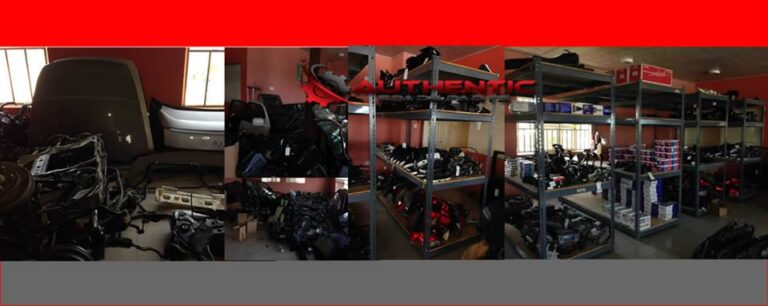
Today we came across another platform with slightly the same business model. The platform, Authentic Spare Parts offers new and old but quality car parts to buyers in Nigeria especially for Honda and Toyota cars. The platform has sprouted from an offline business of car spare parts which has served the Nigerian wholesale market for a number of years.
Run by Ini Akpan, the new electronic store aim to serve mainly the country’s auto parts wholesalers automobile across the country. Though, the shop has no clear plans on delivery, it hopes to make genuine car spare parts available to those that need them across the country. The firm aims to sale to car service centers, homes, offices and corporate firms with its promise of quality and affordability.
GoKool, on the other hand is an online shopping mall in Nigeria selling building and construction materials, home and office furnitures,electrical accessories and appliances, automobile parts and more to all of Nigeria. Gokool has wholesale and retail partners it can order and delivery its customers orders from.Gokool, earlier told TechMoran it had partnered with TRANEX to help it delivery the orders around the country.
We are not sure if AuthenticSpare Parts will go into building materials but cutting out a niche is great.
Family Bank account holders are bound to enjoy a full suite of banking services including convenient micro loans and money transfer services as the bank has today announced the launch of a robust mobile phone based virtual bank, dubbed PESAMOB.
The new PESAMOB virtual bank geared at deepening financial services access by easing account opening and operation processes will run on Family Bank’s PesaPap! platform.
The bank is working to foster financial inclusivity to more than 3million Small and Medium traders alongside unbanked mobile subscribers. The new PESAMOB virtual bank is expected to revolutionize the local banking sector by bridging conventional banking barriers.
Family Bank Chief Executive Officer Peter Munyiri, said the Virtual Bank, is, designed to provide affordable differentiated services from conventional mobile banking solutions.
“The new PESAMOB Virtual Bank will provide a full suite of banking services allowing its account holders to deposit cash, transfer, withdraw over ATM locations, and access micro loan facilities conveniently. Customers can also get their salary processing done and pay County fees such as licenses, rates and rents,” he said.
PESAMOB has been inspired by the growing consumer adoption of mobile phone based financial services.
In tandem with the growth, the use of mobile phone financial services, Munyirir pointed out that it had also doubled from 28 percent in 2009 to 62 percent in 2013, justifying the need for a fully-fledged virtual bank.
“At Family Bank, we are actively moving to change the local banking conventions as we know them by introducing such a groundbreaking banking solution as PESAMOB,” said the CEO. “Besides boosting the national financial inclusion goals, PESAMOB gives you the freedom to access loans, transact and save your cash without ever having to visit a physical banking hall.”
Present at the launch was the Central Bank of Kenya Governor Prof Njuguna Ndung’u and he had this to say: ” The advent of mobile-phone financial services (MFS) in Kenya, since 2007, has played a critical role in meeting the objectives of Vision 2030, particularly enhanced access to financial services. Banks, like Family Bank, have increasingly embraced such alternative delivery channels to advance financial inclusion. As a result, the financial system is now offering an increased and more diverse range of financial services and products to more Kenyans, covering a wider geographical spread, and even going beyond Kenyan borders.”
To enjoy the PESAMOB Virtual Bank Services, Munyiri explained that potential account holders will only need to Dial *325# from their mobile phones and follow simple prompts allowing them to activate their secure personal Virtual bank accounts.
Vodacom has spread its wings from the south to the north part of the continent, this Tuesday the South African company opened its first office in Ethiopia so as to gain a country which has a large market but the potential has not been very favorable.
The leading Telecommunication Company, Ethio Telcom which is also run by the state has captured quite a number of subscriptions; a total of 650 million by last year, which was an increase from 25 million in 2001 (according to the World Bank) and the number is still growing.
Romeo Kumalo, Vodacom Group’s CEO told Reuters in the Ethiopian capital, that Vodacom would apply for a license to provide value-added services.
“But more importantly we want to position ourselves so when the market opens and the government does decide to grant licenses in the consumer sector,” he said. “We would invest here tomorrow. Ethiopia is probably the most fantastic telecoms market on the continent. One operator, 80 million people, the economy growing at 7 percent – it’s a great market.”
Well, and it seems like the Ethiopian telecommunication market is still young and looking for growth as MTN Group opened office in the Capital and has already been given a similar license.
That’s not just about it with the telecommunication companies in Ethiopia as the country’s Ethiopian Ministry of Communications and Information Technology says more than 200 companies have applied to provide value added services.
Interent has become a major driving force in economic growth, that’s why Telkom Wholesale and Network is investing R12 billion in its Next Generation High Speed Broadband Network to ultimately to ensure the economy keeps growing as well as support South Africa’s broadband ecosystem at large.
The company has shown its commitment to the investment of Broadband in the country; Alphonzo Samuels the acting MD of the company pointed out that free DSL speed upgrades during 2012 and 2013 together with the reduction of internet prices which dropped by 43 percent in 2012 is proof enough.
“The evolution of the Telkom network is ongoing, and the impact of our deployed infrastructure has done much to grow the adoption of broadband in South Africa. As the country’s foremost supplier of wholesale network products and services, we have been committed to enabling our customers to deliver on the connectivity demands that South African’s have come to expect,” he says.
He added that continuous investment in current Broadband Access Technology, ADSL 2+, ensured lower costs and provide higher quality throughput to fixed broadband subscribers.
“Simultaneously we have also invested in new generation broadband access technologies such as VDSL, PON (Passive Optic Network) and Active Ethernet. The deployment of Fibre to the Home and Multi Service Access Nodes initiatives is aimed at delivering even higher speeds to the industry. This will ultimately drive the demand of rich media content and will enable ISPs to compete with mobile broadband offerings via LTE,” explained the MD.
New investment in transport and aggregation technology, Dense Wavelength Division Multiplexing and Broadband Network Gateway deployment in the network core has reduced input costs, which he says will contribute to the broadband ecosystem by providing a world class IP Network that will support the drive of rich media content bundled with high speed DSL Access offering.
CHEZA.NET, an Internet based game service from Kenya’s RECON Digital has released a new soccer penalty game allowing players to play online or download for free.
The game dubbed Spotkick Challenge has been released as a free game app, currently in public beta release for the Kenyan market and is quickly gaining a following in Kenyan cyber space.
Spotkick Challenge is an easy to play, Soccer Penalty Game designed to enable people (Users) to compete against one another via the Internet. Users can download the free app for Android™ mobile devices or play it directly in an Internet Browser when using a Personal Computer. Users compete for points in order to rank higher on the Leader Board standings thus presenting a great opportunity for some serious rivalry to fuel the fun.
Spotkick Challenge has been in development for quite some time and we are happy to finally share the fun. We invite people to play the game and give us feedback while we continue refining the product. We especially encourage groups of “soccer buddies” to sign up and challenge each other. Through CHEZA.NET we hope to bring people together in the spirit of Fun.
The game is available for PC Internet Browsers running the Java™ plug-in and for mobile devices running Android. The PC Browser version of Spotkick Challenge can be found at www.cheza.net while the version for Android devices can be downloaded from the link located at the same web address.
Tournaments are ongoing with Cash Prizes of up to KSH 50,000 up for grabs. Come join the fun at www.cheza.net
Mint, a personal finance service that gives users the ability to link to more than 20,000 different bank, credit card, loan and investment accounts, making it easy to view all your financial statements in one placeto see where your money is going is now available on the windows store.
Windows Phone users will therefore be able to link all their accounts automatically giving them latest updates on how they are using their finances. Users can get access to Mint.com on the web or through the Mint app available to download (for free) from the Windows Store and for your Windows Phone from the Windows Phone Store.
With Mint, users will forget managing their budget in Excel spreadsheets and manually putting in numbers every few weeks. With Mint, they will be able to link accounts, and get a single view that updates automatically with the most up to date look at all finances at any given moment.
The Mint app is right from the Start screen. The Mint app for Windows 8.1 has a Live Tile and supports all the various tile sizes in Windows 8.1 including the large tile which displays quite a bit of real-time financial updates on my Start screen. Users can also snap the Mint app next to other apps they are running – which makes cross-referencing things super easy. Then start receiving notifications as my accounts update on charges and feels.
On a single day, a user can set how much they spent on paid apps from the store or on gadgets and how much less they have spent this month compared to last month.
Basic features of Mint app for Windows (and Windows Phone) gives you:
Monitor accounts anytime, anywhere. Up-to-date account information is easily accessed on Windows Phones, tablets, laptops and PCs.
Track spending. Transactions are automatically categorized to simplify money management, giving users the ability to organize their finances and create customized budgets.
Find ways to save. Mint suggests easy-to-follow steps to save more money based on users’ spending.
Enter or edit pending transactions. Add transactions at the time of purchase and instantly see available bank and credit balances.
For more on the Mint apps for Windows and Windows Phone – see Mint’s blog post here.
Start managing your finances with Mint today and download Mint from the Windows Store!
Novartis’ an initiative working in Africa to help prevent Malaria has today announced that its SMS for Life program reduced wait times and stock-outs for antimalarial medicines from three months to a few days and from 79% to less than 26% in three districts in Tanzania.
Its other program, the Novartis Malaria Initiative has provided more than 600 million antimalarial treatments, without profit, to more than 60 malaria-endemic countries, the organization reported.
Speaking during the celebration of the Novartis Africa Day, Joseph Jimenez, Chief Executive Officer of Novartis said, “Novartis is taking an outcomes approach, looking beyond therapeutic solutions to a focus on new technologies, new commercial models, education and training. As the continent increasingly grapples with the dual healthcare burden of communicable and non-communicable diseases, we believe we can make a significant difference in improving lives as the demand for healthcare rises.”
According to Norvatis, Africa faces immense challenges in its efforts to provide adequate healthcare to its one-seventh of the world’s population. The continent shoulders one-quarter of the global disease burden, but it has only two percent of the world’s doctors and less than one percent of global health expenditure.
Life expectancy is 15 years less than the global average and is also challenged by a dual disease burden – both communicable diseases that have historically plagued the continent, such as malaria, and non-communicable diseases that are on the rise due to lifestyle changes, such as diabetes. Low levels of disease awareness, declining infrastructure and poor distribution channels further compound Africa’s problems.
Norvatis therefore hopes the use of technology can help reduce the disease burden.
Omobola Johnson, Nigeria’s minister for communication technology has revealed that despite the impressive figures available on the nation’s IT sector, Nigeria’s information technology landscape is still battling with a clear negative trade balance.
Speaking at the e-Nigeria conference 2013 held in Abuja, the minister said the economic value generated locally with imported technologies used by Nigerians is still extremely low.
“As impressive as Nigeria’s figures may seem, the Nigerian IT landscape suffers from a clear negative trade balance, as the economic value generated locally with imported technologies used by Nigerians is still extremely low,” Johnson said.
Speaking on the theme of eNigeria 2013 which is “Local Content in ICT Development in Nigeria: The Journey so far”, the minister said the nation has reached a significant milestone in the journey to the target of 50% local content.
She however warned that a lot of work is ahead of the stakeholders in the IT industry using the the guidelines on Nigerian Content Development in ICT.
She said: “These guidelines are expected to level the playing field to facilitate the movement of many of our local ICT companies from the fringes of the market to be larger and more strategic companies while at the same time enlarging the pie so that we keep our valuable international partners interested and engaged in investing in the local industry.
“Having multi-nationals and international companies co-exist with our local companies ensures that the industry is working to the best international standards, challenging our local companies to set aspirational standards for their products and services in order to remain competitive.
“This philosophy is based on empirical evidence that demonstrates that despite the strong growth that we are witnessing today there is still a lot of value that remains to be unlocked in this sector.”
A landmark agreement that will remove constraints to the installation, roll out and deployment of base stations and fibre optic cable in Lagos state has been brokered between the Federal Ministry of Communication Technology, the Association of Licensed Telecoms Operators of Nigeria (ALTON) and the Lagos state government.
The Minister of Communication Technology, Mrs Omobola Johnson and the Governor of Lagos state, Governor Babatunde Raji Fashola with some officials held a closed door meeting at the State House to address the issues of taxes, levies, decommissioned sites and Right of Way fees mitigating against quality of service in the state.
At the meeting attended by Governor Fashola, members of the Association of Licensed Telecoms Operators of Nigeria ALTON, Mrs Omobola Johnson, Commissioner of Science and Tech, Mr Biyi Mabadeje, Commissioner of Works, Mr Obafemi Hamzat and officials from Etisalat, Main One, MTN, Globacom, those in attendance deliberated on issues of the incidents of fees and taxes, restrictions on the rollout of base stations and fibre networks, the decommissioning of sites, ALTON members at the meeting expressed concerns that these issues were making it difficult for operators to rollout much needed ICT infrastructure in Lagos state.
In a statement made available by Efem Akanga, Special Assistant (Media) to the communication technology minister, she said Governor Fashola addressed the fact that good infrastructure rollout and deployment was in the best interest of residents of Lagos state, making very much needed infrastructure and capacity available. He then reinforced that it is not the wish of the State to prevent operators from rolling out.
“We need you to roll out probably more than you need it, but we do not need it at the expense of our roads, or lives of the people. Infrastructure must be built to very high standards, for example, masts must be built with galvanized steel and not hollow pipes to prevent them from collapsing,” he said.
He added: “You may find that sites that may have been decommissioned by UFRU probably did not meet these standards or had not paid up their levies, when badly build sites collapse it is we who are left to pick up the pieces.”
Telecoms operators in attendance agreed that there should be a standardized approach for excavating roads where no ducts existed
“They confirmed that there were no telecoms masts in the state constructed with hollow piles. All telecoms masts in Lagos State are built with galvanized steel,” Akanga stated.
In response to ALTON members’ position that the taxes, levies and right of way fees for Lagos were prohibitive, the state’s commissioner of science and technology, Mr Mabadeje read out an agreement by Lagos State to reduce taxes and levies in Lagos by over 40% and Right of Way Fees were reduced from N3000 to N500- a reduction of over 85%.
However, this was on the condition that operators agreed to use approved and qualified contractors who would ensure the integrity of the road after the fibre had been installed in the event that there was no fibre duct on the road.
Operators also agreed to a ‘dig once’ policy whereby the first operator to dig the road for fibre installation would install a duct with spare capacity for other operators to use when they wanted to install fibre instead of digging up the road again.
Governor Fashola reiterated that all new roads in Lagos State already have ducts and that the operators should submit annual infrastructure plans to Lagos State to allow for proper planning on both sides.
In her closing remark, the Honourable Minister praised Lagos State for leading the charge in removing many of the barriers and obstacles to telecoms infrastructure deployment in Lagos and expressed her hope that many other states would follow suit in making telecoms and broadband infrastructure available to all.
Organizers of the continent’s biggest social media event, the Social Media Week Lagos (SMW Lagos) have announced a partnership with Volkswagen. With the partnership, they said the Volkswagen Center in Lagos would be the SMW Lagos headquarters.
“Through a partnership with Volkswagen, the SMW Lagos headquarters (#SMWLagosHQ) will be hosted at the 850 sqm (9,000 sq ft) Volkswagen Centre in Victoria Island, Lagos. This unique venue will enable SMW Lagos to accommodate large groups in a theatre style set up, as well as feature dynamic installations to enhance attendees’ experiences,” organizers said in a statement.
It added that it would be introducing new features for the second edition of the continent’s biggest social media event.
The organizers said: “New for 2014 is SMW Lagos #AfterHours. Lagos is known around the world for its nightlife. As a supplement to daytime programming, SMW Lagos will curate a week of memorable and shareable post conference evening events. The SMW Lagos #AfterHours Hub at Club Pravada will host a variety of night time activities and programming.”
For 2014, organizers said the focus is on engaging citizens of Lagos state by bringing programming to different communities.
“With this in mind SMW Lagos introduces #SMWSatellite venues, smaller venues throughout Lagos that will host engaging programming in a more intimate setting. The newly opened Enterprise Creative HotHouse, a co-working space for creative and digital entrepreneurs in Ikeja, will serve as 1 of several #SMWsatellite venues. HotHouse will host a variety SMW Lagos crowd sourced programming including masterclasses and workshops,” organizers said.
They added: “In addition, Terra Kulture located in VIctoria Island, Lagos returns for 2014 as our Music, Arts, Culture & Entertainment Hub (#smwMACE). SMW Lagos hubs/venues will host a variety of dynamic programming produced by local and international event partners.”
It added that the deadline for event submission is this Friday.
It said: “Event partner submissions are currently being accepted through this Friday, December 6, 2013. Event proposals should be submitted via the SMW Lagos website.”
SMW Lagos, produced by Dragon Africa and AFRIKA21, is a week-long event that is part of the Social Media Week global platform and takes place in Lagos from February 17 to 21, 2014.
Following a successful inaugural year that hosted 110 events, had over 8,000 registrations and garnered over 31 million online impressions, organizers said “SMW Lagos looks to build a bigger, bolder and better connected conference.”
Lenovo has partnered with Nigeria’s Online Mall, Konga.com to make it rain this Christmas with exclusive Christmas goodies to Nigerians in an offer tagged “Christmas by Lenovo”
Buyers in this season will get a wide range of beautiful and highly functional Lenovo laptops-all new the Nigerian market and available exclusively on Konga.com.
To get the discounted laptops one has to order just any new Lenovo laptop from Konga.com and they will get an instant N10,000 cash back voucher. They will also be entered into a raffle draw to win the critically acclaimed four mode (Laptop mode, stand mode, Tent mode and Tablet Mode) Lenovo Yoga 11s convertible Ultrabook.
A Dell-sponsored a project in the Nairobi’s Mukuru slums has micro financed and created jobs for 27 women in Kenya, changing their lives for good.
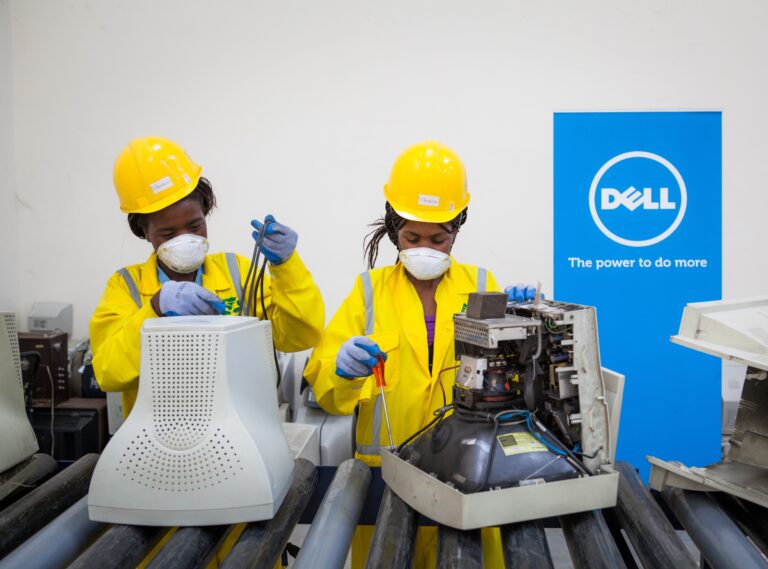
The project aiming at women in the infamous slum, trains the women, loans them funds via mobile money to purchase and resell waste which they earn a profit on. This is expected to see the women come out of poverty, prostitution and crime popular in informal settlements. In its first two weeks, women participating in the Dell-Mukuru collected 1.5 containers of e-waste, which was resold to the new recycling hub. Prior to the program, women from Mukuru often used unsafe and unhealthy means to collect and resell e-waste to the informal market.
The global PC maker has also joined Nairobi’s E-Waste Solutions Alliance for Africa to unveil the East Africa Compliant Recycling hub–the first large-scale e-waste recycling facility in the region.
The two groups have also launched a new e-waste business to be supported by a regulatory model tailored for developing countries but developed by Kenyan officials and representatives from non-governmental organizations and the IT and e-recycling industries. The hub was designed by industry, in collaboration with policymakers.
According to Jean Cox-Kearns, Director of Compliance, Dell Takeback, “It is so exciting to see this sustainable model be implemented on the ground in Nairobi, creating green jobs and implementing a solution that deals with e-waste being generated both in Kenya and the greater East African Region, and providing environmentally sound management of e-waste collected.”
An innovative business model that creates jobs
The e-waste hub has shipping container-housed collection points located throughout Kenya and each collection point functions independently as a small businesses, purchasing e-waste from newly-trained individual collectors. Four collection points have been established already with two fully funded by Dell – and forty more are planned.
Once a shipping container is filled to capacity, its contents are resold to the main hub where the e-waste will be sustainably processed into material fractions and sold back to the technology industry. The e-waste collectors earn, the collection points earn and as well the main hub earns and thereby protecting the environment.
The model is aimed at creating thousands of green jobs at the facility and across supporting logistics and collection networks, in part by converting existing informal-sector e-waste “pickers” into trained and legitimately-compensated e-waste collectors. Dell and others have invested in training programs to educate workers on the safe collection and recycling of e-waste.
The Honorable Amina A. Abdalla, MP, Chairperson, Committee of Environment and Natural Resources, Kenyan Parliament said the country is looking at ensuring that e-waste is recycled in such a manner that ensures people not exposed hazardous materials.
“We’ve invested in getting out a regulation that is more proactive managing e-waste. With the regulation, its enforcement, and partnering with not only recyclers but producers, we’ll go a long way in addressing these challenges.”
A practical, sustainable regulatory approach
Developing regulations from Kenya’s National Environment Management Authority will help generate capacity for the new e-waste hub by requiring electronics companies to meet certain thresholds for e-waste collection and treatment.
Underscoring the regulatory framework is the recognition that, particularly in developing countries, e-waste has monetary value. That value, combined with the lack of a sustainable e-waste recycling infrastructure in East Africa, likely would have abated the effectiveness of common regulatory approaches to funding and managing e-waste collection and recycling, such as import fees. Those means also could make computing less affordable for Kenyan citizens and public and private-sector organizations.
Agreeing to the fact that e-waste has monetary value and could make life better for all Akinyi Kaudia, Environment Secretary, Ministry of Environment, Water and Natural Resources said, “We are seeing green technology is good business sense, not just because it creates profits, but if the persons working for such a company are of higher health status because of a good environment, then productivity also goes up. We want to create jobs, particularly for our youth. So it’s a triple way: We have a clean environment, we have jobs created, we have industrial growth and economic growth of the country.”
Other African nations have monitored the development of new regulatory model, with a view to replicating the approach.
Advancing Dell’s Legacy of Good 2020 goals
As a global leader in the collection and recycling of e-waste, Dell’s 2020 Legacy for Good Plan aims to recover 2 billion pounds of electronics and reuse more than 50 million pounds of recycled-content plastics in its products by 2020. Integral to both goals is the ability to access e-waste in developing countries, using methods that do not put people or the environment at risk.
Southeast Asia’s fastest-growing fashion & beauty online store ZALORA and Australia’s top online fashion retailer, THE ICONIC have secured a $112 million round of funding from privately held investor group Access Industries, funds managed by US-based asset management firm Scopia Capital Management LLC and other institutional investors.
The fresh capital represents the largest single investment ever made into a SEA online fashion retailer, breaking ZALORA own record set in May 2013 when it raised $100 million.
Founded in late 2011, Zalora has presence in Singapore, Indonesia, Malaysia, the Philippines, Thailand, Vietnam, Hong Kong and Brunei and have an extensive collection of over 500 top international and local brands and over 130,000 products across apparel, shoes, accessories, and beauty categories for men and women.
The platform offers a 30-day free returns policy, speedy deliveries within 2-3 working days, free delivery over a certain spend, and multiple payment methods including cash-on-delivery. Zalora recently launched its first fashion brand EZRA and focused on extending its assortment to offer the broadest variety possible of fashion and beauty items.
“The investment allows us to continue building out our position as the leading fashion and beauty e-commerce retailer in Southeast Asia,” says Michele Ferrario, Managing Director of the ZALORA Group. “We are focused on offering the best possible customer experience paired with a unique product offering of local and international brands. We will use this new investment to improve our position as the high-street fashion authority in Southeast Asia. We will grow our assortment and further enhance the portfolio of our private labels. Our goal is to continue serving up world-class products and services, so everyone in South-East Asia can benefit from the wide selection of products at ZALORA.”
Its counterpart, THE ICONIC is Australia’s leading online fashion retailer with over 500 brands and over 45,000 products. THE ICONIC offers free overnight shipping to Australia and New Zealand, 100 day free returns, and 3 hour delivery in Sydney and is Australia’s second most successful e-commerce site behind mature retail giant Big W by Inside Retail.
The new capital will support ZALORA Groups efforts to scale up operations and gain an even stronger foothold throughout South-East Asia and Australia, serving 600 million potential online shopping customers in the region.
“ZALORA Group and The Iconic already have come a long way. In Australia we are approaching one million orders being shipped thanks to a fantastic local and international brand assortment and premium services such as 3 hour delivery in Sydney. This investment will allow us to continue to build the one-stop online shopping destination for fashion, footwear and beyond through a singular focus on customer satisfaction,“ said Patrick Schmidt, CEO of THE ICONIC.
Cape Town based startup, Mickets, has the solution of purchasing tickets to gigs. The start-up has developed an app that will allow users to purchase tickets and gain access to events using their mobile phones.
This app ‘The Micket.me website’ can be accessed from a PC or mobile device, with payment made via credit card or EFT, after which the mobile ticket — or “micket” — is delivered via e-mail or SMS.
Riaan Nolan, a co-founder of the start-up said that tickets will not have to be collected or redeemed or lost because it’s always available on their mobiles.
The website was founded in 2010 by twin brothers Riaan and Winston Nolan, after meeting an event organizer who brought Christian metal band P.O.D. (Payable on Death) to South Africa.
Riaan, a previous eMarketer , handles the infrastructure and server side of Micket, while his brother, Winston, being a developer, developed the site.
Over 200 African students, representing 21 countries, have already signed up on the Schneider ElectricGo Green in the City global business case challenge that aims to support innovative energy solutions for cities around globally.
The 217 African students come from Nigeria (83 applications), Algeria (29 applications), Morocco (23 applications), Ghana (18 applications), South Africa (17 applications), and Egypt (12 applications).
More engineering and business students have until 15 February 2014 to apply to be among the 100 best teams that will be short-listed on 28 February 2014. After shortlist, the teams will have one month to work with a mentor from Schneider Electric to work on their ideas. The top 12 teams will then be invited to Paris in June 2014 to take part in the final and the winning team will be taken to various Schneider Electric sites across the world and then get permanent positions within the Group.
According to Mohammed Saad, President of Schneider Electric in Africa, “The young generation in Africa is increasingly aware of the mounting electricity and energy needs which go hand in hand with social progress and environmental protection. This growing interest by African students is key for Schneider Electric. The challenge lies not only in producing more electricity, but also in generating smart energy so as to enable intelligent growth in Africa.”
Go Green in the City 2014 is consolidating its reputation as the leading global challenge for green energies aimed at students from Africa and across the globe. To date, more than 1,744 applications representing over 81 different nationalities have been received.
The students in Africa and from across the globe have until 15 February 2014 to sign up for the challenge in teams of two, with at least one female member by submitting a business plan of their viable energy management solution for either residential, university, commercial, water and hospitals.
There is an online questionnaire for those that need need expert tips for their business case.
In collaboration with Comverse and Mirage Telecom, Telecommunications group Cell C is set to launch a mobile virtual network enabler (MVNE) that would enable the entry of cellular network services to new mobile virtual network operators in South Africa, following its commericial launch in February, announced acting Cell C CEO and Chief Commercial Officer Jose Dos Santos.
After signing an agreement, Comverse would now supply its telecommunications software to Mirage Telecom, with Cell C creating a wholesale supply relationship.
Thus, this week would essentially mark the launch of Africa’s first dedicated Mobile Virtual Network Enabler platform created following the completion of commercial terms between Cell C, Comverse and Mirage Telecom.
While Cell C is a leading mobile provider in South Africa, it has been offering a wide range of services and mobile and data deals, as the third cell network after Vodacom and MTN Group, and the first cellular provider operating a dual band GSM 900/1800 MHz data network, with over 11.5 million subscribers in the country.
Mirage Telcom on the other hand is a professional web design company operating since 2010, providing web development solutions for companies or individuals interested in outsourcing their web design and web application development needs. It is a pioneer in rendering dynamic and professional web based solutions for small to large enterprises as well as other web design companies.
And Comverse, originally founded in Israel, is a technology company located in Wakefield, Massachusetts in the United States, that develops and markets telecommunications software.
Through partnerships with Comverse and Cell C, Mirage Telecom would enable large organisations to offer branded mobile voice and data services to their clients as MVNOs.
Morover, experts expect the platform is expected to enhance growth in South African MVNO sector, assisting to create opportunities to a variety of businesses and partners for differentiation, cash flow and growth, noted Comverse SEnior VP and MD for Europe and the Middle East and Africa Denis Bernaert.
The rural communities Malawi will now have technology within reach, thanks to White Spaces in the TV UHF Band, a television white spaces (TVWS) pilot project which is being run by the Malawi Communications Regulatory Authority (MACRA) and the University of Malawi.
For this project to be successful, the Minister of Information and Civic Education, Brown Mpinganjira said, there is need for all players in the ICT to work together with an aim of achieving desired results.
“This project is a realization of the commitment by the government of Malawi to promote universal access to ICT services by creating an environment that is conducive for joint ventures between the public and private sector through arrangements such as Public Private Partnership,” he said.
This project is being piloted at St. Marys Secondary school, Malawi Defence Force Airwing, Pirimiti Rural Hospital and the Geological Survey Department.
“This programme will enable a clinical officer at Pirimiti Health Centre to have access to medical diagnosis material from college of medicine in Blantyre. A student at St Mary’s Secondary School will have access to reference material for her assignment from an online library,” said MACRA Board chair, Martha Kwataine.
Similiar TVWS pilot schemes have already begun in Kenya, South Africa, the UK and the US.
In a move that willspike e-commerce in Kenya, Safaricom’s mobile money transfer service M-PESA has launched Lipa Na M-PESA online to allow local traders to accept online payments for the purchase and sale of goods and services.
Speaking during the launch of the service, Safaricom CEO, Bob Collymore said the ability to conduct financial transaction using a mobile phone is now a vital part of life for millions of Kenyans. The entry of M-PESA into the online space is a game changer that is bound to transform the conduct and uptake of online trade in Kenya.
“Lipa Na M-PESA online is part of M-PESA’s overall agenda to lead the evolution of the payments landscape in Kenya. The entry of M-PESA into the online space is a landmark move that will see more than 18 million M-PESA customers gain access to the online shopping experience either as entrepreneurs or as customers,” said Collymore.
The new service will leverage the deep penetration of the mobile phone and the proliferation of internet services to ease the shopping experience for customers while allowing merchants to match their goods and services directly to consumers.
Just like off line M-Pesa, the online payment service works simply, customers select the items they want to pay for and pay with Lipa Na M-PESA online at the checkout point. The total cost for the items purchased online is deducted from the customer’s M-PESA account. The customer only needs to key in their mobile number and they will receive a notification on their mobile phone to validate the transaction using their Bonga PIN.
The launch of the service comes in at a time most needed. Over 29 million Kenyans use a mobile phones and over half of them have access to the internet. There is also a plethora of e-commerce services in the country such as Rocket Internet’s Jumia, Ringier’s Rupu, OLX, Bid or Buy and Cheki. This and many others have led to the shift of Kenyans from physical retail stores to online purchases.
Payments however have been a problem in Kenya and in Africa in general where the number of payment cards is still low.
The M-PESA service is set to revolutionize e-commerce in Kenya with the launch of its online payment service.
Kenya has in recent times witnessed remarkable growth in online payments driven largely by the easy availability of high speed internet and an emerging middle class. The online payment space in Kenya has great potential, but industry experts say that lack of accessible and secure payment systems are hindering local uptake.
Telecom Namibia has rolled out its commercial 4G LTE services under its TN Mobile brand, that is set to offer LTE data speeds of “up to 100Mbps” to all pre- and post-paid subscribers, while coverage outside 4G areas would be offered on its newly upgraded and expanded 3G network with maximum speeds of 21 Mbps (HSPA+), reports say.
For pre-paid TN Mobile users, the company is offering a 4G LTE USB dongle modem bundled with 500MB data for NAD298 (USD29), while data is charged at the same rate regardless of whether using 4G or 3G. Initially available in the capital Windhoek and its surrounds, it will also be available in other urban centres including Swakopmund, Walvis Bay, Langstrand, Henties Bay, Ondangwa, Ongwediva, Oshakati, Ohangwena and Oshikango.
Telecom Namibia says this compares favourably with existing LTE provider MTC Namibia’s promised top 4G speed of 50Mbps and maximum 3G data rate of 7.2Mbps.
According to the operator, although Apple handsets (iPhone) or tablets (iPad) are not currently compliant with its 4G dongles, the modem device would still work on an Apple laptop.
A monthly post-paid LTE subscription is charged at NAD398 (compared to MTC’s N399 package), with a connection fee of NAD175 (MTC: NAD218) with 10GB of inclusive data (the same as MTC’s basic package), while the rival cellcos both offer a bonus ‘double up’ 5GB, and both offer ‘rollover’ data up to a maximum of three months.
For now, TN Mobile is bundling in free Wi-Fi hotspot coverage which MTC does not include in its package. An unlimited TN Mobile LTE data package is worth NAD998 (MTC: NAD999), with a fair usage policy which downloads at speed to 512kbps when 90GB is reached in a month.
DAWN Commission, a commission that was set up by the governments of the states in the southwest region of Nigeria has revealed that the region can develop by leveraging innovations in technology and other sectors.
In an exclusive chat, Dipo Famakinwa, Director General of the commission said the region has to leverage innovation in the various sectors of the economy to achieve development.
“We are looking at how we can leverage innovation for the development of the region,” he said.
He added: “Education is also important, rebuilding the education of the region and focusing it around quality and also ensuring that those who come out of the education of the region are those who can manage this progressive ambition that we have on a progressive basis.
“Ensuring security, law and order are also very important; we also think one of the low hanging areas for us is agriculture. That is one area we can quickly focus on.
To achieve these goals, he said the commission is partnering with organizations from across the world.
“Our economic competitiveness also is anchored on building partnerships across the world. There are so many things we cannot do on our own and we have to find help. We are also looking at a structured process through which we can harness and take advantage of such partnerships,” Famakinwa said.
He added: “We can’t jump from one place to another; we must be sure that the kinds of partnership we are forging are relevant to our development orientation, and also relevant to the kinds of ambitions that we’ve set for ourselves. In other words, they must be partnerships that work.”
He noted that all the pillars that the commission is focusing on are interconnected.
“They are all linked together. If you talk about economic competitiveness, you cannot achieve it without having a well developed infrastructure; you cannot achieve it without being able to provide quality education and health services,” he said.
“You can’t achieve it by not ensuring that there is security in the land. They are all related and interconnected. They are deliberate strategic pillars that we must develop at the same time in achieving goals that we have set for ourselves.
“If we do not achieve economic competitiveness in a manner that you can boost your ability to finance your development for instance, you can’t build infrastructure nor develop education.”
Everyone is worried about unemployment and everyday thousands who are employed sit in Jav’s (public service vehicles) thinking they are the next to be fired.
Christmas and Jubilee celebrations mean nothing compared to the Kenyan dream, of keeping a job till pension or starting money generating business by the side.
However there is a team of three doing something about it.
Mary Amuti a UX Designer, Joseph Bosire a developer and Morgan Andanyi, a developer and team leader have developed a web based platform that aims to help end unemployment in Kenya. The platform dubbed Sootano (Slang for Ksh 500) is an Online Micro jobs Platform, where users register and post their jobs, other users also register and order the jobs posted. Every task added to the site costs 500/= to be done.
According to the three, “This is a win win for both the job seller and the job buyer. A talented but inexperienced graphic designer can add his Logo design job at sootano.com and a small business owner who wants quality service at a cheaper price can order this service from sootano.com. The Graphic designer gains experience, builds his/her portfolio while the Business owner gets a quality service at a very cheap price.”
They add that their inspiration came to them a few years back, but they sat down to develop the first prototype during the Startup Weekend Nairobi held November 22 this year at Nairobi’s Strathmore University. They say that of the 16 million unemployed in Kenya, Sootano can some of them especially the youths 18-30 to utilise their skills to earn basic income and gain job experience.
To them Sootano.com is a platform for the youth and future employees to connect and earn some income.
How it works
Sootano works simply, a job seller registers freely on www.sootano.com. He or she adds the task or job on the website under a certain category. The job goes live instantly and the job seller waits for a buyer to buy/order the job.
A job seeker or buyer identifies a certain job they can deliver, registers on the portal freely and then orders the job. The job seller will get a notification that the job has been bought. A link will be provided by sootano.com that will enable both the job seller and job buyer to chat, and agree on the specifics of the job.
Once the job seller finishes the job, the job buyer gets a notification that the job has been done.
If the job buyer is happy with the job done, the three will credit the job sellers account and ask the job buyer to rate and review his experience with that job seller. Incase of a dispute, there will be a support system And the job buyer might be refunded his cash if need be.
Though their idea looks new, there are lots of sites and companies job matching tasks to doers and job seekers to employers. Several other outsourcing firms area also present in Kenya but according to the three none of them focus specifically to the Kenyan youth.
“We present the whole package, we not only give our fellow youths a source of income, but they will also be creating a portfolio and gaining job experience in the process,” said Andanyi. “We are also providing a great outsourcing avenue for business owners and the public at large. Using our platform you will be able to know which job seller to avoid and which job seller gives you the best quality service. We will be an Online platform that offers high Quality services at way cheaper price than any of our local competition.”
Though they haven’t received any funding, they are hopeful especially after being voted as the top startup at the Startup Weekend Nairobi, hours after starting to build the site.
“Andanyi said they didn’t expect to win at the Startup Weekend Nairobi but he just pitched the idea was surprised that people actually voted for it.
“We formed a team of three, the other teams at the startup had huge numbers, and that was a little bit scary.
We worked on the site during the weekend. Then come Sunday the final presentation and pitch day, one of the team members was sick, I had to create a quick presentation just minutes before my pitching time,” Andanyi said.
“I presented and showcased sootano.com to the judges who I believe liked the idea.
Am glad we won, because it means the judges saw promise in our idea and knew it had great potential.”
Startup Weekend aside, Sootano is competing at the Global Startup Battle with15 Startups which already have 1000+ votes while they only have 69 votes and are asking everyone in Africa to vote for them before December 6.
Krusell has concluded that the Sony Xperia Z1 best-selling smartphone in November; the company based their conclusion on the number of pieces custom-made mobile- and smartphone cases ordered from Krusell during November 2013.
Krusell is a Swedish manufacturer of carrying cases for portable electronics. In their list reflects the sales of phones in six continents and in more than 70 countries around the globe.
“Sony Xperia Z1 keeps the first place on Krusell’s Top 10 list for November, while three new devices have entered the list, and Nexus 5 might be the largest surprise this month,” said Ulf Sandberg, MD at Krusell.
He added that the Samsung Galaxy Core has maneuvered the market considering it entered the market a little bit outside the limelight due to the number of devices that Samsung launches. Nokia’s two models, on the other hand, are also a force to reckon with as they are really moving up which makes the company predict that Nokia 1520 will be at the top of the chart next month.
Kenya’s Rupu, an online deals firm has said buyers will be able to pay for goods shopped from the portal by cash on delivery (COD) as the festive season jets in.
Announcing the move in a newsletter to clients the firm said, “Rupu is proud to announce that for the next couple of days we will offer you cash on delivery as an additional payment option. On selected deals, you will be able to choose cash on delivery and our driver will come straight to your doorstep with your product or service coupon.”
Cash on delivery has its pros and cons, but it comes with a few challenges to the firm. Going back the memory lane India’s e-commerce Web sites such as Flipkart, Rediff and Infibeam introduced cash-on-delivery and other offline payment options and said the method drove half of their sales or between 40 and 60 percent upwards. Offline payments, according to this firms was what drove online commerce, even leading to new business models dubbed browsing centres-points like Kenya’s cyber cafes where buyers buy online but pay cash offline.
Courier teams in danger
COD is great for Kenya but might simply not last as it adds lots of complexities and doubles costs for the firm apart from putting the courier teams in danger. Many of the customers paying in cash are also likely to return the goods- estimates by the Indian firm put it at 30-40 percent. Money is a measure of value and buyers have an attachment to cash than cards or mobile money.
Fear aside, COD is still good as major online payments are serpentine leading to incomplete orders by new buyers as one has to fill in details as if they were doing an examination. The pain of card payments will therefore drive Rupu offline payments and its a solid plan. After all, COD is the driver of China’s eCommerce.
COD needs caution though and buyers have to be careful when providing their physical address and mobile numbers to be in touch with the courier team and just in case the order location looks weird, Rupu reserves the right to enable and disable any COD order.
Founded in 2010, Rupu allows users to buy goods and pay for services at a discounted price for a group of buyers via Mobile money, VISA, MasterCard among others. However, the firm believes testing cash on delivery as an additional payment option will open deals to those prior closed to them.
The Able Wireless Company, FastCashier, Kiro’o Games, LPM/L’Espace, Mellowcabs, MMABON’, Mobile Charging Kiosk, My eCampus, Rethink Education, and Save & Buy have graduated from VC4Africa’s September Cohort class with a vision to raise over $10,000 and $1 million in seed funding.
Present this week by VC4Africa, the 10 startups are presently in talks with investors to raise funds. Two of the startups have already picked up funding and are set to be introduced to members of the VC4Africa Investor Network said VC4Africa.
Though mostly an online training, the three month-long session helps startups build traction, great teams, master fundraising, pitching and deal closing.
According to VC4Africa’s September Cohort Program Manager Saskia Reus-Makkink, “In the program we challenge the entrepreneurs to look at their venture form an investor angle. We focus on traction and showing proof to investors. The companies’ complete and up to date documentation is now available for investors part of the VC4Africa Investor Network on the entrepreneurs’ VC4Africa venture profiles.”
“The most valuable part of being part of the cohort has been the one-on-one sessions with the VC4Africa team going over and refining my business plan, said Doug Hoernle of Rethink Education, one of the entrepreneurs from VC4Africa’s September Cohort and added,
“It has helped me get my plan to an investable state. I enjoyed hearing about the other entrepreneurs’ ideas and sharing my project with them. Pitching experience is always worthwhile. I believe you can never pitch your idea enough!” Hoernle added.
Apart from benefitting from advice on deal structuring, negotiation and more, the program also gave the participants the exposure and connections they need. The networks will also help them expand their businesses.
Cecil S. Nutakor of MyeCampus, whom fellow participants said had the best pitch praised the program for its siginicancy to his business.
He said, “The exposure to different opportunities in different geographical areas within the African continent is enormous. I made a deal with fellow cohort participant Mobile Charging Kiosk from Uganda that will allow us to franchise their mobile charging technology. I have also expressed interest in Kiroo Games for the development of educational games and remain in talks with FastCashier and whether or not it makes sense to use their online payment services. It is incredible the magnitude of what can be achieved in a short time with every one of these companies on board as partners!”
With a VC4Africa Pro Account accredited investors can now access the full details of the startups. They can also follow hundreds of other ventures gaining traction in over 40 African markets, network with fellow members, coordinate due diligence, and cofund deals with fellow investors on the VC4Africa Investor Network.
HIVEX, a new device that uses electromagnetic current has been offering a hundreds of HIV/AIDS patients in Durban, South Africa a sense of hope, following a discovery which noted that the application of electric current on microorganisms has an effect on bacteria and viruses including HIV.
HIVEX Ltd team of researchers on their blog noted that clinical data showed that adequately dosed patients were 5.7 times less likely to be admitted to hospital, die or need antiviral drugs (ARVs), especially when used in groups of people for two and a half hours daily over a two week period.
However, while HIV/AIDS has killed millions of people leaving more than 48 million AIDS orphans, with survivors having to rely on ARV drugs, the HIVEX treatment has faced official complaints from pharmaceutical organisations, just before end of year annual HIV/AIDS campaigns, forcing the HIVEX Ltd. to recently close its clinic in South Africa and target elsewhere to roll out the treatment.
“Treatments stopped in April last year, after around 1,200 people. Despite being recommended for Ministerial approval in South Africa in 2005, HIVEX simply couldn’t get confirmation that we could, in fact, operate,” affirmed HIVEX Ltd. on its Facebook page, “We need big funds to do new trials in another country, or a change of heart in South Africa. Many people are walking around as a testimony to what we did, and we have lots of requests from people whose friends or family were treated to reopen.”
Using less than 12 volts of electric power, the HIVEX treatment works by isolating a part of the electro-magnetic spectrum of specific DNA sequences or proteins, using an electro-magnetic field which is specific to the virus’s spectral band to treating the patient. The treatment causes resonance of equivalent proteins in the virus within patients that eventually disables the virus, reports say.
However, the Treatment Action Campaign (TAC) in South Africa, that states that Antiretroviral Drugs are the only treatment proven effective against the disease, filed a complaint on grounds that the HIVEX treatment does not base its findings on scientific evidence. TAC emphasised that it is unlawful and unethical to advertise treatments without scientific evidence. Thus, TAC also wrote an open letter to HIVEX asking it to shut down its adverts and campaigns.
The European regulatory authorities on the other hand, accepted that the trials showed a significant lower level of death of CD4 lymphocytes but refused registration in Europe, stating that although the clinical data showed an effect on HIV patients, it was a concern that the mechanism of treatment was not explained. Authorities also stated that a significant lower level of death of immune system cells had been measured and it is unknown whether it is of significance to the progress of the disease.
Nevertheless, HIVEX, according to TAC, still runs its blogs and campaigns as it awaits to receive approval from major official bodies as it looks for funds. Moreover, the instrument has not been evaluated by the World Health Organisation and thus, it is only used for experimental purposes, not intended to treat or mitigate disease.
Traffic jam is becoming a menace in Uganda and drivers need to know which roads are passable or impassable especially during peak hours when every one is leaving the city. However, a new breed of developers in Uganda have launched an app to solve this menace.
Dubbed Roadconexion, the mobile web application, running on all major mobile browsers,lets users submit details of traffic conditions in their area plus the status of the road such as pot holes, accidents, road repairs among others. Other can then access real-time traffic information on the road they intent to use.
Currently available in Uganda only, Roadconexion user’s simply login using their Twitter or Facebook accounts for the first time, after which they receive real-time traffic information from other road users.The App goes head-on against traffic Apps like Waze which as recently bought by Google at $1B and Kenya’s Ma3route except that Roadconexion has started out with a mobile web app to cover even even the most basic feature phones.
Lynn Asiimwe, the lead developer on the project said in a statement to TechMoran that she hates being in traffic and that’s the reason she built the app with her friends. The team is set to roll out a native Android and iOS version of the App in the coming weeks. Users can sign up on the application by visiting www.roadconexion.com on their mobile device or by following trafic updates on Twitter at #rdxug which are then aggregated by the app.
Though going live for the public today, the free app last month won the Tech4Governance hackathon and is hopeful to sign up as many users before it monetizes. It was developed by a team of 8 at Hive Colab in Kampala, a coworking space for innovators.
As the festive season approaches, Telecel Zimbabwe has introduced a Christmas Combo Special promotion in a move that will give its new customers 90 minutes free talk time, a 100 percent bonus on airtime purchase and Super Voice Bundles, to reduce the cost of on-net calls to less than one cent per minute.
The Telecel Christmas Combo Special began on Sunday continues until January 31 and those who purchase a new Telecel SIM card can enjoy 90 minutes of pre-loaded free talk time. The SIM card costs just 50 cents.
Whenever one reloads airtime, they can take advantage of the current Mega Bonus Reloaded Promotion 100 percent bonus, which has been modified to include text messaging (SMS) and multi-media messaging (MMS) as well as voice calls.
They can also opt to take advantage of the Super Voice Bundles, which allow calls to be made to other Telecel numbers at less than one cent per minute.
Although only those who purchase a new SIM card can access all three of the Combo Special benefits, the modified Mega Bonus Reloaded promotion and Super Voice Bundles are available to existing as well as new customers.
The Mega Bonus Reloaded Promotion gives pre-paid subscribers double the value of the airtime that they load. Fifty percent of the bonus airtime can be used for voice calls to any local number, regardless of network. Thirty-five percent can be used for text messages (SMSs), while the remaining 15 percent can be used for data. Previously bonus airtime was just for voice calls.
The Super Voice Bundles, which allow calls to be made to other Telecel numbers at less than one cent per minute, have to be subscribed to.
There are two options that customers can choose from under the Super Voice Bundles.There is the 90 minutes voice bundle which costs 70 cents and the 200 minutes voice bundle which costs one dollar.
To subscribe for the 90 minutes voice bundle, customers simply dial *1460#. To subscribe to the 200 minutes bundle, they dial *1461#. The cost of the bundle is deducted from the customer’s airtime balance. Bonus airtime cannot be used to subscribe for the bundles.
The 90 minute bundle cannot be used between 5pm and 9pm. Both bundles are valid for 24 hours, after which the subscription is automatically renewed, unless the customer opts out, which can be done by dialling the same short code as was dialled for the subscription.
Telecel marketing director Octivius Kahiya said the Telecel Christmas Combo Special offered new customers unbeatable value. It brought together into one package Telecel’s new SIM card welcome benefits, its Super Voice Bundles and the modified Mega Bonus Reloaded promotion.
“The Telecel Christmas Combo Special brings together three of our special offers to provide unbeatable value for money.
“At Telecel we are committed to providing our customers with the best value for money. We have been doing that now for quite a long time, through the introduction of various innovative products, services and promotions.
“We are committed to continually looking for new ways to reduce our customers’ costs and to continuing to offer them high quality value added services at the lowest possible cost,” he said.
“Those who have moved over to Telecel have found no reason to regret their choice but are enjoying the benefits of reliable, fast and high quality voice and data connections at a price that is the lowest on the market,” he added.
Nigerian social-business tech start-up Friendzdiary has received $6000 in seed funding and is relaunching early next year as Termii Networks.
Formerly known as Friendzdiary.com, the Nigerian social-business tech start-up was founded by University of Lagos and OOU alumni Gbolade Emmanuel and Okoli Kevin. The two told TechMoran they have raised the seed money from a managing partner of a prestigious Law firm in Lagos, MESSR SEGUN AND SEGUN and will now rebrand to a better name not just for friends but businesses too.
According to the founder Gbolade Emmanuel and CEO David Amobi, the site is set to launch in January alongside its Android, BlackBerry and iPhone apps. The Beta launch is expected to ascertain the networks capabilities and receive user feedback.
The platform, built for networking offers different range of apps that enhance business and social networking. It has album and pix sharing allowing users to upload and share pictures, rate and comment on pictures.
The task management feature allows users to add tasks and share them with friends or co-workers. Organizations can rate task usage and add task events to event calendar. It also allows users a virtual office capability to do business on the go. The platform is easy to customize and to use. Termii is file sharing compatible, and users can upload, tag, rate and read ppt, msword, excel online. Also supported are web page file and zip files.
Founded last year, www.friendzdiary.com was a Real time social diary to share, post, connect and meet people and also share documents, softwares, real time articles, cv’s, mails, photos, videos, anywhere, anytime. With its sleek design, and html 5 + live wire feature users can write volumes of books, chat and play games using html flash features.


 A few months ago we covered the launch of Gokool a Nigerian e-commerce firm selling auto parts, building and construction materials and the electrical accessories.
 GoKool, on the other hand is an online shopping mall in Nigeria selling building and construction materials, home and office furnitures,electrical accessories and appliances, automobile parts and more to all of Nigeria. Gokool has wholesale and retail partners it can order and delivery its customers orders from.Gokool, earlier told TechMoran it had partnered with TRANEX to help it delivery the orders around the country.










 Omobola Johnson, Nigeria’s minister for communication technology has revealed that despite the impressive figures available on the nation’s IT sector, Nigeria’s information technology landscape is still battling with a clear negative trade balance.















 DAWN Commission, a commission that was set up by the governments of the states in the southwest region of Nigeria has revealed that the region can develop by leveraging innovations in technology and other sectors.