back to top
Wednesday, April 29, 2026
spot_imgspot_imgspot_imgspot_img
Home Blog Page 18

Proparco Backs BasiGo to Scale Mass Public Transport in Africa

0

Proparco has backed e-mobility start-up BasiGo to scale mass public transport in African cities, reducing emissions significantly across rapidly growing urban areas.

Proparco says the investment in BasiGo, a Nairobi-based e-mobility start-up providing electric bus solutions for public transport operators in Kenya and Rwanda, will help the firm expand its electric bus fleet in Africa, with 100 electric buses already deployed across Kenya and Rwanda.

“By supporting BasiGo, we are helping to unlock a new generation of clean, reliable mass public transport solutions for tens of thousands of passengers in Kenya and Rwanda, and to scale this solution in other African cities,” said Jean Guyonnet-Dupérat, Regional Director for East Africa at Proparco. “

The company locally assembles electric buses, develops and operates charging infrastructure, and partners with bus operators to offer a cost-effective electric alternative to diesel for mass public transport in African cities.

Launched in 2021, BasiGo’s electric buses reduce CO₂ emissions by an estimated 70–90% compared to diesel buses, improved road safety, and public health through reduced air pollution.

“BasiGo’s locally assembled electric buses cut emissions, improve air quality, and support quality jobs—fully consistent with Proparco’s mandate on the continent, the Choose Africa initiative, and our commitments under the Paris Agreement.”

Proparco’s investment in BasiGo is undisclosed but it commits around €1bn per year to transport and mobility worldwide. In cities such as Dakar and Bogotá, Proparco supports private operators, notably through PPP arrangements, helping to scale electric bus systems and to make public transport more sustainable, affordable and inclusive.

With over 100 electric buses in operation across Kenya and Rwanda, BasiGo says each BasiGo electric bus mitigates more than 50 tCO₂e per year; in total, over 3,000 tCO₂e avoided to date. The firm is also working with 29 operators benefiting from buses that deliver approximately 40% annual operating cost savings.

“Proparco’s investment is a powerful endorsement of the future we are building for African cities,” said Jit Bhattacharya, CEO and Co-Founder of BasiGo. “It is a strong validation of our model and a catalyst for the next phase of growth: scaling local assembly, expanding our charging network, and accelerating our Road to 1000 electric buses.”

Smart Currency Trading Strategy in Kenya: A Beginner’s Guide to the Forex Market

0


The financial landscape in Kenya is growing rapidly, and many new traders are exploring forex to build wealth. It doesn’t matter if you’re a curious beginner or already a veteran trader working on sharpening your skills, understanding how to use a solid currency trading strategy can enable you make more confident and better decisions.

Understanding how forex strategies work

So, what is a good forex strategy? It is crucial to have a clear answer to this question before you can even choose the best currency trading strategy for you.

We can define a forex strategy as a plan that guides your entry, exit and risk rules in the foreign exchange market. It acts as a roadmap that assists you in approaching trades with a structured approach, not an impulsive one.

Many Kenyans can now access forex trading due to the availability of reliable online platforms. The common approach for most of the traders is to start by studying price patterns, market trends and risk controls.  Although beginners work based on guesswork at times, experienced traders employ proven methods that offer them a clearer sense of direction.

Why traders in Kenya need a practical approach

Given the mass of information available, forex can feel overwhelming at first. The crucial thing is to begin with simple systems before exploring all forex trading strategies used by professionals.  Some of the approaches like trend analysis, momentum trading and breakout setups are common as they are easy to learn and test.

In the process of learning how to trade and adopt smart strategies, you should consider exploring proven methods used worldwide. You also need to identify a dependable platform that provide tools, charts and even educational resources.

You can try to experiment with your currency trading strategy on a demo account to build your confidence and sharpen your skills without financial risks.

Top strategies that Kenyan beginners can try

When it comes to forex trading, different systems work for different personalities. While some require patience, other rely on quick reactions.

Here are top 5 forex strategies trader can use in Kenya:

  1.   Trend-following: This is ideal for traders who prefer calm decision-making. The methods focus on identifying short or long market movements.
  2.   Scalping approaches: These are all about taking multiple small trades throughout the day.
  3.   Breakout setups: These are useful for identifying strong price shifts once markets pause.
  4.   Swing trading: These works for traders who like holding trades for several days.
  5.   New-based plans: These strategies rely on economic reports, interest rate statements and local developments.

As you build your skills and experience, you can explore additional systems and fine tune your choices until you identify the top forex strategies that suits your style.

Tips for trading safely and growing gradually in Kenya

The tips below can help you, as a Kenyan beginner trader, to trade safely and grow gradually:

Start with the basics

It is crucial to learn how forex works before you place your first trade. You should understand key concepts such as currency pairs, pips, order types and leverage and spread. Fortunately, there are plenty of free resources, including videos, demo accounts and tutorials that can be a good starting point.

Use a clear strategy, not guesswork

You need to identify a structured plan like breakout approach or trend-following and stick to it for some time. A strategy gives you rules for entering, exiting and managing risks so you avoid emotional decision making.

Practice on a demo account first

With a demo account, you can trade using virtual money in real market conditions. This allows you to test your strategies, build confidence, learn platform features and make mistakes with no loss of real money. Use demo accounts until you can trade comfortably and understand why you make each decision.

Manage your risks

To be safe as you trade forex in Kenya and elsewhere, manage your risks by taking measures such as using stop-loss orders, risking a small percentages of your account per trade. Also, avoid high leverage until you’re well experienced.

Choose a reliable forex broker

While regulations are improving in Kenya, there are both unreliable and trustworthy brokers in the market. As you look for a broker, check that they offer clear fee structures, fast deposits and withdrawal, clear pricing, strong security features and educational tools.

Conclusion

You can succeed in forex trading in Kenya if you commit to smart currency trading strategies and practice them consistently to guide your trade.  With consistency and steady learning, proper risk management and using a good forex broker, you can lay a good foundation for long-term success.


OPPO Find X9 Launched In the Kenyan Market at RRP of Ksh 140,000

OPPO Kenya has launched its new Find X9 flagship smartphone, priced at Ksh 139,999, as the company steps up competition in the premium device segment.

Powered by MediaTek’s new 3nm Dimensity 9500 chipset, the Find X9 uses a third-generation All-Big-Core architecture and OPPO’s Trinity Engine to boost performance while reducing power consumption. The device is backed by a 7,025mAh silicon-carbon battery, which OPPO says can deliver up to two days of average use.

The Find X9 features a compact 6.59-inch display with a uniform 1.15mm bezel on all sides, offering what the company calls an “edge-to-edge” viewing experience. The phone comes in Titanium Grey and Space Black with a matte glass finish and matte aluminium frame.

In imaging, OPPO has equipped the device with a new Hasselblad Master Camera System, anchored by a 50MP main camera using Sony’s 1/1.4-inch LYT-808 sensor and an f/1.6 aperture. It also includes a 50MP ultra-wide lens with autofocus for macro shots and a 50MP periscope telephoto camera with Sony’s LYT600 sensor. A dedicated True Color Camera enables more accurate colour reproduction in varied lighting conditions.

The device supports 4K video recording at up to 120fps in Dolby Vision and offers LOG recording with ACES support for professional workflows.

Running on ColorOS 16, the Find X9 introduces Android’s first Unified Computing Power Model through OPPO’s Trinity Engine, enabling system-wide power optimisation across CPU, GPU and memory tasks.

The OPPO Find X9 is available at OPPO stores nationwide and on the company’s Kenyan website. The model comes with 16GB RAM and 512GB storage.

Key Specifications
– MediaTek Dimensity 9500 3nm chipset
– 6.59-inch display with 1.15mm uniform bezel
– 16GB RAM + 512GB storage
– 7,025mAh silicon-carbon battery
– Triple 50MP camera system (main, ultra-wide, periscope telephoto)
– Dedicated True Color Camera (spectral sensor)
– 4K 120fps Dolby Vision video recording
– ColorOS 16

Safaricom Floats $115 Million Tax-Exempt Green Bond

0


Safaricom has launched the first $115 million tranche of its $308 million domestic medium-term note programme, marking Kenya’s largest green bond issuance to date. The company has included a green-shoe option that would allow it to raise an additional $38 million if demand exceeds the initial target.

The offer runs from 25 November to 5 December and carries a tax-free interest rate of 10.4%. Under Kenyan law, interest earned on approved green bonds is exempt from tax, enabling investors to capture the full yield.

The minimum investment is KSh 50,000, equivalent to $385, with top-ups allowed in KSh 10,000 increments (about $77).

Proceeds will be used to finance and/or refinance eligible green projects within Safaricom’s sustainability portfolio, supporting the company’s environmental commitments while diversifying its funding base and strengthening financial resilience.

“This Green Bond underscores our commitment to embedding sustainability at the heart of our business. By adopting innovative financing solutions, we create long-term value for our stakeholders while delivering positive environmental and social impact,” said Safaricom CEO Peter Ndegwa.

Group CFO Dilip Pal added: “As Kenya’s largest green bond issuance—and the first to allow mobile-based subscriptions—it reinforces our commitment to innovation, accessibility, and sustainable growth.”

Investors can apply via USSD 483810#, online at www.safaricombond.e-offer.app, or through licensed stockbrokers.

The bond is arranged by SBG Securities, Stanbic Bank Kenya, and Standard Chartered Bank Kenya, with Dyer & Blair Investment Bank also serving as a placing agent.

Safaricom and the ICT Authority’s Connect Academy Cohort 1 Graduates

0

Connect Academy has today held its inaugural graduation ceremony for its first cohort of 48 students. The Academy is an initiative between Safaricom and the ICT Authority of Kenya. 

Launched during the 2024 Connected Africa Summit, the academy seeks to address Kenya’s growing demand for skilled digital infrastructure talent. It equips young Kenyans with practical, industry-ready fibre deployment skills aligned with the country’s dynamic digital transformation. 

“The Connect Academy to us represents our commitment to building Kenya’s digital future by investing in technical future-ready skills in the people who make connectivity possible. Today, this graduating class is stepping into a digitally led future, and we are assured that the future is in good hands,” said Dr Peter Ndegwa, CEO of Safaricom Plc.

The inaugural cohort was selected from Safaricom’s technician base, referrals from the Connected Africa Summit and community applicants, reflecting the programme’s commitment to accessible opportunities and inclusive digital upskilling. During the rigorous three-month curriculum, the graduates have received technical training, mentorship from industry experts and exposure to real-world work environments.

The programme is already demonstrating strong employment outcomes from Safaricom and other partners with 98% already absorbed into the job market.

 “This partnership couldn’t have happened at a more opportune time. As a country, we have a national goal of strengthening the ICT workforce. By ensuring alignment of training with industry needs, the Connect Academy is helping to create a continuous pipeline of skilled technicians who will drive Kenya’s digital infrastructure expansion in the coming years,” said Zilpher Owiti, Ag. CEO ICT Authority Kenya. 

As the Connect Academy implements its future programmes with Cohort 2 starting in January, Safaricom and the ICT Authority is committed to expanding opportunities for Kenya’s youth and refining the programme as needed to build a skilled workforce ready to drive the country’s national digital agenda forward.

iHub Unveils Cohort 3 of the Mastercard Foundation EdTech Fellowship

0

iHUB Kenya has concluded the acceleration of Cohort 3 of the Mastercard Foundation EdTech Fellowship for the twelve EdTech startups, 75 percent led by women founders.

The 12 startups went through an eight month acceleration with tools and mentors to enhance their applicability in classrooms and communities to expand access for learners in low-connectivity and under-resourced areas.

According to Nissi Madu, Managing Partner at iHUB, “Through the Fellowship, we’re seeing a new generation of African innovators redefning what equitable and impactful education can look like. As we move into the post-programme phase, we’re excited to continue supporting these startups as they scale their solutions to reach millions of learners and drive lasting improvements in learning outcomes across Kenya.”

Since its inception, the Mastercard Foundation EdTech Fellowship, implemented by iHUB, has supported 36 EdTech companies that have collectively reached over 580,000 learners, empowered over 8,800 educators, and engaged 2,000 schools across Kenya.

The startups have also extended access to 2,000 learners with hearing and visual disabilities, illustrating how inclusive innovation can close long-standing gaps in the education ecosystem.

The 2025 cohort include AHA Innovate, Cloud School System, Digifunzi, Digiskool, Dignitas, Elimu Shop, iFunza, Infoney Solutions, M-Lugha, Nyansapo AI, Verb Education, and Zydii,

From AI-powered adaptive learning platforms that tailor lessons to individual student needs, to solar-powered ofine classrooms that enable learning in regions without reliable internet connectivity, each solution addresses a critical barrier in access to education, proving that when technology is localized and inclusive, it can be transformative.

Over the next year, iHUB will continue to support Cohort 3 startups through post-program advisory, mentorship, and access to capital, helping them scale sustainably and strengthen their impact.

The Mastercard Foundation EdTech Fellowship aims to strengthen Africa’s EdTech ecosystem and to increase access to inclusive, relevant education beyond the classroom.

The Fellowship supports African innovators looking to solve the continent’s education challenges through afordable, technology-enabled learning for all, especially young people including learners with disabilities, those in refugee and displaced persons settlements as well as young people in marginalized communities. Beyond Kenya, the Fellowship is being implemented in eleven other countries in Africa.


The Power of  iGaming in Africa: Opportunities for Partners

0


The rapid growth of the online entertainment industry and the audience’s shift toward mobile-first experiences make iGaming one of the fastest-expanding markets. High LTV and flexible partnership terms open broad opportunities for partners to secure stable long-term income.

Today, Africa stands out as a priority for affiliates. Here, users favor mobile solutions and local payment systems. Applications and lite versions of platforms are taking center stage: fast access, intuitive interfaces, instant deposits, and withdrawals. A cultural factor also plays a role: a willingness to embrace risk as a key to success. Together, these elements drive high CR and retention, boost LTV, and make cooperation with iGaming platforms exceptionally rewarding for partners.

Why should partners choose iGaming?

This industry is competing thanks to its blend of a loyal audience and powerful scaling opportunities. Strong player engagement ensures repeated deposits, along with the ability to retain and re-engage users through promos and bonuses.

Mobile technologies allow efficient redirection of users from apps to gaming platforms. Favorable entry conditions further deliver a high conversion rate from sign-up to deposits.

Another strength is the diversity of entertainment formats. Players can bet on international and local sports events or enjoy casino games, selecting from a vast range of options — from classic slots to live dealer tables.

Partners also gain access to a variety of cooperation models — CPA, RevShare, and hybrid — enabling them to build strategies precisely tailored to their resources and objectives, ensuring both efficiency and growth.

In iGaming, partners can monetize creativity: promoting bookmaker offers, casino favorites, and major sports tournaments, while shaping their own style of interaction with the audience and analyzing its interests.

From analytics to action: offer checklist for the first launch

When selecting an affiliate program and betting brand, it is essential to consider several criteria:

  • Registration in 2–3 steps and tiered KYC – the simpler the path to the first deposit, the greater the partner’s income.
  • Local payment systems – swift transactions with a high success rate and transparent commission build player trust.
  • Mobile-first UX – lightweight landing pages, PWA, and stable performance on a 3G connection guarantee access from any device.
  • Affiliate creatives package and deeplinks – localized materials and direct links to events accelerate traffic testing.
  • Advanced tracking – S2S postbacks for REG/FTD/DEPOSIT, flexible UTM templates, and real-time dashboards sharpen campaign monitoring.
  • Personal manager – timely support and creative adjustments upon requests.
  • Transparent bonus terms and the promotion of responsible gaming principles – nurture loyalty, credibility, and repeated deposits.

These requirements are fully met by the African bookmaker AfroPari, making it an optimal choice for affiliate marketing in iGaming.

The brand puts local context at the core: studying player interests, listening to its audience, and continuously refining its product. Its toolkit includes popular payment systems, games from leading providers, and sports content tailored to the local market.

Partners enjoy access to a complete ecosystem: local currencies and Mobile Money, lightweight mobile UX, advanced analytics, and responsive manager support. These tools allow affiliates to launch campaigns quickly and scale results effectively.

How to become an AfroPari partner?

To start earning with the bookmaker, follow a few simple steps:

  1. Sign up for the brand’s affiliate program and log in to your account.
  2. Wait for a message from your personal manager: approve the GEO, receive ready-to-use creatives and deeplinks, and set up postbacks.
    💡 And here’s a special gift for new partners: during the first 3 months on the RS model, you get a welcome offer — up to 50% revenue share. A perfect way to kick off your partnership with maximum profit!
  3. Launch your campaign and track how clicks transform into income!

In Africa, the iGaming sector offers boundless opportunities for affiliates. Begin your journey: AfroPari provides the infrastructure; traffic is up to you! Join the AfroPari affiliate program and start earning with a trusted brand!


🔥 Unlock new opportunities in the iGaming industry!

💸 iGaming is a rapidly expanding market with high LTV and strong player engagement. It offers an easy path to scale income and monetize traffic.

❗When choosing a bookmaker, consider these key criteria:

  • platform accessibility
  • local payment systems
  • mobile application
  • cooperation models
  • creative assets
  • analytics tools
  • personal manager support
  • promotion of responsible gaming principles

🔝 AfroPari meets all these standards, making it the optimal choice, providing affiliates with everything they need for smooth business operations and seamless campaign launches without unnecessary hassle.

🪄 Join the AfroPari affiliate program and start turning traffic into stable income!


Uganda’s GOGO Electric Raises $1 Million to Expand its Battery-swap Network

0

Uganda’s GOGO Electric has received $1 million to expand its battery-swap infrastructure, giving electric riders better access to clean, reliable energy and accelerating Uganda’s transition to e-mobility.

The $1 million is a re-investing $1 million from EDFI ElectriFI, the EU-funded Electrification Financing Initiative. The investment announcement took place in Uganda during the EU Green Diplomacy Week at the GOGO Electric Factory, in Kampala, Uganda.

According to Parth Shah (GOGO CFO), “This additional investment from EDFI MC is proof that GOGO Electric is on the right path to electrify Uganda’s public transport. It shall boost our battery production capacity, allowing us to deploy more electric motorcycles on the Ugandan roads.”

This brings the total EDFI investment in GOGO Electric to $2.6 million, the first investment of $1.6 million was made last year to support transformative solutions that address climate challenges and empower economic growth in developing nations.

Founded in 2017, GOGO Electric operates across the entire e-mobility value chain, encompassing local battery and electric motorcycle assembly and a battery swapping network.

GOGO Electric is building a semi-automated Lithium-Ion battery factory with an annual capacity of 60,000 batteries to serve Uganda’s motorcycle taxis (boda bodas). The firm’s battery swapping network is expected to revolutionize Uganda’s transportation sector  and make electric motorcycles a mainstream.

Jakob Hornbach, founder and CEO of GOGO Electric says the firm’s journey began with the ambition to make a tangible impact on the environment and the economy, and began by assembling bikes powered by advanced lithium-ion batteries. GOGO lithium-ion powered bikes and battery swapping network are designed to empower individuals and communities, making renewable energy accessible, affordable, and a catalyst for economic growth.


M-KOPA Spent $156 Million on Local Procurement in Kenya, New Impact Report Shows

0

M-KOPA spent $156 million on local procurement in 2024, according to its first Kenya-specific Impact Report, which outlines the company’s expanding economic, social and environmental footprint in the country.

In 2024, M-KOPA spent KES 20.3 billion (approximately $156 million) on local procurement according to its latest impact report.

According to General Manager, M-KOPA Kenya, Martin Kingori, “Kenya has always been the beating heart of M-KOPA’s journey. Our 2025 Impact Report demonstrates how inclusive financing, responsible lending, and digital innovation are transforming lives at scale.”

Since 2010, M-KOPA has unlocked more than KES 207 billion (about $1.6 billion) in access to formal credit, enabling millions of low-income customers to purchase essential digital tools and services. To date, the platform has served 4.9 million customers.

Digital inclusion remains the company’s strongest impact area, with 4.5 million smartphone users, including 2.1 million first-time smartphone owners, accessing devices through its asset-financing model. M-KOPA says 67% of customers use its products for income generation, while 52% have seen their earnings increase since joining the platform, underscoring the link between smartphone access and economic opportunity in Kenya’s informal sector.

The company’s economic contribution extends to jobs and local industry. M-KOPA works with 14,000 sales agents and employs 1,320 staff directly. In addition to the $156 million in local procurement, the company paid KES 3.79 billion (about $29 million) in taxes in 2024.

M-KOPA’s Nairobi assembly plant has produced 2 million smartphones, strengthening Kenya’s manufacturing capacity and supporting circular economy practices through refurbishment and repair initiatives.

On sustainability, the firm reported avoiding 2.03 million tonnes of CO₂e through its solar energy products, refurbished devices and growing e-mobility portfolio. The company has sold more than 5,000 electric motorbikes, aimed at reducing emissions while lowering operating costs for riders.

Bolt Partners with Mookh to Offer Cheap Rides for Event-goers this Festive Season

0

Bolt has partnered with ticketing and digital commerce platform MOOKH, to offer safe, affordable and seamless transport solutions for event-goers this festive season.

The deal allows customers purchasing tickets on the MOOKH platform to enjoy discounts on Bolt rides directly from event venues, helping them move with confidence, convenience, and peace of mind.

In a statement to TechMoran, Adega Murbe, Regional Marketing Manager, Africa said: “MOOKH has been a trusted events and ticketing partner for a decade, and together we are committed to ensuring that every celebration begins and ends safely.”

As part of the collaboration, Bolt will offer exclusive ride discounts for both new and existing riders travelling to and from MOOKH-powered events. New riders will enjoy 60% off for their first two rides, while existing Bolt users will enjoy a special festive-season 30% off for two rides over the next 3 months.

Marking its 10th anniversary, MOOKH continues to shape the events and creative commerce landscape in Kenya by enabling seamless ticketing, payments, and digital experiences. This partnership with Bolt further extends its commitment to enhancing the overall event experience for its users.

George Gachui, Co-Founder, MOOKH said: “The partnership between MOOKH Africa and Bolt is not simply a promotional agreement; it is a strategic investment in the convenience, safety, and overall satisfaction of the regional event community. By prioritizing a superior end-to-end journey for event attendees, MOOKH confirms its dedication to driving the growth and professionalism of the event industry across Africa.”

This strategic partnership is a direct response to an increasing demand for reliable, safe, and affordable transport solutions during high-volume event periods, and creates a unique offering in how brands can support the growth of the local event industry.

NCBA Group Q3 profit rises 8.5% as digital lending hits KES 1 trillion

0

Kenya’s NCBA Group reported an 8.5% rise in profit after tax to KES 16.4 billion ($106 million) for the nine months to September, supported by higher operating income and continued growth in its regional and non-banking units.

Profit before tax increased to KES 20.5 billion, up 11.1% from the same period last year. Operating income rose 13.8% to KES 53.4 billion, while operating expenses grew 14% to KES 27.9 billion. Provisions for credit losses were up 24.5% at KES 5.1 billion.

NCBA said it disbursed KES 1 trillion in digital loans during the period, a 35% year-on-year increase, maintaining its position among East Africa’s largest digital lenders.

Customer deposits fell 5.3% to KES 488 billion, while total assets declined 2% to KES 665 billion, which the lender attributed to pricing adjustments and softer lending activity across its markets. The bank reported a non-performing loan coverage ratio of 68.9%.

Its Kenya banking unit contributed 82% of group pre-tax profit, while regional subsidiaries delivered KES 2.6 billion, or 12.5%. Non-banking units including investment banking, insurance and leasing posted a combined 48% rise in pre-tax profit to KES 1.2 billion.

NCBA cut its base lending rate for the fifth time this year to 13.27% in an effort to ease borrowing costs for customers in Kenya and Rwanda. The group continued to expand its branch network, reaching 122 outlets.

The lender recently launched ConnectPlus, a cloud-based corporate banking platform that has onboarded more than 20,000 customers in Kenya, with plans to roll it out in Uganda, Tanzania and Rwanda.

NCBA said it expects Kenya’s economy to grow 5.0% in 2025, rising to 5.1% in 2026, supported by improved momentum and stable policy conditions. The bank said it will focus on balance sheet discipline and risk management in the final quarter of the year.


Safaricom Launches Daraja 3.0 as M-PESA Transactions Surpass 100 Million Per Day

0

Safaricom PLC said on Tuesday that its newly upgraded API platform, Daraja 3.0, is poised to drive the next phase of digital innovation across Kenya, as M-PESA daily transactions exceed 100 million and API usage continues to rise across sectors.

Speaking at an Integrators Breakfast in Nairobi, Chief Financial Services Officer Esther Waititu said that 25% of all M-PESA transactions are now processed through APIs, underscoring their expanding role in embedded finance, real-time payments and system integration.

“Daraja 3.0 is a gateway to the next frontier of fintech. By empowering developers secure, scalable, and intuitive tools, we are unlocking new possibilities in digital finance and financial wellness. Developers play a critical role in the M-PESA ecosystem Developers play a critical role in the M-PESA ecosystem and as we celebrate 25 years, we look forward to shaping the next era together,” said Esther Waititu, Chief Financial Services Officer at Safaricom PLC.

She added that APIs as “a significant digital asset,” enabling cost efficiency, data-driven innovation and seamless interoperability for businesses, developers and government agencies.

Safaricom said its fintech ecosystem now supports over 50 million customers, more than 1.9 million merchants, over 66,000 API integrations, and a growing developer community of more than 100,000. Rising adoption of digital financial services has pushed M-PESA’s daily transactions beyond the 100 million mark, with current system capacity handling 6,000 transactions per second.

Global API trends point to continued acceleration. According to data shared in the presentation, large enterprises accounted for 30% of API marketplace revenue in 2024, payment APIs are projected to grow at 36% annually by 2030, and companies using APIs achieve 52.1% faster time-to-market. Africa’s fintech market is expected to expand fivefold by 2028.

Safaricom highlighted that its M-PESA 2.0 fintech platform has evolved beyond peer-to-peer transfers into a comprehensive ecosystem offering payments, credit, insurance, remittances, loyalty services, wealth products, e-commerce and mini-apps for both consumers and merchants.

Daraja 3.0, the centrepiece of the company’s API strategy, introduces advanced artificial intelligence capabilities for fraud detection and hyper-personalisation, along with self-service developer tools and stronger governance. The platform is designed to autoscale to 12,000 transactions per second, reinforcing Safaricom’s focus on resilience and security.

APIs are also enabling digitisation in the public sector, with platforms such as Gava Connect supporting real-time payment services for government agencies.

Safaricom urged developers, partners and integrators to “co-create boldly” using Daraja 3.0, saying collaboration is essential to unlocking the next wave of African fintech innovation.

The company reaffirmed its ambition to become Africa’s “leading purpose-led technology company by 2030,” driven by innovation, customer obsession and digital financial inclusion.


Zipline Raises $150 Million from the U.S. Govt to Expand Drone Delivery Services in Africa 

0

Zipline, the drone delivery service, has received $150 million from the U.S. Department of State to expand its life-saving artificial intelligence and robotics infrastructure across Africa.

The $150 million, under pay-for-performance model, will be released to Zipline when it signs up expansion contracts with African governments.

Zipline has been operating across Africa since 2016, partnering with national governments to deliver blood and medicines to over 5,000 hospitals and health facilities. Its work has been credited with helping cut maternal deaths by up to 56%, reducing zero-dose prevalence by 42% in a single year, and reducing missed opportunities to treat severe malaria by 66%.

Since its first delivery in 2016 in Rwanda, Zipline’s autonomous logistics system has flown more than 120 million commercial autonomous miles and completed over 1.7 million autonomous deliveries with zero safety incidents, proving it can rapidly deploy life-saving technology to expand access and improve health outcomes across Africa.

Rwanda is expected to be the first country to expand under this new award, building a third distribution center and doubling daily deliveries. Additional Zipline expansions are expected in additional countries, including Cote d’Ivoire, Kenya, and Nigeria.

“We started Zipline to build a logistics system that serves all people equally. Today the U.S. government is doubling down on our work, and using our AI, robotics and autonomous logistics system to improve health outcomes,” said Keller Rinaudo Cliffton, CEO and Co-Founder of Zipline.

“This partnership is an example of the innovative, results-driven partnership at the core of the America First foreign assistance agenda. With modest U.S. capital investment support, these five countries will become responsible for maintaining and continuing to invest in a transformative American-built health commodities supply chain network,” said ​​Under Secretary of State for Foreign Assistance, Humanitarian Affairs and Religious Freedom Jeremy Lewin. “By strategically deploying assistance resources to catalyze private capital, incentivize local buy-in, and champion American businesses, President Trump’s foreign assistance agenda is bringing developing economies into the 21st century and helping America win the race for the technologies of tomorrow at the same time.”


Revolut Hits $75 Billion Valuation Backed by Nvidia’s Strategic Investment

0

Revolut, Europe’s fintech leader with over 65 million customers worldwide, has announced the completion of a share sale, valuing the company at $75 billion.

This sale also included investment from NVentures (NVIDIA’s venture capital arm), deepening Revolut’s collaboration with the global technology leader in key areas including AI.

According to Nik Storonsky, CEO & Co-founder of Revolut, “This milestone reflects the remarkable progress we have made in the last twelve months towards our vision of building the first truly global bank, serving 100 million customers across 100 countries. I’d like to thank our team for their determination and energy, and for believing that it is possible to build a global financial and technology leader from Europe.”

The $75 billion valuation is underpinned by powerful business momentum and strong financial performance. Revolut’s 2024 revenue grew 72% to $4.0 billion, with profit before tax increasing 149% to $1.4 billion. This trajectory has continued in 2025, with the global retail customer base surpassing 65 million and Revolut Business achieving $1 billion in annualized revenue.

In 2025, Revolut announced its final banking authorisation and upcoming launch in Mexico, its banking incorporation licence in Colombia, and upcoming launch in India. Africa is also on its expansion list.

Recently, Revolut appointed Yacine Faqir, as Chief Executive Officer for its Moroccan operations, to join Amine Berrada, who was leading its operations in Morocco. Faqir is a former Mastercard executive while Amine is a former Uber director as the firm plans to launch  as a payment operator and later as a full digital bank.

Revolut is now available in Morocco and South Africa and will use those bases for pan-African expansion.

Victor Stinga, CFO of Revolut, said: “The level of investor interest and our new valuation reflect the strength of our business model, which is delivering both rapid growth and strong profitability. We welcome onboard a series of world-class investors and look forward to working with them for the next stage in Revolut’s evolution.”

NCBA Investment Bank Launches Offshore Investment Solutions for Global Diversification

0

NCBA Investment Bank has launched its comprehensive Offshore Investment Solutions to provide accessible, professionally-managed investments with access to global markets, currency diversification and sophisticated wealth-building opportunities.

NCBA’s new Offshore Investment Solutions will give clients accessible, professionally managed investments in a new diversification move.

“We’re utilising our global presence, market knowledge and expertise to create a solid offshore investment setup. Our goal is to ensure it meets all regulatory standards in various markets and truly connects with our clients’ needs, helping them invest their capital safely while aiming for reliable returns,” said Mr. Muathi Kilonzo, Managing Director, NCBA Investment Bank.

The launch aims to meet the increasing need for clients to invest in global markets without macroeconomic volatility and currency fluctuations, prevalent in the East African market. The launch also comes at a time when Kenya has established itself as one of the wealthiest nations in Africa, ranking fifth in the Africa Wealth Report 2025. The country is now home to 6,800 high-net-worth individuals (HNWIs).

“We see numerous opportunities for growing this business unit in Kenya given the strategic interventions made to build Nairobi as the financial centre of choice in the continent. Our Offshore solutions help clients achieve diversification away from Kenya-centric investment risk. This is important because it mitigates risks associated with exclusively domestic investments, particularly amidst concerns over sovereign risk and market uncertainty.” said Mr. Muathi.

NCBA’s Offshore Investment Solutions will offer products such as unit trusts and special funds denominated in US Dollars, such as the NCBA Global Fixed Income Special Fund and the NCBA Global Equity Special Fund, with a minimum investment requirement of USD 1,000.

There will be a variety of offshore instruments while managing the administration and safekeeping of the assets and a fully customised service for UHNW clients, family offices, and institutions, offering direct access to a global universe of assets, including international equities, global bonds, and other unique offshore opportunities.

The new solutions are also designed to serve the needs of corporate clients engaged in international trade and diaspora clients who earn foreign currencies and seek investment products that match their international financial footprint.

All solutions are delivered within a rigorous international compliance framework. NCBA Investment Bank ensures strict adherence to global Know Your Customer (KYC) and Anti-Money Laundering (AML) standards, as well as full compliance with the Foreign Account Tax Compliance Act (FATCA).

The launch was held during the 5th Annual Abojani Economic Forum, which brought together young professionals, emerging investors, SMEs and financially savvy Kenyans seeking practical knowledge on wealth creation, financial planning and long-term investment strategies, making it a fitting platform to unveil this strategic offering.


Zoho One Introduces a Unified AI Platform Experience for Modern Workplaces

0

Zoho Corporation, is enhancing Zoho One, its all-in-one business software platform to make collaboration easier, improve security, and deliver deeper intelligence across all 50+ applications.

The new release comes with a central integrations panel which enables administrators to monitor and configure all connections into a single unified portal. Practical tasks such as domain verification and authentication can now be configured more easily.

In a statement, Veerakumar Natarajan, Country Head, Zoho Kenya, said, “Zoho One customers are not simply licensing apps; they are choosing a solution that allows Zoho to handle the technology while they focus on productivity. The enhancements announced today deliver a cohesive experience built on unified integrations, context, and data.”

Launched in 2017, Zoho One has grown to support more than 75,000 organisations worldwide, with customers using an average of 22 applications within the suite.

Zoho One’s new interface has upgraded Spaces to now organise tools by purpose—such as Personal, Organisation, and Department-specific groups—enabling employees to access what they need without switching between apps. It’s search bar now spans the entire ecosystem, an enhanced Action Panel with a full view of upcoming meetings, unread messages, pending tasks, and other key updates, helping employees remain informed regardless of which app they are using.

The updated Dashboard consolidates data from Zoho and third-party apps into one central hub that can be customised using pre-existing or bespoke widgets.

The platform also introduces Vani, a new visual-first collaboration space that supports brainstorming, planning, and creation through diagrams, whiteboards, mind maps, and integrated video calling.

Zoho One’s native integrations across Zoho’s suite and with third-party applications reduces external entry points and supports faster anomaly detection. With Zoho Directory included, administrators also gain a secure platform for managing workforce identity and access within the same unified system.

The new Smart Offboarding feature introduces outcome-based integrations, allowing organisations to transfer department ownership, manage employee device data, and determine data access rights within a single workflow, ensuring smooth transitions.

Zia, Zoho’s AI assistant, is now accessible throughout Zoho One. Zia can aggregate and contextualise information from various platforms, including third-party systems such as Google Workspace, and present it as clear, actionable insight.

Zia Hubs, the platform’s content management system, now has a dedicated space where contracts, meeting recordings, and other important assets are automatically organised.

Ask Zia, available from the bottom toolbar, enables prompt-based searches across Zoho One, providing quick visibility into schedules, tasks, recent interactions, and other key details.

Verto Launches New Lagos Hub to Expand West African Presence

0

 Verto, has unveiled a new strategic office in Lagos, Nigeria in a move to deepen its West African operations.

The Lagos office, located at 21 Ahmed Onibudo Street, Victoria Island, will serve as a central base for enhancing local customer support, driving tailored product development, and strengthening real-time Naira liquidity access, the firm announced.

It will also enable closer engagement with Nigerian regulators and strategic financial partners, supporting the rollout of innovative solutions such as Verto Atlas.

According to Austin Okpagu, Country Director for Verto Nigeria, said: “This hub allows us to respond faster to client needs, craft solutions tailored to local markets, and work even more closely with regulators and financial partners across the region.”

Verto, which provides forex and cross-border payment solutions, has served over 5,000 Nigerian and African businesses. The company processes more than $25 billion USD in annual global transactions today across 200+ countries and 49 currencies.

Recently, Verto was recognised in Deloitte’s UK Technology Fast 50 ranking, reflecting its rapid growth and rising influence in global fintech.

“This office opening marks an exciting milestone for Verto and for the businesses we serve across West Africa. It reflects our commitment to fostering innovation, creating new opportunities for growth, and providing the financial infrastructure companies need to thrive in an increasingly connected regional economy,” says Ola Oyetayo, Co-founder and CEO of Verto.

The Lagos hub will enable the firm to deepen West African financial integration and interoperability, enhance cross-border connectivity, and support businesses in expanding beyond their local markets more seamlessly.

Adobe Acquires Semrush in an All-Cash Deal of $1.9 Billion

0

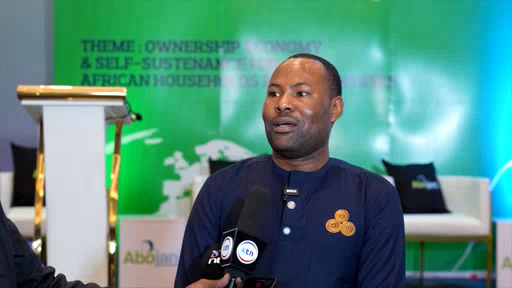
Abojani Champions Financial Literacy, Pension Reform & Digital Transformation

Abojani today held its 5th Abojani Economic Empowerment Conference, bringing together influential leaders from Kenya and across the region to discuss pathways to sustainable wealth creation, financial literacy, and long-term economic resilience.

This year’s theme looked at the critical role of credible financial information, pension awareness, and digital innovation as catalysts for household and national prosperity.

Abojani Investment Founder and CEO Robert Ochieng emphasized the challenge of navigating financial decisions in an era overwhelmed by digital content.

“In today’s digital era, there is overwhelming information overload. The real need is empowerment, having the right source of information to make informed decisions,” said Ochieng.

He highlighted the link between mindset, relationships, and financial success, noting that social and mental capital are the foundations of financial capital. Ochieng further encouraged households to build wealth through equity ownership.

“If you can own stakes in companies whose products you consume, it means that as you spend, you are also getting wealthier and that is what we want for African households.”

He stressed that credible information is the starting point for better investment decisions, particularly when households receive lump-sum income.

The conference coincided with the Retirement Benefits Authority’s (RBA) 25th anniversary. Speaking at the event, John Keah acknowledged Abojani’s growing influence in advancing economic education.

“This year marks the 25th year since RBA’s establishment, and we are pleased that this event aligns with our anniversary and our mission of empowering Kenyans on retirement planning,” said Keah.

He commended Abojani’s role in deepening financial literacy and highlighted pensions as a critical pillar of long-term wealth creation.

Keah noted ongoing efforts to reform pension laws to increase adequacy and reduce premature withdrawals.

“Currently, the law allows individuals to access up to 50% of their benefits upon exit, even when they may not need it. We are proposing to reduce this to 30% to strengthen retirement security.”

Chief Guest Dr. Diane Karusisi, CEO of Bank of Kigali, emphasized the responsibility of financial institutions to enable asset ownership and household wealth.

“Our role as banks is to support the ownership economy by helping people acquire homes, expand businesses, and build assets.”

She also called for regulatory reforms to make capital markets more accessible to African businesses.

“To list on the stock market today, companies must show long-term growth, which is not the case for many African enterprises. Regulators need to lower barriers and encourage participation.”

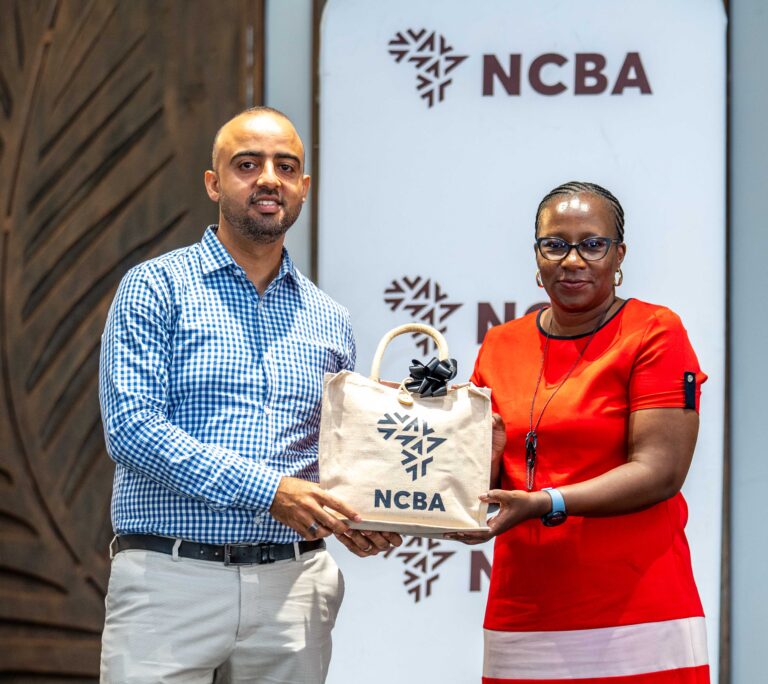
Led by Mr. Muathi Kilonzo, Managing Director of NCBA Investment Bank, NCBA unveiled its new offshore investment solutions, offering clients global market access, currency diversification, and professionally managed investment options.

“We’re leveraging our global presence and expertise to build a strong offshore investment setup that delivers safe, well-regulated, and reliable returns,” said Kilonzo.

Additional insights came from senior leaders across the region, including Anthony Watare (Centum Re), Steven Omamo (Absa Bank Kenya), and Nicholas Ngumunu (CIC Asset Management). Speakers explored the opportunities presented by cross-border markets, regional capital flows, and financial innovation in advancing Africa’s economic transformation.


Huawei Unveils GT6 Series, GT6 Pro and MatePad TXZ Lineup in Kenya

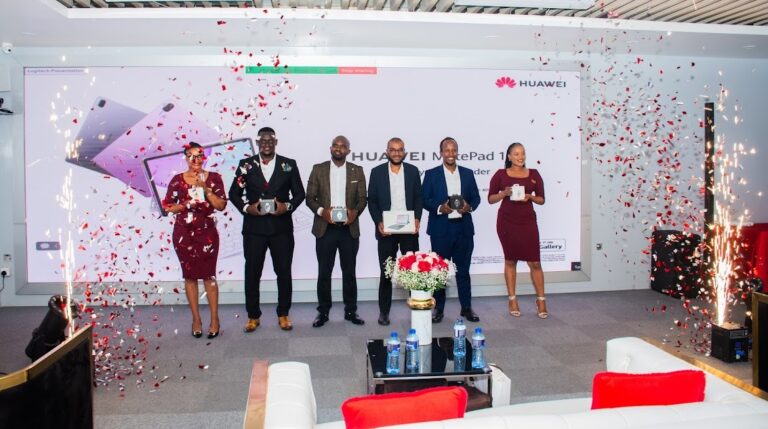
Huawei Kenya has unveiled the Huawei GT6 Series, GT6 Pro and the new MatePad TXZ range, a major step in health innovation, premium design and seamless cross-device integration for today’s dynamic consumers.

The new GT6 Series and MatePad TXZ deliver smarter health insights, long-lasting performance, and seamless connectivity for everyday life.

“Kenya is a rapidly growing hub for digital wellness, and we’re proud to bring global innovations like the WATCH FIT 4 and Band 10 to this market,” said Jin Renbin, Device Manager, Huawei Kenya.

The GT6 Series and GT6 Pro are compatible across Android, iOS, HarmonyOS and the watches introduce advanced cycling analytics, improved heart-rate algorithms, sleep tracking enhancements and pro-grade outdoor features designed for users who expect both performance and precision from their devices.

Huawei introduced the MatePad TXZ series with an emphasis on PC-level productivity and PaperMatte creativity tools. The tablets offer a comfortable, glare-free viewing experience that mimics real paper, empowering students, creators and professionals who rely on digital tools for on-the-go work and ideation. Lightweight, portable and versatile, the MatePad TXZ range reinforces Huawei’s ambition to make efficient, boundary-free productivity accessible to all.

Huawei devices now work fluidly across HarmonyOS, Android, iOS and Huawei’s own ecosystem, allowing users to transition effortlessly between phone, tablet, laptop and wearable.

“With this new lineup, we are bringing together health innovation, premium design, creativity tools and seamless connectivity that empower every user to live smarter and better,” said Wilfred Otieno, Marketing Manager, Devices at Huawei Technologies Kenya at the launch event.

The GT6 Series, GT6 Pro and MatePad TXZ tablets are now available in Huawei stores and authorized retail partners nationwide.

The launch of the Huawei GT6 Series in Kenya follows a broader global rollout already underway across key international markets such as China, Malaysia, Japan, and the Philippines through late September and early October 2025.

The series is also confirmed for upcoming release in Indonesia and the United Arab Emirates.

The devices will help Kenyans enjoy fitness, emotional wellbeing, mobility, and refined design at affordable prices from Huawei.

NCBA Supporting Improved Access to Clean & Reliable Water Across the Nyanza Region

0

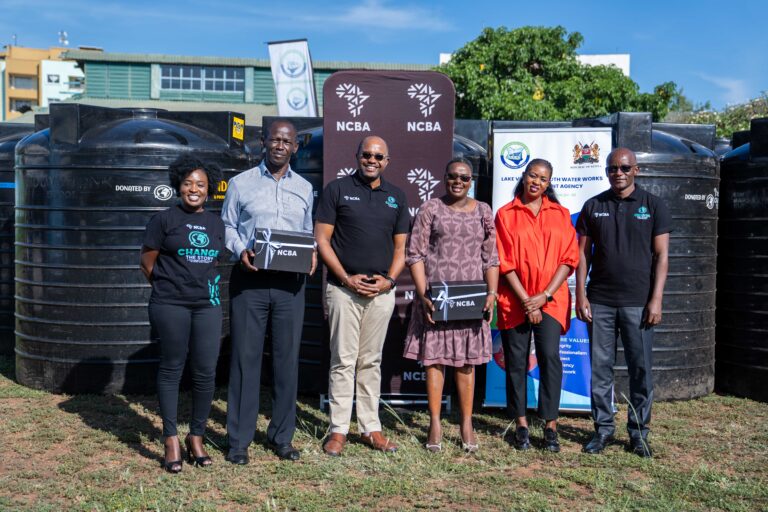
NCBA is supporting improved access to clean and reliable water across the Nyanza region with the donation of the first tranche of twenty four  (5,000) litre water storage tanks to the Lake Victoria South Water Works Development Agency (LVSWWDA).

The tanks will be distributed to schools, markets and social and faith based institutions across 8 counties where the agency operates. The beneficiaries have long struggled with limited access to clean water and reliable supply, a challenge NCBA has come in to address through the donation.

Speaking during the handover ceremony, NCBA Group Director Corporate & Investment Banking, Tirus Mwithiga said, “Our partnership with Lake Victoria South Water Works Development Agency reflects a shared vision for sustainability, strengthening the foundation for long-term regional development. It’s a program that will continue for years, showing NCBA’s commitment to people and the environment we operate in.”

The NCBA Change the Story initiative seeks to address some of Kenya’s most pressing challenges by committing financial resources annually to support our communities enabling progress in areas that matter including, environmental sustainability, financial empowerment, education, tree planting and reducing environmental degradation. Through initiatives like the water tanks donation, NCBA demonstrates that meaningful impact is achieved not by intention but by consistent, tangible action. 

“We are deeply grateful to NCBA for this generous contribution of water tanks. The first 24 of 200 water tanks that will serve schools, hospitals, market centers, and community groups across the Lake Victoria South region.

This is the foundation of a long-term partnership built on sustainability` that will enhance water accessibility for both underserved and deserving communities. By working hand in hand, we will extend our efforts to the next level and deliver on our mandate to create lasting impact,” said Jackline Kemunto, CEO Lake Victoria South Water Works Development Agency.

By contributing to this initiative, NCBA reinforces its strategy of building strong ties with between the public and private sector partnerships. This partnership is poised to bolster NCBA’s Corporate Banking presence in the Western region.


CrossBoundary Energy Raises $200M for Mines, Telco & Industries

0
CrossBoundary Energy (CBE) has secured $200M to further the construction of it’s renewable energy infrastructure in Africa and to provide energy-as-a-service to customers in mining, heavy industry, and telecommunications.
CBE is currently constructing Kamoa-Kakula Solar PV/BESS Baseload Project in the DRC, which will provide 30MW of baseload power to Kamoa Copper S.A., Africa’s largest copper mine.
According to Justus Karuru, Associate Principal at CrossBoundary Energy, “The expanded commitment arranged by Standard Bank and the entry of new lenders demonstrates overwhelming confidence in CBE’s ability to meet the demand for reliable and clean energy on the continent. This scalable debt framework allows us to pursue a more streamlined borrowing approach relative to project-level financing and support the construction of our rapidly expanding portfolio.”
The $200M additional senior debt, is a second tranche of a portfolio financing facility arranged by The Standard Bank of South Africa Limited (SBSA), first closed in December 2024.
SBSA was the lead arranger of the transaction with additional participation from Absa, The Mauritius Commercial Bank (MCB), the Facility for Energy Inclusion (FEI), Deutsche Investitions- und Entwicklungsgesellschaft mbH (DEG), and the Dutch entrepreneurial development bank (FMO).
The financing follows other commitments in 2025 from Norfund, Impact Fund Denmark, and the Emerging Africa and Asia Infrastructure Fund. The company also signed a US$495M guarantee framework from the World Bank’s MIGA in July 2025, which will substantially mitigate transfer restriction and currency inconvertibility across CBE’s markets of operation.
“Our provision of additional financing to CBE reflects Standard Bank’s mission to support business pioneers driving impact on the African continent. We’re thrilled to be closing the second tranche of senior debt that will catalyze clean, reliable energy provision and bolster Africa’s economy.” said Jeanne-Marie Fatti, Senior VP Energy & Infrastructure, Corporate and Investment Banking (CIB) at the Standard Bank of South Africa.

CBE in August 2025 secured a US$40M to build its rapidly expanding portfolio of clean energy projects in Africa. The equity-like capital investment was from a new partner, Impact Fund Denmark (IFDK). Earlier in the year, CrossBoundary Energy raised $40M from

In July 2022, the firm got another $40 million equity investment from Norfund, the Norwegian Investment Fund for developing countries, and KLP, Norway’s largest pension company, through their joint company KLP Norfund Investments, just a month after a $25 million in new funding from ARCH Emerging Markets Partners Limited, Bank of America, and Microsoft Climate Innovation Fund.
In February 2021, CrossBoundary Group received a minority investment from Brown Advisory to help it unlock capital to make a strong return and a lasting difference in underserved markets globally.

Crypto Volatility Spurs Investor Shift to Poain’s Smart Asset System After IMF Alert

0

The IMF warns of escalating risks in the crypto market, prompting global investors to flock to the Poain smart system for stable passive income (register now and receive $15).

The International Monetary Fund (IMF) published a new commentary today that noted increasing vulnerabilities of global financial markets, citing increased liquidity stress and high volatility of digital assets.

Crypto markets responded violently within hours of the report going around, which was one of the hottest financial stories of the day.

And with the $15 registration bonus, new users now have even more incentive to explore smart, automated asset tools that don’t rely on market speculation.

The story was instantly picked by major financial media outlets, and such social hashtags as IMFAlert, CryptoVolatility, and MarketStress started trending on social media.

However, amid the panic in retail markets, a reverse trend was unexpected among the users of automated platforms, particularly Poain which stated that there was a huge increase in registrations after the IMF announcement.

Poain Registration Surges With Investors after Non-Volatility Income Instruments

With panic selling at the top of the headlines, the growth metrics of Poain rose on a steep curve.

The process to join the platform is easy; the new users complete five steps:

  1. Register with emails or phone.
  2. Full basic security verification.
  3. Supported tokens (USDT, XRP, BNB, ETH) The deposit supported tokens (USDT, XRP, BNB, ETH) are tokens that undergo deposit of the corresponding currency or asset and receive updates with each deposit.
  4. Choose a staking strategy or smart-asset strategy.
  5. Begin to get automated incomes after every 24 hours.

The IMF also gave a warning of systemic weakness in the speculative markets, which led many investors to go out to find stable options- the surge in traffic was not unexpected with Poain.

New users who complete registration receive an immediate $15 bonus, which can be used to activate staking plans.

Three Smart-Asset Case Studies Underline Reasons why Poain Is Trending

Case Study 1 Capital Manager in USDT Safety Mode

A portfolio manager based in Eastern Europe after reading the previous Financial Stability Report of the IMF took part of his liquidity and invested it in the USDT Safety Mode of Poain.

In the five days the market went haywire, the strategy averaged 0.8%–1.2% daily, making it $4,120.

Case study 2 Tech Founder taking advantage of using Multi-Token Smart Cycles

The multi-token cycle of BNB, ETH, and XRP was triggered by a Sofia-based technology CEO.The automated rebalancing tool of the platform decreased the exposure to risks throughout the IMF-induced volatility window, generating an average of $6,900 stable daily yield in the span of one week.

Case Study 3 — First Time Investor Low-Risk Auto Mode

An inexperienced investor was putting $500 away in order to avoid being exposed to a decline in asset prices.

The Low-Risk Auto Mode created by Poain generated small yet reliable daily income, which amounted to $110 after two weeks– evidence that despite the world undergoing a financial crunch, there are some predictable returns that can be made.

Contract Earnings Statement

Contract Amount Duration Daily Income Total Income
$15 1 day $0.6 $15.6
$100 2 days $3 $106
$300 3 days $6 $318
$500 5 days $7 $535
$1,000 10 days $16 $1,160
$3,000 15 days $49.5 $3,742.5
$5,000 20 days $85 $6,700
$10,000 25 days $180 $14,500
$100,000 40 days $2,000 $180,000
$200,000 50 days $3,900 $395,000

Demand of Pre-Sale Tokens increases despite the fear of the market

Poain affirmed that it had large user interest in its existing pre-sale products, as the world faces an uncertain situation as pointed out by the IMF:

  • PNA-Alpha: Strategic yield increases on early-access tokens.
  • PNA-Boost: Intermediate pre-sale with advanced cycle multipliers.
  • PNA-Shield: Low- risk token aimed at long-term conservative shareholders.

The boom indicates a change in the psychology of the investors, from speculative trading towards organized, automated acquisition of assets.

The official opinion of Poain on the current market shock caused by IMF

Reacting to the IMF report and the ensuing volatility of the market, Poain came out with the following statement:

Peri-crises in the macroeconomy are not an obstacle it is an indication to implement more intelligent, data-driven asset policies. The system which we have is calculated to work regardless of short term market fluctuations.

The company noted that uncertainty across the globe generally hastens the shift towards automated wealth instruments, particularly among people who want to have consistent daily returns and do not depend on the fluctuations in prices.

Conclusion

The recent alert issued by the IMF rattled the financial markets around the world and the resulting economic story has become one of the most talked about tales in the contemporary world. However, rather than panicking, most investors turned to services such as Poain so as to earn ongoing, mechanical incomes in the face of uncertainty.

On the wave of riding trending financial news, the visibility of Poain is only getting larger, as the company makes itself a smart alternative, as traditional markets are turning red.


Company: Poain BlockEnergy Inc.

Website: https://poain.com

Email: info@poain.com


Google Gemini 3 Comes With AI Embedded in Search

0

Google has launched Gemini 3, its most intelligent and capable AI model yet built to grasp depth and nuance like never before.

Gemini 3 Pro, the first model in the new family, demonstrates PhD-level reasoning and sets new performance records on major AI benchmarks, from complex problem-solving (91.9% on GPQA Diamond) to understanding video, images, and even handwritten text. This leap in core intelligence is the foundation for the new experiences rolling out today.

Gemini 3 Pro brings smart and direct results and it excels at “vibe coding,” allowing developers to bring an idea to life with natural language, and it can better understand intent, plan multi-step tasks, and get things done with less prompting from the user.

Google’s Gemini model is available in Search from day one in the AI Mode allowing users to generate interactive tools and simulations on the fly.  With the upgrade, the Gemini app becomes a personal assistant that can take action on your behalf. A user can ask it to “organise my inbox,” and it will prioritise to-dos and draft replies. A request like, “Help me book a mid-size SUV for my trip,” allows the agent to find flight details from an email, compare rental options, and prepare the booking—all while keeping the user in control.

Google has also launched Google Antigravity, a new agentic development platform that transforms AI from a simple coding assistant into an active partner that can autonomously plan and execute complex software tasks, from building features to fixing bugs, giving developers a powerful new way to bring their own ideas to life.

Gemini 3 Pro is available to everyone starting today in the Gemini app and can be accessed by Google AI Pro and Ultra subscribers in AI Mode in Search.


Plentify Closes An Oversubscribed Series A Bringing its Total Capital Raised to $15M

0

Plentify, the South African electrotech company, has raised an oversubscribed Series A funding round, bringing its total capital raised to date to nearly $15 million.

The round was led by Secha Capital, Buffet Investments, and a South African family office, with participation from existing investors E3 Capital and Fireball Capital, and new backers Endeavor South Africa’s Harvest Fund and Satgana.

“This round reflects both the confidence of our long-term supporters and the belief of new partners who share our vision,” says Jon Kornik, CEO and co-founder of Plentify. “It’s validation that what we’ve built in South Africa has global relevance and that our approach to intelligent energy management is resonating with investors around the world.”

Plentify connects everyday appliances such as water heaters, batteries, and solar inverters and enables them to draw power when it’s cheapest and cleanest, helping households across South Africa cut costs, strengthen the grid, and maximise the value of renewable energy.

“The future of energy isn’t far away, Plentify just sees it first. In a sector often filled with moonshots, they’re solving a practical, immediate problem: making the energy we already produce work smarter,” adds Brendan Mullen, Managing Director at Secha Capital.

Plentify is already preparing pilot projects in the United Kingdom, Australia and Brazil and its AI-powered home-energy management system is already being deployed by leading partners including at Balwin Properties, Conlog and at Wetility.

Over the past year, Plentify has expanded its product ecosystem with SolarBot, helping households maximise solar generation and battery performance. The latest version of the Plentify Installer App, empowering professionals to streamline and optimise installations, making it easier to deploy Plentify technology at scale and the soon-to-be-launched Plentify Dashboard, giving utilities and partners real-time visibility into their connected fleets, enabling them to monitor, manage and support installations at scale.

“Chronic load-shedding and rising electricity tariffs created a rooftop-solar boom among middle-income households, at penetration levels similar to advanced markets, but without subsidies or feed-in tariffs. That forced us to make load management work from day one. Now, as other markets reduce or remove solar subsidies, we have the technology and know-how to help them do the same,”  said Kailas Nair, Plentify’s Chief Growth Officer and co-founder.


Google Announces $2.25M to Support AI Projects Building Public Data Sets

0

Google has announced $2.25 million to support projects building trustworthy public data sets for AI to help national statistical offices modernize their infrastructure and empower decision-makers with the reliable data they need to address challenges from food security to economic growth.

The AI projects are being run by the UN Economic Commission for Africa (UNECA), the UN Department of Economic and Social Affairs (UN DESA) and PARIS21

“For Africa to drive sustainable development, evidence-based policymaking is indispensable. This requires accessible, reliable, and AI-ready data,” said Claver Gatete, Executive Secretary of the UN Economic Commission for Africa. “This effort is a crucial step forward. By building a Regional Data Commons, we can empower African institutions with the data and tools they need to make strategic choices that will drive growth and prosperity.”

Building on its $7.5 million Google.org Skilling Fund, Google will fund organizations such as FATE Foundation and the African Institute for Mathematical Sciences (AIMS) and JA Africa and CyberSafe Foundation.

Apart from the fund, Google has also launched the AI Skilling Blueprint for Africa to help governments build a future-proof workforce and accelerate innovation and close the continent’s critical skills gap especially in Africa, where optimism for AI is at 95% in Nigeria and 76% in South Africa, however, 55% of firms across the continent report needing AI talent more than financing. Closing this skills gap is key to unlocking Africa’s opportunity.

“Africa’s AI moment is now, and Google is committed to being a partner for the long haul,” said Doron Avni, Google’s Vice President of Government Affairs & Public Policy. “The AI Skilling Blueprint provides a clear roadmap for governments to build the workforce of the future. By also investing in AI-ready data and expert local organisations and partners, we are helping build the interconnected ecosystem needed for a prosperous, AI-driven future for the continent.”

The AI Skilling Blueprint for Africa will provide governments with a comprehensive, step-by-step guide to formulate national skilling strategies. This will help AI Learners gain foundational AI literacy; AI Implementers, professionals upskilled to integrate AI tools into their work; and AI Innovators, deep technical experts dedicated to building the next generation of AI solutions.

“We are incredibly proud to partner with the African Institute of Management Sciences on the Advanced AI UpSkilling Project, with support from Google.org. This groundbreaking initiative is a direct response to the urgent need for deep AI competencies in Africa, empowering tertiary institutions, lecturers, and students in Nigeria, Ghana, Kenya, and South Africa,” Adenike Adeyemi, Executive Director, FATE Foundation.

What Happens to Your M-PESA Money When You Die

0

Do you any idea what will happen to your M-PESA account when you die? In Kenya and across the world, banks, SACCOs, insurance, and investment accounts usually have a process on account claims after someone dies as they require a next of kin or designated beneficiary to inherit the money.

If there is a named beneficiary, banks call this person to bring a a death certificate and their national ID to claim the money without court involvement. In other cases, there is an executor who will handle the distribution of assets according to the deceased’s will. Other times, there is a trust or a trustee appointed to manage the trust’s assets. The hardest cases are when there is no beneficiary, will, or trust, forcing the court to appoint an administrator to handle asset distribution.

For your M-PESA wallet, your account remains intact but the money doesn’t automatically go to your family when you pass away. However, Safaricom must be notified of the death of the account owner before any processes can begin.

The M-PESA account isn’t shut down and the funds do not instantly transfer to the next of kin.

According to Safaricom’s Retail Operations Lead, Selline Akoth, the first step is for a family member or appointed next of kin to reach out to Safaricom with a formal request. This includes writing a letter stating who they are, how they are related to the deceased, and what they are asking for.

From there, the claim process depends on how much money was in the M-PESA account.

Category 1: Balances Between KSh1 and KSh30,000

For smaller amounts, Safaricom requires:

  • The deceased’s original death certificate
  • The claimant’s original ID
  • A confirmation letter from local administration — such as the Chief, Assistant Chief, Deputy County Commissioner, or County Commissioner
  • A sworn affidavit indemnifying Safaricom

The administration letter must clearly identify the claimant, their contact information, and their relationship to the M-PESA account holder.

Category 2: Balances Between KSh30,001 and KSh200,000

Larger amounts require additional oversight. To release funds in this range, Safaricom needs:

  • A letter from the Public Trustee (Office of the Attorney General), the Deputy County Commissioner, or the County Commissioner
  • The claimant’s identification documents

This step ensures that the correct beneficiary receives the funds.

Category 3: Balances Above KSh200,000

Anything exceeding KSh200,000 is treated as part of the deceased’s estate.
This means the family must follow Kenya’s succession laws.

Safaricom will only release the money upon receiving:

  • A Grant of Probate (if the deceased left a valid will), or
  • A Letter of Administration (if there was no will)

These documents are issued by the courts under the Law of Succession Act (Cap 160).
Obtaining them may take several months — or even longer — especially if the estate is complicated or if family members disagree.

If No One Claims the Money

Families have two years to make a claim with Safaricom.
If that window passes, the money is transferred to the Unclaimed Financial Assets Authority (UFAA).

Important to note:

  • Even if the SIM card expires, the money does not disappear.
  • UFAA keeps the funds, and they can still be claimed later by rightful beneficiaries.

What About Outstanding M-PESA Loans?

Products like:

  • Fuliza
  • M-Shwari
  • KCB M-PESA

are closed once Safaricom is notified of the death.
These debts do not carry over to the next of kin.

Withdrawing the Money Directly from an Agent Is Illegal

Some people may be tempted to withdraw the money quietly using the deceased’s phone but this is fraud and there are legal repercussions to it.

M-PESA agents are required to verify identity using the original ID belonging to the person withdrawing. They cannot legally release funds to anyone else.

Safaricom emphasizes that only the proper succession channels can be used to access a deceased person’s funds.

Once Documents Are Approved, Money Is Released Quickly

Safaricom’s internal service standard allows for funds to be released within 24 hours after all required documents are submitted and verified.

Final Thoughts

Your M-PESA balance doesn’t vanish when you die, but your loved ones can only access it through the proper legal steps.
To make things easier for your family, it helps to:

  • Keep your next-of-kin information updated
  • Inform your close family members of your financial arrangements
  • Consider drafting a simple will

This ensures your money ends up in the right hands, without delays or disputes.


Microsoft Unveils Project Gecko, an AI Project for the Global Majority

0

Project Gecko, a Microsoft Research-led initiative designed to close equity gaps by creating cost-effective, tailorable AI systems for daily use has launched in Kenya, India and the US.

Powered by experts from Microsoft Research Africa in Nairobi, India, the United States, and partners such Digital Green, and others across agri-tech, philanthropy, and academia, project Gecko speaks local languages, incorporates culturally relevant knowledge, and engages through text, speech, and video.

According to Ashley Llorens, Corporate Vice President and Managing Director of the Microsoft Research Accelerator, “Building AI systems from the ground up shaped by the knowledge, languages, and modalities of the global majority yields more innovative, useful solutions for a great number of people.”

Generative AI powers apps and tools that boost productivity and knowledge in most places across the world. But these systems don’t work equally well for all communities, especially those under-represented online, where most AI training data originates.

As a result, generative AI performs poorly in many languages and does not reflect the social and cultural realities of every population. Infrastructure challenges are partly to blame, but in nations where low-resource languages dominate, adoption of AI is lower, even after adjusting for GDP and internet access.

Project Gecko uses MultiModal Critical Thinking Agent (MMCTAgent), a new multimodal AI system that analyzes speech, images, and video to generate context-rich, locally grounded answers. MMCTAgent is now available on Azure AI Foundry Labs, with open-source code accessible on GitHub.

Why Agriculture Comes First

While Project Gecko is poised to expand into healthcare, education, and retail, the team chose agriculture as its starting point because the sector is a powerful economic catalyst. In Kenya and India, agriculture contributes significantly to GDP and employs millions, most of them smallholder farmers working less than five acres of land.

However, linguistic and cultural diversity presents major barriers. Farmers often switch between languages like English, Kiswahili, Kikuyu, Kalenjin, and various Indian dialects. Many rely on oral instruction and visual demonstrations, and in some regions, low bandwidth and limited device capabilities impact the accessibility of digital tools.

While existing apps attempt to offer agricultural guidance, researchers found that farmers frequently receive incomplete or inaccurate answers because most underlying models were trained primarily in English.

According to Tanuja Ganu, Director of Research Engineering at Microsoft India: “Agriculture has very specific terms, which may change from language to language, and even district to district. All those domain-specific nuances need to be understood.”

To address this, Project Gecko builds on Digital Green’s FarmerChat, a speech-first assistant used by extension workers to support millions of farmers. Digital Green has amassed more than 10,000 agricultural videos in over 40 languages and dialects, but historically, that knowledge was not easily searchable or accessible due to linguistic and technical limitations.

Rikin Gandhi, CEO of Digital Green, notes: “Unlocking this knowledge will support even more farmers to get real-time responses in their local language and preferred modality.”

With Project Gecko, a farmer in Nyeri County, Kenya, can now ask a question verbally in Kikuyu and receive answers in text, audio, and video, jumping directly to the exact timestamp where the solution appears.

MMCTAgent on Delivering Accurate, Community-Grounded Answers

MMCTAgent enhances frontier models by allowing them to reason across audio, visuals, and text.  It breaks complex questions into smaller components, verifies its own answers, and grounds responses in real-world agricultural practices captured in community-generated videos and transcripts.

Field studies in Kenya and India revealed significant improvements in accuracy, usability, and user trust compared to generic AI systems.

As Lakshmi Devi, a farmer from Bihar, India, shared: “Before, we would ask neighbors or dealers for advice and weren’t sure it was right. With FarmerChat, we ask our questions, follow the instructions, and see better results.”

Building New Speech Models for Local Languages

Human-centered research by Microsoft in Kenya and India also showed that farmers strongly prefer voice interactions. However, many local languages lack the basic tools for automatic speech recognition (ASR), text-to-speech (TTS), and translation, needed to power voice-enabled AI systems. Existing datasets were too limited to train robust models as well.

Project Gecko has developed these tools from scratch, training and fine-tuning them using local datasets. Using small language models (SLMs), the team has already expanded support to Swahili, Kikuyu, Kalenjin, Dholuo, Maa, and Somali through a dataset of 3,000 hours of crowd-sourced Kenyan speech and is creating a public leaderboard to benchmark African language performance.

Insights from more than 130 farmers are helping shape features such as clarifying questions, actionable recommendations, and tools that support peer-to-peer knowledge-sharing.

Looking Ahead

 Project Gecko is locally adaptable, culturally relevant, and equitable and in line with Microsoft’s goal’s of population-scale impact. By studying what works in agriculture, Microsoft aims to create design patterns and tools that can be replicated across healthcare, education, and other essential sectors.

As Tanuja Ganu emphasizes, “Our goal is to ensure that the next generation of AI is not only powerful, but also globally inclusive, culturally relevant, and shaped by the communities it aims to serve.”


BAKE Awards 2025 Expand Scope to Celebrate Kenya’s Digital Creativity

0

Our friends at the Bloggers Association of Kenya (BAKE) have launched public voting for the BAKE Awards 2025, with a broader and more inclusive celebration of Kenya’s digital creators.

Unlike back in the day when we used to have just bloggers, this year, the awards go beyond traditional blogging, recognizing content across multiple platforms and formats.

BAKE says the 2025 edition reflects the country’s evolving digital landscape, where creators engage audiences not only through blogs but also on TikTok, Instagram, YouTube, podcasts, and newsletters. BAKE has adjusted its rules to accommodate hybrid creators who publish across social and web platforms, acknowledging the diversity of modern content creation.

In addition to creativity and consistency, the panel considers relevance, civic impact, innovation, authenticity, and contribution to safe online spaces. This ensures that nominees are recognized not only for producing engaging content but also for responsibly shaping Kenya’s digital culture.

Some of the outstanding platforms nominated include Salukwa Farms, Techish Kenya, Mtoto News, The Manicured Farmer, and Kenyan Wallstreet.

Public voting is now open until December 2, 2025, giving Kenyans the opportunity to support the creators they believe are driving digital excellence. Winners will be announced at the BAKE Awards Gala Night on December 6 in Nairobi.

With the 2025 edition, BAKE has expanded its vision to reflect Kenya’s dynamic content ecosystem. By recognizing creators across multiple platforms, the Awards celebrate innovation, authenticity, and impact, offering a comprehensive view of the country’s thriving digital community.


NCBA Holds Drive to Bolster Savings & Investments Among the Youth

0

NCBA recently held a “Meet, Mingle & Money talks’ forum, in Mombasa, in a move to drive uptake of savings and investments among the youth.

The customer engagement drive at the Coast town attracted emerging affluent and young professionals who work and stay at the coastal town, following earlier sessions held in Nairobi.

In a statement, NCBA Group Director Retail Banking, Dennis Njau said, “Customer obsession for us is not a catchphrase; it is a culture. It means being present in the lives of our customers, anticipating their needs before they arise and walking with them through every financial milestone. This engagement in Mombasa is about deepening those relationships and reaffirming that at NCBA, our customers come first.”

NCBA forums provide customers with valuable one-on-one interactions with key decision makers, enabling the bank to refine its products and services based on real-time feedback on mortgages, investment products, asset finance and bancassurance, among others.

Kenya’s banking and finance industry continues to evolve, with total sector assets rising by over Ksh 1.2 trillion in 2024, a sign of strong credit demand and institutional resilience. Formal financial access has also improved slightly, reaching 84.8%, driven largely by digital innovation but young people are especially underserved.

Despite making up about 35% of the population, youth are far less likely to hold formal savings accounts or invest through financial institutions, and unemployment remains a major barrier to inclusion. Meanwhile, Kenya’s national savings rate stands at just 11–13%, below the African average of 17%, underscoring the need for banks to move beyond transactional services toward true wealth-building support.

Through these “Meet, Mingle & Money Talks” forums, NCBA aims to make banking both personal and purposeful.