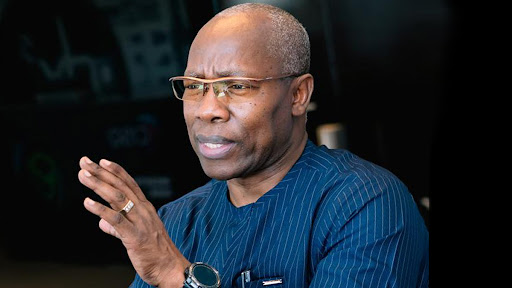
Kenya is moving to operationalize its new National Cybersecurity Agency, appointing cybersecurity expert Dr. Martin Koyabe as chairman of the board as the government steps up efforts to protect critical digital infrastructure and the country’s expanding online economy.
Koyabe’s three-year term as Non-Executive Chairperson began Aug. 21, according to Gazette Notice No. 13506. His appointment is a key step in establishing the agency’s leadership structure.
The National Cybersecurity Agency was legally established on May 15 under Legal Notice No. 89, meaning the latest move is not the creation of the agency but the transition toward making it operational.
The agency is mandated to coordinate national cybersecurity, protect critical information infrastructure and strengthen Kenya’s ability to prevent and respond to cyber threats.
That responsibility is becoming more urgent as Kenya expands digital payments, mobile services, cloud computing, e-government and other online infrastructure. The Communications Authority detected 3.4 billion cyber threat events in the three months through March, underscoring the scale of the challenge.
Koyabe brings more than three decades of experience across ICT, telecommunications, cybersecurity, digital policy and emerging technologies. He has worked on cybersecurity capacity-building initiatives across Africa and served as a Senior Advisor for Africa at the Global Forum on Cyber Expertise.
He has also been involved in the African Union-GFCE cyber-capacity-building initiative, which supports efforts to strengthen cyber resilience across the continent’s 55 countries.
Koyabe is a founding partner and technical director at Africa Cyber Expertise, where his work has included national cybersecurity assessments, strategy development, regulatory advisory and cyber-capacity-building programs.
His academic background includes a PhD in Communication Engineering from the University of Aberdeen, according to his professional profile. He has also undertaken executive and professional studies at institutions including the University of Cambridge and Harvard Kennedy School.
The combination of technical and policy experience is significant for NCSA, whose mandate extends beyond responding to individual attacks. The agency is expected to coordinate cybersecurity across government and the private sector, assess the resilience of critical infrastructure, support incident response and help develop local cybersecurity capabilities.
Its responsibilities include operating the National Cybersecurity Operations Center, supporting sector-specific cyber operations centers, conducting vulnerability assessments and developing technical capabilities for cyber defense.
The agency is also expected to establish a Cybersecurity Center of Excellence focused on research, innovation and locally developed cybersecurity technologies.
For Kenya’s businesses, the agency’s emergence could push cybersecurity further into boardrooms. Banks, telecom operators, payment companies and other critical digital-service providers face growing pressure to manage cyber risk as an operational and financial threat rather than solely an IT issue.
The appointment comes as Kenya seeks to expand its digital economy and attract investment into technology and digital services. Protecting that infrastructure is increasingly tied to the country’s ability to sustain growth. Koyabe’s challenge will be turning a legally established institution into an effective national cybersecurity coordinator.
Sabvest Capital is investing about $47 million in South African telecommunications companies Frogfoot and Vox, betting that faster fiber expansion into lower-income communities can unlock growth in a market where millions of households remain without high-speed internet.
The investment holding company will subscribe for new shares in Frogfoot and Vox for $47 million, giving it an interest of at least 8.97% in the businesses. The transaction values the combined operations at about $900 million on an enterprise-value basis and about $525 million after debt. The figures are converted from South African rand at roughly 16 rand to the dollar on Aug. 24, 2026.
The deal gives Sabvest exposure to one of South Africa’s most important broadband infrastructure plays at a time when fiber operators are shifting their attention from affluent suburbs and business districts to townships and lower-income communities.
Frogfoot is South Africa’s fourth-largest fiber network operator and provides open-access fiber infrastructure for homes, businesses and other customers. Vox operates as a national internet service provider serving households, businesses and public-sector customers, with services spanning connectivity, voice, cloud, collaboration and cybersecurity.
The transaction also includes Hypa, Vox’s prepaid broadband business, which is targeting lower-income households through networks including Frogfoot Rise, Vuma Reach and Openserve.
Betting on the next wave of broadband growth
The investment comes despite the companies’ recent financial challenges.
Frogfoot and Vox reported a combined net loss after tax of about $16 million for the year ended Aug. 31, 2025, while their combined net asset value was negative by roughly $42 million.
Sabvest is therefore not making a conventional investment in profitable telecom operations. Instead, it is backing the value of the underlying fiber infrastructure and the potential for higher network utilization as the companies expand into markets that have historically been poorly served by fixed broadband.
That opportunity is substantial.
The companies are targeting as many as 15 million homes that could potentially be connected to high-speed internet, compared with about 4.5 million homes currently connected, according to Frogfoot Chief Executive Officer Abraham van der Merwe. The group plans to increase annual fiber deployment fourfold to about 360,000 homes a year, with much of the expansion focused on townships.
That makes the investment as much about market expansion as infrastructure ownership.
South Africa has one of the continent’s most developed telecommunications markets, but broadband access remains uneven. Fiber operators have traditionally concentrated on areas where household incomes and customer density can support the economics of network construction. The next stage of growth is likely to depend on whether operators can make fiber commercially viable in lower-income areas.
Capital to accelerate rollout
Sabvest’s investment forms part of a broader financing and shareholder restructuring involving several investors.
The largest shareholder grouping will be a consortium led by DNI 4PL Contracts and including Sabvest, Masimong Group and Draper Gain International. The consortium will hold about 34.8% of the companies, with DNI itself holding 18.13%. Sabvest currently owns about 19.4% of DNI directly and indirectly.
The wider transaction values the companies at about $900 million, comprising roughly $525 million of after-debt equity value and about $375 million of debt.
For Sabvest, the investment will be funded through new term bank debt rather than existing cash resources.
That financing structure highlights the investment thesis: Sabvest is committing capital to an infrastructure-heavy business where the payoff depends on scaling the network and increasing the number of paying customers connected to it.
Townships become the next fiber battleground
The shift toward townships reflects a broader change in South Africa’s broadband market.
For years, fiber companies focused on affluent residential neighborhoods and commercial centers, where customers were more likely to afford relatively expensive fixed broadband packages. The market is now moving toward prepaid and lower-cost offerings designed for customers with less predictable incomes.
Vox’s Hypa business is part of that strategy, while Frogfoot recently introduced Frogfoot Leap, a prepaid fiber service designed to provide uncapped broadband without long-term contracts.
The economics could become increasingly attractive if operators can reduce the cost of deploying networks while building sufficient customer density.
Van der Merwe has described the new capital as a way to significantly increase rollout velocity, particularly in townships and lower-income communities. The companies estimate that their addressable market could reach millions of additional households.
For consumers, the expansion could mean greater access to high-speed internet for education, digital financial services, remote work and small businesses. For investors, the opportunity is to turn previously underserved communities into a large new broadband customer base.
Sabvest takes an infrastructure bet
Sabvest, which has a market value of about $344 million, is making the investment through its wholly owned subsidiary Sabvest Finance and Guarantee Corporation.
The size of the investment is significant relative to Sabvest’s own market value, underscoring the importance of the transaction to its portfolio.
The investment also brings Sabvest closer to the operational growth strategy of Frogfoot and Vox, while the broader transaction brings together financial investors and an experienced management team.
Frogfoot has operated for more than 25 years and has built a substantial open-access fiber network across South Africa. Vox provides the customer-facing layer, giving the combined group exposure to both infrastructure and retail broadband economics. (Business Day)
That combination could become increasingly valuable as fiber penetration grows and operators compete for customers beyond the traditional middle- and upper-income market.
Transaction set for October
The boards of Frogfoot and Vox have approved the transaction, with the relevant agreements already executed. The investment is scheduled to become effective on Oct. 1, 2026, subject to the outstanding conditions being fulfilled by Sept. 24.
The deal leaves Sabvest with a minority position, but gives the investment group exposure to a broadband market that is entering a new phase of expansion.
The bigger bet is whether South Africa’s fiber industry can make the economics of connecting lower-income communities work at scale.
With a potential market of millions of unconnected homes and a target of 360,000 new homes passed or connected each year, Frogfoot and Vox are positioning fiber as less of a suburban premium service and more of a mass-market infrastructure business.
For Sabvest, the $47 million investment is a wager that the next significant growth opportunity in South African broadband will come not from connecting the richest neighborhoods, but from bringing high-speed internet to the communities that have been left behind.
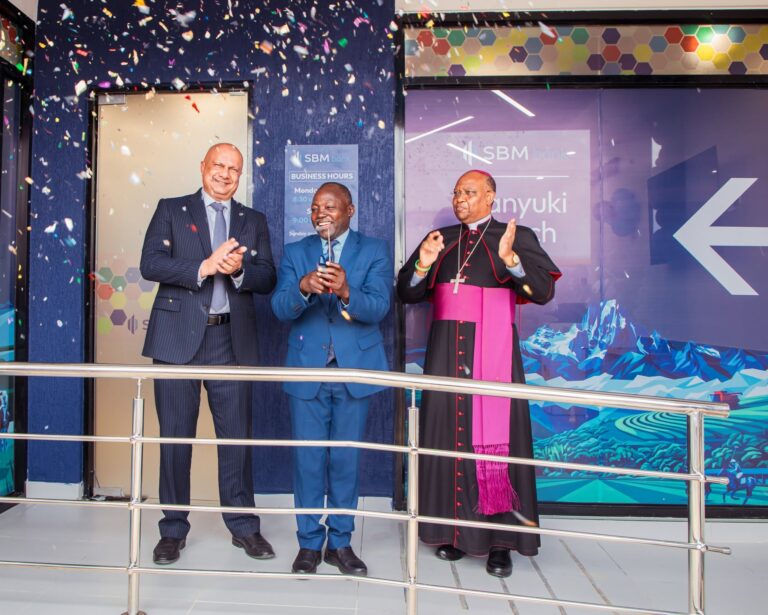
SBM Bank Kenya has opened its 34th branch in Nanyuki, Laikipia County, expanding its physical footprint into the Mt. Kenya region as the lender targets the area’s growing agriculture, tourism, conservancy, real estate and SME economy.
The branch, located at Peak Place Building in Nanyuki Town, gives SBM a presence in a market anchored by major conservancies including Ol Pejeta, Lewa, Borana and Loisaba, as well as high-end tourism lodges, horticulture exporters, agribusinesses, real estate developers and SMEs operating across Nanyuki and Timau.
The lender is also positioning the branch to serve businesses and institutions connected to the British Army Training Unit Kenya (BATUK), alongside farmers, flower and horticulture exporters and other institutional customers in the region.
The expansion comes as SBM Bank moves to convert a sharp improvement in financial performance into balance-sheet growth and deeper customer acquisition outside Kenya’s largest urban centers.
For the six months ended June 30, 2026, SBM Bank Kenya reported a 171.3% increase in profit before tax to KSh548 million, from KSh202 million a year earlier. Net profit rose 88.2% to KSh380.2 million, while operating profit increased 279% to KSh852 million.
Customer deposits increased 24% to KSh94 billion, while net loans and advances grew 18% to KSh54.1 billion. Total assets stood at KSh109.9 billion at the end of June, compared with KSh105.7 billion in December 2025.
The bank also reported an improvement in asset quality, with its gross non-performing loan ratio falling to 17.3% from 32.4% a year earlier. Shareholders’ equity increased to KSh11.1 billion.
The Nanyuki expansion therefore comes at a point when SBM is showing greater capacity to lend and take on new customers, particularly in markets where businesses require relationship-based banking alongside digital services.
“Nanyuki is exactly the kind of market our strategy is built for. The region is a high-growth economy where relationship banking and digital convenience should work together,” said SBM Bank Kenya CEO Bhartesh Shah.
“We are determined to bring banking closer to our customers at a time when our own numbers show the model is working. This branch is not a one-off activity, it is proof that we can back our growth ambitions with a strong balance sheet,” Shah said.
Laikipia Governor Joshua Irungu said the region’s mix of agribusiness, tourism, real estate and manufacturing presents significant opportunities for private-sector investment.
“From agribusiness and tourism to real estate and manufacturing, the potential here is enormous, and we are ready to work with partners who share our ambition for this region,” Irungu said.
For SBM, the move also reflects a broader shift in Kenya’s banking industry, where lenders are continuing to add physical branches even as mobile and internet banking become more dominant. Physical branches are increasingly being used for relationship management, business acquisition and complex financial services rather than simply cash transactions.
The Nanyuki branch is SBM Bank Kenya’s first new outlet since it opened its Kilifi branch in July 2025, bringing the lender’s national branch network to 34. The expansion is aimed at improving access to banking services in emerging commercial centers while allowing the bank to build deeper relationships with businesses and institutions outside Nairobi and other major cities.
The strategy is also consistent with SBM’s focus on business development at branch level. The bank’s recruitment for the Nanyuki branch has emphasized business acquisition, customer growth, profitability and alignment with the lender’s wider strategy.
With deposits approaching KSh100 billion and its loan book expanding, SBM is entering the next phase of its Kenyan growth story with a stronger financial base. Nanyuki gives the lender access to a regional economy where tourism, conservation, horticulture, agriculture and property development generate demand for both conventional banking and more specialized corporate and SME financing.
The challenge will be turning that economic activity into profitable loans and deposits while maintaining the asset-quality improvements that have helped drive the bank’s 2026 earnings recovery.
As a woman, you may have noticed that the obstacles in your career do not always appear discriminatory on their own. They tend to look like a manager who stands too close, a salary you can’t compare to anyone else’s, or a project quietly reassigned after you shared some news. Each of these examples has a legal shape underneath it, but you can’t use what you can’t name. Here’s more about three common problems women in business face and how they should react.
Report Sexual Harassment Instead of Absorbing IT
If a colleague or a manager has made you uncomfortable at work, you may have spent longer questioning your own reaction than questioning his behavior. A man who behaves this way usually controls something you need, like a promotion, a shift, a client account, or a visa sponsorship, which is why sexual abuse or harassment shows up more often in workplaces with few women in senior roles.
You must understand that your employer cannot punish you for raising a complaint, which is the whole point of the protections available to you. However, only a lawyer can tell you what your evidence shows before you decide anything. These experts will make you understand that you have a second claim if an employer demotes you after a complaint, as retaliation is illegal on its own terms.
The deadlines for filing are shorter than most people expect, so the sooner you ask, the more options stay open to you. Fortunately, most employment lawyers take these cases on contingency, and the outcomes range from a negotiated exit with compensation to a policy change that protects the woman hired after you.
Do Not Accept Lower Salaries
If you suspect you’re paid less than a male colleague doing the same job, you’re unlikely to confirm it by asking your employer. Companies keep pay private for a reason; after all, a gap no one can see is a gap no one has to explain.
Your options depend partly on where you work, as a growing number of states now require employers to post salary ranges in job ads or provide them upon request. Federal law goes much further back, and the Equal Pay Act has required equal pay for substantially equal work since 1963, with job content determining what counts as equal. However, if you want to take action, you should first contact a lawyer. They can compare what you actually do against what your colleague does and tell you whether the pay gap is legal.
Push Back When Motherhood Changes How You’re Treated
If your responsibilities shrank after you announced a pregnancy, or after your caring duties became visible at work, you’ve reached the point where many women’s careers stall. Researchers who study hiring decisions have found that mothers are judged as less committed than women without children with identical resumes.
However, employers who act on this belief that a mother is less committed now stand on weaker legal ground than they used to. The Pregnant Workers Fairness Act requires your employer to provide reasonable accommodations for pregnancy and recovery, and a refusal is actionable by itself.
To take legal action, you need to keep a dated record of what changed and when. Only a lawyer can tell you whether what you’ve written down amounts to a claim. Fortunately, that first conversation usually costs you nothing.
Endnote
It is common for women in business to experience unique problems, but they don’t have to solve them alone. You don’t have to be sure before you raise a question. However, working with a legal expert puts you in a better position to understand what a realistic outcome looks like before you decide whether to act.
When a family receives a diagnosis for a complex medical condition, the first challenge often begins after the medical appointment ends. Caregivers may search online for answers about the condition, available support, and what steps to take next, but finding accurate and easy-to-understand information is not always simple.
Medical resources can be highly technical, spread across multiple platforms, or difficult to connect with a family’s specific situation. This article explores how HealthTech startups are solving these challenges by creating digital platforms that improve access to medical information, simplify patient education, and help families make informed healthcare decisions.
The Information Gap Families Face After a Medical Diagnosis
After receiving a diagnosis, families often need practical information about symptoms, care options, and long-term support. However, many healthcare resources are created with medical professionals as the primary audience, leaving patients and caregivers to interpret complex information on their own. The main challenges include:
Medical terminology that can be difficult for non-specialists to understand.
Information spread across multiple websites and healthcare sources.
Limited guidance for preparing questions before medical appointments.
This information gap can make healthcare decisions stressful, especially for families managing conditions that require ongoing support. HealthTech startups are addressing this challenge by developing platforms that organize medical knowledge into patient-focused formats.
How HealthTech Startups Are Improving Patient Education
HealthTech companies are transforming patient education by using technology to deliver healthcare information in a more accessible way. Instead of requiring users to navigate complex medical documents, modern platforms focus on presenting information through structured guides, digital tools, and user-friendly resources. Many HealthTech solutions now provide:
Condition-specific educational content.
Simplified explanations of medical concepts.
Digital resources for understanding treatment and care pathways.
Tools that help families prepare for discussions with healthcare providers.
For families researching neurological conditions, reliable educational resources can help them understand important details about a diagnosis and available support options. Learning about specific classifications and variations of a condition allows caregivers to communicate effectively with healthcare professionals.
Platforms such as cerebralpalsyguide.com help families explore information about different types of cerebral palsy through organized, condition-focused resources. These digital resources support better conversations between families and medical teams by helping caregivers arrive at appointments with a clearer understanding of their concerns.
Digital Tools Helping Families Make Better Healthcare Decisions
Beyond medical education, HealthTech startups are developing tools that help families manage healthcare information throughout the care journey. These solutions make it easier to organize records, communicate with specialists, and monitor important health details. Examples of digital healthcare tools include:
Telehealth platforms that connect families with healthcare professionals remotely.
Mobile applications for tracking symptoms, appointments, and treatment progress.
Online communities that provide caregiver support and shared experiences.
These technologies help families become more involved in healthcare planning while reducing the challenges of managing information across different providers and services.
What HealthTech Startups Need to Prioritize for Better Patient Support
Building effective healthcare technology requires a strong focus on trust and usability. Families depend on these platforms for important decisions, making accuracy and accessibility essential. HealthTech startups should prioritize:
Medical content reviewed by qualified professionals.
Simple user experiences for people with different levels of technical knowledge.
Accessible design features for diverse users.
Regular updates to reflect current healthcare guidance.
Successful healthcare platforms combine innovation with reliable information, ensuring technology supports rather than complicates the patient experience.
Endnote
HealthTech startups are changing how families find, understand, and use medical information. By creating accessible digital resources and patient-focused tools, these companies are helping people approach healthcare decisions with greater confidence.
The future of digital healthcare will depend on solutions that combine technology, accuracy, and accessibility to ensure reliable medical knowledge is available when families need it most.
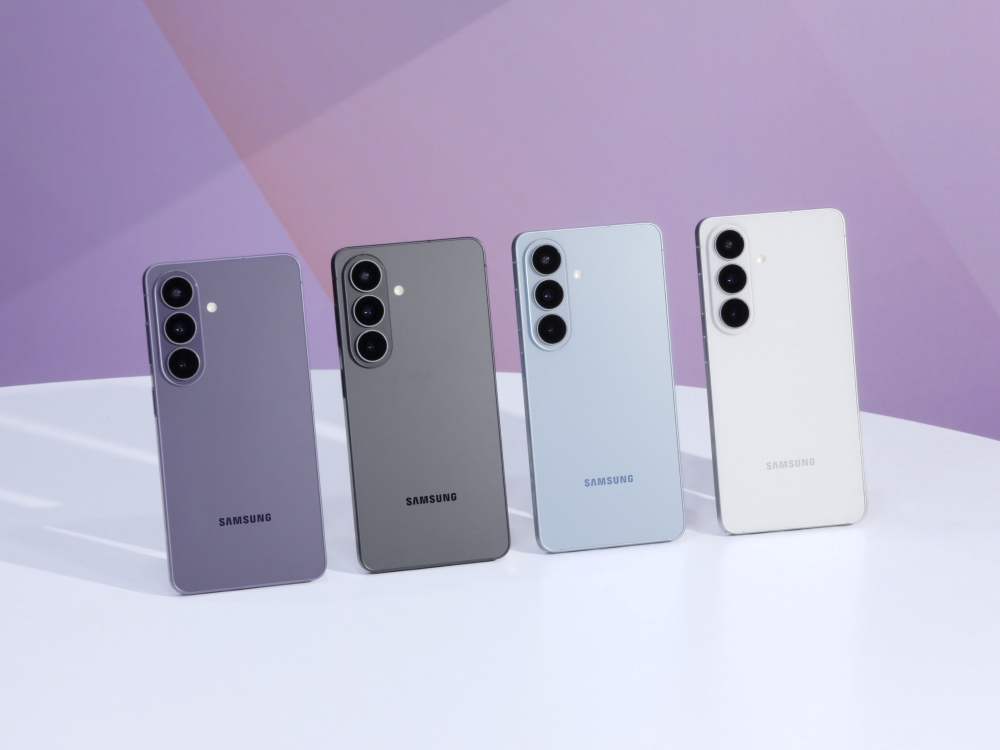
Samsung Electronics is taking its connected-home strategy directly to Kenyan consumers, using three Nairobi shopping malls to demonstrate how smartphones, televisions, wearables and AI-enabled appliances can operate as a single technology ecosystem rather than as standalone products.
The Korean electronics giant will launch its Connected Living Experience at The Junction Mall from August 28 to 30, followed by The Galleria Mall from September 4 to 6 and Sarit Mall from October 2 to 4.
The campaign is more than a conventional product showcase. It reflects Samsung’s broader attempt to shift consumers from buying individual devices to participating in an ecosystem built around SmartThings, its Internet of Things platform that connects and manages compatible devices across the home.
That shift has important implications for Samsung’s business in Kenya, where the company is competing not only on hardware but increasingly on software, artificial intelligence, connectivity and the recurring relationship it can build with consumers after a device is purchased.
Samsung says SmartThings had more than 430 million users globally as of December 2025, giving the platform a substantial installed base from which to expand connected-home services.
From gadgets to an ecosystem
For years, consumer electronics companies competed largely on specifications: the number of megapixels in a smartphone camera, the size of a television, refrigerator capacity or washing-machine efficiency.
Samsung is increasingly selling something different.
The proposition is that the Galaxy smartphone can become the control center for a home in which the television, refrigerator, washing machine, air conditioner and other appliances communicate with one another.
Its SmartThings platform allows users to remotely control compatible devices, create automations and monitor energy consumption. Samsung has also expanded the platform with features such as 3D Map View, device diagnostics, energy management and home routines.
The Nairobi activation is designed to make that proposition tangible.
Instead of placing a phone, television or refrigerator on separate display stands, Samsung will recreate living-room, kitchen and laundry environments where consumers can see how the products interact.
That distinction matters because connected-home technology can be difficult to sell when its benefits remain theoretical. A consumer may understand why a new television has a better display, but the economic and practical value of connecting that television to a refrigerator, smartphone or washing machine is less immediately obvious.
Samsung is effectively turning the mall into a live demonstration of its ecosystem strategy.
AI is becoming the connective layer
Artificial intelligence is central to the pitch.
Samsung’s latest connected-home strategy goes beyond allowing consumers to switch appliances on and off remotely. The company is increasingly using AI to interpret usage patterns, automate routines and optimize the operation of connected devices.
SmartThings’ AI Energy Mode, for example, is designed to analyze usage patterns and adjust connected appliances to reduce energy consumption. Samsung’s Africa platform highlights energy management as one of the core use cases for its connected-home ecosystem.
That is particularly relevant in Kenya, where electricity costs and household energy consumption are important considerations for consumers.
Samsung has also been extending AI deeper into individual appliances. Its AI-enabled refrigerators, for example, can use AI Vision to identify food items and support food-management and recipe functions, while connected cooking appliances can receive instructions through the SmartThings ecosystem.
The result is a shift in the definition of an appliance.
A refrigerator is no longer simply a machine that keeps food cold. A television is no longer simply a screen. A washing machine is increasingly positioned as part of an intelligent household system.
Kenya becomes an important test market
Samsung’s decision to take the experience into three major Nairobi malls also highlights the importance of physical consumer engagement in a market where smart-home adoption is still developing.
The company needs consumers to understand the value proposition before asking them to invest in multiple connected devices.
That creates a potentially important commercial cycle.
A consumer may initially purchase a Galaxy smartphone, then add a Samsung television, followed by an appliance. Each additional device increases the usefulness of the ecosystem and creates another opportunity for Samsung to retain the customer within its hardware and software environment.
The strategy is already visible in Samsung’s wider Kenyan business.
The company recently used a Nairobi event to promote SmartThings alongside its Galaxy A Series smartphones, demonstrating appliance and lighting controls as part of a broader push to make the smartphone an entry point into the connected home.
Samsung has also positioned its 2026 television lineup in Kenya around AI and SmartThings, turning the television into a dashboard for connected devices rather than simply an entertainment product.
The bigger opportunity is beyond households
The connected-home strategy could also give Samsung a pathway into Kenya’s commercial property market.
Samsung already markets SmartThings Pro as a business-focused IoT platform for residential developments, hotels, offices and other commercial environments. The platform allows businesses to remotely manage connected equipment, monitor energy consumption and automate building operations.
That creates a much larger addressable market than individual household appliances.
Property developers could use connected technology as an amenity in new apartments. Hotels could offer guests digitally managed rooms. Offices could automate heating, cooling and other building systems.
For Samsung, that means SmartThings can potentially become more than a consumer application. It can become infrastructure sitting behind homes, buildings and commercial spaces.
Retail promotions are part of the strategy
The Nairobi activation also combines technology education with retail incentives.
At The Junction Mall, Samsung says Azone Outlet will offer discounts of up to 60% on selected home appliances, while Carrefour will offer discounts of up to 25%. Quick Plug will offer discounts of up to 10% on selected Samsung mobile devices, alongside bundled accessories on selected products.
The commercial logic is straightforward: demonstrate the ecosystem, then reduce the friction involved in purchasing the hardware required to build it.
This is important because connected-home ecosystems face a classic adoption problem. The technology becomes more valuable as consumers own more compatible devices, but the initial cost of assembling those devices can be significant.
Retail promotions can help Samsung move consumers from curiosity to adoption.
The battle is moving from devices to relationships
Samsung’s Kenyan strategy reflects a broader change in consumer technology.
Hardware remains the foundation of the business, but the competitive advantage increasingly comes from what happens after the sale.
A smartphone that connects seamlessly to a television, refrigerator and washing machine is harder to replace with a competitor’s device if the consumer has already invested in the ecosystem.
That creates a form of customer lock-in driven not necessarily by restrictions, but by convenience.
Samsung is also not building its ecosystem entirely in isolation. SmartThings supports compatible third-party devices and industry standards such as Matter, broadening the potential range of products that can participate in connected-home environments.
The challenge will be converting the concept into meaningful mass-market adoption.
Kenyan consumers are likely to judge connected-home technology less by how futuristic it looks in a shopping mall and more by whether it saves time, reduces electricity consumption, improves convenience and justifies the additional cost.
Samsung’s three-city activation will give the company an opportunity to make that case directly.
For Samsung, however, the stakes are larger than a series of mall demonstrations. The company is betting that the next phase of consumer electronics in Kenya will not be defined by which device has the best specifications, but by which technology company can make all the devices in a consumer’s life work better together. And Samsung wants SmartThings to be at the center of that relationship.
Uber Technologies Inc. has been hit with an €825 million ($966 million) fine by the Dutch data protection regulator over the use of automated systems to suspend and deactivate drivers, putting the growing use of algorithms to manage gig workers under renewed regulatory scrutiny.
The Dutch Data Protection Authority, known as the Autoriteit Persoonsgegevens or AP, said Uber violated the European Union’s General Data Protection Regulation by allowing automated systems to make decisions affecting drivers without adequate human intervention and by failing to properly inform them about the process.
The penalty is the second-largest fine issued under the GDPR, behind the €1.2 billion penalty imposed on Meta Platforms in 2023. The Dutch regulator said the violations occurred between 2018 and 2022.
The case goes beyond Uber. It puts a spotlight on a fundamental question facing technology companies as artificial intelligence and automated decision-making become embedded in digital businesses: How much power should companies give software to determine whether a person can earn a living?
When an Algorithm Becomes a Gatekeeper
Uber’s business depends heavily on software. Algorithms match passengers with drivers, calculate fares, detect suspected fraud and monitor activity across the platform.
That automation allows Uber to operate at enormous scale. But the Dutch regulator found that some of the company’s automated systems went further, making decisions that could directly affect drivers’ ability to work.
The investigation followed complaints from 171 drivers represented by the French human-rights organization Ligue des droits de l’Homme. Because Uber’s European headquarters are in Amsterdam, the Dutch authority handled the case under the EU’s regulatory framework for cross-border data protection enforcement.
According to the regulator, Uber’s systems were used to suspend drivers suspected of fraudulent behavior, including alleged unnecessary detours designed to increase fares or accepting rides without completing them. Drivers could also be permanently removed from the platform based on low customer ratings.
The AP said the problem was not simply that Uber used algorithms. It was that the company allowed automated processing to produce significant consequences without adequate human oversight and did not properly inform drivers about the automated decision-making involved.
That distinction is increasingly important as companies automate decisions that once required a manager, investigator or customer-service representative.
GDPR Puts Limits on Automated Decisions
The legal foundation for the case is Article 22 of the GDPR, which gives individuals protections against decisions based solely on automated processing when those decisions have legal or similarly significant effects.
For a ride-hailing driver, losing access to a platform can have an immediate economic impact. A driver who depends on Uber for income can go from receiving trips to receiving none, potentially without warning.
The Dutch regulator said Uber’s practices breached drivers’ rights because the automated decisions could have significant consequences and because drivers were not adequately informed about the process.
The case illustrates why algorithmic management is becoming a major regulatory issue.
A recommendation algorithm deciding which video a user sees is one thing. An algorithm deciding whether a worker can continue earning money is another.
Uber Disputes the Findings
Uber said it strongly disagrees with the decision and considers the fine disproportionate. The company plans to appeal.
The company argues that the Dutch regulator examined historical policies that were discontinued years ago and said its current systems include human reviews, safeguards and mechanisms through which drivers can challenge suspensions.
Uber has also disputed the regulator’s characterization of its permanent deactivations. The company said only 126 drivers in Europe were permanently deactivated because of customer ratings in 2021 and argued that permanent account closures were not carried out solely by automated systems.
The appeal could therefore become an important test of how European regulators and courts interpret the boundary between automated decision-making and meaningful human oversight.
The issue is not whether Uber can use algorithms. It is whether the company must ensure that a human being has a genuine opportunity to review a consequential decision before it takes effect.
A Bigger Fight Over Algorithmic Management
The Uber case arrives as European regulators are increasing their scrutiny of how technology companies use artificial intelligence, personal data and automated decision-making.
For years, algorithms have quietly become part of the management infrastructure of the gig economy.
Ride-hailing companies use software to determine which drivers receive requests. Delivery platforms monitor completion rates and cancellations. Marketplaces identify suspected fraud. Financial platforms use automated systems to assess customers and transactions.
The efficiency gains are substantial. A platform serving millions of users cannot manually review every transaction.
But automation creates a different problem when an algorithm makes a mistake.
A human manager can hear an explanation, reconsider evidence or recognize that an unusual event does not necessarily indicate fraud. An automated system may simply classify the behavior and trigger a predetermined response.
That is why regulators are increasingly focusing not only on whether algorithms are accurate, but also on whether people affected by those algorithms have transparency, recourse and access to meaningful human intervention.
The Africa Implications
The issue is particularly relevant to Africa, where ride-hailing and other platform businesses have become increasingly important parts of urban economies.
Uber operates across several African markets, while competitors and other digital platforms have built businesses around similar models. In cities such as Nairobi, Lagos, Johannesburg and Accra, drivers and delivery workers increasingly interact with platforms through algorithms that influence their access to customers and income.
The Dutch decision does not automatically impose European GDPR obligations on every African platform. But it provides a warning about the direction of regulation as African governments strengthen data-protection regimes and examine how technology companies use personal information.
For African startups, the lesson is not that algorithms should be avoided.
It is that algorithmic efficiency cannot come at the expense of accountability.
A platform that automatically blocks a driver, freezes an account, rejects a transaction or identifies a user as fraudulent needs to consider what happens when the system is wrong.
That becomes even more important as artificial intelligence makes automated decisions increasingly sophisticated and harder for ordinary users to understand.
The Cost of Getting Automation Wrong
The €825 million penalty is large enough to make algorithmic governance a boardroom issue.
European data-protection rules can impose fines of significant proportions of a company’s global turnover, meaning failures involving personal data and automated decision-making can become material financial risks rather than simply compliance issues.
The Dutch regulator’s action also marks the fourth significant penalty it has imposed on Uber. Its previous major enforcement action against the company included a €290 million fine in 2024 over the transfer of European drivers’ personal data to the United States without adequate protection.
Uber’s appeal means the final legal outcome could take time. But the regulatory message is already clear.
Companies can automate the management of millions of interactions, but they cannot necessarily automate responsibility.
As artificial intelligence moves deeper into hiring, lending, insurance, customer service, fraud detection and platform work, the question of who gets to challenge an algorithm’s decision will become increasingly important.
For Uber, that debate has produced a $966 million price tag.
For the broader technology industry, it could be the beginning of a much larger reckoning over who is accountable when software decides who gets to work.
Kenya’s technology story is often told through the founders who built companies, the investors who financed them and the executives who took African businesses into new markets. Less visible are the lawyers, policy specialists and governance professionals who helped create the rules under which that digital economy could grow.
Rosemary Koech-Kimwatu was one of them. For nearly two decades, Koech-Kimwatu worked across law, fintech, telecommunications, public policy and data protection, building a career around an increasingly important question for Africa’s digital economy: how can technology scale while protecting the people and institutions that depend on it?
Her answer evolved with the technology itself.
She moved from traditional legal and regulatory work into fintech, then public policy in telecommunications, and ultimately into senior data-protection leadership at KCB Bank Group. Along the way, she became an active participant in Kenya’s internet-governance and technology-policy community, helping bring legal thinking into conversations that increasingly involved digital rights, innovation, privacy and regulation.
Koech-Kimwatu died on August 21, 2026, at her home in Ngong. She was 40. Her family has not publicly disclosed the cause of her death. Her death has prompted tributes across Kenya’s technology, legal, fintech and data-protection communities, where she was remembered not simply for the positions she held but for the bridges she built between industries.
Education That Went Beyond The Law
Koech-Kimwatu’s professional story began with law, but her education was broader than the traditional path into legal practice.
She earned a Bachelor of Laws degree from the University of Nairobi, giving her the legal foundation that would later become central to her work in technology regulation and public policy. She subsequently obtained an Advanced Diploma in Public Relations from the Chartered Institute of Public Relations, an unusual but revealing combination for someone who would eventually spend much of her career operating between business, government, technology and the public.
Her academic choices would prove valuable as technology companies increasingly found themselves operating in environments where legal compliance alone was not enough.
Technology businesses needed to understand regulators. Regulators needed to understand innovation. Companies needed to communicate complex policy questions to customers, governments and other stakeholders. And lawyers increasingly needed to understand technologies that did not exist when many of the country’s traditional legal frameworks were written.
Koech-Kimwatu built her career around that intersection. She became an Advocate of the High Court of Kenya, while developing expertise in technology law, public policy, fintech regulation and data protection. The result was a professional profile that could move comfortably between legal analysis and the commercial realities of fast-changing technology businesses. That combination became one of her defining advantages.
From Legal Practice To Fintech
Before she became widely known for data protection, Koech-Kimwatu had already spent years working in Kenya’s emerging fintech industry.
She began her professional career at Caritas Nairobi, where she served as a Legal and Administrative Officer and contributed to the establishment of Caritas Microfinance Bank. She subsequently moved into technology and fintech, serving as Senior Associate for Legal and Regulatory Affairs at Mobile Decisioning Holding Ltd. (MODE) before becoming Head of Legal and Regulatory Affairs at fintech company WayaWaya.
Those roles placed her inside an industry undergoing a profound transformation. Kenya’s financial system was increasingly moving away from the traditional model of banking through physical branches and toward mobile money, digital payments, automated decision-making and technology-enabled financial services. For lawyers working in the sector, that meant the job was changing too.
It was no longer enough to interpret established financial regulations. Technology companies were creating new products, new customer relationships and new ways of moving money, forcing regulators and businesses to constantly negotiate questions around licensing, consumer protection, data and financial inclusion.
Koech-Kimwatu became part of that emerging legal and regulatory infrastructure. Her colleagues at Oxygène Marketing Communications later described her as someone whose ability to identify the links between law and innovation strengthened the company’s public-policy work.
The Move Into Public Policy
Koech-Kimwatu later joined Oxygène Marketing Communications, where she served as a Legal and Regulatory Specialist before becoming Head of Public Policy. The move was significant because it took her work beyond advising individual companies and into the wider policy environment shaping technology markets.
Public policy sits at a difficult intersection.
Businesses want predictable rules that allow them to innovate. Governments want regulation that protects citizens and advances national interests. Consumers want convenience without surrendering their rights. Technology companies want to scale across borders even though regulations remain largely national.
Koech-Kimwatu’s career increasingly placed her in the middle of those competing interests.
Her expertise became particularly relevant as Kenya’s technology economy matured and issues such as mobile communications, fintech, digital identity, cybersecurity, privacy and data governance moved closer to the center of national policy debates.
Safaricom And The Business Of Regulation
In 2020, Koech-Kimwatu joined Safaricom as a Public Policy Manager after her time at Oxygène.
The move brought her into one of the most important technology companies in East Africa and into an industry where policy and commercial strategy are inseparable. Safaricom operates at the heart of Kenya’s digital economy. Its businesses touch telecommunications, mobile money, payments, financial services and digital platforms, meaning regulatory decisions can have consequences far beyond the company itself.
For Koech-Kimwatu, the role provided another opportunity to apply her legal background to technology policy at scale. It also placed her closer to the questions that would eventually define the final stage of her career: how businesses should collect, process, use and protect information in an increasingly digital economy.
KCB And The Rise Of Data Protection
In June 2022, Koech-Kimwatu left Safaricom for KCB Bank Group, joining the lender as Group Data Protection Officer. She was promoted to Head of Data Protection in June 2023, taking responsibility for data-protection compliance across the banking group. The timing mattered.
Kenya’s Data Protection Act, 2019 had fundamentally changed the country’s approach to personal information, establishing obligations for organisations that collect and process personal data. For banks, the implications were particularly significant. A financial institution can hold some of the most sensitive information about an individual: identification details, account information, transaction histories, income patterns, credit information and records of financial behavior.
As banking becomes increasingly digital, the amount of data generated by those relationships continues to grow. Koech-Kimwatu’s role at KCB therefore went far beyond a conventional compliance function. It placed her at the intersection of technology, banking, privacy, regulation and customer trust.
Her professional journey had effectively come full circle. The lawyer who began working on legal and administrative issues had become a senior executive responsible for helping one of East Africa’s largest financial groups navigate the increasingly complex world of personal data.
Building The Institutions Around Kenya’s Digital Economy
Her influence was not confined to corporate Kenya.
Koech-Kimwatu was deeply involved in the country’s wider technology-policy ecosystem. She served as a trustee of KICTANet, participated in Kenya’s internet-governance community and was involved with the Kenya School of Internet Governance. She also chaired multistakeholder advisory groups associated with the Kenya and East Africa Internet Governance Forums.
These platforms may not command the visibility of venture-capital announcements or technology product launches, but they play an important role in determining how Africa’s digital economy develops. Internet governance brings together governments, businesses, civil society, academics, technologists and legal professionals around questions that increasingly affect everyday life.
Who controls data? How should platforms be regulated? How should digital rights be protected? What responsibilities should technology companies have? How should governments respond to emerging technologies? And how can African countries participate meaningfully in global technology-policy discussions rather than simply importing rules developed elsewhere? Koech-Kimwatu contributed to those conversations from the perspective of someone who understood both the law and the commercial technology environment.
A Lawyer Who Became A Technology Professional
Perhaps the most interesting part of Koech-Kimwatu’s career is that she did not abandon her legal training when she entered technology.
She expanded what that training could mean. Her career illustrates how the role of a lawyer has changed as technology has become embedded in almost every major sector of the economy. The courtroom was only one possible destination. Legal expertise could be applied to fintech product development, telecommunications policy, data governance, digital rights, corporate compliance and technology regulation.
Koech-Kimwatu became part of a generation of African professionals proving exactly that. Her recognition reflected this evolution. In 2020, she was named to CIO Africa’s inaugural Most Influential Women in Digital Transformation list. She was also recognized by the International Legal Technology Association among its influential women in legal technology, while Africa’s legal-innovation community recognized her contribution to the field.
These were not simply awards for a legal career. They reflected the emergence of a new category of professional in Africa: the technology lawyer who understands that regulation itself is becoming part of the innovation ecosystem.
Her Legacy Is Bigger Than Data Protection
It would be easy to remember Koech-Kimwatu simply as KCB’s Head of Data Protection. That would undersell her career. Her more important contribution was helping Kenya navigate the difficult transition from an economy where technology was an emerging sector to one where technology has become infrastructure.
When money moves through mobile phones, when banks make decisions using algorithms, when businesses collect information from millions of customers and when governments increasingly deliver services digitally, law and technology can no longer operate as separate disciplines.
They have to work together. Koech-Kimwatu understood that early. She spent her career moving between the worlds that needed to understand one another: lawyers and technologists, companies and regulators, innovators and policymakers. That work rarely generates the headlines associated with a major funding round or a new technology product. Yet without it, digital economies cannot mature sustainably.
The Questions She Leaves Behind
Kenya’s technology sector is entering another major transition.
Artificial intelligence is changing how companies make decisions. Financial institutions are processing increasingly sophisticated datasets. Digital identity is becoming more important to commerce and public services. Cybersecurity threats are expanding. Regulators are trying to keep pace with technologies that evolve faster than legislation.
The questions Koech-Kimwatu spent her career addressing will therefore become more important in the years ahead.
How much data should companies collect? How should that information be used? What rights should consumers have? How can businesses innovate without weakening privacy? And who should be accountable when technology causes harm?
These are no longer theoretical questions for Kenya. They are business questions, policy questions and questions of public trust. Koech-Kimwatu spent much of her professional life preparing institutions to confront them. Her legacy is therefore not only the policies she helped develop or the organisations she served. It is also the professionals she influenced, the conversations she helped shape and the idea that Africa’s technology future must be built with both innovation and accountability.
For a country that has become one of the world’s most closely watched digital markets, that is a significant contribution. Rosemary Koech-Kimwatu’s career showed that sometimes the people who help shape a technology revolution are not the ones building the next app. They are the ones helping society decide what the app should be allowed to do.
TechMoran extends its condolences to her family, friends, colleagues and the wider technology, legal, fintech and digital-policy communities mourning her loss.
India’s SUN Mobility is entering Africa with a proposition that goes beyond putting more electric vehicles on the road, by building an open-architecture battery-swapping ecosystem serving multiple electric vehicle manufacturers and electric vehicle brands.
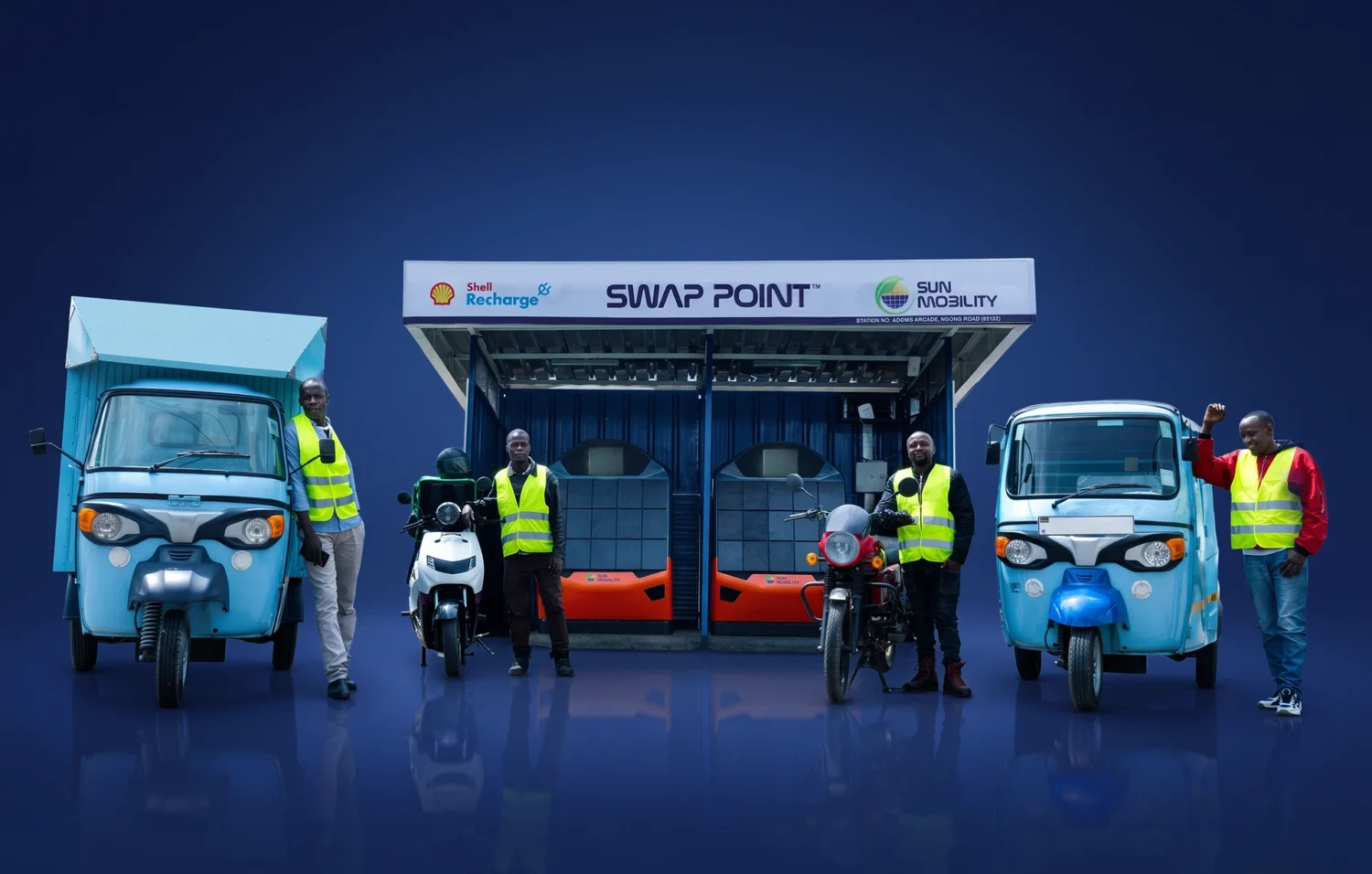
Sun Mobility’s open-architecture battery-swapping ecosystem, a first in Africa, with Kenya serving as the launch market for a broader continental expansion will operate in partnership with Vivo Energy, and the two have already deployed 35 battery-swapping stations across Nairobi and Mombasa.
The network supports electric motorcycles, scooters, passenger tuk-tuks and cargo three-wheelers, with more than 10 vehicle manufacturers represented at the Kenyan launch. The company says compatible vehicles from those manufacturers are being rolled out across Kenya in the coming weeks.
The strategy puts infrastructure at the centre of SUN Mobility’s African expansion. Rather than requiring each vehicle manufacturer to develop and deploy its own battery-swapping network, the company’s open architecture is designed to allow multiple brands and vehicle categories to operate on a common platform. For manufacturers, that creates a pathway to scale without having to build proprietary swapping infrastructure alongside their vehicles, while riders and fleet operators gain access to a network designed around multiple brands.
The infrastructure play
Ajay Goel, Co-Founder and CEO, International Business at SUN Mobility, said the company’s ambition is to create an infrastructure platform that can serve the broader electric-mobility ecosystem rather than a single manufacturer.
“By building an open architecture battery swapping ecosystem for multiple vehicle manufacturers and vehicle formats, we are giving riders greater choice, fleet operators more flexibility and financiers greater confidence that the vehicles they finance will remain supported by a reliable, independently operated battery-swapping network,” Goel said. “For vehicle manufacturers and ecosystem partners, our platform offers a capital-efficient pathway to scale.”
That capital-efficiency proposition is central to the company’s model. Electric-vehicle manufacturers entering a new market face not only the challenge of developing and selling vehicles but also the infrastructure question of how those vehicles will be powered. SUN Mobility’s approach separates the vehicle from the energy infrastructure, allowing manufacturers to concentrate on their vehicles while using a common battery-swapping network.
The model is designed to give riders greater choice while allowing fleet operators and financiers to participate in an ecosystem that is not dependent on a single vehicle manufacturer. For SUN Mobility, the network itself becomes the core infrastructure asset.
The competitive edge in Kenya
SUN Mobility is entering a Kenyan electric-mobility market that is already attracting companies building businesses around electric motorcycles, battery swapping and charging infrastructure. That makes differentiation important as the market develops and more players compete for riders, fleets, manufacturers and investors.
SUN Mobility’s proposition is differentiated by the architecture of its network. Rather than building an ecosystem around a single vehicle manufacturer, the company is introducing an open-architecture platform designed to support multiple vehicle manufacturers and vehicle formats. At its Kenyan launch, it showcased compatible vehicles from more than 10 manufacturers, including Afrina Neopower, BGauss, Fika Mobility, Motovolt, Odysse, Piaggio, QJ Motor, Sprocomm, VMoto and Wylex.
That gives the company a potentially broader infrastructure proposition. Its focus is not simply on putting electric vehicles on Kenyan roads, but on building the energy network those vehicles can share. For manufacturers, the attraction is the ability to use a common swapping infrastructure rather than having to develop and deploy a proprietary network of their own.
The Vivo Energy partnership adds another layer to the proposition. SUN Mobility is entering Kenya with an expansion model linked to a company that operates more than 4,200 Shell and Engen-branded service stations across 29 African markets. If deployed as planned, that footprint gives SUN Mobility a potential route to scale beyond Kenya while placing its battery-swapping infrastructure in locations that already form part of the continent’s mobility and energy infrastructure.
The company also has an established operating base in India. Through Indofast Energy, its 50:50 joint venture with Indian Oil, SUN Mobility says it operates more than 2,000 battery-swapping stations across 25 cities, powering more than 125,000 electric two- and three-wheelers. Those vehicles have completed more than 70 million swaps and covered more than 2 billion kilometres, according to the company.
That combination of multi-manufacturer compatibility, an established technology platform and access to Vivo Energy’s continental footprint gives SUN Mobility a distinctive proposition as it enters Kenya. It does not, however, guarantee market leadership. The company will still need to demonstrate that its network can scale commercially, that compatible vehicles are deployed quickly enough to generate demand and that its economics are compelling for riders and fleet operators.
SUN Mobility has not disclosed its Kenyan battery-swapping prices, subscription fees or other detailed commercial terms in the launch announcement. Those details will ultimately determine how its proposition compares on cost as competition in Kenya’s electric-mobility market develops.
The economics of going electric
The company is also positioning the model around operating economics. SUN Mobility says its solution can deliver 20% savings compared with petrol vehicles for riders travelling 100 kilometres per day, with savings rising to as much as 35% for riders travelling 150 kilometres a day.
Those figures are central to the company’s commercial proposition because the value of battery swapping is closely linked to how intensively a vehicle is used. SUN Mobility is targeting electric motorcycles, scooters and three-wheelers, including passenger and cargo applications, where the company’s stated savings are intended to demonstrate the potential operating-cost advantage of moving away from petrol.
The company has not disclosed Kenyan battery-swapping prices, subscription fees or other detailed local commercial terms in the launch announcement. That leaves the precise commercial structure still to emerge as the network moves into deployment.
At the Kenya launch, SUN Mobility showcased compatible vehicles from Afrina Neopower, BGauss, Fika Mobility, Motovolt, Odysse, Piaggio, QJ Motor, Sprocomm, VMoto and Wylex. The manufacturers are in the process of rolling out compatible vehicles across Kenya in the coming weeks.
battery
The breadth of manufacturers is significant to the company’s open-architecture proposition because the network is being built to accommodate different vehicle brands and formats rather than being tied to a single product ecosystem. For riders, the proposition is centred on access to energy when it is needed, with battery swapping providing an alternative to waiting for conventional charging.
Vivo Energy’s continental advantage
The partnership with Vivo Energy gives the strategy a potentially significant physical footprint. Vivo Energy operates more than 4,200 Shell and Engen-branded service stations across 29 African markets, and the companies plan to leverage that network as SUN Mobility expands its battery-swapping infrastructure across the continent.
For Vivo Energy, the partnership also represents an evolution of its existing service-station model. Hans Paulsen, EVP East & Southern Africa at Vivo Energy, said SUN Mobility’s open architecture aligns with the way the company’s stations already serve multiple vehicle brands and categories.
“SUN Mobility’s model aligns closely with how our Shell service station network operates today, serving multiple brands and vehicle categories. Just as our stations serve vehicles across different brands and categories through a shared refueling network, SUN Mobility’s open-architecture battery swapping network can support multiple electric vehicle manufacturers and vehicle types through one common network,” Paulsen said.
The companies intend to use the existing service-station footprint to create convenient locations for electric-mobility users while transforming fuel stations into multi-energy hubs. The strategy gives SUN Mobility access to an established network of locations as it seeks to move beyond its initial Kenyan deployment and build a presence across multiple African markets.
For Vivo Energy, the partnership also provides a route into the emerging electric-mobility ecosystem while retaining the relevance of its existing service-station network. For SUN Mobility, the relationship provides an expansion platform that extends beyond the initial 35 stations in Nairobi and Mombasa.
From India to Africa
SUN Mobility is bringing its African expansion to market with an operating platform it says has already been proven at scale in India. Through Indofast Energy, its 50:50 joint venture with Indian Oil, the company operates more than 2,000 battery-swapping stations across 25 cities in India, powering more than 125,000 electric two- and three-wheelers.
According to SUN Mobility, those vehicles have completed more than 70 million battery swaps and covered more than 2 billion kilometres, avoiding more than 98,000 tonnes of carbon emissions. The company presents those figures as evidence of its ability to operate battery swapping at significant scale.
The technology behind the platform has been developed fully in-house over the past nine years, according to the company, and is backed by more than 450 patents, design registrations and trademarks. Its platform combines Smart Batteries, Quick Interchange Stations and a proprietary cloud-based Smart Network designed to manage the assets and customer touchpoints across the ecosystem.
SUN Mobility says its Smart Batteries are built to high safety standards and can be upgraded without requiring changes to vehicles. Its Quick Interchange Stations are designed for high throughput and thermal control to charge batteries before dispensing them, while the Smart Network provides connectivity, tracking and maintenance capabilities across the network.
The India experience is important to the African strategy because SUN Mobility is not starting with an untested concept. The company is bringing a platform that it says already supports more than 125,000 vehicles and has facilitated more than 70 million swaps into a new geographic market.
The five-year African ambition
The company now plans to take that technology and operating model beyond Kenya. Over the next five years, SUN Mobility says it plans to deploy more than 2,500 battery-swapping stations and power more than 160,000 vehicles across Africa, with Vivo Energy’s pan-African retail network providing a foundation for the expansion.
“Kenya is just the beginning of our long-term vision to build Africa’s largest universal battery swapping network for electric mobility,” Goel said.
That ambition places the company’s Kenyan launch within a much larger infrastructure strategy. The objective is not simply to increase the number of electric motorcycles, scooters and three-wheelers on African roads, but to establish a shared energy network capable of supporting those vehicles regardless of the manufacturer that produces them.
If the model scales as planned, SUN Mobility would be positioning its battery-swapping platform as an infrastructure layer connecting vehicle manufacturers, riders, fleet operators, financiers and energy providers. The open architecture is intended to allow that network to grow across brands rather than requiring a separate infrastructure ecosystem for each manufacturer.
For Kenya, the immediate focus will be on expanding the 35 stations already operating in Nairobi and Mombasa, bringing compatible vehicles from the launch partners onto the network and establishing the commercial model for riders and fleet operators. For SUN Mobility and Vivo Energy, however, the longer-term opportunity extends well beyond the Kenyan market.
The five-year target of more than 2,500 stations and 160,000 vehicles represents the scale of the company’s African ambition. Its strategy rests on an open network, multiple vehicle manufacturers, an established service-station footprint and technology already deployed at scale in India.
Kenya is the first market in that expansion, but the stated objective is considerably larger: to build a universal battery-swapping network capable of supporting Africa’s electric-mobility ecosystem across vehicle manufacturers, vehicle formats and markets.
Ticketmaster, which acquired South Africa’s Quicket in July 2024, is entering Kenya, betting on the country’s fast-growing live entertainment industry as global ticketing firms seek a larger share of Africa’s youthful, mobile-first consumer market.
The expansion gives Kenyan event organizers access to Ticketmaster’s global event distribution network while introducing localized payment options, including Safaricom Plc’s M-Pesa and Airtel Money, making digital ticket purchases easier for consumers.
The launch comes as international entertainment companies increasingly target Africa, home to about 1.6 billion people and the world’s youngest population, where rising smartphone adoption and digital payments are reshaping how consumers discover and purchase tickets for concerts, festivals, sporting events and cultural experiences.
Quicket said events hosted on its platform will be discoverable through global digital channels including Spotify, Google, Meta Platforms Inc., Apple Music and Bandsintown, allowing organizers to reach audiences beyond traditional marketing channels.
The company is also developing WhatsApp-based ticketing and artificial intelligence-powered recommendation tools aimed at simplifying event discovery and purchases, reflecting growing demand for conversational commerce across African markets.
Quicket has already signed Kenyan partners including Beneath the Baobabs, one of the country’s best-known music festivals held in Kilifi, and restaurant discovery platform EatOut.
“Kenya has a vibrant and growing live entertainment scene,” John Masembe, Quicket’s Business Operation Director, said in a statement. The company aims to provide the infrastructure that helps organizers, artists and venues grow while improving the fan experience through secure digital ticketing.
Ticketmaster South Africa Managing Director Justin Van Wyk said Kenya’s combination of a young population, widespread mobile payments and an expanding community of event organizers makes it an attractive market for the company.
The launch formalizes Quicket’s presence in East Africa after nearly a decade of operating in the region through local partners. Since 2016, the company has built relationships with event organizers while developing field operations and support services.
The move underscores increasing competition among global technology companies seeking to capitalize on Africa’s expanding digital economy, where mobile payments have lowered barriers to online commerce and fueled demand for digital services. For Ticketmaster, Kenya serves as a strategic gateway into East Africa’s live entertainment market, combining established mobile payment infrastructure with a rapidly growing appetite for live experiences.
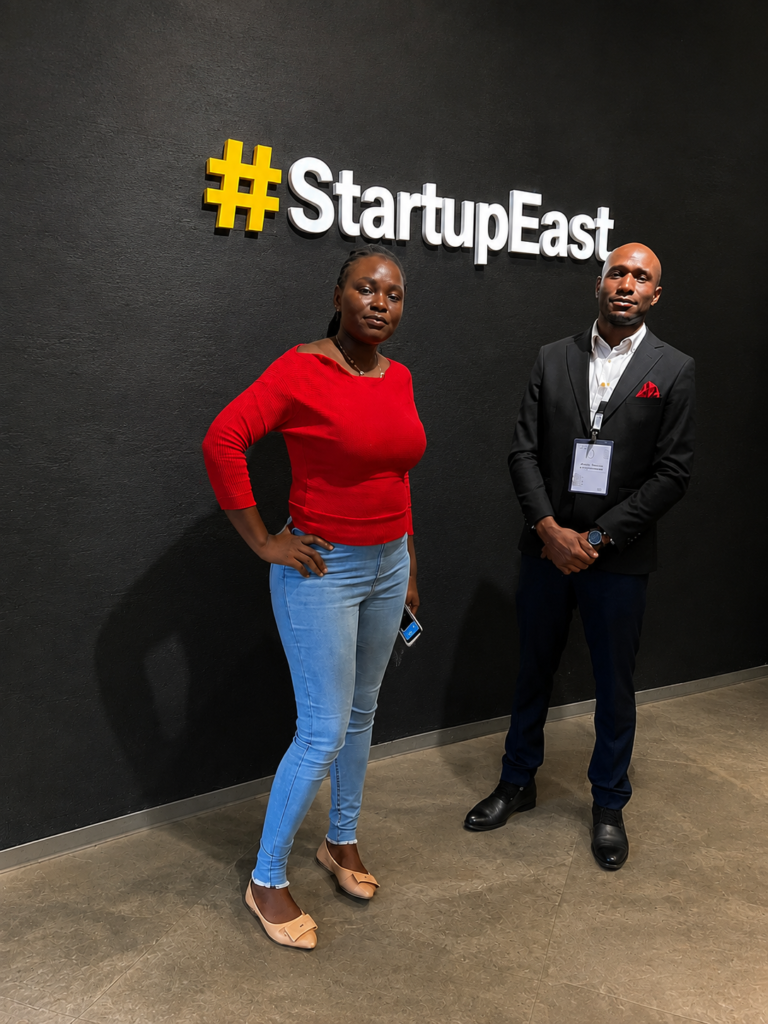
TechMoran, Africa’s pioneer startups and technology news media, is launching StartupEast Conference & Awards, a new platform aimed at identifying East Africa’s early-stage startups and connecting them with investors, customers and strategic partners.
The initiative opens with a call for nominations and will culminate in the StartupEast Conference & Awards on 1st of December 2026 in Nairobi, Kenya. Startups based in or operating in East Africa can participate regardless of the nationality of their founders, provided they have raised less than $2 million and are less than 8 years.
The programme targets tech startups that are still early in their development, including startups with a prototype, minimum viable product, early customers or initial traction. Applications will span sectors including artificial intelligence, fintech, health technology, agriculture, climate technology, enterprise software, commerce, logistics, mobility and education.
“We are looking for startups that are still early enough to surprise the market,” said Sam Wakoba, co-founder of TechMoran. “There are founders building real businesses, solving difficult problems and winning their first customers without necessarily having the visibility that comes with a large funding round. From an investor and mentor’s perspective, this is often where some of the most interesting opportunities are found.”
The nomination process will be followed by shortlisting and public voting, with the finalists recognized at the December conference and awards.
StartupEast is positioning itself less as a conventional awards programme and more as a discovery mechanism for startups that could become significant businesses.
“We are deliberately looking beyond the pitch deck,” Wakoba said. “We want to understand the founder, the problem they are solving, the strength of the product, early traction, the size of the opportunity and whether the business has the potential to scale.”
That focus comes as Kenya’s and East Africa’s startup ecosystem continues to attract founders and capital while competition for funding becomes more selective. For early-stage startups, visibility with investors is increasingly tied to the quality of their networks, traction and ability to demonstrate a path to scale.
StartupEast will use the nomination and selection process to build a startup pipeline ahead of the December event, where startups will meet venture capital investors, angel investors, corporates, technology companies and potential customers.
“The awards are the culmination of a much broader discovery process,” Wakoba said. “StartupEast is about bringing those companies into the spotlight early and giving the ecosystem a role in identifying the founders and businesses worth backing.”
Kenya’s technology sector has earned the nickname Silicon Savannah, helped by startups that have transformed mobile payments, financial services, commerce and other industries. StartupEast is betting that another generation of startups is now emerging beneath the established names.
“The Silicon Savannah story is still being written,” Wakoba said. “We have already seen what Kenyan founders can build, but the next generation will emerge from places that may not yet be obvious.”
The December awards will include categories such as Startup of the Year, Most Promising Startup, Founder of the Year and sector awards covering areas including AI, fintech, health technology, agritech, climate technology and enterprise technology.
But for Wakoba, recognition is secondary to the commercial connections that can follow.
“We don’t want this to be about trophies,” he said. “Recognition matters when it creates opportunity. For an early-stage startups, being discovered by the right investor, landing a first enterprise customer, finding a strategic partner or attracting exceptional talent can be far more valuable than an award itself.”
The first step is now open to the ecosystem and startups can be nominated at TechMoran.com/Nominations. StartupEast Conference & Awards 2026 will take place on Dec. 1 in Nairobi.
Amazon Web Services (AWS) is investing $1 billion to place thousands of artificial intelligence specialists inside customer organisations, in a move that will help businesses use AI in everyday operations rather than experimenting with it.
Dubbed AWS Forward Deployed Engineering (FDE), the unit will work directly with customers to build and deploy so-called “agentic” AI systems to carry out tasks and make decisions with limited human intervention.
AWS says the initiative could cut the time needed to deploy AI systems from months to days, while giving customers the expertise needed to operate them independently.
The engineers will work alongside customers’ business, engineering and security teams, using AI agents to build systems around their data, governance requirements and existing processes.
AWS explained that the approach is different from traditional consultancy because the engagements focus on business results rather than billable hours. Customers are intended to leave with functioning AI systems, as well as new engineering skills, workflows and technical capabilities.
The FDE teams will use an approach AWS calls the AI-Driven Development Lifecycle, in which AI agents assist across the software development process while human engineers oversee and verify their work.
AWS also plans to work with technology partners that can provide expertise in AI models, industry-specific requirements and other technical areas.
The company is already working with organisations including the Allen Institute, Cox Automotive, the National Basketball Association, the National Football League, Ricoh and Southwest Airlines.
“The NFL has millions of fans who want to consume football content throughout the year, including the offseason. We innovate at the pace and scale needed to meet the high expectations of our fans,” said Gary Brantley, chief information officer of the National Football League.
“To create new digital experiences for our fans, the NFL partnered with AWS FDE and got engineers building alongside our team to launch into production in just weeks. Together, we created new fan-facing products like NFL Fantasy AI and NFL IQ that allow fans to interact with NFL data like never before. The engagement from fans and broadcasters was measurable from day one and was made possible by AWS’s delivery model.”
One part of the system is a semantic layer deployed inside a customer’s AWS account. It connects to enterprise data sources, enriches metadata and creates a governed, versioned knowledge graph that AI agents can use.
The system is designed to keep an organisation’s specialist knowledge within its software and data, rather than relying on individual employees or external consultants.
AWS also says security will be built into the deployments, with measures including hardware-based isolation and end-to-end encryption. Customer data will remain within the customer’s governance framework.
The investment builds on AWS’s existing work helping businesses deploy AI. The company has been developing AI solutions for customers since 2017, while its Generative AI Innovation Center has worked on thousands of customer projects over the past three years.
Those projects have included work with BMW to reduce service disruptions across 23 million connected vehicles, Jabil to develop a manufacturing assistant for factory workers, and Lyft to resolve driver-support issues 87% faster, according to AWS.
The new organisation will target companies that have moved beyond AI experiments and need the technology operating in real-world business processes.
Regulated industries, financial services firms and government agencies are expected to be among the main customers, where security, governance and the speed of moving AI systems into production can be particularly important.
Kenya has appointed a consortium led by RSM Eastern Africa and Sweden’s QLOT Consulting as transaction adviser for the country’s first national lottery, marking a key step toward selecting an operator and establishing a state-backed lottery system.
The National Lottery Board said Thursday that the consortium will oversee the procurement process for the lottery operator, support transaction structuring and help prepare the project for launch.
The appointment followed an international tender conducted under Kenya’s Public Procurement and Asset Disposal Act, 2015, using the Quality and Cost Based Selection methodology.
According to the Board, the consortium emerged as the highest-ranked bidder.
RSM Eastern Africa will provide transaction advisory and institutional strengthening expertise, while QLOT Consulting, an associate member of the World Lottery Association, will contribute experience from lottery procurement projects in international markets. The assignment also includes a knowledge transfer program aimed at strengthening the Board’s internal capacity.
“The appointment of a credible, multidisciplinary Transaction Advisor is a defining step in building a National Lottery that Kenyans can trust,” National Lottery Board Chairperson Farida Karoney said in a statement. “Our National Lottery will be structured transparently, governed responsibly and built to international best practice.”
The National Lottery Board was established under the National Lottery Act of 2023 with the mandate to establish, oversee and safeguard the country’s national lottery, procure and contract an operator, and administer the National Lottery Fund.
Kenya’s broader gambling industry is regulated by the Gambling Regulatory Authority under the Gambling Control Act of 2025. While the future lottery operator will be licensed by the regulator, it will remain contractually accountable to the National Lottery Board.
The government said proceeds from the lottery, after prizes and operating costs, will be paid into the National Lottery Fund and allocated to public interest initiatives, including charitable and humanitarian work, youth and women’s economic empowerment, sports, arts and the creative economy, national heritage, health, education, emergency response and other national development projects.
The Board said responsible gaming measures will be embedded into the lottery’s design, including age verification, spending controls, self exclusion mechanisms, advertising standards and clear disclosure of winning odds.
The next phase of the project will focus on launching a competitive process to attract and appoint a lottery operator.
The Board said timelines for the procurement will be announced later, adding that it would prioritize transparency and rigor throughout the process.
Powered by People, a commerce technology company with deep roots in Africa, has raised new funding to build infrastructure that could help independent brands compete in an increasingly AI-driven global marketplace.
The financing was led by the BESTSELLER Foundation and joined by existing investors Golden Ventures, Susa Ventures and Altos Ventures, according to the company.
The investment comes as Powered by People, or PBP, expands its focus on what it calls the “trust layer” for agentic commerce technology designed to ensure that product information can be discovered, understood and trusted by consumers and AI systems making purchasing decisions.
But behind that emerging AI-commerce business is a company that has spent years working with artisans and independent brands in Africa, helping them overcome some of the barriers that have traditionally kept small producers from global markets.
PBP’s maker network currently includes more than 3,000 businesses globally, with a substantial concentration across Africa. Its directory lists producers in Kenya, Ghana, Ethiopia, Côte d’Ivoire, Djibouti, Madagascar, Malawi, Mali, Morocco, Namibia, Nigeria, Rwanda, Senegal, Sierra Leone, South Africa, Tanzania, Tunisia, Uganda, Zambia and Zimbabwe, among other markets.
Kenya is particularly important to the company’s operations. PBP’s Kenyan network includes brands such as Kazuri, Adele Dejak, Airi Kenya, Ankole Luxury, Bawa Hope, BeadWORKS, FLOC, Kitengela Hot Glass, Lulu Kitololo Studio, SOKO, Ubuntu Life and We Are NBO.
The company has sought to address a problem that goes beyond simply giving African businesses an online storefront.
Many artisan and creative businesses have products that can compete internationally but lack affordable financing, digital infrastructure, export readiness, technical expertise and access to large buyers.
PBP’s model combines those elements. The company provides financing, training, digital tools and market access, while its dropship platform connects independent brands with international retailers.
In Kenya, that work has included the Jiinue Growth Program, implemented with the Mastercard Foundation and a consortium of partners including Grassroots Business Fund, DT Global, 4G Capital, GROOTS Kenya, the Kenya National Chamber of Commerce and Industry and the Kenya Private Sector Alliance.
Through the program, PBP provides Kenyan makers with financing, digital tools, training and access to markets. The company says the support has helped businesses improve their digital presence, increase production and enter its dropship program, with products reaching buyers including the Smithsonian and Nordstrom.
Ella Peinovich, Founder & CEO
The scale of the company’s earlier Kenya work illustrates the size of the opportunity. In 2023, PBP provided $215,453 in financing to 451 individual Kenyan makers. It also created digital profiles for 65 makers, delivered technical assistance to 55 and generated market access for another 10, according to its 2023 sustainability report.
The company has since expanded its approach to include AI-supported digital tools. PBP says its technology can help artisans address what it calls the “retail readiness gap,” using AI to create professional product catalogs that improve online visibility, product discovery and sales.
That work is becoming increasingly relevant as AI systems begin to influence how consumers find and buy products.
Rather than searching through dozens of websites themselves, consumers could increasingly ask AI agents to find products, compare prices and eventually complete purchases. For a small African brand, being invisible to those systems could become another barrier to international growth.
PBP is building technology intended to address that problem.
Its CatalogAgent solution is designed to optimize product catalogs for agentic-commerce platforms, while PBP Verified provides validation around sustainability, quality, reliability and compliance. The company says the tools are intended to give retailers, consumers and AI purchasing agents greater confidence in the products they encounter.
That represents a shift in the company’s original mission.
PBP was built around helping independent brands and producers of responsibly made goods reach global markets, access financing and use digital tools. Its current strategy combines that mission with technology designed for a retail environment increasingly shaped by artificial intelligence.
The company’s founders also bring direct experience in global sourcing and African entrepreneurship.
Ella Peinovich is the founder and chief executive officer. She previously built SOKO, an independent jewelry brand that was acquired by Essense Ventures in 2022.
Hedvig Alexander, PBP’s founder and vice president of community and impact, previously built a global sourcing network of more than 5,000 artisans through Far + Wide Collective.
Alison Phillips, founder and vice president of merchandising and design, previously founded the lifestyle home brand Caban, which was sold to Ralph Lauren, and has held merchandising and design roles at companies including Aritzia and BlackBerry.
Their combined experience reflects the company’s unusual position between traditional global sourcing, African artisan businesses and emerging commerce technology.
One example is Kazuri, the Kenyan jewelry company founded in 1975. PBP says Kazuri has rebuilt its artisan workforce after the pandemic and is expanding into Nordstrom while continuing to focus on women and their families. Another is BeadWORKS, a Kenyan social enterprise working with more than 1,300 women artisans across nine community conservancies. The program links artisan income with conservation efforts, with the company saying it indirectly benefits more than 7,800 people.
PBP’s financing model is also aimed at a problem that can become more acute when small businesses receive large international orders: cash flow.
The company offers purchase-order financing, allowing artisans to receive advances after buyer orders are verified, as well as consignment financing designed to help makers meet retailer demand without bearing the full upfront cost of production.
For African businesses, the combination could be significant.
A maker may have a product capable of selling internationally but lack the capital to manufacture a large order, the digital catalog required by a retailer or the product information required by an AI system.
PBP is attempting to build the infrastructure connecting those pieces.
The BESTSELLER Foundation investment therefore comes at a point when PBP is moving from a marketplace focused on connecting makers with retailers toward a broader technology platform for how products are discovered, validated and purchased.
“At BESTSELLER Foundation, we invested in PBP to expand access to markets, income to global suppliers, and ownership within local economies,” Tine Henriksen, managing director of BESTSELLER Foundation, said in a statement.
She said PBP’s dropship platform and verified product catalog data could help producers participate in an economy where AI increasingly influences how products are discovered, trusted and purchased.
For Africa’s independent brands, that transition could matter beyond e-commerce. The next gatekeeper to a global customer may not be a department-store buyer or a Google search result. It could be an AI agent deciding which products are relevant enough to recommend.
PBP is betting that African makers should have the data, financing, technology and market access needed to compete when that happens. Its broader proposition is that the future of global commerce will not be built only around transactions, but around whether consumers and the machines increasingly shopping on their behalf can trust the products being offered.
Absa Bank Kenya and Simba Corporation are partnering to expand financing for vehicles and agricultural equipment, targeting businesses and individuals seeking to acquire productive assets amid persistent pressure on access to capital.
The two companies signed a memorandum of understanding that will combine Absa’s revamped asset-based financing offering with Simba Corporation’s portfolio of commercial and passenger vehicles and agricultural equipment.
The agreement allows businesses to finance up to 95% of the cost of trucks, buses, light commercial vehicles and fleet solutions, with repayment periods of as long as 72 months. School buses can qualify for 100% financing over as long as 84 months, according to the companies.
For individuals, financing of as much as 95% will be available for passenger vehicles, also repayable over 72 months.
The partnership comes as Kenyan businesses, particularly small and medium-sized enterprises, continue to face financing constraints that can limit investment in vehicles, machinery and other assets needed to expand operations.
“For many businesses, particularly SMEs, access to affordable and flexible financing remains a key barrier to acquiring the vehicles and equipment they need to grow,” Renato D’Souza, Absa Bank Kenya’s director of business banking, said at the signing ceremony.
Absa unveiled its revamped Asset-Based Finance, or ABF 2.0, proposition earlier this year, with plans to deploy KES 100 billion ($774 million) over three years to businesses and individuals. The bank is targeting sectors including manufacturing, trade and logistics, infrastructure, healthcare and education.
The collaboration with Simba extends that strategy into vehicle and agricultural equipment financing, giving customers access to assets that can directly support revenue-generating activities.
The agricultural component will provide financing of up to 90% for tractors, farm machinery, pick-ups and other equipment, with repayment periods of up to 60 months. The offering is aimed at farmers and agricultural businesses seeking to increase mechanisation and productivity.
Simba Corporation Executive Director Suraj Shah said the financing would make vehicle ownership more accessible to individuals while helping businesses acquire equipment needed to operate and expand.
The partnership also gives Absa access to Simba Corporation’s distribution and customer network across the mobility and equipment markets, while Simba gains an additional financing channel for customers purchasing its products.
For banks, asset-backed lending can provide a way to finance business expansion while tying credit to tangible assets. For customers, longer repayment periods can reduce the immediate cash-flow burden associated with acquiring vehicles and machinery, although the overall cost of financing remains an important consideration.
The agreement underscores a broader push by Kenyan lenders to direct credit toward productive assets as businesses navigate higher operating costs and seek to invest without tying up large amounts of working capital.
Absa said its ABF 2.0 proposition is intended to give customers greater flexibility, faster turnaround times and financing structures aligned with their cash flows.
“As part of our revamped Asset-Based Finance proposition, this collaboration reinforces our commitment to empowering SMEs and businesses across Kenya with the tools they need to scale, create jobs and contribute to economic growth,” D’Souza said.
Bilibili Inc., one of China’s biggest video platforms, is stepping up its push beyond the country’s borders, targeting international creators and audiences as it seeks to challenge YouTube’s dominance in online video.
The Shanghai-based company this week relaunched its international app and is preparing an English-language website, according to marketing materials circulated to creators and recent job listings. Bilibili is also building teams in markets including the US, Japan and Europe, signaling a broader effort to turn its largely China-focused platform into a global creator business.
We've just launched the intl app globally (currently on Android, iOS coming soon; and more countries coming soon)
Globally distributed content, better localization & easier sign ups with no identity verification…and more localization optimization and features to come!… pic.twitter.com/5H7maZSMQh
The expansion could put Bilibili into more direct competition with Alphabet Inc.’s YouTube and other global video platforms. It also raises questions about how the company will handle content moderation, censorship and data security as it enters markets where Chinese technology companies face heightened scrutiny.
Bilibili didn’t respond to a request for comment.
The company already has a substantial audience to build on. Its main Chinese-language platform had 376 million monthly active users, giving Bilibili a scale that few emerging global video platforms can match.
Bilibili has also been courting international personalities. Among the most prominent is MrBeast, the American creator whose videos have appeared on Bilibili’s Chinese platform. The strategy suggests the company sees globally recognized creators as a way to broaden its appeal beyond its existing base of Chinese users.
The revamped international app appears designed to reduce some of the barriers that previously faced overseas users. New accounts can be created without the passport or identity-document verification that had been required for international users of Bilibili’s main platform, according to information shared through an account promoting the service to global creators.
“Bilibili is going global,” the account said in a post on X, adding that content on the international and Chinese services would be the same.
That approach could give Bilibili an unusual proposition for international creators: access to a platform with an established Chinese audience while also building a presence among users outside China.
The company is pitching the platform to creators as a way to reach young, affluent and highly educated audiences. Marketing material shared in a Discord community for Bilibili creators describes an international marketplace for connecting creators with brands for sponsored content as being under development.
An English-language version of the platform is also being prepared.
“We are working hard,” the company said in a presentation circulated to creators, which described the English version as “coming soon.”
Bilibili is simultaneously building a local presence. Job listings show the company is seeking community managers in Los Angeles, London, Mexico City, São Paulo, Istanbul and Tokyo. A Singapore-based position calls for staff to help develop global AI-powered content moderation systems.
That moderation infrastructure could become particularly important as Bilibili expands into the US and Europe.
Chinese internet companies have faced increasing pressure in Western markets over how user data is handled, how content is moderated and whether their platforms are subject to influence from Beijing. TikTok, owned by ByteDance Ltd., has spent years navigating similar concerns in the US, making Bilibili’s expansion a potentially sensitive test for another Chinese consumer internet company.
Bilibili’s challenge will also be commercial.
YouTube has spent more than a decade building a global ecosystem around creators, advertising, subscriptions and video discovery. It operates at enormous scale, with creators accustomed to sophisticated monetization tools and audiences spread across virtually every major market.
Bilibili will therefore need to offer more than access to its existing Chinese audience. It will have to convince creators that the platform can generate meaningful revenue, attract international viewers and provide the tools needed to build businesses around their content.
The company’s global strategy appears to recognize that challenge. Rather than relying solely on Chinese users traveling to its existing platform, Bilibili is establishing local teams, developing an English-language experience and building systems aimed specifically at international creators.
The result could be a new competitor in an increasingly crowded global video market.
For Bilibili, the opportunity is significant. Its domestic success has given it a large audience, a strong creator culture and experience operating one of China’s most influential online communities.
But taking that model overseas will require navigating a very different regulatory and competitive environment.
The next phase of Bilibili’s expansion will show whether its Chinese success can translate into a global creator platform — or whether the barriers facing Chinese technology companies in Western markets prove too difficult to overcome.
Samsung Electronics is preparing to expand its Galaxy S26 lineup, with the company confirming a new Galaxy event for August 27 that is expected to introduce another device built around the series’ camera, artificial intelligence and software capabilities.
The company announced the event in an invitation published this week, describing the upcoming product as the “newest addition to the Galaxy S26 family.” Samsung has not yet disclosed the device’s name or detailed its specifications.
The announcement comes as Samsung positions the Galaxy S26 series around photography, content creation and AI-powered experiences. The company says its latest flagship range has raised the bar with its camera and AI innovations, allowing users to capture, create and connect more easily.
For the new device, Samsung says it intends to bring the “core Galaxy S26 experiences” from camera to AI, together with the latest version of One UI, to a broader group of users.
Galaxy S26 FE expected
Although Samsung has not named the device, the announcement has intensified expectations that the company will unveil the Galaxy S26 FE, the anticipated Fan Edition model.
The S26 FE has been the subject of extensive leaks in recent weeks. Reports have pointed to a 6.7-inch 120Hz AMOLED display, Samsung’s Exynos 2500 processor, up to 8GB of RAM and 256GB of storage. A triple-camera system consisting of a 50-megapixel main camera, 12-megapixel ultrawide and 8-megapixel 3x telephoto camera has also been reported.
Other reported specifications include a 4,900mAh battery, 45W charging, an IP68 rating and an aluminium frame. The device is also expected to run One UI 9 based on Android 17 and potentially receive seven years of software updates, although Samsung has yet to confirm these details.
The leaks suggest Samsung could position the phone as a more accessible entry point into the Galaxy S26 experience while retaining many of the features associated with the flagship family.
AI remains central to Samsung’s strategy
Samsung’s decision to highlight AI in the event announcement underscores how central artificial intelligence has become to its smartphone strategy.
Rather than treating AI as a standalone feature, Samsung has increasingly integrated it into photography, content creation, communication and everyday smartphone interactions. The company says the upcoming device will extend many of these Galaxy S26 experiences.
Samsung also highlighted the latest One UI as part of the new device, suggesting that software will be an important component of the announcement alongside the hardware.
The company cautions that while basic Galaxy AI features are provided free of charge, future releases could include enhanced features or services offered on a paid basis.
Samsung keeps the device under wraps
Notably, Samsung’s invitation stops short of identifying the product as the Galaxy S26 FE. That leaves the company room to reveal the device and its positioning during the event.
The approach also allows Samsung to build anticipation around the announcement while leaks have already provided considerable information about what is believed to be coming.
For now, the Galaxy S26 FE remains an expectation rather than an officially confirmed product name.
When to watch
Samsung’s Galaxy Event August 2026 will take place on August 27 at 9 p.m. KST, equivalent to 3 p.m. East Africa Time.
The event will be streamed live through Samsung’s website and its YouTube channel.
If the Galaxy S26 FE is indeed the device Samsung unveils, the event could give the company another opportunity to extend the S26 platform beyond its flagship models and bring its camera, AI and software experience to a wider market.
Samsung Galaxy Event August 2026 begins August 27 at 3 p.m. EAT.
Terra Industries has appointed former SpaceX executive Ben MacWilliams as vice president of strategy, as the defense technology company expands its autonomous security systems across Africa and other markets in the Global South.
MacWilliams joins Terra from SpaceX, where he served as director of Starlink Market Access, overseeing the satellite internet service’s regulatory and market expansion across all 54 African countries. He helped launch Starlink in more than 20 African markets, working with government leaders, regulators and ministers.
Before taking responsibility for Africa, MacWilliams led Starlink market access across the Middle East and Central Eurasia, securing the first low-Earth-orbit broadband operating licenses for the service in both regions.
At Terra, MacWilliams will oversee market entry, licensing strategy and government partnerships as the company seeks to deploy its autonomous defense systems in new markets.
“The next phase for us at Terra is getting our technology to governments that need it,” said Nathan Nwachuku, Terra’s co-founder and chief executive officer. “That means licenses, regulators, and relationships across dozens of markets at once. Ben has done this at the highest level.”
MacWilliams said his experience expanding Starlink across Africa had reinforced the importance of sovereign defense capabilities for governments seeking to protect people, infrastructure and natural resources.
The appointment comes as Terra accelerates its expansion following a $52 million seed financing round. The company has also opened its first international office in London and plans to open Pax-2, a new manufacturing facility in Ghana, in the fourth quarter of 2026.
Founded in 2024, Terra develops integrated air, land and maritime security systems powered by ArtemisOS, a software platform designed to coordinate large-scale security operations.
The company targets critical sectors including energy, mineral resources, urban infrastructure, maritime assets, border security and counterterrorism operations, positioning itself as a defense technology provider focused on Africa and the wider Global South.
Mercedes-Benz marked 140 years of automotive innovation in Kenya with the launch of its latest S-Class and a celebration of the brand’s global anniversary at Muthaiga Golf & Country Club in Nairobi.
CFAO Mobility Kenya hosted the event, which brought together German Ambassador to Kenya Sebastian Groth, Mercedes-Benz customers, business leaders and automotive enthusiasts as the luxury automaker celebrates a milestone dating to 1886, when Carl Benz patented the Motorwagen.
The Nairobi event forms part of Mercedes-Benz’s global “140 Years. 140 Places” campaign, under which three S-Class sedans are travelling more than 60,000 kilometers across six continents and 140 locations associated with the company’s history, innovation and global presence.
The expedition, which started in Stuttgart, Germany, has already covered more than 70 destinations, including cities and landmarks across Europe, the Americas, Asia and Southeast Asia. Kenya is among the selected stops before the vehicles return to Stuttgart in October 2026.
For Mercedes-Benz, the campaign provides a global showcase of its heritage while highlighting markets where the brand sees continued importance.
“Tonight is not simply about celebrating a number, it is about celebrating legacy,” Arvinder Reel, managing director of CFAO Mobility Kenya, said at the event. “A legacy that began in 1886, when Carl Benz patented the Motorwagen and fundamentally changed the way the world moves.”
Kenya has a long association with Mercedes-Benz. The brand has been represented in the country since 1949 through DT Dobie, which later became part of CFAO Mobility Kenya following the integration of CFAO Motors and DT Dobie in 2023.
The new S-Class was the centerpiece of the Nairobi event, positioning Mercedes-Benz’s flagship sedan as a showcase for the company’s latest technology, comfort, safety and connectivity features.
The model has traditionally served as a technology platform for Mercedes-Benz, with innovations introduced in the S-Class often influencing vehicles across the wider lineup.
Idrissa Diagne, general manager of Mercedes-Benz at CFAO Mobility Kenya, said the company would continue focusing on technology, safety and premium customer service.
“Together with our customers, enthusiasts, and communities, we are celebrating a historic milestone that honors the brand’s enduring legacy of innovation, engineering excellence, and pioneering spirit,” Diagne said.
CFAO Mobility Kenya’s current Mercedes-Benz lineup includes the C-Class, E-Class and S-Class sedans, alongside the GLC, GLE, GLS and G-Class SUVs. Its commercial range includes the Vito, V-Class and Sprinter vans.
The anniversary comes as luxury automakers increasingly compete not only on vehicle performance but also on technology, personalization and the broader ownership experience.
Reel said CFAO Mobility Kenya’s role extends beyond selling vehicles, with the distributor investing in technical capabilities, facilities and customer service.
“Our responsibility is not merely to sell you a Mercedes-Benz. Our responsibility is to earn the privilege of serving you,” Reel said.
The Kenya stop gives Mercedes-Benz an opportunity to connect its century-plus history with a market increasingly positioned as a regional commercial and innovation hub. For CFAO Mobility Kenya, the anniversary also provides a platform to reinforce its position as the local representative of one of the world’s best-known luxury automotive brands.
With the global expedition continuing toward its October return to Stuttgart, Kenya now forms part of Mercedes-Benz’s 140-year story — linking the company’s origins in the invention of the automobile with its latest generation of luxury mobility.
Equity Group Holdings Plc has reported a 32% increase in its first-half profit after tax to KSh45.5 billion ($351 million) boosted by stronger lending, regional expansion and technology-driven financial services.
The Kenyan banking group’s profit after tax rose from KSh34.6 billion a year earlier. while its profit before tax increased 39% to KSh57.8 billion ($447 million) reinforcing Equity Group’s position as one of East Africa’s largest financial services groups
With a presence in the Democratic Republic of Congo, Tanzania, Uganda and Rwanda, the group’s balance sheet expanded 20% to KSh2.16 trillion ($16.7 billion), while customer deposits increased 21% to KSh1.59 trillion ($12.3 billion). Net loans rose 19% to KSh981 billion ($7.58 billion).
Equity Group Revenue Rises 25%
Equity Group’s total income increased 25% to KSh124.9 billion ($965 million) from KSh100.2 billion in the first half of 2025.
Net interest income rose 17% to KSh69.3 billion ($535 million), reflecting stronger lending and balance-sheet management.
Non-funded income provided a larger boost, climbing 36% to KSh55.6 billion ($429 million). It accounted for 44.5% of total group income, compared with 40.8% a year earlier.
The shift highlights Equity’s strategy of diversifying revenue through payments, foreign exchange, insurance and other financial services rather than relying primarily on interest income.
Equity Bank Kenya Profit Rises 32%
Equity Bank Kenya reported a 32% increase in profit after tax to KSh25.7 billion ($198 million). The Kenyan subsidiary’s balance sheet grew 13%, supported by a 24% increase in customer deposits and an 8% increase in loans.
Quarterly loan growth reached 11%, marking the first double-digit quarter-on-quarter increase since the third quarter of 2021 and signaling improving credit demand in Kenya.
The bank also maintained its position as a major MSME lender, disbursing 36% of the KSh101 billion in MSME loans issued in Kenya between January and March 2026.
Tanzania and DRC Drive Regional Growth
Equity Group’s regional operations continued to account for an increasing share of earnings.
Regional subsidiaries contributed 42% of group banking profitability and 47% of banking revenue. They also accounted for 51% of deposits, 54% of loans and 52% of banking assets.
Equity BCDC in the Democratic Republic of Congo increased profit after tax 30% to KSh11.8 billion ($91 million).
Equity Bank Tanzania delivered the fastest profit growth, with earnings jumping 82% to KSh2 billion ($15.4 million).
Equity Bank Rwanda increased profit after tax 12% to KSh2.9 billion ($22.4 million).
The performance strengthens Equity’s case for its pan-African expansion strategy as growth in several of its regional markets outpaces Kenya.
Equity Group NPL Ratio Falls to 9.5%
Asset quality improved significantly during the first half. Equity Group’s non-performing loan ratio fell to 9.5% from 13.7%, moving into single digits. NPL coverage increased to 70% from 68%.
Loan-loss provisions declined 6% year-on-year, while cost of risk improved to 1.4% from 1.7%. The improvement in asset quality helped support profitability while reducing pressure on the group’s credit costs. Operational efficiency also improved, with the cost-to-income ratio falling to 48.6% from 51.7%. Return on assets stood at 4.5%, while return on equity reached 26.5%.
Equity Accelerates Digital Banking
Technology remains at the center of Equity Group’s growth strategy.
The group said 98.3% of transactions now take place outside branches, while 89.7% are processed through digital platforms.
Equity serves 23.3 million customers through Equity Online, the Equity Mobile App, Eazzy FX, *247# and Equitel. Its physical and agent network includes 410 branches, 886 ATMs, 92,572 agency outlets and 1.4 million merchants.
The bank is also investing in artificial intelligence and employee training. About 82% of staff have completed a business-focused generative AI course, with employees completing 119,980 hours of guided AI instruction.
A total of 406 staff have been admitted to master’s programs in financial engineering and applied AI through WorldQuant University.
Equity Group Chief Executive Officer James Mwangi said the investments are part of a broader transformation from traditional banking toward an integrated, technology-enabled financial services company.
Equity Insurance Becomes Third Growth Engine
Equity Insurance Group continued to expand rapidly, with gross written premiums rising 24% to KSh6.4 billion ($49 million).
Profit before tax increased 34% to KSh1.25 billion ($9.6 million).
About 79% of insurance policies were distributed digitally, reinforcing the role of technology in Equity’s efforts to expand insurance penetration.
The group’s non-banking subsidiaries increased their contribution to group revenue to 4.8%, from 4% a year earlier.
Equity Targets 100 Million Customers by 2030
Equity Group is pursuing an ambitious expansion strategy under its Africa Recovery and Resilience Plan 2030.
The strategy targets operations in 15 countries and 100 million customers by 2030, alongside the deployment of next-generation digital and artificial intelligence systems to expand transformation finance across Africa.
Mwangi said Equity is building a “future-ready” institution that is scalable, secure and focused on impact.
The group also continues to expand the work of Equity Group Foundation in education, entrepreneurship, agriculture, healthcare and climate finance. The foundation has trained more than one million entrepreneurs and facilitated more than KSh436 billion ($3.37 billion) in credit access to MSMEs.
Equity Group has also received accreditation as a Direct Access Entity to the Green Climate Fund, positioning it to directly mobilize international climate finance for projects across Africa. With improving asset quality, stronger regional earnings and a growing contribution from non-funded income, Equity Group’s first-half results point to a business increasingly diversified beyond conventional banking.
The group said its H1 2026 performance exceeded management guidance in nearly all key parameters.
KCB Bank, Kenya’s biggest bank by assets plans five-year programme to channel capital into renewable energy, climate resilience, affordable housing and businesses
KCB Group plans to establish a Medium-Term Note Programme of up to $2.3 billion over five years as the bank seeks to channel more capital toward environmental and social projects across East Africa.
The programme, equivalent to KSh300 billion, will be issued by KCB Bank Kenya under the group’s newly launched Sustainability Bond Framework, subject to regulatory approvals and market conditions.
Speaking at the launch of the framework at the KCB Leadership Centre in Karen on Wednesday, KCB Group Chief Executive Officer Paul Russo said the initiative is intended to move sustainability beyond corporate commitments and into the allocation of capital.
“Banking is ultimately about enabling progress,” Russo said, adding that KCB’s responsibility increasingly involves determining not only how much capital it mobilizes, but where that capital goes, what it enables and the lasting impact it creates.
The proceeds from the programme will be ring-fenced for eligible Green, Blue and Social projects, with KCB tracking allocations and reporting on the impact achieved.
Under the Green category, the bank will finance projects supporting a low-carbon and climate-resilient economy. These include renewable energy such as solar power, energy-efficient buildings, clean and low-emission transportation, sustainable agriculture, and water and wastewater management.
The Blue component will support projects focused on marine and coastal ecosystems, including initiatives designed to improve the resilience of coastal and freshwater communities.
Social financing will target underserved and vulnerable populations through areas including affordable housing, micro, small and medium-sized enterprises, women and youth-led businesses, employment and livelihood creation.
Russo cited KCB Foundation’s 2Jiajiri programme as an example of how access to capital can generate broader economic benefits, including job creation, enterprise growth and stronger household incomes.
The framework comes as East Africa faces significant financing requirements for infrastructure and economic development while contending with climate change, food insecurity, unemployment, inequality and gaps in access to affordable long-term capital.
Russo said the region has substantial opportunities in infrastructure, agriculture, manufacturing, energy, housing, healthcare, education, technology and trade, but that sustainability must increasingly be embedded in how capital is allocated.
KCB’s sustainability strategy has evolved over nearly two decades.
The bank formally anchored sustainability into its business in 2008 around financial, economic, social and environmental pillars. It published its first Sustainability Report in 2009 and expanded its alignment with the United Nations Sustainable Development Goals from nine goals in 2017 to 14 of the 17 SDGs today.
In 2019, KCB adopted the UNEP Finance Initiative’s Principles for Responsible Banking. In 2020, KCB Bank Kenya became the first bank in Kenya to receive accreditation from the Green Climate Fund, strengthening its ability to mobilize and deploy climate finance.
KCB subsequently committed to achieving net-zero emissions by 2050 through its membership of the Net-Zero Banking Alliance in 2021 and joined the Forward Faster Initiative in 2023.
The sustainability bond framework has also received external validation. Moody’s awarded it a Sustainability Quality Score of 2, rated “Very Good,” according to KCB.
Russo said the framework is built around three principles: capital, purpose and accountability.
The objective, he said, is to mobilize capital at scale, direct it toward projects East Africa needs and demonstrate transparently what that capital achieves.
“The true measure of sustainable finance is not the size of the bond, but the scale of the impact it creates,” Russo said.
For KCB, that impact will ultimately be measured through lives improved, businesses strengthened, ecosystems protected, jobs created and opportunities unlocked.
The launch marks KCB’s latest effort to connect the region’s capital markets with financing for projects aimed at making East Africa greener, more resilient and more inclusive.
Instant messaging platform Telegram could give more than 1 billion users personalized web addresses and AI-generated interactive websites if its application clears ICANN’s approval process
Telegram, the instant messaging platform with more than 1 billion monthly active users, has applied for the .gram top-level domain, potentially giving users a new way to establish their identities on the web.
If the application is approved by the Internet Corporation for Assigned Names and Numbers, or ICANN, Telegram users could eventually obtain second-level domains such as yourname.gram.
The proposal goes beyond domain names. Users would be able to create interactive websites hosted by Telegram with a single prompt, potentially allowing people without technical or web-development skills to launch their own sites by describing what they want.
The move could turn a Telegram username into a broader digital identity, combining messaging, publishing and web presence under one ecosystem.
A creator could use a personalized .gram address for a profile or portfolio, while a business could build a site for its products and services. Telegram would provide the underlying hosting, removing the need for users to separately arrange web hosting.
The plan would extend Telegram’s push beyond messaging. The platform already supports channels, bots, Mini Apps and other tools that allow developers, creators and businesses to build services for its large user base.
A .gram domain would give those users a dedicated web address that could sit outside the Telegram application while remaining connected to its ecosystem.
The timing also coincides with ICANN’s latest expansion of the domain-name system. The organization opened its latest application round for new generic top-level domains in 2026, allowing companies, organizations and other applicants to seek new domain extensions.
An application does not guarantee that .gram will become operational. Telegram would need to clear ICANN’s evaluation and approval process before the domain could be delegated and made available for registrations.
If successful, however, the initiative could give Telegram a new position in the internet infrastructure stack.
Rather than simply helping users communicate, Telegram could give them a domain, host their websites and use AI to build those sites — all from the same platform.
For a company with more than a billion users, turning usernames into web addresses could create a sizeable new layer of the Telegram ecosystem.
Telegram’s next expansion may not be another messaging feature. It could be the web address itself.
NCBA Bank has introduced free PesaLink transfers of up to KES 1,000 through its NCBA NOW App, while transactions above that amount will attract a flat KES 20 fee.
The revised pricing replaces multiple transaction bands with a simpler structure designed to make interbank transfers more predictable for customers.
Under the new model, a customer sending KES 1,000 or less pays nothing, while any transfer above KES 1,000 costs KES 20. Transfers between NCBA accounts remain free.
PesaLink enables customers to move money instantly between accounts held at participating banks in Kenya. Through the NCBA NOW App, customers can transfer as much as KES 999,999 in real time.
The pricing change comes as Kenyan banks seek to make digital account-to-account payments more competitive and affordable. Lower charges on small-value transfers could also encourage customers to use bank accounts more frequently for everyday payments, including sending money to family, paying suppliers and settling bills.
“Customers can now transact with greater confidence, knowing exactly what the transfer will cost,” Dennis Njau, Group Director, Retail Banking at NCBA, said.
The new structure gives customers a clear cost advantage on smaller transfers. A KES 500 PesaLink transaction is now free, while a KES 10,000 transfer costs KES 20.
NCBA said the move is part of its broader strategy to improve the affordability, convenience and security of digital banking as more customers shift routine transactions away from traditional banking channels.
The bank expects the simplified pricing to drive greater adoption of PesaLink and digital payments, particularly among customers making frequent low-value interbank transfers.
Entertainment has always been a way for people to escape, connect, and experience new stories. However, the way audiences engage with entertainment has changed significantly over the years. Instead of simply watching, listening, or reading, people can now actively participate in experiences that respond to their choices and actions.
Interactive entertainment, including video games, virtual reality, and digital gaming platforms, has thus become increasingly popular because it gives users a stronger sense of involvement. These experiences also allow players to shape their journeys and interactions. As technology continues to evolve, interactive entertainment is becoming more immersive and personalized, making audiences feel more connected to the experiences they enjoy.
Here are the key factors that make interactive entertainment feel more personal than ever:
1. Players Have More Control Over Their Experiences
One of the biggest reasons interactive entertainment feels more personal is the level of control it gives players. Traditional forms of entertainment usually follow a fixed storyline or structure, where audiences can observe events but cannot influence what happens next. Interactive experiences change this dynamic by allowing users to take an active role.
In many games, players can make decisions that affect the direction of the experience. For instance, role-playing games allow users to choose their characters, develop skills, and influence story outcomes. Interactive storytelling experiences can also offer multiple paths, giving players the freedom to explore different possibilities based on their choices.
Even in digital games like Pinoy slot games and various online casino platforms, interactive features can create a stronger sense of participation. Bonus rounds, special features, and different gameplay mechanics encourage players to engage directly with the experience rather than simply waiting for an outcome.
This sense of control helps create a stronger connection because players feel that their actions contribute to the experience.
2. Experiences Are Tailored to Individual Preferences
Modern interactive entertainment is designed to adapt to different types of players. Instead of offering the same experience to everyone, many platforms now include features that allow users to personalize how they engage with content.
Customization options are a common example. Players can create unique characters with different features or outfits and develop strategies that suit their preferences. Progression systems and reward structures can also encourage users to follow their own paths and set personal goals.
Technology has also improved how platforms understand user behavior. Many entertainment services use data and recommendations to suggest content based on individual interests, helping users discover experiences that better match their preferences.
3. Players Build a Stronger Sense of Achievement
Interactive entertainment creates a deeper feeling of accomplishment because players actively contribute to their progress. Completing a challenge or reaching a new in-game milestone feels more rewarding when it comes from personal effort and decision-making.
Games often use progression systems to encourage continued engagement. Players may improve their skills, unlock new abilities, collect items, or complete objectives over time. These achievements become part of their personal journey within the game.
This sense of progress is different from simply watching a character succeed in a movie or show. In interactive entertainment, players experience the challenges themselves, making their achievements feel more personal and memorable.
Another factor that makes interactive entertainment feel more personal is immediate feedback. Games and other interactive experiences respond to player actions in real time, creating a sense of connection between the user and the digital environment.
Visual effects, sound cues, animations, rewards, and changing environments all help reinforce the feeling that the experience is reacting to the player. Each action produces a response, making users feel involved in what is happening.
For example, a player who triggers a special feature in a slot game receives immediate feedback through visuals, sounds, and rewards. This interaction creates a more engaging experience because players feel that their decisions and actions matter.
5. Social Features Make Entertainment More Meaningful
Interactive entertainment is also becoming more personal because it allows people to connect with others. Multiplayer games and online communities transform passive or solo entertainment into shared experiences.
Players can work together toward common goals or compete against one another. These interactions can create friendships and build communities around shared interests. Even when players are engaging from different locations, online connectivity allows them to experience entertainment together. The social aspect adds another layer of meaning, making the experience feel less like an individual activity and more like a shared journey.
6. Technology Creates More Immersive Experiences
Advancements in technology have made interactive entertainment more immersive than ever. Improved graphics and realistic sound design help create experiences that feel more engaging and lifelike.
Virtual reality games, for example, allow players to physically interact with digital environments, making them feel more present within the experience. On the other hand, augmented reality games blend digital elements with the real world, creating new ways for users to interact with entertainment.
7. Players Gain a Sense of Ownership
Personalization and progress give players a stronger sense of ownership because they can shape parts of the experience according to their preferences. Whether they are building a virtual world or developing their own strategies, players create something that reflects their choices and effort.
This personal investment makes the experience feel more meaningful. Two players can enjoy the same game but have different journeys because their achievements and play styles influence how they experience it. Instead of simply consuming content, players feel that they are contributing to the gameplay and making it their own.
Interactive Entertainment Is Becoming More Personal
Interactive entertainment continues to evolve by giving audiences more ways to participate and connect. Through greater control and immersive technology, entertainment is becoming something people actively shape rather than simply consume.
As digital experiences become more advanced, the future of entertainment will likely focus on creating deeper connections between users and the worlds they explore. The most memorable experiences are those that allow people to create their own stories and feel truly involved in the journey.
Absa Bank Kenya PLC has reported a profit after tax of Kshs. 10.5 billion for the period ended June 30, 2026, achieving a market-leading return on equity of 21.7%.
During the period, customer assets increased by 8% to Kshs. 329.9 billion and customer deposits rose to Kshs. 380.7 billion, reflecting growing customer confidence, expanded financial access, and the provision of tailored banking solutions. Total assets grew to Kshs. 558.1 billion, highlighting the Bank’s robust balance sheet and sustained financial strength.
“While the dynamic operating environment exerted pressure on performance, the Bank recorded strong momentum in the second quarter. This reflects our disciplined execution, continued support for customers through relevant financial and non-financial solutions, and ongoing investment in the long-term resilience and sustainability of the business,” said Absa Bank Kenya PLC Interim Managing Director and CEO, Yusuf Omari.
During the period under review, the Bank recorded total revenue of Kshs. 29.3 billion, supported by a growing balance sheet and disciplined management of cost of funds amid a lower interest rate environment. The bank’s net interest income stood at Kshs. 21.1 billion, while non-interest income totalled Kshs. 8.2 billion for the period. The Bank’s income from subsidiaries increasing by 20% year-on-year.
“Our strategy remains anchored on delivering sustainable, long-term growth while enhancing customer experience across all touchpoints. In line with our purpose of Empowering Africa’s tomorrow, together… one story at a time, we have strengthened our commitment to financial inclusion in the period, providing tailored solutions that support Kenyans in realising their homeownership, vehicle and business asset financing needs, and entrepreneurial aspirations,” said Mr. Omari.
Notably, the Bank launched a developer-led home financing solution featuring a market-leading interest rate of 8.9% per annum and financing of up to 105% for qualifying homebuyers. The Bank also introduced the KES 1 billion Zinduka Graduate Enterprise Programme to support youth entrepreneurship and expand access to affordable, sustainable finance for this important client segment.
In addition, the Bank enhanced its asset financing proposition, committing Kshs. 100 billion over the next three years to support businesses and individuals across key sectors of the economy, including manufacturing, healthcare, education, infrastructure, trade, and logistics. The proposition provides up to 100% financing for targeted assets, enabling customers to accelerate investment, growth, and productivity.
The Board of Directors has approved an interim dividend of Kshs 0.5 per ordinary share.
Stripe Inc. has agreed to acquire artificial-intelligence startup OpenRouter for more than $7 billion, according to people familiar with the matter, in a deal that would push the payments company deeper into the infrastructure powering the rapidly expanding AI economy.
The transaction, reported by Bloomberg, comes only months after OpenRouter raised $113 million in a funding round that valued the company at about $1.3 billion. A deal above $7 billion would therefore represent more than a fivefold increase in valuation in less than three months. The final purchase price could still change, according to people familiar with the discussions.
OpenRouter, founded in 2023, operates a routing layer that gives developers a single interface through which they can access hundreds of AI models. Instead of building separate integrations with individual model providers, customers can use OpenRouter to select models according to factors including cost, performance and availability. The company says it has about 8 million users and access to more than 400 models.
The acquisition highlights a shift in the AI industry away from simply building increasingly powerful models toward controlling the infrastructure through which those models are consumed.
For Stripe, that distinction is important.
The company built its business by sitting between merchants and financial institutions, simplifying the complexity of payments, billing and financial transactions. OpenRouter occupies a potentially similar position in AI: it sits between developers and model providers, abstracting away the complexity of choosing, accessing and switching between competing systems.
That could give Stripe a new role in an AI economy where software increasingly makes decisions about which models to use and how much to spend.
OpenRouter’s infrastructure can route workloads between models rather than locking customers into a single provider. That becomes increasingly valuable as companies use multiple models for different tasks and seek to control inference costs, latency and reliability.
The economics are becoming significant. AI applications pay for model usage based largely on tokens and other consumption metrics, making the cost of inference a variable operating expense. As companies deploy AI agents and integrate models into production software, managing those costs becomes closer to managing cloud infrastructure than buying conventional software.
Stripe already operates across payments, billing and financial infrastructure for software companies. Adding an AI routing layer could allow the company to connect technical decisions about model consumption with the commercial systems used to measure and bill for that consumption.
OpenRouter’s latest funding round was announced in May, when investors including Sequoia Capital, Andreessen Horowitz, Menlo Ventures and CapitalG backed the company at a reported $1.3 billion valuation. (Dataconomy)
The startup’s chief executive, Alex Atallah, had previously described OpenRouter as a kind of Stripe for AI, reflecting its ambition to become a neutral access layer across competing model providers. Now the original Stripe is poised to own that infrastructure itself. (Dataconomy)
The deal also reflects Stripe’s broader expansion beyond its traditional image as a payments processor. The company has increasingly built tools around billing, financial services and software infrastructure, putting it in competition for parts of the technology stack that sit between businesses and their customers.
For OpenRouter, the acquisition offers an exit at a valuation that would have appeared difficult to justify only months ago. Its rapid repricing illustrates how quickly investors are assigning value to infrastructure companies that can capture spending across the AI ecosystem rather than betting on a single model provider.
The strategic question for Stripe is whether model routing can become as important to AI as payment processing became to internet commerce.
If AI applications increasingly operate across multiple models, route workloads dynamically and make decisions based on price and performance, the company controlling that routing layer could gain visibility into a growing stream of AI consumption.
That would turn OpenRouter from an AI developer tool into something potentially more consequential: infrastructure sitting at the intersection of models, usage, billing and money.
And for Stripe, that may be the real value of a deal costing more than $7 billion.
Terra Industries, a Nigerian defense-tech startup has raised an additional $18 million, bringing its seed financing to $52 million, in a move that will see it open a London office and scale Ghana factory toward 50,000 systems a year.
The latest funding includes existing investors 8VC, Silent Ventures, Nova Global, Belief Capital and SV Angel, alongside new investor Norleo Space Investments and angel investor Grant Gordon.
Founded in 2024 by Nathan Nwachuku and Maxwell Maduka, Terra develops autonomous security systems for governments and operators of critical infrastructure, spanning aerial, ground and maritime environments.
The company plans to use the new capital to open its first international office in London, increase manufacturing capacity, accelerate deployments across the Global South and expand its engineering, operations and business-development teams.
Terra has not disclosed a valuation for the latest financing. Earlier this year, the company said its valuation had reached the nine-figure range following a $22 million extension led by Lux Capital.
Ghana Factory Targets 50,000 Systems
A major part of Terra’s expansion is its manufacturing operation in Ghana.
The company’s Pax-2 facility, a 34,000-square-foot factory, is expected to open in the fourth quarter of 2026. Terra says the facility will eventually produce up to 50,000 aerial systems annually by 2028, making it the largest drone manufacturing facility on the continent by planned capacity.
Pax-2 will complement Terra’s 15,000-square-foot Pax-1 facility in Abuja, Nigeria, giving the company a manufacturing footprint spanning two African markets.
The strategy is unusual for a young African technology company: Terra intends to keep its manufacturing base in Africa while establishing commercial and strategic operations in major international defense and technology centers.
The London office is intended to give Terra access to global defense and infrastructure institutions, as well as AI and operations talent. The company is also targeting expansion into the Gulf, South America and South Asia.
Building an African Defense Prime
Terra is positioning itself as more than a drone manufacturer. Its portfolio includes long- and mid-range autonomous drones, interceptor drones, AI-enabled sentry towers and unmanned ground vehicles, connected through ArtemisOS, its proprietary software platform.
The system is designed to combine real-time threat detection, autonomous mission planning and coordinated responses across large and difficult environments.
Terra says its technology is already being used to protect power plants, mines and other critical infrastructure assets valued at about $11 billion across several African countries.
The company is targeting sectors including energy, mining, urban infrastructure, maritime assets, border security and counterterrorism.
From Imported Systems to Local Manufacturing
Terra’s expansion comes as African governments and infrastructure operators confront growing threats from terrorism, organized crime, illegal mining and attacks on critical infrastructure.
The company argues that many existing security systems are imported and were designed for operating environments different from those found across Africa and other emerging markets. The resulting dependence can create higher maintenance costs, supply-chain vulnerabilities and concerns over control of software and data.
“Critical infrastructure across the Global South is best protected by systems designed for these environments and built in the regions they protect,” Nwachuku said. “This funding lets us scale that work and deepen our manufacturing base.”
The company’s approach is therefore built around autonomy, local manufacturing and data sovereignty, with the aim of giving governments and infrastructure operators greater control over how critical assets are monitored and protected.
Terra’s rapid fundraising also reflects the growing investor appetite for defense technology beyond the traditional US and European markets. The company raised $11.8 million in its initial seed round before adding $22 million in February, taking the round to $34 million. The latest $18 million brings the total to $52 million.
With the Ghana factory, London expansion and plans for additional markets, Terra is now moving from an African defense startup toward a broader ambition: building a vertically integrated defense technology company serving the Global South.
Airtel Africa Plc has commercially launched Starlink’s satellite-to-mobile service in the Democratic Republic of Congo, becoming the first telecommunications operator in Africa to deploy the technology commercially as the continent’s carriers look to extend coverage beyond conventional mobile networks.
The service, launched Friday in Kinshasa, allows Airtel customers with compatible smartphones to connect to Starlink satellites in areas without terrestrial mobile coverage, provided they have a clear view of the sky.
Starlink, operated by Elon Musk’s SpaceX, has about 650 satellites launched for its direct-to-device constellation, according to Airtel. The service initially supports light-data applications, including WhatsApp messaging and SMS, without requiring customers to purchase a satellite terminal or other specialized equipment.
The DRC is the first of Airtel Africa’s markets to move the service from testing into commercial deployment. Airtel and Starlink announced their partnership in December 2025, while data and messaging services were tested in Kenya in March.
The launch gives Airtel another tool to address connectivity challenges in the DRC, one of Africa’s largest countries by land area, where vast distances and difficult terrain make traditional network expansion costly.
“Airtel’s terrestrial network with Starlink’s satellite technology” will extend connectivity beyond conventional infrastructure, Airtel Africa Chief Executive Officer Sunil Taldar said in a statement.
Customers using the service currently need a compatible LTE Android smartphone and an active Airtel DRC data bundle, or data roaming enabled. Apple devices are expected to be supported in the future.
Airtel is offering eligible customers a 30-day free trial through its MyAirtel application. After the introductory period, access will be provided through eligible Airtel data bundles.
The service could be particularly relevant to mining companies, transport operators, humanitarian organizations, health workers and agricultural communities operating in remote areas. It may also provide an alternative communications channel during natural disasters or temporary outages of terrestrial networks.
The commercial rollout in the DRC marks an early test of whether satellite-to-mobile technology can complement Africa’s existing mobile infrastructure at scale. Airtel said expansion into additional markets will depend on country-specific regulatory approvals.
Starlink’s direct-to-device strategy represents a shift from satellite internet services that traditionally required dedicated dishes or terminals. By connecting satellites directly with ordinary mobile phones, operators can potentially reach customers in areas where building conventional cell towers is uneconomical.
Airtel Africa said the companies are continuing to develop the service, with additional capabilities expected as the technology matures and regulatory approvals are secured.
For Airtel, the DRC launch also provides an early commercial foothold in a technology that could reshape how mobile operators approach Africa’s remaining connectivity gaps.
Your first year as a founder will test every assumption you had about running a business. You’ll make dozens of decisions a week, some small, some that could sink the company if you get them wrong. The good news is that smart decision-making isn’t some innate talent reserved for a lucky few. It’s a skill you build, usually through trial and error, and often the hard way.
Here’s how to get better at it, faster, without burning yourself out in the process.
Slow Down Before You Speed Up
It sounds counterintuitive when everyone’s telling you to move fast, but the founders who make the worst calls are often the ones who never paused to ask a basic question: what problem am I actually solving here? Before jumping to a solution, spend a few extra minutes defining what success looks like. It doesn’t need to be a formal process. Even scribbling three bullet points on a notepad can stop you from chasing the wrong fix.
Talk to People Who’ve Actually Done It
Books and podcasts are fine, but nothing replaces sitting down with someone who has lived through the exact situation you’re facing. This is where real world experience becomes invaluable, and it’s a theme that keeps coming up when successful founders talk about what actually shaped their judgment. One piece worth reading is the above link on why time spent in government can teach tech founders lessons an MBA never will, because it shows how unrelated backgrounds often produce the sharpest instincts for navigating uncertainty and bureaucracy. Seek out mentors, advisors, or even former competitors who’ll give you an honest take rather than just cheering you on.
Get Comfortable with Incomplete Information
You will rarely have all the data you want when a decision needs to be made. Waiting for certainty is often just procrastination wearing a business suit. Instead, set yourself a rule: gather the most important 70 percent of the information, then decide. You can always adjust course later, and in most cases, adjusting is cheaper than the time you’d lose waiting around.
Separate the Reversible from the Irreversible
Not every decision carries the same weight, so stop treating them like they do. Hiring your first employee, signing a long lease, or taking on investors are the kind of choices that are hard to undo, so they deserve careful thought. Choosing a project management tool or a font for your website? Just pick one and move on. Founders who waste energy agonizing over low-stakes choices often have nothing left for the ones that matter.
Build a Small Circle of Honest Feedback
It’s easy to surround yourself with people who tell you what you want to hear, especially when you’re desperate for validation in those early months. Resist that pull. Find two or three people, whether that’s a co-founder, a friend in the industry, or a mentor, who will tell you when your idea has a hole in it. This kind of feedback loop will save you from expensive mistakes far more often than any spreadsheet will.
Review Your Decisions, Not Just Your Results
At the end of each month, look back at the calls you made. Which ones worked out, and why? Which ones didn’t, and was that down to bad luck or bad judgment? This habit trains your instincts over time so that decision-making stops feeling like guesswork and starts feeling like pattern recognition.
Your first year won’t be about getting everything right. It’ll be about learning to make decisions quickly enough to keep moving, while staying honest enough with yourself to correct course when needed.
HONOR has launched its HONOR Robot Phone with a fully motorized 3-axis mechanical gimbal with professional cinema workflows.
The HONOR Robot Phone integrates an ultra-compact 4-DoF mechanical system featuring the HONOR Titanium Agile Gimbal.
Compared with mainstream gimbals, HONOR has reduced the overall system size by 65% while increasing structural strength by 200% to enable fast, precise movement and stable positioning within a pocketable flagship design.
The rear camera setup has a Dual 200MP Camera system, featuring a 200MP Agile Gimbal Main Camera with a 1/1.28-inch sensor and f/1.6 aperture, paired with a 200MP Periscope Telephoto Camera with a 1/1.4-inch sensor and 2.7x optical zoom. The 200MP Agile Gimbal Main Camera supports 10-bit ARRI LogC3 recording in ARRI CINEMA mode, while a 50MP Ultra-Wide Camera with a 122° field of view completes the versatile imaging system.
The video pipeline performs noise reduction earlier in the RAW domain, processes data in 14-bit 4:4:4, and outputs 10-bit LogC3 and 4:2:2 video, preserving more usable image information for post-production. ARRI Looks can also be previewed in real time, helping creators achieve a controlled cinematic look more easily.
For creators, ARRI LogC3 preserves more highlight and shadow information for post-production, while ARRI Wide Gamut 3 provides a broader color space and ARRI Looks offer controlled cinematic color styles. Footage can also be taken into professional editing tools such as DaVinci Resolve, where creators can directly apply ARRI LUTs as part of a complete mobile capture-to-post-production workflow.
Looking ahead, technologies developed through HONOR’s Cinematic Imaging Partnership with ARRI will continue to evolve and will be further showcased in the upcoming HONOR Magic9 Series.
The Robot Phone introduces AI-powered, robot-grade motion control that transforms the device into an autonomous personal camera crew. The camera arm supports a range of cinematic movement modes, including Tilt Lock, First Person View (FPV), FPV Vertical and AI SpinShot, helping creators capture smoother and more dynamic footage with greater ease.
Running on MagicOS, the HONOR Robot Phone introduces YOYO Robot Mode, combining multimodal perception, contextual understanding, gesture recognition and physical movement. AI Subject Tracking and voice source localization allow the camera to automatically pan and tilt, keeping users in frame while recording a vlog, live-streaming or moving during a video call. Hands-free gesture controls also allow users to deploy the camera arm and capture shots without touching the device.
Powered by the Snapdragon® 8 Elite Gen 5 Mobile Platform, the Robot Phone delivers flagship performance for AI processing, imaging and multitasking. Meanwhile, the 7,060mAh Next Gen HONOR Silicon-carbon Battery supports all-day endurance, together with 120W Wired and 50W Wireless HONOR SuperCharge.
The HONOR Robot Phone features an Android-first integrated metal unibody with a smooth R3 curved-edge transition. It features a stunning 6.31-inch LTPO OLED HONOR AI Eye Comfort Display protected by the HONOR NanoCrystal Shield. The screen supports adaptive 1–120Hz refresh rates.
First showcased at Mobile World Congress (MWC) 2026 in March to critical acclaim, the device is now beginning its commercial rollout and will be available in in two configurations: 12GB+512GB and 16GB+1TB, priced at RMB 9,999 and RMB 12,999 respectively. Pre-orders will begin in China at 8:30 PM on August 12, with official sales starting at 10:08 AM on August 18.