
back to top
Monday, April 20, 2026
spot_imgspot_imgspot_imgspot_img
Home Blog Page 5

Airtel Kenya Expands Coastal Footprint with New Mombasa Service Centres

0

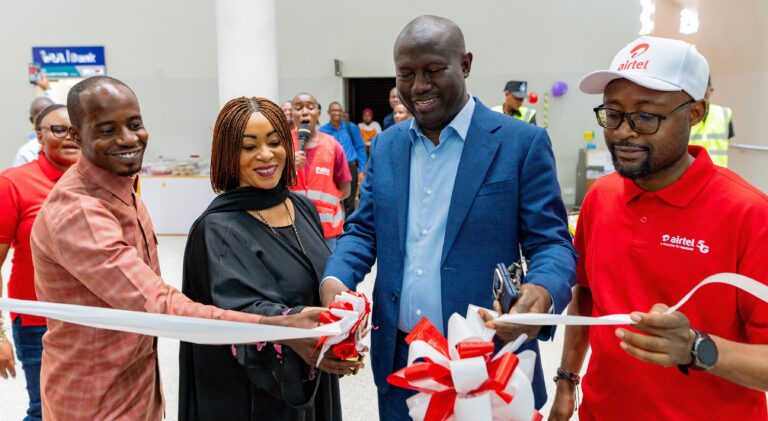
Airtel Kenya has officially inaugurated two new customer care outlets at Likoni Mall and Cannon Towers in Mombasa, marking a significant step in the firm’s strategy to bring its services closer to its coastal subscriber base.

Managing Director Ashish Malhotra presided over the launch, noting that the new shops are designed to enhance convenience by significantly reducing service turnaround times and providing robust in-person support.

These new facilities are expected to serve a diverse range of clients, from individual households to Small and Medium Enterprises (SMEs) and large enterprise customers across the Coast region.

By expanding access to mobile, internet, and financial services, Airtel aims to provide a more integrated experience.

During the opening ceremony, Mr. Malhotra reaffirmed the company’s commitment to investment, stating that the primary goal is “ensuring Airtel products and services remain easily accessible to customers wherever they are.”

Beyond the immediate benefits to Mombasa residents, this expansion signals a broader national ambition.

As demand for connectivity continues to surge, Airtel Kenya has set a target to double its customer service footprint across the country before the end of the year.

This aggressive growth is intended to accelerate digital and financial inclusion, supporting the national need for reliable mobile money solutions and high-speed connectivity.

The launch was also attended by Airtel Kenya Customer Experience Director, Goldermier Opiyo, who highlighted the operational strategy behind the new shops.

Ms. Opiyo emphasised that the company is focused on delivering “seamless, responsive, and efficient” customer support.

She added that the new outlets are a vital component of a wider strategy to enhance service excellence nationwide, ensuring that the company’s rapid growth is matched by high-quality consumer interactions.

Since the acquisition of Zain by Bharti Airtel in June 2010, the provider has grown into one of the most prominent telecommunications brands in the region.

Today, it operates as part of a 14-nation network across Africa, offering a comprehensive suite of services including voice, data, and enterprise solutions.

Through this latest expansion in Mombasa, the company noted it continues to bolster its infrastructure to ensure customers remain connected to their loved ones and essential digital services.

JKIA: Kenya’s Main Airport Prepares to Take on Tech Giants in Taxi App War

0

Kenya’s primary aviation hub is set to challenge the dominance of global ride-hailing giants Uber and Bolt by launching its own dedicated digital taxi platform.

The Kenya Airports Authority (KAA) has officially initiated a search for technology partners to develop a bespoke mobile and web-based dispatch system for Jomo Kenyatta International Airport (JKIA).

According to tender documents released by the authority, the project will be structured as a public-private partnership, aimed at modernising airport logistics while clawing back market share from established tech firms.

For years, international platforms have quietly dominated the airport transport sector, often at the expense of traditional airport-licensed operators.

However, KAA’s move signals a strategic shift toward direct competition.

Under the proposed arrangement, the winning tech firm will be responsible for designing and running the system, but there is a financial catch: the operator must hand over a monthly percentage of passenger fares to the KAA.

The authority confirms that the exact revenue split will be a decisive factor in the bidding process.

To ensure a competitive edge, the app will integrate features designed to rival the seamless experience of its global competitors.

These include real-time fare estimates, surge pricing capabilities, and live vehicle tracking with trip notifications for passengers.

Furthermore, an automated dispatch engine will be used to manage driver queues across various terminals, ensuring that the “yellow taxi” cabs, which are already licensed and vetted to operate within the airport’s high-security perimeter, can respond as efficiently as their silicon-valley rivals.

The strategy also includes a technical “moat” around the airport’s lucrative transport hub.

The KAA plans to use GPS-based geofencing to restrict these taxis to approved zones, a move intended to “prevent unauthorized pickups and keep operations orderly.”

This digital barrier is a clear attempt to consolidate the market and prioritize the airport’s own ecosystem over external independent drivers.

This pivot is as much about the bottom line as it is about passenger convenience.

Currently, the KAA relies heavily on traditional income sources such as aircraft landing charges and passenger ticket fees.

By entering the digital marketplace, the authority is looking to tap into a massive, captive audience.

In 2024, JKIA handled a total of 8.9 million passengers, comprising 6.8 million international and 2.1 million domestic travellers, representing a significant pool of potential revenue that has previously flowed toward external apps.

Looking ahead, the KAA has ambitious plans to scale the platform into an all-encompassing “super-app” for the airport.

Eventually, the system is expected to include duty-free shopping, lounge bookings, parking payments, and in-airport navigation tools, alongside digital advertising and sponsored listings.

The clock is now ticking for prospective tech partners; once the contract is signed, the selected vendor will have just three months to get the system live and begin the fight for the “first mile” of the passenger’s journey.

KRA Deploys Bodycams at JKIA to Curb Bribery and ‘Word Against Word’ Disputes

0

Customs officials at Kenya’s main international gateway are to be fitted with body-worn cameras as the country’s tax authority moves to digitise its fight against corruption.

The Kenya Revenue Authority (KRA) confirmed the rollout at Jomo Kenyatta International Airport (JKIA) following a live demonstration of the technology during passenger clearance.

This move marks a significant shift in oversight for the Customs and Border Control department, a division the authority admits is one of its most “exposed and contested frontlines.”

By introducing the devices, the KRA aims to transform the daily interactions between officers and the thousands of travellers, importers, and traders who pass through Kenya’s ports of entry.

For years, the KRA has acknowledged that disputes at border points have been hampered by a lack of objective evidence, often devolving into a stalemate of an officer’s word against a traveller’s.

In a statement released ahead of the launch, the authority noted that these unresolved complaints have historically eroded public trust.

However, they believe the new technology will fundamentally “change that equation entirely,” as every interaction will now be a verifiable record.

Consequently, disputes that previously took weeks to investigate could potentially be resolved in a matter of hours.

Beyond acting as a deterrent for misconduct, the initiative is a core component of the KRA’s 9th Corporate Plan.

The authority intends to use the footage as a broader management tool to identify process gaps and refine officer training.

Furthermore, the cameras are being positioned as a protective measure for the officers themselves.

By providing a documented record of their work, the technology offers a shield for staff who conduct themselves professionally against unfounded accusations.

The urgency of this rollout is underscored by recent reports of revenue leakage and internal misconduct.

During the 2023/2024 financial year, the Auditor General flagged the loss of 9.6 million excise stamps, a gap that suggests a market increasingly vulnerable to counterfeit goods.

Meanwhile, the KRA’s internal crackdown on graft has intensified; between July and September 2024, the authority dismissed 25 members of staff for corruption—a sharp increase compared to previous reporting periods.

Kenya is joining a growing list of nations using wearable technology to secure their borders.

Kenya’s adoption of body-worn cameras (BWCs) at JKIA follows an established global trend where major economies use wearable technology to secure borders and verify official conduct.

The following details outline how other nations have implemented similar technology, citing relevant policies and reports:

The UK Border Force has been a pioneer in deploying body-worn video (BWV) to enhance transparency.

According to the UK Home Office and the Metropolitan Police’s 2024 BWV Policy, cameras are utilized to provide a “verifiable record” of events, specifically to protect both officers and the public during high-pressure encounters.

Most UK agencies follow a 31-day auto-deletion protocol for non-evidential footage to balance accountability with the UK GDPR and Data Protection Act (2018).

Also, U.S. Customs and Border Protection (CBP), the largest federal law enforcement agency in the U.S., launched a massive BWC program to address “use of force” complaints.

By 2024/2025, the agency had integrated thousands of cameras across land and air ports of entry.

The CBP’s Incident-Driven Video Recording System (IDVRS)directive mandates that footage be used to investigate misconduct and “vindicate the majority of agents” who perform their duties professionally.

On it’s part, Singapore Customs has integrated bodycams as part of its “Customs Modernization” strategy. Beyond simple recording, Singapore has moved toward using AI and data analytics to review footage.

Research published in 2024/2026 indicates that Singapore and Hong Kong utilize algorithmic auditing to identify “unusual patterns” in officer verbalizations, helping to proactively improve professionalism.

In the Netherlands and Belgium, the introduction of bodycams has been a direct response to organized crime attempting to infiltrate ports like Antwerp and Rotterdam.

A 2026 report by the European Public Prosecutor’s Office (EPPO) highlighted that while customs fraud damage remains high (estimated at €45 billion across the EU), the use of “objective digital witnesses” (BWCs) has been critical in prosecuting corrupt officials involved in excise and VAT fraud schemes.

Nevertheless, some questions remain regarding the long-term implementation of the programme.

The KRA has not yet publicly detailed the specific mechanisms for footage storage, the duration for which data will be kept, or the protocols for accessing recordings during a dispute.

As the rollout matures, these administrative details will likely determine whether the initiative leads to genuine institutional transparency or remains a well-publicised gesture.

MPs Greenlight KES 204bn Safaricom Stake Sale to Vodacom

0

The Parliament has formally approved the divestiture of a 15 per cent government stake in Safaricom to Vodacom, in a deal valued at KES 204 billion.

The decision follows the tabling of a comprehensive report by a joint parliamentary committee comprising the Finance and National Planning and the Public Debt and Privatisation teams.

While the move marks a significant shift in the ownership of the country’s largest telecommunications firm, the approval was granted on the strict condition that the transaction results in no job losses.

Consequently, the committee has recommended that the positions of Safaricom’s 855,000 direct employees be strictly safeguarded.

The proposal sparked a fierce divide on the floor of the House on Wednesday, March 11, 2026, as lawmakers sparred over the valuation of the telco.

Kiharu MP Ndindi Nyoro emerged as a vocal critic of the transaction, claiming that the deal significantly undervalued the state’s assets.

“The deal was undervalued… Kenyans have been given a raw deal…The joint committee is incompetent,” Mr. Nyoro told the House.

However, these claims were swiftly met with pushback from committee members, such as Molo MP Kuria Kimani, who challenged the critic to provide evidence, asking, “Ndindi, why can’t you give us an alternative model for valuation?”

The exchange grew increasingly personal as National Assembly Majority Leader Kimani Ichung’wah accused Mr. Nyoro of “misleading Kenyans” during public engagements.

This sentiment was countered by Suba South MP Caroli Omondi, who insisted that Mr. Nyoro was right to raise the alarm, while Kitui Central MP Makali Mulu questioned the government’s transparency and its focus on political rivals.

Despite this political friction, the joint committee maintained that the valuation process was robust and designed to protect the public interest, noting that the negotiated price of KES 34 per share aligns with current market movements.

Furthermore, the committee argued that negotiating directly with Vodacom, an existing major shareholder, minimises execution risks and helps preserve investor confidence.

To address privacy concerns, the committee assured the public that personal data would remain protected under the Computer Misuse and Cybercrimes Act.

In terms of the financial rollout, it is proposed that Vodacom pays an upfront dividend of KES 40.2 billion to the government.

Ultimately, all proceeds from the KES 204 billion sale are to be ring-fenced specifically to bolster the newly established National Infrastructure Fund.

Insurance Has Become a Critical Component of Financial Planning-NCBA Insurance

0

NCBA Insurance, a subsidiary of NCBA Group formed after the acquisition of AIG Kenya, covers individuals, families, properties and businesses against a wide range of risks. After the acquisition and integration into NCBA Insurance, the arm has strengthened underwriting, expanded products, and made policies easy to access digitally.

In its first full year, NCBA Insurance recorded an 82 percent rise in profit before tax, demonstrating strong customer adoption and confidence in its services.

Navigating a World of Uncertainty
In today’s unpredictable world, individuals and businesses face a wide range of risks from floods and fires to terrorism, political tensions, and uncertainties surrounding upcoming general elections. Experts agree that the question is no longer if the unexpected will happen, but when. In this context, insurance has emerged as a crucial tool for protecting assets, livelihoods, and peace of mind.

Strategic Growth and Tailored Solutions
NCBA Bank has positioned itself as a leader in providing solutions that help clients navigate these uncertainties. The bank emphasizes insurance not as an expense, but as a strategic investment in security and resilience. Its approach ensures that individuals, families, and businesses can recover quickly from unforeseen events without disrupting long term plans.

A major milestone in NCBA’s insurance strategy was the acquisition of AIG Kenya Insurance Company. This allowed the formation of NCBA Insurance as a fully integrated subsidiary, strengthening underwriting capabilities, expanding the product suite, and offering solutions designed for the local market. The results have been impressive. NCBA Insurance recorded an 82 percent increase in profit before tax in its first full year post integration, while the bank’s non banking subsidiaries including Investment Banking, Bancassurance, and Leasing posted a combined profit before tax of KES 1.9 billion, contributing five percent of the Group’s total profit before tax. The Investment Bank alone now manages assets exceeding KES 100 billion.

Customer Focus and Economic Impact
NCBA Insurance also prioritizes customer awareness and advisory. By helping clients understand coverage options and how they align with their personal or business needs, the bank ensures policies balance affordability with comprehensive protection. Digital platforms improve accessibility, enabling clients to manage policies and file claims efficiently.

Trust is central to NCBA Group’s approach. The bank maintains transparency in claims handling and delivers reliable service, fostering long term confidence among its clients. Beyond individual protection, insurance contributes to broader economic stability. By mitigating risks, it allows businesses to invest, expand, and innovate even amid uncertainty, reinforcing resilience across the economy. NCBA’s insurance initiatives demonstrate how integrated financial services, robust underwriting, and digital accessibility can empower clients while supporting sustainable growth.


Persistent Launches $70 Million Africa Climate Venture Fund

0

Climate venture builder Persistent said on Tuesday it had launched a $70 million early-stage investment fund to support climate-focused startups across Africa, along with a $5 million venture building facility to provide operational support to emerging companies.

The Persistent Africa Climate Venture Fund (ACV Fund), domiciled in Mauritius, reached a first close of $52 million and will focus on early-stage companies in energy, agriculture, and resource transitions. The fund will invest primarily from pre-seed through Series A, with flexibility for follow-on capital in high-performing ventures.

The fund combines traditional equity investment with Persistent’s venture building platform, which provides tailored support in areas such as strategy, finance, technology, legal, and marketing to accelerate growth.

“Achieving the first close of the Persistent ACV Fund is a strong show of confidence in Persistent and the fund’s strategy,” the company said, noting early-stage climate innovation in Africa is “investable at scale.”

The fund uses a blended finance model, offering private investors first-loss and priority return protection to reduce risk and attract commercial capital. The accompanying $5 million Venture Building Facility (VBF) is funded by the Nordic Development Fund and the Dutch entrepreneurial development bank FMO.

The fund’s anchor investors include FSD Africa Investments, which committed $10 million, along with the Nordic Development Fund and the African Development Bank’s Sustainable Energy Fund for Africa. Additional investors include the Japan International Cooperation Agency, Soros Economic Development Fund, Impact Fund Denmark, and philanthropic foundations.

Persistent said the fund aims to mitigate over 17 million tons of CO₂, benefit more than 7 million people—half of them women—create 60,000 direct jobs, provide 420,000 households with electricity, and catalyze $450 million in additional investment across Africa.

“Closing Africa’s climate financing gap requires more than capital,” said Anne-Marie Chidzero, chief investment officer of FSD Africa Investments. “It requires the right fund managers, supported at the right moment, through structures that give other investors confidence to follow.”

Persistent, founded nearly 14 years ago, has previously invested in solar energy, e-mobility, and energy efficiency ventures that have improved over 10 million lives, created more than 20,000 jobs, and avoided over 2 million tons of CO₂ emissions.

Gig Economy App Launches to Tackle Youth Unemployment in Kenya

0

A new mobile marketplace has launched in Kenya, aiming to bridge the gap between urban youth and the informal labor market.

The platform, known as Tich App, has officially entered the market with a mobile-first strategy designed to streamline how young people access gig work and short-term employment.

By providing a digital hub for on-demand jobs, the startup seeks to formalize a sector often defined by its lack of transparency.

Beyond simply listing vacancies, the app introduces critical structural safeguards, including basic worker protections, referral systems to build professional credibility, and guidance on simple contract terms.

In addition to providing immediate work, the developers believe that centralizing these opportunities will help Kenyan youth diversify their skill sets and expand their professional networks.

Consequently, the platform is expected to increase long-term earning potential for its users.

To ensure a controlled and effective rollout, Tich will move into a pilot phase in Nairobi and Mombasa over the next 30–60 days.

This initial launch is being bolstered by FasterCapital’s EquityPilot program, an initiative that provides the startup with essential execution coaching, market guidance, and vital ecosystem connections.

The app’s performance during this period will be closely monitored through specific metrics, including job placement rates, user retention, and employer satisfaction, all of which will inform future scaling efforts.

Regarding the partnership, Hesham Zreik, Founder and CEO of FasterCapital, stated: “We’re excited to support Tich through EquityPilot. Our team will focus on execution milestones and connecting the startup with the right ecosystem stakeholders.”

The leadership behind the app brings a strategic blend of local expertise, consisting of a team from Sunami Marketing Services and a local tech hub.

As a result, the venture combines digital product knowledge with a deep understanding of community engagement within Kenya’s specific urban markets.

By leveraging this combined experience in marketing and technology, Tich App hopes to create a sustainable pipeline for youth employment across the country’s major cities.

Tony Elumelu: The Billionaire Philanthropist Betting $100m on Africa’s Start-ups

0

The Nigerian billionaire and philanthropist, Tony Elumelu has revealed that his foundation has now deployed more than $100m in seed capital to bolster African start-ups over the last 15 years.

Speaking in Paris on Thursday, 12 March 2026, the Chairman of United Bank for Africa (UBA) confirmed the milestone following a high-level meeting with French President Emmanuel Macron and the Africa France Impact Coalition.

Since its inception in 2010, the initiative has grown into one of the continent’s most significant philanthropy-backed support programmes, specifically designed to empower young entrepreneurs through a combination of capital, mentorship, and structured training.

During his engagement with President Macron, Mr Elumelu highlighted Africa’s youthful population as the continent’s most valuable resource, while simultaneously warning of the dangers of inaction.

“Africa’s young people are talented, entrepreneurial, and ambitious. What they need is access to opportunity, capital, mentorship, and markets,” he told the audience.

He stressed that unlocking this potential requires deliberate global collaboration, adding a stark warning: “But potential without opportunity is a promise broken; joblessness is the betrayal of a generation.”

The impact of the Tony Elumelu Foundation (TEF) is now reflected in significant economic data across the continent.

According to figures released by the Chairman, the programme has supported more than 24,000 entrepreneurs who have collectively generated over $4.2 billion in revenue.

Furthermore, these ventures have been responsible for creating more than 1.5 million direct and indirect jobs.

Beyond direct funding, the foundation’s digital platform, TEFConnect, has provided business training to approximately 2.5 million young Africans.

Central to this mission is Mr Elumelu’s economic philosophy of “Africapitalism,” which posits that the African private sector must take the lead in driving social and economic transformation through long-term investments.

By prioritising social impact alongside profit, he argues that the continent’s youth can become the primary engine for growth.

He noted that previous engagements, such as President Macron’s 2018 address to 2,000 entrepreneurs in Nigeria, demonstrate the vital importance of international partnerships in expanding these horizons.

Looking ahead, the foundation is prepared to scale its efforts even further.

On 22 March, the TEF entrepreneurship programme is scheduled to provide fresh funding and business support to an additional 3,200 young African entrepreneurs.

By fostering these early-stage startups into sustainable enterprises, the initiative seeks to continue stimulating economic growth and addressing the persistent threat of unemployment across the African landscape.

Nedbank Partners with Crypto.com to Explore Blockchain Payments Across Africa

Nedbank Group said on Thursday it had entered a strategic partnership with Crypto.com to explore blockchain-based payment, settlement and liquidity solutions across Africa, in a move aimed at modernising cross-border financial transactions on the continent.

The South African bank said the collaboration would combine its banking infrastructure with Crypto.com’s digital asset platform to develop systems enabling real-time settlement and digital dollar liquidity for retail and corporate clients, subject to regulatory approvals.

Through the partnership, clients would be able to convert South African rand into the dollar-backed stablecoin USD Coin and back via secure digital channels, enabling faster cross-border payments and access to digital dollar liquidity for trade, remittances and treasury operations.

Africa’s financial system still relies heavily on traditional international payment rails, which often involve high fees, slow settlement times and exposure to currency volatility. Nedbank said blockchain infrastructure could help address those challenges by providing faster and more transparent settlement.

The bank added that the platform would support daily net settlement between Nedbank and Crypto.com, designed to maintain stability and regulatory oversight while allowing businesses and individuals to transact in digital dollars across African markets.

“Africa’s future competitiveness depends on how effectively we integrate modern financial technologies into trade and commerce,” Simon Marland, managing executive for automation, blockchain and analytics at Nedbank, said in a statement.

Crypto.com executive vice president Karl Mohan said the partnership reflected the growing demand for regulated access to digital assets across emerging markets.

“Africa represents one of the most dynamic frontiers for digital finance,” Mohan said.

The rollout will be implemented in phases over the next 12 months, beginning with individual clients before expanding to corporate customers, Nedbank said.

The initiative also aligns with broader regional trade integration efforts under the African Continental Free Trade Area, which aims to deepen intra-African commerce and improve cross-border financial infrastructure.

Founded in 2016, Crypto.com operates a global digital asset exchange and financial services platform used by millions of customers worldwide. Nedbank is one of Africa’s largest banking groups, with operations across southern Africa and international financial centres including London and Dubai.

High Court Halts NTSA’s Automated Traffic Fine System Over Tech Concerns

0

A major digital crackdown on motorists has been suspended after the High Court in Kenya issued conservatory orders barring the enforcement of an instant, algorithm-driven traffic penalty system.

The ruling, delivered today morning by Justice Bahati Mwamuye, marks a significant intervention into how the state uses automated decision-making (ADM) to police public roads.

The orders effectively restrain the National Transport and Safety Authority (NTSA) and the Attorney General from “issuing, generating, demanding or enforcing” any penalties produced through these automated systems.

At the heart of the dispute is a constitutional petition filed by the lobby group Sheria Mtaani.

Represented by lawyers Danstan Omari and Shadrack Wambui, the petitioners argue that the NTSA’s rollout of instant fines bypasses essential human oversight.

Specifically, the group contends that the system imposes penalties immediately upon detection of an infraction without prior notice, warning, or a human review process.

Furthermore, the legal team argues that the software effectively strips citizens of the “presumption of innocence” guaranteed under Articles 47 and 50 of the Constitution.

Under the current digital framework, motorists are compelled to settle fines within seven days. Failure to do so results in administrative sanctions, such as being barred from accessing vital NTSA services.

Beyond basic traffic law, the case highlights a growing tension between rapid tech adoption and the Data Protection Act, 2019.

The petitioners claim that executing penalties solely through automated algorithms, without the possibility of human intervention, violates statutory requirements for transparency in automated decision-making.

“The system converts registered vehicle owners into automatic culprits even where they may not have committed the alleged offence,” the petition states.

Moreover, the challenge raises questions regarding the flow of public funds.

Justice Mwamuye has directed that KCB Bank Kenya be enjoined as an interested party, following concerns that traffic fines were being funnelled through a commercial bank account rather than traditional statutory government accounts.

As the implementation of the system threatens what the court described as “widespread harm” to motorists, the legal timeline has been expedited: March 13, 2026 is the deadline for the petitioner to file an affidavit of service.

The date March 20, 2026 is the deadline for the NTSA and the Attorney General to file their official responses.

Whereas, March 27, 2026 is the deadline for the petitioners to file a rejoinder and on April 9, 2026, the matter will be mentioned to confirm compliance and set a date for the full hearing.

Until these dates pass and a final determination is reached, the court orders that NTSA’s automated “instant fine” algorithms must remain offline.

The Era of Hyper-Connectivity: How AI Is Turning the Smartphone Into the Brain of the Modern Home

0

The modern home is undergoing a quiet but profound transformation. What was once a passive physical space is evolving into an intelligent environment that learns routines, anticipates needs and responds to its occupants in real time. Across East Africa, the rise of artificial intelligence, connected devices and digital ecosystems is redefining how people live, work and interact with technology.

At the center of this shift is a powerful idea that is increasingly shaping the consumer technology industry: AI for All. The concept reflects a future in which artificial intelligence is no longer confined to data centers or specialized applications, but instead becomes embedded into everyday devices—from smartphones and refrigerators to washing machines and air conditioners.

In this new era of hyper-connectivity, the smartphone has emerged as the command center of the modern household. Once primarily used for communication, the device is now evolving into the brain of the connected home, orchestrating interactions between appliances, sensors and digital services.

Samsung’s latest flagship device, the Galaxy S26 series, represents this transition. Equipped with advanced AI capabilities, the smartphone is designed not just to respond to commands but to anticipate behavior. Through Samsung’s SmartThings platform, the device acts as a central hub linking multiple connected devices into a single ecosystem.

In practical terms, that means the phone can begin preparing a living space before the owner even walks through the door. If the system detects a user is approaching home, it can automatically activate devices such as a WindFree air conditioner to cool the room to a preferred temperature. Lighting, security systems and other appliances can also respond to routines learned over time.

This level of automation signals a broader shift in consumer technology—from reactive devices that require constant input to proactive systems that adapt to human behavior.

The transformation is particularly visible in the kitchen, where appliances are evolving into what technology companies now describe as “home companions.” Samsung’s Bespoke AI Family Hub refrigerator, for example, combines cameras and artificial intelligence to identify ingredients inside the fridge, track expiration dates and suggest recipes based on available items.

Once a recipe is selected on a smartphone, instructions can be transmitted directly to a connected oven that automatically preheats to the required temperature. The result is a synchronized digital ecosystem where appliances communicate with each other and with the user.

Laundry technology is also being reshaped by artificial intelligence. Modern washing systems equipped with sensors can analyze fabric weight, soil levels and load size, adjusting water usage, detergent levels and washing cycles automatically. For consumers, this means fewer manual adjustments and greater efficiency.

Beyond convenience, however, the rise of the smart home is also closely tied to sustainability. Across East Africa, where energy efficiency and cost management are key concerns, intelligent energy monitoring is becoming an increasingly valuable feature.

Through applications such as SmartThings, users can monitor electricity consumption in real time and optimize how appliances operate throughout the day. AI-driven energy management systems can recommend ways to reduce consumption while maintaining performance, helping households lower utility costs and reduce environmental impact.

The connected home ecosystem is also expanding through the adoption of open technology standards. By supporting interoperability frameworks such as Matter, device manufacturers are enabling products from different brands to communicate with one another. This approach helps ensure that consumers are not locked into a single ecosystem, making connected living more accessible.

Yet as homes become more connected, questions around privacy and security inevitably follow. Smart homes generate significant amounts of personal data—from daily routines to appliance usage patterns—and protecting that information is becoming a central priority for technology companies.

Security frameworks such as Samsung Knox aim to address these concerns by embedding hardware-level protection across devices within the ecosystem. The goal is to ensure that the convenience of connectivity does not come at the expense of personal privacy.

For East Africa, the implications of this technological evolution are particularly significant. The region has emerged as one of the fastest-growing digital markets in the world, driven by mobile connectivity, fintech innovation and a rapidly expanding technology ecosystem.

As smartphones become more powerful and affordable, they are increasingly serving as the gateway to broader digital lifestyles. The integration of artificial intelligence, connected appliances and cloud platforms suggests that the next phase of this evolution will extend far beyond mobile devices.

Instead, the smartphone will act as the control tower for an entire network of intelligent technologies operating within the home.

In many ways, the transformation reflects a broader shift in the philosophy of technology itself. The goal is no longer simply to create devices with more features, but to design ecosystems that simplify everyday life through seamless coordination and intelligent automation.

The result is a home that does not merely contain technology—it collaborates with the people living inside it.

And as artificial intelligence becomes more deeply integrated into everyday devices, the concept of the connected home may soon become not just a luxury for early adopters, but the new standard for modern living.

Canal+ Unveils €100m Rescue Package for MultiChoice Following Subscriber Exodus

0

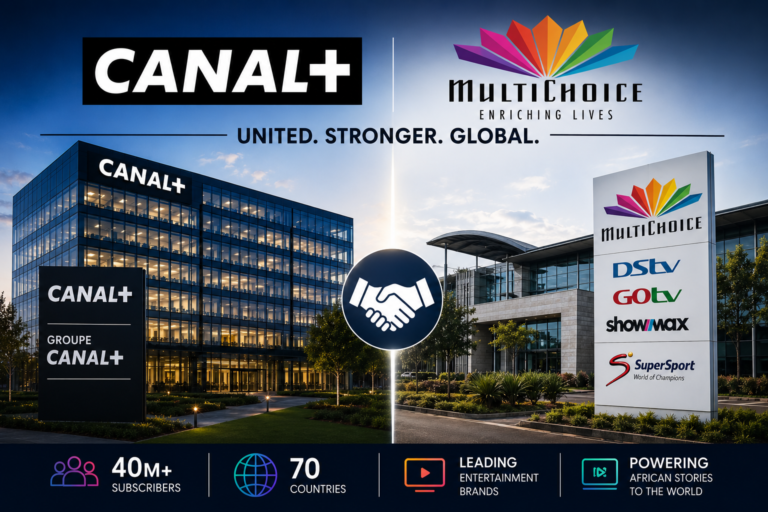
The French media giant Canal+ has launched a sweeping €100 million recovery plan to revitalise MultiChoice, as the African pay-TV leader struggles to stem a significant loss in its customer base.

The intervention follows a turbulent period for the owner of DStv and GOtv.

Official figures reveal that MultiChoice’s subscriber numbers plummeted from 14.9 million to 14.4 million in 2025, a decline fueled by rampant inflation in key markets and a surge in digital piracy.

Consequently, the French media company has confirmed it will inject €100 million into the business to enhance content, simplify subscription packages, and expand distribution channels across the continent.

This strategic overhaul comes at a crucial time for the group, which is currently navigating a “perfect storm” of economic pressures.

In Nigeria and South Africa, MultiChoice’s largest hubs, weakening local currencies have made the cost of purchasing international broadcasting rights prohibitively expensive, leading to frequent price hikes that have alienated long-term viewers.

To combat this, Canal+ intends to recruit 1,000 new sales staff to expand physical distribution in underserved regions, while simultaneously focusing on more flexible pricing to appeal to a growing but financially squeezed middle class.

However, the expansion of the sales force comes alongside a tightening of internal operations.

Canal+ has announced a voluntary severance programvaimed at reducing “overlapping support roles” created by the acquisition.

This restructuring is intended to streamline the two businesses as they integrate.

Furthermore, in a move that has sparked significant industry debate, Canal+ CEO Maxime Saada confirmed the closure of the streaming platform Showmax.

Despite a high-profile partnership with NBCUniversal, the service reportedly failed to turn a profit against the financial might of global rivals like Netflix and Disney+.

Ultimately, this plan marks a definitive turning point for African television. With the combined entity now serving over 40 million customers across nearly 50 countries, Canal+ is positioning itself as a dominant gatekeeper in a market estimated to exceed $15 billion by 2030.

While the success of this €100 million gamble remains to be seen, the strategy signals that the future of the industry will rely on aggressive subscriber growth, efficient business operations, and a renewed focus on local content creation to survive a new, more competitive era.

WhatsApp Unveils New Managed Accounts for Children Under 13

WhatsApp has announced a significant shift in its safety architecture, launching “parent-managed accounts” designed specifically for children under the age of 13.

The move aims to bring younger users into the fold of the encrypted messaging service while providing guardians with a suite of digital gatekeeping tools.

According to the company, the feature is being introduced because “WhatsApp is the trusted way families communicate because it’s simple, private, and reliable.”

Under the new system, parents or guardians who are 18 years old or older can now oversee the digital interactions of pre-teens who are under the minimum age typically required to use the platform.

While the core functionality of the app remains, facilitating milestones and after-school plans, the experience for younger users will be strictly limited to messaging and calling.

To implement these controls, parents must have both their own device and the child’s phone side by side to link the accounts.

The technical rollout requires the latest version of WhatsApp on either iPhone or Android.

The setup involves a series of verification steps, including entering the child’s birthday or, depending on regional legal requirements, having Apple or Google app stores share the child’s age range directly with the platform.

A QR code displayed on the child’s device must then be scanned by the parent’s phone to establish the link.

Once the accounts are linked, parents gain substantial authority over the child’s digital circle.

Key parental powers include deciding exactly who can contact the account, controlling which groups the child is permitted to join, and assessing message requests from unknown contacts before they reach the child.

Furthermore, all parental controls and privacy settings are gated by a unique 6-digit parent PIN on the managed device.

This ensures that only parents can access or change these configurations, empowering them to tailor the family experience.

Despite the increased oversight, WhatsApp emphasized that the fundamental privacy of the conversations remains intact through technical safeguards.

“All personal conversations remain private and protected with end-to-end encryption, meaning no one—not even WhatsApp—can see or hear them,” the company stated. This means that while parents manage the “who” and “how” of the connection, the content of the messages stays between the participants.

The firm noted that the feature is rolling out gradually over the coming months and may not be immediately available in all regions.

As the service expands, the company intends to use feedback to refine the “safest and most private way for families to connect.”

In the meantime, the company is providing more tools and insights for parents, particularly regarding group interactions, to ensure a secure transition into the digital messaging space for younger users.

Why Tanzania’s Billionaire Rostam Azizi Is Buying Nation Media Group

0

After more than six decades under the stewardship of the Aga Khan Fund for Economic Development, Nation Media Group is entering a new era. The controlling stake in East Africa’s largest independent media house is being sold to Taarifa Ltd, owned by Tanzanian billionaire Rostam Azizi. The deal, covering just over fifty-four percent of NMG, is expected to close in the coming months, pending regulatory approvals. For Azizi, the acquisition represents more than a financial investment; it is a calculated move to expand his influence across the region, accelerate digital growth, and strengthen his footprint in East Africa’s most influential media network.

Rostam Azizi is no stranger to high-stakes leadership. Born in 1960 in Tabora, Tanzania, he studied economics at the University of Exeter in the United Kingdom before returning home to build a diversified business empire. Over the decades, Azizi has expanded his interests across telecommunications, energy, mining, aviation, real estate, and media, establishing himself as one of East Africa’s wealthiest and most influential entrepreneurs. He also has a political background, having served as a Member of Parliament and senior figure in Tanzania’s ruling party before stepping away from politics in 2011 to focus on his business ventures.

Media has long been a key part of Azizi’s portfolio. In 1999, he co-founded Mwananchi Communications, which created some of Tanzania’s leading publications, including Mwananchi, The Citizen, and Mwanaspoti. These ventures were eventually integrated into NMG’s regional operations, giving Azizi experience and credibility in managing media enterprises at scale. His approach combines business acumen with a clear understanding of the role media plays in shaping public discourse, positioning him uniquely for the stewardship of NMG.

The rationale behind the acquisition is clear. Nation Media Group is East Africa’s most influential independent media network, with operations in Kenya, Uganda, Tanzania, and Rwanda. It publishes newspapers such as Daily Nation, Sunday Nation, The EastAfrican, Daily Monitor, and Mwananchi, and operates broadcast outlets including NTV Kenya and Nation FM. Its digital platforms reach more than sixty million users, offering a massive audience that can be leveraged for growth in the rapidly evolving digital media space. For Azizi, who has built businesses in telecoms and technology infrastructure, accelerating NMG’s digital transformation is both a commercial opportunity and a natural extension of his regional strategy.

At the same time, the acquisition provides cross-sector strategic advantages. Azizi’s holdings span energy distribution, logistics, and telecommunications, all sectors that intersect with policy and public discourse. Controlling a media network of NMG’s scale offers insight into regional trends and regulatory developments, while providing a platform to influence conversations that affect East Africa’s broader economy.

Azizi has publicly pledged to maintain NMG’s editorial independence, and Taarifa Ltd. has confirmed that it has no current plans to make a mandatory offer for remaining shares or to delist the company from stock exchanges. While the ownership shift naturally invites scrutiny, analysts suggest that Azizi’s experience balancing business and political engagement positions him to manage this transition responsibly.

For the Aga Khan Fund, the sale marks a pragmatic exit after more than six decades of building one of Africa’s most respected media institutions. Media companies globally face declining print revenues and the urgent need to invest in digital infrastructure. By transferring ownership to a commercially savvy regional investor, AKFED is enabling NMG to accelerate its next growth phase while continuing its legacy of credible journalism.

Under Azizi’s leadership, NMG is expected to deepen its digital reach, integrate operations across borders, and continue shaping public discourse across East Africa. Beyond financial returns, this deal represents a consolidation of influence, expertise, and vision, positioning Rostam Azizi as one of the region’s most powerful media owners.


Revolut Launches UK Bank After Regulatory Approval

Fintech firm Revolut has launched its UK banking operations after the Prudential Regulation Authority (PRA) approved the company to exit the mobilisation phase and operate as a fully licensed bank.

The new entity, Revolut Bank UK Ltd, will begin offering banking services to the company’s 13 million UK customers, including deposit accounts protected under the Financial Services Compensation Scheme (FSCS).

Revolut said it will gradually roll out current accounts, starting with a small group of new customers before expanding access over the coming weeks. Existing users will continue using their accounts as normal while the company migrates them to the new bank in phases over the coming months.

The banking licence allows Revolut to expand beyond payments and e-money services into a broader range of financial products, including lending and credit.

“Launching our UK bank has been a long-term strategic priority for Revolut and marks a significant moment in our journey,” said co-founder and CEO Nik Storonsky, adding that the UK remains central to the company’s global growth.

The launch follows Revolut’s pledge to invest £3 billion ($4 billion) in the UK and create 1,000 high-skilled jobs.

The move is part of the fintech’s broader global expansion strategy, which includes £10 billion ($13 billion) in planned investments and entry into 30 new markets by 2030.

Google Completes Acquisition of Cloud Security Firm Wiz

0

Google has finalized its acquisition of Wiz, a US cloud and AI security platform, in a move aimed at strengthening Google Cloud’s security capabilities amid growing multicloud and AI adoption.

The financial terms of the deal were not disclosed. Wiz brand will not be retired and it continue to provide security solutions across major cloud environments including Amazon Web Services, Microsoft Azure, Oracle Cloud, and Google Cloud Platform.

The acquisition comes as organizations increasingly migrate critical data and applications to the cloud and rely on AI for business operations. Cloud security risks are escalating, with attackers leveraging AI to launch faster and more sophisticated cyberattacks.

Wiz’s platform, known for its ease of use and deep cloud expertise, complements Google Cloud’s infrastructure and AI-powered security tools. The combined platform aims to help organizations detect, prevent, and respond to threats faster, including attacks targeting AI models. It also seeks to make multicloud security more accessible, reducing the operational burden and costs for enterprises, governments, and small businesses.

“Keeping people safe online has always been part of Google’s mission,” said Sundar Pichai, CEO of Google. “By bringing Wiz and Google Cloud together, we’re making it easier for organizations to innovate with confidence.”

Thomas Kurian, CEO of Google Cloud, added: “We want to make security a catalyst for innovation, not a barrier. This acquisition will simplify protecting multicloud environments in the AI era, making strong security accessible to more companies and governments.”

Assaf Rappaport, co-founder and CEO of Wiz, said the partnership with Google Cloud would enable the firm to scale its mission of protecting customers “at machine speed,” while maintaining its open approach across cloud and code environments.

The integration underscores Google Cloud’s strategy to expand AI-driven security offerings and reinforce multicloud adoption, supporting faster, safer innovation across industries.


How Pesapal is Digitizing SMEs Across East Africa


Micro, small, and medium-sized enterprises (MSMEs) are the backbone of East Africa’s economy. From neighborhood restaurants and retail shops to hotels, fuel stations, and online sellers, these businesses generate employment, support communities, and drive regional commerce.

For many years, MSMEs primarily viewed digital payments as a way to receive money. Mobile money, bank cards, and online payment platforms made transactions faster and more secure, but they were largely seen as a convenience rather than a strategic tool for growth. Today, however, the story is changing.

From Payments to Business Insights

Entrepreneurs across East Africa are increasingly looking for more than just payment solutions. They want tools that give them better visibility into operations, simplify reconciliation, and help them understand their financial performance. Pesapal, a KCB Bank Group-backed fintech firm, is at the forefront of this transformation.

The company’s integrated platform combines payment processing, reporting dashboards, and operational tools into a single system. This allows SMEs to track sales in real time, manage inventory, reconcile payments efficiently, and monitor business performance with actionable insights. Every transaction tells a story from when customers buy, how much they spend, and which products or services are most popular. By understanding these patterns, business owners can make informed decisions, from staffing and inventory management to pricing and promotions.

For instance, a restaurant can identify peak hours and schedule staff accordingly. A retail shop can track best-selling products and manage stock efficiently. Hotels can analyze guest spending to adjust pricing or design targeted promotions. The result is a shift from reactive operations to data-driven decision-making, a critical advantage in a competitive and fast-changing market.

Building Credit Profiles and Accessing Financing

Beyond operational efficiency, digital payments are becoming a gateway to financing for SMEs. Pesapal’s platform captures detailed transaction data, helping businesses build credible financial profiles. This information can be used to access loans, attract investors, or negotiate better payment terms with suppliers.

For example, a retail shop that demonstrates consistent digital sales over time can leverage its payment history to secure a line of credit for inventory expansion. Similarly, a small hotel with a robust record of transactions can negotiate financing for renovations or marketing initiatives. In this way, integrated payment and reporting systems become more than a convenience as they are a foundation for growth.

Simplifying Everyday Operations

Pesapal also helps entrepreneurs manage the everyday complexities of running a business. Its tools support expense tracking, staff scheduling, sales reconciliation, and performance monitoring, all in real time. Business owners no longer need to rely on fragmented systems or manual spreadsheets. Instead, they can see a clear, consolidated view of their operations and focus on strategy and growth.

Restaurants, retail shops, and hotels across Kenya, Uganda, and Tanzania are already reporting tangible benefits. Inventory losses are reduced, staff are scheduled more efficiently, and sales reporting errors are minimized. The time saved on administrative tasks can now be invested in improving customer experiences and expanding business operations.

Recently, Pesapal and Drift Consult launched Rack Hospitality, an integrated platform for Kenya’s hospitality sector.

A Partner for Growth

Through its campaign “For My Business, There Is Pesapal,” the fintech is positioning itself as more than a payments provider. It is a strategic partner for MSMEs, helping them leverage technology to operate more efficiently, make smarter decisions, and plan for long-term growth.

Across East Africa, businesses are moving away from fragmented systems toward integrated financial infrastructure. Pesapal’s platform supports this evolution by providing payment processing, operational tools, and analytics under one roof. This shift is enabling SMEs to not only survive but thrive in increasingly digital and competitive markets.

The Future of Fintech and SMEs in East Africa

As East African SMEs continue to digitize, the role of fintech is evolving. It is no longer enough to simply process payments; the companies that will define the future are those that provide actionable insights, operational efficiency, and growth support.

For MSMEs in Kenya, Uganda, Tanzania, and beyond, Pesapal is helping to bridge the gap between transactions and strategy. Its integrated solutions are empowering entrepreneurs to manage operations more effectively, access financing, and make informed decisions that drive sustainable growth.

In a region where MSMEs are vital to economic development, platforms like Pesapal are proving that fintech can be much more than a convenience but a partner in growth.


Kenya’s NSSF Cyberattack Delays $17 Million in Benefits

Kenya’s National Social Security Fund (NSSF) confirmed in its latest financial report (PDF) that cyberattacks disrupted its systems, delaying $17 million in benefit payments.

The agency, which manages retirement savings for more than 2.9 million members, had previously denied any breach after a hacker known as “Devman” claimed in 2025 to have accessed its systems. The latest audit acknowledges the cyber incidents affected critical infrastructure, leaving many workers’ payments pending.

NSSF was expected to distribute $84 million in benefits for the financial year but paid only $67 million. Year-on-year payouts fell by $7.7 million, underscoring operational disruptions caused by system outages.

The breach exposed gaps in the fund’s digital infrastructure. A $1 million Data Recovery Centre meant to provide backup and disaster recovery was still under construction when the attacks occurred in May 2025. Additionally, a delayed $1.3 million upgrade to the NSSF Member Self-Service Portal (SAP/SSPAS) left the system vulnerable on outdated technology.

Cybersecurity experts warn that public institutions in Africa face rising attacks as digital services expand faster than protective measures. Similar breaches have targeted government agencies in South Africa, banks and public institutions in Nigeria, and telecoms and financial firms across the continent.

The NSSF incident highlights the risks of rapid digitalisation without robust cybersecurity, emphasizing the need for early breach detection, functioning disaster recovery, and timely technology upgrades. As African governments digitise pensions, tax, and benefits systems, incidents like NSSF’s illustrate the high stakes for millions of citizens.

Kenya, Rwanda Central Banks Sign Deal to Ease Cross-border Fintech Expansion

0

The Central Bank of Kenya and the National Bank of Rwanda have signed a memorandum of understanding to develop a licence passporting framework for payment service providers, a move aimed at simplifying how fintech firms and digital payment companies expand between the two markets.

The agreement outlines steps toward a system where payment firms licensed in one country could operate in the other with fewer regulatory hurdles, reducing the need for duplicative approvals while maintaining oversight by both regulators.

The two central banks said the framework would promote mutual recognition of licensing regimes for payment service providers, enabling responsible cross-border expansion while preserving regulatory supervision and cooperation between the authorities.

The initiative is aligned with the regional integration agenda of the East African Community, particularly the EAC Cross-Border Payment System Masterplan, which seeks to create a more integrated and efficient regional payments landscape.

Regulatory fragmentation has historically slowed the expansion of digital payment services across East African markets, forcing fintech firms to obtain separate licences in each jurisdiction.

By introducing a passporting framework, regulators aim to address these barriers while encouraging innovation and improving the efficiency of cross-border financial services for businesses and consumers.

The Central Bank of Kenya said the initiative reflects its commitment to strengthening regional cooperation and ensuring that payment infrastructure continues to evolve alongside the needs of the region’s digital economy.

If implemented successfully, the framework could pave the way for broader harmonisation of payment regulations across the East African Community, potentially enabling fintech firms to scale services across multiple markets more easily.

How Georgia Became the Tech Hub of the Caucasus

0

Source: Pexels

Nestled on the Black Sea Coast, sandwiched between Eastern Europe and Asia, and with Russia to the north, is Georgia. This country of just under 4 million people has long been inhabited by humans and is one of the oldest known places where wine was made. Yet as far as modern tech goes, you couldn’t be further away from the sprawling spires of Silicon Valley. So, how is this ex-Soviet republic turning into a hub for innovation?

Georgia’s Quick Rise to Tech Status

In 2020, only 1,971 tech companies existed in the country. It’s estimated that 79% of those were locally owned. Yet in a short space of time, the figure has risen to 24,117, with 84% of these companies now being international.

To do this, the country has tapped into a demand in surrounding countries, where around 300 million people in Central Asia and Eastern Europe are underserved by tech. The country’s government passed laws that made it easier to apply International Company Status to tech companies from overseas. Added to this were reductions in tax rates, property, and dividends.

There’s also the Georgia Innovation and Technology Agency (GITA). Financed by the European Union, they have been working toward a “Do IT with the EU” project aiming at developing regional IT ecosystems. This works alongside a virtual zone, which allows businesses within it to pay no corporate tax and no VAT.

Innovation Coming from Georgia

Source: Pexels

The innovations and companies involved vary enormously. Firms like BiteriumAI are working in the health sector. They are utilising predictive analysis to build an AI early detection system for healthcare professionals. Integrated with this are patient wearables to help guide healthy lifestyle choices.

Other companies will be more well-known to international audiences. Spribe, the creators of the casino game Aviator, are based in Georgia. This game is now recognisable the world over and involves betting on the path of an aircraft while seeing how long it stays in flight. The longer people play, the more multipliers raise their bet. Yet if they don’t cash out in time, they lose. This is now so global that there is even an Aviator App Kenya, and it has sponsored multiple major sporting events.

Problems Facing Georgia’s Tech Sector

Growth in the sector can be put down solely to investment. Population levels recently went up by 100,000, many of whom came from neighbouring countries. This suggests that after this influx, Georgia’s growth may begin to plateau.

Georgia’s own politics have also been fragmented. Added to this are the reasons the country has always struggled to redevelop and modernise anyway – its tendency for natural disasters. The country has experienced several major earthquakes throughout its history, with the last known in 2022 measuring a magnitude of 5.3.

Thus, Georgia is in a golden period. Whether it is one that can be sustained is unknown, and it seems growth may slow. Yet for tech businesses in the region who want to reach international audiences, it is increasingly becoming the most sound option.

KCB Group Plans to Increase Stake in Pesapal to Boost Digital Commerce Across Africa

0


KCB Group Plc, East Africa’s largest lender by assets, said it plans to increase its stake in Pesapal Limited, a leading payments technology platform, to accelerate digital commerce, cashless transactions, and financial inclusion across the continent.

KCB currently holds a minority stake in Pesapal, and the planned increase will allow the bank to strengthen its digital and fintech ecosystem, integrating mobile banking, payments, savings, and investment services for both consumers and businesses. The transaction remains subject to regulatory approvals and customary conditions.

“KCB is committed to driving innovation and providing seamless financial services that empower businesses and households across Africa,” said Group Chief Executive Paul Russo. “Expanding our investment in Pesapal will enhance our digital footprint and create new pathways for inclusive financial growth in all our markets.”

The move complements KCB’s ongoing fintech initiatives, including the launch of a unified mobile banking app and a $150 million green financing package from the African Development Bank. Analysts say the increased stake positions KCB to play a leading role in Africa’s digital banking and payments sector.

In March 2025, KCB Group acquired 75 percent shareholding in financial technology firm, Riverbank Solutions to strengthen its distribution network across the region.

KCB’s focus on digital innovation comes amid a strong 2025 financial performance, with KSh68.4 billion in net profit and KSh2.15 trillion in total assets, highlighting the bank’s ability to balance growth with strategic technology investments.

KCB Group Profit Rises 11% to KSh68.4 Billion in 2025, Raises Dividend

0

KCB Group Plc reported an 11% rise in full-year net profit on Wednesday, helped by strong loan growth, higher digital income and tighter cost management, as the lender raised its dividend payout to shareholders.

The regional banking group posted a net profit of KSh68.4 billion ($528 million) for the year ended December 2025, up from KSh61.6 billion a year earlier.

The board proposed a final dividend of KSh3 per share, in addition to an interim dividend of KSh4 paid in November, bringing the total payout to KSh7 per share, or about KSh22 billion.

Total assets at East Africa’s largest lender by assets rose 9.3% to KSh2.15 trillion, despite the group’s divestiture from National Bank of Kenya during the year.

Customer lending expanded 15% to KSh1.59 trillion, helping drive revenue growth as the bank increased support to households, businesses and the public sector across its markets.

Total income climbed to KSh214 billion from KSh204 billion in the previous year, with non-funded income contributing 31% of total revenues, reflecting growth in digital banking services.

“Our 2025 performance reflects the strength of the KCB franchise, the resilience of our regional footprint, and the continued trust that customers place in us,” Group Chief Executive Paul Russo said.

The lender also improved operational efficiency, with its cost-to-income ratio falling to 42.5% from 45.4%, while operating expenses declined 2.5% year-on-year.

KCB said its regional subsidiaries continued to play a larger role in earnings, contributing 30.7% of profit before tax, highlighting the group’s diversification strategy across East Africa.

Non-banking units also posted solid growth, with KCB Bancassurance Intermediary reporting profit before tax of KSh1.14 billion, KCB Investment Bank earning KSh348 million, and KCB Asset Management generating KSh160 million.

Asset quality improved during the period, with the non-performing loan ratio falling to 16.9% from 19.2%, supported by loan recoveries and the separation of National Bank of Kenya’s loan book.

The group maintained strong capital buffers, with core capital at 18.4% of risk-weighted assets, above the regulatory minimum of 10.5%, while total capital stood at 22.1%, compared with the 14.5% requirement.

Chairman Joseph Kinyua said the bank remained optimistic about economic prospects across its markets despite rising global uncertainties.

“Looking ahead, we are optimistic about sustained business activity and economic growth prospects across the markets we operate in,” he said.

During the year, the group expanded its digital and payments ecosystem, including plans to invest in Pesapal Limited to accelerate digital commerce across Africa. It also secured a $150 million financing package from the African Development Bank Group to support green finance and trade finance capacity for businesses in Kenya.

KCB also recently received approval from the Competition Authority of Kenya to acquire a 75% stake in a payments technology firm, as the bank deepens its push into financial technology and digital payments.

The group said it expects continued economic activity in its regional markets in 2026, even as it monitors global geopolitical tensions and trade uncertainties.

Liquid C2 and CyberCoach Launch AI-Driven Security Push Across Africa

0

Liquid C2 has joined forces with training platform CyberCoach to roll out AI-powered security awareness across the African continent, aiming to bridge a critical skills gap in the region’s rapidly digitising economy.

The collaboration, announced today will see Liquid C2, a subsidiary of Cassava Technologies, integrate CyberCoach’s privacy-first training and compliance tools into its existing security portfolio.

The initiative arrives at a pivotal moment for African enterprise, as businesses grapple with the dual challenges of rapid growth and sophisticated digital threats.

The move is largely driven by the staggering pace of digital adoption across the continent.

Industry forecasts suggest the African digital transformation market is set to expand significantly, with a projected 15.62% CAGR over 2026-2031.

However, experts warn that this growth brings inherent vulnerabilities.

Vinay Hiralall, Chief Commercial Officer at Liquid C2, noted that while the statistics highlight exponential growth, they also signal a rising tide of risk.

“Without the necessary cyber security guardrails in place, cyberattacks will grow unchecked,” Mr Hiralall cautioned. “With a strategic partner like CyberCoach, Liquid C2 can help organisations roll out training programmes on interactive chatbot integrated platforms like Microsoft Teams, Slack or even web browsers of choice.”

The partnership aims to tackle a specific weakness identified in the 2025 Interpol Africa report, which found that 95% of respondents lacked access to adequate training, specialised tools, and sufficient resources.

Consequently, the new service will move away from “one-size-fits-all” modules.

Instead, it utilizes tailored learning paths based on specific job functions, delivered via Liquid C2 and its Cloudmania channel ecosystem.

This network will distribute the training to a broad range of clients, including: Large-scale enterprises, Small and Medium Enterprises (SMEs) and Public-sector institutions.

By focusing on the “human element” of security, the two companies hope to foster a more resilient digital society.

Maria Bique, CEO of CyberCoach, emphasized that the collaboration is rooted in shared values regarding evidence-based learning.

“We are proud to collaborate with Liquid C2, whose scale, values, and commitment to digital empowerment in Africa align strongly with our mission to build a safer digital society,” Ms Bique said.

She added that the approach would help businesses “thrive responsibly” by equipping staff with critical AI and security skills.

As African businesses continue to move their operations into the cloud, the success of this partnership may well determine how effectively the continent can defend its burgeoning digital economy against global threats.

NCBA, Kenya Seed Host Agripreneurs’ Forum to Support Farmers Ahead of 2026 Planting Season

NCBA Group and Kenya Seed Company brought together more than 150 maize seed farmers in Kitale for an agribusiness forum aimed at improving access to financing, boosting productivity and strengthening market linkages ahead of the 2026 planting season.

The engagement, held under the theme “Financing the 2026 Planting Season: Productivity and Market Linkages,” convened farmers, agribusiness traders and industry experts in Trans-Nzoia County, one of Kenya’s most important grain-producing regions.

Participants received financial literacy training and advisory support while interacting with NCBA specialists on agribusiness financing solutions tailored for agricultural enterprises. The initiative is part of the bank’s strategy to strengthen agricultural value chains and expand lending to farmers and agri-SMEs.

Kitale lies at the centre of Kenya’s maize belt, with the region producing maize valued at more than KSh23 billion annually, according to national statistics. Agriculture in the area is also diversifying into dairy, poultry, aquaculture and other high-value crops, supported by expanding agro-processing infrastructure.

Robert Kiboti, director of commercial and SME banking at NCBA, said the lender’s strategy goes beyond traditional lending to building integrated agricultural ecosystems.

“Our approach goes beyond financing. We are building ecosystems that connect farmers to inputs, technical expertise and reliable markets,” Kiboti said.

NCBA said it is expanding agribusiness financing in the region through programmes including structured livestock financing, asset finance for farm machinery in partnership with Inchcape plc, and working capital facilities for agricultural SMEs and traders. The bank also provides trade finance instruments such as letters of credit to support agricultural exporters entering regional and global markets.

Nicholas Sang, production manager at Kenya Seed Company, said access to affordable financing remains a major constraint for seed growers.

“Access to affordable and timely financing remains one of the biggest challenges facing seed growers,” Sang said, adding that structured financing and farmer education can help improve yields and stabilise incomes.

The partnership reflects a broader push by lenders and agribusiness firms to strengthen agricultural productivity and food security in East Africa’s largest economy while expanding financing to small and medium-sized enterprises in the farming sector.

Samsung Marks 20 Years as World’s Top TV Brand

Samsung Electronics said on Tuesday it has remained the world’s top television brand for the 20th consecutive year, extending a leadership streak that began in 2006.

Data from market research firm Omdia shows Samsung held 29.1% of the global TV market by revenue in 2025, maintaining its dominance in premium and ultra-large screen segments.

Samsung also led the premium category of TVs priced above $2,500, with a 54.3% market share, driven by demand for its Neo QLED, OLED and lifestyle television models. In the segment above $1,500, the company held 52.2% market share, according to the data.

“When consumers choose a TV, they’re choosing a brand they can trust for years to come,” said SW Yong, President and Head of the Visual Display Business at Samsung. “Our 20-year leadership in the global TV market reflects that trust — built on decades of engineering excellence and premium innovation.”

Samsung first rose to the top of the global TV market in 2006 with its design-led Bordeaux TV. Since then, the company has driven several industry shifts, including the move to LED televisions in 2009, the rollout of Smart TVs in 2011, and the launch of QLED displays in 2017 powered by quantum dot technology.

The company also introduced lifestyle televisions such as The Frame, which displays digital artwork when not in use, and The Serif, a design-focused model aimed at blending into home interiors.

Samsung has continued to expand its premium lineup in recent years with Neo QLED, OLED and Micro LED displays, while also introducing AI-powered television features that automatically optimize picture quality and sound.

The company said it is further expanding its Mini LED TV portfolio, bringing enhanced brightness, contrast and local dimming technology to more screen sizes and price segments.

Samsung’s continued leadership reflects sustained global demand for high-end televisions and advanced display technologies, as manufacturers compete to capture growth in premium home entertainment devices.

How African Tech Entrepreneurs Can Supercharge Their Content Strategy with Online Video Tools

0

The African technology and startup ecosystem is evolving at a breathtaking pace. From Nairobi to Lagos, Cape Town to Kampala, a new generation of entrepreneurs, investors, and innovators is reshaping the continent’s economic landscape. Platforms like TechMoran have played a pivotal role in this transformation, serving as the go-to independent media for Africa’s startup founders, tech geeks, and investors. With over one million monthly visitors and more than three million monthly page views, TechMoran has established itself as the definitive voice covering Africa’s technology innovations  from AI and blockchain to SaaS, fintech, and e-commerce.

But as Africa’s digital ecosystem grows, so does the demand for engaging, high-quality content. Text-based reporting remains essential, yet video content is rapidly becoming the most powerful medium for storytelling, brand building, and audience engagement. For tech entrepreneurs, startup founders, and content creators who follow platforms like TechMoran, mastering video production is no longer optional , it is a competitive necessity. The challenge, however, is that professional video editing software can be expensive, complex, and inaccessible, especially for lean startups and solo creators. To explore a simpler solution, creators can Visit Clideo and discover an online platform that makes video editing fast, accessible, and beginner-friendly.

That is precisely where modern browser-based tools are changing the game.Many startups are now turning to browser-based video tools such as Clideo and similar online editors that allow creators to produce professional content without installing complex software.

Why Video Content Matters for Africa’s Tech Community

The rise of mobile internet across Sub-Saharan Africa has fundamentally changed how people consume information. Social media platforms including YouTube, Instagram, TikTok, and Facebook are now primary channels through which startup stories are told, products are launched, and thought leadership is established. For the entrepreneurs and innovators that TechMoran covers daily, video content offers an unmatched opportunity to connect with audiences on a personal and emotional level.

Consider the numbers: video content generates significantly higher engagement than static text or images across virtually every social media platform. A well-crafted product demo, a compelling founder interview, or a concise explainer video can do more to attract investors and customers than an entire portfolio of blog posts. Yet many African startups still struggle to produce consistent, high-quality video content ,  not because of a lack of creativity, but because of perceived barriers around technical skill and equipment.

This is where cloud-based tools like Clideo become transformative. By democratising access to professional-grade video editing capabilities, they level the playing field and allow Africa’s next generation of entrepreneurs to compete on a global content stage.

What Is Clideo and Why Should Tech Creators Use It?

Several modern online video editors provide features for editing, converting, compressing, and managing multimedia content directly from a web browser, making video creation easier for startups and small teams. There is no software to install, no powerful machine required, and no steep learning curve to navigate. Whether you are working on a Mac, Windows PC, Android phone, or iPhone, Clideo works seamlessly across every device and operating system.

Founded with the mission of making video editing accessible to everyone, Clideo has grown into one of the most comprehensive online video tools available today. It supports a wide range of formats including MP4, MOV, AVI, WMV, WebM, GIF, and more, and it allows creators to export videos in resolutions ranging from 480p all the way up to crystal-clear 4K quality.

For African tech entrepreneurs, startup marketers, and content creators who want to produce compelling digital media without a large budget or technical team, Clideo offers a practical and powerful solution.

Key Features That Make Clideo Stand Out

A Full-Featured Multi-Track Video Editor

At the core of the Clideo platform is its fully-featured online video editor, which includes a multi-track timeline that allows users to combine video clips, images, audio tracks, and text elements into a single, cohesive production. Creators can add text overlays with customisable fonts, sizes, and colours; insert stickers, GIFs, emojis, and shapes; apply filters and visual effects; and adjust brightness, contrast, and saturation ,  all within the same intuitive interface.

The editor also supports advanced compositions such as picture-in-picture layouts, split-screen videos, and collage-style arrangements, giving creators the flexibility to produce visually dynamic content suited for platforms like YouTube, Instagram Reels, and TikTok.

Specialised Tools for Every Editing Need

One of Clideo’s greatest strengths is the breadth of its individual tools, each designed to accomplish a specific task quickly and efficiently. Key tools include:

Video Compressor  Reduce file sizes for easier sharing via email, messaging apps like WhatsApp, or cloud storage platforms without sacrificing visible quality.

  • Video Cutter and Trimmer  Precisely cut or trim any segment from a video in seconds.
  • Merge Video  Combine multiple clips and images into one seamless video with a single click.
  • Add Subtitles  Automatically generate or manually add subtitles to videos in any format, an invaluable feature for reaching multilingual African audiences.
  • Resize and Crop Video  Instantly reformat videos for specific social platforms using built-in presets for YouTube, Instagram, TikTok, Facebook, and more.
  • Speed Control  Slow down or speed up footage with precision, ideal for creating dramatic effects or quick-paced promotional clips.
  • Meme Maker  A dedicated tool for creating shareable meme videos with text overlays and emojis, perfect for social media engagement.
  • GIF Maker and Editor  Create animated GIFs from any video or image, customize speed and size, and add text directly in the browser.
  • Screen and Presentation Recorder  Record your screen, webcam, or a combination of both, then edit the recording immediately in the same tool.

AI-Powered Capabilities

In 2025 and 2026, Clideo has significantly expanded its artificial intelligence capabilities, introducing tools including an AI Video Enhancer, an AI Script-to-Video generator, an Auto Subtitle Generator, and a Video Translator that can automatically translate video subtitles and add AI voiceovers in multiple languages. For Africa’s diverse multilingual tech community, the video translation feature alone is a game-changer ,  enabling creators to reach audiences across different linguistic regions with minimal extra effort.

Format Conversion at Scale

Beyond video editing, Clideo functions as a comprehensive media conversion hub. The platform supports video-to-video conversion, audio format conversion (MP3, WAV, OGG, M4A, FLAC, and more), and image format conversion (JPG, PNG, GIF, WEBP, HEIC, TIFF, SVG). This means creators can handle virtually all their multimedia processing needs without ever leaving the platform.

How African Startups and Content Creators Can Use Clideo

Startup Pitches and Investor Presentations

For founders looking to attract funding, a compelling video pitch can be far more persuasive than a traditional deck alone. Clideo’s video editor makes it easy to record a presentation, clean up the footage, add professional-looking text overlays and branding, and export it in a high-resolution format ready for sharing with potential investors.

Product Launches and Demos

When launching a new product or feature, video demonstrations are among the most effective marketing assets a startup can deploy. Clideo’s screen recorder and video editor combination allows founders and product teams to record product walkthroughs, annotate them with text and callouts, and publish polished demos with minimal effort.

Social Media Content at Scale

Africa’s tech community is highly active on social platforms. Consistently producing video content optimised for different platforms , square for Instagram, vertical for TikTok, widescreen for YouTube , is a significant operational challenge. Clideo’s built-in aspect ratio presets and one-click resize tool eliminate this friction, enabling teams to repurpose a single piece of content across multiple channels in minutes.

Event Coverage and Highlight Reels

TechMoran and similar media platforms regularly cover major events such as startup festivals, investor summits, and tech conferences. With Clideo’s merge and editing tools, event organisers and media teams can quickly assemble highlight reels from raw footage, add music, titles, and transitions, and publish polished event recaps that drive ongoing engagement long after the event ends.

Pricing: Accessible for Startups of Every Size

Clideo offers a free version that provides access to most of its core tools, though videos exported on the free plan will carry a Clideo watermark. For professional use, the Clideo Pro plan is available at approximately $9 per month, or around $6 per month when billed annually , a saving of $36 per year. The Pro plan removes watermarks entirely, unlocks premium AI features, allows larger file uploads, and provides extended cloud storage for projects.

For cash-conscious startups operating across Africa’s emerging markets, this pricing model is a compelling alternative to expensive desktop software subscriptions that can run into hundreds of dollars annually.

Security and Privacy

A common concern among users of cloud-based tools is the safety of uploaded content. Clideo addresses this directly: all uploaded files are stored securely, and only the account owner can access and manage their projects. Files are processed over secure connections, and the platform’s privacy practices are designed to ensure that sensitive content , such as investor presentations or unreleased product demos , remains protected.

Getting Started with Clideo

One of Clideo’s defining advantages is how effortlessly a new user can get started. There is no account required for basic use simply open your browser, navigate to the platform, upload a file, and begin editing. For those who want to save projects and access premium features, account creation is straightforward and takes only a few minutes.

The mobile app, available for both iOS and Android, synchronises seamlessly with the web platform, allowing creators to start a project on their laptop and continue editing on their smartphone, an important feature in a mobile-first continent like Africa where much digital work happens on smartphones.

Entrepreneurs and creators can explore different browser-based video editing platforms to find tools that fit their workflow and help them produce engaging video content more efficiently.


Communications Authority Scrutinise Airtel-Starlink Direct-to-Cell Deal Over Interference Fears

0

The Communications Authority of Kenya (CA) has launched a formal regulatory review into a landmark partnership between Airtel and SpaceX’s Starlink, amid growing concerns that satellite signals could disrupt the country’s existing mobile networks.

This proposed deal aims to deploy “direct-to-cell” technology, which allows standard smartphones to connect directly to Starlink’s Low Earth Orbit (LEO) satellites without the need for specialized hardware.

However, regulators are currently assessing whether these orbital transmissions will cause harmful interference with ground-based 3G, 4G, and 5G infrastructure.

At the heart of the inquiry is the challenge of maintaining “spectrum integrity,” as the service introduces space-based signals into frequency bands traditionally reserved for terrestrial towers.

Consequently, the CA confirmed it is examining a formal application from Airtel Networks Kenya Limited to determine if satellite mobile coverage can operate within existing rules without degrading service for millions of current users.

While expanding coverage to underserved regions remains a national priority, officials stressed that protecting the performance of existing networks remains a core mandate.

Airtel Africa has partnered with SpaceX to roll out these services across 14 markets.

Under the current roadmap, the service will initially support internet-based messaging and voice apps, such as WhatsApp, before expanding to native carrier calls and SMS in 2028.

As of March 2026, Starlink’s global presence has grown significantly, with approximately 9,920 active units in orbit, including a specialized fleet of 650 direct-to-cell units.

Since its July 2023 Kenyan launch, Starlink has captured 98% of the local satellite market, though its total fixed-internet share remains at 0.8%.

The regulatory hurdle comes at a time of shifting market dynamics within the country.

Latest industry figures indicate that Safaricom maintains a lead with 62.9% of the mobile broadband market and 63.4% of voice traffic, while Airtel has solidified its position as a challenger brand with 32.7% of broadband and 36.2% of voice traffic.

Furthermore, the race for space-based connectivity is intensifying; on March 9, 2026, MTN Zambia became the first African operator to complete successful field tests, and Amazon’s Project Kuiper signaled its intention to enter the Kenyan market on March 2, 2026.

While the CA weighs the risks of signal “noise” and reduced throughput, the industry is moving toward a hybrid connectivity model.

Rather than replacing terrestrial towers, satellite connectivity is expected to act as a supplemental layer for rural areas where fiber and towers are economically unviable.

If cleared, the Airtel-Starlink partnership will provide a critical bridge for those outside the reach of traditional infrastructure, though full native calling capabilities are not scheduled for deployment until 2028.

TikTok Pledges $200,000 to Bolster AI Literacy Across Africa

TikTok has announced a fresh $200,000 investment in Artificial Intelligence (AI) media literacy for Sub-Saharan Africa, as the social media giant faces growing pressure to police misinformation on the continent.

The funding was unveiled during the third annual Sub-Saharan Africa Safer Internet Summit in Nairobi this week.

Under the theme “#SaferTogether: Innovation and Safety,” the two-day event brought together a high-level coalition of government officials, tech innovators, and safety advocates to tackle the unique digital challenges facing the region.

This year’s gathering marks a significant expansion of a series that began in Ghana in 2024 and moved to Cape Town in 2025, with discussions now focusing heavily on the dual nature of Artificial Intelligence, balancing its creative power against its potential to spread sophisticated misinformation.

“Our mission is clear: to share learnings, tackle common challenges, and collaboratively advance solutions that protect citizens online,” said Tokunbo Ibrahim, TikTok’s Head of Government Relations and Public Policy for Sub-Saharan Africa.

This sentiment was echoed by Kenya’s Cabinet Secretary for ICT, William Kabogo, who emphasized during his opening remarks that regional partnerships are essential for a “secure and thriving online ecosystem.”

The new $200,000 in advertising credits serves as an extension of TikTok’s $2 million Global AI Literacy Fund launched late last year.

This funding is specifically designed to empower local organizations that understand the cultural nuances of the African digital space.

Current partners include Mtoto News, which helps children navigate AI technology responsibly; Africa Check, which is expanding fact-checking efforts in Nigeria, South Africa, and Kenya; and the Centre for Journalism Innovation and Development (CJID), which is leveraging its DUBAWA platform to combat information disorder.

“We are partnering with trusted local organizations because their deep local connections are essential to making AI literacy programs truly impactful,” noted Valiant Richey, TikTok’s Global Head of Partnerships, Elections & Market Integrity.

Beyond local outreach, a major portion of the summit was dedicated to demystifying how TikTok handles the 100 million pieces of content uploaded to the platform daily.

The company highlighted a multi-layered approach to transparency, including mandatory labeling for realistic AI-generated content and the use of digital watermarking through C2PA technology to track the origin of media.

While TikTok is increasingly leaning on AI to moderate content faster, the company maintains that human oversight remains a critical component of the process.

While AI handles the bulk of proactive detection, human teams remain the final arbiters for complex context.

This strategy appears to be yielding high-volume results; according to TikTok’s latest enforcement report, the platform removed over 14 million videos across Sub-Saharan Africa in Q3 2025 alone.

Notably, 96.7% of these were caught by automated systems before a user even reported them.

The summit concluded with commitments from attendees to continue advancing digital safety initiatives, building on the partnerships and insights shared over the two-day event.

Nation Media Group Sold to Tanzania’s Taarifa Ltd After 66 Years

0

Nation Media Group (NMG), East Africa’s largest independent media company, owned by the Aga Khan Fund for Economic Development (AKFED), has been sold, ending Aga Khan’s 66-year relationship with the Nairobi-listed publisher.

AKFED said on Monday it would sell its 100% shareholding in NPRT Holdings Africa Limited to Taarifa Ltd., a company owned by East African businessman Rostam Azizi. NPRT holds 54.08% of Nation Media Group, controlling stake and equivalent to 92,618,177 ordinary shares.

Financial terms of the deal were not disclosed.

The transaction, which is subject to regulatory approvals, is expected to be completed within three to four months, AKFED said in a statement.

Nation Media Group, founded in 1959, publishes some of East Africa’s most influential newspapers including Daily Nation, Business Daily, Sunday Nation, The EastAfrican, Daily Monitor in Uganda and Mwananchi and The Citizen in Tanzania. The group also operates NTV Kenya and Nation FM, and its digital platforms reach more than 62 million users.

AKFED Director Sultan Allana said the organisation was proud of its role in building one of Africa’s most respected media institutions.

“We are confident NMG will continue to uphold the values of independent journalism and service to the public that have defined it for over six decades,” Allana said.

Taarifa Ltd. said it would support the company’s ongoing digital transformation while maintaining its editorial independence.

“We are honoured and deeply committed to becoming the majority shareholder of Nation Media Group,” Azizi said. “NMG is an institution of profound importance to East Africa.”

Taarifa said it does not currently plan to make a mandatory or voluntary offer for the remaining shares or seek to delist the company from stock exchanges where it is listed.

Nation Media Group has been listed on the Nairobi Securities Exchange since 1973 and is also cross-listed in Uganda, Tanzania and Rwanda.

The Aga Khan Development Network said it will continue supporting journalism in the region through the Aga Khan University’s Graduate School of Media and Communications in Nairobi.

AKFED, part of the Aga Khan Development Network, invests in businesses across Africa and Asia in sectors including banking, insurance, industry and tourism.

Gebeya and InterNetX Strike Deal to Bridge Africa’s ‘Domain Gap’

0

Gebeya, an African AI firm has announced a strategic partnership with European domain registrar InterNetX, aimed at allowing entrepreneurs across the continent to bypass international payment hurdles when securing web addresses.

The collaboration integrates InterNetX’s AutoDNS platform directly into Gebeya’s digital ecosystem.

Consequently, users can now search for and purchase domains using local payment methods, such as mobile money, rather than being restricted to international credit cards or foreign currency.

This move is designed to dismantle the financial barriers that have historically sidelined African builders from the global web.

While Africa’s digital economy is expanding rapidly, domain ownership remains significantly lower than global averages.

This disparity is often attributed to the “friction” of international transactions.

Many African builders find themselves unable to establish a professional web presence because they lack access to USD-denominated accounts.

To address this, Gebeya is embedding domain search, registration, and SSL provisioning into its existing platforms, including the Jitume AI service marketplace and the Dala AI creator studio.

“We are building the operating system for Africa’s service economy, and a professional web presence is fundamental to that vision,” said Amadou Daffe, CEO of Gebeya. “By partnering with InterNetX, we can offer our users seamless domain access without the friction of international payments. This is about enabling millions of African entrepreneurs to own their digital identity and compete globally.”

The partnership comes as Gebeya, a leading “Agentic AI” company, reports having already onboarded more than 90,000 users.

However, feedback from this growing community consistently highlighted the inability to secure professional domains as a primary roadblock to growth.

By partnering with InterNetX, a subsidiary of the IONOS Group, Gebeya aims to scale its subscriber base to 1 million.

This expansion is supported by a white-label integration that simplifies the journey from creator to established online business.

Elias Rendón Berger, CEO of InterNetX, noted that the partnership combines European infrastructure with Gebeya’s “deep market understanding” and local payment rails.

He added: “Partnering with Gebeya allows InterNetX to support Africa’s next wave of digital entrepreneurs. We’re making it easier than ever for African businesses to establish a credible, secure online presence.”

For the subscribers already using Gebeya’s platforms, ranging from service professionals to digital creators and SMEs, the integration offers a complete professional presence.

By bundling domains, SSL certificates, and websites into one seamless flow, the initiative supports African digital sovereignty.

Furthermore, by allowing transactions in local currencies, the partnership ensures that as Gebeya scales, its users have access to the same professional toolkits available in Western markets, but tailored specifically for the African financial landscape.