back to top
Friday, April 3, 2026
spot_imgspot_imgspot_imgspot_img
Home Blog Page 827

How Kenyan Electronic Shops Use Sales Gimmicks To Attract Huge Profits

3

Shopping for the latest iphones, laptops, digital cameras, TVs, DVD players to mention a few goods sold at exclusively electronic shops has often been an enjoyable experience for many but not to one concerned customer who discovered an old trick salesmen use to lure customers and attract profits.

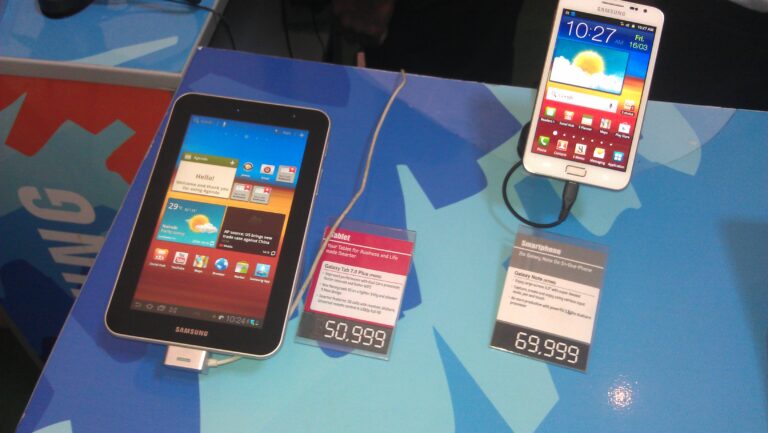
While shopping all over in Nairobi’s busy town centre for a phone, Mary’s final option was not to buy her new phone from an exhibition stall, but rather, one upscale electronics shops so as to buy a Sumsung Young phone on special offer at the price tag “Sh9,999”. Curious about the special offer, a sales attendant draws the her closer to admire the phone.

“This is the offer for the month,” explains the attendant flashing the phone noting that other phone assets come at a fee. Impressed, Mary buys the phone, giving the cashier Sh10,000. But as she gets the receipt and warranty details, the cashier looks at her with a “sorry” look appologising for not having loose change of a shilling. Mary empathises, has no qualms and walks away exited about her new purchase and friendly service.

Surprised, one would ask, “Isn’t one shilling still valuable for cash change?”

Though not new, this gimmick has quite benefitted a number of electronics’ shops that have price tags of Sh999, Sh9,999, Sh69,999 and so on. While the figure seems less and more affordable, using fewer digits, customers are drawn to purchase the products without understanding the value of one shilling. Yet, more than three quarters of Kenyans live on one US dollar a day, meaning that if they were to save a shilling a day, they would have set aside Sh365 a year – a fete for primary school pupil to receive such an amount as a Christmas present.

Other than that, minimizing the value of a coin, would mean that if a shop would sell 10 phones each day, appologising for not having “change of one shilling” or even Sh50 cents, the profits made would translate to Sh60 each week; Sh240 each month and Sh2,880 each year.

Thus, if would be wiser to ask for “loose change” as the Commercial Bank of Kenya states that it has not withdrawn or demonetised any of these coins: 5 cents, 10 cents, 25 cents, 50 cents, Sh1, Sh5, Sh10, Sh20, and Sh40 and they remain valid. According to CBK Governor Prof Njuguna Ndirangu, they are also the Legal Tender in Kenya as per provisions of the aforementioned Act.

Kenyan Government Changes The Laptop Project Tender Rules

0

laptop

In a bid to cut down cost, the government of Kenya has resorted to making changes to the rules governing the tender for the laptop project.

One notable thing is that there will not be any middle men involved; it has been restricted to laptop manufacturers only.

The government has also left room to negotiate prices with the shortlisted suppliers.

It will also take the responsibility of moving the laptops from the point of entry to schools, be it the sea port or the airport to the schools.

The announcement came as the government extended from November 14 to November 21. The tender for supply of the laptops was re-advertised on October 16th after the previous one was cancelled in August.

As of Thursday, only 58 firms had bought the bidding document compared to 126 in the initial tendering exercise.

“This process is a bit different from the initial one because we have opted for a very selective process that allows the government to negotiate with the shortlisted vendors to arrive at a reasonable price,” said Prof Kaimenyi, Cabinet Secretary, Ministry of Education.

The bid bond has been reduced to Ksh50 million from Ksh228 million and the performance bond to Ksh150 million from Ksh3 billion to increase participation.

The number of laptops to be bought had also gone down to 1.28 million from 1.38 million. 20,5337 laptops for teacher will be bought separately.

Some of the bidders include HP, Huawei, Samsung Electronics, Haier Technologies and ZTE Corporation who participated in the initial tendering process that was cancelled in August.

There are plans to spend Ksh17.4 billion annually for three years to buy the laptops, develop digital content, build teachers’ capacity and build computer laboratories for Class Four to Class Eight pupils.

Money has also been set aside to buy 20,637 printers and to distribute a similar number of projectors to each primary school. Some 150 trainers, mostly from secondary schools, have been selected for training.

Download A Malawian Song For $1.59

0

 music

The digital era is taking Africa by storm, Malawi, a country considered as the friendliest in the continent, has finally started selling and distributing Malawian music online for the first time; and are charging $1.59 per song while a whole album goes for $16.11.

All you have to do is go to  www.malawi-music.com and follow the procedure, the website is being run by Dingaani Whayo, and Dickie Chikago, a marketer and a software engineer respectively.

“This website is custom designed as it does not use free and open source platforms like that by Joomla or word press. It is flexible to all the changes that we will do if need be,” said Chikago.

The website will provide the songs in full length and of CD quality in mp3 format while albums will be zipped, in a single file with all mp3 files inclusive and details on how to unzip the files.

Whayo said the buying processing through the website will be supported by Google checkout cart also known as Google Wallet and that people can buy using VISA®, MasterCard®, American Express®, and Discover®.

He said it is the goal of Malawi-Music to provide Malawi music customers with a fast and convenient checkout process, so that they get to download the music they want legally and support the local music industry in Malawi.

There are currently 291 artists’ profiles, including the ones whose music is on sale.

Intelligent Energy Launches Upp in Africa to Charge Devices on the go

0

intelligent_energy_2012_highlightsLondon-based Intelligent Energy,  a power technology company has launched Upp – a personal charger for portable devices with USB ports such as smartphones, feature phones, eReaders, tablets, portable gaming consoles, as well as digital cameras.

Launched at the AfricaCom in Cape Town last week, Upp delivers at least one week of charge even to the most demanding, power-hungry smartphones. The device uses innovative fuel cell technology and has the ability to charge and power devices just like electricity.

According to Henri Winand, CEO of Intelligent Energy, “Upp represents a new category of energy device, and are excited about the transformational implications for the portable electronics market and the consumer. With the growing demand for portable devices, mobile and cloud services, consumers want the energy independence to keep their devices connected and powered-up all the time.”

Set to be available in shops in December this year in South Africa and Nigeria, the $200 worth Upp provides instant energy on-the-go. Its Intelligent Auto Shutoff feature conserves energy and protects battery life of the electronic device it is charging. It also comes with a free iOS and Android app for predictive usage statistics as well as user management.

UPP_11.11.13.jpg.700x600_q85

Upp works simply, the Upp fuel cell takes hydrogen provided by the Upp fuel cartridge and combines it with air to produce clean electricity with water vapour as a by-product. Users simply need to connect the fuel cell to a replaceable fuel cartridge to experience instant energy for their devices. In addition to the fuel cartridge being replaceable, Intelligent Energy has adopted a socially responsible approach to fuel replenishment, by enabling the reuse of each cartridge multiple times.

Amar Samra, Managing Director of Consumer Electronics, Intelligent Energy said: ““Batteries need help: their capabilities haven’t kept pace with innovation in smart connected portable devices. Given that 75 percent of the global population relies on the mobile phone to stay connected, the more you want to do with your device, the more energy you need. Consumers need a reliable source of personal and portable energy, and Upp gives you that critical uptime when you really need it.”


Africans need to understand how to speak the language of technology – Francis Madojemu

0

Francis Madojemu, the head of Nigeria’s iBridgeHub and initiator of iCODE has called for a shift in the technology paradigm in Africa. According to him, the continent needs to understand how to speak the language of technology and not just remain consumers of products made elsewhere.

“Computer has got to speak to us, we also have to speak to the computer in order to accomplish things,” he said.

He added: “A lot of people know about Twitter, Facebook and Instagram. But unfortunately, they only know about the finished products and not how the products were developed.”

Madojemu’s organization through its iCODE initiative is introducing children to the basics of coding.

“We are just trying to introduce people to the behind-the-scenes of the technology that is running the world today so that they can apply it and use it to change the world,” he said.

On the reason they are focusing on the children, he said the goal is to invest in their future in order to fill the vacuum that current exists in Nigeria and the world.

“There is a huge need for people with such understanding in the world, talk less of Nigeria. Even the Computer Society of Nigeria (COSON) has revealed that we have the problem of lack of people who can code and understand how to build technology you can apply,” he said.

According to him, technology does not discriminate based on color or race as long as the right instruction is given.

He said: “When are we going to start having technology we can speak Yoruba to? Computer is not discriminatory; it doesn’t care if you are white or black, Yoruba or Igbo. If you give it what it needs it will give you back what you asked for.”

Attix5 Appoints Global Marketing Manager

0
Robert
Robert

Johannesburg (Bryanston)-based Attix5, a global provider of data protection software and cloud solutions has appointed a new marketing manager in a move to increase hybrid cloud solutions on the continent.

The new appointment, Robert Kellerman, a B.Eng degree in Electrical and Electronic engineering and an Msc.Eng degree in RF engineering, brings on board over seven years marketing experience in state-of-the-art software technology and was part of a successful startup antenna design software company in 2008.

“We are very pleased to have Robert join the Attix5 team”, says CEO Michael Law. “His technical background, combined with his passion to engage with the target audience is the perfect fit. Attix5 has a mature product offering with many satisfied customers and the rest of the world needs to hear about us.”

Robert is very excited about the opportunity to grow Attix5 into an internationally renowned name in the world of backup and recovery.

Although the company has been specializing in backup software since 1999, ever since focusing on secure hybrid cloud backup solutions, it has been a hidden gem. “I want to grow an honest brand which says: Who, what and why Attix5? in such a way that people will easily see the value in what we do and what our products and services have to offer”, says Robert. “These days people are blind to flashing banners ads, marketing hype and videos which do not engage with their intended audience.”

Attix5 Africa is a market leading developer and provider of data protection software and Cloud solutions, service and support to companies of all sizes, globally – including listed enterprises and Small-to-Medium Enterprises (SMEs).

Established in 1999,  the firm has grown exponentially through the years in terms of actual size, in market share and as a recognised brand, designed to support network growth.


iCow Is Now The Top Mobile Agricultural App

0

icow


Farmers in Kenya have all the support in farming they need, one of the people who have the farmers interests at heart include iCow,  it is an SMS based mobile application aimed at  promoting smart animal husbandry. This App has received recognition from IT News Africa and has been rated as Africa’s best mobile agricultural application by IT News Africa during  the just concluded ICT4Ag conference in Rwanda.

All the farmer has to do to subscribe to this service is dialing  the short code, *285#, and animal farmers can access expert  information for Kshs.3 per message.  So far 12,000  farmers have subscribed to the service, 55 percent of whom are youth between 18 and 35  years of age.

iCow has  three main features namely Kalenda, Mashauri and Vet and artificial  insemination. Kalenda enables farmers to keep track of their animals during the  gestation period while Mashauri is a service that sends farmers three SMS  tips a week on best agricultural practices. The  Vet and Artificial Insemination service links farmers with veterinarians.

“We are very excited that IT News  Africa has recognised iCow as a leading social innovation this early into its  life. We are continuously expanding our offering to farmers  and just recently, we introduced information on  rearing indigenous chickens on the Mashauri feature,” said Su Kahumbu, iCow’s founder.

Safaricom CEO Bob Collymore highlighted the importance of social  innovations. He noted that, “The mobile phone explosion being witnessed in Sub  Saharan Africa has positioned the device as an important tool in addressing  social needs. In line with our vision of Transforming Lives, we have a team  dedicated to the introduction of mobile apps such as iCow, which provide  solutions to social issues.”
Another  Kenyan app on Africa’s top ten mobile agricultural apps is M-Shamba, an interactive  platform that is being used by about 4000 rice farmers to help them adopt  new technologies in rice farming.

Kenya’s Mpesa Bags The Best Money Transfer Service Award

0

mpesa

Safaricom’s Mpesa is still seated on the driver’s seat in terms of money transfer. The Mobile Money transfer service has received yet another global accolade at the 6th Mobile Money Global Awards held in Dubai, UAE.

Getting a new name, ‘Best Operator-Led Mobile Money service’, Mpesa outshined even the services from developed countries, the likes of UAE, Qatar and the USA. The name was given in recognition of the success that Mpesa has had in the emerging markets and its potential to transforming lives.

“This award is an endorsement of the role that M-PESA continues to play in the advancement of the financial inclusion agenda in Kenya and we remain firm in our commitment that we will continue to introduce innovative financial tools for our customers,” said Safaricom’s General Manager of Financial Services, Betty Mwangi-Thuo.

Since it begun in 2007, Mpesa service has evolved from being a money transfer service to a payment platform with a customer base of more than 18 million subscribers. Through its Lipa na M-PESA service, Safaricom is championing a cash lite economy in Kenya which is in tandem with the government’s plans to launch a cashless payment system in April next year.
The iconic mobile transfer service has won several global awards since its launch including: Best Mobile Money transfer services in the Global Mobile Awards, Achievement in Financial Inclusion award, GSMA Best Mobile Money Transfer Service, Mobile Content Award, Best Mobile Money Transfer Service and four times GSMA Award among others.

Does the Curtailing of Press Freedom affect Internet Connectivity in Ethiopia?

0

Ethiopia

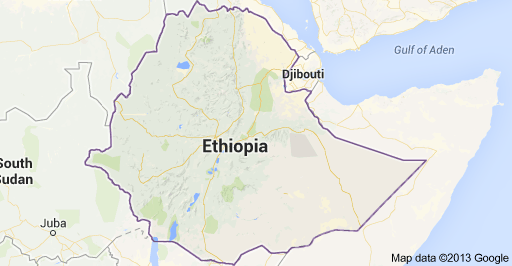
A United Nation’s International Telecommunication Union (ITU) report has recently placed the country at 151 out of 157 in terms on internet connectivity making it one of the least countries with internet penetration.

Ethiopia has around 100 million people second only to Nigeria in terms of population but has a meager 1 – 2 percent internet penetration.

“A lot of African countries’ ICT sector officials complain that they are not getting sufficient budget for ICT projects,” said Andrew Rugege, the ITU’s regional director for Africa. “Private investors in the sector must be encouraged and this can help to prompt the African countries’ status into a better position.”

Even so, the need of internet and broadband access is there in the country. But legislation has been seen as somewhat a hindering factor.

Is this due to the country’s policies on internet freedoms?

Recently the country is planning to put up a legislation framework that will be able to monitor activities on the internet. The Information Network Security Agency (INSA) will look to investigate ‘suspicious’ networks, computers, websites, television, radio and social media that would negatively affect the well being of the country.

Such piece of legislation usually deters those who want to use the internet to voice their concerns. So even in the event that the country would see increase in its internet penetration rate, will the users feel free to indulge in its use?

When Pitching, Think More of Business Than Codes – Prowork

0

Francis pitching at Venture Out Challenge 2013 held in Moldavia
Francis pitching at Venture Out Challenge 2013 held in Moldova

Francis Onwumere, Business and Product Developer, Prowork Collaborative Project Management has revealed that startups pitching at challenges such as the Venture Out Challenge must think more of the business than codes.

His startup was one of the two Nigerian startups that participated in the last Venture Out Challenge held in Moldavia.

In an exclusive chat, he said the advice is in line with the focus of the challenge which is to scale up the startup’s business model.

He said: “I believe you have to think more of the business. According to Steve Blank – “a startup is an organization formed to search for a repeatable and scalable business model“. Venture Out is about scaling your business model, so you need to have some understanding and practice of the lean startup approach and the business model canvas.”

He said he is open to similar challenges and would endeavor to improve on communication.

“Pitching your startup is about communicating different aspects of your business model. We can always improve there,” he said. He added: “We are always focused on the business. If we find an opportunity like Venture Out to improve the business, we’ll take it.

Prowork is collaborative project management solution for business. It is a unified platform for project management and collaboration.

“We made it easy to use, mobile and ubiquitous. Prowork is real time and available on mobile, web, API and SMS for offline scenario,” Francis said.

Shipments Of Wearable Smart Glasses Are Set to Hit 10 Million By 2018

0

 smart glasses


Latest reports from Juniper Research predict that by 2018 the business of shipping the wearable smart glasses will have gone up to 10 million annually as it is currently at 87000 shipments annually.

Juniper is a leading hi-tech analyst and it further notes that as the retail price for Smart Glasses decline towards the end of the forecast period, the adoption level amongst consumers will significantly increase.

In their report, ‘Smart Glasses: Market Prospects 2013-2018’, they say that the device will only get such turn outs only if the devices incorporate intuitive and user-friendly functionalities.

The report also argues that consumers will be ones making most of the shipments of this devices and followed by other sectors beginning with the enterprise and the health sectors.

In the health sector, smart glasses are predicted to be very efficient in diagnostic reference, surgical assistance and monitoring can be applied. Long term growth will be achievable but regulatory approval and field trials will potentially impact timescales.

The enterprise sector on the other hand has a whole load possibility, starting from engineering to logistics applications.  Well, as for the App developers, they are still finding out custom enterprise use cases for developing apps for smart glasses.

However, the largest opportunity will be in the consumer sector with the rate of adoption largely dependent on the market availability of attractive hardware and apps. The report adds that app-enabled mobile smart wearable device hardware market will approach $19 billion by 2018.

The report says the market will be dominated by the most developed regions in North America, Far East & China and Western Europe.

Since its introduction, the device popularity has not gained momentum in Africa, as its market is still fascinated by smart phones;

Pamoja In Fresh New Look

0
Albie
Albie

SEACOM’s Cloud business unit, Pamoja  has invested in a fresh new look website to reflect its growth and its value proposition to the market.

The construction of the new corporate website was outsourced to an experienced services provider with the main requirement to showcase Pamoja’s range of new services and an updated business model.

Syncrony Internet Services was selected as the provider of choice, based on its extensive experience in the market, its understanding of the corporate online environment and its level of service. The current website is in the first phase of a multi-phase design which will see partner portals integrated with the Company’s corporate site.

“We had to ensure that the project would not impact on operations,” says Albie Bester, General Manager at Pamoja. “We had to focus on our core business and having Syncrony on board allowed us to do that.” Bester points out that the new site, integrated with social media, is also mobile device friendly and can be viewed from all major mobile platforms. The website will become the primary communications channel for interaction with resellers. They will have secure logins which will allow them to gain access to software and marketing material.

In 2011 SEACOM incorporated Pamoja as its Value Added Services business unit, and the strategic arm in leading its entry into content aggregation and associated Cloud computing services.

Pamoja’s Cloud services business model is built on the growing demand for IT-as-a-Service from small and medium enterprises (SME), coupled with the need for service providers to increase the value of their existing offerings and grow broadband revenue. Pamoja is building a SME Cloud services marketplace which it offers to channel partners and service providers to on-sell under their own brand (white-labelled) to their customer base.

With access to dedicated SEACOM bandwidth, Pamoja will be able to deliver Cloud services from any of its datacentres in Africa, thereby bringing the Cloud to Africa.

Via PR

Safaricom Plans to Begin Content Streaming and TV on Demand Services

0

movie streaming

Kenya’s integrated communications firm, Safaricom is seeking to increase the use of data by offering on demand television services for its customer.

Bob Collymore the company’s CEO said that the company aims to bring services such as “streaming of internet protocol television, looking at video on demand, balancing the type of content and understanding local market needs.”

The service which is aimed to be up in 12 months will be available on mobile phones, tablets and on television sets.

The video on demand services have seen a lot of attraction from the investors with Able Wireless, the first of its kind in sub Saharan Africa ready to launch their home streaming service.

Able Wireless will be able to bring latest movies and series through a blackbox that will also provide unlimited internet for the users.

Such services will definitely pile pressure on the traditional broadcasters and they will have to look at how they will change their model to suit the oncoming wave.

Sony’s PlayStation 4 Sales a Record 1 Million Units In First 24 Hours

0

sony-ps4-logoSony has announced that it has sold 1 million units of its new PlayStation 4 gaming console, just 24 hours after making it available in the US and Canada.

Seen as Sony’s saviour on its hold on consumer electronics business, the PS4 went on sale Friday November 15.

“PS4™ was designed with an unwavering commitment to gamers, and we are thrilled that consumer reaction has been so phenomenal,” said Andrew House, President and Group CEO, Sony Computer Entertainment, Inc. “Sales remain very strong in North America, and we expect continued enthusiasm as we launch the PlayStation 4 in Europe and Latin America on November 29. We are extremely grateful for the passion of PlayStation fans and thank them for their continued support.”


The PlayStation®4 system is built for gamers and inspired by developers, provides powerful graphics and speed, intelligent personalization and deeply integrated social capabilities.

The PS4™ system comes with a DUALSHOCK®4 wireless controller that allows gamers to easily share videos of their favorite gameplay moments on Facebook, and images of their gameplay on Facebook or Twitter, with a single press of the controller’s SHARE button. Gamers can also broadcast their gameplay in real-time through Ustream or Twitch, and friends can comment on the streamed gameplay.

The PS4’s launch lineup includes highly anticipated games such as Killzone™ Shadow Fall, Knack™, Assassin’s Creed®IV Black Flag™, NBA® 2K14 and Call of Duty®: Ghosts. The PS4 system also offers access to entertainment options through a curated portfolio of digital entertainment apps, including Sony’s own Music Unlimited and Video Unlimited, as well as Amazon Instant Video, Netflix, NBA Game Time and Hulu Plus, all available on PlayStation®Store.

Voice of the Underground Wants to be a Platform For Africa’s Unknown Hiphop Musicians

0

VOTUFounded in Kenya in 2008 by the Ghetto to Ghetto Foundation to promote music, Voice of the Underground (VOTU) is an online radio and TV platform giving unknown hiphop musicians chance to showcase their work regardless of their location or country.

The team say that they were inspired by the tendecies of Kenyan media which in those days played music discrimnatively avoiding some artists or producers. They realized it was phenomena across the continent.

VOTU now boasts of serving artists from across Africa, and from the world. They have also moved from just music streaming to production of programmes to the portal.

Currently they are working with partners like Kuna Vijana, Inuka Kenya (Ni Sisi), Audio Kusini, Ufuoni Records, Kenyatta University radio, KGNU radio Colorado (USA), Revoda Mobile Apps (Nigeria), TZHiphop, among others.

TechMoran will bring you an exclusive interview with them soon.

Breaking: Apple Acquires Israeli 3D Sensor Startup PrimeSense For $345 Million

0

primApple has acquired Israeli 3D technology firm PrimeSense for $345 million according to reports from the Calcalist.

The Tel-Aviv firm builds 3D sensors for use by firms building TVs, smartphones, computers, robotics, healthcare among others. The firm is known for sensing technology that gives digital devices the power to show a scene in 3D. One of its known client’s is Microsoft’s Xbox Kinect.

Though information is still scanty, Apple’s acquisition will help it take 3D sensing and natural interaction to everyone via its devices.

PrimeSense is Apple’s second company to be acquired from Israel after it acquired Anobit, a flash storage chip maker January last year.

The Calcalist also adds that PrimeSense had raised $85 million from VC’s in Israel and U.S.  such as Canaan Partners Global, Gemini Israel and Genesis Partners among others who have probably had a reasonable exist.

CEO Weekends: Afrimakers Launches a Crowdfunding Campaign Seeking $50,000 to Empower Hardware Makers in Africa

0

afrimakers

Afrimakers, a project by Stefania Druga  the Berlin-based-HacKidemia founder, a Singularity University Education fellow and a former Google employee, has launched a crowdfunding campaign to raise $50,000 in a  move to empower makers in Africa.

Just launched,Afrimakers seeks to empower makers in Africa to develop sustainable projects to solve local challenges and create an exchange of best practices between locals.

According to their campaign page, “Afrimakers is an initiative that wants to enable African makers to use digital fabrication for solving local challenges like access to clean water, energy, information. The idea is to plant the seed of local change through social entrepreneurship, digital fabrication and regional collaboration.”
Druga and her friends said they want to kickstart maker workshops focused in hubs in Kenya, Tanzania, South Africa, Zambia, Ghana, Nigeria, and Egypt. if the campaign goes well, the team say each of the seven hubs selected will receive a HacKidemia maker box of tools and will recruit a local team to be trained by them to organize and to run hands-on workshops in local private and public schools.

Then twith Maker fellowships, members of each team will go and train other hubs and makers in the region and nearby countries.

The HacKidemia Maker Box has a Raspberry Pi, an Arduino, a Microscope, a Makey-Makey and otehr tools like sensors, lights, cables, batteries, bread boards, conductive thread for wearables projects and crafts, a soldering Iron and solder, tools pliers, scissors and alligator clips.

gearbox2 The aim of the HacKidemia Afrimakers campaign is draw interest from grassroot teams to start maker projects to slove their community problems. The initiative will also train seven teams of mentors in seven hubs who will also go out and train others especially in local schools.The team earlier trained 50 mentors in Nigeria, who in turn trained 400 children in two weeks and made partnerships with ten local schools within a month of their initial training.

The team sees the Afrimakers campaign as a great learning opportunity for those to be involved. It will also solve local problems, create makers, create jobs and income for the participants and build a culture of makers in Kids. Because the project is affordable, it can be replicated allover thus creating maker workshops around the continent.

The berlin-based team need the money to begin this trip around Africa and enable makers to kickstart their sustainable and meaningful projects. They promise that  70% of the funds will be spend on materials and fellowships for local makers, 20% will cover their travel costs and 10% will be used for the book production and printing and for production of the other perks (t-shirts, bags, shoes) but f they exceed their funding goal they will be able to create more hubs in other African countries.

The initiative, is successful might closely work with Africa’s MakerFaire and hardware hubs across the continent such as Gearbox among others.

Go to their campaign page for more.

CEO Weekends: 10 Proven Methods That Successful Startups Live By

0

innovation

Human effort everyday is towards achievement, whether they are working on a profit business or running a charity. Some of this success comes in a way of return on invesments or impact. Many os us won’t give up unless we begin seeing results of our sweat.
This post was written by for Addicted2success.com

Being an entrepreneur and starting your own business takes many things, and it’s not all about the cash. There are many inner demons to be dealt to get started and make your start-up successful.

Starting your own business helps you to face your fears, accept your limitations, and forces you to lay a foundation under those dreams. In fact, what looked good on paper may not make sense at all once the “real work” kicks in. Therefore, what ways can you improve your start-up to make an impact, and how can you solidify yourself in your market?


Small Business Startup Advice To Live By


1. Confirmed Customers

This is a set-in-stone rule that consummates entrepreneurial planning. Are you sure in advance that the product or service that you have to sell will have, or has, the customer base required to become a success? Many start-ups with good potential fail to adequately validate a customer base. A successful start-up measures its development on the foundation of verified, reliable, paying customers.


2. Good Planning

It’s been said over and over again, that having a good business plan is key to a successful business. Actually, the truth lies somewhere in the middle. You need some type of plan to know where you are going, but you must be flexible as well. A start-up that has actively planned a means of moving ahead, whether on a national or international level, and has a solid one to five year agenda, and is making perpetual and visible progress to meet important targets is poised to succeed.

I am a big believer in creating a business map and not so much a business plan per se. Keep it simple and definitely achievable, something that paints a clear picture in your mind of how you would like to see your startup mature in the coming years. The business world is evolving very rapidly nowadays, especially in the tech start up scene and it is good to keep an open mind and open plan when it comes to creating your goals and vision for the future.


3. Easy on the Cash

Living below your means is a maxim that applies to businesses as well. A conservative operation is the way to do it these days, and private corporate jets are out! An entrepreneur who can “take it easy” with the funds, even when there is plenty of funds available has a better chance of solidifying and keeping their business afloat.


4. Transparency means less Worries

Loyalty, veracity, and transparency are all linked. A successful start-up should have little to nothing to conceal. It’s just plain easier with less clandestine methods about billing, customer purchases, and pricing strategies. In addition, you are more likely to have a devoted staff as well.


5. Communication

Successful companies, entrepreneurs, leaders, and confident people in general have a knack for communicating well. They convey positive news and communicate adverse news with frankness and simple language. They are skillful communicators, point blank, and no great company can succeed without one. If you are not that one, hire someone who is. It is well worth the investment!


6. Don’t Set Expectations too High

You know you have what it takes; however, that enthusiasm must be tempered with a bit of realism. Setting your sights low does not mean that you shouldn’t “plan for success.” It only means that it will take work and there will be inevitable bumps in the road along the way. Your product or service may be revolutionary, but if you “go over the top” right from the start, a modest beginning may disappoint you. By starting conservative, a self-effacing success will be visible making you look even cleverer.


7. Start-up in the Hood

By creating and testing your product or services in your locale you have many advantages from the start. Distribution and advertising will cost much less. People you already know will be involved and more than likely they will be more honest with you. In this way, you can “brush up” on anything that needs tweaking. In addition, it’s easier locally to gain marketing advantages.


8. Grab the Easy Customers First

Just about every product or service has the potential to grab a particular group of customers. An entrepreneur should concentrate on that particular group with gusto. Market, allocate, and maintain them and odds are that your business will increase. Even that amount of success will encourage you to extend your business to more complex buying customers. On the other hand, if this strategy does not turn out they way you had hoped, it’s no reason to be discouraged, just change your strategy, and learn from your mistakes.


9. Partner with a Larger Company

Maybe a company similar, but not selling, the same product or service, could possibly assist you with climbing the ladder. Perhaps you can develop a temporary-partnership that will permit you to grab some of their muster. For example, if your company offers a pioneering exercise bike, maybe a local shop that sells exercise clothing will partner with you and you can split the profit. This may not seem attractive in the beginning, but hey, at least you get your name out there!


And last but not least, we will let the amazing founder of Apple ‘Steve Jobs‘ explain this one for you. This is the most important Startup Rule to Live By:


10. Follow Your Passion

Steve Jobs Startup Picture Quote


Summary

Short of a catastrophe, any entrepreneur that adheres to the points listed above is sure to make way and solidify themselves in the market they wish to conquer.

Source:Addicted2success.com

CEO Weekends: KPMG Launches $100 Million Venture Fund to Accelerate Big Data Startups Globally

0
Capital-hero-980-v2After a  KPMG survey found that an overwhelming 96 percent of top companies were not using data and analytics effectively, KPMG International decided to launch KPMG Capital, an investment fund to accelerate innovation in data and analytics (D&A).
The $100 million venture fund based in London will invest in big data startups globally to drive data and analytics uptake to solve critical business challenges in areas such as new revenue streams, risk management and cost optimization by unlocking ‘big data’. The formation of venture fund comes after the global accountancy and consultancy firm established an office at East London’s startup hub, Tech City.

According to Mark Toon, CEO of KPMG Capital and global lead for KPMG’s D&A practice,  the firm’s new research shows that business leaders recognize the tremendous importance of D&A to business growth but feel they need more support to develop effective solutions.

KPMG Capital will enable us to develop or acquire opportunities in D&A quickly. Through partnerships with technology and service providers, strategic partners and other third parties, we aim to accelerate innovation in D&A to bring potential solutions to clients – and to the market – faster.”

Toon added, “With more data produced and stored in the last two years than in the rest of human history, many businesses are looking for strategic and practical solutions to manage the volume, velocity and variety of this data revolution. KPMG Capital will lead the way in addressing the challenge of the three ‘v’s.”

kpmg To him, firm’s the most successful companies will be those not merely collecting the data, but those that can distill data and translate it to insightful business guidance as too many companies still see big data principally as a technology issue, instead of seeing it as a business issue.

KPMG Capital is set to help companies look at their data differently and turn it into value. It will invest in a number of critical business areas such as healthcare, financial services, energy and telecommunications. The funds will help the firms to make their business flexible, finance them for growth, help in regulation and compliance and improve workforce productivity and customer acquisition.

Apart from just investing in firms,  KPMG Capital will also partner with and or acquire organizations that specialize in data and analytics tools and assets.

“D&A is part of our heritage, but with the fast pace of technology and globalization, clients want deeper insight more quickly.  KPMG Capital’s structure will allow us the flexibility to commercialize solutions which our global network of professionals can use to help business leaders harness the right data, analyze it and translate it into value. This is a transformative step for the future of KPMG’s member firms as well as for clients’ businesses,” said Michael Andrew, Chairman of KPMG International.

KPMG Capital will enable a nexus for the world’s best thinking in data and analytics,” he concluded.

CEO Weekends: Nedjma, Algeria’s Fastest-growing Telco Rebrands To Ooredoo

0


In a bid to enhance performance and to roll out a global brand, Nedjma, a telecommunications in Algeria and in North Africa has rebranded as Ooredoo, its parent company in Qatar.

“This is a proud moment for the whole Ooredoo family, as another operation takes on the mantle of our new brand,” Ooredoo Chairmam Sheikh Abdullah Bin Mohammed Bin Saud Al Thani said during the launch in Algiers, noting that Algeria has proven to be one of the most successful markets, fuelled by its powerful connection with customers and our strong focus on human growth.

The launch came after the rebranding of the Qatar based company Ooredoo, rebranding from Otel in February this year 2013, besides signing up a football hero Lionel Messi as the global brand ambassador to support the initiative. Continuing with its strategy to introduce a global brand, Ooredoo is yet to rename 14 of its telecommunications brands across Asia, Middle East and parts of North Africa.

Apart from having a 25 per cent stake in Asia Mobile Holdings, Ooredoo currently owns telcos in countries including Tunisia, Pakistan, Indonesia, Oman, Saudi Arabia, Kuwait, Iraq and the Maldives.

To attract more liquidity to its shares, the company may soon list on the London Stock Exchange to attract more liquidity to its shares, even as other Ooredoo subsidiaries like Indosat, the second largest telecommunication operator in Indonasia receive awards for their services. For instance, Indosat’s money scheme Dompetku was awarded the “Best Mobile Money Deployment in Asia” in November 2013 at the Mobile Global Awards for its fast deployment of the life enriching Indonesian service, efficiency and unique model of deployment topped with the wide range of banking and finance offers offered by the service.

While Ooredoo’s company’s headquarters and all its stores in Algeria have already rebranded, the Algerian Telco Nedjama which began operations nine years ago becoming the country’s second largest telecommunications provider, will for now continue to use both the Nedjma and Ooredoo logos during the transition process till next year.

CEO Weekends:Jumia Nigeria Launches a Christmas Store & a Wedding Shop

0

JumiaRocket Internet-backed JUMIA, an Amazon for Nigeria has launched the biggest online christmas store in Nigeria and also unveiled the countries online wedding store.

The online wedding store will be the go to for Bridal wear, grooms tuxedos, maid’s dresses and suits, shoes and ccessories plus gifts of all manner. It will also stock top Nigerian brands such as Juliana Rose, Style Shoes, David Wej, Ethina, Eternel, Hatz& Souls and House of Fabric.

Jumia co-founders with Mrs. Omobola Johnson, Nigeria's Communication Technology Minister
Jumia co-founders with Mrs. Omobola Johnson, Nigeria’s Communication Technology Minister

On the otehr hand, the Christmas store will stock fashion clothing, phones, electronics and gadgets and of course a wide selection of beauty products as the feastive season sets in. Jumia’s Christmas store store will also seel Christmas lightings, decorations and Christmas trees.

The two shops will offer free delivery to buyers from Lagos and Abuja. In the spirit of the season, Jumia customers will enjoy 20% discount on every fashion item purchase and 5% discount on Christmas gifts.

“We are delighted to be introducing more stores on our website especially at this time of the year,”  said TundeKehinde and Raphael Afaedor, Co-founders Jumia Nigeria. “For Jumia this is our second Christmas as a business and this time we have made it even bigger offering customers everything with the best prices giving everyone the Perfect Christmas. Also with the launch of our wedding category we are giving Nigerians everything they can get online with weddings so big in Nigeria Brides can see Jumia as the one stop place for their wedding planning’’


CEO Weekends: Kenyan Sci-Fi TV Series Predicts What Will Happen To Africa In 2062

1

Local cinemas and TV stations in Kenya may for the first time screen a Kenyan-based Sci-Fi TV series “Usoni”, that casts Africa as the world’s new oasis amidst a dark universe in 50 years to come, as soon after the United States International University (USIU) screens the series by end of November 2013.

“We are trying to push the boundaries in terms of production in Kenya also noting that Kenya has good quality productions,” explained Usoni Producer Denver Ochieng noting that the university-based production encourages youth to come up with innovative concepts in film production, away from the norm.

At a time when Africa receives 50,000 Greencard Lottery wins each year to migrate to the US alone, this new production series seeks to address ongoing immigration issues within the world. It is also expected to change the negative portrayal of Africa as a poverty stricken continent to that of an avenue for development, of which, would gradually discourage youth from seeking “greener pastures” abroad.

As the brain child of Dr. Marc Rigaudis, directed by Cherie Lindiwe from USIU, the new plot revolves around a young couple embarking on a treacherous journey to reach mankind’s last cradle of hope, Africa. However, the couple must beat the impossible odds, experience great sacrifice yet keep their faith before their goal can be achieved.

“Usoni is actually a series focusing on the travel of a couple from the natural disaster stricken Europe to now the now illustrious Africa in 2062. It is a story which focuses on the immigration hurdles of Africans to Europe and looks at how it would be if the reverse were to happen,” Ochieng said.

Thus far since October, the Usoni crew of 20 has generated an audience of over 600 curious fans checking out the official trailer posted on their Facebook page Usoni. The official trailer has generated at least 300 views on Youtube and on several gaming websites.

The plot will be ready for screening on 27th November 2013 at the USIU auditorium open to the students and public. Perhaps, the ambitious production, depending on the reception, would be the next newest TV series to be aired on local TV stations or even screened internationally.

To view the official trailer, visit https://www.youtube.com/watch?v=vNpMiI_MJMM.

CEO Weekends: Yiannis Hatzopoulos on Why He Build a SIM Card Exclusively for Muslims

1

greek-erRecently a Greek engineer, Yannis Hatzop0ulos, launched a unique GSM SIM card exclusively for Muslim only to help them achieve their religious duties.

The SIM card comes with applications such as a compass used to point to the direction of Mecca, a list of prayer times, a call to prayer and an Islamic calendar to name a few. The SIM card can be used on both smart phones and normal mobile devices.
TechMoran caught up with him, and here are his reasons.

What inspired you?

Indeed the first thing that journalists always ask me , is how a Greek engineer came up with this concept.

I can say that it is a proof that serendipity rules. I was attending the Mobile World Congress in 2009  in Barcelona. At that time, I was being hosted at the Gemalto booth   (www.gemalto.com) – presenting prototyping work on SIM development and talking to business visitors. In one of the discussions I had, the successful launch of the 2nd generation of LG’s Islamic phones came up (eg check this http://www.lg.com/tn_en/mobile-phones/lg-GD335 ).

At that time LG was very successful with these; sold tens of millions that year, retailing around 250 USD. I was impressed with the concept; I got interested in this type of product and started checking it out. The next few months I realized that I could pack most of the functions of an islamic phone inside a SIM card, to turn any casual feature phone into an islamic phone simply through the swap of its SIM card. A lot of GSM feature phones are in use in Asia and Africa, due to their low prices, long battery lives and ease of use. Also, there are places where the networks have not been upgraded to 3G,  which can support a functional smartphone with islamic apps; and in most places prepaid connections and high churn rates exist + lots of dual SIM phones  in Asia. I always wanted to design a really affordable product, that great numbers of people could use and appreciate in their lives.

A SIM is cheap, so this type of product-offering could be used as a utility gadget by mobile networks, to attract those users that could not really afford an islamic phone or smartphone, but would find it convenient  (eg think of Ramadan time) to introduce islamic features in their existing GSM phones.

The concept prototype was submitted to SIMagine, a development and business plan contest
event run by SIMAlliance (www.simalliance.org) in 2010. The Islamic SIM project got a Best mobile app award  that year, which subsequently led to contacts to SIM manufacturers who eventually provided resources to build the first network connected samples for market evaluation. Right now I am working closely with Bluefish Technologies. I think they are No 5 in the world in SIM manufacturing.

This SIM basically offers on plain-vanilla feature phones what you get on an Islamic phone/smartphone, minus the Quoran text. (We get a dial-a-Quoran voice recital instead with the SIM…)

As you know Islamic praying is a complex practice. Executed 5times/day- and times change from day to day (based on location, date, islamic jurisprudence).

Featurewise, this SIM helps the users track the Mecca direction when navigating unfamiliar space, delivers ringtone calls-to-prayer generated by the SIM card, redirects incoming calls during muslim prayer time (thus cellphones need not be deactivated inside Mosques…). It also provides Arabic calendar converters and other handy little utils. Moreover, think of places where Muslims are minority, like India. Their phone can ring anytime during their prayer session, since the other people can not keep track of the Islamic praying practice. With this SIM no lost calls and no disturbance by incoming calls during a prayer session any more.

Why only for muslims?

Similar offerings for other religions are under preparation.
How does it work?
It is basically embedded software that ‘sits’ on top of the SIM Card operating system
that makes it all possible. Functionality wise you get access to these services through
your SIM menu.

Who is on your team?
The first prototype I designed it alone. To turn it into a product I hired
a small group of Greek engineers and was provided support engineers from LogosSolvo
(www.logossolvo.com) which belongs to the same holding group as Bluefish Technologies
(www.bluefish.com) which helps market the product.

Who are your partners-say telcos on board?
Cannot publicly disclose at the moment.

What is the market like?
Practically every Muslim person that owns a smartphone has an Islamic app installed. This is
not the case for users of feature and cheap low-end phones.

Markets in Asia and Africa are dominated by feature phones. In Africa only 14% are smartphones
and in Asia less than 25%. Around 1billion feature phones are used by Muslims and have
the potential to be transformed into Islamic handsets, through the swap of the SIM.
Also markets are dominated by prepaid connections and high price-sensitivity.
Plus many dual sim phones out there. We try to launch the service, to help MNOs attract
more subscribers to their networks, reduce churn rates and keep the users that
cannot afford a smartphone+data plan loyal to the network, giving more value and technological edge than
competition.

Any funding?

Privately funded so far.

CEO Weekends: 9 Hurdles Most Entrepreneurs Encounter In Life

0

hurdlesThis post about hurdles most entreprenuers will encounter was first published by Entrepreneur.com.

1. Fear of the unknown. People get used to the familiarity of the past and are afraid of anything new. This might lead you to decide to leave everything just the way it has always been. A winner knows that sticking with the old ways will never lead to satisfaction.

2. Fear to get involved. If you do not have the habit of engaging yourself, but rather passively undergo what others decide for you, then you will have to create new habits that give you the feeling you are actively creating your life, choosing what you want and making an effort towards your goal.

3. Fear that others will leave you. When your environment has gotten used to looking at you as a weak person, undecided, unhappy or sad, then you might be afraid of changing. Maybe you are afraid of losing their attention if you no longer show weakness, illness or fatigue. Is this the reason why you want to keep the status quo? Do you really want to continue suffering from the low vibrations of disease, despair, complaining, just to please your environment, afraid of losing their attention once your are successful?

4. Fear of success. If you got used to looking at yourself as a failure, not capable of doing anything right, then the idea of being successful might be quite uncomfortable. In this case you need to expand the image you have of yourself and start accepting that you too can succeed and be happy, and enjoy abundance in your life.

5. Refuse to be tested along the way. Be aware that you will be tested along the way, in order to make sure your choice is clear and firm, that you are sticking to your decision to walk your own path. The firmness of your decision and the depth of your engagement will be proofed. Accept this and move on.

6. Negative thoughts about life. Carrying negative beliefs about life will make it difficult to attain success, riches and happiness. Make a list of all your negative thoughts and systematically replace them by positive ones. Encourage yourself on your way to success instead of cutting yourself down.

7. Refuse to start anything before you are 100% sure to succeed. You will never have absolute certainty as your mission is constantly unfolding as long as you live. Look at it as a journey. It’s a process, an itinerary, where the important thing is who you are becoming along the way rather than where you are arriving. When you are experiencing more energy, joy, enthusiasm and wealth, then you can be sure to have made the right choice. This ought to be enough to dare take some risk and take some big decisions.

8. Being oversensitive to remarks from people around you. To complete your mission and stay your course you need to learn to face negative remarks from your environment. Surround yourself with people who support and encourage you, and ignore the remarks of those frustrated people who prefer cutting you down over taking charge of their own life. Leave their remarks with them, as their remarks say more about who they are than about who you are. Especially don’t start analyzing their behavior, but rather concentrate on your own life goal. This way you are an example for all who one day also start living their mission.

9. Thinking you still need a lot of time to prepare yourself. Make sure not to waste too much time and energy on lengthy preparations and considerations. There’s no need to go get professional help all the time. One day you will have to get your feet wet yourself. It doesn’t have to be perfectly planned before you can get it going. It is practice that makes perfect! What matters is to take that first step and start things up. Your experience in the field will eventually turn you into an expert. You cannot obtain experience through endless thinking and preparing. Concrete action is the only ground you can build on.

Do not be discouraged. This resistance is part of the package. A life without challenge would be quite boring. Make use of your resources to make sure you stay on track.

In any case, you will be enjoying more energy and happiness, now that you head towards your goal and overcome your resistance to change. This energy and joy can be radiated to your environment, and your example will urge others to start looking for their own mission.

Article By: Ineke Van Lint

CEO Weekends: 6 Ways Startups Can Improve Sales Lead Generation

0

More-Leads

By , For TheNextWeb.com

Startup companies often struggle with lead generation and sales – even though the founders are often very enthusiastic about their company’s product, solution or service, they might not have a good sense of which customers are truly receptive to their solution.

Another challenge for startup founders is to sell in a way that feels natural, comfortable and authentic to who they are. Startup founders often have a sense of idealism – they have identified an excellent solution to a pressing problem in the market, and they want to get in front of as many potential customers, partners and funders as possible, as quickly as possible, but they don’t necessarily think of themselves as “sales people” and they don’t want to be identified with stereotypical “pushy sales tactics.”

How can startups get better lead generation results – find more of the right companies that are interested in buying what you sell – while also do better at “authentic” sales tactics?

Here are some tips to help startup entrepreneurs get better lead generation and sales results.

Sell to the right companies

Many startups make the mistake of trying to sell their solution to anyone and everyone. It’s very important to focus your lead generation efforts on only the companies that are the right fit.

Do your research. Figure out which companies have the biggest need for what you sell (note that it might not be the “usual suspects”).

Make it easier to try your product. Do you offer a free trial or test run? Is it easy to access with no complications or glitches? The easier you make it for prospective clients to “try before you buy,” the more leads you will attract.

Sort, rank and nurture your leads

One of the other mistakes that startups and small businesses make is not having a consistent way to track and rank their sales leads.

Big sales organizations typically use a Customer Relationship Management (CRM) system that helps them keep track of key information about each prospective buyer over time – keeping notes on conversations, evaluating sales leads based on how likely they are to buy, and prompting follow-ups at specific intervals throughout the sales process.

But even if you’re running a small company that lacks budget for a big CRM system, you can still find ways to sort and rank your sales leads. This sorting and ranking process can be done as simply as using a spreadsheet to keep track of which sales leads are most promising/highest priority. Then, once you have your sales leads sorted and ranked, you need to “nurture” them – not with one single cold call, but with a series of contacts to build a relationship and offer value along the way, even if it doesn’t immediately lead to a sale.

Follow up with your prospective buyers over time – keep notes on what they said in each conversation, what questions they’re asking, and why you think the prospect is a good fit for what you sell. Repeat as needed.

Don’t make a “sales pitch,” have a conversation

Making sales is often thought of as being all about “overcoming objections” and convincing/persuading people to buy something that they might not otherwise want. Many startup founders do not identify with the stereotypical image of a “high-pressure sales person” – and the good news is, you don’t have to.

The best way for startups to sell is by identifying the needs of their prospective customer, building relationships with customers, and aligning your company’s offerings with the customer’s needs. Ideally, you don’t need to bombard people with sales pitches or overcome their objections to why they don’t want to buy your product – instead, as a startup founder, your biggest sales goal should be having an engaging, mutually beneficial conversation with people where you can demonstrate the value of what your company offers, and find out whether it’s the right fit for what people need.

Connect with customers

Making sales is about building relationships, first and foremost. Many startup founders can relate to this – startup culture is very collaborative and is often based on networking and drawing upon the ideas, talents and contributions of a wide range of people and places.

In the same way, startups can often benefit from taking more of a collaborative approach to sales – you’re not trying to “take” something from your customers by selling to them, you’re trying to learn from them and help your product, service, and/or solution get better along the way. You’re trying to find the right fit for what you sell, in a way that will benefit your customers more than it costs them to buy from you.

Making sales is not about “getting” something from someone on a one-time transactional basis – it’s about “giving” to your customers with long-term engagements. Show the customer that you care, and that you’re interested in more than just making a sale – you want to be a helpful presence to contribute to their future success.

Build credibility

The best sales relationships are built on trust – but if you’re a new company with a short roster of existing clients, how do you build trust and show that you’re here to stay?

Part of the job of building credibility might include sharing some details about your executive team’s industry experience. Do you have any advisors on your board who are highly respected and well connected in the industry? Do you have any major venture capital investors who are on the record as publicly supporting your company?

Be prepared to tell these stories as part of your overall sales process. Part of the sales process for startups is not only selling your customers on the value of your product, but also showing that your product – even if it’s a very exciting, “next big thing” type of development – fits into a broader context and is trusted and respected by people who have credibility with your buyers.

Stay true to your brand – and yourself

Startups face many challenges, but sales can get a lot easier if you look at it from a different perspective. Harness your sense of idealism, optimism and generosity. Look for ways to create constructive conversations where you can engage with people and learn from them about what they need and how your company’s product or service fits their needs.

Keep in mind that sales is ultimately a matter of establishing trust and building relationships for the long-term. You don’t need to “push” anyone into buying from you; you don’t have to be a stereotypical slick, smooth-talking sales person.

Instead, let your own sense of authenticity – your own natural inclinations to build relationships and share information and help people along the way – guide your sales process.

                                   **********

Gregg Schwartz is the Vice President of Sales and Marketing at Strategic Sales & Marketing, an industry-founding lead generation firm based in Connecticut. He wrote the piece for TheNextWeb, we it first appeared and belongs.

Source:TheNextWeb.com

CEO Weekends: Forbes Media On Sale For Just $400 Million

0

forbesForbes Media LLC, famous for tracking the wealth of billionaires across the globe, will now get to see how much its 96-year-old brand, dented by the rise of digital media, might fetch in the marketplace.

Forbes Media LLC, the closely held publisher run by former U.S presidential candidate Steve Forbes, is exploring a sale, four people with knowledge of the matter said.

The New York-based publisher of Forbes magazine and Forbes.com hired Deutsche Bank AG to examine a sale after receiving interest from potential buyers, according to a memo sent to employees by Chief Executive Officer Mike Perlis.

The announcement follows years of dwindling profits as the founding Forbes family, a pioneer in business journalism, tried to stabilize its fortune by selling a stake in 2006, raising money through asset sales including its Manhattan headquarters building, and moving aggressively into digital publishing.

While Forbes is seeking at least $400 million in a sale, according to a person familiar with the matter, the company will struggle to land more than $200 million, another person said. The people asked not to be identified discussing a private matter.

Among potential buyers are billionaires who have been enamored of Forbes ever since it began ranking the world’s rich, according to Stewart Pinkerton, who wrote about the family in his 2011 book “The Fall of the House of Forbes.

“The thought has always been that some rich guy in the Middle East, or some guy in Hong Kong, or a Russian oligarch would buy it,” he said in an interview.

Billionaire Buyers

Billionaires have snapped up other well-known media properties this year. Amazon.com Inc. founder Jeff Bezos acquired the Washington Post for $250 million, and Boston Red Sox owner John Henry paid $70 million for the Boston Globe.

Bloomberg News, which publishes its own ranking of the world’s billionaires, competes with Forbes.

B.C. Forbes founded the namesake magazine in 1917 and it prospered under his son Malcolm, becoming a champion of capitalism and a showcase for American wealth — including Malcolm’s. Steve, B.C.’s grandson, ascended to president and CEO of Forbes and editor-in-chief of the magazine in 1990. He twice ran unsuccessfully for U.S. president as a Republican candidate in the 1996 and 2000 primaries.

While the company prospered during the dot-com boom, the subsequent bust in 2000 and migration of advertising from print to online sites slammed its finances.

The Forbes family sold off its collection of Faberge eggs, Victorian art and a raft of high-end real estate including a 171,400-acre ranch in Colorado that sold for $175 million. New York University bought its headquarters in 2010, home to Forbes since 1962.

Spurned Offer

The family got a $400 million buyout offer from fashion publisher Conde Nast Inc. in 2004, which it turned down because it wasn’t high enough, according to Pinkerton’s book.

Forbes Media sold a minority stake in 2006 to Elevation Partners, the venture capital firm run by Roger McNamee and backed by U2 lead singer Bono. The group paid about $240 million for about 45 percent of Forbes, according to a person with knowledge of the matter.

Perlis was hired in 2010, the first person outside the Forbes family to run the company. This year is expected to be the company’s best in the last six, Perlis wrote in the memo, crediting digital, licensing and conference revenue for the success.

Digital ad sales account for more than half of the company’s revenue, and the company is profitable, according to another person familiar with the finances. The company relies on more than 1,000 contributors to post content for its online site, many paid little or nothing.

Its online ad sales have gotten a boost from an early push into native advertising, an ad format where marketers can publish posts under the Forbes nameplate for a fee.

Digital Success

Forbes’ financial success with the format could give the company a better valuation than if it were just considered a magazine publisher, said Ken Doctor, a media analyst with Outsell Inc.

“As one of the first and leading practitioners of content marketing, or native advertising, however you want to call it, Forbes knows something that other publishers want to know,” Doctor said. “This is its growth area, but as just a magazine brand you can’t justify that kind of valuation.”

Magazines typically sell for 5 or 6 times earnings before interest, taxes, depreciation and amortization, according to Doctor. At a $400 million valuation, under that multiple, Forbes would have to have at least $67 million in annual earnings to justify such a price.

Storied Brands

In the U.S., Forbes’s print advertising pages fell 34 percent from 2008 to 1,834 last year, according to the Publisher’s Information Bureau. Advertising sales were $275 million last year, down 19 percent in the same period, based on published ad rates. Editions of Forbes are also published in Asia and Europe.

Publishers are selling storied brands as they struggle with similar headwinds. Newsweek, the 80-year-old publication, was sold to IBT Media in August by IAC/InterActiveCorp, and McGraw-Hill Cos. sold Businessweek, which was founded in 1929, to Bloomberg LP in 2009. Maxim magazine, the bawdy men’s title, was sold to Darden Media Group by its creditors in September.

Mia Carbonell, a spokeswoman at Forbes, declined to comment, as did a spokesman for Deutsche Bank.

Source:Bloomberg.

CEO Weekends: Airtel Chama Tool Launched By Airtel, GSMA & Grameen Foundation in Uganda

0

WOMEN CHAMAAirtel has partnerd with the Grameen Foundation to launch a project that aims to provide mobile financial services to over 45,000 chamas (Savings Groups) in Uganda.

Dubbed ‘Airtel Chama’ , the project aims at reducing Savings groups’ reliance on cash and seeks to introduce the benefits of mobile technology to approximately 900,000 people in Uganda. The Airtel Chama service is expected to help reduce fraud and theft from the predominatly cash-based chama. It’s also ecpected to bring efficient and transparent in the processes.

“In some cases, women cannot save their earnings because they are obliged to give any money they have to their husbands. With Airtel Chama, women’s savings are private and digitized; these women will be more empowered because their husbands will have a harder time taking their money away”, explains Chidi Okpala, the Director of Airtel Money Africa.

He added that Airtel hopes to use innovative telecommunications solutions to transform communities and praised the Chama initiative as one that will promote more economic transactions in the rural areas, lead to rural development and reduce poverty.

airtel (1) Airtel Chama service will also provide credit to those who don’t have access to it through traditional channels. Given that at least 70% of savings groups’ members are women, the innovative service will be a catalyst for women empowerment in Uganda. Thanks to the Chama platform, women will have better access to credit facilities and their loan applications will be processed faster in financial institutions. The Airtel Chama service answers the government call of empowering women and enabling them to contribute towards development.

GSMA mWomen has lauded Airtel Uganda’s efforts and has awarded the Innovation Fund grant to the telecommunications company. Airtel will use the money towards decreasing the gender gap in mobile access and increasing women’s use of mobile in Uganda. The Grameen Foundation will monitor the social impact of the Airtel Chama service on Ugandan women.

Airtel plans to further develop the Chama initiative and is eager to implement it across all its markets on the continent.


CEO Weekends: Mark Allewell Steps Down as CEO of SA’s Tourism Radio

0
Hayden Braddock (left) and Mark Allewell (right) at Tourism Radio New Zealand

Tourism Radio pioneer, Mark Allewell has stepped down as the CEO of Tourism Radio and will be replaced by the co-founder Hayden Braddock who is also the Managing Director of Tourism Radio in New Zealand.

For over eight years, Allewell has been overseeing the operations and growth of the company has gives hundreds of audio tour guides in multiple cities.

Allewell will also take time off the business even though he will still retain all his interests in the business.

“I plan to take a year’s sabbatical with my new family to explore the world, starting from the 1st of February, 2014, and look forward to watching Hayden take the company to new heights,” he said.

“It was through Mark’s vision and tenacity that Tourism Radio became the company that it is today, delivering cutting-edge technology to tourists and the travel industry at large. Although Mark will be leaving the company from a day-to-day operational capacity, he will hold a prominent position on our advisory board, and we will have access to his wealth of knowledge,” Braddock said.

Bradock will be assisted by Francesco Stemmet, who has assumed the General Manager role of Tourism Radio South Africa. Stemmet has been with the company for the past five-and-a-half.

CEO Weekends: Kenyan Woman Entrepreneur Forsakes All to Launch This Tech Startup

2

Women-in-TechJanet Ngugi, has beat all odds to build a platform with over 3000 courses from 47 institutions in Kenya.

Dubbed StudyinKenya.co.ke, the platform is a one stop portal with information on all universities and tertiary colleges in Kenya for users to search for programs and compare with others in the country’s institutions of higher learning.  Ngugi is now building a section that will allows users to apply for courses and pay for them directly through site and track their progress remotely.

At the moment, she says her platform is the most comprehensive where users have access to the up to date information on universities and courses in the country. Users can download application forms, paperwork requirements, see college’s bank accounts or contact information from one portal.

TechMoran caught up with Janet and she told us how tough it has been and how she kept hanging on.

What inspired you to launch Study in Kenya?

Before starting my University program 5 years ago, my parents approached friends and family for resources regarding schools and programs available in Nairobi, information about my grades and career path helped them provide me with information. Today, 5 years later I started receiving those calls and to my surprise, not a lot of information is available through the internet. I know from experience that the only way to get real information is to research and apply for University directly by visiting Nairobi or having friends and family do so for you. It’s a time consuming effort that costs a lot of money. While technology is capable of offering this information first hand and is the only way to do research in many countries, Kenya lies behind in this matter; I decided to bridge the gap of information that will connect finalist studentswith the universities at a much lower cost and with most updated and current information.


How many courses and colleges so far on the site?

So far, I have researched and compiled information from about 47 higher education institutions mostly public and private universities and a few colleges and I have t over 3,000 courses. This content is the result of my team’s hard effort to research programs and universities on our own; however, we’re aiming to partner with the Universities in a way that we can confirm that our content is always up to date. This is to us but it is more beneficial to them!


How much did it cost you to set up?

Upfront, it didn’t cost too much, I was able to program the site on my spare time and leased a server. However, the costs started increasing as soon as I took over it full time, as any entrepreneur cash flow is important to grow to the next level. Running the business at this moment is relatively cheap, but the costs of running and marketing will knock at my door shortly after we start the beta period.


studyinkenya What is your business model?

As I mentioned before I just recently took over full time, I am supporting myself and most StudyinKenya (SiK) expenses out of savings and some in-kind grants for office space, pro bono work from other professionals, and volunteers. The GrowthHub especially have provided office space and invaluable in- kind support with brainstorming and strategy. Fortunately the horizon is bright in terms of seed funding, and hoping that my investment funding will be much more aggressive in the coming months. I do have adsense up and running on the site so, this helps in terms of easy cash flows. My focus is now to get the Universities into a formal partnership with SiK which will allow us to meet our goals both financially and in product quality.

Other than adsense revenue, nothing much to talk about seeing as we are still defining our business model. However, I can tell you the outlook is bright.


Any challenges along the way, how did you overcome them?

I’m sure you have interviewed hundreds of other entrepreneurs so I won’t lie, it is hard to stay motivated when so many things that are new to you come knocking at your door unannounced. I will keep them short though.

1) Understanding the business, it was a challenge to understand what efforts should go to the product creation, which efforts go to business development, and which ones to customer acquisitions and partnerships. Once I figured out that these three are related but really a job on their own, I focused in growing the team. I have found people who share the same passion for this project and this has really released a lot off my back, I can focus on the product and being a CEO, while I can rely on others for more specific work on growing the business and acquiring customers. Still, I have a lot to learn and I am looking for lawyers and finance people to join the team. Shortly we will start recruiting our Ambassadors (this is the people who will help us gather new customers in high schools).

2)Raising capital, no news to you I guess, raising capital is a job on its own, while I could have focused my efforts in raising money just with an idea in hand, I am a developer, I needed to have a running project to show and so I did. I am confident of my product and am building a business around it, I have gotten the approval and guidance of people from all over the world about the potential of my project, now we’re speed tracking our efforts to meet every grant deadline. I will focus in pitching for investment very soon, I just finished a program that prepared me to have all the resources needed to go get the big bucks.

3)Time, well if you are an entrepreneur like me you will understand when I say I literally eat-live- sleep Study in Kenya, balancing a personal life and a business don’t seem to be inclusive. It harms relationships that require your time. Time is the one thing I can’t offer to people who are not part of my dream at the moment. But my dream is much bigger, I have proven to myself this is a good business and will help a number of people, so at least I have that to keep me inspired and working around the clock.


Any external funding, how much, from who?

I have been fortunate as Study in Kenya is among 5 start-ups to receive $5,000 seed funding from the GrowthHub incubator program towards the pilot. Although the big bucks have not yet showed up, I am pretty confident all my efforts will start paying off soon, maybe sooner than you can imagine!


studkenyaIs finding a course or college a problem in Kenya?

Yes! It is, it’s so impressive how Kenya is considered the Silicon Valley of Africa, and how many of our people have travelled the world to get quality higher education, and yet in our very own backyard you can’t manage to put one and one together. During my market research I found interesting data mostly pointing at the miscommunication between the universities and the potential students. Students are looking for courses and the universities/colleges that offer those programs, and in order to match them both you have to physically visit the institutions. The lines at their admission centers are crazy! And yet, many people have missed deadlines for applications after returning home because they weren’t advised or relied in friends and family to pass the information along without taking into consideration dates and requirements.


Do you have any competition? How unique are you from them?

In these times ruled by technology there is always competition, however, we’re not selling information, we’re selling a one-stop shop for higher education. We’re about to start an aggressive partnership campaign where we invite all universities to join our site for free, we’re not just listing courses, we’re partnering with them to present the most updated information, we’re actually allowing them to communicate directly to all potential students. Some milestones will be even more exciting but we’re not talking about them yet, we will once we have figured out some costly programming. We hope to become the number one site for students aiming to continue their higher education to get informed, get important resources, and eventually apply directly.


How does your platform work?

Study in Kenya is a one stop shop that allows you to search universities and programs and allows the student to compare up to 5 courses. They have access to the most updated information and courses directly sourced by each university and they have also access to all resources (application forms, paperwork requirements, bank accounts, etc) to download, contact information for admissions at the University and timelines with important dates. Soon we will allow them to apply directly through our website and track their application, we’re still working on protecting this information, this is probably the most costly part of our platform but because we really think this is a great advantage to both universities and students, we are confident we will unveil this service in our second year.


Where do you expect it to be in the next two years?

Ideally I will be partnered with all public and private universities and colleges in Kenya. By the end of the two years people should be able to apply, pay and track their application all through their user interface. I am also aiming to not only provide university courses to high school students, but all sorts of educational courses available for everyone in Kenya, from short courses, certificate courses, technical courses, graduate degrees, as well as a resources section that will feature scholarships, grants, and opportunities abroad for Kenyans. Many countries currently have all their application process for foreigners go through a similar website, I want this to be the one place where all Kenyans and foreigners alike apply for school, hopefully the department of education will support our efforts!


STEM-logoIs being a woman in business or tech a challenge?

Yes it is. The reactions I get from people when they learn that I am the one behind studyinkenya.co.ke is usually precious. The reaction I get when they learn that I am also the developer behind it is priceless. Those reactions speak volumes about how women are viewed in society and especially expectations of women in technology. When I was pursuing my undergrad, there were only 8 ladies in a class of 45. The enrollment numbers in some institutions are sad. No wonder people get shocked by women techpreneurs and I think women need to rise above the stereotype and prove that we are capable of being business people too. We need organizations looking to aid women start-ups to come in and help revolutionalize women’s start-ups in Africa. There are many initiatives seeking to increase the number of women enrolling for STEM based courses but I think more needs to be done to give them an idea of what they are capable of once in the space.


What is your word to Kenyan women on entrepreneurship? Should they leave it for the men?

Alot of successful entrepreneurs are men but that doesn’t mean that there are no successful women entrepreneurs. In Kenya we have Njeri Rionge, Juliana Rotich, Julie Gichuru, Cynthia Nyamai, Tabitha Karanja, Suzie Wokabi, and Joanne Mwangi to only name a few. But it is sad that for every woman entrepreneur, we can probably name 30 men. Very little is expected of women in business and I believe that the best time to excel is when people expect very little of you since then you have everything to prove to yourself and nothing to lose. The downside to this is that you have to work twice as hard to have a voice let alone become a force to reckon with and the upside is that everyone loves it when the underdog triumphs. The choice is yours.

CEO Weekends:MEA’s EMP Launches Low Cost EMV Chip Card Technology in Kenya

0
Mastercard partners with Emerging Markets Payments in EgyptEmerging Markets Payments (EMP),  an electronic payment processing firm has launched its EMV Migration Package in Kenya as an effective EMV Migration solution to banks at a time when CBK has put a requirement that all local banks move to the more secure EMV technology, which promises more extra security for cardholders, merchants and banks.
The launch also comes at a time when Kenyan banks are recording increase in fraud cases with over $5.4 million (Ksh 460 million) stolen in just nine months according to Banking Fraud Investigations Department (BFID).
EMV technology will therefore reduce those frauds by providing cardholders with a more secure environment for electronic payments, drive financial inclusiveness in Kenya and aid in move to cashless economy. EMP promises full migration to just 90 days and says it has successfully completed more than 400 EMV implementation projects across the continent. EMP’s capabilities include Visa, MasterCard and other major international payment brands. EMP also allows mobile and Internet integration.
Speaking at the launch, Wayne Harris, EMP’s Regional Director for East and Southern Africa,“With more than 130 clients in 45 countries, EMP is Africa’s largest payment card processor. With our portfolio, we believe we are well positioned to deliver world-class services to the Kenyan market through applying EMV services.”
 EMP has offices in Cairo, Egypt; Amman, Jordan; Lagos, Nigeria; Cape Town and Johannesburg, South Africa. It serves over 130 banks and 30,000 retailers across 45 countries in MEA.