

back to top
Wednesday, April 8, 2026
spot_imgspot_imgspot_imgspot_img
Home Blog Page 838

South Africa’s Pick n Pay Launches Smart Shopper Loyalty Mobile App

0
picknpay-smart-shopper-app2South Africa’s retail chain Pick n Pay has today launched its smart shopper mobile app to allow customers buy conveniently and enjoy the loyalty rewards programme anytime.
With the launch, Pick n Pay smart shopper programme members can access their very own smart shopper kiosk – queue-free – from their mobile phones.”With the new Pick n Pay app for your phone, you can do all the things you would usually do at the smart shopper kiosk – but on your phone. You can switch points and receive a code to give to the teller to redeem points you have converted to your smart shopper card, check your points balance, find out what vouchers you have available to you to use at the till, or donate your points to your favourite charity,” said Pick n Pay head of digital marketing Georgina Muirhead.

Designed by Pick n Pay’s in-house digital team, the smart shopper mobile app can be downloaded for free from the Google Play and iTunes app stores. users without smartphones can go online at the Pick n Pay mobi site or dial *120*905# to manage their smart shopper accounts.

hdiw-main

Steve Hoban, smart shopper general manager, said, “When we launched smart shopper some years back, we said that the programme would evolve as we learnt more about what our customers were looking for. During the past few months, we’ve introduced a number of innovations designed to add value, increase functionality and that are easy use. This latest innovation is certainly going to make life a whole lot easier for our customers.”

South Africa has about 12 million smart phones in circulation and the stores said its smart shopper programme  has over six million members. The app will be available for BlackBerry soon.

Nigeria’s Nearest Locator & Prowork To Compete For $10,000 VentureOut Mobile App Competition

0
cchub-circleNigeria’s Nearest Locator, a location based app that helps you easily find the nearest ATMs, eateries, hospitals, and more and Prowork, a project management and collaboration app for business are among 13 finalists selected for the VentureOut Challenge—an initiative of infoDev and CRDF Global with support from Co-creation Hub Nigeria.
The two are part of the team will compete for $10,000 in seed funding before a live audience and a panel of mobile experts in Chisinau, Moldova on November 1, 2013.
To get to the finals, Co-creation Hub, assisted contestants with their applications and provided experienced local mentors to support the semi-finalists ventures. These mentors guided Nearest Locator and Prowork to refine their product offerings and internationalization strategies via a strong pitch deck.
According to Prowork CEO, Francis Onwumere, “We are excited to be named as finalists for the VentureOut Challenge. VentureOut is an opportunity to position Prowork to take better care of emerging markets and expand our reach.”
The VentureOut initiative aims to help mobile app entrepreneurs from around the world to expand internationally. mobile health focusing on patient-centric health applications to location-based services and different sorts of entertainment including music, gaming and television. Ayoola Ajebeku, Lead Developer at Nearest Locator seems to have been changed by the challenge already.

He said, “VentureOut Challenge has greatly helped us to re-engineer and re-organize our priorities by improving our business plan and also focusing more on sustainability and growth.”
All 13 finalists will receive ongoing mentoring from exceptional entrepreneurs and investors from around the globe who have experience building companies and taking them global. Beyond mentoring the finalists, infoDev and CRDF Global will offer resources for any growing mobile startup to learn necessary skills, make connections, and find inspiration to go global.

Nigeria’s Payme.ng Wants To Be Africa’s PayPal

0
paymeNigeria’s Payme is set to be the country’s replacement of Paypal.
Launched this year and powered by Nigeria’s online payment platform QuickTeller, Payme allows users to receive payments form anywhere anytime. Users link their mobile numbers to their bank accounts to be able to receive cashless payments from anyone with an ATM card.
Claiming to be the easiest way for individuals and small businesses to send and receive cashless payment in Nigeria. Payme has been designed as an e-POS system with greater availability and usability anywhere, anytime and on any device with zero transaction charges.
payme2 Payme works simply. Anyone with a Smartphone, tablet notebook, Netbook, laptop or a personal computer with basic internet access can receive cashless payments .All they have to do is sign up for an account on the Payme site using their phone number and email address, link to any of their bank accounts  and begin receiving cashless payments.To send money, one requires a registered Payme account holder’s phone number.
The payer simply visits the Payme site, enters the receiver’s phone number  and then users their ATM card to effect the transaction. Touted as Nigeria’s PayPal, Payme was developed by Nigeria’s Cosmos Technologies Limited, a digital application solution, online business solutions firm and Nigeria’s E-learning and Datamaic Solutions Limited,  a software development and technology consulting firm.

Forget Apple, HTC One Smartphones Have Real Gold

0

nexusae0_Gold-HTC-One

First it was Apple, then Samsung and now it is HTC, proving that a little bling on the smartphone is quite classy, as HTC has announced that it is producing a short run of gold plated HTC One smartphones.

HTC has it big on the idea because the phone will not be like the other ones where they were just gold colored Aluminium but the phone will plated in real gold.

The sad news that the company is saying that the phone’s value is £2,750, but they wont be for sale, but will be presented to winners of a music contest that HTC is sponsoring.

On the phone of gold a special MOBO 18 logo is also laser etched on the rear of the device.

“The best artists have always been given gold discs to celebrate their success, but today most people listen to music on their phone. We wanted to celebrate that fact,” said Phil Blair, HTC President, Europe Middle East and Africa.

Cisco Outline Strategy For East Africa As Cisco Connect Kenya 2013

0

cisco_logo-1000px

Cisco has shown plans to connect East Africa to Cisco Connect Kenya 2013 so as to drive the regional businesses in the region forward.

Cisco’s Vice President , David Meads, said that the focus will be the continued investment in East Africa, Heighten focus on ICT skills training  and the technology capabilities, richer experiences and unprecedented economic opportunities for business and individuals in the regions.

Meads added that the company’s operations in East Africa have continued to grow annually representing a product and services business that is significant within Cisco’s Emerging Theater in Europe, Middle East Africa and Russia (EMEAR).

The company has shown interest in engaging the governments of  East Africa into creating collaborations to help support plans for further accelerated development. Next year, the company wants to embark on the journey of improving the ICT situation critical for national infrastructure, education, healthcare, defense & national security and the services provider market.

“Our goals is to drive customer and partner success by making it easier to do business with Cisco in East Africa. As we align with country agendas we will continue to focus on creating job opportunities for the growing youth population who are entering the workforce today and in the future,” said David Meads.

Present in the event was Kenya’s Cabinet Secretary Ministry of ICT, Dr. Matiang’i said that the government has its position on ICT in the government’s manifesto and is critically looking into its success.

He highlighted four areas that the government has its focus on. First the government is looking to implement the national broadband strategy, which is intended in making the internet in the country fast.

The second thing is bridging this gap between innovation and technology. He said that the government is looking onto offering resources that will aid in realizing the talents and innovation that the youth want to pose in order to make the technology situation in the country workable.

Dr. Matiang’i said the government is looking into, how to deploy ICT effectively in the government as most of the sectors are analogue and also to make ICT a core thing in the countyr to help in capacity building.

The event branded ‘your vision made possible, held in Nairobi, provided a platform for Cisco to discuss and showcase current ICT trends such as the Internet of Everything (IoE) and how organisations and governments throughout East Africa can leverage these trends to drive success and make their visions possible.

Kenya’s CCK Emphasizes SIM Card Registration With Arrest Threats To Telco Heads

0

simcard

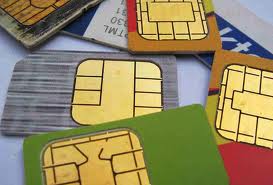
The Communications Commissions of Kenya (CCK) together, together with the East African country’s Ministry of Information, Communication and Technology, have again repeated that there is the need for mobile service providers and their agents to comply with SIM registration regulation.

“Anyone who contravenes these regulations commits an offence and shall be liable on conviction to a fine not exceeding three hundred thousand shillings, or to imprisonment for a term not exceeding three years, or to both,”  said CCK’s Director General, Francis Wangusi.

The commission also made it known that Kenya’s process of SIM Card registration regulation has emerged after the CCK reportedly discovered that mobile operators or agents are continuing to sell SIM cards and activating these without registering subscribers.

Wangusi has issued another warning to both the public and all mobile phone subscribers that using unregistered SIM cards could result in arrest and prosecution.

Its about time we go beyond this, everyone knows the importance of registering their SIM cards and should be reminded, this cat and mouse game should stop its really hard to understand the harm in just showing up and registering unless the person has  bad intentions.

Download The Uganda National Anthem mlearning App This Independence

0

ugandaatnhemPichan Denis, a Ugandan developer has launched the Uganda National Anthem mlearning app to help users learn the country’s anthem as it enters its independence day celebrations tomorrow October 9th.

The app plays the anthem word by word and as well displays the lyrics on the users smartphone screen. The lyrics are seen line by line on the screen and one can read them and sing along. The app is now available on the Nokia Store at no cost.

Pichan, a Kyambogo University Electrical Engineering graduate from Kyambogo University, has build several apps on the Nokia Store, several of them free downloads. He however makes money through in-app advertising unlike charging for downloads.

Last year, Pichan was selected as a Nokia Developer Champion after his 3 month  training at the College of Computing & Information Science at Makerere University  in Java Mobile technology.

Here is a list of other apps Pichan has developed.

Rocket Internet Launches Lamudi.com To Take Over Africa’s Real Estate Market

0

lamudiRocket Internet has today launched its online  property marketplace Lamudi.com in a bid to take over Africa’s classified property market.

Founded this year, Lamudi has offically been rolled out in 12 countries including Algeria, Kenya, Morocco, Nigeria, Tunisia and Uganda.  Out of Africa, the portal is now live in Mexico, Myanmar, Bangladesh, Pakistan, Saudi Arabia and Colombia .

Lamudi offers sellers, buyers, landlords and renters the ideal platform to find homes, land and commercial property online. Previously, Lamudi was called Vamido in Africa, Ubilista in Latin America, Zamudi and House  in Asia.

Rocket Internet expects Lamudi, to be the emerging market real estate classifieds player.

According to Erwin Sikma, CEO of Lamudi Asia: “Over the course of the past months, we successfully developed our real estate websites in several markets. The amount of traffic on our websites increased extremely fast which has allowed us to already sign many of the big real estate developers and agents in each of our countries. The feedback from real estate developers, agents and customers has been unanimously positive. We are very bullish on the real estate classifieds market and aim to establish ourselves as the new number one in emerging markets. In particular with the support and knowledge from Rocket Internet, we will grow Lamudi very fast.”

With properties for rent or for sale, the portal gives property providers and agents a trusted online presence through a personalized webpage.

IBM Smarter Cities Grant Now Open To Local Governments Than Just Cities

0


IBM has extended its Smarter Cities Challenge competitive grants program to local governments than just cities in a move that will them come up with projects that address economic development; water, energy and environment; health and social services; transportation; and public safety.

For the 2014 cycle, the Smarter Cities Challenge is open to local and regional, general purpose governing bodies, including cities, counties, prefectures, boroughs, and districts.

Jennifer Crozier, IBM’s vice president of Global Citizenship Initiatives, and whose team directs the Smarter Cities Challenge, said, “We believe that our program can be an especially valuable resource to new mayors, with whom we can share successful strategies that have been put into place elsewhere. We’re humbled by the reception this program has enjoyed all over the world these past three years, and we’re pleased that we can continue Smarter Cities Challenge for 2014.”

Launched in 2011, IBM Smarter Cities Challenge has deployed 600 experts on six-person teams who have provided strategic and practical advice to 100 municipalities for three weeks each, prized at $400,000.

Some of the smart cities awarded include Korea’s Cheongju which received $2.7 million to redesign bus routes. UK’s Glasgow which announced a new £1 million fuel subsidy to provide affordable warmth to low-income elderly citizens. The city also won a £24 million grant from the Technology Strategy Board.  US’s Syracuse which reclaimed nearly 4,000 vacant properties and re-purpose them in ways that revitalize neighborhoods and restore the tax base by as much as USD $11 million over eight years and South Africa’s   Tshwane which launched a project where citizens can report water leaks via text. The data will be used to map their water distribution network. And many others not listed here.

Applications may be submitted to IBM beginning today through November 8, 2013 by visiting www.smartercitieschallenge.org.

Smarter Cities Challenge has picked only 100 cities out 400 applicants over the last three years therefore strong applications ought to have projects designed to address high priority problems of critical importance to citizens.

KEMP Technologies Launches App Delivery Controller for Windows Azure in South Africa

0
George Zervos, EMEA Sales Director, KEMP Technologies

KEMP Technologies has today said it’s Virtual LoadMaster (VLM) for Windows Azure is available for the South African market.

According to the firm, the VLM LoadMaster for Azure offers layer-7 application delivery that exceeds Azure’s built in load balancer. It is simple to provision within the Azure IaaS platform via the Azure management portal. It runs natively on the Windows Azure IaaS platform, unlike competitors’ solutions that merely direct external traffic to the Azure network.

The release is expected to empower local firms to extract maximum benefit from the investment in Windows Azure Cloud to bolster operations.

Speaking on the readiness of the SA market for the service, George Zervos, EMEA Sales Director, KEMP Technologies said, “The launch of LoadMaster for Azure is about empowerment and adding immediate value to companies that embrace the dynamics of cloud, and want to leverage off the increased level of performance and throughput that this technology promises.”

The VLM is KEMP’s first application delivery controller to meet the unique architectural challenges of Azure and to add the needed application-layer traffic management capabilities.

Adding Layer-7 load balancing to the Windows Azure Infrastructure-as-a-Service (IaaS) platform enables high availability, persistence, health checking and scalability to production applications running in the Windows Azure Cloud.

“KEMP has a long history of working with Microsoft to optimise business-critical applications,” said Peter Melerud, EVP of Product Management at KEMP Technologies.” As Microsoft continues to announce more enterprise services for Azure, application-aware load balancing within Azure will become increasingly vital for productivity in the cloud. We are proud to partner with Microsoft to provide the first Layer 7 load balancer to deliver high performance application availability to Azure users.”

Nigeria’s Gloo.ng Hits One Year | Announces Launch Of Pick-Up Points Across The Country

0

gloongFormerly known as BuyCommonThings, Nigeria’s Gloo.ng has hit one year and is on course to be the country’s biggest online supermarket. Speaking to TechMoran, the startup revealed plans to launch pick-up points to enable its same-day delivery service countrywide.

Dr. Olumide Adedolapo Olusanya, who quit medicine to start Gloo.ng last year told TechMoran, “We will soon launch our offline pick-up points-kind of physical stores to help reach out to many buyers across Nigeria. Our Same-Day Delivery service is the fastest in Nigeria. We have covered Lagos Metro and are tidying up resources for full national coverage.”

Gloo.ng praises its existing investors for the faith they have in them and the team’s solid support. The startup aims to be the country’s leading online supermarket regardless of the challenges.

Dr Olusanya told TechMoran, ” We have had the common challenges that every startup typically faces and have used our God-given creativity to overcome these. We remain focused on realizing the Gloo.ng Vision, of being Nigeria’s Biggest Supermarket, and fulfilling our mission, of changing the way Nigerians shop for living essentials.”

glooimage Olusanya added that building an enduring business requires equal amounts of urgency and patience which he has become very good and even learning to how to balance the two seeming incompatibles.

At the moment, Gloo wants to cover Nigeria’s ecommerce market before thinking of launching anywhere else. They are not afraid of the growing competition in the country form firms such as Konga.com and Jumia, both with great financial muscles. Dr. Olusanya says offering customers better value via same-day delivery, wide selection of supermarket goods online, at the best of prices, and done with legendary customer service will keep them abreast of everyone.

With just one year on its CV, the same-day delivery pure-play electronic retailing service  aim to do to supermarket shopping in Nigeria what Amazon did to book shopping in the US.

AfDB’s Clean Energy Projects In Africa Hit $4.3 Billion

0

Alternative_EnergiesBetween 2011 and 2012, the African Development Bank (AfDB) increased its investment in clean energy in Africa by a staggering 92 percent putting its clean energy projects in Africa at $4.3 billion.

The new report by Bloomberg New Energy Finance, which looks at the clean energy transactions of 26 national and multilateral development banks from 2007 to 2012, between 2011 and 2012, AfDB increased by a staggering 92% its investment in clean energy in Africa, the largest source of financing for the Africa region so far.

AfDB was the first with $4.3 billion of the total $14.7 billion invested into clean energy projects followed by the World Bank Group at $2.9 billion since 2007.

The funds totaling $1.2 billion are used to accelerate risky and costly clean energy projects such as the Moroccan Integrated Solar and Wind Energy Programs and Kenya’s Geothermal Development Project in Kenya.  Investments worldwide increased three-fold from 2007 to 2012, from $36.8 billion to $108.9 billion. Clean energy financing from development banks broke the $100 billion mark in 2012 for the first time in history.

Microsoft, HP, Safaricom, Google, Samsung & OLX In a Digital Fair Showcasing Technologies of The Future

1

about-02Microsoft East Africa, HP, Safaricom, Google, Samsung and OLX are some of the companies that will showcase technologies of the future in a Digital Fair to be held in Nairobi next month.

The firms will also illustrate their technological capabilities and showcase the latest digital trends to the public at the three-day event to be held at the Sarit Centre. Present at the event will be IT researchers, critics, the business network and the public to exchange experiences and reflect on challenges and the expected impact of digital network technologies.

The event’s organizers, Eyeballs Marketing, say the Fair will offer complete digital experience to visitors interested in the latest digital trends, lifestyle gadgets and other technologies designed to simplify and enrich their lifestyles.

Eyeballs Marketing CEO, Mr. Martin Muli, says the Fair is a response to growth in digital technologies that has transformed how business is done in the country in the last several years.

“It is high time we bring different organizations and experts to a platform where they can meet with the public to debate ideas on digital trends and what the future holds for the country,” says Mr. Muli.

The economy has witnessed massive technological investments in areas like the financial services and telecommunications sectors where firms compete to take advantage of the benefits enabled by technology-driven innovation.

Exhibitors at the Fair will be drawn from all sectors of the economy including telecommunication, media and advertisings firms, lifestyle and products, government agencies, learning institutions and Techie companies.

“The Digital Fair will  have to levels of exhibitions, the Business Digital Fair and the Digital Future Fair, which will offer the public opportunity to interact with different exhibitors, listen to their presentations, experience technology and buy some of the products on offer,” says Mr. Muli.

The Business Digital Fair will be for businesses to display and show case unique and superior technologies that are in use to enhance the customer experience.

“The Business Digital Fair booths will strictly comprise of businesses, both corporate and SME, and will offer them a chance to provide a full digital experience to the public as well as generate business leads,” explains Mr. Muli.

The target exhibitors under the first level will include hotels, media houses, PR and advertising firms, learning institutions, government bodies, telecommunication companies, foreign companies, technology firms and businesses in lifestyle products.

At the Digital Fair Future, different techies and organizations will present solutions that can positively improve the lives of Kenyans. These solutions will be presented to key decision makers in Government and corporate sectors who have the capacity to engage techies and adopt the digital solutions.

The experts will be expected to tackle ideas on the future of digital technology in areas like disaster management, healthcare, agriculture, management and governance, security and public transport.

Eyeballs Marketing has been involved in planning and management of various successful events like the recent Kenya Social Media Awards, Grand Wedding Anniversary and several county editions of the ongoing Miss Tourism Kenya.

Intel Unveils 4th Generation Intel Core In South Africa

0

intel

Intel has unleashed its 4th generation Intel Core i processor in South Africa. This will enable a new ge

neration of ultra-book devices and two-in-one systems that deliver a PC and tablet experience in one device.

The new processor, Vince Resente Intel’s territory manager for sub-Saharan Africa said, will allow

laptops and tablets to run all day on a single battery charge while delivering graphics and performance.

“The new processors deliver a 50 percent improvement in battery life, which translates to over nine hours in some systems, and deliver incredible visual experiences in even the thinnest of devices,” he said.

Systems powered by the new processor can wake up approximately eight times faster, handle everyday computing tasks close to four times faster, and make video editing and sharing about 16 times faster than a similar four-year-old PC.

The new processor will see the rise of two-in-one devices, enabling users to switch between keyboard and touch, laptop and tablet mode.

The new two-in-one devices offer; a mobile device with low weight, thin design and long battery life, apps ecosystem, instant on and touch just like a tablet and also like a laptop it offers full PC performance and productivity, supporting PC applications and key usages, and the choice to use touch, type, or mouse to interact.

“People no longer have to choose between laptops and tablets – they can now have everything they love about a tablet and everything they need in a laptop, in one device,” says Resente.

Resente also noted that consumers want their mobile devices to cope with heavier consumption tasks like fast and seamless video streaming.

“Now we’re seeing creation and productivity tasks – like sharing images over email on-the-go, reviewing work presentations and creating and editing videos – that have traditionally been associated with larger and more substantial computing devices are making their way into more mobile devices,” he said.

This is very efficient, having one device that has a function of two, its like carrying your entire office in your wallet.

Huawei Connects Over 18,000 Youth To Internet In Angola

0

The logo of the Huawei Technologies Co. Ltd. is seen outside its headquarters in Shenzhen, Guangdong province

Students in Angola now have a new reason to enjoy school as Huawei and Angola’s Ministry Of Education partner to launch e-net, a project to connect schools to the internet.

“The objective of this project is to promote bridging of digital divide among Angola youth, at the same time enhancing research and development in ICT leading to localized innovations.’  Said Mr. Leon Liu, Director at Huawei Technologies Angola Representative office.

This project is expected to benefit over 18,000 youth in the 18 prvinces in the country. In the first phase, Bie, Cabinda, Luanda, Benguela, Kwanza Norte, Malanje, Huambo, Uige, and Huila were connected. The provinces expected to be covered in the second phase include  Zaire, Moxico, Kubango, Kwanza Sul, Bengo, Lunda Norte, Lunda Sul, Namibe and Cunene.

The major things that will enhance Africa’s connectivity will include Investment in infrastructure, competitive internet pricing, and enabling regulatory enviroment. Internet World Stats said that by the end of June 2012 Angola internet users added up to 2,976,657 forming a 14.8 percent penetration of the country’s population which translates to Africa’s 1.8 percent internet users.Initiatives such as the E-net project are key in increasing the country’s connectivity and internet usage.


MasterCard Global Education Initiative Investing $500 Million To Educate Students In Africa

0

mastercard

The MasterCard Foundation has partnered with Forum for African Women Education (FAWE) ,BRAC and Campaign for Female Education (Camfed) to boost the MasterCard Foundation Scholars Program.
The program providing $500 million in a period of 10 years to educate young people, mostly in Africa; has its moneys increased with new partners on board. Being the very first to enter  the MasterCard program, they will administer scholarships worth $106 million to about 11,000 African students so they can complete their secondary education.
The Program will be looking for youth who experience difficulties in completing their high school education. Eighty percent of the Scholars attending the secondary school partner schools will be girls.

“Completion of secondary school is vital to helping youth find jobs, start businesses, and bring about change in their communities,” explains Reeta Roy, President and CEO of The MasterCard Foundation. “Our partnerships with Camfed, FAWE, and BRAC prioritize secondary education for young girls. Data from the World Bank show that for girls, one extra year of secondary education increases their earning potential by 15-25 percent. Additionally, staying in school also delays early marriages, and over the long-term, promotes healthier and more economically secure families.”

A UNESCO report says that in Sub-Saharan Africa, the rate at which secondary school enrollment is very low and stands at 43 percent and more than 21.6 million children of lower secondary school age may never spend a single day in school.

Apart from Scholarship Program, MasterCard is also looking for students who have shown leadership potential and a desire to give back to their communities. Through mentoring, leadership development, and service-learning, students gain the skills and competencies needed to become change-makers and ethical leaders and to succeed in the global economy.

BRAC, Camfed, and FAWE will work in partnership with families, communities, educators, and government officials to identify and demonstrate best practices for strong, high quality secondary education institutions.

The youth in Africa now have more opportunities than they used to have a years before as there are many programs that have been formed to support them in the major aspects of their lives. Hopefully it will help in curing the unemployment situation in the continent.

Google, Omidyar & USAID Launch an Alliance to Introduce Affordable Internet In Developing Countries

0

a4aiforapoGoogle, Omidyar Network, UK DFID and USAID and other government and private sector players launched the Alliance for Affordable Internet (A4AI), an association to lead policy and regulatory reforms towards having affordable internet prices in developing countries.

A4AI will advocate for open, competitive and innovative broadband markets in a move to help access prices fall to below 5% of monthly income worldwide, a target set by the UN Broadband Commission. This will help connect the two-thirds of the world that is presently offline.

According to Sir Tim Berners-Lee, inventor of the Web and founder of the World Wide Web Foundation said,“The reason for the Alliance is simple – the majority of the world’s people are still not online, usually because they can’t afford to be. In Mozambique, for example, a recent study showed that using just 1GB of data can cost well over two months wages for the average citizen.

Berners-Lee added that  the high prices widen the digital divide that slows progress in vital areas such as health, education and science. Yet with the advent of affordable smartphones, new undersea cables and innovations in wireless spectrum usage, there is simply no good reason for the digital divide to continue.

He said anti-competitive policies and regulations that keep prices unaffordable are the real bottlenecks that the Alliance is set to remove.

Agreeing to the need for affordable internet, Ory Okolloh, director of investments, Omidyar Network said, “The lack of affordable internet access in emerging markets is a key barrier to large-scale innovation, which in turn stifles social and economic advancement. Omidyar Network is delighted to help lead the formation of the Alliance for Affordable Internet to address this problem. The Alliance has the potential to help millions of people in the developing world come online, unlocking opportunities for them to access information and services that can meaningfully improve their lives.”

Alliance for Affordable Internet (A4AI) executive director, Sonia Jorge

The Alliance was initiated by the World Wide Web Foundation, and its honorary chairperson is Dr. BitangeNdemo, the immediate former Permanent Secretary of Kenya’s Ministry of Information and Communications, who is widely regarded as the father of Broadband in Kenya.

Dr. Bitange Ndemo, honorary chairperson of A4AI said,In Kenya, we saw the number of internet users more than double in a single year after we liberalised markets. Now we need to spark the same revolution on broadband costs and access, not only in my country but around the world. To achieve this, we will use our combined voices, leadership and expertise to press for fair, competitive and socially responsible markets.”

A4AI announced today at the Commonwealth Telecommunications Organisation’s Annual Forum in Abuja, Nigeria, that it will begin in-country engagements with three to four States by the end of 2013, expand to at least twelve countries by the end of 2015 and set up policy best practices to guide advocacy work at the international level.

Key policy levers to drive prices down include allowing innovative allocation of spectrum, promoting infrastructure sharing, and increasing transparency and public participation in regulatory decisions. It will also produce an annual ‘Affordability Report’, with the first edition being unveiled in December 2013.

Jennifer Haroon, Access Principal at Google, said,Nearly two out of every three people don’t have access to the Internet – this is a massive challenge that can’t easily be solved by a single solution or player. The world needs technical innovation and vision to bring more people online, but we also need a strong policy foundation that allows new ideas to flourish. By working alongside Alliance partners, we can help lay the groundwork needed to drive innovation and bring the power of the Internet to more people.”

Scepticism still hovers over Cloud adoption in Africa

0
Albie Bester, General Manager at Pamoja

There is a level of apprehension when it comes to the adoption of Cloud services in Africa and publicised data leak issues like the US’ National Security Agency (NSA) Prism program have not helped. However, the situation calls for perspective say experts and Cloud computing simply has to go through the natural progression of adoption as defined by Gartner’s maturity cycle.

Albie Bester, General Manager at Pamoja, the Cloud business unit of Pan-African ICT enabler SEACOM and a wholesale provider of Cloud services, refers to Gartner’s hype cycle and specifically the point raised that Cloud computing is now in the “Trough of Disillusionment” or a situation when interest wanes as experiments and implementations fail to deliver.

However, he is quick to point out that the technology still has to enter and pass through other significant stages of development, in line with this cycle, including the ‘Slope of Enlightenment’ and ‘Plateau of Productivity’, that will happen in the next two-to-five years and will be characterised by broader market applicability and relevance.

But where is Cloud computing making the most impact? For public Cloud services the target market is primarily small to medium enterprises.

Pamoja is witness to an increase in Cloud adoption at the bottom end of the market where these organisations trust their IT suppliers to make their technology decisions for them. Where the IT provider is leading with a Cloud service it will be accepted by the customer in most instances.

Medium to large organisations have their own IT departments who make decisions on the best technology route for the company and will, in most cases, push on-premise solutions.

Into Africa

In Africa the biggest challenge still remains reliable and affordable connectivity. If an organisation cannot connect to its business services then all business processes dependent on that service will suffer and possibly halt. The Africa continent is connected to the rest of the world by an abundance of submarine links and it is in the last mile of connectivity where the bottle neck lays.

“Traditionally Africa lags the rest of the world in the adoption of new technology. In the case of Cloud computing it is not much different, but we expect Africa to catch up much quicker than is the case with other technologies,” says Bester.

“The reason for this is that Cloud computing is a perfect solution for Africa where there is, firstly, not much legacy IT to deal with and secondly an acute shortage of skilled and experienced system implementers and operations staff. Cloud offers “pre-configured” IT to organisations and thereby reduce the need for skilled IT resources with every customer activation,” he adds.

According to Bester the issue of control over infrastructure is central. Cloud computing is introducing a paradigm shift in the way that organisations will access IT and business services he says. If any of the basic building blocks, including computing and storage infrastructure, software, connectivity and end-user devices, are missing, it will impact negatively on user experience.

“Moving away from an on-premise based IT model reminds us of the early days of computing where services were offered through bureaus. Not many people remember those days and the current generation are used to seeing and touching their IT. That means they could decide exactly what to deploy and how to look after it. They thus had full control over the technology, the implementation and the operations. With Cloud computing they lose that. The fact that they gain on several levels still does not balance it out as most of the value of Cloud computing are at a business, cost and productivity level,” he says.

Leadership at Pamoja is adamant that perception will change to realisation when facts are corroborated by the success stories of the early adopters.

“An interesting question we always ask customers is whether they use and trust online banking. If they feel secure to conduct banking transactions over the internet then they can rest assured that they can get their IT delivered securely, that way too,” Bester adds.


Buni TV Releases Banned Cameroonian Film “The President”

1
ThePresident_posterKnown for Kenya’s political satire, the XYZ show, Buni TV has released the story of renowned Cameroonian director Jean-Pierre Bekolo’s THE PRESIDENT: “How Do You Know It’s Time to Go?” .
The film clearly refers to the country’s real-life leader Paul Biya, who has been the President of Cameroon since 6 November 1982 to date. The film didn’t please the Cameroonian government, which swiftly banned it from being screened in the country.For Bekolo, who recently came back to Cameroon after years teaching film in American universities, it was crucial that Cameroonians from both within and outside the country have access to his film — so he turned to leading African video-on-demand platform Buni TV.“Today, new technologies provide a solution for filmmakers in countries that still impose censorship on cinema and where freedom of speech is still threatened” said Bekolo. “Online distribution will make THE PRESIDENT widely available, and hopefully this will lead to real dialogue on the issues the film raises.”

ThePresident_banner Buni TV’s XYZ Show has an audience of 10 million and recently won the Africa Magic Viewers’ Choice Award for Best TV Series.

“One of the great advantages of the internet is that it can circumvent censorship,” said Buni TV CEO Marie Lora-Mungai. “Buni TV wants to play a role in fostering and supporting the free flow of ideas in Africa. When we learned that Jean-Pierre was not able to screen THE PRESIDENT in Cameroon, we felt it was our responsibility to help this important film reach its audience.”

Bekolo has produced genre-busting material such as his 2005 film LES SAIGNANTES, a sci-fi political satire about two high-class vampire prostitutes using their sexuality to expose – and kill – corrupt politicians, distinguishing himself as one of Africa’s boldest and most unconventional filmmakers,

With THE PRESIDENT, which premiered at the Durban International Film Festival in July, Bekolo touches on one of Africa’s remaining political taboos: what does the failing health of the continent’s few remaining dictators-for-life mean for their country?

ThePresident_banner2Besides Biya, who reportedly spends more than half the year outside Cameroon, other African presidents regularly missing in action include Zambia’s Michael Sata, who is rumored to be in India or London for treatment, and Angola’s Eduardo dos Santos, who simply cannot be located at all.

Last year, Ethiopia’s premier Meles Zenawi died of an undisclosed illness in a hospital in Brussels, after disappearing from the public eye for two months. In 2010, Nigeria found itself in political limbo after President Umaru Yar’Adua’s death. Ghana’s John Atta Mills passed away from cancer despite his party’s numerous denials that he was even sick. In April last year, the death of Malawi’s Bingu wa Mutharika was hidden from the public by those in the government trying to block current leader Joyce Banda from taking power. And then there is Zimbabwe’s Robert Mugabe, who at 89 years old makes frequent trips to Singapore for “normal eye check-ups” and refuses to discuss his health.

ThePresident_banner3THE PRESIDENT will be available for free at www.buni.tv for a week starting October 12, and later re-released under the platform’s upcoming subscription service. Viewers from across Africa and the world will be able to stream the film from their computers or internet-enabled smartphones or tablets.

CEO Weekends:Airtel Kenya Wants To Give You Free Internet Every Morning

0

airtelinternetAirtel Kenya has said it will be giving its prepaid customers free internet access every morning from 6am to 8am.

The offer dubbed ‘ Good Morning’ is expected to give customers the freedom to enjoy free internet access on their phones.

According to Mr. Shivan Bhargava, Airtel Kenya Managing Director, “This initiative is in response to insights from our customer surveys  and we have responded by offering them greater freedom and access to superior quality communication and service on our network. We will make it easier and faster for our customers to access the internet everyday.’’

Bhargava added that the company will continue to offer customers with value based offers to communicate conveniently with their friends loved ones. After the free period customers can subscribe for data bundle, Club 20 or Smart bundles by dialling *544#.

CEO Weekends:NewsDrift Launches To Aggregate All Kenya News For You | Aims To School Habari News App

1

newsdriftAbel Masai, a computer science graduate from a local university has launched NewsDrift,  an Android news aggregator from major news sources in Kenya.

Speaking to TechMoran, Masai said, “I first launched in April. At that time, I began by aggregating Kenyan newspapers. Then in July I did a major update that now inludes international news sites. My initial target market was Kenya, and eventually Africa.”

He told TechMoran that he chose Android because it’s the mostly used smart-phone platform in Kenya and because Android phones are cheap and easy to use.  He believes building for Android is like building for the critical mass. Other platforms like Windows Phone 8  and iOS will follow.

newsdrift2 He is not breaking law yet. He is using publicly available RSS feeds to get news to his app and he has also written to news sites requesting for permission to use their content in line with their terms and conditions. His competition include apps like Habari App, majorly for East Africa news and News Kenya focused on local news. Internationally Pulse, Flipboard, Google Currents among others. One big competitor, albeit still on web is AllAfrica, which aggregates all African news, with permission.

Asking about Habari News App, which has both Android and iOS apps, Masai says he has used the Android version and has not plans of coppying them.”Actually I began working on NewsDrift late last year. I came to learn of Habari long after I had launched news drift, he told TechMoran. He wants to get as many users as possible onto the NewsDrift platform, have the critical mass then start earning revenue either through adverts or by partnering with news houses.

habari twoHe was inspired by his first smart phone, a Huawei Ideos, which he was very impressed by. It had quality apps done by global tech giants.  “One such application was Pulse. You could clearly see someone put some thought into application, took his time to perfect. Yet locally the apps weren’t as good. I thought If these guys can do it so can we.”In five years, he wants NewsDrift to be the no.1 news aggregator in Africa and globally. he is also working hard to acquire a big chunk of the local market before the international players launch here.

Working on his own with no investors to back him or revenue, he has manged to push  the word out about Newsdrift  and has been featured on Techloy, Savvykenya, Techweez  and Androidtapp and AppZoom both top review sites for Android apps.Masai, a software engineer from Kenya, currently working at Cellulant did computer technology at JKUAT. After graduating last year. He spent most of his free time experimenting on new technologies and ideas.

He denies that Kenyans are not just building mobile apps as their counterparts build massive solutions for enterprises.
He says,” That’s not completely true. Guys are actually doing some really stuff. On the face value, a mobile application might see very simple. But that application could be feeding off a complex server backend. As such, the app only acts as an access channel to a complex system.  So while we might have very many M-apps, we also have some very good mobile-based solutions that only need the right amount of exposure.”

CEO Weekends:New Technology Enhances Literacy Levels In Pupils From Rural Ethiopia

0

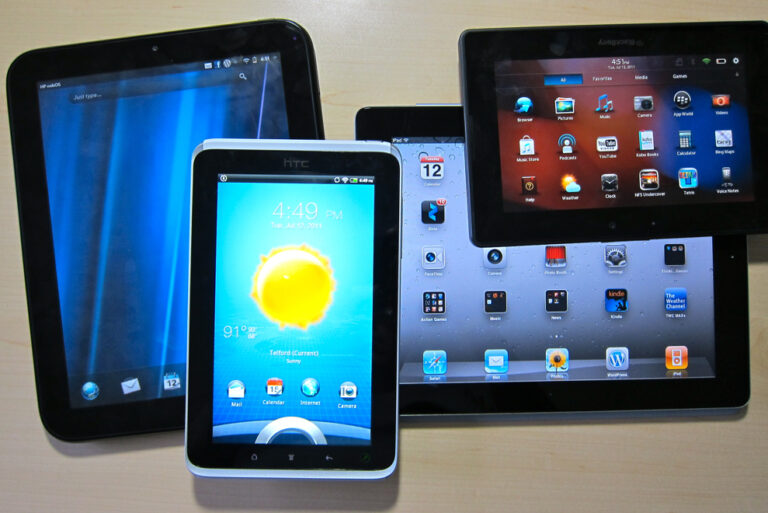
best-tabletSchool children from the remote Wonchi area in Ethiopia are showing drastic improvement in literacy skills with the help new technology involving laptops and tablets, a report of a two year research project by scientist from the Massachusetts Institute of Technology Tufts University USA, launched in February 2012 indicates.

In the study, the researchers supplied laptops to over 40 pupils in the area, in a bid to find out what happens when children are given early literacy apps and games without receiving any operating instructions or tuition in their use. They found that children between the ages of 4 and 10 quickly learned not only how to turn the solar-powered tablets on and off but also what the function of the installed early learning apps was.

In the study, most of the children learned to understand the English alphabet and read and write words. Yet, the Wonchi area has been known to have a literacy rate of virtually zero with the other half from a small village not far from the town of Wolenchite. None of the children had ever attended school before receiving their tablets.

While literacy levels in other countries like neighbouring Kenya is over 90 percent among youth, literacy in Ethiopia lies at 42.7 per cent for the total population, with the figures expected to rise especially as the trend of switching to new technology involving laptops and tablets continues in rural areas, as it is in Addis Ababa.

Nevertheless, in the survey, instructors found that the children from the Wonchi area involved in the programme were keen to continue learning despite the nearest primary school being a two-hour drive away. However, while the project is set to end this year, it is remains unclear on how the tuition would be conducted in the remote area.

CEO Weekends: Nigeria’s Kunle Awosika Takes Over Microsoft Kenya as New Country Manager

0

kunleJoining Kenya from Microsoft Nigeria where he worked as the Director for the Enterprise and Public Sector Business in Anglophone Westafrica since 2009, Kunle Awosika has been appointed as Microsoft Kenya’s new Country Manager, in a bid to steer the next phase of expansion as Microsoft’s global focus shifts to devices and services.

Awosika would run the Kenyan office focusing on the growing a high performing team and building organizational capability and capacity, together with Microsoft partners, a his task lies in line with the recent restructuring of the Microsoft East and Southern Africa (ESA) region.

Microsoft was split into three sales regions – Microsoft Kenya, Microsoft Angola (covering Angola and Mozambique) and the new Microsoft East and Southern Africa territory which covers Botswana, Burundi, Eritrea, Ethiopia, Malawi, Namibia, Rwanda, South Sudan, Tanzania, Uganda, Zambia and Zimbabwe. The move will further enable the business to streamline its resources and strengthen its market share in Africa. Back then in 1996 Microsoft opened up its operations in Kenya, before expanding into the East and Southern African region. Louis Otieno, Awosika’s predecessor, is credited with the successful launch of

Microsoft in East Africa having started in the East African office 15 years ago. He grew the business with a dedicated team to cover 16 countries in East and Southern Africa. Otieno has since moved to manage Africa Initiatives as the Director Microsoft 4Afrika Initiatives.

As the newly selected candidate to boost growth and expansion backed with a well grasped knowledge and skills of contributing to business expansion in the west Africa region since 2009, Awosika has worked with several divisions, such as the GWMC (Government Wide Messaging and Collaboration platform), an major Nigerian initiative that focuses at unifying IT networks across the Nigeria; in addition to engaging in other business forums in his home country. Besides business forums and initiatives, he is not unfamiliar to the local Microsoft office in which he helped boost the sales function of Microsoft’s solutions to telecoms and other business verticals in the larger West, East and Central Africa region, reports say.

According to Hennie Loubser regional General Manager of Microsoft West, East, and Central Africa and Indian Ocean islands, Kunle has the credentials that would aid in the growth of Africa’s most dynamic and promising technology hubs in which Microsoft remains committed to the long term growth opportunity in Kenya.

CEO Weekends: Conduct Telecommunications Launches Fibre Network In Cape Town

0

fibre optic

South Africa’s Conduct Telecommunications has launched its fibre-ready area in Cape Town after launching in Claremont.

The open-access fibre will be supplied to businesses in Cape Town  and then Stellenbosch, Westlake, Muizenburg, Tygerberg, Bellville and Milnerton.

According to the company’s CEO Johan Pretorius: “There is sufficient network capacity deployed in the cities by several operators, we are not duplicating this. The problem is getting from these fibre routes into the buildings and to the end customer. This is where we are focusing on closing the gap. While this has been happening and as adoption of fibre steadily grows, it remains relatively expensive to most enterprises. However, by installing on risk, we leverage economies of scale to improve efficiency and drive down costs, which in turn sparks adoption.”

All service providers will access network equally and occupants will have many options to choose from. The Fibre Optic network offers close to limitless bandwidth capabilities, has excellent reliability and provides occupants with the possibility of fast, world-class services.

Pretorius said the launch will help in the adoption of fibre and beat the high costs involved. The service providers will supply anywhere between 2Mbps and 1Gbps connections to businesses.

CEO Weekends:South Africa’s Ellis Park Stadium Becomes Country’s First Stadium With Free Wi-Fi

0

Ellis_Park-full_1523965i

South Africa’s Ellis Park Stadium is the first Wi-Fi enabled in the country after a partnership deal by WirelessG (G-Connect), an internet provider and the South African Golden Lions Rugby Union in preparation for this weekend’s rugby contest between the South African Springboks and New Zealand’s All Blacks.

Manie Booysen, Golden Lions Rugby Union CEO, thrilled said: “We thank WirelessG for their efforts and for setting up this partnership with us. We sincerely hope the spectators, media and staff will enjoy this unique service.”

Spectators only will need to enable Wi-Fi on their devices, connect to the Wi-Fi network named “G-Connect” and open their internet browsers. A landing page interface will then be introduced from which the free G-Connect Wi-Fi service can be accessed.

The G-Connect will sponsor free Wi-Fi connectivity to all main-stand spectators for this coming Saturday’s rugby Test. WirelessG promises to expand this new initiative to other stadiums throughout South Africa. The connection will have a 10 Gigabits per second network capacity. It is also expected to ease network congestion during matches.

“This new G-Connect Wi-Fi innovation will not only provide connectivity relief in high congestion sport stadiums that have become unbearable for South African mobile and broadband users, but will change the way real time sport entertainment is offered in this country,”comments Carel van der Merwe, Wi-Fi entrepreneur and CEO of WirelessG.

WirelessG launched G-Connect In-Flight Wi-Fi  less than 17 months ago, the deployment of the Wi-Fi hotspot at Ellis Park Stadium can be regarded as WirelessG`s  second first for South Africa. This clearly distinguishes WirelessG as the leading Wi-Fi specialist in South Africa.


CEO Weekends:Skype & WhatsApp Banned For Three Months In Pakistan Over Terrorism

0

skypeimagePakistan is becoming an anti-internet country. September last year, it blocked access to Google’s YouTube after it objected to taking down an anti-Islam film.

Today,Pakistan’s southern Sindh province has said it will block access to all internet communication networks including Skype, Viber, Tango and WhatsApp for three months as a means to fight terrorism.

Sindh’s Information Minister Sharjeel Memon told AFP: “We regret the inconvenience to users but we are compelled to ban those networks for three months in the province.”

whatsapp-logo According to him Skype, WhatsApp, Tango and Viber will be blocked over serious “security reasons as such online applications were frequently being used by “terrorists and other criminal elements”.

Karachi, Pakistan’s capital city and the financial hub has had numerous targeted murders and extortions and securoty officers have tried to reign on on the menace unsuccessfully. The Pakistan Telecommunication Authority (PTA), the states Internet regulatory body will block the networks in Sindh for three months according to media reports.

CEO Weekends: Intel Corporation Sponsors 2 Kenyan Start-ups To Silicon Valley

0


Suraj Shah Corporate Affairs Manager Intel East Africa Cabinet Secretary Ministry of ICT Dr Fred Matiangi 2.JPG


Intel Corporation has today announced its sponsorship of two Kenyan tech start-ups Harmony and mHealth solutions,to travel to Silicon Valley for three days of onsite trainig and a demo day with angel and venture capital investors.

The two tech start-ups are part of the 14 finalist teams selected globally under the Intel Tech to Market Accelerator program (T2MA). The start-ups will get as opportunity to showcase their business ideas as well as receive feedback from potential investors at the University of California, Berkley.

mHealth seeks to innovate,design, develop and market mobile and web solutions that address acute problems in the Kenyan health system. It is made up of four individuals Dr. Monda J.M.N. Nickson Nyakambu, Micheal Omaria and MaxwellOchwang’i.

Harmonics, consisting of Duncan Mwebia, Jesse Kaburu, Phides Mugo, will provide a cloud based platform to help High School administrators manage their data and information using phones, personal computers and tablets with internet connectivity.

Intel East Africa’s Corporate Affairs Manager, Suraj Shah, said: “The Intel Tech to Market Accelerator Program is the perfect platform to bring together young entrepreneurs to share their plans for turning their computing technology ideas into business opportunities, and to showcase those plans to potential investors. We are very excited two of our very own will be representing the country and will get the opportunity to compete their start-up ideas at Silicon Valley.”

From Left Duncan Mwebia Jesse Mwirigi of Harmonics Suraj Shah Corporate Affairs Manager Intel East Africa Cabinet Secretary Ministry of ICT Dr Fred Matiangi Dr Monda and Michael Omaria of mHealth Solutions Centre.

DR. Matiangi’i, Cabinet Secretary Ministry of ICT said that they have witnessed more youth in Kenya appreciating technology and using it to change the lives of many, as he applauded the efforts of Harmonics and mHealth.

“Programs such as Intel Tech to Market Accelerator program (T2MA) that provide opportunity for local software developers to nurture their skills, to access the latest tool and to get exposure on the global stage should be made available to youth not just in Nairobi but across all counties in Kenya,” he said.

Intel aims at reaching over 400 developers and having 100 new applications created locally over a period of six months that would offer different experiences across devices running on Intel Architecture.

CEO Weekends: Forget the data scientist, become a data naturalist

0

Data

Are we ‘drowning in data’? Davide Hanan, MD of QlikView SA explains how all humans are naturally data analysts if we’re presented with information in the right way.

I’m often asked if we are now faced with too much data to analyse; a ‘data deluge’ if you will. People panic when confronted with large amounts of information, unable to see how it can be useful or feel incapable of trying to figure out how it can be. To understand how we can overcome this problem, we need look no further than the common housefly. It was recently discovered that the size and metabolic rate of flies allows them to process nearly seven times more information in a second than humans can, which allows them to see a human hand coming towards them in slow motion. However, it’s interesting how it’s their natural state which gives them the advantage to process so much information so quickly. Likewise, I’d argue that, without even realising it, humans are all naturally masters of data as well. However, unlike the fly, we have lost touch with our natural sensibilities which allow us to process masses of information easily and quickly.

Our main problem with handling data is that the modern world presents us with information in an un-natural way. Outside of technology, humans are naturally capable of automatically processing thousands of pieces of information every second. From the moment we wake up we’re constantly processing images and ideas and making subconscious decisions to help us survive. And these aren’t new behaviours; our ancestors also grew up in environments rich with data where our hunter/gatherer instincts made us analyse the natural world so we learnt what we could eat to survive.

For example, a hungry hunter foraging for mushrooms in a forest can make a multitude of observations and decisions to find what they need. They will instantly distinguish between different trees, leaves, the best conditions where mushrooms can grow and, of course, the mushrooms which aren’t poisonous. Although a simple analogy, this acknowledges three effective natural processes our brain uses to digest information and which to a certain extent are not accounted for in modern data analysis and analytics; the processes of association, comparison and anticipation.

The human brain strives to make associations. The hunter knows to look under oak trees for mushrooms based on previous experience that they have been found there before. Our mind constantly categorises and connects, searching out the important features together, and the warning outliers. Furthermore, we don’t just stop there once we’ve made these associations. The hunter will not settle with the first batch of mushrooms they find, but will find others and compare them against what they have found already; deciding if they are bigger or smaller for example. Also, they may draw on past experience to know which are the ripest or indeed which kinds of mushroom are poisonous.

Finally, just as we make sense of the present based on our past experiences, we constantly anticipate the future. The hunter knows to eat certain types of food because they know from past and present experience that eating it will aid survival.

Each and every one of us uses these three natural tools on a daily basis in our everyday lives without even noticing them. And we also use them in the business world to help us understand complex problems. However, most of the technology we have access to doesn’t complement and extend these innate skills. People need to use IT solutions which can make this complex data accessible and allow us to naturally discover patterns and make projections.

The Google search engine is a great example of a kind of technology which appeals to our natural sense. It uses a simple, intuitive interface which can be used by practically anyone, but has a series of complex algorithms behind it to make it insightful.

Moreover, technology should be made available on devices which appeals to our natural touch sensibilities. Smartphones and tablets are great enablers for making IT more accessible for everyone because it’s another step to analysing data in the natural world, with gestures on screen that feel more instinctual since interaction is more direct than through the mouse and the monitor.

Already we’re seeing how anyone can effectively be a data analyst. In Peru, fishermen use analytics to find out where the best location is to take their catch to for the maximum profit. Elsewhere, in Sweden, police forces use data analysis to fight crime; in one instance Malmö Police used its data to catch a serial killer on the loose. These people aren’t formally employed as data scientists, but they use their natural instincts paired with intuitive technology to improve their decisions.

Overall there’s a huge opportunity for finding insights based on our natural ability to analyse the world around us. However, IT and business technology tends to get in the way of using these natural skills because it presents information in a technical manner which discourages the natural human experience.

Businesses need to have systems in place that appeal to an employee’s natural associative, comparative and anticipative thought processes. Until then, many of us are going to be lost in the data wilderness.


Software Based Competition Startup-Knight Makes its Sophomore Return to South Africa

0

Startup Knight

Byte Orbit has opened applications for this year’s Startup Knight software competition in South Africa as it makes its second return to the spur the software industry.

The premise of the competition is to promulgate, support and embrace tech startups in South Africa by offering a disruptive competition platform.

The competition will accept entries until October 24. Only fifteen companies will go ahead to pitch to the judges.

The main winning categories which will bag R100,000 each include, Concept phase where ideas will be pitched and Startup phase where companies that have potential to disrupt the industry will be awarded. An additional R100,000 will be given to the Startup phase winner for media coverage.

Last year’s winner, EasyMap went ahead to secure more funding with Umbono Google.

Survey Shows Lack of Internet Freedom in Most African Countries

0

Online Restrictions2

Sudan and Ethiopia have been highlighted as some of the countries without internet freedoms in Africa, while Kenya and South Africa seem to be enjoying these rights.

According to a new survey, Nigeria, Angola, Uganda, Tunisia, Malawi, Morocco, Libya, Rwanda, Zimbabwe, and Egypt have decreasing online freedoms respectively.

The survey carried out by Freedom House show that most African countries, have a long way to go in terms of internet freedom of speech.

The recent happenings in Gambia, where the government issued a ban notice on VoIP service including Skype, Viber and even online dating sites shows the extent of control some governments have over the internet.

Recently Zimbabwe government published a law that will enable it to spy on citizen’s mobile calls. In Angola there are unconfirmed reports that the state is planning to introduce an electronic monitoring system for all communications with assistance from Germany.

Although the survey included only 14 countries for its study, the trend seem to show that even advanced countries such as Egypt are still struggling with online freedom.