
back to top
Sunday, April 12, 2026
spot_imgspot_imgspot_imgspot_img
Home Blog Page 850

Business Intelligence To Boom As Enterprises Seek The Competitive Edge

0
Ayanda Dlamini, Business Development Manager of LGR Telecommunications.

Next generation Business Intelligence is rapidly being accepted as the critical tool for business success, says Ayanda Dlamini, Business Development Manager of LGR Telecommunications.

Knowledge is power, and never more so than now, when access to the right insights from the relevant data can make the critical difference between business success and failure.

Across the continent, organisations of all sizes are turning to next generation Business Intelligence (BI) tools to assist them in harnessing the knowledge residing in vast amounts of data, and put the resulting insights to use as a competitive differentiator. We see this in particular in the mobile space, where operators across Africa face declining voice revenues and seek new revenue streams in an increasingly competitive environment. Detailed understanding of the customer, the environment, competitors’ behaviour and internal operations is critical for making the strategic decisions that support growth.

Driving this dramatic increase in the need for advanced BI tools are a number of influencing factors. The proliferation of data, social media, mobility, consumerisation and the growing need for enterprise agility are forcing rapid change in businesses’ approach to BI.


In the past, BI was employed to analyse historic patterns and data residing within the enterprise to understand operations and customer behaviour. However, the pace of change has intensified. Thanks to the power of global social media networks, change now takes place in minutes. Disruptive influences skew what were once predictable patterns in a matter of days, or even minutes. Now, business must be constantly aware of changing market forces and customer sentiments, and must be able to refocus and change direction accordingly. This level of business agility can only be informed by next generation BI.


Social media

To tap in to the unprecedented wealth of information residing within social media networks, enterprises need next generation BI delivering advanced analytics capability. While enterprise data may tell the historical story, social media analysis allows the enterprise to get accurate insights into customer sentiment and external market conditions as they change. The ability to adapt in line with new trends will be key to business success in future, and enterprises are aware of this.


Big Data

The need to incorporate social media data into BI presents the Big Data challenge. In addition to social media, enterprises must now have the capability to analyse competitor movements, email and other digital communications, location-based data and more. As the volume, variety and velocity of Big Data increases, advanced Big Data tools will become increasingly necessary to manage vast amounts of structured and unstructured data.


Mobility

Africa is a mobile continent, with individuals and enterprises leapfrogging landline and moving directly to high speed mobile connectivity. In line with this shift, enterprises need dashboards that deliver on-the-go access to critical business and market information allowing them to make key decisions faster. C-level executives now want the ability to interrogate figures on the move, and so gain a competitive advantage.

In line with the move to mobile, simplified, more intuitive data visualisation tools are increasingly in demand, allowing users to assess status at a glance, and drill down into relevant content on even small screens. With the advent of tablets and consumerisation changing the enterprise computing space, enterprises across Africa are demanding full functionality on their smart mobile devices; they want to talk to the figures more.


Avoiding BI disappointment

It is crucial to embark on a future-proof BI strategy by asking: ‘how do we do business and what data do we want from our systems?’ .


Many companies have disappointed in their BI implementations in the past, frequently because their strategies have been poor or because they were not asking the right questions at the outset.


They need to take stock of what equipment and solutions they already have in place, assessing their current infrastructure and whether it properly supports advanced BI tools. They need to understand how mature their business processes are, whether they are capable of supporting BI.  Defining the key business endpoint is a good start. By beginning with a broad understanding of where you are and where you want to move to, you will be in a position to determine what steps need to be taken to achieve your goals.


SEACOM to Provide Nairobi Incubation Centres with Free 100Mbps Connection

0
Nailab
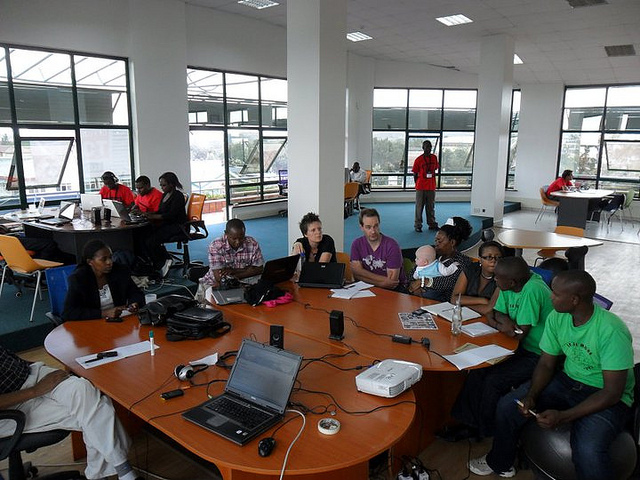
The Nailab. Image from Techweez.com

In a bid to foster the growth in the ICT sector in Kenya, fibre optic provider, SEACOM has announced that it will be providing four innovation hubs with free internet connecton.

The four including: iHub, M:Lab East Africa, NaiLab and 88mph have natured local young talent and seen some startups coming from their incubation programmes.

“With this 100mbps of internet connectivity, Kenya’s technology entrepreneurs and innovators will now for example, be able to work on online graphical design projects that would have otherwise been difficult to test before deploying, a process called rendering”, said SEACOM’s Sales Account Manager, Michael Otieno.

“One of the core drivers of SEACOM’s CSI strategy is to fast track African ICT skills and enterprise development by leveraging its existing internet infrastructure to provide internet connectivity in-kind, support to universities, high schools, ICT innovation centers, plus ICT learning and training centers throughout Africa”, said Joseph Muriithi, SEACOM Kenya Country Manager.

All the hubs praised the move by SEACOM terming it as a way to push the local IT industry forward.

SEACOM is the largest fibre optic operator in the country having more than half of provision of international fibre connections according to Communication Commission of Kenya.

Johannesburg Guarantees Its Residents After Hacking

0

sa

The Municipality of Johannesburg reassured the city residence that their personal information was not compromised by the hacking of the City’s billing systems.

“The City of Jo’burg has experienced an unfortunate breach of its information technology system, which has been widely reported in the media,” said spokesman Gabu Tugwana. “The city would like to assure its residents that this is an isolated incident; the necessary legal and technical steps are being taken to prevent similar incidents in future.”

Eyewitness News reported that the municipality’s online services system was temporarily shut down on Tuesday, the 20 August, after it became possible for anyone with an Internet connection to view municipal invoices.

Tugwana said at no stage was any resident’s personal information, such as banking details or ID numbers, compromised.

“The information that was accessed was not from the transactional engine of the billing system of the City of Jo’burg and the perpetrators were not able to transact on any of the information they accessed. The city is busy with its own forensic investigation with its IT partner to assist the police with the criminal case that will be opened at as a result of this incident,” said the spokesman.

Any future breach aimed at stealing personal or municipal information would be regarded as a crime. The municipality promised to keep residents informed about any development on the security rupture and the actions taken to insure it was dealt with effectively.

Residents who needed a copy of their accounts were advised to visit their their nearest customer service centre or call the municipality’s call centre.

Viettel Cameroon Adopts IBM’s New Technology for their 3G Network

0

Viettel

Vietnamese telecom company, Viettel has adopted various IBM’s Smarter Computing services to enhance the 3G network in Cameroon.

The new IT platform based on IBM System x servers, IBM Smarter Storage systems and IBM DB2 software will help provide advanced integrated mobile services to millions of new Cameroonian subscribers, the company said.

“This agreement marks our significant commitment to Cameroon — the second market in Africa we have invested in,”  Phung Van Cuong, CIO of Viettel Group said. “IBM’s rich portfolio of smarter computing solutions is enabling us to provide next-generation wireless services at much lower cost.”

According to Pyramid Research the use of data on phones is minimal due to the lack of infrastructure in the West African country. Most mobile users opt to use their gadgets for calling and texting.

“The IBM Smarter Computing solution we are implementing will unleash new types of services in Cameroon,” said Viettel’s Phung Van Cuong.

“Those include things such as making a video call while surfing the Internet, playing interactive games with friends  wherever they might be, chatting online, connecting to multimedia apps through tablet devices, or paying for utilities or parking.”

Viettel is reported to have invested more than US$400 million in Cameroon and eyes to expand to 15 other countries as it aims to cross the 1 billion user mark by 2020.

South African Customs Management Goes Digital

0

sars

The border post of South Africa has now gone digital as the SA Revenue Service (SARS) has introduced a new digital customs management systems.

“This is a very important milestone,” Gordhan told media at Megawatt Park in Sunninghill, Johannesburg. “We will be one of the few countries in the world that has completely digitized customs processes,” said the Finance Minister Pravin Gordhan.

The new system centralizes the clearing of all import and export declarations and uses a single processing engine. This helps to reduce red tape. The system was effective on 17th August after running at the same time with the old one for six months during a testing phase.

“This digitized customs process helps legal trade to happen and happen faster,” Gordhan explained.

“There has been a huge reduction in time for those that are legitimate traders. What the system does is to make it [trade] fully electronic, get many middle people out of the way and allows businesses to get their goods quickly,” he added.

The minister said that last year more than 4.3 million containers worth R2.5 trillion moved across the country’s borders, adding that SARS customs officials used about 16 million pieces of paper to process 5.5 million declarations received at the time

“The customs management system now eliminates virtually 99 percent if not all of that paper,” he said.

Gordhan said the new system would improve competitiveness and reduce crime by detecting unlawful goods more promptly. It had better security and risk detection elements meaning that people “can’t play around with the numbers”.

Betty Mwangi And Two Other Kenyan Women Recognized In Top 20 Africa’s Most Powerful Women In Tech 2013

0

betty thuo

Three Kenyan women have their names in Africa’s twenty most influential women in technology this year, courtesy of IT News Africa.

Safaricom’s General Manger of Financial Service Betty Mwangi Thuo was on top of the list; along side the former InMobi’s Vice President and Managing Director for Africa Isis Nyong’o and the co-founder & executive director of Ushahidi, Ory Okollo.

South Africa celebrates National Women’s day annually,celebrating their role in the country as well as giving tribute to them.

IT News Africa celebrated the day by listing and paying tribute to twenty women in the continent who have significantly contributed to the development in Information Technology.

Safaricom’s General Manager of Financial Service had this to say: “I would like to thank ITNews for bestowing upon me this great honor. Being named one of Africa’s top 20 most influential women in technology is to me a great endorsement of the great impact that M-PESA continues to have in the lives of millions of people in Kenya and beyond.”

She joined Safaricom in December 2007 as Head of Division charged with managing the New Products Division comprising M-PESA business and GSMA projects and was later promoted to Chief Officer New Products Division in October 2008 with the additional responsibility for Safaricom’s Value Added Service which championed product innovation and new product road map.

In December 2011, Betty was awarded the prestigious State honors “Moran Order of the Burning Spear” by the then president of Kenya his Excellency Hon. Mwai Kibaki in recognition of her contribution to Kenya’s Information Communications Technology (ICT) sector. In addition, she was featured by MCI (Mobile Communications International) as one of the top 10 women in mobile globally In June 2010.

Ericsson & Zamtel Partner To Pilot 4G In Zambia

0
4g
Image from Technobuffalo.com

Ericsson and Zamtel are piloting state-of-the-art 4G mobile communications technology for the first time ever in Zambia fulfilling the partners’ vision in delivering advanced mobile communications services in the country.

Piloting the LTE network on the side lines of the 20th edition of the United Nations World Tourism Organization (UNWTO) General Assembly 2013 which is being held in Livingstone which has attracted approximately 1 200 delegates from over 150 United Nations member states.

As one of the sponsors of the UNWTO 2013, Zamtel agreed with Ericsson to conduct a trial showcasing the benefits of the 4G technology – also known as Long Term Evolution (LTE) using Ericsson technology and the Zamtel mobile communications network, in order to give Zambians an opportunity to experience this latest and most advanced mobile communications technology and compare it with 3G technology.

“We are extremely excited about this trial as it affords an opportunity for both Zamtel and Ericsson to showcase the very latest 4G mobile communications technology and demonstrate, in a live network environment, that it can operate smoothly on the robust Zamtel mobile network infrastructure. Delegates have the opportunity to experience the phenomenal speeds offered by 4G technology – which can deliver in excess of 50Mbps which represents a quantum leap in performance when compared to 3G technology which has typical speeds of 2-3Mbps. 4G technology will provide a platform for data-hungry services and applications such as IP-TV, Interactive gaming, Video-on-demand, etc.”said Zamtel’s Chief Executive Officer, Dr. Mupanga Mwanakatwe.

Dr. Mwanakatwe said Zamtel remain steadfast in its commitment to provide cost effective and relevant communication solutions that consistently offer an unrivaled customer experience through the use of cutting-edge, state-of-the-art technology.

“Our participation in this event and our agreement with Ericsson to conduct this 4G trial provides an added impetus to  our vision and quest to make a positive and meaningful impact in the lives of Zambians in all walks of life and in all parts of the nation,” he added.

Currently, there is no LTE network in Zambia and the trial is expected to showcase the immense benefits of this latest generation of mobile communications technology to Zambians and international delegates attending the UNWTO conference.

Hans Piet, Head of Practice, Mobile Broadband, Ericsson sub-Saharan Africa, said: “This pilot gives us an invaluable opportunity to showcase the enormous benefits of LTE (4G) to the delegates and reaffirm our technology leadership. Mobile Broadband is a game changer that will transform the ICT landscape in Zambia, open up whole new possibilities in the field of m-commerce and will shape how education and health is provisioned. Ericsson is ready to explore Zambian partnerships that can transform the ICT landscape in this country.”

Via PR

Over 140 Million Africans Could Access Clean Energy by 2015

1

Solar Lamp

Renewable energy sources seem will be the answer to Africa’s lighting problem, as a new report by IFC and World Bank indicate that more people in the continent will have access to clean energy by 2015.

The report, Lighting Africa Market Trends Report 2012 – Overview of an the Off-Grid Lighting Market in Africa  indicates that 600 million Africans still use the expensive and unreliable sources of lighting such as kerosene.

With this hindsight, the IFC and World Bank launched a programme titled, Lighting Africa to spread the use of solar devices for lighting African homes.

In the last three years this sector for solar lighting gadgets has seen a rise of 300 per cent. This is also fuelled by the fact that bigger corporation such as TOTAL, Panasonic and Energizer are getting into the space.

“IFC and the World Bank are committed to ensuring consumers gain better access to products that meet basic needs. With the price declines in raw materials and solar panels, off-grid lamps are becoming increasingly affordable and within reach for rural households that lack electricity. Lighting Africa on track to reach 250 million people without electricity by 2030,” Itotia Njagi, Lighting Africa’s Program Manager, said.

Current product offerings have benefited from a decline in manufacturing costs while quality has improved with longer battery life, increased brightness and new features such as mobile phone charging and pay-as-you-go options from the current product offering becoming more common, the report denoted.

Heritage Insurance Launches Online Product for Kenyan Customers

0

Heritage insurance

Two months after the Heritage Insurance Company signed a deal with Turnkey Africa a local technology firm, it has now launched a new product that has been integrated with online tools.

The new product known as Heritage Blue targets corporate and small and medium enterprises. Customers can now log in and put in claims online.

“Our general insurance business is poised for further diversification and with the changing needs of clients and the sharp rise in demand for tailor-made customer-centric service, it has become vitally important to acquire a system that will work for us today and in the future.

“We are looking to leverage technology to diversify product delivery channels, increase productivity and efficiency and ultimately improve client acquisition and retention,” Heritage Insurance Managing Director John Milne said during the signing of the agreement with Turnkey Africa in June this year.

The TurnQuest GIS solution is a modern end-to-end web-based platform designed to run mission-critical insurance operations, including underwriting, policy administration, claims management and billing.

Kenyatta’s Government Short-Term Thinking On Revenues Fizzling ICT Innovation

2

freeafricanmediaThe Kenyan government might be all over the world creating friendships, borrowing billions of shillings from China and trying to make more revenue at home through excise duties and taxes but analysts say its short-term thinking is fizzling innovation by the roots.

Erik Hersman, co-founder at iHub and Ushahidi speaking to TechMoran on the need for locally made hardware solutions in the country faulted the government for its short-sighted hand-to-mouth policies-(raising revenue for bills).

Hand-to-mouth

Hersman told TechMoran,”The government’s short-sighted focus on import duty for components we can’t even make here, to under-resourced schools and technical colleges” is killing hardware innovation.

” There are some ridiculous levies on imports of raw materials and electronic components that we can’t even find or make here.  This doesn’t make any sense and is an indication of the Kenyan government’s short-term thinking on revenues,” said Hersman. “Is it better to make a little money now off  import duties, or a lot of money later off of successful companies?”

brck2

Levies on imports of raw materials and electronic components

Just recently, the technologist had an ugly experience that shows how hard it is to get assembly parts into the country.

He writes on his blog, the WhiteAfrican,

FedEx called me with the news that a package we were waiting for had arrived. The true value of the components was listed on the package at $230. These were new plastic cases for the BRCK, as well as a couple modem and router components. The Kenya Revenue Authority decided that it actually should be valued at $300, and then charged 100% duty. To clear the package, we have to pay $300 (26,000 Ksh).


Pay 100 percent duty

The incident shows a classic example of an extremely hazardous government regulation that discourages local prototyping and local manufacturing. Ironically, in Nigeria’s 2013 budget, a country Kenya emulates and competes with, spelt zero import duty for any machines and equipment they import into the country for sugar manufacturing even when many citizens saw it as  reward to Aliko Dangote, President Jonathan Goodluck’s close ally. Cement manufacturers and aviation and transportation firms were also promised zero percent duty and VAT for importing equipment, commercial aircrafts and spare parts imported into the country.

PIXLast week, the government impetuously turned its ear away from top mobile manufacturers in the country after they protested against the new VAT law. Kenya Revenue Authority, Kenya’s revenue body said mobile penetration has nothing to do with mobile phone penetration which stands at a sickly 30 percent but affordable airtime rates.

Do the math

The mobile manufacturers argued that mobile penetration in Kenya stands at a mere 30% and not at 78%, as stated by the Communications Commission of Kenya (CCK) latest sector statistics but instead of asking for verification, the Commissioner General Kenya Revenue Authority, Mr. John Njirani argued:

“Where is the evidence that penetration was driven by tax regime? In any case, in the mobile business, the purchase of airtime may over time cost many times more than the initial purchase of equipment.”

Njirani added that the increasing mobile penetration had been happening despite  a 16 per cent VAT on mobile airtime and an additional 10 per cent excise tax on airtime.

“My hunch is that Kenya’s rapid growth in the mobile sector is more related to the drastic fall in airtime costs which over the last 10 years fell by over 90 per cent due to competitive pressure.”

Reap tomorrow, create today

Hersman on other hand has a different point of view.

“The revenue authorities would rather make quick money off of a component import than more money later off of a manufacturing industry, Hersman said. “I’d rather set up an assembly factory here in Kenya than one in another country, but that isn’t possible if component import isn’t changed.”

BRCK3Empty protectionism

Apart from the country stifling a local manufacturer from setting up shop, young techies in the country who are making point of sale machines, wildlife tracking drones, remotely triggered (via text message) ugali machines, and home security systems will feel the abhorrent cost of raw materials. So will handset manufacturers and dealers and of course consumers.

Protectionism on raw materials suffocates the local assembly and manufacturing industry.

Image credits; 1-Freeafricanmedia.com 2.Techpresident 3.Businessdailyafrica 4.Kickstarter.com

Google Is Machine Translating 5 ‘Promising’ African Languages For The Web

0

With over 71 languages translated and already in use, Google Translate wants to add Africa’s Hausa, Igbo, Somali, Yoruba and Zulu on the list in a bid to make information universally accessible and useful, regardless of the language in which it’s written.

Google said, “Hello Africa, We need your help with evaluating translation quality for some of our “promising” African languagesHAUSA, IGBO, SOMALI, YORUBA and ZULU.”

“We need speakers of these languages to help rate our current machine translation system.
Thanks and happy translating,” the firm added.

Announcing via its G+ account, Google Translate already has the promising languages translated but only wants help from human speakers to evaluate the machine translation system.Google Translate is a free translation service by the giant search engine with instant translations between over 70 languages globally. It can translate words, sentences and web pages between any combination of its supported languages.

For Google Translate to generate a translation, it detects patterns in hundreds of millions of documents already translated by human translators. It then makes intelligent guesses as to what would be an appropriate translation  via “statistical machine translation”. Since the translations are machine-generated, they are not so perfect. Google Translate therefore looks for human translators to refine documents so as Google Translate can analyse in a specific language for a better translation quality.

South Africa & Egypt Top Africa Governments In Maiden Facebook Data Request Report

0
FACEBOOKSouth Africa is tops in Africa in Facebook’s government data request report with just 14 data requests into 9 user accounts followed by Egypt’s 8 requests into 11 users accounts and Ivory Coast’s 4 requests into 4 users accounts.
Uganda made 1 request into 1 user account compared to US’s 12,000 requests for Facebook user data ito 20,000 to 21,000 user accounts.
According to Facebook  Governments make requests to Facebook and many other companies seeking account information in official investigations. The vast majority of these requests relate to criminal cases, such as robberies or kidnappings. In many of these cases, these government requests seek basic subscriber information, such as name and length of service. Other requests may also seek IP address logs or actual account content.
The report contains every request for user data Facebook received for the first six months of 2013 from every government around the world. The giant social network added that it’s its intention to release these reports regularly in the future.

Dubbed the Global Government Requests Report,it details which countries requested information from Facebook about our users, the number of requests received from each of those countries, the number of users/user accounts specified in those requests and the percentage of these requests in which we were required by law to disclose at least some data and it covers the first 6 months of 2013, ending June 30.


Read the whole report here.

Data Requests

Albania 6 12 83 %
Argentina 152 218 27 %
Australia 546 601 64 %
Austria 35 41 17 %
Bangladesh 1 12 0 %
Barbados 3 3 0 %
Belgium 150 169 70 %
Bosnia and Herzegovina 4 11 25 %
Botswana 3 7 0 %
Brazil 715 857 33 %
Bulgaria 1 1 0 %
Cambodia 1 1 0 %
Canada 192 219 44 %
Chile 215 340 68 %
Colombia 27 41 15 %
Costa Rica 4 6 0 %
Croatia 2 2 0 %
Cyprus 3 4 33 %
Czech Republic 10 13 60 %
Denmark 11 11 55 %
Ecuador 2 3 0 %
Egypt 8 11 0 %
El Salvador 2 2 0 %
Finland 12 15 75 %
France 1,547 1,598 39 %
Germany 1,886 2,068 37 %
Greece 122 141 54 %
Hong Kong 1 1 100 %
Hungary 25 24 36 %
Iceland 1 1 100 %
India 3,245 4,144 50 %
Ireland 34 40 71 %
Israel 113 132 50 %
Italy 1,705 2,306 53 %
Ivory Coast 4 4 0 %
Japan 1 1 0 %
Kosovo 2 11 0 %
Lithuania 6 7 17 %
Macedonia 9 11 33 %
Malaysia 7 197 0 %
Malta 89 97 60 %
Mexico 78 127 37 %
Mongolia 2 2 0 %
Montenegro 2 2 0 %
Nepal 3 3 33 %
Netherlands 11 15 36 %
New Zealand 106 119 58 %
Norway 16 16 31 %
Pakistan 35 47 77 %
Panama 2 2 0 %
Peru 13 14 15 %
Philippines 4 4 25 %
Poland 233 158 9 %
Portugal 177 213 42 %
Qatar 3 3 0 %
Romania 16 36 63 %
Russia 1 1 0 %
Serbia 1 1 0 %
Singapore 107 117 70 %
Slovenia 6 8 50 %
South Africa 14 9 0 %
South Korea 7 15 14 %
Spain 479 715 51 %
Sweden 54 66 54 %
Switzerland 32 36 13 %
Taiwan 229 329 84 %
Thailand 2 5 0 %
Turkey 96 170 47 %
Uganda 1 1 0 %
United Kingdom 1,975 2,337 68 %
United States 11,000 – 12,000 20,000 – 21,000 79 %

BBC To Move Its Swahili Radio & Online Production To Nairobi & Dar es Salaam

1

bbc-world-serviceBBC World Service is set to move its radio and online production of BBC Swahili service to East Africa, in move that symbolizes its commitment to a new level by bringing teams closer to audiences.

According to statement by BBC, the Director of BBC Global News, Peter Horrocks to confirm this shift. The firm also added,” The production of BBC Swahili’s morning programme, Amka na BBC, will relocate to Dar es Salaam in Tanzania while the afternoon flagship programme, Dira ya Dunia, moves to Kenya’s capital Nairobi. Online production of the website bbcswahili.com will be shared between the two cities.”

Horrocks will also host editors from Kenya’s leading media firms on its global radio programme, BBC Africa Debate to discuss how well international broadcasters are keeping pace with changing African audiences and African media. The programme will be recorded in Nairobi on Thursday 29 August.

Since 1957, BBC broadcasts to East Africa in Kiswahili have been relied on for objective, unbiased information about the developments on the content and region and taken local stories to the rest of the world. BBC opened its Nairobi bureau in 1998, becoming the first international broadcaster to establish a news production bureau in Africa.

In 2006, BBC World Service became the first international broadcaster to produce and present radio programmes from the continent when it relocated its Amka na BBC from London to Nairobi. Last year, The BBC launched TV news programmes dedicated to its African audiences – Focus On Africa and Dira ya Dunia, becoming the only international broadcaster with a daily TV programme in Kiswahili.

Horrocks in a statement said: “Every week, around 20 million people tune in to BBC Swahili radio. Amka na BBC and Dira ya Dunia are household names among millions of Kiswahili-speakers. Traffic to bbcswahili.com has grown more than threefold year on year – with majority of users coming to us via mobile phones. By relocating the BBC Swahili teams to East Africa, we will better meet the demands of these people who come to the BBC for the news and information they trust. We are confident that our audiences will be the winners of this change and investment in Africa.”

BBC said the recording of BBC Africa Debate expect to bring together a studio audience of around 100 people: writers, journalists and broadcasters, local and international media owners, social media activists, listeners and viewers, media students and others.

This edition of BBC Africa Debate will be recorded at Multimedia University in Nairobi from 10am and 12 noon local time on Thursday 29 August. It will be broadcast by BBC World Service at 19.00 GMT (22.00 EAT) on Friday 30 August, and repeated at 13.00 GMT (16.00 EAT) on Sunday 1 September. It can also be found online at bbc.com/africa.

The BBC Swahili debate on the same subject will be recorded at Multimedia University between 12.30 and 14.00 local time on the same day and will be broadcast as part of Dira ya Dunia at 15.30 GMT (18.30 EAT) on Friday 30 August.

Kodak Resurrects | Introduces Waterproof, Long-Zoom KODAK PIXPRO Digital Cameras

0

JK IMAGING LOGOBuilding on over 120 years of Kodak’s long-standing legacy, JK Imaging Ltd., the licensee for KODAK PIXPRO Digital Cameras and Devices has launched its first full line of KODAK PIXPRO branded digital cameras available to consumers this year.

The new KODAK PIXPRO line claims to have world’s advanced long-zoom technology and easy to use features available, answering the need to preserve life’s special occasions and memories for generations to come.

The new KODAK PIXPRO Astro Zoom Camera models are a more robust camera than traditional point and shoot models and have  cutting-edge technology with 25x to 52x optical zoom, a far less expensive option to an entry-level DSLR style camera.

The cameras boast 24 mm wide-angle lenses and a host of manual settings and features for customizing camera settings and exploring the art of photography. Centered on the flagship AZ521, the cameras offer a powerful 52x optical zoom for under $300 plus a 24 mm wide-angle lens; 1080p HD Video; 3.0″ 460K LCD; optical image stabilization (OIS) and rechargeable lithium-ion battery.

jk-kodak-az361 The balance of Astro Zoom models offer a range of affordable price points, including the AZ251 (25x), AZ361 (36x), AZ362 (36x CMOS), AZ501 (50x) and AZ522 (52x CMOS with Electronic View Finder), priced respectively from $179.99 – $349.99 .

Apart from the Astro Zoom bridge category, the KODAK PIXPRO line will include two waterproof 1080p HD video devices; the compact, waterproof KODAK PIXPRO SPZ1 Digital Camcorder ($139.99) and KODAK PIXPRO SP1 Digital Action Cam ($169.99 – $199.99) for rugged, all weather, extreme sport lovers and vacationers.

The KODAK PIXPRO Friendly Zoom line of point-and-shoot digital cameras is also available with the entry level FZ41, FZ51 and FZ151 for customers who still want an affordable, quality, point-and-shoot compact camera ranging from $89.99 – $129.99 .

Tony Elumelu Asks African Entrepreneurs To Take Their Business To BRICS

0

brics-2013Tony O Elumelu, Chairman of Heirs Holdings has asked BRICS business leaders to make room for African entrepreneurs looking to expand their businesses beyond the continent.

Elemulu was speaking during a panel discussion held at the first BRICS Business Council meeting in Johannesburg this week before business leaders from BRICS and 19 other African countries.

Elumelu said: “A new crop of African entrepreneurs are emerging who have ambitions beyond the continent. They should be investing in the BRICS countries in the same way that BRICS are investing in Africa – this relationship needs to go both ways.”

He was speaking on “Specific measures and initiatives to increase business, trade, manufacturing, and investment ties between the BRICS countries and Africa”, a discussion moderated by Donald Kaberuka, President of the African Development Bank.

Elumelu added that as African business leaders, and as Africapitalists there were enough resources to make things happen in Africa on if we agree share the opportunities on the continent.

“There are enough of us to make a difference.  We need to work together to find ways of increasing trade and investment ties between the BRICS nations and Africa,” he concluded.

Other prominent African business leaders at the meeting including Mo Ibrahim, Isabella Dos Santos and Johann Rupert.

Kaberuka talked on the need to up Africa’s infrastructure for businesses to grow while  Angola’s Isabella Dos Santos said there was need for investment in ‘soft infrastructure’ stating broadband technology would have a transformative effective similar to mobile technology in Africa.

Mo Ibrahim talked about Africa’s poor global image and the importance of governance and the need for transparency, fighting corruption and improving education and health.

South African Johann Rupert, Chairman of Richemont and Remgro talked about the critical things he looked for as an investor – regardless of where his investment was located. He listed the four critical areas as: the rule of law, independence of the judiciary, security of property and transparency of markets.

African Governments To Reserve 100 Offensive & Sensitive .Africa Domain Names To Protect National Interests

0

dotAfrica_logoAfrican governments now have the right to reserve 100 sensitive or offensive .Africa domain names to protect their interests and the interests of their citizens said the ZA Central Registry (ZACR).

According to Alice Munyua, dotAfrica Reserve Name List (RNL) process lead,“From 15 September 2013, governments will be able to start reserving their identified domain names.”

Munyua was speaking on the launch of dotAfrica’s Reserve Name List policy which calls all African governments to reserve certain domain names so as the governments protect their national interests and those of their citizens.

Governments can reserve names such as names countries, capital cities and major towns or religious, cultural and linguistic names especially names for languages, tribes, peoples, religious groups and names which are used or linked to governmental agencies.

Governments also have a mandate to block offensive names that might cause prejudice or hatred based on race, ethnicity, political association, gender, sexuality, religion, conscience or culture. Such names will be blocked from registration by any one. The governments will nominate representatives to identify the names to reserve in collaboration with the African Union Commission.

Munyua said only a registered government representative will be able to submit names via the Reserve Name List Portal. These names can be redeemed within the timeframe set out in the RNL policy. The  .Africa) gTLD is the brainchild of African Internet pioneers and the African Union Commission and aims to establish a single domain name to promote Africa’s people, businesses and culture online.

Endorsed by African ICT ministers, the  dot Africa gTLD launches March 2014 but in the meantime African governments can restrict  100 names with 20 applications restricted as offensive at http://www.africainonespace.org/rnl


Mahindra Comviva & Vantrix In A $2.5 Billion Video Optimization Deal

0

Comviva Usage_FinalMobile solutions beyond Value-Added Services firm, Mahindra Comviva has partnered with Vantrix, a pioneer in mobile video optimization and delivery solutions in a bid to effectively manage, optimize and monetize the explosive growth of video traffic that service providers are experiencing in their markets.

According to their release statement, the deal will see Vantrix’s advanced video optimization solution, Bandwidth Optimizer integrated with Mahindra Comviva’s Mobile Data Platform (MDP), targeted at addressing the broadband traffic and specifically Video Traffic for Policy Management, Optimization and Monetization (MOM).

The parties expect the  solution to enable service providers to manage, optimize and monetize their mobile broadband video traffic while offering their subscribers a high performance and rich media experience, leading to increased data adoption and reduced network congestion.

Madan G. Onkar, Vice President, Internet and Broadband Solutions, Mahindra Comviva said, “Given the explosive growth in the video traffic and the increase in broadband subscribers globally, it’s imperative that video traffic is managed and delivered intelligently, in the most optimal manner. It contributes to a significant portion of the service providers’ data revenue today. We are excited to extend our partnership with Vantrix to jointly offer the policy-based video optimization solution to our customers worldwide.”

A recent study shows that mobile video traffic exceeded 50% in 2012 and it is predicted that by 2017, video will generate 66.5% of all mobile data traffic. Globally the internet video users will be 2 billion by 2017. At the same time, mobile video traffic in Africa is predicted to grow 27 fold from 2013 to 2017 at a compound annual growth rate of 93 per cent. Video will be 72 per cent of Africa’s mobile data traffic in 2017, compared to 47 per cent at the end of 2012.

“Today, it is evident that video content consumption is the key driver for data traffic growth on service provider networks. These providers need to manage the growing costs of this demand, offer a compelling experience to their customers and enable new revenue opportunities,” said Alex Staddon-Smith, Sr. Vice President, Global Sales and Business Development, Vantrix. “We are delighted to partner with Mahindra Comviva to deliver a best-in-class solution to address these challenges.  Our solution, Bandwidth Optimizer, is designed to improve the overall end user experience, while at the same time optimize the delivery of video content and enable monetization opportunities for our clients.”

Mahindra Comviva has more than a decade of experience in managing mobile data pipes for over 80 service providers across 40+ countries globally while Vantrix solutions are deployed in over 75 mobile networks, serving more than one billion subscribers in five continents. Vantrix has worked with Mahindra Comviva with their media transcoding for its Multimedia Messaging Service Center (MMSC) suite and RCSe compliant IMPS suite.


Verve International Partners With First Registrars To Launch FirstDividend Plus Prepaid Card

0

VerveVerve International, the firm behind Verve payment card brand has partnered with First Registrars to launch FirstDividend Plus Prepaid Card,   a ‘first of its kind’ prepaid card issued to shareholders into which dividend amounts due to them are automatically credited.

Mr. Bayo Olugbemi, Managing Director/Chief Executive Officer of First Registrars Limited, said,“Our organisation has committed tremendous human and financial resources to the creation of strategic IT enabled products and services that are geared towards making share registration management and procedures seamless for all stakeholders in the business.”


The launch of FirstDividend Plus Prepaid Card is also expected to address unclaimed dividend (especially amongst retail shareholders) which has been a challenge in the capital market.

The partners add that the Verve branded FirstDividend Plus Prepaid Card was designed to support the financial inclusion drive of the Central Bank of Nigeria (CBN) as part of the cashless policy. It addresses a local challenge with an innovative solution, which is critical to the adoption and acceptance of e-payment services.  Hence, all shareholders, whether with bank accounts or not, are able to receive their unpaid dividends.

The card works simply.

Once the shareholder receives the card, the shareholder is ready to receive dividends, which is credited to the card immediately the payment is authorized.

The beneficiary of the dividend can then withdraw the funds at an ATM, transfer it to his/her preferred bank account, or spend the funds at any of the 130,000 POS terminals and 1,000 websites where Verve is accepted in Nigeria.

Mr. Charles Ifedi, Chief Executive Officer, Verve International, said:“Verve is proud to have been selected to support this new product which is the first of its kind. Verve and First Registrars are both market leaders and provide innovative homegrown solutions to address Nigeria’s e-banking needs. This revolutionary new product will ensure all shareholders, including the unbanked, do not suffer lost income.”


Rocket Internet’s Jumia Goes Mobile | Launches Android App For Africa

0

Jumia Mobile App_02_smRocket Internet’s Africa online shopping destination JUMIA, has launched its Android App in Nigeria, Morocco, Ivory Coast and Kenya in a bid to enforce m-commerce in Africa.

With their new app, JUMIA adds that the selection of 50.000 products will be just a few clicks away and will make online shopping easier and totally flexible.

With internationally known brands and product assortments, the app offers fast and intuitive navigation, simple, flexible and secure online payment and push notifications for exclusive updates on new arrivals and special sales.


With over 650,000 mobile phone subscribers across the continent, m-commerce is exploding in Africa – the number of users who access the internet via their phones is growing rapidly and leapfrogging the traditional desktop users in Africa.

According to Jeremy Hodara, co-CEO Africa Internet Holding, “For JUMIA it’s immensely important to also offer a mobile solution to our customers. M-commerce is not just an additional channel, but might be the entry point to gaining many more customers in a market where landlines are not always 100% stable. The smartphone penetration rate in sub Saharan Africa has increased immensely over the last years and will continue do so. JUMIA seizes this enormous opportunity with the best m-commerce solution on the market.”

True to Hodara’s word, statistics gathered by the Nigerian Communication Commission show Nigeria has over 120,000,000 mobile subscribers (78% of population) and over 48,000,000 smart phone users. Kenya has over 29 million mobile subscribers, 69% of population, Ivory Coast (18 million, 75% of population) and Morocco (38.3 million mobile subscribers, 120% – more subscribers than people living in the country).

However, it is not just about smartphone penetration,, Nigeria is said to be among the ten fastest growing economies worldwide, according to The Economist. The World Bank predicts that Sub-Saharan marketplaces will expand by 5.1% in 2014 and by 5.2% in 2015.

Sacha Poignonnec, co-CEO Africa Internet Holding: „In the time of just one year since its inception, JUMIA has excelled at offering its customers a wide collection of high-quality products. JUMIA greatly facilitated online shipping in Africa. We strive to push retail on the whole continent, and the addition of an m-commerce solution is yet another way of making it more convenient for our customers.”


South Africa’s mapIT & Norway’s Boost Communications Partner To Digitally Map Africa

0

boost communications

Boost Communications, a Norwegian mobile marketing and mobile advertising firm has partnered with S.A’s mapIT, in a move that will see them map the whole of Saharan Africa.

Boost Communications has partnered with brands, publishers and agencies to deliver cutting-edge mobile marketing and advertising solutions prior to the mapIT deal, however the partnership will see Boost Communications using mapIT LBS platform, deCarta to extend its range of location services to mobile applications.

The deCarta technology platform, a widely recognized independent enhancer of location based services, will be incorporated into Boost Communications Madmaker – Boost’s do-it-yourself mobile ad maker, which was introduced in 2012.

With mobile being the most up-close and personal device there is, the messages businesses bring to market through mobile need to be relevant for the target audience. Madmaker™ allows anyone to make truly position oriented and targeted campaigns for mobile.

“We are delighted to be partnering with the continent’s leading digital mapping firm. Combining the advanced technology from the deCarter platform and the targeting advertising capabilities of Madmaker will ensure all clients receive the best of both worlds,” said James Erasmus, South Africa Country Manager at Boost Communications.

‘The deCarta platform gives Boost Communications clients admittance to high quality map data in South Africa and Africa. It also brings the best in breed technology for local search, routing, geocoding and other advanced LBS features that support both feature phones, tablets and all major Smartphone platforms, allowing widest possible allotment for the location services,’ says Byron Moorgas, account manager of mapIT

South Africa’s Health Care IT Market to Grow in Coming Years

0

healthcareIT

A new report by ReportsnReports suggests that the South African Healthcare IT market will grow at 8.8 percent by 2016.

“One of the key factors contributing to healthcare IT market growth in South Africa is the increasing need to store patient information and use it to provide appropriate/better healthcare services,” the report said.

“The healthcare IT market in South Africa has been witnessing the increased application of mobile technology. However, the high capital needed to adopt IT systems/technology could pose a challenge to the growth of this market.”

The country has seen many developments that merge mobile technology with health care. Vodafone has come up with programmes that aim to improve the health sectors. From patient management service to tools that help medical practitioners.

Obama’s $7 Billion Power Africa Initiative Boosted By Heirs Holdings $300m Thermal Power Plant Acquisition

0

obama1Obama’s $7 billion US-backed Power Africa initiative has received a major boost after the acquisition of $300 million Ughelli power plant in Delta State, Nigeria by Tony Elumelu’s Heirs Holdings owned Transcorp Plc.

Transcorp Ughelli Power Limited (TUPL) announced last week a $225 million payment to Nigeria’s Bureau of Public Enterprise (BPE) representing the 75 per cent balance of the $300 million bid price for the 1000 megawatts capacity plant. Transcorp made an initial deposit of $75m (25 per cent) for the plant in February this year.

Transcorp, which has American company Symbion Power as an equity investor in the project, plans to increase the power generation of the plant from 300MW to over 1070MW over the next five years.

United Bank for Africa Plc (UBA) and the Africa Finance Corporation (AFC) as co-arrangers, and First City Monument Bank Plc (FCMB) and Fidelity Bank as co-financiers provided the debt financing facility for the acquisition of the plant, which is one of the six power generation companies unbundled as part of the privatization of the Power Holding Company of Nigeria (PHCN).

Elumelu, the Chairman of Heirs Holdings and of Transcorp said: ‘It is a major stride forward and has significance for Nigeria, the region and Obama’s administration, as it represents positive progress in the fulfilment of Power Africa.  We are committed to developing Nigeria’s power sector efficiently to meet the increasing demands of our fast-growing economy and improve the living standards of all Nigerians.”

The Power Africa Initiative led by the United States President, Barack Obama is a multi-stakeholder partnership between the US government and six (6) other sub-Saharan African countries, together with the African private sector.   The shared objective of this initiative is accelerating investment in Africa’s power sector over the next five years.

Huawei Unveils ‘S127000’ An Agile Network And Agile Switch

0

huawei

Huawei introduces the Huawei S12700, which is an agile network architecture technology and agile switch.

Huawei is the global information and communications technology (ICT) solutions provider. The S12700 has a design developed from a service and user experience perspective and supports higher reliability and larger ethernet frames.

This technology features the key attributes required to support new industry trends including: cloud computing, bring your own device (BYOD), software-defined network (SDN), internet of things (IoT), and big data-related analytics for business use.

In launching the first service and user experience, centred agile network architecture, Huawei has for the first time introduced SDN architecture into campus networks. This has enabled networks to provide more efficient and agile services, and evolve from single-node service processing into full-scale management and control. Huawei S12700 switch forms part of the industry’s most advanced series of agile switches and is expected to lead a new revolution in Ethernet switching technology and network construction. Featuring automatic network deployment and management, the S12700 supports end-to-end (E2E) security collaboration with the flexibility for fast-changing services and full programmability.

The inevitable trends of broadband services, multimedia, mobility and social networking are shifting the focus of networks from technologies and devices to services, users and experiences,” said William Xu, CEO of the Huawei Enterprise Business Group. “Huawei is committed to customer-centric innovation and open collaboration with the industry, and leveraging our 10 years’ experience in enhancing IP network capabilities to best meet the needs of our customers. With the launch of the industry’s first agile network and agile switch that focus on service efficiency and user experience, I am confident that we will change the future of next-generation enterprise networks.”

Some of the challenges that the S12700 is bound to experience in the first changing era of internet usage include, insufficient service processing capability, fault location difficulties, and slow service responses.

“Campus network infrastructure is experiencing a rapid evolution due to the dynamic nature of enterprise mobility and BYOD roll outs, cloud services and applications, real-time multimedia and unified communication applications, as well as the need for a comprehensive approach to security across enterprise IT infrastructure. These innovation trends urge enterprises to enhance their abilities to support business and application needs. Huawei’s next-generation network architecture is aligned with these trends, which, along with its built-in programmable chip, will enable enterprises to meet future network requirements through emerging networking architectures, such as SDN,” said Rohit Mehra, vice-president of Network Infrastructure, IDC.

TawiPay.com launches To Help The Diaspora Save Dramatically On Money Transfer Fees

0

Switzerland’s TawiPay, has launched to tackle the excessive fees incurred by migrants sending money overseas, ending the excess fees charged on money transfers by Sub- Saharan African overseas workers of up to 12 percent of the amount sent according to stats from World Bank data.

Even a fair transfer fee of 5%, proposed by independent organizations, would result in an additional US $3 billion inflow of money in the Sub-Saharan African countries. This can be achieved by increasing competition in the transfer services market, and by making the already operating service providers more cost transparent.

François Briod, TawiPay, Co-founder told TechMoran that he teamed up with Seven European entrepreneurs to co-found TawiPay with the objective of closing this unfair cost gap.

According to him, TawiPay is a transparent and easy to use money transfer comparison website, showing users a reliable list of options to send money abroad. TawiPay, is fully independent from existing money transfer services, totally free of charge and has been available to the public since August 20, 2013.

TawiPay aims to decrease remittance fees dramatically and therefore allow more money to arrive abroad. The service is very easy to use and the process consists of just a few simple steps. After inputting the sending and receiving countries, as well as the transfer amount, users can see all established money transfer services, their respective fees and money reception channels on a single page. An emphasis has been made to fully disclose and display all “hidden fees,” so that users can always make an informed decision when choosing the most appropriate service.

Walmart Is Eyeing The African Market

0

walmart

The largest retailer of goods in the world, Walmart, has shown interest to enter oil-rich markets such as Nigeria and Angola.

The retailer, which is very similar to South Africa’s Shoprite has shown keen concentration in the African market and has a target of opening up at least 90 stores in Sub-Saharan Africa over the next three years.

The retailer has almost exhausted the North American market and has chosen to set camp in Africa to continue its expansion. This follows Walmart’s $2.4 billion acquisition of MassMart, a major big box retailer in South Africa.

The world’s largest retailer has enjoyed past success entering emerging markets such as China but failed in other markets, such as Germany.

Some of the failed expansions were attributed to misinterpretation of local cultures, for instance, for the German market the retailer used the wrong technique. They enforced policies that cashiers should smile at customers, but customers misinterpreted this as flirting. And when the company placed greeters at the front entrances, a common practice in the U.S., German customers felt harassed; as a result Walmart sold off its German assets at a $billion loss in 2006.

The technique they will be using for the African market is not known, however it will likely be different from the strategy used in the US which is attracting the lowest cost retailer. It is most likely that they will target Africa’s emerging middle and upper classes as it stands a good chance of finding success as it will be one of the first true big box retailers in the region. Walmart has already found similar success with this strategy in China, Mexico, and elsewhere.

The International Monetary Fund predicts that by 2018 the world’s fastest-growing markets and economies will be found in Africa. Past predictions in regards to Africa, however, have fallen short, so many investors remain wary.

Either way, Walmart has the money, capacity, and reputation necessary to invest for the long haul, the report said. If Africa’s economy continues to grow, and Walmart is able to avoid cultural missteps of the past, the company could position itself as one of Africa’s leading retailers in years to come.

MovingOut.co.ke Launches To Revolutionise Kenya’s Property Market

0

movingoutMovingOut.co.ke has launched with plans it says will revolutionise the way people buy, sell and rent property in the country.

Karuga Edwin CEO & Founder, Classified African Ventures Limited, the firm behind MovingOut.co.ke told TechMoran, “MovingOut.co.ke aim to change the face of the real estate market by breaking down barriers and facilitating the way property is sold and rented.”

The Karuga says the portal is not timid and afraid of players already in the field but will bring all industry stakeholders together and act as a one stop junction for them all.

“It will act as a comprehensive one-stop shop and aims to be the place to go for all matters concerned with real estate. It will also be a key source in providing information on real estate in general in Kenya,” and added, “MovingOut.co.ke   is  a dedicated real estate site that provides a platform for comprehensive  property search for people looking at buying or renting property in Kenya.”

Just today, TechMoran also reported that Rocket Internet’s property portal Vamido is set to launch in Kenya. Movingout.co.ke will have to be stiff to beat any of this competitors with massive financial muscle and personnel.

We enjoyed their video by the way…


Different IT Policies For Five Separate States In Nigeria

0

nitda

Niger, Enugu and State of Osun as well as Akwa-Ibom and Kano, all states in Nigeria, can boast of its information Technology (IT) as each state is implementing its own policy, of course depending on their level of technology.

Dr. Ashiru Sani Daura, the acting director-general of the National Information Technology Development Agency (NITDA), revealed this at the just concluded second meeting of the National Council on Communication Technology (NCCT) in Akure.

He said that he was looking forward to working with the other states across the country to develop their respective IT policies, and was looking at the possibility of having done some great deal by the end of tis year.

Dr. Daura added that is was encouraging that NITDA made effort to include the development of IT policies in the states and worked with the current budget and added that Rivers State was in preparation for joining the league of States with IT policies before the third NCCT.

The Director- General also said that his expectation was that in less than two years NITDA along side that collaboration of the states government will finish the development of IT policies across the nation.

“We are collaborating with them to develop the IT policies. Now, we have put in our budget to have more states to collaborate with. And even if you can recall, Rivers announced at the Council section, they will like to be among the next set. They requested that and if we can, We will like to have more states and this will be over, may be in the next two years or few years, so that this will be over,” he declared.

Adding that already, Akwa-Ibom and Kano have their policies in place and there are others like that in some parts of the country.

The Federal Minister of Communication Technology, Mrs. Omobola Johnson has commended the Ondo State government for what she described as the most progressive state leveraging Information Communication Technology (ICT) to deliver socio-economic benefits to citizenry.

Rocket Internet To Launch Real Estate Portal Vamido In Kenya

0

vamidoRocket Internet is in final moves to launch a real estate classified portal dubbed Vamido in Kenya, months after setting it up in Nigeria.

According to Rocket Internet, Vamido will enable “realtors, landlords and sellers to reach the widest audience while making it easier for home buyers and renters to search for homes, apartments, commercial properties, and land using their criteria and gives them access to most complete and thorough listings.”

Vamido Kenya launches at a time when the property market is so ripe, and other online players have educated masses on online property search. Portals like BuyRent Kenya, Anza.co.ke among others, have been on ground serving thousands hunting homes in Kenya.

Rocket Internet will definitely run Vamido Kenya just as its Nigerian counterpart with listings of professionally photographed images. The listings will have verified to avoid any fraudulent postings.

TechMoran will bring you an exclusive interview with  Aneesa Arshad, the founder and CEO Vamido Kenya soon.

Kenyans Transacted $17 Billion via Mobile Money in 2012-CBK Report

0
Image: nation.co.ke
Image: nation.co.ke

Central Bank of Kenya(CBK) has released a report that shows Kenyans transacted Kshs1.5 trillion ($17.33 Billion)via mobile money in 2012, representing a 31.5 percent growth in value.

In the report dubbed “Kenya Financial Sector Stability Report 2012”, CBK states that this money was transacted in 575 million mobile money transfer messages, representing a 32.8 percent growth in the message volumes in 2012.

The average value per transaction declined from Kshs2,700 in 2011 to Kshs2,672 in 2012. “This reflects increased small value transactions probably, to support more people faced with economic difficulties in 2012,” the CBK report said, “It also reflects more financial inclusion by poor people.”

The number of mobile money users increased to 21.1 million users from the previous 19.2 million users in 2011, representing a 9.9 percent growth. The agents across all the networks also increased to 76,912 from the previous 50,471, representing a 52.4 percent growth.

Safaricom’s M-Pesa service still remained the most widely used, with over 16 million users on the platform.

More Kenyans are taking up card payments, with the usage level in 2012 growing strongly in terms of Automated Tellet Machines (ATM) cards, Credit and Debit Cards, and Point of Sale (POS) terminals.

“The number of transactions and equivalent value increased from 122.4 million transactions worth Kshs 577.9 billion in2011 to 224.6 million transactions worth Kshs 1 Trillion in 2012,” added the report.

It will however be interesting to see how this growth will be like in 2013, considering most network operators increased their transactional fees earlier this year, due to the tax imposed on mobile money transfer by the government.

South Africa’s first solar tower unveiled

0

Abengoa

Renewable energy firm, Abengoa has unveiled South Africa’s first solar tower in the first phase of the project known as Khi Solar One.

Khi Solar One, a 50 megawatt (MW) superheated steam solar tower with two hours of thermal storage, represents an important technological advance in tower efficiency by using higher temperatures and an innovative dry cooling system. This advancement is the result of the R&D work done by Abengoa in its research centers and pilot plants, the company denoted.

The unveiling was attended by South African government delegation and project partners, Industrial Development Corporation (IDC) and the Khi Community Trust.

Khi Solar One and KaXu Solar One, Abengoa’s 100 MW parabolic trough plant also under construction in the Northern Cape, will be the first concentrating solar power plants in operation in South Africa.

The department of energy intends to have 17,800 MW of power from renewable sources by 2030. This strategy has benefits such as having long term energy dependence and also creating numerous jobs.

The strategy hopes to create 1400 jobs per year and having 70 permanent operation jobs.

Abengoa designs, constructs and operates its own plants, and is one of the few companies that use both parabolic trough and tower technology. It currently has 21 plants in operation with a total installed capacity of 843 MW, as well as 810 MW under construction worldwide