Mobile phone dealers in Botswana will now face a jail term of up to 10 years if caught selling counterfeit or unapproved mobile phones.
The country’s telecoms regulator has warned mobile phone dealers that it is clamping down on the sale of the so called “fong kong” phones after August 31 could land the dealer in jail for ten years and or pay a fine of up to P2 million (US$228,000).
The regulator confirmed that it has the powers to penalize distributors of cell phones that do not adhere to its recently published safety and quality standards.
All retailers and distributors will be required to demonstrate the devices’ certification with established international standards.
The regulator also advised customers to check that the phones contain a unique IMEI, as cloned serial numbers are often used in counterfeit phones.
By the end of last year, BOCRA estimates the country had 3.1 million mobile phone subscribers — a population penetration level of 150 percent.
South Africa’s Private Property has partnered with SABC3’s Top Billing to launch a competition as Top Billing celebrates 21 years in business, opening opportunity for one lucky South African to win R5million worth of lifestyle accessories.
According to Private Property CEO Justin Clarke: “We were thrilled when Top Billing approached us with the concept.The brand associations are so strong: Private Property exists to inspire, connect and serve people in their search for great lives. Top Billing brings the best of SA’s good life to people who aspire to this lifestyle. And likewise Woolworths, the competition’s main sponsor, is passionate about bringing quality and style to discerning customers. We’re in good company here!”
The competition, running until December will see the winner take home a fully-furnished apartment plus notable items like a luxury car, a brand-new wardrobe and a fully-stocked wine cellar- all adding up to over R5million. Weekly prize winner will take home an iPad Mini each.
The firms says each episode of Top Billing directs an entrant to the Private Property, portal for them to search for a clue hidden in a virtual tour in order to enter the competition. Updated every week, the virtual tour reflects an apartment’s progress from an empty shell to perfect house.
COO Simon Bray said virtual tours offer browsers a rich viewing experience. The tours enable house hunters to view an entire property online before they make an informed decision to go visit a property physically.
“It’s all about the browsers,” said Simon. “Our all-new site is more visual, and offers richer information. And an innovative move to the Cloud, a first for a major SA portal, ensures that we’re faster and more robust – which is a good thing as Top Billing audiences exceed five million viewers weekly and we’re hoping to see them all on our site over the course of the competition!”
To enter the competition, one has to watch Top Billing on SABC3 (Every Thursdays 8.30am, or the repeat on Sundays at 12pm) then head to www.privateproperty.co.za for the entry code , then follow a basic SMS instructions to enter.
Embark Inc, yet another mapping company cracked by Apple Inc. It is a small Silicon Valley start-up that builds free transit apps to help Smartphone users navigate public transportation.
Well, how much Apple paid for the small company is not known, however it has been speculated that Apple plans to directly integrate Embark’s technology into Apple Maps.
Founded in 2011, Embark builds apps for mobile devices powered by Android and Apple’s iOS with information about transit systems in about half a dozen U.S. cities such as New York, San Francisco and Chicago. Its iOS apps are still available for download, but its Android apps are not.
An Apple spokeswoman confirmed the deal saying: “Apple buys smaller technology companies from time to time, and we generally do not discuss our purpose or plans.” The company didn’t have any comment on the availability of the Android apps.
Apple once said that it would offer public transit features, like predicting when a train will arrive consequently, the company launched Apple Maps last year.
The App was heavy enough because of the data they had to feed into the system, so small companies like Embark would have made their work easier as they just direct users to other Apps for those features.
Embark’s investors include Silicon Valley seed funds Y Combinator, SV Angel and BMW Group, which has a venture arm that invests in mobile services.
Embark claimed to have more than half a million users of its apps when BMW invested last year November, however, the company faces a host of competitors, including apps like iTransitBuddy and Rover, many of which Apple Maps promotes to users too.
The company had struggled to nail down a business plan, a factor that likely contributed to its desire to sell, one of the people familiar with the deal said.
It bears mentioning that Google Maps already integrates hoards of public transit data to help users plan their trips; it is unclear whether Apple is just trying to get up to par or wants to try something new.
The fight between Apple and Google to build the best maps for mobile will not stop as the two companies have not acquiring small companies to help them in this area, and this last purchase proves that it may not be the last one. Look at how the two companies have been busy out smarting one another in map-app improving purchases.
Signal distributor for the South African broadcasting sector, Sentech, announced that it will Re-brand Vivid as a universal access direct-to-home satellite platform, “Freevision”, from 30 September 2013.
This is expected a few days before the beginning of subscription-free satellite service, OpenView HD, from E-tv sister company, Platco.
The Freevision launch, according to Sentech, is a “gap-filler” as the systems are being moved from analogue to digital terrestrial television (DTT).
The state-owned signal distributor clarified that a direct-to-home satellite service was visualized to be part of the DTT migration for those few who would not be able to receive terrestrial TV signals.
All licensed DTT broadcasters will be able to use the Freevision platform, Sentech said.
Freevision will use the Intelsat 20 satellite located at 68.5°E, meaning, majority of viewers in South Africa would not need to install a second satellite dish or change the position of their existing satellite dish when joining Freevision.
Sentech also said that it would only announce the retail pricing and channel line-up later. The cost of a Freevision dish, installation and decoder is expected to be between R1,200 and R1,500.
Africa’slargest developer and manufacturer of set-top boxes, Altech UEC SA, has stretched out its potential with a R50-million investment to meet the continuing demand for global set-top boxes, satellite decoders and smart TVs.
The expansion will cover the installation of the Panasonic Surface Mount Technology (SMT) solution, an electronics assembly manufacturing solution that ensures high quality and on-time delivery and strengthens Altech’s ability to service the African and international markets.
The Panasonic Next Production Modular (NPM) pick-and-place installation is the largest in the southern hemisphere. Its advanced process intelligence systems allows for zero board transfer time, smart feeder monitoring and a 400 000 component placement per hour capability.
The company has also installed a high-tech plastic injection molding machine with robotic-controlled origin for the plastic casings of the set-top boxes.
The machine operates on low power consumption compared to its hydraulic counterparts, making it environmentally sustainable investment. Because of its servo controlled systems, it allows for hyper accurate repeatability and reliability.
According to Rajesh Ramkawal, manufacturing executive at Altech UEC, the upgrade investment has created an additional 120 specialized and sustainable jobs at the manufacturing facility in Durban.
“This investment is one example of our commitment to creating employment as part of the digital migration process and government’s overall job creation targets,” he said.“We remain committed to the development and training of our employees, having sent a team of support staff to foreign OEM facilities in order to train on the new equipment. This has brought much needed technical acumen and expertise back into the local marketplace.”
“This investment provides us with the capability to manufacture six million set-top boxes per annum and ensures that Altech UEC is well placed to meet current and future demand for set-top boxes and smart TVs,” he adds.
Nigeria’s Titi Tilapia, an adventure PC game involving a little fish and an octopus is soon launching on Android.
Titi Tilapia for Android is available for Beta testing .
The firm announced, “We are pleased to announce that after much consideration we have decided to go with Open Beta Testing. We feel letting a lot more people test and give us feedback will help us produce a much better final product. We are providing the First Android Build to download, play and test. It’s an APK file. We have a lot more content now but haven’t created a new bud so do note that this build is over a month old.”
Founded by Idamiebi Ilamina-Eremie of Sonbim Games, Titi Tilapia is an adventure game where the player, Titi, a little fish gets home and discovers her egg is missing. Apparaently Evil Okoro, an octopus plans to destroy all fish eggs so as no new fishes are born so that only octopuses reign forever. But Titi is not helpless and with the help of friends like Tonye the Tortoise and Elder Chinedu), the Tilapia fights to save her eggs from Okoro the Octopus.
The startup firm say it has also fixed bugs and made some changes such as implementation of a pause menu, increase in level difficulty is currently a bit steep and being worked on, creation of bubble particle system (following Titi as well as randomly in the water), sound effects for when Titi gets hit, more levels(currently 10 done… 25 to b in full game) and invincibility and speed pickups.
Download the Android APK file here http://goo.gl/WL4uSD (65MB) and give then feedback.
The revelations at the Basic Education Portfolio Committee Meeting this week showed that the pledge to have all schools connected to ICT has fallen short by 83 percent.
The records show that only 4,195 schools out of 24,453 are on the run to make the ICT declaration a reality, scooping only 17 percent.
Part of the policy on ICT and education in South Africa reads:
“Every South African learner in the general and further education training bands will be ICT capable (that is, use ICTs confidently and creatively to help develop the skills and knowledge they need to achieve personal goals and to be full participants in the global community) by 2013.”
In some instances, the study revealed that there was actually a decline in schools that had ICT infrastructure for both teaching and learning.
“This is extremely concerning given the need for computer literacy skills for learners in finding jobs when they leave school. In a changing, modern economy, this could be the difference between success and failure. It could also be an opportunity for learners who are faced with under-performing teachers to access the information themselves,” the statement from the Department of Basic Education said.
The department now advises that the policy be revised to keep the education and ICT dream alive for many young learners in South Africa.
Key stakeholders in the Kenyan ICT market have come out to state that mobile penetration in Kenya stands at a mere 30% and not at 78%, as stated by the Communications Commission of Kenya (CCK) latest sector statistics.
This was said by phone manufacturers, who faulted CCK for basing its calculations on the number of active SIM cards in the Kenyan mobile networks, yet majority of Kenyans have more than one SIM card.
“The mobile phone now serves as the PC for many people. If you clean up the multiple SIM cards and the multiple devices that one user holds, the real penetration is between 31 to 35 per cent,” said Nokia vice president for corporate relations in India, Middle East and Africa Jussi Hinkkanen.
Hinkkanen was speaking while expressing their disapproval of the proposed 16% VAT charge on mobile devices, saying that this will negatively affect the growth already achieved in the mobile sector.
The manufacturers said that the government should make a decision on the VAT Bill issue based on these ‘correct’ statistics, as this represents the true situation on the ground.
Kenyans are known to hold several SIM cards from different service providers, as they try to exploit the different tariffs on different networks. The market has seen the increase in dual SIM-card phones, as manufactures try to meet the market needs of these consumers.
The number of tablets and laptops has also increased in the recent past, something that has forced many people to hold more than one SIM card.
The VAT Bill is still awaiting presidential assent to become law.
The youth of Zambia have formed groups which they call Safe Love who communicate to the deaf; these groups were set up as places to discuss and put into action messages from the Love Games television series, a Zambian soap opera that focuses on relationship issues, including HIV.
Zambia is a country where 14.3 percent of the adult population is HIV positive. The Safe Love clubs have the responsibility to educate deaf people About HIV; however, though the clubs started in 2011, classes for the deaf were launched only two months ago.
In the country it is estimated that 16,000 have hearing disabilities, and most of them go to school late making them older than most of the other children and are more likely to be sexually active.
Ben Miti, Executive Director of the Latkings Outreach programme, one of the partners of the initiative, said the decision was made to set up a club at Munali high school, Lusaka, after health workers discovered high levels of HIV among deaf young people there.
The school has a department for deaf children and young people, and out of 127 students who attend it were tested for HIV, 48 were found to be positive.
“Many of these young people have completely missed out on the conventional messages about safe sex. Lots of warnings are given out over the radio or on television, which is something they are cut off from. There is no programme designed specifically for the deaf. Even at health rallies, people use megaphones to give their messages and they are again left out,” said Miti
“When we saw the results we felt there was a need for an intervention. There weren’t any HIV programmes where deaf young people could go to learn. We released we had to engage them and that we needed to open a Safe Love club here. When we launched it we actually had too many members for one group so we now have two,” he continued.
Large age gaps between couples and young people having sexual relationships for material gain are common problems in Zambia.
There are 262 Safe Love clubs in Zambia as part of the HIV prevention campaign Safe Love. Think. Talk. Act. The initiative is run by the national HIV/Aids/STI/TB council and the ministry of health, with support from the United States Agency for International Development (USAid), through the US President’s Emergency Plan for Aids Relief.
The clubs are used to discuss messages raised in the soap opera, which has just begun its second series in Zambia. They include issues such as some of the risky behaviors that drive HIV in the country, including a high rate of concurrent sexual partners and low condom use.
This year’s Anzisha Prize winners will be unveiled on August 30th in Johannesburg South Africa. The finalist aged between 15 to 22 years will be gunning to bag a prize money worth, US$75,000.
This year’s awards have been supported by WorldSIM, a worldwide roaming services provider. MasterCard has also partnered in the event organized by African Leadership Academy.
Arif Reza, CEO at WorldSIM, shared, “The work that The African Leadership Academy have been doing is really inspiring and WorldSIM are pleased to be able to support this worthwhile cause.”
WorldSIM, specialists in international roaming products, will be donating roaming SIM cards to enable young entrepreneurs to communicate globally. With free roaming in over 90 countries, greatly reduced calls and data roaming, students will be able to save up to 85% on their mobile bills.
“Over the next 50 years, this not for profit organization will focus on developing young entrepreneurs into leaders; working together to address Africa’s challenges to create a brighter future for the nation. Aiming to grow a network of 6,000 leaders, the ALA is an inspirational cause that WorldSIM are proud to support,” African Leaders Academy said.
Nigeria’s Internet Services Provider (ISP), Spectranet Limited has launched its 4G LTE Internet Wireless Broadband Network in the country, following the Federal Government’s mandate requiring service providers operating in the country to migrate to Long Term Evolution (LTE) technology, making Spectranet the first ISP to launch 4G LTE in the country.
According to Spectranet Chief Operating Officer, Mr. Atul Ojha: “Fourth Generation Long Term Evolution (4G LTE) technology will provide higher bandwidth delivery and allows customers to stream the movies, music, pictures, and much more, at faster speed than the WIMAX technology, which it hitherto operates.”
Ojha added the firm will migrate its customers by cluster from WIMAX to the firm’s 4G LTE platform so as they enjoy high speed Internet speeds globally.
Spectranet’s Director, Ezekiel Fatoye said the firm is open to serve corporates and individuals beginning from Lagos, then Abuja and Ibadan, and subsequently spread across the country.
Apple’s Pandora, iTunes Radio is set to be launched next month and has support of a number of high profile partnering brands including McDonald’s, Nissan, Pepsi, Procter &Gamble.
What the partners will enjoy, apart from a lamp-some of money, but also a 12 month advertising campaign to run within the streaming music service for each of the participating brands and of course publicity.
In January next year , however, ads on iTunes Radio will become widely available, provided an advertiser agrees to the minimum buy-in of around $1 million.
Advertisements on iTunes Radio will come in three forms: interstitial audio and video ads and “slate” ads; interactive display ads that will take over whatever screen the consumer is using. That includes iPhones, iPads, all desktops and laptops loaded with iTunes (including Windows PCs) and Apple TV, the Apple device that brings Internet connectivity and apps to TVs.
Audio and video ads
Users will be given an audio ad once every 15 minutes and one video ad every hour. The video ads will only be served to consumers at times when they are likely to be looking at their device screen, such as immediately after hitting play or choosing to skip a track.
For the launch, advertisers will be running ads across all devices that iTunes Radio will accessible on. When the launch goes wide in 2014, advertisers will have to target specific devices for their ads. The cost of iTunes Radio ads will increase with the size of the screen; iPhone ads will be cheapest and Apple TV ads will be the most expensive.
Some of the launch partners will also be curating playlists that have fewer ads than iTunes Radio stations. These branded stations will not be labeled with a brand name, but will most likely involve a short ad saying that brand was sponsoring a user’s block of free listening.
No Ads option
iTunes Radio will be a free, ad-supported service to the public; however Apple will offer an ad-free option to anyone who procures iTunes Match, a cloud-based music storage feature that allows users to access their libraries on any Internet-connected Apple device.
iTunes Radio inventory will be sold via iAd, Apple’s mobile ad network. Like most mobile ad networks, iAd has struggled to take mobile advertising market share away from Facebook and Google since then. Whereas iAd only sold display ads, iTunes Radio gives the network more valuable audio and video inventory.
Because iTunes Radio will not allow users to search and play a song on-demand, it’s most immediate competitor will be Pandora, the No. 3 company in terms of U.S. mobile advertising revenue market share in 2013. Pandora mobile ad revenue is projected to increase 43% year over year, from $376 million this year to $539 in 2014.
Click to get song
Apple and its music industry partners think that iTunes Radio’s greatest revenue generator will be its ability to get users to actually buy music. A purchase button will be placed next to every song played on the service in an attempt to get users to permanently add title to their iTunes library.
A move against other music-streaming companies’ strategy of allowing users to passively listen to songs interrupted by ads or to charge them a premium for the ability to play songs on demand and listen to ad-free digital radio.
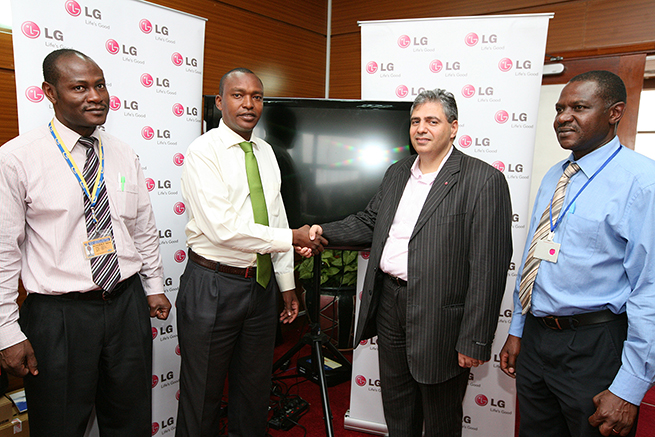
Alloys Siaya, KAA ICT Services Manager (left) and Mr. Dominc Ngigi, KAA Corporate Affairs Manager (second left) receive ten LCD TVs from Mr. Moses Murji, LG East Africa Marketing General Manager (second right) as Eng. Owen Waithaka of KAA looks on.
LG East Africa has donated 10 display screens to Kenya Airports Authority (KAA) to replace those that were destroyed during the inferno that gutted down Jomo Kenyatta International Airport (JKIA)’s International Arrival section.
The fire razed down the arrivals unit causing the region’s biggest airport to temporarily close. Property including 38 flight information display screens in the arrival pick up waiting area, baggage belt area, information control room, security office among other sections of the arrivals unit were destroyed. No serious injuries were reported in the August 07 incident, which coincided with the 15th anniversary of the bombing of the U.S embassy in Nairobi.
Moses Marji, the LG Marketing General Manager East and Central Africa said the donation was a stop-gap measure to help JKIA resume normal operations.
The fire at East Africa’s largest aviation hub disrupted air travel across the continent. “We are glad to that JKIA has resumed operation at about 100 percent and we are glad to work with you to ensure JKIA quality of services and existing services are improved” said Mr. Marji.
JKIA is East Africa’s doorway and hosts tens of airlines ferrying passengers to and from Europe, Middle East, Africa and America.
Investigations into the possible cause of the massive fire are still ongoing. JKIA is a crucial transit point for various airlines coming in and going out of Africa and currently serves over 40 international airlines.
The transport industry in Kenya is awash with new technologies propping up including a new gadget that could help transport business men monitor their vehicles from the comfort of their home.
The company named MapSoft Technologies Limited, has come up with the Hand held Mobile Computing Solution that not only encompasses easy collection of fares but also helps in vehicle tracking among other integrated solutions.
According to the founders, the demand for the product is huge and they have managed to seal a two year deal with one of the biggest transport companies in Nairobi, MOA Compliant.
“Transport is key to growth of other sectors of economy hence the need to address bottlenecks suffocating the sector for rapid growth of other sectors of economy,” Patroba Mariga, a founding partner of MapSoft told TechMoran.
“Our immediate aim is to end fraud in public transport sector, restore sanity, eliminate industry predators and minimise accidents. It is worrying that the country loses 4000 lives annually and 15,000 fatalities due to accident caused by human errors. This translates to more than 10 lives daily!”
The company’s product separates itself from the other tracking and fleet management service by combining a whole host of services in one gadget.
“For us to attain the modern concept of ‘Smart Urban Mobility’, we must address other aspects equally. Of major concern is traffic congestion leading to traffic jams, security i.e hijacking and of recent acts of terrorism target the sector. We must also address the high rate of accidents. Data from police department shows that 80% of accident is as a result of human error,” Patroba said.
Lack of funding for their projects and the fact that they have to manufacture their products in India are some of the huddles the company hopes to jump over soon. The company has set its height in becoming the go-to place for transport companies in Kenya and the rest of the world.
Text message management platform, FrontlineSMS has today introduced FrontlineCloud, to allow users easily send, receive, and manage SMS messages and data from anywhere in the world.
According to FrontlineSMS CEO Laura Walker-Hudson, “FrontlineCloud makes life simpler with a quick set-up process, more ways to connect to mobile networks, and all of the sophisticated data management available through the cloud. It brings the convenience of the web to your text message communications, all for a low monthly rate.”
Users of FrontlineCloud will be able to send SMS anywhere in the world and connect to almost any mobile network anywhere around the world via FrontlineCloud’s web-based service partners, or via an Android phone connected to the mobile network one wants to send messages through. Say an Android phone connected to MTN Rwanda if a user wants to through MTN Rwanda or an Android phone connected to Safaricom if a user wants to send messages through Safaricom.
“We’re excited to be making this big leap in the development of the Frontline product set,” Walker-Hudson told TechMoran. “We’ve been listening to user feedback and looking at the needs of the market for the last few years, and making the configurability and accessibility of FrontlineSMS available in the cloud seemed like a very logical next step for us. You can expect lots more new features in the app in the coming months, as well as a new release of our award-winning desktop platform, FrontlineSMS. We couldn’t be prouder of our amazing team.”
Walker-Hudson added that for two-way messaging a user can lease a local “virtual” number in over 35 countries then send and receive through an Android phone over a specific mobile network or with a custom connection with a partner.
Getting started with FrontlineCloud is simple. One only needs a valid e-mail address and an Internet connection. They then complete a short form and confirm via e-mail. After they sign up, they’ll be able to log in through FrontlineCloud’s homepage, or directly via cloud.frontlinesms.com.
FrontlineCloud is available for only $10 per month. The price covers the cost of tool development maintenance, premium user support, and user account web-hosting.
Originally developed in 2005 in London, FronlineSMS is used around the world in over 135 countries. FrontlineSMS is based in Washington, DC, US and Nairobi, Kenya and has teams situated around the world. Recently the firm announced it had reached 100,000 downloads , 75,000 of them in the last year alone.
Eric Muli, Albert Mwangi and Daniel Kimani have launched Zabamba.com, an online, Yelp-like platform that brings together a collection of user ratings and reviews on places they visit, bars they club at or on various topics and categories plus Klout-like user ratings.
The categories on the site include Nightlife, Restaurants, Venues, Public Figures, Sport,Music,Movies , T.V. Shows, Celebrities and Kenyan media personalities. There were a few bars and restaurants like Brew Bistro and Volar on the platform too, rated with Klout like scores up to 100 percent for the best ratings.
The founders expect the platform to help users, especially consumers to visit places, say hotels, bars and restaurants then review. The best the place or personality, the higher the score. The higher the score, the better the person, place or shop or bar or restaurant. Take of two star ratings to five ratings. They expect consumers in Kenya to use the platform to chose highly rated goods and services, or a hotel with a higher score over others.
After signing up here using an email address, selected a user name and password and had access to Zabamba’s previous reviews. The listings and reviews on the platform are as easy and fun as the team expect. The beta platform allow user to rate companies, personalities among others and share their reviews and ratings of the products and services with their friends. The sharing is much more of a recommendation for reliable source of information for decision-making, especially when one wants to shop.
The three claim to have raised some seed investment to build the platform, and are set to introduce mobile apps in the market in the near future.They will charge monthly user fees and feature companies on the platform for more appearance to visitors. Advertising will also make them cash but their major aim is to make shopping convenient and transparent.
Vodacom Tanzanian is set to invest Tsh 200 billion ($124M) for network expansion this year.
According to Rene Meza, Vodacom Tanzania M.D, despite stiff competition Vodacom will see a steady growth in its user base despite stiff competition therefore the need for more capital injection.
“This year will see us invest over 200 billion shillings in network expansion, data and M-Pesa (mobile phone cash transfer service),” he told Reuters.
The M.D however has fears, that the firm’s plan to achieve its goals might not be achieved as the July 2013 SIM Card tax of Tsh 1000 each month and a 0.15 percent excise duty is likely to hurt the environment. Tanzania’s mobile operators argue the SIM card tax will reduce the uptake of mobile phone usage to the 23 million who have not been reached by mobile phones.
Meza told the paper, “The mobile industry in Tanzania is already heavily taxed. Additional taxes will definitely discourage investment particularly for rural expansion.”
With over 45 million people, Tanzania has some 22 millon subscribers who make up to 48 percent mobile penetration rate said the Mobile Operators Association of Tanzania (MOAT). Of the 22 million mobile subscribers by June 2013, Vodacom Tanzania reported around 9.7 million users as the leading telco.
South Africa’s Cell C has launched an R200,000,000 ($20M) network upgrade in Johannesburg which will see it set up 100 sites in the next three months in a move to up its network capacity and improve quality as it races to have 4340 outdoor and indoor sites on air by year end.
The 100 sites will be in addition to the firm’s already existing 959 sites in Johannesburg. The roll out starts with the first 19 live before end of this month. The areas earmarked include Sandton, Fourways, Bryanston, Morningside, Soweto and Benoni amongst others.
According to Alan Knott-Craig, Cell C CEO, “Traffic on our network has doubled over the past year and we’ve been hard at work rolling out new sites and installing additional capacity to cater for this growth and restore quality.”
“In particular, the network in Johannesburg and Pretoria has been taking strain. In addition to the new sites, we have also embarked on a project to optimise close to 900 existing sites in Johannesburg and Pretoria to improve coverage and minimise interference on the network in high-density areas. We expect these activities to be completed by the end of November 2013,” Alan added.
The firm will also be building an additional 70 indoor coverage sites in Johannesburg and Pretoria. It promises to roll out new sites, upgrade and optimise existing sites and add additional capacity across its network nationally.
Android and Lenovo fans, in South Africa, Nigeria and Kenya are set to win $2000 in a new competition by Lenovo Africa.
The competition is looking for the best name for the statue Lenovo is set to build.
Lenovo will model the statue after the winning name. The campaign is accompanied by a social media competition on Lenovo Africa Facebook page (www.facebook.com/LenovoAfrica). The winner of the best and most creative name will receive a hamper full of Lenovo goodies worth USD 2,000. The winner will be chosen by Lenovo and the Africa Android statue will be unveiled in October this year.
The PC Supplier’s landmark campaign is to commemorate the launch of the Lenovo A1000, A3000 and S6000 Android tablets in Africa.
According to Graham Braum, Country Manager of Lenovo Africa, “We are thrilled to create Africa’s first ever Android statue to celebrate the launch of our new range of tablets.”
“Our latest Android tablet family is perfectly matched to meet our customers’ demands. We’ve noted that 7” tablets are well accepted, particularly by young, active users who are always on the go, so we’ve created devices that address these customers’ needs, as well as devices for more demanding gamers and multimedia users. We are confident that our Android family will appeal to customers across Africa as we’ve made them highly accessible and flexible to serve multiple needs, styles and budgets,” Braum added.
Lenovo’s new Android tablet range starts with two new A-series 7” tablets designed for optimal mobility while still packing a performance punch. The A1000, with Dolby® Digital Plus, will deliver a dazzling experience for music and entertainment lover, while the A3000, with its ultra-responsive quad-core processor, is high-performance tablet that’s portable enough to slip in your jacket pocket. .
Alongside these models, Lenovo also launched the new and stylish S6000. The slim, light and comfortable to hold tablet is powered by a quad-core processor and delivers the performance users need to enjoy the latest apps and games on Android 4.2 Jelly Bean, while its 10.1″ HD IPS mutitouch display guarantees a bright and vivid viewing experience.
The most famous Android statues have been created by Google and are located at their corporate headquarters (Googleplex) in Mountain View, California. These statues document important milestones in the history of Android and have traditionally been based on the code names for the versions of Google’s Android mobile operating system, which are named alphabetically after desserts: Cupcake, Éclair, Frodo, Gingerbread, Honeycomb, Ice Cream Sandwich, Jellybean.
It has been rumoured that the next official version of Android will be called Key Lime Pie, a traditional American dessert – but Lenovo has decided to launch a campaign to ask Africans what they would name it if they had a choice.
Teachers at Brescia House School, situated in Bryanston Gauteng, is one of South Africa’s leading independent girls’ schools catering for 850 learners from grade 0 to matric (grade 12) are using technologies such as the AlwaysOn-Learning Solution that utilizes Microsoft Office 365 – to streamline administration; to communicate with colleagues, learners and parents; and above all to provide opportunities for creating engaging learning experiences that are enhanced by technology.
Brescia House School has implemented a number of initiatives to provide learners with access to technology as part of their well-rounded and balanced education.
Brescia House School in 2010 embarked upon a project to equip every grade 10 girl with a netbook. Having this technology in the hands of every learner in a grade meant that teachers could assign work requiring the use of technology, learners could become comfortable using computers and theoretically activities using the internet and social media were possible.
Whilst the learners who were part of this project (who are now in their final year of high school) are still making use of their netbooks, the technology was not being used to its full potential and in some classes the netbooks were barely touched.
The school’s ICT Coordinator Lyneth Crighton says: “If you came to our school three years ago I would have had to have made a special effort to make sure that someone was using the computers on the day of your visit”.
Three years later a casual stroll down the corridors of Brescia reveals laptops open in almost every classroom, interactive whiteboards on in most venues and even learners whose teachers are absent are sitting quietly in front of their computers busy with work. In this case study the role of the AlwaysOn-Learning Solution utilizing Microsoft Office 365 is explored to determine its contribution to meaningful anywhere, anytime learning.
Whilst it takes some time for teachers to get comfortable with using technology, having hardware and software that are user-friendly, easy to learn and intuitive helps to ensure that the investment in technology pays off. Brescia House School’s ICT Coordinator explored a number of different hardware and software options to find solutions that would be easy for teachers to use without taking away teaching time to perform administrative tasks. The school sought a solution that would be appropriate for the age of the learners whilst still familiarising them with the technology they will encounter in the workplace.
Brescia House School also looked for a solution that would allow parents to see what their children are doing at school – whilst still being affordable. Crighton says: “The computer lab was a one-size-fits-all approach and we did not want a one-size-fits-all solution. We need to put our teachers and learners first. What we are striving to do is anywhere, anytime learning. I was looking for different ways to achieve that.”
Situation
The AlwaysOn-Learning Solution has been implemented at Brescia House to provide a portal for sharing resources, completing administrative tasks and encouraging communication and collaboration within classes. This was easily achieved as the solution is built using Office 365 and most of the learners have Dell laptops preloaded with Microsoft Office software.
The solution also has a strong mobile component that is supported in conjunction with Nokia. Being able to access a variety of tools and resources via a single portal has helped to ensure that technology is being used for sound educational purposes without creating more work for the teacher.
At Bresica they had tried another learning management system prior to implementing the Always-On-Learning Solution but few teachers made good use of this system as the majority of teachers found it difficult to master. Most Bresica teachers are comfortable with using Microsoft technologies, so it was thought that a learning management solution that made use of familiar Microsoft software would be easier for teachers to master and implement. A further advantage of the AlwaysOn-Learning Solution was that the terminology could be customised to use language commonly used at Bresica instead of talking about modules and units but rather subjects and classes.
In the past, some teachers made use of Facebook in their lessons but whilst this social networking platform was easy to use it was out of the school’s control, younger learners could not legally make use of it and there were concerns about online safety. As part of the AlwaysOn-Learning solution, learners have been able to use social media to blog, tweet and chat with one another as part of a learning activity – but this takes place in a controlled environment on SharePoint Online. This makes it easy for teachers to monitor what is being written and to control who has access to the discussions taking place.
If invited, parents can see what their children are up to on the platform, or a teacher can share the contents of a class discussion on the school blog or keep class interaction private depending on what is appropriate in each situation. These features can be accessed from any device with an internet browser and but key applications within Dell and Nokia Lumina devices as well as Windows 8 based tablets or Windows 8 based phones make interaction easy to achieve.
In 2009 the school realised that each learner needed an email address and these were assigned using a free web- based email application. The email addresses streamlined communication and gave each email a Brescia House School identity, but with so many email addresses to administer, the IT department continually had to reset passwords when these were forgotten and learners could not make use of all the Outlook functionality. In 2010 the school adopted Live@Edu as an email solution which allowed learners to reset their passwords themselves. Other advantages included the fact that when learners left the school it was possible for them to easily be removed from Exchange Online, but whilst they were at school their mail could be monitored and subject to the school’s acceptable use policy.
At Brescia House School it will be easy to move the Live@Edu addresses over to the upgraded Office 365 solution and to provide access to additional tools and features to teachers and learners. Learners will now also have access to SharePoint Online – a collaboration tool that allows teachers to store documents, host blogs, microsites and wikis and learners will have the ability to collaborate on documents at the same time. With Lync Online (which is included as part of Office 365) learners will be able to have instant message, voice and video conversations similar to using Skype and teachers will be able to present PowerPoint online. When learners leave the school they will no longer have access to the SharePoint, but they can have access to a mailbox for life through Office 365 Alumni so they don’t have to worry about no longer having access to their contacts or being unable to retrieve emails sent to them.
Crighton says: “one of the big advantages of using the AlwaysOn-Learning solution is that through Microsoft Office 365 each learner has access to 7GBs of storage space in her personal SkyDrive without having to jump through a whole lot of hoops to get more than the 2GBs of free space that other cloud storage solutions offer. Another advantage of the solution is that learners will still be able to access the content that they stored on their personal SkyDrives once they leave school.” The large amount of storage space in SkyDrive works well for teenagers who have large collections of photos, music and documents and want these all sorted in one place without using a photo-sharing website for photos and collecting their music somewhere else.
Solutions
At Bresica there is adequate high-speed bandwidth in every classroom to make the AlwaysOn-Learning solution work, but not every learner has internet access at home. To overcome this challenge, learners can save documents in SkyDrive so that they can view them and make changes offline, synching their changes the next time they are online. Learners are also creative about accessing free public connectivity and have been known to access the AlwaysOn-Learning portal and their SkyDrives from gyms, fast-food restaurants and coffee shops that provide free internet access. In previous years if you left your books at school over a weekend and had a test on Monday there was little that could be done.
Now learners have many ways to make a plan to get online and access their learning materials including the Siyavula text books that come for free as part of the solution. Whilst the AlwaysOn-Learning and Office 365 key elements are available standard within Nokia Windows 8 devices, being able to access the AlwaysOn-Learning solution from any Internet enabled device is a key factor in promoting anywhere, anytime learning.
Whilst most learners at Brescia have a Dell laptop and many are considering a Nokia Lumina smartphone the AlwaysOn-Learning solution and Office 365 could potentially be used in a Bring-Your-Own-Device learning environment and some Bresica girsl use the solution on various devices including iPad’s and Android tablets. Being accessible through any browser also means that if parents are invited to look at a class page on the Always On portal or work their child has done they would be able to do this from any type of internet enabled device including a smartphone. The solution has enabled Brescia to consider totally moving to a cloud based platform which would involve paying a monthly license fee for the software. Brescia House’s ICT Coordinator Lyneth Crighton notes “technology evolves all the time – and subscription based licensing is starting to be more accepted in South Africa”.
Licensing software in this way would mean that parents would be able to spend less initially on getting their children equipped and as new versions of software become available they could easily upgrade as opposed to continuing to use software that was paid for outright. Learners who have chosen not to get a Dell laptop pre-loaded with Microsoft software can still make use of the solution which makes it possible for them to still complete any tasks that are assigned requiring access to Microsoft Office meaning that lack of access to software is not a factor that will prevent any learner from completing an assignment or participating in a class project.
Benefits The benefits of the AlwaysOn-Learning solution are best demonstrated by looking at the teacher who volunteered to trial the platform in her classroom.
Erica Makings who teaches Natural and Life Sciences at Brescia House School holds a doctoral degree in Biochemistry but is fairly new to the practice of integrating technology into her lessons. Prior to arriving at the school, just over a year ago, Makings came from a school where the only technology in her classroom was an over-head projector that she had hired herself.
She admits that at first it was intimidating to teach at a school with as much access to technology as there is at Brescia House School. Makings recalls her first day when “I walked into a class where every learner had a laptop. I didn’t know how to turn on the interactive whiteboard. I lost documents.” Undeterred by her lack of advanced computer skills, Makings was determined to learn how to use the AlwaysOn- Learning Solution and to implement it in her class.
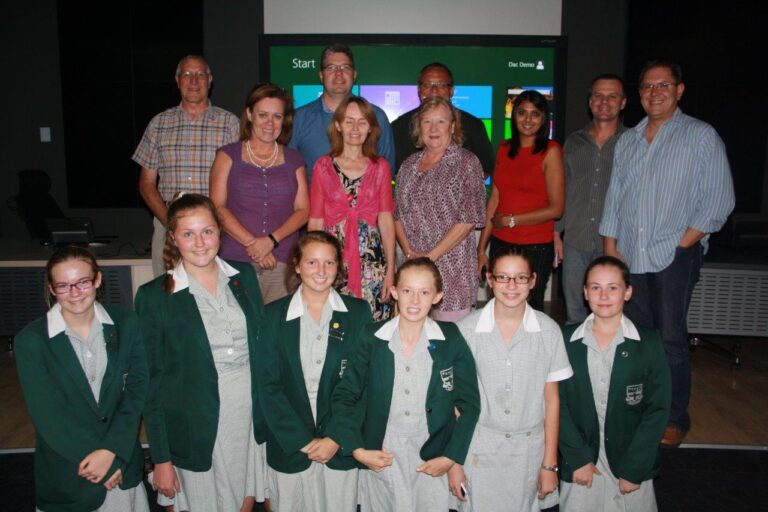
She says that contributing to the Siyavula open educational resources had allowed her to see first-hand the power of developing and sharing learning materials and she was eager to use a platform that would allow for easy sharing and collaboration in her classroom. Makings put her research background to use and approached learning how to make the most of the technology scientifically. Before implementing the solution with the whole class Makings asked a group of five girls to volunteer to help her to trial the AlwaysOn-Learning solution.
Makings looked for girls who would be able to showcase the solution to other learners and teachers; who would participate using the various tools available; and who would be able to speak candidly about what was and was not working so that they could find solutions and develop best practices. With some training from DAC Systems, and some support from the ICT coordinator, Makings and her team found it easy to navigate through the solution and to figure out how to use the various features.
One of the girls who participated in the AlwaysOn-Learning trial was grade nine learner, Kirsty Everett. Everett claims that what she likes about the AlwaysOn- Learning solution is that the platform provides convenience and that the information and tools that she needs are at her fingertips. “You can have your textbook open – and other documents open on the screen at the same time.
If I want to draw a table I can do it without having to dig in my bag for a ruler”, says Everett. Having access to notes and some textbooks in digital form reduces the weight of school bags and learners who want to look over their work at home or on holiday can access their learning materials without having their school bags with them.
Everett claims that whilst some teachers still expect homework or class assignments to be printed and handed in it is much easier to submit work electronically and in classes where this happens it is easy for the teacher to track whose work was submitted on time.
Florence Noblot, DHL’s Technology Sector Head for Europe, Middle East and Africa, estimates that 60% of all IT hardware growth will come from tablets and smartphones this year. “Both devices also elevate a trend towards high innovation cycles, which demands logistics providers to improve time to market while supporting competitive price positioning.
“This trend is also clear in Africa, and according to the GSMA, Africa is now the world’s second largest mobile market by connections after Asia and the fastest growing mobile market in the world.”
He says that an overall trend towards simplified and lighter products, combined with price pressure, is challenging manufacturers, their suppliers, and sometimes even their competitors to develop collaborative solutions that improve the cost efficiency of the technology supply chain.
“Due to the expected economic growth, technology suppliers have the ideal opportunity to penetrate the African market, but should have experienced partners who are able to provide insight and have experience operating on the continent,” concludes Noblot.
Competition within the technology sector is becoming more intense and Asia’s importance as both a manufacturing location and a consumer market is growing. However, although Asia is still key to the sector, Africa has also witnessed an explosion in technology adoption recently and is set to develop as a region.
This is according to Charles Brewer, Managing Director for DHL Express Sub-Saharan Africa, who says that a recent DHL global technology conference revealed these trends around the changing dynamics of the technology market.
He says that due to the increased competition within the sector, suppliers need to adapt and improve products and services in order to retain and grow market share. “This presents an opportunity for suppliers to be innovative and provide consumers with the best possible products, services and prices.
“Both of these trends also promise to amplify the role of logistics as a competitive differentiator in the technology industry, notably as global companies are looking for strong and established partners to support and simplify access to the African market.”
Brewer says that within Africa, although there has been a significant rise in demand for electronic consumer products, the continent is still in need of increased investment from international technology companies, in order to become more than just an end-user for technology products.
He says that more than any other industry, the technology sector is driven by constant innovation, short product cycles and new sales channels. “From a logistics perspective this is a great challenge, but it also provides forward-thinking brands with an opportunity.”
Brewer says that by setting up shop in Africa, these brands are able to service this growing market and spend significantly less on logistics costs as they are based in much closer proximity to their customers.
According to a recent report by Deloitte entitled The Rise and Rise of the African Middle Class, the continent has a disproportionately young population with 62% of the population in Africa under 25 years. “This is positive from an outside investment perspective, as it effectively means that there is a guaranteed customer base for years to come when compared to a territory such as Europe, which has a shrinking population.”
The Deloitte report also forecasts that if the African middle class continues on its current growth trajectory Africa’s middle class will grow to 1.1 billion (42% of the continent’s population) by 2060.
The trend of mobile devices preferred over PCs as the access tool for the internet was also highlighted at the conference. F
Lenovo wants to lead other companies in being the first company to create an African Android statue, this will happen alone side the launch of the Lenovo A1000, A3000 and S6000 Android tablets in Africa.
The most famous Android statues have been created by Google and are located at its corporate headquarters in California.
These statues mark important milestones in the history of Android and have traditionally been based on the code names for the versions of Google’s Android mobile operating system, which are named alphabetically after desserts: Cupcake; Donut; Éclair; Froyo; Gingerbread; Honeycomb; Ice Cream Sandwich; and Jellybean.
The grapevine has it that the next official version of Android will be called Key Lime Pie, a traditional American dessert, nevertheless Lenovo has decided to start on a campaign to ask Africans what they would name it if they had a choice. Lenovo will then build a statue, modeling it after the winning name.
The campaign is accompanied by a social media competition on Lenovo Africa Facebook page asking Android and Lenovo fans, in South Africa, Nigeria and Kenya, to name the statue. The winner of the best and most creative name will receive a hamper of Lenovo goodies worth R20,000.
The winner will be chosen by Lenovo and the Africa Android statue will be uncovered in October this year.
“We are thrilled to create Africa’s first ever Android statue to celebrate the launch of our new range of tablets,” says Graham Braum, country manager of Lenovo Africa.
“Our latest Android tablet family is perfectly matched to meet our customers’ demands. We’ve noted that 7-inch tablets are well accepted, particularly by young, active users who are always on the go, so we’ve created devices that address these customers’ needs, as well as devices for more demanding gamers and multimedia users.
“We are confident that our Android family will appeal to customers across Africa as we’ve made them highly accessible and flexible to serve multiple needs, styles and budgets.”
Sony’s head of SCE computer entertainment stated that the company has so far received more than a million preorders worldwide for its new PlayStation 4 Console.
The Chief Executive of SCE, Andrew House further said that the console will be available from November 15 in North America and November 29 in Europe
“The response we have received is nothing short of incredible,” he said. He added that the console will be available in 32 countries worldwide during the holiday season.
Microsoft Corp, on the other hand, has said it will start selling its latest console,Xbox One, in November. Escalating competition between the two consoles is anticipated ahead of the year-end.
Sony’s new console after seven year has a price tag of $100 which is a lower price than the new Microsoft’s Xbox One whose price stands at $399.
Xbox One, which was launched in May following eight years after the previous console, marks as its strongest push by the company so far to take over the market.
Microsoft Europe’s Vice President of Interactive Entertainment Chris Lewis said that their preorders for the Xbox One were “unprecedented” but took a rain check when it came to give more details.
Sony held that it would also cut the retail price for its PlayStation 3 and PlayStation Vita devices to $199 in the United States and 199 Euros ($270) in Europe. The Vita was 249 Euros while the PlayStation 3 was 229 Euros.
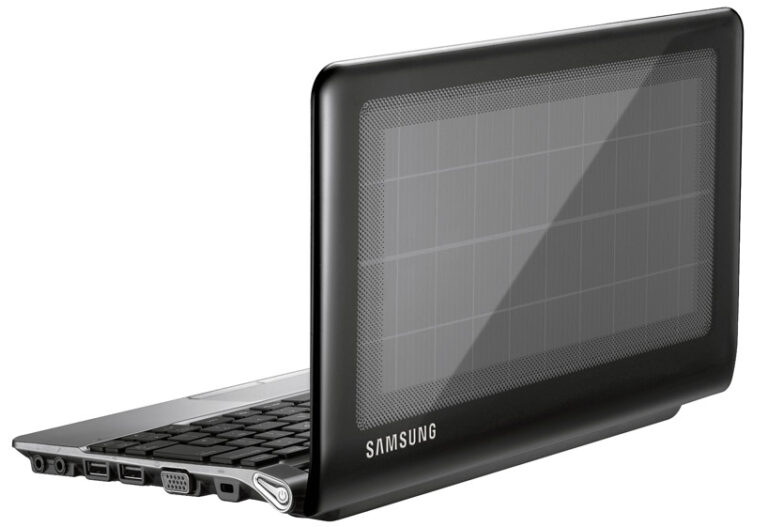
Ghana is joining the fray to offer its students in schools solar powered laptops to enhance their education. The government through its education minister launched the use of the laptops in Accra signaling the embrace of eLearning.
The Solar Operated Laptop, the first of its kind in the world, is a private sector initiative in ICT geared towards the development of education in Africa.
The initiative is being spearheaded by WeWi Telecommunications Inc, a Canadian R&D Corporation dedicated to bringing innovative solutions to the market and marketed by WeWi Ghana.
Mr Roland Carson, Chief Technical Officer of WeWi Inc, said since its inception, the company had created unique products and services and, in the past several years, began exploring new markets and expanding internationally through its various subsidiaries.
Mr Carson said WeWi’s core competencies were in software, hardware development and systems integration while its main focus was creating highly specialized solutions servicing the government, defence and health sectors where the company’s core integrated team of award winning experts was both experienced and comfortable serving government institutions, military bodies and civil initiatives.
Prof Naana Jane Opoku-Agyeman the minister of education said that the Ghana ICT policy should be revised to meet the needs of the society currently.
Kenya is still in the process to get suppliers for its programme for standard one pupils. Rwanda on the other hand has seen great progress in their pilot plans for having one laptop for every school child.
Bloggers in The Gambia risk 15 years in Jail or fines of up to 3 million dalasis (approx. $90,000) if they criticize the government officials, share meme or share anything derogatory against online.
This comes after The Gambia amended an act passed a new law limiting online freedoms, especially to the youth. The Act criminalizes whoever spreads “false news” about the government or public officials, caricatures or makes derogatory statements against public officials and incites dissatisfaction or instigates violence against the government.”
Offenders “risk 15 years in jail and/or fine of three million Dalasis (about US$90,000). The law seeks to silence critical Gambian internet users, online activists, online newspapers and bloggers within or without the country.”According to Nana Grey Johnson, Minister of Information and Communication, “the new law provides deterrent punishment for such persons who are engaged in treacherous campaigns against The Gambia both internally and outside.” While Hon. Seedy Njie, a member of the National Assembly added: “it is pertinent that government comes up with these stingy measures to curb the activities of offenders online.”
The law passed July, was passive until a recent notice by Momodou Sabally, head of Civil Service and Minister of Presidential Affairs at a meeting held August 8 with religious leaders and cabinet members at the the State House, that the government is set to “massively crack down online freedoms”. Sabally warned Gambians – especially the youth not to participate in online campaigns against the government. He was quoted, “If you cannot say anything good about the country, then you should keep quiet.”
Sad, however is that the religious leaders at the state meeting are reportedly supporting the government’s move.
The Gambians are however not silent. Led by the Media Foundation of West Africa (MFWA) and other organizations, the recently-passed law is being condemned widely. Alieu Mboge, MFWA’s spokesperson has told the cabinet that “we would do everything within our power to stop the youth both in[side] and outside the country from any online criticism of the government.” Other organisations are also calling on the government and religious leaders to recognize the importance of the Internet to the youth and the entire economy and are calling for freedom of expression online and in public.
Apart from internet freedoms, Gambia’s traditional media such as radio stations and newspapers do not air programmes critical of the government. The government now wants to reign in on online activism.
Gambia’s announcement to take on activism online will derail internet penetration in the country and cause fear among users instead. Facebook’s plan to reach the next 5 billion will also be highly affected.
It would definitely be convenient to get your traffic updates from Google. Citizens of Argentina, Brazil, Chile, Colombia, Ecuador, France, Germany, Mexico, Panama, Peru, Switzerland, UK and the USA are set to enjoy this service fro Google.
Google has already started incorporating this service through the Israeli traffic mapping company,Waze,although Google is still waiting for regulatory approval to buy the traffic company
As part of the consolidation, users of Google Maps for Mobile will now be able to see real time incident reports from Waze users. When Wazers report accidents, construction, road closures and more on Waze, the updates will also appear on the Google Maps app for Android and iOS.
In addition, the Waze app has been updated to include Google’s search functionality.
The Waze Map Editor, after a beta test, will now include Google Street View and satellite imagery to build out the map and make it easier to correct map errors reported by the community.
In June this year, Google beat had reported offers from both Apple and Facebook to buy the company. Waze has built up a user base of over 50 million customers all feeding live traffic information back to its users.
SanDisk corporation,a global leader in in flash memory storage solutions has today announced four new memory products in the market, ideal companions for users who want fast expanded memory. The three include SanDisk Extreme microSDHC and microSDXC UHS-I memory cards, SanDisk Ultra USB 3.0 Flash Drive, Cruzer orbit USB Flash Drive and the Cruzer Force USB Flash Drive.
The SanDisk Extreme microSDHC and microSDXC UHS-I Memory Cards
The SanDisk extreme memory cards are used for smart phones, tablets and cameras. They are equipped with up to 80 MB/sec read and u to 50MB/sec and is an excellent choice for Android powered devices with 64GB of capacity.
“The SanDisk Extreme microSDXC card allows users to do more with their devices. Our high performance and high-capacity microSD cards enable consumers to take advantage of the high-quality HD video and imaging capabilities in the latest 4G Smartphones, tablets and action cameras, ” said Susan Park, Director, retail product marketing SanDisk.
The memory cards are waterproof, shockproof and resist x-rays. They have an adapter for compatibility with full size SD/SDHC/SDXC supporting devices as well as a downloadable offer for RescuePro Deluxe data recovery software for bringing accidentally deleted images back to life.
The SanDisk Ultra USB 3.0 Flash Drive
This device allows users to transfer, store and share large files up to four times faster the USB 2.0 drives, with speeds of up to 80MB/sec. The drive’s fast performance speeds allow handling documents hi-res photos, HD videos and other large files with ease. The Ultra USB 3.0 drive is backed by a 5 year limited warranty and is shipping worldwide now in 16GB to 64GB capacities.
Cruzer Orbit USB Flash Drive
The drive offers an easy and convenient way to store, transfer and share data in a 360 swivel design. It features a protective cover that rotates to shield the USB connector fro damage when it is not in use and is only 1.5 inches long and is available worldwide now in 8GB to 32GB capacities.
Cruzer Force USB Flash Drive
Built with a durable metal casing, the Cruzer Force USB offers a sleek design and protection for files. Combining fashion and function, the ultra thin drive comes with password protection software. They are available worldwide now in 8GB to 32GB.
All flash drives come with SanDisk SecureAccess Software that provides secure file encryption and password protection. The software provides 128-bit AES file encryption for private files while leaving the rest of the drive available for worry-free sharing.
Bradley Bennet, The Regional Marketing Manager, Mediterranean Middle East & Africa noted the possibility of having counterfeit products and to address the matter he said that the company is investing into the idea of educating the port vendors on the original and counterfeit products so that they will not receive them in the country and will do the same to the retail vendors in case the counterfeit products are already in the market.
To help curb counterfeit goods, the Marketing Manager said that the products have selected distributors in different regions, for instance, Mitsumi is the authorized dealer for East Africa and Despecs distributes for East Africa and Burundi.
He also noted that SanDisk intends to expand it is market to the whole of Africa given that the demand for such products is particularly high in Africa due to the introduction and growth of new technology systems like smartphones and tablets.
The company, SanDisk, has been in existence since 1988 and has provided innovations in flash memory and storage systems technologies have provided customer with diverse product portfolio includes flash memory cards and embedded solutions used in Smartphones, tablets, digital cameras, camcorders, digital media and other consumer electronic devices, as well as USB flash drivers and solid-state drives (SSD) for computing market.
The Honourable Minister of Education Prof. Ruqayyatu Ahmed Rufa’i OON (Left) signs the AVU Charter at the Ministry’s offices in Abuja, Nigeria. Looking on is the AVU Rector, Dr. Bakary Diallo (Right).
Nigeria has become the 18th Member State to sign the African Virtual University (AVU) Charter, paving way to delivery of tertiary education in the country’s institutions via Information and Communication Technologies (ICT).
The AVU charter was signed by Hon Minister of Education Prof. Ruqayyatu Ahmed Rufa’i OON at his Ministry’s offices in Abuja, Nigeria.
According to AVU Rector, Dr. Bakary Diallo the Charter will strengthen AVU’s cooperation with the Nigerian government and increase access to quality higher education and training through the innovative use of ICT.
Established in 1997, AVU has trained over 43,000 students and build the largest network of Distance and eLearning institutions in over 30 African Countries.
January last year, AVU received $95,588 from the Nigerian Technical Cooperation Fund to enhance its capacity to further its work in Mathematics and Sciences Teacher Education.
The country will now benefit from $15 million AVU Multinational Support Project II funded by the African Development Bank.
Other countries that are AVU Member States include Kenya, Senegal, Mauritania, Cote d’Ivoire, Mali, Tanzania, Mozambique, the Democratic Republic of Congo, Benin, Ghana, Guinea, Burkina Faso, Niger, South Sudan, Sudan, Guinea Bissau, The Gambia, and Nigeria. The number of AVU Member States has increased from 5 in 2010 to 18 in 2013.
The AVU based in Nairobi Kenya, recently signed an MOU with the African Union Commission to promote use of ICT in Education on the continent with focus on teacher education, content development, infrastructure, quality assurance, open education esources, capacity building and networking.
Nigeria has a population of over 170 million and has several universities and tertiary institutions. AVU will supplement those universities by reaching out some of its over 50 million internet users interested in online learning.
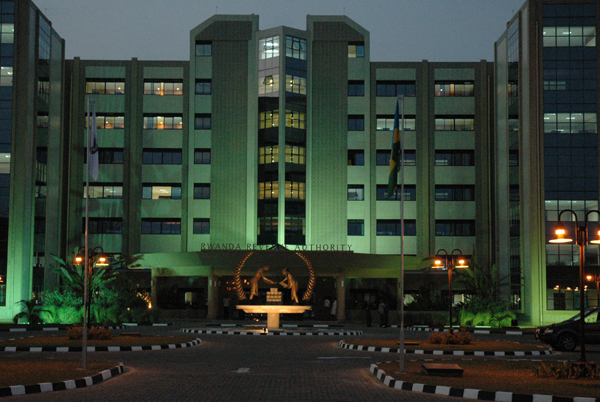
The Rwanda Revenue Authority (RRA) early next week launches a mobile platform dubbed M-Declaration in a bid to make tax declaration easier and fast among SME’s .
M-declaration, (or mobile declaration and payment of taxes) is a USSD platform able to work with Rwanda’s MTN-Mobile money, Tigo Cash or Airtel Mone, is expected to ease tax collection by over 50,000 SME’s in the country with annual turnover of between Rwf2m and Rwf500m.
With a mobile phone, a national ID card or passport and a tax-payer identification number users type *800# and follow a few basic steps to declare their taxes.
M-declaration system was developed by CMC-TATA Ltd and features a section for one to register with TIN, & Mobile No to avail the services, declaration using USSD / Apps / SMS solutions, allows users to declare previous year’s turnover, profit tax calculated for the current year, allows payment through Banks or Mobile Money, acknowledges payment, allows payments every quarter and users can too check the check the status of previous transactions. A user can also decide to use mobile money, pay over the counter or online after completing their tax declaration.
Rwanda Revenue Authority is expecting the system to increase tax collection due to its convenience, have more informal sector players registered and reduce tax evasion. There are an estimated 80,000 informal businesses in the country.
M-declaration however, is not the first service to ease tax declaration. The authority also launched E-filing and E-payment to ease compliance costs on administration and taxpayers, Electronic Single Window for easy customs clearance of goods, Electronic Cargo Tracking Equipment for cargo protection while in transit and The Gold Card scheme system to facilitate compliant taxpayers.
M-declaration, will work as an alternative to E-filing and payment which has since become popular with big taxpayers since its launch last year. According to Fred Karara,the Project Manager for e-payment, all large taxpayers in the country- with an annual turnover of over Frw 1billion were using E-filling. The over 330 large firms contribute to the country’s 70% of all domestic tax revenues. M-declaration, on the other hand, is customized for small entrepreneurs such as motorcycle taxis (boda boda) among others who are estimated to be around 80,000 or 100,000.
Google Street View has added six more zoos and must-see spots at zoos from around the world to enable you watch wildlife from the safety of your office or home online.
The firm Wednesday said users can now visit lion, tigers and (panda) bears on the Google Street View.
“Animal-lovers, rejoice! If you enjoy watching wildlife, but find yourself stuck in the urban jungle, never fear. You can now use Google Maps and Street View to preview the must-see spots at zoos around the world before heading there in person, or take a virtual trip to some of the most famous zoos and animal parks, right from your living room,” posted Deanna Yick, Street View Program Manager.
Google Street View first started as an experimental project in the US in 2007 and has expanded its 360-degree panoramic views to include locations on all seven continents.