The cyberspace is filled with a countless number of websites who already potentially have the exact domain name you want. This is probably why you find it hard to find a strong domain name for your online business.
In any case, you shouldn’t need to change your brand’s name or even settle for a subpar domain name that wasn’t a good choice. Your goal should be to find and register domain name that fits your business goals
Don’t fret if your desired domain name is already taken. Here are a couple of things you can do to overcome domain availability issues:
Check other domain extensions. As a new eCommerce business that is looking to emerge as a successful eCommerce brand, there’s no need to restrict your domain name choices by choosing names only on the standard domains like .com or .biz or .net.
Try exploring other domain extensions and checking desirable names on them if your chosen name is already taken on a .com or a net.
New domain extensions allowed startups and even new businesses to get the domain name of their choice on a good extension. Domain extensions like .store, for instance, can make a relevant and notable choice. Moreover, the chances to find the name you want are also high.
If your fashion eCommerce brand is called ‘Exalt, then consider picking www.exalt.store instead of www.exaltstore.com or www.exaltfashionstore.com.
Modify your domain name. If your preferred name is unavailable on traditional domains and even new domain extensions, the next thing to do is make a creative adjustment by modifying your domain name.
For example, if www.exalt.com is unavailable, try changing the name a little, potentially making it sound better. Why not opt for www.exalt.store? You could even brand it as ‘The Exalted Store’. Doing a variation or a minor tweak makes your brand come across as memorable.
Purchase the domain you want. A taken domain can be bought from its owner. Some individuals and syndicates buy catchy domain names to resell it later at a higher cost to others. If the domain name you want is taken, but not being used, there’s a good chance that the owner is selling it.
Accomplishing a WHOIS search will provide you with all the details regarding the domain name’s current owner, whom you can contact to acquire their domain name.
Use the legal force. According to the trademark law, the first party to trademark their name is the rightful owner of that name. This means if you are first to trademark your brand name and the subsequent domain name is acquired by another party, you can challenge it in the court of law.
This lets you take what’s legally yours. You can also reach out to ICANN, the international nonprofit organization in charge of all domain name registrations globally. They can readily act and settle the dispute since they have a dedicated dispute settling process to deal with name issues. You can get your desired domain name if the law is on your side.
Domain availability or unavailability is a top issue for eCommerce businesses that want to establish an effective online presence. This is true whether you’re an eCommerce startup or a newbie in the online businesses. Keep in mind to only register domain name with trusted providers like CrazyDomains, who also offers web hosting and web development for a complete online presence.
Google initially cracked down on invasive ads in its Chrome browser, and it now wants to tackle the scourge of slow-loading websites by slapping them with a speed warning badge of shame.
Google Chrome is one of the most popular web browsers out there and for good reason, mainly because it is constantly adding new tweaks and updates to streamline users’ web browsing experience.
Two years ago, it was the https or SSL certificate issue that filtered many websites out of presence on Google’s platform. What happened is that Google browser started flagging websites without HTTPS encryption as unsafe and many websites were forced to opt for the SSL certificate to show the reader that they are safe websites.
And now Google Chrome is pondering slow loading websites as the target for many reasons.
I bet we all know how it feels when you click on a web link or open a website and the page takes an eternity to load while you sit there waiting and watching before you abandon the webpage. However, with Chrome’s upcoming plans, you won’t have to wait anymore.
The search giant is testing a “speed badging” feature for Chrome. and revealed in Chromium blog post that it plans to introduce a badge of shame for websites that load slowly on the browser.
The badge would be shown when visiting websites to inform netizens which sites load quickly and warn them which sites take ages to load.
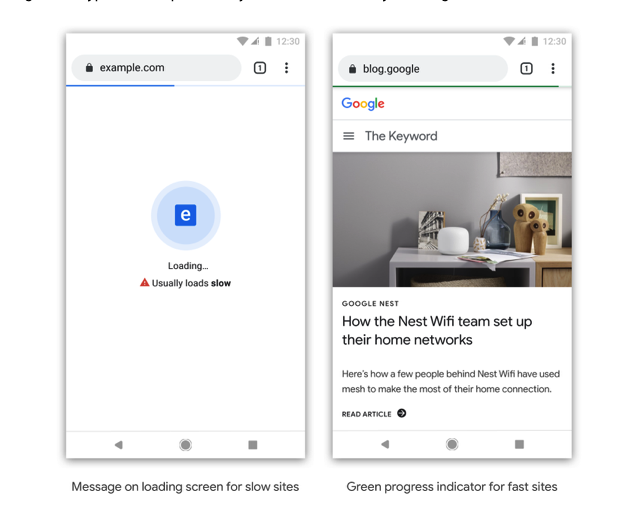
In the post, Google laid out some early examples of how the badging system could work. One example shows a loading message on the splash screen with a warning that the page “usually loads slow.
“In the future, Chrome may identify sites that typically load fast or slow for users with clear badging.
This may take a number of forms and we plan to experiment with different options, to determine which provides the most value to our users.”
The intention for Google to add the badge of shame on Chrome is to highlight websites that are authored in such a way that they load slower. Google will also look at a webpage’s historical loading data to determine which sites take time to load and flag them.
Chrome will also explore the possibility of identifying webpages based on information derived from device hardware or network connectivity.
Google Chrome
The blog doesn’t go into too much detail about the criteria for receiving a badge of shame/honour, as much as it has noted that they would be based on historical load latencies. It also suggests that any initial rollout would be gradual to allow websites to get up to speed (literally), but that stricter measures would be put in place over time. Unfortunately, no timeline has been given by Google on when these warnings will start showing up.
Google is hoping that its unique shaming technique will motivate developers to speed up page-load times but is still contemplating on how to label sites with long loading times.
One way is to simply badge the site with the words “usually loads slow” with a red loading screen on the browser or a green progress bar to indicate that the website loads fast as shown in the images above.
So, if you are a developer and know that you will be affected by this, it’s about time you worked on your website before it gets a badge of shame. Though, as noted by The Verge, the search giant will likely look to developers for feedback before launching the feature.
Africell, and KaiOS today launched the afriphone, a 3G smart feature phone in the Gambia and Sierra Leone, and will also be made available in Uganda and the Democratic Republic of Congo.
Africell and KaiOS’s afriphone will have essential and popular apps like WhatsApp, the Google Assistant, Facebook, YouTube, and Google Maps, and an Africell’s customer care app.
It will also come with other smartphone-level features such as Wi-Fi, GPS, NFC, and offers a hybrid dual-SIM slot that supports two SIM cards with 512MB memory + 256MB RAM. It also boasts a powerful battery which enables extended hours of talk time.
Ziad Dalloul, Africell Chairman and CEO stated that :“As a digital company, Africell provides a link between yesterday and tomorrow. Our network gives everyone the freedom to be and to do what they want. People of all generations and from all walks of life can shine with the powerful tools Africell offers. We listen to the young generation, and we are committed to helping them shape the best future. Introducing this smart feature phone will help us bring valuable digital services and information to the markets we operate in at a price that people can afford.”
KaiOS enables a new category of affordable smart feature phones that require limited memory, while still offering a rich user experience. KaiOS-enabled phones come with the KaiStore, the only app store for feature phones, with over two hundred essential apps from global and local content providers. KaiOS is now the third largest mobile operating system worldwide, running on over 100 million devices shipped across Europe, Africa, Asia and the Americas.
“We’re excited for this brand new KaiOS-powered device from Africell, which will help us continue spreading mobile internet in sub-Saharan Africa,” said Sebastien Codeville, CEO of KaiOS Technologies. “The afriphone will have an immediate impact on people’s lives across the region, offering an inexpensive and convenient means of accessing the internet’s invaluable resources including education, banking, and healthcare for the first time. We are, and will be continuing our journey to enable a sustainable ecosystem by bringing in relevant apps and services that are designed to benefit people in emerging markets.”
Doing it for the ‘Gram is about to change. Not entirely, but at least, when you do it, it won’t be to show off how many likes you can garner with your new designer shoes or the table full of drinks on a night out with friends.
Adam Mosseri, the head of Instagram announced at WIRED25 that the social media network will start hiding post likes in the US on some users posts this week. The U.S. is one of Instagram’s largest markets with more than 106 million users, according to data analyst EMarketer.
“Right now, we’re testing making like counts private, so you’ll be able to see how many people liked a given photo of yours or a video of yours, but no one else will.”
Adam Mosseri
What will happen is that users will still be able to see likes on their own posts but they won’t appear publicly and this has caused mixed reactions from celebrities and social media influencers.
Instagram isn’t the only platform thinking along these lines. Hiding engagement metrics — likes, retweets, view counts — has been tested by Facebook (which owns Instagram), YouTube, and Twitter. “It’s about young people,” Mosseri said during the Wired panel.
“The idea is to try to ‘depressurize’ Instagram, make it less of a competition and give people more space to focus on connecting with people that they love, things that inspire them.”
Instagram’s follower counts and likes have made it one of the top online platforms to compare one’s popularity with others, especially among teens and young adults.
The Facebook-owned company has tried for years to combat the competitive trend by promoting good role models via posts on its @instagram account, hoping to reflect the parts of the app that are about creativity and art as opposed to self-promotion. Yet, aiming for the metrics was irresistible for its users, contributing to mental health issues and other ills, like users paying for fake likes and followers from bots.
Looking at research that suggests visible metric counts reward outrage and creates a radicalized environment, many people have welcomed the idea of killing likes. While others have complained that, without engagement figures, it could become more difficult to determine which accounts have legitimate followers.
Some are also lamenting on the move for businesses, which will have a more difficult time attracting advertisers or customers without those numbers publicly available.
Surprisingly, even some of the app’s most prolific celebrities have said that the service without likes may be healthier for its users.
“It would be really beneficial,” said Kim Kardashian, speaking at the New York Times DealBook conference on Wednesday. Kardashian, who has 151 million Instagram followers and regularly receives more than 1 million likes on her posts, said the Instagram team has been discussing the changes with select users to get feedback, “and that makes me happy.”
In recent years, Instagram, Facebook and Twitter have been at the centre of the debate around issues like smartphone addiction and online health. As a result, product health has become a priority at the social-media companies, which are trying to balance the need to drive user growth and engagement with the outside perception that they are contributing to problems such as online bullying.
In attempts to promote online health, Instagram, for example, has also announced a feature where users can limit the amount of time they spend on the app in a given day, plus it removed the Instagram Activities feed. However, Apple Inc. built a similar “time spent” feature into its iPhone software, and Google offers tools like this for Android phones. Twitter has a beta version of its main product that hides engagement metrics, including likes and retweets, from user replies and interactions.
It’s unclear how widespread the trial of the removal of likes will be, but question is, will you still post on Instagram if the fully remove likes? Do let us know.
The Samsung Galaxy Fold was Samsung’s first attempt at the next major smartphone form-factor but it was riddled with issues. This foldable device was launched early this year but even before pre-orders could be fulfilled, the devices started breaking in the hands of testers.
This issues went to the extent of the company retracting their initial launch, and after acing durability tests, we finally saw a relaunch in September, this time with better protection and foolproofing.
Even though Samsung made several enhancements to make the Galaxy Fold more durable since it delayed the device’s launch back in April, the company strongly suggests that you use a light touch when pressing on the display.
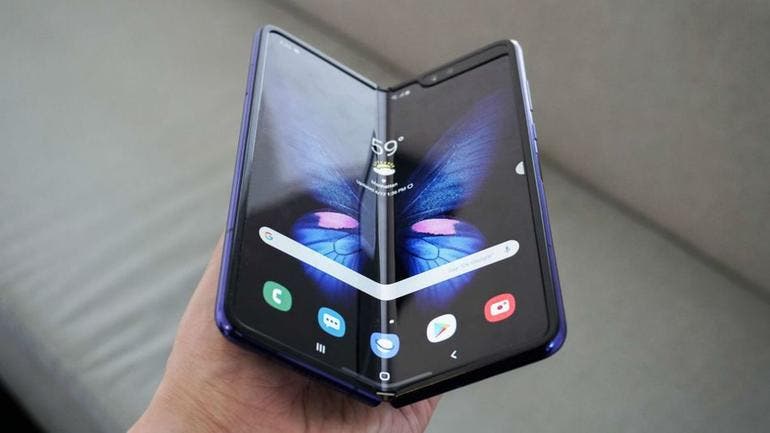
The futuristic smartphone spots two displays, a 4.6-inch front display which can transform into a 7.3-inch tablet and back again.
Recently on Twitter, Samsung Kenya teased an ‘engineering marvel’ that we should all expect in a few days.
From the video, the unfolding the future tag is a dead giveaway and it’s obvious that the expected device is the Galaxy Fold. The interesting bit is that this launch is set on the 14th of November, that is Thursday this week.
The Galaxy Fold doesn’t come cheap though, Samsung quoted a $1,980 (Kshs 202,890) price tag when it launched. Considering the price tag, many of us didn’t expect it to launch in the Kenyan market, but I guess we were all wrong.
This foldable device is clearly an enthusiast phone and with its high price tag, it is clearly targeted for a small group of people who want to sample the bleeding edge of tech. But to be honest, the basis of having a phone and a tablet in one formfactor could be alluring to some.
Samsung has a rather strong presence in Kenya and its flagship phones have been competing with big dogs like Apple and Huawei here. At the same time, they are also able to go head to head with Infinix and TECNO in many market segments.
And it is this sort of brand recognition that is encouraging Samsung to launch its most expensive smartphone yet, in the country.
However, you can also argue that Samsung is bringing in the Fold to make a name for itself in this market. They will be the only manufacturer to launch a folding phone of its calibre in this market, which will make it stand out from the crowd.
Despite its price, Samsung seems to be doing quite well with this device as it is already available in a couple of markets. However, its latest market is the largest in the smartphone world – China.
A few days ago, Samsung’s official Weibo account, reported that all units of the CNY15,999-priced phone (over $2,000) sold out in five minutes. Now, a fresh report claims that the Chinese 11.11 sale Galaxy Fold units also sold out swiftly.
Sadly, the company didn’t disclose how many devices have been sold during both sales, meaning we can’t say much without the official numbers. This is because if there were only 1,000 units available, then, selling all of them in five minutes wouldn’t be so impressive. Especially for the Chinese market. Nevertheless, some people actually paid the equivalent of $2,288/€2,000 to get the Huawei Mate X’s major rival. Will it be the same here in Kenya? We’ll just have to wait and see.
Nonetheless, actual pricing and availability in Kenya should be disclosed on Thursday so stay tuned for more on that.
Sponsored by Budget Insurance, Accenture, the French Embassy and French Tech, the event aims to develop a vehicle insurance chatbot that uses gamification to educate potential insurance customers and, in doing so, build trust and ultimately increase sales of policies for insurance companies. Budget Insurance will be the first insurer in South Africa to implement the winning vehicle insurance gamification chatbot solution.
Over and above this, the hackathon will give developers who have basic to advanced coding experience in any language and their own laptops the chance to compete for a R10 000 cash prize and potential job offers. Plus, it will be an opportunity for exponential learning, growth and sharing of ideas.
FinChatBot Co-Founder and CEO, Antoine Paillusseau, says: “One of the main reasons why so many South Africans don’t have vehicle insurance is due to a lack of education about insurance and how to access it. By providing a fun, educational platform that can help the uninsured better understand insurance, they could be protected in the event of an accident and have their risk reduced significantly.”
Maintaining good health in old age feels like a daunting task to you? But now no more, if you consider fitness equipment on rentsuch as an exercise bike. Biking is an ideal activity for the elderly that comes with lots of benefits. Pedaling on a bike isn’t just for fun but it blesses old people with good health and the list of health rewards are many. You could keep health issues at bay in the old age when chances of catching them are at an all-time high.
If you are in your 60s and looking for the benefits of exercise bikes for the elderly, then take a look below to know what’s involved in it:
1. Promotes Weight Loss
Seniors are prone to gain weight. It’s the lack of physical activity that often put extra pounds of weight to the elderly people. It’s where exercise bikes come as a savior to them. Riding the exercise bikes for a few hours every day keeps their metabolism up and don’t let them gain extra pounds of weight. Burning calories every day helps them lose weight and stay in shape at an age when they need it the most.
2. Boosts Heart Health
Elderly people always stay at the risk of heart attacks due to increased levels of cholesterol build-ups in this age. If not addressed timely, these issues could pile up and turn into serious medical conditions. But such health issues could be greatly prevented if they stick to riding exercise bikes. Pedaling even for a few hours on the bikes reduces the fat deposits in the arteries and keeps heart conditions in check.
3. Preserves Memory
Aging impacts cognitive abilities and risk of dementia and Alzheimer’s diseases increases by several folds in elderly people. To minimize the risk of mental health problems, you need to follow a strict exercise regimen. Riding an exercise bike solves this problem. As it encourages your lungs to expand properly, you inhale more oxygen per breath which keeps mental health issues at bay and gives a boost to your creative thinking skills.
4. Prevents Cancer
Obesity is the mother of all autoimmune diseases which if not addressed could lead to the development of cancer in seniors. Sticking to a fitness routine such as exercise bike riding reduces obesity in elders. They get a viable way to reduce obesity and burn calories to thwart the chances of catching deadly cancers such as breast cancer and colon cancer to a great extent.
The Key Takeaway
Elderly people always stay at the risk of catching diseases. But you could make a miraculous escape if you improve your lifestyle using exercise bike on rent. Exercising on bikes produces a lot of sweat that helps you get rid of extra calories and helps you stay clear of diseases linked to obesity. Since the elderly could perform exercises on stationary bikes from the comfort of their homes, the chances to miss workout routine are negligible. Performing physical activities on exercise bikes ward off autoimmune diseases in old age so you might like to stick to this healthy habit.
Amazon Web Services, Inc. (AWS), is launching its Amazon CloudFront Edge location in Kenya, promising customers a fast and secure Content Delivery Network (CDN) that accelerates the delivery of applications, data, and videos to users worldwide, with high transfer speeds.
Amazon Web Services says the Amazon CloudFront is expected to be operational in early 2020 promising up to 50 percent reduction in latency for delivery of content with the new Edge location.
Kenya is the latest country in Africa after South Africa to be connected to AWS’s global infrastructure network, which is designed and built to deliver the most flexible, reliable, scalable, and secure cloud computing environment with the highest quality network performance available today.
Customers across all industries in Kenya are benefitting from the flexibility, scalability, and security of the AWS cloud. The improved and faster user experience, with local Amazon CloudFront infrastructure, will help in driving the development of even more web applications across Kenya, including eCommerce, education, entertainment, gaming, healthcare, media, mobile banking, and government services.
“We are thrilled to increase our support of customers and partners of all sizes in Kenya with the upcoming launch of the first Amazon CloudFront Edge location in the country,” said Teresa Carlson, AWS Vice President Worldwide Public Sector.
AWS is targeting Kenyan startups, enterprises, government, education, and nonprofit customers as some of its customers. Located in Nairobi, the new Edge location will bring the full suite of benefits provided by Amazon CloudFront, including compute, networking, and security services like AWS Lambda@Edge, Amazon S3 Transfer Acceleration, AWS Shield, and AWS Web Application Firewall (WAF).
Kenya is the latest country to be connected to the AWS global infrastructure network of 200 Points of Presence (including 189 Edge Locations and 11 Regional Edge Caches) in 77 cities across 37 countries.
“I am delighted to welcome AWS’s investment in Kenya. The upcoming launch of Amazon CloudFront puts us at the forefront of accelerated innovation – enabling startups, enterprises, and our government agencies to focus on building the best user experiences,” said President Kenyatta, President of the Republic of Kenya. “Kenya is an innovator in digital financial services in Africa. Having advanced cloud infrastructure in the country will provide a secure backbone for business continuity, support our ability to provide new skills to the next generation of professionals, and reach our potential as one of Africa’s fastest growing digital economies.”
The new Edge location will reduce latency and performance of web and mobile applications, resulting in a radically improved user experience. The AWS CloudFront Edge location will also allow for increased speeds in serving real-time digital content such as video, music, web-native shows and notifications. Users will also gain unparalleled security features to protect users from DDoS and other cybersecurity attack, and improve the availability of services.
Lori Systems, a pan-African logistics platform has raised about $30 million to bolster its technologies, launch new products for its clientele, build up its business operations as well as it’s executive team across Africa.
Lori Systems, in a statement, says the Series A round was led by Chinese investors Hillhouse Capital Group and Crystal Stream Capital with participation from Apoletto Asia, the firm run by Russian billionaire founder Yuri Milner, Timon Capital, Raba VC, Endeavors Catalyst among others.
Lori Systems was launched in 2017 in Nairobi, Kenya and is up in arms against Kobo360, Bwala, Senga, Sendy among others. The firm connects cargo owners with truck fleets, helping them increase the utilization of trucking assets and realize on-time delivery to lower costs of goods in Africa.
The firm has operations in Kenya, Uganda, Rwanda, Ethiopia, South Sudan, and the Democratic Republic of the Congo and recently expanded to Ghana and Nigeria.
The expansion came after the tech-enabled trucking logistics platform won multiple bids associated with the newly built $4B railroad system in East Africa.
“We’ve opened new locations in Uganda, South Sudan and Rwanda. Over the past year, we have grown rapidly – both in terms of throughput on the system as well as the team. Our team has grown from 15 to 70 since February and adds experience from organizations such as McKinsey, DHL, and NASA. Lori is focused on hiring the best talent in order to execute on bringing down the costs of goods across the continent,” Lori Systems co-founder and CEO Josh Sandler said.
The firm also announced it had partnered with Kenya’s Standard Gauge Railway to help reduce the costs involved by truckers in moving bulk imports and exports.
The firm also recently partnered with Kuehne + Nagel, DHL and Cargill to allow them to extract greater insight from their logistics data and drive informed action through improved technology, analytics, and operations.
To further reduce transportation costs and respond to increased demand, Lori has recently brought on top talent from across Africa. Jean-Claude Homawoo, a Harvard Business School alum, joins Lori as Chief Product Officer from Google where he was a Product Lead. Prior to that, he was iROKO’s VP of Strategy. Andrew Musoke, Head of Commercial, is a former Vice President at JP Morgan and Harvard Business School alum from Uganda. Lori also recently brought on Mehul Bhatt to run the East African region as it focuses on pan-Africa expansion. Bhatt is the former CEO of Maersk Tankers India and ran one of biggest clearing and forwarding agencies in East Africa.
Wang Mengqiu, founding partner of Crystal Stream Capital in a statement said, “As one of the first Chinese venture capital funds to venture into the African market, Crystal Stream Capital has conducted field visits and investigations to conclude that it is the best time to make investments in the region, due to Africa’s rapid economic growth, demographic dividend and booming mobile internet.”
In August 2019, the Chinese investment company led a seed round worth millions of U.S. dollars in Nigeria’s GONA, a cashless bus services and payment solutions run by Chinese entrepreneurs.
Global technology company Vivo has stamped its mark in the Kenyan market by launching its regional offices in the Kenyan capital and also unveiled the new V17 Pro smartphone in the Kenyan Market.
Vivo is committed to the Kenyan market and looks forward to making the most of its innovation and ingenuity to deliver user experiences that Kenyan consumers love. The company is actively investing in offline retail stores as a touch-point in Kenya to enable customers to have first-hand experience with Vivo smartphones.
Vivo aims to create a positive socio-economic impact through its existence in the market. It, therefore, seeks to create jobs to the Kenyan population which three quarter consists of youths below the age of 30 years. Vivo also aims to open up opportunities for creativity and innovation through partnerships with local tertiary institutions and innovation centres.
With its launch in the country, Vivo not only aims to be a key player in the technology sector but also a brand that has the people’s interest at heart. To that effect, Vivo Kenya has already opened a new customer service centre in the Nairobi CBD with plans to launch new centres in Mombasa and Eldoret in the next six months. This is to enable a continuous supply of quality products and services.
V17 Pro in Satin Black and Silk White designs
The new V17 Pro houses a total of 6 cameras on the front and
back that allow users to redefine their selfies with the industry’s first 32MP
Dual Pop-up Front Camera, a powerful upgrade to Vivo’s iconic Elevating Front
Camera.
V17 Pro also houses cutting-edge features such as the Super
AMOLED Ultra FullView™ Display, professional-grade 48MP AI Quad Camera, plus
stunning makeover features created to compliment the lifestyle of today’s young
and stylish consumers.
Speaking today at the offices Vivo Kenya CEO, Mr. Arthur Xian said “The creation of V17 Pro once again showcases our strong consumer-centric innovation approach. The new V series member brings brilliant camera systems on both the front and back of the smartphone to empower consumers to redefine their photography experience,”
The President for the Vivo Middle East and Africa Region, Mr. Jet Xu said “V17 Pro is a masterpiece that we are extremely proud of, as it reinforces our position as a pioneer in bringing best-in-class mobile experiences to the Kenyan Market” He added.
Vivo Kenya Management posing for a picture during the Launch of the Vivo Brand and the V17 pro
The V17 is part of an array of different versions of the Vivo brand with features such as the 91.65% screen-to-body ratio, the artificial intelligence-powered cameras that pop up. These plus the striking blend of technology ad price for today’s savvy millennials are key to delivering results for the company.
“V17 Pro also houses cutting-edge features such as the
Super AMOLED Ultra FullView™ Display, professional-grade 48MP AI Quad Camera,
plus stunning makeover features created to compliment the lifestyle of today’s
young and stylish consumers, said Vivo Training Manager, Peter .
Vivo continues to place world-first features into their smartphones to enable better mobile experiences and has ambitions to continue its growth trajectory and international expansion by providing stylish and dynamic products to more consumers around the world. Currently, Vivo is present in more than 30 markets including Kenya, Nigeria, with Egypt, Morocco, and the Middle East countries.
Also commenting on the move The Communications Authority of Kenya’s (CA), Mr Matano Ndaro Director of Licensing, compliance and standards has put his weight behind Vivo, commending them for their entry into the Kenyan market and plans to contribute immensely to the economy and create job opportunities. “ As a government, we are constantly encouraging investors to tap into the investment opportunities available in the country especially in ICT. As an arm that focuses on regulation, we encourage the public to only procure mobile phones that are CAK approved to avoid any health hazard.”
Mr Matano has also elaborated on the governments plan to boost access to Internet access across the country. “99% of all data sold in Kenya is accessed through a mobile phone. We, therefore, aim to engage in private-public partnerships that will help us achieve the target of connecting every Kenyan. This is why we welcome Vivo wholeheartedly.”
R to L Vivo Kenya GM Mr Arthur Xian, Mr Matano Ndaro, Director of Licensing, compliance and standards at Communications Authority of Kenya (CA), Mr Jet Xu, President Vivo Middle East and Africa Reg and Amina toast
Vivo has a strategy to accelerate its innovations across smart devices and applications for the Internet of things era. Based on 5G enabled smartphones, Vivo is committed to its strategy to expand its 5G device offerings to include AR glasses, smartwatches, smart headphones and more.
V17 Pro Specifications
Basics
Processor
Qualcomm Snapdragon 675 AIE
Octa-core
Storage
8GB RAM + 128GB ROM
Battery
4100mAh with Dual-Engine Fast Charging
Operating System
Funtouch OS 9.1
(based on Android 9)
Body
Dimensions
159.00 × 74.70 ×
9.80 mm
Weight
201.8g
Display
Screen
6.44” Ultra FullView™ Display
Type
Super AMOLED
Touch Screen
2.5D (Glass)
Biometric recognition
In-Display Fingerprint Scanning Technology
Camera
Camera
Front: 32MP Front Camera + 8MP Wide-Angle Front Camera Rear: 48MP Main Camera + 8MP Wide-Angle + 2MP Super Macro Camera + 2MP Depth Camera
Scene Modes
DOC, PRO, SLO-MO, TIME-LAPSE, Camera Filter, LIVE PHOTO, HDR, PORTRAIT, Panorama, 4K Video, Touch to shutter, Voice Control, Palm Gesture, AR Stickers, Super Night Mode, Jovi Image Recognizer, AI Scene Identification, Bokeh (front cameras), Ultra wide angle, Super Macro,
Pre-Installed Apps
Google Services
Play Store, Google, Chrome, Google Assistant, Gmail, Map, YouTube, Google Drive, Google Play Movie&TV, Duo, Google Photos, Google Pay
Connectivity
USB (USB2.0), Wi-Fi, Bluetooth (Bluetooth 5.0), GPS, OTG
Driving for Uber, Little Cab, or Bolt (Formerly Taxify) is a great opportunity to make some extra cash or even provide a significant income for those who do it on a full-time basis.
When it comes to the investment required, driving for this ride-hailing apps is an extremely cheap option, too, especially when you consider how much you can easily make at the end of the day. Assuming you already have a vehicle with all the necessary documentation and licenses, all you need is the right smartphone.
Fortunately, these platforms approve of a number of different smartphone models from popular brands. The companies also require that each driver have their own smartphone with its own designated SIM card, and have access to the Internet, email, WhatsApp, and other channels of communication.
However, ride-hailing companies Uber and Little Cab have banned a number of smartphones from being used by their partner drivers here in Kenya.
Alarmingly, most of the smartphones that have been banned are from Infinix and TECNO brands, but premium smartphones like iPhones have not been spared as well. Why I said alarmingly is because we all know that most Infinix and TECNO brands are very affordable and we find that most of the ride-hailing app drivers use these brands by default.
But something annoying is that we’ve all experienced instances where the driver could not locate you accurately mainly because of their device capabilities. So this is probably a commendable move by Uber and Little as they have compiled a list of banned phones that their driver-partners should not use.
Little Cab’s ban list is short as compared to that of Uber, but they pretty much single out specific devices which are listed below:
All Infinix devices
All X-TIGI devices
TECNO Y5S
TECNO M3
Little blacklisted the TECNO Y5S, M3 and all X-TIGI devices as of March 2019 while all Infinix devices were blocked as from April 2019.
When it comes to the recommended smartphone to use by driver-partners of ride-hailing apps in Kenya, Uber and Little have the exact requirements for this. It’s highly likely that one “borrowed” some information from the other, but we can’t know who!
These are the requirements:
Android version: 6.0 or newer
Single SIM slot only. No dual sim devices
2GB RAM minimum
Snapdragon or Mediatek
Minimum processor model: Snapdragon 630 or the Mediatek Helios P10
Minimum of an 8 core processor running at 2Ghz
Minimum Geekbench 4.1 score of 600 (single-core) and 4000 (multicore)
The minimum screen size of 4.7 inches
Device must have both A-GPS and GLONASS
If we compared Bolt’s requirements to Uber and Little’s, they are quite current.
Devices should run at least Android 9.0 or iOS 13 – Whereas Uber and Little don’t mention anything about iOS
Device should have a minimum of 1.5GB of RAM
They don’t recommend rooted phones.
Don’t use battery saver since it causes GPS errors
Connect your phone to a charger during the journey
Use a phone holder for the best possible GPS signal
Set your location accuracy as “high accuracy” (Bolt warns that they will disable a partner’s account if they show “problematic GPS behaviour.”)
As much as this may be a commendable move by Uber and Little in attempts to offer the best service to their customers, maybe a better option would be to collaborate with a specific smartphone maker to come up with an Uber or Little phone with the right specifications and features for their drivers. Just our two cents!
Whatsapp is reportedly banning some of its regular users from the private messaging platform for being a part of groups with suspicious or illegal names and subjects.
WABetaInfo shared that it has been receiving a lot of reports from users that have been banned from WhatsApp.
The first occurrence of this WhatsApp ban was reported by Reddit user Mowe11 who said that he was banned after his university group’s name was changed to ‘Child’s Pornography’. Whereafter each member of this said group was banned from WhatsApp without any prior notice.
When these users contacted WhatsApp, they received automatic responses saying that they’ve violated the rules of the messaging app. WhatsApp restored the accounts after a week of banning the users, but no clarification was given to them.
This was not all because more users reported similar incidents happening to their WhatsApp accounts. For example, one WhatsApp group with around 50 participants was banned after they had changed the group name to a ‘disgusting’ one. The group name was changed at noon and all members were banned from WhatsApp the same night. However, WhatsApp restored these users accounts after a ban period of 27 days.
Since WhatsApp is a private messaging app, the ban notice for these groups comes as a big surprise. Also, WhatsApp messages are protected with end-to-end encryption whereby messages aren’t being read.
Considering WhatsApp messages are end-to-end encrypted, WABetaInfo predicts that the platform uses an automated system to detect controversial or suspicious activity – without actually understanding a specific groups’ chat content. This is done by assessing the group date creation, group subject and even the group description.
WABetaInfo explains, “Probably this is the only way that WhatsApp can use to detect malicious groups, seen that chats and calls are end-to-end encrypted and they cannot see the content of the group, so they see its metadata (group date creation, group subject, group description etc..).”
Although, WhatsApp does have ban notices like a temporary ban for users who are on unauthorised apps. WhatsApp also bans accounts if the account activity is in violation of the company’s Terms of Service. But this is mostly related to WhatsApp Business accounts.
Still, many would agree that the ban on all group members seems unfair, but WhatsApp has made it possible to prevent this kind of situation thanks to its Group Info Restriction feature. Under the Group Settings menu, the group’s creator can decide exactly who has the power to change the group name by making them a group admin.
WhatsApps’ zero-tolerance approach has upset a lot of users and the only resort for those banned it seems would be to move to another platform or change their phone numbers.
Considering that a number of users have claimed to have been banned as a result of other people’s actions, the best solution going forward will be to be a lot more selective about the groups you decide to join especially now that you have the power to choose who can add you to group chats.
Affected users claim that admins have changed the names of the groups they belonged to after they joined, so it’s probably a good idea to steer clear of groups with a lot of admins especially if you don’t know all of them.
If you’re currently admin in a group, this might be a good time to go into your group settings and do a cleanup of admins who could potentially cause trouble for you and the other members of your group.
Importantly, ensure that you only allow admins to change the group name.
Networking hardware is also known as network equipment, and these are key electronic components in an office because they mediate communication and interactions between the devices on your computer network. Specifically, network hardware handles data transmission.
There are a wide variety of different types of networking devices, including data center equipment. Data center equipment includes file servers and storage areas. There are also routers, modems, wireless access points, and hybrid network devices.
If you’re operating a business, one question you may have is whether or not it’s a good idea to go about saving money on quality network equipment by purchasing used components.
The following explores the pros and cons of purchasing used equipment and other things you need to know to make the right decision for your business.
Network Basics
If you’re a startup, you probably want to spend the least amount possible on your networking equipment, and that’s likely not a preference but a necessity. You simply don’t have the budget for massive network investments, but you need the equipment.
Switches are like a controller, and they connect things like your computers or servers to the network in your building. You can choose from on-premise or cloud-managed switches, and this decision really comes down to the needs of your team. If you have a small team and you don’t need extremely tight control of traffic, cloud-managed may be sufficient.
Routers serve as a connection between multiple networks, and they connect computers on a network to the Internet. When you have routers, all of the computers are your network share one connection.
Access points are what lets devices connect to a wireless network without the use of cables, and they provide a fair amount of flexibility in terms of bringing devices online.
Again, these aren’t all of the components of a network but are the foundational elements.
There are varying scenarios where you might be in the market to buy new network equipment. You may be buying it for the first time if you’re a new business. You don’t necessarily want to make massive investments into the infrastructure of a new business if you don’t know how well it’s going to perform.
You may also be planning to scale your network up for an expansion, such as the addition of new devices, or you may have equipment that’s malfunctioning, and you need to replace it.
So, to save money, should you buy new or used?
The Pros of Buying Used
When you buy used network hardware, particularly an expensive brand such as Cisco hardware solutions, there are going to be quite a few benefits.
It’s less expensive. This is a big advantage over all, and buying used is one of the best ways to save cash on hardware expenditures. If you buy new equipment, you’re going to be paying the highest price, and you’re also going to be paying for those hidden costs companies add in such as the costs of research and development. With used equipment, not only is the price going to be lower, but you may also be able to negotiate.
If you buy from a seller who has an agreement with the original equipment manufacturer, you may get the benefit of the full warranty.
Before you buy used equipment, as long as you’re doing so from a reputable company, you are going to have the peace of mind of knowing that technicians tested all the components carefully and, when necessary, replaced defective parts.
When you buy from a seller that offers a warranty, you actually can get better protection than if you were to buy new. There’s a reason for this—during the inspection process, there may be issues that are fixed that an original seller might not identify.
Buying equipment that has a long, proven history is good in that if something breaks and needs repairs, it’s going to be easier to find the parts you might need, and the repair process is likely to be simpler.
If you want to reduce your environmental impact as part of your business objectives, buying used equipment is helpful in this area also.
Are There Any Disadvantages?
The only real disadvantages to buying used network equipment tend to come from the fact that maybe you don’t buy from a reputable dealer. The primary issues that could occur might include that it’s overwhelming to check every detail and make sure it’s in good working condition before you buy something, but the dealer should take care of that for you.
There’s also the consideration that you don’t know the lifespan of the equipment and how long it’s really going to last, but with warranties and easily sourced labor and parts, again, this is a fairly easy downside to overcome.
What Else Should You Know?
Before you purchase used network equipment, where you really want to put your focus is on researching the vendor.
You want a reseller that stocks their own inventory because they’re going to have the most knowledge about the products available. If you already know exactly what you need, you can just let the vendor know, and they’ll handle it for you.
When choosing a vendor, ask about their quality control and testing process. For example, how do they go through each element of hardware and look for damage as well as checking to ensure it’s working as it should?
Finally, it’s usually best to go with a company that specifically focuses its sale on a few products. There are general electronics companies that sell network components, but then they’re not going to be able to offer a high level of expertise in any one thing.
This can be especially important if you’re buying network equipment for the first time and aren’t really sure where to start. Look for a vendor with an in-house warranty on all of their products, too, for additional protection.
Visa has launched a suite of innovative security capabilities to help prevent and disrupt payment fraud, breaking new ground in cybersecurity and fraud prevention across Central & Eastern Europe, Middle East and Africa (CEMEA).
Visa launched the suite at the Visa CEMEA Security Summit 2019 in Barcelona, Spain before payment industry experts from risk, business and operational departments of financial institutions, merchants, processors and other payment service providers.
The new payment security services and capabilities help protect the integrity of the payments ecosystem by detecting and disrupting fraud threats targeting financial institutions and merchants.
“Cybercriminals attempt to bypass traditional defenses by stealing credentials, harvesting data, obtaining privileged access, and attacking trusted third-party supply chains,” said Hector Rodriguez, Regional Risk Officer, CEMEA, Visa. “Visa’s new payment security capabilities combine payment and cyber intelligence, insights and learnings from breach investigations, and law enforcement engagement to help financial institutions and merchants solve the most critical security challenges.”
According to a global report by Forrester Consulting commissioned by Visa, ATM cash out attacks that exploit vulnerabilities among financial institutions and processors to remove fraud controls to withdraw money from cash machines fraudulently, and automated testing of values and credentials to gain unauthorized access to information and functionality called “enumeration attacks” were among the most prevalent account-related fraud types identified by respondents.At the same time, card-not-present fraud that includes ecommerce, phone and mail orders was found to be less frequent but caused more damage to businesses—representing nearly 40% of fraud losses and operational costs. While 3d secure 2.0 can help mitigate card-not-present fraud, managing payment fraud holistically is imperative to meet these challenges.
Protecting the Ecosystem from Threats
At the center of every Visa transaction is trust. As threats evolve, Visa’s payment security capabilities help to holistically protect the core components of the ecosystem—people, data and infrastructure—to maintain trust and connect the world through the most innovative, reliable and secure digital payment network. The new security capabilities add to existing protections and include:
· Visa Vital Signs – Actively monitors transactions and alerts financial institutions of potential fraudulent activity at ATMs and merchants that may indicate an ATM cashout attack. To limit financial losses for financial institutions, Visa can automatically or in coordination with clients, step in to suspend malicious activity.
· Visa Account Attack Intelligence – Applies deep learning to Visa’s vast number of processed card-not-present transactions to identify financial institutions and merchants that hackers may be using to guess account numbers, expiration dates and security codes through automated testing. The machine learning technology detects sophisticated enumeration patterns, eliminates false positives, and alerts affected financial institutions and merchants before fraudulent transactions begin.
· Visa Payment Threats Lab – Creates an environment to test a client’s processing, business logic and configuration settings to identify errors leading to potential vulnerabilities. For example, Visa can verify if a financial institution is effectively validating cryptograms—dynamically generated codes unique to each transaction—for EMV® chip transactions.
· Visa eCommerce Threat Disruption – A proprietary solution that uses sophisticated technology and investigative techniques to proactively scan the front-end of eCommerce websites for payment data skimming malware. Identifying potential website compromises limits the amount of time malware might be present on a merchant website and significantly reduces exposure of customer and payment data.
These capabilities complement Visa Payment Threat Intelligence, which provides actionable and informational cyber intelligence to clients and merchants worldwide. It offers timely intelligence reporting, technical delivery and educational materials. This includes alerts, analysis, technical indicators, and mitigations for potential cybercrime threats, account compromises and fraud.
Innovators are taking over almost every industry in the world today and innovation is a prized concept across the business world. It’s a word many people use to draw eyeballs and support recruitment activities.
But, has anyone ever really stopped to think about what innovation is and how it can drive a business?
Mastercard and Harvard Business Review Analytic Services today unveiled Become 2020, the inaugural edition of an innovation-focused research initiative. Become includes the Business Innovators Index and an associated report, Innovators Become Leaders, which explores the key differentiators that separate the leading innovators from their peers.
“It’s more important than ever for companies of any size to be innovative and creative. It’s our lifeblood,” said Ajay Banga, president and CEO of Mastercard. “This study offers insights and experience from several of the world’s leading thinkers to help others spark the creativity and culture to drive their business.”
Understanding Innovation
Over the past six months, Harvard Business Review Analytic Services (HBRAS) asked more than 1,000 executives how their organizations approach innovation across five key areas – process, human capital, funding, customer experience, and data and technology. Additionally, more than 1,000 global consumers were surveyed to see whether businesses are properly prioritizing what matters most to their customers.
After analyzing the responses, HBRAS developed the Business Innovators Index, with 100 representing the peak of innovative strategy, frameworks and behaviors. The study revealed that while most organizations understand the importance of innovation for growth and success, the majority do not effectively execute on their ideas.
Using the organizations’ self-reported responses to 40 behavioral and attitudinal questions, three groups were identified:
Leaders – possessing the broadest range of innovation capabilities. This group had a mean innovation score of 88
Followers – having capabilities in some innovation pillars. They had a mean innovation score of 66 and represented 42 percent of all respondents
Laggards – lacking a wide range of innovation capabilities. This group had a mean innovation score of 37
Activating Insights
The report identified several key ways companies can embrace, launch or reinvent their innovation journeys:
Speed Wins: Innovators need to think in quarters and weeks, not years. Nearly all (96 percent) of innovation leaders bring new ideas and solutions to market quickly as opposed to 17 percent of laggards
Data as an Accelerant: Real innovators draw insights from multiple data sources, as business intuition alone does not scale. In fact, 73 percent of leaders draw from both internal and external data sources
Prioritize Now: Innovation can’t be an afterthought. Nearly 90 percent of innovation leaders prioritize their efforts at the highest levels of the company. This helps ensure the right budget and buy-in to feel more than incremental improvements
Culture Counts: Organizations need to empower employees to act like entrepreneurs. Not only does this create a culture willing to accept risk, but it leads to a broader pipeline of ideas, as seen by 84 percent of innovation leaders
Focus, Focus, Focus: Nearly half of consumers say that they expect companies to develop new products, services and features to meet their needs. Organizations need to prioritize breakthrough ideas or risk falling behind customer demands
“Throughout life, we are all on a journey to figure out what we can do more and what we can become. One of the reasons we are drawn to innovation is because we want the world tomorrow to be better than the world today,” said David S. Ricketts, innovation fellow at the Technology and Entrepreneurship Center at Harvard University. “Corporations have driven most of the innovations we’ve seen and Become 2020 draws the roadmap for how organizations should continue to do so in the year ahead –with diversity, accountability and a clear creative vision.”
Master Class from the World’s Leading CEOs
As a special companion piece to the report, Mastercard and HBRAS also developed The CEO’s Innovation Playbook, a look at 50 actions that can spark change, according to 12 of world’s most prestigious chief executives. These executives represent some of today’s leading organizations, including Accion, Bass Pro Shops, Citi, The Coca-Cola Company, IBM, Lyft, PayPal, Ronald McDonald House, Salesforce, ServiceNow, University of Maryland, Baltimore County and Verizon.
“Innovation is at the core of everything that Accion does. In order to meet the financial needs of the three billion people who are left out of, or poorly served by, the global financial system, we must disrupt the status quo,” said Michael Schlein, president and CEO of global nonprofit Accion. “We are constantly rethinking how to harness new trends to create better, faster, cheaper and safer financial services for the underserved. These insights will help us continue to embrace innovation in pursuit of our mission.”
University of Maryland, Baltimore County president Freeman Hrabowski added, “As a university focused on impact, we’ve found that innovation happens when we take an honest look in the mirror, leverage data to help assess our efforts, and stay focused on our values.”
To download the full Become 2020 reports – Innovators Become Leaders and The CEO’s Innovation Playbook – please visit BecomeIndex.com or HBR.org.
Samsung Galaxy S11 is set to come out early next year and it looks to be a radical upgrade on the S10 range thanks to a groundbreaking camera, upgraded design, major performance increases, next-gen memory, a supersized fingerprint sensor and AI-focused image processing. Samsung is also working on revolutionary new battery tech which may or may not make it in.
The Samsung Galaxy S10 product launch was held a few days before this year’s Mobile World Congress trade show in Barcelona, and it was unveiled February 20. The phone then went on sale on March 8. We also saw the Samsung Galaxy S10 release alongside the Samsung Galaxy S10e and Galaxy S10 Plus.
Considering that Samsung tends to release its phones in yearly cycles, we expect to see the Samsung Galaxy S11 release in February or March 2020.
Which may mean it will be heard about at MWC 2020, or it may be a touch earlier as one rumour suggests we might see it on February 18. But it’s quite early to hear about an actual launch date, we’d take that news with a big pinch of salt. However, Mobile World Congress 2020 will start February 24, so it’s possible that the phone could launch either on that date or a few days before.
The Galaxy S10 cost $899 for its cheapest storage size and went all the way up to $1,149 for the superior versions when it released. Additionally, the Galaxy S10 was pricier than the Galaxy S9 so we would expect the Samsung Galaxy S11 price to be a small increase on this.
Taking into consideration the usual price increases on Galaxy S handsets between generations, we’d expect to see the cost of the standard Galaxy S11 be around $1,000 and even more for more memory.
But a rumour suggests there might be a Samsung Galaxy S11 Lite, a cheaper option for buyers who don’t have a six-figure pocket change to spend on a smartphone.
Samsung Galaxy S11 design and display
The holy grail of smartphone design for some time now has been an edge-to-edge, bezel-free screen that can slot the front-facing camera behind the display panel without requiring a notch or motorized slide-out camera. And Samsung might be the closest to achieving it, according to rumours out of South Korea.
Credits: Phonearena.com
Some companies have achieved a bezel-free look with the aid of pop-up cameras, but Samsung and others are also working on embedding the camera sensor underneath the screen. Meaning, unlike the Galaxy Note 10, which has a small circular cutout at the top of the screen, the Galaxy S10’s front camera could be completely invisible when not in use.
However, when it comes to the Galaxy S11’s display, we haven’t heard much about it but one leaked benchmark points to a possible taller screen with a 20:9 aspect ratio. That would make it more widescreen than the 19:9 Galaxy S10 (or taller when held in portrait orientation).
Chances are also that the Galaxy S11 will have two screens, as Samsung has patented a design (spotted by LetsGoDigital) with a smaller second screen on the back of a phone.
The second screen would remove the need for a selfie camera as it could be used to frame photos using the main camera. But we doubt we’ll see this design because all sorts of things get patented and often don’t get made.
A leak from Ice Universe says that the Galaxy S11 may feature a new 108MP camera sensor, which would deliver unmatched detail. The source of this rumour adds that the Samsung Galaxy S11 will apparently also have a lens with 5x optical zoom.
Galaxy Club is also reporting that one of the Galaxy S11’s cameras is codenamed Hubble because of its periscope camera “with striking zoom qualities.” That’s the name of a space telescope, so strongly suggests impressive zoom skills. Plus, another source has also pointed to a 5x optical zoom lens but said that the phone won’t be a ‘normal’ one, whatever that means.
Although it may mean that the lens is more flush with the back of the handset than most zoom lenses, as another source claims Samsung is working on just such a lens – which is also yet more evidence that a zoom lens is in the works.
We’re uncertain on what upgrades it would get, but with Samsung’s first 108MP sensor likely to land on a Xiaomi handset this year, it would make sense for Samsung to make something totally new for the Galaxy S11.
One other leak has stated that the main camera sensor on the Galaxy S11 will be different from all previous Galaxy phones from the S7 to the S10. That doesn’t necessarily mean it will be one of the above sensors, but it’s very possible.
The in-display camera is one thing that we may not get at yet, as while the likes of Oppo and Xiaomi are already teasing the technology, a source suggests Samsung will wait for the tech to “mature” first, and in the meantime will stick with punch-hole cameras – albeit ones of ever-smaller sizes.
Samsung Galaxy S11 specs and features
The Galaxy S lineup is usually the first to feature the latest Snapdragon mobile processor. That’s likely to be the Snapdragon 865 if Qualcomm sticks to its standard numbering conventions. (The Snapdragon 855 powers both the Galaxy S10 and Note 10.) The Snapdragon 865 has been benchmarked with scores that beat any other phone. It’s likely that US versions of the Galaxy S11 will use this chip, so that’s promising.
As for Galaxy S models released outside the U.S., they tend to run on Samsung’s own Exynos chips. Samsung just unveiled a new, 7-nanometer version, the Exynos 990. This new mobile processor is capable of supporting up to six cameras and a 120-Hz refresh rate on displays; it’s also got a built-in 5G modem.
When it comes to tech, we know that Samsung has created a 12GB Mobile DRAM, which lets the phone read memory at a quicker rate, so that’s an obvious candidate for the Galaxy S11.
The Galaxy S11 might also be the first phone to have a tiny 5nm chipset, according to Sina, which could see it outperform other handsets.
The Samsung Galaxy Note 10 could be a good place to look for some possible specs and features. The Galaxy S11 for example probably won’t have a headphone port, the fact that the Note 10 and Note 10 Plus ditched the headphone jack makes it all but certain that we’ve seen the last of the 3.5mm port on Samsung’s flagship phones. Similarly, it likely won’t have a Bixby button.
ETNews said that Samsung has decided to go with USB-C exclusively in the Galaxy S11. That means the company will actually ditch the headphone jack and require you to use wireless earbuds or a dongle in the box that will let you plug in 3.5mm headphones.
However, by freeing up space that would have been used for a headphone port, Samsung could potentially make the battery bigger and/or the body thinner.
Judging by the news that the Galaxy S11 could use facial recognition unlocking tech instead, there’s also unlikely to be a fingerprint sensor. The iPhone 11 and Google Pixel 4 have similar systems, where instead of using in-screen fingerprint sensors, they use facial recognition, which is a rather secure form of unlocking but it’s slower than using a fingerprint.
When it comes to the battery, it’s almost a given that the S11 will have a greater battery capacity than the model that preceded it. According to a leak published by Ice Universe, the S11e could have a battery capacity as high as 4,000mAh, a jump of 900mAh over the S10e. This has also lead Ice Universe to suggest that the S11 Plus, which is, of course, the assumed largest version of the S11 series, could have up to a 5,000mAh battery. Making it bigger than any other premium flagship on the market right now, and would seal Samsung’s spot at the top of the battery life charts.
Apart from all that, it may be worth keeping an eye out for rumours and leaks regarding the ‘Picasso’ as that, according to leaker Ice Universe, is the code-name Samsung is currently using internally for the Galaxy S11.
Profit on the foreign currency exchange market is inconceivable without forecasting aids. Traders may choose between several platforms. This guide will help you with your search. First, let’s take a look at the benefits delivered by a trustworthy system.
Essentially, it is an indispensable tool. Market players use its indicators and charts for their analysis of the market situation. The program displays graphs related to different currency pairs. These allow monitoring of price changes over certain periods.
Additionally, indicator overlays with their changeable averages help identify the most suitable and lucrative entry-exit points for each trade. Such charting programs supply data for the projection of future price movements.
The range of such forecasting products is fairly wide, with various versions of Metatrader among the most popular tools. Discover the results of mt4 vs mt5 comparison on broker resources. Most software allows you to test its functionality in the demo mode, without putting any money at stake.
MetaTrader 4 & 5
This platform is offered by Alpari, and it provides top-class tools for technical finance analysis. The supplied real-time indicators fit into four groups:
Oscillators,
Trend indicators,
Bill Williams indicators,
Volumes.
There are many more extra features that may be tested out with the help of the MT Supreme Edition. This plugin will add global opinion widgets, Trading Central analysis, and more.
Oscillators
This tool shows whether an asset is overbought or oversold at the moment, and it produces data on a short-term basis. This information is most useful whenever a definite trend may not be identified – for instance, when horizontal or sideways trading takes place. The most common types are the Stochastic Oscillator, the RSI, and the ROC.
Trend Indicators
These help to predict the future direction of the stocks. With this knowledge, a trader can make assumptions concerning further movements of the currency pair being traded. There are three indicators to monitor here:
Moving Average
This filters out ‘noise’ from price fluctuations for the general direction to be clearer.
2. MACD
Moving Average Convergence Divergence help you grasp the connection between two moving price averages.
3. DMI
The Directional Movement Index lets the user know when a certain instrument is trending.
In Conclusion
As prices are constantly changing, a reliable forecasting tool is a must for any trading professional. Buying currency whose dynamics you do not understand is a mistake. Digital aids are crucial.
Make sure the Forex trading software is updated and supports the necessary charts. The most basic set of tools includes the Stochastic Oscillator, Moving Averages, and the RSI. Check genuine feedback from customers. Finally, the user interface must be easy to navigate.
Any software distributed free of charge is likely to be deficient. On the other hand, commercial products that claim to deliver perfect accuracy are just questionable. This is another marketing trick to lure in buyers.
You may be the most capable attorney who has the talent to excel in your field, but who else is aware of this? It is unfortunate for many great attorneys that they are being eclipsed online by many average and even below average lawyers who are simply better at digital marketing.
A law firm can set itself apart from its competition and help itself convert more new cases with great website design. In this day and age, finding ways to beat the competition online is crucial.
As the market becomes more competitive, the more creative we have to be when it comes to our digital marketing strategies. Just having a website is not good enough- it not only has to be dynamic but to get conversions it has to offer outstanding user experience (UX).
Speed
People are no longer willing to wait. They now expect to find the answers to legal questions as fast as possible. This is why website speed is so important. When a law firm’s website is too slow to load, all the indications are that the majority of users click the “back” button and head to another firm.
Indeed, Google’s algorithm updates are aimed at enhancing UX, and mobile UX is becoming increasingly important. Google warns that pages that deliver a slow experience for users will be penalised. This means that everything from hosting, through image compression, to the responsiveness of javascript are brought up to Google’s recommended best practices.
Responsiveness
Law firm websites that offer the best UX benefit from Google support whatever devices visitors use. Visual appeal is not good enough on its own. These days, users expect to be able to access websites that resize and display properly on mobile devices, desktop computers, and tablets. This is why investment in the latest responsive design elements will be necessary to maximize Returns on Investment (R.O.I.).
Regular Updates
Speed and responsiveness are by no means all that it takes to deliver quality UX. Website content has to evolve with the business if search engines are to reward the websites. They need to be updated regularly to fit in with the search engines looking at this aspect as an indicator a firm is up to date and fresh. Not continually updating a website with new SEO optimized content is bound to be punished.
Custom Content
Content is still king, but people want unique and comprehensive content that is geared towards answering their questions. This means that the overall look of a website is not good enough on its own. There needs to be a wealth of content that is educational and informational.
Once visitors have arrived at the website it’s important to be able to comprehend how they interact with what you have to offer and this is key to determining whether you are getting a good R.O.I. Comprehensive reporting and tracking enable website owners to harness this type of crucial analytics to help better understand visitors so their UX can be enhanced and so make sure the marketing program is actually profitable.
Website code
Website code known as Structured Data or Schema helps give context and provide important details to Google like a business’s location, its service areas, phone number, etc. Attorneys don’t need to experts but they should always know the structured data is correctly marked up and properly optimized.
Conversions
The ultimate goal of a website is to the journeys of potential clients as easy as possible so they can make contact when they need what you have to offer. Because law firms aren’t staffed 24/7 your website needs to be built with conversion optimization in mind.
Things like 24/7 chat services make sure your website works while you’re away. Phone numbers need to be easily accessible. Easily accessible contact forms are necessary to give visitors routes to
Integration with social media is today a crucial element to give a law firm exposure so it can stay in the minds of potential clients. Another essential part of a law firm’s UX marketing strategy is known as email nurturing. This focuses on providing information about a law firm and what it offers. The way email nurturing campaigns work is by enabling visitors to the website ways of opting into your content, whether this is in the form of eBooks, or Videos in return for them providing their email addresses.
Armed with an email address, you are able to communicate personalized information in the form of your choosing, whether this is educational guides, blog posts, videos. It’s possible to schedule emails so they are automatically sent out over a period of time.
Search Engine Optimization (SEO) allows a law firm to be ranked online so it can easily be found if people are looking for the sort of services you offer. The key to this is the creation of a stream of high-quality content combined with educational information that gives visitors a valuable experience.
This is essential, not least because we are living in an age of instant gratification because your potential clients want to get answers to their questions as fast as possible and if it’s not available they are bound to find answers elsewhere.
Because people increasingly like to be given options, it’s important that your valuable information is available in a variety of easy-to-access formats. So as well as text-based content, it’s important to consider videos, blogs and eBooks as well.
One Google Consumer Survey found that as many as 96% of people who seek legal advice are using one or other of the search engines to answer their questions. Now that so many of us have smartphones and tablets it’s crucial for a law firm to appear in local searches. Websites must be optimized with the keywords that are most relevant to a firm and the practice areas it supports.
Optimizing a website so that it picks up common questions people ask about the services that relate to each of a firm’s practice areas is equally important. Indeed, they are probably the most important questions because they are being asked during a potential client’s “awareness phase” when information is being sought to help them understand their rights and who to retain to assist them.
Connecting with visitors at this stage to help them understand whatever legal issue they are tackling, gives a firm a much better chance of the visitor being converted into a client.
The reason why first impressions count for so much is that surveys show that 72% of people who seek legal advice only ever contact one attorney. This means that having a lot of useful information and a wealth of helpful resources on the website is bound to assist your firm gain the visibility and associated traffic from the search engines. It’s important to assist potential clients to find your firm early when they are searching for the practise areas your firm supports.
When it comes to UX, video marketing is a powerful component. It is among the most effective ways of communicating and connecting with clients. A large proportion of people would prefer to watch a video than read any articles about the legal issue they are facing. With educational videos, it’s possible to showcase your firm’s expertise, and brand the business as having expertise in specific fields.
The research indicates that 72% of people like videos over reading about legal matters. Indeed, US adults admit to watching an average one hour and 16 minutes of video each day and YouTube – the world’s largest video sharing platform – has over four billion video views on a single day.
Google employs more than 200 factors to rank a website in terms of quality. The algorithms they use to monitor and remember the interactions of the people who use its search engine. For Google, how long someone spends on one of your pages is deemed to be a good indicator of content relevance and user intent.
In terms of UX educational videos will encourage engagement of your website visitors and convince Google that your website is packed with interesting, relevant and useful information. By keeping visitors on your site for longer than your competitors, Google is bound to adjust things in favor of your website.
By employing some if not all of the UX upgrades described here you are bound to better maximize the R.O.I. from your Law Firm’s SEO investment. To get more insights visit www.lawyerseo.com.
Going away on a camping trip in your RV has to be one of the highlights of the year. There are simply so many things to do- go on big long walks through the wilderness, sit around the campfire and play some games, and even cook up some delicious meals for everyone to enjoy. You can go away with anyone you want, whether it be friends, family or a loved one, and it can be almost any kind of holiday you want.
There’s an almost endless list of locations to choose from and it really is something to look forward to. RVs make this all the more fun, providing a great place to rest, sleep and cook during your travels. Whether you’re hiring an RV or already own your own, however, they aren’t enough on their own. There are still a number of things that you need to make sure you buy, but what are they? Don’t worry, that’s why I’m here; here are 3 RV accessories every RVer needs before their next camping trip. Here is an rv ac soft start.
An extension cord. Having been on so many camping trips that I’ve lost count, I can’t state just how important buying one of these is. There are a number of reasons as to why this is the case, with one being the ability to charge or power several things at once. Most good extension cords contain several plug sockets and you won’t have to worry about a lack of space for electronic appliances- no more arguing over who gets to charge their phone next, and no more worrying about not having enough room for all appliances needed to cook the dinner. It’s a win-win situation if you buy one of these, and you’ll be able to stretch them a long distance too. If you need to stretch it from your RV to somewhere else nearby, make sure you buy one long enough. It will be a great buy.
2. A pop-up bin. This is another appliance which I really can’t emphasise the importance of enough. When you’re away on a camping trip, especially if there are a lot of people there, rubbish and waste will always be a problem. The bins that come installed in RVs tend to be quite small and have to be continually emptied and reset. If you purchase one of these pop-up bins, however, you won’t have to worry about that. You can buy one as large as you want and place it wherever you’d like, so you can be really flexible with your choice. After you’ve finished using it, you can easily fold it up and place it somewhere for safekeeping until it has to be used again.
3. A speaker. This may seem a bit mundane, but I always feel like I enjoy my camping trips a bit more if there’s some nice music playing in the background, and a good speaker will supply just that. You won’t even have to spend too much; there are some really good speakers out there for cheap prices. You are going to get to the point where your RV is full with accessories. You may want to consider some storage ideas for your RV.
A bunch of older Samsung and Roku devices will no longer be able to access Netflixstarting on December 1, 2019.
Netflix has been around long enough officially that certain older devices will no longer be supported by the service by the end of the year. This will be the case for some Roku streamers and certain Samsung smart TVs that will be made obsolete by Netflix on December 1st.
Samsung explains on its support website that technical limitations are to blame for the loss of Netflix.
Due to technical limitations, Netflix will no longer be supported on some devices beginning on December 1st, 2019. Some older Samsung smart TV’s are affected by this change. In the future, Netflix can be viewed from many other devices capable of connecting to your TV.
Unfortunately, Samsung did not specify which of its smart TVs will be affected. Therefore, if you own a Samsung smart TV that you bought more than a year ago, you might want to keep an eye on Netflix’s list of supported devices. It will possibly be updated to include specific models of devices in the future as they become obsolete.
Netflix cites “technical limitations” as the reason for this sudden loss of support but it’s unclear what those technical limitations are in the first place.
Sadly for those of us trying to grasp the situation, no one seems to understand what, exactly, those “technical limitations” are. It could be that they don’t want to dedicate developer time and effort to writing software for devices that are no longer widely used. It could also be a conspiracy to sell new equipment, or something entirely different. But the fact that none of the three companies is eager to provide exonerating details suggests that something less than consumer-friendly is afoot.
Although Samsung points out that you’ll be able to continue watching Netflix on your TV with a supported device, but what this also means is that you’ll have no choice but to buy a Roku, an Apple TV, a PlayStation 4, or another device that still supports Netflix.
Plenty of Samsung smart TV owners probably already rely on a streaming stick or box of some nature, but those who don’t will have to find another way to access the world’s biggest streaming service.
It’s undeniable that the lack of transparency is frustrating, which is even worse if you’re trying to see which devices are getting cut. Now that a full list of all the affected devices has yet to surface, both Roku and Samsung have provided some clues.
Here are at least some of the devices that will no longer be supported come December:
Roku devices
Roku 2000C
Roku 2050X
Roku 2100X
Roku HD
Roku SD
Roku XD
Roku XR
Any other Roku devices that cannot auto-play the next episode
Samsung TVs
2010 and 2011 TVs with a C or D in the model code. Samsung’s support page will help you find your TV’s code. Note that the loss of Netflix support only applies to the TVs themselves; You can still watch Netflix on older Samsung TVs as long as you do so through a device that Netflix currently supports.
WhatsApp finally rolled out the Fingerprint Unlock feature for Android users which adds an extra layer of security to your WhatsApp messages and media.
This feature is similar to the fingerprint unlock feature that is used on phones and protects your chats or docs from getting snooped upon. The Facebook-owned messaging platform had already introduced the feature on iOS devices and finally rolled it out for Android users as well, making the announcement in a tweet.
Starting today, Android users can add another layer of security to their WhatsApp messages with fingerprint lock. ? Learn more about how to enable the setting here: https://t.co/biwzjhTwoppic.twitter.com/mVDoE4gurk
“Earlier this year, we rolled out Touch ID and Face ID for iPhone to provide an extra layer of security for WhatsApp users. Today we’re introducing similar authentication, allowing you to unlock the app with your fingerprint, on supported Android phones,” WhatsApp further said in a blog post.
For users who already have a fingerprint registered for unlocking the phone, the process is pretty straightforward. However, before starting, you need to be on the latest version of WhatsApp. For Android, the current latest build number is 2.19.308 on the PlayStore.
Once updated, here’s how to set Fingerprint Unlock for WhatsApp.
For Android
Open WhatsApp.
Go to Settings>Account>Privacy>Fingerprint lock.
Turn on Unlock with Fingerprint toggle.
You will be taken to a new screen. Scan your fingerprint to confirm the authentication.
iPhone users can also enable biometric locking on WhatsApp by visiting the Privacy tab under settings and enabling Face ID or Touch ID based on the version of their phone.
For iOS
Open WhatsApp.
Go to Settings>Account>Privacy>Screen lock.
Turn on Require Face ID or Touch ID.
Now, you’re safe from peeping toms.
Once the fingerprint is set, you can access chats only by scanning it. Nevertheless, one is still able to reply to messages from the notification shade while the app is locked. Plus, users who use the app frequently can also select an option to delay the fingerprint lock because the options available are Immediate, After 1 minute, and after 30 minutes.
uKheshe, South Africa’s QR cash card and microtransaction platform will reward 20 entrepreneurs with R25 000 this summer in its “Go cashless” campaign, in its constant drive to help micro-businesses grow.
According to Clayton Hayward, co-founder, uKheshe, “As one of the key drivers working to reduce utter poverty, financial inclusion is a global issue and we are confident that our cash card approach will continue to make a positive impact.”
uKheshe has launched an inspiring competition offering R25 000 to one lucky entrepreneur each week, starting on 8 November 2019 to encourage use and further educate the unbanked and underbanked.
“We will reward 20 entrepreneurs by the end of February for simply sharing what they do to make money and how a cash card has helped to increase revenue and enabled their micro-business to grow,” says Hayward.
Entries are pouring in with the hashtag #gocashless and businesses ranging from caterers, freelance consultants, bakers, photographers, home industries and many more are sharing their business stories: “It is heart-warming to read how the uKheshe QR cash card is helping so many diversified micro-businesses prosper. There is no limit to what this solution can do for the local economy,” says Hayward.
And it is needed, according to The World Bank Group, in Africa alone, there are 370 million people who remain unbanked out of a population estimated to be 590 million. In a report done, it was noted that digital financial services, such as uKheshe, play a major role in the increase of financial inclusion in Africa.
As the number of new fintech companies has grown, so too has financial inclusion. Based on its 2017 research, financial inclusion grew by 43% in 2017. “While the base was low, we expect this number to increase as we head towards 2020. The uptake and interest in uKheshe leads us to believe that the sky is the limit for digital financial services within Africa. We just need to spread the word, educate and ensure that going cashless becomes part of the growing economic culture,” says Hayward.
uKheshe will announce its first five R25 000 winning entrepreneurs this Friday, 8 November 2019. The cash rewards will continue until the end of February 2020, at which time uKheshe will celebrate the 20 winners with an event and further announcements.
However you feel about the hobby, gambling is big business in Kenya. Last year alone, the industry raised more than 204bn shillings in revenue, but at the same time faced allegations that the industry is growing out of control, and that not enough help is being given to citizens – and especially young citizens – who become addicted to it. Now, thanks to a new ruling by Google, it appears likely that gambling is going to become an even bigger deal within the country.
We can say this with confidence because of the relaxation of Google’s regulations on how and where gambling can be advertised. In the past, the search engine giant has prohibited gambling advertising of any kind within the country. Now, they’ve changed their stance on the issue. Advertisers are now permitted to market gambling games not only in Kenya but also in Nigeria and several states of the USA within which the practice was previously prohibited.
With the path now clear for the advertisers to move in, Kenyans can expect to see adverts for a number of different forms of gambling when they’re carrying out searches or browsing websites that use Google’s advertising platform Adsense. There will likely be a mixture of adverts for sports betting, and adverts for mobile slots. Both forms of gambling have been met with criticism in the country in the not-too-distant past, although it’s perhaps sports betting as opposed to mobile slots that has come in for the most criticism. Mobile slots websites are only accessed by those who understand and enjoy them. Sports betting is open to anyone who feels like they know enough about a sport to back their opinion with their bank balance.
The move might be seen as curiously timed. Only a few short months ago, gambling industry professionals within the country were warning that there may be a sudden and sharp contraction of gambling revenue thanks to a new Government policy, which increased the level of tax payable on betting stakes. The announcement of the move saw one of the world’s largest betting companies, SportPesa, temporarily halt operations within Kenya in protest. If their operations do not resume, many Kenyan jobs will be at risk. Just as Google seems to be opening the door to the gambling industry, the Kenyan Government is in the process of trying to close it. In truth, though, there may be more to SportPesa’s decision to pull out of the market than a simple case of unfriendly regulation.
Aside from their regular advertising activity, SportPesa is also the shirt sponsor of the English Premier League football club Everton. That alone guarantees great visibility for the brand across Kenya; with the possible exception of Nigeria, there is no other country where the English Premier League is more popular other than England itself. It’s a fascination with English football that’s been credited with boosting sports betting within the company, and it’s also a fascination with English football that’s been blamed for some of the social issues that come along with an uncontrolled gambling industry. With that in mind, it might simply be the case that SportPesa doesn’t want to be attached with bad press, and so has made the decision to withdraw rather than be drawn into the debate.
There are a number of factors that make Kenya more attractive than the majority of African nations for gambling countries. By African standards, the Kenyan gambling industry has been, until very recently, a liberalized one. Rules and regulations have been favorable, and all of the economic conditions necessary for the gambling industry to thrive have been favorable too. The internet in the country has steadily been becoming faster, and the price of essential technology such as mobile phones and laptop computers has steadily been coming down. That means there are more people online to engage with gambling through the internet – and the internet is increasingly where gambling activity takes place in the 21st century. Nobody has to go to a casino or bookmakers anymore; everything they need to place a bet is right there in the palm of their hand.
Given that Google has, to use gambling parlance, ‘shown their hand,’ it might be the case that SportPesa decides to resume operations after all. After a series of threatened withdrawals over the summer, the company seemed to have taken a final decision at the end of September. It suspended its operations, closed its website, and halted sponsorship of Kenyan sports in what was seen to be an especially devastating blow. They cited the doubling of the excise duty applied to bets, as well as existing legislation which taxes gambling winnings at 20%. They felt at the time that the market had become hostile, but if the new advertising regulations allow them to expand their player base, they may feel like they’re now in a position to recoup the losses they would otherwise have experienced.
The decision to quit the country won’t have been an easy one to take for SportPesa. They are, at their heart, still a proud Kenyan company. Although the money that financed the company as a startup came from European investors, it has its headquarters in Nairobi, and has in the past spoken of its sponsorship ventures almost as if they felt it was a civic duty, and a way of giving back to the country.
Even if SportPesa does decide to remain on the sidelines, though, it’s likely that somebody else will now step in to fill the void. Having permission to advertise means new opportunities within the field of gambling will open up, and each company that’s still trading in the region will have ambitions to seize on those opportunities. Advertising through the internet has been proven time and again to be a successful method of reaching new customers, and so it’s likely that in the months to come, Kenyans and Nigerians who have never gambled before will find themselves doing so after being tempted in by an advert. Those bets have to be taken by somebody, and if it’s not SportPesa, it will be someone else. Regardless of how the Government feels about it, betting activity in Kenya is going to increase in the months to come. If we accept that the new levy on bets and wagers will stay in place, then it should earn a great deal of revenue in the process.
Facebook is working on a new facial recognition process.
There have been many debates on how much information we actually share on social media and rather how much information do we share even for privacy. How safe is the data you actually share on social media? A lot, right? Governments and tech people have tried to develop ways that would require us to share more information but is there security all that great? Facebook has been under heat for sharing relevant data with governments for political gain. Currently,Facebook is working on a system that will be able to recognize your face.
Users will be able to confirm their identities by sharing a video selfies of themselves. For the recognition to work you would need to go through a process of of angling your head around in different angles, in order for Facebook to get a full record of what the you look like. Of course Facebook knows that people have trust issues whenever it comes to sharing data with them so they issued a statement and said:
No one else will see this video, and it will be deleted 30 days after your identity is confirmed
Facebook has been working on different recognition plans from 2017.
This would be a great plan especially when you don’t remember your password and you need to be verified to get in. Usually you receive a two-factor authentication SMS, or if you lose access to your email account by adding another way to verify your identity and unlock your Facebook profile it would mean that your face will be in the data base. Though this is something in the works, we are definitely not for this new plan.
It already feels weird every time you use the voice recognition for Safaricom.
Can you imagine tilting your face in different angles so that your account can open? Leave that alone, can you imagine the US or Kenyan government having a data base that is filled with facial recognition data? There’s something fishy about it that just doesn’t sit right with us. Getting a text as verification or having a bot call already feels enough, now your whole face?
Facebook should learn from other ongoing court cases that are about to cough a lot of money from their businesses because the misuse of facial recognition data, and that its systems would be more advanced, and secure as a result. Is this really a priority for Facebook? Shouldn’t they be working on having better security without getting extra data from us already? What do you think?
Did you know your social media job can cost you a job?
In this millennial day everyone posts everything they are doing, everyone has a social media account and it’s easy to access everyone’s information. Here’s the thing, the internet never forgets so before you post anything you need to think about how it will affect your future. So the big question is: What do managers see when they search you? What boots you out of the running? And better yet, what changes on your social media would make you a more attractive hire? Here are some mistakes that you’re making.
By awkward content I mean inappropriate content, content that someone looks at and you just wonder where this person came from. What kind of content would this be? Posting photos of alcohol, sex memes or just content that portrays you as unfocused and not focused. What should your content be like? Try and post things that go in line with the appropriate things you actually like. For example: post things that are you’re passionate about like music, poetry, art or even the restaurants you like going to.
2. You’re inactive
People get to know what kind of person you are by checking your social media, remember social media included LinkedIn. You need to have a social media presence in this day and age. Being active on social media just proves that you’re a tech savvy person and you’re not lagging behind from what’s actually happening. This is why some younger people are more likely to replace you if you’re older and ignoring social media.
3. You’re private
Okay, how is a manager meant to check your profile or get a sense of who you are without checking your social media? When people check your profile and they find nothing they tend to think that you are hiding something. You would rather not be on social media completely but if you are there, please do something please? Keep your account open especially if you are looking for a digital job. Take the time to keep your LinkedIn open and connect with people in your industry to make yourself look relevant as well.
4. Don’t blast companies on social media
Never blast companies on social media because this just means you can do the same thing to the potential company you can work for. Never be that person that is constantly bashing everyone and even the place you worked. This just gives the impression that you cannot be professional if you are willing to ruin a company’s reputation.
5. You’ve bought followers
Some companies may need to check your following depending on the job your applying for. So if you want to be a social media manager please have organic followers. Employers are interested in how you use social media to interact, build relationships and express your creativity—you don’t need thousands of Twitter followers to get this done. Make sure you’re using social media to connect with influencers, industry leaders, organizations and publications in your field.
Google Play Points is a program that was initially available on the Play Store in Japan and Korea. Its concept is pretty simple and works like a rewards program just for Play Store purchases and downloads.
It is a strictly optional service that you can sign up for by heading over to the ‘Play Points’ section in the app’s hamburger menu. After which you will now earn Play Points for all in-app purchases, subscriptions, movies, television shows, books, audiobooks, and music purchases. Additionally, downloading some free apps will net you some additional Play Points.
So far it’s done pretty well and encourages more app usage, therefore Google is expanding it further.
Google Play Points system has several tiers namely, Bronze, Silver, Gold, or Platinum level. Each dollar you spend at the bronze tier nets you a point and that value goes up as you advance through tiers.
Limited time only game events that will let you get more through “Special earn rates,” like spending $1 on apps or movies and collecting more points in return are also available.
Here’s how it works:
Bronze: Users earn 1 point for every $1 spent, up to 2x for movie rentals and books during monthly events, and up to 4x for in-game purchases during weekly events.
Silver: Users earn 1.1 points for every $1, up to 3x for movie rentals and books during monthly events, and up to 4x for in-game purchases during weekly events. There’s also a weekly prize worth up to 50 points.
Gold: Users earn 1.2 points for every $1, and up to 4x for movie rentals and books during monthly events and in-game purchases during weekly events. There’s a weekly prize worth up to 200 points.
Platinum: Users earn 1.4 points for every $1, up to 5x for movie rentals and books during monthly events, and up to 4x for in-game purchases during weekly events. There’s a weekly prize worth up to 500 points. You also get premium support from experienced customer service agents.
From the ‘Play Points’ tab accessible on Google Play’s navigation drawer, your points total is noted in the top-right corner along with your current tier.
What can Google Play Points be used for?
Users can redeem points for special in-app items like characters, gems and more.
Play Points can also be used for Google Play Credit and rent a movie or buy an audiobook.
You can use your points to help charities of your choice from a rotating list of nonprofits, starting with Doctors Without Borders USA, Save the Children and the World Food Program USA.
Surprisingly, the program didn’t launch at all in the US at first, but that’s where it’s headed next. Play Points will be available to all users in the US starting next week.
Now users who have signed up will get points after buying anything on the Play Store, including apps, games, music, movies, TV shows, or in-app items, and there are sometimes promotions for simply downloading certain apps and games just as a promotion. Any developer who uses Play Billing will automatically be enrolled here.
Another thing is that, after earning points, you can use them on things in games from developers like EA, King, and Niantic, covering big titles like Candy Crush, Homescapes, and more.
Google says that people are happy to get these extra points and developers are happy with the ROI that they’re getting from the new program. Hopefully, that trend continues as it pushes into the enormous market of the US.
The program is currently available only in Japan, South Korea and coming to the US, with no word on when or if it will be rolled out in other regions around the world. You can find out more about it on the official Google Play Points FAQ page.
Truecaller has launched its developer program in Kenya after revealing that their app is the second highest-grossing app in the country.
Since opening up its Africa headquarters in Nairobi, the company has witnessed extraordinary traction in the region.
Truecaller is one of the fastest-growing consumer apps in Africa and has consistently been topping the App Store Charts across the continent for the past three years. Since launching its Premium services in 2018, the app is now the second-highest-grossing app in Kenya.
The Truecaller app, which allows people to see who’s calling and filter out spam calls and SMS, has already more than 23 million daily active users in Africa. The service is identifying more than 1.1 billion calls on a monthly basis whereas 100 million of these calls are spam or scam-related. This is a 120% increase compared to last year.
The company also revealed that it has more than 1.5 million daily active users in Kenya alone. The Truecaller app is blocking and filtering out more than 8.2 million calls (86% increase compared to last year,) and 17 million spam SMS on a monthly basis (21% increase compared to last year) in the country.
The Developer Program that Truecaller is launching will enable 3rd party app developers, digital businesses and startups in Kenya to utilize Truecaller’s free software development kit (SDK) to verify users on their apps instantly by utilizing their Truecaller account credentials with a one-touch and One Time Password (OTP) free experience.
“With this phenomenal growth that we are seeing, we want to increase our footprint and expand our local team here in Kenya to cater to this growth. Moving forward our ambition is to engage more deeply with the local startup community to help them grow their products by leveraging the Truecaller platform.” said Zakaria Hersi, Director of Partnerships, Africa at Truecaller.
It’s always exciting when we see someone daring to make a new top-tier tablet because the tablet market hasn’t been doing so well in recent years and not many companies dare to experiment with new products for the niche. Huawei this time around is giving a try with a new product for the tablet market by introducing the Huawei MatePad Pro.
Initially, it was believed that the tablet would be named Huawei MediaPad M7. However, reliable leak master Evan Blass corrected that statement and claimed it’s the Huawei MatePad Pro.
Some renders of the new Huawei tablet leaked around mid-October. These portrayed a tablet with an all-around thin bezel, which looks a lot like Apple’s latest iPad Pro. The difference is that the Huawei MatePad Pro has a small punch-hole in the top-left corner.
Images of the Huawei MatePad Pro confirmed two colours for the tablet – white and black. But the latest leak reveals to us that this tablet with a punch-hole display will arrive in green and orange shades as well. Meaning it will come in 4 different colours.
The tablet’s renders don’t reveal anything new, but from previous leaks, we know that the MatePad Pro will feature a USB-C port and an in-display fingerprint reader. There also seems to be what appears to be magnetic keyboard support and a dedicated stylus for the Huawei MatePad Pro, which looks a lot like the iPad Pro’s Smart Keyboard and Apple Pencil.
Huawei MatePad Pro.
So far, not much of the specs have been revealed, but the pictures depict a quad-speaker stereo setup for sound and a dual camera on the back. The Huawei MatePad Pro is supposed to be a high-end tablet with a Kirin 990 chipset and up to 8GB of RAM.
We’re still not sure if Huawei will release it with Android and Google apps pre-installed or opt for its own alternative
. Considering that Huawei was barred from using Google apps, a concern is that this tablet might be limited to Asian markets only, or not worth a buy in the end.
However, it does look like Huawei is very close to regaining access to the Google framework! So, if it all works out, we might have a nice competitor for the Apple iPad Pro and Samsung Galaxy Tab S6, all coming down to what that stylus can do and how much the whole package costs.
Along with the different settings for dark mode, WhatsApp will also introduce in-app streaming for Netflix trailers, as it had done for YouTube videos earlier.
Currently, most of the world’s most popular social apps already have a dark mode, including Facebook, Twitter and Instagram, however, WhatsApp has noticeably stuck with its white and grey design despite the release of iOS 13 and Android 10, both of which have their own system-wide dark modes.
Dark mode switches all of the glaringly white parts of the user interface to gloomier greys and pitch-blacks to make the experience easier on your eyes when using your smartphone late at night, while also saving battery life on devices with OLED panels.
WhatsApp has some good news coming to all dark mode lovers soon, the much-awaited feature will be rolled out soon for all the devices. Additionally, the Facebook-owned company is planning to also unveil a feature that will allow users to watch Netflix trailers within the app itself.
According to WABetainfo, the company is expected to introduce three different dark mode settings for iPhone users. In the first setting, the app makes use of a pitch-black colour theme for menu items and other interactive parts of the app. In the second setting, the messaging app will sport a slightly lighter, greyish tone found for all the menu items. This one seems like one that will prove most popular with smartphone owners with OLED screens – since the greater expanse of the pitch-black shade should see a battery life bump. The company is yet to disclose any details on the third settings. Although, it’s possible the latter will be the dark navy blue option spotted in some earlier beta versions.
“WhatsApp will automatically choose the configuration, based on the device accessibility settings, but it’s still too soon to say for sure since the feature is under development.”
Streaming of Netflix trailers within WhatsApp is the other feature expected to be introduced along with dark mode. Previously, WhatsApp introduced a similar feature for YouTube videos. Once rolled out, users will be able to watch Netflix trailers on their chat screens without switching over to another app.
“When you share a compatible Netflix link, WhatsApp will show a large thumbnail, with a Play icon”, the report stated. Upon tapping the ‘Play’ button, WhatsApp will show the video within the app itself. Currently, users are redirected to the Netflix app or its website for playing a video. WhatsApp supports playing videos from YouTube, Facebook, Instagram and some other services within the app itself. WABetaInfo speculates that playing Netflix videos is currently available only on WhatsApp’s iOS app.
US restrictions may soon lessen the burden for American companies who count Huawei as a customer by getting a more permanent reprieve on selling to the Chinese tech giant.
Huawei is the world’s largest telecommunications company, second-largest smartphone maker and a key customer for many US companies. The company says it purchased $11 billion in American products last year.
Unfortunately, the company has become a tool in the larger US-China trade war, whereby Huawei has been accused of being a danger to US national security, earning it a place in a blacklist that restricts US companies from selling any product to the company. All this also makes it a bargaining chip in an ugly and still ongoing trade spat between the US and China.
For economic considerations, US President Donald Trump gave remarks that the government is willing to give a few exceptions to companies who will file for a license to do trade with Huawei. As we speak no such license has ever been granted yet.
However, Commerce Secretary Wilbur Ross told Bloomberg on Sunday that licenses allowing US companies to sell to Huawei “will be forthcoming very shortly.” He said his office has received 260 requests for licenses.
These 260 requests have been filed, asking for a license to do trade with the Chinese manufacturer, one of which is believed to be Google. If granted, this could mean that Huawei phones will be able to ship Google Play apps and services again, at least for a short period of time.
Ross also said that the United States is engaged in a “long overdue” overhaul of its trade relationship with China. Speaking at an economic summit in Bangkok, Thailand, he said that the two sides “are very far along with phase one,” referring to a preliminary trade agreement.
Ross didn’t give any ideas as to which firms had applied for the special licenses. But we all know that the trade ban has conspicuously affected Google more than some of these other companies. Huawei can’t offer new phones with a version of Android using Google apps so long as the blacklisting remains in effect. On top of that, its ability to update existing phones will go away when the temporary licenses expire. A more permanent license might let Google and Huawei resume their earlier business.
Although, Telecoms might not be so lucky. The Huawei ban was largely incited by concerns that China might push Huawei to spy on Americans through cellular equipment, and the FCC has even proposed banning telecoms from using Huawei hardware if they receive Universal Service Fund money. Those companies that do receive exceptions are most likely to have little to do with telecom infrastructure.
All this unfolded when the US Commerce Department in May added Huawei to its Entity List, quoting national security concerns. Immediately, the action barred American companies from selling to Huawei without a license, though some found limited ways around the restriction. In August, the Commerce Department extended the “temporary general license” that has allowed American companies to continue with some sales to Huawei, but it is set to expire in mid-November.
The Entity List action has hurt sales at a number of Huawei’s US suppliers, including chip manufacturers such as Micron and Intel, and software makers like Google. Many of those American sellers to Huawei have spoken out against the policy, saying it could lead to the development of similar products from Chinese companies and threaten American technological dominance.
Microsoft President Brad Smith told CNN’s Poppy Harlow last month that while he understands the desire to keep Huawei equipment out of the US wireless networks, he opposes the decision to restrict sales of US products to the Chinese company.
“If somebody from the government believes that Windows on a laptop sold by Huawei would create a national security risk to the United States, then, of course, that’s something that we want to talk about and think hard about. But we don’t think that is the case,” Smith said, adding that Microsoft had applied for a license.
“Right now, there is not a Chinese competitor in the PC operating system space. Is it really in the United States’ economic interest to create not only an incentive but the necessity to go create a Chinese operating system? Because once it’s created, it will compete with us around the world,” Smith said.
Huawei has long been accused by US officials of working to undermine US national security and foreign policy interests. Ross has previously said that licenses will only be granted for sales of products that do not pose a national security risk.
The tech-giant vehemently denies that it poses any threat to the United States or that it has any connection to the Chinese government. Also holding that it does not want to be part of a larger US-China trade deal, Huawei says it would prefer to work out a resolution with US officials directly.