Spotify has reached 777 million users worldwide, including 300 million paying subscribers, as the audio streaming company released its second-quarter 2026 results and continued expanding its global platform.
Spotify said its service now operates across 184 markets, offering users access to more than 100 million tracks, 7 million podcast titles and 500,000 audiobooks in select markets.
The company, listed on the New York Stock Exchange under the ticker SPOT, released its quarterly update on August 4, 2026, with executives set to discuss the results during a live question-and-answer session.
Subscriber Base
Spotify’s 300 million paying subscribers represent the company’s Premium customer base, which provides recurring subscription revenue. The platform also serves additional users through its free, advertising-supported service.
The company has built one of the largest global audiences in digital entertainment since launching in 2008, using its combination of subscription and advertising-supported offerings to reach listeners across markets worldwide.
Expanding Audio Platform
Spotify has expanded beyond music streaming into podcasts and audiobooks as it develops a broader audio ecosystem.
The company’s catalogue now includes millions of podcast titles and audiobooks in selected markets, giving users access to multiple forms of audio content through a single platform.
Global Competition
Spotify continues to compete in a crowded digital entertainment market where companies are seeking a larger share of consumer attention.
Its scale, global reach and large subscriber base remain central to its position in the audio streaming industry as it continues building its platform for listeners, creators and content partners.
The second-quarter update comes as Spotify maintains its position as the world’s largest audio streaming subscription service, serving 777 million users globally, including 300 million paying subscribers across 184 markets.
Nikita Bier has stepped down as head of product at X, transitioning to an advisory role after leading a major overhaul of the social media platform’s core experience.
In a post on X, Bier described leading product at the company as “the privilege of a lifetime,” but said the role had become a “24/7 job” and that it was time to “take a breather.”
During his tenure, Bier said X recorded unprecedented growth in new users and engagement, climbed 70 places in Apple’s App Store rankings over the past year, and rebuilt key parts of the platform, including the timeline, Android app, onboarding, notifications and chat.
He added that X launched nearly 30 new products over the last 400 days while introducing Country-of-Origin labels on user profiles and strengthening defenses against AI-powered bots.
Bier said product leadership responsibilities will now be shared by Benji Taylor, who will oversee design, Singhai, who will lead core product engineering, and Dinkin Flicka, who will head mobile engineering.
Before joining X, Bier had already established himself as one of Silicon Valley’s most successful consumer app founders. He created the viral social app TBH, which was acquired by Facebook in 2017, before launching Gas, an anonymous compliments app for teenagers that was acquired by Discord in 2023. His track record of building fast-growing social products made him one of the technology industry’s best-known product leaders before he joined X.
Bier thanked X owner Elon Musk and the company’s employees for the opportunity, saying he looks forward to remaining active on the platform as an advisor.
The leadership change comes as X continues to invest in product development and user growth amid intensifying competition in the social media market.
Ladies and gentlemen, it's time to pass the torch and demote myself to my natural state: a poster. I'll be stepping back from leading product for 𝕏 and will continue on as an advisor.
Serving the X community has been the privilege of a lifetime. X is, and will remain, the most… pic.twitter.com/hHpnY30L6c
Nikita Bier holds degrees in Business Administration and Political Economy from the University of California, Berkeley, where he graduated with honors. He also completed study programs in Denmark and France, as well as a summer Russian language course at the University of Virginia.
Moove, the mobility infrastructure startup, has raised $250 million in a Series C funding round, valuing the company at $2.1 billion, as it doubles down on building the infrastructure needed to power autonomous vehicle fleets around the world.
The round was led by Mubadala Investment Company and co-led by Woven Capital and Ion Pacific, with participation from BlueCrest Capital Management and Sona Capital. Existing backers include BlackRock, MUFG, Franklin Templeton, Uber, Left Lane Capital, and others.
The fresh capital will fund the expansion of Moove’s autonomous vehicle business, including ownership of autonomous fleets and the rollout of robotics-powered depots known as “Nests,” where self-driving vehicles are charged, serviced, maintained and dispatched around the clock. The company also plans to launch in new markets globally and increase its autonomous vehicle workforce from about 150 employees to roughly 500 by the end of 2026.
Founded in 2020, Moove initially built its business by financing and managing vehicles for ride-hailing drivers. In just five years, it has expanded from 76 vehicles in Lagos to operating approximately 42,000 vehicles across 29 cities in 13 countries, making it one of the world’s largest ride-hailing fleet operators. The company says it has also reached $420 million in annual recurring revenue (ARR).
Moove has accelerated its expansion through acquisitions, including Kovi in Brazil and Tokyo Taxi in Japan.
The company’s next growth phase centers on autonomous mobility through its partnership with Waymo, under which it manages autonomous vehicle fleets in Phoenix and Miami, with operations also planned for London. Rather than developing autonomous driving software itself, Moove is positioning itself as the operating infrastructure provider responsible for fleet financing, charging, maintenance, servicing, logistics and 24/7 operational management.
“Every major technology revolution becomes an infrastructure race,” said Moove Co-Founder and Co-CEO Ladi Delano. “The internet required data centres. AI required compute. Autonomy requires fleets, charging, maintenance, data systems and 24/7 operations in every city—and that is what Moove is building.”
For lead investor Mubadala, the investment aligns with the UAE’s ambition to become a global hub for advanced technologies and next-generation transport infrastructure. The sovereign investor said autonomous mobility will require scalable operational platforms capable of managing fleets, infrastructure and technology at city scale.
As autonomous vehicles move closer to mainstream deployment, Moove is betting that the winners in the sector will not only be companies building self-driving technology but also those providing the physical and operational infrastructure required to keep those vehicles running continuously. With fresh funding and a growing partnership with Waymo, the company is positioning itself as a key infrastructure provider for the emerging autonomous mobility economy.
Fintech lender 4G Capital has partnered with the International Finance Corporation (IFC) under a new risk-sharing initiative aimed at expanding access to financing for Kenya’s micro, small and medium-sized enterprises (MSMEs), particularly women-owned businesses.
The partnership is part of IFC’s first Catalytic First Loss Guarantee (CFLG) transactions in Africa. Alongside similar agreements with Equity Bank Kenya and KCB Bank Kenya, the three partnerships are expected to unlock approximately $144.4 million in local currency lending for microenterprises, women-owned businesses and climate-focused enterprises across Kenya.
Rather than a direct investment in 4G Capital, IFC is providing a first-loss guarantee, allowing participating lenders to extend more credit by reducing the risk associated with lending to underserved businesses. The initiative is delivered through IFC’s $4 billion MSME Platform and is supported by blended finance from the International Development Association’s (IDA) Private Sector Window (PSW).
Across the three transactions, IFC has committed $24.2 million, backed by $11 million from the IDA PSW. The programme is expected to mobilize approximately $120.2 million in additional lending to MSMEs, with every dollar of first-loss capital designed to unlock about $11 in financing for small businesses.
MSMEs account for approximately 90% of businesses in Kenya and employ more than 15 million people, yet many continue to struggle to access affordable financing. IFC estimates Kenya’s MSME financing gap at nearly 21% of GDP, limiting the ability of businesses to expand operations, create jobs and invest in productivity and climate resilience.
For 4G Capital, the agreement marks its first partnership with IFC and strengthens its ability to provide working capital to entrepreneurs who have traditionally been underserved by the formal financial sector.
“Small businesses are the backbone of Kenya’s economy, creating jobs, generating income, and driving innovation in communities across the country,” said Mary Porter Peschka, IFC Division Director for Eastern Africa. “Through these partnerships, IFC is helping expand access to finance for entrepreneurs who have traditionally been underserved by the financial system. By sharing risk through the Catalytic First Loss Guarantee Program, we are unlocking capital that can help businesses grow, strengthen their resilience, and contribute to more inclusive and sustainable economic growth.”
Julian Mitchell, CEO of 4G Capital, welcomed the partnership, saying access to working capital remains the biggest obstacle facing many small businesses, particularly those owned by women.
“The biggest challenge for micro and small businesses is access to working capital, particularly for women-owned enterprises. This facility provides us with the ability to reach and impact more underserved business owners and support their growth, which is vital to their local communities,” he said.
Beyond the financing, IFC said it will continue working with participating institutions to strengthen their ability to serve MSMEs and expand sustainable financing solutions that promote innovation, financial inclusion and inclusive private sector growth.
The initiative also builds on IFC’s long-standing relationships with KCB Group and Equity Group, extending nearly two decades of collaboration aimed at strengthening Kenya’s financial sector and improving access to finance for underserved businesses.
As digital lenders continue to play an increasingly important role in Kenya’s financial ecosystem, initiatives such as the CFLG programme are expected to help narrow the country’s financing gap while enabling more entrepreneurs to invest, grow and create jobs.
Samsung Electronics East Africa has launched its official direct-to-consumer online store in Kenya in partnership with Housewives Paradise, introducing WhatsApp Shopping as it expands its digital retail strategy in one of Africa’s fastest-growing e-commerce markets.
The Samsung Brand Store enables customers to buy smartphones, TVs, home appliances, wearables, and accessories directly from Samsung, with nationwide delivery and payment options including M-Pesa and major bank cards. The company said the platform complements its existing retail network while giving consumers access to online-exclusive products and offers.
A key feature of the platform is WhatsApp Shopping, allowing customers to connect with Samsung sales representatives for product recommendations, purchasing assistance, and order tracking directly through WhatsApp. Home appliance purchases also include Samsung’s Signature Service, offering certified installation and priority customer support.
Samsung has introduced similar WhatsApp-powered shopping experiences in markets including Brazil and Spain, where customers can browse products and interact with sales advisors through the messaging platform. The Kenyan rollout extends that strategy to East Africa by integrating WhatsApp Shopping into an official direct-to-consumer storefront.
Alongside the consumer platform, Samsung has launched a dedicated B2B portal for businesses, SACCOs, educational institutions, healthcare providers, and government agencies, supporting bulk procurement and enterprise device management through Samsung Knox.
The move gives Samsung a direct sales channel that allows it to strengthen customer relationships, offer exclusive products unavailable through traditional retailers, and gain greater control over the end-to-end shopping experience while collecting valuable customer insights.
“Today, we officially open the digital doors to the Samsung Brand Store, redefining the e-commerce landscape in East Africa,” said Francis Modi, E-Commerce Manager at Samsung Electronics East Africa.
The online store is operated by Kenyan retailer Housewives Paradise and is now available to customers nationwide.
NCBA Group Plc reported a first-half profit of KES 12.4 billion ($95 million), up 12.2% from a year earlier, as East Africa’s largest bank by customer numbers benefited from stronger digital lending, higher customer deposits and continued investment in artificial intelligence despite a cautious economic environment.
The Nairobi-based lender said profit before tax rose 14.3% to KES 15.5 billion, while operating income increased 15.1% to KES 40.7 billion during the six months ended June. The board declared an interim dividend of KES 3.75 per share, up from KES 2.50 paid in the corresponding period last year.
Digital banking remained one of the biggest drivers of growth. Digital loan disbursements climbed 26.9% year-on-year to KES 819 billion, while customer deposits rose 11% to KES 551 billion. Total assets increased 11.5% to KES 739 billion, reflecting continued expansion in the bank’s lending and deposit franchises.
The earnings come as lenders across East Africa navigate slowing economic growth, tighter monetary policy and persistent credit risks. NCBA increased provisions for credit losses to KES 5.2 billion from KES 3.2 billion a year earlier, a move the bank said reflects current operating conditions while positioning it to absorb potential risks.
Kenya remained the group’s largest earnings market, with the local banking subsidiary increasing profitability by 24.3% to KES 13.7 billion. Regional subsidiaries in Uganda, Tanzania and Rwanda generated a combined KES 1.6 billion in profit, while the group’s non-banking businesses—including investment banking, leasing, insurance and bancassurance—posted KES 1.1 billion in profit, up 40% from a year earlier.
NCBA invested KES 2.4 billion in technology infrastructure during the period to accelerate AI adoption, strengthen cyber resilience and improve the resilience of its banking platforms. The bank said mobile banking accounted for 94% of transaction volumes, while system availability reached 99.68%, underscoring customers’ growing reliance on digital channels.
Outside its core banking operations, the lender expanded assets under management in its wealth business to KES 101 billion and grew its SME loan book 12% to KES 44.7 billion. It also strengthened its position in electric vehicle and solar asset financing, while its CarDuka digital marketplace facilitated vehicle sales worth KES 1.94 billion during the first half.
The bank said its proposed transaction involving Nedbank remains on track after the tender offer closed in July with shareholder subscriptions exceeding the targeted shares. Completion of the deal is subject to remaining regulatory approvals and other closing conditions.
Looking ahead, Chief Executive Officer John Gachora said NCBA expects continued growth opportunities supported by projected expansion in Kenya’s private sector credit market and regional investment activity, despite an uncertain global economic outlook.
Artificial intelligence is now linked to 55% of reported cybercrime across Africa, helping drive financial losses to $484 million, according to INTERPOL’s African Cyberthreat Assessment Report 2026.
The report shows that cybercrime losses have more than doubled from $192 million since 2024, with AI increasingly used to automate phishing attacks, impersonation scams, identity fraud and other digital crimes.
INTERPOL said the growing use of AI has transformed cybercrime from isolated incidents into a more industrialized and cross-border criminal ecosystem, making attacks faster, more scalable and harder for victims and platforms to detect.
The warning comes as Africa’s digital economy continues to expand rapidly. The continent recorded more than 1.1 billion mobile subscribers in 2025, creating a larger pool of potential targets for cybercriminals exploiting AI-powered tools.
Online scams remained the most reported cybercrime across Africa last year, with attackers using AI alongside mobile money platforms and social media to reach victims. According to the report, 72% of the 36 African member countries surveyed reported the presence of scam centres, with the highest concentration in Southern and West Africa.
East Africa emerged as a major hub for mobile money fraud and ransomware attacks targeting critical infrastructure, while Central and West Africa continued to experience high levels of business email compromise and romance scams. Southern Africa’s relatively high digital connectivity has also made the region an attractive target for international cybercriminal groups.
One of the report’s most significant findings is the rise of synthetic identities—AI-generated digital personas created by combining genuine personal information with fabricated data. INTERPOL said these identities have been used to open bank accounts, obtain mobile loans and register SIM cards under false names, sometimes bypassing biometric verification systems.
Business email compromise attacks have also become more sophisticated, with AI used to generate highly convincing corporate correspondence. Africa-based threat actors are increasingly targeting victims in Europe and North America while routing operations through infrastructure spread across multiple jurisdictions, complicating investigations.
INTERPOL warned that the lack of real-time information sharing between banks, telecommunications companies and law enforcement agencies remains a major vulnerability in the fight against financial fraud.
“Cybercrime has emerged as one of the most significant criminal threats to the region. AI is automating every stage of a cyberattack from reconnaissance and phishing to extortion and evasion,” said Neal Jetton, Director of INTERPOL’s Cybercrime Directorate.
Despite the growing threat, INTERPOL said coordinated international operations—including Operation Serengeti 2.0, Operation Contender 3.0, Operation Sentinel and Operation Red Card 2.0—resulted in more than 1,500 arrests, the seizure of hundreds of devices and the recovery of over $100 million in criminal proceeds.
The organization is calling for stronger digital forensic capabilities, greater investment in AI literacy for law enforcement officers, enhanced cross-border cooperation and deeper collaboration between governments and the private sector to combat increasingly sophisticated cyber threats across the continent.
The Kenya National Examinations Council has moved 15 million academic records onto the Avalanche blockchain as it rolls out a blockchain-based certificate verification system aimed at reducing forgery and speeding up credential authentication.
The first phase covers examination records dating back to 1989, with the council planning to expand the platform to approximately 35 million academic credentials over time.
The new system allows institutions, employers, and other authorized parties to verify certificates digitally through a blockchain-backed registry, eliminating the need for lengthy manual confirmation processes. Because records stored on a blockchain are tamper-evident and time-stamped, KNEC says the platform is designed to provide a more secure and transparent method of confirming academic qualifications.
Certificate fraud has long been a challenge in Kenya’s education and employment sectors, where employers and universities often require direct verification from KNEC before recognizing examination results. The blockchain rollout is expected to reduce verification turnaround times while creating a permanent digital record that is significantly harder to alter or counterfeit.
Avalanche, a high-throughput blockchain network known for enterprise and government applications, will host the credential infrastructure underpinning the verification platform.
KNEC’s digitization initiative is part of a broader effort to modernize public records management and expand the use of secure digital identity and credential systems across government services. As additional historical and current examination records are added, the platform is expected to become one of the largest blockchain-based academic credential repositories in Africa.
Yellow Card, the stablecoin infrastructure provider, has raised $40 million to scale Global USD Accounts, Yellow Card’s end-to-end dollar account for businesses, and expand its operations in Latin America and Asia-Pacific.
The strategic funding round was from SC Ventures by Standard Chartered, Sony Innovation Fund, Polychain Capital, Blockchain Capital, and additional strategic investors will help the firm expand . Today’s raise brings Yellow Card’s total financing to over $120 million in equity financing.
“This investment is a vote of confidence in what we’ve spent years building: the infrastructure that lets global businesses move money without a traditional correspondent banking. But the bigger opportunity now is connecting banks themselves to stablecoin rails,” said Chris Maurice, CEO and Co-Founder of Yellow Card.
The financing will help deliver Global USD Accounts to more businesses, giving them a single account to hold U.S. dollars, hold and swap stablecoins, manage treasury, and collect and disburse local currencies on domestic rails in over 50 countries. The accounts run on infrastructure Yellow Card has operated for years, and the new funding deepens the company’s presence in Latin America and Asia Pacific, and expands the local payment rails and currency coverage needed to scale globally. Global USD Accounts are already used and trusted by many of Yellow Card’s customers, including Visa and Western Union.
Yellow Card has facilitated over $10 billion in transactions across its network. The company supports more than 50 currencies, and holds relevant licenses, authorizations and registrations in 22 jurisdictions across North America, Europe, and Africa. Strategic partnerships with Visa, Mastercard, PayPal, and Coinbase have positioned the company as an infrastructure layer for global payments players.
The investment from Sony Innovation Fund reflects growing institutional interest in stablecoins for payments globally and will allow Yellow Card to deepen its reach in Asia-Pacific.
“By combining robust APIs, deep local fiat rails, institutional-grade security, and a strong regulatory-first approach, Yellow Card is making stablecoin-powered payments practical for banks, fintechs, and enterprises. As the company rapidly expands beyond Africa into broader emerging markets across LATAM, EMEA, and APAC, we look forward to supporting its vision of becoming a trusted bridge between traditional finance and the next generation of digital money,” said Austin Noronha, Managing Director, Sony Ventures-US.
Alex Manson, CEO of SC Ventures said Stablecoins are here to stay but adoption will depend on robust infrastructure and clear real-world utility. ”Yellow Card is building those rails for businesses across Africa, enabling them to access and move value efficiently across markets,” Manson said. ”We believe YC is well positioned to scale across Africa and beyond and look forward to supporting its next phase of growth.”
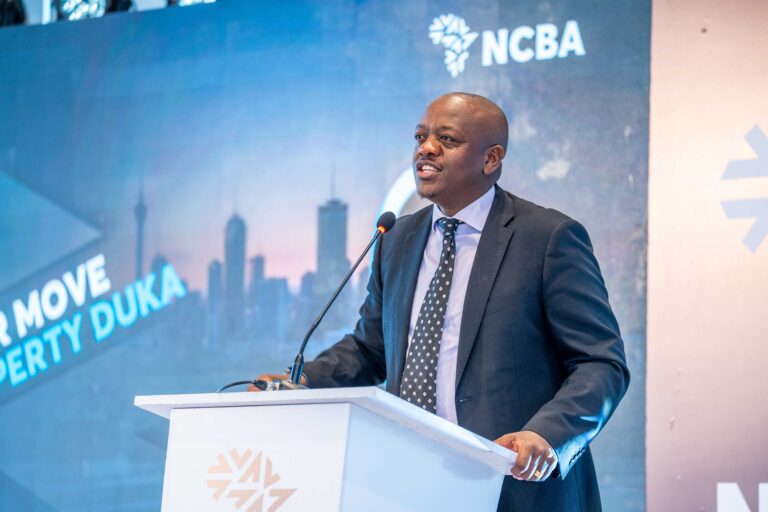
NCBA has launched PropertyDuka, which it says is East Africa’s first AI-native property ecosystem, bringing property search, financing, construction, furnishing and insurance services together on one digital platform.
The marketplace enables users to search for homes, receive AI-powered guidance through PropwizAI, assess mortgage affordability, access NCBA mortgages and construction financing, and connect with verified developers and property service providers.
The launch comes as Kenya’s property market, valued at over KES 1 trillion annually, continues to record low mortgage uptake, with only about 30,000 active mortgages despite nearly 79% of urban residents renting.
PropertyDuka joins CarDuka and AuctionsDuka under NCBA’s Duka Marketplaces platform, which has grown to nearly 7 million users and facilitated over KES 4 billion in transactions since 2025.
NCBA says the platform is part of its strategy to expand beyond traditional banking by embedding financial services into customers’ property journeys.
UAE-based Web3 startup Bundle has emerged from stealth with US$5.5 million (approximately KES 715 million) in pre-seed funding to build what it describes as the world’s first networked rewards platform, enabling businesses to pool their marketing budgets and offer significantly larger customer rewards while lowering customer acquisition costs.
The funding round was led by Ethereal Ventures, founded by Ethereum co-founder Joe Lubin, and Further Ventures, with participation from Nascent, GSR, Scenius Capital, Anchorage Digital, and Nuwa Capital.
Founded by Bader Al Kalooti and Mostafa Wanas, Bundle is rethinking traditional loyalty programmes by allowing brands to combine their incentive budgets into shared reward pools. Instead of relying on discounts and cashback campaigns that often erode margins and struggle to retain customers, the platform enables businesses of all sizes to offer consumers access to larger, more attractive rewards.
The company says its model addresses a growing challenge facing businesses as customer acquisition costs continue to rise while conventional promotional campaigns deliver diminishing returns.
“Bundle was built to level that playing field,” said Bader Al Kalooti, Co-Founder and CEO of Bundle.
“We believe every business, regardless of size, should be able to offer their customers the kind of rewards that genuinely excite them, rather than relying on discounting, which is a race to the bottom.”
Consumers earn Bundle tickets by completing everyday actions such as making purchases or referring friends. Those tickets provide entries into shared reward pools funded collectively by participating brands, giving customers access to prizes that would typically be beyond the reach of individual businesses.
For merchants, the platform simplifies campaign management by handling rewards infrastructure, regulatory compliance and cross-border operations through a single system.
Although built on blockchain technology, Bundle keeps the experience familiar for both brands and consumers. The platform uses stablecoins and blockchain payment rails behind the scenes to enable transparent, low-cost international reward payouts, while customers interact with a standard Web2 interface. Funds can be withdrawn through licensed payment service providers without requiring users to understand blockchain technology.
Bundle has already demonstrated early traction during pilot programmes conducted across five markets. The company distributed US$100,000 in rewards to more than 1,100 winners, including a US$50,000 grand prize. According to Bundle, participating brands achieved conversion rates of up to four times higher than those generated through traditional incentive campaigns.
Building on those results, Bundle plans to launch commercially in Singapore, Vietnam and the Philippines, where more than 50 founding brands have already joined the platform. The company intends to use its compliance-focused operating model as a foundation for expansion into additional global markets.
Investors say the startup illustrates how blockchain technology can solve real business problems without exposing users to the complexity often associated with Web3.
“The next wave of blockchain businesses like Bundle will drive mainstream consumer applications by feeling native to users and solving real problems,” said Min Teo, Managing Partner at Ethereal Ventures.
“It is a perfect example that uses shared rewards and blockchain rails to help brands drive loyalty and customer growth at scale.”
Robbie Nakarmi, Partner at Further Ventures, said the shared rewards model enables businesses of all sizes to compete more effectively by offering larger incentives at a fraction of the traditional cost.
“Through its innovative shared rewards network, Bundle now gives brands of all sizes access to larger rewards to drive higher conversions from their marketing campaigns at a fraction of the cost, creating a more effective way to engage customers,” he said.
The newly raised capital will be used to accelerate product development, strengthen strategic partnerships and support Bundle’s expansion across Asia before entering additional international markets.
As businesses worldwide search for more effective alternatives to traditional loyalty programmes, Bundle is betting that collaborative rewards powered by blockchain infrastructure can improve customer engagement while bringing practical Web3 applications to mainstream consumers without adding complexity.
For years, data privacy was largely owned by legal teams, reviewed by leadership from time to time, and often seen by employees as another task that delayed progress. That traditional approach no longer meets the demands of modern business.
Consumer data is of enormous value. It’s the power behind how you sell, build products, market, and hire. Nowadays, customers want to know how you handle their data, your business partners want proof of data protection, and regulators expect compliance with data privacy laws.
When your business takes data privacy seriously, you will do more than just stay compliant. You will move with less friction, enhance your brand’s reputation, and earn business deals that depend on customer trust. Here are three ways you can make data privacy your competitive advantage.
Create a Clear and Transparent Data Privacy Policy
One of the best ways to build consumer trust is to create a privacy policy that is clear, straightforward, and easy to understand. A well-written policy should explain what information is collected, why it is collected, how it is used, who it is shared with, and how it is protected and retained. When you communicate these details in plain language, they make it easier for customers to understand and trust your data practices.
Don’t just set your privacy policy and forget it. Remind customers of your terms regularly, and spell out any changes clearly when they happen. This kind of transparency builds real trust over time. You should also keep in mind that best practices and regulatory guidance shift as time goes on, so your policy needs regular updates to stay current.
Train Employees on How to Protect Customer Data
Data privacy isn’t just one department’s job. Everyone at your company has a hand in protecting the personal information in your database. That’s why a well-trained team matters so much when it comes to keeping that data safe.
However you approach it, whether you build the training in-house, bring in a professional, or have employees work through eLearning courses, make sure it covers these topics:
Privacy laws
What counts as personal data
Security policies
How bad actors gain access to personal data
How to report a data breach
This helps to minimize the risk of a data breach, which can significantly hurt your company. You don’t want to find yourself with court cases or even exposed on consumer watchdog sites like companiesbehavingbadly.com.
Give a Clear Reason for Collecting Consumer Data
As data privacy laws continue to evolve, collecting data isn’t a one-way street anymore. It’s a two-way conversation with the consumer. Be clear and upfront about why you are asking for their data and exactly how you plan to use it.
For instance, if your business has an app that requests location access when a customer is signing up, they are likely to trust you with their data if you give them a good reason. In this case, for example, you can explain that location tracking is used to send offers and discounts when a customer is close to your store.
Customers want reassurance on two fronts: that their data is being used ethically, and that sharing it actually benefits them. Research from Experian found that 70% of consumers would hand over more data if they saw a clear payoff for doing so. Deliver real value in return for that data, while still respecting privacy, and you’ll put yourself ahead of competitors who don’t.
Endnote
The data privacy landscape is constantly evolving. You can make it your competitive advantage by having a straightforward data privacy policy, training your employees on data privacy, and giving clear reasons for collecting customer data.
Maurice Otieno is stepping down as Executive Director of Baraza Media Lab after overseeing the Kenyan media innovation organization’s expansion from a startup into one of Africa’s largest philanthropy-backed journalism support platforms.
Otieno, who joined Baraza’s founding team in 2019 and became Executive Director in April 2020, announced his departure on LinkedIn this week, saying he was “stepping aside” rather than leaving the sector. Governance and public finance specialist Eric Kinaga will succeed him.
The leadership transition comes after six years during which Baraza significantly expanded its funding, staffing and continental footprint despite launching shortly before the Covid-19 pandemic disrupted media organizations worldwide.
Otieno said Baraza secured about $20 million in philanthropic funding during his tenure and increased its reach from roughly 1,500 people to 12,000. His LinkedIn profile, however, cites more than $15 million raised over five years from over 300 donors. While the funding totals differ, both accounts point to the organization’s rapid growth from three employees to about 40 staff.
Baraza now operates on an annual budget of approximately $4 million and engages around 7,000 people every month through its journalism, innovation and civic engagement programmes, according to Otieno.
Under his leadership, the organization launched initiatives including the Data Storytelling Fellowship, She Leads Media, the FumbuaKE collective and a Media Innovation Incubator aimed at strengthening independent journalism and digital media innovation across Africa.
Otieno also founded the Africa Media Festival, which this year attracted more than 200 organizations from 31 countries, underscoring Baraza’s growing role as a continental convener for media leaders, startups and development partners.
Institutionally, he said Baraza established its first fiduciary board, implemented more than 40 organizational policies and introduced monitoring and evaluation systems to guide programme decisions while reducing staff turnover by 20%.
The organization faced its first major test within months of its launch as Kenya confirmed its first Covid-19 cases. Otieno said Baraza responded by diversifying its funding sources and expanding strategic partnerships, helping sustain growth during a period when many media organizations were cutting operations.
Kinaga inherits an organization that has become a prominent intermediary between philanthropic funders, newsrooms and media entrepreneurs across Africa.
Before joining Baraza, Kinaga spent nearly a decade working on public finance, governance and accountability, including roles at USAID Kenya and East Africa, the Institute for Social Accountability and Transparency International Kenya. He previously coordinated the Shule Yangu Alliance, an advocacy campaign focused on securing land rights for more than 30,000 public schools, before moving into budget governance and fiscal accountability.
He also publishes Letters to a Kinder Nation, a newsletter examining governance and public institutions.
“I’m interested in building public systems that are not only effective and accountable, but also worth believing in,” Kinaga said.
Neither Baraza nor Kinaga has announced changes to the organization’s funding priorities or programme strategy following the leadership transition.
Otieno said he plans to spend time with his family before taking on his next role, adding that he will continue supporting the media innovation ecosystem from outside the organization.
Airtel Money Kenya has appointed Michael Bonke as its Acting Managing Director, ushering in a new leadership chapter as the company unveiled Bizna Wallet, a dedicated digital wallet designed to help Kenya’s small businesses better manage their finances while accelerating digital financial inclusion.
Bonke assumes the leadership of Airtel Money Kenya with more than 15 years of experience in the telecommunications and fintech sectors, having spent nearly a decade at Airtel Money in leadership roles across sales, business development and marketing. During his tenure, he has helped drive customer growth, digital transformation and strategic partnerships as Airtel Money expands its footprint in Kenya’s competitive mobile money market.
His first major announcement as Acting Managing Director is the launch of Bizna Wallet, a solution aimed at micro, small and medium-sized enterprises (MSMEs) seeking a simpler and more secure way to manage business finances.
The launch comes as Kenya’s SMEs continue to embrace digital payments. According to the Mastercard SME Confidence Index, 95% of SMEs now accept mobile payments, highlighting growing demand for financial services that extend beyond simply receiving payments.
Speaking during the launch, Bonke said the new wallet addresses a longstanding challenge facing many entrepreneurs who use personal mobile money accounts to run their businesses.
“Small businesses are at the heart of Kenya’s economy, yet many entrepreneurs still rely on personal wallets to manage business finances. Airtel Money Bizna Wallet is designed for kiosk owners, market traders, boda boda riders, matatu operators and other micro-businesses to enable them to separate business income from personal finances, monitor their daily sales, access mini statements, receive payments across mobile money networks and protect business payments from unauthorized reversals, giving entrepreneurs greater visibility over their cash flow and more stable business operations. Our goal is to provide solutions that help businesses operate more efficiently while making digital financial services more accessible and rewarding,” said Bonke.
Bizna Wallet enables businesses to separate business income from personal finances, monitor daily sales, access mini statements and manage cash flow more efficiently. The wallet also allows merchants to receive payments across mobile money networks while introducing protection against unauthorized payment reversals, providing greater security for business transactions.
The solution is targeted at Kenya’s vast informal and SME sector, including kiosk owners, market traders, boda boda riders, matatu operators and other entrepreneurs who depend on mobile money to run their day-to-day operations.
Alongside the launch of Bizna Wallet, Airtel Money also expanded its Rudishiwa cashback programme to all Airtel Money customers.
Under the new offer, customers will receive 50% cashback on eligible transactions, including paybill payments, transfers to other mobile money networks, bank-to-wallet transfers and wallet-to-bank transfers. Unlike the company’s previous airtime rewards, the cashback is credited as real cash into a dedicated Cashback Wallet, allowing customers to transfer the rewards directly into their main Airtel Money wallet.
“As Kenya’s digital economy continues to grow, so do the needs of businesses and consumers. At Airtel Money, we are continuously investing in technology, expanding our reach and developing innovative solutions that make financial services simpler, more secure and more relevant for our customers. This is why we have introduced cashback rewards to Airtel Money users. Initially, we had airtime rewards, and now we have introduced real cash rewards that go into your cashback wallet for every eligible transaction. Customers can transfer the cash from the cashback wallet into the main Airtel Money wallet,” Bonke added.
The cashback programme is available to all registered Airtel Money customers in Kenya who complete qualifying transactions of KES 101 or more, with no opt-in required. Rewards are credited instantly and are accessible through both the My Airtel App and the *USSD 334# platform.
The appointment of Bonke and the launch of Bizna Wallet signal Airtel Money’s continued push to strengthen its position in Kenya’s digital financial services market. By combining dedicated financial tools for SMEs with cashback incentives for consumers, the company is seeking to deepen financial inclusion, expand merchant adoption and grow its digital payments ecosystem as Kenya’s cashless economy continues to evolve.
Women are making steady gains in Africa’s technology startup ecosystem, but they continue to face significant challenges accessing venture capital, underscoring a persistent funding gap that threatens to slow progress toward a more inclusive innovation economy.
The study analyzed more than 3,000 African startups and combined ecosystem data with interviews of founders and investors to assess gender diversity, funding trends and opportunities across the continent.
Women co-founded 641 startups in the survey, accounting for 19.2% of the ecosystem in 2026, up from 17.3% in 2024 and 14.6% in 2023. Female leadership also improved, with women serving as chief executive officers at 12.1% of startups, compared with 11.1% two years ago and 9.6% in 2023.
Those gains, however, have not translated into better access to capital.
The report shows that only 18.5% of startups that secured funding in 2024 had at least one female founder, down sharply from 26.3% in 2023. The proportion of funded startups led by female chief executives also declined to 12.5% from 15.3% over the same period.
The trend continued in 2025, when just 16.9% of funded startups had a female co-founder and only 9.6% were led by women. Early figures for 2026 present a mixed picture. Of the 60 startups that raised funding during the first five months of the year, 11, or 18.3%, had a female co-founder, while only five, or 8.3%, were led by a woman chief executive.
The findings highlight a growing disconnect between improving representation and access to investment, suggesting that women entrepreneurs continue to encounter structural barriers even as the broader ecosystem becomes more diverse.
“This third edition of our pioneering research publication, Diversity Dividend, tracks small, yet significant, steps towards a more gender diverse African tech startup ecosystem,” said Gabriella Mulligan, co-founder of Disrupt Africa. “But much more needs to be done to ensure the sector moves more quickly towards the gender parity it needs to really scale and succeed, and the funding figures are certainly a concern. Diversity is not going to increase if diverse startups can’t access the funding they need to grow.”
Madica, an Africa-focused pre-seed investment program dedicated to supporting underrepresented founders, said improving gender equality requires more than increasing the number of women receiving investment.
“We’ve heard it before, and we’ll continue to hear it. Getting past representation and specifically gender equality requires much more than ‘choosing diversity’,” said Akinyi W. Ooko Ombaka, Head of Portfolio Success at Madica. “It necessitates creating a real environment for equitable opportunities to thrive.”
Ombaka said founders need sustained mentorship, strategic advisory support, access to global entrepreneurial networks and practical operational assistance alongside funding, adding that listening directly to women founders is essential to designing effective interventions.
Jumpstarter Crowdfunding, another partner in the report, said expanding access to community-based financing could help narrow the capital gap faced by women entrepreneurs.
“Data consistently proves that diversity is a powerful catalyst for economic resilience, yet female and underrepresented founders still face significant capital allocation gaps,” said Derek Whitehead, Chief Operations Director at Jumpstarter Crowdfunding. “Providing transparent, community-driven funding infrastructure and greater visibility is essential to turning Africa’s most impactful ideas into thriving businesses.”
The report concludes that although female participation in Africa’s startup ecosystem continues to improve, progress remains incremental. Without broader and more equitable access to venture capital, the continent risks slowing the growth of women-led businesses and limiting the innovation and economic benefits that greater diversity can deliver.
Safaricom PLC shareholders approved a record KES 80.13 billion ($621 million) dividend at the company’s 18th Annual General Meeting, lifting the annual payout after three years of holding it steady while the telecom operator funded its expansion into Ethiopia.
The final dividend of KES 1.15 ($0.009) per share, approved on Friday, brings the total dividend for the financial year ended March 31, 2026, to KES 2.00 ($0.015) per share, following an interim dividend of KES 0.85 paid in March. It is the largest annual dividend distribution in the company’s history.
The higher payout follows Safaricom’s strongest financial performance to date and reflects improving confidence in its Ethiopian business, which the company expects to break even during the current financial year after years of heavy investment and currency-related headwinds.
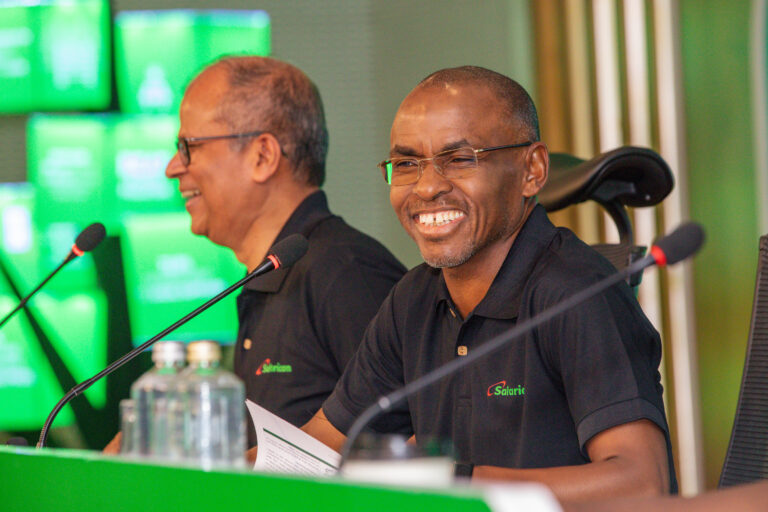
“This has been a defining year for us. We marked 25 years of connecting and driving transformation through our services and community involvement. We did this while delivering our strongest financial performance yet,” Group Chief Executive Officer Dr. Peter Ndegwa said.
Safaricom maintained its dividend for three consecutive years as it absorbed the costs of entering Ethiopia and navigated the impact of the Ethiopian birr’s depreciation following foreign exchange reforms introduced in 2024. The expected turnaround in Ethiopia removes one of the biggest drags on group earnings as the company enters the first year of its Vision 2030 strategy.
Investor confidence has strengthened alongside the improving outlook. Safaricom’s shares rose 50.3% during the financial year, lifting its market capitalization to KES 1.10 trillion (about $8.5 billion) by March 31. The stock has continued to gain, pushing the company’s market value to approximately KES 1.44 trillion ($11.2 billion) ahead of the annual meeting.
The final dividend will be paid on or about September 4, 2026, to shareholders on the register at the close of business on August 4. Including this year’s distribution, Safaricom will have returned approximately KES 280 billion ($2.17 billion) to shareholders over the past five years.
As part of its Vision 2030 strategy, Safaricom is seeking to evolve beyond its traditional telecommunications business into a broader technology company, with investments in artificial intelligence, digital financial services, expanded broadband infrastructure, wider 4G and 5G coverage, and increased smartphone adoption across its markets.
Board Chairman Adil Khawaja said the company also completed a restructuring that increased Vodacom Group’s stake in Safaricom to 55% following the acquisition of an additional 15% interest from the Government of Kenya and an internal reorganization. The Government of Kenya now owns 20%, while public investors hold the remaining 25%.
Shareholders also re-elected Edward Okaro to the board, reappointed Ernst & Young as external auditors and approved resolutions required to formalize the revised ownership structure.
Safaricom serves more than 72 million customers across Kenya and Ethiopia and generated KES 414 billion ($3.21 billion) in service revenue during FY2026. Its M-PESA platform processed KES 41.68 trillion (about $323 billion) in transactions and generated KES 182.7 billion ($1.42 billion) in revenue, reinforcing its position as Africa’s largest mobile money platform and one of the continent’s biggest fintech businesses.
Amazon has completed a $50 billion investment in OpenAI, becoming one of the company’s largest strategic shareholders with an estimated 5% equity stake. The move strengthens Amazon’s position in the intensifying race to dominate artificial intelligence infrastructure and foundation models.
The investment was originally structured in two phases. Amazon committed an initial $15 billion earlier this year, with an additional $35 billion tied to milestones such as OpenAI reaching a major AI breakthrough or pursuing a public listing. Those conditions had not yet been met, but Amazon proceeded with the remaining investment, underscoring its long-term confidence in OpenAI’s technology and commercial prospects.
The funding gives OpenAI additional capital to expand its computing infrastructure and train increasingly sophisticated AI models—an endeavor requiring billions of dollars in chips, data centers and energy. The company continues to compete with rivals including Anthropic, Google, and several fast-growing Chinese AI developers.
The deal also marks a significant shift in OpenAI’s cloud strategy. Following a renegotiation of its partnership with Microsoft, OpenAI gained greater flexibility to work with multiple cloud providers, allowing Amazon Web Services to provide computing infrastructure alongside Microsoft’s services. The revised arrangement reduces OpenAI’s reliance on a single cloud provider while giving Amazon a larger role in powering future AI development.
For Amazon, the investment complements its existing AI portfolio. The company has also committed tens of billions of dollars to Anthropic while promoting its proprietary Trainium AI chips as an alternative to NVIDIA’s dominant GPUs. By supporting multiple leading AI developers, Amazon is positioning AWS as a preferred destination for customers building and deploying advanced AI applications.
The investment also reinforces expectations that OpenAI is preparing for a future public listing, although no IPO timeline has been officially announced. If OpenAI eventually goes public at a higher valuation, Amazon’s stake could become one of the most valuable strategic investments in the company’s history.
The transaction highlights how the world’s largest technology companies are increasingly competing not only to develop AI models but also to secure ownership stakes in the firms shaping the next generation of artificial intelligence.
Egyptian e-commerce operations startup Fincart has raised $2.8 million in an oversubscribed seed funding round to accelerate the expansion of its AI-powered merchant platform across Africa and the Middle East.
The round was co-led by Launch Africa and Antler MENAP, with participation from Yango Ventures, Five35 Ventures, Bluestream Capital, Hi2 Global, Kalahari Venture Labs and other regional investors. The funding follows Fincart’s pre-seed round in January 2025, which was led by Plus VC.
Founded in 2023 by Mostafa Masry and Nihal Ali, Fincart has evolved from a logistics management platform into an AI-powered operating system that helps online merchants manage shipping, customer engagement and access working capital from a single interface. The platform integrates with more than 40 courier companies across Africa, creating one of the continent’s largest logistics integration networks.
The startup said it will use the new capital to strengthen its AI capabilities, expand its engineering and commercial teams, deepen strategic partnerships and prepare for regional expansion beginning in 2027.
Fincart says it now serves more than 450 merchants across sectors including fashion, cosmetics, electronics and accessories. The company has facilitated nearly EGP1 billion (about $20 million) in gross merchandise value through its platform while relying almost entirely on organic growth, with roughly 40% of new customers acquired through referrals and no spending on marketing over the past three years.
“Our investors’ confidence in our vision, product and long-term goals will enable us to accelerate our mission of transforming e-commerce operations across the region,” Chief Executive Officer Mostafa Masry said.
The company was founded after Masry and Chief Operating Officer Nihal Ali experienced the operational challenges facing online merchants, particularly around last-mile delivery and reconciling cash-on-delivery payments, which remain the dominant payment method across Egypt and much of Africa and the Middle East.
“Most merchants are juggling multiple disconnected tools for shipping, payments and customer engagement,” Ali said. “We built Fincart to replace all of that with a single control panel where merchants can sell more, deliver faster and manage their customers without the friction.”
Launch Africa said Egypt’s high-volume, cash-on-delivery e-commerce market presents a significant infrastructure opportunity, while Antler MENAP said the founders’ operational experience and execution positioned the company to build commerce infrastructure that can scale across Africa and the Middle East.
Kenya has launched a nationwide crackdown on digital piracy after the government estimated that illegal streaming, software piracy and unauthorized content distribution strip $708 million (KES 92 billion) from the economy each year and deny the Treasury about USD 131 million (KES 17 billion) in tax revenue.
Information, Communications and the Digital Economy Cabinet Secretary William Kabogo Gitau unveiled the government’s response after receiving the National Steering Committee on Digital Piracy report, which outlines a new enforcement strategy to curb commercial-scale copyright infringement.
“Piracy is not a victimless crime. It drains Kenya’s economy, deprives our youth of jobs, exposes consumers to cyber risks, and discourages investment in local creativity and innovation,” Kabogo said.
The report estimates that piracy drains USD 1.94 million (KES 252 million) from the economy every day, slashes income for musicians, filmmakers, authors, journalists, software developers and sports broadcasters, and exposes consumers to malware, fraud and identity theft. It also links organized piracy networks to transnational crime.
The government will create an inter-agency enforcement framework bringing together the Kenya Copyright Board, the Communications Authority, the Media Council of Kenya and the Copyright Tribunal to speed up investigations and enforcement. Authorities will prioritize illegal streaming of live sports and premium digital content.
Kabogo said the recommendations would drive “coordinated enforcement efforts, public awareness campaigns, policy reforms, and stronger partnerships with the private sector and international stakeholders.”
The government will also develop Kenya’s first National Policy on Digital Piracy and align the proposals with the Copyright and Related Rights Bill, 2026.The ministry estimates that stronger enforcement could create or sustain more than 50,000 jobs across Kenya’s creative and technology sectors.
“We are committed to implementing these recommendations with urgency, transparency and respect for constitutional rights, including freedom of expression and due process,” Kabogo said, adding that the government will also work with industry to expand access to affordable legal content alongside stricter enforcement.
Africa risks becoming a supplier of raw data for artificial intelligence while paying foreign companies to access the technologies built from that data unless governments and businesses urgently invest in digital infrastructure, according to a new report by the Boston Consulting Group (BCG).
The report, Advancing Africa’s AI and Digital Economy, argues that while AI is expected to contribute $15.7 trillion to global GDP by 2030, Africa remains far behind in developing the infrastructure needed to participate meaningfully in the global AI economy.
Today, Africa’s digital economy contributes just 5% of the continent’s GDP, compared to a global average of 15%. Without significant intervention, BCG projects that figure will rise to only 8.5% by 2050, leaving the continent increasingly dependent on technologies developed elsewhere.
The report warns that Africa could repeat a familiar pattern of exporting valuable resources—this time in the form of data—instead of capturing value through locally built digital platforms, AI models and infrastructure.
“Africa’s core challenge is no longer about technology adoption; it is about tech production. We have the world’s youngest population and the fastest-growing cloud market, but we lack the foundational infrastructure to own our digital future. Winning requires capturing value from the technology stack itself—building, governing and retaining our data and talent locally,” said Hamid Maher, BCG Managing Director and Senior Partner and Head of BCG’s Tech Hub in Africa.
Africa’s AI Infrastructure Gap
Despite accounting for 18% of the world’s population, Africa has less than 1% of global data centre capacity, limiting its ability to develop and host AI systems domestically.
The continent also remains significantly underrepresented in generative AI. According to BCG, today’s large language models adequately support less than 2% of Africa’s estimated 2,000 languages, making many AI applications less relevant for local users.
The report also highlights an expanding imbalance in digital trade. Africa’s services trade coverage ratio with the United States stood at 51% in 2024, reflecting the dominance of North American digital platforms whose combined market values range between $1 trillion and $5 trillion.
Without stronger domestic capabilities, BCG warns African countries risk exporting healthcare, behavioural and environmental data to train proprietary AI models overseas before paying licensing fees to use those same technologies.
Three Barriers Slowing Africa’s AI Economy
BCG identifies three structural challenges preventing Africa from becoming a producer rather than a consumer of AI.
The first is fragmentation. Individually, Africa’s 54 economies remain too small to justify the massive investments required for hyperscale data centres, cloud infrastructure and AI computing.
The second is talent flight. Africa has roughly 62,000 AI specialists, representing about 5% of the global AI workforce, yet 38% work remotely for foreign companies, limiting the growth of local AI ecosystems.
The third challenge is dependence on imported technologies. African organisations often pay up to 35% more than global counterparts for proprietary software while remaining locked into foreign platforms that restrict flexibility and local innovation.
Three Priorities for Africa
To reverse the trend, BCG recommends three major interventions.
The first is expanding digital infrastructure through public-private partnerships, allowing governments to maintain strategic oversight while leveraging private sector expertise. Rwanda’s IremboGov platform, which provides citizens access to more than 100 government services and has processed over 51 million transactions, is cited as a successful model.
Secondly, BCG urges African governments to pool investments across borders through initiatives such as the African Continental Free Trade Area (AfCFTA) Digital Trade Protocol, enabling shared cloud infrastructure, cybersecurity systems and fraud detection platforms that would be too costly for individual countries.
Finally, the consultancy recommends wider adoption of open-source technologies to reduce licensing costs and strengthen local innovation. Morocco’s implementation of the open-source MOSIP digital identity platform is highlighted as an example of how countries can retain technical expertise while building national digital systems.
Agriculture Offers an Early Opportunity
The report points to agriculture as one of the sectors where locally developed AI and digital public infrastructure could have the greatest immediate impact.
According to Khalid Baddou, Chief Institutional Affairs Officer at UM6P, AI models trained on European agricultural data often fail to deliver accurate recommendations for African farmers because of differences in climate, soils, crop varieties and farming practices.
BCG argues that digital public infrastructure—including digital identity, satellite data and interoperable payment systems—could enable scalable innovations such as parametric insurance, allowing farmers to receive automatic payouts when droughts, floods or other climate indicators reach predefined thresholds without requiring expensive field inspections.
Race Against Time
BCG believes Africa still has an opportunity to build competitive AI ecosystems but warns that the window is narrowing as advanced AI and robotics begin disrupting sectors traditionally viewed as engines of economic development, including business process outsourcing and manufacturing.
“As agentic AI and advanced robotics begin to disrupt traditional developing pathways like call centres and manufacturing, establishing strong domestic tech ecosystems is becoming an economic imperative for Africa,” said Patrick Dupoux, BCG Managing Director and Senior Partner.
For Africa, the consultancy concludes, the challenge is no longer simply adopting artificial intelligence—but owning enough of the underlying infrastructure, talent and data to capture its economic value.
Visa has appointed Anne Kinuthia-Otieno as Vice President and Head of East Africa, effective August 4, 2026 to lead Visa’s East Africa business across seven markets, driving the company’s efforts to advance digital payments, strengthen client and partner relationships, and expand financial inclusion across the region.
Based in Nairobi, Anne previously served as Managing Director of Airtel Money Kenya, where she led a period of significant growth and market expansion. Anne has also held senior leadership roles at Absa and Barclays Bank, spanning retail banking, SME banking, product innovation, distribution leadership and risk management across Africa.
“Anne’s appointment comes at an exciting time for Visa and for East Africa’s digital economy. Her deep understanding of the region, proven leadership experience and passion for financial inclusion will be instrumental as we continue working with clients, partners and governments to expand access to digital payments and economic opportunity,” said Michael Berner, Senior Vice President and Regional Managing Director, Southern and Eastern Africa, Visa.
Anne brings more than 20 years of leadership experience spanning banking, telecommunications and digital financial services in Africa with a strong track record of driving business growth, accelerating digital financial inclusion and building strategic partnerships across the payment’s ecosystem. She
Anne has been widely recognised for her contributions to financial inclusion and digital financial services. In recognition of her impact, she was awarded the Moran of the Burning Spear (MBS) by the President of the Republic of Kenya.
“East Africa is one of the most dynamic and innovative payments markets in the world, with tremendous opportunities to advance financial inclusion and digital commerce. I look forward to working with Visa’s clients, partners and talented teams across the region to help drive the next phase of growth and innovation,” said Anne Kinuthia Otieno.
Choosing the right flooring can transform the aesthetic of any home, but deciding between Terrazzo Floor Tile and Ceramic Tile can be challenging. Both materials offer unique advantages in terms of design, durability, and cost. This article will delve into the distinctive features of each tile option, exploring how they contribute to the overall aesthetic of a space. From the timeless elegance of Terrazzo Floor Tile to the versatile designs of ceramic, we will guide you through the considerations to make an informed decision.
Terrazzo Floor Tile: A Timeless Aesthetic Choice
Terrazzo flooring stands out for its unique composition and historical significance. Originating from Italy, terrazzo is a composite material, typically crafted from marble, quartz, or glass chips embedded in cement or epoxy resin. This process creates a seamless, luxurious look that has been cherished for centuries. In modern home improvement, terrazzo is often featured in luxury interiors and is highly valued for its durability and elegance.
When incorporating Terrazzo Floor Tile into home design, many architects use tools like BIM (Building Information Modeling) to visualize the integration of these tiles in a space. This aids in creating cohesive designs that align with the project’s overall aesthetic goals. The intricate patterns and color variations in terrazzo make it a perfect choice for those who appreciate a classic yet customizable look.
Moreover, terrazzo’s reflective surface can enhance lighting within a room, contributing to a more vibrant and open atmosphere. Homeowners and designers frequently incorporate terrazzo into their mood boards to explore various color combinations and design possibilities, ensuring that the tiles complement other interior elements.
Ceramic Tile: Versatility and Modern Appeal
Ceramic tiles offer a different set of aesthetic advantages, primarily their versatility in design and texture. Made from natural clay, ceramic tiles can be glazed with various colors and finishes, allowing for a wide range of stylistic expressions. This makes them suitable for diverse interior themes, from minimalist to eclectic.
Interior designers often utilize CAD (Computer-Aided Design) software to plan the layout and patterns of ceramic tiles in a space. This technology helps in achieving precise alignment and maximizing the visual impact of the tiles. Ceramic’s ability to mimic natural materials like stone or wood also makes it a popular choice for those seeking an affordable yet stylish look.
Ceramic tiles are well-suited for high-moisture areas such as kitchens and bathrooms due to their water-resistant properties. Their ease of customization and ability to fit into various design frameworks makes them a staple in modern interior design projects.
Comparing Durability and Maintenance of Both Options
When selecting flooring, durability and maintenance are key considerations. Terrazzo is renowned for its longevity and resilience, often lasting decades with minimal signs of wear. Its seamless installation reduces the risk of cracking, and its dense surface can withstand heavy foot traffic, making it ideal for both residential and commercial spaces.
In contrast, ceramic tiles are also durable but may be more susceptible to chipping or cracking if not properly installed or if subjected to significant impact. However, their maintenance is relatively straightforward, involving regular cleaning with mild detergents.
Both terrazzo and ceramic tiles require occasional sealing to maintain their aesthetic and functional integrity. Homeowners should factor in the long-term maintenance needs when choosing between the two, ensuring that the selected flooring aligns with their lifestyle and upkeep preferences.
Cost Considerations and Installation Insights for Homeowners
The cost of installing new flooring can vary significantly between terrazzo and ceramic tiles. Terrazzo generally comes with a higher price tag due to the intricate installation process and the premium materials used. However, its long lifespan and minimal maintenance can offset the initial investment over time.
Ceramic tiles are typically more affordable and offer a quicker installation process. For homeowners seeking a budget-friendly option that provides flexibility in design, ceramic may be the preferable choice. However, it’s essential to consider that complex ceramic tile patterns might require skilled labor, potentially increasing installation costs.
Homeowners are encouraged to consult with professionals who can provide insights on the best flooring choice for their specific needs. According to recent industry trends, using a Gantt Chart to plan renovation timelines can help manage both costs and expectations effectively. Additionally, understanding ceramic tile options can further enhance your decision-making process.
Conclusion
Both Terrazzo Floor Tile and Ceramic Tile offer distinct aesthetic and functional benefits that can enhance any home. Terrazzo provides a timeless and luxurious feel, ideal for those seeking elegance and durability. Ceramic tile, with its versatility and modern appeal, offers a customizable solution for diverse design styles. Homeowners should consider their specific needs, budget, and design preferences to select the option that best suits their home improvement goals.
In 2007, mobile money quietly began to ignite one of the world’s most significant financial revolutions. What began as a bold experiment in mobile money transformed how millions of people access, move and manage money.
Apart from laying the foundation for a digital payments ecosystem, mobile money also reshaped banking and commerce. It changed how households manage finances, how businesses collect payments and how commerce operates across the country. It made financial services more accessible, practical and relevant to Mwananchi.
Nearly two decades later, digital payments are deeply embedded in Kenya’s economy with millions of people paying or receiving payments digitally. Businesses such as supermarkets, online retailers and roadside kiosks and estate merchants increasingly depend on digital collections to improve efficiency and manage cash flow. It has become normal to pay for a good or service, offline or online digitally. Utilities also as well as sending support to distant family members.
Banks were not left behind, though brick and mortar branches are still needed, traditional banks responded by investing heavily in mobile applications, internet banking, agency networks, digital account opening and self-service platforms. Bank customers didn’t have to go to the branch as these innovations brought banking closer to customers and reduced reliance on physical branches.
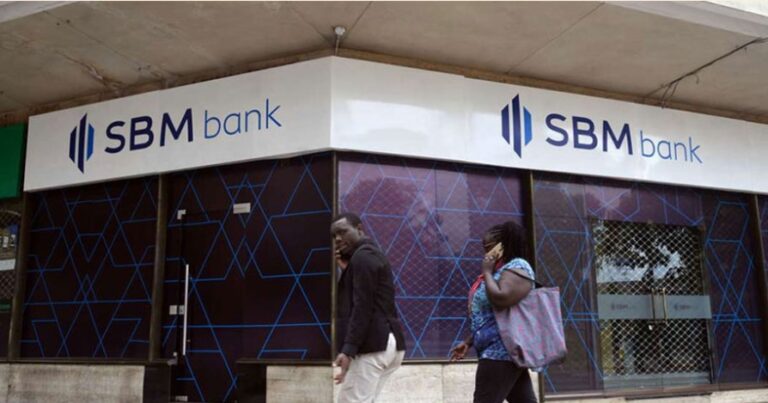
But mobile banking is no longer the final destination. Banks like SBM Bank Kenya see mobile banking as the foundation for the next phase of financial services. It’s just the start of quality payment experiences and not about access or channels.
Due to the plethora of digital channels, customers are less concerned about which channel they use but more about convenience. They expect instant, frictionless access, secure platforms, and the ability to effortlessly switch between accounts, merchants, businesses and digital platforms.Whether paying suppliers, shopping online, receiving salaries or transferring money to family members, every transaction has become part of the broader banking experience.
SBM Bank Kenya says these requirements mark the beginning of Kenya’s next payments era. The first wave of financial innovation focused on expanding access but the next is on removing friction. SBM Kenya argues that banks that succeed will not necessarily be those with the most digital platforms, but those that make everyday financial interactions simpler.
In 2026 and beyond, consumers increasingly expect interoperability of financial services. One connected ecosystem to salaries, investments, and current accounts for daily spending. Customers expect these systems to work together because they no longer see separate banking platforms but access to their money.
Though Kenyans have enjoyed digital payments, no one has been bold enough to address payment friction. There are payment delays due to network overload, exorbitant charges, complicated processes or systems failures and losses due to SIM Swaps among others. These issues may seem minor individually, but they build up against a merchant’s reputation or influence customer loyalty and business decisions.
Convenience has therefore become one of SBM Kenya’s most valuable competitive advantages. The future of payments is not simply about moving money electronically but about creating financial experiences where transactions happen quickly, securely and naturally across different platforms without customers needing to think about the technology behind them.
And technology is accelerating this shift allowing fintech firms to build services around speed and simplicity. Using open APIs, cloud infrastructure and embedded finance, banks are able to connect their customers more easily with merchants and payment service providers and other financial institutions seamlessly.
Artificial intelligence is adding another layer by improving fraud detection, strengthening risk management and helping institutions identify suspicious activity without disrupting legitimate transactions. As a result, payments are becoming increasingly invisible and customers no longer care about the technology but by whether transactions happen quickly, safely and without unnecessary effort.
Security remains central to this transformation. As payment volumes grow, security remains one of the most valuable assets in financial services. Encryption, identity verification, intelligent monitoring and risk controls are essential to ensuring that convenience does not compromise security.
Although mobile money and digital banking has improved convenience, transaction costs continue to influence customer behavior and customers are increasingly asking about the transaction costs and the hidden charges. For households, repeated charges reduce disposable income.Transaction costs can hinder trade as a recurring customer or operational expense.
Rather than viewing every transaction as a revenue opportunity, SBM Bank Kenya has recognized payments as the foundation for deeper customer relationships. Lower friction can encourage greater digital adoption, increase engagement and create opportunities across lending, savings and investment services.
This shift is reflected in the bank’s payments strategy as it moves to reduce barriers around everyday transactions while expanding digital banking adoption. In 2026, SBM reported stronger business performance, with group profit before tax rising to KES 547 million in the first half of the year, while customer deposits reached KES 94 billion, reflecting increased customer activity and confidence.
The bank has also focused on reducing costs associated with moving money. Its decision to make PesaLink transfers free was aimed at encouraging greater use of instant account-to-account payments and reducing friction for customers who transact across different financial institutions.
Beyond bank-to-bank transfers, the broader opportunity lies in creating an interoperable financial ecosystem. Customers in Kenya increasingly move between bank accounts, digital wallets and merchant platforms and the bank has integrated its systems into this wider ecosystem to reduce friction..
Cash also remains part of Kenya’s economy. Retail markets, informal businesses and many everyday transactions still rely on physical money. SBM Bank’s payments strategy supports digital experiences while ensuring customers retain convenient access to cash when needed via its ATM and branch network.
Globally, banks are moving to frictionless transactions to strengthen loyalty, improve engagement and create long-term value and Kenya is well positioned to lead this next stage due to its mature fintech ecosystem. Banks will no longer compete only about products, branches or applications, but about the simplicity and reliability of the financial experience.
According to CGAP, a global partnership of more than 40 leading development organizations in inclusive finance, “With the acceleration of technology use in financial services such as artificial intelligence (AI) and the expanded use of consumer data trails, digital financial services (DFS) are reshaping the financial sector, broadening access and reducing consumer costs.”
For SBM Bank Kenya, technology is an opportunity to reduce unnecessary barriers, improve access and make payments seamless across the economy. The first revolution made digital payments possible, the second made banking mobile but the current is making payments instant, intelligent and seamless. Seamless payments, not mobile banking alone will define the next generation of banks.
Nearly two decades after Kenya transformed financial inclusion through digital payments, the country is entering another defining chapter.
By removing unnecessary transaction costs, eliminating charges on interbank transfers, PesaLink transfers, digital wallet deposits and ATM withdrawals, SBM Bank Kenya is moving towards its ambition to become Kenya’s Preferred Payments Bank. Rather than asking customers to pay more every time they use banking services, it aims to help them keep more of every shilling while enjoying faster, simpler and more connected financial services.
Elon Musk’s social platform X has officially launched X Money, a digital payments service that marks its biggest step yet toward transforming the platform into an “everything app” combining social networking, payments and financial services.
Initially available to X Premium and Premium+ subscribers in the United States, X Money allows users to send money instantly to one another, store funds in a digital wallet and spend using an X-branded Visa debit card.
The service also integrates with Apple Wallet and offers cashback on eligible purchases.To compete with established payment platforms such as PayPal, Venmo, Cash App and Zelle, X Money is offering eligible subscribers up to a 6% annual yield on qualifying balances.
Customer funds are held through banking partner Cross River Bank.
The launch represents a major milestone in Musk’s ambition to turn X into a platform where users can communicate, shop, pay bills and manage money without leaving the app—an approach often compared to China’s WeChat.
The move also takes X deeper into the highly regulated financial services industry, exposing the company to increased oversight on consumer protection, privacy, anti-money laundering compliance and financial security.
India Presents the Biggest Test Outside the U.S.
While X Money is currently limited to the United States, India is widely expected to become one of the company’s most important international markets because of its massive digital payments ecosystem.
The country processes billions of transactions each month through the government-backed Unified Payments Interface (UPI), which is dominated by apps such as Google Pay, PhonePe and Paytm.
However, entering India will not be straightforward. X would need approvals from financial regulators, partnerships with licensed banks and compliance with the country’s strict payments and data-localisation rules. Competition is also likely to be intense, with consumers already accustomed to fast, free and widely accepted digital payment services.
What It Means for Africa
For African markets, including Kenya, no launch timeline has been announced. Any future expansion would similarly require regulatory approvals and partnerships with local financial institutions.
In Kenya, where M-PESA remains the dominant mobile money platform, X Money would face an established ecosystem that extends beyond peer-to-peer transfers to merchant payments, savings, credit and international remittances. Rather than replacing existing services overnight, the platform would likely need to integrate with local payment infrastructure to gain meaningful adoption.
The launch of X Money signals that Musk’s strategy for X is extending well beyond social networking. Whether the platform can successfully compete with banks, payment networks and mobile money providers in global markets such as India and Africa will depend not only on technology, but also on regulation, partnerships and user trust.
Apple Inc. is replacing its long-running iPhone Upgrade Program with a broader device leasing service, marking a shift in how it sells its hardware as the technology giant seeks to keep customers upgrading more frequently despite rising device prices.
The new Apple Upgrade program, launched in the U.S. in partnership with Klarna, allows consumers to lease iPhones, iPads, Macs and Apple Watches through fixed monthly payments rather than purchasing them outright. The move expands Apple’s financing strategy beyond smartphones and reflects a broader industry push toward subscription-like hardware ownership.
The program offers 24-month lease terms for iPhones and Apple Watches and 36-month terms for Macs and iPads. At the end of each lease, customers can upgrade to a newer device, purchase the product by paying the remaining balance, or return it.
Apple has also decoupled AppleCare+ from the financing package, making the extended warranty optional instead of mandatory. The change reduces monthly payments but could leave some customers without accidental damage protection unless they choose to add it separately.
The launch comes as Apple grapples with lengthening smartphone replacement cycles and higher manufacturing costs driven by advanced chips and artificial intelligence features. By lowering the upfront cost of premium devices, Apple is betting that predictable monthly payments will encourage consumers to replace their hardware more often.
The company has increasingly relied on financing programs, trade-ins and subscription services to sustain hardware sales in mature markets where annual smartphone upgrades have become less common.
Apple Upgrade also replaces new enrollments in the iPhone Upgrade Program and Apple’s standard iPhone financing option in the United States, streamlining its consumer financing offerings into a single platform.
Industry analysts say the move could strengthen customer retention by keeping users within Apple’s ecosystem while creating a more recurring revenue model around its hardware business. Similar leasing models have long been used by wireless carriers, but Apple is now bringing more of the customer relationship under its own brand.
The strategy also positions Apple to better manage future price increases. As flagship smartphones, premium tablets and AI-enabled computers become more expensive, spreading costs over several years could make high-end devices more accessible without lowering retail prices.
The program is currently limited to the United States, with no timeline announced for international expansion. Existing members of the iPhone Upgrade Program will be able to complete their current upgrade cycle before transitioning to the new service or choosing other financing options.
For investors, the initiative signals Apple’s continued evolution from a company that sells products to one that increasingly monetizes long-term customer relationships through recurring payments, subscriptions and services—a strategy that has become central to sustaining growth as global smartphone demand matures.
Britam and Minet Kenya have launched a low-cost medical insurance plan targeting Kenya’s domestic and informal workers, offering healthcare cover from KSh336 ($2.60) a month in a bid to expand insurance access to one of the country’s most underserved workforce segments.
The product, dubbed Bima ya Wafanyikazi, is designed for nearly 2 million domestic workers and the broader informal sector, which employs more than 15 million Kenyans. The cover can be purchased by workers themselves, employers or registered worker associations.
The plan provides inpatient and outpatient care, maternity, dental and optical benefits, annual health check-ups and last expense cover through Britam’s network of more than 600 healthcare facilities nationwide.
The launch comes as insurers seek to deepen penetration in Kenya, where insurance coverage remains among the lowest in Africa at about 2.4%, compared with more than 11.5% in South Africa.
“For many domestic and informal workers, there is very little room for life’s disruptions,” Britam Connect CEO and Principal Officer Evah Kimani said. “An illness, injury or even a few days away from work can quickly place pressure on household finances.”
Kimani said the product was designed to encourage preventive healthcare while reducing the financial burden of unexpected medical expenses through comprehensive outpatient, inpatient, maternity, dental and optical benefits.
Minet Kenya Deputy Director for Commercial Gideon Bii said the insurer and broker developed the product after identifying a significant protection gap among Kenya’s informal workforce.
“There is a significant gap in healthcare protection for Kenya’s informal workforce, and it is a gap that demands innovative solutions,” Bii said. “Together with Britam, we have combined our strengths to create a solution that not only expands access to affordable healthcare, but also advances financial inclusion.”
Domestic workers remain one of Kenya’s largest sources of employment outside agriculture and small-scale trade, with many working under informal arrangements that leave them exposed to medical emergencies and income disruptions.
Britam and Minet said the initiative supports efforts to improve financial inclusion and aligns with the United Nations Sustainable Development Goals on health and decent work by expanding access to affordable healthcare protection for low-income workers.
NCBA, through its Elev8 programme, has sponsored ten creators to participate in the inaugural Creative Economy 101 cohort launched by the The Burns Brothers in Partnership with Strathmore University Business School.
The Creative Economy Africa Institute aims to empower Africa’s creators to build sustainable businesses and careers.
According to Nelly Wainaina, Group Director, Marketing, Communications and Citizenship, NCBA Group, “At NCBA, we believe creators are entrepreneurs, innovators, and business builders whose ideas have the power to create jobs and drive economic growth. Through our Elev8 programme, we are proud to support ten creators to participate in Creative Economy 101 and gain access to the skills, knowledge, and networks that will help them grow their enterprises. Supporting the creative economy is not only an investment in talent, but also an investment in Africa’s economic growth.”
The programme brings together industry leaders, educators, creators, and ecosystem partners to strengthen Africa’s creative economy through practical business education. Delivered through creativeeconomy101.com, the self-paced online programme features seven modules available for Kshs. 8,500, covering the foundations of the creative economy, and is certified by Strathmore University Business School.
The banks sponsorship reflects the important role financial institutions can play in expanding access to entrepreneurial education and supporting the growth of sustainable creative businesses.
The European Bank for Reconstruction and Development (EBRD) is lending US$ 100 million (approximately €85 million) to KCB Bank Kenya Limited to improve access to finance for micro, small and medium-sized enterprises (MSMEs) in Kenya.
This MSME credit line will help KCB Bank to reach an underserved segment of the market, supporting businesses that play an important role in economic growth and job creation across Kenya. A total of 35 per cent of the credit line will be lent on to women- and youth-led businesses, while 30 per cent will be allocated to eligible green investments.
In addition, KCB Bank will receive technical assistance in the form of training, advisory support and technical expertise in order to strengthen its green lending capabilities.
Heike Harmgart, the EBRD’s Managing Director for Sub-Saharan Africa, said: “This is our first investment in Kenya’s financial sector. By partnering with KCB Bank, we are helping to channel much-needed financing to MSMEs, which are engines of job creation and economic growth. We are particularly pleased that this facility will support the transition to a greener economy and increase opportunities for women and young entrepreneurs, whose success is critical to Kenya’s long-term prosperity.”
Annastacia Kimtai, Managing Director of KCB Bank Kenya, said: “This facility will strengthen our capacity to extend affordable financing to SMEs – particularly those who have traditionally faced barriers in accessing credit. We remain committed to sustainable finance by increasing investments in renewable energy, climate-smart agriculture and other green projects that contribute to Kenya’s climate ambitions while creating long-term economic value.”
The EBRD began investing in Kenya in 2025, focusing on private-sector development, financial inclusion, sustainable infrastructure and the green transition.
Kenyan tech training institution Moringa School graduated 1,761 learners on Wednesday in a move aimed at strengthening the country’s artificial intelligence and digital talent pipeline as demand grows for workers with advanced technology skills.
The graduates completed programmes in data science, artificial intelligence, cybersecurity, data analytics, software engineering, DevOps, product design and data visualisation, reflecting the growing convergence of AI, cloud computing, software development and cybersecurity.
Speaking at the graduation ceremony, ICT Secretary Mary Kerema, representing ICT Principal Secretary John Tanui, said Kenya aims to become a producer rather than a consumer of AI technologies, requiring practical, industry-focused training.
“Kenya has made a deliberate choice: we will not be passive consumers of the intelligent economy; we will be its builders, governors and exporters,” Kerema said, adding that the country needs professionals who combine technical expertise with sound judgement and innovation.
The graduation, held alongside a career fair at Nairobi’s ASK Grounds, brought together more than 60 employers, recruiters and technology firms to connect graduates with job opportunities as Kenya implements its Artificial Intelligence Strategy 2025–2030.
Moringa Chief Executive Nikki Germany said employers are increasingly seeking workers who can solve complex problems and adapt as technology evolves rather than simply operate software tools.
“The challenge is no longer just technical capability,” Germany said. “Graduates must be able to collaborate, make informed decisions and continue learning as technology changes.”
The event also showcased student-developed projects, including Nairobi Floodguard, a data science solution analysing flood-prone areas and matatu route optimisation, and TerraFold Trace, a software engineering platform designed to improve traceability in agricultural supply chains.
Valedictorian Thomas Amuti, a data science graduate, said the programme equipped learners to tackle real-world challenges while emphasising continuous learning.
The graduation comes as Kenya expands investment in AI, digital infrastructure and technology skills to position itself as a regional innovation hub amid growing demand for AI talent across Africa.
Why resilience, not prevention alone, is becoming the defining measure of enterprise cybersecurity.
Back in the day, firewalls, antivirus software and network security appliances formed the backbone of corporate cyber defence, but this is changing fast and new security strategies are emerging daily as cybersecurity enters a new era.
In today’s age of artificial intelligence (AI), remote work and Internet of Things (IoT), cybercriminals have become more organized, sophisticated and increasingly powered by AI and automation, putting pressure on organizations to up their security systems and shift to new cybersecurity strategies.
This shift has led to a fundamental change in enterprise cybersecurity leading organizations to focus more on developing cyber resilience to anticipate threats, withstand attacks, recover quickly with minimal disruption and ensure continued service delivery. Cyber resilience is now a business imperative that protects revenue, customer trust, operational continuity and long-term competitiveness.
The New Reality: Assume Breach
In 2026, cyber resilience is key as it keeps organizations on their toes to keep abreast of the new reality of always-on attacks as attackers nowadays use various techniques and not just one as in the previous decades.
For decades, cybersecurity strategies were based on the assumption that strong perimeter defences would help prevent cyber attackers from accessing systems. However, today’s threat landscape has rendered that approach incomplete as attackers combine phishing, credential theft, ransomware, social engineering, supply chain compromises and AI-assisted attacks to exploit the smallest weaknesses within an organization.
A simple configuration issue, a compromised employee account or an unpatched laptop can provide entry into an organization, leading to delayed productivity, major data or financial losses or both.
And the advent of AI aids cybercriminals to automate reconnaissance, generate highly convincing phishing emails, hide their malware in systems and personalize attacks at a larger scale. Therefore, organizations must have an “assume a breach” mindset to always be on high alert.
This strategy helps resilient organizations prepare for the possibility that an attacker may eventually gain access than waiting for attacks or detecting suspicious activity quickly. This helps them to contain incidents earlier and restore normal operations with minimal disruption. Any incidents contained mean that the attack won’t spread into the entire organization’s systems.
That mindset represents one of the most significant changes in modern enterprise security.
Resilience Is Becoming a Competitive Advantage
Though cyber resilience is often seen as a technical decision, it’s highly a commercial one as when organizations recover quickly from cyber incidents, they protect far more than computer systems. They protect customer confidence, preserve shareholder value, maintain regulatory compliance and minimize operational downtime.
For businesses across Africa, where digital transformation is taking more than half of their annual budgets, resilience is the key differentiator. Resilience ensures uninterrupted operational services allowing financial institutions to offer secure transactions, manufacturers to continue operating seamlessly and healthcare providers to ensure patient records are safe.
A single attack can disrupt business operations and bring a business to a standstill. Customers, investors and business partners continuously evaluate organizations cyber resilience. Cyber resilience has become a significant factor in procurement decisions, strategic partnerships and regulatory assessments thus giving customers, investors and partners greater confidence in any given firm.
Cyber resilience extends beyond technology and contributes directly to business continuity, corporate reputation and sustainable growth.
Why complexity has become the enemy
Ironically, many organizations have responded to rising cyber threats by deploying more security products. From a simplistic observation, an organization needs separate solutions for endpoint protection, email security, cloud security, identity management, vulnerability assessment, threat intelligence and network monitoring. While each product addresses a specific challenge, collectively they often create fragmented security environments that are difficult to manage.
This leads to complexity as security teams must navigate multiple dashboards, correlate alerts from different platforms and manually investigate incidents across disconnected systems. Valuable time is spent managing technology rather than responding to genuine threats.
For many organizations, particularly those operating with lean security teams, this complexity becomes a security risk in itself.
The challenge is no longer acquiring additional security tools but ensuring those tools work together effectively.
Modern cybersecurity increasingly favors integrated platforms capable of delivering unified visibility across endpoints, identities, cloud workloads and networks. Simplifying security operations enables organizations to detect threats faster, investigate incidents more efficiently and reduce the operational burden placed on already stretched IT teams.
Building a Resilient Enterprise
A resilient organization knows that resilience is not achieved through a single product or policy but rather through a coordinated strategy that brings together technology, people and processes. It begins by identifying its most critical systems and data as not every asset carries the same level of business risk. By understanding which applications, databases and services are essential to daily operations, organizations can prioritize security investments where they matter most.
Organizations that recover quickly from cyber incidents understand their digital assets, continuously assess risk, prepare for disruption and rehearse their response before an incident occurs.
Equally important is maintaining reliable backups and tested recovery plans. Backups alone are not enough if they cannot be restored quickly when needed. Organizations should regularly test their incident response and disaster recovery procedures to ensure they can continue operating during a cyber crisis.
User identity is also a key security perimeter as remote employees access corporate platforms from multiple devices and locations. Strong identity and access management, multi-factor authentication and least-privilege access controls are fundamental components of enterprise resilience. Identifying who is to access what at which location reduces the opportunities for cyber attackers to move laterally within compromised environments.
The Human Firewall
The human factor is key in any organization’s cybersecurity strategy as technology alone cannot stop every cyber-attack. Employees remain one of the most important layers of defence because attackers continue to exploit human behavior through phishing emails, fraudulent invoices, business email compromise and social engineering.
Therefore, creating a culture of cybersecurity awareness is just as important as investing in advanced security technologies. Organizations need regular awareness training, simulated phishing exercises and clear reporting procedures to help employees recognize suspicious activity before it develops into a serious incident.
This is particularly relevant across Africa, where many organizations operate with lean IT departments. Empowering every employee to recognize cyber risks creates an additional layer of protection without significantly increasing operational costs.
Cyber resilience is strongest when people, processes and technology work together.
The Role of AI in Modern Cybersecurity
AI is reshaping both offensive and defensive cybersecurity.
While cybercriminals increasingly use AI to automate attacks, security teams are using the same technology to improve detection, accelerate investigations and respond to incidents far more efficiently than manual processes allow.
AI-powered defense, detection and analytics can identify unusual behavior across millions of events, helping organizations detect threats that traditional signature-based security tools may overlook. AI investigation tools can also reduce the time required to analyze incidents, allowing security teams to focus on strategic decision-making rather than repetitive manual tasks.
Rather than replacing cybersecurity professionals, AI is becoming a force multiplier that enables organizations to respond faster while addressing the growing shortage of skilled security talent.
Why Integrated Security Platforms Matter
As enterprise environments become increasingly distributed, organizations require security solutions capable of protecting endpoints, cloud workloads, identities, networks and remote users from a single operational view.
This is driving demand for integrated platforms that combine prevention, detection, investigation and response within a unified architecture. Instead of forcing security teams to manage multiple disconnected tools, integrated platforms reduce operational complexity while improving visibility across the entire organization.
Kaspersky Next reflects this shift by bringing together endpoint protection, Endpoint Detection and Response (EDR), Extended Detection and Response (XDR), cloud security, automation and AI-powered threat detection into a single platform. The objective is not simply to stop attacks but to help organizations detect suspicious activity earlier, investigate incidents faster and respond with greater confidence.
Its AI-driven capabilities, including intelligent threat prioritization and the Kaspersky Investigation and Response Assistant (KIRA), help reduce alert fatigue and automate repetitive tasks, enabling even lean security teams to operate more effectively.
The Future of Enterprise Resilience
In an increasingly connected world, cyber resilience is an increasingly important measure of business maturity. Companies that thrive will not necessarily be those that experience fewer or zero attacks but those that anticipate threats, minimize disruption, recover quickly and continue serving customers with confidence.
For organizations across Kenya and the wider African continent, this is particularly significant. Rapid adoption of cloud computing, mobile financial services, AI and connected digital services is creating tremendous opportunities for innovation and growth. At the same time, it is expanding the attack surface and increasing the importance of resilient cybersecurity strategies.
Business leaders must therefore begin viewing cybersecurity not as an operational expense but as a strategic investment in organizational resilience. Protecting digital assets, maintaining business continuity and preserving customer trust are now essential components of long-term competitiveness.
Resilience has become the defining characteristic of modern cybersecurity and organizations that succeed tomorrow will not be those that simply prevent attacks but those that are prepared to withstand them, respond decisively and emerge stronger.
Download this Whitepaper and see how you can get the Kaspersky Next XDR Expert, a powerful AI-driven cybersecurity tool for SOC teams that can help you get total control over protected infrastructure through visibility, real-time correlation and automation, leveraging a diverse range of response tools and data sources, including endpoint, network and cloud data.
The Kaspersky Next XDR Expert can help you tailor your enterprise’s specific needs by adding technologies to your stack, strengthening your security posture and improving the user experience without overspending or relying on multiple vendors.