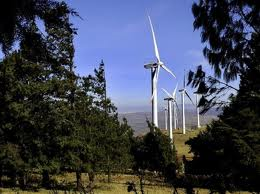
Econet Wireless has joined ‘Wind for Prosperity, an initiative ran by Vesta, a Danish wind energy group, to build small wind power generators across Africa.
This programme was created to provide power to people living in the rural areas as well as small unreachable towns.
“Wind-for-Prosperity is exactly the kind of ambitious and bold initiative that needs pursuing if we are to combat energy poverty. I am a firm believer that we need to think differently and be more creative with technology in order to deliver sustainable sources of power to the millions of people across the world, living beyond the reach of the grid. I am particularly interested in the potential of affordable electricity to boost agricultural productivity and create jobs. I am therefore very pleased that our energy division, which works on renewable energy solutions for Africa, is part of the consortium of investors, who are partnering with Vestas, to create Wind-for-Prosperity, to bring solutions to remote communities in several African countries,” said Strive Masiyiwa, Founder and Chairman of Econet.
So this development main aim is to generate wind energy to electricity which means there will be sufficient electricity for communities lighting requirements, the pumping of water and also small cottage industries.
Wind for Prosperity, has already completed the first round of financing for its first project which will roll out 13 wind generators in Kenya supplying power to more than 250,000 people.
“This technology is remarkable and will enable us to meet the electricity needs of millions of people across Africa, in a cost-effective and highly flexible way. Econet is already an active player in providing power solutions, using solar power, and sees the use of wind as a natural and complimentary extension to its current work. We at Econet are committed to not only finding solutions for the problems facing people in Africa, but we are committed to renewable solutions,” continued Masiyiwa.
Mobile social network with over 14 million members Eskimi, has launched its app for Nokia Asha devices in a move to make the service available to many users.
Available for free at on the Nokia Store, the new application will also have an Eskimi Ask function to allow users to communicate to each other through questions just like on its other platforms.
Speaking about the launch, Mr. Vytas Paukstys, Eskimi CEO said,“Our new Nokia application is also a part of our strategy to offer affordable social media services to users in Africa. They will not only have more fun with the new NOKIA app, but will also save data costs. As part of the same strategy, ESKIMI has also recently partnered with MTN in Nigeria to launch a data bundle that allows users to browse Eskimi cheaper”
Coming with an improved instant chat experience and new friend matching functionality, the app aims at making it easier to connect with friends every day and also constantly find new friends to have fun said Mr. Povilas Skrebutenas, Head of Product from Eskimi.
Mr. Emmanuel Oluwatosin, Partner Manager, Nokia West and Central Africa, says: “It’s great to have Eskimi on board of Nokia store. Eskimi has taken Nigerian market by storm and we want our customers to have all the local and relevant content through the application store. Exclusively on the new Nokia app, new Eskimi users who will start to use the app, will get Eskimi coins as a gift from Nokia”..
Samsung Electronics East Africa and the Kenya@50 Secretariat will erect a LED Digital screen at KICC and digital billboards across the country to mark Kenya’s 50-year celebrations.
The billboard at the Kenyatta International Conference Centre will promote the monumental building as the regional premier meeting centre and will also showcase the county’s culture, the people and businesses.
According to Sports, Culture and Arts Cabinet Secretary, Dr. Hassan Wario, “Every sector in Kenya has a unique story to tell, and that fits into the country’s 50th anniversary. This is a great opportunity for citizens, private sector, investors, the tourism industry among others, to come together to make an indelible mark in the Kenyan story.”
The first in the region, Samsung says the billboards are based on its Digital Signage Display technology, that has made it the market leader in display technology providing LED-backlit panels that are renowned for their sharp text, rich colour and reliable performance.
The launch of the Digital billboards for Kenya@50 celebrations comes at a time when the country is gearing up for the digital migration switch set for mid-December, which will see Kenyan embracing the digital broadcasting technology for the Televisions sets.
“We’re extremely excited about the launch because as a brand, all our television sets are digitally complaint thus our customers will not miss the action during the celebrations. We believe that this partnership will go a long way in ensuring that the milestones of this great nation are beamed to the whole country,” said Samsung Electronics East Africa Chief Operating Officer, Mr. Robert Ngeru.
Apart from celebrating 50 years as a nation, the Kenya @50 steering committee has lined up a series of initiatives, which will involve social and economic activities across the country with long-term positive impact.
East Africa, prepare yourself for the LG OLED TV, as the company is planning to grow the premium TV segment market share by this top notch TV not minding that Africa is still obsessed by Smartphones and tablets.
Josep Kim, the LG East Africa Managing Director said though changes in consumer trends and the market landscape are extremely difficult to predict and can have major consequences on the electronics business, the company would attempt to stay ahead of the game by introducing an unbeatable range of premium products and by expanding the overall diversity of its TV lineup.
The 55 inch OLED TV was launched in the Kenyan market and costs about Ksh.1.2 million. The TV can only be found at HotPoint Appliances, Sarit Center, Nairobi.
“It’s possible to make OLED TVs considerably thinner and lighter than LCD TVs because OLED has a simple structure and requires no additional illuminant,” said the Managing Director. “If yield rates continue to rise, OLED TVs will quickly replace LCD TVs in living rooms around the world. OLED TVs are already better than LCD TVs in terms of picture quality and will soon be more cost effective to produce as well”.
So what’s so good about this TV
The Curved screen allows viewers to enjoy same quality of excellent picture quality in both 2D and 3D images at any angle.
With the aid of LG’s WRGB OLED technology, the 55EA9800 features infinite contrast ratio with deeper blacks and brighter whites than a conventional RGB display. The screen delivers incredible color accuracy regardless of ambient light or viewing angle.
The Curved OLED TV’s design of the 55EA9800 features the almost transparent Crystal Stand, is as thin as 0.17 inches and weighs only 17kg.
The LG’s forward-facing Clear Speakers are unremarkably incorporated into the Crystal Stand to deliver flawless audio with remarkable fidelity in the mid- to high-frequency ranges.
In the near future, local internet service providers will be required to host websites locally in Kenya if a proposal by the Communications Commission of Kenya.
CCK said that it is pushing to create a body that will ensure that local ISPs adhere to the proposed rule.
“In order to keep our local traffic within the country and make it easy for us to trace cyber criminals, we are proposing in future that all ISPs be compelled to have their clients websites hosted locally,” Francis Wangusi, CCK director said. He was speaking at the recent cyber security conference in Nairobi.
Tanzania already has a law on internet hosting by compelling government bodies to register a local domain and host it locally as well.
Most hosting companies opt to hire servers outside the country due to their cheap rate and also having experienced staff maintain the servers. This move will definitely see the cost of hosting websites with the local ISPs increase, giving undue favor to international hosting companies.
The Student Advantage service is meant to better the academic lives of students as it will enable them to communicate, collaborate and access assignments in a shared work space.
The platform will help synchronize on OneNote as well as access Office applications, this, the company said will help prepare the students with the skills required in the workforce.
Students will be able to enjoy this service from 1 December this year. It will be made available to any institution worldwide that licenses Office 365 ProPlus or Office Professional Plus for staff and faculty can provide access to Office 365 ProPlus for students at no additional cost.
Microsoft Office 365 Education, an always-up-to-date cloud productivity service, is currently used by 110 million students, faculty and staff around the world. Office 365 Education enables students to communicate and collaborate more efficiently, access assignments in shared workspaces, have notes synchronized in OneNote and have familiar Office applications such as Word, PowerPoint and Excel anywhere, across virtually any device.
“Students use Office every day for school work and activities that are most important to them. Office not only helps students stay organized and get their work done today but at the same time develops skills that will be required when they enter the work force,” Said Mark Chaban, Microsoft Education Lead, Middle East and Africa.
Chaban was speaking at a Higher Education forum organized by Microsoft and attended by dons from over 30 Private and Public Universities and the Ministry of Education.
The launch comes in the wake of a white paper released by International Data Corporation (IDC) which states that top candidates for current and future jobs will be measured by capabilities and competencies.
The study by Microsoft Corp provides insight into the skills students need for the top 60 high-growth, high-wage occupations that will account for 11.5 million new hires and 28 percent of job growth by 2020. Out of those skills, oral and written communication, detail orientation, and Microsoft Office proficiency top the list.
With technology and innovation booming, the global economy is changing and business needs are evolving. IDC research found that although a number of positions require technical skills, even more require knowledge and cognitive skills.
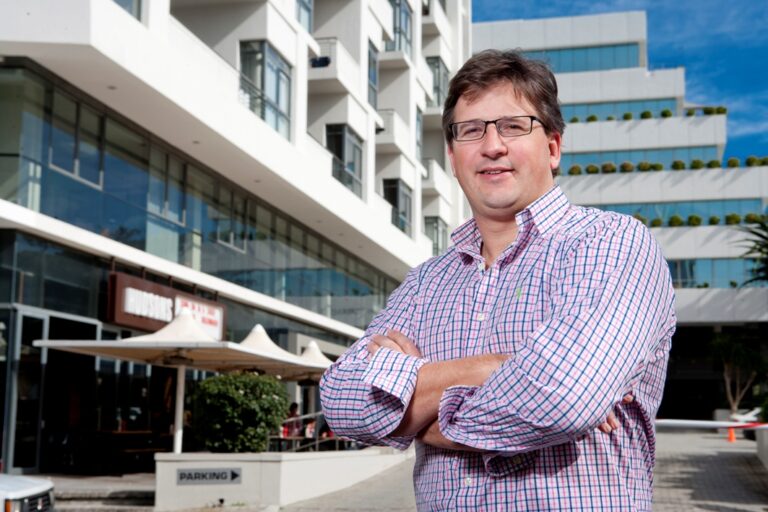
Zando co-founder and former Managing Director Peter Allerstorfer has joined Silvertree Capital, South African-based business builder and venture capital investor after earlier this year resigning from the online fashion retailer he helped found.
He will be joining former Zando co-founder and Managing Director Manuel Koser and ex-McKinsey colleague Paul Cook at Silvertree Capital, which has investments in several internet companies in South Africa and Nigeria.
“I am happy to have helped develop Zando into South Africa’s largest fashion e-commerce player. I am now ready to tackle new ventures with Silvertree Capital and we are looking to promote fresh and exciting business opportunities that have great prospects of growth” said Peter. “There is a lot we are working on at the moment and we should be announcing 1-2 more investments before the end of the year.”
Silvertree Capital has listed investments in a broad range of rapidly expanding internet businesses which involve healthcare, e-commerce and online feedback systems.
Before Silvertree Capital, Peter founded Zando in South Africa and served as Managing Director. He is also a founder and shareholder of Jumia in Nigeria. Peter started his career as an Intern for BMW, working in quality and strategy departments. After completing his Engineering Diploma at the Technische Universität Graz, he joined McKinsey & Company where he started off as a fellow intern and was later promoted to a Senior Associate where he was responsible for several projected in different industries and functional areas across the world.
By Nick Durrant, Bluegrass Digital Managing Director
It’s that time of year again, when the technology seers and trendspotters start pontificating on what they believe will be the transformative or shape-shifting technologies for the year ahead. Bluegrass Digital strives to keep a finger on the proverbial pulse, and with a dynamic and forward-thinking client base, we have some thoughts of our own on what we believe will drive the digital scene in the South African market in 2014.
Mobile Foundation
One of the fundamental elements to most of the emerging technology trends is the increasing dependence on (and popularity of) mobile devices. As smartphones, tablets and notebooks become cheaper and more prevalent, coupled with the declining cost of data, more and more people are using their mobile devices to go online and shop, make payments, use social media, and stay atop of their work commitments. In South Africa, where there is over 120% mobile penetration and more active SIM cards than there are people – mobile is becoming a focal point for retailers, marketers, advertisers and indeed most businesses who are looking to capture eyeballs (i.e. market share). Depending on your business or service, the emphasis on mobile will mean different things. For example, if you’re a marketer, you will need to look into mobile banner ads and Location Based Services (LBS). If you’re a restaurant or retailer, you may want to look into geo-tagging and creating a compelling mobi site. The first step, however, is to recognise the fundamental importance of mobile in being able to effectively reach and communicate with the South African consumer.
E-Commerce Explosion
Although e-commerce has been around for many years now, the take-up in South Africa has been fairly slow compared to the US and European markets. This is largely due to the high cost of bandwidth and relatively few retailers presenting a strong online offering. However, we believe that the local e-commerce industry is kicking into a higher gear now, with major retailers such as Woolworths ramping up their digital presence and pressuring others to follow suit. In addition, as bandwidth becomes more affordable and South Africans become more comfortable transacting both on PCs and on increasingly sophisticated mobile devices, many believe that local e-commerce is set to boom.
Indeed, former FNB CEO Michael Jordaan, renowned for driving innovation on the digital front, has commented that in the near future, e-commerce “…will just become the normal way of doing business”. And the numbers certainly support this sentiment, with one study pointing to a 12.95% a year growth in local e-commerce transactions, and local consultancy World Wide Worx finding that in 2013, South Africans were on course to spend as much as R4.2 billion online (excluding air tickets). According to Luke McKend, country director for Google South Africa, SA is forecasted to have 29.8 million Internet users by 2016, with a whopping 25% increase in online spend anticipated for 2013. On the global front, Goldman Sachs has predicted that e-commerce sales would reach $963billion by 2013 and grow at 19.4%. So this is certainly a space to watch closely, and retailers would be well advised to ensure that they have a clear-cut digital strategy in place.
Social Media: Google+ on the Up
Unsurprisingly, social media is set to gain an even stronger foothold in the digital realm, but we believe that 2014 will be the year in which local businesses of all sizes and sectors will fully embrace the medium as both a business strategy and communications tool. And given the numbers, this is a clear ‘no brainer’ for corporates, who have a fast growing and captive audience at their fingertips.
According to World Wide Worx’s recent social media study, Twitter has grown by 129% in the year to August 2013 – from 2.4 million to 5.5 million users in SA (South Africans post 54 million tweets a month, with 85% of these originating from mobile devices). There are now 9.4 million South Africans on Facebook, 2.7 million registered on LinkedIn, and 466 828 active Google+ users. While each of these networks are important for enterprises for various reasons, we believe that Google+ is set to become a major player in the Business to Business marketing space, providing tools and platforms that arguably make it more relevant and beneficial for the enterprise environment.
Indeed, 2014 might well be the year in which Google+ emerges as a critical business tool, so we encourage local enterprises to become comfortable with this platform and build a strong presence in the network.
While staying abreast of a rapidly evolving digital environment (with fast developing tools and technologies) may seem daunting, it is certainly worth the time and investment for businesses to ensure that they remain ahead of the curve.
You have probably noticed the copy cat game going on with the local television production. Some would say its lack of creativity others would say that it is an indication on what people want to see. Here are some of the top copy cat television productions in recent history.
1. Property Show vs N-Soko Property Show
The Property Show came first and took the nation by storm. Originally being screened on Zuku, the show was opted in by NTV and subsequently went to Kenya Television Network. To this response, NTV created its own property show, N-Soko Property Show to give its former show a competition. Both try and maintain their own identity but we can see what is happening here.
2. Hapa Kule News vs Offside News
For Hapa Kule enthusiasts, a new show is in the offing on NTV similarly feeding on fringe news in Kenya. Hapa Kule started on a slow note but now has gathered a huge following, reinstating liked sheng (corrupted Kiswahili) terms. We are yet to see if Offside will chip away any audience form Hapa Kule.
3. Wedding Show vs Samantha Bridal vs Weddings with Baileys
The Battle for the wedding scene is going down to the wire since a new entrant into the wedding shows scene. One name has to feature: Noni Gathoni. She has to be the pioneer in wedding shows, even though, Samantha Bridal took the glam away from Citizen’s Wedding Show. Noni is back to take her crown in a new show to be launched today on NTV: Weddings with Baileys.
4. Mali vs Lies that Bind
Both started as the premier soap opera in the Kenyan television space. One story was similar to both series: The family sole provider dies throwing family members into a mix of war on inheritance. The shows have since then drifted to take a life of their own.
So what is your thought? Coincidence, serious competition or lack of creativity?
Sim Shagaya, CEO of Konga.com, Nigeria’s major ecommerce platform, as described commerce and business as the force that could help in redeeming a society. He stated this in Lagos, Nigeria while delivering the keynote address at the maiden edition of SME National Conference organized by First Bank of Nigeria.
“Commerce is the most redemptive force for any society; it is not government or any agency, it is the SMEs,” Shagaya said.
He said at the initial stage of the company the company had to change its mandate from being a retailer to a company that also provides logistics due to the high level of distrust it met in the Nigerian market.
“Distrust in the system changed our mandate from being a retailer to a logistics company also,” he said.
Despite the current status of ecommerce in Nigeria, he said the sector is still in its early stage in Nigeria and his company is positioned for the future.
“Ecommerce is going to be like a utility – like water and electricity in the future, and most Nigerians will use the platform. Konga.com is building an engine for commerce in Nigeria.
“Success is not guaranteed but we are seeing some really good signs,” Shagaya said.
He identified several key factors that he said are vital to the success of SMEs in Nigeria.
He said: “Capital is important. You need funds which are seemingly scarce but at the same time like soil – even a small amount can make a difference.
“You also need to build processes and systems. Small businesses need to grow and there is no sentiment in business. As an SME, you must continually build the capacity of your workforce by enlisting them for regular training.”
At the SME National Conference, experts from the sector spoke to thousands of Nigerian SME operators on how they can improve their businesses and avail themselves of available opportunities, resources, funds and support that would facilitate growth and enhance expansion.
As opposed to the popular notion that mobile money is majorly for the unbanked, an expert as revealed that the widely accepted notion is not entirely true.
Explaining the report of a study carried out on Nigeria’s second largest social media platform, Eskimi, Vytas Paukstys, the chief executive officer of Eskimi said mobile money ought to be introduced from social media, especially to individuals that are already making transactions.
He said:”In the market, the understanding is still that you have to start mobile money roll-out from the unbanked. And this is wrong. Our research shows that you have to start from social media: urban, tech-savvy and already transacting customers.”
He added that it is difficult to start a technology business from people who only use technology for limited purposes.
He said: “You cannot start mobile money which is a technology business from people who never used technology except making calls.”
Currently, the focus in Nigeria and other African nations is to provide means of operating financial transactions to individuals who are unbanked hence most efforts are designed with the goal of targeting the unbanked.
This report however suggests that the strategy may not be effective in the promotion of mobile money in Nigeria.
Concerning the performance of various categories of users on Eskimi, he said “social media acquired and retained mobile money users are 9 times more active” than others.
A new research spearheaded by researchers from University of Cape Town has revealed that mobile users could stream video even with low bandwidth, extending the mobile video reach to many.
The new technology termed Adaptive Real-Time Internet Streaming Technology (Artist), uses algorithms that make video streaming on mobile phones unbroken even with low bandwidth access.
This would be a major shift in mobile use in Africa where most regions do not have high speed internet to support video streaming.
“Our aim was to find the balance between complete blockage due to congestion and acceptable picture/video quality in order to lessen the disruption to the viewing experience of the user,” says Emeritus Professor Gerhard de Jager.
This technology could also open doors to industries such as movie, television and video on demand services. ELearning could also benefit from easy video streaming.
It’s a calling spree this festive season to all MTN subscribers; the telecommunication company has announced that their users will make international calls to 200 international countries at subsidized rates.
Chief Marketing officer of MTN South Africa, Brian Gouldie said that the company is aware that inn this festive season their customers will want to communicate with their loved ones and the company is planning on giving the customers an affordable way to communicate.
“MTN contract customers will now only pay 75c for calls to the US, UK, France, Portugal, Germany, China, India and Nigeria. Customers can dial *111*2# for more information on MTN’s low rates to over 200 international destinations,” He said.
This time MTN subscribers will only have to worry about how to charge their phones because it recently initiated a promotion on its MTN Anytime contract packages, which offers customers more talk time with more inclusive minutes, more surf time with more data value and more text time with more SMSs for local cell phone usage to enable them to continue connecting and sharing at a more affordable rate.
“With the frugal times we are living in today, we believe it is important that we bring solutions to our customers, thereby addressing their needs for pocket-friendly value, on our world-class network,” said Gouldie.
The international calling promotion will be available to contract customers from 17 November 2013 to 31 January 2014.
This week, the African Development Bank Group in collaboration with the African Virtual University (AVU) have concluded that in effort to improve access to higher education in Africa many are pleased to learn that the deliberations on the integration of e-learning and open education into mainstream education programs are fruitful, concurred Stefan Muller, Lead Economist of the African Development Bank’s (AfDB) East Africa Regional Resource Center (EARC).
Themed “Integrating eLearning and Open Education to Increase Access to Quality Education and Training”, the conference brought together more than 100 participants including Ministries of Education and 22 universities from the Multinational AVU support project as well as the private sector.
The main objective of this first international conference organized by the African Virtual University and organized from 20 – 22 November 2013, was to discuss the future of e-learning in Africa and the role of Open Education Resources (OERs) including the Massive Open Online Courses (MOOCs) in the ICT learning revolution.
“The conference is very timely, it is taking place at a time of ICT revolution in Africa. It is critical for the Bank to ‘seize the moment’ and ensure that regional member countries harness ICT technologies that will result not only in increased access, but also facilitate quality and relevance of education,” said Ruth Charo, Principal Social Development Specialist, AfDB EARC.
She noted that OERs, including MOOCS, have the potential to enhance access to quality education but certification and accreditation for the OERs has to be looked into. In all countries, especially in Africa, certification as an evidence of one having acquired training is almost mandatory.
Microsoft East Africa’s service Solution Sales Lead, Hesham Ali
Kenya’s ICT Authority, COMESA secretariate, the Ministry of ICT and CCK today organized a cyber crime conference in Nairobi in the aim of fighting cyber crime.
Cyber crime is an area that governments all around the world cannot afford to ignore. Kenya is one of the country which cannot afford to ignore such an issue because according to the Cabinet Secretary, Ministry of ICT, information and communication, Fred Matiangi, Kenya has lost 1.5 billion shillings due to cyber crimes through mobile money as well as internet.
Matiangi said that in working towards the success of the project, the government will look into regulating all communication platforms which includes telecommunication companies as well as cyber cafes. He also said that it was important to work together with companies like Cisco and similar companies to help in the research as well as police training on cyber crimes.
Present in the conference, Sindiso Ndema, COMESA Secretary General said that it was important to invest in the training of the police all over Africa on how to handle the crime.
Microsoft East Africa’s service Solution Sales Lead, Hesham Ali said that Microsoft, having experience in the field in other developed countries, they intend to help their customers to protect themselves from cyber security threats.
“95 percent of of cyber attacks are not investigated, according to a worldwide statistics, and 60 percent of the attacks in countries are not discovered, they do not know that they are being attacked. What we are trying to do is to raise awareness and support our customers on how to protect themselves against cyber insecurity and also to be able to respond if attack happens and also recover after an attack, ” he said.
Other sponsors of the event include CISCO, Microsoft, Orange and Enterasys.
Egyptian mummies and ancient papyri are known to preserve rich historical facts of cultures that existed eons ago, but are at risk of diminishing away without efficient preservation. That has inspired an Italian commodity aid initiative to implement the use of high tech instruments that would save the museum’s secular papyri.
The launch of the technology was presented this week at a ceremony at the museum that was attended by the Director General for the cooperation for development Gianpaolo Cantini and Egyptian antiquities minister Mohamed Ibrahim, Italian ambassador Maurizio Massari and the museum’s director Rarek el Awadi.
The initiative, in favour of the Egyptian Antiquities Ministry is part of a programme of aid that aims to import to Egypt high tech Italian products and train specialized personnel in a number of sectors. More so, Italian technology will allow the restoration and preservation of thousands of highly delicate papyri at the Egyptian museum in Cairo that overlooks the popular Tahrir square, Cairo. The state of the art instruments provided by the Italtrend Spa and produced by Bresciani Srl, would play a vital role in preserving the museum’s thousands of Egyptian secular papyri.
A low-pressure table with a humidifier would be used to preserve precious papyri of the Egyptian museum, to restore paper documents. It has been provided alongside ten thermometers, humidifiers and five climatic chambers to preserve the findings to recreate the same condition as in the tombs where the papyri were discovered.
Moreover, the technology that comes with a laser and a portable gadget, has its laser using non-invasive technology to clean delicate and sensitive surfaces without the need of chemicals. The spectrometer would be used for chemical-physical measurements and to analyse material without extraction of samples.
Reports say that the initiative was agreed in 19 years ago, began in 1996 and has since funded the importation of Italian goods worth27 million euros, while the installment for the Egyptian museum has a value of 300,000 euros.
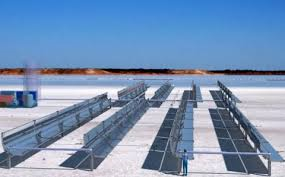
In a bid to produce energy, drinking water and heat simultaneously to benefit micro-industries located in rural areas in Kenya and other countries experiencing high levels of sunshine in Africa, Schneider Electric, a specialist in energy management has launched the Microsol project.
According to Schneider Electric a single Microsol installation, which is involves modular solar technology producing both electricity and water, produces 50 MWh of electricity, 1,000 m3 of drinking water, and about 800 MWh of thermal energy per year, benefits about 1,000 residents in remote regions and has a lifespan of up to 20 years.
At a time when areas in Kenya have been hardly hit by scarcity of water with other areas having illegal electricity connections, it is noted that the project would begin in Kenya as the first East African country.
The project’s idea is based on thermodynamics, that applies the principle of cogeneration of electricity and heat, which focuses its constraints on the design of thermal storage that uses environment-friendly products, at the same time promising to satisfy needs of inhabitants in rural areas.
Apart from meeting needs of local residents, Microsol can help micro-producers in the food, textile and paper industries with processing raw materials.
While in the tourism industry, it can provide energy needed for many premium services such as electricity for refrigeration, security, heat for hot water laundry or heating or water for drinking or cooking.
The project would kick of for trials starting next year 2014 ahead of a 2015 commercial launch.
Roaming charges in Rwanda were increased last year after a review of fees on roaming services by the country’s regulation board Rwanda Utilities Regulatory Agencies (RURA). Now the country has had enough of the charges and they now want the government to ablolish the charges, especially this season.
what is this they are fighting about, initially the users were being charged for only $9 cents and now they have to pay upto $22 cents for calling an operator in Rwanda.
“The increase in taxes meant rates for people calling from other countries went up – by that additional amount,” explained Yvonne Manzi Makolo, the chief marketing officer at MTN Rwanda.
She also said that in Uganda, Burundi and Tanzanian telecom regulators made it extremely expensive for users to phone contacts, as they imposed the same taxes.
“It used to cost Rwf60 to call Uganda and Burundi, now it is around Rwf120 to call Uganda and Rwf350 to Burundi because they increased their rates to 35 US cents. Before we were absorbing the 9 US cents, but is now impossible to absorb the 22 US cents and 35 US cents increments imposed in the countries,” said the Marketing Officer.
“As with all things commercial, the cost is eventually passed onto the end-users. So we have to charge our customers to receive calls because other customers from the East African Community (EAC) region coming to Rwanda are charged by their operators,” she added.
Econet Wireless has announced that users of its mobile money service, EcoCash will be able to access loan facilities through the EcoCashSave Account.
The service is expected to incorporate all the 900,000 account holders and is to be effected in the beginning of the next year.
This development comes in the realization that the service has more account holders that all the banks put together in the country.
“We have more than 900 000 account holders, compared to 850 000 for all the banks,” Econet Wireless chief executive, Mr Douglas Mboweni, said.
The use of mobile phone for personal banking has proliferated through out sub Saharan countries pioneered by Kenya’s M-Shwari product that allows M-Pesa holders to open accounts where they could save and even borrow money.
Seeing that EcoCash has surpassed traditional banking models, is mobile the only future in banking in Africa?
The ongoing Turkana siege, where over 600 people have been taken hostage due to continued cattle rustling dispute has made government officials to think of ways to curb cattle rustling and one solution is ICT.
Joseph Kaguthi who is the Chairman of the National task force on community policing has urged the counties to use GPS tracking system to track cattle that are stolen.
“What is the problem in getting small chips in each of those animals such that you can see the position of all those who stole them. The police will also intercept them and this will bring an end to the current state of affairs in the region,” he said.
According to Capital FM, Kaguthi said that such a technology would reduce incidences of cattle rustling as the police could easily track stolen cattle to their exact location and arrest perpetrators.
More than 500 blind students at the Akropong School for the Blind in Ghana will benefit from a newly opened ICT centre initiated by the MTN Ghana foundation.
The 20 seater centre will offer training on ICT for the blind and enhance their computer skills. The ICT center cost GH¢130,000 (US$57,000).
In addition, the Foundation has also presented a 33-seater bus costing GH¢86,000.00 (US$38,000) to the school to help alleviate the school’s transportation challenges.
Since its inception in November 2007, the MTN Foundation has invested over GH¢13 million (US$5.7 million) in various community development projects in the areas of health, education and economic empowerment.
Over 50 educational projects including 17 school blocks and 22 ICT Centres, 10 of which were built in collaboration with the United Nations Development Programme (UNDP), and 30 Health projects stand to the credit of MTN Ghana Foundation.
Many African countries are employing the use of ICT in learning institutions but a whole group of challenged children might be left behind if more is not done to include them in the ICT learning process.
Rhys Collins, Head of African Operations for SSP, a leading provider of insurance technology to insurers across the continent, says modern technology overcomes these challenges, and this is increasingly drawing new players into the African insurance market.
Both Hollard and Sanlam, for example, have had good success in Ghana, Kenya, Tanzania, Zambia, Botswana and Nigeria and are believed to be eyeing other opportunities across the continent.
He said: “The tighter regulatory and governance requirements are good for the industry,” continues Collins, “but, the flipside for insurers is that many will need to make major changes to their administration systems.”
As well as regulatory changes, SSP says the growth in mobile is the other key trend to watch in the African insurance market. Unlike other markets, the African consumer is by-passing the desktop internet connection and going directly to hand-held devices,” says Collins. “With the likes of M-Pesa and Fundamo now household names processing billions of dollars in transactions every year, and mobile use in Africa continuing to grow at a rapid pace, insurers need to raise their game.”
He believes that to deliver insurance products and services effectively on the ground, insurers and managing agents need a strong core insurance system and ICT infrastructure in place. ““There’s no denying that Africa has entered the age of mobile. Insurers and managing agents need to consider and embrace this and use the many advantages it offers to enhance their offering, or stand the risk of being left behind. To do this they need a modern, flexible insurance solution. Obviously this is easier for new start-ups, but for firms with existing legacy solutions, complex and risky transformation projects are not always popular in boardrooms. However, by adopting a gradual approach to legacy modernisation, such as SSP’s Enhance and Evolve approach, insurers can address their most urgent business priorities proactively. They can extend the life of their existing systems and only replace when the time is right, in line with their long-term strategic priorities,” concludes Collins.
Zamir Telecom has announced a new MBA scholarship programme for applicants from Africa, Asia and Middle East. The scholarship is in partnership with the Saïd Business School at the University of Oxford in the UK.
“The Zamir Telecom MBA Scholarship will fund one scholarship annually (valued at £15,000) for a promising young professional from the technology sector. It is open to applicants from Africa, Asia or the Middle East – or to those from other countries who have an interest in technological advancement in these regions,” the company said in a statement.
In addition to the scholarship, the company said it would also be offering the scholars with paid internships and a year employment contract after graduation.
Commenting on the scholarship announcement, M Naufal Zamir, Managing Director and Founder of Zamir Telecom described it as the company’s gift to people professional skills and knowledge.
He said: “We are a dynamic and entrepreneurial company which is flexible and constantly innovating to fill gaps in the market. We invest in people so that they can grow their professional skills and knowledge. This MBA will be our gift to people with drive, determination and talent and will help them realise their potential as future leaders and innovators in the technology industry”.
Commenting on behalf of Saïd Business School, the dean of the institution, Peter Tufano said through the scholarship, the institution will be able to open up opportunities for talented young people from across the world.
He said: “There are many talented young people around the world and the Zamir Telecom MBA Scholarship will enable us to open up the opportunity for them to make connections they would otherwise never make and go on to shape the future of technology provision in emerging economies.”
Zamir Telecom is a fast-growing innovative company with a diverse portfolio of innovative products and services in both the B2B and B2C telco markets. Its wholesale business is currently looking to establish new interconnections and explore other MVNO opportunities in both Africa and the Middle East.
In the next three days, Konga.com, Nigeria’s largest online mall, will bringing Black Friday and Cyber Monday Super Sales to Nigeria termed as “Fall Yakata” meaning “Fall totally, utterly, completely” this Christmas, inviting all online shoppers to buy new goods at least half their original price.
Black Friday and Cyber Monday sales exist in the US and Europe. However Nigeria’s Konga.com is now bringing two days of mind blowing price slashes. For instance, games, cosmetics, and clothes the most popular items have had their prices slashed by half. The popular Play Station 4 for instance, is now being sold for N60,000 instead of N138,000 regular prices, Ruby Woo lipstick that is normally N4,000 sold for N2,000 while Tecno Phantom A+ phone that is N39,000 that will be sold for only N19,000. Clothes too, normally sold for N30,000 would be on the Fall Yakata sale for only N10,000.
This year marked Konga’s success of winning the online the online retailer and best emerging brand of the year at the Marketing World Awards 2013, moving to a new 120,000 square feet fulfillment Centre and celebrating its one year anniversary.
Thus, this biggest sale ever taking place Nigeria would be happening from 9:00am on Friday 29th November to Monday 2nd December, 2013.
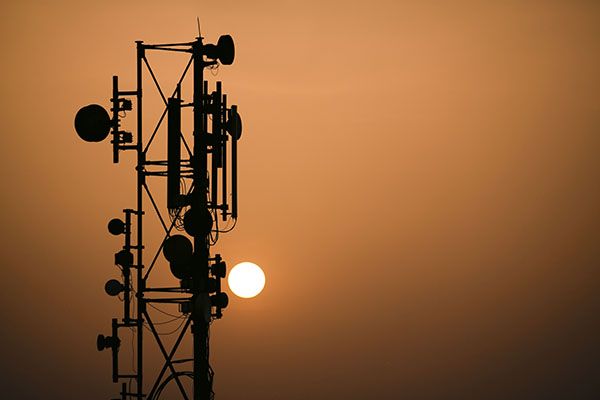
New reports claim Bharti Airtel aims to raise some $1.8 billion from the sale of its 15,000 towers in Africa.
The firm is seeking funds to clear its near US$10 billion of debt and has at the moment received expressions of interest from Helios, ATC, Eaton and IHS.
The reports indicate Airtel was earlier planning to spin off the towers as a separate firm to list it on the stock market or make a partial sale.
According to Cellular News, “In a research note, Kotak Institutional Equities warned though that a tower transaction of this scale has never happened in the African market; in addition, the fact that the tower assets have still not been demerged from most of the opcos in Africa makes any call on timing of such a deal very tricky.”
In hospitals worldwide, it may soon be possible for doctors or even family members determine the exact time of death of their loved ones, as Russian scientist Konstantin Korotkov has discovered a technique that can capture the timing and actual disembodiment in which a spirit leaves its body.
This technique developed by the Korotov, the Director of the Research Institute of Physical Culture, St. Petersburg, is already being endorsed as a medical technology by the Ministry of Russia of which over 300 doctors worldwide use for the stress and monitoring progress of patients treated for terminal diseases like cancer.
Korotov’s new technique uses a bioelectrographic camera that captures the images of a body using the gas discharge visualization method, an advanced technique that shows in blue hues the life force of a dying person leaving his/her body gradually. This technique, which measures real-time and stimulated radiation is amplified by the electromagnetic field is an advanced version of the technology developed for measuring Semyon Kirlian aura. It is said that Korotkov observations confirm, as proposed by Kirili, that “stimulated electro-photonic light around the tips of the fingers of the human being contains coherent and comprehensive statement of a person, both physically and psychologically.”
Developed by the Russian Scientist, the technique shows that the navel and the head are the areas of the body that first lose their life force while the groin and the heart are the final areas where the “spirit” departs. Korotov notes that his energy imaging technique could be used to show all kinds of biophysical imbalances and carry out diagnosis.
In other cases, it is said that Korotkov discovered that “the soul” of people that suffer or die a violent death manifest a state of confusion in their power settings and return to the body in the days before death, due to a surplus of “unused energy”.
According to Korotkov there is also an effect in the bioenergy field with food, water and even cosmetics. He also warns of cell phone use and their negative radiation often being carcinogenic, which several studies seem to confirm, notes socialconciousness.com.
Similar to Rupert Sheldrake’s experiment of the feeling of being watched, the Russian scientist notes that the reason behind the phenomena is due to a person’s bioenergy field change when someone else directs his or his attention even though it’s not consciously perceived, identified as “sixth sense”.
In all, analysts predict that Korotkov discovery is optimistic signifying an advancement in the scientific world, of which, schools especially those in Russia, would begin teaching kids to factually recognize the use of energy captured through this camera technology.
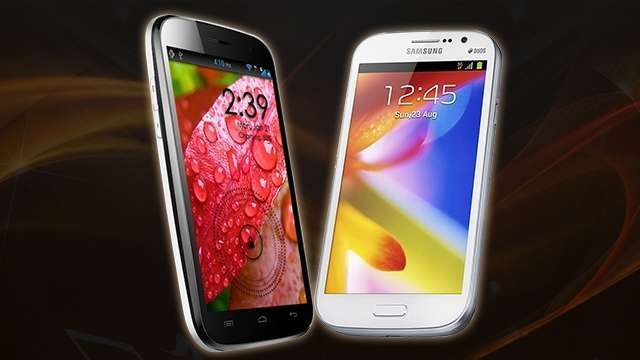
Samsung’s strategy is to ensure that every person in the world has a Samsung phone, the proof of this is the newly upgraded Samsung Grand 2.
The Smartphone has a large screen model that adds “meaningful upgrades” compared to the previous version.
The Samsung Galaxy Grand 2 has a screen as big as 5.25 inches with 16:9 HD ratio and the multitasking option lets users to run one application in two windows at the same time.
This second Grand ambassador of Samsung has a powerful Quad Core of 1.2GHz processor and long-lasting 2,600mAh battery to bring users up to 10 hours of playback and 17 hours of call; and has dual SIM capabilities which will let you switch seamlessly between networks.
The Smartphone comes in white , black and pink (although the pink phone is available only on selected markets).
A new project by Schneider Electric dubbed MiCROSOL aims to be the first to produce electricity, drinking water and heat simultaneously to benefit micro-industries in Africa’s rural areas.
The technology based on the principle of cogeneration of electricity and heat aims to help people access reliable and affordable electricity; ever-flowing clean drinking water and continuous and environmentally sound heat.
Expected to be ready for commercialization in 2015 in Kenya, Microsol can help micro-producers in the food, textile and paper industries with processing their raw materials by automating some of their processes such as drying, washing and pasteurization. It is also expected to provide energy for the tourist industry to power services such as refrigeration or security; heat for hot water, laundry or heating; water for drinking or cooking.
With 50 MWh/year of electricity, 1,000 m3/year of drinking water, and around 800 MWh/year of thermal energy, Microsol technology has an expected life of at least 20 years and help meet some or all of the production needs of local residents such as water supply, electrification of communal areas, and so forth. It can also guarantees zero greenhouse gas emissions, reduced deforestation and health problems owing to the clean production of heat and electricity.
Gilles Vermot Desroches, Senior Vice-President, Sustainability, Schneider Electric said, “All countries with high levels of sunshine are potential targets for marketing Microsol. However, because of its infrastructure needs, geographical location and economic models, Schneider Electric and its partners decided to focus their efforts on Africa”.
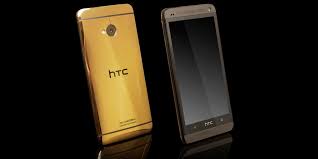
It looks like gold is the new red, now HTC has decided to join in the color of the rich as it has added a gold-flavored variant to its HTC One flagship Smartphone range.
Well, don’t get your hopes up because it is not real gold, it just coated is something of the sort. However this edition is limited because it is just for show off. Yes, show off for the Mobo Awards.
To help you create a vivid picture of the phone; this Smartphone looks like (almost exactly) Apple’s iPhone 5s, assuming Apple didn’t try to patent the design.
This masterpiece is only available in Europe; the new phone is otherwise identical to the existing HTC One Smartphone.
commented, “Building on the all metal design of the HTC One, and the recent success of the HTC 18 carat gold MOBO phone, we are excited to have developed our own gold device, offering yet more choice to consumers”, commented Phillip Blair, President of EMEA.
The pricing of this gadget is yet to be confirmed.
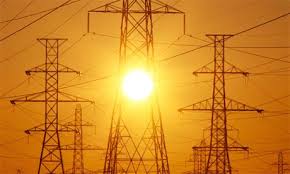
Recently state owned power utility firm in South Africa, Eskom, reached a near over capacity level, and declared emergency regulatory protocol, which requires key industrial users to cut 10% of their energy load and consumers to urgently switch off nonessential appliances.
Experts now support the move to use ICT to reduce energy consumption. EES a management and audit company asks companies to employ energy saving tactics including the use of ICT rather than pointing fingers at the energy company.
“Support and implementation of appropriate policies that aim to reduce energy consumption are key contributors not only to ensuring energy savings and improving security of supply, but also to achieving sustainable development in the country going forward,” says Bradley Hemphill, Managing Director of EES.
By means of sensors and other devices, ICT gathers data that can be converted through energy business intelligence applications into real-time knowledge.
“‘Intelligent’ use of ICT can bring direct efficiency gains through measurement, monitoring, management and control. Across the board implementation of ICT in the form of an intelligent infrastructure makes facility management more effective, results in energy savings and reduces the pressure the national power grid in under,” Hemphill said.




























 Zamir Telecom has announced a new MBA scholarship programme for applicants from Africa, Asia and Middle East. The scholarship is in partnership with the Saïd Business School at the University of Oxford in the UK.