
back to top
Friday, May 29, 2026
spot_imgspot_imgspot_imgspot_img
Home Blog Page 851

CEO Weekends:47 Sub-Saharan African Countries Agree On Frequency Coordination For Digital Switchover in 2015

0

digital

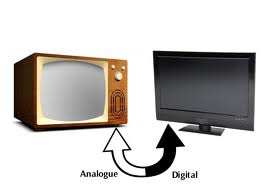
Frequency coordination discussions have finally agreed to setting up the mechanism to install digital television in 47 Sub-Saharan African countries.

The consolidation of national plans to implement the digital switchover in the African region is in agreement with the deadlines of June 2015 for UHF and June 2020 for VHF in 33 countries which is set in 2006 by ITU’s Regional Radiocommunication Conference (RRC-06), which adopted the GE06 TV Plan.

This landmark also makes Africa the first region to be in a position in 2015 to allocate bandwidth freed up by the transition to digital television – the so-called ‘digital dividend’ – to the mobile service for both the 700 MHz and 800 MHz bands. Decisions of the World Radiocommunication Conference 2012 (WRC-12) to facilitate availability of the digital dividend to the mobile service will be effective with some technical refinements immediately after the next World Radiocommunication Conference in 2015 (WRC-15).

ITU Secretary-General Hamadoun I. Touré appreciated the high level of cooperation that had been shown to the process by African Telecommunications Union (ATU) and its Secretary-General, Mr Abdoulkarim Soumaila.

Mr François Rancy, Director of ITU’s Radiocommunication Bureau, announced that sub-Saharan African countries have begun submitting official modifications to the GE06 Plan following the final frequency coordination meeting held in Nairobi, 17-19 July 2013 and the deadline of 31 August set for notifications.

“The objective was to enable African countries to allocate the digital dividend to mobile services in the band 694-862 MHz, as a regionally harmonized implementation of the decisions taken at the World Radiocommunication Conference in 2012,” Rancy said. “This objective was reached by re-planning the spectrum requirements of television broadcasting in the 470-694 MHz frequency band.”

The meeting in Nairobi organized jointly by ITU and the African Telecommunications Union (ATU) and hosted by the Communications Commission of Kenya (CCK), attracted 124 participants from 35 Member States. It was the third and last overall coordination meeting of African countries, after similar meetings in Bamako (March 2011) and Kampala (April 2011) and a number of other bilateral and multilateral meetings held in 2011 and 2012.
CEO Weekends: Mobile Learning Growth Rate Highest in Africa, Report

0
Image: eandt.theiet.org

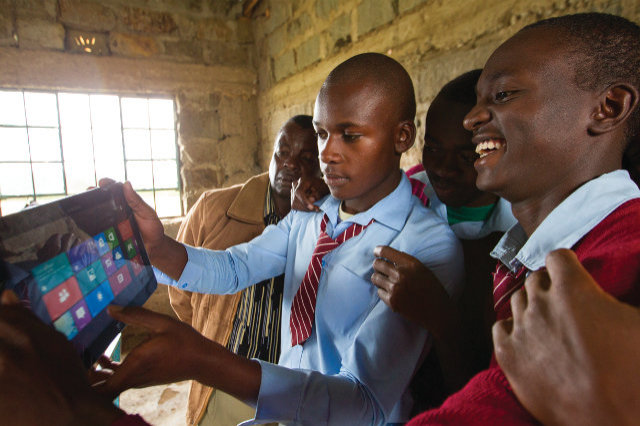
Africa has emerged the continent with the highest Mobile Learning growth rate in the world, with a five-year compound annual growth rate (CAGR) of 38.9 percent,  according to a report dubbed “The 2012-2017 Africa Mobile Learning Market” published by Ambient Insight.

The market analysis shows that revenues will grow more than five times to reach $530.1 million by 2017, up from the $102.4 million reached in 2012, with consumers driving the current market closely followed by academic buyers.

“Seven of the fourteen countries analysed in this region have growth rates above the 38.9% aggregate rate,” reads part of the report.

The primary catalysts driving the Mobile Learning market in Africa include: A boom in mobile learning Value Added Services (VAS), adoption of Tablets in schools, accessibility of smart inexpensive devices on fast networks and direct carrier billing for app store purchases. All these are driven by a strong demand for mobile learning content on the continent.

Mobile Learning VAS products will generate the highest revenues in Africa throughout the forecast period, as mobile devices are now becoming the primary computing devices used by many people in Africa.

This is different in the developed countries as the report states: “In the developed economies, Mobile Learning is often seen as a disruptive learning technology, particularly in the consumer and academic segments. It is ostensibly disrupting the legacy PC-based eLearning industry. This is referred to as ‘product substitution’ in market research”

“Buyers in Africa are not substituting Mobile Learning for Self-paced eLearning, they are leapfrogging eLearning altogether,” adds the report.

The report includes revenue forecasts for fourteen Africa countries namely: Algeria, Angola, Ghana, Kenya, Mozambique, Nigeria, Rwanda, Senegal, South Africa, Tanzania, Tunisia, Uganda, Zambia, and Zimbabwe.

CEO Weekends: Mobile App To Predict, Detect, Monitor Wild Fires Has Been Launched By The SA Government

0


fire

The CSIR Meraka Institute in South Africa has launched a mobile application that allows users to receive information regarding the prediction, detection, monitoring and assessment of wild fires across Southern Africa.

This introduction was cartecy of the institute in partnership with the Department of Science and Technology, Department of Environmental Affairs, Department of Agriculture, Forestry and Fisheries, and the South African National Space Agency. It is the mobile version of the CSIR’s Advanced Fire Information System (AFIS) and is available for both Apple iOS and Android devices.

 Research group leader for apps, Philip Frost, says the app provides fire managers, farmers and disaster personnel with a tool on their smart devices to receive information regarding wild fires in their areas.

 “Some of the main features include [showing] current wildfire locations detected by satellite, a five-day fire danger forecast for any location, and [showing] the number of days since the last fire at any location,” he said. 

The application shows very detailed information about detected fires, some of them including, intensity and time of detection is shown, as well as statistics such as fire count, frequency and time since last burn. It also allows for geo-tagged photo uploads of fires across the region and fire alert push notifications.

AFIS is a satellite-based fire information tool that provides near real-time fire information to users across the globe. The system utilizes information from various sources, including earth observation satellites and numerical weather prediction models to assist in fire management.

The CSIR first developed AFIS in partnership with Eskom, to allow the power utility’s management to respond quickly to fires under transmission lines, which could reduce damage and disruption to the power supply.

Fires cause approximately 20% of transmission line faults. Any fire that occurs within 5km from a transmission line in SA is automatically reported via SMS to Eskom’s national control centre and the relevant field staff in that region of the fire.

The mobile app is available free to all users with Apple iPhones and iPads and also Android devices.

CEO Weekends:BCX’s Citrix value scheme To Be Reinforced By Intergr8

0

intergr8

Management at national managed ICT services provider Integr8 consider supporting business solutions integrator Business Connexion (BCX) in the roll-out of Citrix infrastructure to clients, as an ideal position.

Integr8IT’s technical service division was acquired by BCX in a landmark deal early in 2013.

BCX is a registered Citrix Systems integrator, which is part of the Citrix Solution Advisor network and the highest level a Citrix partner can achieve. Integr8 also has a proven track record in the integration and support of Citrix infrastructure, the partnership is expected to add measurable value to the market.

Citrix has also recently awarded Business Connexion with the exclusive status of Citrix Cloud Advisor.

Business Connexion has a team of highly skilled and experienced Citrix engineers and consultants, with more than a decade’s experience in designing, implementing and supporting enterprise Citrix environments.

Business Connexion has been honored with the Best Citrix Technical Competency for 2012 and as of now completing certification of an additional 40 engineers up to Citrix Certified Integration Architect (CCIA), the highest level of Citrix Certification. BCX Engineers are certified across all Citrix products.

Integr8 is the initiator and operator of the only South African based Nerve Centre®, a hub of technology, skill and process that is used to support and regulate the ICT environment of many of the country’s leading organizations.

Skills and the provision of access to Nerve Centre® is a value proposition that is exciting and adds practical value to BCX’s strategy to market explains

“There is certainly an increase in levels of adoption of this technology in the market,” says Robert Sussman, joint CEO of Integr8. “In addition to skills sets, Integr8 and BCX share a passion for the application of technology that makes a difference to businesses and helps decision makers derive value from investment in solutions to leverage off the cloud, off other key trends such as big data, big data analytics and data centre development and migration.”

The Integr8/ Business Connexion partnership is expected to meet an increasing market requirement for secure, reliable and quick service and support on Citrix infrastructure.

CEO Weekends: County Governments Frustrating Spread of Internet in Counties

0

Dr.-Fred-Matiangi-ICT-Cabinet-Secretary1County governments have been accused of slowing down the spread of internet in their areas due to the high fees they are imposing on broadband service providers seeking to widen their coverage networks.

This was said by Kenya’s ICT secretary Fred Matiang’i while speaking at the Kenya County ICT Summit that took place in Laikipia County, adding that he has initiated talks with county leaders to persuade them to support the ICT industry.

“Moving the fibre cable across the country has been a matter of concern. As national government we ask ourselves: what policy sacrifices do we have to make to ensure there is a connection in all counties?” said the Minister.

Matiang’i was referring to the high way leave fee that county governments are charging ISP laying fiber cables. The latest example involves Laikipa County government and Jamii Telcom Limited that saw the latter abandon a multi-million shilling project of laying fibre cable in the town, after the county government demanded Kshs600 for every meter of fiber the ISP lays.

This, the Minister said, is not acceptable adding that it the central government will not get involved in dictating to counties on what to do as there are clear laws and regulations to be followed by the county governments.

The minister said that they will embrace dialog saying: “We want to have a conversation with them and try to make them understand the benefits accrued from a supportive environment so that we can grow infrastructure. If we levy heavy fee we are going to affect the movement of infrastructure.”

This comes barely a month after the national government announced the initiation of the National Broadband Strategy that will see all counties in the East African nation have access to ICT services at an affordable rate.

CEO Weekends:Kenya’s Chase Bank, Naivas & Visa Launch Fraud-Free Prepaid Shopping Card

1
Naivas Supermarkets Chairman Mr Simon Mukuha (left), Chase Bank Group Managing Director Mr Zafrullah Khan, Chase Bank Deputy CEO Mr Paul Nyaga, (middle) and Visa Country Manager of Subsaharan Africa Jabu Basopo (right); hold the Chase Bank-Naivas-Visa dummy cheque during the unveil of the prepaid card.

Kenya’s Chase Bank, Naivas Supermarket and Visa have launched a new prepaid shopping card featuring the latest chip-based technology to cut the risk of fraud.

The pre-paid card, based on EMV chip technology will eliminate the need to carry cash for both offline and online shopping at any Naivas outlet and as well act as loyalty card to reward Naivas customers.

According to Paul Njaga, Chase Bank’s Deputy CEO, the Naivas card powered by Visa is unique. “This is a family card, a tool of empowerment and a key to the financial freedom and prudence that every household desires. This is complemented by the easy access and control through web-based services. This feature enables users to manage their budgets and minimize risk of overspending.”

The card is further supported by Internet and mobile access to account balance, statements and stop card functionality. The card boasts access to over one million ATMs & 29 million merchants worldwide, this makes it more than a reward card but a lifestyle oriented card.

The card is being launched at an ideal time as Kenya’s card technology migrates towards chip enabled technologies.

According to Naivas Chairman, Mr. Simon Mukuha, the card is a way of rewarding loyal customers. “We attribute our growth and development to the Naivas customers. It is for this reason that we go out of our way to come up with such products if only to reward and say thank you. This is just a beginning, we will give you more” – said Mr. Mukuha.

Naivas will run an E-Coin facility so customers’ change can be loaded directly onto the card as money. “This is one of the most appealing benefits to Naivas customers as it eliminates the hassle of carrying change or carrying a lot of coins given as change at the retail point,” states Mr. Mukuha.

Jabu Basopo, Visa Country Manager for Southern and East Africa says the card comes into the Kenyan market at an opportune time as it will enhance access to financial services. “Prepaid products are a key priority for Visa, so we are delighted to partner with Chase Bank and Naivas to bring this card to the Kenyan market. For those lacking access to traditional banking services, the option of a prepaid card helps the underserved move from an inefficient and costly cash-and-carry lifestyle to a more convenient and secure way to make everyday purchases,” explains Mr. Basopo.

The cards can be found at Chase Bank branches and Naivas outlets. For free top ups, users visit  all Naivas outlets, M-pesa, Airtel Money and Chase Bank branches.


CEO Weekends: New Value Added Tax Might Affect the ICT Startup Ecosystem in Kenya, Says Nokia

0
Nailab
Innovation hub NaiLab

The latest VAT act in Kenya has affected many sectors of the economy. The startup ecosystem in Kenya will be adversely affected according to Nokia’s East African general manager, Bruce Howe says.

Nokia has sponsored some of the innovation hubs in Kenya and with more taxation on their core business, some of these support to these programmes will recede.

Kenya has approximately 50,000 registered developers and 17 innovation hubs. These hubs nature small businesses and are largely supported by companies such as Nokia, Samsung, Intel among others.

The phone manufacturer’s biggest worry is that competition from fake mobile phones and products that evade the tax will increase, shrinking its market share through these unfair trade practices.

“We wholeheartedly support the Kenyan government in collecting tax. Can we now ensure that it is a fair process that anyone not operating in that process is shut down,” Howe said.

For South Africa, the entry of fake mobile phones are hard due to the strict entry regulations.

In Kenya there are segmented retailers who are independent, and can easily get fake phones in the market.  In South Africa, handsets are majorly sold by the mobile phone operators.

These are the factors that make Kenya a worrisome situation according to the industry players.

Nokia also conducted a survey and found out that for the first year of its implementation, the VAT will have more revenues but will subsequently slump and mobile phone penetration will slow down from then.

Gerard Brandjes the vice president Nokia South and East Africa said that they will continue to talk with the government to find a more lasting and favorable situation for both parties.

CEO Weekends:Zimbabwe’s First Tech Hub Hypercube To Launch November

0

TechHub-007Zimbabwe’s first tech hub, Hypercube is set to launch in November as the country strides towards innovation to solve local problems.

The hub launches in Zimbabwe at a time when technology hubs have taken centre stage as sources of innovation and collaboration across Africa, yet Zimbabwe has lagged behind in this crucial area.  This is not surprising given the country’s recent economic history, but with the stabilisation of the economy following the introduction of the US dollar, the Hypercube team is eager to see Zimbabwe catch up with the rest of the continent.


Hypercube, whose mantra is “Tech in 4D”, will set out to strengthen the country’s technology ecosystem by focusing on what they term as “The 4 Dimensions of Technology”, which are Community, Co-Learning, Co-Working, and Co-Innovation. The Tech Hub will have 4 distinct spaces dedicated to each of these dimensions, and will offer a variety of membership options targeted towards meeting the different needs of people within the tech community. At its core, Hypercube will aim to be an open and inclusive space where anyone interested in technology, particularly local developers, can participate in a range of events and programs.


The Hypercube Board of Advisors, which is made up of Nikki Kershaw, Nigel Mugamu, Rinesh Desai, Munya Chiura, and Taps Murove, has also committed to working to increase the participation of women in the technology sector, as well as stimulating job creation for the youth through entrepreneurship. Hypercube has already started engaging with local, regional, and international partners, and is planning a number of launch events in November.

Nokia Wants to Capture Imaging Experience to Kick Out Competition

0

Nokia-Lumia-1020

During the launch of its newest range of Lumia phones, 625 and 925 for the South African market, Nokia has unveiled that it is working to improve imaging capabilities to its range of phones.

Almost two years ago, when Nokia launched the 808 PureView, the world thought that the imaging experience would remain on the Symbian range. But with the recent launch of the Lumia 1020, the company has made it clear that it is serious about imaging.

Features such as multi frame capture and selection of different parts of a photo frame and being able to share it through social media without losing quality is setting apart the Lumia range from other brands.

“We are not only thinking of imaging alone,” Ifi Majid, Nokia’s Head of Global Sell-in and Smart Devices said during a showcase in Johannesburg this week. “There are big possibilities to merge, imaging, location and social platforms for a more richer experience.”

Majid showcased the flagship model of the Lumia range, 1020 and explained how imaging has become the core for the 41 MegaPixel PureView phone.

There has been a lot of talk of the superior performance of the Lumia 1020 globally. Although the release date for the phone in Africa has not been made public, the phone is attracting positive reviews across the continent.

The company itself has concluded a competition dubbed Nokia Imaging Hackathon which saw over 1000 developers create imaging apps for the Nokia Lumia 1020.

DEMO Africa Announces 2013 Top 40 Startups

0
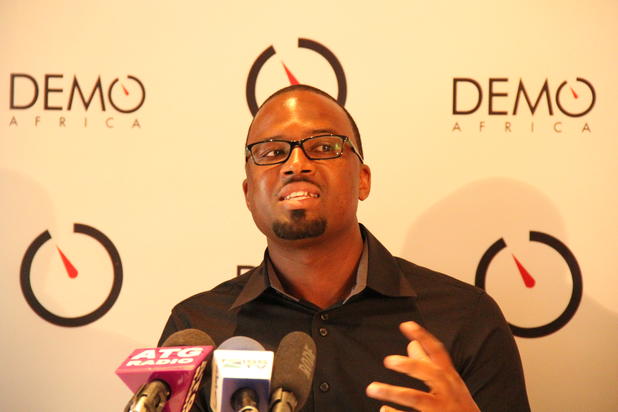
Mbugua Njhia, Co-ordinator of the 2013 DEMO Africa conference Image: demo-africa.com
Mbugua Njhia, Co-ordinator of the 2013 DEMO Africa conference
Image: demo-africa.com

Africa’s technology startup launchpad, DEMO Africa, has finally announced the list of top 40 startups out of the 300 applications received from over 24 African countries.

South Africa has a total of 12 startups in the final 40, followed by Kenya with nine statups. Egypt, Nigeria, and Tanzania have five, four and two startups respectively. Other countries represented include Ghana, Tunisia, Zimbabwe, Senegal, Uganda and Morocco each with one startup in the final list.

Speaking at a press conference, Harry Hare, DEMO Africa executive producer said: “The entries this year certainly kept up with the DEMO Africa spirit to produce innovative and creative ideas that are bound to transform the technology landscape and we are excited by the growth of innovation and technological advancement in Africa as portrayed by our finalists.”

Mbugua Njihia, the co-ordinator of the 2013 DEMO Africa conference said that 19 out of the 40 startups fell under the consumer segment focusing mostly on social media, mobile and consumer, creating a gap in the enterprise business sector.

Hare insisted on the fact that DEMO Africa was not a startup competition, but rather a platform for entrepreneurs to present their projects to potential investors and business partners.

Muchiri Nyaggah, one of DEMO Africa judges, said that the entries received this year demonstrated the need for increased investment in ICT education, to guarantee the mobile solutions created by the innovators are exploited in the global arena.

“While we are not able to support all the ideas and innovation that we received, we will engage the finalists on ways through which they can move their businesses to the next level and polish up on their ideas in preparation to meet their potential investors, partners or clients,” Hare concluded.

DEMO Africa will take place in October 24 and 25 in Nairobi Kenya.

The full list of the final 40 can be found here.

Nigeria’s Swift Networks To Test LTE With Over 500 Volunteers

0

nigeria

 Nigerian broadband internet and data services provider Swift Networks said that they will be conducting Long Term Evolution (LTE) network tests with over 500 volunteers who will be putting the new network through its paces in preparation for its launch in Lagos.

“This will be Nigeria’s fastest and most reliable 4G LTE network; we will not rush this launch and will take every care to ensure that we get it right the first time. Getting the most aggressive users from our current customer base to test-drive it will enable us to debug and fine-tune it to meet the exerting demands of our target customer base”, said Chukwuma Okoye, the Chief Operating Officer at Swift.

“These volunteers, who have been on our network for at least three years, will give us feedback on the several performance metrics we are tracking including download and upload speeds, network latency and uptime. They will also ghost call the Call Centre as part of the predetermined performance indicators that are important to our market segment. These customers have been with us through our Pre-WiMAX and current 4G networks and bring along their treasured comparative memory of our services”, he said.

The network company saw the potential and the growing demand for high-speed internet, and according to Philip Sonibare, Assistant General Manager within Consumer Sales and Marketing at Swift Networks, they will continue to provide that to as many customers as possible.

“We continue to see the demand for true broadband internet skyrocket in Nigeria and our 4G LTE network rollout starting from Lagos responds to what customers want from their broadband internet experience – faster and more reliable services backed by 24×7 customer care,” he said.

According to Nigeria’s Vanguard, “Wireless spectrum is a finite resource and LTE uses it more efficiently than other technologies, creating more space to carry data traffic and services and to deliver a better network experience. It delivers at least 10 times faster download speed than 3G and 4 times that of WIMAX 4G networks.”

Samsung Unleashes The New Galaxy Note 10.1

0

samtab

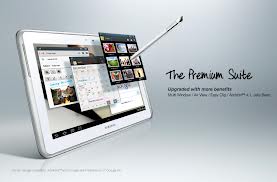
Electronics giant Samsung has unveiled its latest tablet, the GALAXY Note 10.1, 2014 Edition. The device makes use of a WQXGA Super clear LCD (2560×1600) resolution in a 10-inch display, 1.9 GHZ Octa Core processor (for 3G / WiFi only version) and 3GB RAM.

“The new GALAXY Note 10.1 is the most progressive 10-inch tablet, delivering the best viewing and multitasking experiences. It is the most recent demonstration of Samsung Mobile’s focus on constant product innovation to stay aligned with shifting consumer interests,” said JK Shin, CEO and President of IT & Mobile Division at Samsung Electronics.

According to Samsung, “the new GALAXY Note 10.1 expands on the advanced productivity and creativity leadership delivered by the original Samsung GALAXY Note 10.1. In addition to enabling productivity, the device has been redesigned with a sleek, light, slim frame that is both fashionable and portable.”

The tablet is 9.57 x 6.75 x 0.31 inches in dimension, weighs 18.87 0z, has a screen size of 10.1 inches and a resolutions of 2,560 x 1,600. The Galaxy Note 10.1 has battery strength of 8,220mAh, WQXGA Super clear LCD screen type and has aninternal storage of 16, 32 or 64 GB and external storage of up to 64 microSD.

It has an 8MP rear camera as well as 2MP front-facing camera, video capture for 1080p, Wi-Fi connectivity of 802.11 a/b/g/n/ac (2.4 and 5 GHz). The radio is HSPA and LTE enabled and has a 4.0 Bluetooth version, has a RAM of 3GB and  operates on Android 4.0 Ice Cream Sandwich as well as 4.3 Jelly Bean.

Just like previous version of the device, the new device will also make use of Samsung’s S Pen technology. “The updated S Pen included with GALAXY Note 10.1 improves responsiveness, delivers day-to-day efficiency enhancements and produces more creative input capabilities.

It will also include GALAXY Note 3′s updated S Pen features such as Action Memo, Scrapbook, Screen Write and S Finder.”

Samsung also revealed that the GALAXY Note 10.1 will come shipped with Samsung’s security application, which allows users to store apps in a secure environment.

“Users can activate Samsung KNOX with ease which allows them to run and store security-sensitive applications and data inside a protected execution environment called “container.” The security inside the container is strengthened by system-level protection of Samsung KNOX against malware and phishing attacks as well as hacking attempts on physical devices when devices are stolen or lost.”

Funds Flop In Tanzania Causes Impediment In Rural Connectivity

0

tz

Tanzania needs more than $148-million to connect over 200 villages located in the rural areas by constructing new telecommunications towers across the country, says the country’s Ministry of Communications, Science and Technology.

Local media have reported that the World Bank’s allocation of funds to the Universal Communication Services Access Fund (UCSAF) has been met with objection by Tanzania’s government.

The Ministry’s Deputy Minister, January Makamba, said that the Tanzanian government is already in talks with the Indian government about the allocation of funds for the project, as the government voiced its objections towards the bureaucracy of releasing funds to the UCSAF.

“If we get these funds, we will then be able to connect all areas that almost many Members of Parliament have been requesting to be connected with telecommunications services,” said Deputy Minister Makamba in a House sitting.

The request follows the Tanzanian government’s displeasure in the allocation of funds from the Word Bank to the Universal Communication Services Access Fund (UCSAF), which is tasked with raising funds to ensure than telecommunications are rolled out across the country.

McAfee Has Online Youth Protection Plan

0

mcafee 

McAfee has made it public that it has been able to reach more than 100,000 youth, parents and teachers around the globe with its cyber education program.

The McAfee Cares – Online Safety for Kids Program is a free school initiative that utilizes McAfee employees, partners and customers who volunteer to train children and parents on ways to stay safe, as well as maintain good ethics in their online behavior.

According to the 2013 McAfee Digital Deception study, “Exploring the Online Disconnect between Parents and Kids,” about 25 percent of youth spend five to six hours a day online. Eighty-six percent of youth believe that social media sites are safe and are aware that sharing personal details online carry risk, yet they continue to post personal information such as their email addresses and social security numbers.

“We have a responsibility to equip the next generation of computer users with the skills they need to safely experience all the benefits of the Internet,” said Craig Hockley, Regional Director, South Africa and Sub Saharan Africa, McAfee, Inc. “And just as important is making sure they understand how to be responsible cyber citizens. We teach skills needed to navigate the digital world, including how to safeguard against cybercriminals, hackers and cyber bullies.”

Earlier on in May 16, McAfee hosted its second annual McAfee Global Community Service Day to continue the effort of helping hundreds of non-profits around the world. As part of this day of service, McAfee volunteers taught cyber education to approximately 25,000 kids, parents and teachers around the world.

The McAfee Online Safety for Kids program is recognized by IDG’s Computerworld Honors Program as a 2013 Laureate. The annual award program honors visionary applications of information technology promoting positive social, economic and educational change. Founded by International Data Group (IDG) in 1988, The Computerworld Honors Program is governed by the not-for-profit Computerworld Information Technology Awards Foundation.

MTN To Begin A Data Superhighway

0

 MTN_Logo_only

Leading telecommunication company MTN has introduced a Global Multiprotocol Label Switching Virtual Private Network (Global MPLS VPN) which will be a connecting key network Points-of-Presence in South Africa, Kenya, Nigeria, Djibouti, Tanzania and the United Kingdom.

”Our enterprise customers will experience a seamless managed network service, leveraging off MTN’s undersea cable investments and our 24 operations across Africa and the Middle East. MTN’s data superhighway will connect key locations to deliver global scale, high-quality network and world-class support,” says Pieter Verkade, MTN Group Chief Commercial Officer.

With this service, customers will have visibility of their network through MTN’s Global Network Operations Centre, which is managed in-house by a team of highly skilled professionals across technical and business disciplines.

Other people to benefit from this service include people from financial services, logistics, gas and oil, manufacturing and retail, who will be able to completely outsource their Wide Area Network (WAN), Local Area Network (LAN) and Customer Premises Equipment management requirements.

The network also enables various business applications, including tele-presence, video and audio conferencing, file sharing, application and data hosting. The service will extend to over 20 geographies by end of this year, and a further 32 countries by 2014.

In addition to MTN markets on the continent, other targeted countries include Angola, Sierra Leone, Burkina Faso, Gabon, Chad, Senegal, DRC, Egypt, Lesotho, Malawi, Mauritius, Mozambique and Zimbabwe.

“MTN is particularly excited about this launch as it heralds a new era for us as a global operator and more importantly, for our customers on the continent. We believe that MTN’s Global MPLS VPN service will add immense value to our enterprise customers’ businesses. MTN anticipates that the service will become an important conduit to enhancing the role of enterprises in the growth of key economies on the continent,” adds Verkade.

Introducing Xperia Z1 Smartphone From Sony

0

XPERIA

Electronics maker Sony has unveiled the Xperia Z1, their new flagship model, which is expected to be made available globally late in September.

“Xperia Z1 represents a significant milestone for Sony in our continued efforts to deliver unforgettable experiences to our consumer. Not only by bringing the power of Sony to the Smartphone and through close collaboration with our partners but by setting a new standard in premium Smartphone’s,” said Kunimasa Suzuki, President and CEO, Sony Mobile Communications.

According to the company, the device features a 5-inch screen and is the latest addition to the company’s Z-series of devices, following in the footsteps of the Xperia Z Smartphone, and the Xperia Z tablet.

The Z1 makes use of Sony’s G Lens for its camera, and features a 27mm wide angle and bright F2.0 aperture, custom made large 1/2.3-type CMOS image sensor Exmor RS for mobile with 20.7 mega-pixels and a BIONZ for mobile image processing engine.

“The combination of these technologies delivers the same level of quality and performance as a conventional compact digital camera in a slim, waterproof Smartphone. Indeed, independent testing has confirmed that Xperia Z1 provides the best overall image quality of all leading Smartphones,” said Sony.

In terms of computing power, the device uses a Qualcomm Snapdragon 800 processor with 2.2 GHz quad-core CPU, is 4G LTE capable, and includes a 3000 mAh battery for a high battery performance.

Mark Fenzel, Sony Mobile Communications Sales Director, Middle East and Africa said that it brings a quality camera to the Smartphone market. This comes after Finish maker Nokia unveiled their Nokia Lumia 1020, with a 40 mega-pixel camera.

“Xperia Z1 combines unique Sony expertise and intelligent technology and for the first time ever, bringing real digital camera quality into Smartphone. We are excited to launch this new flagship premium waterproof Smartphone in South Africa from October 2013.”

Recycling Plant To Benefit Kenya

0

ewaste

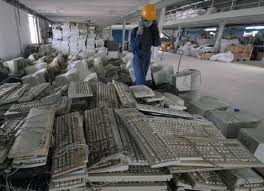
Kenya is expected to be opening a new e-waste recycling plant in Nairobi before the end of next year.

The new factory will be a collaboration between East African compliant Recycling (EACR), DEG (Deutsche Investitions-und Entwicklungsgesellschaft) and HP. The e-waste management system will feature collection, recycling to global standards and resource recovery.

DEG is one of the largest European development finance institutions that aims to establish and expand private enterprise structures in emerging countries.

The project will commence with an initial pilot of four collection points each working with a network of registered informal sector workers.

“We firmly believe that e-waste management holds opportunities in skills transfer and revenue generation that can be turned into drivers for incorporating Africa’s informal recycling networks into economically, ethically and environmentally sustainable systems,” said Charles Kuria, MD, HP Kenya.

Kuria said training the informal sector to proper collection, dismantling and recycling of e-waste is important for Kenya to take advantage of on revenue opportunities whilst ensuring e-waste management can operate as a self-sustaining system.

According to Robert Truscott, CEO, EACR, participants in all aspects of the recycling system will be trained to ensure devotion to globally recognized health and environmental standards.

“It has been a lifelong ambition to establish sustainable and profitable e-waste recycling in Africa, where the amount of e-waste is expected to grow and modern recycling methods are rarely established. There is a real opportunity for job creation around proper e-waste management,” said Truscott.

According to UNEP,  in 2010 Kenya generated 11,400 tons of e-waste from refrigerators, 2,800 tons from TVs, 2,500 tons from personal computers, 500 tons from printers and 150 tons from mobile phones.

ICT is being extensively used in the education, health, industrial, trade and communication sectors. Private sector has been installing heavy computing equipment and data centers, mainly mobile operators, banks, and manufacturing sector companies and now with the laptop project, it is expected to increase more.

The European Environment Agency and United Nations Environment Programme estimate that 40-50 million tons of electrical equipment waste is produced each year globally.

For most of sub-Saharan African countries, the lack of a sustainable e-waste management infrastructure means that e-waste is collected and recycled in crude methods, causing the release of toxic chemicals to the environment and putting those refurbishing and dismantling e-waste at risk.

In October 2011, HP opened the East African Computer Recycling Company (EACR) in Mombasa, Kenya, in partnership with Camara Education, an ‘Education through ICT’ NGO working with disadvantaged communities in Africa.

Kenya generates thousands of tons of electronic waste per year – waste that on the one hand can cause great harm to the environment, but on the other, can be used as a resource and an economic stimulus. EACR is operating Kenya’s first e-waste recycling facility, operating to international health, safety and environmental standards and establishing a local, sustainable IT e-waste recycling industry. Until now, the facility received end-of-life IT from business and public sector customers, as well as from the informal sector, assessing the waste for refurbishment or recycling. EACR offers its workers advice on handling e-waste containing hazardous materials such as lead and cadmium.

East Africa ICT Leaders Convene in Nairobi for the Kenya IT Week

0

it-leaders-east-africaStakeholders in ICT industry convened yesterday in Nairobi Kenya for the 3rd IT Leaders East Africa Summit, marking the second day of the Kenya IT week currently running at the Crowne Plaza Hotel.

The leaders came together to discuss pertinent issues facing the East African ICT sector, with experts from different organization giving keynote presentations on various topical issues in the industry.

Interactive panel discussions were also held, with one of the key topics discussed being the National ICT Masterplan, its implementation progress, and how to achieve the goals set in the document.

Those present for the panel discussion included; Paul Kukubo, Chief Executive Officer, East Africa Exchange (EAX) Rwanda, Dr. Katherine Getao, ICT Secretary, Directorate of e-Government, Catherine Ngahu, Former Chairperson of the Kenya ICT Board, and Andrew Lewela, Project Manager at the Kenya ICT Authority.

The National ICT Masterplan is a five-year plan that seeks to drive citizen adoption of the Kenya Vision 2030 priorities through ICT policies and initiatives. In the plan, the Kenyan government aims to have up to 90 percent of the citizens connected to the internet, improve access to public services through ICT, create a knowledge-based economy and make Kenya an ICT hub.

The panelist said that for Kenya to achieve the masterplan goals, innovation should remain the key driver in all sectors of the economy, with education playing a pivotal role.

Speaking during the panel discussion, Dr. Katherine Getao said: “How we train our young people matters as these are the people who will be the future drivers of the economy towards achieving the Kenya Vision 2030.”

Seconding Dr. Getao, Catherine Ngahu said that the education curriculum defines the goals of a country and how fast they can be achieved. “Education plays an important role towards achieving the ICT Masterplan and Vision 2030, as it defines the type of people Kenya produces for the global market,” Ngahu said.

Paul Kukubo urged East African governments to cease from just talking about the problems facing the countries, and embark on finding lasting solutions in partnership with the private sector.

The summit comes to a close today, officially marking the end of the Kenya IT week that has been running since 3rd of August.

Telkom To Boost SMEs

0

telkom


Telkom Business has launched Business Circle programme, a congregate voice product specifically created for the small business sector.

This program will enable customers to create closed user groups comprising both Telkom fixed line and mobile services, and allows for unlimited free calling within the group.

Telkom Business aims to provide benefits to the SME market, offering the core components required for convergence, such as fixed data, cloud, IT and mobile capabilities.

“It is this kind of innovation that enables communication – a critical component to the success of any small business,” says Jan Pieterse, executive Product House at Telkom Business.

He further explains that he believes that Telkom being the country’s leading ICT provider it has an important role to play in aiding the development of the SME sector; as the products they develop would go a long way in enhancing efforts aimed at bringing the second economy into the first.

“Our aim is to provide valuable product offerings and solutions designed specifically for small business as they seek to be sustainable and competitive,” adds Pieterse, emphasizing that high quality and affordable communication is vital to the efficient functioning of all businesses.

“Businesses looking to tap into innovative solutions that enable productivity while enhancing convenience and cost-effectiveness must consider the convergence route – by using products like Business Circle – for their communication needs.”

According to Pieterse, Business Circle brings together the best of fixed and mobile.

“Our unique offering is the best voice value available in the market currently. With unlimited free calling between the various employees of a company, it is guaranteed to drastically lower costs and significantly increase efficiency and productivity in any organization.”

Free Social Networking From Telkom

0

social media

Telkom Internet has launched free anytime data for specific social networking services, to make things better, it has also announced free data for subscribers between 12am and 6am daily and while the capacity of all Telkom Internet packages of 5Gb or more will be doubled at no additional charge.

This offers began to run from the first day of this month; the enhancement to its SoftCap 5Gb and higher offerings to include free specific social networking and the Night Surfer are available until 31 March 2014.

When Telkom is talking about free social networking it has that user who loves to use Facebook, Twitter and LinkedIn. The offer runs 24 hours a day, without incurring costs from their in-bundle data. Customers can also make use of the instant messaging chat clients on WhatsApp; Yahoo Messenger, MSN Messenger and Google Talk without incurring additional charges.

This however does not extend to video streaming such as YouTube videos or links to other web sites via these platforms. Once a user reaches his SoftCap limit, the social networking services and night surfer will also be subject to SoftCap.

“Social networks are extremely popular communication platforms and we understand that our customers need to constantly interact and be engaged, hence their relationship with these platforms. This offer empowers our customers to access the information they want from the platform of their choice,” says Manelisa Mavuso, MD of Telkom’s Consumer and Retail Services Division.

“I believe that free data access to social networking is a game-changer as we are giving our customers free and greater choice in what is fast becoming a preferred communications platform” he adds.

The companies will also double the capacity of its 5Gb or more internet packages from 1 September 2013 until 31 March 2014. For customers on 1 Gb packages the option to upgrade to a 5Gb package means an additional 5Gb as well as the promotion for social networking and Night Surfer.

“We are enhancing our value proposition to truly differentiate our broadband offerings to satisfy the customer’s growing appetite for media rich online content, thus enabling our residential customers to download and watch more movies, and music and so forth, this sort of innovation is in-line with our strategy to deliver a great value and seamless connected home experience,” Mavuso says.

Relentless Nokia Introduces Lumia 625 and 925 Amid Take Over By Microsoft

0
Ifi Majid
Ifi Majid from Nokia at the Launch in Johannesburg

Nokia continues to be in the news in positive light. A day after the company’s bid by Microsoft at US$7.2 billion was made public, the company has gone ahead to unveil two new Lumia devices and underlined the impressive Lumia 1020 in Johannesburg, Wednesday.

The Nokia Lumia 625 has the biggest screen in the series measuring at 4.7 inches and will be a significant improvement on the Nokia 620. “We have worked with Qualcomm to ensure that the device is faster and efficient,” Ifi Majid, Head of Global Sell-in and Smart Devices said during the media conference.

The Lumia 925 is currently the advanced of the Lumia range, except for Lumia 1020 which emphasizes on imaging. The new aspect with the new Lumia 925 is its metal hard case. The 4.5 inch device also has a metal ring around it making reception much stronger.

Speaking at the Nokia launch in Johannesburg, Gerald Brandjes, the Vice President, Nokia South and East Africa, underlined the importance of the continent to Nokia’s agenda. The new Lumia and Asha range of phones have been widely accepted in the African continent.

Gerald underlined the importance of having new innovations even for the continent.  Users have now a wide range of apps: 170,000 applications in the Windows and 150,000 applications on the Nokia store.

The company said that it will continue to push down great innovations to lower end handsets to increase capabilities to users.

Google Named The Next Android Version KitKat

0

kitkat

The new Android version is called KitKat, confirms Google’s Senior Vice President Sundar Pichai. The naming of the new version marks the continuation of the company’s unconventional naming policy, as previous version 4.1 – 4.3 was called Jellybean, 4.0 was Icecream Sandwich and 3.0 was titled Honeycomb.

“Android is the operating system that powers over 1 billion smartphones and tablets. Since these devices make our lives so sweet, each Android version is named after a dessert: Cupcake, Donut, Eclair, Froyo, Gingerbread, Honeycomb, Ice Cream Sandwich, and Jelly Bean. As everybody finds it difficult to stay away from chocolate we decided to name the next version of Android after one of our favourite chocolate treats, Kitkat!,” the company said on their website.

Pichai also made a small announcement in a simple Google+ message and Tweet. “It’s our goal with Android KitKat to make an amazing Android experience available for everybody,”

in the same message channel he said that Android 4.4 KitKat is expected to be released in October this year.

Apple Is Set To Introduce The Next iPhone This Month

0

apple

Apple has invited people to the launch of iPhone 5s on the 10th of September this year, a date almost exactly a year after the unveiling of the iPhone 5.

“At the very least, we’re expecting a next-gen iPhone to hit the stage. We’ll also be holding out hope for an oh-so-colourful lower-end iPhone 5C for emerging markets – markets where Android and even Windows Phone are the platforms of choice for communities making the move into the smartphone era,” wrote Engadget.

Apple has also in the past unveiled a S-version of previous phones, such as the iPhone 3S and 4S, which could hint at a 5S version.

The newest version of iOS operation is also anticipated to be launched along side the new apple phone; the iOS7. The OS has been in developer testing for a number of months and has undergone a number of updates so by 10 of this month it is expected to be ready.

It is also expected in some circles that Apple might reveal a new iPad, or a different version of it.

According to Apple, the iPhone 5 was their most challenging device to design. “I don’t think it’s an exaggeration to say that the hardware and software engineering that has gone into this product is the most challenging our team has taken on,” Phil Schiller, Apple’s senior vice president of worldwide marketing said during the unveiling of the iPhone 5.

Free .ga Domain For Gabon Residents

0

gabon

Gabon’s My GA Registry, which is also Gabon’s domain name , has today opened up registration for .ga domains for free.

The domain name is operated by the Agence Nationale des Infrastructures Numeriques et des Frequences (ANINF) who pledges to make this national resource as open and easy to use as any generic Top Level Domain, as it carries the Gabonese identity on the internet.

Internet users in Gabon as well as other countries will be offered free domain names from today onwards. There will not be any restrictions to registrations of free domains and anyone can claim their own .ga domain.

The domains will actually work exactly like any other extensions and can be renewed each regstration period at no cost.

Gabon, according to the international best practices, has also completed a Sunrise and Landrush period, allowing trademark owners to register their corresponding domain names and protect their intellectual property in the .ga namespace.

“Gabon is working hard to become one of the leading IT hubs in Africa,” says Cyriaque Kouma, DIG Project Manager at ANINF. “By giving our .ga domain names away for free we can encourage businesses and individuals in Gabon to develop their web presence and web applications and in turn diversify our economy and promote e-commerce. This strategy is an important part of our country’s vision to develop the Digital Gabon.”

The .ga Registry uses a global AnyCast Cloud, with local nodes in Libreville and in several other countries, to ensure excellent performance and continuous uptime of all domains worldwide.

This AnyCast Cloud ties directly into the systems of Freenom, a company known for its expertise and knowledge in the sector, and who works alongside ANINF in this ambitious project.

“In the past there were several outages of the entire .GA domain, which wounded the reputation of the registry. But that is behind us now, and our users can rest assured that their domains will always work no matter what,” said Kouma

The reintroduction of My GA in 2013 coincides with the “Year of the Internet” in Gabon. Local businesses and individuals will soon be able to take advantage of the increased connectivity from the new ACE oceanic cable, which will help spur the growth of the Gabonese IT sector.

My GA registry added that the domain names are available on a “first-come, first-served” basis and that resellers are welcome to sign up and provide further domain name distribution; more information can be found on www.my.ga.

M-Pesa Partners With Vodacom Tanzania

0

vodapesa

Mobile money in East Africa has grown significantly and is continuing to push through. Vodacom Tanzania has announced it latest contract with the Tanzania Revenue Authority (TRA) for an M-Pesa partnership.

The annunciation of this agreement has been well received and is likely to spur further growth in the mobile money sector in the East African country.

Vodacom said that this contract comes with a number of benefits, for example, vehicle owners will now be able to pay for licenses through the mobile money scheme, allowing business to move more smoothly and with ease.

TRA Director of Tax Payers Services and Education, Richard Kayombo, said that M-Pesa would go a long way in easing the purchase of vehicle road licenses.

It is estimated that about $1.2-million worth of transactions were already made facilitating road license payments in the first two weeks of the service.

“The furthering of mobile money schemes in East Africa, and notably Tanzania, are a major means for economic growth,” said Vodacom.

The company also added that it would enable users to transfer money for licenses quickly and without hassle in order to complete transactions in a timely manner.

The Syria, Egypt Conflict Triggers Increase In Cyber Attacks’

0

cyberwar

Syria’s civil war and political strife in Egypt have made their way to the Internet and has so far driven a surge in cyber attacks in the Middle East.

Executives from Intel Corporation software security division McAfee said that the better half of the incidents in the Gulf this year named “hacktivist” attacks are said to be politically motivated programmers destructed opposing groups or institutions.

“It’s mostly bringing down websites and defacing them with political messages – there has been a huge increase in cyber attacks in the Middle East,” Christiaan Beek, McAfee director for incident response forensics in Europe, Middle East and Africa (EMEA).”It’s difficult for people to protest in the street in the Middle East and so defacing websites and denial of service (DOS) attacks are a way to protest instead.”

The Syrian Electronic Army (SEA), a hacking group loyal to the government of President Bashar al-Assad, defaced an internet recruiting site for the US Marine Corps on Monday and recently targeted the New York Times website and Twitter, as well other websites within the Middle East.

“There’s a group leading operations, with a support group of other people that can help,” said Beek.

McAfee opened a centre in Dubai on Monday to deal with the rising threat of internet sabotage in the region, the most serious of which are attacks to extract proprietary information from companies or governments or those that cause lasting damage to critical infrastructure.

Cyber attacks are mostly focused on Saudi Arabia, the world’s largest oil exporter, Qatar, the top liquefied natural gas supplier, and Dubai, which is the region’s financial, commercial and aviation hub, said Gert-Jan Schenk, McAfee president for EMEA.

The “Shamoon” virus last year targeted Saudi Aramco, the world’s largest oil company, damaging about 30,000 computers in what may have been the most destructive attack against the private sector.

Obami Converts Revision Papers To Digital

0

obami

South African social learning platform, Obami, has introduced a digitized champaign in the time for the the upcoming ANAs (Annual National Assessments) that are to be carried out across South Africa from 9 September this year.

Converted into Obami-styled, online assignments, the ANA papers, which cover English and Mathematics across Grades 3,4,5,6 and 9, can be set to classes by their teachers, or undertaken independently by learners who are looking to get some revision done before they sit the real thing.

As long as there is an Internet connection, learners can type out answers which, on submitting, reveal model answers to which they can compare their own.

Teachers on he other hand, will be able to mark the assignments and export responses and results, empowering them to identify and focus on those sections which their learners may be struggling with.

This is the first time that any standardised DBE test has been completely digitized and made available to the public.

Obami says it is excited about what it means for education as teachers can now make sure that their contact time is dedicated to actual teaching, while learners can revise outside of school hours in a manner that is engaging for them. And with Obami’s mobile functionality, many of the 4-million learners who are expected to write the ANAs this year will have no problem accessing the digital papers.

SEACOM Contours Exchange Peering For African Service Providers

0

seacom

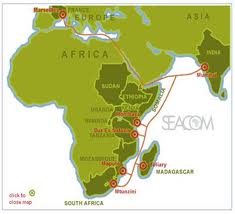
SEACOM has launched a new Remote Peering service which bundles SEACOM connectivity with exchange point membership to provide operators and ISPs in Africa with a single point of contact for the management of their international peering requirements.

SEACOM has entered into partnerships with NAPAfrica, France-IX, LINX and AMS-IX to provide African customers with the ability to peer at these prominent exchange points without the high costs that ISPs would face doing it on their own.

By using the SEACOM Remote Peering service, operators and ISPs can manage peering sessions with several exchange points across a single local customer interface. This decreases infrastructure costs and complexity.

Scalability and volume discounts on capacity further ensure that customers are able to purchase an efficient connectivity solution which enables them to distinguish their service offerings in the markets.

The SEACOM Remote Peering service optimizes bandwidth usage through multi-point connectivity across SEACOM’s IP-MPLS network. Bursting options also allow for rapid, on-demand bandwidth and adaptability of the service to meet urgent customer network requirements.

“Our Remote Peering service is the first to bring African operators the benefits of exchange point membership and peering – such as control over routing, lower latency, greater visibility, and lower packet loss – without the high costs associated with building out their own infrastructure to multiple exchange points. This translates into the ability to provide a better end-user experience without the need to incur additional capital expenditure, ” said Mark Simpson, CEO at SEACOM.

Procurement of Kenya Primary School Laptops in Progress

0

Uhuru-KenyattaThe Kenyan President has revealed that the procurement process for the primary school laptop project has officially started, marking the first significant step towards realizing the promise his government made to the Kenyan people.

Speaking in Mombasa, President Uhuru Kenyatta said that the procurement process will be rigorous, cost-effective and accountable, while at the same time urging primary school managers to update their capacity to implement a technology-based curriculum as the government rolls out the laptop programme.

“My administration has embarked on the initiative to supply children commencing primary school with laptops,” said President Kenyatta.

He added that the laptop programme will see the birth of a new generation of Kenyans who will be able to compete in the global market, having been equipped with the necessary technological skills at the earliest possible stage of their lives.

“As far as child friendly initiatives go, nothing promises greater gains in our time. The laptops usher in new beginnings and an enormous birth. Please embrace them,” he added.

The president also said that the initiative will see electricity power connection in most remote primary schools rolled out for the first time ever, in a bid to address the power challenges that may face the students and teachers while using the laptops.

Since he announced his government’s decision to implement the one-laptop-per-child project, the Kenyan president has come under criticism from part of the public and the official opposition, with most of them terming it a misplaced priority.

This has however not deterred the government in carrying on with its plans, with Kenyan children in Standard One expected to have laptops come early next year, something that will make Kenya to be one of the few African countries to roll out such an initiative.

The East Africa Outsourcing Summit takes place in Nairobi Kenya

0
Image: www.eaosummit.com/

The 2nd annual East Africa Outsourcing Summit officially took place in Nairobi Kenya today, with several Business Processing Outsourcing (BPO) experts from across the East Africa region in attendance.

The summit comes at a time when it is reported that the global BPO industry is expected to reach $304 Billion by the end of 2013. However, the East African region is yet to fully tap into its potential of being one of the leading BPO centers in the world, with many hurdles yet to be overcome.

Addressing the attendants at the summit, Tejbal S Bedi, Chairman of the Kenya IT Outsourcing Society said that Kenya was doing fairly well as BPO hub  as compared to its neighbors within the East Africa region.

This he attributed to the good internet penetration in the country, enough data centers, presence of skilled human capital and a growing infrastructure.

“This is the right time to invest in Kenya, considering the tremendous growth the IT sector has been witnessing over the past five years,” said Bedi.

Bedi went ahead to list some of the milestones achieved by Kenya towards making it a leading BPO hub within East Africa, with one them being the establishment of the Chipuka Certification for software developers by the Kenya government in partnership with the Carnegie Mellon University. This, he said, will place Kenya better in the global BPO market, as people seeking to outsource developer services will have proof of skills held by the developers

The conference’s main agenda was to promote East Africa as a BPO destination, attract foreign investment and also expand the ICT talent pool of East African countries to meet increasing demand.

Today’s summit was part of a three day event that marks the Kenya IT week being held at Crowne Plaza in Nairobi.