
back to top
Friday, May 15, 2026
spot_imgspot_imgspot_imgspot_img
Home Blog Page 583

Forbes Africa 30 Under 30; Kenyan Technology and Business stars of 2019

Forbes Africa very recently released the fifth edition of its 30 under 30 list, honoring some of the continent’s most accomplished young artists, entrepreneurs, and tech stars.

This year, the popular magazine has released the names of 120 young African game-changers, all under the age of 30, in each of the four sectors – business, technology, creatives, and sport. Amazingly so this is an increase from last years list of 90 people.

The list was announced at the annual Forbes Africa Under 30 Meet up that took place at the Houghton Hotel in Johannesburg. This being a Tech and business centered platform we thought it would be nice to highlight and applaud our fellow countrymen who graced the list.

The lists are in no particular order.

Technology

  • Jacob Rugano, 29, Kenya, Co-Founder & Director of AfricarTrack International

Jacob Rugano was also listed among the 2016 Top 40 Under 40 Men in Kenya by Business Daily. He founded AfricarTrack International after developing a mobile-controlled road-accident control system that uses a mobile phone to reduce accidents on the road.

A programmed chip is installed inside the car which acts as a liaison between the car’s computer and the reporting and control system.

The system then collects data on whether the driver had been driving drunk, driving carelessly, as well as the location of the vehicle if hijacked.

The company has won numerous awards including the Changemaker Of The Year at the  2016 African Achievers Awards in Sandton, South Africa.

  • Diana Esther Wangari,, 27, Kenya, Co-Founder & Chief Medical Officer of Sagitarix

Diana Esther Wangari ventured into health communication and entrepreneurship to bridge the gap between the health system and doctors, policy-makers, and patients.

In 2016, she co-founded Sagitarix, a digital platform that facilitates the direct distribution of drugs to those most in need, with a focus on patients with chronic diseases.

The company launched an app called iSikCure which allows patients to place orders for drugs and the medicine is then delivered on the same day.

They also introduced a subsidiary company, Checkups Medical Centres, a low-cost rapid diagnostics medical clinic which uses technology.

Last year, they were able to distribute medical supplies worth over $200,000 and currently have five clinics, four in rural areas and one in an urban area.

Diana’s organization were also finalists at the SBC AfriTech 2018 in Paris, France and has won the Get In The Ring Contest 2018 in Hague, Netherlands.

  • Eric Muli, 27, Kenya, Founder & CEO of Odyssey Capital (LipaLater)

He may be only 27 but Eric Muli’s company has been listed by the London Stock Exchange Group as one of the companies to inspire Africa. Eric started his first venture, a marketing company called Jossle while studying.

At the time, Odyssey was recognized by Business Insider as one of the best college startups, along with Uber and Microsoft.

After graduating, he launched Odyssey Capital, a non-deposit-taking financial institution which provides financial products and services to individuals and businesses in the lower to middle-income bracket in Kenya.

The company has a strict policy of 50/50 male-to-female hiring policy, and have since built a team of over 90 employees, 500 sales agents and built partnerships with Samsung, Huawei, TECNO Mobile, Walmart, and Airtel.

This year, Muli is expanding into Uganda and Tanzania.

  • Dorcas Owinoh, 28, Kenya, Co-Founder & Director of LakeHub

Dorcas Owino who was born in Kibera, works at improving technology access to girls from similar backgrounds.

Co-founded with her team at university, LakeHub is a technology and social innovation hub in Kisumu that supports a community of creatives, programmers, hackers, designers, and entrepreneurs; a majority of whom are girls aged between 13 and 19 years old.

Last year, Dorcas was a runner-up at the Queens Young Leaders awards.

In 2017 they had one of their biggest successes, a group of girls from LakeHub were the only team picked to represent Africa at the 2017 Technovation Challenge, sponsored by Google, Verizon and the United Nations in Silicon Valley, US.

Some of her company’s partners are Siemens Stiftung, Pluralsight, Hivos, and Segal Family Foundation.

The rest of the finalists from other regions in Africa under the Technology category:

  • Nthabiseng Mosia, 28, South Africa, Co-Founder & CMO of Easy Solar
  • Evans Akanno, 29, Nigeria, Founder & CEO of Cregital
  • Micheal Paul Mollel, 29, Tanzania, Co-Founder & Executive Chairman of Jimz Technologies Co. Ltd
  • Nureshka Viranna, 27, South Africa, Co-Founder & Director of Shopli
  • Fred Oyetayo, 25, Nigeria, Founder & CEO of Fresible
  • Alpha Nury, 29, Senegal, Founder & CEO of Jamaa Funding
  • Hansley Noruthun, 27, Mauritius, Founder of Mauritius Space & Science Foundation
  • Schizzo Thompson, 29, Malawi, Founder & Managing Director of Sky Energy
  • Wilford Mwanza, 29, Zimbabwe, Founder & CEO of Fordolutions
  • Vèna Arielle Ahouansou, 25, Benin, Co-Founder & CEO of KEA Medicals
  • Damilola Olokesusi, 29, Nigeria, Co-Founder & CEO of Shuttlers Logistics Company
  • Chinedu Azodoh, 29, Nigeria, Co-Founder & Chief Growth Officer of Metro Africa Xpress (MAX)
  • Shaun Benjamin, 29, Zimbabwe, Co-Founder of Simba Solutions
  • Matthew Piper, 25 and Karidas Tshintsholo, 24, South Africa, Founders of Khula App
  • Courtney Bentley, 29, South Africa, Co-Founder & CEO of Visibility Insight
  • Josh Okpata, 27, Tochukwu Mbanugo, 29, Nigeria, Founders of Eazyhire
  • Muhammed Salisu Abdullahi, 28, Nigeria, Co-Founder & Managing Director of eTrash2Cash
  • Silas Adekunle, 26, Nigeria, Founder of Reach Robotics
  • Joshua Chibueze, 26, Somto Ifezue, 28 and Odunayo Eweniyi, 26, Nigeria, Founders of PiggyVest
  • Uka Eje, 29, Nigeria, Co-Founder & CEO of Thrive Agric
  • Melissa Mwale, 29, Zimbabwe, Founder of Hive Incorporation & Co-Founder of CryptoGem
  • Eric Rutayisire, 28, Rwanda, Founder & CEO of Charis UAS
  • Khalid Machchate, 26, Wissal Farsal, 27, Morocco, Founders of K&W Technologies
  • Siyabonga Thomas Tiwana, 29 & Tyrone Adams, 28, South Africa, Founders of Skywalk Innovations
  • Chika Madubuko, 27, Nigeria, Co-Founder & CEO of Greymate Care
  • Marnus van Heerden, 29, Matthew Smith 26, Ndabenhle Ngulube, 28, South Africa, Founders of Pineapple  App

Business

  • Sadaam Suleiman, 28, Kenya, Co-Founder & Managing Director of DragonflyLimited

Suleiman registered DragonFly in 2014 after noting a gap in the digital marketing field. It focuses on digital advertising, media, branding, and public relations.

DragonFly has worked with numerous brands including Nutella, LG and Sanlam.

Last year, Suleiman bagged a gold award at the Muse Creative Awards. The company’s star continues to rise as he plans to open new offices in the East African region as well as invest in technology and innovation using artificial intelligence and machine learning.

In 2024, he plans to launch an incubation hub.

  • David Kyalo, 29, Kenya, Founder & CEO Koncepts & Events Ltd

David Kyalo founded Koncepts & Events Ltd in 2014 while studying at Kenyatta University in Kenya.

Having been a student leader in charge of events and entertainment at the university, Kyalo grew passionate about his role and decided to register a business.

Koncepts & Events specializes in event planning, catering, marketing, and public relations.

The company has worked on over 80 events, 35 marketing projects and has won nine awards.

Some of the clients they have had include the World Bank Group and Red Cross.

In one of his first features in a local Kenyan newspaper after the business started, Kyalo was asked if he had any won major awards yet.

He responded, “No major awards, not yet. But I should be in FORBES magazine soon”. And look at him now, he made it!

  • Shirlene Nafula, 27, Kenya, Founder & CEO of Crystal River Products

Business Daily named her one of the top 40 Under 40 Women in Kenya and she was also recognized by the British High Commission among women leading British and Kenyan businesses in Kenya and across the Commonwealth countries.

Shirlene Nafula founded Crystal River Products, a manufacturing company for bio-based beauty and hygiene products after mixing products from her parents’ dining room table.

Her company grew ten-fold and now she supplies her products to corporates and institutions including the office of the Deputy President of Kenya, William Samoei Ruto. Her products have been sold in Uganda and Tanzania.

  • Kimani Adam, 29, Kenya, Co-Founder & CEO of Nature Expeditions Destination Management

Kimani founded Nature Expeditions Destination Management in 2015 using his personal savings and third-party angel capital

It is an African tour and photographic safari operator with offices in Rwanda, Seychelles, Mauritius, the US, Morocco, Uganda and Tanzania, with signed partnership deals in Asia and Canada.

The company worked in conjunction with his family business that was failing at the time, called Nature Expeditions Africa.

“I created a global expansion proposal to the board of the group, who were comprised of well respected ‘old school’ veterans in the hospitality industry; however, they didn’t believe in my proposal and rejected it,” he says.

He challenged them and implemented that proposal to create his global enterprise. His goal is to become an “industry powerhouse in Africa and global photographic tour operator space”.

The rest of the finalists from other regions in Africa under the Business category:

  • Bruce Diale, 29, South Africa, Founder & Managing Director of Brucol Global Development
  • Terence Mathe, 29, Zimbabwe, Co-Founder of Southern Incineration Services (SISCO) PBC
  • Mariam Manack, 29, South Africa, Founder & Director of iTrain
  • Khanyisile Madonko-Nderezina, 25, Zimbabwe, Co-Founder and CEO of Sakhile Madonko Enterprises
  • Isaac Mbatha, 28, South Africa, Founder & CEO of Sky Tents SA
  • Adeniyi Omotayo, 28, Nigeria, Founder & CEO Betensured Group
  • Ogechukwu Anugo-Obah, 28, Nigeria, Founder & CEO of Bodylikemilk
  • Dorn Ndlovu, 26, South Africa, Founder & CEO of Entrepreneur Blue Print Africa
  • Busisiwe Mkhumbuzi, 24, South Africa, Co-Founder & Chief Executive of Tshimong
  • Sydney Sam, 26, Ghana, Founder & CEO of Workspace Global
  • Kgahlego Rasebotsa, 29, South Africa, Founder & Director of Interior Bubble
  • Ijeoma Balogun, 29, Nigeria, Founder & Managing Director of Redrick PR
  • Bright Jaja, 29, Nigeria, Founder & CEO of iCreate Africa
  • Jesse Carlton Happy Ndongo, 28, Cameroon, Founder of Easy Group
  • Henrich Akomolafe, 26, Nigeria, Co-Founder & Managing Director of Akotex Nigeria Limited
  • Lesego Mokae, 24, South Africa, Co-Founder of Ditsogo Projects
  • Oginni Tolulope, 29, Nigeria, Founder & CEO of Transfurd Limited
  • Theo Baloyi, 29, South Africa, Founder & CEO of Bathu Swag
  • Avthar Aniruth, 21, South Africa, Founder and Executive Producer of Audience Networks
  • Barbara Okereke, 28, Nigeria, Cake Designer, Founder & Managing Director of Oven Secret Limited
  • Jessica Anuna, 27, Nigeria, Founder & CEO of Klasha
  • Charles Edosomwan, 29, Nigeria, Founder & Chief Strategist of TekSight Edge Limited
  • Charmaine Mbatha, 29, South Africa, Co-Founder Millennial Business Administrators
  • Shaney Vijendranath, 29, South Africa, Co-Founder & CEO of Vimage Media
  • Adetola Nola, 29, Nigeria, Founder & CEO Veritasi Properties Limited
  • Caleb Stephen David, 27, South Africa, Founder & CEO of Versatile Commodity Traders

Kenyan startups invited to pitch for between $30,000 to $150,000 from Leapfrog Ventures

0

Leapfrog Ventures is set to invest between $30,00 and $150,000 into seed stage and early stage startups in Kenya and will hold a pitch competition later this month in Nairobi in partnership with growth Africa.

Not to be confused with Leapfrog Investments, Leap Ventures has invested in Kenya’s BiasharaBot and Rwanda’s Exuus’.

The Tokyo-based firm in July 2018 launched a $4.5 million fund for startups across sub-Saharan Africa especially for Kenya, Uganda, Tanzania and Rwanda. Launched by Takuma Terakubo and Samurai Incubate, leapfrog Ventures is based kLab in Kigali, Rwanda and gives tickets of around $50,000 per deal into early stage startups in finance, logistics, agriculture, energy and healthcare.

The fund is targeting 100 seed stage investments in East Africa in the next three years. the firm is and conduct proof-of-concept with less regulatory constraints.

For entrepreneurs looking for the next funding for their startups, Leapfrog Ventures, Series A Venture Capitalist and Angel Investors are here for that purpose.

The fund is looking for Seed stage or Growth stage startups to apply here to pitch to the investors. Leapfrog Ventures will select two startups to pitch at the Africa’s Notable Startup Pitch Event on July 18th and startups who will not be selected will be free to attend the event and network. The finalist can get funding ranging from $30,000 to $150,000 investment.

Please fill this application form.

Jumia signs up 35 delivery partners to expand its Jumia Prime subscription service across Nigeria

0

In a move to attract new and retain repeat customers, Nigeria’s online store Jumia is set to expand its Jumia Prime package, a paid subscription package that enables customers to shop on Jumia with zero shipping fees for a preset duration into more towns in the country.

The service, now available in Lagos and Abuja is set to be extended to other cities in Nigeria in order to allow shoppers buy as many orders as possible and get free shipping within the period covered in their subscription.

Mrs Juliet Annamah, Jumia CEO said the Jumia is pushing the nationwide expansion of its last mile delivery hubs to accommodate 33 new ones. Others include the integration of 25 new logistics partners to its network of partners and the addition of 4 major local languages to assist customers to place orders by phone.

“These are deliberate efforts towards expanding the reach of e-commerce in rural cities where prepayment had been the only payment option, thereby expanding the footprint of payment on delivery to these cities. We have also observed that some of our customers prefer to interact with our customer service agents in their various native languages. In response, we have integrated the 4 major local languages – Hausa, Yoruba, Igbo, and Pidgin,” she said.

The firm which runs a marketplace for online services such as food delivery, hotel and flight booking, classified advertising, and airtime recharge has also been an enabler of job creation and empowerment in the country with over 2,000 people directly employed in Nigeria and potentially another 850 through our ecosystem of partners.

Jumia Prime’s unlimited free delivery service is open to any user who wants to enjoy FREE deliveries within a certain period or duration. Jumia Prime is a monthly subscription service with either a one month package or a three month package. For users in Lagos, 1 Month costs ₦ 1,999 while 3 Months cost ₦ 4,999. For those in Abuja, 1 Month costs ₦ 2,499 while 3 Months cost ₦ 6,499.

Jumia Prime is important as these monthly membership fees will create a new and constant revenue for Jumia away from its online sales as they are non-refundable and non-cancellable and available through prepayment only.

The Jumia Prime membership is also limited in quantity meaning you can’t be shopping for your whole village. The package can also not be used for professional usage which is more than 50 orders per month and a shopper cannot indicate more than 3 physical addresses on their account. Membership renewal is not automatic and does not include shipping fees of goods from overseas under Jumia Global.

Though Jumia is more than five years late into the membership economy the Nigerian market after Supermart launched this four years ago. The membership economy is still important for Jumia and anyone producing or selling anything.

Coined by Robbie Kellman-Baxter of Peninsula Strategies a best-selling author and expert on the Membership Economy, the term describes a massive transformation from ownership to access, from anonymous transactions to known, formal relationships and from one way messaging to two-way communications between the organization and its members, but also conversations among the members themselves, under the umbrella of the organization.

According to her, while a subscription is a pricing tactic, the Membership Economy is a mindset for organizations to build long-term, formal relationships with their customers whether at a periodical cost or free. The Membership Economy provides companies with more predictable cash flow, and greater loyalty as well as give it an opportunity to learn from their customers through two-way interaction and evolve their offering.

Members, unlike subscribers, feel like people because of the personal experience they recieve in Membership Economies because of community and open conversation from the customer to the company.

Though we can’t say how much Jumia is set to invest in its Jumia Prime service, only companies that move beyond subscription to Membership Economies make the model successful. Membership Economies make customers to feel connected to the brand, are free to interact with the brand, online, in person and at forums or informal connections and for this, the company gains quick and honest feedback on its products. Firms should move beyond collecting emails and phone numbers and location of their customers to win their hearts and minds.

With these, firms will be able to build trusted relationships with customers and plus that will create a sense of belonging and connection between the company and its customers.

“It’s simple and bold as the core mission of the customer is more important than any product, or even the core mission of the organization. Too many organizations love their products more than they love their customers and their customer’s mission. Or they focus on their own, internal mission to “be the best in their industry” instead of “to help the customer achieve their goals”. Organizations that continue to evolve the products that they offer while increasing the value they provide, are going to be the winners of the Membership Economy. These winners stand to enjoy continued growth and profitability, which is ultimately what the corporations want, both near term and longer term,” Robbie Kellman-Baxter said in an interview with Aria Systems.

Galaxy A80, Samsung’s first rotating camera smartphone is now available in Kenya

0

Samsung Electronics launched the Galaxy A series phones back in April with the A10, A20, A30 and A50 being made available for the Kenyan market. Another variant of the A series is now available in the Kenyan market, the Samsung Galaxy A80 which has been created for the way people are engaging in the Era of Live.

The gadget will offer compelling innovations with people now increasingly using their smartphones to share live interactions, capturing spontaneous photos, streaming live video and connecting over shared experiences that are happening instantly.

The smartphone runs One UI based on Android 9.0 Pie and packs 128GB of inbuilt storage. The Samsung Galaxy A80 is a dual-SIM (GSM and GSM) smartphone that accepts Nano-SIM and Nano-SIM cards.

Connectivity options on the Samsung Galaxy A80 include Wi-Fi 802.11 b/g/n, GPS, USB Type-C, 3G, and 4G with active 4G on both SIM cards. Sensors on the phone include accelerometer, ambient light sensor, proximity sensor, and fingerprint sensor. The Samsung Galaxy A80 also supports face unlock.

The Samsung Galaxy A80 measures 165.20 (H) x 76.50 (W) x 9.30mm (T) and bears a glass body.

As far as the cameras are concerned, the Samsung Galaxy A80 on the rear packs a 48-megapixel primary camera with an f/2.0 aperture and a second 8-megapixel camera with an f/2.2 aperture. The rear camera setup has autofocus.

The 48MP main camera on the A80 will allow users to shoot vivid images day and night, the 3D Depth camera offers Live Focus videos by scanning objects for measurement and depth. The Ultra-Wide angle lens with the same viewing angle as the human eye will allow favorite views to be shared with less panning.

“The world is evolving from the ‘era of the selfie’ to the ‘era of live’, where people are fostering more genuine and meaningful connections, the galaxy A80 will drive this evolution said Charles Kimari the head of Mobile Communications Division, Samsung Electronics East Africa. “The Gadget will offer compelling innovations: a captivating, full-screen display, Samsung’s first revolutionary rotating camera and an intelligent battery”

The rotating camera on the Galaxy A80 will allow people to seamlessly capture the world around them. When users select the selfie mode in the camera app, the three cameras automatically pop-up from the back of the phone and rotate. The innovative camera mechanism delivers the same extraordinary triple camera experience with the same high-resolution lens, front, and rear which preventing sacrifice on quality.

Consumers will also be able to experience an uninhibited view with the first New Infinity Display which features a 6.7-inch FHD+ Super AMOLED screen, which will allow viewing of content in vivid detail allowing users to be fully immersed in every game, video, photo and story.

The gadget also consists of an intelligent battery which learns the user’s daily routine and app usage patterns to optimize the phone’s power consumption. The Adaptive Power Saving Mode enables users to be reassured knowing the smart battery is running most efficiently for the best performance needed.

The Intelligent Performance Enhancer, AI-powered performance optimization software, adjusts the battery, CPU, and RAM of the device based on a person’s unique usage, helping the phone to work harder and launch apps faster when they are needed.

“Consumers are at the centre of everything we do and they search for devices personalized to their specific lifestyle. Armed with our expertise, global capabilities and rich consumer insights, Samsung is uniquely positioned to provide innovations for everyone,” added Mr Kimari

The Galaxy A Series provides a range of models that allows everyone to choose a device that fits their unique needs and enables them to pursue their passions. The Galaxy A80 will offer premium features for digital natives who want to fully engage in the Era of Live.

The Samsung Galaxy A80 will retail at Kes.64,999/-

Samsung sued by Australian Regulator for ‘misleading’ water-resistant claims on Galaxy phones

0

Samsung Electronics’s Australian unit is being sued by Australia’s consumer watchdog for allegedly misleading consumers by promoting water-resistant Galaxy smartphones as suitable to use in swimming pools and the surf according to an article by TechRadar.

Being the world’s largest smartphone maker, Samsung did not know or sufficiently test the effects of pool or saltwater exposure on its phones when ads showed them fully submerged, the Australian Competition and Consumer Commission (ACCC) lawsuit says.

Samsung has been depicting phones in or near to unsuitable environments such as swimming pools and oceans since 2016, the ACCC alleges, when it didn’t have a basis to make this representation. The case is the first filed by a major regulator and could result in multi-million dollar fines.

The ACCC alleges law breaches occurred in more than 300 advertisements. If proven, each breach after 1 Sept. 2018 can attract a fine of up to A$10 million ($7 million), triple the benefit of the conduct or as much as 10% of annual turnover.

Breaches prior to 1 Sept. 2018 can attract penalties as high as A$1.1 million.

The ACCC said the ads were false, misleading and deceptive because the phones were not suitable for use in all types of water, which Samsung acknowledged on its website by advising against using the Galaxy S10 at the beach or a pool.

“Samsung showed the Galaxy phones used in situations they shouldn’t be to attract customers,” the ACCC commissioner, Rod Sims, said on Thursday.

“Under the Australian consumer law, businesses cannot mislead consumers about their products’ capabilities.”

Samsung said it intends to defend the proceedings.

In a statement, Samsung Australia said that Samsung stands by its marketing and advertising of the water resistance of its smartphones and that they are also confident that they provide customers with free-of-charge remedies in a manner consistent with Samsung’s obligations under its manufacturer warranty and the Australian Consumer Law.

The ACCC alleges that Samsung did not sufficiently test its phones to back its advertised claims, and denied warranty claims from users whose phones were damaged in water.

Samsung’s Galaxy phones advertised as water resistant typically cost more than those that are not, the ACCC said.

“Samsung itself has acknowledged that water resistance is an important factor influencing Australian consumer decisions when they choose what mobile phone to purchase,” Sims said.

The suit is another blow for the electronics giant which suffered reputational damage in 2016 when its Galaxy Note 7 smartphones suffered a costly recall after being found fire-prone.

The firm, also the world’s biggest maker of memory chips, is due to announce preliminary quarterly earnings on Friday. It is widely expected to post a profit plunge due to chip price falls.

Samsung Galaxy S9 and Note 9 get Galaxy S10’s Live Focus effects

0

The June security update released for the Galaxy S9 and Galaxy Note 9 brings new background blur effects for the camera’s Live Focus feature which only available on the Galaxy S10.

Apart from the Live focus, the update also brings other camera features like a dedicated Night mode and a QR code scanner. Live focus allows a user to adjust the level of background blur so whatever they are focusing on stands out. Say the subject is food. Live Focus ensures your plate of food stands out.

The feature also allows you to change the photo’s mood. Even after taking the photo, you can readjust the blur until you find the ideal setting. The phone also have a select range of background blur shapes to add characters and shapes to the photo.

As we await the launch of the Galaxy Note 10 on August 7th, the Galaxy Note 9 is still a beast of a device that has improved even more so since Android Pie arrived. Now the dedicated camera Night Mode is rolling out to Galaxy Note 9 users.

The update also brings with it the June 2019 security patch and some extra camera abilities including Bixby QR code scanning.

The effects to choose from are blur, spin, zoom, and color point. And just like we experienced it on the Galaxy S10+ while reviewing it, our favorite effect still remains to be Color Point. The feature turns the background greyscale so that only the subject is left in color, while “Zoom Bokeh” and “Spin Bokeh” makes it look like you’re racing towards the camera or speeding around on a roundabout, respectively.

However, unlike the Galaxy S10 trio that let you change the effect on the fly, the Galaxy S9 and Note 9 only allow changing the background effect after a Live Focus photo has been taken. You can do this by opening the Gallery app, navigating to a Live Focus photo, and then hitting the Change background effect option. The new effects can be applied to both new and existing Live Focus photos.

It’s fun being able to change the blur effect, allowing for a more artistic look in your bokeh/portrait shots compared to standard background blur, and Galaxy S9 and Galaxy Note 9 owners can now take advantage of the same Live Focus effects as the Galaxy S10e, Galaxy S10, and Galaxy S10+ owners.

Five Ways 5G Is Going to Change Our Lives

It may feel like years ago when we first heard about the arrival of 5G. The anticipation has been high after a considerable amount of hype, as the world has been constantly drip-fed information on how fifth generation (5G) wireless networks can dramatically improve technology.

Now, 5G is finally becoming a reality for us. As 5G becomes rumored to affect our lives in a more dramatic manner than any recent technology shift, it’s important to understand how much potential it has. 

The question most people are pondering is how exactly is 5G going to change my life? 

The answer lies across speed, omnipresence (also known as ubiquity) and greater stimulation and response.  

5G networks are said to operate at much higher frequencies yet with shorter ranges than that of 4G. At any one given time, this allows the network to support billions of devices all at once, charging at super-fast speeds of up to 20 times faster than 4G. The 5G antennas have been designed to consume less power, too.

As we become an online-addicted world, obsessed with technology and using it to simplify our life, let’s explore how 5G could impact our lives in five key ways:

1. The Development of Smart Cities

How many of you are incorporating smart technology into your homes? If we had asked this a couple of years ago, many of you would possibly say you had heard of it but wasn’t too sure about it. Fast forward to today, and the installation of smart technology within the home is on the rise. 

Take smart lighting systems, for example. This is the technology that automatically dims the lights when no one is present in any of the rooms, saving homes a fortune on a yearly basis. 

We’re now seeing states in America replacing streetlights with LEDs containing sensors, which not only light up when there is action around but monitor the air quality too.

It isn’t just lighting that has become smart. In South Bend, Indiana, sensors have been installed that redirect the water flow when the sewer levels rise too high. In areas of San Francisco, there are now gunshot-detecting microphones placed around the high crime neighborhoods.

5G will be supporting the move to smart cities, allowing areas to handle the increased data from millions of devices. It will help with installing low-power sensors that will perform for years. Moving on from lighting and heating in the homes, smart cities will be able to monitor and manage traffic flow, power use and public safety. 

2. Careers and Work

5G is set to increase the world’s confidence with networks and assisting how people feel about moving their work to run off technology more. 

Those within commercial and industrial and commercial industries will see smarter systems reacting faster to moving inventory goods, right through to faster and efficient shipping and delivery. 

For those within agriculture, 5G will support cameras and sensors which can work across the grounds to identify crop disease, determining the right times to water and feed, along with controlling pesticide usage

As we all begin to increase our confidence in being connected to an ultra-fast wireless network, it will be easier to take up all our education and learning needs via apps and the internet, too. 

It’s predicted that a decline in classroom studying will arise, as the world turns to covering all qualifications and training via the internet. As there becomes a stronger need for those with financial skills and strategy planning, accountants, financial strategists and data analysts will become more in demand. With the rise Masters degrees that are studied completely online, like the accountancy course here https://online.suffolk.edu/programs/ms-accounting, those looking to climb the career ladder can now so easily and around their own schedules.

3. Driverless Car Roads

The National Highway Traffic Administration claims that most car accidents are caused purely by human error. By removing humans from the equation is a step towards saving millions of lives due to road accidents every year.  

It’s not a simple process, as driverless cars to need to fully communicate with any car they come into contact with to successfully avoid accidents and cause congestion. Becoming a driverless nation would rely on sensors embedded into everything, from traffic lights to road signs, and not forgetting the pavements!

The whole process needs to be fast and instant, which is where the low-latency of 5G networks come in.

The arrival of driverless cars will result in the roads and streets becoming less crowded with a reduction in air pollution. Ride-sharing should increase, and fewer people will own their own cars.  

4. Virtual Medicine

Introducing Telemedicine – a virtual way we could receive medical assistance and the right medication in the future. This approach means that physical visits to the doctors will become less common, thanks to virtual visits via fast wireless networks. 

By wearing medical devices (or having them implanted) allows our health to be captured and transmitted to health care professionals. This could assist with detecting early signs of cancer, strokes, heart attacks, and any other life-threatening issues. 

With the speed of 5G, this could encourage personalized health scanning to be sent over to doctors and health care specialists at record speed. 

This can only become possible with the help of high-speed wireless networks, which 5G is aiming to bring in.  

5. Virtual Reality Lives 

As 5G has a high-bandwidth and low latency, it is predicted that this will give virtual reality the push it needs to become a practical reality. VR apps will allow companies to let their colleagues across the world work side by side, and shoppers browse shopping centers in New York and pick out goods to be shipped to us. It’s all about being able to virtually visit anywhere in the world, which needs high-speed technology. 

As exciting as all the above sound, these updates to our lives won’t happen overnight. 5G is going to be a developing process, opening opportunities and planting ideas which can shape our lives. 

We’ve still got a long way to go, as devices capable of accessing 5G networks are only just beginning to launch. This means that ultra-high-speed arrangements are still many years away. After all, 4G took 10 years to dominate the tech world fully, and some say 5G could take even longer.

The important thing worth remembering is that 5G is a massive improvement to that of 4G, paving the way for some fantastic changes to develop. 

Debt Dodging – 4 Simple Tips for Getting Your Finances Under Control

If your financial situation has changed or your finances are starting to spiral out of control, it is time to make some changes before the debt begins to pile up. Start with a review of your budget and look for any extraneous expenses that you can cut. If that activity does not get you sufficient funds to cover the bills, then check out the four tips below for other sources of help to get your finances under control:

1.    Take out a Loan

Sometimes money is all you need to get you back on track. If an immediate sum would rectify your financial situation, you may want to consider taking advantage of some of the fast loans that have low fees and interest rates. With reasonable repayment terms, these loans could help you improve your financial future quickly.

2.    Get Rid of Store Credit Cards

Store credit cards can be an unexpected source of your financial woes. They seem like a good deal when you are checking out, offering savings on your large purchase that day, but chances are good your quick sign-up did not include a review of the fine print. The fine print can consist of such things as astronomically high-interest rates, huge penalties for 0% financing, or low credit limits that hurt your credit score. If you have one or more store credit cards, cut them up and pay them off quickly.  

3.    Consider Switching Banks

If you have been with your current institution for as long as you can remember, it’s time to do a little homework and consider switching banks. First, look at all the fees that you currently pay your institution and the interest rates they offer on their credit cards. Then, start looking for other banks offering incentives and rewards to attract new customers. Chances are good that you can either find a better rate with a new bank or use the better offer to negotiate new rates with your current institution. If you decide to switch banks, check out this step-by-step guide so that you don’t miss any crucial steps.

4.    Refinance Your Mortgage

Your mortgage could be an excellent source for a little additional cash to pay other bills. If your credit score is still in good standing, you are likely eligible for a better interest rate, which could lower your monthly mortgage payments. You could also free up additional funds by extending the term of your new mortgage. 

A longer term means you are ultimately paying more in interest, but that could be a worthwhile tradeoff to access more money now when you need it the most. Before you refinance, make sure to look into any fees that may accompany your transfer, and calculate whether you will still be saving money if you have to pay them. If you are unsure if refinancing is the right option for you, this article can help you understand the signs that tell you it is time for a change.

Get your finances under control now, before things take a turn for the worse. If you only need a quick boost, consider taking out a low-interest loan. If you are paying extraordinary amounts of interest, get rid of any store credit cards you may have, and look into refinancing your mortgage. Your bank could be another great source of savings—don’t be afraid to question their fees and rates or move to another institution. Take steps now to secure your financial future.

Rwanda’s SafeMotos rebrands to CanGo as it nears its new super app status| Launches in Kinshasa

0

SafeMotos, an on demand ride hailing platform focusing on motorcycle taxis in Kigali has officially launched in Kinshasa, DRC and rebranded to CanGo.africa to bolster its super app ambitions, TechMoran authoritatively reports.

Speaking to TechMoran, Barrett Nash co-founder and CEO SafeMotos said, “CanGo is just one letter off of Congo, while not limiting us to Congo but an opportunity to launch FoodGo, AlcoholGo and everything CanGo. To many people ‘safe’ means slow and expensive while ‘motos’ is not recognized in many markets. CanGo is a more mature brand we’re getting behind, with better flexibility. We’re still SafeMotos in Kigali for a few more weeks, then will rebrand there too.”

“We are excited to be a first mover in Kinshasa, Africa’s third biggest city, and believe that we can grow into being a single app that provides many on-demand services in one. Think Glovo plus Lynk but CanGo,” Nash added.

According to Nash, him and his Kenyan cofounder Peter Kariuki were roommates in Kigali before they launched SafeMotos as they would often take motorcycle taxis to meet at their favourite bars.

“We’d always jump off and go ‘wow, that guy almost killed me’,” Nash said. “As aspiring entrepreneurs at the time we decided to do something about it: let’s make motorcycle taxis safe to use. We made a pitch deck, were approached by a startup accelerator, managed to get some seed money and we were off to the races. 

On why they chose motorcycles and not cars, Nash says it’s a question about what do they want to grow into: cars on demand are a great service, but what they are very motivated by is how they can bring additional services to their users from within a single app. As soon as we decided to orient our future towards multiple on demand services, then it’s a natural choice to focus on motorcycles as they are such a flexible way of moving a huge variety of goods and people.

Nash and Peter, co-founders of canGo.africa (formerly SafeMotos)

“As soon as we decided to orient our future towards multiple on demand services, then it’s a natural choice to focus on motorcycles as they are such a flexible way of moving a huge variety of goods and people,” he added.

Peter Kariuki and Nash met originally in Kigali as roommates. Nash was living in Rwanda renting a room from a friend of his and one day Peter showed up asking why Nash had stolen his room as their mutual friend had been renting it to both of them while Peter was at university.

They decided to get a bigger house and became friends. Anchored on their passion for entrepreneurship and problem solving and a strong belief that they are stronger together than independently, they chose to work together and have been the crazy entrepreneurship ride together.

On why they chose Kigali over Nairobi apart from meeting and studying there, Nash says one of the things about doing a startup is one learns a lot as they grow their business.

“What we learned in Kigali is that one needs to solve real problems. We say ‘we need to be a painkiller, not a vitamin’. In Kigali, transportation is quite good already, and with the limited size of the market it means that we’d set a relatively low ceiling for our ambition. What we also learned was that the opportunity for disruption of on demand companies in African cities is bigger than we expected,” Nash told TechMoran. “We decided we wanted to go to where we could have the biggest impact and fight to own the biggest piece of the economic pie: for us this is Kinshasa, with 14 million people, good 3G/4G, no startups of note and some of the most challenging transportation factors in Africa.”

Kinshasa and Nairobi are very different and Nash says that while Nairobi is, to him, the king of African startup ecosystem right now, where CanGo keeps its technology team, Kinshasa in many ways still feels pre-tech for him. To Peter, Kinshasa reminds him of the Nairobi of his childhood. In terms of opportunities, the two are hoping that they can turn Kinshasa into a Nairobi even though the startup ecosystem hasn’t been defined and there’s very little support infrastructure. 

Though CanGo has been involved so much in women empowerment initiatives, it’s a fully for-profit venture. Their SafeMotos Institute aims to allow the company to have positive social impact. The institute is still early in it’s impact but it has already trained a cohort of female drivers in Kigali, and are investigating opening a school for drivers in Kinshasa.

SafeMotos has examples of drivers getting married and buying houses due to the stability that being with the company allows them. As the firm goes fullblast in DRC, its now focused on turning Kinshasa into a ‘castle’ by first creating a defensible ecosystem of services . On the way, there is a major strategic challenge for on demand companies in that it’s just too easy to have competitors undercut another player but CanGo wants to nail a defensible ecosystem, then look at the dozens of cities in Africa with more than a million people that don’t have a developed on demand player yet and turn them into castles as well.

With discipline and focus, CanGo says it’s sure to nail the core customer experience before looking at widening the suite of services it can provide. 

 “We believe that making our drivers recognized as being of a high caliber, as well as getting to the right level of trip volume, allows us to leverage stakeholders to allow access. At the end of the day, SafeMotos is a positive thing for a city as it professionalizes a highly informal marketplace,” Nash told TechMoran adding that he was a billionaire overnight, he’d put it into Zeppelins, which he believes would be a highly viable solution to African intercity and intracity transportation challenges than the two wheeler motorcycles.  

For entrepreneurs who want to follow his journey, Nash and Peter advise entrepreneurs to have technical co-founders like Peter, CanGo’s CTO, as it makes it very hard to build a tech team from scratch. CanGo is watching Lagos.

“We’re watching with a lot of interest, specifically with how Lagos has boomed over night. We are very interested on a different subset of markets though than the ones that we already peceive as crowded. As a startup we’re always raising money and are always on the prowl for strategic investors who share our vision,” he said.

CanGo believes its well positioned compared to its competition because it’s still in the pioneering days of transportation disruption in Africa.

“We believe if we can excel in Kinshasa, then we are very well positioned to expand into other challenging markets that have been underserved by technology providers. As with everything in startups, timing is a huge factor, right now we feel like the window of opportunity is open, but we need to move fast if we’re not wanting to miss it,” Nash concluded.

Galaxy A50 vs. Galaxy S10e: Which Budget Samsung Phone to Buy

0

The Samsung Galaxy A50 gives you a major price break from the high-end Galaxy S10 handsets, yet more functionality than the Galaxy A10, Galaxy 20 and Galaxy A30.

Back in February when Samsung unveiled its Galaxy S10 lineup, the Galaxy S10e, which skipped some of the flashier features of the other S10 models, like an in-display fingerprint sensor and third rear camera lens, cost $150 less than the regular Galaxy S10.

But in April Samsung rolled out the Galaxy A series midrange Android phones, the A20, A30, and A50. The A50 makes a few more concessions on some features; a slower processor, no wireless charging, in exchange for an even lower price. At Kes. 30,000, the Galaxy A50 has a price tag that’s less than half of what you’d pay for a Galaxy S10e.

Here is how the two smartphones compare in a chart.

Galaxy A50 vs. Galaxy S10e: Specs

Galaxy A50 Galaxy S10e
Price Kes. 30,000 Kes. 78,000
Screen (Resolution) 6.4-inch Super AMOLED(2340 x 1080) 5.8-inch Dynamic AMOLED (2160 x 1080)
CPU Exynos 9610 Snapdragon 855
RAM 4GB 6GB, 8GB
Storage 64GB 128GB, 256GB
MicroSD Yes Yes
Rear Camera 25-MP main (f/1.7),
8-MP wide (f/2.2),
5-MP depth (f/2.2)
16-MP ultrawide (f/2.2), 12-MP
dual-pixel wide (f/1.5, f/2.4)
Front Camera 25 MP (f/2.0) 10 MP (f/1.9)
Battery Size 4,000 mAh 3,100 mAh
Size 6.2 x 2.9 x 0.3 inches 5.6 x 2.75 x 0.3 inches
Weight 5.86 ounces 5.29 ounces

Design and display

The Galaxy S10e was among the first phones to feature Samsung’s Infinity-O display, where the front camera is housed inside a punch-hole cutout. The Galaxy A50 comes with an Infinity-U display having the camera is inside a teardrop-style notch in the center of the screen.

The Galaxy S10e offers a 5.8-inch screen, making it a good choice if you’re a fan of small phones, whereas the A50 goes big, with a 6.4-inch display. Both phones use OLED panels and offer Full HD+ resolution. The S10e features a sturdier version of Corning’s Gorilla Glass, Gorilla Glass 5 while there’s Gorilla Glass 3 on the A50.

Performance

A major selling point for the Galaxy S10e is the fact that, while it may be the least expensive Galaxy S10 model, it runs on the same top-of-the-line Snapdragon 855 processor. Even though you’re paying less for the S10e than you would for the Galaxy S10 or S10 Plus, you can expect comparable performance.

The Galaxy A50 runs on Samsung’s in-house Exynos 9610 chipset. That’s a midtier processor, roughly equivalent to the Snapdragon 670.

Cameras

In this day and age, the formula for smartphones has become that the cheaper the phone, the fewer the cameras. The Galaxy S10e has just two rear lenses; a 12-megapixel, dual-pixel main camera, and a 16-MP ultrawide shooter. The S10 and S10 Plus include a third camera, a telephoto lens.

Although this formula is not the case for the Galaxy A50. It features three rear cameras, with a 25-MP main lens topped up by an 8-MP, wide-angle shooter and a 5-MP depth sensor which helps with portrait shots.

Additionally, the Galaxy A50 adopts a feature found on the Galaxy S10 series: a Scene Optimizer that turns to artificial intelligence to recognize what it is you’re shooting and adjusts camera settings on the fly for the best possible shot. The A50 can recognize 20 different scenes but the s10e can recognize more.

At the front, the S10e and A50 both offer single selfie cameras. A 10-MP camera on the S10e and a 25-MP lens on the A50.

Battery

This is one area where the Galaxy A50 could surpass the Samsung Galaxy S10e. The A50 has a 4,000-mAh power pack while the Galaxy S10e uses a 3,100-mAh battery.

Both smartphones offer fast-charging features but there’s no support for wireless charging on the A50 like there is on the Galaxy S10e. The S10e also supports Wireless PowerShare, where you can charge other Qi-enabled devices when you put them on the back of the Galaxy S10e.

Software and special features

Another big difference between the two Samsung phones is in how they are unlocked. The Galaxy S10e relies on a side-mounted fingerprint sensor, but the Galaxy A50 offers an optical in-display sensor like the other S10 models.

The Galaxy A50 features the same One UI interface Samsung introduced with the S10 lineup and it also includes the Bixby digital assistant.

Price and availability

There’s no debate on this one as the Galaxy A50 has the S10e beat on price, the S10e gives you more options, in addition to the 128GB model, you can pay an extra $100 to double the storage to 256GB, and you get 8GB of memory as part of the bargain. The Galaxy A50 comes in a lone 64GB version with 4GB of RAM.

The Galaxy S10e is available for about Kes. 78,000, but can be purchased at a cheaper rate at select retailers online, while the A50 retails at Kes. 30,000.

Why is Samsung Galaxy S10e better than Samsung Galaxy A50?

  • 12.82% faster CPU speed
    2 x 2.7GHz & 2 x 2.3GHz & 4 x 1.9GHzvs4 x 2.3 & 4 x 1.6GHz
  • 8.68% higher pixel density – 438ppi vs 403ppi
  • Is dustproof and water resistant
  • Has built-in optical image stabilization
  • Has stereo speakers
  • 3.33x faster downloads – 2000MBits/s vs 600MBits/s
  • 16g lighter – 150gvs166g
  • 2x better video recording quality (main camera) – 2160 x 60fpsvs2160 x 30fps

Huawei ban still on as US government says it’s still blacklisted

0

It has been a number of weeks now and it seems that no one is quite sure on how to solve a problem like Huawei’s.

Google blocked Huawei’s access to its Android software for future phones following a trade ban issued by President Donald Trump earlier this year.

The executive order effectively banned the Chinese tech giant from trading with any American companies over national security fears, allegations which Huawei strongly denies.

Although during the G20 Summit last week on Saturday, Mr. Trump backtracked on his decision, announcing that he will relax sanctions on Huawei, effectively reversing US policy on the matter.

There is no clarity yet on how the existing policy will change, although President Trump did say that the deal regarded equipment where there’s not a great national security problem with it.

President Trump’s announcement on Saturday was cheered by U.S. chipmakers since they are eager to maintain sales to Huawei, the world’s largest telecoms equipment maker, and a key U.S. customer.

But his comments did also cause confusion among industry players and government officials struggling to understand what Huawei policy he had unveiled.

An internal letter was sent to enforcement staff on Monday by John Sonderman, Deputy Director of the Office of Export Enforcement in the Commerce Department’s Bureau of Industry and Security (BIS), the letter asked them to continue treating Huawei as blacklisted. The letter, viewed by Reuters, said applications from companies that want to sell to Huawei should be considered on merit and flagged with language that notes Huawei is on the entity list.

The applications should also still be viewed under a “presumption of denial” policy that applies to companies on the blacklist. This means license applications are scrutinized more closely and most of them are rejected

He added that any further guidance from BIS should also be taken into account when evaluating Huawei-related license applications.

In a statement to Reuters, Huawei reported that company founder and CEO Ren Zhengfei had said Trump’s G20 statements were “good for American companies”.

“Huawei is also willing to continue to buy products from American companies. But we don’t see much impact on what we are currently doing. We will still focus on doing our own job right,” the company said.

Kenyan manufacturers blame the high costs of automation as a major hindrance to technology adoption

0

Kenyan manufacturers have blamed the high cost of spare parts, the high cost of software and hardware as well as lack of skilled labour as hindrances to automation in a new report today.

The report by manufacturing ERP firm Syspro and Strathmore University indicated that manufacturers asked for tax incentives for technology purchases, better training for local technology partners and improved availability of new technologies locally.

SYSPRO’s Head of Channel, Pravir Rai said, “keeping IT costs low is very important for businesses particularly SMEs. A lot of software solutions in the market are unaffordable because they come with inbuilt capabilities that a business may not necessarily need at a given time.”

To meet the local needs, SYSPRO’s ERP solution offers choice and flexibility allowing firms to buy what they need and not a whole stack of applications. SYSPRO is divided into modules that ensure it is not only affordable but also scales to meet the operational needs of a business as it grows. We have found this to be very popular with SME Manufacturers.

According to the report, over 85% of companies interviewed were either semi-automated or fully-automated with a majority still holding on to outdated production units because of the high cost of spare parts, unavailability of locally manufactured spare parts and inability to differentiate quality from fake until used. Counterfeits were also a large hindrance to local purchasing.

The report was prepared by SYSPRO, a global provider of industry-built Enterprise Resource Planning (ERP) software for manufacturers and distributors, together with Strathmore University. The two studied close to 100 companies drawn from 12 sectors of the production and manufacturing industry in Kenya interviewed.

The study explored productivity and competitiveness of the manufacturing sector in Kenya, the role of new technologies in improving the sector and the state of adoption and use of these new technologies.

Apart from technology, the study revealed that more than half of the manufacturers interviewed felt that the government could still do more to make the sector competitive and attractive to potential investors. Development of infrastructure, improving education and training, provision of exemptions, grants and subsidies as well as purchasing guarantee from the government were highly rated. 

Huawei Y9 2019 vs Huawei Y9 Prime 2019; Comparison

0

Many of you might not know that these two smartphones are different, but they are. The Huawei Y9 2019 was released in the Kenyan market in October 2018, as much as it is named 2019, while the Huawei Y9 Prime 2019 was announced just recently and is still up for pre-order till the 4th of July.

The key differences between these two models of the Y9 are the selfie camera which is the most evident. The Y9 2019 has a dual camera system on its notch, while the Y9 Prime 2019 has a pop-up selfie camera on its top. Both are midrange budget smartphones. The Y9 Prime 2019 comes with a USB type C charger unlike the Y9 2019.

The Huawei Y9 2019 only has 64GB of internal storage as standard. The Y9 Prime 2019 comes with either 64GB or 128GB of internal storage as standard. The Huawei Y9 Prime 2019 is also a little bit heavier than the Y9 2019 but that shouldn’t be much of an issue because both phones fit well on the palm.

Here is a more detailed comparison of the two Huawei Smartphones.

ModelY9 2019Y9 Prime 2019
RAM4 GB4 GB
Battery4000 mAh
Li-Polymer
micro USB
4000 mAh
Li-ion
USB type C
CameraFront(Dual):13+ 2MP
Rear: 16MP + 2MP
Front (Pop up): 16M FF
Rear: 16MP + 8MP + 2MP
Operating SystemAndroid v8.1 (Oreo) Android v9.0 (Pie)
MULTIMEDIA
LoudspeakerYesYes
Audio jack3.5mm3.5mm
PERFORMANCE
Chipset HiSilicon Kirin 710 HiSilicon Kirin 710
Graphics Mali-G51 MP4 Mali-G51 MP4
Processor Octa core
(2.2 GHz, Quad core,
Cortex A73 + 1.7 GHz,
Quad core, Cortex A53)
Octa core
(2.2 GHz, Quad core,
Cortex A73 + 1.7 GHz,
Quad core, Cortex A53)
DESIGN
Thickness8.00 mm8.8 mm
Width77.1 mm77.3 mm
Weight173 grams196.8 grams
Height162.4 mm163.5 mm
ColorsMidnight Black,
Sapphire Blue
Midnight Black,
Emerald Green,
Sapphire Blue
DISPLAY
Display type IPS LCD
1080 x 2340 pixels
with notch
IPS LCD
1080 x 2340 pixels
no notch
Aspect ratio 19.5:9 19.5:9
Pixel Density 396 ppi 391 ppi
Screen To Body Ratio 82.65 % 84.17 %
Screen Size 6.5 inches (16.51 cm) 6.59 inches (16.74 cm)
Price Kes. 20,000/-Kes. 24,999/-

d.light raises $18M to expand its product line and enter new markets in Africa

d.light, pay-as-go solar system manufacturer and financier which brought solar power to nearly 100 million people without access to reliable electricity since 2007 has raised $18 million investment to expand its operations across Africa.

The firm operates in Kenya, Uganda, Tanzania, Ethiopia and Nigeria and the additional funding will enable the company to expand its product line, enter new markets and reach even more customers in Africa.

The investment was from a consortium of lenders including two responsAbility-managed funds, SunFunder, DWM and SIMA. d.light has already using pay-as-you-go financing solutions and generating 171 GWh of renewable energy in the process.

According to d.light CEO and co-founder Ned Tozun, “The investment underpins the catalytic role of the company in making available clean, reliable solar energy solutions through the pay-as-you-go business model that enables off-grid customers to pay for solar lighting products in affordable installments using various mobile payment options.”

Speaking on behalf of responsAbility Investments, Antonia Schaeli, Principal – Direct Investments Energy Debt, explained: “Financing d.light’s innovative pay-as-you-go solar business, particularly in Africa, allows our funds to ensure people gain access to energy in a way that safeguards our climate. As an existing lender, responsAblity is excited to be part of d.light’s further expansion.”

d.light’s Chief Financial Officer Adrian Bock noted, “We are both proud and humbled by the continued support of the funders. We have been able to attract over $50M of debt funding in the recent past, excluding this latest tranche, on the back of our continued focus on financial discipline and operational excellence to ensure consistent profitability while accelerating our overriding mission of providing clean accessible energy for all. We continuously test ourselves and look to improve the way we do business for the benefit of our stakeholders and look forward to also working with our funders in this regard.”

Safaricom’s CEO Bob Collymore passes on at 61

0

Safaricom Chief Executive Officer Bob Collymore died at his home early this morning, July 1, 2019, Safaricom chairman Nicholas Nganga said in a press statement.

“It is with deep sorrow that we announce the passing away of Robert (Bob) William Collymore CEO if SAFARICOM. PLC, which occurred at his home in the morning of 1st July 2019,” read part of the statement. 

“In October 2017, Bob proceeded to the U.K. to receive treatment for Acute Myeloid Leukemia (AML) and returned in July 2018 to resume duties. He has been undergoing treatment for this condition since then in different hospitals and most recently at Aga Khan University Hospital in Nairobi. In recent weeks, his condition worsened and he succumbed to cancer at his home in the early hours of Monday 1st July 2019,” reads a statement from the carrier.

President Uhuru Kenyatta also released a statement mourning the death of Mr. Collymore citing that we have ‘lost a distinguished corporate leader whose contribution to our national wellbeing will be missed.’

“It is with deep sadness that I have this morning received news of the death of Safaricom CEO Mr. Bob Collymore after years of battling cancer. As a country, we’ve lost a distinguished corporate leader whose contribution to our national wellbeing will be missed,” said President Uhuru Kenyatta.

Mr Collymore who was appointed CEO at Safaricom in 2010, had earlier indicated he would leave his post as Safaricom CEO in August 2019. And in early May, he was appointed as a board member for the National Cancer Institute through a gazette notice.

Although on May 23, his contract with Safaricom was extended by a year to compensate for the time he was away on medical leave, thus being scheduled to leave the telco in 2020.

The Guyanese-born British citizen died at the age of 61 and is survived with one wife and four children.

May his soul rest in eternal peace.

Updated: Kenya’s SokoWatch, Hover & Rwanda’s Leaf raised funding from Catalyst Fund

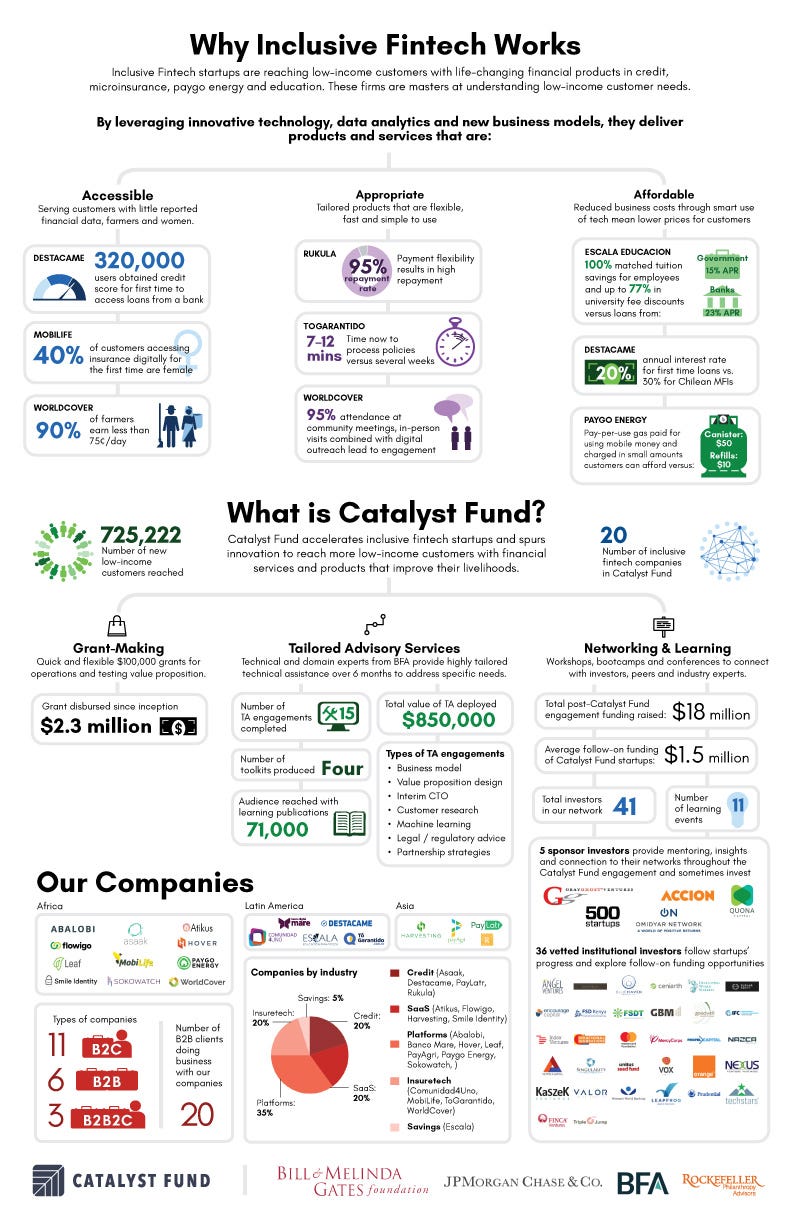
In July 2018, Kenya’s SokoWatch, Hover, a USSD firm founded by KopoKopo’s Ben Lyon and Rwanda’s Leaf raised funding each from BFA’s Catalyst Fund to help bring their fintech products and services to millions of users in emerging markets.

SokoWatch had the same week announced it had raised $2 million from 4DX Ventures with participation from Village Global, Lynett Capital, Golden Palm Investments, and Outlierz  Ventures. 4DX Ventures has also invested into Africa’s Andela, Flutterwave, and mPharma.

The Catalyst Fund’s 5 “inclusive fintech” early-stage funding is targeted at startups in its early 2018 cohort and its main purpose is to de-risk them. and get them investment-ready.

“The 12 companies that sought follow-on funding after completing the program secured an average of $1.5 million each,” said Catalyst Fund.

“Bank accounts and payment transfers are receiving a lot of attention and are growing in the number of subscribers, but they aren’t being used with the frequency that you’d expect,” said David del Ser, Catalyst Fund Program Director and Director of the AI Studio at BFA. “We’re accelerating inclusive fintech companies whose solutions will achieve greater usage and help address the complete financial lives of these populations — there is great need and demand for these kinds of products and services in emerging markets.”

Inclusive Fintech refers to a wider range of modern financial services, beyond bank accounts and digital transfers, that are tailored to the unmet needs of emerging market customers to ensure adoption and to enable users to move up the financial ladder.

With operations in Kenya and Tanzania, Sokowatch is an e-commerce platform offering African informal retailers on-demand and free delivery of store products and credit lines to address common stockouts, lack of access to working capital and business management tools.

The second startup to receive investment was Hover, founded by KopoKopo’s Ben Lyon. Hover is building a USSD technology to enable mobile developers to turn an existing communications protocol, USSD, into an invisible transport layer, allowing the facilitation of in-app mobile payments so that users who can’t access or afford data plans can still connect to transact.

Rwanda’s Leaf on the other hand helps refugees transfer their assets across borders safely using blockchain technology. The other companies in the July 2018 cohort include India’s PayAgri, an agri-fintech startup that aims to streamline the Indian agriculture value chain and Latam’s Banco Mare, a digital bank allowing users to pay bills, pay at merchants and make peer-to-peer transfers via the blockchain.

These five made Catalyst Fund’s cohort to reach 20 startups targeted at transforming lives of populations in Africa and other emerging markets. Chipper Cash and Turaco might as well go ahead to raise follow on funding after the accelerator.

“We are proud to invest in solutions that have the potential to transform the financial lives of people across the world and in technology that is reinventing the global financial services landscape,” said Janis Bowdler, President, JPMorgan Chase Foundation. “We look forward to seeing the impact that the 20 Catalyst Fund companies will make on consumers’ lives.”

Participating Catalyst Fund cohort companies must first be nominated by a sponsoring investor in order to be considered, and a pre-selected group of investors can make follow-on investments once the companies have been de-risked by completing the program. Startups receive flexible grant capital, technical assistance, mentoring and access to networks of follow-on investors.

Catalyst Fund is shining the light on the 20 companies — learn more at #CF20 on Twitter

Kenya’s Turaco & Uganda’s Chipper Cash receive $60k each from Catalyst Fund for growth

Catalyst Fund, which invests in early-stage ventures working in the financial inclusion sector in emerging markets has selected Kenya’s Turaco and Uganda’s Chipper Cash into its latest cohort.

Kenya’s Turaco is a low-cost insurance provider targeting low-income customers with premium payments of as low as $2.

Turaco is targeting over 14.2 million people pushed into poverty due to expensive health expenses by partnering businesses to provide affordable insurance products to blue collar workers via its B2B service. te premiums are deducted automatically.

In Kenya alone, fewer than 22% of the population has insurance and the total addressable market in Africa totals roughly about 89 million Africans.

Uganda’s Chipper Cash is a free, peer-to-peer mobile money remittance service across Sub-Saharan Africa regardless of one’s mobile money provider. Chipper allows low income customers to easily transact instantly without a fee.

Launched in 2017, Chipper Cash has on-boarded over 40,000 customers in Ghana, Kenya, Tanzania, Rwanda, and Uganda. 

The firms will each receive between $50,000 to $60,000 in non-equity support and six months mentorship and technical assistance to see them grow, network and generate revenue as well as connect with global VCs.

Managed by BFA, Catalyst Fund’s program was founded in 2016 with the support of the Gates Foundation and JPMorgan Chase & Co and supports fintech products and services that meet the needs of low-income customers in emerging markets.

“These four startups were accepted into our latest cohort because of their intentional focus on low-income customers, their unique value propositions that create meaningful products and services that are relevant to them, and for their deliberate use of technology to reach customers living in low-tech, low-trust, low-resource, last-mile environments,” announced Catalyst Fund.

Salutat and Diin are the two others selected for their tech-enabled communication platform for traditional financial institutions in Southeast Asia and Africa; and a savings and investment platform for Latin America.

Meet the newest companies- Turaco, Chipper Cash, Diin, and Salutat

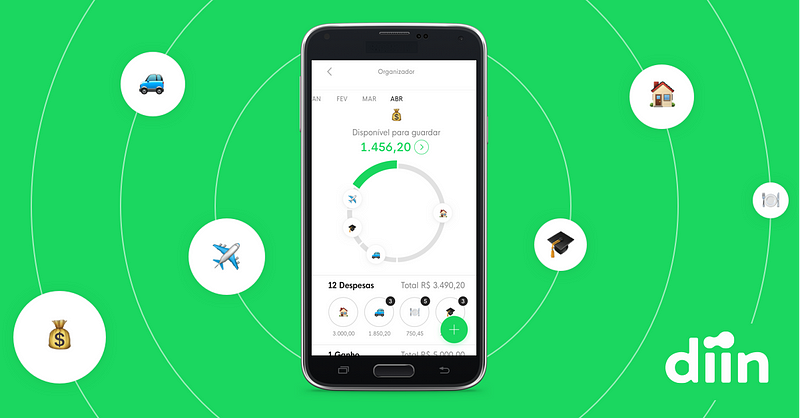
Diin is an investment platform for low-income Brazilians that incorporates customer-centric, behavioral nudges to maintain frequent contact with its users. Specifically, Diin helps users set savings goals, create a savings schedule, offers financial management tips, and invests clients’ savings in public bonds and other funds to provide returns to clients.

Diin helps set savings goals

By reducing decision-making responsibilities, Diin has created an appropriate product for first-time savers. Low-income people struggle to save money as they balance urgent expenses and low, inconsistent incomes. However, Diin, is out to change this narrative to build a strong savings culture among the middle and low-income population in Brazil, starting in Sao Paolo.

Salutat  is a customized communication platform that helps traditional financial institutions improve customer-relationships and customer engagement. Salutat uses advanced technology to help traditional financial institutions better understand and connect with low-income users through a more appropriate communication tool.

As digital-lending fintech companies in emerging markets are growing and offering user-experiences that customers want, brick-and-mortar microfinance institutions (MFIs) are struggling to keep up and are losing customers. Salutat enables personalized, two-way chats with customers, and organizes chats sent via WhatsApp and Facebook Messenger into formats ready for analysis.

Salutat uses behavioral science to enhance conversations between loan officers and end-customers, reducing the need for many face-to-face interactions and phone calls. This decreases the service cost and improves service levels.

Huawei Y9 Prime 2019 with pop-up selfie camera: Unboxing

0

Last year in October Huawei unveiled one of its affordable mid-range smartphones, the Huawei Y9 (2019)  which became one of their best sellers in the series.

The Y9 (2019) came with a powerful Kirin 710 processor, 4AI cameras and a long-lasting battery life. This year’s model, the Huawei Y9 Prime 2019 was launched in the Kenyan market and is one of the first Huawei smartphones to have a retractable selfie camera. The good news is that the notch has finally been ditched to give room for the pop-up camera giving the Y9 Prime a near bezel-less design.

This device is the definition of budget-level cost with flagship-aimed specs. How Huawei’s Y-series manages to deliver premium  devices like this at such affordable price points, we’ve not yet been able to figure out.

But let’s take a peek here and drop in on our first impressions.

Inside the box

As you can see, a $250 smartphone requires some trade-offs and Huawei clearly made one with the packaging. It’s quite simple and includes only the bare minimum:

a USB type C cable

a wall charger

a set of earphones

a pin for the SIM-card tray

a rubbery transparent case

and documentation

Our device is Sapphire Blue in color and fits in my palm well. Its edges are also soft to handle and the back is curved just like the P30 series to give a good grip for easy one-handed use.

The Huawei Y9 Prime 2019 has a 6.59-inch Full HD Ultra FullView display @ 2340 x 1080 pixels with no notch and 19.5:9 aspect ratio. It is powered by an octa-core Kirin 710F processor, paired with 4GB of RAM.

The Y9 Prime 2019 comes with a triple rear camera setup, which houses a 16-megapixel primary sensor, an 8-megapixel secondary sensor with an ultra-wide-angle lens, and a third 2-megapixel sensor. There is a 16-megapixel sensor on the front as well, which is a part of the pop-up selfie camera module.

Further, the Huawei Y9 Prime 2019 packs 4GB RAM + 128 GB ROM of onboard storage, GPS, USB-Type C, and 4G LTE support. Bluetooth and Wi-Fi connectivity support is included as well.

The dimensions of the phone are 163.5(H) x 77.3(W) x 8.8mm(D) and it weighs 196.8 grams.

There is a rear-mounted fingerprint sensor. It runs EMUI 9.0 based on Android Pie and comes in Midnight Black, Emerald Green, and Sapphire Blue color variants.

This product does not have a swappable battery, which is the norm for smartphones these days. Closed batteries cannot be taken out or quickly repaired, but they do allow for smaller designs and slightly bigger battery size inside the same product design.

The Y9 Prime 2019 is however blessed with a non-removable Lithium-Polymer 4000mAh battery. Which is aimed at the “generation of gamers,” especially due to its Kirin processor, RAM, ROM, and the “stylish colors” and “entertainment experiences” it can provide.

Huawei Y9 Prime 2019 Full Specifications

SIZE 163.5(H) x 77.3(W) x 8.8mm(D)
WEIGHT 196.8 grams (Including the battery)
COLORSMidnight Black/ Sapphire Blue/ Emerald Green
DISPLAY6.59″ (2340 x 1080)
MEMORY4GB RAM + 128GB ROM
CAMERAFront Camera: 16M FF
Rear Camera: 16M + 8M + 2M
OPERATION SYSTEMAndroid 9 + EMUI 9.0
BATTERY4000mAh (Typical value), 5V2A, type C
SENSORSFingerprint sensor
Ambient light sensor
Digital compass
Gravity sensor
Gyroscope sensor

Pricing and Availability

The Huawei Y9 Prime 2019 will start selling on Jumia exclusively for Kes. 24,999/-. The pre-order period runs until the 4th of July and one is set to get a gift hamper that includes headphones.

Lipa Later has also partnered with Huawei to offer flexible financing options. When you apply with Lipa Later, you can get the Huawei Y9 Prime 2019 and then start paying after your qualifications are confirmed in under 24 hours. Time periods range from 2 months to 12 months. If you opt for the 12 month period, you’ll make monthly payments of Kes. 3100/-.

Zambian women-led WidEnergy Africa raises undisclosed investment from GreenTec Capital Partners

Widenergy Africa, a women – led Zambian clean energy solutions distributor has received undisclosed investment from GreenTec Capital Partners to accelerate its efforts at women empowerment and the expansion affordable energy access.

The PAYGO non-profit provides solar powered homes and appliances in Zambia and is the official distributor of Little sun solar products-Solar lamps, Solar phone chargers and soon clean cook stoves, in a move to reduce deforestation in Zambia, known as one of the highest in Africa.

WidEnergy, coined from “Women in Development,” works with 80 women sales agents to distribute renewable energy solutions and expand energy and connectivity access in Zambia. The company is Zambian distributor for d.light, Greenlight Planet, and Little Sun solar appliances and home systems and expects to reach more than 1,250 households connected by July, 2019.

WidEnergy is working with MTN to introduce mobile-money payments into its platform to facilitate user payments.

.

Sistema.Bio Secures $12 Million in Financing

0

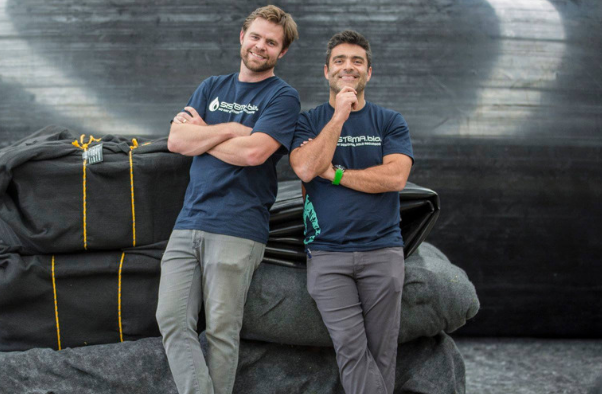
Sistema.bio, an agritech startup founded by Camilo Pages and Alexander Eaton has closed a Series A investment round of US$12 Million led by DILA CAPITAL, Engie RDE Fund, EcoEnterprise Fund with participation of Endeavor Catalyst.

This new funding will help Sistema.bio expand throughout Mexico, South America, Kenya, and India over the next three years, bringing their biodigester technology and their impact to over 200,000 smallholder farmers.

“This fundraise allows us to invest in manufacturing, operational reach and product development. Combined, we will have the economies of scale to reach deeper into our established regions and build partnerships with like-minded institutions already serving smallholder farmers. This is common sense technology for over 100 million livestock farmers worldwide, and we are well positioned to be a reference brand for this market,” said Graham Day, CFO of Sistema.bio.

Founded in 2010, Sistema.bio works with smallholder farmers to address the challenges of poverty, food security and climate change, providing access to innovative biodigester technology, training and financing to make farmers more productive, efficient and sustainable.

Sistema Biobolsa helps farmers put waste to work: utilizing patented, high-quality, and affordable Biobolsa biodigesters, farmers convert animal manure into renewable energy and organic fertilizer to power their houses and fertilize their crops. With as few as two cows, a Biobolsa biodigester produces enough clean and renewable biogas (a type of biofuel) to meet all energy needs for cooking and heating in a rural household as well as organic fertilizer to improve crop yield for up to five hectares. 

According to the World Bank, biodigester technology improves crop yields and reduces reliance on traditional fuels, thereby improving the overall economic performance of the farm. Along with the digester itself, the Mexico-based firm develops affordable and high-quality biogas equipment customized for small and remote farms, making them more environmentally-friendly and profitable, at the same time. 

The company aims to bring clean-energy and sustainable agricultural practices to 100 million farmers. 

Alexander Eaton, CEO and Co-founder of Sistema.bio:  “We are excited to partner with institutions that share our commitment to sustainable agriculture and that fight against climate change and poverty. The investment will enable Sistema.bio to accelerate our growth and impact in Latin America, East Africa, and India.”

Safaricom Sued For Breach Of Privacy Over Alleged Leakage Of Data

0

Businessman Kabugi Ndung’u is suing Kenya’s giant telco Safaricom for allegedly leaking data for its 11.5 million gambling customers.

If this is true, it means Safaricom will be found guilty of breaching privacy. Benedict Kabugi Ndung’u has accused Safaricom of violating the data privacy of millions of people, which is a serious offence and could possibly destroy the giant telco. So what is the KSh. 115 trillion for? According to Mr. Kabugi the money will be divided into Ksh.10 million for each of the 11.5 million subscribers he also demands Ksh.100 million shillings for damages.

The petitioner wants the court to allow him to ask other victims to join him in his quest for justice. If others are enjoined in the case it means he can acquire enough evidence to have a solid case. Kabugi also wants the Directorate of Criminal Investigations (DCI) compelled to investigate and report the findings in court. Ndungu says that he was approached by individuals who apparently had personal data of 11.5 million gambling Safaricom subscribers.

Although our constitution has laws that protects the privacy of communication there’s still a lot of ambiguity in those laws. But despite the loose laws, Mr. Ndungu allegedly has a law suit that presents data which contains identifying details of subscribers, including full names, mobile phone numbers, gender, age, identity numbers, passport numbers as well as the total amounts gambled.

So far, two Safaricom employees were found guilty for trying to transfer privileged information on a subscriber from the company’s database and sharing it with an outsider.

3 Passive Income Ideas that Really Work

Thinking of passive income streams as ways of making money while sitting on your couch is wrong. Although this involves significantly less work than a 9 to 5 job, you still have to do a lot of research and act accordingly.

Nonetheless, passive income offers you more freedom and flexibility in your schedule – and, when done right, it can turn into a profitable way of making money. Passive income streams can also help you prevent burnout. But, let’s first see what is passive income and how can it help you make money, in the long run.

Passive Income – What Is It?

To fully understand what passive income is, let’s take a closer look at what active income is.

Active income is the type of income most people make. They go to work daily, and they get paid for it. It’s an exchange of time/effort-money, in most of the cases. This is what most people do to pay their bills and live a comfortable life. The luckiest of us get away by working 8-9 hours a day. The least lucky can work over 12 hours a day. This is when burnout is most likely to occur. The work-life balance, in this case, is, in most of the cases, lacking, making the worker feel frustrated and unhappy with their lives.

Passive income is what seems to be fixing all the issues listed above. Passive income streams like the official Bitcoin Revolution app are ways of making money without actively working for it. Think of a person who rents an apartment or house they inherited. Although initially, they have to fix the home to make it appealing for tenants, after a while, they have to do close to nothing to collect their monthly rent.

Although fantasizing about finding a reliable way to make a living off passive income, this matter has to be carefully analysed. You can’t decide that from now on, you’ll make money by using this strategy. It all demands a lot of initial work and research. Finding a reliable stream of passive income is the main challenge here. This is why we have a list of several passive income ideas to help you get started.

#1. Stocks

Those who already have some money to invest, should consider dividend-paying stocks.

If you’re unfamiliar with the concept, these are lumps of money companies are paying to shareholders. Buying dividend-paying stocks in a company will virtually make you part-owner in the business. When companies in which you invest grow and become profitable, the money comes back to initial investors.

As you might have guessed already, this is an effective passive income stream. All things considered, you still want to do your fair share of research before jumping in the stock wagon.

#2. Index Funds and ETFs

If the dividend-paying stock idea doesn’t thrill you too much, index funds and ETFs are a solid alternative. This idea is easier to manage, and you can make a good profit out of it. Neither of the two involves risky strategies or approaches, so you will make the most out of your money, without overworking yourself.

Index funds and ETFs are market indexes that track specific returns. When you want to put the money you already have to work, this is a simple and reliable approach.

Index funds are types of mutual funds with broad market exposure and low operating expenses. ETFs are similar to index funds. Because of these reasons, the two options mentioned above make great investment opportunities for inexperienced investors who want to make a living off passive income ideas.

#3. Forex Trading

This is where the fun begins. Although not entirely a passive income stream, foreign currency exchange is a solid way to make generous income, while staying at home. Because the Forex market is open 24/7, you have enough flexibility to choose your own schedule and pick the most profitable time zone for your own case.

FX is a decentralized global market where all the global currency exchange takes place. It’s the market with the highest liquidity rate, with an impressive trading volume of over $5 trillion a day. Sounds impressive? It is.

If you have ever travelled abroad, then you are familiar with trading currencies. When you want to turn this into a profitable adventure, you must think of what currency you think is valuable, or where its value is headed. You can trade up and down easily, based on different currency pairs’ value.

But before starting to make a living off trading currencies, you must find some reliable MT4 Forex brokers. The broker will influence your trading experience a lot, because of a series of reasons.

  • Security – the most important thing to search for in your broker of choice is if the broker is regulated by competent bodies. Remember that each country has its own regulatory bodies so check first which is the responsible body in your country and if your broker of choice is regulated by it.
  • Advantageous transaction costs – reliable brokers come with the advantage of low-spread transactions. This means you will have more money entering your account per transaction.
  • Advantageous deposit and withdrawal conditions – not all brokers allow you to make deposits and withdrawal money as you wish. Search for those that do, since this is a tell-tale sign of reliability.
  • The platform itself – assessing the broker’s platform will help you ensure you will have an easy time trading with them. Search for user-friendly solutions, as you don’t want to struggle in the process.
  • Customer relations and customer service – since Forex trading takes place 24/7 you want to also enjoy 24/7 customer support service. No matter what issues you might have, you want to solve it in a timely and correct fashion.

Passive income streams are a great way to find more balance between your work and private life. Although, traditionally, few jobs guarantee this balance for their employees, being your own boss and using one of the methods above to make money is a promising beginning.

Want To Save Up To 40% on Your Postage Costs? Lose The Stamps and Switch To Franking Machines

If you’re reading this post, you’re most probably sending out letters or packages in bulk and waiting in those long queues at the post office are dreadful.

Saving money and time are two important factors all businesses strive to achieve, but doing so calls for participation from all departments, from business administration to production and operations.

A simple way of saving both money and time is to reconsider your postage system. If you’re still using stamps, it may be time to review your methods and consider getting a postage meter.

So, What Exactly is A Franking Machine, Anyway?

A franking machine, commonly dubbed as a ‘Postage Meter‘ lets you pre-pay for your postage expenses with a direct link to Royal Mail.  It downloads and securely stores postage fund and guides you in selecting special services and mail classes.

A Franking Machine can display the cost, weigh, and even seal envelopes to safeguard the contents. The machine will print the postage onto adhesive tapes, postcards or envelopes. This procedure is referred to as ‘franking.’

This saves your business a considerable amount of money, effort, and time as you will be able to manage postage and mail tariffs from your office or home, and prevent waiting time at the post office.

Once the franking process is complete, the machine will then stack the franked mail pieces. You can even monitor mailing activity information for business analysis and reporting.  

Advantages of A Franking Machine

ü  Saves Time

There’re times when you’ve to wait in line at the post office to get postage stamps. However, with a franking machine, you can buy postage online.

ü  Enhances Business’s Professional Image

You can add your business’s promotional text and logo for branding and advertising and even customize the franking marks.

ü  Prevents Under Stamping and Over Stamping

Franking machines help you avoid this as it comes with an integrated weighing scale with which you get the exact weight and correct postage. So, you neither under stamp it nor over stamp it.

ü  Guarantees Timely Delivery of Mails

Franking machines are high-speed and can frank a batch of mails per minute. This translates to timely delivery of mails by your dispatch department.

ü  Most Inexpensive Way To Manage Bulk Mails

Franking is around 30 percent cheaper when compared to stamping as every time you know the right postage amount.

Franking Machine Rental: Find Your Ideal Solution Today

Most businesses postpone getting a franking machine, as it can be a large upfront cost. However, with affordable franking rental deals, there is really no reason to postpone. Read on to find out more:

How Much Can You Save With A Franking Machine?

So, you’ve heard that a postage meter can save you a considerable amount of money. But just how much are we talking about?  Well, a franking machine can help you save 10 to 19 pounds per letter.

Interesting enough, a franking machine can benefit your business even if it sends out small volumes of post and even much more for larger volumes resulting in significant reductions in postage costs.

Why Rent a Franking Machine?

Franking machines are great money and time-saving tool. Consequently, renting one can often be a better option than purchasing outright. Buying a machine upfront can be a huge expense, especially for startups.

Here are other reasons why a business may prefer to rent a franking machine instead of buy:

1.      Maintenance and Servicing

Suppliers will generally provide maintenance and servicing during the rental period. On the flip side, buying a franking machine outright means that you’ll have to pay for the services when you need them, meaning additional costs.

2.      Buying/Rental Cost

Purchasing a franking machine will cost you several thousand to several hundred pounds.  Renting a franking machine, however, will cost anywhere between £15 and £500 monthly, which is affordable for most businesses.

Is Renting The Way To Go?

Well, your best bet would be to get quotes from some of the Royal Mail authorized franking machine suppliers and find out what they are offering in terms of buying vs. rental contracts.

Leading Franking Machine Rental Suppliers

The following is a list of the three top suppliers for franking machine rentals in the UK. Read on for a summary:

1.      FP

FP Mailing is a trustworthy company with a reputation for excellent customer service. But don’t just take our word for it! Check out their high Trustpilot reviews. They provide a real variety of high-quality products to suit all businesses.

2.      Pitney Bowes

Pitney Bowes is a trustworthy and reliable company in the world of faxing and printing, and its product portfolio reflects this. They really do have a franking machine for everybody, whether you need to frank 5,000 letters daily or just 20.

3.      Neopost

Neopost has a reputation for providing cutting-edge software and reliable machinery to businesses worldwide. They have a high Trustpilot rating; with clients praising their helpful and quick customer services crews.

Conclusion   

Whether you run a large, medium, or a small business using a franking machine will help save the amount of time you spend getting your mail ready for posting. It’ll also help you save much more in the long haul, as you’ll be entitled to the discounts offered.

Samsung Galaxy Note 10; Launch Date & Leaks

0

Samsung Galaxy Note 10 will reportedly launch on Wednesday August 7th at the Barclays Center in Brooklyn, according to trusted sources.

This is the same venue the South Korean technology giant launched the Note 9 last year. Although considering that the launch is two months away, Samsung might change its plans or stick to them.

2019 has been quite a big year for Samsung, the firm has launched multiple Galaxy S10 phones and mid-tier Galaxy A series like the A30, A50, A80 and A90 in some markets. We’d love to mention the Galaxy Fold as well, but the less said about it the the better.

We are not yet sure about how many models of the Galaxy Note 10 Samsung will launch on the August 7th but based on the rumors, you can expect more than one model.

Introduced in 2011, the first Note kicked off the trend toward bigger displays on phones. This trend eventually became the norm across the mobile industry. The size of the first Note’s screen which was 5.3 inches, now seems almost small compared to giants, such as the Note 9’s 6.4-inch display and the iPhone XS Max’s 6.5 inch-screen.

As much as the big screen phablet has a fervent fan base, the Note line doesn’t sell as well as Samsung’s Galaxy S devices.

The Samsung Galaxy Note 10 is expected to come packed with premium features like four rear cameras and a 5G variant, and from the looks of it, the phone might get another piece of cutting-edge tech: Sound on Display (SoD) tech which means that instead of a front-facing speaker on the top of a handset, its whole screen vibrates like a diaphragm to create sound.

The Galaxy Note 10 wouldn’t be the first phone to use the feature because we’ve already seen this tech in the LG G8 ThinQ and Huawei P30 Pro which had a RRP of $1000. Highly implying that the Note 10 might cost between $700 and $1000. Fonehouse might be one of the first stores stocking the phones.

We will find out more about the device before August 7 launch, so stay tuned to TechMoran for the latest leaks and news.

How to catch the attention of your future investor

By Africa Netpreneur Prize Media Team

What would you do if you were given free money for your business? Grants give the beneficiaries peace of mind to be able to build their businesses. They are an act of philanthropy and aim to inspire and or grow those who benefit from the funding. Jack Ma, the Founder of Alibaba had a humble beginning and rose to become one of the most influential business moguls in China. Because of the inspiration he drew from African enterprises and the similarities in business environment, 100 businesses will share $10 million grant over a decade through the Africa Netpreneur Prize.  Applicants have until 30th June, 2019 to seek a share in this year’s $ 1million Prize.

There are many grant opportunities on the continent, each looking to support the entrepreneur in their own unique way. For Jack, his inspiration is to give a one-year runway to entrepreneurs who put effort towards building their business, so they think more about expansion than the actual search for capital. Looking at many high-ranking entrepreneurs in the continent, they invest heavily in visions they believe in. In order to make an impression on leaders like Jack Ma, your heart needs to be in the right place with regards to the long-term vision of your business and your focus on the people.

As a forward-charging continent, African entrepreneurs continue to break the mold in their unique approach to their socio-economic challenges. Securing funding for your business growth is one of the most exhilarating experiences, which is right up there with clinching a customer you have been courting for a while. It’s a sigh of relief after working hard to win favor in a highly competitive market. So here are some quick tips to catching the eye of your future funder.

  1. Passion: This is contagious positive energy that would draw the attention of an investor. As an entrepreneur, fellow leaders appreciate it when you see the challenges as opportunities and are willing and eager to make a positive impact in your community. This is what helps drive you as an entrepreneur especially on the tough days.
  2. Mission-Driven: While most people start a business to simply make money or get out of a sticky financial situation, investors also want to know that they are dealing with determined, straight-forward entrepreneurs who hold values and business ethics in high regard. The desire to make a positive difference should come first before making money.
  3. Clarity and brevity: Remember that funders have very little time to look through tons of proposals they receive in a day. Think about your one-minute pitch that, assuming they walked into the same elevator, will get them saying ‘I’m interested, here is my contact’. In your pitch, begin with the solution you aim to provide and scope of how far you aim to go before you can even say your name. Practice with someone until you get it right.
  4. Understanding of your business environment: There are certain X factors that the funder will be looking at to see that their investment is adding value, not just to you as the entrepreneur, but also to the community at large. Funders are cognizant of the fact that there is nothing new under the sun, but are aware of innovative ways that a solution can be provided. This therefore challenges entrepreneurs to carry out extensive research on business growth, competition and the market dynamics.
  5. Updated Financial records: How organized and up to date are your business records to qualify for funding? This demonstrates the keen interest you have in your cash flow. Some entrepreneurs are incredible at creating visions but probably score an E on the finances. Nowadays there are many easy book-keeping applications one could retrieve, or even better hire a pro.

To qualify for a share of the $1Million Africa Netpreneur Prize, entrepreneurs are urged to consider the following:

· All applications are done online on www.netpreneur.africa website.

· Be African nationals from any of the 54 African countries with a business registered in the country of operation in Africa.

· Have been in operation for a minimum of 3 years in order to show year on year revenue

· Have a service/ product market fit, i.e. addressing a need in the continent.

· Be mission-driven with strong values.

· Have a minimum of 2 co-founders or 5 staff members. The applicant is required to make 3 one-minute long videos demonstrated below, which can be shot off a phone in a well-lit environment.

The 30th June deadline is looming so APPLY NOW!

Why accepting mobile money in Sub-Saharan Africa is a game changer for Global Businesses


Last week, Cellulant announced its partnership with Adyen – a global payments company and Europe’s fastest growing Dutch-based fintech unicorn to enable global merchants to accept key local payments in key markets starting with Nigeria, Kenya, Tanzania, Ghana and Uganda. This is Cellulant’s second integration partnership with a global payments player following a deal with PayU – a fintech company also based in the Netherlands to connect their customers to digital payments in Kenya.

Whereas Africa has lagged behind in credit card usage and acceptance, the continent has become the world leader in mobile money payments with mobile money becoming the fastest growing mobile market in the world and the most widely used form of cashless payment across the region.

This article explores why these recent partnerships with Adyen and Payu are game changers in the payments space and what it means for global business and retail brands that; already have a presence, or have been eyeing Africa as the next expansion frontier.

Why Adyen and PayU?

Adyen and PayU are online payment platforms that enable businesses to organise and process their payments from customers via different channels.

Adyen was founded in 2006 and has a current valuation of $22 billion. According to Quartz Africa, Adyen’s market capitalization surged by almost 50% to put it at par with Stripe- a Silicon Valley-based payments technology company.

Adyen processes payments for some of the world’s leading internet and technology companies as well are global retail brands such as  eBay, Facebook, Uber, Spotify, Dropbox, KLM, Airbnb, L’Oreal, Netflix just to name a few, most of which, have set up operations in at least 3 of Africa’s fastest-growing economies.

PayU  was founded in 2002 and is now a Naspers owned payments company with operations in 17 markets across Europe, Asia, Africa and Latin America. This year, PayU became one of the top five leading global fintech investors in the world after acquiring Wibmo, a U.S.-based payment processing start-up with operations in India in April adding to its investment portfolio of six other payment technology startups.

In 2018, PayU set its eyes on Africa with plans to seek out partnerships and/or collaborations to leverage the opportunity in cross-border payments.

These companies, like Cellulant, offer a unified platform that provides one integration to their merchants to operate smoothly eliminating boundaries across channels and geographies. Collaboration & partnerships are the future for Fintech. To quote the words of the PayU CEO, Laurent le Moal;

“It is not necessarily easy for any fintech company to take an operation developed for one jurisdiction and simply replicate it elsewhere in the world – no matter how compelling the offer. There is often a need to partner in Fintech.”

Credit Card vs mobile money usage

According to the 2018 Payments Industry Report (pdf), Africa has the lowest global card penetration at 20% compared to other forms of payment.

Sub-Saharan Africa (SSA) like many other emerging markets has a very low card payment usage owing to a higher rural population. According to a 2015 research report by Lafferty, credit card penetration remains extremely low across most of the continent with the one exception being South Africa. The same report notes that there were an estimated 17 million cards in issue at the end of 2015, up from ten million in 2009. South Africa alone accounts for 68 per cent of these cards, meaning that the regional trend is heavily influenced by that market. In Nigeria, Africa’s largest economy, there are fewer than two million credit cards in circulation, although growth in card numbers has averaged over 30 per cent per annum since 2009.

Where Africa is lugging in card payments, it’s blazing the trail as the fastest growing mobile market.

According to the 2017 State of Industry Report on Mobile Money by GSMA, mobile money is now available in 90 countries as the innovation spreads beyond its East African stronghold with West and Middle Africa experiencing tremendous growth in the number of registered mobile money accounts in countries such as Ghana and Cameroon.  The GSMA report notes that 66% of the combined adult population in Kenya, Rwanda, Tanzania and Uganda use mobile money on an active basis.

What does this mean for global Adyen and PayU merchants who operate in any of the markets where Cellulant has a payment gateway integration?

This deal increases Adyen’s & PayU’s payment capability to its global merchants who can now accept key local payment methods in major African markets where Cellulant has a presence. Cellulant is currently in 11 markets with a growth expansion strategy in place following their  last round of funding, the biggest by a Fintech in Africa.

Global  merchants with presence in Sub-Saharan Africa

With just a single contract and a single integration, Adyen and PayU merchants with business interests in Sub-Saharan Africa can now accept mobile payments directly as well as several online and mobile banking payment methods by doing a direct bank pay option without additional integrations or contracts with third parties.

Brands such as Uber, Airbnb and Netflix which continue to experience exponential growth in various African markets have in the past, had to change their business approach due to local payment nuances. In the case of Uber, they had to accept cash as most debit cards issued by local banks could not work.  Accepting cash for a business like Uber can often be a rigorous process for them and a safety concern for their drivers.

By partnering with Cellulant the processor of over 12% of Africa’s digital payments, Adyen and PayU will have access to 40 mobile money operators, over 600 local & international merchants and over 120 banks in Africa with just a single integration to Cellulant’s payment platform. This partnership will provide these global payments processor with further access to a potential addressable consumer base of over 220M who use either debit/credit card, mobile money or mobile banking payment options.

To put this in context, it takes an average of anywhere between 3 – 9 months for a single integration with a mobile money operator in the region due to the negotiations and contractual red tape whereas the actual technical integration takes between 10-15 days. The sheer amount of paperwork, negotiations and time deter most global merchants who have realized that accepting mobile payments in the region an absolute necessity.

Global Brands seeking expansion into Emerging Markets

Africa, with a population of 1.2B, is one of the fastest growing consumer markets in the world with consumer expenditure growing at a compound annual rate of 3.9 per cent since 2010  to reach $1.4 trillion in 2015. This figure is expected to reach $2.1 trillion by 2025 according to a report by Brookings Institution on Africa’s consumer market potential.

Additionally, seven of the 20 fastest-growing economies in the world are African countries. The African Development Bank estimates that the continent will have the largest working-age population in the world by 2050.

This is the right time for global businesses to be looking at Africa which is currently enjoying a significant surge in the outside investment and overall consumer spending which is set to rise to $1.4tr in 2020 according to McKinsey Global Institute. A report by Fraym -a geospatial data company indicates that 20 countries account for 95% of the African consumer class with Lagos, Nigeria’s fast-growing commercial as the 2nd after Cairo with the largest consumer segment of 9 million consumers who can afford premium products.

The irresistible value proposition from this deal to the growing African consumer segment is that they can now shop Internationally but pay locally.

About the Writer

Njeri Wangarĩ- Wanjohi is a Kenyan based writer & digital marketer whose interest and work lies at the intersection of technology, new media, arts & culture in Africa.

njeriwangari@gmail.com

Blogger Robert Alai arrested under the new controversial anti-terrorism law

0

Robert Alai, a Kenyan blogger, internet entrepreneur and cyberactivist is set to remain in Kenyan police custody for 14 days for sharing gory photos of slain AP officers on his social media pages.

Alai, who runs a Kenyan gossip blog Kahawatungu.com and his social media crisis communication consultancy firm TechMtaa was arrested Tuesday by DCI officers a day after he allegedly posted the photos.

Alai whose Twitter handle has over 1.2m followers and whose Facebook page has over 383000 fans, allegedly received the photos from Kenya Prisons officer Patrick Robert Safari and shared them with his audience against Kenya’s anti terrorism laws.

Another Kenyan Police Officer, Mr. Wifred Kipkemei Maiyo, who is attached to Kahawa West AP Post was also arrested for sharing police operations and information with Alai. According to the Anti-Terrorism Police Unit (ATPU), investigations into the WhatsApp and Facebook accounts of Maiyo reveal that he has been constantly sharing police details with the blogger.

The three were arrested by the anti-terror police for being sympathisers of Somalia-based Al-Shabaab terror group. Police indicate that social media post of photos of officers who were killed in the June 15 terror attack in Wajir appear on both the Bloggers and Al-Shabaab’s twitter accounts. Having the same content, however, is not proof that Alai is linked to the terrorist group because anyone could have shared the photos first anyway. Then everyone else could share them with their fans. Alai’s handle’s are for breaking news and social activism and that’s what Twitter is for.

On the contrary, Kenya Police argue that that was not the right way to convey the message to the families of the fallen police officers. The three will remain in custody pending investigations into the case to determine any connections to terror groups.

The court had at first granted a 30 day detainment which was termed unduly long, but later granted the duration of 14 days to allow the Anti-Terrorism Police Unit (ATPU) complete their investigations.

Alai has earned notoriety for his relentless stream of social media rants that at times entertains his followers or embarrasses public officials and the government in equal measure. In the past, he has been sued and briefly incarcerated for his highly opinionated political and at times personal attacks on politicians, government officials and business leaders.

On Wednesday, June 19th, police told the court that the photos Mr Alai posted on Twitter were taken by Al-Shabaab at the scene of the attack and sent to the duo. By sharing the photos, Blogger Robert Alai and prison officer Patrick Robert Safari are being accused of being sympathisers of Somalia-based Al-Shabaab terror group by anti-terror police.

Prevention of Terrorism Act – Kenya Law

Robert Alai may be first blogger charged under the new controversial anti-terrorism law that targets publishers of information, including media houses, publications, journalists and bloggers.

Section 27. Incitement

A person who publishes, distributes or otherwise avails information intending to directly or indirectly incite another person or a group of persons to carry out a terrorist act commits an offence and is liable, on conviction, to imprisonment for a term not exceeding thirty years.

Section 19. Disclosure of information

A person who, knowing or having reasonable cause to suspect that an officer is conducting an investigation under this Act—

(a)discloses to another person anything which is likely to prejudice the investigation; or
(b)interferes with material which is relevant to the investigation, commits an offence and is liable, on conviction, to imprisonment for a term not exceeding twenty years.

Robert Alai is not new to controversy and the court corridors, although this time round it is not clear which sections of the law the prosecution will rely on to prove their case.

Alai will have to put a spirited legal fight to prove otherwise because he has been a victim of unlawful arrests before on issues such as improper use of licensed computer systems and incitement to violence.

Putting into consideration that this time the blogger highlighted the improper handling of dead police officers whose vehicle run over an Improvised Explosive Device (IED) on Saturday.

iPhone 11 & iPhone 11 Max’s rumored ugly square bump is real

0

If our calendars are right, we are three months away from September which is usually the month Apple announces its new lineup.

This September, we are expecting Apple to launch three iPhones, successors to the iPhone XS and iPhone XS Max, and a refreshed iPhone XR. Although few are probably too excited about another LCD-equipped iPhone, Apple’s flagship duo is nicely shaping up.

These iPhones are expected to be;

  • the first to boast triple cameras,
  • the first to offer USB-C
  • the first to ship with iOS 13, which will bring a system-wide dark mode, privacy enhancements and a performance boost. 

iPhone 11 rumors are kicking into high gear, promising an abundance of new features and updates in this year’s models. The biggest rumors so far center around triple rear cameras, bigger batteries with reverse wireless charging and fast charging in the box. Here’s what we’ve rounded up everything we know about Apple’s 2019 iPhones so far below.

Naming and Release

The iPhone 11 could launch later than usual this year, with a release seemingly scheduled for the third or fourth week in September. This is According to a leaked marketing calendar from US carrier Verizon. While we’ve been referring to the devices as the iPhone 11 and iPhone 11 Max, it’s possible that Apple will stick with the Roman numerals styling, branding the devices as the iPhone XI and iPhone XI Max.

Design

The iPhone 11 and iPhone 11 Max are expected to be nearly identical to the iPhone XS and iPhone XS Max.

The iPhone 11 is expected to measure 143.9 x 71.4 x 7.8mm, which is slightly larger and thicker than the iPhone XS at 143.6 x 70.9 x 7.7mm. The iPhone 11 Max will reportedly measure 157.6 x 77.5 x 8.1mm, which compares to the iPhone XS Max at 157.5 x 77.4 x 7.7 mm.

iPhone 11 series is expected to feature a redesigned camera bump on the back. While the iPhone XS camera bump is vertically oriented and features two lenses, the iPhone 11 is expected to feature three lenses in a new square shape which many have termed to be ugly. As the bump is wider than prior generation iPhones, it is expected to be slightly thinner.

How we know that this is true is because an accessory maker Olixar, who is famous for releasing accessories ahead of a new smartphone launch, sent an iPhone 11 Max and iPhone 11 camera protectors to smartphone accessory retailer MobileFun, confirming that the iPhone XI’s much-leaked ugly square camera bulge is real. 

Hands-on video of the iPhone 11 series camera protectors uploaded by MobileFun.

Another change on the design is that the mute switch, side button, and volume buttons are expected to slightly shift. This is most probably due to space constraints caused by the new camera technology. The mute switch is also rumored to have a slightly different shape and be oriented up and down rather than right to left.

Display

Olixar’s screen protectors, also available to buy ahead of the handsets’ September launch, confirm that the notch is here to stay, with Apple sticking with the elongated cutout rather than a punch-hole or infinity display. 

Both the iPhone 11 and Phone 11 max will feature OLED panels, with the iPhone 11 measuring 5.8-inches and the iPhone 11 Max measuring 6.5-inches. One bit of information provided by Apple Analyst Ming-Chi Kuo again is that the iPhone 11 will pack a new OLED screen laminate.

However, one display feature that could change this year is 3D Touch. Supply chain analysts have claimed that Apple will eliminate the pressure-sensitive 3D Touch feature this year, having the first beta of iOS 13. In iOS 13, features such as Peek and Pop and Home screen Quick Actions have expanded to non-3D Touch devices, with Apple standardizing the long-press gesture for all contextual actions.

Camera

Numerous rumors have suggested that the iPhone 11 will feature a new triple-lens camera setup on the back, which could offer a range of improvements compared to the current dual-lens design. However some of this reports state that only the iPhone 11 Max will have three rear cameras.

According to Bloomberg, the third camera on the back will feature an ultra-wide-angle lens, allowing users to take images that include a much larger field of view. With a third camera, Apple could also increase the optical zoom of the iPhone. Currently, the iPhone XS offers 2x optical zoom, but it’s possible that could increase this year. Apple may also use computer vision technology to blend data from each of the three cameras together to take more-detailed photos at a standard zoom level

Apple will reportedly bump the quality of the front-facing camera from 7MP to 12MP, and go from a 4-element lens to a 5-element lens. This should offer improvements in photo quality, lighting, and more.

Apple analyst Ming-Chi Kuo was first to report on another change, that the iPhone 11 will reportedly use a new coating to make the new ultra-wide lens on the back and the front-facing camera “inconspicuous.” The new coating could make the aforementioned square camera bump look more aesthetically pleasing.

Processor and performance

Apple has been working with Taiwan Semiconductor (TSMC) for years to supply the processors in its iPhones, which doesn’t look like it’s to change anytime soon. The iPhone 11 is expected to feature the A13 processor, which Apple started producing earlier this year with its partner TSMC.

The A13 is being built on a 7nm+ process, and estimates suggest that it should offer notable performance improvements over the A12X processor. That enhanced power usually translates to better processing power and better graphics performance.

Battery power and fast charging

The iPhone 11 is expected to support something called bilateral wireless charging. This would allow you to use the back of your iPhone as a charging mat. Kuo says the new iPhones will offer bi-directional wireless charging that lets the phone charge other devices. It’s a feature that Samsung just added to its Galaxy S10 lineup called Power Share.

To accommodate this bilateral wireless charging feature, the iPhone 11 is expected to pack a larger battery. In a follow-up report published in April, Ming-Chi Kuo said the batteries on the new iPhones will be larger than the 2018 models. The iPhone XS successor will be packed with a battery between 3,200 mAh and 3,500 mAh, while the increase for the successor the XS Max will be more modest at around 3,650 mAh. The new version of the iPhone XR will see little change to its battery, according to Kuo.

Another leak is that the Japanese site Macotakara says that the successors to the iPhone XS and XS Max will come with a USB C to Lightning cable and more powerful power brick for 18-watt fast charging. 

Whether or not this turns out to be true remains to be seen, but it would be a much-appreciated change.

Other changes that we and many other iPhone users will appreciate to see are; no notch- or atleast a smaller one; better battery life because iPhones still aren’t the strongest performers when it comes to battery life; and a new design, we’ve had the same design on the past two generations

Huawei Y9 Prime 2019 with an Auto-pop up Camera; launching end of this month in Kenya.

0

A smartphone with a panoramic viewing experience and an auto pop-up selfie camera

The HUAWEI Y9 Prime 2019 is set to come out later this month. The new device boasts an all-new HUAWEI Ultra Full View Display, a completely bezel-less design free of any notches, holes or a slider. The HUAWEI Y9 Prime 2019’s 6.59 inch FHD+ Ultra Full View Display, is entirely just the display, no bezels or notches, creating a whole new viewing experience.

Speaking of the soon to be launched device in the market, Huawei Mobile Country President, Steven Li said, “Huawei, a brand known for meaningful innovations for its users is constantly working at improving the smartphone experience. With the soon to be launched Y9 Prime 2019 we have paid close attention to camera and display that is aimed at attracting consumers who are looking for some of the most innovative features.”

A key factor to the HUAWEI Y9 Prime 2019’s enormous display is the new Auto Pop-up Selfie Camera. It is invisible and only appears when needed. It pops up automatically out of the top of the phone once the camera is turned on and the selfie mode is selected. This mechanism has also been rigorously tested, allowing for roughly 100,000 pop-ups and retractions without any damage. Meanwhile, other sensors and components such as the receiver earpiece and ambient light sensor have been moved to the top and bottom of the screen respectively, effectively removing bezels and notches.

Huawei prepares for 40% to 60% drop in overseas smartphone sales

0

The impact Huawei’s blacklisting by the U.S. government will have on its smartphone business has been quite a hot topic for weeks.

According to reports, the impact will be huge, considering Huawei had just overtaken Apple for the number two spot globally, and had only Samsung to catch up with and overtake. However, ever since the speculations, Huawei’s sales have continued to decline and it could be devastating if the US claims continue.

Huawei Technologies Co Ltd’s marketing and sales managers are preparing for a drop in volumes of anywhere between 40 million to 60 million (40% to 60%) in international smartphone shipments this year, Bloomberg reported on Sunday.

To offset overseas decline, Huawei is aiming to grab up to half of China’s smartphone market in 2019, Bloomberg said.

After Bloomberg reported these expected shipment forecasts, Huawei’s CEO and founder Ren Zhengfei told reporters that he expected the company to miss its revenue numbers for 2019 by as much as $30 billion as a result of the U.S. blacklisting. Ren acknowledged that a smartphone sales drop of 40% was an issue for the company.

Ren also said that, Huawei did not expect that the U.S. would attack them with such determination and on such a large scale. Adding that despite preparations, they have have been unable to protect some of the company’s secondary parts.

Huawei continued a flawless decade of growth and broke the $100 billion revenue mark for the first time last year. That growth record has now been brought to an end. The U.S. action will not only wipe out any growth aspirations this year and next, but it will see the fast-growth consumer business decline sharply bringing the overall topline down as well.

According to a report in the Nikkei Asian Review earlier in the month, Huawei had downgraded its forecast for total smartphone shipments in the second half of 2019 by about 20% to 30%. The same report also claimed Huawei had reduced or canceled orders to major suppliers for components that go into its smartphones and telecom equipment. The South China Morning Post also had an unfortunate report that Foxconn had stopped several production lines for Huawei phones as the Shenzhen company reduced orders for new phones.

Huawei, according to Bloomberg, is looking at options that include pulling the latest model of its marquee overseas smartphone, the Honor 20. The Honor 20 will begin selling in parts of Europe, including Britain and France, on June 21 and executives will be monitoring the launch and may cut off shipments if the sales are poor.