back to top
Thursday, April 2, 2026
spot_imgspot_imgspot_imgspot_img
Home Blog Page 562

Safaricom Launches Mali, An M-Pesa powered Money Market Fund

0

Mali which means wealth in Swahili is an investment project by  Safaricom’s for their subscribers who are keen on saving.

However, the savings plan is still under pilot and will be rolled out to their subscribers once it’s ready for use. Currently, it can be accessed via the USSD code *230# but once it will be rolled will be available on my Safaricom APP.

Registered MPesa users will be able to save as low as Ksh100 up to a maximum of Ksh70,000 and will attract an annual interest of  10 per cent.

Following the recent market upsurge with loan applications everywhere, Safaricom’s mali might be a chain broker in this case.

Contrary to the loan applications like Stawi, Fuliza, Okash, Tala, Branch and many others, the norm, as usual, has been allowing users to borrow money and their limits increase as they continue to borrow but in real sense falling in the cuffs of borrowing since the more you borrow it becomes more difficult to return with the increasing amounts.

Although mali is no different from banks the service is arguably convenient for users who have have no access to banks especially mobile banking services.

Mali requires you to be an MPesa customer for a period of three months or more, have more than three days after a sim card replacement, provide an email address and next of kin contact a thereafter you choose to invest via the USSD code or via a pay bill number that is yet to be revealed.

Mali will support instant withdrawals of both partial and full amount of money depending on the preference of the customers. The money will then be credited the MPesa account for withdrawal.

For customers who wish to take overdrafts, the payment will roll over days until the full investment pays off.

On the application withdrawals and deposits are absolutely free with a 15 per cent withholding tax charged on the investment income.

According to a statement by Safaricom, “Mali is one such innovation that is currently in early testing stages and is still subject to ongoing engagement with authorities for approval”

In addition to that, the firm also commented that it is premature for them to comment on the future plans of Mali.

However, since the launch of MPesa 12 years ago tremendous innovations have happened around the firm.

Mshwari which seemingly offers the same services as Mali from Mshwari lock savings and the Mshwari 52 week challenge. Both the services have one similar comparison with Mali although. Once you continually save on the platforms you earn interest.

Besides that, Mshwari offers a loan in place of the overdraft while the 52-week challenge doesn’t offer any other services apart from saving which puts Mali at a higher opportunity to thrive.

However, this is are assumptions and the application once launched might take the shape of the trends and not what we predict.

Why Preventative Health is the Only Way out of the Pending Health Crisis

0

The world is about to experience a drastic population shift. The baby boomer generation is expected to retire at a rate faster than ever. For those not quite sure about what baby boomers are, they are people born during a period marked by a significant birth rates. This will have drastic repercussions in the world of finance, business and healthcare.

Healthcare is going to demand a higher level of spending as more elderly than ever will start to get admitted into hospitals and clinics globally. It is uncomforting to know that at the same time the overall amount of primary care doctors will be declining around the world (Reference). This means longer wait times for seniors along with their caregivers which will more than likely be their children.

What all of this leads to is a movement based around self-care and preventative medicine. Each year millions of people around the world die from preventable causes. These deaths can account for half the deaths in the US in 2000 (reference). The actual idea of self care is not new, it involves doing more what you do and spending time taking care of your health. Numerous health startups have been popping up to help patients manage their health from symptom tracking, providing medication reminders to journaling.

Other startups approach selfcare in a different manner. They provide content related to selfcare such as mindfulness meditation lessons, personal fitness training classes from home. All of which are starting to seem like a modern daily utility that all should have access to. Sure apps and technology are making a dent in helping users with mental health and managing chronic illness.

However, there are also companies that are laser focused on personalized medicine as well. Companies provide personalized vitamins and supplements en masse at ease for consumers exactly when they need them. They are personalized around a user’s health goals, a user’s genomics and or specific blood work that shows deficiencies. Pair this with a simple way to track, manage and optimize one’s health using an app, and you have a viable business.

However, adoption of technologies in the realm of health comes with red tape and slow adoption. The science and evidence is there for these tools to exist, but users often find it tiresome to manually enter details of their ongoing treatment. It doesn’t get any better from a payor’s standpoint either where payors (such as insurance companies) remain hesitant due to the massive amount of solutions available without a long track record.

Physicians are too inundated to recommend, learn and promote apps as they simply can’t keep up with what works and what doesn’t. Afterall, there is an entire industry built around marketing drugs to physicians through sales reps as doctors remain too busy to learn about all the options becoming readily available in the fast moving world of technology.

Evidence shows that those suffering from any major chronic condition can improve adherence between 10-30% by simply using an app. It eliminates recall bias and lowers cognitive load all of which play a major role in one’s health.  Health apps such as CareClinic take it a step further and allow you to determine correlations automatically at home.

Although these apps and other solutions are not a replacement for a doctor visit, they can provide meaningful feedback to keep us on track. It does require a bit of data entry for any sort of meaningful conclusions to be reached, but it can be well worth it. It is one small step we can take to save time, money and keep ourselves healthy.

Farmshine Raises USD 250,000 Funding from Gray Matters Capital’s coLABS

0

Farmshine, a  Nairobi based agritech start-up that focuses on helping women subsistence farmers realize more income through smart ways has raised funding to help bolster its activities in East Africa.

Farmshine teaches farmers climate-smart agriculture techniques and helping them secure higher contract prices for their produce and has received funding of USD 250,000 from the US-based impact investor Gray Matters Capital’s which will aid in the hiring and training of  field agents, and to further develop the platform to connect the agriculture ecosystem.

The funding  marks the second investment by the impact investor in the agri-tech space in Kenya after previously  funding B2B start-up Taimba in July this year as the fifth African start-up added to its portfolio which includes Rwanda’s ARED, Ghana’s Redbird Health Tech and Nigeria’s Sonocare in the last two years.

Farmshine’s agriculture operating system enables smallholder farmers to aggregate and sell their harvests directly to large commodity companies. Initially, this  was not possible as there was no ways to exchange accurate information on buyers’ contract offers or to ensure the trust needed for buyers and farmers.

With  support from Farmshine’s field officers, the mobile app ensures that farmers are offered clear, fair and reliable contracts from legitimate buyers. Every activity takes place through the app for transparency between the parties including contract agreement, production management, crop aggregation, and delivery and payment.

“Farmshine’s platform was designed with a farmer-first approach. It can be easily replicated for any value chain in any country, and can scale from thousands to hundreds of thousands of farmers.” said Luca Allinovi, Farmshine’s founder and CEO.

The platform is putting into consideration to introduce  its agriculture operating system to United Nations and NGO organizations in Kenya, and plans to expand to other African countries in 2020.

Many of these organizations provide training and agricultural support to farmers, but lack the management and data analysis capabilities by connecting their farmers to the buyers on Farmshine’s platform, these organizations can provide farmers with a sustainable trading solution that continues even after the project has ended

Outlining the investment rationale, Jennifer Soltis, Portfolio Manager – collabs, Gray Matters Capital said, “Women are often excluded from the formal economy in Kenya, and it is difficult for them to find better opportunities or higher-paying work. Farmshine’s platform enables women, who constitute 70% of its farmers, to receive significantly higher incomes by providing access to completely transparent pricing information before they plant, as well as the freedom to select the buyer they would like to supply to.”

 “In addition to growing more crops and receiving higher prices, women will receive an economic identity and trade history”, she added.

 Based on this, women will be able to apply for small loans, purchase inputs on credit and access more profitable growth opportunities with the entire agricultural ecosystem in Kenya and beyond.

Already the company has started investing in 1,000 farmers located in a remote area with very good agriculture potential for sesame seeds in the asian markets and  once the farmers have achieved the required quality standards, Farmshine will link them to the largest Japanese buyer of sesame.

Farmshine also, is in an advanced stage of establishing sales points within supermarkets to directly link consumers to farmers, ensuring substantially higher revenue to farmer and lower cost products for consumers.

Apple to Launch Four 5G-Enabled iphones in 2020

Apple is set to roll out four iPhones in the second quarter of 2020 and some of the forecasts are that the iPhones might be Apples first 5G enabled device.

Although they are not yet seen, the iPhones are rumoured to be also the largest of the iphone family.

According to an analysis by JP Morgan, the iPhones come in several sizes the smaller one measuring 5.4 inches, the larger two at 6.1 inches and the largest iPhone measuring 6.7 inches respectively.

Probably, this anticipation is spurred by other market leaders like Samsung who have launched 5G enabled Samsung Onplus and Edge devices which are 5G enabled.

Huawei Mate X  and Mate 30 Pro, Xiaomi Mi Mix3, Lenovo V50 Thin Q and Oppo Reno have all rolled out to 5G.

Despite most Apple’s competitors moving to 5G, the company seems unmoved and may take its swift time to roll out the service but the main competitors might outsmart them because of the 5G demand.

Several articles peg Apple’s shift from Qualcomm to intel components as the main reason as to why they have lagged in rolling out 5G putting its competitors especially Huawei in the forefront.

Geoff Blaber an analyst at CSS insight according to Bloomberg said that “They must have the service by 2020 as coverage starts to roll out

Edition CNN also notes that the delay might be because of an assumption that consumers are not shifting to 5G yet since the service is still limited.

The verge suggests that Apple might not be reluctant but wise instead because  5G networks feel like still in the initial stages and carriers are starting to build the moment to bring 5G to more cities

That leaves little wiggle room for Apple next year. “They must have it in 2020,” said Geoff Blaber, an analyst at CCS Insight. If they can, “they’re going to be launching in the second half of next year right as coverage starts to roll out.”

Elsewhere, there’s a seemingly high demand for 5G even before they are switched on. China Unicom and China Mobile have a close to or more than nine million preorders for the 5G services. The telecoms forecast more orders once the price tags for the services are announced.

According to Bloomberg, in contrast to 4G, 5G has kicked off on a far much faster rate. By the end of the second quarter of 2019, there were already 31 commercial 5G services. For 4G, it took almost four years for it to be rolled out in large numbers.

Just like the 4G and 3Gs, 5G also relies on the type of device connected to, location and majorly network.

5G devices have more capacity and strength of signals in crowded areas. On a 4G in such scenarios, you lose the connection but doesn’t apply in 5G devices because of a stronger connection.

Possibly, this is the reason why every technology company is keen on rolling out 5G.


Is It Safe to Date Someone You Met Online? Safety Tips from A Tinder “Queen”

0

Online dating has evolved in the last ten years. We’ve moved from online dating websites to dating apps. Some would argue it’s not such a good thing, as people are less engaged than ever with the dating process.

With so much choice on offer, it’s all too easy for men and women to move on to the next sure thing. But online dating does have it’s advantages. For one thing, you can meet people from a wider area, and for another, it’s convenient. 

Unfortunately, however, there is always the risk that the person you’re chatting to online is a complete psycho. We’re not saying you should run a full background check on every prospective date, but it’s wise to conduct a few simple safety checks before you meet. 

Is this person really who they claim to be? Sure, he looks smoking hot in his photos, and you’re pretty sure you remember him from school way back when but don’t take his word for it. 

Reverse Image Check

Run a reverse image check on a date’s profile photo. There are despicable individuals out there who use fake profiles to prey on vulnerable people. If you get a match from a reverse image search, this person is not who they say they are. Block them immediately. 

Verify a Date’s ID

If his/her photo checks out, use Nuwber.com to carry out a quick ID check. It only takes a few minutes to run someone’s name on the Nuwber site. You can verify a date’s name, email address, home address, and telephone number against information on public databases. Wouldn’t you rather know s/he’s a felon or married with six kids before you set up a date?

Stay Safe on a First Date

Be careful not to give too much personal information away before you meet someone. It’s normal to hand over a telephone number, so you can move the conversation to messaging apps and organize a first date. However, it’s a bad idea to let a date know where you live until you are comfortable with them. 

When you are ready to meet up, make sure the venue is in a public space. A coffee shop, bar or a restaurant is generic but perfect for a first date. Most people know instantly if there is a connection, so keep it simple. 

Save the romantic champagne picnic for the third or fourth date, when you are happy to spend some time alone with this person. 

Tell your friends and family exactly where you are going, and who with. Send them a link to your date’s profile, so they know who to point the finger at when you go missing. 

Organize your own transport on a date. Call an Uber or drive your own vehicle. Never ask a date to pick you up from your home until you feel sure they are OK.

Don’t drink to excess. Alcohol is a leading factor in many sexual assaults and rapes. Watch your drink at all times and if a date is pushing you to drink more than you feel comfortable with, it’s time to go home, alone. 

Most first dates are uneventful. The odds of meeting someone who turns out to be a bad apple are slim, thankfully. But it doesn’t hurt to play it safe when you are still getting to know someone. If you spot any red flags, be careful. The early days of a relationship are when our instincts are most reliable. Listen to your gut, take everything that person says with a grain of salt, and run some ID checks to put your mind at rest.  

Kenya’s Portable Voices signs a podcast distribution & production deal with pan-African counterpart Afripods

0

Portable Voices, a Kenyan audio production and podcast start-up has announced a podcast production and distribution partnership with Afripods, a Nairobi-based pan-African platform for podcasters.

The deal will see Afripods distribute podcasts produced by Portable Voices Podcast Network as well as co-produce future “Afripods Original” podcasts through Afripods platform and all other distribution channels available pan-Africa and internationally. 

Allan Niongira, Portable Voices Founder said ‘‘We’re excited about this new partnership with Afripods. Podcast consumption is really growing in Kenya and across Africa, this new partnership allows us to continue producing more local podcasts.”

Portable Voices sees Afripods as its distribution partner able to help it reach more listeners and content creators across the region.

Henrik Barck, Founder & CEO of Afripods said ‘’ We are very happy about this partnership with Portable Voices which is our very first such agreement. Allan with his team has made a great impression on me and we look forward to work closely with his team under our “Afripods Studios” concept going forward. 

Over the past decade, there has been a steady rise in podcasts in Africa. Podcasts have become mainstream way for people and even businesses to share their message with the world. In fact, according to recent data from Buzzsprout In 2006, only 22% of consumers knew what a podcast was, but by 2019 over 64% of consumers were aware of podcasting.

‘’This data is a clear indication of how huge the market for podcasts is especially in Africa. Audio format is proving to be quite lucrative and is time for marketers to crystallize the sense that podcasting or audio content is an important and powerful marketing platform, ’’ Nixon Kanali, Portable Voices Co-founder said. 

In May 2019, PortableVoices opened its first podcast recording studio in Nairobi. The studio serves as an open space for publishers, broadcasters, entertainers, and business information providers to produce high quality encrypted digital audiobooks, podcasts and radio programs. 

PortableVoices has also announced plans to expand and modernize the studio to cater for the increased demand for its services. Afripods app is available for Android and iOS. PortableVoices content can be searched in any of the apps. The podcasts are also available on the Afripods website www.afripods.com

Code Mashinani wants to be an Andela for kids between 7 and 18 years

0

Code Mashinani, is an education startup teaching digital fluency (computational thinking) through coding, robotics and game development to kids between 7 and 18 years in Kenya.

Code Mashinani is coined from Code and Mashinani is slang for grassroots. The platform is targeting kids in primary and high schools through school-based programs (Code Club & Café), holiday based programs (tech camps) in religious institution and institutions of higher learning and competitive programming events where kids compete on their problem solving & computational thinking skills.

According to Jesse Muchai, founder Code Mashinani, “We teach computational thinking through coding, game development and robotics.
Code Mashinani started as (Arts in The Community) with a lofty dream to build systems and infrastructure that create world-class talent at scale.”

Muchai says the idea, hatched early 2012, with a goal to teach 3 key competencies; computational thinking, creativity and inter-personal skills to school-going children before the age of 18 years.

This was to increase their ability to integrate into the current workforce as more than clueless jobseekers. Muchai says, initially, attention went to teaching creativity by setting up art centers in collaboration with religious institutions but this did not pick up and towards the end, parents requested teaching coding to their kids.

“At inception, very little attention was paid to teaching computational thinking as the government had just promised free laptops to primary school and we felt this itch would be scratched in the mid-term and only came around to it in 2016 when the request to teach coding became frequent enough for us to pay attention,” he told TechMoran.

“We want to transform people from consumers of technology into creators and innovators. One of our long-term goals is to help kids learn to think creatively, work collaboratively and reason systematically – from the youngest age,” Muchai added.

Other platforms working with kids include Early Camp, KidsCodeCamp and Andela’s TeenCodeAfrica.

How YouTube Is Working On Reducing The Spread Of Fake News

0
YouTube is trying to reduce the spread of fake news.

Most people watch YouTube as their source of entertainment, basically as long as you have WIFI you can watch almost anything you’d like on YouTube. News, is very easy to get on YouTube as most people now have their own individual channels where they post their own information. When you think of social media, it is very easy to forget YouTube especially because they are rarely involved in any scandals that involve misinformation. But the reality is that as long as content is flowing every social media platform is responsible for the kind of content that is posted to reduce the flow of misleading content while also amplifying relevant, accurate news and information.

YouTube recently released a statement and said:

“Over the past couple of years, we’ve been working to raise authoritative voices on YouTube and reduce the spread of borderline content and harmful misinformation. And we are already seeing great progress. Authoritative news is thriving on our site. And since January 2019, we’ve launched over 30 different changes to reduce recommendations of borderline content and harmful misinformation. The result is a 70% average drop in watch time of this content coming from non-subscribed recommendations in the U.S.”

How will YouTube do this?

YouTube will now be giving credible and known channels will be given more of a priority. So for example if you search for a trending topic on YouTube “fake news” or less credible channels will actually be filtered out.  YouTube has also been experimenting with different alternatives which include hiding comments. The results show that the platform is seeing positive benefits from such tests and changes, though the real test in Kenya will take place during our elections when fake news is mostly spread.

But what will this mean for up and coming content creators?

If you’re an up and coming creator, it basically means you need to up your SEO game to get your content recognized. You also need to make sure that you’re posting valuable content and use a good title that can be easily found. There’s nothing worse than creating content and your work goes unnoticed. You might have great content but if YouTube doesn’t consider you as a credible or authoritative channel then you’ll simply be out.

On the other hand the spread of fake news has to stop and we are glad that platforms such as YouTube are finally taking the right measures to do so.

Taffuta directory app wants to connect SMEs to their customers directly

0

Taffuta app, a new business directory aims to allow individuals and small businesses to connect directly to increase their sales leads and serve their customers in Kenya.

Taffuta, which is more of Mocality, is not the first such platform to launch (and die) in Kenya. There has been Tafuta.biz, MyFinda, among others and whether it survives or not is not a question of today. The only challenge is that directories might not be businesses to launch in 2019 as firms have websites and know a thing or two about SEO.

According to Harsh Savalkar the App developer based in Kisumu County, the era of middleman and commission agents suffocating SMEs out of business by making it more difficult to make profit from the already troubled sector will be a thing of the past once they download the app on their Smartphones   

“If you are a carpenter or a farmer or small shop keeper regardless of your business size, you will able to register your business on TAFFUTA at no cost and upload photos of your products, interestingly you will be able to get notification every time someone is looking for the same products on the app, which will enable you to reach out to such customers spontaneously and execute business”, he explained.

The App which has already attracted over 4000 downloads since its inception aim to create a similar eco-system for both customers and entrepreneurs to network directly and transact business across the country by a click of a button on their Smartphones.

He said app users will find it easy to get any service or product in any town and also be able to see reviews of other customers about the products and get options of choosing from different businesses.

Currently Smartphone penetration in Kenya has grown tenth fold to more than 60 per cent of the population over the past five years and Taffuta App plans to tap into this rising population of Smartphone users to build a robust brand in a bid to stay ahead of competition in the market.

Tafutta will be banking on both the smartphone and internet penetration to help SMEs, which create up to 80 percent of the country’s employment to enable customers to directly interact with entrepreneurs when transacting business.

How To Spot A Fake Job On Social Media

0
How do you spot a fake job on social media?

We are all looking for jobs at one point or another and the worst mistake you can make is to apply for a non existent job. In a country where con men should be paying taxes by now you have to be extremely weary before trusting anything you see on social media. Save your precious time and energy by being on the lookout for these simple signs that something just isn’t right.

1. The company doesn’t have an online presence

Proper companies always have an online trail especially in this day and age. If you happen to find them but it is linked to one person that has no professional profile then you need to ask yourself why. If you cannot find anything about them online, especially their contacts or find other people on LinkedIn who have worked for them, then please step back and don’t waste your time.

2. The recruiters email doesn’t match the company

The email needs to have something like theircompany.com, if all their emails end with Hotmail, Gmail, Yahoo, etthen there’s cause for alarm. Here’s the thing, the company might have asked someone to advertise for them, however you should only be asked to send your official documents like your CV or payslip to their official email and not some random email.

3.They tell you to pay a fee for interviews

No one should ever ask you to pay to apply for a job or to book a spot. If any form of money exchange is involved then you need to put that job offer to the side and don’t apply. Always apply for a job at a credible site that doesn’t charge you for anything and leads you to the recruiters site.

4. They claim that “no experience is necessary”

Which job doesn’t have qualifications? Unless it’s internship? Maybe they offer training. But if the posting leads with NO EXPERIENCE NECESSARY, you can be almost certain that there’s a catch you won’t like. Most jobs want you to come equipped with some skills. You’re always required to have some sort of skills that will come in handy, whether it’s typing or research skills.

5. Sounds too good to be true

Does the package look too good to be true? If it says things like “first come first serve” or “no need for an interview” then you have every reason to believe that perhaps it’s fake. If the salary is ridiculously high for that position then that’s also cause for alarm. Don’t look at the salary and think wow I want this then you end up sending unnecessary information to con men.

6. They ask for an interview via chat or text

It is very common for interviewers to do online interviews or emails, however, eventually they will definitely want to call you or even have a sit down with you. A typed conversation can never really get you a job, so if someone confirms you for a job without calling or wanting to meet, you should be worried.

Huawei Survives Second Ban But Ahead of The Plan With Mate 30 Lacking American Parts

0

Huawei Mate 30 has no American parts. For a backstory, early this year, the White House released a statement to the congress of the United States (US) on securing the information and communications technology and services supply chain.

It further explained that foreign adversaries had been creating and exploiting vulnerabilities in informational and technology which stores sensitive sources of information that might lead to cyber-enabled malicious acts against the united states.

The statement was issued under the International Emergency Economic Powers Act, the National Emergencies Act, and section 301 of the title 3 of the United States Code.

However, the statement did not issue a direct attack on Huawei Mobile, the Us government has had previous trade wars with china as the biggest equipment manufacturer in the world.

In another threat cited by MIT Technology Review, the US had declared that they will stop sharing intelligence information with countries that use China’s Huawei hardware in their communication systems.

Barely half a year later, Huawei mobile is at the centre stage of good news as the US grants Huawei a second three months grant before the ban on its products. Although the telecom giant has been given more time before the ban set for February 2020,  a lesson or two has been picked from the initial ban.

Following their latest release in September in a review by the Wallstreet Journal, the phone has no American chips.

The components in an analysis by UBS and Techno Solutions according to The Verge contain no US parts. The original components which comprise of Intel, Broadcom, Qualcomm, Qorvo, Skyworks and Cirrus Logic will be phased out in no time.

The analysis mentions that Huawei is now sourcing audio amplifiers from the Netherlands to replace the Cirrus Logic and depending solely on its in house HiSilicon conductor for Wi-Fi and BlueTooth chips rather than Broadcom.

This move is just ahead of the plan mostly thought out to be unachievable.

In another interview with the Wallstreet Journal, Huawei CEO Ren Zhengfei declared that they can survive without the US. He also says that the company is always ready to embrace globalization and if the US allows them to use their components the will embrace them and if not, they will find alternatives.

According to a post by telecoms.com, Huawei’s owned semiconductor business  HiSilicon seems to be working on ways to make its chip supply chain inhouse as it evidently improves on the geographical diversity of its international supply.

Ahead of the ban, it has been alleged that the company has been stockpiling US components in the event the ban happens while still, some services are still dependant on the US supplies.

Japans Murata and Taiwan’s MediaTek are projected to resume the supply of other parts that were previously supplied by the US-based manufacturers according to The Verge.


Google, Alphabet co-founders Larry Page & Sergey Brin leave their executive roles

0

Google, Alphabet co-founders Larry Page and Sergey Brin, the CEO and President, respectively, of Alphabet, have left their roles, effective immediately.

In a statement, Larry Page and Sergey Brin said, “With Alphabet now well-established, and Google and the Other Bets operating effectively as independent companies, it’s the natural time to simplify our management structure.”

Sundar will be the CEO of both Google and Alphabet and will be the executive responsible and accountable for leading Google, and managing Alphabet’s investment in Other Bets. The two co-founders will remain actively involved as Board members, shareholders and co-founders and plan to continue talking with Sundar regularly.

“There is no one that we have relied on more since Alphabet was founded, and no better person to lead Google and Alphabet into the future.,” the said of Sundar Pichai.

Sundar is the CEO of Google and Alphabet and serves on Alphabet’s Board of Directors.

He joined Google in 2004 and helped lead the development of Google Toolbar and then Google Chrome, which grew to become the world’s most popular internet browser. In 2014 he was appointed to lead product and engineering for all of Google’s products and platforms – including popular products such as Search, Maps, Play, Android, Chrome, Gmail and Google Apps (now G Suite). Sundar became Google’s CEO in August 2015. He joined the Board of Directors of Alphabet, Google’s parent company, in July 2017.

Under his leadership as CEO, Google has been focused on developing products and services, powered by the latest advances in AI, that offer help in moments big and small. It has invested in new opportunities such as Google Cloud and YouTube and has continued to be a leader in advanced technologies, including machine learning and quantum computing.

Today, December 2019, in addition to his role as CEO of Google, Sundar became the CEO of Google’s parent company, Alphabet.

Sundar grew up in Chennai, India and studied engineering at the Indian Institute of Technology where he was awarded an Institute Silver Medal. He holds a master’s degree from Stanford University and an MBA from the Wharton School, where he was named a Siebel Scholar and a Palmer Scholar.

In a statement, Pichai said: “I’m excited about Alphabet and its long term focus on tackling big challenges through technology. I’m looking forward to continuing to work with Larry and Sergey in our new roles. Thanks to them, we have a timeless mission, enduring values, and a culture of collaboration and exploration. It’s a strong foundation on which we will continue to build.”

Larry Page and Sergey Brin founded Google in September 1998. Since then, the company has grown to more than 100,000 employees worldwide, with a wide range of popular products and platforms like Search, Maps, Ads, Gmail, Android, Chrome, Google Cloud and YouTube. In October 2015, Alphabet became the parent holding company of Google.

The Sun Exchange Raises Over ZAR 4 Million, Ends its Equity Crowdfunding Campaign

0

The Sun Exchange equity crowdfunding campaign has officially come to a close with over ZAR 4.2 million raised from over 200 investors from across the globe.

“We are delighted to report that over ZAR 4.2 million was invested by 288 individuals from across the world,” announced the firm. “We’re thrilled that this community of new investors will be joining Sun Exchange on our mission to connect the world to the sun, bringing affordable and clean energy to emerging markets.”

The Sun Exchange says investments were made by individuals from the United Kingdom, Nigeria, Germany, many parts of Europe, Kenya, Australia and even Brazil with South Africans investing over ZAR 2.5 million, 59% of the total raised, and representing 70% of all investors.

“The largest investments were made by a Norwegian and two South Africans, with a total of ZAR 835,000 invested between them,” said the firm.

The Uprise.Africa campaign formed part of the firm’s seed funding round and to date, the firm has raised over US$ 1 million which includes a US$ 500,000 (about ZAR 7 million) seed investment by Alphabit, a multi-million-dollar hedge fund.

While we did not achieve the ZAR 7 million goal set for the Uprise.Africa campaign, the fact that the campaign quickly reached the ZAR 3 million success milestone, signalled significant appetite from individual investors to own equity in Sun Exchange.

Sun Exchange extended the campaign for another month, and raised nearly ZAR 1 million more in just 30 days.

Founded in 2015, The Sun Exchange, has more than 8,000 Sun Exchange members across the world. The firm has brought solar power to 13 South African schools, businesses and organisations, offsetting 1,500 tonnes of carbon per year, and growing.

The firm believes that this new phase gives its customers, solar cell purchasers, and supporters to bring solar power to millions of homes and offices globally. This was why the firm launched the crowdfunding campaign to raise R7 million (approx. US $460,000) for approximately 5.2% equity stake.

Motorola Razr 2019 Could Beat Huawei Mate X With Its New Features

Motorola Razr 2019 that was recently launched is presumed to beat Huawei Mate X with its durability of flexible displays and its ability to solve user problems that the Huawei Mate X lacks.

Motorola Razr 2019 will be first available in the United States market (US) in the first quarter of 2020 at an average cost of around $1,500 while the penetration to other markets remains undisclosed.

On the other hand, the Huawei Mate X that was launched in mid-November will be priced at $2,400 which is almost a double price higher than the Motorola Razr.

The Razr smartphone also termed as a throwback to the future has as well embraced the world of foldable.

Although the foldable feature has been criticised as simply a return of the once-ubiquitous clamshell design according to a post by Techcrunch, the article concludes that the phone is a lovely bit of symmetry.

Techradar.com in a post also notes that the Motorola Razr revives the most iconic flip phone design into a new form factor challenging the reality of what a foldable can be.

Through a review by Techradar, the Razr 2019 is a chance to break the mold as well as a challenge to the industry assumptions on the smartphone future. Earlier, it was assumed that foldables bridge the gap between phones and tablets, the Motorola’s Razr brings on a new stance.

The phone on flipping, it reveals an elongated touchscreen that is even longer than the iPhone 11 display and when closed, it gives a display for checking texts, calls, music tabs, emails more like that of a smartwatch.

Besides these features, the Huawei Mate X as revealed by Forbes, it has a clever reverse fold design that is even better than that of a Samsung’s book-shaped Galaxy Fold.

The phone doesn’t need a third screen as it folds flat making it easier to transform to a tablet and back. Another thing is its camera technology used that beats both the Samsung fold and the Motorolla Razr.

Another advantage of the Razr over the Mate X is its ability to fold into almost half its extended size that is half the size of a normal smartphone which makes it compact and pocketable very portable.

Apart from the two notable features and the price differences that make the Motorola Razr advantageous over Huawei’s Mate X, another aspect on the maintenance costs that most buyers neglect or don’t consider at all.

The article points out that the replacement displays for the Mate X might be higher by $1000  which is higher compared to Samsungs at $149 and Motorola’s Razr which has a free replacement policy during normal use errors and a cost of $299 for outside guarantee repairs.

The Huawei Mate X was launched just days after Samsung launched its Galaxy Fold. The HUAWEI Mate X features the Falcon Wing Mechanical Hinge, 7nm multi-mode modem chipset Balong 5000 and a high-capacity 4500mAh battery with a 55W HUAWEI SuperCharge.

The Mate X comes equipped with the world’s first 7nm 5G multi-mode modem chipset Balong 5000, the chipset has unprecedented 5G download speeds, at 4.6Gps on the Sub-6GHz band (theoretical). Balong 5000 is also the world’s first chipset to support both SA and NSA architectures, users will not need a device upgrade to continue enjoying 5G connectivity. The HUAWEI Mate X’s dual SIM feature supports both 4G and 5G.

Automation’s transformative power will change banking

0

The banking industry on a global scale is currently leveraging off the concept of automation to drive growth and cost efficiencies.

While it has been met with a mixture of scepticism and hope, ultimately the concept of automation, when done right, has a transformative power. McKinsey says that once the growing pains have been dealt with, banks will be in a much stronger position through their ability to innovate and disrupt with the new capabilities gained through automation strategies.

Andrea Tucker, Research and Development Head at e4, a fintech software specialist, says that while the future of banking in South Africa is partially driven by international trends and technologies, the disruption of new entrants has had a bigger influence: “Selling themselves as digital, modern disruptors who are technology-led and have non-traditional operating models, these start-ups claim to scale quicker. This is possible as they are not hampered by legacy systems, and in customer-speak, can promise to deliver a seamless and remote online client on-boarding experience. Some of these new entrants are selling a value proposition of technology-driven efficiencies, essentially putting banking in the literal hands of their consumers. Others sell their value proposition as a cost-effective digital banking option, using technology to deliver the service cheaper.”

Automation lies at the heart of these new approaches, and as the technologies used mature, the application of robotics and artificial intelligence for bank processes will assist banks, both new and incumbent to transform. Tucker says that local banks have met the challenge head on and have invested heavily in digital strategies and new technologies, all in the interest of becoming more competitive. With rising costs to service customers and the increased competition and growing base of new entrants, banks need to evolve, and automation is key to the success of this evolution.

“Automation should not be seen in a negative light, it plays a vital role, making it easier for a customer to bank digitally, ultimately improving engagements and ensuring the bank’s service is more efficient. This needs to be coupled with a strategic initiative to educate customers and encourage them to make use of these more efficient digital options and to continue to use them,” says Tucker.

According to Tucker, a strategic approach to transformation will impact the overall success. While there are case studies sharing successes and improvements, there are banks that have not achieved what was initially intended. Tucker believes that the difference will lie in the strategic intent and roll out of the transformation project.

Supporting Tucker’s point of view, McKinsey predicts a second wave of automation and AI emerging in the next few years. Here machines will do between 10 to 25 percent of work across bank functions, increasing capacity and freeing employees to focus on higher-value tasks and projects. To capture this opportunity, McKinsey also says that banks must take a strategic, rather than tactical, approach. In some cases, they will need to design new processes that are optimised for automated/AI work, rather than for people, and couple specialised domain expertise from vendors with in-house capabilities to automate and bolt in a new way of working.

Khayelitsha gives birth to SA’s first blockchain property register

0

Khayelitsha is set to give birth to SA’s first blockchain property register through a pilot study in the area which consists of
almost 1 000 properties located in four sites in Makhaza.

This was at the back of the Affordable Housing Conference taking place in Cape Town this week. The Centre for Affordable Housing Finance in Africa
(CAHF), research consultancy 71point4 and Seso Global have joined
forces to develop South Africa’s first blockchain-based property
register.

And all the properties are government subsidised properties which have
not yet been registered on Deeds Registry.

According to Daniel Bloch, the CEO of Seso Global, a blockchain
property registry company, this will be the first working example of a
blockchain-based property registry in South Africa. Aside from
creating an immutable record of who owns which house, the Seso
platform facilitates and records transactions such as sales and
transfers out of deceased estates and integrates with third parties
who facilitate transactions, including mortgage lenders. “For the time
being, property owners will record these transactions at the
Transaction Support Centre, a walk-in housing advice office created by
CAHF and 71point4 located in the area. But over time, we will record
transactions through the Seso app” says Bloch.

Research reveals that the benefit of the blockchain solution is that
it allows the data to be stored in a decentralised, secure database
that can be updated without any loss of historic data. This means
there is a secure, back-to-back record of all transactions that is
completely tamper-poof. Eventually the vision would be to integrate
this record into the Deeds Registry when other impediments to transfer
have been removed.

Moreover, SA has a serious titling problem.

According to Kecia Rust, the CEO of CAHF, the government has built
over three million RDP houses since democracy. But CAHF’s analysis of
deeds office data indicates that only 1.9 million of these properties
have been registered. The National Department of Human Settlements,
Water and Sanitation (NDHSWS) estimates that the title deed backlog
for RDP properties built prior to 2014 currently stands at 511 752.
These properties were given to beneficiaries, but no title deeds were
registered and handed over. At the same time, there is a backlog of
351 470 title deeds on newer properties.

In addition, registering these properties so long after they were
built and handed over to subsidy beneficiaries is an administratively
complex task. In some cases, original subsidy beneficiaries are no
longer living in the properties. Some beneficiaries might have passed
away, some might have tenants in their properties while others have
sold their houses informally.

“To create a register of property owners we first had to go door to
door to find out who lives in each property and to establish how they
came to be there” says Melzer, founder and lead consultant at
71point4. “We hired a team of 17 enumerators and trained them to
collect information and capture supporting documents. Thankfully we
can leverage smart phone to collect the data, but it still requires a
significant effort. It took us two months to cover these areas.”

Expert opinion is that the effort is well worth it. Properties in the
area sell for over R200 000 informally – and would sell for more if
they were listed on a trusted registry and were ‘bankable’. This would
enable buyers to obtain mortgage finance and create affordability.
Without access to mortgages, buyers have to pay cash for a house, or
use an expensive unsecured loan. There are also significant benefits
to the City of Cape Town of being able to access an accurate and
up-to-date record of property ownership. Without it, the City cannot
collect revenue from households in the area who are not indigent nor
can City departments facilitate building plan approvals.

In many cases in the pilot areas, the original beneficiary is still
living in the property. “We hope that these properties can be
registered in the deeds registry within a few months, and we are
working closely with the City of Cape Town to facilitate that” says
Melzer. “Where the beneficiary no longer lives in the property, we are
in the process of tracing the beneficiary to confirm information we
have gathered on who owns the property. We will also be working
closely with the City on a resolution process where ownership is
disputed.”

It will take some time before all the required information has been
collected and validated. It will also take time for validated
properties to be registered on the deeds registry.  In the meantime,
we will enable property owners and occupants to keep those records up
to date, according to Melzer.

“We will also be using Seso’s platform to manage other client service
requests that come to the Transaction Support Centre from all over
Cape Town” says Rust. “These include helping clients to regularise
informal sales and wind up deceased estates. Going forward, as the
country moves towards an electronic deeds registry, we hope the
lessons we have learned will provide valuable evidence to inform the
development of accessible, secure, affordable and efficient mechanisms
to facilitate property market transactions. This is important across
the market, but particularly in entry level segments of the market
where existing mechanisms are simply too costly”.

CAHF, Seso Global and 71point4 have a working agreement to extend this
pilot into other areas and use cases. There are hundreds of thousands
of RDP properties around the country where no primary transfer has
taken place. In addition, in many areas where title deeds were issued,
property owners have transacted informally, which means there is no
longer an accurate record of ownership at the deeds registry.
Blockchain-based solutions can help there too. Blockchain can also
enable households who live in informal settlements and rural areas to
record and maintain land records and secure their rights. “We are very
pleased with the pilot results. We think the solution we have
developed is scalable, and replicable” says Bloch. That does not mean
it is easy but, says Melzer “blockchain technology together the
potential value we can unlock makes it worthwhile”.

Safaricom to connect another 1,500 buildings to its fiber network by March 2020

0

Safaricom aims to connect another 1,500 buildings connected to its fiber network by March 2020, after it announced it has connected close to 3,000  buildings already.

Safaricom also announced new internet packages that seek to provide uninterrupted, high-speed connectivity for small to medium-sized businesses at affordable costs.

Safaricom has also introduced three new fiber options from as low as KES 3,999 for 3 Mbps monthly unlimited internet connectivity. The other options in the new package include KES 5,499 for 5 Mbps and KES 14,999 for 10 Mbps.

“As part of our new brand promise, we committed to be Simple, Transparent and Honest across all our products and operations. As part of this pledge we are renewing our promise to our Enterprise customers by introducing packages that suit their business needs, optimising our response time and by ensuring we deliver simple solutions with easy and transparent processes,” said Michael Joseph, CEO, Safaricom.

Last month Safaricom introduced a single calling and SMS plan, and a single data plan for all customers and became the first in the country to offer calling minutes and SMS, and data bundles with no expiry.

Customers can also purchase calling minutes, SMS, and data bundles for any amount from as low as KES 1, upon which they can see how much resources they will get before the purchase is completed.

The company also increased its data bundle sizes by more than 45 percent especially for the more affordable price points of between KES 1 and KES 20 and in addition to the Data Manager where customers can choose between higher and lower data speeds, Safaricom will also inform customers when they are charged for premium services.

Dubai Police Wants to Adopt Tesla’s Cyber Truck to Fight Crime

0

Dubai Police wants to adopt Tesla’s Cyber Truck to fight crime in the United Arab Emirates and it’s now awaiting Tesla Motors to release a few models of its all-electric trucks.

Dubai Police is known for high-end sports cars, and the Tesla Cyber Truck , set to be released in 2020 will be a good addition to its fleet which boasts of the Hyperloop and the Jetpacks for the Dubai Firefighters, Lamborghini Aventador and Porsche 918 spyder among other posh cars.

However, it’s not the Dubai Government alone that has expressed interest in Tesla’s concept car. The Cyber Truck has received close to over 200,000 orders just days after the launch.

The truck, according to CNN, it resembles a metal trapezoid on wheels and looks more like a piece of art than a truck. Its body is in a singular form and the exterior made from a newly developed stainless steel alloy if that can describe it better.

Elon Musk, the current Chief Executive Officer of Tesla as penned by CNN during the launch added that the alloys permit the car to be proof against small firearms including handguns.

“The cyber Truck is more capable in towing and hauling than the Ford F-150 Series and perform as a better sports car than a Porsche 911,” Added Musk.

Among other features, the truck is able to carry 3,500 pounds and tow 14,000 pounds and go from zero to 60 in 2.9 seconds.  It is also capable of driving up to 500 miles on a full charge with base models going up to a range of 250 miles estimated to about 400 to 800 kilometres.

Another advantage is that the truck has a lockable storage base under the hood spaces and in the sides, has a sliding cover and drivers are able to adjust the ride height of the truck using an adaptive air suspension system.

With such features enabled, this makes the truck the easy go for military work especially for war-tone countries in the world to help the police carry out their daily tasks with ease.

Averagely, vehicles of such class-rate like the Ford F-150 series range around $49,000, the Cyber Truck costs start at a price of about $39,900 besides the Space X rockets kind of metal body that it is built of and the high towing and hauling capabilities.

According to a statement by the Dubai Commander in chief Major General Abdullahi Khalifa Al Marri, as reported in the Arabian Business,  the car will enhance security presence in tourist destinations such as Burj Khalifa, Sheikh Mohammed Bin Raish Boulevard, Jumeirah Beach and La Mer which have a high tourists presence.

Following the recent launches of Model Y, Tesla Semi and 2020 Roadster and cyber Truck by Tesla which represent the futuristic armoured personnel carrier, electric cars might be the future of security especially for police forces to tighten security for nations especially developing countries.

For instance, an electric vehicle has fewer parts compared to normal cars which give less opportunity for mechanical errors, once it is powered, no fuel changes will be required besides battery change that takes forever to wear out.

Digital Trends notes that compared to fuel-efficient vehicles which run between $1,200 and $ 2,000 a year to maintain. An electric car would only cost about $600 a year to keep charged for the same driving distance.

Facebook Users To Enjoy Direct Photo Transfer To Google Photos With New Data Tool

0

Facebook in partnership with Microsoft, Twitter and Google have signed an MOU to introduce a data-sharing tool to allow its users to upload their media in bulk to google photos through a data transfer project between the four corporations.

Currently, saving photos from facebook to google photos is only possible if you download them in the gallery and upload them to google photos which is a tiresome process.

While social media still serves its core purpose on entertaining people, social networks have become the go-to cheaper marketing channels for product sellers and consumers.

According to Ryan Erskine, a former  Forbes contributor on entrepreneurship, he sites that 65 per cent of people see online search as a source to trust with information about people and companies. Most consumers and businesses, especially smallholder businesses rely on social media every day to make ends meet.

In the US, according to statistics by statista.com as of 2017, it was noted that 90 per cent of businesses in the US were using social media for marketing their products as well as services.

While most of these businesses sell products, most of them have tons of pictures which if there is a possible way to share them directly from facebook to google drive it will save their time.

With this new feature, it will be a great aspect especially for business people to save their pictures and easily send them to their customers for review or close down purchases or track order without the save and upload process.

Also, this will save on data consumption for users on mobile data while maximizing on usage. downloading and uploading data takes up much compared to direct sharing which is just one click away.

Last year, Instagram took to the forefront to allow its users to share media to other social media platforms.

However, this move was in regards to the regulation by the European government data protection bill, users are free to share their data or save their memories elsewhere and not capped to Instagram alone.

In September this year, WhatsApp came up with a similar feature that allows its users to share their statuses directly from the application to Facebook stories without logging out, rewriting or copying the status which is one sure time and data saver.

Facebook was reluctant to introduce the feature, it has now put it into consideration as they are set to roll it out first in Ireland, its headquarter country before it rolls it out worldwide in the first phase of 2020.

Although the bill was introduced by three senators namely, Sen.Mark R Warmer(D-Virginia) Joshua Hawley (R-Missouri) and Richard Blumenthal (D-Connecticut), all other nations in the world have benefitted from the “make data portable campaign” across all networks.

The access act bill was to allow users to carry all their facebook data to any other platform which would give smaller platforms a chance to attract new users or followers to promote competition. In the bill also, the users would get control over the data they share according to Engadget.com

How Do Hydraulic Hoses Work?

0

People often have a lot of questions about how hydraulic hoses work. And that’s no surprise: these hoses are capable of dealing with massive capacities, and a lot of mystery surrounds how they are used, as well as how they historically developed. Their sheer size, weight, and carrying power often make them the subject of confusion. 

On the other hand, often, hydraulic hoses are just assumed to be “big tubes,” which is kind of a generalization that doesn’t take into account the relative complexity of the modern hydraulic hose. In fact, hydraulic hoses are a product of the principles of hydraulics and hydrostatics, which actually have a rich history going back to ancient times while remaining relevant and necessary to human culture today! 

With that, we’re going to cover the basics below.   

What is Hydrostatics?

Hydrostatics is a branch of fluid mechanics – the science of how liquid movement works. To understand how hydraulic hoses work, you need to understand a few basics about hydrostatics, which dates as far back – believe it or not – to a practical joke developed by the famed mathematician Pythagoras. 

A Pythagorean Cup is a goblet that was designed to look like a regular cup for drinking with a bent tube at the center of the base which was not filled with liquid, but air. If the cup stayed beneath the height of the tube, it operated as a normal drinking cup. But if it went above the line, gravity would cause the liquid to quickly flow into the tube, thus spilling everything out through a hole in the bottom.

While Pythagoras probably made a lot of enemies at drinking parties, this principle – that liquid and air can remain in stasis until there is too much water – is, in fact, still used in many modern toilets! 

Early experiments in liquid pressure and movement over centuries led to what we understand as hydrostatics today. So without everything from mathematicians playing tricks to Blaise Pascal centuries later studying how pressure caused water to flow from one side of a tube to the other, all the way to the work of atmospheric physicists today, the concepts of hydrostatics would be lost to us.  

Hydrostatics is the field of science that helps lead to our understanding of the principles of hydraulics: the science of moving and storing liquid. Hydrostatics today takes into account the movement of fluid versus atmospheric pressure and a wide variety of other variables. And these principles bring us to the hydraulic hose, which is used to transport liquids under varying conditions and pressures.  

What is a hydraulic hose?

Hydraulic hoses are designed for moving one thing and one thing only, and that is liquid. Of course, there are a lot of different kinds of liquids, and this is where expertise comes in when trying to design a hydraulic system.  

Hydraulic hoses have different gauges, and most of them are based around the thickness of interior and exterior hoses, as well as the bend radius of the hose. The sizes of the inside and outside diameter helps determine the actual size of the hydraulic hose. 

Because of the wide variety of hydraulic hoses, the first thing that has to be determined is what is the purpose of the hydraulic system to begin with. A high-pressure hydraulic system will require hoses that are built to withstand that pressure. The type of liquid is important, as it will determine things like material choice as well as density. 

Hydraulic hoses have a wide variety of uses, so choosing the right type is essential. Especially if one is dealing with a pressurized system, establishing the correct type of hydraulic hose is of the utmost importance.  

How do hydraulic hoses work?

Hydraulic hoses are usually designed with a few different factors in mind, based on the system being created itself. Hydraulic hoses are often composite, meaning that they can be made of multiple parts separated by joints or even connected to hydraulic tubes. 

The application of the hydraulic hose is what determines how it works. For example, in high-heat applications, hydraulic tubes may be used in conjunction with hydraulic hoses in areas where the temperature is highest, as tubes are more heat resistant while less flexible than hoses.  

Hydraulic hoses are constructed in layers. The first is an inner tube that carries the fluid, and this is usually the one that is the most flexible of the three. Outside the inner tube is a reinforcement layer, which generally has some sort of protective mesh or design to prevent breakage. Finally, there is a protective outer layer, which is usually designed to be weatherproof and heat-resistant. 

Hydraulic hoses exist in a variety of types, which are built with different fluids and purposes in mind, whether for residential or large-scale commercial use. 

Hydraulic Hose Repair

Now that we’ve covered the basics of hydrostatics, hydraulics, and hydraulic hose repair, it’s hopefully more clear why it is essential when dealing with your hydraulic system to deal with experts in the field. 

Hydraulic hoses are not just “big tubes”- they’re specially designed pieces of equipment to give their user total control over things like liquid input and output and are usually part of a greater and more complex hydraulics system.  

Hydraulic hoses are designed for longer-term use than a typical hose, have a specific heavy-duty purpose, and are not usually as simple to repair as applying a rubber patch. Because of this, it is essential to deal with professionals who know how your hydraulic hose works, what are the principles behind its operation, and how to get it to full operational ability. 

Sometimes it may need to be replaced. Other times a compound solution can be found that could extend the life of some of the hose. But in the end, the most important thing is that the hydraulic system stays working. For that alone, calling in a professional is worth the time and the expense to ensure that your hydraulic hoses stay in optimal working order. 

The Next Einstein Forum & CcHub are Inviting Startups in Kenya to Pitch for $25K

0

The Next Einstein Forum (NEF) and the Co-Creation Hub (CcHUB), have partnered to launch the Sciencepreneur Investor Meetup Call set to hold concurrently at the NEF Global Gatherings 2020.

The Next Einstein Forum, an initiative of the African Institute for Mathematical Sciences (AIMS) that connects science, society and policy in Africa and the rest of the world – with the goal to leverage science for human development globally, aims to help scientists transition their ideas from lab to market, thereby commercializing their breakthrough solutions. This transition often is not a clear cut for scientists because tech transfer is weak, or otherwise nonexistent at most universities, centres of Academia, research & learning institutes.

The meetup aims to support African science driven entrepreneurs (Sciencepreneurs) with pitch preparation and investment readiness sessions and thereafter, connect them to investors. These sessions will take place in the form of a bootcamp days before the NEF Global Gatherings in March 2020.

The submissions should fall under one or more of the AfDB High 5s which include Integrate Africa, Light up & Power Africa, Feed Africa, Industrialize Africa, and Improve the quality of life for the people of Africa.

NEF’s work is shaped by the belief that the next Einstein will be African and through the Sciencepreneur Investor Meetup, we are hoping to find the next generation of young African scientists and technologists that can solve some of the continents’ biggest problems.

Winning solutions will take home $25,000 for each category, and a chance to pitch before investors during the NEF Innovation Salon in Nairobi in March 2020, at the NEF Global Gathering where they can raise additional funding.

Those looking to apply must hold a passport from an African country, be of African descent, have the ability to present their work in English and must be available to travel to Nairobi, Kenya from March 5 – March 13 2020.

Applicants can learn more about the criteria and how to apply on the website here tiny.cc/nefinvestormeetup and submissions are open until 20 December.

SafeBoda finally launches in Nigeria to take on Max, GoKada, ORide

0

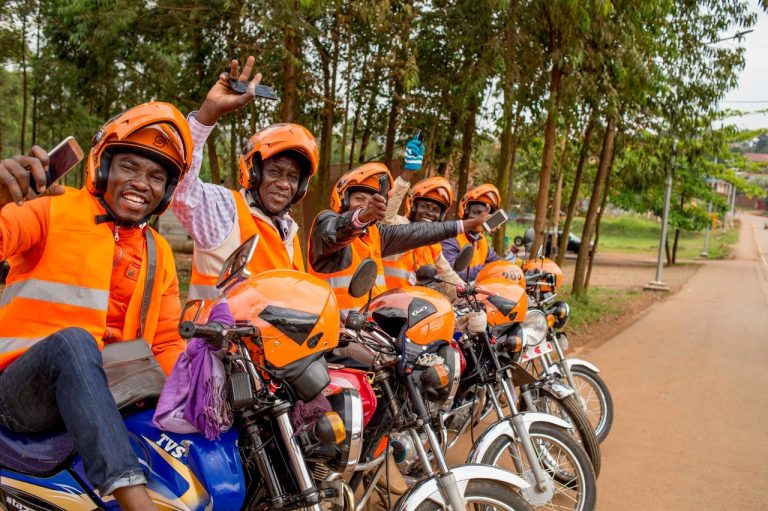
SafeBoda, a popular ride-hailing platform founded in East Africa has launched in Ibadan, Nigeria, a year after it launched in Nairobi, Kenya, making Nigeria its third African market after it went live in Uganda four years ago.

SafeBoda, founded in November 2014 in Kampala by Alastair Sussock, Ricky Thompson,  Maxime Dieudonne and Clarisse Iribagiza will compete with Nigeria’s Max, GoKada, ORide, among others in Africa’s biggest consumer market.

Available on both Android or iOS apps,  SafeBoda allows users to hail SafeBoda drivers to pick up passengers or courier via smartphone apps securely. The firm says it has vetted and trained its drivers to provide a safe and secure means of transport to people’s homes and places of work in a move to help reduce road accidents, curb casualties, deaths, and the costs of footing expensive hospital bills.

Starting in Kampala, SafeBoda is looking to bring sanity to roads in Africa then India by training riders who are increasingly becoming more and more unpopular on our roads in several cities in Africa. The launch in Nigeria was its next natural move for its pan-African expansion.

SafeBoda trains the riders on road safety, bike repair and maintenance, basic first aid and customer service. SafeBoda gives its riders two helmets for both the passenger and rider and a reflective jacket embedded with the rider’s name for safety of the passengers.

The launch in Nigeria has taken longer than expected because the firm needed to hire, understand the market, and sign up riders. There are reports too that the firm struggled with what model to go with as normally, in East Africa riders sign up with their own motorcycles while it needed to own a fleet in the Nigerian market and then lease them out to riders on a lease-to-own model.

The lease-to-own model is costly, unlike the aggregator model which the firm has long used in East Africa. The aggregator model is simpler and it requires less capital compared to the lease-to-own model which is more capital intensive and time-consuming even though it gives the company more control.

Seven months ago, SafeBoda raised funding and said it will be venturing heavily into mobile payments and insurance. The funding was to help the firm with its expansion in East Africa and across the continent and probably outside the continent as SafeBoda has plans to expand to India and into emerging markets.

“Our investment in SafeBoda underlines our continued commitment to growth markets. We are excited to participate in the development of ride-hailing ecosystems in Africa,” said Oliver Ullrich, Corporate Development Director at Allianz X. “SafeBoda has successfully established itself in the ride-hailing market in Uganda and we look forward to supporting the company’s expansion into additional countries and services.”

Allianz intends to leverage its regional presence and capabilities, working with SafeBoda to transform transportation, logistics, and payment sectors in Africa, starting in Kampala, Uganda and Nairobi, Kenya.

“SafeBoda is excited to have Allianz X join our investor group, particularly as we deepen our platform and add a number of important FinTech services for both SafeBoda drivers and passengers,” said Alastair Sussock, Co-CEO and Co-Founder of SafeBoda. “We are confident that collaborating with Allianz will enable us to grow the business and impact the wider community across East and West Africa.”

SafeBoda is taking on firms in Nigeria such as Max which in June announced a $6 million injection from Novastar Ventures, Yamaha Motor Co. Ltd, Breakthrough Energy Ventures, Zrosk Investment Management, and Goodwell Investments plus $1 million in grants. Opay backed ORide is also not paying games in Nigeria with its recent addition of OTrike.

These firms aim to go beyond transport and logistics to financial services for users in Africa. OPay has also rolled its infrastructure in almost all services categories such as food, transport, etc.

According to Adetayo Bamiduro, MAX.ng CEO and Co-founder, in a company statement. “MAX is building technology infrastructure and financial services to make mobility safe, affordable and accessible to 1 billion Africans. This isn’t just about building mobile apps. It is about creating financial, technology and operating infrastructure where it never existed.”

Another player, Gokada, announced a $5.3m Series A funding round to become the operating system of how cities function optimally and efficiently across Africa. The firm said it will use the funds to deploy its investment to expand its driver fleet, increase daily rides by 10 fold and acquire local tech talent. In addition, the company will explore new verticals for business growth. The new verticals mean it will venture into businesses such as loans, messaging, payments, insurance among others to be more like Asia’s super app GoJek.

Nigeria is becoming a huge arena for play for hailing and fintech firms especially because of its population, access to financial services and the entrepreneurial spirit among its people.

To show how lucrative the African market is, OPay, Opera’s fintech platform recently raised a $120 million Series B round to expand its product portfolio as well as expand across Africa.

OPay said it will use the funds to scale its operations in Nigeria and launch its services in Kenya, Ghana and South Africa. The firm in June raised $50 million to double down on Nigeria.

“OPay will facilitate the people in Nigeria, Ghana, South Africa, Kenya  and other African countries with the best fintech ecosystem. We see ourselves as a key contributor to helping local businesses thrive,” Opera CEO and OPay Chairman Yahui Zhou, said in a statement to TechCrunch.

After the raise, Opay has launched OCar, an Uber and Bolt killer starting in Lagos, Owerri, Port Harcourt, Abuja and Benin adding to its OBus, ORide, OFood, OList, OTrike and OLeads.


Best Video Editing Apps For Your Social Media Content

0
These are best editing apps for your social media content.

Social media currently favours videos because people stay longer on their platforms when watching videos. If you want to take your videos to another level then you need to invest time and sharpen your editing skills. Having good videos makes it a whole lot easier to not only consume your content but it is a lot easier to get commercial jobs as well. Videographers are quite pricey especially if you’d like to release content every day. There are several free editing apps that will come in handy for your content. First of all, you need to know which app will serve you best depending on the platform you want to post on.

1. Magisto

If you’d like to try a different app than your usual video editor, try Magisto. This app offers an in-built music playlist that you can use for all your content. If you’re not good at arranging your clips then good because Magisto arranges your clips because of it’s artificial intelligence (AI), this intuitive app helps organize your footage in a video that best delivers the message you have in mind.

2. Wondershare FilmoraGo

I have heard about FimoraGo as one of the most used apps by video editors and content creators, I guess it’s easy to use as well. If you’re not the greatest editor or you have no clue what you’re doing when it comes to editing, it is time to install FilmoraGo. You can put music, transitions and arrange your clips the way you want them. The only downside for some people would be the permanent watermark that’s always there, however, if you’d like to remove the watermark you will have to upgrade to a paid plan at a small fee.

3. InShot

This is one of the simplest apps to use that I use as well. InShot, a is the app that lets you trim, speed up, or add music and filters to video. It’s pretty fundamental, but with that comes a high ease of use. You can also add a background, if you like plus it makes your videos look better in terms of quality, it is best used for Instagram.

4. Adobe Premiere Clip

I am sure by now you know adobe premiere as most video editors prefer to use it especially on a laptop. Adobe Clip automatically sets your video to the music of your choice (using Premiere Clip’s library or your own), and offers a Freeform editor that allows you to customize your edits further. You would enjoy this app if you’re a professional videographer so that you can fully utilize it.

5. PicPlayPost

If you’d like to create a cool collage of all your favourite pictures and add some music then PicPlayPost is the app to get. You can use this if you create recipe content or a lot of “how to” content instead of a point and shoot kind of video you’ll be able to show what you mean without using words, which is great especially if you’re camera shy.


Mainone launches its submarine cable in Cote d’Ivoire

0

MainOne has launched its submarine cable in Cote d’Ivoire, notable being the first commercial cable system to deploy spectrum sharing capabilities in the region.

MainOne sees its entry into the market as an opportunity to deepen infrastructure sharing and lower the cost of delivering broadband services to the region.

MainOne aims to facilitate world-class infrastructure availability and accessibility to ensure its customers continue to enjoy maximum uptime performance and reduced latency as the company increases bandwidth capacity and maintain direct connections to various regional and global Internet Exchanges including the Nigerian Internet Exchange (IXPN), Ghanaian Internet Exchange (GIX), London Internet Exchange (LINX) and Amsterdam Internet Exchange (AMSIX).

MainOne promises affordable and scalable broadband services, together with secured and reliable solutions, providing support services for service providers in Cote d’Ivoire. This will offer optimized Internet connectivity for business, as well as providing point-to-point International Private Leased Circuit (IPLC) communication services for businesses and enterprises, riding on its submarine cable along West Africa to the rest of the world.

Likewise, MainOne is also announcing the availability of its Cote d’Ivoire Data Center facility built to Tier III standards, to address the needs of corporate clients, public institutions and service providers for shared services, supporting their cost reduction and operational efficiency drive. It will offer rack spaces for customers to collocate their IT infrastructure with ease, while gaining access to fully redundant power, cooling, carrier-grade security, and fire – prevention facilities on a shared basis. The facility will enable businesses in Cote d’Ivoire attain significant savings in the deployment of their compute infrastructure and carrier neutral interconnection with multiple operators, providing them value added services and ensuring that they can stay focus on their core business, whilst MainOne manages their resources.

Speaking on the impact of MainOne’s services in Cote d’Iviore, Kazeem Oladepo, Regional Executive, MainOne, stated, “We remain committed to providing infrastructure and connectivity services that support the digitization journey and economic development of the region. Our investment into Cote d’Ivoire will see MainOne contributing to the growth of the local economy, by serving enterprises and telecommunication providers with world-class connectivity solutions and data center expertise.”

MainOne’s submarine cable is the first private subsea cable to deliver open-access, broadband capacity to West Africa in 2010, heralding the explosion in Internet access witnessed in the region. The MainOne system traverses the coast of West Africa with fully operational landing stations from Seixal in Portugal through Accra in Ghana to Lagos in Nigeria, the addition of new branches in Dakar, Senegal and Grand Bassam, Cote d’Ivoire and additional branching units in Morocco and Tenerife yet to be connected.

7 Best Social Media Graphics You Should Use For Your Content

0
These are the social media graphics you should use for your content.

If you’re still posting photos with a simple caption on them you’re doing it all wrong. To be a good content creator you need to be creative because believe it or not people know good content when they see it. If you’re consistently working on your content you will definitely attract followers and even commercial work. How do you make your content pop and look less boring? By getting the best social media graphics and actually using them.

1. Colour palettes

This design would be best when you have a business page that talks about serious topics such as career or money. Almost all beautiful Instagram accounts use colour palettes. A muted colour is a colour that has black or white added to it so that it’s the opposite of vibrant colour. This can be a really effective trend on social media especially as it can quickly be applied to your headers and images.

2. Clean social media graphics

Ever seen pages which have such a clean look? The page basically looks well arranged and not too busy with different colours at the same time. You can get involved in this trend by creating clean social media graphics, and focusing on white space in your designs.

3. Canva posts

Create canva posts for both Facebook and Instagram that will make your page look appealing. You can create quotes, articles or even create videos using canva posts which can be aesthetically pleasing on social media.

4. Brands GIFs and memes

Creating a unique, branded GIF is an easy way to get ahead of your competitors in 2020. Not only will the GIF be completely unique to you – meaning no competitors can copy it – but it also helps build a better brand association. GIFs can also be personalized for any situation, such as a follower milestone or the launch of a new campaign.

5. Abstract and Dreamy Illustrations

Illustrators are the people making the money right now. There are many online pages that are creating good illustrations, illustrators usually create content with exaggerated proportions and unusual colour combinations.

6. Heavy fonts and images

Use simple but heavy fonts that will capture people’s attention if you want to create eye-catching content use simple graphics, and will work for most brands. But to maintain a professional look make sure that only your headers and important phrases have bold, this way people can know the difference between what is important and what is not.

7. Quotes

You can create quotes using canvas with a simple background with plain colours that will make your page pop and build your aesthetics on your social media platforms.

StarTimes, Beijing Municipal enter local content joint production venture

0

StarTimes Kenya and the Beijing Municipal Bureau of Radio and Television have today unveiled joint broadcast content development efforts between Kenyan actors with their Chinese counterparts.

The development will see the first ever Sino-Africa reality television show highlighting deep cross cultural exchange whilst building local capacity for both local creatives and content developers. The show is designed to specifically search for the next outstanding movie superstar.

Funded by the Chinese government and produced by StarTimes in collaboration with local content partners, the show will see Raymond Ofula, Neomi Ngang’a, Peter Kamau and Nick Mutuma as judges and mentors for the hundreds of aspiring and established thespians and actors with the grand prize being an opportunity to be in a local movie to be launched on international platforms across the globe.

Speaking during the 5th Anniversary for the Exhibition Beijing Top TV Dramas and Movies Broadcasting Seasonwhich also marked the official unveil of the Next Superstar Show, the Director of Culture, Ministry of Sports Culture and Heritage Dr. Kiprop Lagat noted that, “It is encouraging to see the Beijing Municipal Bureau of Press, Publication, Radio, Film and Television explore collaboration opportunities with local broadcast content developers key in availing opportunities for the local talent to equally share experiences with the people of China through film.”

The Deputy Director of the Beijing Municipal Bureau of Press, Publication, Radio, Film and Television Mr. Xu Liquo said, “congratulations to the shortlisted actors who will feature in the television show, as we mark the 5thanniversary of our TV series Africa exhibition, we are impressed with the warm reception and adaptability and look forward to growing our audience in Kenya.”

The twelve episodes of the Next Superstar show will broadcast on StarTimes Sino Drama channel from December 8th adding to the growing list of local content productions that the pay television broadcaster continues to roll out towards enriching the subscriber offering having already injected over 200 million towards the establishment of Rembo TV, an exclusive local channel available on the platform.

“The shortlisted superstars will be the main cast of the joint production between StarTimes and theBeijing Municipal Bureau of Press, Publication, Radio, Film and Television as other outstanding talents who auditioned for the show undertake supporting roles with the series running weekly on StarTimes Sino-Drama channel from December 8th,” concluded StarTimes Chief Executive Officer, Mr. Andy Wang.

Actors James Webbo, Ellah Maina and Faiz Francis Ouma were shortlisted from a pool of over 100 participants who auditioned for the show who will now form the main cast.

How To Promote Your YouTube Videos Organically

0
How do you promote your YouTube videos organically?

There’s no point of posting videos on YouTube and then no one watches them. When you post content on YouTube you’re not only looking for an audience but you’re probably hoping that you can make money while you’re there. First, you have to plan your content and think if it’s something that you can consistently post. What makes your content captivating? what makes someone want to come back and watch your videos? Once you’ve decided to do this diligently, here are the steps that will take your content to another level.

1. Optimize your video title

You need to have a good video title that can be easily found by anyone. Use the YouTube keyword research to know what people are searching. Always keep your title’s simple but catchy at the same time. To create good titles make sure they have emotional trigger words such as “best” and use your keywords at the beginning of the titles if possible.

2. Use the correct tags

You need to use the right tags to reach the right audience. In case you are not familiar with the tags on YouTube, these are the words you key in that make your video reach a larger audience. Always key in your brand name in all your tags and use Tubebuddy chrome extension to see what other tags people are using. The tags you choose should always be related to what you’re talking about.

3. Use a good thumbnail

A good video thumbnail helps you stand out in the related video and suggested video section. The thumbnail is what makes you open a video, make sure it’s a high-resolution picture, you can use apps or links such as thumbmaker to design a thumbnail. Make sure you write something catchy on the thumbnail that will make people click and watch your video.

4. Always have an outro and an outro

Have an introduction that people remember you by and the same outro as well. Your introduction should always showcase your brand, your outro should be you asking people to subscribe and you can inform them about your next videos will be about or when they can expect the next one.

5. Share your videos on other platforms

Don’t just post your videos on YouTube as they will take a longer time to gain an audience. If you are a video blogger, you should have some social media properties for your YouTube channel. This gives you an opportunity to create a community outside of YouTube & direct traffic from other popular social media/social networking channels. This gives people a chance to interact with your content and you grow communities on all platforms which is really important.

6. Start a blog

When you have a blog you can easily post your video on your article which will lead people to your YouTube page. So for example: if you’re writing about a recipe, you can post a video of you cooking that same meal, this gives people a chance to choose whether they would like to read or watch, either way, it’s a win-win.

7. Sharpen your skills

Join YouTube academy, never stop learning because to be a better content creator you need to actually invest your time and effort, it is not something that happens overnight.

Microsoft partners with Seedstars for the Seedstars Summit Africa Summit

0

Microsoft has partnered with Seedstars on the three-day Seedstars Summit Africa set for December 3rd to 5th.

Microsoft will host an exclusive workshop session during the Seedstars Bootcamp with 50+ entrepreneurs, including the 23 Seedstars World local winners.

The third and main day (December 5) will welcome all the participants willing to learn the latest tech trends, network and meet inspiring founders and entrepreneurs.

“Microsoft​ was once a start-up itself, and so we’re passionate about supporting entrepreneurs in their growth journeys, providing access to technology tools, networks, skills and mentorship,” says Chris Lwanga ​from Microsoft​.​ “Through​ our various initiatives, including Microsoft 4Afrika and Headstart, we’ve been fortunate to work directly with hundreds of African start-ups. Our focus is on partnering with influential partners, like Seedstars, to build an enabling and self-sustaining environment. Start-ups are at the forefront of innovation that unlocks economic value and societal impact.”

The ten most promising ventures will then be selected to participate in the Seedstars Summit 2020 in Lausanne, Switzerland and compete for the title of the Seedstars Global Winner. The participating teams will get a chance to pitch their idea on the main stage along with 60+ startups from all over the world and win up to USD 500 000 in equity investments.

To get updates on more event speakers and agenda, please subscribe to the event monthly digest (choose Africa a region of your interest).

Choosing the Perfect Crypto Trading Robot; Top Tips

0

The cryptocurrency market is among the most vibrant and continuously growing areas in the financial sector. However, with the fast growth, navigating through the crypto market can be a bit stressful for traders and casual investors as they try to keep with the unpredictable changes. Technology advancements have come in to make trading easier and more manageable, especially with the invention of crypto trading robots like Bitcoin compass, which have come in to make trading more manageable, and protect traders from emotional trading, thus increasing their returns. You can check out this site to learn more about the bots and the bitcoin trading market.

The bots are increasing in popularity, especially with the vitality in this market, which requires traders to be super keen at all times to keep up with the constant changes in every trading session. With the increased demand for the bots, there has been an increase in robot selection in the market. This has, in return, made it challenging for traders to select the robot they can fully trust for their crypto-trading operations. The right crypto trading robot allows you to execute your trading faster, accurately, and more efficiently than a human trader would do manually. You, therefore, need to be keen to ensure that you choose the right one. Do not be in a rush to select the first choice that comes your way.

To make your search easier, here are some of the aspects to put into consideration during the selection.

Consider the reliability of the robot

One of the most critical aspects when selecting any product is reliability, and this case is not an exception. You want a trading bot that you can entirely rely on at all the time to offer the kind of results you need. You do not want to lose any trading opportunities because your crypto trading robot broke down or stopped working. You should not give downtime any chance because you can never tell when an excellent trading opportunity will knock. While there is no way to know if a bot is reliable, but you sure can do by listening to what other users are saying about it. You are not the only one using the crypto trading robot, and you can search for what other users are saying about the efficiency of the particular robot that you wish to get. The more the positive reviews or comments you get about the robot, the higher the chances that you can rely on it. The vice versa is also true.

Consider the transparency of the robot

Crypto trading is filled with risks. You cannot predict what will happen in a particular trading session. However, crypto trading robots are computers and can do better than the human brain can. One of the reasons why cryptocurrencies such as bitcoin are continually rising in popularity is due to transparency. Traders feel that they can trust them and that there are no hidden agendas. The same should apply to the trading robots. You want a robot that can clearly show you the trading process, how the profits were made. Again, the easiest way to determine the transparency of a crypto trading robot is by checking reviews and what other users are saying about it. Go for the highly reviewed bot or select a robot whose developer is widely known and trusted. Transparency helps you build trust, and if you have issues, you will know precisely where to seek help.

How secure is the bot

Technology has come in to make things easier, but it has also come with increased hackers. If you are not careful enough, everything you do will go to waste, and you will only be working for the hackers to come and take everything from you. Online money trading is fun and an easy way to multiply your funds, but it could also expose you to irreversible losses. Before settling on a particular trading bot, ensure that it is safe enough to keep the hackers out. Remember that once you incorporate a robot in your crypto trading activities, you will be giving it access to your funds and everything else included in your account. This is a bit risky, and you need to work with a robot that you can fully trust. Do not rush for a bot that has only been in the field. Again, you cannot tell if a trading robot is secure. It is, therefore, crucial that you do thorough research to choose a highly reviewed robot in terms of security. 

Consider its usability

The main reason why crypto trading robots were introduced in the market is to make trading easier and more efficient for users. This is only achievable if you have the right robot for the job. You need one with an easy to use interface, one that you can easily follow and understand. You should be able to control and set it with just a few clicks.

Consider the profitability

The goal of getting the robot in the first is so you can maximize your returns while minimizing the risks of making any mistakes. Profitability should always be on top of the things to consider before settling on a particular robot. There is no point in incorporating the robot if it is not profitable. For starters, check the cost of the bot to determine if you can afford it and if the price will help you attain your returns goals.

Get recommendation

The chances are that you know of crypto traders who use this technology to maximize their trading returns. You can never go wrong by asking for advice and let them suggest to you their favorite trading bots. Get as many recommendations as possible and go with the most recommended or one that meets all your needs.

With these tips, you will undoubtedly find crypto trading software that you can fully trust and rely on. You cannot afford to make any mistakes. A slight mistake could result in a massive loss, which is the opposite of what the aim of getting the bot is. It would be better if you spent a lot of time and money on getting a robot that will help you attain your goals rather than rushing to get a cheap one that will end up costing more than its initial value. All the best!

Africa is Rising Through Tech

0

Africa Rising. This was the golden thread woven throughout the third annual AfricArena Summit which recently took place in Cape Town. Here, issues affecting the African tech ecosystem were unpacked by speakers comprised of some of the most interesting thought leaders, founders, investors and corporate changemakers of our time.

Opening the event, Silicon Cape Director, Zimkhita Buwa, said: “Africa is synonymous with opportunity. Yes, we have incredible challenges, but we are not waiting on the side-lines for the world to provide us with solutions, we are creating our own solutions using our own technology.”

AfricArena Founder, Christophe Viarnaud, continued: “Africa is rising. The amount of investment has doubled every year for the last three years, particularly in the tech sector. We cracked the $1 billion mark for the first time last year and we think that this amount will be even bigger this year, with over $1.2 billion being invested. Sadly however, this is still less than 1% of global funding that goes towards tech startups. We can’t grow this continent which will have a population of over four billion by the end of the century – the majority of the planet – if we don’t dramatically increase that number. Our mission, as AfricArena, is to create opportunities for investment and make a difference by helping entrepreneurs – the number one asset on the continent – which, in turn, will deliver value to investors and create much-needed jobs.”

French Ambassador to South Africa, Aurélien Lechevallier, shared that at the South Africa Investment Conference held earlier this month, several French companies announced that they would invest more than R20 billion in South Africa in the next three years. “We will ensure that part of this investment will be filtered through small and medium enterprises. France and South Africa share the same belief in the potential of Africa’s tech ecosystem, but we know that the main challenge remains to mobilise enough resources from private investors to make it grow. As President Macron declared, France is committed to support African startups and SMEs by helping some of them to overcome the access to funding gap.”

He went on to say that the French Development Agency has launched Choose Africa to bringsupport to 10,000 African companies between 2018 and 2022 by mobilising €1 billion, another €1 billion in equity and €1.5 billion in credit lines. Within this initiative, there is a focus on the digital economy and innovation, driven by a dedicated online platform called Digital Africa which will help African entrepreneurs to get in touch with their counterparts as well as financial and industry partners both in France and other African countries. It will also enable them to participate in specific calls for proposals and challenges. President Macron’s launch of a €65 million fund to support the acceleration of startups on the African continent last year is also a very strong signal of France’s commitment towards cooperation in service to innovation.”

During the panel discussion on Next Generation Angels, Tomi Davies a Nigerian British Investor, Entrepreneur and Advisor to companies on technology strategy, posed the controversial question: “Why can’t Africa build Africa? I’m under no illusion that we are going to do it all by ourselves, but I do believe that charity should begin at home.”

Fellow panellist, Nigerian Entrepreneur, Iyinoluwa Aboyeji, added: “More than 50% of the world’s population over the next 35 years is going to be in Africa. Ultimately, this will either be a bomb or a boon for the global economy. Investors that are not betting on Africa, are betting against the global economy. In Africa there is talent that can learn anything, more relaxed governance restrictions and the ability of businesses to grow very fast in contrast to other markets. What we need to do is continually build the infrastructure that makes this possible and support the growth of businesses.”

Unpacking some of the gaps hampering Africa’s success was Venture Capitalist and Serial Entrepreneur, Vusi Thembekwayo, who explored four areas: the investment approach; the education gap; opportunistic BBBEEE Players and the infrastructure gap. “Africa doesn’t need pity, it needs opportunity, so how do we develop mechanisms that create and broaden access, but most importantly democratise opportunity?”

Picking up on this theme, Ketso Gordhan, CEO of the SA SME Fund, said: “Our hope and desire is to make sure that smart entrepreneurs are seizing upon how the world is changing and using new technologies to make the world a better place. Venture Capital (VC), for me, is about the future, it’s about innovation, it’s about economic advancement and solving what seem to be intractable problems speedily. However, in South Africa, some of the biggest problems affecting VC include a lack of access to capital, too few experienced VC fund managers, a weak pipeline of start-ups, high costs of failure – both financial and reputational – and a fractured VC ecosystem.” On this last issue, he urged attendees comprised of representatives from all spheres of the ecosystem to concentrate on partnerships rather than competition with each other. Gordhan also announced the launch of a new fund, Digital Africa Ventures, which is dedicated to financing early-stage African startups.

While speaking on the topic of Privacy & Ethics: Who’s responsibility is it anyway? Danai Musandu, Investment Associate at Goodwell Investments, warned: “As much as we can be excited about the booming digital age in Africa, we need to remember some key things about our continent – 54% of the population don’t have access to healthcare; one in six live off an electricity grid; and 70% of people are unbanked. So, when we talk about this continent, we need to be cognisant that we are talking about Africa’s mass population. We can’t talk about digital solutions without looking at the physical reality on the ground. We have to look at the people we are serving on this continent. We talk about all of this exciting digital innovation on the continent, but opportunity also brings with it more responsibility for all involved. We determine the narrative for our ecosystem, and as co-authors, we are equally responsible to ensure we build the right story; a story by Africans for Africa.”

Looking to the future, Thierry Barbaut, Digital and Communications Director at La Guide, said: “Africa will have a population of over 2.5 billion by 2050 and this requires solutions for providing food, water energy and healthcare for all. Technology and communication startups can provide this.” Giving the example of Rwanda, which was war-torn in the 1990s and is now thriving, he highlighted how tech startups are transforming health, energy, education agriculture and other sectors in the country, with many of these models being replicated in bigger countries.

Viarnaud brought the event to a close by stating: “There is no question that Africa is the future. As AfricArena, we will continue working to bring the continent’s tech ecosystem together to ensure that it is a successful one.”