I used to think Pinterest was only good for pinning photos and ideas that you would like to use later. However, they are more than that. As a matter of fact you can grow your business on Pinterest on their new Pinterest shop which is an online shop that is meant to help merchants. This new approach is meant to bring a boom during the holiday season as it only happens once a year.
Imagine if you could make a shop out of all your favorite pins. That’s basically what Pinterest did here, selecting seventeen lucky brands to be featured in a curated pin-shop.
How will you be able to market your products on Pinterest?
Well, the merchants picked will have profiles where curated boards have been replaced by merchant profiles and all pins within the boards are shoppable products. This could possibly be something that they will further explore if they happen to open a permanent shop.
However, how can you actually use Pinterest for your own business? Try these tips and explore the choice.
1. Create a Pinterest for a business account
You need to join Pinterest as a business. You will be asked for the normal information such as your email address, password, business name and which category your business falls into. Once you’re done, review the terms and conditions then create your account.
2. Always complete your profile
Always complete your profile to make your business page look appealing. Put a profile picture, add information about yourself and your business then save the settings. Choose an image that best represents your brand, such as a logo. Make sure to add your website so users can visit you through it.
3. Confirm your website
Does your website link work? Make sure it does. This is the only way people will be able to pin your work, ensure you’ve completed your profile to check whether your website is confirmed, try Pinning a link from your site. You should see your logo or profile picture below the Pin.
4. Start creating boards
This is the exciting part and most crucial as well. you need to start sharing and organizing content so that Pinners will have a reason to follow either your entire account or one or more of your boards. Always make sure you pin enough times, have a content calendar that will help you know when you’re meant to pin.
5. It’s time to pin
Always clearly label your pins so that pinners understand what they are clicking on. Enter a clear description of what you’ll save to your board, and choose an appropriate category. If you want to start saving Pins to your board but you’re not ready for people to see it yet, you can choose to make the board secret until it’s ready to go.
6. Add save buttons to your site
People should be able to save your pins so they can come back and either purchase your product or use it for later.
7. Have great visuals
Let your page look great, use bright colours and clear photos as people are highly visual and it has been proven that people are more likely stay on your page when you have great visuals.
8. Use analytics
It sounds obvious but most people just post and go. By checking your analytics you’ll be able to know what is driving people to your site.
Jumia, an ‘Amazon’ for Africa has closed its e-commerce operations in Tanzania, after a similar move in Cameroon, raising questions on the future of the firm known for rapid expansion.
Jumia, which looks to be on a path to pivot from eCommerce portals to classifieds platforms in its weaker markets, said in a statement that based on its review of the path to success, it decided to cease operations in Tanzania yesterday, 27th Nov 2019.
“While Tanzania has strong potential and we’re proud of the growth we’ve collectively seen stemming from Jumia’s adoption, we have to focus our resources on our other markets. This decision isn’t easy but will help put our focus and resources where they can bring the best value and help Jumia thrive.”
The firm added that it would continue to support buyers and vendors through its classifieds portal, previously called Jumia Deals, which will now be the main portal jumia.tz. By turning to classifieds, Jumia is giving up hope after spending millions of investor money in Tanzania and cutting off jobs and revenues to both the employees and the government. However, this move is aimed at helping the e-commerce firm to focus on its core markets such as Nigeria, Egypt, Ghana and Kenya among others.
Recently, Jumia shut down its ecommerce portal and suspended its e-commerce operations in Cameroon on 18th November with the same view of putting its focus and resources on mature markets.
In a statement, Jumia Co-Founders Sacha Poignonnec and Jeremy Hodara said: “Jumia is grateful to its employees in Cameroon for the hard work over the past five years and we know that Cameroon is not short of talent. The team has fought to change the way business is done and with the support of its employees, the company has proven to be the leading eCommerce in the region. This would not be possible without the combined efforts, great contribution and dedication of our Jumia Cameroon team.“
In Cameroon, Jumia also announced it will continue to support buyers and vendors via its classifieds portal, previously called Jumia Deals and which will now be the main portal jumia.cm. Cameroon has a population of some 25m people with over 6m of them using the internet while Tanzania has a population of 61m with 23m internet users. These are not all buying online and therefore Jumia’s addressable market in these countries is tiny. Also, the economic levels and standard of living are not that high in most countries across Africa and therefore being online doesn’t necessarily mean one will be shopping online. Though it makes perfect sense for Jumia to close shop and focus on major markets in Africa, Jumia is generally struggling due to poor uptake of e-commerce in Africa.
Jumia’s gross profit increased by 93.6% from €8.9 million in the second quarter of 2018 to €17.3 million in the second quarter of 2019 while its operating loss increased from €41.9 million in the second quarter of 2018 to €66.7 million in the second quarter of 2019.
The firm has therefore been shifting to JumiaPay, its financial services arm live in Nigeria, Egypt, Ivory Coast, Ghana, Morocco, and Kenya, as its key focus area.
“We have also expanded the scope of JumiaPay beyond our physical goods marketplace. As of December 31, 2018, JumiaPay was only available within our physical goods marketplace. It is now also available within our on-demand services, Jumia Food, and hotel booking portals, Jumia Travel, in selected countries,” said Sacha Poignonnec and Jeremy Hodara, co-CEOs of Jumia.
Apart from its first-mover disadvantage, Jumia is also struggling due to lack of internet access in some regions, poverty, illiteracy, and infrastructural inefficiencies such as logistics, payments among others.
Jumia has also been hardest hit by internal fraud leading it to fire hundreds of its staff in various countries, especially from its JForce teams. Fraud is also a challenge where cash on Delivery is involved. Related to logistics is the lack of a national street address system in most African countries which makes deliveries slow and expensive.
On every WhatsApp group different personalities emerge.
People create WhatsApp groups to achieve a certain goal within a certain time frame or to be in constant communication for a particular reason. It’s interesting because in as much as we would all like to avoid groups they do come in handy especially in circumstances where people are in different geographical locations.
1. The ones who forward all those Godly threatening messages
It’s always very disturbing when a full grown adult sends such messages. These messages claim that if you don’t forward the “Jesus loves you” messages to 10 people then you will surely die or you’ll have 7 years of bad luck, now these type of threatening messages are the reasons why some people think Christianity is a scam.
2. The “ghost audience”
These are the people who never say anything but funny enough they read everything and when you meet them face to face they’ll remind you of the time you invited people over for lunch on the group 9 months ago. But did they say anything? They most certainly didn’t because they are the ghost audience, the other half the ghost audience are the ones who muted the group from day 1 and never know what goes on in the group.
3. The ones who are there to oppose everything
These are the ones who are there to start arguments and pick on people. It is as if they have veto power. When the group decides on something especially when they are offline, they demand who made such decisions as if they own the group. They never really say anything important but because they always feel the need to say something their messages must be there.
4. The encouraging ones
These are the ones that are forever positive and keep everyone on track. They send positive messages in the morning, they check up on everyone even when people ignore their encouraging messages they are still very persistent.
5. The “hey people are quiet” people
These type usually want people to be interactive and every once in a while they ask questions like “where are people?” however, although they ask people where they are they also leave people hanging and disappear after that then reappear again at some point.
6. The bossy type
The bossy types are very common in academic groups, they are the ones who will ask where people are, when people are submitting assignments and remind people that you’re working with deadlines.
7. The one who sends jobs
This one is very helpful because he/she sends job notifications every once in a while, you wonder if they have a bureau somewhere that just gives them job alerts.
8. The two or three people who are very active
There are always two or three people who start random topics and continuously chat for a while, when you wake up you’re more likely to find their very many chats.
9. The one who reminds everyone what the objective of the group was
There’s always that one person who tells people to stop idle chatting or sending memes and remember the main objective of the group, they can be annoying but they really do have a point.
One of the most painful things that can happen on social media is being blocked on WhatsApp.
You can be blocked on any other social media platform but for some reason WhatsApp hurts the most. The reason why is because you most likely use this app to interact with people every single day. WhatsApp has made it vague to know if someone has blocked you for privacy reasons but there are rather obvious signs you can check and tell if someone no longer wishes for you to communicate with them, if you’re wondering, check these signs out.
1. The first step is to obviously open your WhatsApp
This is rather obvious, you need to get on WhatsApp to actually check and see if the person you suspect has actually blocked you.
2. Secondly, check contacts and search for the user that blocked you
We are quite sure you’ve been checking to see if the person you suspect has blocked you, so check that user right now and tap on their profile.
3. Do they have a status?
If someone has blocked you, you can’t see their online status it just seems blank if you can’t see any status such as “online” or “available,” appears below the contact’s name, they may have blocked you. Usually most people have something written under their name even without a profile picture.
4. Tap on the user’s contact
Open the chat window with the user, if you’ve done this several times before this article and you have never seen the person online and you’re used to seeing them online then there could be a reason for that, they blocked you.
5. Is there a last seen?
Some people hide their last seen but if it used to be there before and now all of a sudden you can’t see their last seen, there’s a high chance you’re not meant to see it.
6. Message them
This is the easiest way to know if someone has blocked you, you can send a simple “hi”. This simple hello will tell you if you have been blocked if there are no blue ticks or there’s no delivery which shows two grey ticks. Some people have removed blue ticks but if you don’t get two grey ticks even after a couple of minutes then there’s reason to be worried.
7. You see no photo
Seeing no profile picture is such a huge sign that someone has blocked you. If there’s no profile picture especially if the person is a fan of uploading new pictures every now and again then it’s because they simply no longer want to interact with you.
8. You never see their status
Okay, this could also mean someone hid you from seeing their status but if you’re used to seeing their status combined with every other reason above, then you no longer see their status, there’s a huge possibility you have been blocked.
Google Photos has come up with an updated photo gallery to enhance the better user experience for its customers.
Google Photos new update will enable users to manually face tag other people who they have not tagged previously or without necessarily having uploaded many photos. A user is able to tag someone immediately after taking a picture, a process that previously needed more time to have google assemble other photos taken together.
However, the face detection procedure still relies largely on google to a person’s face. For instance, if you take a picture of a pet or someone and omit their faces, it will automatically reject the tagging because the picture is unrecognizable without a face. This is quite disappointing for google photos fanatics but the limitations with the update are quite minimal.
According to Androidpolice.com, it’s noted that currently if google fails to recognize a face, the user is now able to manually tag them. The application now allows a user to edit, name and even add a new tag or un-tag and re-tag people or locations or pets when you no longer want any association with them.
The article illustrates further that, if your picture contains a large group of untagged people, the good news is that now you can assign names to all one in one swoop.
Another advantage is that; users are able to rectify any tagging errors for example in the of identical twins or similar pets. Also, mirrored faces can quickly be tagged using the new feature which makes it more fun. A user can take hundreds of pictures and assign thumbnails to have well recognized by google.
This could probably the best development ever for fun and crowd lovers in 2019. Weddings, thanksgivings and parties are here and this time google photos will come in handy with easy to edit, tag un-tag and hide unnecessary photo bombers and passersby who were not your target.
Twitter has announced a new move not to remove dormant accounts just days after the announcement.
This new change comes after a backlash by other twitter users who had objected that some of the inactive users are people close to their hearts who have died, for instance, renown celebrities who they need to memorize their deaths.
On November 27th, twitter through their Twitter support account reverted to the outraged users that they will not be removing any inactive account until they can find a better way to memorize the deceased.
Similarly, Facebook enabled its users to memorize their deceased family members and friends and other influential people who have died. If Twitter comes up with this concept, users might be at free will to let them delete the inactive accounts.
Prior to this announcement, twitter had notified its users that, any account that has been inactive for a period of six months or more will be subject to removal as of December 11th 2019.
According to statistics by Statista, Twitter had an average count of about 330 million active users as of the first quarter of 2019, owing to this huge number, creating a new account is of great difficulty. Unlike Facebook and other social media accounts, Twitter has a limited number of usernames.
The move could be a reliever to many who would want to use a specific twitter handle once the inactive ones are removed. Although twitter says the removal was to focus on the EU before spreading to other countries for integrity purposes, the new announcement doesn’t reveal when the plan will be relaunched.
The Verge.com also discloses that, once the inactive policy is enacted, more usernames will be free up for use once the dormant accounts are removed.
Another thing to note is that the number of followers for some accounts will also decline. Following the recent twitter clean up where inexistent users were removed, this might be a similar account for users who use twitter for businesses, especially influencers who depend on their followers.
No doubt part of this move is meant to limit abuse, as many businesses trying to grow their following turn to black hat methods, such as purchasing followers and using these dorman or fake accounts. If you think your business will be impacted by this, then it is best to take steps to ensure that you know how to gain Twitter followers the right way.
Close to a year ago, we heard Microsoft making plans of turning its services and products into Progressive Web Apps, but it soon seemed like a far cry, until now.
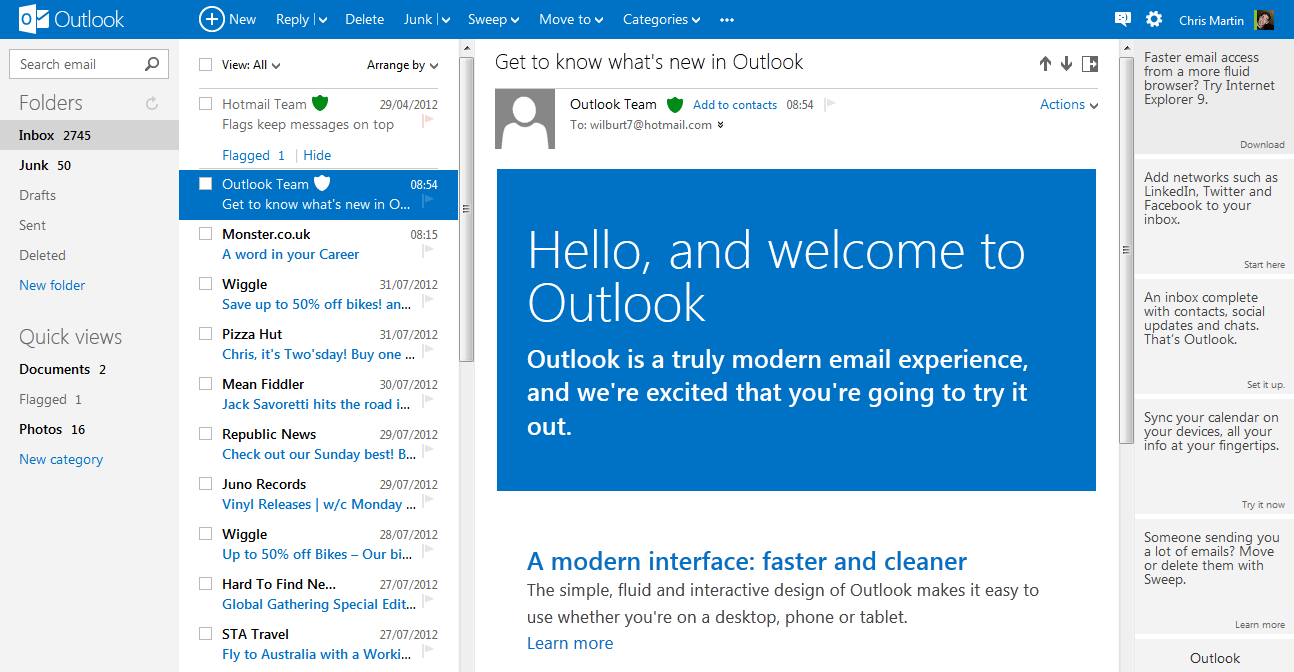
Microsoft has disclosed its plans and is apparently converting both Outlook.com and Outlook for the Webmail services into Progressive Web Apps, so-called PWA apps. It will allow any Outlook user to install the web app on Windows, macOS, Chrome OS, or any platform that supports PWAs.
Progressive Web Apps are nothing but a sound combination of traditional browser and mobile app experience. These are web-based applications, created with the purpose to help users use them on devices like laptops, desktop, smartphone, phablet, tablet, and more – a prominent reason why a number of companies are also now migrating their website to PWAs.
What this means is that these apps would seem like a website to anyone using it on a laptop, whereas to a mobile phone user, it would impart the impression and experience of an app.
PWAs, by their nature, are essentially still websites, but they include better caching, notification features, and background functionality to make them appear more like traditional apps.
It’s worth noting that Microsoft in the previous year adopted the PWAs approach for its Windows app and these new plans of transforming Outlook into one, is just a clear indication of the company’s intentions of changing its other products into PWAs too, i.e., Word and Excel.
This transformation will enable users to install the Outlook web app into the Windows OS, macOS, Chrome OS, among other platforms natively supporting PWAs.
It is considered an effective substitute or an alternative to the messy Outlook Windows desktop app version or the Windows Mail client, operating as a part of Windows 10.
Thus, if you really have to use Microsoft products at all, using the progressive web apps sounds like a much better alternative instead of the resource-heavy, and very cluttered Windows apps that Microsoft provide.
However, if you use a Chrome-based Web Browser like Google Chrome or Brave, then you can check out the Outlook.com support. It is live right now, signalling that Outlook.com is on the path of becoming a PWA.
All you have to do is “install’ Outlook.com from the address bar and it would be treated as a native app in Windows or macOS. Hopefully, support for other browsers like Apple Safari and Mozilla Firefox will come later.
Another bit of rather important information is that Microsoft also has plans of experimenting with bringing Google Drive, Gmail, and Calendar support to Outlook.com. The company itself confirmed that it is “experimenting with a small set of Outlook.com users” for the integration.
This could be seen as an encouraging decision on the part of Microsoft restoring the faith of many app development companies in the PWA development. What’s missing there, of course, is offline use. But just meeting the minimum requirements of a PWA is the first step.
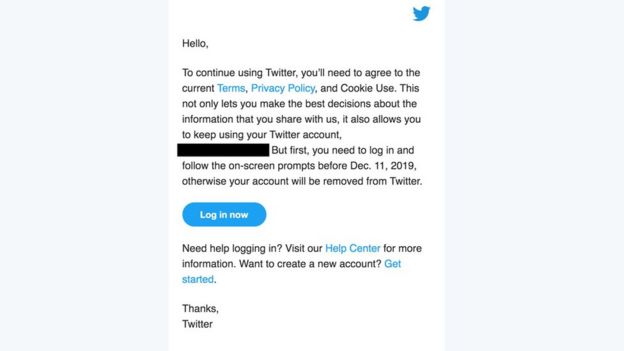
If you haven’t logged into your Twitter account for the past six months and don’t want someone to grab your username, you might want to sign in soon. This is because Twitter is notifying users that it’ll start removing inactive accounts and this purge will begin after December 11th.
Twitter’s current inactive account policy states that inactivity is based on logging in, not tweeting, so if you have logged into your account recently but haven’t tweeted since 2017, your account will be fine. The company’s policy recommends logging into your account every six months or so to reduce the risk of your account getting deleted.
Twitter released a statement to TechCrunch on the matter, saying:
“As part of our commitment to serve the public conversation, we’re working to clean up inactive accounts to present more accurate, credible information people can trust across Twitter. Part of this effort is encouraging people to actively log in and use Twitter when they register an account, as stated in our Inactive Accounts Policy. We have begun proactive outreach to many accounts who have not logged into Twitter in over six months to inform them that their accounts may be permanently removed due to prolonged inactivity.”
As much as the company explained the clean-up as part of an effort to “present more accurate, credible information” that people can rely on, it didn’t elaborate on what that meant. But, this could help you find the users and tweets you’re looking for instead of having to paddle through a sea of quickly-abandoned accounts. It could also make it harder for porn merchants and propagandists to hijack accounts for the sake of spam.
However, the Twitter spokesperson stressed that the account closures will take place over “many months” and you won’t see multitudes of usernames become available as soon as December 12th.
Meaning that if one of those accounts has a username you’ve been trying to snag, you’ll have to hold out a little bit longer. Still, it’s good news for lots of Twitter users who are holding out on a new username.
Nevertheless, there may be a significant downside for anyone who can’t sign in like people in extended hospital stays and others, who might lose their accounts, and thus their entire post histories.
And when asked how it would handle accounts owned by dead people, Twitter told The Vergeit’s thinking of how to memorialize those tweets. Unlike Facebook, Twitter doesn’t offer a “memorialisation” option that freezes the account in place and disallows new interactions – a measure to prevent abuse.
Although, since inactivity is based on logging in and not posting, bot accounts such as those which automatically tweet news or alerts would also come under the cull if the account owners do not log-in before the December deadline.
This could also pose problems for well-known accounts that have fallen silent but still have some cultural value. Like accounts set up specifically as an archive could be deleted if not logged into; such as @POTUS44, a collection of all the tweets made by President Barack Obama while in office.
The site has sent out emails to users of accounts that will be affected by the deletions. The firm would not say how many current accounts fit the criteria, although it is expected to be in the many millions. It will send out more notice closures closer to the deadline.
Affected Twitter users began receiving these emails from Tuesday
Keep in mind that these accounts don’t have to actually tweet anything to stick around. They just have to log in and follow Twitter’s instructions. So even if the username you want seems long-dormant based on activity, whoever owns it can still hold on to the username just by logging in.
What does it mean to be a female influencer in Kenya?
Kenyan female influencers are the most common on our social media, at least when it comes to Instagram and Facebook. Kenyan men prefer to be on Twitter, maybe it’s because most political debates take place on Twitter. But let’s talk about female influencers and why is it such a demonized word? The common word that we used to use before was “socialite” but now every new up and coming “socialite” is now an influencer, however, what do they influence? The standards to becoming an influencer are so low that when a lady actually does things the right way they are deemed as boring or old fashioned, but these mistakes some female influencers are making come at a huge price.
I am all for “my dress my choice” but at the same time an influencer is not only promoting brands and talking about certain products but you’re also a role model to many other young girls. There are many young female influencers who believe that all they have to do is post many images of themselves half naked and then they will get likes, unfortunately this is true, they do get engagement plus followers but why are our standards so low? Having to dress skimpy to gain an audience is belittling to other women who don’t follow the same procedure.
2. Doing or saying controversial things to go viral
You’ll often find more women in controversial topics like Huddah the boss chick who is a Kenyan influencer who sometimes says things that are unnecessarily controversial. Akothee is also one who is known for her controversial tongue, my question is, are they genuinely like that or is for the number of likes and views they get?
3. Promoting many brands at the same time
Of course people have to make money, however, when you support two brands within the same category is seems too fake. For example: if you buy kortex which is a sanitary pads company and support another one at the same time, are you really being honest? When influencers start out, they are always honest about the brands they use especially when it comes to makeup and sanitary pads, then as time goes by their credibility drops.
4. Being super fake
Kenyan female influencers always seem like they are trying too hard to be something they are not. For one, they would rather have a fake accent, fake hair, fake everything but rarely promote being your authentic self, which then makes other women feel as if you need to be fake or look a certain way to be liked as people, is this promoting the right culture?
5. Bashing other women
Kenyan female influencers don’t have the culture of supporting one another. More often than not, it always seems like a competition to see who will last in the digital space which is not the right way to do things. You don’t have to bash other women to become successful, the online space should be a healthy space for women.
Pinterest Shop will let buyers shop from small businesses that make and sell unique products.
Pinterest has introduced a new dashboard, Pinterest Shop to celebrate Small Business Saturday this week (Nov. 30) and also because the holiday shopping season is approaching. This will enable it to show the products and profiles of small businesses in Etsy-style.
Pinterest is one platform that really comes in handy when you are in need of inspiration, unlike other platforms where some content will need to compete with personal photos. I would say that it’s a visual discovery engine and not a social network, so there’s a lot of value in the open mindset that Pinners have as a result. This is mainly because almost everything on Pinterest is shoppable, which makes it easy for small businesses to reach and connect with Pinners in a truly authentic way.
This open mindset is what brings people on Pinterest to discover new ideas and new brands to shop from. Now that Pinterest has launched Pinterest Shop Pinners can discover and shop unique products from small businesses.
The shop’s profile is hand-curated by Pinterest and features hundreds of shoppable Product Pins with 17 small business profiles currently featured on it. The small businesses chosen to be part of Pinterest Shop all “make and sell unique goods, are mission-driven, diverse, and have uploaded their product catalogue to Pinterest.”
These products are then automatically converted into Product pins. According to Pinterest, the company will keep adding products from selected businesses to Pinterest Shop.
The latter makes their products automatically available to buy, as shoppable Product Pins.
Based on audience interest, many social media platforms are introducing their own shopping experiences like we saw YouTube do some weeks ago. By personalized recommendations of products and curated shopping hubs, the leading online platform including Instagram and Amazon are giving Small to Medium Businesses a chance to be available to a wide range of customers.
Because Pinterest provides a platform for users to get an idea and based on those ideas, they decide to buy a certain product, Pinterest Shop allows users to search a curated product from small businesses and buy by staying on the same platform they are using. In the long run, bringing buyers and small businesses together will boost sales in the holidays season.
All of the 17 business profiles on Pinterest Shop highlights the creativity, craftsmanship, and entrepreneurship of the small businesses involved, and feature around 20 products to give Pinners a better idea of each business and its “world.” Subsequently, each Pin takes them to the small business’ checkout page, allowing them to buy the products directly.
Pinterest says it will continue updating the account with products from select businesses, but the business profiles currently on there are:
The Citizenry was founded by two college friends, Carly Nance and Rachel Bentley, in Dallas, Texas. After growing frustrated by the mass-produced goods offered by traditional retailers, they set out to transform modern home goods with The Citizenry, a company that celebrates the artisans behind the products. Each season, they introduce a new collection from a new corner of the world.
Aplat Collection Founded by Shujan Bertrand in San Francisco, Aplat is a culinary design company that makes products centred around sharing food, wine, and flowers. Shujan was inspired by her years spent in France for this collection — her designs embrace a more sustainable future, crafted to conserve and replenish limited resources by using them more wisely and efficiently.
Hyggelight After moving to Ohio from Florida, Cyndi Hileman looked for ways to survive a harsh winter in her new state. She turned to Pinterest and typed: How to be happy in the winter? She discovered the Danish concept of hygge and the importance of candles to create the perfect atmosphere. She also discovered seed paper and decided to combine both to give candles a second life. The Growing Candle was born.
Swell Forever Swell Forever was founded by Atlanta native Brooke Henze in 2014. In 2012, she walked away from a stable job in San Francisco and tried to make sense of what to do with her life. The idea dawned on her that few gift options on the market come from the heart. She came up with the Forever Blanket, her first collection of customized heirloom gifts. For every blanket purchased, Swell Forever makes a donation to their adoption fund.
The Neon Muse By fusing technology and fashion, The Neon Muse delivers custom light up apparel for men, women, and children. Each jacket is handmade in Las Vegas and a portion of the proceeds going to a charity specific to that design. Founder Katarina Simic started the company in 2017 with the intention of translating neon signs and their aesthetic to wearable art on clothing. After wearing a sample out to an event, she got an overwhelmingly positive response and knew she had to make it into a business.
FOUNT In early 2014, husband and wife Phillip and Jackie Wachter began making leather bags in their kitchen with a World War II sewing machine they found on Craigslist. They now run a bustling creative studio in downtown Cleveland, employing 46 team members and counting.
Flyaway Bluejay Holly Feld fell in love with scent at a young age collecting perfumes and candles on every occasion and every trip. To continue her passion for a beautifully scented home, she started creating her line of naturally scented products called Flyaway Bluejay. Her candles are made of plant-based wax and are scented with essential oils. She uses Pinterest to create a lifestyle around her brand and reach new customers.
Art of the Gentleman Art of The Gentleman’s founders, Robert Remak, Devin Panlaque, and Trevor Blessinger, met in a corporate office where they bonded over their passion for style. What started as a friendly feud over who had the best looks, turned into an office following where their co-workers would ask for advice. They decided to create an outlet that represented all of their unique styles and would make dressing up easier for those who aspire to the Gentleman Moniker.
Hart Studio Designer Hart Hagerty lived in Shanghai for six years after majoring in Mandarin from Vanderbilt University in 2009. Upon her return to Charleston, she launched HART STUDIO, her line of tassel earrings inspired by traditional Chinese designs and produced entirely by Chinese artisans. She has sold tens of thousands of pairs so far. “My brand is an extension of me, and there is no other platform that exhibits your tastes better than Pinterest.”
Future Glory Co. Future Glory Co. is a socially conscious maker of handcrafted leather bags and accessories. Founder Theresa Lee used Pinterest at the genesis of her company, creating secret boards with her partner to brainstorm branding and product ideas. She also uses Pinterest as a research tool for future products, and she relied on her Pinterest boards to design her new studio space in San Francisco.
Etta + Billie Alana Rivera is the founder of Etta + Billie, an all-natural skincare line for foodies. She created her line from her kitchen and found inspiration in her favourite foods. Lavender shortbread became Lavender Soap. Coffee with fresh mint became Cold Brew Mint Coffee Scrub. Cardamom Old Fashioned became Grapefruit Cardamom Body Oil. Alana, a long-time user of Pinterest, turns to the platform to find inspiration on how to style her photoshoots and packaging ideas.
Moon Picnic Moon Picnic co-founder, Sam Miller, travels the world looking for the best toys books and objects to inspire his customers. “The range of toys available in the mainstream market in the United States is narrow. We wanted to introduce some unusual and artistic designs that sparked children’s imagination and creativity.”
Little Blue Olive Seven years ago, a mother-daughter duo, Brandy and Terri Bashkingy, founded Little Blue Olive, a small business based in Vancouver, Washington, making crown headbands for birthdays. They create beautifully designed and customizable birthday crowns and party hats for babies, toddlers, children, and adults that are perfect for celebrating every event. Pinterest is the social platform that drives the most sales and represents 13% of her total sales.
CurlMix is a family-owned company on the South Side of Chicago that gives curly women the best wash and go. Co-founder Kim Lewis quit her first job fresh out of college to throw herself into the beauty space. Knowing she’d need some capital to start her first business, she had the idea to sign her husband up for Who Wants To Be A Millionaire. He went on to win $100,000 and invest in their first business.
Indego Africa Indego Africa is a non-profit organization dedicated to empowering artisan women in Africa through employment opportunities and education. Their mission is to help artisans lift themselves out of poverty and become empowered businesswomen. They partner with more than 1,100 women in Rwanda and Ghana to sell products that are designed by their Creative Director in New York City and handmade in Africa. They invest all of their profits from sales into business education for the artisans.
Yellow Owl Workshop: Yellow Owl Workshop is a collection of fun and unique jewellery, socks, and prints designed by Christine Schmidt and her crew in San Francisco. The goods are eco-friendly and made in the U.S.
Stasher Frustrated by the plastic waste choking our planet, Kat Nouri invented Stasher—the first endlessly reusable and radically functional silicone bag with a Pinch Loc seal that you can cook, store, and freeze in. Stasher is the perfect innovation for travel and organization. It has not only disrupted the food storage industry but also prevented nearly one billion single-use plastic baggies from piling up in landfills and polluting our oceans.
The cannabis industry is no longer limited to herb grinders and bong bowl sales. Several states have legalized the purchase and possession of recreational marijuana, causing a cultural and economic shift across the country.
As cannabis growers and dispensaries open their doors, tech-based companies are faced with a new challenge. Financial institutions must now find a way to process transactions while running the risk of federal prosecution.
On A Federal Scale
While medical and recreational marijuana is legalized in several states, THC – the main psychoactive component – isn’t federally legal in the U.S. for now. Under the Controlled Substances Act (CSA), marijuana is a controlled substance, making it a federal crime to possess, buy, or sell it outside of cannabis-friendly states.
Banks are reluctant to work in the marijuana industry for lack of legal clarity and fear of breaking federal laws. Cannabis-related transactions can raise red flags and be mistaken as money laundering by the U.S. Treasury Department.
Until there is nationwide legalization, manufacturers must follow state-by-state guidelines, and work with fintech companies who are familiar with CBD regulations.
Mobile Payment Technology
Despite being a billion-dollar industry, legal marijuana is still widely cash-based. From the time cannabis was prohibited nationwide until now, banks had no means of conducting transactions on a federal level. Many fintech companies are aiming to solve the problem of mobile payments in the cannabis industry.
Mobile payment technology provider Square (SQ) and POSaBIT are welcoming CBD businesses by providing blockchain-enabled payment processing systems. While it attracts legal cannabis retailers, the Food and Drug Administration is issuing warnings regarding food or dietary supplements that contain CBD products.
In the meantime, fintech companies are still in the initial stages of cannabis-focused services. In May, Square launched an invite-only program for a small amount of CBD retailers to test out the new system. While banking services are complicated or impossible for startups, fintech offers a safe payment solution in an emerging state-regulated industry.
The SAFE Banking Act
There is hope for companies that are suffering under the weight of cash-only transactions. The SAFE Banking Act aims to protect financial institutions while they do business with the cannabis industry. The bill ensures that state-legal cannabis businesses have the same access to banking, and shall be treated like any other legal industry.
However, companies and banks still have a hard time distinguishing between state and federal marijuana laws. The U.S. Department of Treasury issued guidelines that explain how financial institutions can conduct business in the cannabis industry without prosecution.
The Perfect Storm For Small Businesses
Stocks for both Square and the marijuana industry has fallen, but this year has still been a turning point for cannabis retailers. As states and entire countries continue to decriminalize cannabis and its components, the industry is expected to be lucrative in the next few years.
With federal decriminalization on the horizon, small business owners continue to boost their marketing strategies. The cannabis industry is still hyper-localized due to state limitations, but this untapped market is ideal for potential cannabis-based startup companies.
Conclusion
Many dispensaries and small cannabis businesses are still limited to cash transactions. As long as regulations are being respected, more mobile payment technology providers will provide hemp-driven financial services in their platform.
Facebook on Monday introduced “Viewpoints” in the US, an Android and iOS App that pays members of the social network for taking part in surveys.
Facebook has a terrible history of collecting heaps of user data and doing a frightful job of keeping it safe. But if you are for some reason comfortable with giving Facebook even more data, Viewpoints app is a way to help you do it.
Facebook Viewpoints is a survey app that awards points for participation in which when you get enough points, Facebook will give you some money to get spend on airtime or data.
On the surface, it seems like a harmless survey app that actually benefits responders by paying them for their time and effort but, as with anything Facebook, we are never aware of the implications until it’s too late.
However, the social media company’s new market research app will be used to improve the Facebook “family” of offerings including Instagram, WhatsApp, Portal, Oculus and the core online social network, according to product manager Erez Naveh.
To use Facebook Viewpoints, the company is also laying out its privacy policy for the app, detailing the information it will collect. You’ll have to provide information like your name, email address, country of residence, date of birth, and gender, which are only open to people 18 years of age or older.
There is also “additional information” that includes location and some things Facebook may decide to add after. It does promise not to sell the data to third parties or publish activities to Facebook feeds. Although, the app can also pull that from your Facebook account, which is the only supported login method at this time.
Once your details are taken down, you’ll be invited to “programs,” which are surveys that award a set number of points. Reach 1,000 points, and Facebook sends you $5 via PayPal, although we do not know how easy it is to attain these points.
Considering that Viewpoints is only for improving Facebook products like Instagram WhatsApp, and Facebook itself, the company says it’ll be careful with your data (for real this time), and it won’t sell it to third-parties.
“We believe the best way to make products better is to get insights directly from people who use them,” Naveh said in an online post.
“We also won’t publicly share your Facebook Viewpoints activity on Facebook or on other accounts you’ve linked without your permission.”
Facebook’s Viewpoints App
Those of you who will set up accounts in the Viewpoints app will be invited to take part in programs, the first a well-being survey intended to gather insights that can be used to curb negative effects of social media and enhance its benefits, according to Naveh. It seems that surveys will be thematic and scheduled, so don’t expect an instant payout just by answering one survey.
At the moment, Viewpoints is only available to US Facebook members, but the California-based internet giant plans to expand it to more countries next year.
Huawei officially launched the HUAWEI Y9s this month, a mid-range smartphone in the Kenyan market that will be retailing at Ksh. 31,999. The company has also introduced the Huawei Band 4 that will be retailing at Ksh. 4,699 and Band 4e that will be retailing at Ksh. 3,199 as it aims at positioning itself in the fast-growing accessories market.
To meet consumers’ diverse demands, the HUAWEI Y9s comes with impressive features including a pop-up camera and a 6.59-inch FullView Display, giving the user truly borderless viewing experience. Crafted with flagship-level quality, HUAWEI Y9s uses stylish colours and unique textures to present a truly attractive handset.
Huawei Y9s 48MP triple AI camera
Following the successful launch of Huawei Y9s in the Kenyan market, Huawei Mobile Kenya has rolled out a one week campaign that will see consumers pre-order the device and get FREE headphones in all retail stores across the country.
Introducing the all-new HUAWEI Y9s packed with a revolutionary 6GB + 128GB memory to help you store all your favorite moments, big or small! PRE ORDER NOW IN all retail stores across the country ! https://t.co/UQwPVgC9F7#HuaweiY9spic.twitter.com/3kMfBTht03
Speaking of the Pre-order, Huawei Mobile Kenya Country President said;
“There has been interest in the market following the launch of Huawei Y9s, an indication that there is high demand of our products by consumers who are very confident in our products. As we roll out the pre-order campaign, consumers are encouraged to walk into any of the retail stores across the country and make the pre-order. We are confident that over 1000 pre-orders will be made in the coming week ahead of the official availability of the devices in all our retail stores beginning of December.
If you are into gaming, you will love our latest device. Gaming on the HUAWEI Y9s is an immersive experience, thanks to the its unique Huawei Ultra FullView display that takes away all kinds of notches and bezels that treats gamers to 6.59 inches of FHD+ gameplay area. This is made primarily by moving the 16MP AI selfie camera to the top edge of the phone, where it remains hidden until activated upon which it automatically pops up.”
Huawei Y9s Full Specifications
Display
6.59 inches 2312×1080 pixels (~391 ppi density), IPS LCD capacitive touchscreen full screen
Nokia has confirmed exclusive partnership with Flipkart for the distribution.
The smart TVs market is already crowded but that doesn’t stop newer brands from joining in. A report by Digit reveals that Nokia will be launching a smart TV that runs on Android and the sound system will be powered by JBL Audio. Nokia will be the fifth smartphone maker to enter the smart TVs market after Honor, Motorola, OnePlus, and Huawei.
Audio output remains a headache for most smart TV buyers and Nokia hopes that its superior acoustics will help prospective buyers with the decision of ordering their product. The sound tuning is as per JBL’s standards, and Flipkart has revealed that Nokia’s new offering will come with features like Minimal Harmonic Distortion and Clear Vocal Tones.
JBL, the American audio hardware manufacturer, has a notoriety for crafting speakers that offer superior fidelity, and a high range of sounds. This means that the Nokia TV will stand to gain from JBL’s experience on this front, enhancing the TV viewing experience for users. Dolby Audio and DTS TruSurround will enable high-quality audio playback from the TV’s front speakers. The Nokia TV will be able to decode surround sound with the help of the DTS TruSurround.
Some of the key highlights of the upcoming Nokia TV have been leaked online by Digit.in who teases the corner frame design from two angles. It is evidently visible that the TV has a brushed metal finish and there’s “Sound by JBL” branding on the bottom right corner.
The bottom right corner of the Nokia Smart TV
Top left corner of the Nokia Smart TV
Not long ago, the Nokia smart TV was spotted on the BIS (Bureau of Indian Standards) database which confirmed that there will be a 55-inch panel with 4K Ultra HD resolution.
When it comes to software, Nokia smart TVs will run on Android 9.0 out-of-the-box along with support from Google Play Store. The Nokia smart TVs will also come with Intelligent Dimming technology which will offer better contrast levels.
In India, the Nokia TV will compete against the likes of Xiaomi’s Mi TV, OnePlus TV and the recently launched Motorola TV, which come in four variants of 32-inch, 43-inch, 50-inch 55-inch and 65-inch screen sizes.
It’s worth noting that this will be the second partnership for Flipkart with smart TVs as it had first partnered with Motorola to launch its smart TVs in India.
For Nokia, the Flipkart collaboration is not just about a manufacturing partner, but a complete go-to-market strategy with promotions and research-backed product development. Flipkart said it conducted market research to determine features for the Nokia TV range, which include JBL-powered audio systems.
Uber has lost its licence to operate in London for the second time in two years as it faces the prospect of a ban from the capital, all for failing to stop unlicensed and uninsured drivers picking up passengers.
Transport for London (TfL) said it had identified ‘several breaches that placed passengers and their safety at risk’. One was that authorities found more than 14,000 trips taken with more than 40 drivers who had faked their identity on the Uber app, thus leading to the ride-hailing company having its licence renewal denied today. This means that Uber faces a fight to keep its operations and app running in one of its largest cities.
There are around 45,000 Uber drivers in London and London is one of five cities, alongside New York, Los Angeles, San Francisco and São Paulo, that together accounted for almost a quarter of Uber’s gross bookings last year.
That alone makes securing a licence renewal in London vital to chief executive Dara Khosrowshahi’s push towards more predictable and profitable growth.
The company has also positioned London as a leading example of its attempt to become a one-stop-shop for any kind of transportation and logistics, by integrating not just rides but bikes, food delivery and even public transit into its app. Still, the company is already facing resurgent competition in the city from rivals including Ola, Kapten and Bolt.
Previously, the ride-hailing company was blocked from London in September 2017, leading to a protracted legal battle with London’s regulator winning it a reprieve. Later on, in June 2018, Uber was granted a 15-month licence by a judge after it appealed against a TfL decision not to renew its licence over safety and security concerns.
Although in September this year, its hope of securing a full five-year licence was torn when TfL offered only a two-month temporary licence over ongoing safety and security concerns.
The ride-hailing app’s existing licence was due to expire at 11.59 pm today.
Transport for London has raised concerns about the safety of passengers and previously gave reasons for revoking the licence cited, which were:
The company’s approach to reporting serious criminal offences,
How drivers’ medical certificates were obtained,
How criminal record checks were carried out, and
Its use of technology which allegedly helped it evade law enforcement officials.
When Uber was granted the short extension September, a spokesman for London mayor Sadiq Khan, who chairs TfL, said private hire operators must fully comply with strict standards which keep Londoners safe.
“Sadiq has been crystal clear that in London it doesn’t matter how powerful and how big you are, you must play by the rules.”
Helen Chapman, TfL’s director of licensing, regulation and charging said today:
“As the regulator of private hire services in London we are required to make a decision today on whether Uber is fit and proper to hold a licence.
Safety is our absolute top priority. While we recognise Uber has made improvements, it is unacceptable that Uber has allowed passengers to get into minicabs with drivers who are potentially unlicensed and uninsured.
It is clearly concerning that these issues arose, but it is also concerning that we cannot be confident that similar issues won’t happen again in future.”
The ride-hailing company says a range of new safety features has been introduced to its app in the past two years.
For instance, earlier this month, Uber launched a system which automatically checks on the well-being of drivers and passengers when a journey is interrupted by a long stop.
The company also unveiled a discrimination reporting button on its app and collaborated with the AA to produce a safety video to educate drivers on topics such as reading the road, speed, space management and how to drop off and pick up passengers safely.
Uber is expected to appeal the decision and potentially get another extension to its licence in the meantime. Its services will not immediately be blocked and the company can continue to operate pending the outcome, provided it launched official proceedings within 21 days.
Vectra, who provides a single integrated device that combines the Point-of-Sale software as well as a speed point for card payments., was named “Best Startup in Cape Town” for its innovative sustainable solution.
Vectra, besides representing Capetown at the Seedstars Africa Summit, will win an all-inclusive trip to the Seedstars Africa Summit and the chance to win a spot at the Seedstars Global Summit in Switzerland where the winner will take home a 500K USD investment prize In addition, the winner will receive 3 months access to the investment readiness program.
The 11 startups pitched in front of a prestigious jury, including Wasiu Afolabi, Principal Intellectual Property Officer at the University of Cape Town; Tiara Pathon, HR Director, HYBR; Hannah Subayi, Associate Principal at South Suez Capital; Benjamin Rath, Managing Partner at Miteri (Pty) Ltd; Johan Bosini, Partner at Quona Capital and Lorraine Davis, Community Manager – Seedspace Cape Town.
GIZ also awarded the title of best female entrepreneur to Prim-U, An on-demand booking platform that connects entrepreneurs in the beauty industry with customers anytime, anywhere to offer their services.
Skudu, with its technology to master crop nutrition – opening new markets and increasing yields., came second and NuNanny, a platform for screened nannies, babysitters and night nurses, on demand, grabbed the last spot in the top 3. The other startups invited to pitch were Agaaain!, CYBAUG Getven.com, Matchbox, SkillsPassport South Africa, SolarTurtle, Yaksê
Continuing on its world tour of fast-growing startup scenes in emerging markets, Seedstars World’s next stop is Johannesburg, to select the best startup.
The lower house of the Russian Parliament has passed new legislation for electronics that run apps to have pre-installed Russian software, as per a report by BBC.
This new law will be applicable in the country from July 2020 and might lead to a ban on not only Apple iPhones but also other products with foreign software.
According to the bill, electronics such as smartphones, computers, and smart TVs must be sold with locally-made Russian software pre-installed. This means apart from the first-party software, the devices should have Russian alternatives pre-installed in order to qualify for their sale to avoid being banned in the country.
In this case, Apple, Samsung and other major electronics manufacturers may choose not to sell their devices in the Russian Federation instead of having to install different software on them.
The European Union has a similar law which has made Android OEMs to let users select their choice of apps while setting up the device.
The Russian parliament will soon roll out the list of every gadget that will need to be “updated”. However, the association argues that it is not physically possible to install Russian-made software on all devices, and this decision can easily attract manufacturers from the Russian market. The BBC also noted that supporters said the legislation is focused on promoting the country’s tech.
Oleg Nikolayev, one of the co-authors of the legislation, explained that many Russians don’t know that there are domestic alternatives to the apps that are pre-loaded on phones imported into the country.
“When we buy complex electronic devices, they already have individual applications, mostly Western ones, pre-installed on them. Naturally, when a person sees them… they might think that there are no domestic alternatives available. And if alongside pre-installed applications, we will also offer the Russian ones to users, then they will have a right to choose.”
Oleg Nikolayev
The Association of Trading Companies and Manufacturers of Electrical Household and Computer Equipment (RATEK) has also mentioned that it is not possible for many worldwide companies to install Russian-made software and for this reason, they might exit the market. Apple, meanwhile, has been hit with antitrust allegations in Russia.
But as expected, there are worries about surveillance and fears that organizations could pull out of the Russian market. This is mainly because online privacy advocates say that the new law is meant to increase surveillance and censorship by the government. On the other hand, the bill’s proponents argue that they are trying to promote Russian industries over foreign competition.
The justification being given by Russian authorities, according to the BBC, is that this would help local Russian technology. “After we consume complex digital devices, they’ve already bought particular person functions, mostly Western ones, pre-put in on them”, he acknowledged.
“Of course, when someone saw them … they probably think that there is no alternative in the country are available”.
Considering that Apple’s mobile iOS operating system is a closed system, it isn’t likely that the iPhone would be offered with unknown Russian software pre-loaded. As of last month, data from Statcounter shows that Samsung had the largest smartphone market share in Russia with 22.04%. Huawei was next with a 15.99% slice of the Russian smartphone pie followed by Apple, whereby the iPhone had a market share of 15.83% in Russia during October.
Reasonably, the move is in a bid to boost Russian brands which also complicates a lot of things for the foreign companies selling those devices in Russia.
Although, this is not the first time Russia has passed a law like this. For the last five years, the country has been introducing rigorous internet laws. The last one was just passed a few weeks back which enabled officials with the power to restrict internet traffic. The Kremlin says it will improve cybersecurity, but critics fear the government will try to create an internet firewall similar to that in China. So far, companies have complied with the various laws, including Apple, which agreed to store user data on Russian servers.
Sinapis has awarded Ksh 2 million to two entrepreneurs during their annual business plan competition held in Nairobi. The two, Boaz Katah, the founder of Tumoi Tea (www.tumoiteas.co.ke), a specialty tea processor from Nandi County and Cherie Kihato, the founder of Savannah Space (www.savannahspace.com), a route to market start-up for informal sector artisans.
Sinapis business plan competition had 8 entrepreneurs and the two beat the other 6 finalists to bag 2019 grant prizes.
According to Sinapis Kenya Country Manager Silvya Kananu, “Entrepreneurs have the greatest potential to contribute to economic development through wealth and job creation. Beyond business skills training, we help the entrepreneurs get investor-ready, with an aim to attract growth capital in 3-5 years.”
Now on the 6th edition, the competition is preceded by a 16 weeks mini MBA training program mirrored on Texas-based Acton School of Business MBA program and blended with practical business insights. The executive-level business training helps the entrepreneurs to structure and grow to the next level and create a sustainable social-economic impact to the society. Started in 2011 in Kenya, Sinapis Organisation has grown to over 7 countries with 4,000+ entrepreneurs trained through structured programs and workshops and over Ksh.2.4 billion raised in capital.
Speaking during the award ceremony on behalf of judges Ronald Osumba, CEO IGOV Africa Said, “Technical assistance and technology are key for fast-tracking the growth of SMEs to grow our economy and impact communities. Further, entrepreneurs need to align their passions with the required skills to convert ideas to fully structures businesses.”
Capacity development, alongside access to capital and a conducive business environment, plays a critical role to empower SMEs to play their role in driving the economy, as 67 -80% of new jobs are expected to be created by SMEs. Sinapis Organisation aims to partner with government, non-government and business membership organizations to develop sector-specific training modules that will fastrack towards achieving the targeted 10,000 SMEs trained by 2022.
Sinapis empowers entrepreneurs professionally and spiritually using training and a global support network so they can grow to the next level and transform the world around them.
The firm says its passion is small and growing businesses (SGBs) typically with 5 to 250 employees. These companies fuel the economy and account for 67-80% of new job growth. Their success goes far beyond the entrepreneur and brings employment and dignity to their community.
Sinapis began in 2010 as a Kenyan startup accelerator and has grown into a global entrepreneurial ecosystem of over 1,000 alumni. Sinapis helps entrepreneurs grow from seed stage to maturity and influence their communities in the process.
Sinapis hosts programs in Kenya, Uganda and is expanding its programs into new markets like Brazil, Ghana, Rwanda, and Liberia.
Waste to Value Accelerator, an initiative of BESTSELLER FOUNDATION and Intellecap are set to inject $100K into African startups in a move to help manage waste due to rapid ubarnisation and population growth.
The Waste to Value Accelerator aims at supporting and scaling start-ups working to reduce, reuse and recycle waste in East Africa.
“We seek to support entrepreneurs and build strong networks for start-ups and investors in the waste economy across East Africa,” announced the firm.
Sub-Saharan Africa is projected to be one of the fastest areas for waste growth in the world over the next 40 years, due to rapid urbanisation and population growth. Now more than ever, there is an urgent need for reducing waste, reusing products, and recycling resources to catalyse a more circular and healthy world.
Up to 10 selected start-ups will get an opportunity to become a part of the cohort in East Africa – and take part in shaping a community of founders, investors, mentors, and experts working to address the social and environmental challenges of waste.
The selected start-ups will receive bespoke support and mentoring over a period of 6-9 months to strengthen their teams and business performance.
Selected startups will receive investment readiness support and get a chance to pitch to BESTSELLER FOUNDATION and other investors for investments of up to USD $ 100,000.
According to Keiran Smith, founder and CEO, Mr Green Africa, Waste management is a huge issue in Africa and Kenya’s capital, Nairobi, is no exception. The city produces around 2,400 tonnes a day, of which roughly 60% is collected and only around 10% recycled. The rest is dumped illegally or burned.
However, Smith says everything is not lost as there are groups of people collecting and selling waste in a bid to survive. His company, Mr Green Africa gives pickers a premium price, so they can make a higher, stable income and come out of poverty and regain their dignity.
“We are able to offer a good price because we have an integrated process, which means we bypass the usual traders, sorters and transporters – middlemen who all take a cut along the way,” Smith said. “We benefit by getting a regular supply of recyclable plastic, which we process into a valuable raw material. This feeds back into the plastic manufacturers’ supply chain, enabling them and their customers to save costs and achieve their circular economy goals.
There’s nothing worse than when you’re trying to gain followers but instead, they are disappearing. One minute your followers are highly active on your account and the next they seemed to be out of reach and hard to please. Do your numbers keep changing all the time? You’re so close to where you want to get, yet so far? Well, there could be multiple reasons why and we have combined just a few.
Think about Instagram when it was launched back in 2010, there was so much excitement around the app that Facebook seemed dead. It was exciting to get free Instagram followers, to follow people and the concept was so new at the time. Almost 10 years later and the concept of social media has grown, people have more apps on their phones to focus on than before. This means that many of us are following new accounts at a much slower pace than we did when we were relatively new to the app. This leads to less new followers for everyone.
2. People are choosey
People are actually paying attention to the content they consume and who they follow. This is just the after effect of it being there for so many years, so imagine if you’ve been on Instagram for the past 10 years it also means you’re older, your interests have changed and so has everything around you. When we change, the content we want to consume also changes. When we no longer receive value from an account we followed three years ago, we unfollow it. It’s normal, and it’s happening now more than ever.
3. It’s highly competitive
Like we already mentioned, there are so many other apps that have similar or better content. Instagram on its own has so much content to consume that it’s become highly competitive, space is there but there are too many people doing the same thing. If your content is not relevant or is too similar to all the other accounts then why should people follow you? People are constantly changing their content, younger people are coming up and new concepts as well, which means you need to keep up with the times.
4. Instagram has been deleting the ghost audience
Instagram has been deleting ghost followers on Instagram and ghost accounts, basically accounts that are inactive or that are fishy. There are also companies that sell ghost followers to people who are in need of followers. Plus, a much larger number of “ghost” accounts are being deleted. Since there were literally millions of Instagram accounts that used automation, as well as millions of “ghost” accounts, the crackdown that began in May is the most likely reason you saw a sudden steep decline in followers.
5. You don’t post enough times
Inconsistency is going to be the death of your account, followers are like kids, you need to take care of them by feeding them your content every single day, you need to make sure you’re either entertaining or you’re giving out content that is valuable and helpful.
The US trade ban against Huawei forced the manufacturer to ditch Google apps on new phone models, and at the same time affected the brand’s computer business. Huawei couldn’t pre-load Windows and other Microsoft software on its Matebook laptops and hybrid devices.
But some good news has emerged, a Microsoft spokesperson confirmed to Reuters that Microsoft’s request for a trade license to continue its business ties with Huawei has been approved by the US Commerce Department. The spokesperson clarified that the software giant is now able to export mass-market software to Huawei.
“On November 20, the U.S. Department of Commerce granted Microsoft’s request for a license to export mass-market software to Huawei. We appreciate the Department’s action in response to our request.”
Microsoft representative email statement.
The Commerce Department revealed its desire to begin issuing special trade licenses for US companies that want to keep their business ties with Huawei back in July. It also became obvious that the licenses would only cover widely available components and software, though, since then we’ve seen nearly 300 US companies apply for these licenses.
Last week we saw the Commerce Department extend Huawei’s temporary general license to resume business ties with US companies for components that do not pose a threat to US national security. Additionally, Huawei was also granted permission to resume limited operations in the network and equipment sector alongside its efforts in the mobile services and cybersecurity fields.
As much as the decision to approve Microsoft is certainly a welcome move, we are yet to see if Google will also get a similar trade license considering Huawei’s smartphone business is much bigger than its laptop one.
However, there is no further clarification as to what Microsoft’s license pertains, but it’s assumed that Microsoft is free to trade its consumer software products which is a very welcome development for Huawei’s Matebook laptop lineup.
Theoretically, the move should provide a shot in the arm for the Huawei’s PC aspirations, as the Huawei Matebook computers were hit hard by the US ban. In fact, the company confirmed that it was forced to cancel at least one laptop launch as a result of the ban.
Also, if Microsoft is allowed to sell any consumer software to Huawei, this means that the Chinese brand will be able to offer Windows on its new laptops. In the recent past, the brand reportedly opted to sell some Matebook laptops running Linux in its home market of China.
Intel is another piece of the Huawei Matebook puzzle considering that it’s also been affected by the ban against the Chinese brand. The US chip designer confirmed earlier this year that it had applied for a license to sell “general purpose” computer chips to Huawei, presumably meaning the processors going into Huawei’s laptops. As of now, there’s no word if Intel has received approval from the Commerce Department though.
All in all, the ball is in the hands of the Commerce Department to grant licenses to most of these major players like Google and Intel, so we’ll have to wait and see what comes next.
The three-day Web Rangers Africa Summit came to an end in Nairobi on Saturday with organisers seeking to explore new ways of tackling the challenge of online threats against the youth.
The annual Summit, organized by Google and Content Development and Intellectual Property Trust (CODE-IP), a local NGO, in partnership with Kenya Scouts Association, had participants drawn from Kenya, Nigeria and South Africa.
Alex Gakuru, the executive director of Content Development and Intellectual Property Trust (CODE-IP), said that each of the three countries had 4 students attending the summit – that is 2 boys and 2 girls – all accompanied by two teachers per country.
Web Rangers is Google’s online safety program for teenagers aimed to empower them to become ambassadors of safe and responsible use of the internet. Founded in Israel, it has since grown and currently has chapters in Kenya, Nigeria, South Africa, Philippines, India, Turkey, New Zealand, Japan, Argentina, Mexico, Colombia and Czech Republic.
Also attending were government officials from all the three countries. In Kenya, there was representation from the Kenya Institute of Curriculum Development (KICD), Kenya Film Classification Board (KFCB) which has partnered with Google on a new programme targeting parents; the Communications Authority of Kenya (CA), the Ministry of ICT as well as other private sector and NGO representatives.
As a build-up to the Summit, which opened on Thursday November 21, 2019, CODE-IP and Google ran another programme from September 25, 2019 up to November 8, 2019 called Google Online Safety Roadshow which was a fast-tracked five-week training on online safety throughout the country.
On Friday November 22, 2019, the Summit attendees paid a visit to the Rowallan Camp in Nairobi, the headquarters of the Kenya Scouts Association, a key partner in the programme as it is called the Kenya Scouts Web Rangers. The visit was meant to provide an opportunity for the visitors to learn how the programme is being run practically.
The Kenya Scouts Association is the top youth movement in Africa and the sixth in the whole with a membership of over 2 million.
Through the tour to the Rowallan Camp, the summit organisers sought to achieve a number of results.
“One is how successful it can be to spread the message about online safety using the scouting model as we have done in Kenya; share data on the success we have achieved, and finally, we sought to practically demonstrate the value system which the Scouts follow resembles the values which Web Rangers advocate for. The value-based society and the values which the Kenya Web Rangers stands for is the same as those of the Kenya Scouts, so there’s a natural blend,” said Gakuru. “Another thing we sought to do is to showcase some these achievements we’ve had.”
Google also ran a session which involved activities related to Critical Thinking meant to spur the youth deeply analyze things and situations instead of just taking them at face value, this involves interrogating situations before you react. The Critical Thinking programme was piloted during the tour to the Rowallan Camp and had participation from all the youth in attendance with guidance from the senior members of their teams.”
The Critical Thinking programme is expected to help change how children look at things and make them more inquisitive while also helping them to interrogate situations in an in depth manner.
Gakuru added that the Critical Thinking programme is even more crucial at this time when people are constantly dealing with the issue of Fake News as it can enable the youth to be more discerning about the stuff they come across online, enabling them to step back and avoid being duped (or even hurt). It is also aimed to help the youth in their online interactions as well as reactions.
Michael Murungi, Government Affairs and Public Policy lead at Google said that the Critical Thinking programme is meant to help Web Rangers and those participating in the programme to learn how to apply critical thinking when faced with conflicting situations online.
“It’s meant to help them distinguish between disinformation and information that is accurate and generally be able to deal with threats online. So we think that the opportunity to apply critical thinking in dealing with threats online maybe a very wonderful and fitting chapter for Web Rangers. This is how we’d like to take Web Rangers to the next level,” said Murungi.
There is no denying that breast augmentation surgery is probably the most performed cosmetic surgery performed in the world, especially in the United States. Every year, millions of women undergo breast enhancement surgery due to a number of reasons. Whenever people hear about breast implants, the first thing that comes to their mind is that women get them because they want bigger and larger boobs, you might have thought that too. Yes, this is the one reason, but this is not the only one. In this article, we’ll take you through a few and must-know reasons why women get breast implants. You don’t want to miss out on them. So, to learn about them, continue reading!
Women who have smaller boobs often find it very challenging to choose clothes that will actually look good on them. They cannot find the right bras, blouses, strapless tops, and dresses they would like to wear. They also wish to have a body that makes any dress look good on them. Unfortunately, due to their smaller boobs, they cannot wear what they want. For this, they choose to undergo breast augmentation surgery that allows them to get the size of the breasts they have always wanted to achieve and those clothing problems? They become history.
Weight Loss
While weight loss can be the first step towards health improvement for many people, it can also lead to sagging and deflated boobs. Many women experience the loss of volume in their breasts after weight loss, and breast augmentation can significantly improve the appearance of breasts. They choose to get this surgery done to get fuller bust and gain back the lost volume. If you’re interested in learning about this procedure, then you can have information about breast augmentation surgery and the entire process by checking out theDr Eddy Dona’s website or social media handles here and here.
Boost Self-Confident
We are unique and perfect in our way. However, women with tiny boobs may not feel this way. After all, our boobs are the symbol of femininity. Not having bigger boobs can actually make them feel less confident and insecure about their physical image. After having breast implants, women feel more confident and good about how their body looks. There is a wide range of options for women to choose from, including, sizes, shapes, and materials according to their preference and desire.
Breast Asymmetry
Every even has a slight bit of breast asymmetry, which is not having equal breast size. It can be due to a number of reasons, such as unbalanced estrogen levels, macromastia, growth spurts during puberty, and many others. Mostly the difference is not noticeable. Even many women don’t even know that they have slight breast asymmetry. However, in many cases, the difference is clearly visible between boobs. In such cases, women with noticeable breast difference desire to have balanced boobs. Therefore, to get their one boob match with others, they choose to undergo this surgery to create a balanced look.
Mastectomy
Breast cancer is an excruciating, emotional, and physically draining journey for women. Though a mastectomy can be a life-saving treatment, it can make women feel less feminine. For those women who have undergone a mastectomy, breast reconstruction is a great option. You must be thinking that having breast reconstruction can make boobs look fake. But fortunately, breast implants, tissue expanders, a TRAM flap, latissimus dorsi flap, and other options allow women to achieve natural-looking boobs again.
To time the trades precisely in the markets, you will need an appropriate ideology of the volatility. But to find the most suitable positions, technical analysis is important. And you will need a constructive plan to use this procedure. Because without preparing an effective strategy, you will fail to utilize the price charts for gaining profits. On the other hand, you will need a proper idea of securing investment with the stop-loss.
Moreover, the profit potentials must be secured with the take-profit as well. So, it is necessary to understand when to set the necessary precautions for the trades. Otherwise, you cannot secure the investment or gains. To ensure a quality performance with the technical analysis, you must have appropriate knowledge and skills. And to develop your edge, a demo trading account and practicing the strategies is necessary.
If you can improve the strategies for a profitable experience, your career will be pleasant. Therefore, you will concentrate on the system with good incomes. Moreover, the security of the investment will be assured. With a constructive procedure, you must try to find suitable positions for the trades. And while participating in the markets, the tension of losing must be very small. So, focus on improving the strategies to maintain an effective technical analysis. There are some influences which will control your performance. This article will provide you the important information on technical analysis for a profitable business. So, you must focus on learning about them from the following discussions.
Select a suitable trading policy
To develop a constructive trading strategy, you should develop a simple technique by using the Forex demo account Australia. According to the method, the trading policy will be selected. Then you will have an ideology of establishing a market analysis strategy. Because different policies will require different timeframes. On the other hand, for different trading methods, you will also have different plans. Therefore, selecting the most suitable method for your profession is important. Otherwise, you cannot develop the strategies for a profitable experience.
Select the policies and the timeframe which you prefer to analyze the markets with. Thus, you can learn about effective analysis and valuable strategies to do proper technical analysis. And in the demo platform, you can also improve the edge with an appropriate amount of practice.
Learn price action strategies
Many rookie traders prefer to trade for the short term. Therefore, they choose either day trading or scalping techniques for their business. As mentioned earlier, different timeframes and methods will require different strategies. So, you must understand how to do efficient technical analysis for the short term trades. In this case, the price action strategies will be highly valuable. It helps to understand short price patterns. Then you will also understand buying the selling intensity of the markets. Therefore, you will have a high edge over the trades.
If you can develop the strategies for short term trades, quality trades can be executed. But your amateur mind must be prepared with appropriate strategies. If you can develop the strategies for a profitable experience, your career will show the sign.
Use valuable tools
For the long term trading process, you will need an appropriate strategy. Aside from the price action strategies, you will need more tools such as free forex books. The indicators, important chart patterns, and oscillators will be important for the long term trades. Because you will find suitable setups for gaining decent profits from the trades. On the other hand, securing the investment with the stop-loss and the profit potentials with the take-profit is also necessary. So, you must develop the strategies to execute long term trades. To secure the investment, you will also need a secured technical analysis alongside money management.
So, focus on a constructive plan for securing the investment and to gain decent profits. If you can create a strategy and find suitable setups for the trades, the execution will be safe. And you can also save the exits with appropriate precautions.
Showmax, a Naspers’ owned subscription video-on-demand service has launched mobile-only plans targeting users in Kenya, Nigeria and South Africa aimed at increasing Africa’s access to Video on Demand.
Showmax’s new mobile plan costs 50% of the standard Showmax package but still features 100% of the same video content.
Speaking about the launch of the new mobile plan for Africa, Niclas Ekdahl, CEO of the Connected Video division of MultiChoice, said:
“This is all about an African service developing a solution that meets the needs of African consumers. Customer feedback consistently points to local content and sport as some of the things that people value most from Showmax. That’s of course on top of the international series, movies, and kids’ shows that are our bread and butter. With all of that content now available in a product designed specifically for mobile usage, we’re doing something no other service can offer.
Showmax’s mobile users will have access to top African content, first and exclusive international series, the best kids’ shows, and live sport, including weekly matches from the English Premier League, Italy’s Serie A, and Spain’s La Liga.
The new plan targets majority of users in Afica who are mobile only-use smartphones and tablets and not computers and smart TVs. to watch video content. Video resolution peaks at standard definition to help reduce data consumption, and as a product for the individual, one concurrent stream is included in the plan. The same 14-day free trial and ability to cancel anytime applies. A full comparison of the mobile and standard plans is included in a table below.
Subscription video on demand services haven’t fully addressed the needs of the majority of consumers in Africa, and the end result is take-up running well behind that seen in other economies. Showmax is now set to change this with the launch of a new product designed specifically for Africa featuring African content and live sport as well as TV series, movies and kids’ shows.
The subscription video on demand (SVoD) model originated in the US where uncapped broadband is affordable and widely available. Access to credit cards, smart TVs and computers are also easily available unlike in Africa where none of these conditions are present. On top of that, smartphones and tablets are, for many in Africa, the primary, if not only, window to the internet, and up until now none of the most popular SVoD services have designed a product specifically for mobile usage.
In short, SVoD services haven’t adequately addressed the needs of the majority of consumers in Africa. The end result is these services have been out of reach for many, and take-up has been well behind that seen in other economies. But the African SVoD service Showmax is set to change this with the launch of a the mobile product.
“On top of that, with groundbreaking deals like our new offer with Vodacom in South Africa, we solve the credit card issue through add-to-bill payment and the data issue by including data directly in the package. We’re looking to launch similar offers in Kenya and Nigeria soon,” added Ekdahl.
Both the standard and mobile plans include live sport, sport magazine shows and sport documentaries. Showmax’s mobile plan is currently available in Nigeria, Kenya, and South Africa.
Comparison of Showmax plans:
Mobile
Standard
Price per month
R49 / N1450 / KSh 375
R99 / N2900 / KSh 750
Watch on smartphone or tablet
Yes
Yes
Watch on smart TV and computer
No
Yes
HD streaming
No
Yes
TV series, movies, kids’ shows
Yes
Yes
Sport
Yes
Yes
Concurrent streams
1
2
Cancel anytime
Yes
Yes
14-day free trial
Yes
Yes
Chromecast and AirPlay
No
Yes
Number of devices
One registered device
5 devices can be registered, with 2 able to stream at the same time
Regardless of your area of business activity or company size, dealing with employment issues may prove to be demanding task that requires ongoing attention and additional internal resources according to Sandra Crous, managing director of PaySpace, a provider of cloud-based payroll software in South-Africa.
Many small to medium-sized enterprise (SME) owners are looking for easier ways to manage their finances, and a good place to start is through managing their payroll.
As a non-core, non-profitable function, you can gain access to all the necessary resources, know how, or the latest technology through our Outsourced service. Our service is designed to take the administrative burden of your shoulder, offer secure employee information exchange and accurate data processing.
She says by outsourcing, instead of having a specialist individual handling the payroll function, the company now has a team of experts who will ensure the payroll is processed on time and will scale as your business grows without adding additional headcount to your business.
It will simplify your life as a business owner and take the hassle out of this important function. Allowing employees to access their electronic payslips through employee Self-service.
“Essentially, outsourcing helps SMEs to achieve three goals. Firstly, it frees up resources to help them focus on their core business activities that help to boost the bottom line. It gives these smaller entities access to the latest technologies as well as the expertise that comes with having specialists managing this function. It also lowers risk by helping them remain compliant, and in the long run, helps them save money on expensive resources as well.”
If it is not done properly, payroll can land businesses in a lot of hot water, says Crous. “Organisations of every type and size need to comply with numerous laws when it comes to their employees, and this takes a significant amount of time and effort. If you consider the number of declarations that payroll administrators need to manage, including tax, statutory deductions, deductions for medical aid or medical insurance, contributions towards an unemployment fund such as UIF in South Africa, or social security and other important statutory contributions for those in Africa, many companies might find it too time consuming. These contributions and declarations are not only time consuming but also challenging to comply with all these different rules and declaration deadlines to do themselves.”
Crous explains that payroll is a function that demands time and attention to detail. “There are legal requirements in terms of remittance and tax reporting, managing pro-rata payments and bonuses, as well making sure the payroll is processed in time. Payroll administrators also need to be up to date with the local labour laws and be able to know how much leave is due and under what circumstances, as well as whether they are obliged to pay out leave or not. In most countries, wage and working hours legislation is complex or not readily available like in Africa, and there is no room for error.”
Then there’s the question of access to specialist skills and the latest technologies. “All companies depend on technology to operate more efficiently, and as the organisation grows, there are more staff records to be kept, more reporting to be done, more forms to be completed, and with this, a greater need to keep all that data safe,” she explains.
Today’s employees also want technology to make their lives easier. “A business’s employees are essentially its internal customers and delivering a good experience to them is as important as servicing external customers well. They want to have the option of self-service access to their payroll data and companies who don’t offer that could find themselves at a disadvantage.”
The final benefit of outsourcing payroll is lowering costs and reducing risks, she says. “In an increasingly stringent regulatory environment, businesses large and small need comply with a slew of rules and regulations to remain compliant.
“When it comes to SMEs, this would include the data of past and present employees and third-party suppliers, as well as customers, and any other individual’s data, including the way it is processed, collected, stored and used. “Outsourcing this function would mean that the provider, who has both the tools and expertise, manages this function to ensure the business remains fully compliant and that all the different declarations are completed, compiled and declared in time.”
In terms of risk, all areas of the business carry a certain amount of risk – competitors, regulations, financial environment, and technologies all evolve constantly and can change very rapidly. Crous says outsourcing providers take on, and manage this risk for the business, and understand how to avoid danger in their specific areas of skill.
The bottom line: As Payroll specialists we guide you through all the compliance requirements with a simple process that will fit your business.
Ordinarily, when buying a product on the Apple Store or any other online store, you’ll have the option of reading through customer reviews that were written by people who have already purchased and used the product that you’re considering.
However, Apple has removed all customer reviews and ratings from its online store. AppleInsider reports that the change occurred around November 17th.
Apple is one company that is highly admired for having one of the best after-sales customer support for a tech company, but this latest news from the Cupertino giant might make potential customers assume otherwise. Apparently, the entire buyer review section is missing on Apple’s online retail store page.
Nonetheless, the move according to AppleInsider doesn’t appear to be a mistake from Apple, but rather an intentional push. The customer reviews section was apparently pulled over the weekend, starting from November 16, and no one is really sure why something like this has taken place. Although, the Ratings & Reviews section on Apple Store listings has been removed in at least the U.S., UK, and Australian regions.
Why this is weird is because customer reviews are often read by potential buyers to assess the longevity of a product and the experience of other users, mostly to see if that product is worth purchasing or not. Thus removing the ‘customer reviews’ section can potentially mean that Apple could lose out on future buyers.
It is possible to view the changes by looking at the Wayback Machine archive page, you’ll notice that customer reviews were present before. After scrolling through the first-generation Apple Pencil buy-page, you’ll notice that the ‘Ratings and Reviews’ section is no longer present.
Customer reviews before they were taken down
One possibility as to why the company did this would be that Apple decided not enough people are reading through customer reviews, or that it just doesn’t hold enough value for the cost of maintaining it. But surely, the Cupertino firm has data on how often these reviews are being read. For instance, something like the Lighting to 3.5 mm Headphone Jack Adapter had 735 one-star reviews, with many simply complaining about the removal of the headphone jack from iPhones.
Another possibility is that this is only a temporary change. It’s likely that Apple could be revamping this section for a future return, but we’ve yet to receive a confirmation from the company regarding this.
But just because customer reviews have been pulled from the Apple online store, doesn’t mean customers should be worried about making a future purchase. Apple’s products aren’t exclusive to its online store and can be found at places like Amazon, Best Buy, B&H and others, meaning customers can check out reviews and ratings there for better guidance.
The app was quietly released last week and is only available in Canada
Now that memes are the soul of social media, Facebook doesn’t want you to miss out on the creativity just in case that is a streak you want to tap into. According to The Information, Whale App which essentially is a meme creator is the work of an internal testing group/division at Facebook called New Product Experimentation (NPE).
The Facebook NPE team was first announced in July this year, with the sole purpose of making experimental consumer apps, in possibly an attempt to find the next big idea.
“NPE Team apps will be aligned with Facebook’s mission of giving people the power to build community but will focus on shipping entirely new experiences. We decided to use this separate brand name to help set the appropriate expectations with users that NPE Team apps will change very rapidly and will be shut down if we learn that they’re not useful to people.”
Facebook
NPE has also got two other apps available, called Aux and Bump, both of which appear to be aimed at students. Bump is a chat app that says the focus is on conversations while Aux is a social music listening app. Both these apps were released earlier this month.
Although it’s evident that the Whale App is a clear attempt to keep ahold of the teen and Gen Z market, which Facebook is in danger of losing to hit video app TikTok that recently got more downloads than Facebook.
The Whale app is now available for the Apple iPhones on the App Store. But a catch to it is that the app is currently available only in the Canadian App Store, and there is no real clarity on when it’ll roll-out in other countries.
Whale App on the App Store
In order to use the Facebook Whale app as expected, one can choose to either take a new photo using their phone’s camera, select a picture from their gallery or browse the app’s library to select from the stock photos.
Once this is done, you can now begin making a meme with text, images, emojis, filters, and something that the app description calls popular effects. When it comes to layouts, you will be able to choose from blank, 2-grid, 3-grid, and 4-grid canvas layouts. Still, if you are more artistic, there is also the freeform drawing tool and filters including laser eyes. I believe that all this would sound a lot of fun to the sort of people who make memes on a regular.
As it faces competition in the social media and communications space, Facebook is clearly focusing on investing in apps. Their competition at the moment particularly comes from Chinese app developers, including the likes of Bytedance, the makers of the incredibly popular app TikTok.
This foldable device was launched early this year but even before pre-orders could be fulfilled, the devices started breaking in the hands of testers.
This issues went to the extent of the company retracting their initial launch, and after acing durability tests, we finally saw a relaunch in September, this time with better protection and foolproofing.
Even though Samsung made several enhancements to make the Galaxy Fold more durable since it delayed the device’s launch back in April, the company strongly suggests that you use a light touch when pressing on the display.
The futuristic smartphone spots two displays, a 4.6-inch front display which can transform into a 7.3-inch tablet and back again.
Samsung Galaxy Fold 4.6-inch front display
Samsung Galaxy Fold 7.3-inch tablet
Samsung Electronics has slapped a huge price tag on the device, Ksh. 230,000/-, despite that, 24 units shipped for Kenyans have already been pre-sold.
Galaxy Fold’s world’s first 7.3-inch Infinity Flex Display, which folds into a compact device with a cover display offers a powerful new way to multitask, watch videos, play games, and more – bringing to life new experiences and possibilities years in the making.
“Samsung is writing the next chapter in mobile innovation history by changing what’s possible in a smartphone. Galaxy Fold introduces a completely new category that unlocks new capabilities never seen before with our Infinity Flex Display.” said Charles Kimari, Samsung Electronic East Africa, Head of Mobile Division. “We created Galaxy Fold for those that want to experience what a premium foldable device can do, beyond the limitations of a traditional smartphone.”
A Smartphone. A Tablet. Folded into One.
Galaxy Fold is in a category of its own. It delivers a new kind of mobile experience allowing users to do things they couldn’t do with an ordinary smartphone. Users now have the best of both worlds; a compact device that unfolds to reveal Samsung’s largest-ever smartphone display. Galaxy Fold brings together material, engineering and display innovations, developed over eight years following the debut of Samsung’s first flexible display prototype in 2011.
Image credits, pocketnow.com
• New Display Materials: The internal screen does not merely bend. It folds. Folding is a more intuitive motion, and a more difficult innovation to deliver. Samsung invented a new polymer layer and created a display around 50% thinner than the typical smartphone display.
• New Hinging Mechanism: Galaxy Fold opens smoothly and naturally, like a book, and closes flat and compact with a satisfying click. To achieve this, Samsung engineered a sophisticated hinge with multiple interlocking gears. This system is housed in a hidden enclosure for a seamless and elegant look.
• New Design Elements: From the screen to the housing, to every element you can see and touch – Samsung left no stone unturned. The fingerprint scanner is found on the side where the thumb naturally rests, so the device unlocks easily. Two batteries and the components are evenly distributed so Galaxy Fold feels balanced in your hands. Colours with unique finishing—Space Silver, and Cosmos Black—and the engraved hinge with Samsung logo complete its elegant fit and finish.
A Whole New Experience
Galaxy Fold was designed with smartphone users in mind – driven by bigger and better form factors that boost their experiences. Galaxy Fold changes to the screen you need, the moment you need it. Slip it out of your pocket for one-handed calls, texts, and more and open for endless multitasking and higher quality viewing on our largest mobile display for presentations, digital magazines, movies, and AR content.
The unique UX built just for Galaxy Fold provides new ways to get the most out of your smartphone:
• Multi-Active Window: The possibilities are virtually endless with Galaxy Fold – designed for the ultimate multitasker. You can open up to three active apps simultaneously on the main display so you can surf, text, work, watch and share without losing a beat.
• App Continuity: Make intuitive, seamless transitions between the cover and the main displays. As Galaxy Fold opens and closes, apps will automatically show up where you left off. When you’re ready to take a photo, make in-depth edits, or have a closer look at the feed, open the display for a big screen and fuller canvas.
Samsung worked with Google and the Android developer community to ensure that apps and services were available for the Fold’s unique experience.
Premium Performance Built to Fold
Galaxy Fold is built for the heaviest and intense use whether it’s working, playing or sharing —all of which requires advanced performance. Packed with powerful hardware, the Galaxy Fold is more than up to the task.
• Do More: To ensure everything runs smoothly, even when running three apps simultaneously, Samsung equipped Galaxy Fold with a high-powered, next-generation AP chipset and 12GB of RAM with PC-like performance. The sophisticated dual battery system was specifically engineered to keep up with you. Galaxy Fold is also capable of charging itself and a second device simultaneously via Wireless Power Share, while connected to a regular charger so you can leave your second charger at home.
• Ultimate Multimedia Experience: The Galaxy Fold is designed for entertainment. Thanks to immersive visuals on the Dynamic AMOLED display and crisp, clear sound by AKG with the stereo speakers, your favourite movies and games come to life in rich sound and colour.
• Our Most Versatile Camera Yet: No matter which way you hold—or fold—the device, a camera will be ready to capture the scene, so you never miss the moment. With six lenses—three in the back, two on the inside and one on the cover—the Galaxy Fold camera system has flexibility built-in. Galaxy Fold introduces a new level of multitasking, allowing you to use other apps during a video call.
Do it All with Galaxy Fold
The Fold is more than a mobile device. It’s a portal to an entire galaxy of connected devices and services that Samsung has developed over the years to make it easier for consumers to do the things that they couldn’t do before. Pair with Samsung DeX for even more productivity power with a PC-like experience. Bixby is supported with new personal intelligence functionalities like Bixby Routines to help anticipate your needs, and Samsung Knox will keep your data and information safe. The Galaxy ecosystem is available to pursue the things you’re passionate about, like using your Samsung Health to manage your health and wellness.
Samasource, a Nairobi and San Francisco-based AI training provider, has raised $14.8M million Series A funding round to scale its engineering, sales and marketing efforts.
The firm has also opened an AI Development Center in Montreal, Canada and a delivery center in Kampala, Uganda adding to it’s operations in San Francisco, New York City, the Hague, Gulu, and Nairobi.
Samasource, which employs more than 2,900 people, will use the funding to further establish itself as a pioneer in the field of AI and training data and continue to deliver secure, high-quality training data to its Fortune 50 companies such as Microsoft, Walmart, Continental.
The round of funding was led by Ridge Ventures, Social Impact Ventures, Bestseller Foundation, and Bluecrest Limited Capital also joined the round.
“One of the biggest drivers of AI model value is the quality of the labeling and tagging of the corpus of training data. While many in the industry use casual, untrained gig-economy labor with poor results, I was excited to see the quality, security and high throughput Samasource achieves for its clients,” said Ben Metcalfe, principal at Ridge Ventures. “It’s no surprise that so many leaders in the AI and Machine Learning space rely on the company for its best-in-class data labeling services to help build their world-changing models. As Samasource continues to combine software intelligence with their inspiring workforce, I’m honored to partner with them to bring forth the next AI-powered industrial revolution.”
Recently, Samasource partnered with Mila, an organization that rallies researchers specializing in the field of deep learning, and Partnership on AI, a multi-stakeholder consortium focused on establishing best practices for AI systems.
“To receive the funding support of Ridge Ventures has allowed us to accelerate growth beyond our expectations,” said Leila Janah, founder and CEO of Samasource. “AI is growing at breakneck speed, and we know the biggest bottleneck is secure, high-quality training data. Our emphasis on investments in technology and talent will deepen our level of service to AI teams at the world’s leading tech and automotive companies.”
With this funding and partnerships, companies will be able to utilize the trained data sets provided by Samasource to propel their AI technology forward in industries such as automotive, consumer internet, e-commerce, robotics, biotech, AR/VR and more.
AI expert Frederic Ratle has also joined SamaSource in an inaugural position as head of AI research and development (R&D).