Home Blog Page 861

Buni TV Goes Mobile | Launches Android App With Fresh Episodes

0
bunitv_taglineAfrica’s video-on-demand platform Buni TV has today launched its much awaited Android app promising viewers a wide range of free content including fresh episodes of The XYZ Show’s Season 8 currently on air.
The app, built by Buni TV in partnership with Samsung also gives users the ability to create playlists, comment on and share videos on their social networks as long as they are using Android 2.3 devices and up.

According to Buni TV’s CEO Marie Lora-Mungai, “Mobile has always been at the center of Buni TV’s strategy. We started with both a web and mobile sites, and have since upgraded to a responsive site that optimizes design and speed on all mobile devices. The launch of our Android app is another step towards a better, more fluid and more comfortable video experience for our users. We’re very grateful to have received Samsung’s support and expertise in building this app, and are looking towards a long and fruitful partnership.”

The app is now live on the Samsung Store and will be available on Google play Store early next year.

Samsung App store is accessed by millions of mobile phone subscribers globally seeking to download quality Android apps for Entertainment, Education, Games, Lifestyle, Travel and Productivity among others. Kenyan Application developers on the Android platform therefore, have equal access to other global developers to showcase their solutions on the Samsung Apps store which is a gateway to global tech-preneurship, the firm said.

Samsung Electronics East Africa is not new to Kenya’s innovation scene. Apart from supporting local developers to enable them commercially deploy their applications on the popular Android platform, the firm also invests heavily into skills growth and capacity building programmes.

South Africa’s Online Restaurant & Nightlife Guide Zomato.com Goes Live In Pretoria

0

Zomato LogoZomato.com, India’s most comprehensive online restaurant and nightlife guide recently launched in Johannesburg and Cape Town, went live today in Pretoria aiming at serving the growing internet population.

Zomato is available on the web (www.zomato.com/southafrica) and on its free mobile apps for BlackBerry, iOS, Android, and Windows Phone.

Zomato.com provides in-depth information on over 350 restaurants in Pretoria, making it the most exhaustive restaurant discovery platform in the city for anyone looking to dine out, have food delivered, or order take-away. Zomato’s strength is the information it provides on the restaurants, such as scanned menus, photos, mapped coordinates, and user reviews. On mobile, Zomato’s award-winning app is location-aware and suggests the best restaurants around a user’s physical location. All of Zomato’s web features are available and fully supported on the mobile app.

 In Pretoria, Zomato is looking at signing around 350 restaurants of which 35% are fast food restaurants. 70 of the 350 restaurants in Pretoria are African and Italian.

According to Pooja Khanna CEO – Zomato, South Africa, “We’ve been expanding our geographical footprint aggressively over the past few months, and South Africa is an important market for us. The response from Johannesburg and Cape Town has been overwhelming. In addition to the large number of users we see visiting Zomato, restaurant owners also see the value that Zomato adds to their business, and we’re expecting this trend to continue in Pretoria as well.”

Zomato is currently present in 8 countries: India, UAE, UK, the Philippines, Qatar, Sri Lanka, New Zealand, and South Africa. The Johannesburg section was launched in April 2013, followed by Cape Town in July. The Pretoria section will now be available to all web and mobile users. People who have the mobile app installed will be able to select Pretoria from the list of available cities without having to update the app. The app provides in-depth information such as scanned menus, mapped coordinates, contact details, pictures, user ratings, and reviews for over 117,400 restaurants worldwide. It covers over 3,350 restaurants between Johannesburg, Cape Town, and Pretoria.

With a combined web and mobile traffic of over 15 million users per month, Zomato is ranked among the top 2,500 websites in the world. (Source: Alexa). Zomato has recently given its product a major overhaul by integrating social features deep into the product. This makes it the only vertical social network of its kind, based on a rich and credible content base. Users can choose a network of credible foodies & friends to follow, and get restaurant recommendations from them, or send one another direct messages to plan meals and get-togethers. 

Zomato plans to further expand its reach into continental Europe, the Middle East, South America and South-East Asia in this calendar.

Mobile subscription In African Countries Grow To 781m

0

phone sub

A statistics released in the weekend last from Stockholm, Sweden states that within the second quarter of this year, mobile subscription in Nigeria, South Africa, Kenya and other African countries have reached 781 million; with Nigeria taking the lead.

The continent takes the third position after Asia Pacific and China, which presently have 1.28 billion and 1.17 billion mobile subscriptions respectively.

Western Europe, Central and Eastern Europe, India, Middle East, Latin America and North America added one million, six million, eight million, six million, and four million new subscribers respectively.

With about 105 million net additions of mobile subscription across the globe in the second quarter of this year, the global mobile subscription is anticipated to grow six percent from 2012 to 2018; reaching nine billion, higher than the population of the world, which is stands at seven billion.

The report, which puts global mobile subscriptions at 6.5 billion at the end of June, noted that world wide mobile penetration reached 91 percent.

According to Ericsson’s Head of Strategic Marketing and Intelligence, Patrick Cerwall, China alone presented 30 percent of net additions, adding 30 million subscriptions; Indonesia added nine million, India- eight million, Bangladesh- five million; Nigeria- four million of net additions.

The foursome of GSM operators including MTN Nigeria, Globacom, Airtel and Etisalat currently shares 117 million active lines; while the Code Division Multiple Operators including Visafone, Starcomms and Multilinks fight to retain the loyalty of 2.56 million subscribers. The Fixed Wired and Wireless operators share 382,678 lines.

Nigeria’s teledensity is presently at 85.3 percent. The GSM Association puts South Africa’s mobile penetration at 66 percent per subscriber.

According to the quarterly statistics report for the first quarter of the 2012/13 Financial Year released by Communications Commission of Kenya (CCK), the countries mobile subscription was put at slightly above 30 million, stressing that about 77.2 percent of its population now have access to mobile communications

Cerwall noted that mobile subscriptions have grown around seven percent annually and two percent quarterly basis.

The Ericsson’s Head of Strategic Marketing and Intelligence, in the mobility report said this was due to the fact that many subscribers have several subscriptions, with reasons including users lowering their traffic cost by using optimized subscriptions for different types of calls; maximizing coverage and having different subscriptions for mobile PCs, tablets and for mobile phones.

  “Consequently, subscription penetration can easily reach above 100 per cent, which is the case in many countries today. It should be noted however, that in some developing regions, it’s common for several people to share one subscription, having for example a family or community shared phone”, Cerwall stated.

SIM Card Registration Will Continue, Says Uganda High Court

0

simcard


Implementing SIM registration in Uganda has proven to be a hard nut to crack as the Uganda Human Rights Network (HRN) and Legal Brains Trust has taken the government to task over the registration process and has continued to take the Uganda Communications Commission to court over the legalities of the process.

Uganda like many other African countries has applied a SIM registration policy to help in curbing the criminal activities done with SIM cards.

On Friday High court Judge Yasin Nyanzi ruled in favor of the Uganda Communications Commission, stating that the Uganda Human Rights Network and Legal Brains Trust failed to prove their case.

“… there are criminals and like-minded people who would not like to register their SIM cards irrespective of the circumstances,” the judge said during the proceedings. The HRH and Legal Brains Trust said that the UCC had no legal right to disconnect SIM cards that weren’t registered by the Saturday last, as over a million SIM cards still needed to be registered.

SIM card registration in Uganda, according The Observer, is part of a regional exercise. Under the umbrella body called the East Africa Communications Organization (EACO), the East Africa region set mid 2012 as the deadline to have all existing SIM cards registered.”

The UCC also added that they had already reached their goal of registering over 90 percent of the SIM cards in Uganda as of August 30, which reflects a 70 percent increase since March this year.

The Observer reported that UCC Executive Director Godfrey Mutabazi said he was not surprised by the outcome of the petition since UCC was acting within the Regulation of Interception of Communications Act of 2010.

Mutabazi stressed that no extensions on the deadline would be made, even though 8 percent of the estimated 17 million mobile phone subscribers in Uganda have not yet registered their SIM cards.

Samsung Gets Underway With The Android Tablet for Kids

0

kids tab

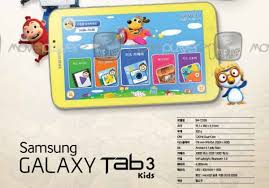
Samsung Electronics will not leave any possible market unattended to, they have everyone sorted, and they now have introduced a child friendly version of its Galaxy Tab 3 tablet.

The company said that this device was built specifically for children with the educational tools as well as the safety features wanted by their parents.

 “It’s no secret that kids are using technology more than ever before, We saw an opportunity to create a device just for kids that provides them with an intuitive, fun and kid-friendly user experience filled with rich, interactive and educational content that parents will love,” said JK Shin, CEO and Head of IT & Mobile Communication at Samsung Electronics.

Samsung Galaxy Tab 3 Kids is aimed at taking the educational possibilities of the now technological children as the device comes with top ranked children’s apps and brand new Kid’s Store.

The pre-loaded content includes educational, games, entertainment and e-book apps. The tablet also offers parents the ability to select the apps they want their kids to have access to using the Application Manager.

Another good thing about the Samsung Galaxy Tab 3 Kids is that it has a feature that allows the parent to set the specific time the child can use the device.  So, at the time that the child is not supposed to use the tablet the device offers a protective password lock which appears when the child tries to use, requiring a parent or an adult to enter and unlock the device. These tools will help parents ensure the time their children spend on smart devices is balanced.

Technical specifications include a 1.2 GHz dual processor, 1 GB RAM, 3 Megapixel front-facing camera and 1.4 megapixel rear-facing camera.

The Samsung Galaxy Tab 3 Kids will be available in Korea early this month and later available internationally.

GraphicMail Targets Developing Markets with Inclusion of Angola and Pakistan

0

GraphicMail

Digital Marketing company, GraphicMail has set its foot within Angola and Pakistan, underlining their cause to reach out to developing countries in Africa and Asia.

“While digital marketing continues to expand throughout developed economies, the opportunities within the developing world offer vast opportunities for growth and tailoring,” the company said.

“With the digital revolution gaining momentum in Africa and the Indian subcontinent, previously untapped markets are opening up to businesses with their ear to the ground and getting Angola and Pakistan on board within two months of each other is proof of that.”

Many more opportunities are opening up in Africa due to the efforts made to have broadband access. With more people able to access internet, marketing companies such as GraphicMail have a reason to set up shop in developing markets.

Jose de Oliveira Santana, GraphicMail Angola country partner said: “What attracted me to GraphicMail in the first place was how simple it was to start the process, and how friendly and helpful everyone is in helping me with the setup.”

According to a PCmag survey titled Maximising for Mobile Development, the developing world’s mobile connectivity has soared by 77% in the last few years, while developed nation’s growth, naturally, slowed to 23%.

Lower income areas rely on constant communication for economic growth and mobile technology is the most cost-effective way for this to happen.

Namibia’s Leo Telecom Rebrands To TN Mobile

0

tn mobile

The leading Namibian Telecom company which was  acquired by Telecom Namibia, Leo, has introduced its new brand TN Mobile which is stepping into the market and is well equipped with a wide range of both pre-paid and post-paid products as well as data bundles.

The new Telecom company says that its aim  is to support Namibians as they tap into the full potential of high-speed mobile data services.

“TN Mobile intends to help drive the nation’s access to the internet via mobile devices, this will allow the nation to tap into opportunities in education, personal improvement and industry, made possible by better and affordable internet accessibility,” said TN Mobile.

The company promises to offer the market outstanding new options as well as high quality and value-for-money mobile products together with attractive offers.

 “The landscape will certainly be seeing more of the TN mobile logo and smiling subscribers in all towns across all 14 regions of Namibia. TN Mobile intends to shake things up and change the Namibian mobile market, for the better,” they continued.


New Web Based Software to Test Mobile Network Quality Launched in South Africa

0
phone-mast-4g
Image from Gizmodo.co.uk

After more than one year of research, Global Voice Group has launched a new service that will test the Quality of Service (QoS) and Quality of Experience, through a web platform.

The platform named QoS Tracker will be able to test quality of network calls across the country giving swift and accurate measurements of services from different mobile phone providers.

Through this platform, a virtually unlimited number of subscribers can download, from the Internet, an application that will run automated QoE tests from their mobile devices.

“QoS Tracker has already been put to the test by regulators of the telecommunications sector.  The new solution will also be presented at the international meeting of the International Telecommunications Union’s Quality of Service Development Group, which will take place in Accra (Ghana), from 16 to 20 September 2013,” Global Voice Group announced.

“GVG will take advantage of its participation in this event to exchange information about the latest approaches to QoS and QoE assessment focusing on the regulator’s point of view. “

More African countries including Nigeria, Ghana and Kenya have put various mobile phone companies on notice over poor service and coverage. Such companies face penalties in the tune of millions of dollars for not giving quality service as agreed by their regulators.

South Africa’s CRS Technologies Launches Its iSight Online Employee Engagement Solution

0
James McKerrell, CEO of CRS Technologies South Africa

CRS Technologies, a HR & payroll services and solutions provider with operations across Africa has launched its iSight online employee engagement solution.

CRS Technologies say iSight adds value by offering a range of tools designed to align employees to the strategies and functions of the business in order to acquire a higher level of collaboration. The collaboration helps users to acquire a number of benefits such as being able to share the business’ game-plan or strategy across the board, align every employee’s role to goals, specify linked outcomes expected from each employee and provide performance feedback continuously.

“Through iSight businesses can link employees to workgroups, communicate with targeted groups of people easily and process employee’s ideas and suggestions. It is really all about working smarter and utilising technology to the utmost in terms of people management,” says with James McKerrell, CEO of CRS Technologies South Africa.

The emphasis of the solution and integration into a client’s infrastructure is on becoming a synchronised enterprise.

According to McKerrell the introduction of formal standards in HR is indicative of an industry that has matured and progressed in the broader marketplace.

“It is certainly a milestone in the development of HR and in the management of people in the workplace. We believe it also offers service providers an opportunity to assist and add more value through solutions that help facilitate collaboration,” McKerrell adds.

CRS Technologies anticipates a strong response from the market, particularly as HR professionals begin to review and inspect the standards more closely. CRS provides a service to numerous countries throughout Africa, including Egypt, Kenya, Nigeria, Namibia, Botswana, Swaziland, Lesotho and Mozambique.


A24 Media Welcomes Kenyan Victoria Bank MD to Its Ownership Team

0

A24logo

Dr. Yogesh Pattni has been appointed into the Ownership team of A24 Media, a multi-platform media company based in Africa.

Mr. Pattni was educated in Kenya, before going to University in the US, graduating with a Master’s Degree in Business Administration from The United States International University in San Diego.

He returned to Kenya in 1984 and has been building Victoria Bank into a respected and valued financial institution since.  He is also on the Board of Directors of a number of other organizations here, including Sterling Developers, Brook house School and Victoria Towers Ltd.

“We are very fortunate to have added someone with a proven track record for building excellence, as well as someone with a commitment to raising Africa’s abilities and profile,” A24 MEDIA Chairman Salim Amin said.

Dr. Pattni said, “My guiding principles have always been focused on quality, effective teamwork and reading the future growth of our continent.  A24 MEDIA is ahead of the game in taking advantage of the fast-developing media landscape across Africa.”

Sage South Africa Launches Sage HR Africa In An African Expanion Move

0

Women in ITSage South Africa has launched Sage HR Africa in a continent wide expansion move.

The unit dubbed Sage HR Africa will be run by Sage VIP and Sage Pastel Payroll & HR’s international divisions.

According to Anton van Heerden, MD of Sage VIP and Sage Pastel Payroll & HR Sage VIP and Sage Pastel Payroll and HR will help the firm better leverage the Sage brand on the continent.

He said, “As a united force we believe we can be more successful on the continent by consolidating our infrastructure and developing a mutual business partner network.”

Sage HR Africa will be spread across over 35 African countries and will be in charge of providing HR and payroll management software and services. The unit will be headed by Gerhard Hartman, formerly head of the International Division at Sage VIP.

The unit will supply Sage Pastel Partner Payroll & HR for SME’s and Sage VIP Premier Payroll & HR for middle and large firms. The unit also promises its customers access to a dedicated call centre with expert advice.

Hartman said Sage HR Africa will partner with Sage ERP Africa and Sage Pastel Accounting in  a new Lagos, Nigeria.

He added:“We appreciate the importance of having a local presence and employing local people. We look forward to working with the rest of the Sage South Africa team to strengthen our position on the continent even further.”

Nigeria’s Azumazu.com Wants To Take On OLX Globally

1

cropped-buy-or-sell-anything1Story by our new intern Kingsley Silas Chijioke: Thanks to technology and specifically ecommerce, buying of goods is no an issue as one can buy whatsover he or she wishes from anywhere in the world at any point in time. This really makes life easier. Location is never an issue when you see a product you want to buy, all you need is have the money and the necessary means of payment.

In a situation where you do not want to buy any product but actually do want to sell what then do you do? This is where Azumazu (www.azumazu.com) comes in!

Azumazu is an online marketplace for manufacturers, producers, suppliers, designers, service providers, retailers, sellers and buyers. It provides a common platform for sellers and buyers to meet and exchange goods and services.

According to the company overview on the company’s website, Azuamazu is a subsidiary of Cosmichub Africa, a young, vision-driven IT business based in Lagos Nigeria with partners in East and Southern Africa with clientele across various countries around the globe.

Some of its categories include; electronics, food and beverages, sporting goods as well as some which surprised me; real estate, jobs and education.

One remarkable thing about Azumazu is the choice given to its users to use their country’s currency, though the default currency is Dollar ($). This feature relieves the users the stress of having to do any currency conversion.

I think a lot more still has to be done by those behind this startup if they are to hit the wave in the ecommerce ecosystem and attract investors.

Flat6Labs Cairo Goes Robotic & Opens Doors To More Startups Promising Them Over $20,000 In Seed Capital

0

 flat6Flat6Labs Cairo has said it will be launching new mentorship and training programs to accommodate up to 10 startups , give them over $20,000 in funding (up to EGP 200,000 in cash and services per startup for an equity stake of 10-15%), and extend the incubation period (5 month cycle).

“We are also revamping our perks program, offering our entrepreneurs even greater free startup perks and exclusive deals to benefit from, the Cairo-based accelerator announced.


The accelator also said it will launch a new 5-day ‘Bootcamp’ training program at the beginning of each cycle to aid in the selection process. Similar to the ‘Lean Startup’ approach, the  ‘Bootcamp’ will be run by help of Flat6’s educational partners. It expects to have 20+ teams joining the bootcamp and each have a ready startup by the end before a selection committee to pick best teams to join its Flat6Labs Cairo program.  It will be conducting two cycles every year: Spring cycle (from January till May) and Fall cycle (from July to December end).


Flat6Labs Cairo has already had 6 cycles and  incubated 36 startups from various technology and industry sectors but in the upcoming cycles it wants to shift to B2B, SaaS, cloud computing, green & renewable energy technologies, digital content, tech-enabled farming & agriculture solutions, healthcare, financial services, wearable computing, e-commerce, 3D printing/manufacturing, language/translation, mechatronics/robotics.

The first Flat6Labs’ accelerator was launched in Cairo in 2011 by Sawari Ventures, in conjunction with the American University in Cairo.

Founded in 2011 in cairo,  two years ago, Flat6Labs has been fulfilling its mission of creating entrepreneurial companies and launching new startup accelerators in the most vibrant ecosystems across the MENA region.

Flat6Labs Cairo is currently accepting applications for its upcoming “Spring 2014” Cycle, which is scheduled to start January 2014. You can apply into the program  here.


Cairo’s Etsy, CIRQY.com Launches In The Middle East To Help Art Lovers Discover Fresh Local Designs

0

cirqyFounded in Cairo last year by Mostafa Talaat and Kareem El-Shaffei and armed with a $12k Seed funding, the Flat6labs alumni, CIRQY.com, a social marketplace for discovering freshly-made local design has launched in the Middle East for lovers of art, home decor, accessories, apparel and handmade stationery and toys.

CIRQY wants to be the number one online destination for design in the Middle East and help inspire people in their everyday lives and connect them by their interests.

According to the founders on their site, “CIRQY brings you the hottest, creative designs that will add something new to your everyday life and allow you to express yourself differently. On CIRQY you can follow your friends and discover things together; buying, sharing, recommending and collecting your favorite items from your favorite independent artists and designers.”

The platform is simple to use.

Bot sellers and buyers have to have an account to access the services. Sellers create a personal virtual store with photos of items they are selling. Buyers on the other hand sign up for an access account to go through stores by category, discover new stuff and proceed to check out, then wait for delivery after stating their payment mode.

Sellers can open a CIRQY store, at no charge, after completing a store application form. The store can begin selling after the application is approved. CIRQY does not charge sellers for listing their items on the site but collects 25 percent of an item’s selling price as commission when it is sold.

LG Launches The G PAD 8.3’ Tablet With Full HD Display

0

G_PAD_022LG has today announced the LG G Pad 8.3 tablet boasting the first Full HD display.

Set to officially debut next week at the IFA 2013 trade show in Berlin, the LG G Pad 8.3 builds on the recent launch of the LG G2 superphone. The LG G Pad 8.3 has a powerful 4600mAh battery and weighs just 338g.

The G Pad is equipped with a 1920 x 1200 WUXGA (Widescreen Ultra Extended Graphics Array) display for great picture quality and runs on powerful Qualcomm® Snapdragon™ 600 Processor with 1.7GHz Quad-Core CPU.

The phone’s QPair app, syncs every call and message received on a smartphone on the G Pad and also allows the G Pad to easily connect to other manufacturers’ smartphone and tablets.

The LG G Pad 8.3 will be rolled out globally in the fourth quarter of 2013.

Key Specs

  • – Processor: 1.7GHz Quad-Core Qualcomm® Snapdragon™ 600 Processor
  • – Display: 8.3-inch WUXGA (1920 x 1200 pixels / 273 ppi)
  • – Memory: 16GB eMMC
  • – RAM: 2GB LPDDR2
  • – Camera: Rear 5.0MP / Front 1.3MP
  • – Battery: 4,600mAh
  • – Operating System: Android Jelly Bean 4.2.2
  • – Size: 216.8 x 126.5 x 8.3mm
  • – Weight: 338g
  • – Colors: Black / White

CEO Weekends:Hellopretty.co.za Making Online Shopping pretty Easy

0

helloprettySouth Africa’s Hello Pretty is an online marketplace allowing shoppers to buy directly from top designers and creatives in the country. Founded by Samantha Marx, Adeline, and Scott about a year ago, Hello Pretty wants to connect people to amazing designs available in every city locally and internationally.

Hello Pretty is a platform for designers to create and manage their own individual online store; and for buyers to browse and buy local design. The portal has provided a platform for designers to create and maintain their own online store, as well as stock and order management tools, and many more interesting things under the hood.

TechMoran caught up with Hello Pretty’s Samantha Marx and here is what she told us about the platform.

How do you run the shop plus manage blogging, it looks tedious to us?

Not in the slightest! I feel really lucky that I get to do something I love every day, and it’s really enriching to interact with our designers and customers. As far as the blog goes, we all have a hand in it – but when part of your job is sourcing beautiful and interesting things to write about, you can’t really complain.

How many sellers, buyers and items sold so far?

We’re rapidly approaching 500 active sellers and get several new applications every day. So many amazing people creating amazing things! We’ve been really lucky in that we’ve consistently grown in terms of customers and sales at a rate of about 15-20% per month since our official launch.

How do you make money?

There are two ways for us to make money, tied to the two plans that designers can choose from when they join: Either they can hold a free store on Hello Pretty, with a limited amount of stock, and we take commission from sales; or they pay us a small monthly membership fee and a much lower commission.

Where do you want to be in the next five years?

The dream is for Hello Pretty to have gone from strength to strength, and have created a large, vibrant, self-sustaining business and design community.

What have been your greatest challenges and how did you solve them?

Small business owners in South Africa: We feel your pain. By far the biggest challenge is dealing with the admin and bureaucracy that comes with starting a business. Everything from registering the business to opening an account is an unnecessarily complicated (and usually very long!) process. Another huge challenge is just getting your name out there – online shopping is still a pretty new concept to many South Africans, so it’s been a lot of work getting people to know and trust us.

How unique are you from the competition?

I’d say our biggest difference is that we’re very open, both in terms of the site and in terms of our policies for designers. We’ve never tried to niche ourselves – as long as it’s beautiful design, we will sell it. And we’ve never tried to fence our designers in by insisting on exclusivity or  charging them the earth. We believe that the only way the business will work for us, is if it works for them.

If you weren’t doing this, what on earth will you be up to?

Travelling the world, and buying too many pairs of shoes!

Any expansion plans-out of Cape Town, or SA?

Obviously, the ultimate goal is world domination! We’re already active across all of South Africa – we have buyers and sellers from big cities and tiny dorpies, and many international buyers. Ultimately, we’d like to be a platform for design across Africa, but right now we’re focusing on building a rock solid foundation for the South African design community.

Any upcoming features, developments on your site, company, clients etc?

Always. The site is constantly evolving and growing, so there’s something new quite literally every day. We’re currently busy working on adding more of a “community” feel to the site that’ll allow buyers to leave reviews on sellers, and have forums for designers to share information. We’re also involved in SA Fashion Week at the moment, and there are more cool projects in the pipelines, so stay tuned!

Is eCommerce catching up in your region?

Absolutely, and it can’t happen fast enough. South Africans are slowly but surely realising the massive advantages there are to shopping online, and there are more and more sites to facilitate that.

How is delivery in South Africa-does it need improvements?

Let’s say that “improvements” is a very delicate way of putting it! We’ve been fortunate enough to work with people who are dedicated and motivated, but there are always going to be individuals or companies who simply don’t try hard enough. If you want your business to work, you absolutely have to give it your all – simple as that.

Which month is your best in terms of sales in the year?

This past month. And hopefully, that will be true for every month in the future! Since we’re still so new, and still growing, it’s hard to say. But November certainly stood out since everyone was getting their Christmas shopping in.

hellopHow is it being a girl company?

I wouldn’t know if it feels any different, to be honest. Sadly, there are still people in this day and age who don’t take you seriously as a female entrepreneur, but we think our success speaks for itself. When it comes down to it, if you’re running a business, you have more important things to think about than what people think of your gender.

What would you tell those girls who want to start out but feel inadequate?

It might sound like a huge cliché, but the reality is that you just have to keep trying. Find what you love doing, and keep doing it. Work, and work, and work, and do whatever you have to to get people to notice you. If your product is good, once you have that first foot in the door, it will do the work for you. This goes for guys as well!

CEO Weekends: Kenya’s Erik Hersman On The Future Of Hardware Startups In Africa

0
brck2Africa imports most of its hardware, from phones to basic electronics like DVD players and appliances. Local manufacturing of computers and big machinery is even more like a dream.
However, a team of passionate Kenyans led by Erik Hersman, co-founder iHub and Ushahidi and a blogger at AfriGadget and WhiteAfrican is set to end this.
TechMoran talked to Hersman on the need for locally made hardware solutions in the country and the continent at large, and here is what he told us n the future of Hardware startups in Africa.

What moved you to think hardware?

I’ve thought about hardware for a long time.  I started AfriGadget back in 2006, and have been a founding organizer of Maker Faire Africa since 2009 (which has taken place in Ghana, Kenya, Egypt and Nigeria).  We’ve all wanted to do more with the electronics and robotics sides of tech in the community for a while, but it wasn’t until we started building out the BRCK a year ago that I realized just how badly we needed the resources and equipment here in Nairobi if we wanted to really get things moving on the hardware front.


Where will it be based and who is it open to?

The idea is that we have a Gearbox “Heavy” and a Gearbox “Light”.  Light will be in the building with the iHub, it will focus on electronics and plastic – think Arduino kits, Rasberry Pis, 3d printers and laser cutters.  Heavy will be based outside of the iHub, as it will have heavy equipment such as welding machines, metal lathes and a plasma cutter.

It will be a paid membership based space for everyone, where you have to go through training for certification to work on any machine.  Once you’ve done that, you’ll have access to the tools and equipment and will only be responsible for your own raw materials and components.


gearbox2How will Gearbox work?

It’s a “makerspace”, so think of a big room full of equipment that allows you to do rapid prototyping of your new idea – whether that’s a new case for your phone or a new product idea that you want to take to market.  You then jump on the machine you need to build it, and do so.

For Gearbox to work, we’ll need everyone to pitch in and work with each other, helping new people get up to speed on machines and teaching each other better techniques for getting stuff done.  My hope is that we’ll have a lot of people who spend time with one another, creating community of hardware enthusiasts.


Will it be open like the iHub space or will be accelerator-like

It’ll be open, but it will be paid membership in order for us to cover the bills on the space.  I’m not sure of the pricing yet, but likely somewhere in the 1,000 ksh/month range.


Does Africa need hardware solutions?

Of course we need hardware solutions – we use them already everyday.  What you should be asking is “why are we not the ones making our own hardware solutions yet?”  The answer to that is more complex, mixing the government’s short-sighted focus on import duty for components we can’t even make here, to under-resourced schools and technical colleges.  It’s a mixture where we lack rapid prototyping facilities and where hardware entrepreneurs don’t have clear channels to grow into fabrication and manufacturing at scale.

Gearbox can’t solve all of those problems, nor are we trying to – we’re just looking at the first bit – rapid prototyping.  Instead, we’re building a resource where those interested in working in the worlds between electrical engineering, software development and jua kali craftsmanship meet.  I think there are a world of amazing products waiting to be uncovered within Kenya as we start to merge these different areas of “maker” focus.


Are techies in the country/ continent ready to hack hardware and make things?

Yes, they already are.  We made the BRCK at Ushahidi.  Kahenya is making a device for streaming TV in homes.  Others are making point of sale machines, wildlife tracking drones, remotely triggered (via text message) ugali machines, and home security systems.  More will come, it’s already in our blood.
Hardware will need costly materials are the youths (and their partners) ready to sacrifice?

Not all materials are costly, but you’re right in that there is some cost to raw materials.  Are people ready to invest in their ideas?  I believe so, at least the ones we want to be part of Gearbox will be.


Do we have enough funding for hardware?

Not yet.  To date we’ve been able to get a good portion of the Gearbox Heavy equipment.  However, we’re still looking for some funding to get the equipment for Gearbox Light together.  Purchasing the equipment, then getting it shipped to Kenya and through customs, will cost us about $50k to get started.


Are Kenyan taxes fair to hardware builders? (Putting in mind that we import most of our materials)

No, not at all.  I covered this earlier, but there are some ridiculous levies on imports of raw materials and electronic components that we can’t even find or make here.  This doesn’t make any sense and is an indication of the Kenyan government’s short-term thinking on revenues.  Is it better to make a little money now off of import duties, or a lot of money later off of successful companies?


Skills gap.What are you gonna do to solve this? Any plans for an exchange program among hardware hubs say Gearbox with HAXL8R?

People in the community who are experts on machines will train each other.  We have them here already, and we do plan to have visiting professionals spend time giving workshops on particular techniques, knowledge of proper materials and other educational needs within the community of users.  Really, this type of place only works when those in the community who are advanced openly help those who need it.  This “pay it forward” mentality is what makes it all work.

On the exchange program thought, we’re very open to this idea and we all benefit when we mix with other communities around the world.


What are the challenges (present/expect) and expected towards Gearbox success?

Initial challenges are equipment funding and space.  Both can be solved fairly easily with the right partners.  Long-term, the challenges will be on the community, making sure it’s an open place for learning where you’re helped and nurtured to grow, not made to feel stupid because you’re not knowledgeable yet about something.


How will you finance it?

No idea yet, but we’re looking for partners who can help us solve the initial cost problem for equipment.  Long-term financing will work out, as it has with the iHub.


Market, is Kenya ready to buy Kenyan (hardware)?

Again, we already do in some ways.  So, yes, I think the Kenyan hardware entrepreneurs of the future will find a market for their goods here at home.

CEO Weekends:Uber Goes Live In Cape Town

0

uber cape townUber, a US cab hire mobile app has launched in stealth in Cape Town, after recently launching in Johannesburg.

SA Rugby legend Breyton Paulse was the first to test the app. Other secret Ubers then folowed suit with rides in the streets of Cape Town, the Mother City.

According to Uber the “testing phase” for Uber Cape Town is the beginning of “awesome and safe rides around Cape Town” but it will remain a “testing phase”  and the Uber cabs’ supply are expected to be limited. The firm just wants user feedback so as they iron out any ”potential kinks” before they create a service tailored to user’s needs.

“As we are new in Cape Town we want you to have an opportunity to try out the Uber experience on us: If you’re a new user, use the promo code CTLAUNCH and enjoy 2 free trips (up to ZAR100 each). Insert the code in “Promotions” under the menu of your Uber app before October 30th or click here to register.

Guys in Johannesburg  can try out the codes too, as they are valid there.

Uber is also looking for top talent in Cape Town especially for those with an intimate knowledge of Cape Town, and the ability and hustle to make Uber Cape Town one of the best cities in on-demand private transportation. The firm is looking for a General Manager to lead & grow our business in Cape Town, a fiery Community Manager responsible for rocking marketing and social media, and an analytical Operations Manager.

For feedback or support drop them a line at [email protected] or follow them  @uber_ct on Twitter and Instagram for the juicy part.

CEO Weekends: MTN South Africa Falls Victim Of Cyber Attack

0

cybercrime

MTN South Africa experienced a breakdown on Wednesday on it SouthAfrican Data Network and it has now been confirmed that the company fell victim to a distributed denial-of-service (DDoS) cyber-attack.

The breakdown also affected internet service providers Afrihost and Axxess, the former claiming the attack was launched on MTN’s DNS cluster.

The servers basically couldn’t cope with the load, and it was difficult for us to bring them up again while the attack was still in progress,” said Afrihost.

A denial-of-service cyber-attack is an ordinary tactic used by cyber criminals to flood a particular website with packet requests (traffic), to the point where the servers cannot handle the load and collapse under the pressure.

The MTN DNS servers would normally handle this type of attack without any problems, but at the time of the attack, some changes were made to the DNS servers and there was a bug in the system that made the situation far worse than it should have been. This bug has been fixed and this issue should not happen again,” Afrihost’s Greg Payne.

When the cyber attacker struck on 28 August, Afrihost announced on their Facebook profile that they are experiencing connectivity issues.

Afrihost partnered with MTN in January this year to deliver a premium ADSL service to their clients.

Afrihost have partnered with MTN to offer a premium ADSL service to our clients. By joining the biggest telecoms network on the continent, we have ensured the future of our products, services and clients. Over the past 3 years, MTN has been investing approximately R4 Billion annually on infrastructure upgrades to make their Broadband Services the very best on offer,” they announced at the time.

CEO Weekends: Kenya’s University of Games On Gaming In Africa

1
The UOG team
The UOG team

Kenya’s University of Games (UOG) was officially launched July 2012 by  Blaise and Brian Kinyua, Herbert Mbuthi and Joseph Kariuki. Blaise and Joseph studied together at Africa Nazarene University, Herbert and Joseph grew up together. Brian, while in University, began developing mobile games as a hobby for the then dominant Nokia Symbian platform. With their combined passion, the new group of friends then decided to come together to form University of Games.
The team say they have always had a passion for games ever since they were young. And like most young people, they say their first opportunity in front of a computer was to play a game although most of the games were developed outside the African continent. The team then thought they could create something that people will enjoy and remember for years on end.

TechMoran caught up with them and this is what they told us.

Why gaming?

Games are a powerful tool for spreading knowledge. With the soon to be launched laptop project for the class one kids, I assume the content that will be provided is mostly games and gamified applications. Games therefore being our passion, will be our tool to spread knowledge.


Any funding so far?

In May 2012, we received a grant from the then Kenya ICT Board under their Tandaa Local digital Content project. The funding was to cater for a 1 year project in which we were to develop 2 games. We have so far developed 1 game (Election Thief) which we launched on the Google Play Store and we are currently working on the 2nd game. The project will hit the 1 year mark in September.


How many games to date?

Election Thief was our first official game as University of Games. We hope to complete our second game before the end of the year.

What are the challenges of building gaming startups in Kenya?

The biggest hurdle is lack of a game developer community in the country. With time we came to discover that we are not the only gaming startups in Kenya. We have reached out to some of them and others have reached out to us and we hope to create that community where we can exchange ideas and build something great.

Game development is still new in Kenya meaning it is not supported as much like other industries. You cannot just walk into a bank and say you want to borrow a loan to make video games. But the industry is becoming friendlier with the emergence of a number of Venture Capitalists and incubation hubs. You therefore need to at least approach one of these hubs to have a chance in receiving financing and mentorship.

uogWhat are your two year plans?

Our 2 year plans are to work on our development skills to meet the international standards of quality. If we expect to receive downloads from app stores such as Google Play, then we have to offer something worth downloading.

Any competition? How unique are you from them?

Our competition is international developers all over the world. We are unique in that we will offer high quality games based on African themes. App stores are currently flooded by games developed by emerging gaming startups all over the world. Therefore, what will make you stand out from all of them is the story in your game. We cannot yet consider other African gaming startups to be competition as yet because we are not quite many. In fact, we will be better off if we work together with them.

Is gaming in Kenya profitable?\If you were to find UOG anywhere else in Africa, where would you choose?

Game development in Kenya is new, so it cannot be measured in terms of profitability. But to put you into perspective, according to DFC intelligence, the game industry was valued at 63 Billion dollars in 2012 and is expected to grow to 78 Billion dollars in 2013. We therefore are focusing on the international market. To say that we will first focus on the Kenyan market then try the international market would be a lie. But we would not choose anywhere else to found UOG. We love our country.

CEO Weekends:Rocket Internet’s Online Car Marketplace Carmido.com.ng Goes Live

0
carmido

On previous posts, we have been talking about Jumia and Vamido, both Nigerian startups raised by the German company Rocket Internet. Now it is turn to talk about Carmido, an online car marketplace. This site offers a wide range of new and used vehicles for sale around Nigeria and, like Vamido, it has some solid guidelines when advertising the products, in order to avoid fraudulent adverts.

Rocket Internet’s interest in Nigeria goes back to the beginning of last year, when they launched Jumia, the e-shop for electronics, books, DVDs and so forth. As this country keeps growing, the online playfield offers a great potential for online companies and the German startup incubator has taken advantage of this situation and launched several ventures in the country that cover various services (hotel booking, real estate, online bidding places, etc.)

The car market in Nigeria has also grown significantly and the number of sales have multiplied during the last few years. Even though this sector is currently dominated by the offline scene, the digital field has a tremendous potential considering the current state of the market.
That being said, chances are, Carmido has placed its attention in the right spot and it will be interesting to see how this sector develops in such an exciting country as Nigeria is.

CEO Weekends:Tanzanian Policymakers Push For e-tax Collection

0

 TRA

Policymakers of Tanzania are pressuring the government to speed up the collection of tax to curb the loss of taxpayers’ money dollars each year to corruption and outright theft.

The new electronic system named ‘Power of the Purse’, is planned to assist officials track down revenue receipts, said the policymakers. Officials also want to improve electronic tracking of government spending.

The country loses approximately Tsh.700 billion ($4.37 million) annually a leaky system which allows tax evasion and mismanagement of public finances, encouraging foreign donors to slash budget support aid three years ago.

The move to electronic tax collection and budgeting is part of a broader push internationally to use technology to improve government accountability.

“We have instructed the government to immediately start collecting revenue from central and local government sources using electronic fiscal devices,” said Zitto Kabwe, chairman of a parliamentary oversight committee on public accounts and deputy leader of the opposition in the parliament.

The Tanzania Revenue Authority (TRA) projects it will collect Tsh. 9.5 trillion ($5.8 billion) in the 2013/14 fiscal year (July-June), a 19.9 percent rise from 2012/13 when tax collection rose by 16 percent.

The Electronic Fiscal Device allows businesses to manage and analyze their sales and stock control electronically. The device created by TRA is secure and it calculates total turnover and government taxes due under each revenue category.

The TRA has also launched an electronic system for filing tax returns, and is working with the mobile networks to enable customers to pay their income taxes by phone as Tanzanians can already use their mobile phones to pay certain fees such as those for motor vehicle licenses’.

The TRA also plans to roll out applications for citizens to monitor how government revenues are collected and spent.

CEO Weekends: DEMO Africa Receives $20,000 Sponsorship From Intel

0

logo (1)DEMO Africa, the continent’s first launch pad for technology startups, has received a sponsorship deal worth $20,000 from Software and chip development giant, Intel, as a boost for this year’s conference to be held in Nairobi come October.

Expressing his gratitude for the support, DEMO Africa Executive Producer Harry Hare said: “I would like to take this chance to thank Intel for supporting DEMO Africa, which is that one chance where a hand-selected class of new products are introduced to the world for the very first time to global press, investors, strategic partners and buyers.”

Presenting the sponsorship deal was Agatha Gikunda, Lead for Intel Software and Services Group in East Africa.

“By sponsoring DEMO Africa we see this as an opportunity to enable local tech start-ups nurture their skills and get exposure on the global stage. These are critical components in the growth of the local software economy,” said Gikunda.

“We are very excited about the growing developer engagement in Africa and seek to increase collaborations with tech hubs, independent software vendors and universities in order to build a foundation for robust solutions and industry innovation,” she added.

This will be the second time in a row the DEMO Africa conference is held in Nairobi, after a successful inaugural event in October 2012, that saw over 40 startups from all over Africa present their companies to potential investors.

Last year’s conference could be termed as a success, as many startups that presented their ideas to the attendants have secured funding and important deals with various leading companies.

Africell Gambia and Siera Leone Partner with iSend to Enable Users Receive Top Ups from Abroad

0

africell-4_014

iSend, Africell Gambia and Sierra Leone have partnered to increase users who can benefit from top ups from relatives and friends in the Diaspora.

iSend customers can top up any family member’s or friend’s cell phone at any level, with instant verification. Customers are not charged for the service beyond the normal price of airtime, and it is an extremely convenient way to keep communications open during holidays, major events or emergencies.

“iSend’s direct arrangement with Africell marks our continuing efforts to partner with dominant carriers worldwide to offer our customers maximum convenience,” said Dan Lambert, iSend’s vice president of carrier relations. “We look forward to working with Africell Gambia and Africell Sierra Leone to create attractive offers for their subscribers.”

Zein Annous, commercial director of Africell Sierra Leone, said that “Africell Gambia and Africell Sierra Leone have achieved approximately 60 percent market share in their respective countries, which comes from providing outstanding service and convenience.”

“Our partnership with iSend expands that convenience by making it easy for our customers’ prepaid mobile phones to be topped up by their loved ones abroad, keeping them ready for communications at any time.”

South Africans Can Now Enjoy The BlackBerry 9720

0

BLACKBERRY.....


Blackberry has availed the Blackberry 9720 Smartphone for its South Africa consumers , the phone is meant to take care of the needs of that user who is hungry for a feature phone, starter smartphone or existing Blackberry Curve.

“The new BlackBerry 9720 Smartphone is now available from Vodacom, and is expected to be available from other authorized carriers and retailers in South Africa in the first week of September. The new Smartphone is supported on the popular BlackBerry Internet Service (BIS),” said BlackBerry.

Apart from the generous battery life, the phone has excellent enhancement which include BlackBerry 7 OS version 7.1. This features an updated interface that lets you swipe to unlock the phone or access the camera from the lock screen.

This smartphone also has a BBM key that makes it quick and convenient to access the globally popular mobile social networks, and making messaging even better with its BlackBerry Keyboard. It also includes BBM Voice, which lets you chat over Wi-Fi. The latest version of BBM, which features BBM Channels, will be availed in downloading form on the BlackBerry World storefront, letting you tune in and connect with the businesses, brands, celebrities and groups you are passionate about.

The 9720 also has a Built-in FM Radio which one can let their BBM friends know what they are listening to automatically.

Yet another feature, the refreshed BlackBerry 7 OS lets you quickly type your message once and post it simultaneously and instantly to your friends on BBM, Twitter and Facebook. You can even take a picture and post it to multiple social networks all at the same time, right from the camera app.

The gaming world has not been forgotten, as with access to BlackBerry 7 apps and games on BlackBerry World, the BlackBerry 9720 Smartphone can make you more productive and better informed, and keep you well connected and thoroughly entertained, while on the move.

Business too is also covered, with BlackBerry Enterprise Server or BlackBerry Enterprise Server Express, this phone offers superior business productivity features with market-leading mobile device management, application management and security, and is a very cost-effective solution for any organization.


Bono With ONE Campaign Visits Ghana Incubation Hub, MEST

0
Entrepreneurs at MEST
Entrepreneurs at MEST with Bono

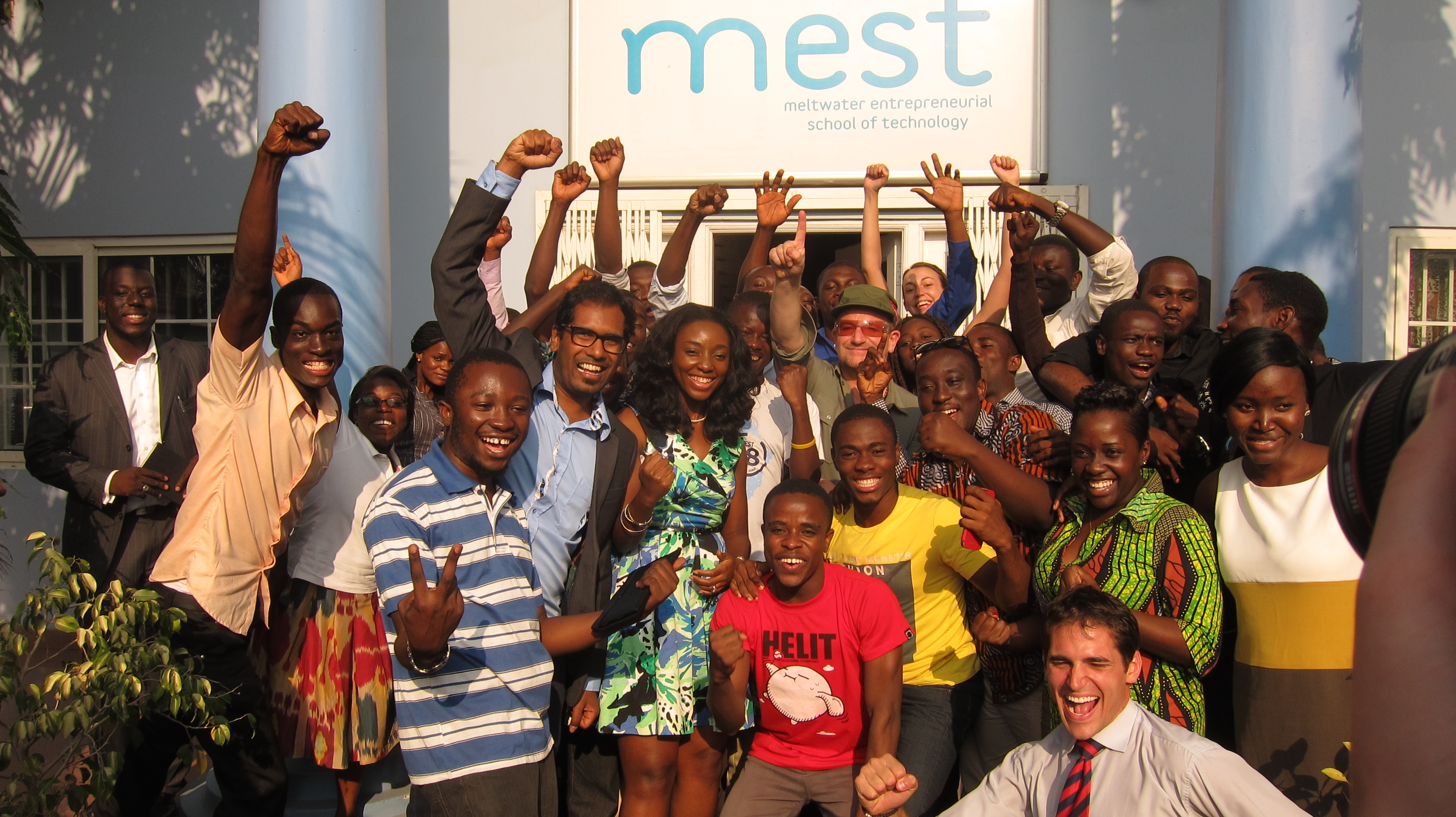
Meltwater Entrepreneurial School of Technology (MEST) had a prominent rock artist and co-founder of ONE Campaign (RED) Bono, at their incubation center to see what techprenuers in Ghana are up to.

The critically acclaimed rock star, talked to about 70 people at the hub about technology that can change the social and economic outlook for Africa. Those who were present include: Ghanaian business leaders and entrepreneurs such as Bright Simons of mPedigree, Edward Amartey-Tagoe of Nandimobile and Eyram Tawia of Leti Games.

Bono said: “Technology can play a huge part in eradicating extreme poverty. As well as building thriving businesses, it can be used to battle corruption by helping citizens hold corporations and governments to account. Transparency is the best vaccine against corruption, and harnessing the talent of these tech-savvy innovators could dramatically change the game against those trying to game the system.”

The One Campaign has been advocating for transparency and development with African partners. This is in a bid to increase investments for development in the continent.

Jorn Lyseggen, Founder and CEO of Meltwater and MEST, added that “MEST was started on the fundamental belief that technology entrepreneurship is one Africa’s most exciting untapped opportunities. We are proud that Bono and one.org chose MEST as the venue to discuss how tech can help address Africa’s challenges”.

MEST is funded by Meltwater Group and has trained and incubated over 100 entrepreneurs with some getting international recognition.

Unregistered SIM Cards In Zimbabwe To Be Cut – Off

0

SIM CARDS

Subscribers of Zimbabwe’s Telecel stand at a risk of having their Prepay SIM cards cut off if not registered by the end of this week.

This action was motivated by regulatory requirement that all the SIM cards are to by registered before 31st August.

“Any subscriber with an unregistered Sim card risks disconnection if he or she has not registered the line before August 31,”said Obert Mandimika,Telecel Zimbabwe communications and branding director.

Customers are adviced to either contact the company directly, or visit a local retailer alongside producing their identification cards for proof.

Speculating views of customers, regarding this move of mandating of phone registration revolves around the government wanting to control communications and some people deliberately chose to delay their compliance until after the recent elections.


Intelsat & SoftBank Mobile End Trials For Affordable 3G Mobile Phone Service In Rural Kenya

0

3gSatellite services provider Intelsat S.A. and Japan-based SoftBank Mobile Corp. have successful piloted an affordable 3G mobile phone service in rural Kenya.

According to Intelsat, it run the trials via the Intelsat 10 satellite and via the company’s teleport in Fuchsstadt, Germany.

Though the firm did not specify the exact region in rural Kenya and has not responded to our inquiries yet, said the demonstration reinforced Intelsat’s ability to deliver a high throughput, managed VSAT-based 3G solution through the allocation of capacity based on traffic demands.

Intelsat added that its fleet and IntelsatOne terrestrial network were instrumental in enabling the deployment of the 3G service.


Junichi Miyakawa, executive vice president, director & CTO of SoftBank Mobile said, “There are still hundreds of millions of people who live outside mobile network coverage areas today. Harnessing SoftBank’s technology in rural parts of the world literally matches our corporate philosophy, ‘Information Revolution – Happiness for everyone.’ I hope this technology will make communication even more free and convenient for people around the world.”

SoftBank Mobile also utilizes the Intelsat 8 satellite and a managed service offering via the IntelsatOne terrestrial network for the delivery of cellular and data backhaul services to its customers across the southern islands of Japan. The agreement enables SoftBank Mobile to expand its service area and enhance the company’s offerings to customers in this geographically dispersed section of Japan.

Intelsat vice president of network services product management Steve Good said the successful field trial of a cost-effective, managed VSAT-based, rural 3G service delivery solution is an excellent example of the collaborative innovation that our industry requires to properly support the demands of its end users.

“We are confident that technology advancements, such as this and our Intelsat EpicNG platform, will allow mobile operators to provide reliable, ubiquitous support to their most remote users, and provide a robust broadband infrastructure as networks upgrade from 2G to 3G, and eventually to 4G via satellite,” Good concluded.

South Africa’s BetTech Gaming & Uganda’s 256Bet Partner To Unveil Awesome Games

0

betCape Town-based BetTech Gaming, a tech solutions provider for gaming companies has partnered with Uganda’s 256Bet to upgrade and re-launch 256Bet and unveil a brand new mobile betting offering for its players.

256Bet will be the first BetTech customer to launch the Betradar-integrated Virtual Football League, which enables a close-to-reality fixed odds betting experience at any time. The firm will also have  a localized payment gateway running on MTN Mobile Money and Warid Pesa.

According to Innocent Bamurike Davis, 256Bet owner, “BetTech Gaming has an unbeatable knowledge of the African market and its sensitivities. This has enabled us to introduce a bespoke product that has taken our online operation to the next level. Also launching an intuitive, yet comprehensive mobile product and Virtual Football League gives us a real competitive advantage.”

Mark Bosman, international CEO of BetTech Gaming also pleased with the deal said, “Our customisable, cost-effective solution enables exciting wagering opportunities to be placed around the clock on the best local, international and now even virtual action.

The deal with 256Bet demonstrates exactly how the BetTech offering is ideally suited to emerging markets, whether it is existing bookmakers looking to strengthen their position or potential operators aiming to make an entry said Bosman.

Founded in 2011, 256Bet.com is a Sports entertainment company with plans to provide high quality betting services on Sports, Virtual Games, and Pools through both online and land based networks thereby making our services accessible to our target market.

Exclusive:Erik Hersman To Launch Gearbox | A Hub For Kenyans To Hack Hardware & Make Things

0

gearbox2Kenya’s Erik Hersman, co-founder of iHub, Ushahidi and BRCK with the entire iHub team and community will soon launch Gearbox, a hub for developers in Kenya to learn hardware and build things.

Gearbox will be a “makerspace”, a huge room full of equipment that allows members to do rapid prototyping  of their new hardware ideas either for phones, electronics, robots and just anything hardware and new in the market.

To be a Gearbox member, one has to pitch in and work with each other, help new people get up to speed on machines and teach each other better techniques for getting stuff done. It will be a space where hardware developers help one another, creating community of hardware enthusiasts.

Speaking exclusively to TechMoran, Hersman said,” I’ve thought about hardware for a long time.  I started AfriGadget back in 2006, and have been a founding organizer of Maker Faire Africa since 2009, an African maker’s fair that has taken place in Ghana, Kenya, Egypt and Nigeria.”

“We’ve all wanted to do more with the electronics and robotics sides of tech in the community for a while, but it wasn’t until we started building out the BRCK a year ago that I realized just how badly we needed the resources and equipment here in Nairobi if we wanted to really get things moving on the hardware front,” Hersman added.

To be based in Nairobi, Gearbox will have a “Heavy” and a “Light” section.  Light will be in the building with the iHub and will focus on electronics and plastic – such as Arduino kits, Rasberry Pis, 3d printers and laser cutters.  Heavy will be based outside of the iHub, as it will have heavy equipment such as welding machines, metal lathes and a plasma cutter.

“It will be a paid membership based space for everyone, where you have to go through training for certification to work on any machine.  Once you’ve done that, you’ll have access to the tools and equipment and will only be responsible for your own raw materials and components,” Hersman added.

Gearbox will be open to all but will be paid membership of some $12 a month for it to be self sustainable.

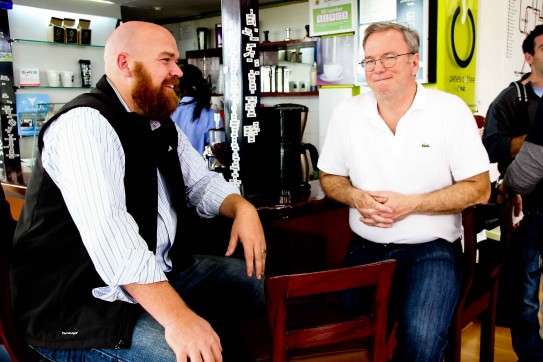
Eric Schmidt  and Erik Hersman at Pete's Coffee at iHub
Erik Hersman and Eric Schmidt at Pete’s Coffee at iHub

The hardware hub is expected to bring in the much needed hardware solutions Africa needs and also fill the gap in a country with inadequate or no rapid prototyping facilities and where hardware entrepreneurs don’t have clear channels to grow into fabrication and manufacturing at scale. It will be a resource where those interested in working in the worlds between electrical engineering, software development and jua kali craftsmanship meet.

Gearbox is not iHub’s  first try at hardware as Hersman and the Nairobi-based Ushahidi team made the BRCK, which will be available in stores soon. Several other iHub members have created point of sale machines, wildlife tracking drones, remotely triggered (via text message) ugali machines, home security systems  and TV streaming devices for homes.

Hersman concludes that hardware “is already in our blood.”

Image Credits:Whiteafrican.com